


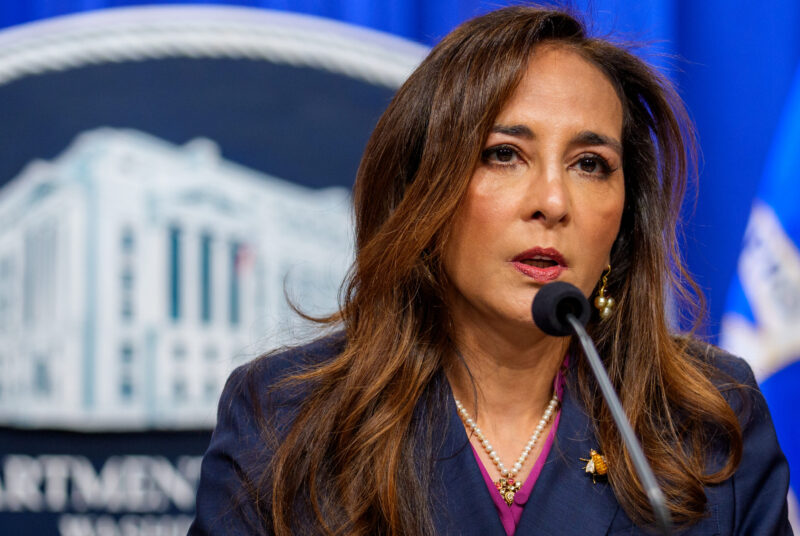

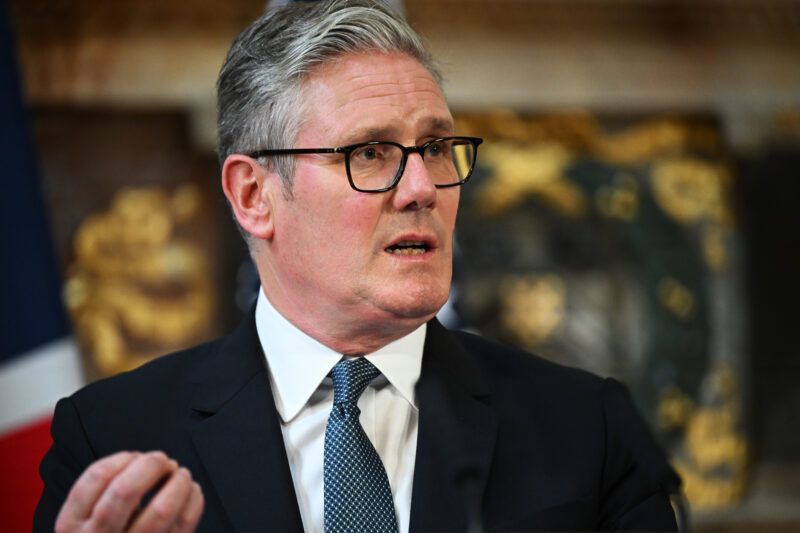

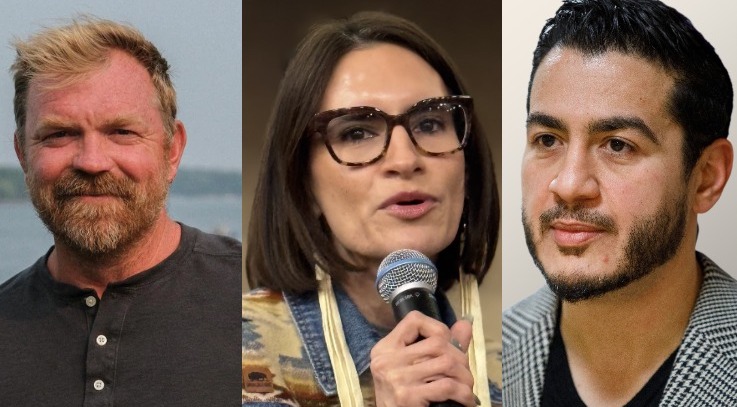




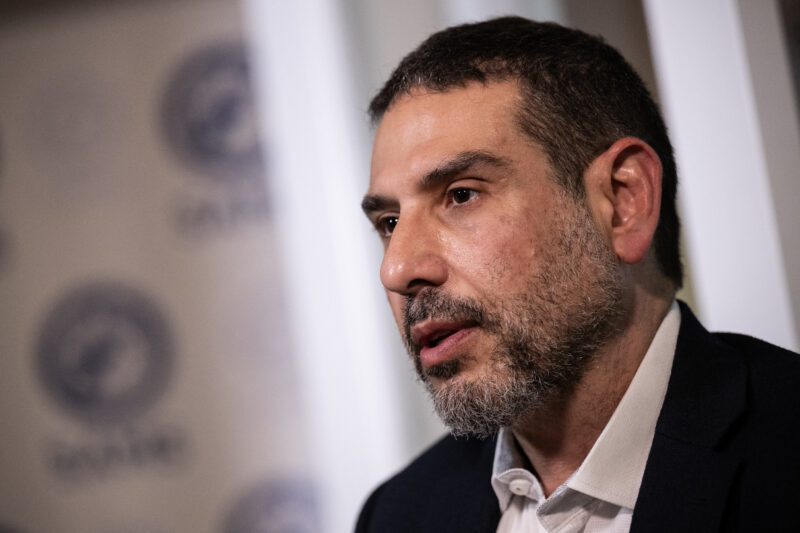

















































Plus, Elise Stefanik on her new book and next moves

Alex Wong/Getty Images
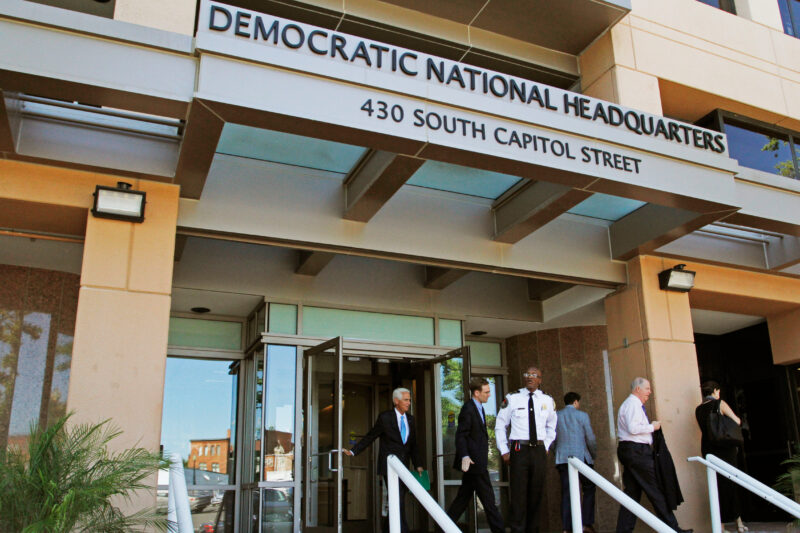
Committee members wait for the beginning of a meeting of the Democratic National Committee’s Rules and Bylaw Committee in Washington, DC


 Add JewishInsider on Google
Good Friday morning.
In today’s Daily Kickoff, we report on the social media activity of the incoming head of progressive campus advocacy group More Perfect University, who liked and shared content justifying Hamas’ Oct. 7, 2023, attacks, and talk to Rep. Elise Stefanik about her new book on higher education and post-Congress plans. We cover yesterday’s inaugural Brandeis Center conference on antisemitism at Harvard University, and have the scoop on a push by Senate lawmakersfor $750 million in security grant funding for next fiscal year. Also in today’s Daily Kickoff: Stephen Feinberg, Rom Braslavski and Matan Grinberg.
Today’s Daily Kickoff was curated by JI Executive Editor Melissa Weiss, with assists from Danielle Cohen-Kanik and Marc Rod. Have a tip? Email us here.
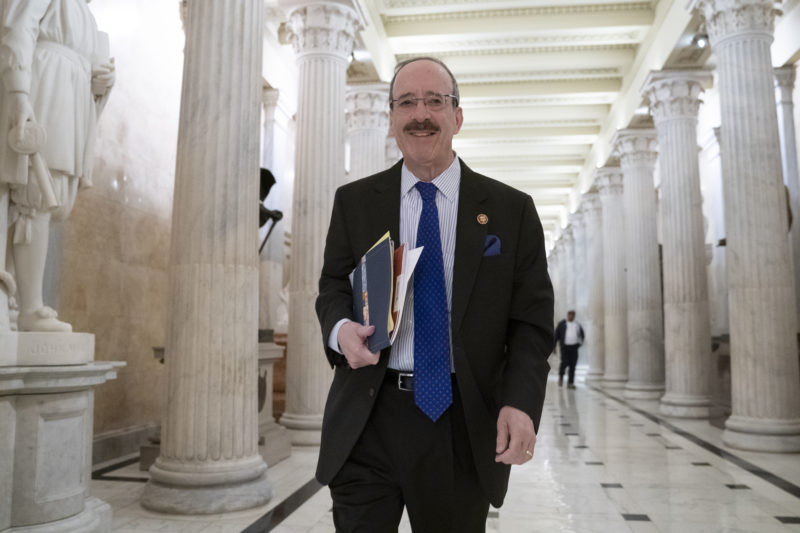
For less-distracted reading over the weekend, browse this week’s edition of The Weekly Print, a curated print-friendly PDF featuring a selection of recent Jewish Insider and eJewishPhilanthropy stories, including: ‘I dig it’: Graham Platner praised Hamas tactics in 2014 graphic video of killings of Israeli soldiers; From trauma to table: An Israeli duo uses food therapy and song to foster connection; and Former Rep. Eliot Engel, Foreign Affairs Committee chair and stalwart supporter of Israel, dies at 79. Print the latest edition here.
What We’re Watching
- The next round of U.S.-Iran talks could take place as soon as this weekend, President Donald Trump told reporters on Thursday, adding that “Iran wants to make a deal, and we’re dealing very nicely with them.” The president suggested earlier in the day that he could travel to Islamabad, Pakistan, for a signing ceremony if an agreement with Tehran is reached.
- We’re keeping an eye on the ceasefire between Israel and Lebanon that went into effect last evening. More below on the ceasefire and the Trump administration’s efforts to convene a summit with Israeli Prime Minister Benjamin Netanyahu and Lebanese President Joseph Aoun.
- U.K. Prime Minister Keir Starmer and French President Emmanuel Macron are co-chairing a virtual meeting today aimed at developing a postwar plan to deploy a multinational force to ensure secure transit through the Strait of Hormuz once the U.S. blockade of the waterway lifts.
- The Michigan Democratic Party is holding its endorsement convention on Sunday, where the party will nominate a number of candidates, including its choices for the University of Michigan’s Board of Regents. Read our recent reporting on the regent race, in which Dearborn lawyer Amir Makled is seeking to unseat Jordan Acker, who is Jewish, over his support for Israel.
- On Sunday night, Rachel Goldberg-Polin will be interviewed by Anderson Cooper on CBS’s “60 Minutes” ahead of the release on Tuesday of her new book, When We See You Again, about grieving the death of her son, Hersh Goldberg-Polin, in Hamas captivity.
- Elsewhere on Sunday, Sen. Elizabeth Warren (D-MA) is slated to campaign with Maine Senate candidate Graham Platner, who earlier this week was revealed to have praised a deadly 2014 Hamas attack on an Israeli military base.
What You Should Know
A QUICK WORD WITH JI’S MARC ROD
The Democratic shift on Israel policy was on full, dramatic display on the Senate floor on Wednesday night as 40 of 47 Senate Democrats voted for at least one of two resolutions to block U.S. shipments of bulldozers and bombs to Israel.
The votes left many pro-Israel Democrats shocked and disillusioned — exemplified in the muted statements, if any, on the vote from key pro-Israel groups — and is being seen by some as the marker of a new era of Democratic policy on Israel, in which critics of Israel are firmly in the party mainstream.
“It’s yet another data point that the bipartisan consensus [in support of Israel] is, at least at the moment, no longer,” a former Biden administration official told Jewish Insider on Thursday. “Democrats think it’s politically advantageous to take these votes that would have been completely out-of-bounds just two-and-a-half years ago. … It’s deeply concerning if you care about the relationship, if you care about the security of [Israel]. But that’s the state of play at the moment, I think until or unless there’s an event that changes the trajectory.”
Abe Foxman, the former head of the Anti-Defamation League, said the vote highlights the “progressive socialist wing” of the Democratic Party’s increasing takeover. “This is a calamity for the Democratic Party, if it will not be contained and stopped,” Foxman told JI. “What’s also disturbing to me is that this litmus test is being first administered to every Jewish candidate.”
He added that the votes send a terrible message to U.S. allies beyond Israel that the U.S. can’t be relied upon.
SCOOP
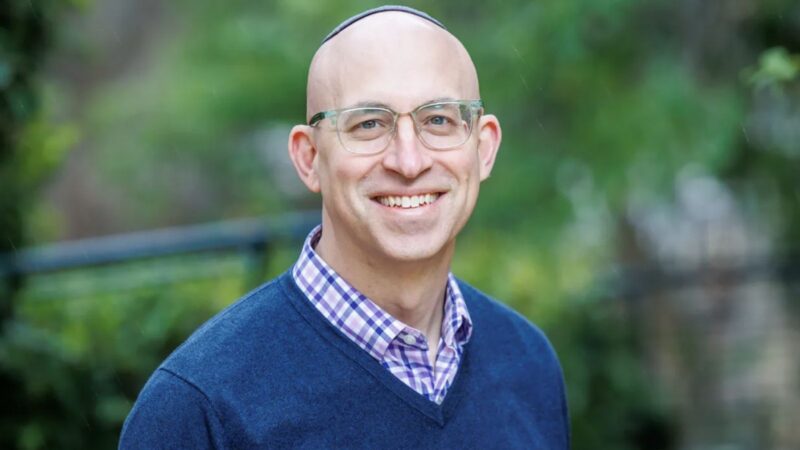
Leader of More Perfect University liked posts justifying Oct. 7 terror attacks

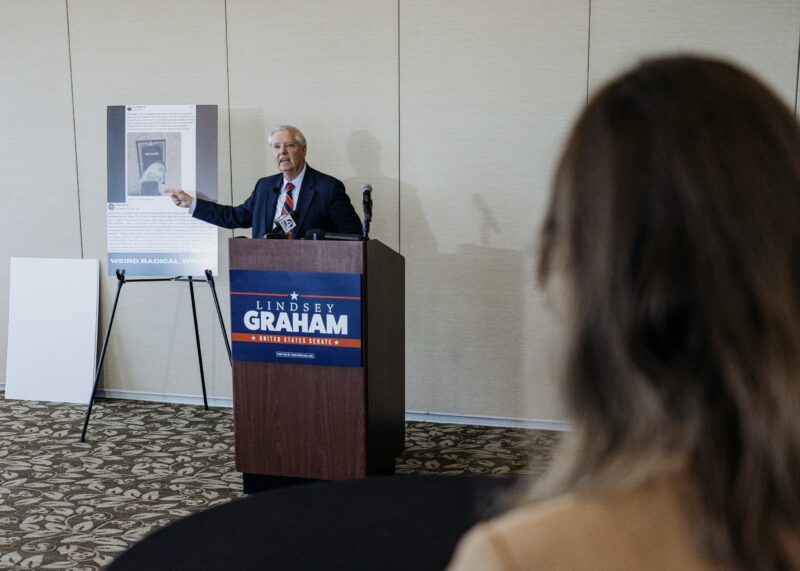
Elise Joshi, a Gen Z activist and influencer who is taking the helm of a newly launched progressive campus advocacy group affiliated with the prominent left-wing media organization More Perfect Union, liked social media posts justifying the Hamas attacks of Oct. 7, 2023, and expressed similar sentiments in at least one now-deleted X comment, Jewish Insider’s Matthew Kassel reports.
Social media history: In one since-removed X comment from Oct. 7, 2023, for instance, Joshi suggested the Hamas attacks that killed 1,200 people and took more than 250 hostages were an act of justified resistance linked to a broader movement including violent efforts to oppose slavery, apartheid and colonialism. Joshi, who at the time was a recent graduate of the University of California, Berkeley, where she emerged as an outspoken youth activist with a sizable following on TikTok, also liked some comments posted on the day of the attack that expressed similar views, other screenshots show — including by one user who had asked, “What did y’all think decolonization meant? Vibes? Papers? Essays? Losers.”
partner posts
Mamdani dodges continued questions about wife’s extreme social media history

New York City Mayor Zohran Mamdani refused to speak directly to his wife’s inflammatory social media history, a day after First Lady Rama Duwaji indicated in an interview she regrets posting a racial slur online while in high school, but stopped short of apologizing for much more recent activity signaling support for Hamas’ Oct. 7, 2023, terror attacks, Jewish Insider’s Will Bredderman reports.
Playing defense: Mamdani refused to directly answer the question when pressed in person on Thursday, preferring instead to praise Duwaji personally. “You know, she shared some of her reflections in this interview. I won’t add much to them,” the mayor said following an unrelated City Hall press conference. “What I will say, however, is that she is someone of incredible integrity, she is someone I am lucky to be able to call my wife and that I am proud of her each and every day.”
CAMPUS SCRUTINY
Trump official defends controversial antisemitism probe of University of Pennsylvania

The Trump administration official leading a controversial probe into antisemitism at the University of Pennsylvania told Jewish leaders and legal experts on Thursday that compiling a list of Jewish faculty with their detailed personal information was necessary to identify and protect victims, Jewish Insider’s Haley Cohen reports from the Louis D. Brandeis Center for Human Rights Under Law’s inaugural conference on antisemitism and civil rights law, held at Harvard University. Last month, a federal judge ordered Penn to comply with a subpoena from the Trump administration requesting detailed information about Jewish university affiliates as part of the EEOC’s ongoing investigation into Penn’s handling of antisemitism.
Collecting names: “There is no other way to protect victims of harassment or discrimination unless you collect information about them,” Andrea Lucas, chair of the United States Equal Employment Opportunity Commission, said. “The EEOC’s long-standing practice is to collect personal information because we want to make sure that there is not any clear monitoring of your email systems … that when you speak to a government agency you feel completely not pressured.”
BOOKSHELF
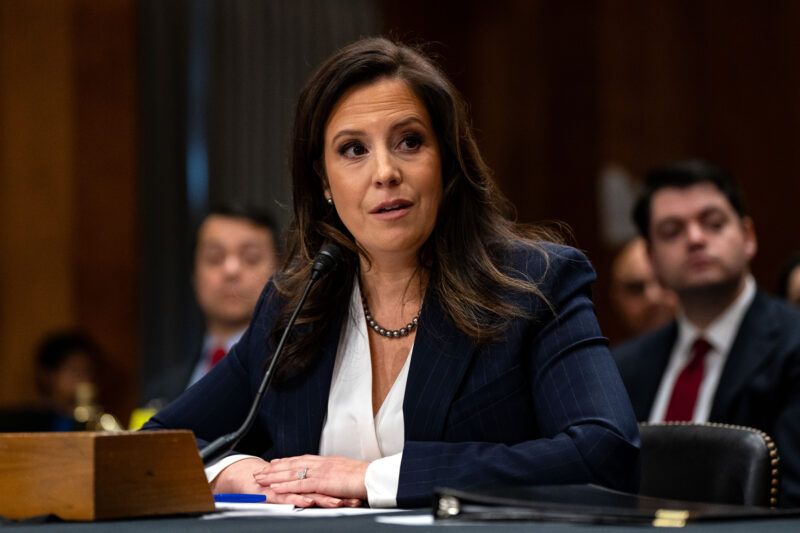
Elise Stefanik showcases her fight against campus antisemitism in new book ‘Poisoned Ivies’

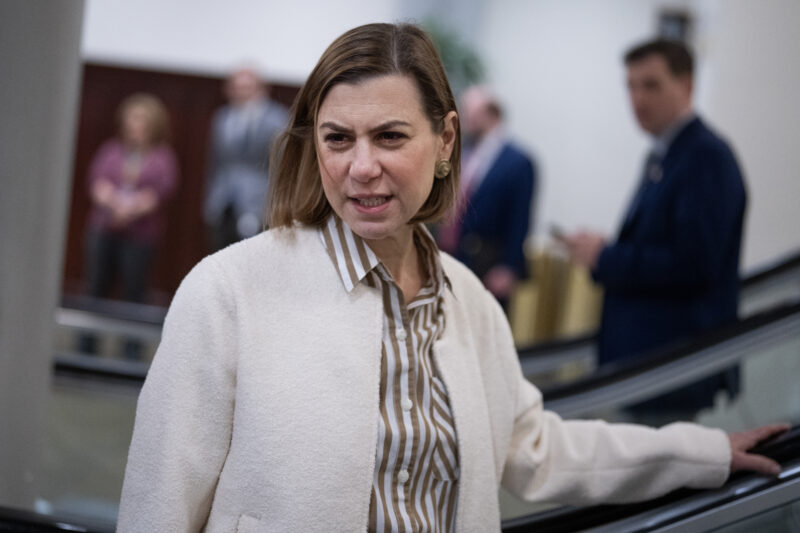
As she prepares to leave Congress next year, Rep. Elise Stefanik (R-NY) is out with a new book on campus antisemitism, Poisoned Ivies: The Inside Account of the Academic and Moral Rot at America’s Elite Universities, recounting her work in the fight that made her a household name in the American Jewish community and beyond, Jewish Insider’s Marc Rod reports. “We’re putting this [book] out in the world and helping set the tone for the type of leadership we need in New York and, frankly, across the country,” Stefanik told JI.
What she said: More than two years after the first House hearing with college presidents on campus antisemitism, Stefanik offered a mixed readout on how she sees the state of American higher education in an interview with JI this week, while praising the ongoing work of the Trump administration on the issue. She also largely dismissed the idea that antisemitism on the right is, or could become, a significant problem within the GOP, arguing that GOP voters reject it in a way that Democrats haven’t. And though she passed on a 2026 gubernatorial run, Stefanik seems to have longer-term plans in New York politics.
WAR UPDATE
Trump announces 10-day Israel-Lebanon ceasefire

President Donald Trump announced a 10-day ceasefire between Israel and Lebanon on Thursday, after holding separate calls with Lebanese President Joseph Aoun and Israeli Prime Minister Benjamin Netanyahu earlier in the day, Jewish Insider’s Danielle Cohen-Kanik reports.
Peace push: “These two Leaders have agreed that in order to achieve PEACE between their Countries, they will formally begin a 10 Day CEASEFIRE,” the president wrote on Truth Social. Trump added in a second post that he will be inviting Aoun and Netanyahu to the White House for “meaningful talks.” Netanyahu said in a statement that he had agreed to the ceasefire “to try and advance the agreement we began discussing during the meeting of ambassadors in Washington” on Tuesday, which were the highest-level discussions between Jerusalem and Beirut in over 30 years.
Bonus: Jewish Insider’s Matthew Shea talks to former U.S. officials, including former U.S. Ambassador to Israel Dan Shapiro and former Iran envoy Elliott Abrams, about Hamas’ rejection of the U.S.-led Board of Peace’s disarmament framework and failure to comply with key demilitarization deadlines.
SCOOP
Senate lawmakers push for $750 million in security grant funding for 2027

Saying that funding to protect synagogues and other religious-based nonprofits “has not kept pace to meet the moment,” 41 senators — almost exclusively Democrats — wrote to leaders of the Senate Appropriations Committee urging members to provide $750 million in funding for the Nonprofit Security Grant Program in 2027, Jewish Insider’s Marc Rod reports.
Increasing need: Last year, 33 senators requested $500 million for the program, a record-high request at the time. This year’s request represents a new high-water mark, both in terms of the funding requested and the number of lawmakers who signed the bipartisan letter in support. “The threat of violence is unfortunately increasing at places of worship across our country at alarming rates,” the lawmakers wrote, citing “an increase in hoax bomb threats and attacks against houses of worship that are intended to interrupt services and intimidate worshippers” in recent years, as well as “an increase in antisemitic incidents across the country following the October 7th attack on Israel.”
Worthy Reads
Let’s Do the Time Warp Again: The Atlantic’s David Brooks opines that modernism has unintentionally caused a “reversion to authoritarian strongmen,” rather than a move toward liberal democracy and expanded personal choice. “Maybe you’ve seen photos of Tehran in the 1970s, just before the Islamic Revolution: images of young women going to work in miniskirts, of couples making out in parks while wearing bell-bottoms, of people at pools in bikinis. It looks like Paris or Milan or Los Angeles. But in 1979 the revolution happened, and now Tehran looks like something from an earlier century. Sometimes I think that our whole world has become kind of like that — going backwards in time. The religious movements thriving in today’s secularized age are the traditionalist ones that dissent from large parts of contemporary culture — not only the Shiite Islam of post-revolution Iran, but Orthodox Judaism and conservative Catholicism.” [TheAtlantic]
Raw Deal: In The Washington Post, RedBird Capital partner Hamid Biglari, who left Iran in 1976, suggests that the Trump administration is making three rectifiable errors in its approach to talks with Iran: negotiating with the wrong representative, ignoring the Iranian public and misgauging Iran’s strategy of slow-walking conflict resolution. “Require a single reconciled text — English and Persian — before any point is treated as agreed upon. Embed automatic escalation triggers in the ceasefire agreement itself, removing the deliberation window that managed irresolution depends on. And make the Iranian population a formal variable: Tie sanctions relief to measurable civilian benchmarks, including restored internet access and a moratorium on political executions. And have reconstruction funds monitored by international bodies rather than IRGC-controlled banks.” [WashPost]
Kennedy Center Calamity: In The Atlantic, Josef Palermo, who until last month served as the Kennedy Center’s first curator of visual arts, reflects on the decisions made by the Trump administration and Ric Grenell, the center’s former acting director, to reform and restructure the institution, including doing away with its Israel Lounge. “Speaking at the opening reception [of an Oct. 7 commemoration event last fall], Grenell warned the mostly Jewish audience that unless donors came forward to sponsor the space and pay for renovation costs, the lounge would be given away to a new donor. ‘It certainly would be a shame if we lost this room to a corporation or an individual and it was no longer the [Israeli] lounge,’ he said. Such a strong-armed fundraising pitch, at an event commemorating a pogrom, struck many of us in the room as inappropriate. I was mortified.”[TheAtlantic]
Not Doing Israel’s Bidding: The Jerusalem Journal’s Avi Mayer posits that claims that Israel pulled the U.S. into war with Iran are factually inaccurate and play into antisemitic tropes. “The reality is that President Trump’s decision to launch the military campaign in Iran was driven by far more than any single ally’s wishes, and claiming otherwise betrays, at best, a lack of familiarity with either the facts or how consequential decisions are made by American presidents. … To focus on Israel’s role while ignoring all other factors and considerations is to ascribe to the Jewish state outsized, almost mystical influence over American policy — a modern echo of dark tropes from bygone eras.” [JerusalemJournal]
Word on the Street
Progressive organizer Analilia Mejia, an outspoken critic of Israel, easily defeated Republican Joe Hathaway in the special election in New Jersey’s 11th Congressional District on Thursday. With most of the vote counted, Mejia is leading Hathaway by 20 points (60-40%), a sizable margin that’s larger than Kamala Harris’ eight-point win in 2024 and Joe Biden’s 17-point win in 2020. But heavily Jewish precincts in Livingston and Millburn swung dramatically to Hathaway, an indication Mejia’s anti-Israel politics led to a Jewish voter backlash…
President Donald Trump said in a Truth Social post that he had initially tapped Joe Kent, the former head of the National Counterterrorism Center who resigned last month over the Iran war, to the position because he was “feeling sorry” for Kent, a failed two-time congressional candidate whose first wife had died in a 2019 Islamic State attack in Syria…
Trump is set to renominate Cameron Hamilton to serve as head of FEMA, a year after Hamilton was ousted from the role amid clashes with then-Homeland Security Secretary Kristi Noem and Corey Lewandowski, who served as a top advisor to Noem…
Trump announced the nomination of Dr. Erica Schwartz to be the next head of the Centers for Disease Control…
Defense Secretary Pete Hegseth warned on Thursday that U.S. forces are “maximally postured” to resume military operations in Iran, and specifically target energy infrastructure, should the country’s current leaders not agree to a negotiated settlement to end the war, Jewish Insider’s Emily Jacobs reports…
The New York Times looks at Vice President JD Vance’s efforts to build up donor support — including from Paul Singer and Dr. Miriam Adelson — ahead of a likely 2028 presidential run, as he serves as finance chair of the Republican National Committee — the first sitting vice president in the role…
The Wall Street Journal profiles Deputy Defense Secretary Stephen Feinberg, the former head of private-equity firm Cerberus Capital Management, as he works to shore up congressional support for the Trump administration’s proposed $1.5 trillion military budget…
The House narrowly voted to block a Democratic resolution to force an end to the war in Iran by a vote of 214-213-1, with all but one of the four Democrats who opposed a similar effort in March changing their votes to support it on Thursday, Jewish Insider’s Marc Rod reports…
The Atlantic’s Jonathan Chait argues that the only way the Democratic establishment can defend itself against the extremist Hasan Piker wing of the partyis to end American financial support for Israel; “If a Democratic president is going to succeed Donald Trump, not only must he or she emerge from a primary electorate that is likely to be highly skeptical of Israel, but the candidate must also win over a November electorate that is highly skeptical of foreign aid of any kind,” Chait writes…
The Wall Street Journal spotlights Factory co-founder and CEO Matan Grinberg, whose AI coding startup is in talks to raise $150 million in a funding round led by Khosla Ventures with backing from Sequoia Capital, Insight Partners and Blackstone…
Empire State Realty Trust Chairman and CEO Anthony Malkin met on Thursday in Doha with Sheikh Bandar bin Mohammed bin Saoud Al-Thani, the governor of Qatar Central Bank…
Patrick Drahi’s Sotheby’s made $53 million in pretax profits in 2025, after two years of losses, amid growth in the art market…
The Wall Street Journal looks at the new private schools being established in South Florida by business, tech and real estate titans, including Jeff Greene, Stephen Ross and Adam Neumann, as the area’s existing private schools struggle to meet growing demand…
Playbill announced the 2027 premiere of “Unorthodox,” a musical co-written by Benj Pasek, Shaina Taub and Joshua Harmon, which will debut in Boston next spring; the show follows the trajectories of a 17-year-old Haredi girl in Brooklyn and her grandmother 60 years earlier at approximately the same age…
A senior official in the U.K.’s Foreign Office resigned amid an investigation that found that the government allowed Peter Mandelson to serve as U.K. ambassador to the U.S. despite having failed the vetting process; a government spokesperson said this week that Prime Minister Keir Starmer was unaware recommendations against Mandelson by the U.K.’s security vetting team had been overruled…
Israel’s “Uvda” news program shared never-released footage of residents of Kibbutz Kfar Aza reuniting in the immediate aftermath of the Oct. 7, 2023, Hamas terror attacks…
The Palestinian Authority extradited to France a man accused of coordinating a deadly 1982 terror attack on a Jewish restaurant in Paris’ Le Marais district; Hicham Harb was one of four individuals sought in the aftermath of the attack, in which six people were killed…
Israeli Ambassador to France Joshua Zarka reportedly met this week with Marine Le Pen, the leader of the far-right National Rally party…
CNN spotlights Iranian cyberattacks on the United Arab Emirates and Bahrain, which skyrocketed following the onset of the war in February…
Former longtime New York City Councilmember Carol Greitzer, who spent her years in office working to protect Greenwich Village from gentrification and development, died at 101…
Wine of the Week

JI wine columnist Yitz Applbaum reviews the La Citadelle de Diamant Marius:
“To experience this mind-boggling Israeli wine, one whose roots run deep in French winemaking tradition, I traveled to Heckfield Place in Hook, England: a 5-star hotel, owned by my dear friend Dr. Gerold. The hotel is a world leader in farm-to-table dining, and its freshness and vitality mirrored the wine perfectly.
“La Citadelle de Diamant Marius is a blend of cabernet, merlot and shiraz, with grapes sourced from Moshav Nov, an angelic moshav in the Golan Heights. The opening bruises the palate with powerful tannins, a sign this wine has a long road ahead. The mid-palate reveals the deep earthiness of a true Bordeaux blend, and the finish is as elegant as the packaging is beautiful. It pairs brilliantly with grilled ChalkStream trout and has at least another seven years of life ahead of it.”
Pic of the Day

Former Israeli hostage Rom Braslavski (right), with Jerusalem Mayor Moshe Lion, took part in the annual International Jerusalem Winner Marathon in the Israeli capital this morning. Braslavski, who was freed from Hamas captivity in October, kicked off the marathon’s 10K race.
Birthdays
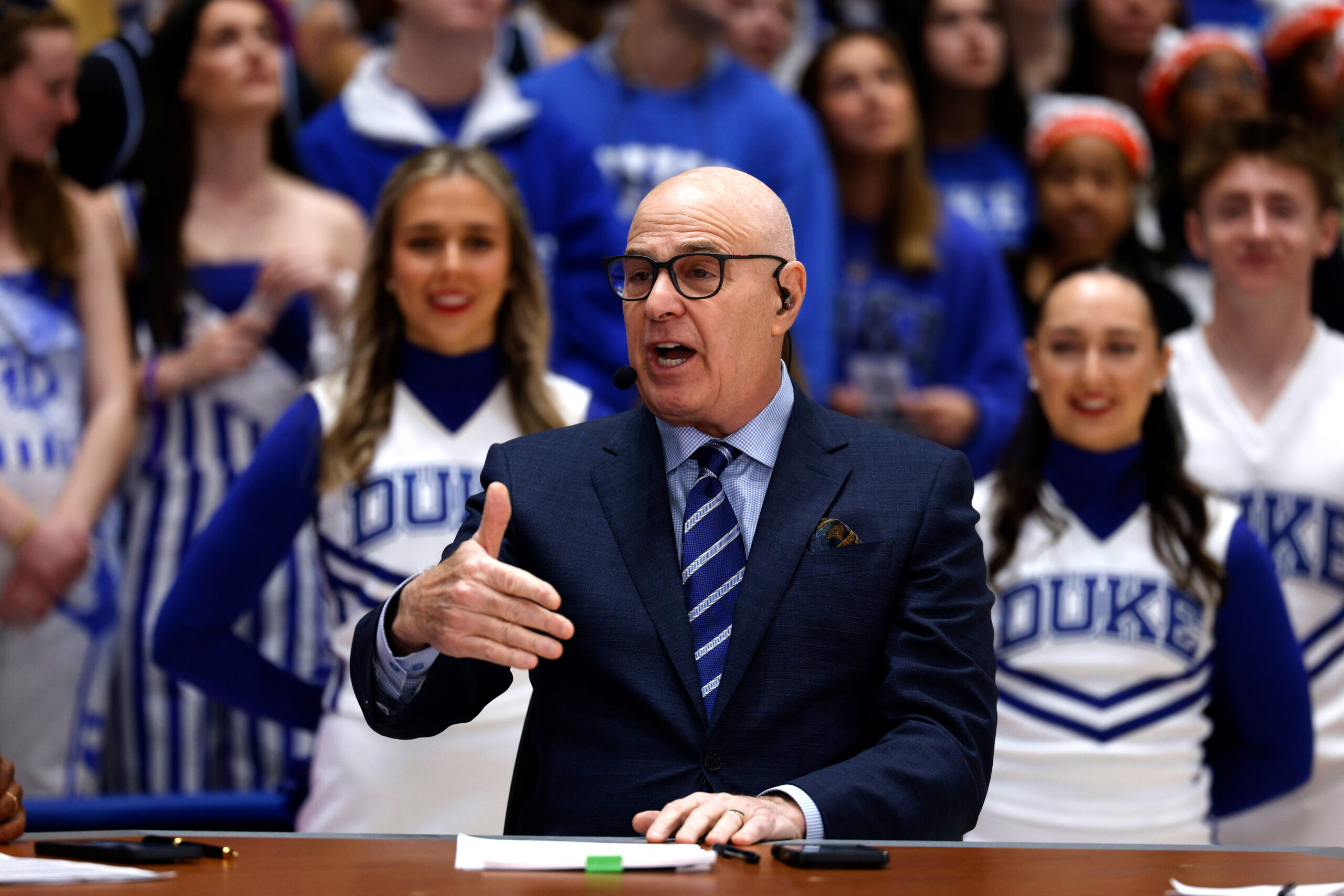
Former college basketball coach for 34 years, he is now an ESPN analyst, Seth Greenberg turns 70 on Saturday…
FRIDAY: Short story writer, novelist and essayist, Cynthia Ozick turns 98… Retired Los Angeles cardiologist and active Yiddish enthusiast, Dr. Martin Bobrowsky turns 86… NYU professor and noted legal scholar, he spent 38 years on the faculty of University of Chicago Law School, Richard Allen Epstein turns 83… Affiliate of Tel Aviv law firm Guy, Bachar & Co., Barry Schreiber… Official historian for Major League Baseball since 2011, he was born in a DP camp in Germany following WWII, John Abraham Thorn turns 79… Talk radio host best known for his work on NYC’s sports radio station WFAN, his nickname is “The Schmoozer,” Steve Somers turns 79… Rebbe and leader of the Pupa Hasidic group, Rabbi Yaakov Yechezkiya Greenwald turns 78… CEO of B’nai B’rith International, retiring at the end of June, Daniel S. Mariaschin turns 77… Dean of Beth Medrash Govoha in Lakewood, N.J., one of the largest yeshivas in the world with more than 9,000 students, Rabbi Aryeh Malkiel Kotler turns 75… French businessman, based in Geneva, he and his brother own the House of Chanel perfume company as well as holdings in vineyards and a thoroughbred horse racing stable, Gérard Wertheimer turns 75… Former member of the Rhode Island Senate, Joshua Miller turns 72… Elizabeth H. Scheuer… Israeli journalist for the daily Yedioth Ahronoth, Ben-Dror Yemini turns 72… Rabbi emerita, after 39 years, of Beth Hillel Temple in Kenosha, Wis., her brother is the former U.S. senator from Wisconsin, Russ Feingold, Dena Feingold… Co-founder and former CEO, now board member, of United Talent Agency (UTA), Jeremy Zimmer turns 68… Actress, screenwriter and film director, Daphna Kastner turns 65… Winner of two Super Bowl rings during his career with the San Francisco 49ers, he is now a physician and an inductee in the National Jewish Sports Hall of Fame, Dr. John E. Frank turns 64… Director of Rutgers University Press since 2016, following 15 years at Temple University Press, Micah Kleit turns 56… Professor of politics at NYU and longtime co-author of “The Monkey Cage,” a politics and policy blog at The Washington Post, Joshua A. Tucker turns 55… Congressional editor for The New York Times, she is also a political analyst for CNN, Julie Hirschfeld Davis turns 51… Member of the Alaska Legislature, first in the Assembly and then in the state Senate, Jesse Kiehl turns 50… Israeli actor, musician, director and television presenter, Ido Mosseri turns 48… Executive director at Morgan Stanley, Nadya Belenkiy… Deputy editor-in-chief at Semafor, Shelly Banjo… Southern California-based regional director at The Washington Institute for Near East Policy, Ora Miriam “Miri” Katz Belsky… Press secretary for Senate Minority Leader Chuck Schumer (D-NY), Angelo Roefaro… Wikipedia editor since 2004, having made at least one edit to one-third of all English Wikipedia articles, Steven Pruitt turns 42… Senior communications manager at the Center for Responsible Lending, Matt Kravitz… Partner at Bully Pulpit Interactive, Alex Kellner… Grammy Award-winning singer-songwriter, Avriel “Avi” Benjamin Kaplan turns 37… Former deputy national security advisor for strategic communications and speechwriting for then-VPOTUS Kamala Harris, Dean Lieberman… Member of the Baltimore City Council, Isaac “Yitzy” Schleifer turns 37… Deputy general counsel at the Missouri State Highway Patrol, Brian T. Earll turns 34… Offensive lineman for the NFL’s Tampa Bay Buccaneers for seven seasons, he retired in 2022 and is now pursuing a doctorate in psychology, Alexander “Ali” Marpet turns 33… Associate at Covington & Burling, Ahuva Neuberger…
SATURDAY: Chief rabbi of the Old City of Jerusalem until 2008, Rabbi Avigdor Nebenzahl turns 91… Senior counsel in the intellectual property law firm of Adwar Ivko, Philip Furgang turns 89… Former executive director of the American Civil Liberties Union for 23 years until 2001, Ira Saul Glasser turns 88… Biochemist, geneticist and winner of the Nobel Prize in Medicine in 1985, Joseph Leonard Goldstein turns 86… Partner and managing director of fundraising consulting firm Mirsky, Jaffe & Associates, Michael Jaffe turns 86… English barrister and arbitrator, his clients have included the British chief rabbi in a case which held that the rulings of the beit nin were not subject to judicial review, Michael Jacob Beloff turns 84… Corporate turnaround expert and mergers & acquisitions specialist, Jerry W. Levin turns 82… Los Angeles resident, Saul Bernstein… Former member of the Vermont state Senate and co-founder of Jogbra, the original sports bra, Hinda Miller turns 76… Former mayor of Phoenix for eight years after two terms on the Phoenix City Council, Phil Gordon turns 75… Composer, pianist and musicologist, Robert M. Greenberg turns 72… Pulitzer Prize-winning reporter and director of the Northeastern University School of Journalism, Jonathan Kaufman turns 70… Pulitzer Prize-winning journalist and author of four acclaimed books, Susan Faludi turns 67… Community leader in Detroit and former president of AIPAC, David Victor… Editor of Commentary magazine, John Mordecai Podhoretz turns 65… President and dean of Ohr Torah Stone institutions in Israel since 2018, prior to making aliyah he was a VP at Yeshiva University and rabbi of the Boca Raton (Fla.) Synagogue, Rabbi Dr. Kenneth R. Brander turns 64… VP and deputy general counsel at Scholastic Inc, he is a past president of Beth El Synagogue Center in New Rochelle, N.Y., Mark Seidenfeld… Executive director of the American Zionist Movement, Herbert Block… Emmy Award-winning actress known for her work on daytime television, Tamara Braun turns 55… Film director and producer associated with the horror genre, Eli Roth turns 54… Chabad rabbi, founder and executive director of the Aspen Chabad Jewish Community Center, Mendel Mintz turns 51… Poet, critic, translator and professor, Ilya Kaminsky turns 49… Under secretary of homeland security for strategy, policy and plans during most of the Biden administration, now partner at Ropes & Gray, Robert P. Silvers turns 46… VP for political campaigns and strategy for AIPAC’s Florida region, Evan Philipson… Dov Maimon…SUNDAY: A co-founder of Judea Reform Congregation, in Durham, N.C., Nancy Jean Warner Laszlo turns 90… Jocelyn’s father, Robert Brotman turns 89… Legal scholar and public intellectual, now a visiting professor at Cardozo School of Law, Stanley Fish turns 88… Prominent Israeli criminal defense attorney who also served as the attorney general of Israel, Yehuda Weinstein turns 82… Rebbi of the Vizhnitz Hasidic dynasty based in Bnei Brak, Israel, Rabbi Yisroel Hager turns 81… Head of strategic human resources at Elliott Investment Management, prominent philanthropist on the board of The Paul E. Singer Foundation, Tikvah Fund, Jewish Food Society and Startup Nation Central, Terry Kassel… Comedian, actress and mental health campaigner in the U.K., Ruby Wax turns 73… Investor and hedge fund manager, Jacob Ezra Merkin turns 73… VP of GEM Commercial Flooring Company in Kansas, Gloria Elyachar… Angel investment fund manager, he won three Super Bowls during his 12-year NFL career, Harris Barton turns 62… Law professor at Arizona State University and senior fellow at the Foundation for Defense of Democracies, Orde Félix Kittrie turns 62… Historian, author, screenwriter, political commentator and senior lecturer at the Hebrew University, Gadi Taub turns 61… Board chair of Prizmah: Center for Jewish Day Schools, Laurie Hasten… Israeli entrepreneur best known as the founder and former CEO of Better Place, an electric car company that raised $850 million yet was liquidated in a 2013 bankruptcy, Shai Agassi turns 58… Attorney general of Michigan, Dana Nessel turns 57… French stand-up comedian and actor, during 2019 he starred in “Huge in France,” an American comedy series on Netflix, Gad Elmaleh turns 55… Author of five books and a frequent columnist in The New Yorker, Rivka Galchen turns 50… Veteran journalist, Gil Hoffman turns 49… Award-winning film, television and theater actor, his official bar mitzvah was in 2015 at age 37, James Franco turns 48… Toronto-based entrepreneur, philanthropist, CEO and co-founder of Klick Health (a digital marketing firm in the medical field), Leerom Segal turns 47… Actress, author and fashion entrepreneur, she co-founded Fabletics (a fitness brand and membership program), Kate Hudson turns 47… Chief development officer at NYC’s Metropolitan Council on Jewish Poverty, Brian Tregerman… Rabbi, philosopher, poet, coach and entrepreneur, he writes a weekly Torah commentary on Substack, Zohar Atkins turns 38… Senior program officer at Schusterman Family Philanthropies, Seffi Kogen… Jake Gerber…
Netanyahu: Attacks were Israeli Air Force’s largest flyover in history

Mahsa / Middle East Images / AFP via Getty Images
A plume of smoke rises over Tehran after a reported explosion on February 28, 2026.
The U.S. and Israeli militaries planned attacks on Iran for months, marking “unprecedented cooperation,” Lt.-Gen. Eyal Zamir, the IDF’s chief of staff, said on Saturday, hours after the launch of what Israel has called Operation Roaring Lion and the U.S. has called Operation Epic Fury.
“In recent months, under the direction of the political leadership, I have led — in coordination with my counterparts, the chairman of the Joint Chiefs of Staff and the commander of CENTCOM — a deep and comprehensive joint operational planning process. This reflects unprecedented cooperation between the IDF and the United States military,” Zamir said.
An IDF official speaking on condition of anonymity said that the two militaries “worked for thousands of hours” to increase its target bank “by hundreds of percent.”
The plan centered on “an intelligence effort … to identify an operational opportunity at the moment when senior regime officials would convene,” the official said. The IDF struck three such gatherings simultaneously and killed “several senior figures.”
Israeli Prime Minister Benjamin Netanyahu confirmed in a video statement that one of those targets was Ayatollah Ali Khamenei, Iran’s supreme leader, saying that the IDF likely killed him.
“Today, in a surprise attack, we destroyed Iranian Supreme Leader Ali Khamenei’s compound in the heart of Tehran,” he said. “For three and a half decades, this tyrant sent terror throughout the world, immiserated his nation and worked all the time on his plan to destroy Israel.”
“That plan is gone and there are many signs that the tyrant is gone,” Netanyahu said. President Donald Trump later confirmed the news.
Netanyahu said that Israel plans to hit “1,000 terror sites” in the coming days.
Directing his remarks at the people of Iran, Netanyahu said, “Soon your moment will come in which you must go out on the streets … Help has arrived and now the time has come for you to unite for a historic mission … to bring down the regime and ensure your future.”
The strikes on Iran’s missile array and air-defense systems by 200 fighter jets were the Israeli Air Force’s largest-ever flyover, the IDF Spokesperson’s office said.
The IAF fighter jets struck 500 targets throughout western and central Iran, such as one in Tabriz, which was used for Iran’s surface-to-surface missiles. Another strike targeted an advanced SA-65 aerial-defense system near Kermanshah in western Iran, the IDF said.
The IDF sent warnings via social media to Iranian civilians living near weapons production and military infrastructure facilities: “Dear citizens, for your safety and well-being, we urge you to immediately evacuate these areas and remain outside of them until further notice. Your presence in these locations puts your lives at risk.”
Iran launched missiles and attack drones at Israeli population centers throughout the day, including ones that include cluster munitions, the IDF said.
“Cluster weapons are designed to disperse over a large area and maximize the chances of a harmful strike. Iran goes to great lengths in trying to maximize harm to Israeli civilians,” Nadav Shoshani, the IDF international media spokesperson, stated.
Zamir said that Operation Roaring Lion is “a significant, decisive, and unprecedented operation, to dismantle the capabilities of the Iranian terrorist regime — capabilities that constitute an ongoing existential threat to the security of the State of Israel. This is an operation to secure our existence and our future here, in the land of our forefathers, for generations to come.”
Since last year’s Operation Rising Lion, as the IDF called the 12-day war with Iran, “the radical Iranian terrorist regime has not abandoned its vision or its hostile intentions to advance its plan to destroy Israel. It has continued to promote its nuclear project, restore and accelerate ballistic missile production, and destabilize the region through the funding and arming of terrorist proxies,” Zamir said.
The IDF chief of staff also tied the operation to the holiday of Purim, which begins on Monday night, and celebrates the Jews of the Persian empire overcoming an attempted genocide.
“The Book of Esther teaches us that responsibility for our destiny rests first and foremost in our own hands — in courage, initiative, unity and the willingness to fight for our right to live here in freedom and in peace,” Zamir said. “Soldiers and commanders of the IDF… carry with you the vision of our forefathers.”
Shoshani wrote in a blog post that the timing of the operation was due to “a dangerous acceleration in [Iran’s] capabilities,” including long-range missile production and continued proxy funding.
“Israel reached a point where the threat was no longer ‘developing,’” Shoshani wrote. “The threat was direct and imminent.”
The objective of the strike, Shoshani said, was to “fundamentally reduce and degrade Iranian terrorist regime capabilities, eliminating long-term existential threats to the state of Israel.”
The IDF also called up 70,000 reservists to serve on Israel’s borders, the West Bank and Gaza to stop any infiltration attempts, as well as search and rescue forces prepared to go to the site of any Iranian missile strikes.
Israelis throughout the country spent the day going in and out of safe rooms and bomb shelters at the sound of air raid sirens, which blared more frequently in Israel’s densely populated center, reflecting the area Iran targeted.
IDF Home Front Commander Maj.-Gen. Shay Kleper said that “past experiences prove that the public’s strict following of protocol has saved many lives. The grit and responsibility of everyone is a key element in countering the threat.”
Israeli Foreign Minister Gideon Sa’ar spoke about Israel’s decision to strike Iran and the operation’s objectives with 17 of his counterparts, in phone calls to Argentina, Austria, Germany, India, Italy, Hungary, the Czech Republic, Latvia, the European Union, France, Canada, Australia, Ecuador, Greece, Ethiopia, Singapore and North Macedonia.
Young American Jews between the ages of 18-29 have faced the brunt of rising antisemitism, with 47% saying they were a target of antisemitism over the last year, compared to 28% among those 30 and over

Spencer Platt/Getty Images
Members of the Hasidic Jewish community gather outside of the Chabad Lubavitch world headquarters, on January 29, 2026, in New York City.
Nearly two-thirds of Jewish Americans say they feel less safe than a year ago, according to the American Jewish Committee’s newly released annual survey of Jewish public opinion, reflecting a heightened fear of antisemitism in the aftermath of several high-profile attacks against Jews and Jewish institutions.
As notable: About one-third of American Jews reported being a target of antisemitism — whether it was physical or in a virtual space. Nearly one-fifth said they would consider leaving the country as a result of antisemitism, a number that’s been on the rise over the last several years (up from 6% in 2024).
Young American Jews between the ages of 18-29 have faced the brunt of rising antisemitism, with 47% saying they were a target of antisemitism over the last year, compared to 28% among those 30 and over.
At the same time, about two-thirds (65%) of Jews overall said they felt safe attending Jewish institutions, while 60% said they were not worried about being a victim of antisemitism in the next year.
The polling, conducted by SSRS between September and October 2025, shows that both reported antisemitic incidents and fear of facing antisemitism have plateaued but are still near historic highs, when compared to the AJC’s previous surveys. (SSRS surveyed 1,222 Jewish respondents in one survey between Sept. 26-Oct. 29; it separately surveyed 1,033 U.S. adults between Oct. 3-5.)
Antisemitism continues to be particularly prevalent on college campuses, where 42% of students have reported anti-Jewish hate during their time in school — up from 35% in the AJC’s 2024 survey. The vast majority of Jewish parents (80%) said that the level of antisemitism on a campus plays a role in deciding where their student will attend college.
There’s also a noticeable gap between the near-universal view among Gen Z Jewish Americans that antisemitism is a problem (93%) and the significant but much smaller share of non-Jewish young Americans who think it is a problem (61%).
In addition, there is a noticeable spike in American Jews being exposed to explicit antisemitism when scrolling on social media. Over half of Jewish respondents (54%) said they’ve dealt with antisemitism on Facebook — up seven points in the last year. Over one-third (38%) said they’ve experienced antisemitism on YouTube — an 11-point spike in the last year. And two-fifths of Jewish respondents said they’ve experienced antisemitism on Instagram — up eight points since 2024.
Also significant: The survey asked Jewish respondents whether the phrase “globalize the intifada” — one that New York City Mayor Zohran Mamdani has pointedly declined to condemn — would make them feel unsafe. The vast majority (69%) of American Jews said it would either make them feel “very unsafe” or “somewhat unsafe.”
Among non-Jews, interestingly, the poll found very few (only 13%) had seen or heard the phrase “globalize the intifada” at all in the last year — possibly a reflection of why Mamdani’s refusal to condemn the slogan didn’t become a bigger political problem for him.
But among the general public, there was a wide awareness of how such virulently anti-Israel sloganeering is intermingled with antisemitism. More than three-quarters of overall respondents (79%) said that believing Israel has no right to exist is antisemitic, while about two-thirds said that anti-Zionist slogans like “Free Palestine” and “globalize the intifada” were connected to antisemitic incidents.
A synagogue and Jewish community center in Canada’s second-biggest city were firebombed and vandalized

Donald Weber/Getty Images
Some 2,000 people attend a rally to support religious tolerance after a series of recent antisemitic attacks struck synagogues and homes March 24, 2004 at the Lipa Green Centre in Toronto, Canada.
A synagogue in Montreal was targeted with arson early Wednesday morning for the second time since the Oct. 7 attacks. The incident marks the seventh instance in the last 14 months where a Jewish institution in Montreal, Canada’s second largest city, has been attacked.
As a result, Jewish leaders criticized elected officials on Wednesday for what they say has been a muted response in the face of rising antisemitism and warn that Canada is becoming increasingly unsafe for Jews, spiraling into “total chaos.”
Police were called to Beth Tikvah, a Modern Orthodox synagogue, in the city’s Dollard-des-Ormeaux suburb around 3 a.m. after receiving reports of fire, according to the Montreal Gazette. Police also discovered two smashed windows at the nearby Jewish community center that houses offices of the Federation CJA and the Hebrew Foundation School.
Upon arriving at the scene, police reportedly found remnants of a crude firebomb and smashed glass. Smoke caused minor damage to the building. No injuries were reported. A spokesperson for the Montreal police told Jewish Insider that the investigation is ongoing and no arrests have been made.
Henry Topas, Beth Tikvah’s cantor and B’nai Brith Canada’s regional director for Quebec and Atlantic Canada, told JI that the attack comes as the government of Canada has “allowed unbridled immigration to come.”
“The people who have been coming have not been adapting to the fabric of Canadian society,” Topas said. “Montreal Mayor [Valérie Plante] has virtually handcuffed the police. She doesn’t let the police do their job and she has allowed threatening — verging on violent — [anti-Israel] demonstrations to go on and people feel free to do whatever the hell they want,” Topas said. “It’s total chaos.” Plante did not immediately respond to a request for comment from JI about her handling of anti-Israel protests.
In a statement Wednesday, Federation CJA echoed that the fire is a “brutal reminder of what happens when politicians don’t denounce antisemitism and the escalation of violence in our streets.”
Pierre Poilievre, Canada’s Conservative party opposition leader, condemned “these cowardly acts” in a statement.
He called on “this Liberal government to finally show a backbone and do something to protect our people.”
“Another brazen act of antisemitic hate and violence overnight,” Poilievre wrote on X. “After 9 years of [Prime Minister] Justin Trudeau, Canada has become a more dangerous place for people of the Jewish faith.”
Both Trudeau and Plante denounced the attacks in statements. On X, Plante wrote, “Antisemitic actions are criminal actions. The SPVM will investigate and will find those responsible. It is not acceptable that Montrealers live feeling unsafe because of their religion.”
Trudeau described it as a “cowardly, criminal” and a “vile antisemitic attack.”
Jewish leaders worldwide also condemned the attacks and called for a stronger response from Canada’s lawmakers.
Jonathan Greenblatt, CEO of the Anti-Defamation League, said on X that the “lack of global outrage” to attacks on Montreal’s Jewish community “is inexplicable and inexcusable.”
Israeli Foreign Minister Gideon Sa’ar said the local government should “take the strongest possible stance against antisemitism” following the attacks.
The recent spate of antisemitic incidents in Montreal has also included a Jewish day school being fired upon and the vandalism of a billboard announcing a new Montreal Holocaust Museum.
Beth Tikvah was also the target of a Molotov cocktail in November 2023, which caused burn marks on the front door. Topas said that despite the attacks, he expects “above normal attendance this [Shabbat] to show solidarity, [including] people from other societies and faiths.”
Please log in if you already have a subscription, or subscribe to access the latest updates.
 Continue with Google
 Continue with Apple