




























Lawmakers split on whether Trump should have tied Syria sanctions relief to Israel normalization
Members of Congress acknowledged Israel-Syria normalization is a worthwhile goal, while recognizing the limits of the current geopolitical landscape
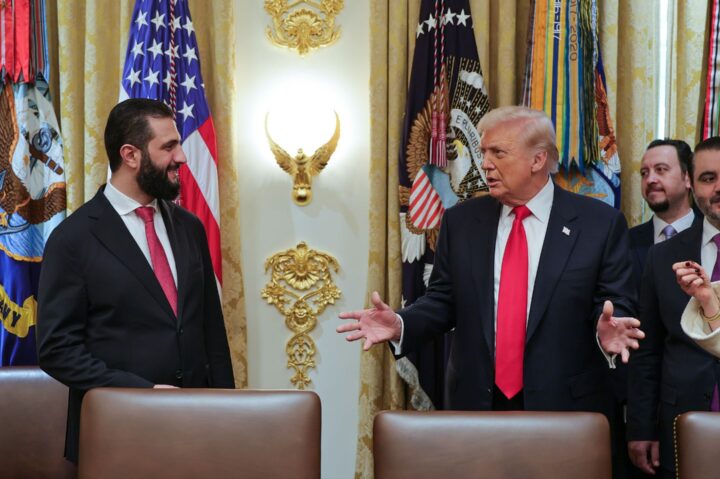
Syrian Presidency/Anadolu via Getty Images
President Donald Trump meets with Syrian President Ahmad al-Sharaa at the White House on Nov. 10, 2025.


 Add JewishInsider on Google
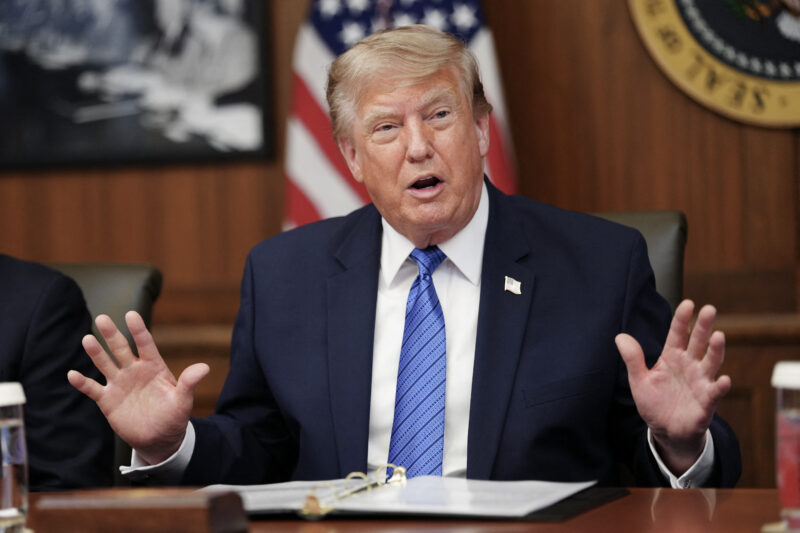
As the Trump administration moves to end the diplomatic isolation of Syria, dismantling decades of U.S. sanctions in the process, lawmakers are offering mixed assessments of whether Washington should have conditioned that relief on steps toward normalizing relations with Israel.
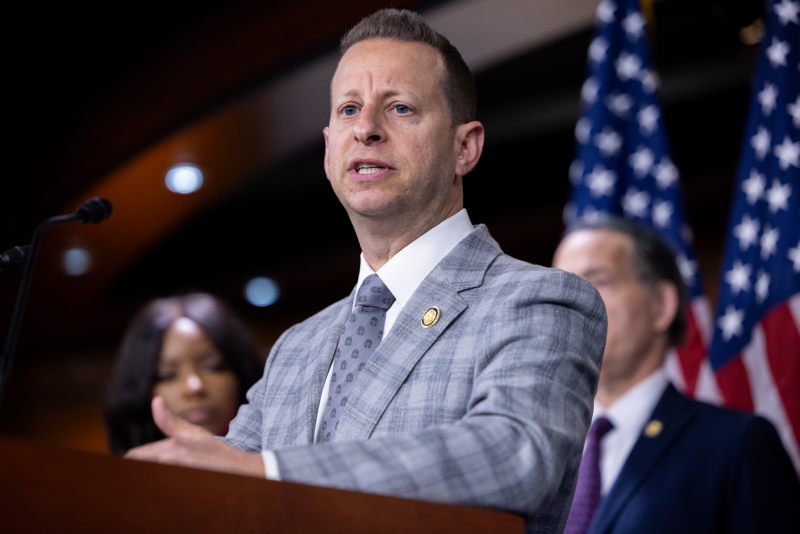
Rep. Brad Sherman (D-CA) told Jewish Insider the Trump administration “should be urging” Damascus to improve economic and political relations with Jerusalem in exchange for sanctions relief, “but I would say that you’ve got to have a consistent standard.”
Sherman noted he would “like to see Syria move in that direction,” toward joining the Abraham Accords, “even if they can’t join the accords yet.” However, he cautioned that the administration’s leverage depends on what Damascus is seeking, drawing a distinction between whether Syria is asking for direct U.S. aid or “if they’re simply asking for the same normal treatment” that the U.S. provides to other sovereign nations.
“We need to do everything we can to see Syria succeed and write a new chapter, and our support needs to come with expectations and accountability,” Rep. Brad Schneider (D-IL) told JI. “The United States has an opportunity to work to bring Syrians and Israelis together to an agreement that will not just improve the lives of people living on each side of the border, but help pave the path towards better stability throughout the region.”
Congress and the Treasury Department lifted the U.S.’ longstanding sanctions on Syria unconditionally in June 2025.
Rep. Steny Hoyer (D-MD) agreed that the Trump administration should be pursuing normalization as part of its efforts with Damascus, but said the current focus on prioritizing stability is a “worthwhile objective” and “positive” effort.
“I think a stable, democratic [Syria] may be too much of a hope, but a stable and non-terrorist-supporting Syria is important to the Middle East and to the United States of America and to some type of global stability,” Hoyer said to JI. “Efforts to normalize the government are positive and part of that will ultimately involve normalizing relations between their neighbor Israel and themselves, and I think that will be determined by [Syria’s] performance.”
Rep. Troy Nehls (R-TX), meanwhile, deferred to the White House’s diplomatic strategy. “I would let the administration do the negotiations as it relates to Syria. I’m not part of those discussions, but Trump is trying to make the world a safer and a better place for everybody, and so if he can find a way to cut some deals, I support it.”
Rep. Tim Burchett (R-TN) told JI he would like to see relations between Syria and Israel improve, but did not push back on the White House lifting sanctions before that progress was made.
“No, I just think it’s something we look at. It’s always going to be a variable, but words are cheap, actions are where we got to see it,” Burchett said. “I haven’t trusted Syria as far as I can throw them, so we’ll just see what happens. I’d prefer they normalize relations with Israel, but I mean that fight has been going on since before the time of Christ. I don’t know that we’re going to solve it by signing a piece of paper.”
Foreign policy experts told JI that normalization between Israel and Syria remains stalled by highly complex territorial and political issues, making it unrealistic to leverage relief on such progress.
“Normalization between Israel and Syria is not remotely close and shouldn’t even be on anyone’s radar,” said Michael Koplow, chief policy officer at the Israel Policy Forum. “Expecting any imminent normalization between Syria and Israel given decades of enmity, an ongoing IDF presence in southern Syria and severe disagreements over Syrian policy toward its Druze and Kurdish minorities is not realistic.”
Koplow explained that the administration is focused on “taking advantage of the end of the Assad regime” to give the nascent government “a chance to succeed,” while pulling Damascus toward Washington and away from hostile regional actors.
“U.S. policy towards Syria should not be judged on whether it is going to normalize with Israel, but over other more pressing and imminent concerns that impact U.S. priorities,” Koplow said.
John Hannah, a senior fellow at the Jewish Institute for National Security of America, agreed that normalization with Israel “hasn’t been on the agenda.”
“In Syria’s eyes, and certainly in the eyes of [Syrian President Ahmad al-]Sharaa and the ex-jihadists who came to power with him, normalization without recovering the Golan Heights is an absolute non-starter and would be widely viewed as abject and unacceptable surrender and capitulation,” Hannah said. “Of course, it goes without saying that any discussion about withdrawing from the Golan is equally anathema in Israel. So I just don’t see normalization as being in the cards right now.”
Israel formally annexed the Golan Heights in 1981, after capturing the territory from Syria in the 1967 War. The IDF has held additional territory in southern Syria as a security zone since the collapse of the Assad regime.
President Donald Trump reportedly asked Israeli Prime Minister Benjamin Netanyahu earlier this month to pull back IDF troops from Syria.
Still, Hannah noted that al-Sharaa has shown “no interest whatsoever in fighting with Israel” since rising to power and has taken positive steps toward Jerusalem.
“On the contrary, for most of 2025 [al-Sharaa] was practically begging Israel to resurrect, update and strengthen the Israel-Syria disengagement agreement of 1974,” Hannah said. “Indeed, for the first time in 25 years, al-Sharaa, the former Al-Qaida leader, authorized direct Israel-Syria negotiations under U.S. auspices to reach a new security agreement.”
Hannah suggested the U.S. still has an opportunity to “play some hardball” and use rolling back Syria’s State Sponsor of Terrorism designation as leverage. Trump formally initiated the process to lift the designation, which has been applied to Syria since 1979, earlier this month.
The White House could press “for an expansion of security, economic and social relations with Israel,” Hannah said. “That’s separate from a demand for full normalization, which I just don’t see as realistic under present circumstances.”
Al-Sharaa has worked to earn the overtures from Washington by cooperating with U.S. priorities, Hannah argued.
“He ensured Iran and Hezbollah’s eviction from Syria and has systematically fought their efforts to maintain Iran’s land bridge to Lebanon, engaging in several firefights with Hezbollah units trying to smuggle weapons across the border,” Hannah said. “He directed his security forces to work closely with CENTCOM in combating ISIS, cooperated with the U.N. to come clean on Assad’s chemical weapons program and constrained the ability of Palestinian terrorist groups to operate from Syrian soil.”
Despite these positive security developments, analysts warn that serious issues remain about al-Sharaa’s governance.
“There should be concerns about ongoing extremism within the ranks of Syrian leadership and the military, and the al-Sharaa government’s ties to Turkey and to what extent Syria is going to trade Iranian domination for Turkish domination,” Koplow said.
Hannah raised similar alarms regarding the internal makeup of the transitional government and its growing reliance on neighboring powers.
“There is definitely a legitimate question of whether Trump surrendered America’s overwhelming economic leverage too cheaply by not demanding even more from Sharaa,” Hannah said. “For example, by requiring the decommissioning of radical jihadist groups that he incorporated wholesale into his new army, holding to account those forces in his service that committed massacres against Alawites and Druze civilians in 2025 and guaranteeing full rights and protections to Syria’s disparate religious and ethnic minorities, including the Kurds who fought alongside the U.S. against ISIS for more than a decade.”
More Stories
FAMILY TRAGEDY
Israeli ambassador’s son seriously wounded in West Bank car-ramming attack
ALTERNATE REALITY
Pezeshkian denies Iran seeks nuclear weapons at UNGA
Daily Kickoff
Netanyahu’s New York minute
MEMORIAL EVENT
State Department plans memorial for American victims of Oct. 7 attack
ON ALERT
NYPD braced for ‘multiple protests every day’ around U.N. summit
CANARY CALL
Two Seattle Jewish leaders warn of Jewish complacency in face of rising antisemitism
Please log in if you already have a subscription, or subscribe to access the latest updates.
 Continue with Google
 Continue with Apple