
































































Who won the U.S.-Iran war? Dubowitz, Sadjadpour, Ghattas debate
Mark Dubowitz and Karim Sadjadpour held opposing views but agreed that the MOU is ‘fatally flawed’ and favors Iran
Screenshot/YouTube
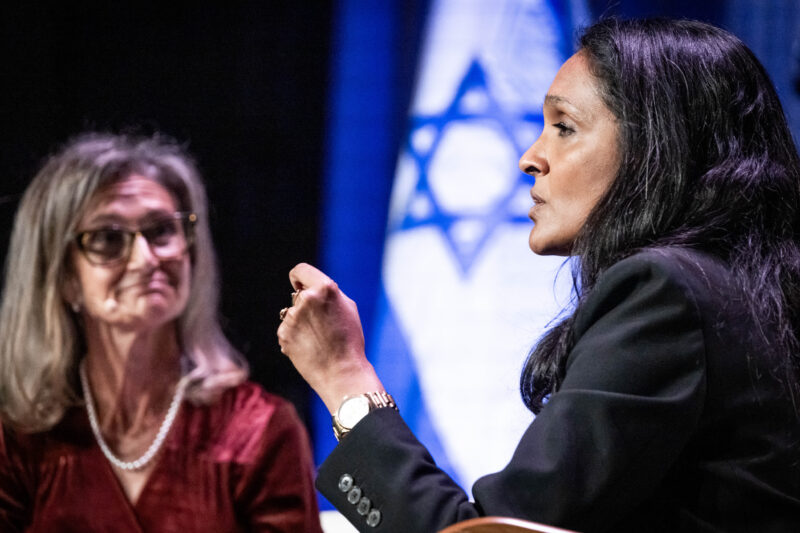
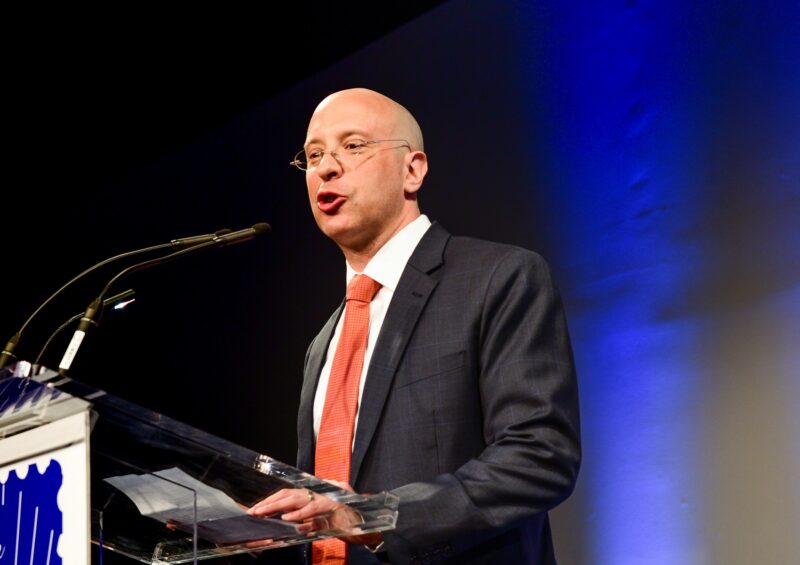
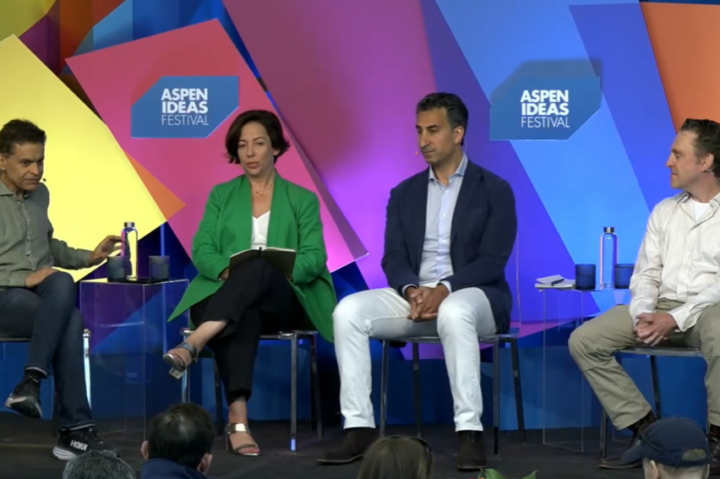
Karim Sadjadpour, Mark Dubowitz and Kim Ghattas speak at the Aspen Ideas Festival with CNN's Fareed Zakaria.


 Add JewishInsider on Google
Top Middle East analysts — including the Carnegie Endowment’s Karim Sadjadpour and Foundation for Defense of Democracies’ Mark Dubowitz — offered starkly different takes on whether the United States or Iran has emerged in a stronger strategic position following the recent U.S.-Iran conflict, yet shared a deeply critical view of the preliminary memorandum of understanding brokered between Washington and Tehran.
Speaking on Monday at the Aspen Ideas Festival in Colorado during a panel discussion moderated by CNN’s Fareed Zakaria, Sadjadpour, a senior fellow at the Carnegie Endowment for International Peace, argued that Tehran successfully leveraged the crisis to its advantage.
“Iran is in a much better place now than it was four months ago, before the war,” Sadjadpour said. “I think the biggest advantage they now have is controlling the Strait of Hormuz. They want to try to turn it, if not into the Panama Canal, at least have administrative control over it.”
Sadjadpour expressed deep skepticism that the Islamic Republic has any intention of making the fundamental concessions that the Trump administration has long demanded.
“I don’t think that they plan to make any meaningful compromises on the points which President Trump hoped to advance before the war, which is their nuclear program, their missile program, their regional proxies,” Sadjadpour said. “If you read that memorandum of understanding, which I call a ‘memorandum of misunderstanding,’ the two sides have very different takeaways from that. Really, the only thing it asks of Iran is a vague nuclear compromise, but it concedes the idea that after 60 days, perhaps they could control the strait. There’s nothing in there about missiles or proxies.”
Sadjadpour added that the conflict has inadvertently reinvigorated an Iranian regime that had otherwise appeared to be buckling under domestic dissent prior to the outbreak of hostilities.
“Four months ago, I used to describe the Islamic Republic as a zombie regime with a dying ideology, a dying leader, and dying legitimacy,” he observed. “I fear, at least in the immediate term, that we’ve kind of breathed new life into this zombie regime. It has a newfound self-confidence.”
He noted that while the war and protests among the Iranian public should have forced Tehran to rethink its priorities, the regime ultimately drew the wrong conclusions from the conflict.
“A lot of governments would say, ‘You know what? It is time for us to prioritize our economic and national interests first, instead of our ideology being death to America and death to Israel’ — which has gotten them into two catastrophic wars and triggered continuous popular uprisings,” Sadjadpour said. “But I actually think the regime has reached the opposite conclusion: that revolutionary ideology is not an albatross around the neck that’s going to sink the regime, it’s actually proven to be a life preserver, and we’re going to double down on it.”
Veteran Middle East journalist Ghattas similarly argued that the war has not led to a favorable outcome for the U.S. and has left the Iranian people in a worse position.
“I don’t see yet how this leads us to a better place in the region, and there’s a sense of despair in Iran,” Ghattas said. “It’s hard to get access to voices in Iran, but I think people feel betrayed.”
She added, however, that Tehran did suffer some losses, including that its “regional project has been severely damaged.” Ghattas also noted that Iran has “lost their foothold in Syria.”
Offering an opposing perspective, Dubowitz, CEO of FDD, countered that Tehran has actually suffered an unprecedented, devastating strategic and military defeat.
“The United States of America is winning, Israel is winning and the Islamic Republic of Iran is losing,” Dubowitz insisted, pointing to the physical damage inflicted on Iran’s sensitive facilities.
“Their nuclear infrastructure is severely degraded, the top 40 of their nuclear weapons scientists have been eliminated, and their nuclear sites are in ruins, with nuclear dust under the rubble,” Dubowitz added. “Their nuclear program has been set back by years, and their missile program has been severely curtailed.” Iran’s intercontinental ballistic missile program, he argued could have allowed Tehran to target America, is “obliterated.”
But Dubowitz agreed that the White House squandered its upper hand by rushing into a substandard diplomatic framework.
“Why would you take that incredible military leverage and negotiate a fatally flawed MOU, which looks like it was written by the Qataris, written by the Iranians, and translated by ChatGPT into English?” Dubowitz asked. “It’s a terrible agreement. Why would you squander all that leverage at the negotiating table?”
According to Dubowitz, the driving force behind the agreement stemmed from domestic political pressures rather than long-term geopolitical strategy. Trump, he argued, felt compelled to secure a quick pause in hostilities to stabilize the U.S. economy ahead of the upcoming midterm elections.
“Why? Because Trump needs to hold the House, he needs to hold the Senate, he needs to punt to November,” Dubowitz said. “He needs to open Hormuz, he needs to get gasoline and oil prices down, inflation down, and punt to November. And then he’s got two years and three months to double down on his Iran strategy” until his term is over.
“I think what Trump did is he realized ‘I have serious leverage, but I have a time issue,’” he continued. “So two parties are going in for an MOU, neither believes that either party is going to comply with it, and for their own reasons they need to hit the pause button.”
Sadjadpour noted, however, that those within the president’s inner circle remain deeply divided over whether the current diplomatic pause represents a genuine policy shift or a mere tactical intermission.
“When you talk to people who are in daily contact with the president, they will tell you very different things about where his mind is on this,” Sadjadpour said. “Some will tell you that this MOU was just temporary, don’t take it that seriously — ‘We needed to bring down the price of oil, and if within two months the Iranians are not playing ball, he’ll go back to the blockade or back to bombing.’ I speak to other people who are in daily contact with the president who say no, he’s done with Iran.”
More Stories
REGGIO REGRETS
Reggio Emilia mayor walks back anti-Israel litmus test for preschool educators
SEEKING ANSWERS
After State Department memorial, families of Oct. 7’s American victims call for U.S.-led probe
Daily Overtime
Jewish leaders press Miliband on U.K. antisemitism
MAINE EVENT
Maine Senate candidate Troy Jackson says Congress should cut off funding for Iran war
PRESIDENTIAL POV
Obama scrutinizes Israel’s founding, says Palestinians want their ‘land back’
EDIT WARS
Wikipedia failed to address coordinated anti-Israel campaign, new ADL study finds
Please log in if you already have a subscription, or subscribe to access the latest updates.
 Continue with Google
 Continue with Apple