
















Trump administration officials tout Iran deal, say ‘hardliners’ are spreading ‘misinformation’
U.S. officials said that the Strait of Hormuz will remain toll-free and Lebanon is not part of the agreement

Michael M. Santiago/Getty Images
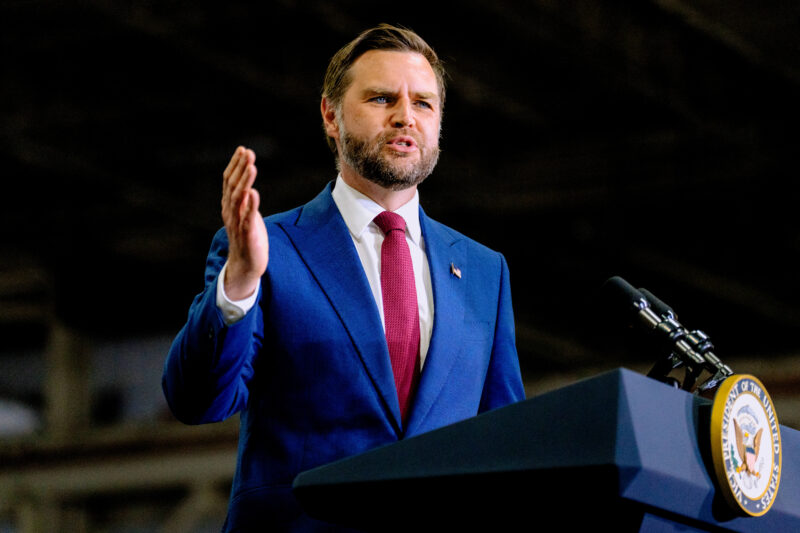
Vice President J.D. Vance and President Donald Trump


 Add JewishInsider on Google
Top Trump administration officials shared new details on Monday about the memorandum of understanding reached by the U.S. and Iran over the weekend, arguing that the new agreement is substantially better than the 2015 Iran nuclear deal and could pave the way for a new relationship between Washington and Tehran.
During an interview with CNBC, Vice President JD Vance said he expects the Strait of Hormuz to be opened immediately “in a toll-free way for the long term.” Vance indicated that he has observed more traffic flow in the strait following the announcement of the deal, but that the way in which the strait fully opens will be determined in technical negotiations.
“What this agreement does is say to the Iranians that ‘You don’t have access to the money to rebuild that nuclear program, but if you’re willing to give up that program long-term, if you’re willing to accept the inspections and verification regime that’s necessary to give us the confidence you’re never going to have a nuclear weapon, then we want you to be a prosperous country, and we will re-invite you into the community of nations,’” Vance said.
Vance said that Iran has agreed to never develop or procure a nuclear weapon and that the U.S. will ensure its stockpile of enriched material is destroyed, adding that technical talks will determine if U.S. ground troops will observe or play an active role in destroying it. He also argued that the latest MOU differs from the Joint Comprehensive Plan of Action signed under former President Barack Obama in 2015.
The vice president has stated that Iran’s nuclear program and capacity to enrich uranium have both been devastated by the U.S. and Israeli military campaign.
“We have comprehensively destroyed their nuclear program, and this agreement is about ensuring that they don’t rebuild it,” Vance said. “The JCPOA was mainly about bribing them to stop the construction or to cease a nuclear program that was already in progress. It’s a very different background, a very different sort of leverage, and I think really a different outcome for the American people.”
Vance also dismissed reports that Iran would receive billions of dollars without the funding being conditioned on the completion of certain steps, a clarification he made during an interview with CBS.
“When people say that billions of dollars of assets will be released, that’s not true,” Vance said. “What is true is that [there will be] a much better and much more prosperous future if they [Iran] meet the obligations they make in this agreement … that’s one of the things we’re going to work out in the technical talks that will follow the official signing on Friday.”
Vance stressed that the Iranians would attain frozen or other monetary assets only upon meeting verifiable benchmarks. He confirmed that Iran could receive $300 billion in reconstruction funding, as well as $24 billion in frozen assets, but emphasized that the funding would be conditioned on Tehran meeting its obligations.
“It’s set up in such a way where we’re going to have to attach their commitments to deliverables that then are met with economic benefits for the Iranian people,” Vance said on CNN. “On the other hand, if they [Iran] try to rebuild it [their nuclear program] they’re never going to get the financial resources that they would need to rebuild.”
The vice president said that the U.S. has not expended “a single dollar of sanctions relief or unfrozen assets,” stating that reports otherwise are likely from hardliners “within the Iranian system…in an effort to sell it to certain domestic populations.”
However, Vance said the U.S. is “open to a lot of things that are on the table.”
“That $24 billion just doesn’t appear anywhere in any of the texts that we’ve talked about with the Iranians,” Vance said. “What we have said is that we’re willing to talk about unfreezing assets, but a much, much bigger deal is un-sanctioning their economy, so long as they make the long-term commitments on the nuclear program.”
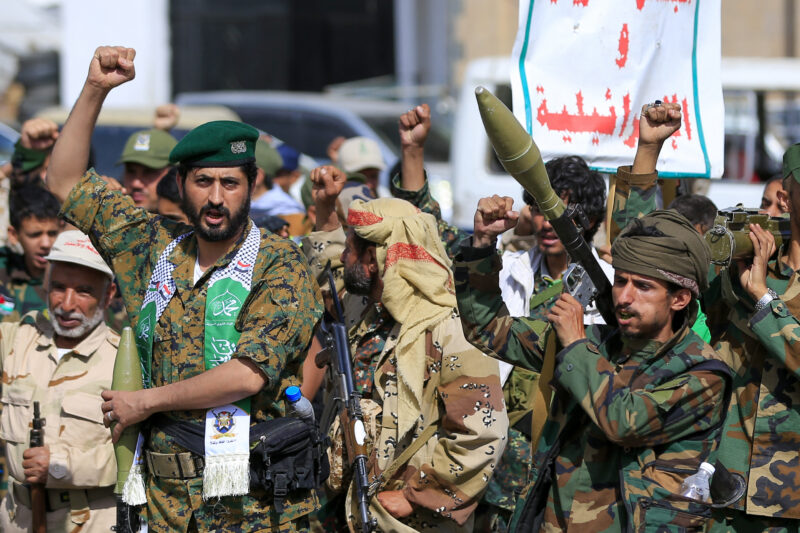
When asked whether the agreement would require Iran to halt support for U.S.-designated terrorist groups such as Hamas, Hezbollah and the Houthis, Vance indicated that it would, although the specific wording in the agreement appeared to be vague.
“What paragraph one of the agreement says is effectively that Iran commits itself, just as the United States commits itself, to regional peace and stability and part of that is that the Iranians have to stop funding violent terrorist organizations,” Vance said. “They know that we don’t want them to fund terrorist organizations..and be a source of instability in the region.”
The vice president touted the “level of direct connection” established through the latest negotiations, noting that “the people at the highest levels of the United States government are talking to the people at the highest levels of the Iranian government.”
“This is a very interesting thing about these negotiations, is you see people, both the hardliners, but also the more political people, saying, ‘Our relationship with the United States over the past 47 years has been a mistake. Let’s turn over a new leaf,’” he added.
A senior administration official told reporters on Monday that an Israeli withdrawal from Lebanon would not be part of the deal, despite Iranian officials’ insistence that it would be included.
The senior administration official confirmed that nuclear discussions would likely occur first and said the agreement “contemplates” the reduction of U.S. military forces in the region “upon the agreement of a final deal.” However, the official noted that Iran will need to “make some concessions and give up some of their activities and some of their nuclear program.”
A senior U.S. official called out “hardliners on both sides,” saying that they are rooting against “compromise” and “making a lot of noise.”
“There’s a lot of misinformation out there,” the official said. “I think that in any field that I’ve been involved in, I would say nobody roots for the referee. There’s not really a constituency for compromise. So what you’re seeing now is that the hardliners on both sides…we have certain people in the American system who say there’s no deal you could ever do with Iran ever, are obviously making a lot of noise.”
While the full details of the MOU have yet to be released, President Donald Trump indicated on Monday that he expects the document to be made public “sometime after Friday.”
“I want it to be released because it is a really powerful document,” Trump told reporters during a bilateral meeting with French President Emmanuel Macron on the sidelines of the G7 summit in France. “It is not like the Obama documents.”
However, Trump warned that should the deal fall apart, tensions between the U.S. and Iran could return to “where we started.”
“We have done a great job and hopefully it is going to be a good relationship, and we are going to get along,” Trump said. “If we don’t, we go back to where we started, but I don’t think that is necessary.”
More Stories
TOEING THE LINE
Menin, Levine call for ‘focus’ on Oct. 7 victims — but don’t condemn Mamdani
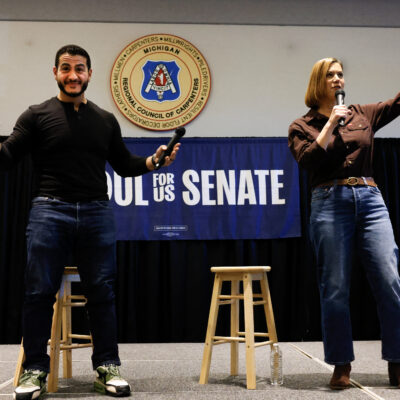
SEEDS OF PEACE
Slotkin defends El-Sayed, says not all Jewish voters have the same priorities
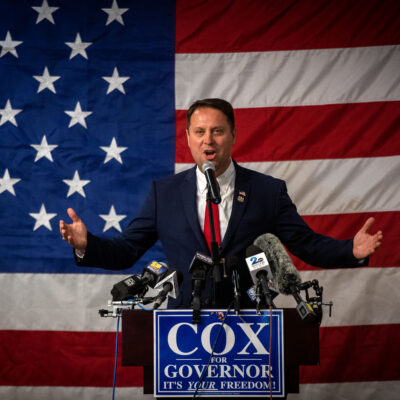
chesapeake challenge
Maryland GOP gubernatorial nominee Dan Cox says he disagrees with son’s antisemitic posts
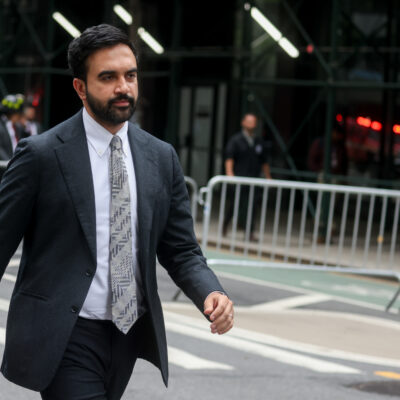
CITY HALL CRITICISM
Mamdani’s Oct. 7 statement assailing ‘genocide in Gaza’ provokes outrage from Jewish groups
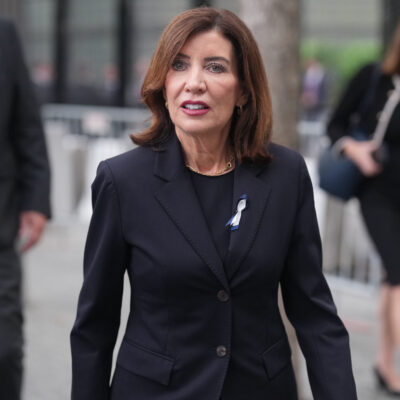
EDUCATION DELIBERATION
Democratic governors face looming deadline to opt in for educational tax credit
Life after captivity
The Siegels lost their home and community on Oct. 7. Now they’re finding their way forward
Please log in if you already have a subscription, or subscribe to access the latest updates.
 Continue with Google
 Continue with Apple