















Public diplomacy head Sarah Rogers touts Trump admin’s balance of free speech with combating misinformation
'We care a lot about the ability of the public to determine the authenticity of content … we just don't think that there should be a centralized thumb on the scale,’ Rogers said at the Hudson Institute
Screenshot
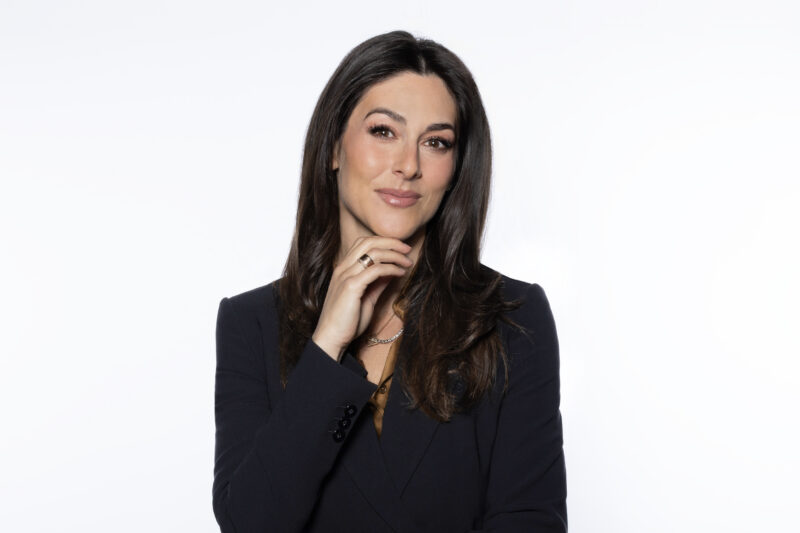
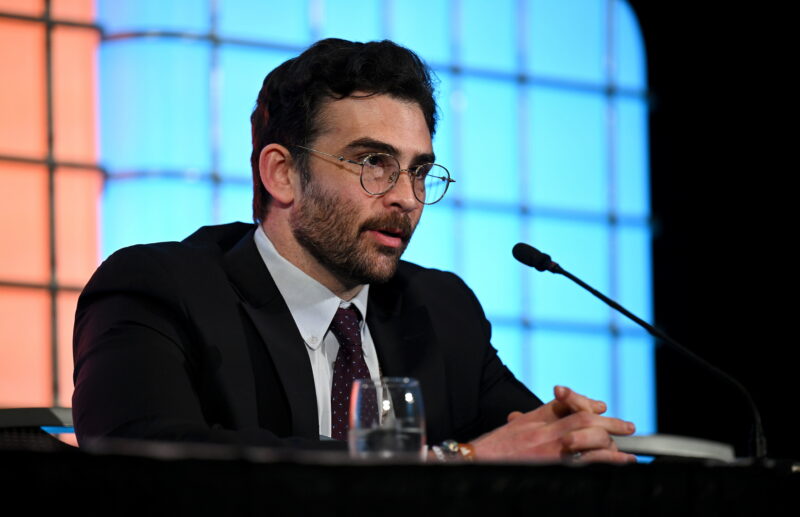
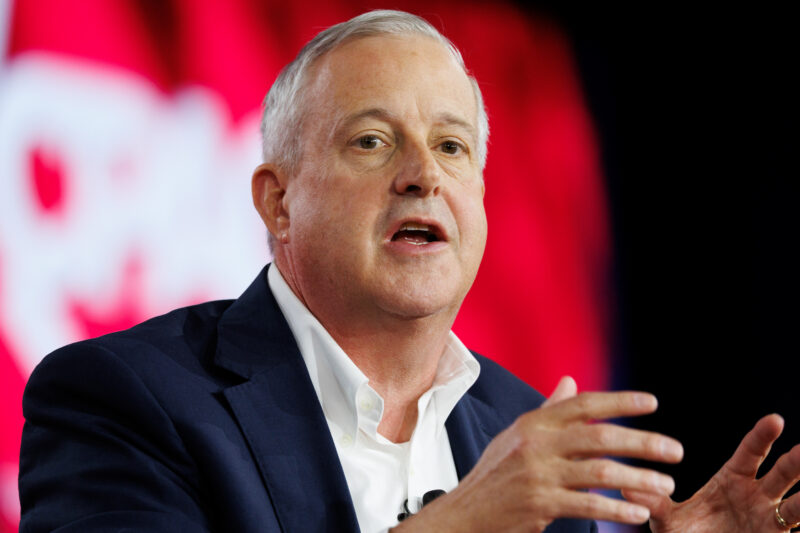
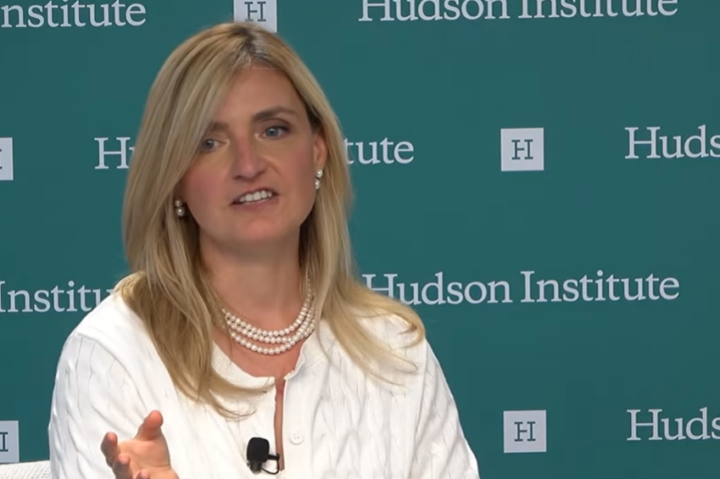
Sarah Rogers, under secretary of state for public diplomacy, speaks at the Hudson Institute on May 20, 2026.


 Add JewishInsider on Google
Sarah Rogers, the under secretary of state for public diplomacy, refuted accusations that the Trump administration has been ineffective in combating the spread of misinformation and hateful content on social media, arguing that free speech protections and efforts to combat disinformation are not mutually exclusive.
Rogers made the comments while appearing at the Hudson Institute on Tuesday for a discussion on how the United States can modernize its public diplomacy strategy to advance American interests in a complex geopolitical environment without curtailing free speech.
“We are sometimes disingenuously accused of being nihilists about the health of the information ecosystem. ‘You guys don’t want to censor the Internet, so that must mean that you want spam and bots and foreign propaganda to proliferate,’” Rogers said. “That’s not true. We care a lot about the ability of the public to determine the authenticity of content, to determine the veracity of content, to have the kinds of conversations they want to have. We just don’t think that there should be a centralized thumb on the scale, certainly not any government one, telling people what opinions are allowed.”
Asked by Zineb Riboua, a research fellow at Hudson, how the U.S. could “strike that balance” between censorship and disinformation, the under secretary said the best solution was “to give people tools that they can deploy or interact with that help them determine authenticity and veracity” of the content they’re consuming.
Rogers noted that the U.S. is “using AI and other resources to trace what we do believe to be foreign propaganda,” without implementing measures to prevent that content from being accessible to the broader public. She specifically mentioned a disinformation effort targeting the U.S. after President Donald Trump launched the war in Iran earlier this year, during which an old map of American military assets in the Middle East “was proliferated online increasingly by Western journalists and by inauthentic accounts that are probably controlled by a foreign adversary.”
“They were proliferating this false information because there had been attacks on civilian population centers in a bunch of Gulf countries that were just totally unjustified, and the argument was, ‘No, look, there were American military assets on these countries.’ False,” Rogers said. “You saw Western leftists eagerly retweeting, for an adversary, fake propaganda.”
While noting that her office has a portfolio ranging from the upcoming U.S. World Cup and the series of celebrations honoring the nation’s 250th birthday,to tech policy matters concerning free speech issues, Rogers said the two subjects were intertwined in her view.
“I don’t see the free speech tech policy stuff and the America 250 sports and arts stuff as being that divergent,” she said. “I see them as a part of a combined stream of effort, which is to tell the American story you need the freedom to speak.”
Sen. Eric Schmitt (R-MO) delivered introductory remarks at the gathering where he criticized what he described as “a deeply troubling assault on free speech and democratic self-government” across “much of Europe.”
Schmitt said that Rogers “has been at the forefront of the effort to restore seriousness, sovereignty and strategic clarity to America’s statecraft, and we’re fortunate to have her with us today.”
More Stories
MICHIGAN MANEUVER
After holding out for weeks, Michigan AG Nessel endorses El-Sayed
Daily Overtime
U.S. clears F-35s for Riyadh
FAMILY TRAGEDY
Israeli ambassador’s son seriously wounded in West Bank car-ramming attack
MEMORIAL EVENT
State Department plans memorial for American victims of Oct. 7 attack
NUCLEAR NEWS
House Democrats introduce resolution to block Saudi nuclear deal
CANARY CALL
Two Seattle Jewish leaders warn of Jewish complacency in face of rising antisemitism
Please log in if you already have a subscription, or subscribe to access the latest updates.
 Continue with Google
 Continue with Apple