

















































New report warns about the rise of activists pushing antisemitic content in K-12 schools
The report warns that the trend also contributes to declining academic outcomes and increasing anti-American views

Getty Images


 Add JewishInsider on Google
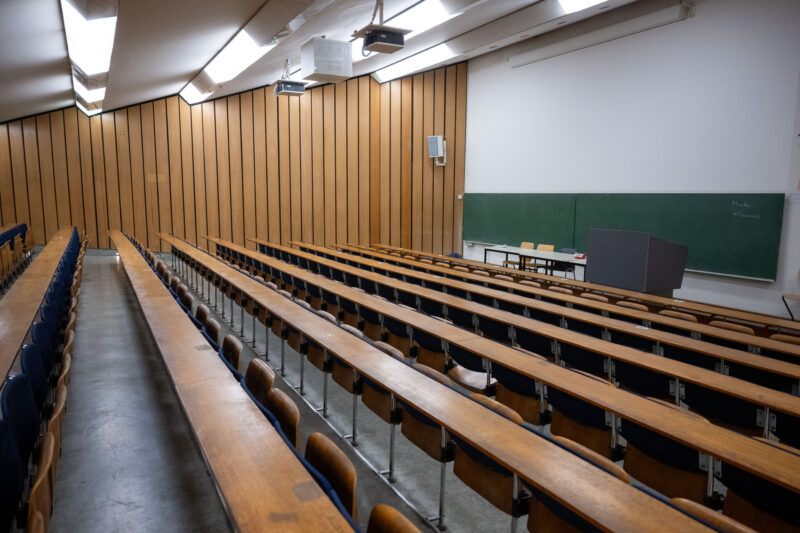
Political activists seeking to push extremist perspectives into the classroom are behind a nationwide acceleration of antisemitic content in K-12 classrooms, with increasingly active movements targeting school boards, district leadership and teacher organizations, according to a report published Monday by the North American Values Institute.
The group’s 58-page report, “When the Classroom Turns Hostile: A Strategic Response to Extremism and Antisemitism in K-12 Education,” shared exclusively with JI, found that in the aftermath of the Oct. 7, 2023, Hamas terrorist attacks in Israel, what it described as radical ideological frameworks have dominated key education institutions across the country. Ideologies such as “oppressor-oppressed” are common in schools of education, accreditation bodies, teacher unions and district bureaucracies, all of which shape classroom materials.
The paper highlights teachers’ unions and activist nonprofits as major sources of embedding radical views and ready-made anti-American content into professional development, much of which is able to bypass traditional oversight. It also raises concerns about “substantial” foreign funding flowing into Western education institutions to influence ciriculums by the Qatar Foundation International and Confucius Institutes in China.
The North American Values Institute, formerly the Jewish Institute for Liberal Values, is a nonprofit that monitors antisemitism in K-12 schools. It was founded by David Bernstein, a longtime Jewish nonprofit official who led the Jewish Council for Public Affairs from 2016-2021.
“We’re very concerned about the ideological activists taking over union leadership,” NAVI’s chief program officer, Dana Stangel-Plowe, told JI. “While that may not seem new, we’re seeing the DSA [Democratic Socialists of America] in particular taking a much more active role.” According to the report, DSA “urges members to enter the field in order to ‘transform our schools, our unions, and our society.’”
The report warns that these dynamics contribute not only to rising antisemitism, but also to declining academic outcomes and increasing anti-American views.
Attempts to combat this framework by promoting Holocaust or Jewish education have failed, the report’s authors argue.
Rather, the writers offer several suggestions for reforming K-12 education, including changing teacher preparation programs and accreditation standards, confronting politicized teacher unions and advocacy networks, strengthening standards around curricula, addressing foreign funding and influence in education, empowering parents and school boards and building multi-ethnic coalitions.
NAVI rebranded in February 2025 in an effort to detach from its Jewish roots to expand partnerships in fighting antisemitism with other ethnic communities.
At the time of the rebrand, Bernstein told JI that the Jewish community “has been reluctant to fight at the ideological level.”
A year later, Stangel-Plowe said that while there is still room for improvement, NAVI has increasingly been partnering with leading Jewish organizations.
The report comes two months after the House Committee on Education and the Workforce opened investigations into public school systems in Fairfax County, Va.; Berkeley, Calif.; and Philadelphia over alleged failures to address antisemitic incidents.
Federal investigations are “a good start but certainly not enough,” said Stangel-Plowe. “School districts are used to functioning without much accountability. We need more federal and state oversight.”
Still, she emphasized a need to address the root cause, rather than responding after incidents occur.
“K-12 education is being treated as a vehicle for social change and an oppressor-oppressed framework is dangerous to Jewish students, Jewish teachers, and teaches hostility towards Israel and more broadly Western values,” Stangel-Plowe continued.
We’re seeing active networks, [including] in New York City and Philadelphia,” she added. “We’re seeing radical political actors taking over union leadership and that has an influence on teachers unions which influences school board elections. The problem is embedded not just in the unions but the entire education system from teacher training, licensing and programs.”
“We can’t fix an institutional problem with more lessons or programs,” she said. “As important as education about the Holocaust and Jewish life is, institutional problems persist unless we have a real allocation of investments in a comprehensive solution across the ecosystem.
More Stories
COMINGS AND GOINGS
Heritage Foundation taps critic of U.S. involvement in Middle East as distinguished fellow
CAMPUS CLASH
Georgetown Law student association denounces Ted Cruz staffer over Muslim Brotherhood lecture

FIRING FALLOUT
Hillels of Georgia claims fired Emory rabbi not ‘truthful or transparent’ during hiring process

UNKNOWN HORIZON
Final Israeli polls point to stalemate ahead of Tuesday’s election
EXCLUSIVE
Jewish groups urge Treasury, State to clarify response to European settlement sanctions

NEW CHAPTER
High Line Publishing launches with fanfare to counter barriers for Jewish authors
Please log in if you already have a subscription, or subscribe to access the latest updates.
 Continue with Google
 Continue with Apple