



























Jewish groups appear hesitant to deploy their Washington clout as the Abrahamic coalition comes under attack
In recent weeks, prominent Saudi social media figures and media outlets have amplified sharply critical and often inflammatory rhetoric aimed at countries that joined the Abraham Accords
BRENDAN SMIALOWSKI/AFP via Getty Images
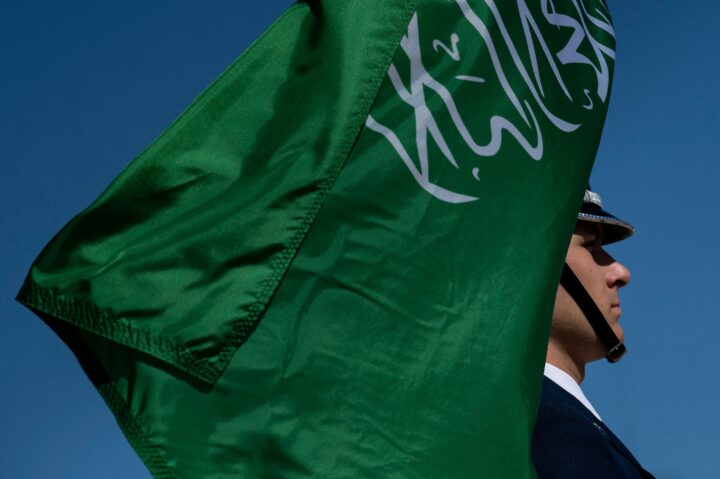
A color guard holds Saudi Arabia's flag while waiting for Saudi Vice Minister of Defense Prince Khalid bin Salman arrival for an honor cordon at the Pentagon August 29, 2019, in Washington, DC.


 Add JewishInsider on Google
Jewish and pro-Israel organizations that have celebrated the Abraham Accords in recent years appear slow to recognize the role they could be playing within the Abrahamic coalition — particularly by leveraging their Washington clout and decades of experience engaging Congress — as countries in the accords face increasing criticism for their participation in the normalization framework.
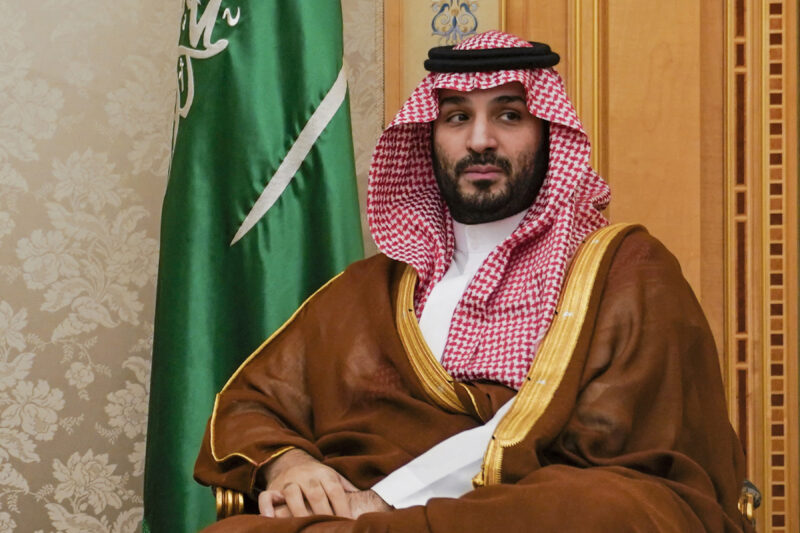
In recent weeks, prominent Saudi social media figures and media outlets have amplified sharply critical and often inflammatory rhetoric aimed at countries that joined the Abraham Accords, particularly the United Arab Emirates, portraying normalization with Israel as a betrayal of regional interests and casting Abu Dhabi as a proxy for Israeli power.
Countries that joined the Abraham Accords do not have comparable grassroots advocacy in Washington, making the role of established Jewish and pro-Israel organizations potentially consequential to the broader normalization effort. Yet despite those longstanding relationships, the groups have mounted little effort to inform the conversation in Washington as the Abraham Accords and their signatories face growing attacks. This was evident from Jewish Insider’s reporting earlier in January, when pro-Israel lawmakers from both parties largely downplayed concerns about Saudi Arabia’s shift when asked for comment.
Several of the groups have voiced growing discomfort with the kingdom’s pivot away from what was perceived as its moderating force in the region. But their relatively cautious responses, particularly around Riyadh’s increasingly hostile posture toward Israel and traditional alliances, have also highlighted an awkward tension as they seek to maintain support for the long-sought but elusive goal of bringing Saudi Arabia into the Abraham Accords.
That dynamic has come into sharper focus as a few major Jewish and pro-Israel organizations prepare to attend a sensitive meeting in Washington on Friday with Saudi Arabia’s defense minister, raising questions about how — or whether — the groups will more forcefully confront the growing rhetoric against the Abraham Accords.
Among the groups invited to the meeting were the American Jewish Committee, the Anti-Defamation League, the Conference of Presidents of Major American Jewish Organizations and the Zionist Organization of America, multiple sources familiar with the situation told Jewish Insider on Thursday, though it remains unclear which will attend. The Foundation for Defense of Democracies confirmed it would be attending a separate sit-down with the defense minister in the morning.
Notably, representatives from the pro-Israel lobbying group AIPAC weren’t set to attend, according to some sources familiar with the dynamics, hinting at some possible internal debate in the community regarding the wisdom of engaging with Saudi Arabia in spite of its troubling recent behavior. AIPAC declined to comment on the meeting when reached by JI on Thursday afternoon.
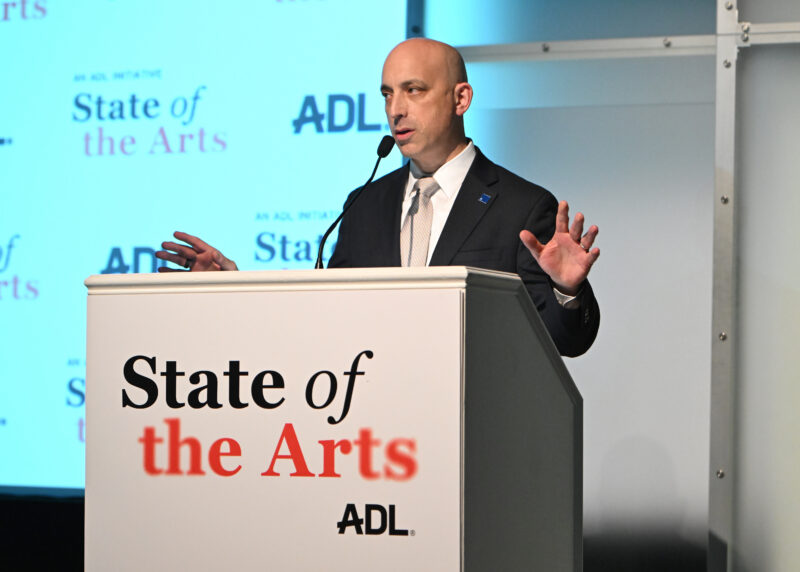
The AJC and ADL also declined to comment, and the Conference of Presidents did not respond to a request for comment. The Republican Jewish Coalition was invited to the meeting, one informed source told JI, but the group would not confirm its involvement.
The varying approaches suggest that Jewish organizations are strategically sensitive to alienating Saudi Arabia — as they hope for a change of heart on normalization with Israel. In turn, many groups haven’t directly confronted the antisemitic vitriol among influential figures in the kingdom.
Even as these organizations champion the advantages of joining the Abraham Accords, their responses appear to neglect a key regional signatory, the UAE; a prominent Saudi columnist recently called the UAE “an Israeli Trojan horse in the Arab world” in one of the latest public attacks now regularly targeting their neighboring country, as Riyadh reportedly turns away from its traditional moderate alliances and towards Islamist countries hostile to Israel, including Qatar and Turkey.
None of the organizations had publicly commented on Saudi Arabia’s new direction until reached by JI late last week, reflecting a possible early blind spot concerning a major regional shift that threatens to have far-reaching consequences not only for Israel but Jewish safety more broadly in the Middle East.
The largely reactive tenor of the engagement so far indicates that Jewish advocacy groups have yet to formalize a strategy for preemptively tackling such challenges and raising awareness among legislators and other policymakers to build an infrastructure to help advance the Abraham Accords amid dwindling Saudi support.
Jonathan Schanzer, FDD’s executive director, said the “worsening” rhetoric on Jews and Israel “has left U.S. organizations that previously advocated for warmer engagement with Saudis at an interesting crossroads.”
“Some will double down and attempt to embrace the Saudis with a bear hug,” he told JI on Tuesday. “Others will begin to criticize the kingdom sharply. This natural dichotomy may actually be healthy, showing the regime that there are two paths it can take. One will obviously be more advantageous to the regime than the other.”
“The priority now must be rapid de-escalation between Saudi Arabia and Israel, two close American allies, whose widening rift is being aggressively exploited by Muslim Brotherhood governments in Turkey and Qatar, as well as the Islamists in Iran,” FDD CEO Mark Dubowitz said. “Allowing this crisis to bleed into the Saudi-Israeli normalization process — and incitement against Israel and Jews — would be a strategic setback, particularly given its central importance to President Trump’s regional agenda.”
In addressing the shift, some Jewish groups have pushed back on Riyadh’s problematic language. The ADL, for example, condemned state-aligned media channels and regime mouthpieces for promoting “openly antisemitic dog whistles” while opposing the Abraham Accords, rhetoric it called “harmful” to “the prospect of peaceful coexistence in the region.”
AIPAC, meanwhile, struck a more diplomatic note in a statement to JI that made no explicit mention of Riyadh’s turn to open antisemitism, saying that “America would be stronger and our interests would be better served if more nations, including Saudi Arabia,” normalized ties with Israel.
That view was echoed by Democratic Majority for Israel, which glancingly alluded to “recent political frictions and unhelpful rhetoric” from Saudi voices, while characterizing normalization as “an enduring strategic imperative,” even as the kingdom has been increasingly hostile to a rapprochement with Israel.
For its part, the American Jewish Committee, which has actively pushed for normalization, has refrained from publicly commenting on the issue, only noting that it is “keeping a close eye on any developments.”
The COP, which in 2020 led a historic delegation to Saudi Arabia in what was then interpreted as a sign of warming ties with Israel, has likewise declined to publicly weigh in on the situation, in advance of the meeting on Friday.
Mort Klein, the national president of the conservative Zionist Organization of America, said he was also invited to the meeting on Friday by a caller “with an Arabic name,” but was unable to join due to a scheduling conflict. “I received a strange phone call asking me to attend,” he told JI on Thursday. He would not elaborate on the conversation or why another ZOA official would not be participating.
The ZOA has sharply criticized Saudi Arabia’s evolution as a “dangerous” development, urging the Trump administration to reconsider its plans to sell F-35 fighter jets to Riyadh, among other policies.
Some Middle East analysts familiar with Saudi Arabia’s recent maneuvering have raised doubts about whether the meeting will amount to more than a PR stunt for the kingdom. Both Qatar and Turkey have similarly engaged in past discussions with Jewish leaders that have done little to change their approaches to Israel or ties to Islamist groups.
“This meeting will be complete window dressing,” one expert told JI on Thursday. “The Saudis may try and rationalize their way out of their new alignment with Pakistan, Qatar and Turkey and say everything is fine with the UAE when evidence says otherwise.”
Daniel Shapiro, a U.S. ambassador to Israel in the Obama administration who served as a top defense official in the Biden administration, said that it was “wise and understandable” for Jewish organizations “to keep the door open to normalization” with Saudi Arabia, while stressing a need to “draw some bright lines about what’s not acceptable” with regard to its rhetoric and policies.
Citing the unpredictability of the situation, Shapiro also suggested that Jewish groups should seek to engage in proactive outreach “to get members of Congress and other officials focused on trying to figure out” Saudi Arabia’s motivations. That could result in “direct and frank conversations with” Riyadh to better understand its new thinking and potentially “draw some red lines.”
“People are really still making an adjustment to it,” Shapiro told JI in an interview on Wednesday. “It’s wise to use diplomacy, in real time, to try to put up some guardrails.”
In some ways, the hesitant manner in which some Jewish groups have contended with Saudi Arabia shows how the kingdom’s sudden realignment has confounded even the most seasoned Gulf watchers.
“The thoughts coming from Saudis are horrific and apparently at total odds with the public messages of the last few years,” Simon Henderson, a Middle East expert at the Washington Institute for Near East Policy, told JI. “Without a corrective comment from a senior Saudi figure, they should be taken seriously. Put simply, forget normalization anytime soon. Analysts are in a state of shock trying to work out the why and how permanent the damage may be.”
Still, Abe Foxman, the former longtime national director of the ADL, stressed that efforts to court Saudi involvement in a diplomatic agreement with Israel need not obscure a broader commitment to strenuously denouncing the kingdom’s “anti-Israel expressions and antisemitism.”
“As much as we may want Saudi Arabia to join the Abraham Accords, that hope and desire should not inhibit our ability to criticize” its recent policies, Foxman told JI on Tuesday. “I recall that during the years we pursued peace between Israel and Egypt and Israel and Jordan, we did not refrain from being critical of their anti-Israel policies or their embrace of antisemitism.”
Brian Katulis, a senior fellow at the Middle East Institute, cast the differing positions from Jewish groups as a “reflection of the wide diversity of views inside of the Jewish American community,” arguing that some of their responses are a demonstration of their “proximity” to Saudi Arabia or the rival UAE.
More Stories

GOING GLOBAL
Israeli, Lebanese leaders expressed interest in Michigan Senate race, Sen. Lankford says

TWO JEWS, THREE OPINIONS
Jewish podcast ‘Chosen People Problems’ finds new home with Ark Media
NUCLEAR NEWS
Senate expected to vote on Saudi nuclear deal before end of year
RELATIONSHIP STATUS
How Israel’s parties say they would rebuild support in America

Daily Kickoff
Barack to 1948
PREDECESSOR PROBLEMS
The Lander policy at the heart of Levine’s Israel bonds reversal
Please log in if you already have a subscription, or subscribe to access the latest updates.
 Continue with Google
 Continue with Apple