





































U.N. member states push to eliminate Security Council veto
The move, which experts told JI is unlikely to be implemented, would enable the body to further target Israel by preventing the U.S. from vetoing anti-Israel resolutions
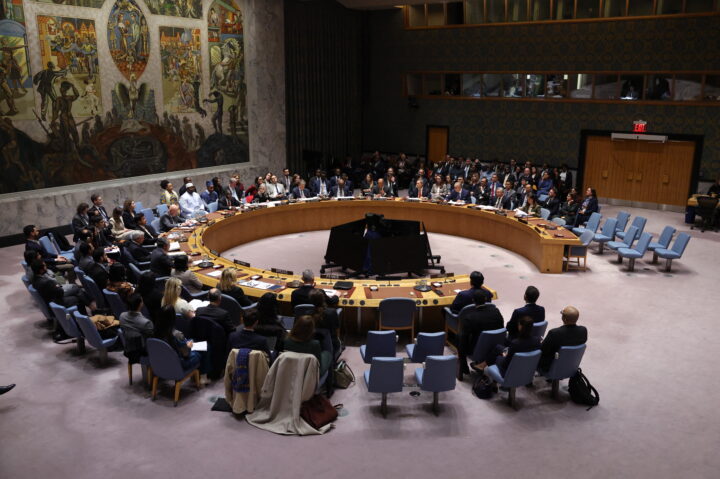
ANGELA WEISS/AFP via Getty Images
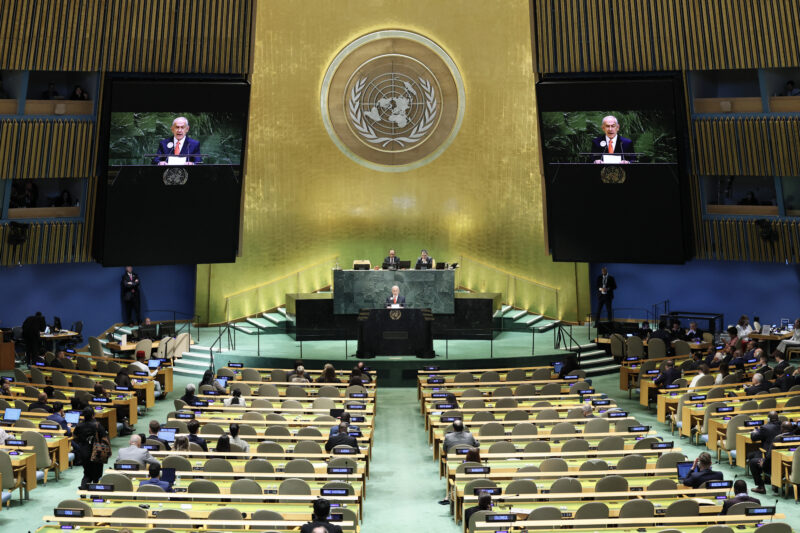
Ambassadors and representatives to the United Nations meet at the U.N. Security Council to vote on a U.S. resolution on the Gaza peace plan at the U.N. Headquarters in New York City, Nov. 17, 2025.


 Add JewishInsider on Google
Members of the United Nations General Assembly are renewing their push to curb or eliminate the Security Council veto, intensifying concern over whether such a reform would make it easier for the international body to target Israel.
The “veto initiative,” adopted in 2022, requires the General Assembly to convene a debate any time a permanent member of the Security Council — the United States, United Kingdom, France, China or Russia — blocks a resolution. Since then, 17 vetoes have triggered General Assembly meetings.
During the war between Israel and Hamas, the Security Council attempted multiple times to pass resolutions calling for an “immediate” and “unconditional” ceasefire in Gaza. The United States often cast the lone veto, arguing the measures were one-sided and would ultimately benefit Hamas.
Delegates from several countries have argued that U.S. vetoes have prevented the 15-member body from taking meaningful action and that the debates prompted by the initiative have produced “little tangible impact.”
“The veto, once envisioned as a safeguard for peace, has too often become a barrier to collective action,” said Latvia’s representative during a Nov. 20 General Assembly meeting, speaking on behalf of the Baltic and Nordic states. “Time and again, we have seen the veto used or threatened to block [Security] Council action to protect civilians in Sudan and Gaza.”
This has led member states to call for abolishing the veto entirely, arguing that a single vote enables permanent members to endorse “the worst levels of cruelty and barbarity,” according to Colombia’s representative.
But many in the pro-Israel community warn that eliminating the veto would dramatically accelerate what they see as entrenched anti-Israel bias at the U.N. The General Assembly has adopted 173 resolutions against Israel and 80 against all other countries combined between 2015 and 2024. In 2025 alone, the GA is projected to pass 16 resolutions on Israel and 10 on the entire rest of the world, according to the pro-Israel watchdog group UN Watch.
If the veto were removed, the United States would no longer be able to block resolutions viewed as hostile or disproportionately focused on Israel, a shift experts said would allow such measures to advance far more easily.
“Anti-Israel bias at the United Nations is pervasive, and the U.S. veto is the only thing standing in the way of the body passing binding resolutions that would pose a danger to the Jewish state,” said David May, a senior research analyst at the Foundation for Defense of Democracies. “A U.N. Security Council without a U.S. veto would be indistinguishable from Students for Justice in Palestine or a pro-Hamas rally.”
Elliott Abrams, who served as Iran envoy in the first Trump administration, told Jewish Insider that efforts to restrict or eliminate the veto are not new and that doing so would pose serious risks for Israel.
“Any restriction accepted by the United States would endanger Israel, because the U.S. has so often been Israel’s only defender in the Security Council,” said Abrams. “With an automatic anti-Israel majority in the General Assembly, the U.S. veto is critical.”
“President Trump should adopt a very simple policy,” said Abrams. “Just say no.”
Both the U.S. and Russia defended the use of the veto and rejected any effort to alter it. Julie Rayman, the American Jewish Committee’s senior vice president for policy and political affairs, told JI that this opposition and structural realities make changes to the veto unlikely to occur.
“The veto power can only be changed through an amendment to the U.N. Charter, which requires unanimous agreement of all five permanent members,” said Rayman. “There’s no realistic chance this will happen, so the system isn’t currently at risk of being changed to allow even greater disproportionate targeting of Israel at the U.N.”
May echoed those sentiments, calling efforts to eliminate the veto “aspirational,” and adding that “the five permanent Security Council members who hold a veto are not inclined to relinquish their power.”
However, May said there are mechanisms countries could employ to “circumvent” the veto.
“For example, the Palestinian Authority’s effort to expel Israel from the United Nations came up against the U.S. veto at the Security Council,” said May. “Instead, there was talk of having the credentials of the Israeli delegation revoked, something within the remit of the General Assembly, effectively achieving an expulsion without Security Council support.”
More Stories

Hard cover, soft launch
Assouline puts Tel Aviv on the coffee table at last
Daily Overtime
Vance’s Jewish voter problem
SURVEY SAYS
New poll shows Vance with very low support among Jewish voters
road to riyadh
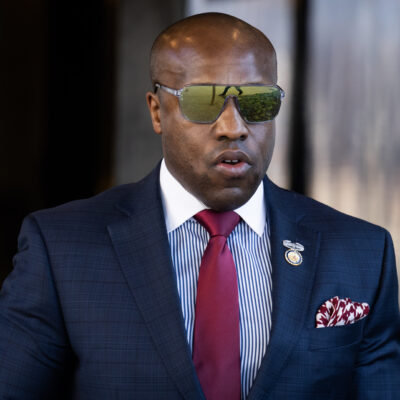
Trump taps Rep. Wesley Hunt as U.S. ambassador to Saudi Arabia

Daily Kickoff
Not Sheeran the stage no more
YE SAYER
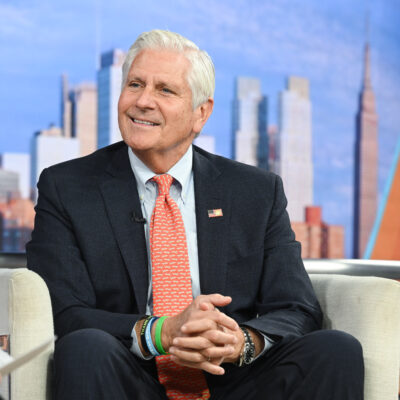
Blakeman-backed House candidate defended Ye’s antisemitic rants
Please log in if you already have a subscription, or subscribe to access the latest updates.
 Continue with Google
 Continue with Apple