








































































Former Sen. Rudy Boschwitz turns 95: A pioneering Jewish Republican looks back
Boschwitz spoke to JI about his life story, legacy and thoughts about our current political moment
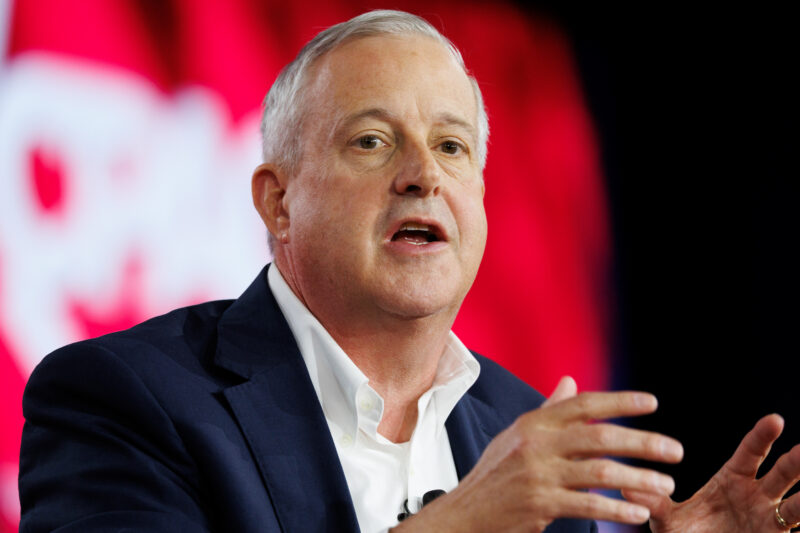
AP Photo/Adam Bettcher
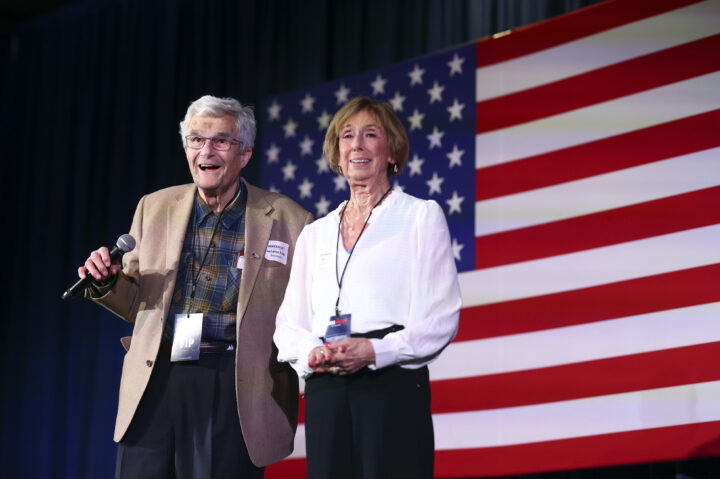
Former Minnesota Sen. Rudy Boschwitz and his wife Ellen introduce Republican presidential candidate former UN Ambassador Nikki Haley at a campaign event, Monday, Feb. 26, 2024, in Bloomington, Minn.


 Add JewishInsider on Google
Former Minnesota Sen. Rudy Boschwitz, who turns 95 today, isn’t necessarily a household name — but is one of the more consequential figures in Jewish political history, as the first Holocaust refugee elected to Congress and one of the most prominent Jewish Republicans during a golden period of Jewish representation on Capitol Hill.
Boschwitz now holds the distinction of being the oldest living elected senator, and remains active in political and business life from his home in Plymouth, Minn. He spoke on the phone to Jewish Insider this week about his life story, legacy and thoughts about our current political moment.
Boschwitz was born in Berlin in 1930. On the day that Hitler took power in 1933, Boschwitz’s father came home and told his family they would be leaving Germany forever. He arrived in the United States in 1935 with his family, completed college at the age of 19, started a retail lumber business and quickly made a career in business and, later, politics.
He was elected as a Republican to the Senate in 1978, scoring an upset against the state’s former Gov. Wendell Anderson. He served there for 12 years, eventually losing reelection in 1990 to Democrat Paul Wellstone.
“When I came to the Senate, I was really the first Jewish conservative that many of my colleagues really met. They hadn’t met many Jewish Republicans at all. I think we had a hand in building some of the pro-Israel feelings now,” Boschwitz told JI. (During the 1980s, four other Jewish GOP senators would end up serving alongside him.)
In the Senate, Boschwitz served in GOP leadership, including as chairman of the National Republican Senatorial Committee, where he helped raise money and lead the campaign to elect GOP senators. He held seats on the influential Budget Committee, Foreign Relations Committee and Agriculture Committee, which helped him build support in a big farming state like Minnesota.
“The highlights of my career: I voted for the Reagan defense budgets and for lower taxes that resulted in a strong economy and winning the Cold War without a shot,” Boschwitz said.
After leaving the Senate, Boschwitz was named as President George H.W. Bush’s emissary to Ethiopia, where he led the American delegation to negotiate the release of Ethiopian Jews to allow their migration to Israel in what became known as Operation Solomon. Earlier as a senator, Boschwitz led an Ethiopian Jewish caucus that featured dozens of senators from both parties.
Aside from his legislative work, Boschwitz was also known as something of a matchmaker for young Jewish professionals on Capitol Hill, sponsoring parties for Jewish singles who worked around Washington.
“I was very active in the Jewish community… I wanted young Jewish members of the congressional staff to know that there was a Jewish senator who was interested in them,” Boschwitz told JI.
Despite Minnesota’s relatively small Jewish population, Boschwitz held a Senate seat that, famously, was represented by four different Jewish senators over four decades — with Wellstone, current Republican Jewish Coalition National Chairman Norm Coleman and comedian Al Franken all holding the same Senate seat from 1978 until Franken’s resignation in 2018.
Asked in closing how concerned he was about the rise of antisemitism in this country, Boschwitz simply said: “Yes, there has been a rise in antisemitism. But I think that the U.S. is not a country where the Jews have to be careful or look for another place to go. I’m a fan of magnificent America.”



Please log in if you already have a subscription, or subscribe to access the latest updates.
 Continue with Google
 Continue with Apple