







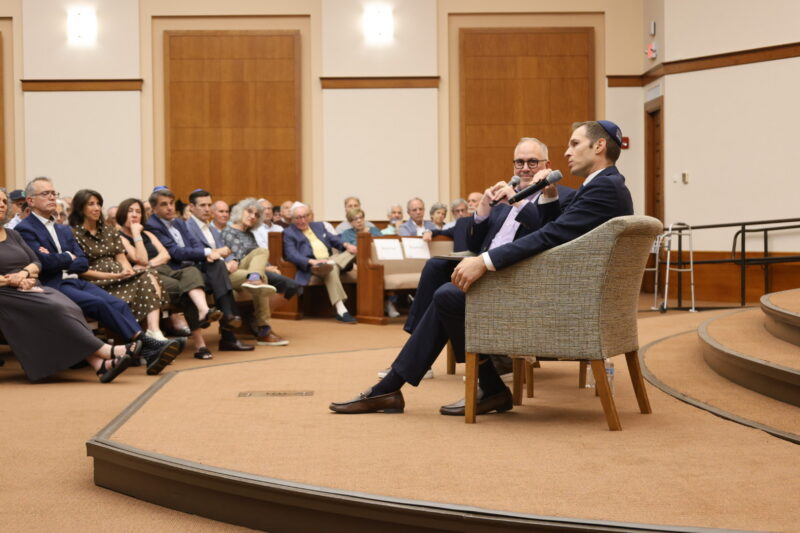

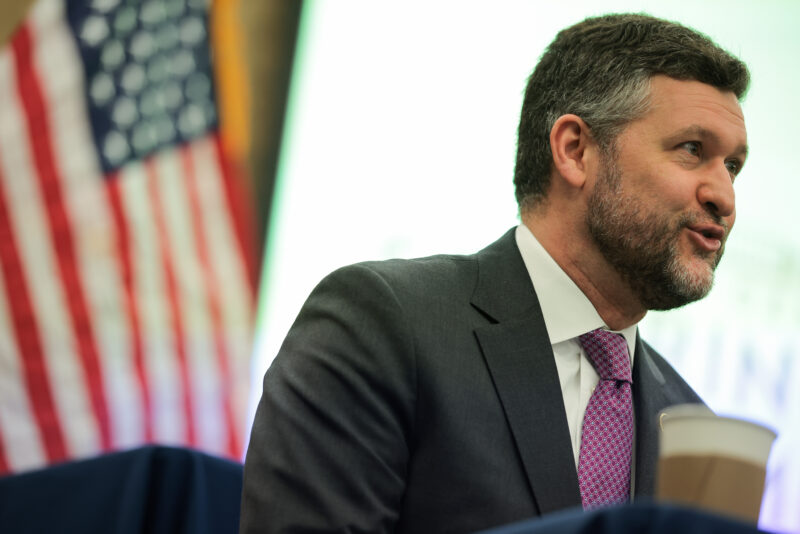













At an Iran International panel, Washington Institute for Near East Policy’s Rob Satloff outlined ways the U.S. could better engage with the Iranian public
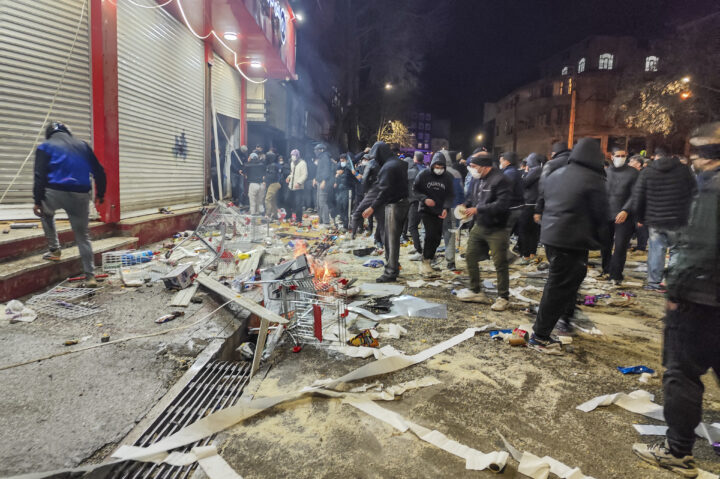
(Photo by Kamran / Middle East Images / AFP via Getty Images)
Iranians gather while blocking a street during a protest in Kermanshah, Iran on January 8, 2026.


 Add JewishInsider on Google
Experts said on Wednesday that the Trump administration has failed to adequately tap into pro-Western sentiment among the Iranian public following the regime’s violent crackdown on nationwide protests earlier this year, arguing that the White House is missing a key opportunity to cultivate internal pressure within Iran.
Robert Satloff, executive director of The Washington Institute for Near East Policy, argued that the Trump administration should expand U.S. broadcasting into Iran, improve internet access for Iranians and ease pathways for dissidents seeking refuge in the U.S. to “lay the groundwork for the day when it becomes a much more real possibility to have this sort of regime change.” Satloff outlined his proposals during a Wednesday town hall hosted by Iran International, a U.K.-based Persian-language news network. “None of [the Iranian people] are being invested in in any significant way by the Trump administration,” he said.
In February, PBS reported that over 7,000 Iranians were killed during the regime’s violent crackdowns on nationwide protests that began in December. President Donald Trump at the time urged Iranians to keep protesting, declaring that “help is on the way.” Recent surveys inside Iran have shown that roughly 89% of Iranians support a “democratic political system.”
However, with Trump rarely bringing up the human rights abuses of the Iranian government as he seeks a diplomatic deal with the Islamic Republic, the protesters who Trump initially promised to help have been deterred by the Iran’s intensive crackdowns and the lack of a response to counter them.
That vacuum, Satloff argued, is what Washington should be working to fill. He elaborated on the three proposals, each aimed at strengthening the U.S. relationship with the Iranian public.
First, Satloff said the U.S. would benefit from providing “better and more American broadcasting” to Iranians and ensuring that they “have internet access and that they cannot be denied this by their capricious government.”
To accomplish this, the Trump administration should “work with private companies,” Satloff told Jewish Insider.
“Much of this requires a shift of policy, not an allocation of money,” Satloff pointed out. “That is, to embrace U.S. international broadcasting as an important asset, not to try to run it out of business, as has been the case in this administration.” Following Trump’s 2025 attempts to dismantle Voice of America, including its Persian broadcasts, a federal judge ordered more than 1,000 laid-off staff reinstated this past March.
Satloff also argued that the U.S. should “change our visa and asylum regulations” to provide Iranians fleeing the regime with “a welcoming home” and a “base” to continue organizing against the regime.
Alex Vatanka, senior fellow at the Middle East Institute in Washington, reaffirmed that the “Iranian public sentiment is anti-regime by and large,” during the panel, elaborating on the importance of the U.S. screening visa applicants carefully and avoiding becoming the “bad guys.”
He called it “fair game” to deny a visa to someone with a background in the Islamic Revolutionary Guard Corps, but stressed the need for accuracy, warning that overbroad denials risk alienating the population the White House needs on its side.
Panelists acknowledged that these measures won’t dislodge the Islamic Republic on their own. Satloff said that under the current state of affairs, “none of this is going to bring down the government.”
“I think the important thing for us is to change behavior,” Satloff continued, arguing that “as the Iranian people see the weaknesses of their own regime then maybe you will find more organized elements that come forward in leadership that challenges” its leadership.
“I don’t even see that foundation yet for us to work with,” he added.
Rachel Brandenburg, Washington managing director and senior policy analyst at the Israel Policy Forum, told JI that “among the reasons the U.S. would provide the Iranians with ways to circumvent an internet blackout” is to support their ability to “communicate with each other and with the world.” Brandenburg explained this is “among [the] tools that could help the Iranian people organize protests and other opposition to the regime, whether openly or privately.”
Satloff tied his proposals back to potentially dismantling the IRGC — a goal the administration has stated but, in his telling, done little to pursue. Without sustained engagement with ordinary Iranians, he argued, there may be no constituency for Washington to work with when the moment for a regime change comes.
“All of this would expand U.S. engagement with ordinary Iranians,” Satloff told JI, “which is a necessary prerequisite for any serious effort at empowering Iranians to do what President Trump said he hoped they would do — take back their country.”
Eighteen-year legal fight over the Iran-tied Alavi Foundation ends with a new group with similar leadership taking over its assets — and NYC skyscraper
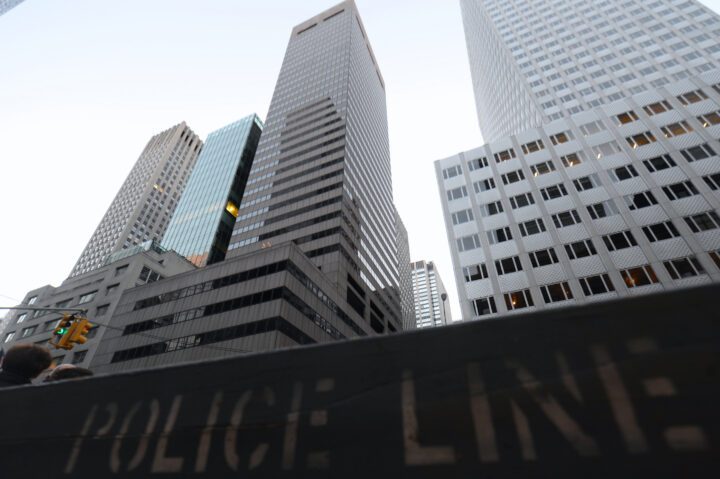
Cem Ozdel/Anadolu Agency/Getty Images
The 650 Fifth Avenue building, a 36-story office tower, located on 52nd Street near Rockefeller Center is seen on April 20, 2014 in New York City.
As tensions intensified between the U.S. and Iran amid the regime’s violent repression of protesters in January, and as Tehran vowed itself “prepared for war,” a long-running battle with the Islamic Republic’s forces in Manhattan came to an end.
The final stages of the conflict between the Justice Department and the New York-based Alavi Foundation, which since 2008 has faced allegations of acting under Iranian direction, took place in secrecy — with scores of legal documents sealed and even vaulted away.
But materials filed on Jan. 12 with the New York State Charities Bureau revealed its ultimate outcome: a settlement that will provide compensation for numerous American and Israeli victims of Tehran-backed terror, but also enable a successor organization to recoup control of the foundation’s vast assets, including its 36-story crown jewel skyscraper on Fifth Avenue.
The final deal — which a filing this month shows came together confidentially in the last days of the Biden administration, and has just begun to go into effect — will officially dismantle the Alavi Foundation and strip it of hundreds of millions of dollars. Formed as the Pahlavi Foundation in 1973 during its namesake shah’s reign, Alavi was later commandeered and rechristened by figures tied to the regime of the mullahs, and the federal government accused it of conspiring with an Iranian state-owned bank to evade taxes and sanctions.
The settlement of the suit brought by the federal government compels payouts totaling $318 million to the U.S. government and a wide array of people Iran and its proxies have harmed: in the 1983 bombing of the U.S. Marine barracks in Beirut, in the 1996 Khobar Towers attack in Saudi Arabia, in multiple 1990s and 2000s suicide attacks against Israel, in the torture and murder of an Iranian dissident, and in the 1990 assassination of Rabbi Meir Kahane.
In exchange, a new non-governmental organization, the Amir Kabir Foundation, will rise in Alavi’s place. Named for a historic Persian imperial administrator, the new group will take full possession of 650 Fifth Ave., appraised at $435 million, plus bank and investment accounts holding more than $87.6 million, and properties from Queens to California worth tens of millions more and home to various Shia religious and educational facilities.
Records show that the Amir Kabir Foundation shares Alavi’s old address and even its phone number, and that three of the five members of the Alavi Foundation’s board of directors are part of the new group’s six-person leadership team. This includes Dr. Hamid Yazdi, who has served as Alavi’s president since 2013, and whose name appears on registration paperwork for the Amir Kabir Foundation. Yazdi did not respond to requests for comment.
And although by-laws for the new group require it to remain “independent from any national or international agencies,” it will continue to provide funding and support for at least one longtime Alavi affiliate: the Qoba Foundation of Carmichael, Calif., which occupies an Alavi-owned property that the feds sought to seize in the early days of the case and which bears the name of a politically significant Iranian mosque.
The news that the Amir Kabir Foundation shared much of Alavi’s leadership team and would regain access to the huge rental revenues from 650 Fifth Avenue and the network of religious facilities lodged at the old organization’s properties alarmed longtime Iran-watchers.
“This is the Iranians playing anti-sanctions, anti-accountability three-card monte. They are treating the U.S. Department of Justice and the courts as if they are fools,” asserted Dr. Michael Rubin of the American Enterprise Institute. “Iran’s only concern is maintaining the property. It’s lucrative and, in theory, can help undermine U.S. security from within. If the CIA owned a skyscraper in Tehran, would they be so willing to give it up, or would they just shuffle the acronyms around and hope no one notices?”
The news also worried Lara Burns, head of terrorism research at George Washington University’s Program on Extremism. Burns highlighted her own contributions to a report that found Alavi-backed groups had promoted anti-American, pro-ayatollah extremist rhetoric, and noted the group’s history of violating sanctions, as documented in the federal case. She suggested “government fatigue” with the lengthy and expensive litigation process may have contributed to the federal decision to settle.
A former FBI agent, Burns further argued financial penalties like those in the settlement can at times serve effective “punitive and deterrent functions” — but not in this case.
“I do not believe restitution and fines serve either purpose in the case of Alavi Foundation, who has shown a willingness to continue its behavior at all costs and the fiscal ability to maintain that agenda,” she argued to Jewish Insider. “Allowing Alavi to obfuscate their identity and basically start with a clean slate creates risks related to a continued foreign influence campaign on behalf of a regime that has called for the death of U.S. leaders and who has blatantly stated its intent to cause America harm through a variety of nefarious activities.”
But Alavi’s longtime attorney, Daniel Ruzumna, maintained that the new foundation would in no way serve as an alter ego to the old. He noted that the Alavi Foundation’s board had completely turned over during the yearslong legal fight, and stated that all members of the Amir Kabir Foundation’s leadership had submitted to interviews with the federal government and received no objection.
Further, he pointed to language in the document filed in New York subjecting the Amir Kabir Foundation to a five-year term of oversight from the state Attorney General’s office, and said that it would operate under the “close supervision” of the Justice Department.
“AKF and its board members have no relationship to the Government of Iran, no connection to the Government of Iran, and have never been accused of having a relationship with Iran — zero, nothing,” Ruzumna said. “Any suggestion otherwise is categorically false.”
The office of the U.S. Attorney for the Southern District of New York, which handled the case, declined to comment for this story.
Goldberg, a senior advisor at the Foundation for Defense of Democracies: ‘We remain headed toward the president enforcing his red line’
Screenshot
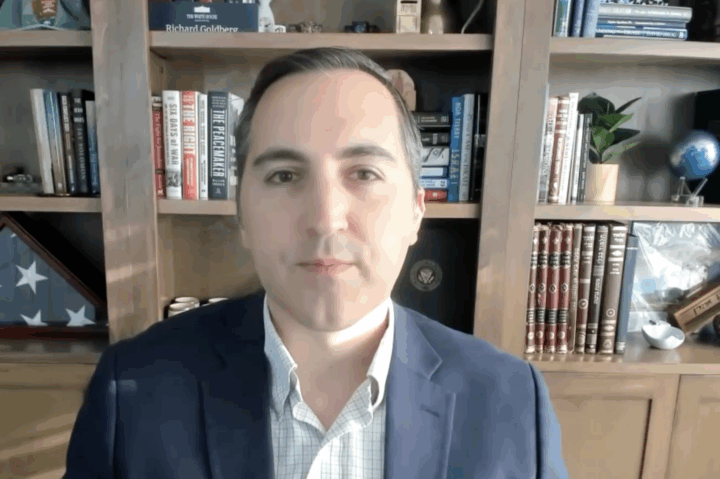
Foundation for Defense of Democracies senior advisor Richard Goldberg on the Misgav Institute for National Security and Zionist Strategy’s Mideast Horizons podcast, Sept. 2025
Readouts from Iran on progress made in the latest round of negotiations with the U.S. are evidence of the regime “simply buying for time” and evidence that Tehran isn’t willing to make the concessions demanded by the Trump administration, Richard Goldberg, a former Trump administration official and senior advisor at the Foundation for Defense of Democracies, told Jewish Insider in an interview Tuesday.
Following the second round of nuclear negotiations, which Iranian Foreign Minister Abbas Araghchi called “serious, constructive and positive,” Goldberg made the case for why he thinks there’s a high likelihood of future U.S. military action against Iran, and why he sees the negotiations as diplomatic theater.
This interview has been condensed and edited for clarity.
Jewish Insider: What is your initial takeaway from the second round of discussions and the Iranian foreign minister’s comments that the parties reached agreements on “guiding principles” for a potential deal?
Richard Goldberg: If this was operating in a vacuum, and I saw that readout from the Iranian foreign minister, I would tell you that I thought this was a readout of one of the many rounds the regime held with [Special Envoy for Iran under President Joe Biden] Rob Malley or other diplomats from past administrations, Obama or Biden, with the sort of silliness of the readout of “We’ve agreed to terms in principle of what we might talk about.”
It is one of the clearest signs of a regime that’s not willing to make the tough concessions that the president has demanded, and instead is simply buying for time. I think that in their mind, so long as they appear to be the party that wants to talk, that is willing to keep talking, it somehow boxes in the president, politically, from being able to use force. Obviously it does not, but from their perspective, it also is a lifeline to talk like that, because it’s probably the only thing that separates them from financial collapse at this point.
Remember, at the beginning of the year, we saw a bank collapse in Iran, with reports that five other banks were to shortly follow. One of the narrative economic strategies of the regime when they see economic peril is to hold diplomatic talks and to speak positively about those talks and to create a pathway for those talks to extend themselves, because it creates confusion in the market and puts a bottom on the deterioration of the financial system for those who believe that there might be a deal at the end of the rainbow.
If you were to remove that false optimism, then the bottom drops out. There is no pot of gold waiting at the end of the rainbow. So politically, they think that they’re boxing in the president and delaying military action. Economically, they think they’re staving off financial collapse, but there’s nothing to demonstrate any credible willingness to dismantle all of their threats to the United States and the rest of the world, be that their nuclear program, their missile program, their sponsorship of terrorism and the repression apparatus that we just saw demonstrated at maximum violence.
In fact, we have seen just [yesterday], while they were talking, reports coming out of a round of more protesters being gunned down the streets at the end of the mourning period for the first slaughter. So I think the president is pretty clear-eyed on all of this. I think he can tell the difference between rope-a-dope and credible concessions. I think he knows when a red line has been obliterated and we should be focused on the fact that force posture continues to build up in the region, and the president has indicated his continued willingness to use force. So all things being equal, it would appear that we remain headed towards the president enforcing his red line.
JI: If these negotiations should fail, what would the military option look like?
RG: Well, no one knows. Obviously, there’s a range of targets that you would be thinking about in Iran. You would start with the greatest threats to the United States, those being nuclear and missile threats, and then you would move into the potential to degrade the regime’s command-and-control communications, the repression apparatus and, of course, the potential for a decapitation strike at the highest level of of the escalation ladder.
We could also see a quarantine of Iranian oil exports the way that the president had conducted against Venezuela. Again, the regime is trying to project threats right now to deter that specific plan of action. I think that’s why you see [yesterday’s] news of them conducting some sort of military drills around the Strait of Hormuz, threatening to sink U.S. naval vessels, showcasing their missile threat, not just to the United States, but to energy infrastructure in the region. I think they are saber rattling for the oil market and to deter the president from taking action to strangle their financial lifeline.
So where do you go back to at the beginning? You go back to their missile threat, their drone threat, their naval threat and, if they’re able to already, attempt to blackmail the international community with those threats. Those are threats that are long term and systemic, and we do the United States, our national security, our economic security, a great service by degrading those threats.
Many of the target sets come back to the same top-tier ones. That which poses the greatest threat to the United States needs to be at the top of the target list. But if you can mitigate those threats and degrade them, then you open up more options to strangle the regime economically by cutting off the oil flow, and you also open up more opportunity to degrade the regime’s control and power via precision strikes, not just by the United States, but potentially by Israel as well.
JI: If the U.S. takes military action, do you think there’s any concern from the American side about the potential fallout in the region?
RG: The United States has defensive measures to slow an attack and mitigate an attack, and it has a range of offensive capabilities to remove the threat once it has attacked. We have seen the Iranians, both from their territory and via proxies, most specifically the Houthis, launch many of the capabilities that they’re threatening today. We saw a short-range ballistic missile attack against our base in Qatar at the end of the 12-day war [in June]. We have seen other ballistic missile strikes in the past against Iraq after killing [Iranian Gen. Qassem] Soleimani. We have seen the Houthis using anti-ship ballistic missiles, anti-ship cruise missiles and drones to attack the U.S. Navy in the Red Sea over many months — notably, our defenses destroyed all those threats. In the case of the ballistic missile attack on Qatar, I think the public reporting is that we were able to destroy most of the missiles, and those that got through did minor damage – and that’s on the defensive measure side.
Then comes the offense. If the regime wants to open up that can of worms, attack the United States in that respect, and the attack is mitigated, the next strike will not be one that they come back from. Their goal right now in Tehran is to scare the president, scare the American people, and scare the oil market.
The objective from military planners inside the Pentagon, for the chair of the Joint Chiefs [of Staff] and for the president should be to stick to reality — What can they do? What do we need to defend against it? What are we going to do to remove those threats from any second or third third wave? What are the clear objectives that we want to have with the outcomes of our strikes that we want to achieve? How are we going to reassure the oil market that energy continues to flow, even if the regime attempts to disrupt flows through the Strait of Hormuz or attacks energy infrastructure? What are the relief valves we have at our disposal throughout the world? – and move in in the best interest of the United States, and I think that’s what the president has shown he’s willing to do.
JI: Iran has indicated that they would retaliate against U.S. military bases in the region in the event of any military intervention. Many Arab allies host American troops and have expressed concern about tensions turning into a wider conflict. What is your read on how Arab countries might be feeling?
RG: If you are a neighboring state that is an ally or partner of the United States, and your neighbor has a large missile and drone force like Iran, and you have critical infrastructure that could be hit by those missiles and drones, you would likely, whether true or untrue, distance yourself from any plans to attack. You’d want to be able to say to your diplomatic counterparts: “We were against this. We cautioned against it. We urged dialogue. We didn’t want to see this happen. Don’t attack us.”
At a very basic level, that seems obviously what is happening and understandably so, and then there’s also the potential that, in fact, some of these Arab dictatorships don’t mind a weak dictatorship in Tehran that they know rather than having that dictatorship actually fall.
JI: Which path do you think the administration is ultimately going to take?
RG: My suspicion is that the president has already made up his mind. He’s moving in a very specific direction. Everything we see is quite calculated and with specific reason. The regime will not give him a deal that would be viewed as credible and history achieving, and the president, someone who has achieved history in his own action, multiple times by use of limited, but precise military action, will be called to repeat history and create even greater chapters for the history books.
The president said he was told ‘on good authority’ that the regime has stopped killing protesters and will not carry out executions
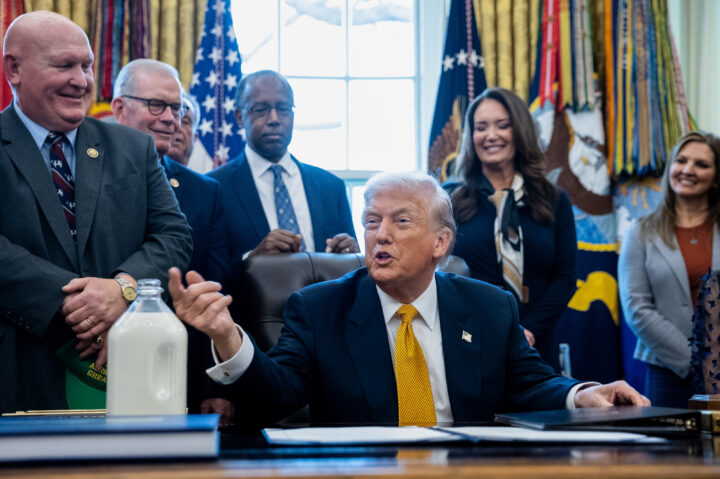
Francis Chung/Politico/Bloomberg via Getty Images
President Donald Trump speaks during a signing ceremony in the Oval Office of the White House in Washington, DC, US, on Wednesday, Jan. 14, 2026.
President Donald Trump indicated that his threats to Iran over its use of violence on protesters have had their desired effect, saying on Wednesday afternoon that “the killing in Iran is stopping.”
Speaking to reporters at a bill signing in the Oval Office, Trump said, “We have been notified and pretty strongly — but we’ll find out what that all means — but we were told that the killing in Iran is stopping, it’s stopped, and that there’s no plan for executions. … So I’ve been told that on good authority. We’ll find out about it, I’m sure, if it happens, we’ll all be very upset.”
“They’re not going to have an execution, which a lot of people were talking about for the last couple days. Today was going to be the day of execution,” the president said, referring to at least one protester who was due to be executed by the regime today, his family and human rights groups said.
Trump later claimed that information was provided to him “by very important sources on the other side, that the killing has stopped and the executions won’t take place. There was supposed to be a lot of executions today and that the executions won’t take place.”
“And we’re going to find out. I mean, I’ll find out after this, you’ll find out, but we’ve been told on good authority. And I hope it’s true. Who knows, right? Who knows,” he said.
Pressed about videos of body bags emerging out of Iran that indicate large-scale killings, Trump downplayed the issue, saying, “People were shooting at them with guns, and they were shooting back. It’s one of those things.”
Asked if this means military action against Iran is now “off the table,” Trump replied, “Well, we’re going to watch and see what the process is. But we were given a very good statement by people who are aware of what’s going on.”
The rhetoric marked a shift for the president, who a day prior had posted on social media a message to “Iranian patriots” who he told to “save the names of the killers and abusers” and that “help is on its way.” Reports indicate Iranian officials had made contact with the Trump administration seeking a diplomatic off-ramp to the escalating tension.
The U.S. announced sanctions on a network of companies and shipping facilitators involved in Iran’s oil export business

ATTA KENARE/AFP/Getty Images
Oil tanker SC Hong Kong is seen off the port of Bandar Abbas, southern Iran, on July 2, 2012.
The Treasury Department implemented new sanctions on Thursday targeting what the agency described as a “network of front companies and shipping facilitators that bankroll the Iranian armed forces by selling crude oil” — a critical revenue stream for the regime.
The latest round of sanctions, one of several announced in recent months, also targets six vessels in Iran’s “shadow fleet” of tankers used to transport oil to international markets, joining a list of more than 170 such vessels which have been sanctioned this year.
The Treasury is also adding sanctions on a subsidiary of Mahan Air, an Iranian airline used by the Islamic Revolutionary Guard Corps to help supply proxies and allies across the region.
“Today’s action continues Treasury’s campaign to cut off funding for the Iranian regime’s development of nuclear weapons and support of terrorist proxies,” Treasury Secretary Scott Bessent said in a statement. “Disrupting the Iranian regime’s revenue is critical to helping curb its nuclear ambitions.”
In its announcement, the Treasury Department said that Iran’s oil exports are a crucial source of funding for the Iranian regime, particularly as the Islamic Republic seeks to rebuild after its war with Israel.
“Following its defeat in the 12-Day War with Israel, Iran’s military has increasingly come to rely on the sale of Iranian crude oil to supplement its annual budget and finance the rebuilding of its depleted forces,” the statement reads.
The companies targeted under the sanctions are tied to Sepehr Energy Jahan Nama Pars Company, an arm of the Iranian military responsible for oil sales and exports. The companies being targeted operated variously out of the UAE, Panama, Greece, India and Liberia.
The ships in question are flagged in Palau, Panama and Gambia.
According to the Treasury’s announcement, Mahan subsidiary Yazd International Airways Company was used by the IRGC to transport Quds Force officers to Lebanon to support Hezbollah attacks on Israel and to ship weapons to the Assad regime in Syria.
The sanctions also seek to crack down on Mahan’s procurement of Western aircraft and identify several such aircraft as blocked property.
Bessent also attended a meeting at the White House on Thursday with recently freed hostages.
“We heard their firsthand accounts of the atrocities experienced on that day and over the past two years,” Bessent said on X. “Thanks to President Trump’s historic actions and bold leadership, all of the hostages have been freed, and we are closer than ever to a lasting peace in the Middle East. At @USTreasury, we are committed to safeguarding Americans and our allies from terror, wherever it presents.”
Jasmine Naamou and Tarek Naemo, a Florida couple advocating closer U.S.–Syria ties, have courted lawmakers including Sen. Jeanne Shaheen, Rep. Joe Wilson and even House Speaker Mike Johnson as they promote Damascus in D.C.
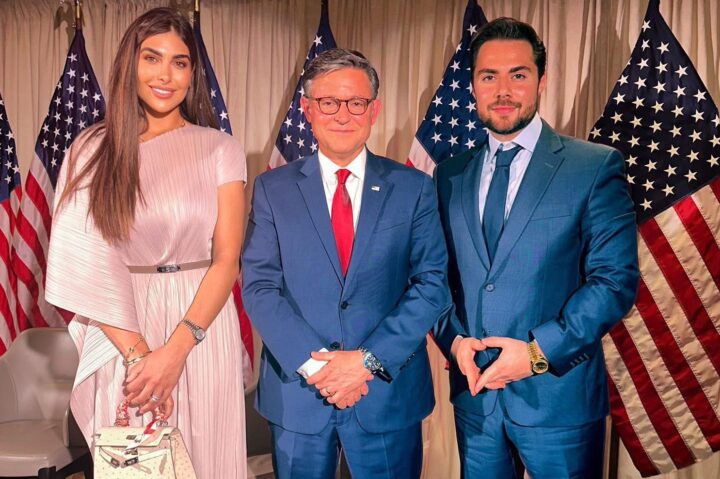
X/Syrian American Alliance for Peace & Prosperity
asmine Naamou and Tarek Naemo meet with House Speaker Mike Johnson (R-LA), June, 10, 2025
The fall of Bashar al-Assad’s brutal regime in Syria last December happened slowly, and then all at once — leaving a region reeling from whiplash and a country digging itself out from the rubble, now under the leadership of a former militia head who cut his teeth as an Al-Qaida terrorist.
This week, that leader, Syrian President Ahmad al-Sharaa, is coming to Washington, the first time a Syrian president has ever been invited to the White House.
Alongside al-Sharaa’s rise in Damascus has been a flurry of activity in Washington, as lawmakers tried to make sense of a country that one day was considered a rogue nation locked in protracted civil war and the next was viewed as a free state on the path to stability.
Two people in particular have become fixtures on Capitol Hill, pushing the message that Washington should lift sanctions on Damascus and build stronger ties with Syria: Jasmine Naamou and Tarek Naemo, a married couple who live in Daytona Beach, Fla., with a knack for social media self-promotion and a willingness to strike up a conversation with anyone.
On the eve of al-Sharaa’s meeting with President Donald Trump, the couple arranged a meeting with the Syrian leader and Rep. Brian Mast (R-FL), chair of the House Foreign Affairs Committee.
Naamou and Naemo first came to Capitol Hill this year as activists with the Syrian American Alliance for Peace and Prosperity, a nonprofit that emerged early this year to advocate for closer ties between the U.S. and Syria, though Naamou said she doesn’t work directly with them anymore. The organization arranged meetings for Syria’s foreign minister in New York this year, and in April it brought two members of Congress — Reps. Cory Mills (R-FL) and Marlin Stutzman (R-IN) — to Syria for the first visit by U.S. officials in years. Naamou and Naemo were on the trip with them.

Mills and Stutzman’s visit preceded a more senior delegation, with Sen. Jeanne Shaheen (D-NH), the top Democrat on the Senate Foreign Relations Committee, and Rep. Joe Wilson (R-SC), who has held several senior foreign policy roles, visiting the country together.
All of those lawmakers have met with either Naamou or Naemo this year, documented with slick photos shared on the couple’s Instagram accounts. Naamou has 319,000 followers, and a pinned photo with House Speaker Mike Johnson (R-LA); Naemo has 2.2 million followers and flaunts photos with the Saudi investment minister and Turkey’s ambassador to Syria — plus an image of him holding a rifle and sitting on a golf cart with Wilson. He refers to Wilson as “my dearest friend.”
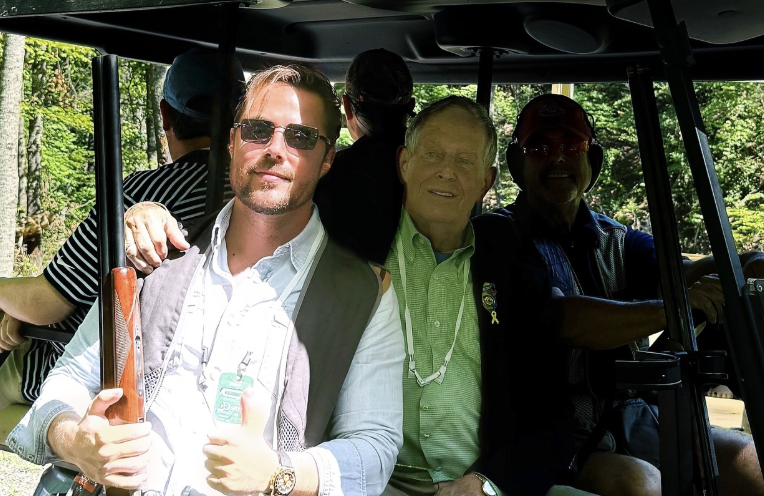
Naamou spoke to Jewish Insider on Friday ahead of al-Sharaa’s visit to preview what she hopes the Syrian leader will discuss with Trump, with normalization with Israel high on the list.
“We want regional stability. Israel’s a neighbor. They’re a friend of America. We want them to be friends of Syria. We want to normalize relations,” said Naamou, who was driving to the airport, bound for Washington to be there for al-Sharaa’s visit. She also expressed hope for a U.S. security presence in Syria: “I believe they’re moving in the right direction of getting that security agreement in place. From what I’ve heard, they are in discussions of having a U.S. air base in Damascus to help with those security discussions between Syria and Israel. So I really do see the steps moving in the right direction.”
Ahead of his visit, the United Nations lifted sanctions on al-Sharaa, a move that followed a similar executive order by Trump in June. “President Trump is committed to supporting a Syria that is stable, unified and at peace with itself and its neighbors,” the White House said at the time.
Naamou and her husband both work in real estate in central Florida, though they also have ties to a Saudi sovereign wealth fund, according to Intelligence Online, a publication focused on diplomacy. Naamou said investment is a focus of their advocacy to American officials.
“They’re also going to have discussions on reintegrating investments in Syria because President Trump, when he went over to Saudi Arabia on his Middle East trip, he had announced the whole cessation of sanctions,” said Naamou.

Florida oceanside city become such fixtures on Capitol Hill? Naamou, who is 30, dates her own advocacy to her college days at the University of Florida, where she studied international relations and political science because of what was happening in Syria. She said the political relationships started back home in Florida, too.
“I live in Volusia County, and it’s a relatively small county, and everyone kind of knows each other,” she said. “You just go to events, and you meet people, and things happen, and you discuss things, and then you find things in common.”
They’ve also met with Reps. Byron Donalds (R-FL), who is running for governor of Florida; Anna Paulina Luna (R-FL); Maxine Waters (D-CA) and Abe Hamadeh (R-AZ), who is the child of Syrian immigrants.
“I see huge bipartisan support now,” Naamou said. “We like to term Syria as a swing state. Syria is multi-layered. Syria is one of the only countries in the Middle East that is so complex. You have all three Abrahamic religions present in Syria. You have all different types of ethnicities present. And so Syria is very key in the region, because it can be swung either way.”
“Either way,” in this case, means West or East — bringing Syria into the U.S.-led Western world, or into the Russia-Iran-China orbit.
“They want the U.S., and they want to acclimate here with our values,” said Naamou, who was born in Michigan to a Syrian father. She described the rapid changes in Syria as a “snowball effect.”
“I’ve never seen, when a regime has fallen, such a fast paced amount of change happen in such a short period of time,” said Naamou. She wants to see it continue: all sanctions lifted, American investment, closer ties.
“I’m hoping that we see a larger acceptance of Syria in general,” she said. “I’m hoping that we’re able to somehow, in any way, reshape the narrative into a positive light.”
Please log in if you already have a subscription, or subscribe to access the latest updates.
 Continue with Google
 Continue with Apple