






















‘Does getting a deal with Israel help him become king or not?’ Ortagus posited at an event hosted by the Foundation for Defense of Democracies

John Lamparski/Getty Images for Concordia Summit
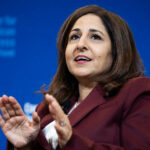
Morgan Ortagus speaks onstage during 2024 Concordia Annual Summit at Sheraton New York Times Square on September 25, 2024 in New York City.


 Add JewishInsider on Google
Morgan Ortagus, the former deputy presidential envoy for Middle East peace, suggested on Thursday that normalizing relations between Saudi Arabia and Israel was not a top priority for Saudi Crown Prince Mohammed bin Salman, citing security concerns and his focus on ensuring he becomes king.
Ortagus made the comments while participating in an event at the Foundation for Defense of Democracies with Hussain Abdul-Hussain, a research fellow at FDD, discussing his book, The Arab Case for Israel: And Other Essays from a Distant Conflict, for which Ortagus wrote the forward.
Ortagus served under White House Special Envoy Steve Witkoff before joining the U.S. mission to the United Nations as a senior advisor last June. She quietly departed the Trump administration in February of this year.
Ortagus said that the Saudi crown prince’s top priority is becoming king and ensuring a peaceful transition from his father, King Salman, explaining that conversations about Riyadh normalizing relations with Israel should be viewed through that lens.
“When you look at it from the lens of MBS, everybody is a politician of some sort. What’s the most important thing that he has to do in the next few years? Actually become king,” Ortagus said. “Does getting a deal with Israel help him become king or not? Does it help that peaceful transition?”
“He got there in a very interesting manner and took out a lot of his family members in order to get where he is, but he still has that hurdle of becoming king and getting through the Shura Council and having that peaceful transition,” she continued. “I think, as for most politicians around the world, certainly here in America, that transition is more important to him than a peace deal in Israel.”
Following publication of this story, a representative for Ortagus reached out to note that her comments were not a suggestion that Saudi-Israeli normalization was unlikely and that she believes “a deal between Saudi Arabia and Israel will happen under the Trump administration.” They added that her comments “were meant to explain why it’s hard and will take time, not to question whether it happens.”
Evangelical leader Mike Evans recently claimed that the crown prince told him that he was prepared to recognize Israel but for the opposition of his father. Saudi officials have publicly rejected the idea of normalization without a path to a Palestinian state.
Abdul-Hussain noted that he had broadly been supportive of MBS’ approach to regional security and economic issues since rising to power in 2015, but criticized what he described as a pivot on the issue of normalization with Israel. He said that he did not know the reason for the shift by the Saudis, but surmised that economic factors were at play.
While Ortagus concurred that economic issues did play a role, she argued that security concerns after Hamas’ Oct. 7, 2023, attacks on Israel prompted the crown prince’s reversal.
“The threats to MBS and to the king and to the whole government in Saudi Arabia went up exponentially after Oct. 7,” Ortagus said. “It was very low before, so I think it’s also very much a security situation.”
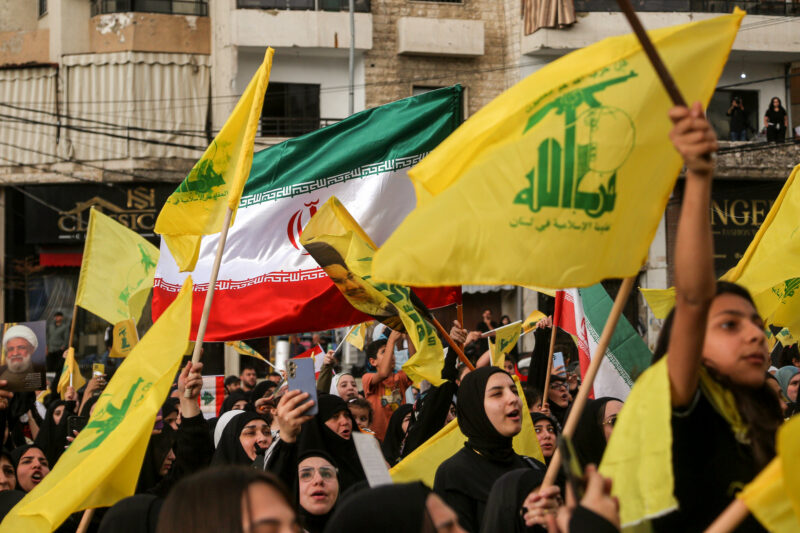
Turning to the possibility of Israel and Lebanon normalizing ties and working together to disarm Hezbollah, Ortagus and Abdul-Hussain expressed doubt that the warnings from senior Lebanese officials of a possible civil war if Hezbollah is disarmed and the Lebanese Armed Forces’ decision to keep Gen. Rodolphe Haykal in charge of the LAF — despite Haykal being sympathetic to Hezbollah — were obstacles to reaching a deal.
“I think it comes down to the capabilities, not just the capabilities of the LAF, but the institutional will to actually do the disarmament of Hezbollah, which just fundamentally is not there,” Ortagus said.
Abdul-Hussain shared Ortagus’ skepticism about the Lebanese government’s commitment to reaching a deal.
“Knowing Lebanese politicians, I expect President [Joseph] Aoun to run for the exit. He’s thinking, ‘Well, if they’re talking to Hezbollah too, then talking to me doesn’t mean much,’” Abdul-Hussain said of the Lebanese president. “I think we in this town are not really resolved on which direction we’re going, and I want us to go in the direction of: We will not do the ceasefire the way Hezbollah wants it to be.”
Both Abdul-Hussain and Ortagus rejected the idea that Israel and Lebanon could successfully normalize relations without Hezbollah being disarmed. Ortagus also said that all parties involved in the U.S.-led peace talks between Israel and Lebanon “have to do a better job of making the argument, specifically to the Shia from the south … that you will have a better life” if the two countries normalize relations and disarm Hezbollah.
Ortagus and her partner, Antoun Sehanaoui, a Lebanese banker and producer, also hosted a book party in Georgetown for Abdul-Hussain on Thursday evening, where she praised Abdul-Husain and Sehanaoui for speaking out in favor of peace with Israel, a stance she said puts their lives, livelihoods and families in Lebanon at risk.
Abdul-Husain said his book came about through his own personal story, growing up in a Hezbollah stronghold in Lebanon and being educated that Israel was evil and aimed to conquer Lebanon. But he said that as he learned Hebrew and came to understand Israel and its true goals, his views continued to evolve, “until I reached the point I thought what they had taught us was not really correct.”
“I came up with my own ideas, and I thought that Israel is a successful story, whether we like it or not, whether we think it caused us injustice or not, it’s still a successful story,” Abdul-Hussain said. “If you are Arab or Palestinian, and you think that Israel caused you injustice, or is still causing you injustice, then moving on and forgetting about and taking this injustice is much more to your interest than trying to wind the clock back to a time when Israel did not exist and start building from there.”
He said that evidence shows that the stronger the relations an Arab state has with Israel, the more successful it is, economically and otherwise.
On Iran, at the FDD event, Ortagus argued that the U.S. is winning the war despite it still being unfinished more than 100 days since its launch, citing Iran’s heavily degraded military capabilities and what she described as the weak status of the current regime.
“Nothing about war now is easy and simple. No one’s going on a ship anymore to sign a declaration of the end of the war, it’s just not how it happens,” Ortagus said. “So you have to look at the president’s and the administration’s goals, and as much as people like to critique every single thing this president and administration does, he is the only president in 47 years of the Islamic Republic to be willing to take kinetic action in order to coerce the regime back to the negotiating table.”
“His negotiators, by the way, should be able to get a great deal because of the amount of leverage that he’s given them. The president talks about this all the time. He talks about what he’s done to destroy their nuclear facilities, their military capabilities, their Navy, their Air Force. We fly with impunity over their skies,” she continued. “To everyone sort of prognosticating that this has somehow been a failure. Look at the metrics, look at the facts, look at the capabilities, look at the regime strength today and look at their economy. … I just think it’s a matter of time before this regime falls.”
She suggested that the mass pro-democracy protests in Iran earlier this year forced President Donald Trump to expedite his plans to target the regime and what remains of its nuclear program while defending the extended length of the conflict.”
“All of these protestations by Europeans and other feckless individuals who never get in the fight are wrong,” Ortagus said. “Obviously, I think, we had a moment of opportunity after the protest earlier this year where we had to decide on action probably a little bit earlier than we had planned on, because it was the moment when we, when the president clearly told the people of Iran, the protesters that we were going to stand by them, and that help is on the way, so help had to get on the way.”
Ortagus described the president as “the leading hawk at the White House,” saying he “has fundamentally understood this issue since his very first campaign in 2016, of how destabilizing it would be for the region if Iran were to obtain a nuclear weapon. He set red lines for himself and said it will never happen on my watch, and I think he very much understands that any deal cannot be like the JCPOA [the 2015 nuclear deal] has to make sure that they can’t actually obtain a nuclear weapon. I think he’s very clear on that, and I know that his negotiators are.”
Ortagus said she believed both the president and U.S. negotiators are of the view that not reaching a deal with Iran, because the regime would not make necessary concessions, “is somewhat better than a bad deal.”
She suggested that the White House was also aware of the logistical hurdles involved in getting any agreement approved by the Senate, warning that Sens. Ted Cruz (R-TX), Tom Cotton (R-AR) and Lindsey Graham (R-SC) will not vote to approve a deal that does not address key concerns about the regime, its terror financing network and its nuclear and ballistic missile programs.
“Anybody who’s not a freshman senator was around during JCPOA, and Republican senators have been very on the record for what they would accept in any deal with Iran, certainly even during the Biden years,” Ortagus said. “Republican senators are going to get a say in whatever the final deal looks like. The beauty of our democracy is this comes down to not only what the president is willing to sign, and I happen to think that he’s one of the most hawkish people in the room on this issue, it also comes down to what the U.S. Senate and what Republicans in the Senate are going to abide by.”
This story was updated on June 12 to reflect clarifications from Ortagus’ representative about her comments on Saudi-Israel normalization.
UAE and Saudi leaders spoke by phone; the GCC affirmed its ‘right to respond’
Fadel SENNA / AFP via Getty Images
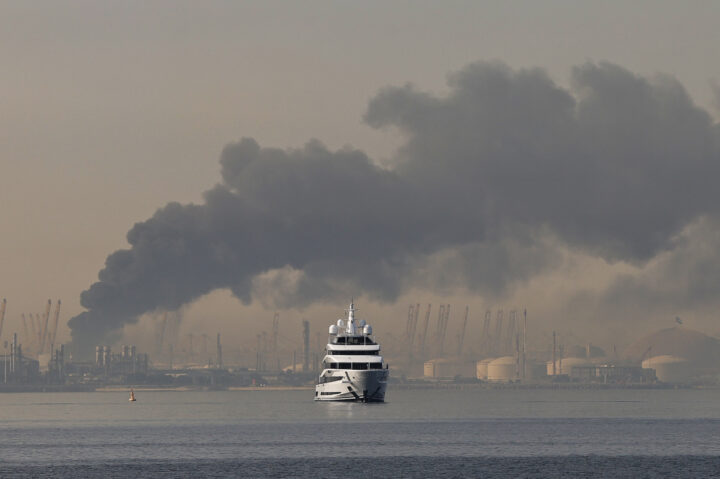
A yacht sails past a plume of smoke rising from the port of Jebel Ali following a reported Iranian strike in Dubai on March 1, 2026.
Major Gulf powers are coming together in rare lockstep amid Iran’s strikes around the region, with the United Arab Emirates closing its embassy in Iran and the Gulf Cooperation Council declaring it retains the right to respond.
After the U.S. and Israel launched a major operation against Iran on Saturday, the regime struck sites in at least nine countries around the Middle East, including Israel, Jordan, Syria and every member of the Gulf Cooperation Council — Bahrain, Kuwait, Oman, Qatar, Saudi Arabia and the UAE.
Despite claiming it is aiming at U.S. military assets in the region, Iran has struck widely at civilian infrastructure, including hotels, residential neighborhoods and airports in the UAE, Bahrain, Kuwait and Iraq. At least 12 civilians were killed in Israel over the weekend, along with three U.S. servicemembers.
On Saturday, the first day of the operation, UAE President Mohamed bin Zayed spoke by phone with Saudi Arabia’s Crown Prince Mohammed bin Salman to discuss Iran’s aggression and their response, a significant development and sign of the seriousness of the issue amid a regional rift between the two major powers.
The UAE has taken the brunt of much of Iran’s malign activity — its Ministry of Defense said Sunday that the country had been targeted by 165 ballistic missiles, two cruise missiles and 541 drones from Iran. Three civilians were killed and 58 injured in the barrage.
Shortly after, Abu Dhabi announced the closure of its embassy in Tehran and the withdrawal of its entire diplomatic mission, citing Iran’s “hostile attacks against civilian sites … in a serious and irresponsible escalation [that] constitute a flagrant violation of national sovereignty.” The country’s Ministry of Foreign Affairs also summoned the Iranian ambassador to the UAE and “delivered a strongly worded note of protest” about Iran’s “terrorist attacks and assault.”
Also on Sunday, the ministerial council of the GCC held a meeting over video conference and issued a statement strongly condemning Iran’s attacks and affirming the countries’ “legal right to respond.”
“The Council also expressed full solidarity among the GCC countries and their unified stance in confronting these attacks, stressing that the security of GCC member states is indivisible, and that any attack against any member state constitutes a direct attack against all GCC countries,” the statement went on. The countries “will take all necessary measures to defend their security and stability and to protect their territories, citizens, and residents, including the option of responding to the aggression,” they pledged.
The U.S. also joined the GCC in another statement Sunday, saying that Iran’s “targeting of civilians and of countries not engaged in hostilities is reckless and destabilizing behavior.”
Despite announcing sweeping security, investment and defense agreements, the fate of a Saudi-Israel normalization deal remains uncertain
Win McNamee/Getty Images
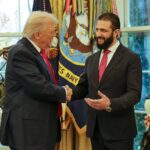
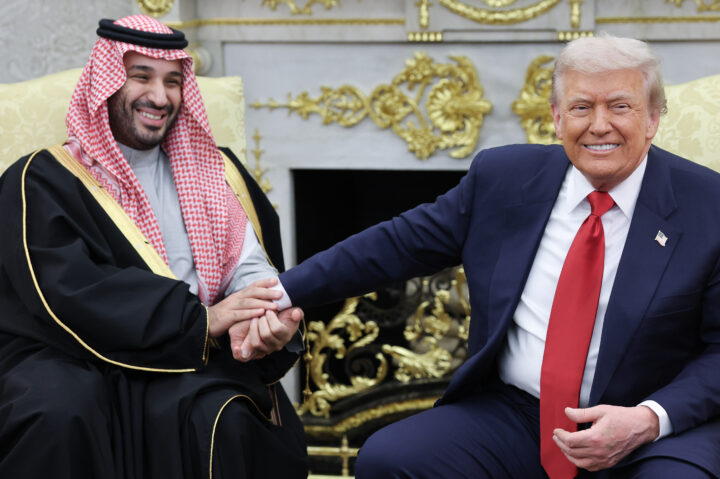
President Donald Trump (R) meets with Crown Prince and Prime Minister Mohammed bin Salman of Saudi Arabia during a bilateral meeting in the Oval Office of the White House on November 18, 2025.
During Tuesday’s meeting between President Donald Trump and Saudi Crown Prince Mohammed bin Salman, the leaders strengthened their relationship and confirmed the completion of several deals. Any plan to utilize such transactions as part of normalization with Israel, however, was notably absent.
While taking questions from reporters in the Oval Office, Trump confirmed that the U.S. would sell Saudi Arabia F-35 fighter jets of similar caliber to Israel’s. At a dinner that evening, the president added that a strategic security agreement had crossed the finish line, while also formally naming Saudi Arabia a major non-NATO ally. On Wednesday, the two countries announced a strategic artificial intelligence partnership.
“The main takeaway of the visit was the normalization of the U.S.-Saudi relationship,” said Aaron David Miller, a senior fellow at the Carnegie Endowment for International Peace and former State Department negotiator. “[There was] very little, it seemed to me, not surprisingly, on the side of normalization to Israel. It’s almost as if Israel was sort of an afterthought this visit.”
When asked by reporters why normalization with Israel was not prioritized, Trump did not provide much of a response, instead asserting that Israel is “going to be happy.”
Observers had anticipated that Trump would roll out the red carpet for MBS on his visit to Washington. What remained unknown was whether the deepening ties between Washington and Riyadh would come with progress between Saudi Arabia and Israel, the United States’ closest ally in the region.
But the deals announced this week were made without any apparent requirement of progress toward normalization, leading some experts and leaders of pro-Israel groups to raise questions about the Trump administration’s strategy.
“By the way this was done, President Trump seems to have elevated the partnerships with Saudi Arabia and maybe, to some degree, with other Gulf states, above pretty much all other U.S. partnerships, including Israel,” said Dan Shapiro, a former U.S. ambassador to Israel under former President Barack Obama.
“So that means that other considerations, like ensuring the right incentives are still in place for Saudi Arabia to normalize relations with Israel or ensuring that military sales are done in a way that protects U.S. interests and Israel’s security interests, may be less important than they have been under previous administrations.”
Shapiro said that while it is reasonable for the U.S. to strengthen its partnerships with Gulf countries, the deals gave away major incentives for normalization “without knowing whether it can be achieved later.” He also added that it came without guarantees from the Saudi government on limiting military cooperation with China and Russia.
Anne Dreazen, the vice president for the American Jewish Committee’s Center for a New Middle East, told JI that Saudi-Israeli normalization could not have been achieved on this visit, adding that it was “not in the cards right now.”
“Now the paradigm is shifting where it’s about peace between Israel and Saudi Arabia being logical and good based on its own merits, when they can get the politics right and when they can reach agreement on the Palestinian issue,” said Anne Dreazen, the vice president for the American Jewish Committee’s Center for a New Middle East.
“Right now we’re not there. The politics in Israel and Saudi Arabia are not right for this,” said Dreazen. “I think President Trump realized that it wasn’t going to happen in this visit and wanted to move ahead with these deals because there’s a strong perception that making some deals with Saudi Arabia is in America’s interest.”
Dreazen, however, still believes normalization is “going to happen,” adding that she has confidence from conversations with Saudi officials that political differences will be resolved in the future.
Trump’s decision to make significant deals with Saudi Arabia while not pressing for normalization suggests the White House is taking a different approach than in the past, Dreazen argued.
“Now the paradigm is shifting where it’s about peace between Israel and Saudi Arabia being logical and good based on its own merits, when they can get the politics right and when they can reach agreement on the Palestinian issue,” said Dreazen, a shift from how former President Joe Biden approached negotiations.
But with MBS leaving Washington with so many deliverables, it’s unclear whether he will still prioritize normalization.
The Israelis are “going to be right to worry that the Saudis may feel like they’ve gotten everything they want and don’t have any need left for normalization,” Shapiro said.
Following his Oval Office meeting with Trump, the Saudi crown prince told reporters, “We want to be part of the Abraham Accords, but we want also to be sure that [we] secure a clear path [toward a] two-state solution.”
Leaders of pro-Israel groups said normalization between Israel and Saudi Arabia should remain a top policy priority for the U.S.
“The United States would be stronger and more secure if our major non-NATO allies worked together to promote regional peace, stability and prosperity,” said AIPAC spokesman Marshall Wittmann. “This objective would be advanced if Saudi Arabia joined the Abraham Accords, and U.S. leaders should urge it to do so.”
In a statement released on Wednesday, Democratic Majority for Israel’s president and CEO, Brian Romick, said that expanding the Abraham Accords must be “central to U.S. policy,” and urged Congress to play an active role in reviewing U.S. defense agreements with Saudi Arabia.
“Any substantial upgrade in the U.S.–Saudi relationship — including access to advanced U.S. defense systems — must be tied to meaningful, measurable progress toward Saudi-Israeli normalization,” Romick said in a statement. “It is now incumbent on the Trump Administration to use our leverage with Saudi Arabia to make real progress toward normalization.”
“There’s clearly a political dynamic going on here,” said Israel Policy Forum chief policy officer Michael Koplow. “Trump went out of his way to almost poke at the Israelis. He implied that [the U.S. is] OK with the Saudis getting F-35s but [the Israelis] want the Saudis to get a less advanced version, and he almost seemed to boast about the fact that he’s going to give the Saudis whatever he wants no matter what Israel says.”
Trump’s promise of F-35 sales to Saudi Arabia has raised questions about which model and allowances Riyadh will receive and whether Israel will maintain its qualitative military edge, which the U.S. is bound by law to uphold. To date, Israel is the only country in the Middle East to have obtained the fighter jet.
U.S. officials and experts told Reuters that the F-35 jets the U.S. plans to sell to Saudi Arabia will lack superior features that Israel’s fleet has.
Israel Policy Forum chief policy officer Michael Koplow voiced concerns about the security aspect of the deals.
“It doesn’t surprise me that all of these things are going ahead,” said Koplow. “What surprises me more is that some of the things that have been discussed over the past couple of days seem to put Israel in a more difficult security position, particularly this question of sales of F-35s.”
Israel’s government, meanwhile, has stayed largely quiet about the F-35 sales, though the Israeli Air Force has objected to the deal, warning that it could damage Israel’s air superiority in the region
“There’s clearly a political dynamic going on here,” said Koplow. “Trump went out of his way to almost poke at the Israelis. He implied that [the U.S. is] OK with the Saudis getting F-35s but [the Israelis] want the Saudis to get a less advanced version, and he almost seemed to boast about the fact that he’s going to give the Saudis whatever he wants no matter what Israel says.”
Plus, Hill hums along to F-35s for Saudi
Chip Somodevilla/Getty Images
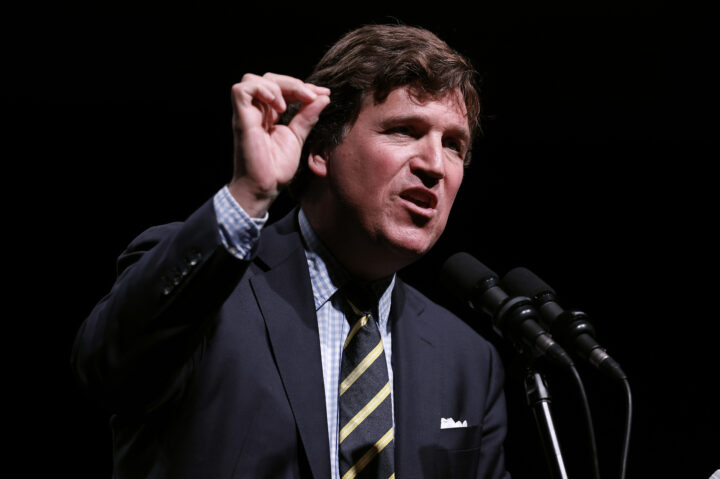
Tucker Carlson speaks at his Live Tour at the Desert Diamond Arena on October 31, 2024 in Phoenix, Arizona.
Good Tuesday morning.
In today’s Daily Kickoff, we preview Saudi Crown Prince Mohammed bin Salman’s meeting with President Donald Trump today at the White House, and look at how Jewish Republicans are reckoning with resurgent antisemitism on the right. We report on the U.N. Security Council’s support for Trump’s plan for postwar Gaza, and cover Israel’s push for the International Criminal Court to drop its arrest warrants for Israeli leaders over claims the court’s chief prosecutor pursued the case to distract from sexual harassment allegations. Also in today’s Daily Kickoff: Gov. JB Pritzker, Robert George and Troye Sivan.
Today’s Daily Kickoff was curated by Jewish Insider Executive Editor Melissa Weiss and Israel Editor Tamara Zieve with assists from Marc Rod and Danielle Cohen-Kanik. Have a tip? Email us here.
What We’re Watching
- All eyes are on Washington today for Saudi Crown Prince Mohammed bin Salman’s visit to the nation’s capital and meeting with President Donald Trump, followed by a formal dinner in honor of the crown prince’s visit. More below.
- The National Task Force to Combat Antisemitism is holding a daylong conference on “Exposing and Countering Extremism and Antisemitism on the Political Right.”
- Elsewhere in Washington, the Aspen Cyber Summit is taking place at the Kennedy Center.
- The Jewish Federations of North America’s General Assembly wraps up today. Speakers at this morning’s closing plenary, which features a musical performance by The Tamari Project, include Sen. Ted Cruz (R-TX) and “Call Me Back” host Dan Senor. JI’s Lahav Harkov will be moderating a session this morning on the future of the Middle East.
- The One Israel Fund is holding its annual gala tonight in New York. Rep. Elise Stefanik (R-NY) is keynoting this year’s event.
- In Turtle Bay today, U.S. Ambassador to the U.N. Mike Waltz will be joined by rapper Nicki Minaj as the two deliver remarks on the persecution of Christians in Nigeria.
- Outgoing New York City Mayor Eric Adams concludes his trip to Israel today. Following a trip to Kibbutz Nir Oz in Israel’s south, Adams will depart Israel for Uzbekistan.
What You Should Know
A QUICK WORD WITH JI’S Matthew Shea
President Donald Trump is hosting Saudi Crown Prince Mohammed bin Salman today at the White House, marking the first time MBS has visited Washington since 2018.
Trump plans to roll out the red carpet for the visit, which includes a welcome ceremony, bilateral meeting in the Oval Office and a black-tie dinner in the evening. Tiger Woods and Elon Musk are expected to be in attendance at the dinner, among other high-profile attendees. “We’re more than meeting,” Trump said late Friday. “We’re honoring Saudi Arabia, the crown prince.”
The visit is not an official state visit, as MBS is not Saudi Arabia’s head of state; however, the crown prince holds almost all responsibility in ruling the kingdom.
The bilateral meeting will feature high-stakes discussions on several key issues, including the sale of F-35 fighter jets, Saudi-Israel normalization and a possible U.S.-Saudi defense pact. Experts told Jewish Insider such an agreement is likely to be modeled after the assurances Trump gave Qatar in September, in the wake of an Israeli strike on Hamas in the Gulf state, when he issued an executive order stating that the U.S. will regard “any armed attack” on Qatar “as a threat to the peace and security of the United States.”
Trump announced on Monday he would approve the sale of the F-35s to Riyadh, helping the Saudis secure a long-coveted deal and making them the first country in the Middle East other than Israel to obtain the advanced fighter jets. “They want to buy. They are a great ally. We will be doing that. We will be selling them F-35s,” Trump told reporters in the Oval Office.
Concerns remain within the foreign policy community over the impact that the sale of F-35s will have on the military balance in the region and Israel’s qualitative military edge, which the U.S. is bound by law to uphold. Experts also cautioned the risks of transferring sensitive technology to Riyadh after Saudi naval forces conducted a joint military exercise with China last month. Israel has requested that such a sale be conditioned on the kingdom joining the Abraham Accords, however Trump made no mention of such a provision.
THE RIGHTS NEW DIVIDE
‘Confused young groypers’: Jewish Republicans reckon with resurgent antisemitism on the right

During a talk at a Turning Point USA event at the University of Mississippi last month, Vice President JD Vance listened carefully as a student took the microphone and asked him a question grounded in antisemitic tropes. Vance took the question at face value, declining to push back. The exchange came soon after right-wing podcaster Tucker Carlson hosted neo-Nazi provocateur Nick Fuentes for a decidedly friendly interview, a shocking but not altogether surprising cultural moment that catapulted an intra-party rift into the open: a shift among a small but growing contingent of young conservatives away from Israel and, increasingly, into a conspiratorial worldview that holds the Jewish state — and Jews — responsible for the world’s ills. The question facing party leaders is just how deeply this perspective has rooted itself among the right and how to deal with it: whether to fight it, accept it or stay quiet and hope it disappears, Jewish Insider’s Gabby Deutch reports.
Looking ahead: Vance’s response at the Turning Point event sparked concern among Jewish conservatives about how a potential future GOP presidential nominee plans to deal with a growing segment of the political right that is not just critical of Israel but of Jews — and why he has been willing to make excuses for the bigotry of some of his supporters. Earlier this month, at the RJC conference in Las Vegas, Republican fundraiser Eric Levine told JI that he has concerns about Vance, though he added that those concerns are balanced out by the fact that President Donald Trump remains “the most pro-Israel president in the history of the country.”
F-35 FACTOR
House Republicans largely supportive of F-35 deal with Saudi Arabia

House Republicans sounded largely supportive of President Donald Trump’s announcement on Monday that he plans to sign a deal to sell advanced F-35 fighter jets to Saudi Arabia, despite an apparent lack of progress toward normalization of relations between Saudi Arabia and Israel, Jewish Insider’s Marc Rod reports. Democrats, meanwhile, were generally more skeptical of the deal.
What they’re saying: “I’m very supportive of the president in every effort to reach out to Saudi Arabia,” Rep. Joe Wilson (R-SC), a senior member of the House Foreign Affairs Committee, told JI. “Saudi Arabia has been so significant in addressing the regime change in Syria and so over and over again, Saudi Arabia is proving [itself].” Rep. Brad Schneider (D-IL), a co-chair of the Abraham Accords caucus, suggested that normalization should precede the sale of F-35s. Saudi Arabia joining the Abraham Accords “would certainly require a reassessment of the assumptions underpinning our strategic outlook for the region and revisions to our policy doctrines, including provision of the F-35 platform to Saudi Arabia, while also preserving Israel’s qualitative military edge,” he said.
Read the full story here with additional comments from Reps. Mike Lawler (R-NY), Ann Wagner (R-MO), Jared Moskowitz (D-FL), Brad Sherman (D-CA) and Adam Smith (D-WA).
Forceful feedback: The Lebanese Armed Forces is facing pushback from Sens. Joni Ernst (R-IA) and Lindsey Graham (R-SC) over a statement it posted to social media on Sunday blaming Israel for flare-ups with Hezbollah in southern Lebanon, Jewish Insider’s Emily Jacobs reports. The Trump administration reportedly canceled an upcoming trip to the U.S. by Lebanese Armed Forces commander Gen. Rodolphe Haykal as part of Washington’s concern over the LAF’s moves.
PATH TO PEACE
U.N. Security Council backs Trump’s Gaza plan
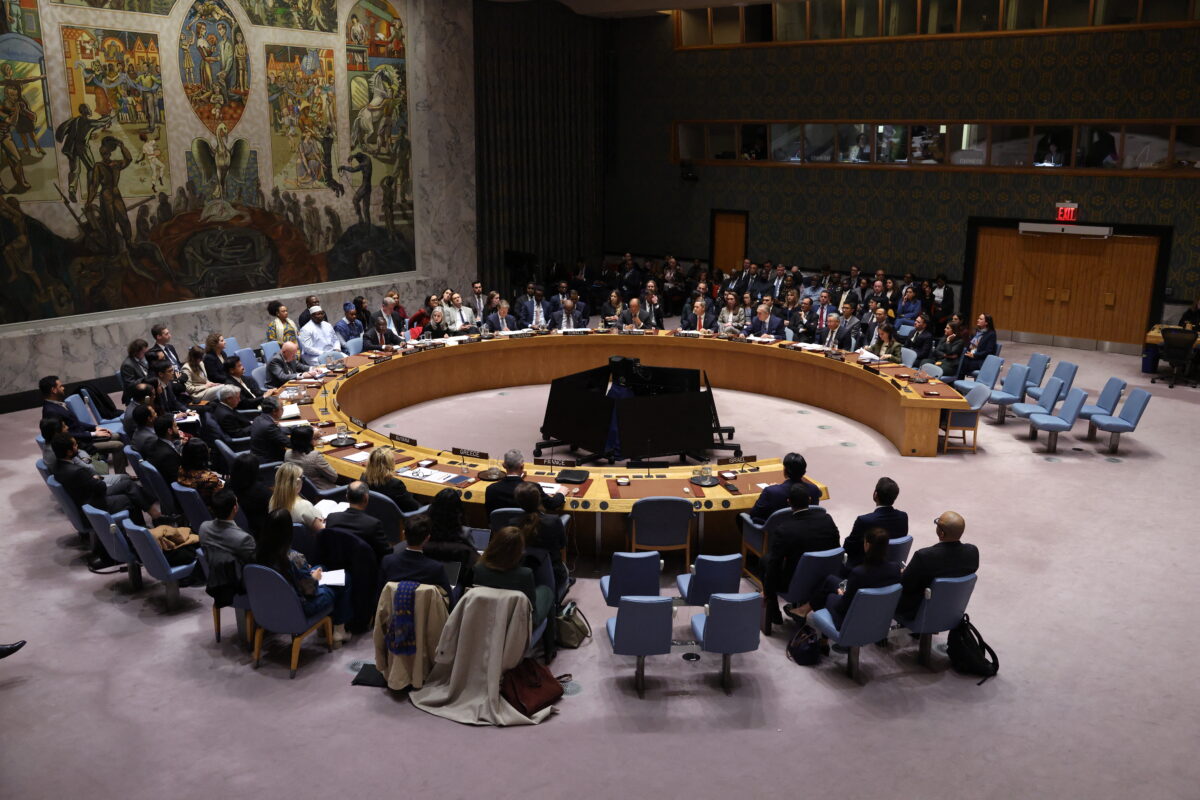
The U.N. Security Council adopted a U.S.-led resolution on Monday backing President Donald Trump’s peace plan for Gaza, including the creation of an international security force, in a move that could boost efforts to advance into the next phase of the Israel-Hamas ceasefire, Jewish Insider’s Matthew Shea reports. In the first phase of Trump’s 20-point peace plan, originally presented in September, the Israel Defense Forces have partially withdrawn to a “yellow line” dividing Gaza, while Hamas has returned all of the living hostages and all but three of the deceased hostages’ bodies. However, the plan has faced significant roadblocks, and questions remain about the feasibility of implementing the following phases, including effectively disarming Hamas and determining who will govern Gaza.
What it means: Monday’s vote follows coordinated diplomacy between Washington and Arab partners aimed at reviving momentum behind the U.S. plan, including hosting a summit in Sharm El Sheikh, Egypt, last month and issuing a joint statement of support last week. With the adoption of the resolution, the U.N. showed a rare consensus on Gaza — 13 countries voted in favor and none against, with Russia and China abstaining. Experts told JI that moving to the second phase of the plan now becomes more plausible — even if challenges remain.
RESIGNATION RIPPLE
Heritage board member resigns amid continued fallout over Tucker Carlson controversy
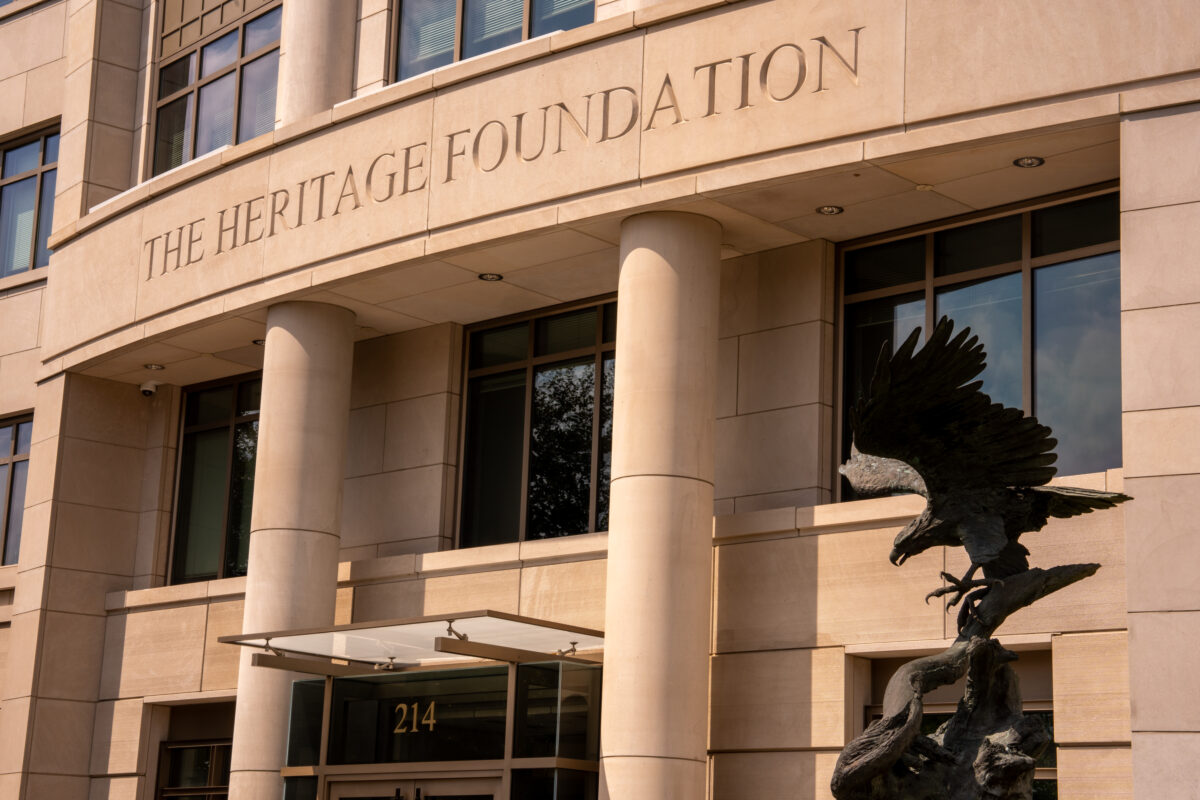
Robert George, a prominent board member of the Heritage Foundation, said on Monday that he was resigning from the conservative think tank, in the latest sign of continued fallout over its president’s controversial defense of Tucker Carlson after his friendly interview last month with a neo-Nazi influencer, Jewish Insider’s Matthew Kassel reports.
What he said: “I could not remain without a full retraction of the video released by Kevin Roberts, speaking for and in the name of Heritage, on October 30th,” George said in a Facebook post Monday morning, referring to the group’s president. “Although Kevin publicly apologized for some of what he said in the video, he could not offer a full retraction of its content. So, we reached an impasse.” His decision to step down indicates that Roberts is likely secure, for now, in his role atop Heritage, as its board remains split about his future, according to a former Heritage staffer familiar with internal discussions.
PARTING WAYS
Matt Gaetz producer fired for sharing virulently antisemitic video
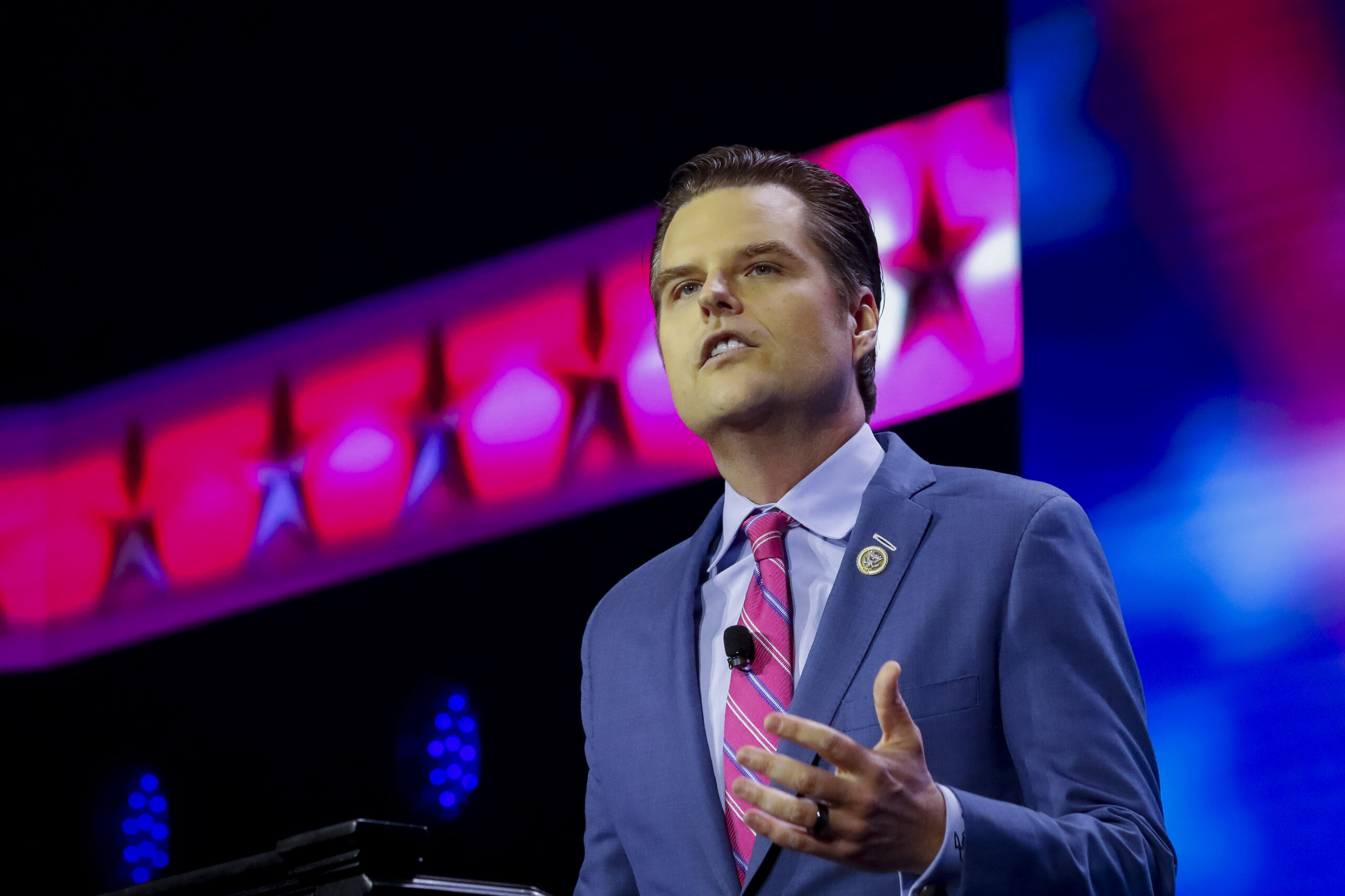
A producer for former Rep. Matt Gaetz’s (R-FL) weeknight show on the right-wing One America News Network has reportedly been fired after he shared a vehemently antisemitic social media post depicting Jews as cockroaches, Jewish Insider’s Matthew Kassel reports. Vish Burra, who was a booker and script writer for Gaetz, had drawn widespread backlash for posting an AI-generated animated video last week showing him entering a “scheming room” with Stars of David on the door to find a group of cockroaches counting money, who scurry away upon his arrival. The post has since been deleted.
Additional hate speech: “I will expose the vermin in the venomous coalition and their transgression against MAGA, America First, and Kevin Roberts at The Heritage Foundation,” Burra said in another post to X, which has also been deleted. “It all starts with Susan Lebovitz-Edelman,” he wrote, referring to a Jewish trustee at the Manhattan Institute who is married to the hedge fund manager Joseph Edelman. Lebovitz-Edelman, he wrote, “is behind the entire campaign to oust Kevin Roberts from The Heritage Foundation by using her leverage as a recent big dollar donor to take control of the organization.” Burra’s firing was reported by The Wrap and The Independent on Monday.
TRIBUNAL TURMOIL
Israel petitions ICC to remove chief prosecutor from case, citing conflict of interest

Israel petitioned the International Criminal Court on Monday to remove chief prosecutor Karim Khan from its case, saying he pursued charges against Israeli leaders to distract from sexual harassment accusations lodged against him. Israel also asked the court to cancel its arrest warrants against Israeli Prime Minister Benjamin Netanyahu and former Defense Minister Yoav Gallant over Khan’s allegations that they perpetrated war crimes and crimes against humanity in Gaza including “starvation of civilians as a method of warfare” and “intentionally directing attacks against a civilian population,” Jewish Insider’s Lahav Harkov reports.
Background: The petition came after two women submitted complaints against Khan for workplace sexual misconduct. One is an ICC employee, who alleged the misconduct occurred as recently as 2024 and that Khan attempted to dissuade her from making claims against him. In a leaked recording of a phone call between Khan and the ICC employee, she lamented that she had been accused of being a “Mossad plant” over the complaint. Khan was recorded telling the woman that someone had leaked the complaint to the media to “get rid of the warrants for Palestine,” among other open cases. According to The Guardian, private investigators hired by Qatar had attempted and failed to find a link between the accuser and Israel.
Worthy Reads
A Magazine’s Missteps: In Commentary, Jamie Kirchick does a deep dive into the antisemitism within The American Conservative — underscored by the language of its opposition to the U.S. strikes on Iranian nuclear facilities earlier this year that put it at odds with both the White House and the conservative movement. “The more one reads the American Conservative and listens to its contributors, the more one realizes how deeply ingrained the idea of Jewish perfidy is in the magazine’s Weltanschauung. … There is no greater rebuke to isolationism than Auschwitz. Isolationists know this, which is why they spend so much time relitigating World War II. It’s also why so many isolationists harbor antipathy toward Jews, the Holocaust’s chief victims and the stewards of its memory. The Jews are a living reminder of what happens when evil is not confronted, and their survival is deeply offensive to those who prefer not to confront the evil in our world.” [Commentary]
BBC Bias: The Wall Street Journal’s Gerard Baker raises concerns over the impact of the BBC’s biases on public opinion and policy. “There were — and are — many talented, honest people there. But in the past 10 years, it has, like other institutions worldwide, been captured by the cultural revolution that has swept the world of graduate-level work, seized by an activist class not content to report the news but insisting instead on telling people what to think. Their orthodoxy is familiar: on race, gender, sexuality, immigration and national sovereignty, climate alarmism, Western civilization and international affairs. I believe that the BBC’s coverage of Gaza is the most important factor in the recent rise of antisemitism in Britain. The daily repetition of Hamas propaganda about supposed Israeli atrocities has played in Britain (and around the world) for two years.” [WSJ]
Word on the Street
Illinois Gov. JB Pritzker contributed $25.5 million to his campaign fund over the last two weeks as he makes a bid for a third term and as speculation mounts that he may enter the 2028 presidential race…
New York City Councilmember Chi Ossé filed paperwork to challenge House Minority Leader Hakeem Jeffries (D-NY) in New York’s 8th Congressional District; Ossé, an ally of New York City Mayor-elect Zohran Mamdani, is challenging Jeffries from the House leader’s left…
Former Harvard President Larry Summers will step away from his upcoming public commitments following the release of extensive email correspondence with Jeffrey Epstein that lasted until the day before Epstein’s arrest; Summers will continue teaching five classes this semester, and will stay on as director of the Mossavar-Rahmani Center for Business and Government at the Harvard Kennedy School…
Federal prosecutors in New York are seeking an 18-year prison sentence for a neo-Nazi leader who pleaded guilty to soliciting hate crimes for his role in a plot to give poisoned candy to Jewish children…
Canadian officials said that worker error was the reason an Israeli-born woman applying for a passport was told that she could not list Israel as her country of birth; an employee had reportedly told the woman that the denial was due to “the political conflict”…
A collection of Gustav Klimt works owned by art collector and philanthropist Leonard Lauder, who died earlier this year, is expected to garner more than $400 million when they are auctioned by Sotheby’s today…
A German auction house canceled the planned sale of more than 600 items that belonged to Holocaust victims after coming under criticism by a Berlin-based organization for survivors…
The Washington Post spotlights the efforts of a Brazilian magazine publisher to uncover rumored underground tunnels in his hometown that had been constructed by Nazi officials who had fled to South America after World War II…
Israeli Prime Minister Benjamin Netanyahu condemned recent settler violence in the West Bank following the release of video that showed dozens of settlers setting fire to vehicles and homes in the Palestinian village of Jab’a…
The New York Times reports on the shadowy effort that brought hundreds of Palestinians from Gaza to South Africa in the last month…
Parts of western Iran flooded after heavy rainfall, following months in which the Islamic Republic faced severe drought issues…
Singer Troye Sivan listed his home in Los Angeles’ Hollywood Hills, which he bought in 2017, for $2.545 million…
Rabbi Shlomo Porter, the executive director of the Etz Chaim Center for Jewish Learning, died at 78…
The New York Times spotlights psychoanalyst Sabina Spielrein, who was believed to have been killed by a Nazi death squad in Russia in 1942, in its “Overlooked” series…
Pic of the Day
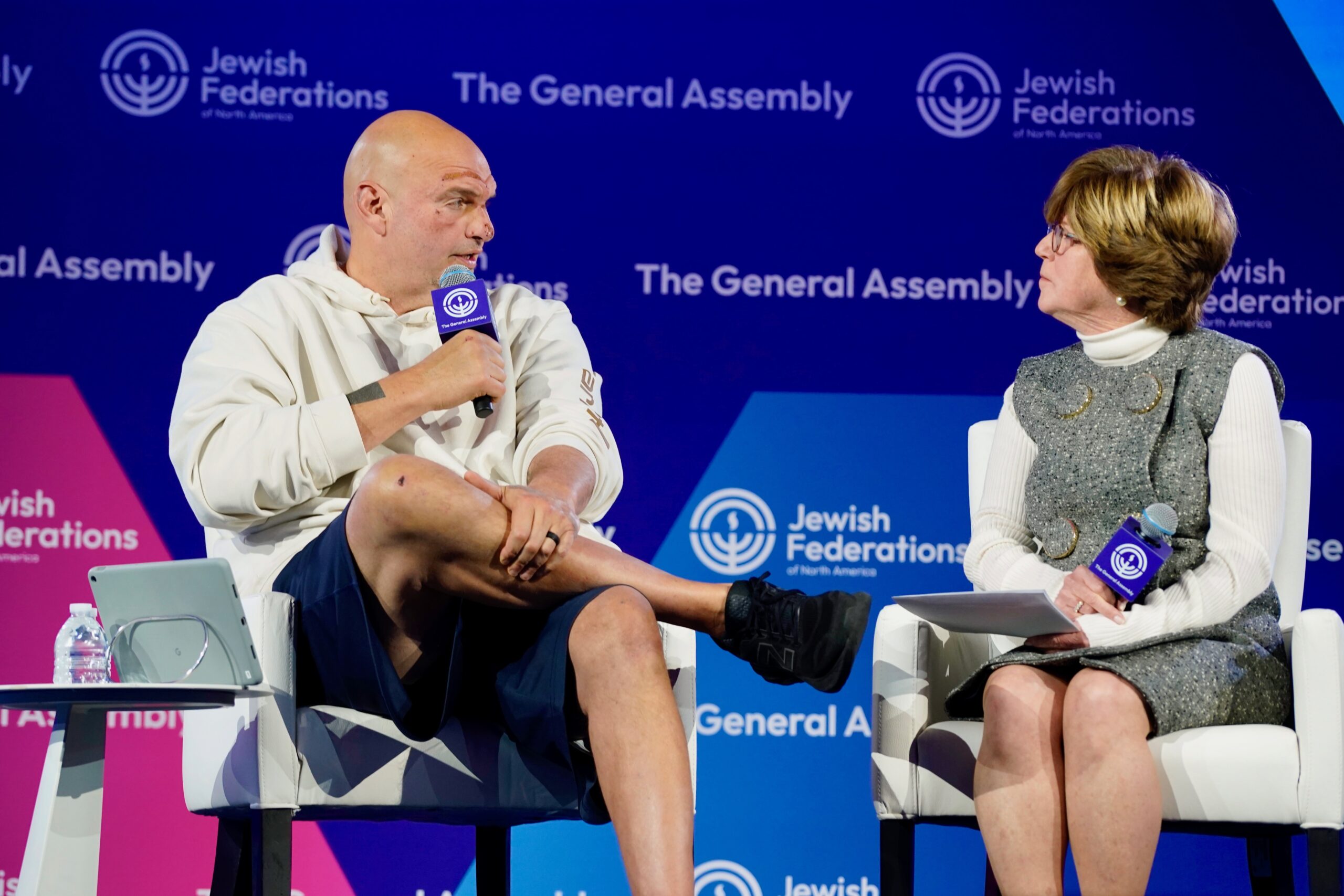
Sen. John Fetterman (D-PA) spoke in conversation with Julie Platt, the immediate past board chair for the Jewish Federations of North America, at a Monday plenary session at the JFNA’s General Assembly in Washington.
Birthdays
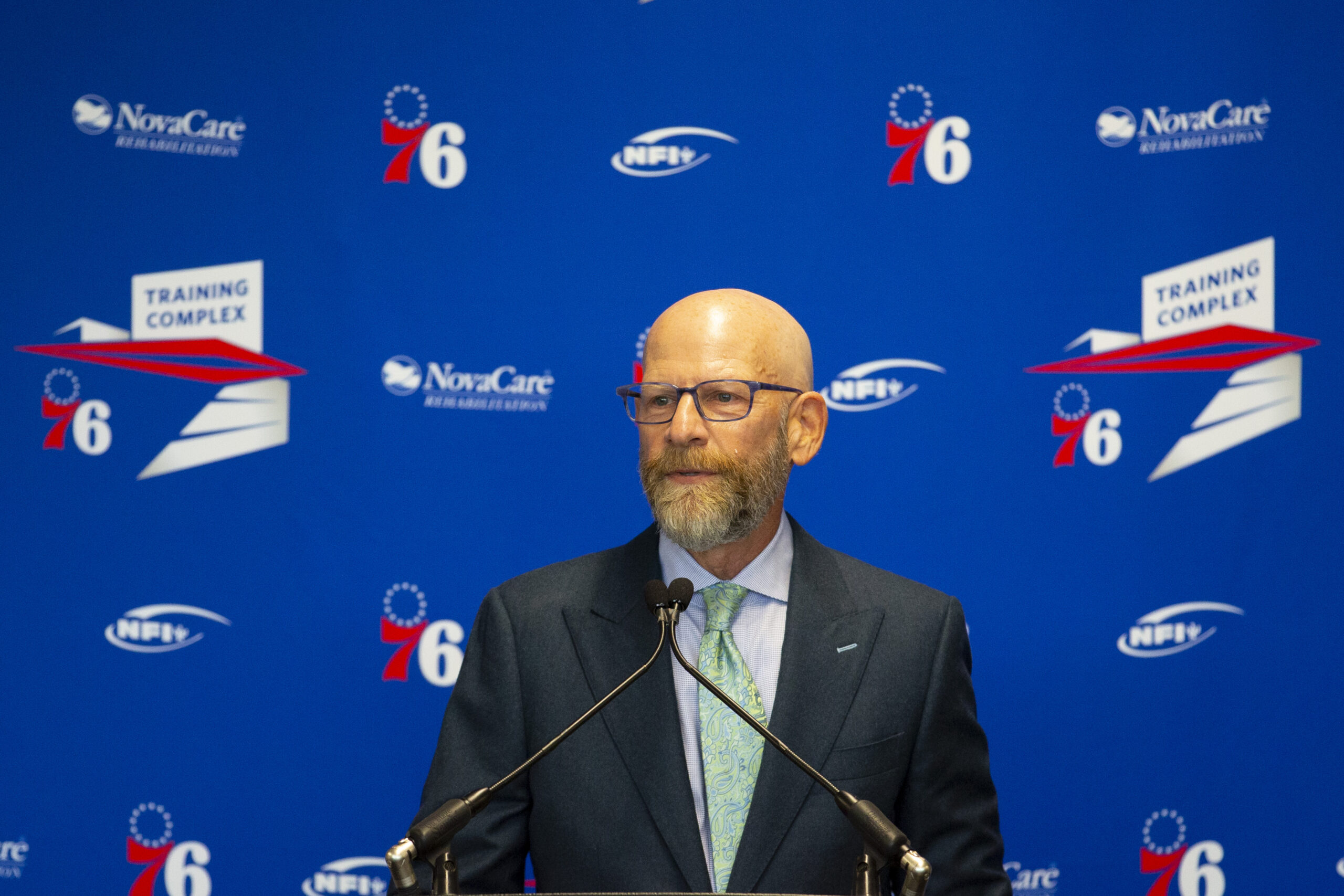
Longtime former play-by-play sportscaster for the NBA’s Philadelphia 76ers, Marc Zumoff turns 70…
Theoretical physicist, at age 27 he became a professor and then later president of the Weizmann Institute, he is the founder of the Davidson Institute of Science Education at Weizmann, Haim Harari turns 85… Former president of East Bay Federation, Steve Goldman… Former national director of major gifts for the American Committee for the Shaare Zedek Medical Center in Jerusalem, Paul Jeser… Lecturer at Boston University School of Law, he was formerly SVP and general counsel of Fidelity Management & Research Company, Eric D. Roiter turns 77… Atlanta resident, Lynda Wolfe… Israeli cantor and actor, known for his Broadway performance as Jean Valjean in “Les Misérables,” David “Dudu” Fisher turns 74… Professor emerita at Harvard Business School, Shoshana Zuboff turns 74… Professor of epidemiology and neurology at Columbia University, Walter Ian Lipkin turns 73… Former U.S. ambassador to South Africa, she is a luxury handbag designer, Lana J. Marks turns 72… Singer-songwriter, he is also the author of a popular Passover Haggadah, Barry Louis Polisar turns 71… Mayor of Dallas from 2002 until 2007, Laura Miller turns 67… SVP and general counsel of HSP Group and ARF Financial, Robert Bruce Lapidus… Moroccan-born, member of the Knesset since 2003 for the Shas party, he currently serves as the minister of welfare and social affairs, Yaakov Margi turns 65… NYC-based writer, activist and performer, Shira Dicker… Pulitzer Prize-winning Washington-based correspondent for The New York Times covering health policy, Sheryl Gay Stolberg turns 64… Retired Baltimore attorney who devotes her time to philanthropic and pro-Israel activities, Laurie Luskin… Rabbi of Burbank Temple Emanu El and former national coordinator of Rabbis Without Borders, Tsafreer “Tsafi” Lev turns 54… Chabad rabbi in Kyiv and executive chairman of the Federation of Jewish Communities of Ukraine, Raphael Rutman turns 53… President and CEO of the Jewish Federation of Broward County, Audra P. Berg… Member of the Knesset for the Yesh Atid party, Michal Shir Segman turns 46… Freshman U.S. senator (R-MT), Tim Sheehy turns 40… Real estate agent at Coldwell Banker and a consultant for Bridals by Lori, Talia Fadis… Israeli singer-songwriter and music producer, Elisha Banai turns 37…
The visit includes a welcome ceremony, bilateral meeting in the Oval Office and a black-tie dinner in the evening
Win McNamee/Getty Images
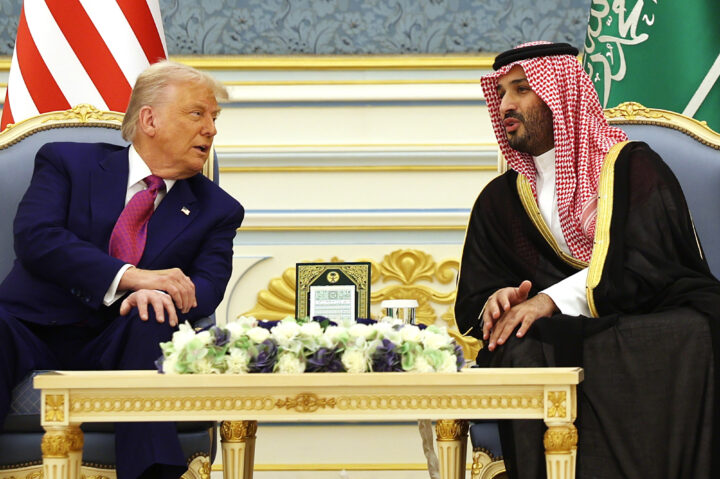
President Donald Trump meets with Saudi Crown Prince Mohammed bin Salman during a “coffee ceremony” at the Saudi Royal Court on May 13, 2025, in Riyadh, Saudi Arabia.
President Donald Trump is hosting Saudi Crown Prince Mohammed bin Salman on Tuesday at the White House, marking the first time MBS has visited Washington since 2018.
Trump plans to roll out the red carpet for the visit, which includes a welcome ceremony, bilateral meeting in the Oval Office and a black-tie dinner in the evening. Tiger Woods and Elon Musk are expected to be in attendance at the dinner, among other high-profile attendees. “We’re more than meeting,” Trump said late Friday. “We’re honoring Saudi Arabia, the crown prince.”
The visit is not an official state visit, as MBS is not Saudi Arabia’s head of state; however, the crown prince holds almost all responsibility in ruling the kingdom.
The bilateral meeting will feature high-stakes discussions on several key issues, including the sale of F-35 fighter jets, Saudi-Israel normalization and a possible U.S.–Saudi defense pact. Experts told Jewish Insider such an agreement is likely to be modeled after the assurances Trump gave Qatar in September, in the wake of an Israeli strike on Hamas in the Gulf state, when he issued an executive order stating that the U.S. will regard “any armed attack” on Qatar “as a threat to the peace and security of the United States.”
Trump announced on Monday he would approve the sale of the F-35s to Riyadh, helping the Saudis secure a long-coveted deal and making them the first country in the Middle East other than Israel to obtain the advanced fighter jets. “They want to buy. They are a great ally. We will be doing that. We will be selling them F-35s,” Trump told reporters in the Oval Office.
Concerns remain within the foreign policy community over the impact that the sale of F-35s will have on the military balance in the region and Israel’s qualitative military edge, which the U.S. is bound by law to uphold. Experts also cautioned the risks of transferring sensitive technology to Riyadh after Saudi naval forces conducted a joint military exercise with China last month. Israel has requested that such a sale be conditioned on the kingdom joining the Abraham Accords, however Trump made no mention of such a provision.
Trump, however, is planning to discuss Saudi normalization with Israel. “The Abraham Accords will be a part we’re going to be discussing,” Trump said Friday. “I hope that Saudi Arabia will be going into the Abraham Accords fairly shortly.”
Despite the president’s optimism, the hope of adding Riyadh to the Abraham Accords is likely a lot more wishcasting than a reflection of diplomatic progress in the region. Experts told JI that the Trump administration should use the aforementioned agreements as leverage tied to normalization, as has been the case under past administrations, but Trump is poised to take a different approach.
The gap between Saudi Arabia and Israel remains wide. Saudi officials have said they require an Israeli commitment to a two-state solution as a prerequisite to normalizing ties, something that Israeli Prime Minister Benjamin Netanyahu — and much of the Israeli public — is firmly against. Experts told JI that after two years of war in Gaza, the security deals are likely not enticing enough on their own and Saudi Arabia may be holding out for more concessions before joining the Abraham Accords.
As Washington and Riyadh prepare for a high-level meeting, experts say a U.S.-Saudi defense pact and fighter jet deal appear imminent — but normalization with Israel remains unlikely
Win McNamee/Getty Images
President Donald Trump meets with Saudi Crown Prince Mohammed bin Salman during a “coffee ceremony” at the Saudi Royal Court on May 13, 2025, in Riyadh, Saudi Arabia.
President Donald Trump is slated to meet with Saudi Crown Prince Mohammed bin Salman on Tuesday in a meeting that experts told Jewish Insider is expected to move forward a U.S.-Saudi defense pact and sale of F-35 fighter jets to the kingdom — yet normalization with Israel, once tied to the prospect of such deals, remains elusive.
U.S. and Saudi officials have been holding intense negotiations to finalize a defense agreement ahead of the visit, according to reports. Since an Iranian attack on Saudi oil refineries in 2019, Riyadh has sought to formalize American security guarantees, according to Ghaith al-Omari, a senior fellow at The Washington Institute for Near East Policy.
“Saudi Arabia is an important American security partner,” said Brad Bowman, a senior director at the Foundation for Defense of Democracies. “The United States and Saudi Arabia have been working toward a regional security architecture for years.”
The agreement is expected to be modeled after the assurances Trump gave to Qatar in a September executive order, which stated that the U.S. will regard “any armed attack” on Qatar “as a threat to the peace and security of the United States.”
“Having for better or worse made the commitment to Qatar, it seems to me unfathomable that the administration wouldn’t offer at least the same commitment to Saudi Arabia and probably to other traditional Gulf partners like the UAE who over the years have often been more steadfast and reliable allies in their support for U.S. regional and global objectives,” said John Hannah, a senior fellow at the Jewish Institute for National Security of America.
Al-Omari said such guarantees help to solidify American leadership in the Middle East and “serve to limit Chinese influence in the region.”
“It is almost certain that Saudi Arabia will get defense guarantees in this visit,” said Al-Omari. “Providing such guarantees is the correct policy. The security of Saudi Arabia is an American interest, and is key to deter Iran and its proxies from destabilizing the Kingdom. It also sends a clear message that the U.S. remains committed to its Middle East allies.”
Should the defense agreement be formalized as an executive order, like with the Qatar deal, it will need to be enforced by the next president to remain effective. Bowman argued that any serious agreement should instead go through the appropriate process even if it takes time.
“[The security deal] is essentially a treaty that should go through the U.S. Senate,” said Bowman. “That’s not going to be quick, but if we really believe what we’re saying about the value of Saudi Arabia as a security partner … then why not take the time and build consensus and explain that to the American people and their representatives on Capitol Hill and make the case?”
Hannah said that a more formal defense pact is also in Saudi Arabia’s best interest.
“The problem for the Saudis is that until recently, they were holding out for an actual Senate-approved defense treaty that would have made the U.S. commitment to the Kingdom’s future wellbeing a bipartisan and permanent feature of the American foreign policy landscape rather than the temporary pledge of a polarizing, mercurial, and increasingly unpopular president who will be gone in three years time,” said Hannah. “That’s a pretty public climb down and trimming of ambitions from the kind of history-making agreement and lasting transformation of U.S.-Saudi ties that MBS has been insisting that he needed for the past three years.”
“It is likely that an announcement about the F-35s will be made,” said Ghaith al-Omari, a senior fellow at The Washington Institute for Near East Policy. “However, turning such an announcement into reality will have to contend with a number of challenges — whether the legal requirement to maintain Israel’s [qualitative military edge is met], or other congressional processes required to finalize such a deal.”
Riyadh is also reportedly seeking to purchase a weapons package from the U.S. that would include F-35 fighter jets. If agreed upon, Saudi Arabia would become the first nation in the Middle East other than Israel to procure it.
The Trump administration has been open to such a deal this year, but questions still remain regarding the impact such an agreement might have, including on Israel’s qualitative military edge, which the U.S. is bound by law to uphold.
“It is likely that an announcement about the F-35s will be made,” said Al-Omari. “However, turning such an announcement into reality will have to contend with a number of challenges — whether the legal requirement to maintain Israel’s [qualitative military edge is met], or other congressional processes required to finalize such a deal.”
Israeli Ambassador to the U.S. Yechiel Leiter said in an interview published on Thursday by The Jerusalem Post that Israel “prefer[s] that Turkey not receive F-35 [fighter jet]s from the U.S.” but said that “there’s no indication that Israel’s qualitative edge will be compromised” if Saudi Arabia were to acquire them.
The potential F-35 deal has also prompted concern on the risks of transferring sensitive technology to Riyadh while it cooperates militarily with China, a key U.S. adversary.
“Guess what the Saudi military forces did last month? Last month, Saudi naval forces conducted a military exercise with China,” said Bowman. “That’s not a good look for a country. That’s not going to sit well with a lot of folks on Capitol Hill.”
Bowman said that in the past, Saudi Arabia has suggested they would turn to Beijing if they couldn’t get “what they wanted” militarily from the U.S.
Should the Trump administration formally approve the sale, it is required by law to be submitted to Congress where there is first a non-statutory, but normally respected, review process that involves leaders of the two foreign relations committees. However, it is highly unlikely for the sale to be stopped even if lawmakers disapprove, once the administration decides to formally submit the sale to Congress.
“The law provides a mechanism for Congress to try to stop an arms sale up to the point of delivery, but that requires both chambers to pass joint resolutions of disapproval and then overcome a prospective presidential veto,” said Bowman. “The Congressional Research Service noted last year that Congress has never blocked a proposed arms sale this way.”
While the Biden administration had tied such security deals to progress on normalization, Al-Omari said that the Trump White House has “abandoned this approach.”
“I think it would be folly not to insist that the ultimate integration of these planes into the Saudi order of battle be tied to normalization and a more fundamental and permanent transformation in Saudi-Israel relations and the regional security landscape,” said Hannah.
Bowman agreed, “The F-35, to me, provides valuable leverage in getting Riyadh to recognize the world’s only majority Jewish state. Forfeiting that leverage would be unwise. I can’t imagine giving our nation’s most advanced fighter jet to a country that refuses to normalize relations with our best ally in the Middle East.”
While experts believe Trump is unlikely to push normalization in the upcoming meeting, they say it is still something the Trump administration is pursuing.
“The price for MBS clearly has gone up after two years of devastation in Gaza — and more important, two years of non-stop 24/7 coverage in Arab media of Palestinian suffering and carnage,” said John Hannah, a senior fellow at the Jewish Institute for National Security of America. “MBS knows how significant his entry into the Middle East peace club will be for regional and global politics and he seems set on delivering something significant in exchange.”
“President Trump is still committed to pushing forward Saudi-Israeli normalization,” said Al-Omari. “Yet he is also aware that the gap between the two countries at the moment is too wide to bridge.”
Saudi officials have said they require an Israeli commitment to a two-state solution as a prerequisite to normalizing ties. Hannah said that he does not expect progress towards normalization during the trip, also adding that in the wake of the war in Gaza, Riyadh may be looking to gain more concessions before formally entering a peace agreement.
“The price for MBS clearly has gone up after two years of devastation in Gaza — and more important, two years of non-stop 24/7 coverage in Arab media of Palestinian suffering and carnage. MBS knows how significant his entry into the Middle East peace club will be for regional and global politics and he seems set on delivering something significant in exchange.”
“I wouldn’t rule out that Trump might be willing during the visit to show greater openness and even U.S. support for the eventual establishment of a Palestinian state along lines articulated by [MBS] in an effort to inch him along a little faster on normalization,” Hannah added. “Trump’s pressure and powers of persuasion, and his ability to offer other economic and military incentives to [MBS], also might help temper the crown prince’s demands and ambitions at the margins if the side payments are significant enough.”
Still, Al-Omari believes there are other ways the Trump administration could utilize the upcoming meeting to gain progress towards this goal.
“Instead, the U.S. should explore areas of economic cooperation between the two countries,” said Al-Omari. “That may fall short of full normalization, but would lay the groundwork for future progress.”
Please log in if you already have a subscription, or subscribe to access the latest updates.
 Continue with Google
 Continue with Apple