






























Trump rolls out the red carpet for MBS
The visit includes a welcome ceremony, bilateral meeting in the Oval Office and a black-tie dinner in the evening
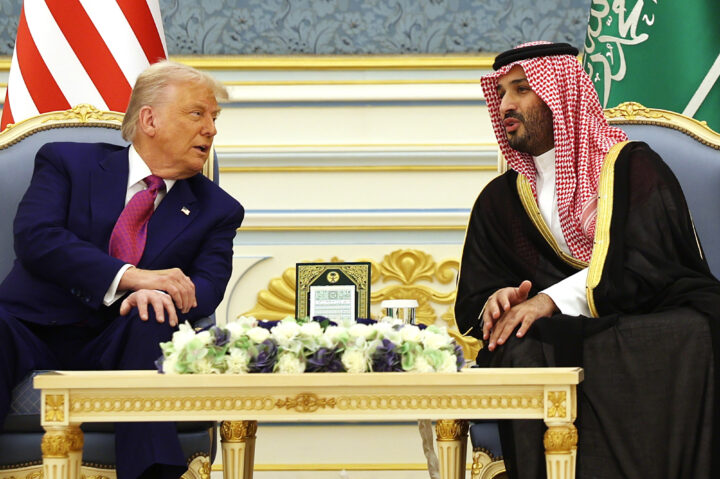
Win McNamee/Getty Images
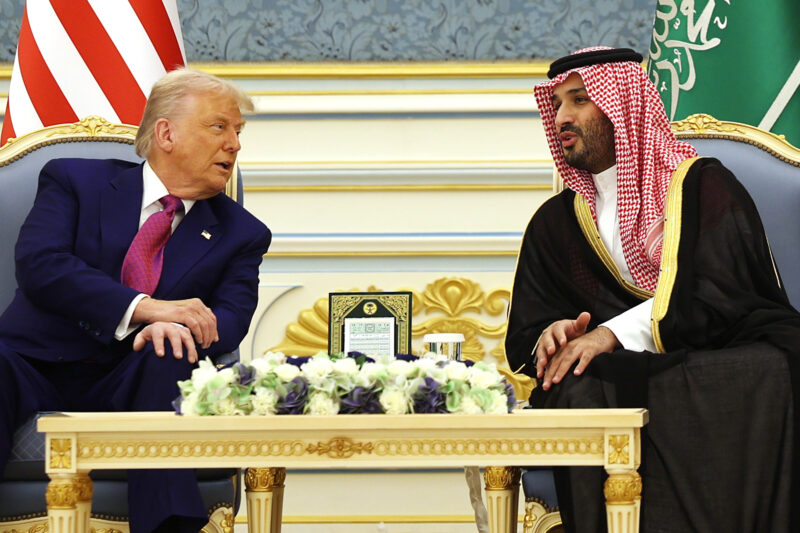
President Donald Trump meets with Saudi Crown Prince Mohammed bin Salman during a “coffee ceremony” at the Saudi Royal Court on May 13, 2025, in Riyadh, Saudi Arabia.


 Add JewishInsider on Google
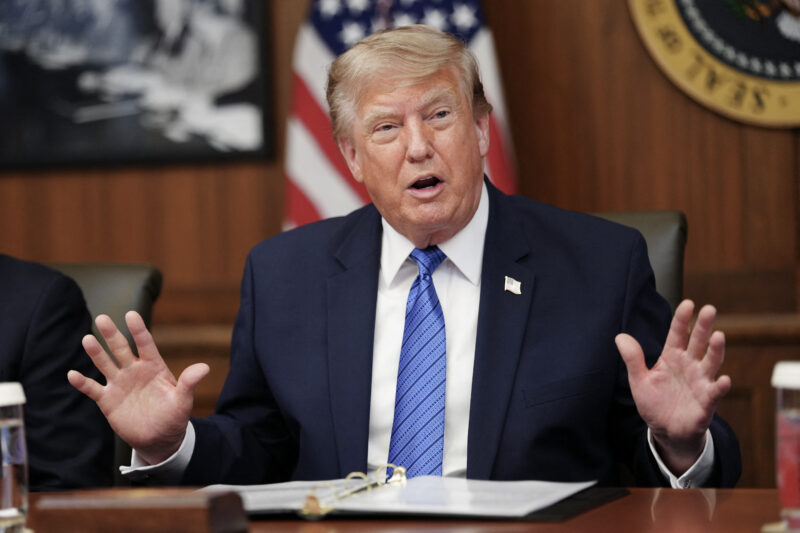
President Donald Trump is hosting Saudi Crown Prince Mohammed bin Salman on Tuesday at the White House, marking the first time MBS has visited Washington since 2018.
Trump plans to roll out the red carpet for the visit, which includes a welcome ceremony, bilateral meeting in the Oval Office and a black-tie dinner in the evening. Tiger Woods and Elon Musk are expected to be in attendance at the dinner, among other high-profile attendees. “We’re more than meeting,” Trump said late Friday. “We’re honoring Saudi Arabia, the crown prince.”
The visit is not an official state visit, as MBS is not Saudi Arabia’s head of state; however, the crown prince holds almost all responsibility in ruling the kingdom.
The bilateral meeting will feature high-stakes discussions on several key issues, including the sale of F-35 fighter jets, Saudi-Israel normalization and a possible U.S.–Saudi defense pact. Experts told Jewish Insider such an agreement is likely to be modeled after the assurances Trump gave Qatar in September, in the wake of an Israeli strike on Hamas in the Gulf state, when he issued an executive order stating that the U.S. will regard “any armed attack” on Qatar “as a threat to the peace and security of the United States.”
Trump announced on Monday he would approve the sale of the F-35s to Riyadh, helping the Saudis secure a long-coveted deal and making them the first country in the Middle East other than Israel to obtain the advanced fighter jets. “They want to buy. They are a great ally. We will be doing that. We will be selling them F-35s,” Trump told reporters in the Oval Office.
Concerns remain within the foreign policy community over the impact that the sale of F-35s will have on the military balance in the region and Israel’s qualitative military edge, which the U.S. is bound by law to uphold. Experts also cautioned the risks of transferring sensitive technology to Riyadh after Saudi naval forces conducted a joint military exercise with China last month. Israel has requested that such a sale be conditioned on the kingdom joining the Abraham Accords, however Trump made no mention of such a provision.
Trump, however, is planning to discuss Saudi normalization with Israel. “The Abraham Accords will be a part we’re going to be discussing,” Trump said Friday. “I hope that Saudi Arabia will be going into the Abraham Accords fairly shortly.”
Despite the president’s optimism, the hope of adding Riyadh to the Abraham Accords is likely a lot more wishcasting than a reflection of diplomatic progress in the region. Experts told JI that the Trump administration should use the aforementioned agreements as leverage tied to normalization, as has been the case under past administrations, but Trump is poised to take a different approach.
The gap between Saudi Arabia and Israel remains wide. Saudi officials have said they require an Israeli commitment to a two-state solution as a prerequisite to normalizing ties, something that Israeli Prime Minister Benjamin Netanyahu — and much of the Israeli public — is firmly against. Experts told JI that after two years of war in Gaza, the security deals are likely not enticing enough on their own and Saudi Arabia may be holding out for more concessions before joining the Abraham Accords.
More Stories
Daily Overtime
Mackle-no-more on Sheeran’s tour
analysis
Pappas wins New Hampshire Senate nomination over anti-Israel Dem activist
BOOKSHELF
New book ‘In the War Room’ offers candid look at Netanyahu’s wartime decisionmaking
LONDON'S GAMBLE
Former Trump official: U.K. sanctions will render Europe ‘less relevant in Middle Eastern affairs’
Norm-alizing?
Norm Eisen’s alliances with Israel critics raise eyebrows within Jewish community
Settlement Showdown
U.K. Foreign Secretary Ed Miliband announces sanctions against Israeli settlements
Please log in if you already have a subscription, or subscribe to access the latest updates.
 Continue with Google
 Continue with Apple