













































UCLA banned SJP as a campus organization indefinitely in March 2025

Getty Images
Royce Hall building on University of California (UCLA) campus in Los Angeles, California, USA - May 28, 2023.


 Add JewishInsider on Google
Despite being banned from campus, UCLA’s Students for Justice in Palestine chapter is actively lobbying candidates to influence upcoming student government elections, Jewish Insider has learned.
SJP contacted candidates and asked them to complete an attached questionnaire in order to secure the group’s endorsement, according to an email reviewed by JI. SJP is permitted to endorse in the race as an “external organization” since it is no longer officially recognized on campus, according to the election board’s guidelines.
“This is more proof that the anti-Jewish movement — even when banned from our campus — continues to break the rules to intimidate their fellow UCLA students,” UCLA Hillel’s executive director, Daniel Gold, told JI. “Student government should honor premier student leaders — and should be free of any influence by those banned for bad behavior.”
A UCLA student affairs spokesperson told JI, “Students for Justice in Palestine is not recognized as an official organization at UCLA nor receives any university resources. We want to make clear that candidates for student government may choose to ignore questions as they see fit.”
UCLA banned SJP as a campus organization indefinitely in March 2025 after the group led a demonstration outside the home of UC Regent Jay Sures, who is Jewish. SJP members left red handprints on Sures’ garage door, accusing him of having “blood on his hands” amid the Israel-Hamas war.
Last month, UCLA’s student government condemned a campus event featuring former Israeli hostage Omer Shem Tov, labeling the speaker selection as “selective platforming of narratives that obscure the broader reality of ongoing state violence” and “a troubling disregard for Palestinian life.”
Sures, who is also vice chairman of United Talent Agency, told JI at the time that UCLA’s student government was “shortsighted, antisemitic or both,” and called its members “lunatics” for condemning Shem Tov’s speech.
Major Jewish advocacy organizations told JI that they will continue to push for issues including Nonprofit Security Grant Program funding and combating antisemitism online

Worawat/Adobe Stock
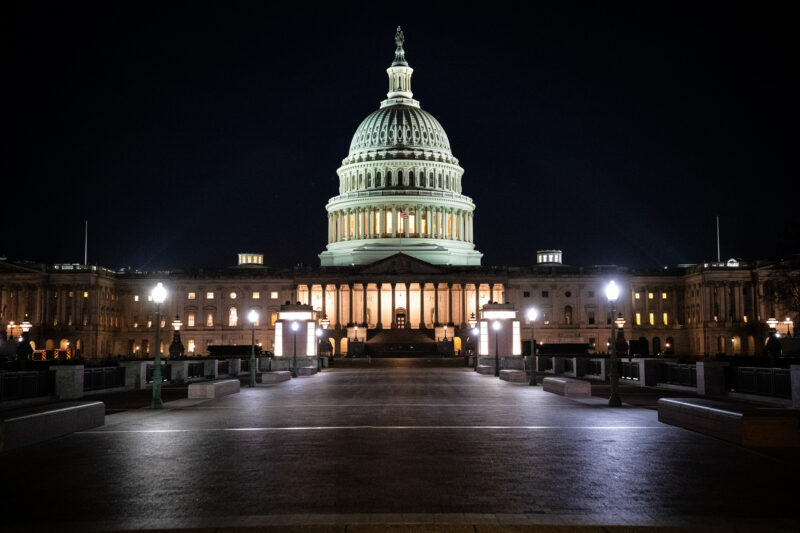
U.S. Capitol Building
Going into 2026, Jewish community groups say their advocacy priorities for Congress and the federal government remain largely consistent, with a focus across many of the major advocacy organizations on bolstering community security through the Nonprofit Security Grant Program and tackling antisemitism online.
While Congress has increased its attention to Jewish communal issues in the years since the Oct. 7, 2023 Hamas attacks on Israel, including a string of high-profile hearings on antisemitism and several bills passed to support Israel and combat Iran, many key legislative priorities for the Jewish community — including bills on antisemitism and substantial increases to annual security funding for nonprofits — have remained stubbornly intractable.
Highlighting the expansion of congressional scrutiny of unions, academic associations and tech platforms for their fostering of antisemitism, top Anti-Defamation League officials said that advocating for such oversight work will remain a priority in the coming year, particularly in an environment in which it is difficult to pass any legislation, regardless of the subject.
“We’ll continue focusing on tough oversight, on bipartisan legislation and targeted appropriations,” Lauren Wolman, the ADL’s senior director of government relations and strategy, told Jewish Insider. “The big buckets are that we’ll be pushing Congress to confront antisemitism wherever it appears, including within one’s own party; protecting houses of worship with increased security funding; demanding real transparency and accountability from tech platforms; advancing comprehensive federal legislation to counter antisemitism and taking action to ensure that Jewish students are safe on campus.”
Asked about how the organization plans to ensure progress on legislation that has been difficult to achieve in past years, Wolman emphasized that there had been “historic momentum” this year for increased security funding, and said that ADL would “focus on levers that move policy, so oversight, legislation, appropriations” and leverage “the value of transparency, bipartisanship and coalitions.”
Max Sevillia, the ADL’s senior vice president of national affairs, said that the organization will focus on must-pass legislation such as appropriations and the National Defense Authorization Act, and emphasized that “legislating on any issue, including fighting antisemitism, oftentimes, is not a one-session effort. So we don’t give up on our priorities.”
He said that, even if major legislation did not pass this session, the group is “better positioned” to advance key priorities with the additional attention they’ve received since Oct. 7.
Sevillia said that the HEAL Act, examining Holocaust education; the Protecting Students on Campus Act, which aims to facilitate Title VI discrimination complaints; and the Pray Safe Act, which would create a central database of security resources for institutions, will remain priority bills in the new year.
ADL is also supporting the Platform Accountability and Transparency Act (PATA), a bipartisan Senate bill that would require social media companies to share additional data with the public and with researchers, including regarding hate incidents and policies, and how platforms are responding to them.
“Congress really needs to require platforms to provide meaningful transparency into content moderation practices, algorithmic amplification and enforcement of their hate speech policies,” Wolman said.
Wolman said the ADL also continues to pursue a “comprehensive … whole-of-government” package of legislation on antisemitism, a prospect that has remained elusive. The Countering Antisemitism Act, a package along those lines, received bipartisan support in the previous Congress, but ultimately proved unwieldy — facing opposition on both sides of the aisle in both chambers.
Wolman said that ADL will be pressing Congress to focus on college campuses, K-12 education, academic professional associations, health care and technology platforms, including Wikipedia and artificial intelligence, in its oversight capacity and for potential hearings next year.
Sitting down with JI on Capitol Hill earlier this month, American Jewish Committee CEO Ted Deutch said that his organization’s priorities for the remainder of 2025 included urging lawmakers to stand with the Jewish community and attend menorah lightings in the wake of the Sydney, Australia, shooting targeting a Hanukkah celebration on Bondi Beach.
Going into 2026, the group is also focused on pressing lawmakers to tackle antisemitism online, particularly ensuring social media companies are addressing the foreign actors driving much of that content, as well as the antisemitism that has proliferated in AI-generated posts.
The new X policy disclosing users’ locations “confirm[ed] what we all know, which is there is this ongoing effort by malign actors around the world to influence what happens here, to stoke antisemitism, to polarize our community,” Deutch said.
Deutch said that AJC also looks forward to working with Ambassador Yehuda Kaploun, who was confirmed this month as the Trump administration’s special envoy to monitor and combat antisemitism. Additionally, the group is pressing the Department of Justice to take action to address protests that block access to religious institutions. He said AJC is open to supporting new legislation on the subject, if necessary.
In his interview with JI, Deutch also urged Jewish communal organizations to come together around a common agenda, arguing that the current security environment demands a unified message and a coordinated push.
The Jewish Federations of North America will be focused on the six-point security plan laid out by many major Jewish groups following the Capital Jewish Museum shooting earlier this year, which includes massive increases to security grant funding and efforts to address antisemitism online, as well as antisemitism in K-12 and higher education and mental and physical health care spaces; the Holocaust Survivor Assistance Program and social safety net programs such as SNAP and Medicaid.
“I think security and combating antisemitism are top of mind across our community, and that’s clearly reflected in our aggressive work to increase nonprofit security funds, tackle hate on social media, and advance our six-point security plan,” JFNA CEO Eric Fingerhut told JI.
“But we aren’t forgetting other critical issues that we care about, including legislation supporting Holocaust survivors and protect[ing] the most vulnerable in our communities,” Fingerhut continued. “With our new flagship public affairs office up and running, we are also expanding our investment to ensure local Federations come to Washington regularly to strengthen our relationships on the Hill.”
Nathan Diament, the executive director of public policy for the Orthodox Union, said that OU’s priorities will include additional NSGP funding, allocating resources from the Department of Justice for Jewish community security, implementing the Educational Choice for Children Act — legislation passed in this year’s reconciliation bill creating tax credits for educational scholarships — and, like AJC, urging the Department of Justice to “aggressively prosecut[e] those who mount ‘protests’ at Shuls.”
In the pro-Israel space, a source familiar with AIPAC’s plans told JI that the group’s general priorities next year will include expanding U.S.-Israel collaboration in security, technology and economic spaces; supporting U.S. aid to Israel; highlighting the ongoing security threats to Israel, including Iran’s efforts to rebuild its missile arsenal and nuclear program and its support for proxies; and working to achieve Hamas and Hezbollah’s disarmament.
The source said AIPAC will release a more comprehensive agenda early next year.
The FBI director's November 2024 pledge to recuse himself from business with Qatar expired last month

Kayla Bartkowski/Getty Images
Director of the Federal Bureau of Investigation (FBI) Kash Patel
FBI Director Kash Patel signed bilateral security agreements with Qatar on Tuesday, in a move that is drawing renewed scrutiny to potential conflicts of interest surrounding his past lobbying for the Gulf emirate, the details of which he has failed to disclose.
During a meeting in the Qatari capital of Doha, Patel signed two memorandums of understanding with his counterpart “to advance mechanisms of security cooperation and coordinate efforts in training, the exchange of information and capacity-building,” according to Qatari state media.
“This step underscores the depth of the strategic partnership between the State of Qatar and the friendly United States of America, and bolsters our joint efforts in securing the 2026 FIFA World Cup,” Sheikh Khalifa bin Hamad bin Khalifa Al-Thani, the minister of interior and head of the country’s Internal Security Force, who met with Patel on Tuesday, said in a social media post.
Neither Patel’s visit to Doha nor the agreements with Qatar have been publicly announced by the FBI.
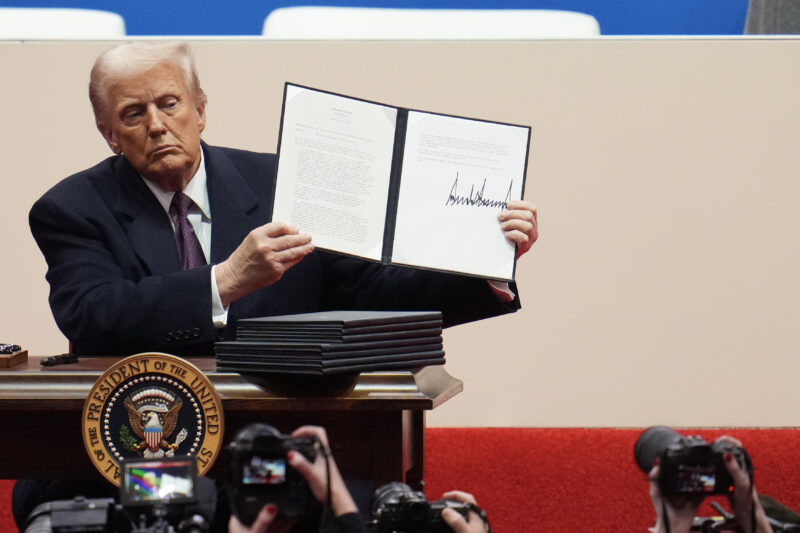
The security pacts follow an executive order signed by President Donald Trump in September pledging security guarantees if Qatar comes under attack — even as the Gulf state has faced criticism for hosting Hamas leaders and ties to the Muslim Brotherhood.
Patel, whose brief tenure leading the FBI has been mired in ethics controversies, drew scrutiny during his confirmation over undisclosed consulting for the Qatari government — provoking accusations that he improperly avoided registering as a foreign lobbyist.
Patel, who has said he will keep his consulting firm, Trishul, dormant during his time at the FBI, has not clarified what his contracts with Qatar had entailed.
In an ethics disclosure, Patel stated that he had “provided consulting services for the Embassy of Qatar” as recently as November 2024, and would recuse himself from any government work related to his former client for a period of one year after the work had concluded — unless granted authorization to do otherwise.
While the one-year buffer expired last month, Patel received a waiver in March allowing him to work on Qatar matters weeks after he had been confirmed by the Senate. The document did not specify the nature of his engagement with his former client.
Patel is among several top Trump administration officials who previously lobbied for Qatar, but his work in particular has raised red flags because of unresolved questions stemming from his past engagement with the Gulf state — which he is now more actively courting in spite of continuing ethics concerns.
The FBI did not respond to a request for comment regarding Patel’s visit to Doha on Tuesday.

YASUYOSHI CHIBA/AFP via Getty Images
Former Rep. Jim Moran (D-VA) arrives to address a rally attended by supporters of Sudan's ruling Transitional Military Council (TMC) in the village of Abraq, about 60 kilometers northwest of Khartoum, on June 23, 2019.
Good Thursday morning.
In today’s Daily Kickoff, we look at Jim Moran’s lobbying work on behalf of Qatar amid a long record of controversy in his relationships with the Jewish community, and report on Sen. Susan Collins’ criticism of 2026 challenger Graham Platner, who called AIPAC “weird” and has accused Israel of committing genocide. We report on Sen. Amy Klobuchar’s condemnation of the antisemitic rhetoric espoused by staffers for Minneapolis mayoral candidate Omar Fateh, and cover a new Anti-Defamation League report highlighting a white supremacist online forum that has inspired school shooters. Also in today’s Daily Kickoff: Rep. Greg Landsman, Yael Nativ and Daniel Loeb.Ed. note: The next Daily Kickoff will arrive on Monday, Aug. 25.
What We’re Watching
- The American Jewish Committee is holding a web event this afternoon with the founders of The Dinah Project focused on justice for the victims of the sexual violence that took place on Oct. 7, 2023.
- The Milken Institute’s Hamptons Dialogues kick off this morning on the East End of Long Island. What we’re looking out for: On Friday, Pershing Square’s Bill Ackman will speak about K-12 education and the Alpha School, a project he has promoted in recent months that eschews DEI programming and focuses on AI-driven education.
- Later on Friday, former Commerce Secretary Gina Raimondo and Virginia Gov. Glenn Youngkin are speaking on a panel about the U.S.’ economic advantages.
- On Saturday morning, Middle East envoy Steve Witkoff and his son Alex are hosting a breakfast during which Witkoff and Michael Milken will speak in conversation about global challenges and opportunities.
- Sen. Lindsey Graham (R-SC) is slated to speak on a Sunday morning panel focused on U.S. economic security, followed by back-t0-back sessions about the future of American cities, featuring NYPD Commissioner Jessica Tisch, Carlyle Group co-founder David Rubenstein and Related Companies’ Stephen Ross.
- Rubenstein will again take the stage Sunday afternoon for a conversation about sports investments, which will also feature Len Blavatnik.
What You Should Know
A QUICK WORD WITH JI’S JOSH KRAUSHAAR
It’s notable that Democrats are still relying on experienced, brand-name candidates a bit past their political prime as top recruits for key Senate races.
Former Sen. Sherrod Brown, now 72, is seeking a political comeback after losing his reelection bid last year in Ohio. Former North Carolina Gov. Roy Cooper is pursuing a career change to the Senate at 68 years old. Maine Gov. Janet Mills is being recruited into the Senate race against Sen. Susan Collins (R-ME) even though she’s 77.
To be sure, these are the strongest challengers Democrats could muster in these three must-win battleground states. All are popular statewide officials with a history of winning support from outside the party base. It’s hard to name any other Democratic candidate more capable of flipping these GOP-held seats than the aforementioned recruits.
But there’s another more uncomfortable reality that is drawing the Democrats towards their stars of yesteryear. In today’s fractured media environment, it’s incredibly hard for a new face to emerge and get the type of publicity rising stars would generate from “earned media” on television and in the press, as was common in the recent past.
And given the declining influence of such mainstream platforms, the best way to get attention is by playing to the party’s activist base on social media. It’s how Zohran Mamdani broke through a comparatively dull field of challengers in the New York City Democratic mayoral primary. Going viral is becoming a prerequisite in today’s politics, and the best way to go viral is to play to the extremes — or to, like California Gov. Gavin Newsom, emulate President Donald Trump’s online bullying and trolling.
If you don’t have name identification built up from a career in politics, it’s hard to register any other way these days. And it’s exceptionally hard to break through the noise if you’re a thoughtful moderate.
It’s why we’re seeing a slew of Democratic candidates popping up who are looking to capture the anti-establishment mood within the party amid the desire for a younger generation of leadership. At the same time, most of these change-focused candidates also hold political views that are well out of the mainstream.
MORAN’S MORASS
Qatar’s Washington lobbyist invokes old antisemitic tropes in push for influence

During Jim Moran’s 24 years in Congress, the Virginia Democrat had a habit of putting his foot in his mouth, particularly when it came to his Jewish constituents. In 2003, he blamed the Jewish community for President George W. Bush’s decision to invade Iraq, prompting several local rabbis to call for his resignation. Four years later, he blamed AIPAC for the war. The blowback was so strong that when then-Sen. Barack Obama accepted Moran’s endorsement of his presidential campaign in 2008, he stated plainly that he disagreed with Moran’s views of the Jewish community. Moran retired from Congress in 2015, but the 80-year-old still walks the halls of Capitol Hill. Now, he’s there as a lobbyist — primarily as a registered foreign agent lobbying on behalf of the government of Qatar, Jewish Insider’s Gabby Deutch reports.
Influence wars: It is notable that one of the people tasked with advocating for a country that is close to both America and Hamas seems to have a deeply rooted hostility to Israel and even to American Jews, particularly at a moment when Qatar’s dealings in the U.S. are facing greater scrutiny — like when Trump said earlier this year that the U.S. would accept a Qatari gift of a luxury jet to use as Air Force One. Moran and his team have held dozens of meetings with members of Congress since the Oct. 7 Hamas terror attacks in 2023 that spurred the ongoing war in Gaza, mainly to talk about “Qatar’s role in the Middle East peace process.” At the same time, he has questioned Jewish involvement in the American political system, including just days after Oct. 7.
WEIRDING OUT
Susan Collins hits newly minted challenger over his anti-Israel rhetoric

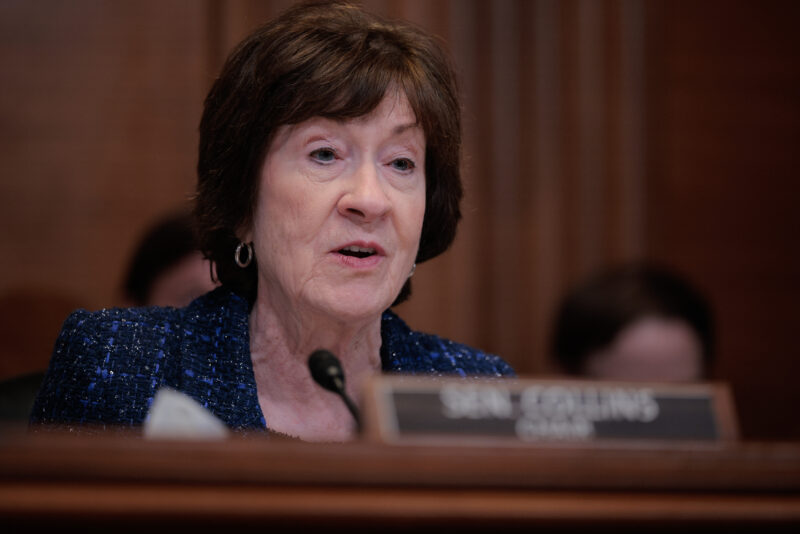
Sen. Susan Collins (R-ME) is criticizing Graham Platner, a Democrat running against her in next year’s election, for singling out AIPAC as a “weird” interest group in remarks to a local newspaper in which he also pledged to reject support from the organization. “Sen. Collins is a strong supporter of AIPAC, a bipartisan organization that promotes stronger ties between the United States and Israel,” a spokesperson for Collins told Jewish Insider’s Matthew Kassel. “Nothing about their work is ‘weird’ — in fact, it has never been more important given the aggressive antisemitism that we have seen around the world since the appalling Oct. 7, 2023, terrorist attack.”
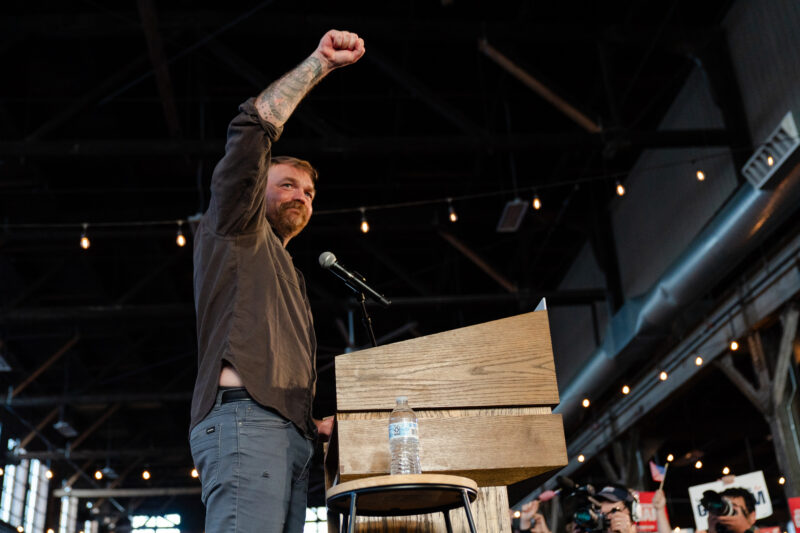
‘Very simple’: In his comment, Platner, a 40-year-old oyster farmer, Marine veteran and political newcomer who launched his bid to challenge Collins on Tuesday, said he would reject backing from corporate super PACs and donations from interest groups such as AIPAC that he called “weird.” “My view here is very simple,” Platner told JI on Wednesday when asked to elaborate on his remark. “What is happening in Gaza is a genocide; I refuse to take money from AIPAC or any group that supports the genocide in Gaza.” In other interviews this week, Platner has similarly accused Israel of genocide in Gaza and endorsed efforts to block U.S. arms sales to Israel.
DELAYED DENUNCIATION
Klobuchar rebukes Fateh campaign staffers who glorified Oct. 7 attacks

Sen. Amy Klobuchar (D-MN) is rebuking a top mayoral candidate in Minneapolis, far-left state Sen. Omar Fateh, who has recently faced criticism for employing campaign staffers who have glorified Hamas’ Oct. 7, 2023, attacks and called for Israel’s destruction, among other extreme comments. In a statement to Jewish Insider’s Matthew Kassel on Wednesday, a spokesperson for Klobuchar, who is backing Fateh’s chief rival, Mayor Jacob Frey, said the senator “strongly and immediately condemned the Hamas terrorist attack, and condemns any statements to the contrary.”
Breaking the silence: “These comments are outrageous and have no place in our politics,” the spokesperson, Jane Meyer, said of the staffers’remarks, which were unearthed by JI last week. “She has spoken out against antisemitism for years. She has endorsed the mayor and did so months ago.” Klobuchar, who along with Minnesota Gov. Tim Walz is the most high-profile Democratic official supporting Frey’s campaign, had until now remained silent with regard to Fateh, a 35-year-old democratic socialist whose insurgent bid has drawn comparisons to Zohran Mamdani, the Democratic nominee for New York City mayor.
TRIP TALK
Greg Landsman: Israel is ‘close’ to ending Gaza war

Following his recent trip to Israel, Rep. Greg Landsman (D-OH) says he believes that the Jewish state is “as close as I’ve understood it to be to ending” the war in Gaza. “The language around aid has changed. [Israel talks] about surging aid and they talk about ending this war quickly,” Landsman, who discussed his trip on Wednesday with Jewish Insider’s Emily Jacobs, said. The Ohio Democrat told JI that he believes “everyone should be putting pressure on all parties to end the war. I think it is entirely appropriate to put pressure on the Israeli government to end this war. I also think it is necessary for people to put pressure on Qatar and Egypt to end this war, to use all of the leverage they have, particularly with the senior Hamas leaders that are in Qatar.”
Support system: Landsman, one of 14 House Democrats who took part in a delegation to the Jewish state last week, told JI that the Israeli officials and citizens he spoke with urged him and others on the trip to continue supporting a strong U.S.-Israel relationship during moments when they took issue with some of the actions of Israeli Prime Minister Benjamin Netanyahu. “They remind you that they would never want anyone to abandon them, as we would never want anyone to abandon us. It’s an important reminder that being critical of the government when you disagree is part of democracy, it’s why democracy and freedom are so important,” he said. “There’s a line. In terms of having the strength and courage to both stand up to and criticize your partners, while also having the strength and courage to not abandon them, especially a partnership like this one and in an existential moment such as this.”
ONLINE RADICALIZATION
New ADL report highlights white supremacist forum inspiring school shooters

A new report from the Anti-Defamation League’s Center on Extremism suggests that an online community of white supremacists is increasingly recruiting and inspiring school shooters, Jewish Insider’s Haley Cohen reports.
Violent videos: The research, published Thursday as an interactive timeline, analyzes two school shootings that occurred weeks apart. Despite happening in different states, the report found overlapping online activity between the young perpetrators. In the months leading up to the shootings, both perpetrators were active on the website WatchPeopleDie, a forum where users can post and view real images and videos of violence. ADL researchers found that extremist material — such as white supremacist and antisemitic manifestos and videos of white supremacist and antisemitic mass murders — was widely accessible on WPD.
PRESIDENT’S POV
Trump: Iran would have had nuclear weapons in four weeks at time of U.S. strikes

President Donald Trump said in an interview with Fox News host Mark Levin on Tuesday that at the time of the U.S. strikes on Iran’s nuclear facilities in June, he believed Tehran “would have had nuclear weapons in a period of four weeks,” Jewish Insider’s Danielle Cohen-Kanik reports. Calling in to Levin’s radio show, Trump said that, “if we didn’t [strike Iran], they would probably by this time, just about this time, have a nuclear weapon and they would have used it.”
Taking on Tehran: “The Atomic Energy Commission said, this place is gone. [Iran] can maybe start up, but they’re not starting up there,” Trump said of the Iranian nuclear facilities targeted in the operation. The Israel Atomic Energy Commission found that the U.S. strike on the Fordow nuclear facility “destroyed the site’s critical infrastructure” and rendered it “inoperable,” though reports differ on the extent of the damage. The president also boasted about his peacemaking abilities, saying, “I’ve settled six wars and we did the Iran night, wiped out their whole nuclear capability, which they would have used against Israel in two seconds if they had the chance.”
Bonus:The New York Times does a deep dive into the U.S. strikes on Iran’s Fordow nuclear facility in June.
Worthy Reads
Trump Card: The Times of Israel’s founding Editor David Horovitz considers how President Donald Trump could hasten the end of the Israel-Hamas war. “Trump’s opening here is to broker a deal — not between Israel and Hamas, which will never sign off on its own path to oblivion, but between Israel and the regional actors who have indicated willingness in principle to step in and rehabilitate the Strip. Netanyahu doesn’t want the PA there. Regional players and Israel’s (now unreliable) international allies have demanded a role for the PA, while stressing the imperative that it be reformed and closely overseen. Washington should strive to produce a viable accommodation, paving the way for non-Hamas governance, negotiating a security mechanism that enables Israel to intervene when necessary, and conditioning the rehabilitation and reconstruction of Gaza on its demilitarization.” [TOI]
Foreign Green on the Green: In Mosaic, Danielle Pletka, a senior fellow at the American Enterprise Institute, proposes a crackdown in foreign funding of American universities to address antisemitism on college campuses. “Is Qatar the only driver of campus anti-Semitism? Absolutely not. The resurgence of Marxist thought, critical race theory, and the ‘intersectionality’ that demands that Jews must be reviled along with racism, fossil fuels, ‘settler colonialists,’ and social conservatives deserves a significant chunk of the blame. But there should be little doubt that, in a campus environment hostile to Israel, Zionists, and Jews, the contributions of a country well known for its support for the Muslim Brotherhood and its Hamas progeny is a significant factor. And Qatar isn’t going away any time soon. If American universities are to become more welcoming places for Jews — indeed, if they are to become better institutions altogether — federal and state governments will have to crack down thoroughly on foreign funding, and administrators will have to exercise some restraint and just say no to money that fosters Jew hatred.” [Mosaic]
The Case for Diversity: In recent remarks to Yale’s incoming law school class that were published in The Free Press, Danielle Sassoon, a former U.S. attorney for the Southern District of New York, reflects on the diversity of opinions among her classmates at the law school 15 years prior that bolstered opportunities for conversation and dialogue. “Ideological familiarity might provide comfort, but don’t take the lazy way out. Recognize that conditioning social acceptance on ideological conformity is the weapon of the intellectually weak. Don’t insulate yourself in an artificial circle of only like-minded peers, or permit others to dehumanize your classmates, whatever their race, religion, or creed. And don’t fall prey to the arrogance of turning analytical questions into moral judgments unworthy of debate. Otherwise, you don’t stand a chance — whether against a hostile judge, a room full of aggressive lawyers 20 years your senior, or as a leader of an institution with people of diverse views and talents.” [FreePress]
Word on the Street
The Trump administration announced sanctions on four International Criminal Court officials over the issuance of arrest warrants for Israeli Prime Minister Benjamin Netanyahu and former Defense Minister Yoav Gallant…
The State Department fired a contractor and onetime National Iranian American Council intern who clashed with officials over the department’s language around relocating Gazans outside of the enclave, expressing condolences over the death of a Palestinian journalist Israel has claimed was a member of Hamas…
The Department of Education’s Office for Civil Rights opened an investigation into Haverford College, three months after the President Wendy Raymond dodged questions regarding antisemitism on the Pennsylvania university’s campus at a congressional hearing…
The New York Times looks at the logistical and bureaucratic challenges facing international students — approximately 1 million of whom study in the U.S. every year — amid the Trump administration’s crackdown on student visa holders…
An advisor to New York City Mayor Eric Adams who was also a volunteer on his reelection campaign was suspended after giving more than $100 in cash to a journalist who reported the exchange to her superiors…
eJewishPhilanthropy’s Nira Dayanim interviews outgoing Revson President Julie Sandorf about her foundation’s approach to funding projects and initiatives in New York City, as well as her own questions about how Democratic mayoral candidate Zohran Mamdani intends to address antisemitism and anti-Israel activity in the city…
Eighteen people were arrested at a two-day worker-led protest at Microsoft’s Redmond, Wash., headquarters as the software giant pledged to review the IDF’s use of its technologies…
An Israeli academic is suing the University of California, Berkeley, alleging that the school, where she had taught a class in 2022, had invited her to apply for another teaching position and rejected her application because she is Israeli; in the lawsuit, Yael Nativ said that the chair of the school’s theater department told her that she would not be offered a position because “[t]hings are very hot right now and many of our grad students are angry” over the political situation in Israel and Gaza…
Third Point founder Daniel Loeb was named chair of the Museum of Jewish Heritage’s board of trustees, eJewishPhilanthropy’s Nira Dayanim reports…
A group of 80 Modern Orthodox rabbis signed on to a letter calling for Israel and its supporters to act with “moral clarity” in regards to the humanitarian situation in Gaza…
The New York Yankees drafted a shortstop who in 2021 had scrawled a swastika on the dorm room door of a Jewish student; Core Jackson, whose acquisition despite the incident was approved by Yankees owner Hal Steinbrenner, has expressed remorse for his actions, telling The Athletic he was “blackout drunk” at the time and had no memory of the incident…
Brandon Korff, the son of Shari Redstone, recently applied for Israeli residency…
The Executive Council of Australian Jewry criticized what it called Israeli Prime Minister Benjamin Netanyahu’s “clumsy intervention” and “inflammatory and provocative” comments made in the wake of Canberra’s cancelation of a visa for hard-right Israeli MK Simcha Rothman; in response, Netanyahu lambasted Australian Prime Minister Anthony Albanese as a “a weak politician who betrayed Israel and abandoned Australia’s Jews”…
B’nai Brith Canada issued an open letter calling on Prime Minister Mark Carney to reverse his plans to recognize a Palestinian state at the United Nations General Assembly next month…
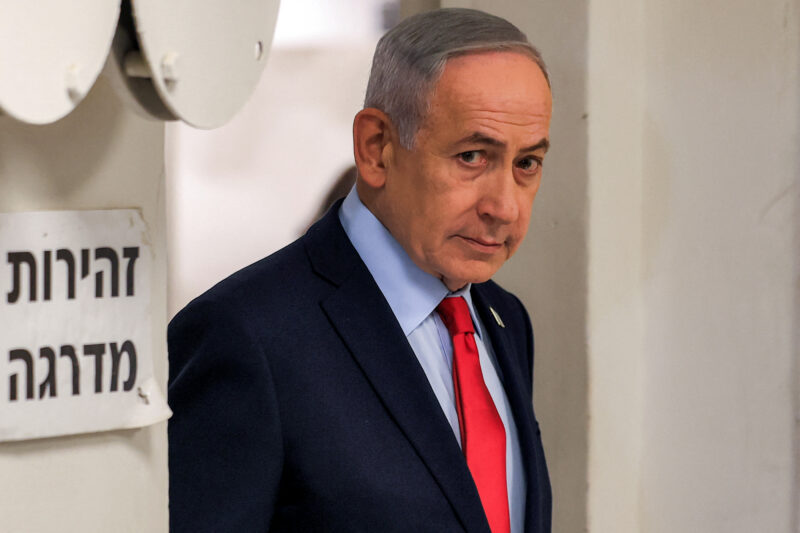
Netanyahu is reportedly mulling the creation of a satellite party to woo right-wing voters disillusioned with his Likud party and its far-right coalition members; the new party would attempt to block former Likud voters from backing former Prime Minister Naftali Bennett or Avigdor Liberman…
Iranian Defense Minister Aziz Nassirzadeh said that Tehran had built missiles “with far greater capabilities than previous missiles” and would use them in the event of an Israeli attack on Iran…
Iranian Foreign Minister Foreign Minister Abbas Aragchi said that current circumstances are preventing “effective negotiations” between Tehran and Washington over Iran’s nuclear program…
The Iranian Navy launched its first drills in the Gulf of Oman and the Indian Ocean since its 12-day war with Israel in June…
Seventy-nine Afghans who had been forcibly returned from Iran were killed in a bus crash in Afghanistan; Tehran has sought to deport more than 1 million Afghans in the country as part of its crackdown on illegal immigration…
A senior Catholic cleric in Lebanon said that Pope Leo XIV was considering a trip to the country as his first overseas trip since becoming pontiff…
British tech pioneer Stephanie Shirley, who fought for women’s inclusion in the field as an adult after fleeing Nazi Europe on the Kindertransport as a child, died at 91…
Psychiatrist Warren Brodey, who coupled his field with the advent of modern technology, died at 101…
Pic of the Day

Former Israeli hostage Andrei Kozlov met with several dozen Holocaust survivors on Tuesday at the Adolph and Lotte Rosenberg Summer Retreat for Holocaust survivors in Kerhonkson, N.Y., hosted by The Blue Card. Read more from eJewishPhilanthropy’s Jay Deitcher here.
Birthdays
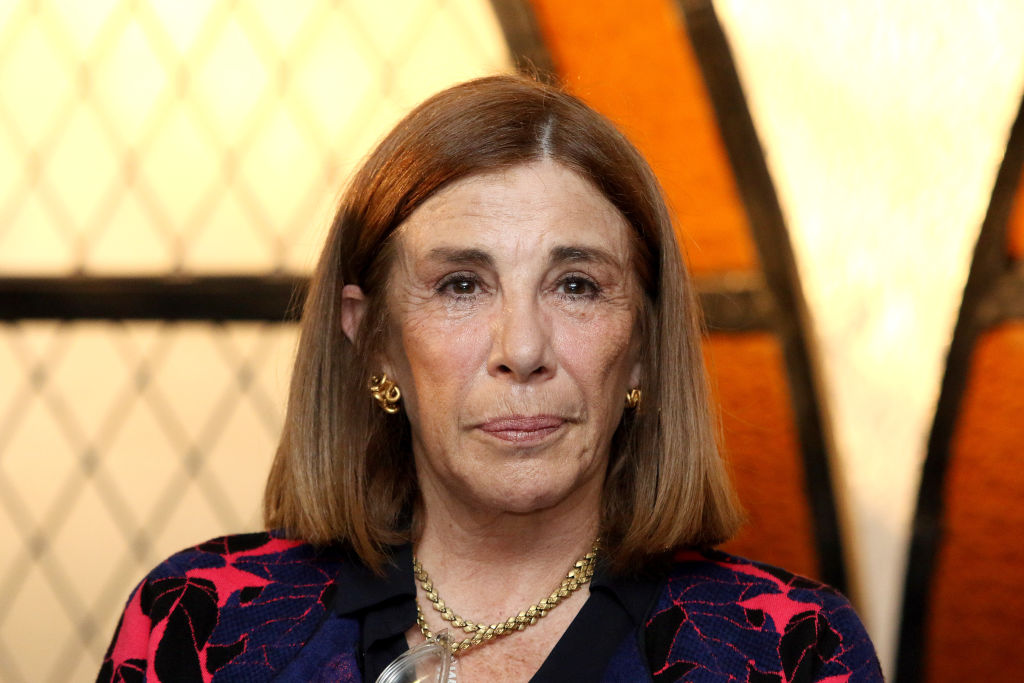
Mexican writer, playwright and journalist whose work is related to diversity and its obstacles, Sabina Berman Goldberg turns 70… Retired owner of Effective Strategy Consultants, South Florida resident, Irwin Wecker… Senior judge on the U.S. Court of Appeals for the 7th Circuit (with chambers in Chicago), the first woman appointed to this court, Judge Ilana Kara Diamond Rovner turns 87… President of the Massachusetts Institute of Technology until the end of 2022, L. Rafael Reif turns 75… Former chief justice of the Ohio Supreme Court, he was the first Jewish chief justice in Ohio history, Eric S. Brown turns 72… Israeli-born pawnbroker and star of the reality television series “Beverly Hills Pawn,” Yossi Dina turns 71… Businessman and collector of modern and contemporary art, he is a partner in the NFL’s Washington Commanders, Mitchell Rales turns 69… U.S. senator (D-MT) for 18 years, ending earlier this year, Jon Tester turns 69… Israeli physician who was a member of the Knesset, he now serves as mayor of Ashdod, Dr. Yehiel Lasri turns 68… Photographer best known for his fashion and celebrity images, Jerry Avenaim turns 64… Israeli career diplomat who served for six years as consul general in New York, Ido Aharoni turns 63… United States secretary of the Treasury, Scott Bessent turns 63… President at Maimonides Fund, Mark S. Charendoff… Co-founder of BlueLine Grid, he was previously an assistant U.S. attorney in Los Angeles and a member of the Los Angeles City Council, Jack Weiss turns 61… Member of the philanthropic leadership group for the UJA-Federation of New York, Chavie N. Kahn… Partner at Kohlberg Kravis Roberts-KKR where he is the global head of public affairs and a co-head of global impact, Ken Mehlman turns 59… President of Berger Hirschberg Strategies, Rachel Hirschberg Light… Co-founder of Google, Sergey Brin turns 52… MLB pitcher for nine teams in a 16-season career, he was the starting pitcher in three of Team Israel’s first four games in the 2017 World Baseball Classic, all of which the team won, Jason Marquis turns 47… District attorney of San Francisco, elected in 2019 and recalled in 2022, Chesa Boudin turns 45… Head coach of the Temple University Owls men’s basketball team, Adam Fisher turns 41… President at Bold Decision, Adam Rosenblatt turns 40… Missions manager for domestic and overseas travel at the Jewish Federation of Greater Philadelphia, Erica N. Miller… Communications director at Breakthrough Energy, David Abadian Heifetz… Pop singer and songwriter, Madeline Fuhrman turns 32… Associate editor at Simon & Schuster, Tzipora (Tzippy) Baitch… An Argov fellow at Reichman University and a Lauder fellow at the World Jewish Congress, Noa Rakel Perugia… Lynn Sharon… James Barton…
Former Rep. Jim Moran and his team have held dozens of meetings with members of Congress since the Oct. 7 Hamas terror attacks in 2023, mainly to talk about the Qatari role in the Middle East peace process
YASUYOSHI CHIBA/AFP via Getty Images
Former Rep. Jim Moran (D-VA) arrives to address a rally attended by supporters of Sudan's ruling Transitional Military Council (TMC) in the village of Abraq, about 60 kilometers northwest of Khartoum, on June 23, 2019.
During Jim Moran’s 24 years in Congress, the Virginia Democrat had a habit of putting his foot in his mouth, particularly when it came to his Jewish constituents.
In 2003, he blamed the Jewish community for President George W. Bush’s decision to invade Iraq, prompting several local rabbis to call for his resignation. Four years later he blamed AIPAC for the war. The blowback was so strong that when then-Sen. Barack Obama accepted Moran’s endorsement of his presidential campaign in 2008, he stated plainly that he disagreed with Moran’s views of the Jewish community.
Moran retired from Congress in 2015, but the 80-year-old still walks the halls of Capitol Hill. Now, he’s there as a lobbyist — primarily as a registered foreign agent lobbying on behalf of the government of Qatar.
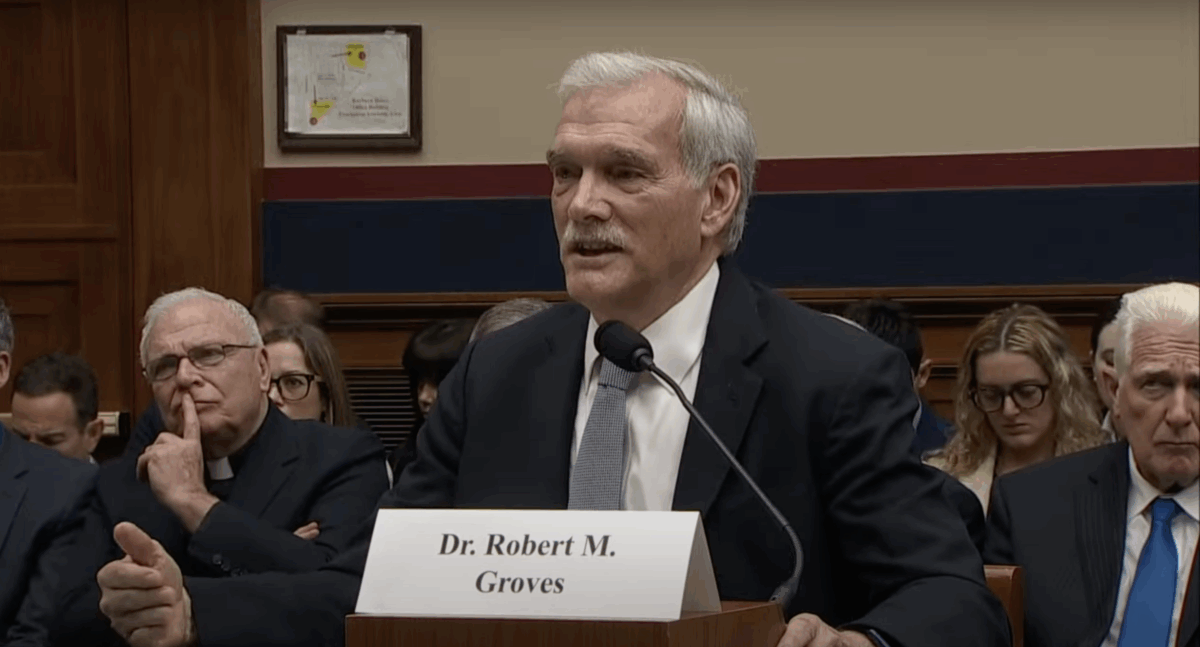
He is a regular in the offices of high-ranking members of Congress and senators. And last month, during a House Education Committee hearing about antisemitism in higher education, Moran was conspicuously seated directly behind Robert M. Groves, the president of Georgetown University, which has a campus in Doha and has received more than $1 billion from the Gulf monarchy.
“Jim is one of these guys that people seem to like on both sides of the aisle. He’s been able to keep in contact with a lot of members when needed,” Tom Davis, a former Republican congressman from Virginia who Moran hired to help represent Qatar, told Jewish Insider.
A Georgetown source said Moran was not working with the university or sitting in one of Georgetown’s three allotted seats at the hearing. Still, there’s no doubt he is a highly influential foreign policy voice in Washington on behalf of a country with which America has a complicated relationship.
Qatar is a major non-NATO ally of the U.S., an official designation conferred by President Joe Biden, and is home to the largest U.S. military base in the Middle East. But it also has financial and diplomatic ties with Hamas and other terror groups. Qatar’s leaders say that is necessary so the country can maintain its role as a trusted mediator, while its critics say Qatar’s close relationship with Hamas makes it unlikely to put real pressure on the terror group to make a deal with Israel or to release the hostages. Some on Capitol Hill and in the pro-Israel community have expressed concerns that Qatar’s massive investment in American universities has fueled anti-Israel activism and antisemitism on campuses.
With a Boston accent leftover from his childhood, Moran has a penchant for talking tough — and acting tough, too. In the 1990s, at the start of his time in Congress, he occasionally threatened to brawl with fellow lawmakers, and once shoved another member of Congress off the House floor.
Moran was an early and consistent critic of Israel, long before the wave of anti-Israel sentiment that has exploded on the far left over the past two years. He has kept up ties with Jewish leaders in Northern Virginia, but those relationships grew strained as Moran repeatedly criticized pro-Israel advocates and Jewish activists.
“Jim is an extraordinarily compassionate man. He has trouble with suffering. His judgment about what constitutes suffering and who’s causing it is not always accurate, and so that has gotten him in a considerable amount of trouble over the course of his long political career,” said Rabbi Jack Moline, who served for 27 years as the rabbi at Agudas Achim Congregation in Alexandria. Moline met regularly with Moran until the rabbi called for Moran’s resignation in 2003, after Moran blamed Jews for the Iraq war, a comment the former congressman later said he “deeply regret[s].”
“His relationship with the Jewish community fell apart,” Moline told JI. “It didn’t surprise anybody when, after he finally did retire from Congress, he was offered and accepted work lobbying for Qatar.” He first registered as a lobbyist for Qatar in 2017. His firm, Moran Global Strategies, has been paid more than $2 million by Qatar in the last two years, according to data compiled by OpenSecrets. A spokesperson for the Qatari Embassy did not respond to a request for comment, nor did Moran Global Strategies.
Though Moran expressed contrition for his antisemitic remarks during the lead-up to the Iraq war, his rhetoric toward the Jewish community has only grown more inflammatory in the decade since he left Congress. In recent years, he has appeared on several virtual panel discussions held by the Arab Organization for Human Rights in the U.K., a London-based NGO led by Mohammad Jamil Hersh, a former Hamas activist who has been sanctioned by Israel and was deported by the country more than three decades ago. In those conversations, he regularly blasted the influence of American Jews and the “pro-Israel lobby.”
During a February 2023 AOHR event, Moran tried to explain Washington’s support for “apartheid” in Gaza by pointing the finger at American Jews and suggesting that they are unduly involved in the American political system.
“It’s about domestic politics and it always has been. The majority of people who contribute to the Democratic Party in America have Jewish surnames. Now think about that,” said Moran. He described them as people “whose principal reason for contributing to the political system in America has been the sine qua non of support for Israel, and unqualified support for Israel.”
In this and several other interviews, Moran recognized that his language was rather impolitic.
“I don’t want to sound antisemitic, and Palestinians are a Semitic people,” Moran said. “I’m just saying that let’s deal with the political reality in the United States that’s driving and reinforcing the injustice that’s occurring within Palestine.”
Moran and his team have held dozens of meetings with members of Congress since the Oct. 7 Hamas terror attacks in 2023 that spurred the ongoing war in Gaza, mainly to talk about “Qatar’s role in the Middle East peace process,” according to documents he filed with the Justice Department as required by the Foreign Agents Registration Act. At the same time, he has continued to question Jewish involvement in the American political system — including just days after Oct. 7, in a call hosted by the Muslim Public Affairs Council.
“The reality is that campaign contributions have corrupted the United States Congress. One of the motivating factors is, ‘How do I please my political supporters, particularly my financial supporters?’ The reality is that the Jewish community, and frankly to their credit, is deeply engaged in the American political process,” Moran said in the MPAC call. “That’s one of the motivating factors that causes the Congress to look the other way where the Middle East is concerned.”
Although he expressed skepticism about the supposed influence of American Jews in electoral politics, he encouraged Muslim, Palestinian and Arab Americans to increase their own influence. But his prognosis for their potential efficacy was grim. “I’m not sure they’re ever going to be able to successfully catch up,” Moran said.
Even as Moran took aim at Jews’ participation in the political process, he routinely downplayed accusations of antisemitism that have been lobbed at him directly and at the broader anti-Israel movement.
In September 2024, in another AOHR virtual briefing, Moran acknowledged that he would likely be called antisemitic for his comments accusing Israel of committing war crimes “daily” and for describing the situation in Gaza as “comparable to the Holocaust.”
“Foreign aid going into committing war crimes on a daily basis because of the politics, because of the campaign financing, because of the control of the media — it’s inexcusable. It’s an indictment of what has become of this democracy,” said Moran, without saying who, exactly, he thinks controls the media. “It’s an indictment of the fact that our foreign policy has been Israeli-centric, and let me say one other thing so that people don’t particularly accuse me of being antisemitic, although I’m sure many will: Many of those protests across the country were led by Jewish students.”
This spring, after President Donald Trump returned to office and began targeting universities, Moran was dispatched to Capitol Hill to talk to Democrats on the Senate Health, Education, Labor and Pensions Committee about Qatar’s funding of American higher education, which has come under the microscope.
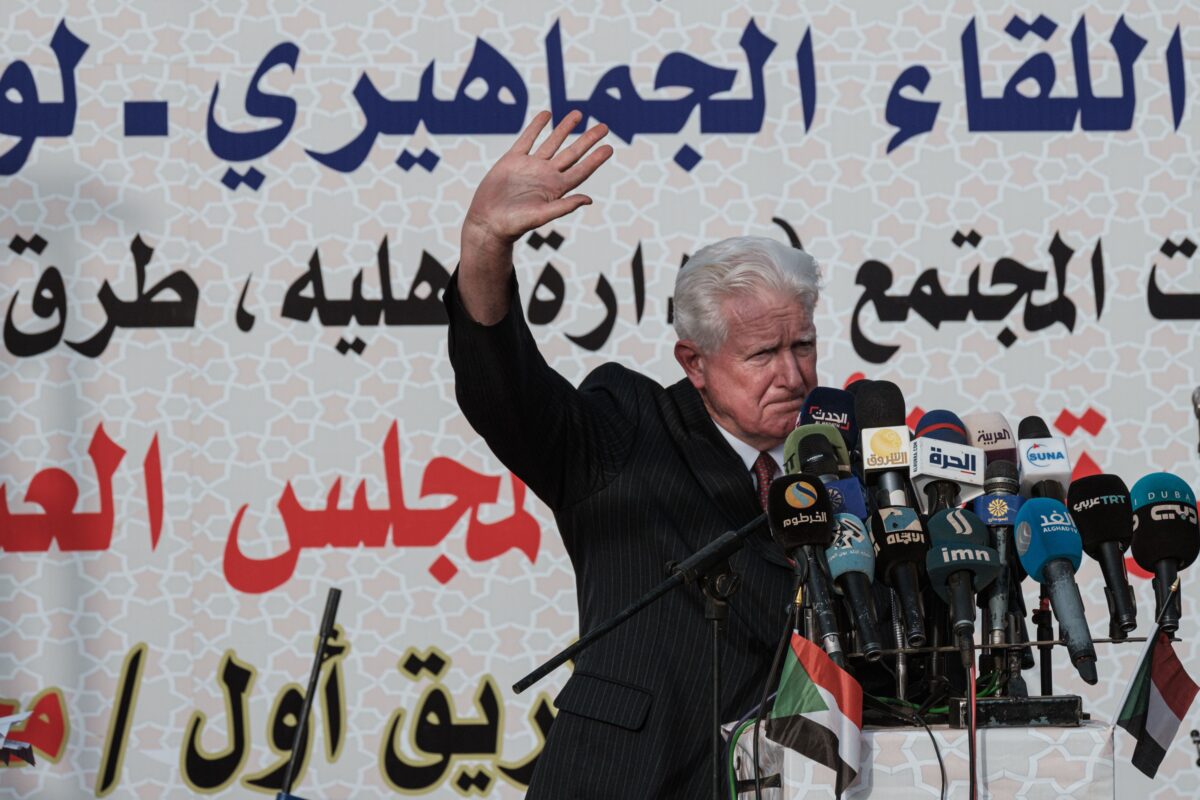
It is notable that one of the people tasked with advocating for a country that is close to both America and Hamas seems to have a deeply rooted hostility to Israel and even to American Jews, particularly at a moment when Qatar’s dealings in the U.S. are facing greater scrutiny — such as when Trump said earlier this year that the U.S. would accept a Qatari gift of a luxury jet to use as Air Force One.
But Qatar has a suite of lobbyists who span the political spectrum. Moran primarily deals with Democrats. Qatar has in the past also targeted hundreds of conservative “influencers” to reach Trump’s inner circle, and employs several Republicans as lobbyists. Partisan politics is at play, too; Democratic lawmakers blasted the Air Force One move, while Republicans fell in line behind Trump.
Several prominent Trump administration officials have ties to Qatar, including Attorney General Pam Bondi, who said in her January Senate confirmation hearing that she remains “very proud” of the lobbying work she did for Qatar ahead of the 2022 World Cup. Steve Witkoff, Trump’s Middle East envoy and chief negotiator, has a history of business dealings with the country.
“If you take a look at the folks they’ve got representing them, they’ve been all over the lot on that issue. It’s certainly not a pro-Arab versus Israel issue,” said Davis, the Virginia Republican who works with Moran on the Qatar file. “There’s nothing there to indicate that their lobbyists have any kind of ideological bent on that issue.”
Correction: This story has been corrected to reflect that Moran began lobbying for Qatar in 2017, not 2023.
After legal and structural changes, the anti-Israel group has switched its focus from protests and advocacy to organizing for and against candidates

Tierney L. Cross/Getty Images
Demonstrators from Jewish Voice For Peace protest the war in Gaza at the Canon House Building on July 23, 2024 in Washington, DC.
Jewish Voice for Peace, a far-left anti-Israel advocacy group that has built a growing profile in the wake of Hamas’ Oct. 7, 2023, terror attacks, is pivoting to a new organizational structure that will soon allow it to engage more forcefully in electoral politics.
The group recently began the process of consolidating its membership and organizing in an affiliated but lesser-known political nonprofit called Jewish Voice for Peace Action, devoting the bulk of its resources to lobbying and political activities, such as supporting and opposing candidates that had not traditionally been a part of its core focus.
As a nonpartisan tax-exempt group, JVP, which has been at the forefront of campus anti-Israel protests and promotes efforts to divest from Israel, has been legally prohibited from taking sides in campaigns — a limitation the new structural change is designed to address.
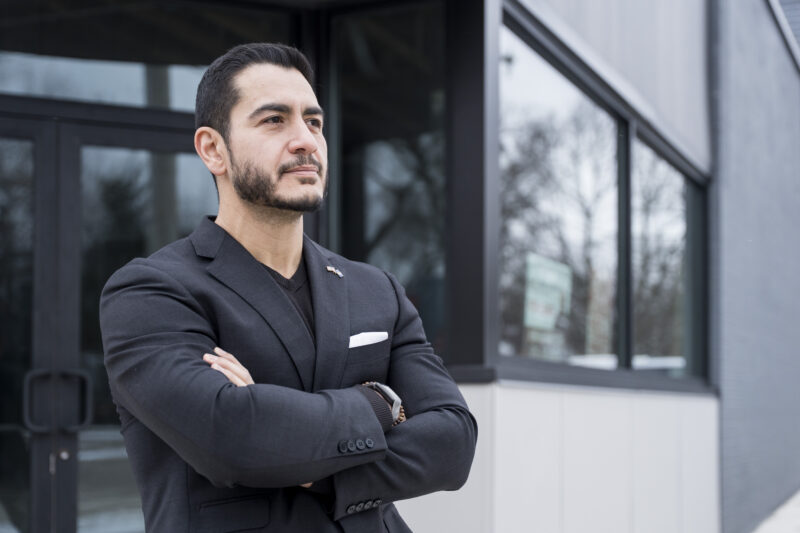
The shift comes as the activist left has felt newly emboldened by Zohran Mamdani’s shocking victory in New York City’s Democratic mayoral primary in June, fueling debates over the ideological direction of the party as it gears up for next year’s midterms.
JVP Action, which recently changed its public name to Jewish Voice for Peace to match its sister organization, was an early supporter of Mamdani and has cited his outspoken opposition to Israel as a sign of evolving voter attitudes about the Israeli-Palestinian conflict.
“There is unprecedented, mass support for Palestinians. Our movement has already grown larger, and more quickly, than many of us thought possible. But it’s clear we have not begun to tap our full potential,” JVP writes in a detailed new page on its website about the decision-making behind its shift. “The U.S. government has not budged from its commitment to sponsor Israel’s genocide. Public polling and public displays of opposition alone will not shift U.S. policy. Our movement must contend for real power.”
JVP, which until now had been the primary home for the group’s organizing work, will become a “supporter-based” rather than a “membership-based” organization renamed JVP Leadership & Culture Lab — with a focus on educational training and arts and culture programming to help promote “anti-Zionist Jewish” advocacy, according to its tentative mission statement.
The change was approved in a recent membership vote and will be implemented by Oct. 15, according to a lengthy agenda from a virtual meeting last week shared with Jewish Insider.
JVP Action’s board, for its part, had already voted to change its name and structure independently of the recent all-members meeting, in anticipation of the organizational inversion.
During the meeting, a recording of which was reviewed by JI, one member raised a concern that the change could “lead to a deemphasis” on JVP’s involvement in “mobilizing of protests and direct action” in favor of “electoralism and support for progressive Democrats.” The member was reassured by leadership that such approaches are complementary and that electoral work is a “key tactic inside a set of tools” including “civil disobedience” and divestment campaigns.
In moving to now operate primarily as a political nonprofit, “the barriers between the work of JVP and JVP Action organizations will be removed,” JVP further explains on its website.
“This has long been a challenge, creating silos and firewalls in our respective work that keep us from drawing clear connections between the political, electoral, cultural and financial forces that uphold the U.S.-Israeli relationship,” the group adds.
JVP, which is closely aligned with American Muslims for Palestine, a leading pro-Palestinian advocacy group that has faced legal scrutiny for alleged ties to terror organizations such as Hamas, has significantly bolstered its fundraising in recent years.
The organization raised a record $11 million in revenue from July 2023 to June 2024, according to its latest tax filing, far outpacing previous figures. It is not required to share the names of its donors as a 501(c)(3) to which contributions are tax-deductible.
As a so-called “dark money” group, JVP Action, a 501(c)(4) that is not tax-exempt, can also shield its contributors from the public, even as it engages in elections — unlike political action committees that must disclose their donors.
JVP Action pulled in $800,000 in revenue from July 2022 to June 2023, its most recent tax filing shows, marking its strongest showing since it was established in 2020.
A smaller PAC affiliated with JVP raised only $133,000 last election cycle and does not seem to be part of the new restructuring. The Anti-Defamation League filed a complaint last year accusing the PAC of engaging in a pattern of misrepresentations that violate federal campaign finance law.
In its efforts to stake out a more prominent role in elections, JVP Action is borrowing a page from one of its primary adversaries, the pro-Israel lobbying group AIPAC, which launched a super PAC as well as a political action committee in 2021 to wield its more considerable resources in congressional races where divisions over Israel have drawn significant outside spending.
“For a century, our opposition — the American Zionist establishment — has employed a long-term multipronged strategy to build U.S. support for Zionism and genocide and they have used all the tactics in the book,” JVP says in its recent meeting agenda. “They have a cultural strategy, an electoral strategy, a lobbying arm, youth organizations, mass movement organizations and funding vehicles.”
But the group argues that its opponents are “now experiencing a crack in their power.”
JVP Action, which has previously endorsed a range of Squad members in the House, has not indicated how it plans to approach the upcoming midterms in its more streamlined role.
The group did not return a request for comment on Wednesday, nor did JVP.
A poll released in February by The Jewish Majority, a pro-Israel research group in Washington, showed most Jewish Americans oppose the confrontational protest tactics used by JVP and regard anti-Zionist movements as antisemitic, among other findings.
Jonathan Schulman, the executive director of The Jewish Majority, said that JVP’s “decision to more vigorously engage in electoral politics signals their growing ambition to influence policy in ways that undermine Israel’s very existence as a Jewish state.”
“As they pursue this goal,” Schulman said in a statement to JI on Wednesday, “the pro-Israel community must make it clear to both the public and policymakers that the rhetoric and tactics of anti-Zionism undermine any prospects for a peaceful resolution to the conflict and contribute to the rise in violent attacks against Jews in America. JVP seeks to disprove any connection between anti-Zionism and antisemitism. We must expose that anti-Zionism is fundamentally opposed to peace.”
But with Mamdani’s resounding win over former New York Gov. Andrew Cuomo, who had touted his staunch support for Israel and opposition to rising antisemitism in the primary, JVP now claims to see evidence its “movement work” is gaining traction.
“It is no longer popular for the U.S. to be sending endless weapons and funding to Israel,” the group said in its meeting agenda. “People are questioning the U.S.’ support for genocide and violence against the Palestinian people. Our movement is growing! And we still have a long way to go to break open this crack and end U.S. support for Israel.”
Please log in if you already have a subscription, or subscribe to access the latest updates.
 Continue with Google
 Continue with Apple