

































Plus, Kristi Noem gets the boot
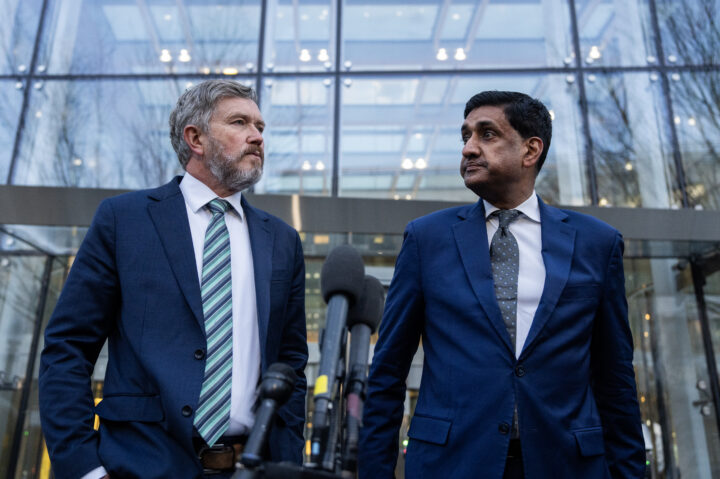
Tom Williams/CQ-Roll Call, Inc via Getty Images
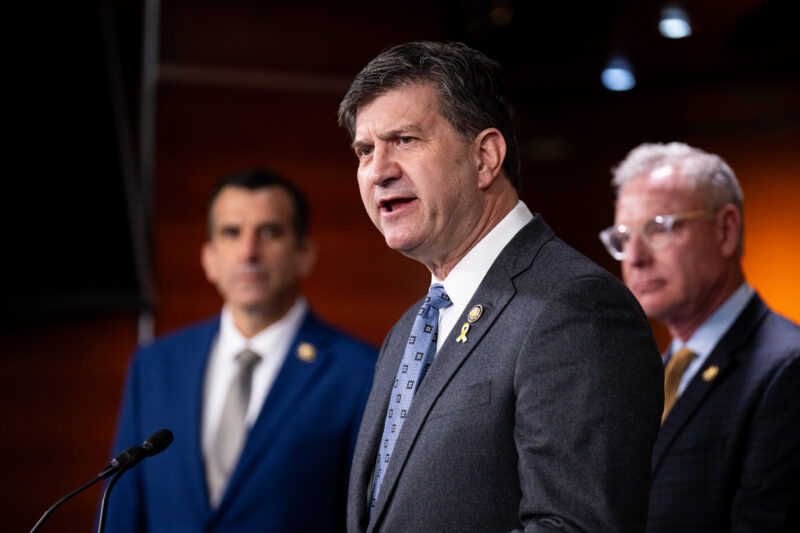
Reps. Thomas Massie, (R-KY), left, and Ro Khanna, (D-CA), conduct a news conference outside a Department of Justice office in NoMa on Monday, February 9, 2026.


 Add JewishInsider on Google
Good Thursday afternoon,
This P.M. edition is reserved for our premium subscribers — offering a forward-focused read on what we’re tracking now and what’s coming next.
It’s me again — Danielle Cohen-Kanik, U.S. editor at Jewish Insider and curator, along with assists from my colleagues, of the Daily Overtime. Please don’t hesitate to share your thoughts and feedback by replying to this email.
📡On Our Radar
Notable developments and interesting tidbits we’re tracking
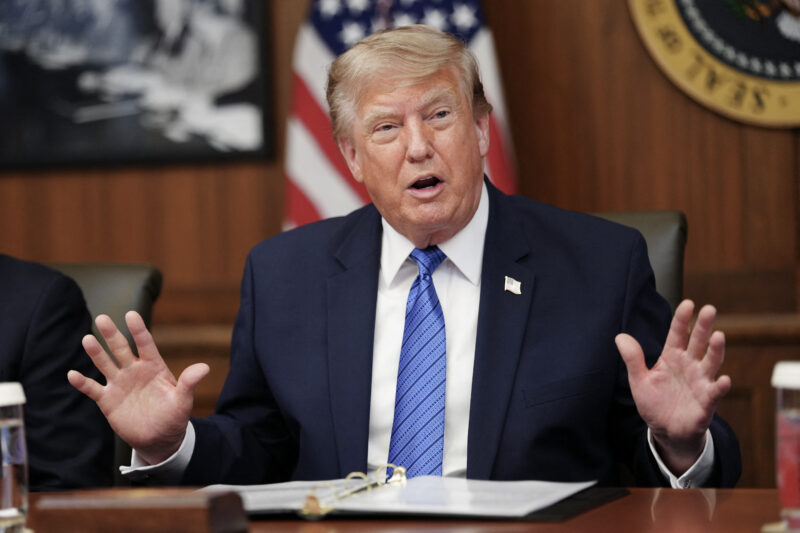
President Donald Trump announced he’s replacing Kristi Noem as homeland security secretary with Sen. Markwayne Mullin (R-OK), after Noem had rankled the president and some Republican members of Congress with her oversight of widespread turmoil at the agency, among other issues. Mullin still needs to be confirmed by the Senate to assume the post.
Mullin, if confirmed, would take the helm of DHS amid its continued partial shutdown, and as it has repeatedly come under fire for its handling of issues related to antisemitism from lawmakers and Jewish community groups. Noem, meanwhile, will become special envoy to a new security initiative for the Western Hemisphere being launched by Trump this weekend…
House Speaker Mike Johnson (R-LA) and other GOP leadership called on Rep. Tony Gonzales (R-TX) to drop out of his reelection race, after the lawmaker admitted yesterday to having an affair with a staffer who later committed suicide. Gonzales is headed to a May runoff with his primary opponent, social media influencer Brandon Herrera; if Gonzales does step aside, Herrera, who has a history of antisemitic posts about the Holocaust, is all but guaranteed the GOP nomination in a solidly Republican district…
Trump said he “[has] to be involved in the appointment” of the next Iranian leader, in an interview with Axios, “like with Delcy [Rodriguez] in Venezuela.” He called Mojtaba Khamenei, son of the late Supreme Leader Ayatollah Ali Khamenei who has emerged as his father’s likely successor, “unacceptable.” The president’s comments seem to widen the administration’s stated war aims, which have thus far focused on eliminating Iran’s naval, air and nuclear assets.
Trump also insisted in the interview that Israeli President Isaac Herzog issue a pardon for Prime Minister Benjamin Netanyahu “today,” as he wants Netanyahu “to focus on the war and not on the f**king court case. I want the only pressure on Bibi to be the fighting against Iran”…
Some Democratic lawmakers — including Sens. Jack Reed (D-RI), Gary Peters (D-MI), Tim Kaine (D-VA) and Elissa Slotkin (D-MI) — told Politico they won’t “rule out” voting in favor of an emergency supplemental funding request to shore up the military should one come from the administration amid the campaign against Iran, despite widespread Democratic condemnation of the White House’s failure to consult Congress beforehand…
A vote on a war powers resolution to stop the military campaign in Iran failed in the House this afternoon 219-212, with two Republicans — Reps. Thomas Massie (R-KY) and Warren Davison (R-OH) — crossing the aisle in support and four Democrats — Reps. Greg Landsman (D-OH), Henry Cuellar (D-TX), Jared Golden (D-ME) and Juan Vargas (D-CA) — breaking with their party to oppose it.
Reps. Josh Gottheimer (D-NJ) and Jared Moskowitz (D-FL) both changed their positions and voted in favor of the resolution, weeks after Moskowitz told Jewish Insider — before the campaign began — that its sponsors “should just rename [the resolution] the Ayatollah Protection Act because that’s what it does.” Asked by JI about the shift in his stance today, Moskowitz answered, “I didn’t flip at all. Circumstances have changed since my first statement”…
Antisemitic podcaster Tucker Carlson’s latest extreme rhetoric took aim at the Chabad Lubavitch movement, with sweeping conspiratorial language accusing the Hasidic sect of seeking to start a “religious war” amid the U.S. and Israeli strikes on Iran, JI’s Gabby Deutch reports.
Carlson argued in an episode of his show that dropped last night that Jews see the war against Iran as an opportunity to feud with Islam and to target Christians. Carlson’s remarks prompted outrage among Chabad’s backers, who pointed out that Chabad emissaries have for decades played a crucial role in connecting American Jews to their faith and to each other…
In a conversation with ABC News, Trump said this afternoon that Tucker “has lost his way. I knew that a long time ago, and he’s not MAGA. MAGA is saving our country. … Tucker is really not smart enough to understand that”…
In a discussion with the New York Post, Trump railed against European countries which have continued to oppose the campaign against Iran, calling Spain “a loser” and the U.K. “very disappointing.” Canadian Prime Minister Mark Carney, meanwhile, said today that the Iran war is a “failure” of the international order, but would not “categorically rule out” Canada’s participation…
Iran’s indiscriminate attacks are bringing allies together worldwide: Ukrainian President Volodymyr Zelensky said he’s deploying specialists to assist the U.S. after Washington requested “specific support in protection” against Iranian Shahed drones, which Ukraine has been battling for several years as Russia has regularly deployed them, and the European Union and Gulf Cooperation Council held a joint meeting to discuss Iran’s “unjustifiable, unprovoked, and unlawful attacks”…
The New York Times profiles Lt.-Gen. Eyal Zamir, the IDF’s chief of staff, as he helps lead Israel’s efforts in the campaign against Iran…
⏩ Tomorrow’s Agenda, Today
An early look at tomorrow’s storylines and schedule to keep you a step ahead
Keep an eye out in Jewish Insider for a look at Jack Cocchiarella, the progressive Gen Z podcaster who has made a name for himself hosting high-profile Democratic candidates — including California Gov. Gavin Newsom in New Hampshire tonight — and who has recently taken a turn towards bashing Israel.
Team Israel will play its first games of the 2026 World Baseball Classic on Saturday against Venezuela and on Sunday against Nicaragua.
Also Sunday, AJ Edelman, the Israeli Olympic bobsled team pilot, will speak in conversation with Neil Goldman at Chabad of West Village in New York.
Birthright Israel’s Excelerate26 summit is also taking place in New York this weekend, with keynote speeches on Sunday from Robert Kraft, owner of the New England Patriots; Anne Neuberger, former deputy national security advisor during the Biden administration; and Sheryl Sandberg, former COO of Meta.
We’ll be back in your inbox with the Daily Overtime on Monday. Shabbat Shalom!
Stories You May Have Missed
MILITARY UPDATE
Day 6: Repatriation flights briefly delayed in the air as Iran shoots missiles at Israel

Tehran also attacked Azerbaijan for the first time, launching drones that injured two at Nakhchivan International Airport
ABOUT-FACE
Ruben Gallego transforms from pro-Israel moderate to face of antiwar opposition

The Arizona senator’s outspoken commentary has repeatedly placed blame for the military operation on Israel, leading one Jewish Democrat to pull her support
Protecting the country from terror threats sparked by the Iran war likely to be a major focus for the new homeland security secretary
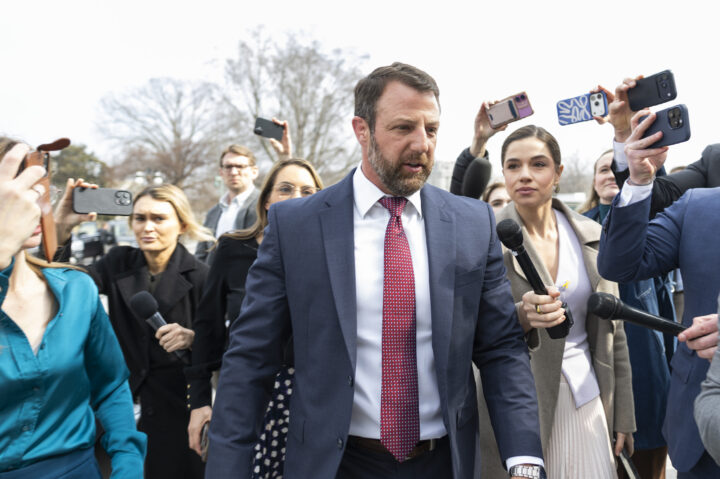
Anna Moneymaker/Getty Images
Sen. Markwayne Mullin (R-OK) speaks to reporters as he arrives at the U.S. Capitol Building on March 05, 2026 in Washington, DC.
Amid an increasing storm of controversy, President Donald Trump announced Thursday he was removing Secretary of Homeland Security Kristi Noem from her post, replacing her with Sen. Markwayne Mullin (R-OK).
Noem has come under fire for a series of issues, including her handling of immigration enforcement operations, her response to immigration agents’ shootings of two U.S. citizens, an alleged affair with a senior aide and what critics have characterized as self-promotion. Most recently, Noem claimed under oath this week that Trump had personally approved a $200 million ad campaign starring Noem herself, something that Trump has since publicly denied.
Trump said on Truth Social that the switch would take place effective March 31 — though Mullin will still need to face Senate confirmation proceedings.
Mullin could face a contentious path to confirmation. DHS remains without full funding in a partial shutdown — a result of Democratic outrage over immigration operations. Democratic lawmakers will likely grill Mullin during confirmation proceedings, and many would likely vote against him in protest of Trump’s immigration policies. But Mullin’s stature in the Senate and familiarity with his colleagues could give him an inside track to confirmation, as opposed to other potential picks.
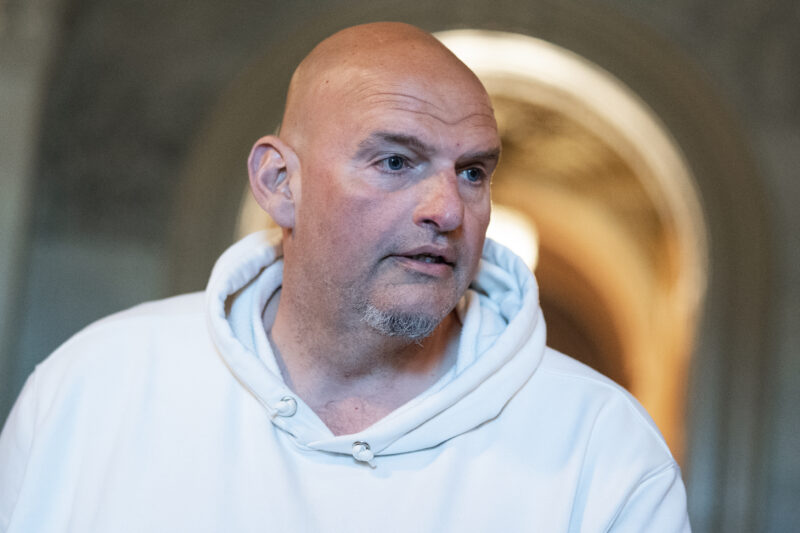
Sen. John Fetterman (D-PA), the top Democrat on the Senate Homeland Security and Governmental Affairs Subcommittee on Border Management, Federal Workforce and Regulatory Affairs, told Jewish Insider on Thursday that he would vote to confirm Mullin. Fetterman, who was one of seven Democrats who voted to confirm Noem last January, publicly urged Trump to consider firing Noem and nominating Mullin in her place earlier Thursday.
Fetterman was the only Democrat to immediately commit to supporting Mullin’s nomination, and expressed skepticism that many of his Democratic colleagues would consider doing the same in a post on X announcing his plan to vote for Mullin.
The sometimes-combative Mullin could face some issues on his own side of the aisle as well — the Senate Homeland Security Committee, which would oversee his confirmation, is chaired by Sen. Rand Paul (R-KY), whom Mullin recently called a “freaking snake,” saying he had told Paul he understood why a neighbor attacked the Kentucky senator in 2017, breaking several of his ribs.
Oklahoma Republican Gov. Kevin Stitt similarly cheered the news of Mullin’s nomination, saying in a statement, “Markwayne Mullin has been a fighter for Oklahoma and will fight to keep our nation secure. There isn’t a better choice to lead the Department of Homeland Security..”
Stitt, who is responsible for appointing Mullin’s replacement in the Senate to serve through the next election, added that he “will be looking to appoint a strong, small government conservative voice to support President Trump and protect Oklahomans’ way of life.” Under Oklahoma law, his appointee will not be permitted to run for the seat in the next election.
With the central role of immigration in Trump’s messaging and political agenda, immigration enforcement would likely remain at the top of the priority list for any DHS director he selects. But the war in Iran has raised concerns about homeland threats linked to or inspired by the Iranian regime.
Noem told senators in a hearing this week that the administration was preparing for potential homeland attacks by Iran, including “revetting” individuals who entered the country during the Biden administration.
Mullin, in the Senate, has been hawkish on Iran and its proxies, and is a stalwart supporter of Trump, but has been less involved in discussions related to antisemitism domestically — though he indicated he would have been supportive of the Antisemitism Awareness Act.
He said after a House hearing where three college presidents refused to say that calling for the genocide of Jews would be banned under their policies, “The rise of antisemitism on college campuses was on full display yesterday as Ivy League presidents refused to say whether calling for the mass murder of Jewish people constitutes harassment on their campuses. This vile, hateful, and cowardly behavior is completely despicable.”
The 48-year-old senator took office in 2023, after serving a decade in the House.
“We look forward to working with Mr. Mullin when he takes the helm at DHS to support the security of the Jewish community and all American faith communit[ies],” Nathan Diament, the executive director of the Orthodox Union Advocacy Center, told JI.
Noem is the first Cabinet official to leave her post during the second Trump administration. Observers generally see Trump as less eager to remove top aides during his second term, an effort to counter the perception of chaos that pervaded his first term in office from frequent high-level turnover.
Under Noem, DHS has repeatedly come under fire for its handling of issues related to antisemitism from lawmakers on both sides of the aisle and Jewish community groups, though it’s not clear to what extent Noem was directly involved in those issues.
The department added new conditions to Nonprofit Security Grant Program funding which may compel religious institutions to agree to eliminate Diversity, Equity and Inclusion programs and cooperate with immigration enforcement efforts in order to qualify for funding.
NSGP funding itself has also repeatedly been delayed and waylaid, with unclear deadlines provided to grantees and the state agencies that administer the grant program. Lawmakers have said that they also have not received information usually provided to them about the program. It remains unclear whether grants from the 2025 grant cycle have been awarded yet.
Applications for 2025 grants also opened months late, and funding from supplemental grant rounds that organizations applied for in 2024 was delayed by months, well into 2025.
Noem instituted a policy at DHS that required her personal signoff on any expenditures of more than $100,000, which may have contributed to the slowdowns in NSGP funding.
Mullin, as a member of the House, voted with a majority of Republicans against the bipartisan Nonprofit Security Grant Improvement Act, which proposed increased funding for the program and a dedicated structure at DHS to oversee and manage the growing program, but does not otherwise appear to have been actively involved in discussions around the program.
Separately, DHS has repeatedly come under scrutiny over guidelines issued by the Coast Guard regarding displays of swastikas and nooses. Previous policy had described such displays as banned hate symbols, whereas a new policy first reported in November characterized them instead as “potentially divisive” and mandated a lesser investigation.
The Coast Guard assured lawmakers that the policy would be corrected, but weeks later, the Guard apparently broke that pledge and instituted the “potentially divisive” language anyway. Days later, it again walked back the policy change.
Throughout, Noem and the department denied any wrongdoing and attacked critics.
Noem, a former South Dakota governor, is now rumored to be considering a primary challenge to Sen. Mike Rounds (R-SD), a moderate Republican and pro-Israel stalwart. She is also believed to have presidential ambitions. For now, Noem will become special envoy to a new security initiative for the Western Hemisphere being launched by Trump on Saturday, the president said in his Truth Social post.
Noem said the department is ‘revetting’ some immigrations and working ‘to make sure that we’re preventing the next attack’
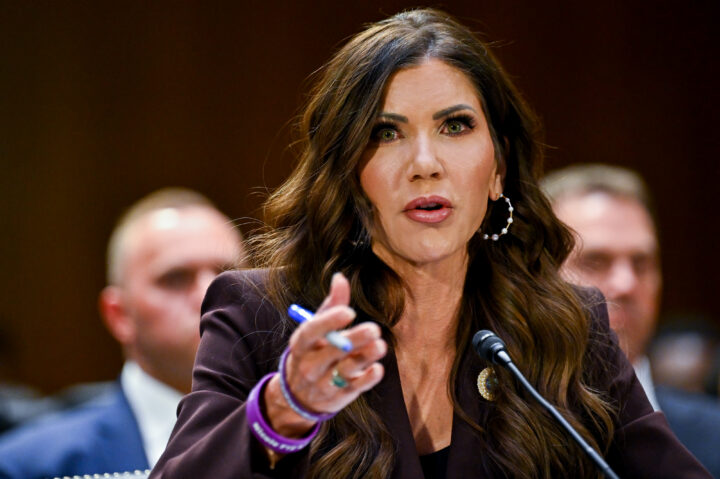
Graeme Sloan/Bloomberg via Getty Images
Homeland Security Secretary Kristi Noem speaks during a Senate Judiciary Committee hearing in Washington, DC, US, on Tuesday, March 3, 2026.
Facing concerns from Senate Republicans over her agency’s preparedness, Homeland Security Secretary Kristi Noem on Tuesday defended the department’s ability to respond against potential Iranian sleeper-cell threats as the Department of Homeland Security remains unfunded and under a partial shutdown amid an escalating conflict with Tehran.
“We work every single day with our intelligence agencies and law enforcement partners to make sure that we are investigating and finding any threats to the homeland here within our borders,” Noem said at an oversight hearing before the Senate Judiciary Committee. “Not only that — we are revetting some of the individuals and some of the programs that we may have concerns about, looking at social media, also going through those interviews that are necessary for some of our programs that the Biden administration abused and perverted under their time there as well.”
“We don’t necessarily know who all came into our country,” Noem added. “We know that we have many dangerous individuals that came in unvetted, and we are working every single day to find them and to make sure that we’re preventing the next attack and preventing the next crime perpetrated against the American people.”
The hearing unfolded as DHS has continued to operate without full appropriations since Feb. 14, after lawmakers failed to reach a funding deal, largely over disagreements about the Trump administration’s immigration strategy.
Congressional Republicans have warned that the DHS shutdown poses a national security risk and impacts the agency’s ability to conduct counterterrorism and domestic security operations against Iranian-backed threats at a crucial moment of conflict.
Those concerns intensified over the weekend after a shooting in Austin, Texas, left three people dead and 13 wounded. Authorities said a Senegalese man opened fire inside a bar while wearing a hoodie that read “property of Allah.” According to reports, investigators later found photos of Iranian leaders at his residence.
“I wonder how many people are like that here, waiting to pounce, and DHS doesn’t have appropriated funds,” said Sen. Lindsey Graham (R-SC) during the hearing, referring to the incident in Texas. “This is insane. There are more people like this.”
Asked by Graham whether the threat level from “radical Islamist terrorists” is increased amid the ongoing military confrontation with Tehran, Noem responded: “Yep.”
Congressional Democrats said Monday they have no plans to end the funding standoff, but that they are willing to fund DHS agencies that do not handle immigration enforcement. However, Republicans have largely opposed splitting up DHS funding.
“Can we not understand America is under siege, now likely to be attacked because radical Islam is under siege and they’re going to hit back and we’re sitting here looking at each other and not funding DHS?” said Graham.
The lawmakers said NSGP funds should not be used ‘to reinforce other policy priorities’ as new conditions may require organizations to cooperate with immigration enforcement and curb DEI programs

Kevin Carter/Getty Images
U.S. Capitol Building on January 18, 2025 in Washington, DC.
A bipartisan group of 82 House lawmakers wrote to Homeland Security Secretary Kristi Noem on Thursday urging her to roll back new conditions placed on applications for the Nonprofit Security Grant Program amid rising antisemitic attacks.
The bipartisan support for the letter is particularly notable given that, while Democrats have been raising concerns about the conditions for months, Republicans have, publicly, been comparatively quiet.
“We are writing to you today to express our desire to ensure that the NSGP is adequately funded and unimpeded by new requirements that are unrelated to the security of grant recipients and their communities,” the letter, led by Reps. Max Miller (R-OH), Brad Schneider (D-IL), Josh Gottheimer (D-NJ) and Michael McCaul (R-TX), reads. “Insufficient funding or unnecessary obstacles to obtaining grants could undermine the right of every religious community to freely and peacefully worship and congregate without fear.”
The letter states that new conditions issued by DHS in April 2025 “create new compliance requirements for recipients that will divert limited funds and restrict the religious conscience of synagogues, schools, and other institutions pivotal to our communities.”
The new conditions may compel religious institutions to cooperate with immigration enforcement activities and eliminate diversity, equity and inclusion programs.
“We encourage DHS to work to make compliance with NSGP requirements as simple and streamlined as possible. We also request that DHS ensures NSGP remains a program designed to protect the security of houses of worship, not to reinforce other policy priorities,” the lawmakers wrote. “In this time of rising antisemitic terror attacks and violence against diverse faith-based institutions, we believe it is crucial that NSGP remains a critical resource for all who seek to worship in safety and free from partisan politicization.”
They called on Noem to issue new guidance that “waives any terms and conditions that do not directly relate to the grant’s purpose, which is to help qualified institutions improve their security against increasing threats.”
The lawmakers emphasized the clear need for and lifesaving impact of NSGP funds in a time of increased hate-motivated violence. They also thanked Noem for her “ongoing support” for the program.
DHS has not yet awarded grants from the 2025 grant cycle, and lawmakers have accused the administration of withholding critical information about which institutions have received funding under separate grant rounds. Democrats have alleged the department is mismanaging the program.
Funding for the grants in 2026 — thought to be finalized just weeks ago — was again thrown into question last week when lawmakers agreed to reopen negotiations over the Department of Homeland Security funding package for the year following the deadly shootings by immigration agents of two U.S. citizens in Minneapolis.
“The Nonprofit Security Grant Program is one of the most vital programs protecting the Jewish community. We continue to encourage every Jewish institution with heightened security needs to apply for these funds,” Jewish Federations of North America CEO Eric Fingerhut said. “We have also heard from our community that the current terms and conditions have had the unintended effect of deterring some organizations from applying, which is why we believe they should be updated appropriately.”
“At a time of rising violence and hatred targeting houses of worship, NSGP is an essential lifeline for synagogues and other faith-based institutions seeking to protect their congregants,” said Lauren Wolman, ADL’s senior director of government relations and strategy. “We are grateful for the bipartisan effort to ensure DHS requirements remain clear, consistent, and focused on what matters most — helping at-risk nonprofits protect themselves from threats. Organizations must be able to access these resources quickly, with confidence, and without unnecessary delays.”
“Jewish and other communities facing violent threats deserve to know that the government is prioritizing their safety, not politicizing it,” Amy Spitalnick, the CEO of the Jewish Council for Public Affairs, said. “Yet the chaos created by these new terms and conditions has only created more vulnerability for communities, who are worried that they’ll be forced to choose between their core religious beliefs and their basic security — a concern we’ve been raising for months.”
“We appreciate Reps. Miller and Gottheimer for helping lead this important bipartisan call to clarify that NSGP should not be used for anything other than the security of our communities,” Spitalnick continued.
The lawmakers urged the DHS secretary to wave any terms ‘that do not directly relate to the grant’s purpose,’ potentially referencing immigration and anti-DEI conditions imposed on the program

Anna Moneymaker/Getty Images
Department of Homeland Security Secretary Kristi Noem speaks during a TV interview with Fox News outside of the White House on March 10, 2025 in Washington, DC.
The members of the Congressional Jewish Caucus — every Jewish House Democrat — wrote to Secretary of Homeland Security Kristi Noem on Wednesday urging her to rescind new conditions — presumably related to immigration enforcement and diversity programs — instituted earlier this year on recipients of Nonprofit Security Grant Program funding.
“We are writing to you today to express our strong desire to ensure that the NSGP is adequately funded and unimpeded by new requirements that are unrelated to the security of grant recipients and their communities,” the letter reads. “Insufficient funding or unnecessary obstacles to obtaining grants could undermine the right of every religious community to freely and peacefully worship and congregate without fear.”
The lawmakers charge that new conditions for the grant program promulgated in April “create onerous new compliance requirements for recipients that will divert limited funds and restrict the religious conscience of synagogues, schools, and other institutions pivotal to our community,” and call on Noem to issue new guidance waiving any terms “that do not directly relate to the grant’s purpose, which is to help qualified institutions improve their security against increasing threats.”
The letter does not directly spell out which conditions the lawmakers are addressing, but congressional Democrats and some in the Jewish community have previously raised concerns about new language in some grant materials indicating that grants may be contingent on cooperation with federal immigration enforcement and eliminating Diversity, Equity and Inclusion programs.
“[W]e reject any efforts to force Jewish and other houses of worship and institutions to choose between vital security funding and expression of their core religious freedoms, as well as their faith teachings and values,” the lawmakers wrote. “In this time of increased hate crimes against minorities, and in particular rising antisemitism, we believe it is crucial that NSGP remains a critical resource accessible to all communities in need and free from partisan politicization.”
The lawmakers also emphasized that members of Congress on both sides of the aisle have supported a “streamlined, effective program with minimal red tape and compliance requirements.”
The letter was signed by Reps. Jerry Nadler (D-NY) and Brad Schneider (D-IL), the co-chairs of the Jewish caucus, and Reps. Debbie Wasserman Schultz (D-FL), Becca Balint (D-VT), Dan Goldman (D-NY), Seth Magaziner (D-RI), Josh Gottheimer (D-NJ), Jamie Raskin (D-MD), Steve Cohen (D-TN), Suzanne Bonamici (D-OR), Lois Frankel (D-FL), Jake Auchincloss (D-MA), Mike Levin (D-CA), Kim Schrier (D-WA), Laura Friedman (D-CA), Sara Jacobs (D-CA), Jan Schakowsky (D-IL), Greg Landsman (D-OH) and Jared Moskowitz (D-FL).
“The Nonprofit Security Grant Program has been a lifeline as we face rising antisemitism, hate, and extremism — but these politically-motivated grant requirements threaten to force our communities to choose between their safety and their core religious values,” Jewish Council for Public Affairs CEO Amy Spitalnick said in a statement about the letter, which specifically referenced the immigration and DEI language. “The fact is that the NSGP is simply too important to be politicized to advance the administration’s agenda..”
JCPA has previously urged the administration directly to repeal the conditions.
A coalition of major Jewish communal and security organizations, including the Jewish Federations of North America, Conference of Presidents of Major American Jewish Organizations, Anti-Defamation League, Secure Community Network, Community Security Initiative and Community Security Service issued a joint statement in September urging institutions to apply for the grants in spite of any concerns that they may have about the new criteria.
The Connecticut senator said he was ‘struck by the severely heightened anxiety’ among local leaders about threats to places of worship

Jemal Countess/Getty Images for Fair Share America
Sen. Richard Blumenthal speaks at a rally at the Capitol on April 10, 2025 in Washington, DC.
Sen. Richard Blumenthal (D-CT) wrote to Secretary of Homeland Security Kristi Noem on Tuesday pushing for additional information about Nonprofit Security Grant Program allocations, as well as criticizing the funding allocation proposed last week by Republicans on the Senate Appropriations Committee.
“As I travel around Connecticut and hear from community leaders here and around the country, I am struck by the severely heightened anxiety and apprehension about physical threats to places of worship and community centers involving hate-based violence,” Blumenthal said. “One of the most important tools at our disposal to combat such hate and protect religious institutions and minority communities is the Federal Emergency Management Agency’s (FEMA) Nonprofit Security Grant Program (NSGP).”
Blumenthal said it is “critical for Congress to have fulsome data” about the program as it works to finalize 2026 government funding, and requested data on grant applications and acceptances, the reasons why FEMA has provided less funding than requested to some institutions and the resources FEMA provided to unsuccessful applicants for each year from 2023 to 2025.
He asked Noem to submit the data by Jan. 6, 2026.
Blumenthal also said he’s “disappointed” by the proposed funding level of $330 million for the program in 2026 offered by Senate Republicans, which falls “far short of my request and the program’s clear need, with reports indicating recipients requested approximately $1 billion from FEMA in 2024 alone.”
A source familiar with the legislation noted to Jewish Insider the Senate bill includes a 20 percent increase over its 2025 funding level, a greater increase than provided for other grant programs in the bill that generally saw increases of 11 percent to 15 percent.
The explanatory report accompanying the Senate GOP bill also includes language requesting more specific data from FEMA about past grant applications and acceptances.
The lawmakers wrote to Homeland Security Secretary Kristi Noem requesting updates on efforts to streamline and improve the process for Nonprofit Security Grant Program applicants
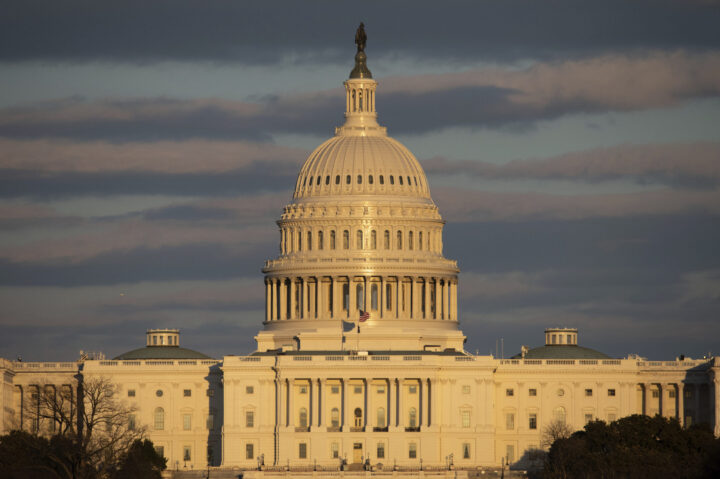
Graeme Sloan/Sipa via AP
The U.S. Capitol Building at sunset in Washington, D.C., on Saturday, March 6, 2021.
A group of Democrats from Colorado’s congressional delegation wrote to Secretary of Homeland Security Kristi Noem raising questions about the implementation and execution of the Nonprofit Security Grant Program.
“In light of the recent surge in anti-Semitic, Islamophobic, and other violent hate-based incidents in the United States, the importance of this program cannot be overstated,” the letter reads. “We urge DHS and FEMA to do more to ensure NSGP allows nonprofits and religious organizations to better protect the people they serve. All Americans deserve to visit their places of worship, schools, and community centers freely and without fear.”
The letter specifically focuses on gaps in executing the Nonprofit Security Grant Program Improvement Act, passed in 2022, which directed the Federal Emergency Management Agency to establish a dedicated office to administer the NSGP and provide expanded assistance to potential applicants.
The letter notes that there has been no announcement that such an office has been established, and requests information about whether such action has taken place and, if so, “to what extent it is appropriately staffed to carry out the duties outlined.”
The letter also raises concerns about the “lack of standardization of application deadlines” among the various state agencies that manage applications from individual nonprofit groups at the state level, another aim of the Improvement Act.
“Implementing a standard deadline for all [state administrative agencies] and a set list of required documents would make the process significantly more efficient and less confusing for the organizations applying,” the letter reads. “In addition, we believe there should be increased transparency between FEMA and SAAs. FEMA should provide uniform guidance and feedback regarding both successful and unsuccessful applications. This increased communication would allow unsuccessful organizations to improve their applications.”
Though the letter does not directly address the issue, other lawmakers have raised concerns about the delayed opening and short application timeline for the NSGP this year, and accused the Department of Homeland Security of a range of issues in its handling of the grant program.
The letter also requests that FEMA change its policies to allow institutions to pay permanent security staff with the grants they receive, something they are unable to do under current guidelines; currently, institutions can only use grant funding to hire security contractors.
“While this has been helpful, at present, organizations cannot use funds from this program for permanent salaried employees or personnel expenses,” the lawmakers wrote. “This means that non-profits are reliant on contracting outside security vendors, which can be unpredictable and hard to hire when needed.”
The letter was led by Sen. Michael Bennet (D-CO) and co-signed by Sen. John Hickenlooper (D-CO) and Reps. Joe Neguse (D-CO), Diana DeGette (D-CO), Brittany Pettersen (D-CO) and Jason Crow (D-CO).
The lawmakers said that, while the policy was reversed, ‘this kind of reversal … raises urgent questions about how and why this policy was allowed to advance’

Andrew Harnik/Getty Images
Rep.-elect Laura Friedman (D-CA) arrives along with other congressional freshmen of the 119th Congress for a group photograph on the steps of the House of Representatives at the U.S. Capitol Building in November 2024. Friedman led the letter to Homeland Security Secretary Kristi Noem on the swastika policy.
The 21 members of the House Jewish Caucus — every Jewish Democrat in the chamber — wrote to Homeland Security Secretary Kristi Noem to express “extreme alarm and concern” about recent reporting that the Coast Guard would no longer classify the swastika as a hate symbol, and demanded answers about the policy.
Amid backlash, the policy was walked back, according to the Washington Post, and the swastika will remain a prohibited hate symbol rather than be classified as “potentially divisive.”
“While we are pleased that the Coast Guard quickly reversed course and reaffirmed that these are hate symbols, we remain deeply troubled that such a change was ever considered in the first place,” the lawmakers, led by Rep. Laura Friedman (D-CA), said. “This kind of reversal, only made after media attention and public outrage, raises urgent questions about how and why this policy was allowed to advance.”
They requested the administration provide, by Nov. 26, an explanation of how the policy was initiated including who authorized, discussed and approved it from DHS, the White House and the Pentagon.
The lawmakers said that “lowering America’s moral standards” will hurt both service members and recruiting efforts, as well as “sends a dangerous and unmistakable message that this administration is willing to tolerate, or worse, excuse, the display of symbols rooted in hate.”
The Jewish Caucus members said that the change and its intent in the leaked policy memo was clear, pushing back on claims from the administration that reporting on the policy had been misleading or inaccurate.
“Your department made an intentional change to downgrade these symbols from being classified as hate symbols to merely ‘potentially divisive,’” the letter reads.
The meeting was one of Noem’s highest-level sit-downs with Jewish leaders since taking office
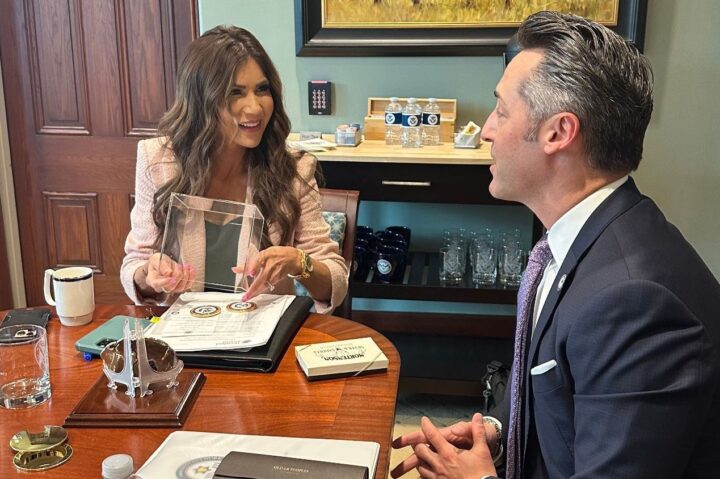
Courtesy Secure Community Network
Michael Masters, the CEO of the Secure Community Network, meets with Secretary of Homeland Security Kristi Noem, July 2025.
Michael Masters, the CEO of the Secure Community Network, sat down last week with Secretary of Homeland Security Kristi Noem amid a push from Jewish community groups for additional security resources to address rising levels of antisemitism.
The meeting was among the most high-level sit-downs between Noem and Jewish communal leaders since she took office.
“The secretary is very, very clear in her understanding and commitment to addressing the threat environment, particularly as it pertains to the faith-based community and the Jewish community and deeply understands the issues and concerns facing the community … and the scope of the department in being able to do that,” Masters told Jewish Insider in an interview on Wednesday.
SCN supported Noem during her confirmation process, and Masters said that she “evidenced a clear understanding and appreciation for the importance of this issue,” and called their sit-down “an encouraging sign.”
He also praised the work she’d done in her prior role, as governor of South Dakota, to protect the state’s Jewish community and understand its needs.
Masters said he and Noem discussed the threats facing the Jewish and other faith-based communities and the ways that SCN has worked with DHS in the past.
“So many of these threats are crossing over different faith based communities and historically, the department has been a convener and coordinator and supporter of efforts of the faith-based community to come together to address those as a whole,” Masters said. “And she firmly embraces that, I think, as a public official and as a person.”
The Department of Homeland Security did not respond to a request for comment.
Masters said that leaders across the federal government, including at the FBI, DHS, Department of Justice and the White House, understand that, “you cannot disassociate the safety and security of the Jewish community from the safety and security of the broader faith-based community, or from the domestic, homeland and national security of the United States.”
One priority for Masters in the meeting, he said, was pushing for the release of the application for 2025 Nonprofit Security Grant Program Funding, which opened on Monday.
“That was the focal point, and has been the focal point for many of our conversations,” Masters said, adding that he was “very encouraged” to see the applications open following his meeting and a push from various other Jewish community stakeholders and lawmakers.
“There’s going to be a bunch of follow-up related to the condensed time frame,” he continued, “and then the remainder of the supplemental. We will be able to turn our attention to that once we get through the current push of getting people’s applications in for this year’s awards.”
Organizations applied last year for a tranche of more than $100 million in NSGP funds provided through last year’s national security supplemental funding bill that has yet to be awarded or released.
Another issue Masters said he’d spoken about with Noem was the plan to cut the majority of the DHS’s Intelligence and Analysis (I&A) division’s staff; Masters wrote to Noem directly earlier this month to offer recommended reforms and overhauls for that office.
“We have worked with I&A since its creation,” Masters said. “There are significant efficiencies to be found [but] I&A is the only statutorily authorized entity that has a responsibility and a mission set related to state, local, tribal and territorial law enforcement and private nonprofit sector partners. It needs to do a much better job of servicing those stakeholders and there are dedicated men and women in I&A who have worked to do that.”
He said that Noem has already been working toward some of the same goals he outlined, including sending DHS agents out of headquarters in Washington and into the field to work on critical issues on the ground.
“Many of us who served in law enforcement and the associations that are currently dealing with I&A — and certainly SCN — we support this effort, but it will be a work in progress for some time,” he said, explaining that the office’s mission and mandate has shifted between and during various administrations.
“All of us are committed, from law enforcement and those of us who deal in the security space, to working to support the effort to make sure that I&A can be as effective as it can be, that it is fit for its mission, it’s sized for its mission and that it’s structured in a way that allows it to be effective,” Masters continued.
Masters, along with Anti-Defamation League CEO Jonathan Greenblatt, Jewish Council for Public Affairs CEO Amy Spitalnick and national law enforcement leaders, also attended a private roundtable with members of the House Homeland Security Committee’s Counterterrorism and Intelligence Subcommittee last week.
“For the fourth consecutive year, antisemitic violence and acts of terror have risen in all 50 states. This is not a localized issue—it’s a national crisis,” Rep. August Pfluger (R-TX) said in a statement. “Last week’s roundtable provided an important opportunity to hear directly from law enforcement officials and Jewish community leaders about this alarming surge.”
He said the participants made clear the need for “stronger interagency coordination, enhanced intelligence sharing, targeted training, and robust enforcement.”
He vowed to work with colleagues to take action and address antisemitism.
“Silence in the face of antisemitism is complicity. Hatred and bigotry have no place in America, and every person deserves to live without fear,” he said.
Masters said that the Jewish and law enforcement leaders were “all aligned in the importance of addressing the threat environment facing the Jewish community, in the importance of addressing hate crimes broadly, and in the necessity of strong, consistent, predictable funding for law enforcement.”
He said they’d discussed issues including I&A and the need for strong collaboration and communication to address threats to the Jewish community and the country as a whole.
“I deeply appreciated the opportunity to meet with the committee on the rise in antisemitic violence and the concrete steps necessary to protect our communities,” Spitalnick told JI, adding that she had advocated for NSGP funding to be released.
“There is still significant work to be done to ensure this critical security program is properly funded and the dollars are moved quickly to protect our communities,” she continued. “We also made clear that the crisis of antisemitism and broader extremism requires a whole-of-government and whole-of-society solution — aimed at building resiliency to hate and violence in the first place. Yet too many programs — such as hate crime prevention grants — have been frozen, cut or insufficiently funded at levels that do not match the dire need.”
Israel’s controversial national security minister, Itamar Ben-Gvir, also met with Noem and says she invited him to visit the U.S.
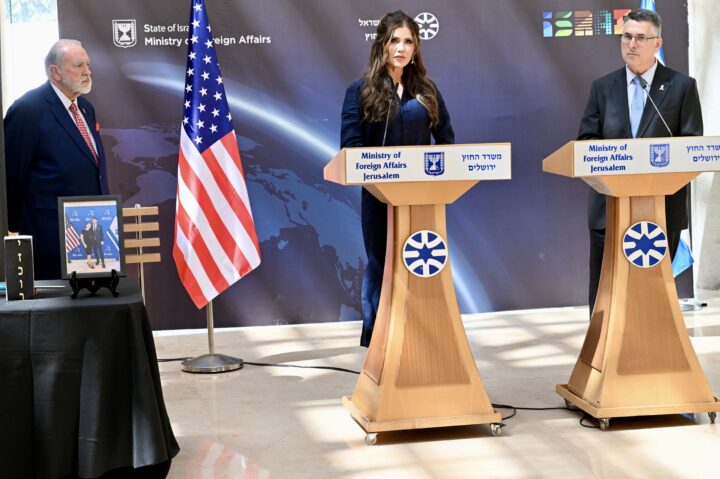
David Azagury, U.S. Embassy Jerusalem
U.S. Secretary of Homeland Security Kristi Noem pays her condolences at a memory ceremony for slain Israeli Embassy staffers, Yaron Lischinsky and Sarah Milgrm who were killed in a terror attack in Washington D.C., on May 21, 2025. The Ceremony took place at the Israeli Ministry of Foreign Affairs headquarters on May 26, 2025.
The murder of Yaron Lischinsky and Sarah Lynn Milgrim is a reminder “of the dreams that terrorism seeks to destroy every single day,” Homeland Security Secretary Kristi Noem said on Monday, standing alongside Israeli Foreign Minister Gideon Sa’ar at a memorial event held in Jerusalem for the young Israeli Embassy staffers who were killed last week in a terror attack outside the Capital Jewish Museum in Washington.
“Today, we stand together with profound grief, and our hearts are heavy with the loss of these two radiant souls that we will no longer have with us,” Noem said. “In this moment of sorrow, we also ask that you would gather with us to honor their light and the unbreakable spirit of the Israeli and the American people,” Noem continued.
Lischinsky, Noem said, “was known for his infectious smile and his unwavering commitment to peace and the vision of the Abraham Accords.”
“Friends and family shared of Sarah that she glowed with warmth and compassion, dedicating her life to fostering peace and understanding,” Noem said, mentioning Milgrim’s work for the Israeli peace-building nonprofit Tech2Peace and her career in public diplomacy. “Their love for each other, a bond that was so strong that Yaron had already chosen a ring to propose to Sarah here in Jerusalem reminds us of the dreams that terrorism seeks to destroy every single day — but we will not let hatred have the final word.”
“Sarah and Yaron’s lives are a testament to the power of love and service,” Noem said. “They stood for something that was much larger than themselves, and their memory calls us to do the same. They have lived a life of significance that has forever changed us. Together they embody the very best of Israel: courageous, hopeful and dedicated to peace.”
Sa’ar thanked Noem for her visit to Israel, which he said, “shows solidarity and demonstrates the close relations between our people.” He also thanked the U.S. government for the investigation into the murder of Lischinsky and Milgrim.
U.S. Ambassador to Israel Mike Huckabee also spoke at the event, held at the Israeli Ministry of Foreign Affairs headquarters, and said that the memories of Lischinsky and Milgrim “will not be taken from any of us, and we should always be mindful that there are people who pay an incredible price to simply be Israelis and Jews.”
“And it’s why the United States must always stand, and it’s why it’s so very important that we welcome the secretary here to the State of Israel as she comes to offer in person an extraordinary sense — not just of condolences — but also a sense of confidence that the relationship between our nations will never waver, or will it ever falter.”
The remarks by both the American and Israeli officials emphasizing the importance of the strong bonds between the U.S. and Israel come amid recent reports about faltering ties, especially during President Donald Trump’s recent visit to the Middle East, which excluded Israel, and amid the Trump administration’s ongoing nuclear negotiations with Iran.
Noem arrived in Israel on Sunday evening when Jerusalem Day began, marking the city’s reunification in the 1967 Six-Day War, which made her the first U.S. cabinet secretary to mark that day, according to Huckabee. She prayed at the Western Wall and put a note between its cracks.
Noem later met with Israeli Prime Minister Benjamin Netanyahu, in which she “expressed unqualified support for the prime minister and the State of Israel,” a Prime Minister’s Office readout stated.
She also praised the border fence between Israel and Egypt, the PMO stated. The fence, which was completed in 2013, was built, in part, to block African migrants from crossing into Israel from the Sinai peninsula.
Noem also met last night with her counterpart, Itamar Ben-Gvir, in a meeting which was also attended by Netanyahu. According to a statement from Ben-Gvir’s office, the minister thanked Noem for American support for Israel and for Trump’s relocation plan for Gaza. The statement also noted that Noem invited Ben-Gvir for another visit to the U.S. During his last visit, in April, the far-right minister did not meet with Noem, who was in Texas at the time, nor anyone else in the Trump administration.
JI’s Lahav Harkov contributed to this report.
Killing of embassy workers ‘exemplifies the challenges facing people representing the State of Israel abroad,’ former ambassador Herzog tells JI

Kevin Dietsch/Getty Images
Mourners lights candles during a vigil outside of the White House on May 22, 2025 in Washington, DC for the victims of the Capital Jewish Museum shooting on Wednesday evening, Yaron Lischinsky and Sarah Lynn Milgrim.
Yaron Lischinsky was laid to rest on Sunday in Beit Zayit, a moshav outside of Jerusalem, after he was killed alongside his partner, Sarah Lynn Milgrim, by a shooter who shouted “Free Palestine” at the Capital Jewish Museum in Washington on Wednesday.
Hundreds attended the funeral, according to sources present. The funeral was closed to the media at the family’s request. Among those who attended were Israeli Foreign Minister Gideon Sa’ar, Deputy Foreign Minister Sharren Haskel and Lischinsky’s direct superior at the embassy, Minister-Counselor for Middle East Affairs Noa Ginosar, who accompanied his body to Israel.
Former Israeli Ambassador to the U.S. Michael Herzog spoke at the funeral and told Jewish Insider that Lischinsky, a researcher in the embassy’s Middle East Affairs department, was someone “any ambassador would love to have serving in his embassy.”
“He was young, energetic and very talented,” Herzog, who finished his tenure as ambassador in January, said. “He had intellectual curiosity and a lot of knowledge. He was very devoted to his diplomatic work. He was creative and he was really a benefit to the embassy.”
Lischinsky considered taking the Israeli Foreign Ministry’s cadets course, Herzog recalled, which he, along with other senior embassy staff encouraged him to do, believing he had the aptitude to be a successful diplomat.
“We could rely on him, especially during the war,” the former ambassador added.
Herzog said he told Lischinsky’s parents that “unfortunately, tragically, they cannot bring Yaron back, but they should be proud of what he did, what he achieved and the mark he left.”
The former ambassador also spoke about Milgrim, whose funeral is set to be held on Tuesday in Kansas City, near where her family lives. Milgrim’s work at the Israeli Embassy focused on environmental issues and outreach to progressive groups.
“Like [Lischinsky], she was beautiful on the inside and outside,” Herzog said. “It was very painful to see such young, beautiful flowers destroyed at such a young age.”
Herzog also said that Lischinsky and Milgrim’s murder “exemplifies the challenges facing people representing the state of Israel abroad.”
“They are at the forefront of the diplomatic efforts of the State of Israel, but also face a security challenge. Anybody who served in Washington can attest to the eruption of the crazy threat level after Oct. 7 [2023] and the incitement and brainwashing against Jewish people and the Jewish state, and they were victims of that,” he said.
“We have to continue the battle for the very legitimacy of Israel,” Herzog added. “They can light our path in that direction.”
Homeland Security Secretary Kristi Noem landed in Israel on Sunday evening, and will participate in a memorial tree-planting ceremony for Lischinsky and Milgrim at the Foreign Ministry in Jerusalem on Monday morning.
Over 150 Israeli students at Harvard will be impacted by the move; they must transfer schools or lose their visas

Scott Eisen/Getty Images
An entrance gate on Harvard Yard at the Harvard University campus on June 29, 2023 in Cambridge, Massachusetts.
The Trump administration on Thursday stripped Harvard University of its ability to enroll foreign students, citing Harvard’s collaboration with the Chinese Communist Party, in what the Department of Homeland Security described as an act of accountability for the university “fostering violence, antisemitism and pro-terrorist conduct from students on its campus.”
The move is an escalation in President Donald Trump’s battle with Harvard, just one front in his war with elite higher education institutions. He has already revoked billions of dollars in federal funding from Harvard, as well as several other universities. Trump has also sought the deportation of hundreds of foreign students on college campuses over their alleged support for terrorism and antisemitism.
But this is the first instance of the White House completely cutting off a university’s ability to admit international students. Harvard currently hosts more than 10,000 international students, according to university data. 160 of them are from Israel. Current students must transfer schools or lose their visa.
“It is a privilege, not a right, for universities to enroll foreign students and benefit from their higher tuition payments to help pad their multibillion-dollar endowments. Harvard had plenty of opportunity to do the right thing. It refused,” Homeland Security Secretary Kristi Noem said in a statement.
Last month, Noem asked Harvard to provide data on the disciplinary records of foreign students on campus and their record of participating in protests. Noem said the information shared by Harvard in response was “insufficient.”
Harvard Hillel’s executive director, Rabbi Jason Rubenstein, expressed concern about the impact on Israeli students at Harvard.
“The current, escalating federal assault against Harvard — shuttering apolitical, life-saving research; threatening the university’s tax-exempt status; and revoking all student visas, including those of Israeli students who are proud veterans of the Israel Defense Forces and forceful advocates for Israel on campus — is neither focused nor measured, and stands to substantially harm the very Jewish students and scholars it purports to protect,” Rubenstein told Jewish Insider.
A university spokesperson did not immediately respond to a request for comment.
Barak Sella, an Israeli educator and researcher who earned a master’s degree from the Harvard Kennedy School in 2024, said the action will “be detrimental for the entire higher education system.”
“Never did any Jewish [organization] ask to ban the ability to accept foreign students, especially when a lot of the antisemitism is perpetrated by American citizens — aka the shooting last night,” Sella told JI, referring to the killing of two Israeli Embassy officials outside the Capital Jewish Museum in Washington. The alleged perpetrator is an American citizen.
Harvard is likely to take legal action in response, according to The Crimson.
Jewish Insider reporter Haley Cohen contributed to this report.
Noem said her department has ‘seen the value in the program’ and is ‘willing to discuss’ its funding with senators

Chip Somodevilla/Getty Images
Rep. Andy Kim (D-NJ) speaks on stage during the third day of the Democratic National Convention at the United Center on August 21, 2024 in Chicago, Illinois.
Sen. Andy Kim (D-NJ) pressed Homeland Security Secretary Kristi Noem for clarification on her department’s plans regarding the Nonprofit Security Grant Program — the funding of which is a key priority for the Jewish community — as the Trump administration considers cuts to the Federal Emergency Management Agency, which manages the program.
Kim and Noem engaged on the issue while the latter was testifying before the Senate Homeland Security and Governmental Affairs Committee on Tuesday. Kim, the top Democrat on the HSGAC subcommittee that oversees FEMA, urged Noem to ensure NSGP funding is not reduced or eliminated outright as part of President Donald Trump’s push to abolish FEMA, citing the program’s success in securing New Jersey synagogues amid rising antisemitism.
“I think that there’s very strong bipartisanship here in Congress, especially the Senate, to protect the Nonprofit Security Grant Program. It is literally the best tool that people in New Jersey are telling me is needed to be able to counter antisemitism. I can’t tell you the number of synagogues and temples that are lined up to try to get this type of funding. In fact, you know, given the rise of antisemitism that we have in our country right now, we should be surging resources, not cutting,” Kim said.
Noem replied that, “We definitely have seen the value in the program and are willing to discuss this with” senators interested in protecting NSGP funds.
“I want to engage with you on this further because when we’re hearing this language about abolishing FEMA. One of the elements that people have raised the most concerns about is what does that mean for the Nonprofit Security Grant Program. I really do urge you to work with me and this committee to have a declarative stance on that so people, especially those concerned about antisemitism, can have clarity on what comes next,” Kim then said.
FEMA began reimbursing NSGP recipients earlier this month following a more than two-month funding freeze at the agency, which caused an extended pause on the review of applications and the reimbursement of nonprofits already approved. The Trump administration faced public and private pressure to resume that funding during that time from a bipartisan chorus of lawmakers and Jewish communal leaders.
Please log in if you already have a subscription, or subscribe to access the latest updates.
 Continue with Google
 Continue with Apple