


































In testimony before the City Council’s antisemitism task force, an NYPD official said Mamdani played no role in a controversial change in reporting data from hate crimes
Spencer Platt/Getty Images
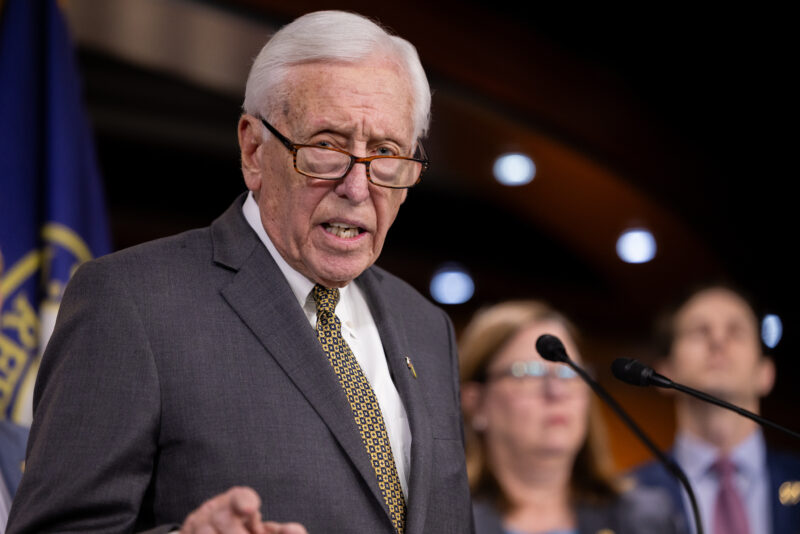
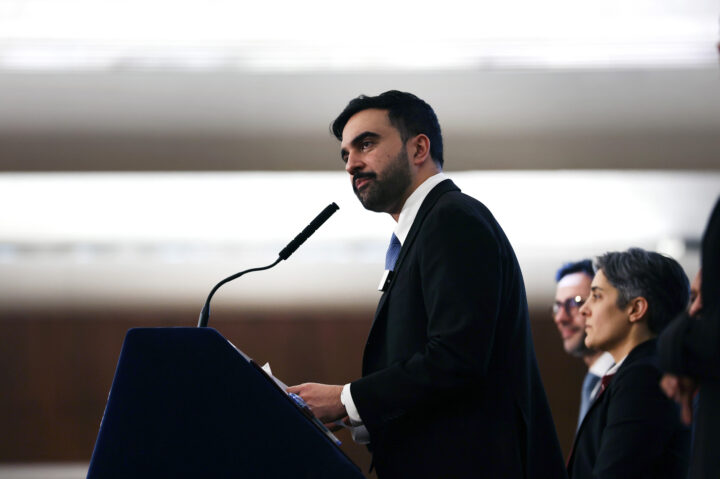
New York City Mayor Zohran Mamdani speaks at a "Rental Ripoff" hearing at Fordham University in the Bronx borough of New York on March 11, 2026, in New York City.


 Add JewishInsider on Google
New York City Mayor Zohran Mamdani’s antisemitism czar said on Wednesday that his administration won’t replace the International Holocaust Remembrance Alliance’s working definition of antisemitism he wiped off the books his first day on the job.
Speaking before the City Council’s Task Force Antisemitism alongside officials from the NYPD, the executive director of the Mayor’s Office to Combat Antisemitism, Phylisa Wisdom, said that city agencies do not and will not work off any official definition of antisemitism. Mamdani’s predecessor, former Mayor Eric Adams, adopted the IHRA definition and established the office Wisdom leads amid a dramatic uptick in hate crimes targeting Jewish New Yorkers in the wake of the Oct. 7 attacks and subsequent Israeli military campaign in Gaza.
“Across city government there is not a definition codified for any form of hate at all,” Wisdom told Republican Councilmember Inna Vernikov, one of the task force’s two co-chairs. “We don’t believe that there needs to be a codified definition at all.”
A total of 37 states, as well cities from D.C. to Los Angeles, have adopted the IHRA definition. But critics allege its assertion that certain antagonism toward the Jewish state can be classified as antisemitism serves to stifle criticism of Israel.
Instead of a formal, written classification, Wisdom, who previously led the progressive Zionist group New York Jewish Agenda, touted “an understanding that we share.”
“We understand broadly, in the universe of civil rights and combating antisemitism, it to be prejudice, violence and discrimination against Jews because they are Jewish,” she explained. “We understand usually what that looks like.”
Wisdom acknowledged the question of how the vast city bureaucracy recognizes antisemitism was “a hot one in the community.” When Vernikov pressed Wisdom on how the administration could address and rectify antisemitism without defining it, Wisdom acknowledged the difficulty, but fell back on equating it with other undefined forms of bigoted behavior.
She also alluded to previous testimony by NYPD Deputy Commissioner for Legal Matters Michael Gerber that the police department operates off a state-level hate crime statute, which does not feature definitions of prejudice, but only considers whether a victim was targeted because of their real or perceived identity.
“I think what you’re asking is a good question because it is hard,” Wisdom said. “In terms of bias and hate, it’s really sticky and extremely serious stuff, and it’s case by case.”
After the hearing, Wisdom avoided questioning from Jewish Insider about whether she considered it antisemitic to applaud the Oct. 7 attacks on Israel or the man behind them, late Hamas military leader Yahya Sinwar — as Mamdani’s wife and other personnel in his office have done.
In his testimony, Gerber said Mamdani and his team had no input on a data-reporting change that drew controversy after the city logged a 152% increase in hate offenses in January over the same month last year, driven by a spike in reported incidents targeting Jewish New Yorkers — then changed its reporting criteria for February. The move drew criticism from experts and transparency advocates.
But Gerber asserted the old methodology was deeply flawed, and that NYPD Commissioner Jessica Tisch, who was originally appointed by Adams, had only recently learned of it and ordered it changed.
“That data did not reflect confirmed hate crimes. It did not reflect reported hate crimes,” said Gerber. “It was numbers pulled from an informal tracker that had a mix of reported hate crimes that had not yet been classified by the [NYPD Hate Crimes] Task Force and confirmed hate crimes. These were hodgepodge numbers, resulting in clarity about nothing.”
He added that the decisions did not come “at the initiative or direction of anyone at City Hall” — a point he stressed under questioning.
“These were decisions by the NYPD. We made these decisions and we stand by them,” he told Vernikov. “These were not decisions made by anyone at City Hall.” The NYPD is formally part of Mamdani’s administration.
Gerber further asserted the mayor’s team was “notified” of the reporting change, but “not consulted.” He further highlighted a recent NYPD announcement that going forward, it would disclose to the public both reported and confirmed bias crime incidents, the favored approach of good government and civil rights supporters.
One of the students who led the effort was attacked by masked assailants on DePaul’s campus in 2024
Getty Images
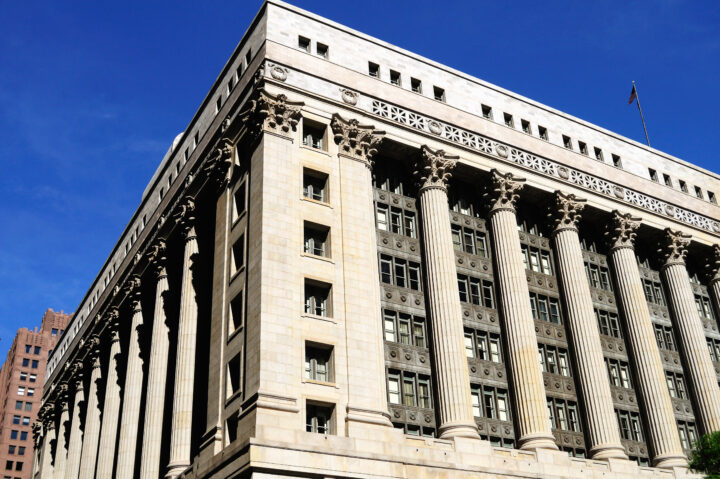
The City Hall
The Chicago City Council unanimously voted to adopt the International Holocaust Remembrance Alliance’s working definition of antisemitism into the city’s declaration of human rights this week, an effort spearheaded by two local university students with no prior political experience.
For Jake Rymer, a junior majoring in biological sciences at University of Chicago, and Michael Kaminsky, a senior studying criminology at DePaul, the push to pass the antisemitism ordinance was personal.
“I had only been on campus for two weeks when [the Oct. 7, 2023, terrorist attacks in Israel] happened and people I thought were my friends those first two weeks turned out not to be. They turned their backs on me when I needed their allyship,” Rymer told Jewish Insider. “I also started to see flaws in the city of Chicago and that there were things that needed to get changed that we could actually accomplish.”
Kaminsky, a vocal pro-Israel voice on campus, was attacked and injured by masked assailants on school property in 2024 in an alleged hate crime. He filed an ongoing lawsuit against DePaul, claiming the university failed to protect Jewish students.
“We were tired of being told by Jewish organizations to ‘suck it up and deal with it’ or that ‘help would come eventually,” said Rymer. “We realized that we as students — even though we don’t have legislative experience — have the ability to make meaningful change, so we decided to go ahead with it.”
The pair quickly learned the City of Chicago had never provided a clear definition of antisemitism in its municipal code. They garnered support from Alds. Raymond Lopez and Debra Silverstein last spring to begin drafting legislation to implement IHRA.
On Monday, Ordinance O2025-0019984 passed unanimously in committee and at the city council meeting. Because the ordinance is an updated version of one that already existed and it passed without objection, it becomes official upon publication — even though Democratic Mayor Brandon Johnson was not involved.
Section 6-10 of Chicago’s Municipal Code is now amended to include antisemitism as discrimination in the Chicago City Council’s declaration of general human rights. Antisemitism is defined by IHRA as a “certain perception of Jews, which may be expressed as hatred toward Jews.” Progressive critics of the definition argue that its Israel-related examples risk conflating antisemitism with legitimate political criticism while conservative critics claim that the definition is anti-Christian because one of its affiliated examples states that it’s antisemitic to accuse Jews of killing Jesus.
“Chicago has taken a clear and historic stand against hate by officially adopting the IHRA definition of antisemitism,” Silverstein, the city council’s only Jewish member, said in a statement. “At a time when antisemitic hate crimes are surging locally, this unanimous City Council action sends an unmistakable message that anti-Jewish hate has no place in Chicago.”
Chicago joins more than 1,200 entities worldwide, including 37 U.S. state governments and 98 city and county bodies that have adopted the definition.
Chicago’s adoption of IHRA was applauded by Alison Pure-Slovin, the Simon Wiesenthal Center’s director of social action and partnerships, Midwest/South. “Jewish communities today feel the familiar chill of rising hostility, and the old game of blurring the line between honest debate and open hatred is once again underway. Chicago’s action is not a gesture for the cameras. It is a statement that antisemitism will not be explained away, softened or disguised in polite language,” Pure-Slovin told JI.
Rymer expressed hope that “college campuses in the city of Chicago will follow the lead of Chicago aldermen and this could be applied in college communities to help define what antisemitism is and properly characterize it in case future incidents happen.”
He also encouraged students and community members in other cities to pick up on the “sense of momentum,” adding that he has “been in contact with other students to discuss plans to introduce this bill in other cities.”
In New York City, Mayor Zohran Mamdani has faced criticism from some Jewish leaders for repealing an executive order that implemented IHRA earlier this month. The revocation came as part of a blanket repeal of all of former Mayor Eric Adams’ executive orders following his September 2024 indictment on federal corruption charges.
“We want to set a standard for major cities in America that they can make initiatives like this happen,” said Rymer. “We can use the framework set here as support for any Jewish students interested in making a greater impact. We are very happy about the passing of this but it’s not the end of the work we’re doing. There’s a lot more change that can happen.”
Murphy and other Democrats were reportedly concerned that support for the legislation would fuel primary campaigns against incumbents

AP Photo/Eduardo Munoz Alvarez
New Jersey Gov. Phil Murphy speaks during a press conference to announce that George Helmy will take the U.S. Senate seat that will soon be vacated by Senator Bob Menendez, in Newark, New Jersey, Friday, Aug. 16, 2024.
A high-profile New Jersey bill adopting the International Holocaust Remembrance Alliance’s working definition of antisemitism is not expected to pass in the current New Jersey Assembly session, four sources familiar with the situation told Jewish Insider.
Two sources familiar with the legislation said that Gov. Phil Murphy opposed the legislation and was a key obstacle to its passage.
Assemblyman Gary Schaer, the Democratic lead sponsor of the legislation, told Politico on Thursday that he had been told by the assembly speaker that the legislation would not be on the docket for the assembly’s final session next week because it did not have “the necessary votes to get where we wanted to.”
“Leadership in the assembly, in the Senate and in the governor’s office have tried significantly to get it done, but they have not been able to get it done,” Schaer told JI. “My office worked closely with any number of agencies and organizations, but the effort was just — cannot get it done. Do I think the bill can pass at some point? The answer is yes, but it requires a political will which does not seem to be evident.”
The legislation was cosponsored by a significant majority of the assembly, but — assuming any Democrats not cosponsoring the bill would have voted against it — it would not have been able to pass with Democratic votes alone.
The bill would have instructed law enforcement to take the IHRA definition into account when determining if violations of state or federal anti-bias law have occurred or whether criminal acts were motivated by antisemitism, and to use it for training public officials and responding to antisemitic incidents.
The legislation, which has been a priority for Jewish state leaders, became a flashpoint among Democratic gubernatorial candidates and in Democratic politics last year. After much debate, it moved through committee in the state Assembly, but hasn’t received a full-chamber vote in either the Assembly or the state Senate. The legislature’s session ends on Monday, and Gov.-elect Mikie Sherrill will be sworn in the following week.
Two sources familiar with the legislation blamed Murphy, the outgoing governor, for its failure, alleging that he did not want to be forced to make a decision whether to sign it.
One source familiar with the situation emphasized that the legislation had the support to pass, but that Democratic leaders were reluctant to move the bill forward to a full vote — concerned that support for the bill would place some Democratic members in danger of progressive primary challenges in the future. Concerns about such primary challenges are already widespread, and leaders were concerned that the IHRA bill could give challengers additional ammunition against Democratic incumbents.
The legislation has been attacked by progressive Democrats as an attempt to silence free speech and criticism of Israel, despite provisions in the legislation protecting free speech and its narrow application in criminal matters.
The Murphy administration declined to comment on pending legislation, but emphasized that Murphy “unequivocally condemns all forms of violence and discrimination based on religious belief” and pointed to past statements and initiatives he has supported to combat rising antisemitism in the Garden State.
Rep. Josh Gottheimer (D-NJ) told Politico that Murphy would have signed the bill had it passed the legislature.
Another source familiar with the situation said that there had been significant finger-pointing between Murphy, Senate President Nicholas Scutari and Assembly Speaker Craig Coughlin, with each blaming the others for the legislation’s failure to pass. Scutari and Coughlin did not respond to requests for comment.
Assemblyman Mike Inganamort, the lead Republican sponsor of the legislation, told JI he’s “disappointed” the legislation has not made it into law.
“This has been going on for a long time now, preceding even my time in the legislature,” he said. “I think advocates are tired of getting jerked around. Frankly, what I’m hearing from them is they’re tired of the lip service … all we’re asking for is a simple up-or-down vote.”
He emphasized that the legislation is co-sponsored by approximately three-quarters of the Assembly but votes have repeatedly been postponed — “so does the majority rule or not?”
He said that he’s not involved in internal discussions among Democrats about the bill, but said, “the reality is, it’s highly likely that there is a very vocal fringe that is opposed to this legislation. And I sure hope they’re not the ones calling the shots.”
Inganamort said that he’ll work with his fellow sponsors to “fight again in the new term,” though he said that he’s not “terribly optimistic that we’re going to achieve more success in a new term under a new governor,” saying he had been “cautioned to re-read” Gov.-elect Mikie Sherrill’s “exact words” on the subject.
Gov.-elect Mikie Sherrill told JI in February 2025 that she “supported the IHRA definition in the U.S. House, and would support the current state Senate bill to combat the alarming rise of antisemitism in New Jersey.” Some Jewish leaders told JI that she made comments later in the campaign that included caveats about free speech concerns — which is protected in the existing legislation — but ultimately clarified and strengthened her position.
The repeal of former Mayor Eric Adams’ executive orders included walking back NYC’s adoption of the IHRA definition of antisemitism, which Conference of Presidents CEO William Daroff called ‘a troubling indicator’
Selcuk Acar/Anadolu via Getty Images
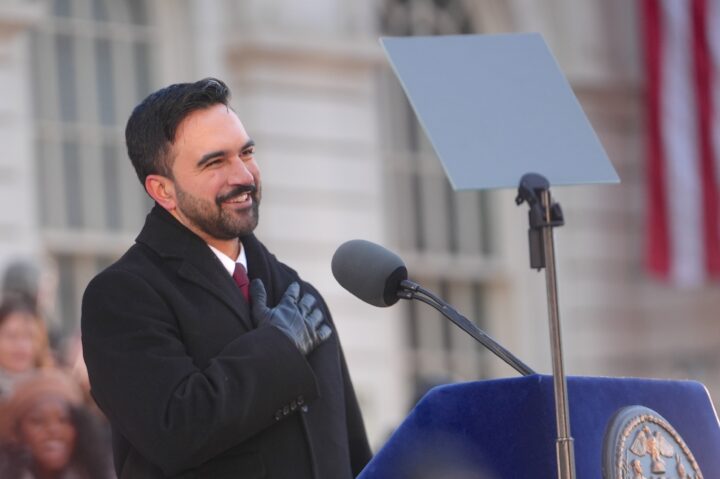
Mayor Zohran Mamdani at his inauguration ceremony at City Hall, Manhattan, New York City, United States on January 1, 2026.
Newly inaugurated New York City Mayor Zohran Mamdani is facing criticism for repealing executive orders issued by former Mayor Eric Adams aimed at tackling antisemitism, including implementing the International Holocaust Remembrance Alliance’s working definition of antisemitism and an anti-Boycott, Divestment and Sanctions order.
The revocation of those orders came as part of a blanket repeal of all of Adams’ executive orders following his September 2024 indictment on federal corruption charges, which Mamdani said “was a date that marked a moment when many New Yorkers decided politics held nothing for them.”
In a joint statement, the UJA-Federation of New York, Jewish Community Relations Council of New York, American Jewish Committee of New York, Anti-Defamation League of New York/New Jersey, Agudath Israel of America, the New York Board of Rabbis and the Orthodox Union said that the Jewish community “will be looking for clear and sustained leadership that demonstrates a serious commitment to confronting antisemitism and ensures that the powers of the mayor’s office are used to promote safety and unity, not to advance divisive efforts such as BDS.
“Singling Israel out for sanction is not the way to make Jewish New Yorkers feel included and safe, and will undermine any words to that effect,” the statement continued.
William Daroff, CEO of the Conference of Presidents of Major American Jewish Organizations, said that the repeal of the executive orders “is a troubling indicator of the direction in which [Mamdani] is leading the city, just one day at the helm.”
“Repealing [the IHRA definition] diminishes New York City’s ability to recognize and respond to antisemitism at a time when incidents continue to rise,” Daroff said in a statement. “New York City should lead with moral clarity and resolve in confronting antisemitism. This decision points in the opposite direction.”
The Anti-Defamation League of New York and New Jersey said it is “deeply troubled that on his first day in office Mayor Mamdani weakened protections to fight antisemitism by revoking executive orders adopting the IHRA Working Definition of Antisemitism and providing safeguards against Israel-related discrimination in city procurement and pension decision-making.”
“While the continuation of the Mayor’s Office to Combat Antisemitism (MOCA) is welcome and important, revoking these executive orders removes key tools for addressing antisemitism, including BDS-driven efforts that seek to demonize, delegitimize, and isolate the world’s only Jewish state,” the ADL continued.
Assistant Attorney General for Civil Rights Harmeet Dhillon said that the Department of Justice “will be extremely vigilant … as to ANY AND ALL violations of religious liberties in NYC. We will investigate, sue, and indict as needed.”
New York State Assemblymember Sam Berger, a Democrat, said, “I find it highly concerning that on day one, under the cover of a sweeping EO, @NYCMayor repealed the IHRA definition from NYC law. Removing how a majority of Jewish New Yorkers define hatred towards us doesn’t exactly build trust.”
The Israeli Foreign Ministry said on X that the repeal shows Mamdani’s “true face.”
“This isn’t leadership. It’s antisemitic gasoline on an open fire,” the statement continued.
Israeli Ambassador Ofir Akuns, the consul general of Israel in New York, called Mamdani’s moves “dangerous” and said they “pose an immediate threat to the safety of Jewish communities in New York City and could lead to an increase in violent antisemitic attacks throughout the city.”
Responding to a story about the executive order, Department of Justice senior counsel Leo Terrell said, “To Jewish Americans who voted for Mamdani! SHAME ON YOU!”
New York City Councilwoman Inna Vernikov, a Republican, called for federal action to protect Jewish institutions in response to the repeal of another Adams executive order placing additional restrictions on protest outside of religious institutions.
“We need to enforce federal law that’s already in place here because the pro-Hamas antisemites emboldened by [Mamdani] are coming,” Vernikov said on X, tagging Dhillon and Terrell.
Mamdani issued a new executive order largely mirroring Adams’ order on the same issue.
He also announced on Thursday that he would keep the Mayor’s Office to Combat Antisemitism, created by Adams, in operation, stating that he takes the issue “very seriously.”
Both of those moves were praised in the joint statement from the New York Jewish organizations.
His office, however, deleted multiple posts from the mayoral X account about a recent report on antisemitism in the city issued by that office under Adams, which also elicited criticism. Mamdani has not said what the office’s work going forward will entail or who will staff it.
Mark Goldfeder, the director of the National Jewish Advocacy Center, said on X that it is “[h]ard to overstate how disturbing it is that one of the first acts of the new @NYCMayor was to delete official tweets and EO’s addressing the protection of Jewish New Yorkers,” a sentiment echoed in a letter he sent to Mamdani.
Adams, who attended Mamdani’s inauguration, also repeatedly criticized the new mayor.
“[Mamdani] promised a New Era and unity today. This isn’t new. And it isn’t unity,” Adams said on X, adding later, “To my knowledge, neither [former New York mayors Michael] Bloomberg, [Bill] de Blasio, nor Adams scrubbed antisemitism tweets on day one. I’ve been clear: I will be vocal in defending our Jewish brothers and sisters, just as they stood up for African Americans during the civil rights era.”
The Antisemitism Awareness Act has been stalled in Congress despite its bipartisan support

Anna MoneymAaker/Getty Images/Tom Williams/CQ-Roll Call, Inc via Getty Images
Reps. Mike Lawler and Josh Gottheimer
Citing New York City Democratic mayoral nominee Zohran Mamdani’s stated plans to revoke the city’s use of the International Holocaust Remembrance Alliance’s working definition of antisemitism, Reps. Mike Lawler (R-NY) and Josh Gottheimer (D-NJ) called on Thursday for the House to pass the long-stalled Antisemitism Awareness Act.
The bill has seen no movement in the current congressional session in the House and faces significant hurdles in the Senate after a series of poison-pill amendments were added to the legislation. But Jewish groups are continuing to push for the bill’s passage, a top priority issue since Oct. 7, including in lobbying efforts this week.
“Zohran Mamdani’s reckless attempt to roll back New York City’s adoption of the International Holocaust Remembrance Alliance (IHRA) working definition of antisemitism is shameful, dangerous, and completely disgusting,” Lawler and Gottheimer said in a joint statement.
They went on to condemn as antisemitic the Boycott, Divestment and Sanctions movement, which Mamdani supports, “efforts to delegitimize Israel’s right to exist” and Mamdani’s refusal to “outright condemn the violent call to ‘globalize the intifada.’”
“Given the sharp spike in antisemitic violence, families across the Tri-State area should be alarmed. Leaders cannot equivocate when it comes to standing against antisemitism and the incitement of violence against Jews,” Lawler and Gottheimer said. “This is exactly why Congress must pass our bipartisan Antisemitism Awareness Act.”
The two vowed to “continue working together, across party lines, to make sure our communities are safe, our values are clear, and antisemitism is confronted head-on.”
The senator sent letters to the presidents of the largest colleges and universities in the state to ensure they have set plans to combat campus antisemitism

Kevin Dietsch/Getty Images
U.S. Sen. Bernie Moreno (R-OH) participates in a Senate Commerce, Science, and Transportation Committee hearing in the Russell Senate Office Building on January 28, 2025 in Washington, DC.
Sen. Bernie Moreno (R-OH) is asking the presidents of the largest colleges and universities in Ohio to adopt the International Holocaust Remembrance Alliance’s working definition of antisemitism and ensure that their respective institutions have plans in place to combat campus antisemitism during the upcoming school year, Jewish Insider has learned.
Moreno sent letters on Tuesday to the presidents of The Ohio State University, Miami University, Kent State University, Cleveland State University, Youngstown State University, the University of Cincinnati, Central State University, the University of Toledo, Bowling Green State University, Akron University, Ohio University, Wright State University, Northeast Ohio Medical University and Shawnee State University.
In the letters, the Ohio senator requested information on how each school was responding to “the unacceptable and disgusting rise in antisemitism” and the ways each plans to “protect students’ safety while on campus from antisemitism and/or other religiously motivated crimes.”
Moreno also urged the schools to adopt the IHRA definition, which he argued “provides clarity on what constitutes antisemitism and can serve as a tool on campus to help combat hate crimes and foster a safer environment for Jewish students.”
“I want to make sure that university leaders are doing all they can to ensure students are free not only to learn on college campuses but also to feel safe while doing so, regardless of their religion,” Moreno wrote.
Moreno praised the Trump administration’s efforts to combat antisemitism in the letters, writing that the White House was “taking strong and necessary action” on the matter.
“Jewish Americans are under attack in this country. Americans have witnessed the manifestation of rampant antisemitism on college campuses all over the country,” Moreno wrote. “Horrifyingly, hate crimes and domestic terrorism have plagued the Jewish community. Recently, in this country, Jewish Americans have been murdered in cold blood and burned alive. These attacks are reminiscent of 1939. It is 2025 – the violence against Jews must stop.”
The report comes after the Massachusetts Teachers Association was accused of promoting anti-Israel materials to its members

Getty Images
Notebook with a pen on a table in a classroom at a school
Jewish leaders in Massachusetts praised a new report and set of recommendations by a state body that called for K-12 schools to implement the International Holocaust Remembrance Alliance’s working definition of antisemitism.
The Massachusetts Special Commission on Combating Antisemitism voted unanimously on Thursday to approve their recommendations, which in addition to encouraging schools to embrace the IHRA definition, call on districts to implement anti-bias education that includes antisemitism, to establish an Advisory Council on Holocaust and Genocide Education and to develop curricula around Jewish history and identity.
“This is a hugely important moment for Massachusetts,” Jeremy Burton, CEO of the Jewish Community Relations Council of Greater Boston who is also a member of the commission, told Jewish Insider. “These recommendations provide a roadmap for meaningful interventions with clear timelines for follow up and accountability. We certainly welcome it,” said Burton.
The IHRA working definition was officially recognized and endorsed by Massachusetts in 2022 but largely has not been incorporated within school districts.
The report notes a sharp rise of antisemitism in the state’s K-12 schools since the Oct. 7, 2023, Hamas attacks on Israel and acknowledges that there has been significant harm to the mental health of Jewish and Israeli students and families caused by antisemitic incidents. It also notes inconsistencies in how districts respond to concerns around antisemitism, with some responding inadequately and others failing to respond at all.
The vote came as the Massachusetts Teachers Association has been accused of promoting anti-Israel materials for use by its members; in December, a report by the American Jewish Committee’s New England branch found that the union has been actively encouraging members to introduce “overtly political” anti-Israel materials into K-12 classrooms, reducing “a complex struggle between two people” to an “extreme, one-sided narrative.” In March, JI reported on a member of the MTA executive board who is a member of the American Communist Party — a group with direct connections to Hamas and Hezbollah.
“Addressing the issues of antisemitism in K-12 schools is a multifaceted process,” Rob Leikind, the regional director of AJC New England, told JI. “The recommendations of the commission do several things. They flag a problem and provide observations about how the problem manifested itself. The commission is helping to expand awareness about a problem and begin a discussion about how it presents itself in schools. Beyond that, there are recommendations that are going to begin a process of helping teachers, administrators and students recognize what may be antisemitic and things to do about it.”
Leikind said that, particularly since Oct. 7, he has observed that “many people, even those who have extensive contact with Jews, simply don’t understand what makes something antisemitic and don’t really have the tools to begin to discern what may be antisemitic.
“There’s a lot of education that needs to be done and the recommendations start to address that,” he said.
Burton lauded the recommendations for addressing “systemic gaps in responding to antisemitism in K-12 education and establishing standardized protocols for prevention and response.” He said they have been “embraced” by the state.
At Thursday’s hearing, Pedro Martinez, the newly appointed Commissioner of Elementary and Secondary Education in Massachusetts — formerly the head of Chicago public schools — expressed “his appreciation for the recommendations, confirmed his department’s support for the recommendations and committed resources including ‘at least’ one additional staff position to spearhead the Department of Education’s work on antisemitism,” Burton said.
“That’s a fairly significant commitment,” he continued. “It’s not just a document but it’s a document that has the full public embrace and support of a commissioner of education who prioritized his commitment to implement it on his first weeks on the job. That sends a strong signal of allyship and partnership, both with the commission and with the Jewish community.”
“Without ignoring anyone’s concerns about the MTA that are very legitimate, we know we have a partner and ally in our state government in moving forward,” said Burton.
Massachusetts Educators Against Antisemitism called the recommendations “essential for creating a safe and inclusive environment for all students and staff in Massachusetts schools” in a statement and urged state officials and local communities “to ensure these recommendations are not only adopted but are effectively and consistently implemented across the Commonwealth.”
Among other commitments, the university announced it would refuse to recognize or meet with the anti-Israel student group Columbia University Apartheid Divest
CHARLY TRIBALLEAU/AFP via Getty Images
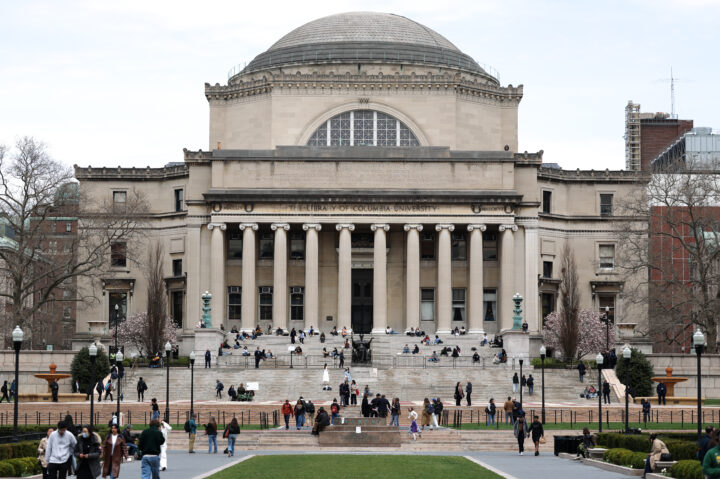
Students are seen on the campus of Columbia University on April 14, 2025, in New York City.
Columbia University announced on Tuesday it would implement several commitments in an effort to reach a deal with the Trump administration to restore the $400 million in federal funding that was cut by the government in March due to the university’s record dealing with antisemitism.
The steps include the university further incorporating the International Holocaust Remembrance Alliance’s working definition of antisemitism by requiring its Office of Institutional Equity to embrace the definition; appointing a Title VI coordinator to review alleged violations of the Civil Rights Act; requiring antisemitism training for all students, faculty and staff; and refusing to recognize or meet with “Columbia University Apartheid Divest,” a coalition of over 80 university student groups that Instagram banned for promoting violence.
“Our work toward an agreement with the federal government has put a harsh spotlight on many of the difficult issues regarding discrimination and harassment we’ve seen on our campuses,” Claire Shipman, the university’s acting president, said in a statement. “The fact that we’ve faced pressure from the government does not make the problems on our campuses any less real; a significant part of our community has been deeply affected in negative ways.”
Shipman said that “any government agreement we reach is only a starting point for change.”
Brian Cohen, executive director of Columbia’s Hillel, welcomed the steps taken by the university, “including the unequivocal recognition that there is an antisemitism problem on campus and that it has had a tangible impact on Jewish students’ sense of safety and belonging,” he wrote on X.
“I hope this announcement marks the beginning of meaningful and sustained change,” said Cohen.
Columbia was rocked by several high-profile incidents last academic year, including a sit-in in February at its affiliate, Barnard College, where a staff member was assaulted. In May, more than 100 masked anti-Israel demonstrators stormed the university’s main library — disrupting students studying for finals by banging on drums and chanting “Free Palestine.” Still, the university saw relatively fewer anti-Israel disruptions since it first entered into negotiations to restore federal funding.
The slashing of Columbia’s funds marked the first time a university faced a suspension of federal funds since the Title VI of Civil Rights Act of 1964 was implemented six decades ago. Several other elite universities, including Harvard and Cornell, followed suit with billions of dollars stripped by the government due, at least partially, to concerns around antisemitism.
Sherrill and Gottheimer are backing the definition after a leading rival, Steve Fulop, said he’d veto the bill

Kyle Mazza / SOPA Images/Sipa USA via AP Images
Jersey City Mayor Steve Fulop during a press conference in Jersey City.
New Jersey legislation codifying the International Holocaust Remembrance Alliance’s working definition of antisemitism is splitting the Democratic field in the gubernatorial race, after one leading candidate said last week he’d veto the bill.
Rep. Mikie Sherrill (D-NJ) told JI this week that she supported legislation under consideration in the state that would codify the IHRA definition as New Jersey’s official definition of antisemitism for assessing cases of antisemitic discrimination. “I’ve supported the IHRA definition in the U.S. House, and would support the current state Senate bill to combat the alarming rise of antisemitism in New Jersey,” Sherrill said in a statement to JI.
Rep. Josh Gottheimer’s (D-NJ) campaign indicated in a statement that he also supports the bill. His campaign manager, Chelsea Brossard, noted that he “helped write and pass” the Antisemitism Awareness Act, which codifies the IHRA definition at the Department of Education.
“Since October 7th, antisemitic incidents have skyrocketed to an all-time high in New Jersey. This is unacceptable, and Josh will continue working tirelessly at all levels of government to protect Jewish students and families from all forms of hate,” Brossard said.
Those comments come after Jersey City Mayor Steven Fulop, who has touted his Jewish heritage on the campaign trail, said he was opposed to the legislation, arguing that it could infringe on criticism of Israel and ultimately exacerbate antisemitism.
Three other candidates in the race — Newark Mayor Ras Baraka, New Jersey Education Association President Sean Spiller and former state Sen. Steve Sweeney — did not respond to requests for comment on the IHRA issue.
Fulop and Sherrill have both recently come under scrutiny for campaigning alongside progressive leaders who’ve been outspoken against Israel.
A Jewish leader in the state told JI that Fulop’s IHRA stance, in combination to his ties to anti-Israel figures including Sadaf Jaffer, an outspoken anti-Israel former state assembly member, have generated growing frustration and a sense of betrayal among members of the Jewish community.
Fulop aggressively rejected the notion that his IHRA stance was motivated by politics, and said his comments have been misconstrued by various constituencies. “What I said was a very thoughtful, careful, deliberate answer that serves very little political benefit because I answered it honestly,” Fulop told JI.
He said that, in the same comments about IHRA, he had supported the New Jersey-Israel Commission and anti-Boycott, Divestment and Sanctions legislation and said that Gov. Phil Murphy had not been aggressive enough in response to antisemitism on college campuses.
He also said Jaffer was only a campaign volunteer and that they don’t agree on all issues. “Anybody who says that I’m antisemitic or I don’t sympathize with the Jewish community is totally misguided, and they’re purely political.”
Another Jewish leader said that many Jewish politicos see Gottheimer’s record as the strongest on antisemitism and supporting Israel, but that without an aggressive advocacy effort highlighting the differences in the candidates’ records, the Jewish vote could end up split among various candidates, with voters prioritizing other issues.
A key political dynamic in the race is becoming the fight between New Jersey’s Democratic machine and those casting themselves as outsiders opposing that machine. Institutional support has largely been divided between Sherrill and Gottheimer, but some leaders who had initially backed Gottheimer recently switched their allegiance to Sherrill.
“Party leadership in New Jersey is a little bit scared,” Dan Cassino, the executive director of the Fairleigh Dickinson University poll, told JI. “There’s a strong incentive for that group, for institutional Democrats, to unify behind one candidate and make sure that candidate gets the nomination, to preserve at least the perception that they’re able to pick the candidates and therefore maintain their power.”
If Sherrill and Gottheimer split the moderate vote, one of the other candidates could muster enough support to achieve victory. No reliable polling is available in the race at this point.
Fulop and Baraka seemed to pick up momentum from strong performances in a recent debate and have been making strides in fundraising, Cassino added. In that debate, Sherrill appeared to be “riding the fence,” he continued, and avoiding controversial policy positions, while Gottheimer was on the receiving end of criticism from several other candidates.
As they’re trying to lock down a winning coalition, some candidates are trying to balance appealing to both left-wing constituencies critical of Israel and the state’s sizable Arab and Muslim populations, as well as the state’s significant Jewish population and the moderate voters they’ll need to win the general election.
Baraka’s candidacy could raise concerns in the Jewish community given that his father, poet Amiri Baraka, claimed in a 2002 poem that Israelis knew about the 9/11 attacks in advance. A Baraka-backed initiative in Newark held an event on Oct. 7, 2023, honoring the elder Baraka, which featured multiple speakers who have been accused of antisemitism. Baraka has defended his father from accusations of antisemitism.
A Jewish leader in the state said that Baraka’s base largely coincides with anti-Israel parts of the Democratic Party.
Sweeney, a moderate Democrat and the former senate president, supported anti-Boycott, Divestment and Sanctions legislation when he was in the state Senate and led legislation to combat antisemitism in schools in 2019 which largely utilized the IHRA definition. Hailing from southern New Jersey, his base of support is expected to come largely from that part of the state, potentially including some Jewish voters in the Cherry Hill area.
The Jewish leader said that Sweeney’s record on Jewish issues has been unobjectionable.
Spiller, the former mayor of Montclair, N.J., could face issues among Jewish voters in the state over concerns about antisemitism in New Jersey’s public schools, though he has offered condemnations of antisemitism in the past. He’s leaning into education issues on the trail. The Jewish leader described the teachers’ union as having a poor record on Israel issues.
Please log in if you already have a subscription, or subscribe to access the latest updates.
 Continue with Google
 Continue with Apple