























































EEOC Chair Andrea Lucas: ‘At some point, either the government will know information related to individuals’ religion, or we will not be able to enforce the laws on their behalf’
Dillon Meyer Media
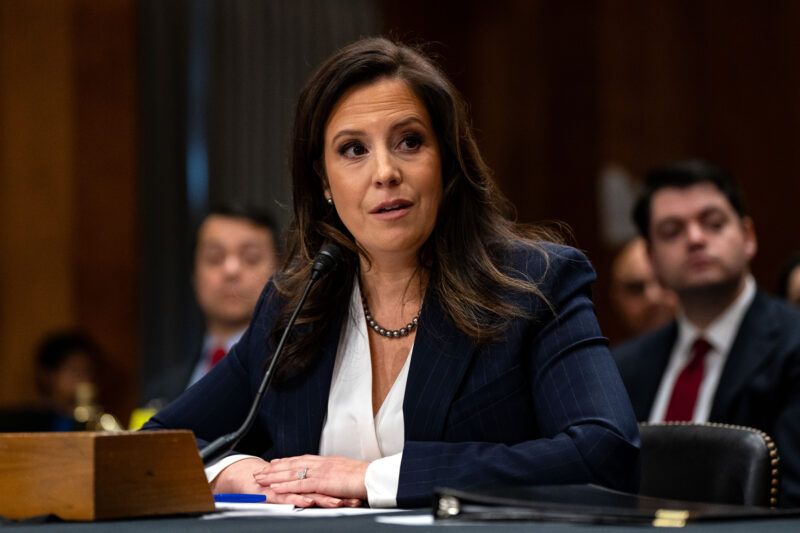
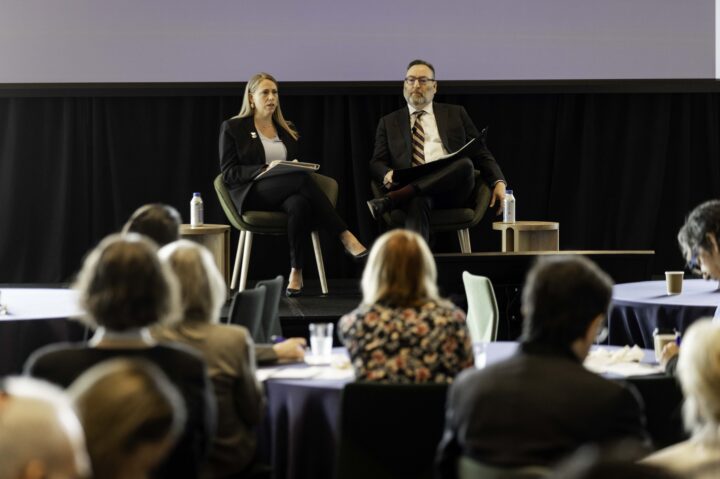
EEOC Chair Andrea Lucas and Brandeis Center founder Kenneth Marcus speak at the inaugural conference on antisemitism and civil rights law at Harvard University on April 16, 2026.


 Add JewishInsider on Google
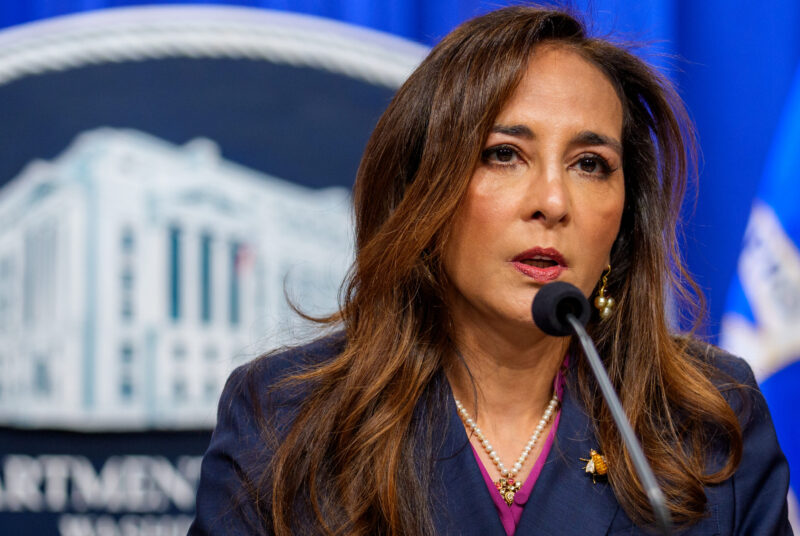
The Trump administration official leading a controversial probe into antisemitism at the University of Pennsylvania told Jewish leaders and legal experts on Thursday that compiling a list of Jewish faculty with their detailed personal information was necessary to identify and protect victims.
“There is no other way to protect victims of harassment or discrimination unless you collect information about them,” Andrea Lucas, chair of the United States Equal Employment Opportunity Commission, said at the Louis D. Brandeis Center for Human Rights Under Law’s inaugural conference on antisemitism and civil rights law, held at Harvard University.
“We never collect information to contact someone on their work system,” she said. “The EEOC’s long-standing practice is to collect personal information because we want to make sure that there is not any clear monitoring of your email systems … that when you speak to a government agency you feel completely not pressured.”
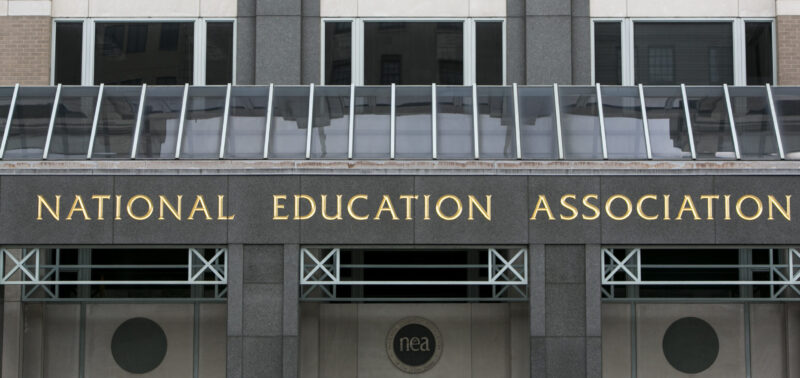
Last month, a federal judge ordered Penn to comply with a subpoena from the Trump administration requesting detailed information about Jewish university affiliates as part of the EEOC’s ongoing investigation into Penn’s handling of antisemitism. The subpoena had requested the school turn over lists of Jewish employees and members of Jewish organizations — including their identifying details and phone numbers — which the school called “extraordinary and unconstitutional.” Critics on campus have likened the move to Nazi-era methods of collecting information about Jews.
During a fireside chat with Kenneth Marcus, founder of the Brandeis Center and former assistant secretary of education for civil rights under the first Trump administration, Lucas noted she was speaking generally and not about the Penn case specifically, as litigation is ongoing.
“At some point, either the government will know information related to individuals’ religion, or we will not be able to enforce the laws on their behalf,” continued Lucas, who is not Jewish but emphasized a personal interest in religious liberty as “a core thing the EEOC needs to be focusing on.”
“I understand the sensitivities around this issue … but fundamentally the Jewish community does have to decide: do you want to have civil rights enforcement in this space? If you do, there is no other way we can get money for victims.”
Experts told Jewish Insider in January that a more typical investigation might involve agency officials interviewing people who issued complaints directly with the agency, then visiting the campus and publicizing their investigation, calling the EEOC’s methods in the Penn case “incredibly unusual, if not completely unprecedented.”
Lucas asserted that the same standard applied for helping members of any race, religion or gender. None of the event’s speakers publicly disagreed with Lucas’ statements.
The daylong conference was born out of last year’s settlement between the Brandeis Center and Harvard over a Title VI lawsuit, and was framed around this year’s U.S. Semiquincentennial.
It opened with an address from Marcus and a benediction from Harvard Chabad’s Rabbi Hirschy Zarchi. Attendees included Harvard community members, Jewish activists, lawyers and scholars.
The plenary session, “Towards a Jewish Civil Rights Movement,” moderated by Marcus, featured William Daroff, CEO of the Conference of Presidents of Major American Jewish Organizations; Elan Carr, CEO of Israeli-American Council and former special envoy to monitor and combat antisemitism; and Miriam Elman, executive director of the Academic Engagement Network.
Carr called the battle against antisemitism “a war for the soul of America and the soul of civilization,” and advocated for a shift in classroom curriculums and federal funding.
“Jew-hatred is history’s greatest barometer of human ruin and suffering. We are fighting for the future of our country and American values. So we need to get serious about teaching American values … we can’t safeguard this republic unless we teach American kids what this republic is, why it was founded, what our values are and constitutional structures are,” he said. “This is a national crisis with national implications. The federal government needs to say ‘no money goes anywhere to any educational institution unless there’s Western values, American civics, basic principles of the United States as part of the curriculum.’”
After the session, Daroff told JI that “today’s conference brought a united American Jewish community together, aligned in action. We are not standing back. We are organizing, building and acting together with shared purpose and resolve.”
The conference also featured a panel titled “Defining Anti-Semitism at America’s 250th: New Challenges for a New Century.” Speakers debated the importance of pushing states to codify the International Holocaust Remembrance Alliance’s working definition of antisemitism, as many mainstream Jewish groups are using resources to do. Critics of IHRA say the definition chills political speech and criticism of Israel.
Nathan Diament, executive director for the Orthodox Union Advocacy Center, said that IHRA is not only important for combating campus antisemitism — as several of the speakers emphasized — but also regarding legislation in Washington.
At the same time, “in the political arena, vagueness around questions [of what is antisemitism] is unhelpful. The most important currency in politics is votes. Advocates and voters need to be able to say with clarity to politicians [what they will and will not support]. This is the most important need for the definition of antisemitism, to draw a line as clearly as we can and make clear to politicians that if they cross this line, there will be consequences,” said Diament.
“Even as the OU has, and continues to, support legislation to codify the IHRA definition, I don’t think at this stage in the game that’s the most important way to further the definition and to use our political capital,” he continued. “We don’t need Congress’ approval of how we want to define antisemitism. We don’t need them to codify it and we don’t need them to give us permission to use it to hold members of Congress and other politicians accountable. We can use the IHRA definition because we say that’s the definition.”
Alyza Lewin, president of U.S. affairs for the Combat Antisemitism Movement and former president of the Brandeis Center, pushed back by highlighting how the law enforcement trainings she provides varies based on local adoption of the IHRA definition. She noted a stark difference between training in states where it is codified, such as Georgia, and those where it is not, such as New York.
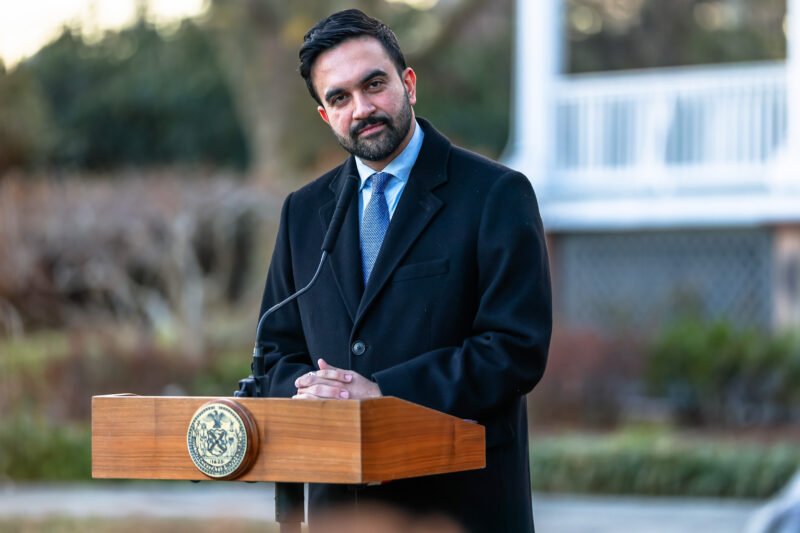
Law enforcement in Georgia “has a very concrete reason now to understand and use” the training, said Lewin. “In New York, especially after [Mayor Zohran Mamdani] reversed the executive order on IHRA, I can try to explain it to them but it’s just a nice thing I teach them. They are under no obligation to actually engage with it and utilize it. So I do think on a state by state level, it does make a difference whether or not a state has adopted the IHRA definition.”
In a separate panel, moderated by Anat Alon-Beck, a visiting professor at Harvard Law School, speakers explored new avenues for litigation against antisemitism.
“Nearly two years after the largest massacre of Jews since the Holocaust, the Jewish community still lacks unified messaging, coordinated toolkits and a clear strategy. At a time when antisemitic actors are highly organized and aligned, our disunity is a serious vulnerability,” Alon-Beck told JI following her session. “We need to come together — with clarity, courage and coordination — because the stakes could not be higher.”
According to the Brandeis Center, this conference was the first in an annual three-part series.
Charles Dabda, a third-year student at Touro Law Center and law clerk with National Jewish Advocacy Center, told JI he was leaving the conference with a clear sense that “antisemitism is rising in real time with real consequences across campuses, professional spaces and beyond. At the Brandeis Center, and NJAC, our commitment remains resolute and steadfast; we will confront antisemitism wherever it manifests — through advocacy, and, when necessary, the courtroom.”
To mark the second anniversary of the Oct. 7 attacks in Israel, the Jewish Insider team asked leading thinkers and practitioners to reflect on how that day has changed the world. Here, we look at how Oct. 7 changed Jewish advocacy
Courtesy Orthodox Union
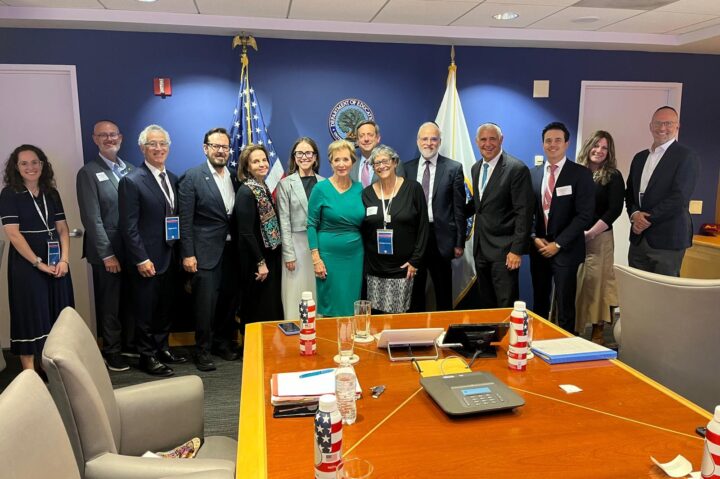
Members of the Orthodox Union Advocacy Center met with Education Secretary Linda McMahon on Wednesday to discuss federal efforts to counter antisemitism and new legislation promoting school choice, Sept. 17th, 2025
Plus, NYT spotlights terror leader

Zhu Ziyu/VCG via Getty Images
A glimpse into the Harvard University campus on May 24, 2025 in Cambridge, Massachusetts.
Good Tuesday afternoon.
This P.M. briefing is reserved for our premium subscribers like you — offering a forward-focused read on what we’re tracking now and what’s coming next.
I’m Danielle Cohen-Kanik, U.S. editor at Jewish Insider and curator, along with assists from my colleagues, of the Daily Overtime briefing. Please don’t hesitate to share your thoughts and feedback by replying to this email.
📡On Our Radar
Notable developments and interesting tidbits we’re tracking
Former Sen. Sherrod Brown (D-OH) is set to make a comeback bid for the Senate, taking on Sen. Jon Husted (R-OH) — who was appointed earlier this year to fill Vice President JD Vance’s seat — next year. Brown, who lost his seat to Sen. Bernie Moreno (R-OH) in a hotly contested 2024 race, held a solidly progressive voting record during his three terms in the Senate but maintained his support for Israel and relationships with Ohio’s sizable Jewish community. Senate Democrats have encouraged Brown to run again, seeing him as one of the party’s few chances to flip a GOP-held Senate seat back to blue in the midterms…
The Democratic National Committee is set to consider two resolutions on Israel this month — one of which is downright hostile to the Jewish state. The first, introduced by DNC Chairman Ken Martin, calls for a ceasefire, the return of all hostages and a two-state solution. The other, introduced by progressive DNC members, calls for an arms embargo, the suspension of all military aid to Israel and for the Democratic Party to recognize a Palestinian state…
The Atlantic reports on the divide between the “reformist” and “academic resistance” factions of university leaders, exemplified by a heated meeting of the Association of American Universities. The reformists are led by Vanderbilt Chancellor Daniel Diermeier and Washington University in St. Louis Chancellor Andrew Martin, who have positioned their schools as safe spaces for Jewish students facing antisemitism on other campuses and advocate for more universities to do the same. The two told Jewish Insider last month, “Here are two institutions that are willing to stand in the public square and say, American higher education has lost its way in some respects. We’re great institutions, and we’re committed to working to ensure that our institutions and higher education writ large will do better in the future.”
The resistance faction, meanwhile, led in part by Princeton President Christopher Eisgruber and encompassing most Ivy League schools, says the reformists are lending legitimacy to the Trump administration’s war on higher education by admitting universities have a problem with liberal bias…
We’re hearing that Harvard, one of those Ivy Leagues battling with the federal government, could reach a settlement with the Trump administration as soon as tomorrow. Harvard may agree to spend $500 million for the restoration of its frozen federal funding, more than double what Columbia paid to the federal government last month. However, reported terms of the deal would see Harvard’s payment going towards vocational and educational programs, similar to the $50 million Brown University agreed to spend on local workforce initiatives, rather than going to the Trump administration…
George Washington University joined the schools under fire from the federal government today as the Department of Justice found it in violation of federal civil rights law. The DOJ said GW “took no meaningful action and instead was deliberately indifferent to the hostile educational environment on its campus” during an anti-Israel encampment and protests, and gave the D.C. school an Aug. 22 deadline to agree to dialogue…
The Trump administration is busy on the diplomatic front as well, now working towards a deal between Israel and Syria to open a corridor for Israel to deliver humanitarian aid to the Druze community in the southern Syrian city of Suweida, according to Axios. The initiative comes after Israel bombed Syria last month in defense of that community, as the Druze clashed with militias aligned with Syrian President Ahmad al-Sharaa’s government. Tom Barrack, U.S. ambassador to Turkey and envoy to Syria, is expected to meet with Israeli Strategic Affairs Minister Ron Dermer and Syrian Foreign Minister Asaad al-Shaibani to discuss the deal in Paris next week…
The New York Times interviews Zakaria Zubeidi, the former leader of the Al-Aqsa Martyrs Brigade, a U.S.-designated terror group based in the West Bank town of Jenin, who was released from Israeli prison in February as part of a temporary ceasefire deal between Israel and Hamas. The profile framed Zubeidi, who also founded the Freedom Theater in Jenin, as “emblematic of something else: a sense of hopelessness that imbues Palestinian life,” a charitable interpretation for the man who led the Al-Aqsa Martyrs Brigade during the Second Intifada — during which time the militia was designated as a Foreign Terror Organization by the U.S. and over 1,000 Israelis were killed in terror attacks…
World Central Kitchen confirmed that the individuals struck by the IDF who were operating from a vehicle with a WCK emblem were not affiliated with the aid organization, saying it “strongly condemn[s] anyone posing as WCK or other humanitarians as this endangers civilians and aid workers”…
⏩ Tomorrow’s Agenda, Today
An early look at tomorrow’s storylines and schedule to keep you a step ahead
Keep an eye on Jewish Insider tomorrow morning for an interview with Arkansas Gov. Sarah Huckabee Sanders, who just returned from a trip to Israel, and another with American-Israeli venture capitalist Michael Eisenberg. We’ll also profile American Eagle CEO and philanthropist Jay Schottenstein.
Eric Levine, a top GOP donor and board member of the Republican Jewish Coalition, is co-hosting a fundraiser tomorrow evening for New York City Mayor Eric Adams as Adams tries to retain his office as an independent against Democratic nominee Zohran Mamdani. Levin is joined by an array of donors from New York’s legal, financial and Jewish communities in hosting the event, advertised as “Democrats, Independents and Republicans coming together to save New York City.”
Stories You May Have Missed
BLUE RIDGE BAYIT
Mountain minyan: An unorthodox experiment in North Carolina’s Blue Ridge Mountains

A development called Mountain View, still in its early days, aims to build an Orthodox community from the ground up in Sparta, N.C.
DIVERGENT VOICE
Hostage families protest Gaza offensive — but this father says it doesn’t go far enough

Tzvika Mor, head of the hawkish Tikvah Forum, a minority group of hostage families, calls to prioritize defeating Hamas, says putting hostages first is ‘indescribable stupidity’
Plus, the world's largest sovereign wealth fund starts divesting from Israel
Chip Somodevilla/Getty Images
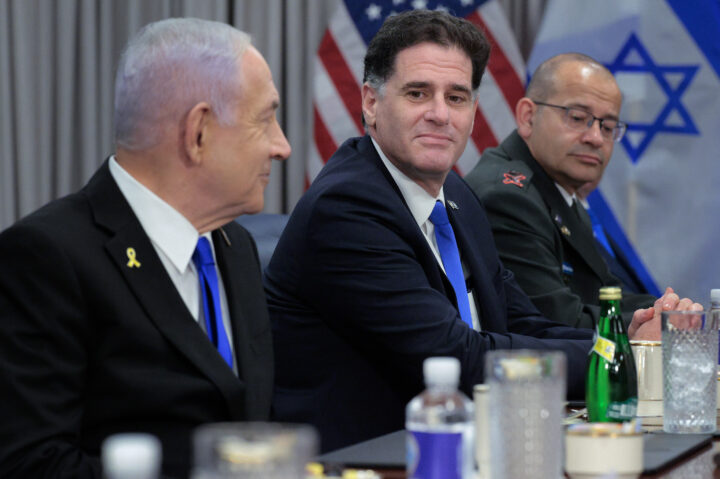
Israeli Prime Minister Benjamin Netanyahu (L) is joined by Israeli Minister of Strategic Affairs Ron Dermer and other officials for a meeting with U.S. Secretary of Defense Pete Hegseth at the Pentagon on July 09, 2025 in Arlington, Virginia.
Good Monday afternoon.
This P.M. briefing is reserved for our premium subscribers like you — offering a forward-focused read on what we’re tracking now and what’s coming next.
I’m Danielle Cohen-Kanik, U.S. editor at Jewish Insider and curator, along with assists from my colleagues, of the Daily Overtime briefing. Please don’t hesitate to share your thoughts and feedback by replying to this email.
📡On Our Radar
Notable developments and interesting tidbits we’re tracking
President Donald Trump spoke with Axios’ Barak Ravid today about Israel’s move to expand the war in Gaza. While the president didn’t go so far as to say he endorsed the plan, he said that, in his view, Hamas “can’t stay there” and the terror group is “not going to let the hostages out in the current situation.” Trump told Ravid, “I have one thing to say: remember Oct. 7, remember Oct. 7”…
Israel Hayom reported this afternoon that Israeli Minister for Strategic Affairs Ron Dermer is considering leaving the government in the coming months before Israel holds its next elections, which are currently scheduled for October 2026. Sources said Dermer, a close confidant of Prime Minister Benjamin Netanyahu, began contemplating the move after Israel successfully degraded the Iranian nuclear threat in its June operation. Since February, he’s also led Israel’s hostage-release and ceasefire negotiation efforts…
The Norwegian Sovereign Wealth Fund, the world’s largest sovereign wealth fund, divested from 11 of the 61 Israeli companies it held shares in and will no longer collaborate with Israeli hedge fund managers to invest in the country, the fund announced today.
Nicolai Tangen, CEO of Norges Bank Investment Management which manages the fund, said about the move, “These measures were taken in response to extraordinary circumstances. The situation in Gaza is a serious humanitarian crisis. We are invested in companies that operate in a country at war, and conditions in the West Bank and Gaza have recently worsened. In response, we will further strengthen our due diligence”…
A delegation of 14 House Democrats, including 11 freshmen, met in Jerusalem today with Israeli President Isaac Herzog while on a trip organized by the AIPAC-affiliated American Israel Education Foundation. The strong showing of first-term members — who account for a third of the total House Democratic freshman class — is a sign of the organization’s continued pull among mainstream pro-Israel Democrats, even as anti-Israel activists within the party have sought to make the group politically toxic…
Virginia state Del. Sam Rasoul, chair of the Education Committee in the House of Delegates, continues to defend his view that Zionism is “evil” amid widespread Democratic criticism, telling local outlet WFIR News earlier this month that the criticisms he’s faced are politically motivated “silly season” attacks in the lead-up to the state’s November elections…
The Israeli-American Council’s Los Angeles headquarters was vandalized over the weekend, the group shared, with graffiti including swastikas, the letters SS as a reference to the Nazis and the phrases “f*** Jews” and “BDS.” IAC CEO Elan Carr said in a statement, “This incident will not intimidate or deter us — on the contrary, it fuels our determination to stand even stronger against antisemitism and to protect and strengthen our community for generations to come”…
⏩ Tomorrow’s Agenda, Today
An early look at tomorrow’s storylines and schedule to keep you a step ahead
Keep an eye on Jewish Insider tomorrow morning for the full story on an Orthodox community emerging from the ground up in North Carolina’s Blue Ridge Mountains:
“People who buy homes in Mountain View, as the neighborhood will be called, must also buy into the vision of building a tight-knit community from the ground up (literally — the homes won’t be ready for at least a year).
Rabbi Yaakov Moshe Twerski, a rabbi from Monsey, N.Y., is on board to oversee religious matters in the community. Plans are underway to build a mikveh, a kosher supermarket, an Orthodox school system and a yeshiva — a second location of Yeshivas Lev Simcha, a religious school in Boca Raton, Fla. A synagogue has already been constructed.”
Also tomorrow, the Knesset Foreign Affairs and Defense Committee is expected to discuss the issue of Haredi conscription in the IDF for the first time since former Chairman Yuli Edelstein was replaced by MK Boaz Bismuth.
Though Edelstein and Bismuth are both Likud lawmakers, the party hopes the new chairman will be more amenable to the Haredi parties’ demands, which reportedly now include the cancellation of tens of thousands of draft notices sent to Haredi men over the past year.
Stories You May Have Missed
FROSTY OUTLOOK
Maxwell Frost reneges on pro-Israel pledges

The Florida Democrat has shifted away from commitments he made to Jewish leaders during his first run for Congress, fueling frustration among former supporters
POLICY FLIP
Two AIPAC-backed Dems announce support for ban on offensive weapons for Israel
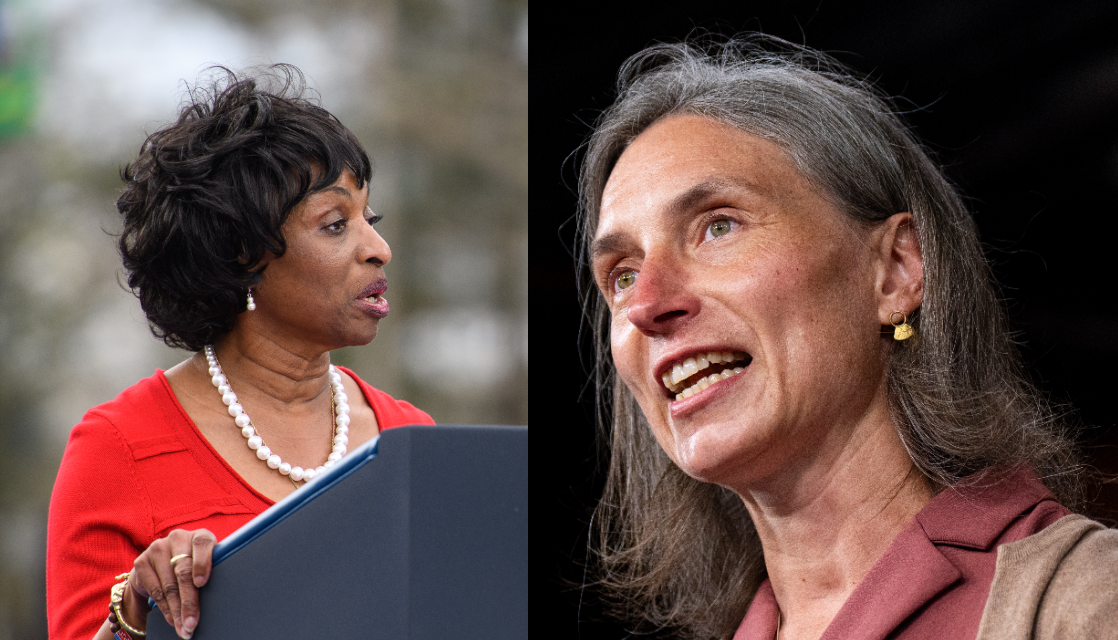
Reps. Maxine Dexter (D-OR) and Valerie Foushee (D-NC) flip-flopped on their previous opposition to block military aid to the Jewish state
Plus, Qatar picks up another Beltway lobbyist

Anna Moneymaker/Getty Images
Sen. Lindsey Graham (R-SC) in the Senate Judiciary Committee on January 30, 2025 in Washington, D.C.
Good Wednesday morning.
In today’s Daily Kickoff, we talk to Sen. Lindsey Graham about recent incidents on and near Christian sites in Gaza and the West Bank, and interview Anti-Defamation League CEO Jonathan Greenblatt about the National Education Association’s recent rejection of a proposal to cut ties with his organization. We report from a conference this week in New York City hosted by Reut USA and The Rabbi Sacks Legacy focused on the future of Jewish education, and cover the House Foreign Affairs Committee’s vote to advance legislation that aims to expedite arms sales to Abraham Accords signatories. Also in today’s Daily Kickoff: Gal Gadot, Rom Braslavski, Eyal Shani and Shahar Segal.
What We’re Watching
- President Donald Trump is slated to give an address today on AI at a Washington summit co-hosted by the Hill & Valley Forum and the “All In” podcast.
- Secretary of State Marco Rubio is meeting with Jordanian Foreign Minister Ayman Safadi this afternoon in Washington.
- White House Middle East envoy Steve Witkoff heads to Rome today ahead of a meeting on Thursday with Israeli and Qatari negotiators to discuss ceasefire and hostage-release efforts.
- The House Appropriations Committee is holding a full committee markup this morning for the FY 2026 National Security, State and Related Programs bill.
- Also this morning, the House Foreign Affairs Committee is holding a hearing with Under Secretary of State for Political Affairs Allison Hooker.
- In the afternoon, HFAC’s Middle East and North Africa subcommittee is holding a hearing with the State Department’s acting coordinator for counterterrorism, Greg LoGerfo.
- On the other side of the Capitol, the Senate Foreign Relations Committee is holding a hearing on diplomatic strategies for the Middle East. Former Iran envoy Brian Hook, former U.S. Ambassador to Israel Dan Shapiro and RAND senior analyst Shelly Culbertson are slated to testify.
- Later today on the Hill, Reps. Josh Gottheimer (D-NJ) and Don Bacon (R-NE), joined by Anti-Defamation League CEO Jonathan Greenblatt, will announce bipartisan legislation to combat antisemitism and disinformation on social media platforms.
- Elsewhere on the Hill, footwear enthusiast Rep. Jared Moskowitz (D-FL) is celebrating the third annual “Sneaker Day.”
- Also this afternoon, the Foundation for Defense of Democracies is hosting a conversation on U.S. counterterrorism efforts between FDD Executive Director Jonathan Schanzer and Seb Gorka, the Trump administration’s deputy assistant to the president and senior director for counterterrorism.
- Israeli Foreign Minister Gideon Sa’ar is in Ukraine today for meetings with senior Ukrainian officials.
What You Should Know
A QUICK WORD WITH JI’S JOSH KRAUSHAAR
One of the biggest challenges in our modern media ecosystem is breaking out of the echo chambers that so many are locked into.
Ezra Klein’s New York Times column this week, headlined “Why American Jews No Longer Understand Each Other,” is a worthwhile example of how even the best-intentioned columnists can struggle to understand the world outside their own social and informational bubble.
The column portrays a vocal minority of anti-Zionist sentiment within the Jewish community as much larger than it actually is. The characterization of a roughly even divide within the Jewish community between Zionists and anti-Israel Jews is at odds with numerous reputable polls tracking Jewish public opinion.
Public polling serves as a useful reality check to much of the framing in the column, and underscores the breadth of Jewish support towards Israel. An April 2025 Pew Research Center survey found 72% of Jewish Americans held a favorable view towards Israel. A fall 2024 poll of Jewish voters commissioned by the conservative Manhattan Institute found 86% of Jews considering themselves “a supporter of Israel.” A spring 2024 survey of Jewish voters commissioned by the Democrat-affiliated Jewish Electoral Institute (JEI) found 81% of Jewish respondents were emotionally attached to Israel.
This doesn’t paint the portrait of a community that is meaningfully divided over Israel — even amid the wave of negative, if not hostile, coverage towards the Jewish state in recent months.
Klein’s column quotes four Jewish voices — from anti-Israel polemicist Peter Beinart to the publisher of the anti-Zionist Jewish Currents publication to the rabbi of a deeply progressive Park Slope synagogue to self-proclaimed “progressive Zionist” Brad Lander — while just one (former Biden antisemitism envoy Deborah Lipstadt) reflects the mainstream Jewish majority.
foreign agent walking
Conservative commentator Bill Bennett registers as Qatar lobbyist
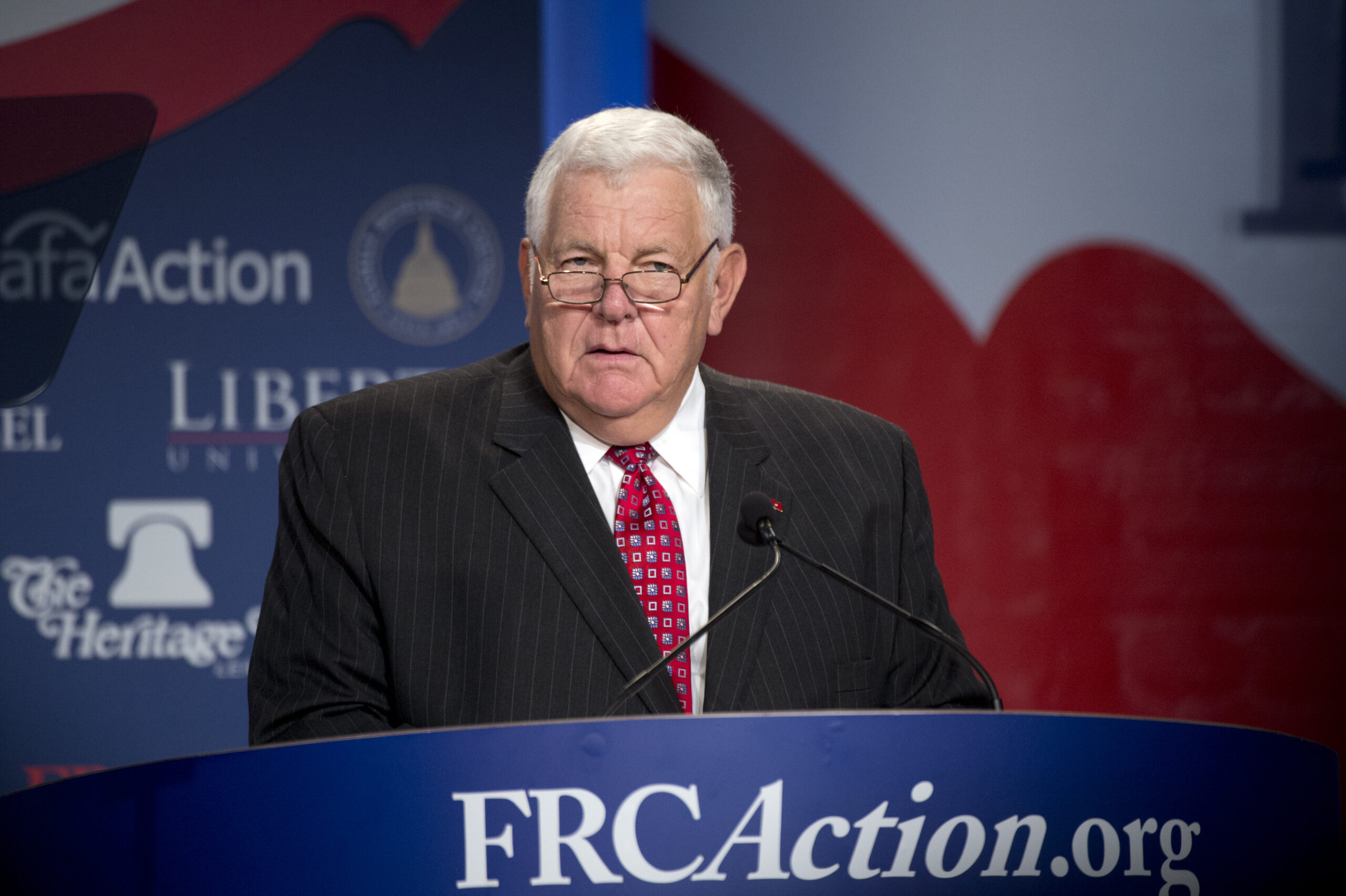
William Bennett, a former U.S. secretary of education under former President Ronald Reagan, registered in early July as an agent for Qatar, to advocate for the country on education-related issues, Jewish Insider’s Marc Rod reports.
Defending Qatar: Bennett, according to a Foreign Agents Registration Act filing first highlighted by analyst Eitan Fischberger, will receive a total of $210,000 over seven months to serve as a “senior education advisor” to the Qatari Embassy to “make efforts to publicize the fact that Qatari higher education efforts to do not support radical Islamicist movements or positions, and his engaging in publicized efforts — potentially including communications to U.S. political office holders — would help dispel contrary notions.”
WORDS OF WARNING
Lindsey Graham urges Israel to conduct itself in a way that maintains support in the U.S.
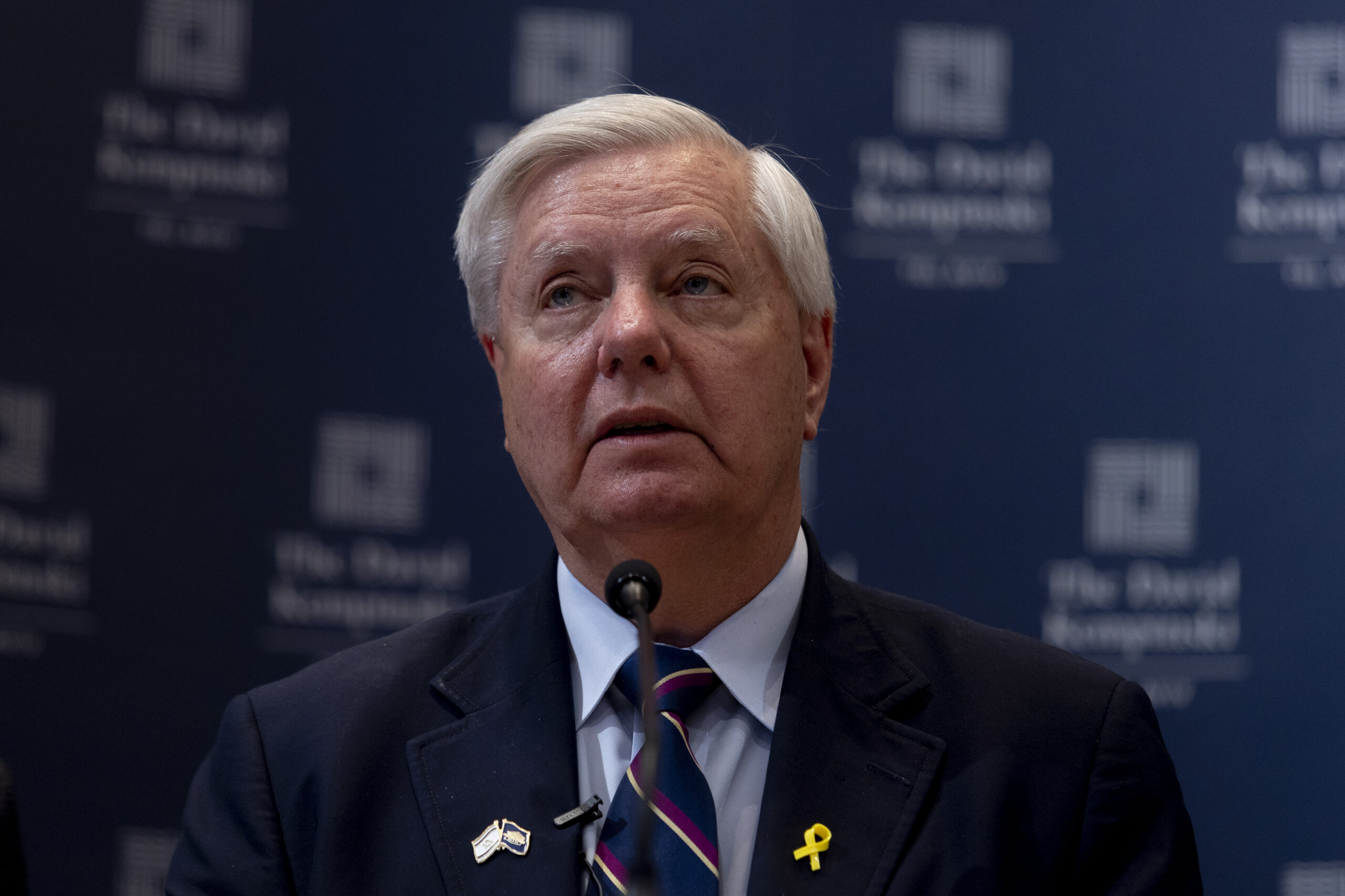
Sen. Lindsey Graham (R-SC) said that future military actions by Israel must be “conducted in a way to maintain support here at home” amid backlash to the Jewish state’s most recent operations in Syria and the strike that killed three at a Catholic church in Gaza. Speaking to Jewish Insider’s Emily Jacobs from the Capitol on Tuesday, Graham warned that Christians in the West Bank must not face the same fate as other Middle Eastern Christian communities, including in Syria, where as many as 1,000 Christians were killed between the fall of former Syrian leader Bashar al-Assad in November and March of this year under the new Syrian government.
Protecting the community: “Support for Christians throughout the region is eroded, and we need to make sure that doesn’t happen in the West Bank,” Graham told JI when asked how Israel had handled the backlash against its recent military actions in Gaza, last week’s fatal strike on the Holy Family Catholic Church, the only Catholic church in Gaza, and reports of an arson attack in the area of the fifth-century Church of St. George in the West Bank town of Taybeh — which an Israeli police probe found to be unfounded, stating that the fire had been “in an adjacent open area, with no buildings, no crops, and no infrastructure of the site damaged.”
union dues
Jonathan Greenblatt ‘pleased’ with NEA reversal but says ADL is ‘still in this fight’

Days after the National Education Association walked back a decision by its members to cut ties with the Anti-Defamation League, ADL CEO Jonathan Greenblatt praised the move but cautioned that the union still has a “long way to go” toward making clear that it respects the Jewish community, he said in an interview on Monday. “I am glad that they recognize what’s wrong about calling out the most consequential organization fighting antisemitism at a time of rising antisemitism,” Greenblatt told Jewish Insider’s Gabby Deutch. “Yet at the same time, there are elements of even the statement that lead me to believe that we’re still in this fight. We’ve got a long way to go to make sure that the ADL and our community is respected for who we are.”
Caveats: While the board of directors of the NEA — the largest teachers union in the country — condemned antisemitism in the statement released last week, the board also stated that the organization’s rejection of the anti-ADL measure was “in no way an endorsement of the ADL’s full body of work.” Further, the NEA called on the ADL “to support the free speech and association rights of all students and educators.”
DOUBLING DOWN
Columbia anti-Israel activist Mahmoud Khalil refuses to condemn Hamas in CNN interview

Anti-Israel activist Mahmoud Khalil, who was a prominent leader of the Columbia University protest movement, repeatedly declined to condemn Hamas in a CNN interview on Tuesday, Jewish Insider’s Haley Cohen reports.
No straight answer: “It’s disingenuous to ask about condemning Hamas while Palestinians are the ones being starved now by Israel,” Khalil told CNN’s Wolf Blitzer and Pamela Brown when asked whether he condemns the U.S.-designated terrorist organization. Khalil also accused the Trump administration of “weaponizing antisemitism” to “silence my speech” and denied that he engaged in any antisemitic activity.
250 years later
Experts champion Jewish education as the key to thriving Jewish communities

Making Jewish education more accessible is the key to many of the challenges facing American Jews today, several Jewish leaders said on Monday at a conference on the future of American Jewry, held at the UJA-Federation of New York headquarters in Manhattan, Jewish Insider’s Haley Cohen reports for eJewishPhilanthropy.
Community questions: Drawing inspiration from the teachings of the late Rabbi Lord Jonathan Sacks, some 100 rabbis, lay leaders, entrepreneurs and CEOs of Jewish organizations debated how to expand Jewish education — as well as a number of other issues facing American Jewry — at the daylong conference organized by Reut USA and The Rabbi Sacks Legacy. “A greater threat even than the antisemites is our own well-being internally, our own loss of identity, our own distance from our history, values and knowledge from our texts,” Elan Carr, CEO of the Israeli-American Council and former U.S. special envoy for monitoring and combating antisemitism in the first Trump administration, told attendees.
Read the full story here and sign up for eJewishPhilanthropy’s Your Daily Phil newsletter here.
MONEY MATTERS
House Appropriations Committee backs funding increase for antisemitism envoy

Republicans on the House Appropriations Committee’s National Security, Department of State and Related Programs subcommittee are backing a significant increase in funding for the State Department’s special envoy to monitor and combat antisemitism, Jewish Insider’s Marc Rod reports.
New provisions: The explanatory report accompanying the subcommittee’s 2026 funding bill, which it advanced last week, proposes $2.5 million for the office, up from the $1.75 million provided in 2024 and 2025. The report also includes provisions requesting new oversight mechanisms for U.S. funding abroad to combat the Boycott, Divestment and Sanctions movement that targets Israel and prevent U.S. funding of political groups. It additionally raises concerns about Turkey’s relationship with Hamas. And it offers funding for cultural heritage projects in Israel, like the City of David.
Worthy Reads
Isn’t It Rich: On her podcast “Honestly,” The Free Press’ Bari Weiss interviews journalist and author Evan Osnos about the evolution of technology and industry and his new book, The Haves and Have-Yachts, which looks at American wealth in today’s society. “Not only is it going to mean that our jobs are suddenly in much shorter supply, that kids coming out of school, as we’re already seeing today, are finding themselves in a much harder position to find that first job and get that first rung on the job ladder, but also our whole sense of purpose as an individual. I mean, the first time that you pick up your phone and realize that it is able to do your job better than you are, to reach judgments, to parse complicated, conflicting pieces of information, that’s going to be also a crisis of meaning and purpose in our society.” [Honestly]
The Case Against Genocide: The New York Times’ Bret Stephens counters a recent NYT op-ed accusing Israel of committing genocide. “In short, the first question the anti-Israel genocide chorus needs to answer is: Why isn’t the death count higher? The answer, of course, is that Israel is manifestly not committing genocide, a legally specific and morally freighted term that is defined by the United Nations convention on genocide as the ‘intent to destroy, in whole or in part, a national, ethnical, racial or religious group, as such.’ … But bungled humanitarian schemes or trigger-happy soldiers or strikes that hit the wrong target or politicians reaching for vengeful sound bites do not come close to adding up to genocide. They are war in its usual tragic dimensions.” [NYTimes]
The Fruits of Brokering: The Guardian’s Nesrine Malik looks at Qatar’s efforts to become a “global middleman” that facilitates conversations aimed at resolving local and regional conflicts, as part of its broader ambitions to become a major global player. “‘This is a job that not many people do,’ minister of state Al-Khulaifi told me. ‘Sometimes we feel like we are doctors, trying to develop the right solution for the most complicated cases, trying to offer them the medicine they need.’ The rewards Qatar seeks from this work are not immediate, tangible ones. They’re not looking for investment opportunities, access to raw materials or a say in what happens after a deal is agreed. ‘They don’t ask anything from the participants,’ said one source who had recently been involved in a Qatari-brokered mediation process. The source’s counterpart on the other side echoed his comments: ‘All they wanted was to be recognised as a player.’ The fruits of the brokering – building status and trust, which in turn deepen international influence and relationships – are the prize.” [TheGuardian]
The “Z” Word: In The Wall Street Journal, Rabbi Avi Shafran considers how the term “Zionist” is used by both Israel’s supporters and opponents. “How Israel wages that war is rightly open to criticism, but it is subject, too, to reasoned defense. When someone angrily shouts ‘Zionist!’ at those who offer the latter, that person is using the word to portray defenders of Israel as monstrous murderers. It is meant to defame as evil the belief that Hamas and other terrorist entities need to be destroyed. … Civilians suffer and die in the prosecution of justifiable, even necessary, wars. That tragedy is intensified when you are fighting an enemy who hides behind human shields. Eradicating the engines of terror in Gaza requires attacking the places from which they operate: hospitals, schools and mosques. But whatever one thinks of Israel’s actions, this twisted definition of “Zionist” as evildoer fails the basic purpose of a word: It reveals nothing about its purported subjects, and everything about their accusers.” [WSJ]
Word on the Street
U.S. Ambassador to Turkey Tom Barrack, who is also serving as the White House’s Syria envoy, is convening U.S., Israeli and Syrian officials on Thursday to discuss security measures in Syria following last week’s sectarian violence; ahead of the meeting, Barrack said he advised Syrian President Ahmed al-Sharaa to reconsider some of Damascus’ policies regarding military structure and the integration of minority communities…
U.S. Ambassador to Israel Mike Huckabee met on Tuesday in Ramallah with Palestinian Authority Vice President Hussein al-Sheikh; the meeting underscores the change in approach to the Trump administration by the PA, which had previously refused to meet with Ambassador David Friedman when he served as ambassador during the first Trump term…
Sens. Jacky Rosen (D-NV) and James Lankford (R-OK) led more than a dozen Senate lawmakers on a letter to X owner Elon Musk, raising concerns over his xAI’s inability to take “reasonable measures” to keep its Grok chatbot from engaging in hate speech…
The House Financial Services Committee voted Tuesday to advance a bill that would place a series of conditions on the lifting of U.S. human rights sanctions on Syria, after a debate over whether the U.S. should instead pursue complete sanctions relief for the new Syrian government, Jewish Insider’s Marc Rod reports…
The House Foreign Affairs Committee voted on Tuesday to advance legislation that aims to expedite arms sales to U.S. partners that are members of the Abraham Accords, as well as bills to review the U.S.-South Africa relationship and to combat the proliferation of Western-made parts in Iranian drones, Jewish Insider’s Marc Rod reports…
Columbia University suspended or expelled more than 70 students who participated in disruptive anti-Israel protests at the school’s Butler Library and at the campus’ encampment last year…
The New York Times reports on the controversy surrounding the funding behind the revitalization of Germany’s Hamburg State Opera; the funding for the project comes from German billionaire Klaus-Michael Kühne, whose family’s company collaborated with the Nazis during World War II to transport items looted from European Jews…
The Qatar Olympic Committee confirmed it is engaging in conversation with the International Olympic Committee as part of a bid to host the 2036 Olympic and Paralympic Games…
The planned launch of Gila and Nancy, a new restaurant in Berlin from Eyal Shani and Shahar Segal, was postponed by several weeks following anti-Israel protests outside the restaurant…
Palestinian Islamic Jihad said it lost contact with the captors of Israeli hostage Rom Braslavski, who is believed to be held alone; PIJ in April released a video of Braslavski, who was kidnapped from the Nova music festival on Oct. 7, 2023…
Avera Mengistu, who was held in Gaza for over a decade before his release earlier this year, was released from Tel Aviv’s Ichilov hospital after five months; the Ethiopian-Israeli man, who suffers from mental illness, will be moved into a special residential facility…
The New York Times reports on a string of near-daily fires and explosions across Iran in recent weeks that regime authorities increasingly believe are part of a coordinated sabotage campaign…
Saudi Arabia’s investment ministry said it will convene a Saudi-Syrian investment forum in Damascus to help spur economic development in the country…
The Wall Street Journal does a deep dive into the origins of the recent sectarian violence in Syria…
Pic of the Day

Actor Gal Gadot (second from left) met on Tuesday with former Israeli hostages (from left) Moran Stela Yanai, Doron Steinbrecher, Naama Levy and Liri Albag. Not pictured is Ilana Gritzewsky, who also joined the group.
Birthdays

Starting right fielder for Team Israel at the 2017 World Baseball Classic, Zach Borenstein turns 35…
Banker who distributed $60 million to his 400 employees when he sold City National Bank of Florida in 2008, Leonard L. Abess turns 77… Former U.S. ambassador to the Netherlands, she was the chair of the Harry and Jeanette Weinberg Foundation until 2023, Fay Hartog-Levin turns 77… Retired after serving for 32 years on the U.S. Court of Appeals for the 9th Circuit, Judge Alex Kozinski turns 75… Businessman and real estate investor who made his fortune in the trade and manufacture of fertilizer in the former Soviet Union, Alexander Rovt turns 73… Senior rabbi of the Great Neck Synagogue for over 30 years, he served as president of the Rabbinical Council of America, Rabbi Dale Polakoff turns 68… President of the Marcus Foundation founded by the late Bernie Marcus of Home Depot, Jay Kaiman… Proprietor of Oy Vey Jewish Bakery and Delicatessen in Terre Haute, Ind., Chavah Stair… Freelance journalist, she is the widow of Daniel Pearl and wrote a book about his kidnapping and murder in Pakistan in 2002, Mariane Pearl turns 58… Director, producer and actor in movies and television, Shawn Adam Levy turns 57… Executive director and chief creative officer at the Milken Center for Advancing the American Dream, Rachel Eva Goslins turns 56… U.S. senator (D-GA), Raphael Warnock turns 56… Dov M. Katz… Freelance television writer and author of two books, Joel Stein… Psychologist in private practice in both Manhattan and Great Neck, Long Island, Lynn Glasman, Ph.D…. Activist and fashion designer, Monica Lewinsky… Israeli film actress best known for her performances as a Jedi Master in the “Star Wars” prequel trilogy, Orli Shoshan turns 51… Music producer and songwriter, Jonathan Reuven “J.R.” Rotem turns 50… Professor at Georgetown University Law Center, Itai Grinberg… Singer, he represented Israel in the 2001 Eurovision Song Contest, Tal Sondak turns 49… Radio disc jockey, television show host and professional wrestling personality, Peter Elliot Rosenberg turns 46… Mayor of Minneapolis since 2018, Jacob Lawrence Frey turns 44… Sports studio host and play-by-play announcer for Westwood One, Sirius XM and ESPN, Jason M. Horowitz… Comedian and actor, Rick Glassman turns 41… Reporter for The Washington Post, Perry Stein… Joseph Stern…
By Jacob Kornbluh & JI Staff
TOP TALKER: Obama administration to work with new PA-Hamas unity government: In what some are calling a new low in the U.S. – Israeli relationship, the Obama administration said on Monday that it will maintain relations and financial aid to the Palestinian Authority, earning a rebuke from Israel. “Based on what we know now, we intend to work with this government, but will be watching closely to make sure it upholds the principles (honoring past agreements with Israel, renouncing violence and recognizing Israel) that President Abbas reiterated today,” DoS spokeswoman Jen Psaki said. (more…)
Please log in if you already have a subscription, or subscribe to access the latest updates.
 Continue with Google
 Continue with Apple