












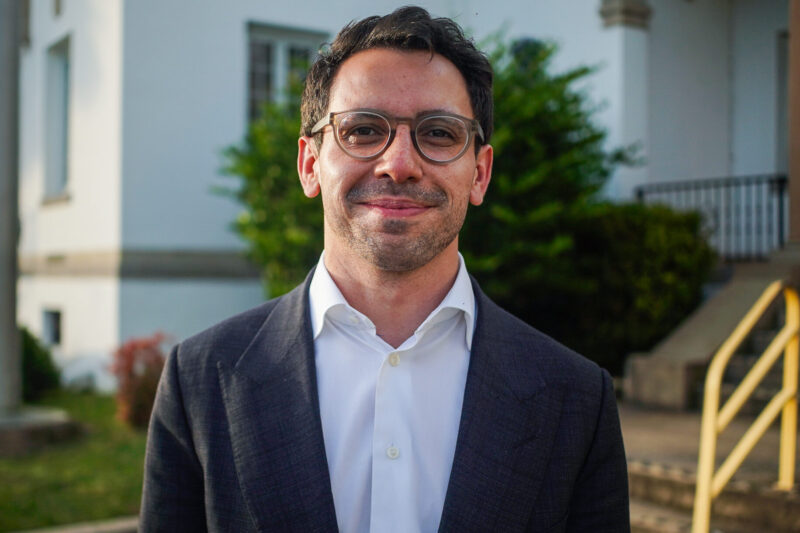



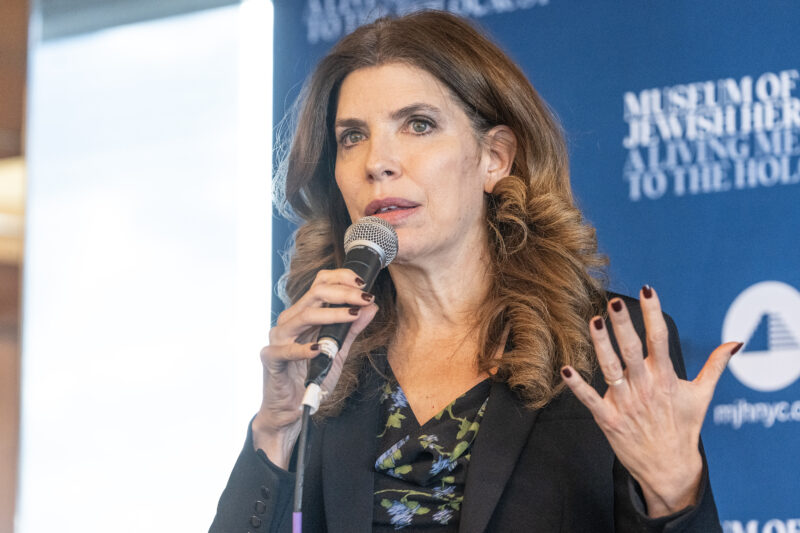








One person to keep an eye on is Josh Binderman, who served as Mamdani’s Jewish outreach director during the campaign and transition
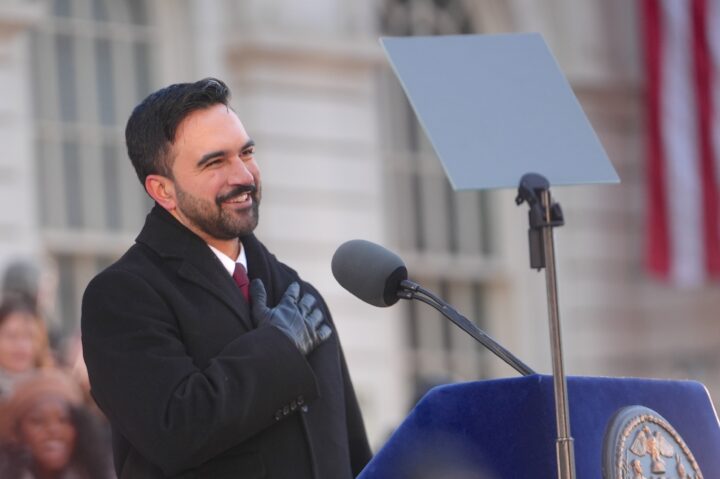
Selcuk Acar/Anadolu via Getty Images
Mayor Zohran Mamdani at his inauguration ceremony at City Hall, Manhattan, New York City, United States on January 1, 2026.


 Add JewishInsider on Google
As New York City Mayor Zohran Mamdani draws increased scrutiny for picking some top appointees whose past incendiary social media comments have provoked controversy and raised questions over his vetting process, Jewish community leaders are now watching closely for signs of how the administration will make staffing decisions on key issues connected to Israel and antisemitism.
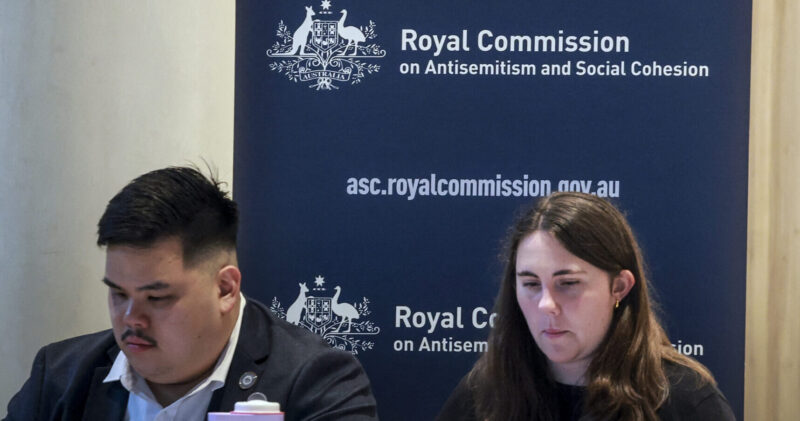
One person to keep an eye on is Josh Binderman, who served as Mamdani’s Jewish outreach director during the campaign and transition. He has largely maintained a low profile in his time working for the candidate and now mayor, garnering just a small handful of mentions in the press, despite his critical position leading engagement with a community that in many ways remains deeply skeptical of Mamdani’s hostile stances on Israel and commitment to implementing a clear strategy to counter rising antisemitism.
Binderman, most recently a communications manager for New Deal Strategies, an influential progressive consulting firm, served until 2024 as a PAC manager and a senior associate for J Street, the progressive Israel advocacy group, according to his LinkedIn profile.
While Mamdani notably refused to work with the organization when he led a chapter of Students for Justice in Palestine as an undergraduate student at Bowdoin College, the mayor has since developed a friendlier rapport with J Street, which has defended him amid charges that he tapped transition advisors who engaged in anti-Zionist activism that crossed a line into antisemitism.
Mamdani’s decision to employ a former top J Street staffer during the election suggests he could follow a similar approach to key Jewish community posts for his developing administration. If so, it could help to at least dampen some concerns from Jewish leaders who fear the mayor will end up hiring even harder-left members in his coalition such as activists associated with Jewish Voice for Peace, an anti-Israel advocacy group that aggressively promotes boycotts targeting the Jewish state.
It is still an open question, however, how Mamdani will move forward on such issues. His decision last week to revoke two executive orders linked to Israel and antisemitism was widely seen as a discouraging maneuver that eroded goodwill among mainstream Jewish leaders — even as Binderman had reportedly given some advance warning to leaders about the effort before the inauguration.
Mamdani otherwise chose to retain an office to combat antisemitism established by former Mayor Eric Adams. He has not disclosed who will steer the office now, though a person recently in touch with his team told Jewish Insider this week that Phylisa Wisdom, the executive director of New York Jewish Agenda, a progressive Zionist group, was floated as a possible candidate.
For his part, Binderman, who as a student was involved with BBYO, continues to be an unofficial “point person” for Jewish community outreach in the administration, according to one Jewish leader who has heard from him recently. Binderman is still feeling out a potential role in City Hall, according to other Jewish community leaders. He did not return a request for comment from JI.
Dora Pekec, a Mamdani spokesperson, told JI on Tuesday that the mayor’s team would have more to share on related appointments in the coming weeks and that such decisions “are still being worked out.”
Jewish leaders who have engaged with Binderman told JI their interactions with the young Mamdani aide have been largely positive. But they expressed some lingering doubts about his ability to influence the mayor himself. “He does seem eager and willing to help,” said one Orthodox community leader. “He does want to work together.”
“To what extent and how much freedom he has remains to be seen,” the leader explained to JI.
Another Jewish community leader who has spoken with Mamdani’s team echoed that view. Binderman, he told JI, has “always appeared to be level-headed, fair and reasonable. The question is, will the admin listen to his guidance?”
“Only Josh and Ali Najmi,” a top Mamdani advisor who maintains close ties to the Jewish community, “can land the Jewish plane,” the Jewish leader said. “But Zohran has to decide if he wants to land it.”
Among the most controversial picks was Mamdani’s appointment of Tamika Mallory, a former Women’s March leader who stepped down from its board amid allegations of antisemitism, to a newly established community safety committee
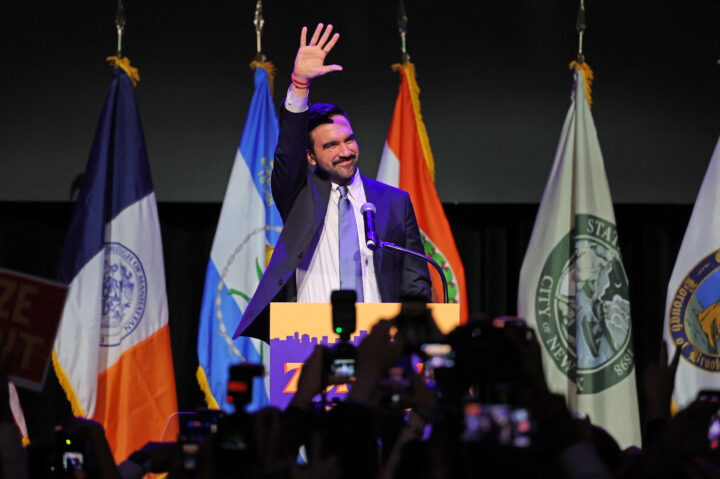
ANGELA WEISS/AFP via Getty Images
New York City Mayoral candidate Zohran Mamdani celebrates during an election night event at the Brooklyn Paramount Theater in Brooklyn, New York on November 4, 2025.
Zohran Mamdani, the mayor-elect of New York City, rolled out an extensive list of more than 400 new transition team appointees on Monday, saying the picks would help “recruit top talent and develop smart policy” on such issues as housing, community safety and economic development.
Despite the wide diversity of his choices, some of the appointees have raised concerns among Jewish leaders who remain skeptical of the mayor-elect and his commitment to fighting antisemitism, especially in moments where anti-Israel sentiment can cross a line into overt bigotry against Jews.
Among the most controversial sources of criticism was Mamdani’s appointment of Tamika Mallory, a former Women’s March leader who stepped down from its board amid allegations of antisemitism, to a newly established community safety committee.
Mallory, who rose to prominence as a leading organizer of the Women’s March after President Donald Trump was first elected, resigned from her role as a co-chair of the organization after facing accusations of having made virulently antisemitic remarks, including a widely discredited claim that Jewish people had played a major part in the slave trade.
The assertion echoed an infamous tract published by the Nation of Islam, whose antisemitic leader, Louis Farrakhan, Mallory had also praised as “the GOAT,” or “greatest of all time,” on social media.
In a statement to Jewish Insider on Tuesday, the Anti-Defamation League, which launched an online tool to monitor policies and personnel choices of the incoming administration, called Mallory “simply the wrong choice for a committee on community safety” and said that she has “made some highly insensitive remarks about Jews and money, which play directly into antisemitic tropes,” while aligning “herself with people like notorious antisemite Louis Farrakhan.”
“Given the fact that New York’s Jewish community is facing antisemitism and security threats at unprecedented levels, the mayor-elect needs to appoint someone who will unite, rather than divide, communities.” the ADL spokesperson said.
In 2020, Mamdani called on social media for Mallory to be released from custody after she and others were arrested during a social justice demonstration in Kentucky. Linda Sarsour, a Palestinian American activist and former Women’s March leader who also has espoused antisemitic rhetoric, has long been an ally of Mamdani, but was not appointed to a role on any of his transition committees.
Monica Klein, the communications director for Mamdani’s transition, said in a statement shared with JI on Tuesday that the newly announced “subcommittees are preparing to implement Mayor-elect Mamdani’s agenda of safety and security for Jewish New Yorkers and everyone else who calls this city home, including his pledge for an 800% increase in anti-hate crime prevention.”
Mallory did not respond to a request for comment.
After the appointees were publicized Monday, Jewish leaders were scouring the lists in group chats and private texts for signs of how the newly elected mayor, a democratic socialist and staunch critic of Israel, would approach issues of concern to the community.
“There are a lot of bad names,” one Jewish leader told JI, sharing screenshots of exchanges flagging some transition picks seen as problematic, such as an anti-Zionist rabbi and activists affiliated with the Democratic Socialists of America, which is pushing Mamdani to divest from Israel when he takes office.
Other appointees who drew scrutiny were Alex Vitale, a professor of sociology at Brooklyn College who has called for an end to policing and will advise on community safety.
The list included a number of outspoken detractors of Israel. Tahanie Aboushi, a civil rights lawyer and a former candidate for Manhattan district attorney who, like Mamdani, has endorsed boycotts against the Jewish state, will provide input on legal affairs. Lumumba Bandele, a member and organizer of the Malcolm X Grassroots Movement who is joining the community organizing team, has frequently accused Israel of genocide as well as apartheid, while calling Zionism “a crime against humanity,” among several other incendiary social media comments.
The tolerance of such heated rhetoric underscores how Mamdani’s election upended the conventional thinking that a winning candidate in New York — a place with the largest Jewish community of any city in the world — must show strong support for Israel, emboldening like-minded allies who are now poised to shape the administration.
Still, some Jewish leaders were encouraged that Mamdani had chosen Rabbi Joseph Potasnik, the executive vice president of the New York Board of Rabbis, to join an emergency response committee, despite his past criticism of the mayor-elect’s views on Israel.
Potasnik, who was recently named the first chief chaplain of the New York City Police Department, said he had “no specifics” to share about his role at the moment, noting that Mamdani’s representatives advised new appointees to direct any press requests to the transition team.
“There are going to be meetings discussing what we’re expected to do,” Potasnik told JI broadly. “I just think that it’s important to have constructive engagement discussing important issues impacting our lives in New York.”
Potasnik was a member of outgoing Mayor Eric Adams’ transition team, which featured more than 700 members and leaned heavily on the Orthodox community.
Mamdani, for his part, named a handful of rabbis to join his transition team, including Abby Stein, a top Jewish ally who identifies as an anti-Zionist and will advise on health issues, and Rachel Timoner, who is the leader of Congregation Beth Elohim, a Brooklyn Reform synagogue that hosted a discussion with the mayor-elect during the campaign. She is serving on the immigrant justice committee.
In addition to clergy members, Mamdani tapped a pair of former Jewish lawmakers, Helen Rosenthal and Ruth Messinger, and community activists such as Masha Pearl of the Blue Card Fund, a nonprofit providing financial support for Holocaust survivors.
Rabbi Marc Schneier, a critic of Mamdani, spoke with the mayor-elect late last week after protesters had demonstrated outside Park East Synagogue, a Modern Orthodox congregation in Manhattan led by his father.
He said that Mamdani — who had drawn backlash over his initial statement on the protest, which he revised this week — voiced interest in learning more about legislation to bar demonstrations from taking place outside houses of worship.
But while Schneier was encouraged that Mamdani had been receptive to his recommendation, he told JI that he did “not see things changing” with respect to other key issues, such as the mayor-elect’s refusal to recognize Israel’s right to exist as a Jewish state.
“If he continues to encircle himself with people who are going to support his limited understanding of Israel,” he said, “then we’re going to have a problem here.”
Please log in if you already have a subscription, or subscribe to access the latest updates.
 Continue with Google
 Continue with Apple