




























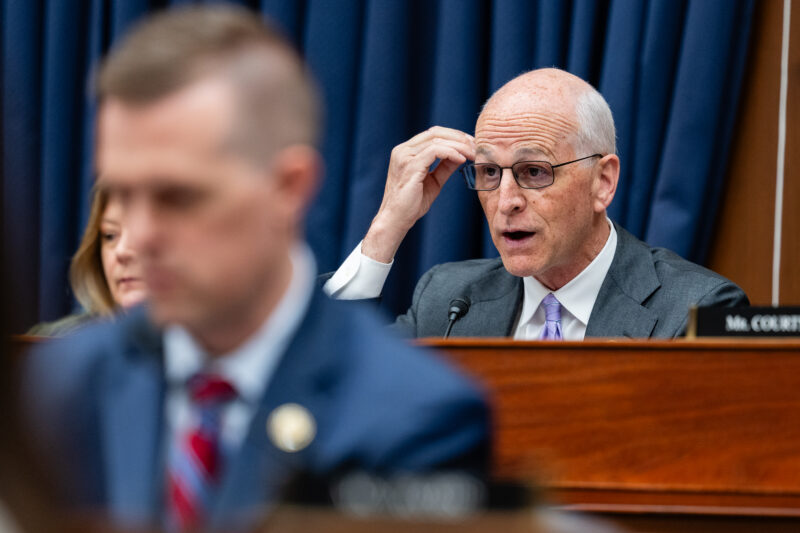
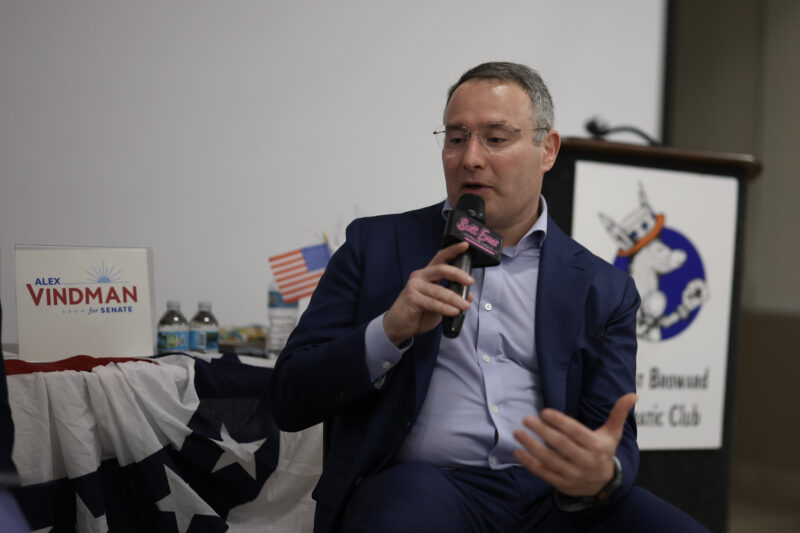


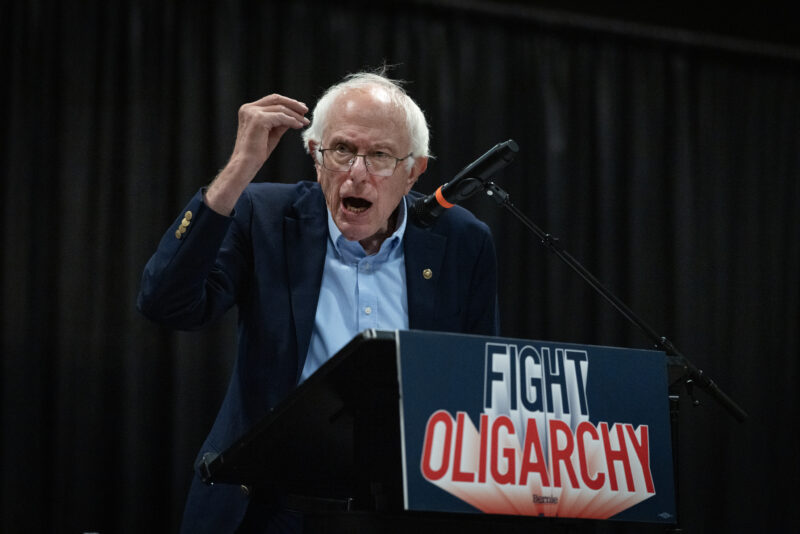











After 104 members of the House voted last week in favor of an amendment to eliminate military aid to Israel, pro-Israel activists who have spent years building ties with lawmakers are now wondering how to approach those relationships
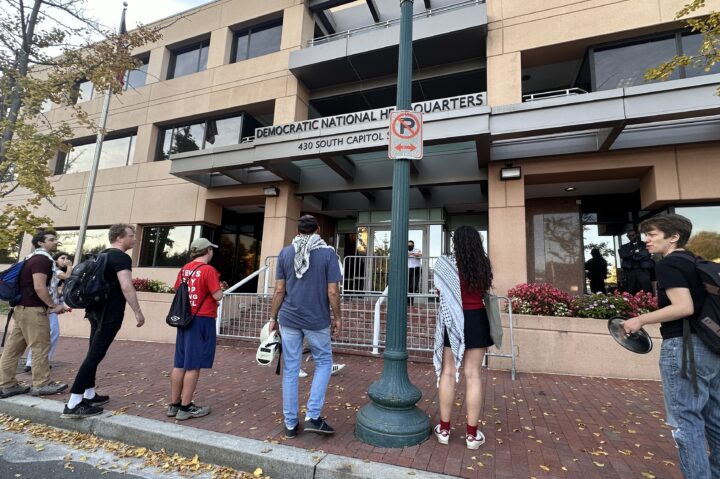
(Yasin Ozturk/Anadolu via Getty Images)
A group of demonstrators hold a noise protest outside the Democratic National Committee Headquarters in Washington D.C., United States on October 31, 2024.


 Add JewishInsider on Google
Before AIPAC began spending tens of millions of dollars per election cycle on campaigns, back when it was purely an advocacy organization that touted its relationships with many of the 535 members of Congress, the pro-Israel group used to describe its approach to Capitol Hill with a cheeky, upbeat motto: “You have friends, and you have potential friends.”
But when former Bay Area AIPAC leader Naomi Lauter used to invoke the slogan, she added a third category: “Friends who have a little less potential than others.” Lauter died in 2017, but the saying still resonates with her son, Sam, who is a major Democratic donor and pro-Israel activist in his own right — and who is now wondering whether that third category might be growing even larger.
After 104 members of the House voted last week in favor of an amendment to eliminate all $3.3 billion in annual military aid to Israel, pro-Israel activists across the country who have spent years building ties with lawmakers are now wondering how to approach those relationships following a vote that some see as a betrayal. Even many longtime Israel supporters — including Reps. Jack Auchincloss (D-MA), Glenn Ivey (D-MD), Laura Friedman (D-CA), Nancy Pelosi (D-CA) and Pat Ryan (D-NY) — voted for the amendment, which did not pass. Pro-Israel activists who spent years building trust and gaining access to these lawmakers are now grappling with whether whether those relationships are still worth their continued investment.
To borrow from AIPAC’s old slogan: Are the lawmakers who voted for the amendment still considered friends — or potential friends — of the U.S.-Israel relationship? Or was their vote against the annual aid package to Israel, and against a bill that was opposed by a wide swath of nonpartisan and Democratic Jewish groups, a crossing-the-Rubicon moment that cannot be undone?
Friends and backers of the members of Congress who voted for the amendment are struggling to answer those questions. Several who spoke to Jewish Insider said that a single vote on a measure that was sure to fail should not spell the end of years of friendship. But even as they acknowledged the seismic reverberations of the vote, many also spoke of the need to tread carefully at a politically uncertain moment.
“Our issues are too important to not hold onto the ability to have a conversation with the person, because the votes are not going to end. It’s not going to all of a sudden stop,” Sam Lauter said. He talked to several members of Congress in the days before the vote, including Pelosi, urging them to vote no.
“It’s not a good trend line, but also this idea that we’ve lost the Democrats — let’s not create self-fulfilling prophecies here. There’s an opportunity for us to turn some of this around,” Tyler Gregory, CEO of the Bay Area Jewish Community Relations Council, said. “I am optimistic that several of them could be flipped if the vote had actual consequences, and I think that’s the job ahead of us.”
“Now, if someone said to me, ‘You know what, I voted yes, and my reasoning was because actually I don’t think we should be allies with Israel anymore, and I have no interest in the friendship with the community or the country, I’m done.’ Well, OK, that friendship’s done,” said Lauter.
This vote was destined to fail, but Tyler Gregory, CEO of the Bay Area Jewish Community Relations Council, called it “a dress rehearsal.” It will not be the last time U.S. aid to Israel comes up for a vote, and Gregory said he will need to lean on those lawmaker relationships in the future when the vote is more consequential.
“It’s not a good trend line, but also this idea that we’ve lost the Democrats — let’s not create self-fulfilling prophecies here. There’s an opportunity for us to turn some of this around,” Gregory said. “I am optimistic that several of them could be flipped if the vote had actual consequences, and I think that’s the job ahead of us.”
Halie Soifer, who served as an advisor to then-Sen. Kamala Harris (D-CA), now leads the Jewish Democratic Council of America, which urged members to vote against the amendment — as did Democratic Majority for Israel and the more liberal J Street. She called the vote “an inflection point,” but said the group is not considering removing its endorsements of lawmakers who supported the amendment.
“We’ve maintained a very consistent, principled position with regard to aid for Israel, and it’s not us that shifted,” Soifer said. “There is clearly a fast-moving shift within the Democratic Party itself, and we’re considering what that means.”
When asked whether she had ever seen so many candidates shift their positions on an issue within a single two-year election cycle, Soifer answered directly: “Absolutely not.”
AIPAC responded to the vote by no longer allowing donations, through its political action committee, to the 18 lawmakers it endorsed who voted for the measure.
“AIPAC members across the country watched this vote closely and are making sure their representatives in Congress who stood on principle hear that they’re appreciated,” AIPAC spokesperson Deryn Sousa told JI.
“The reality is these are our representatives. There is a relationship that we have with most of them, and they continue to be our representatives today, tomorrow, next week,” said Jeremy Burton, the CEO of the Greater Boston Jewish Community Relations Council. “The ones who say, ‘No, I’m still committed to Israel’s security and the Jewish community,’ things like that — and I’m not going to quote any one of them — but the ones who are saying that in these private conversations, it’s incumbent upon them now to show what that means.”
Many activists who have relationships with lawmakers are taking the long view, arguing that cutting ties now will not help in future battles. For a lot of them, Israel is not the only issue about which they are concerned.
Jeremy Burton, the CEO of the Greater Boston Jewish Community Relations Council, said he knows that some Jewish Bostonians have told Massachusetts’ congressional representatives, all of whom voted for the amendment, that this moment represents a “break point.” But as the leader of a nonpartisan organization, he cannot end relationships over a disagreement on one vote. He has other issues — such as nonprofit security funding and cooperation on fighting antisemitism — to consider.
“The reality is these are our representatives. There is a relationship that we have with most of them, and they continue to be our representatives today, tomorrow, next week,” said Burton. “The ones who say, ‘No, I’m still committed to Israel’s security and the Jewish community,’ things like that — and I’m not going to quote any one of them — but the ones who are saying that in these private conversations, it’s incumbent upon them now to show what that means.”
For one Jewish former Biden administration staffer, voting to cut off security aid to Israel must be the red line.
“They’re like, ‘Don’t worry about it. It’s just symbolic.’ Well, no, you’re telling us not to care about it, but clearly other people care about it, and that’s why you’re voting in that way,” said the staffer, who requested anonymity to speak about communal organizations they support. “I don’t think the Jewish community should be giving these people a pass right now, and I believe that’s actually creating an incentive for them to actually take these votes against us and against our interests, because there’s no political consequence or repercussions for them.”
House Minority Leader Hakeem Jeffries (D-NY) said on Thursday that Democrats will adopt a new approach to Israel if the party regains control of the House in November. “The current status quo is unsustainable,” said Jeffries, who voted no on the amendment.
“On one hand, I am really disappointed to see some true friends of mine and Israel vote for the [amendment] or vote ‘present,’” said Jennifer Laszlo Mizrahi, a Jewish philanthropist and disability rights advocate in Maryland. “On the other hand, as an American and as a Jew, I am horrified by how Netanyahu and his administration treat Palestinians in the West Bank, give Haredim the ability to be draft-dodgers and don’t show empathy when legitimate security operations accidentally kill an innocent child.”
Many of the 103 Democrats who voted “yes” released statements saying that they still support America’s relationship with Israel, but that they viewed the amendment as a symbolic way to tell Israeli Prime Minister Benjamin Netanyahu that they disagreed with his handling of the wars in Gaza and Iran.
In doing so, they tapped into a difficult reality for many of the Jewish activists who wanted to see the measure defeated. Many of those activists also wish Netanyahu would do more to take the concerns of Democrats and liberal Jews into account, even as they think Washington should continue supporting Jerusalem’s security needs.
“On one hand, I am really disappointed to see some true friends of mine and Israel vote for the [amendment] or vote ‘present,’” said Jennifer Laszlo Mizrahi, a Jewish philanthropist and disability rights advocate in Maryland. “On the other hand, as an American and as a Jew, I am horrified by how Netanyahu and his administration treat Palestinians in the West Bank, give Haredim the ability to be draft-dodgers and don’t show empathy when legitimate security operations accidentally kill an innocent child.”
In Los Angeles, Democratic donor and pro-Israel activist Howard Welinsky said many of the “yes” votes were a result of political “noise” — namely, concerns about current or future primary challengers from the left. “It’s the volume of the noise, and some members of Congress have more intellectual capacity to withstand it, and others have less,” said Welinsky.
So he is holding out hope that a change in Israel’s political leadership might help rectify Israel’s plummeting support among Democrats. “I just pray that Oct. 27” — the day Israel goes to elections — “gives Israel a new prime minister, and we can turn a page,” said Welinsky.
A night of Pride-themed celebration doubled as a tribute to Milgrim, the embassy staffer killed last year, whose work included engaging LGBTQ Jews

Christina Sher
Comedian Judy Gold speaks at a Pride event hosted by the Israeli Embassy at Adas Israel Congregation in Washington on June 30, 2026.
Dozens of LGBTQ Jews and allies gathered Tuesday evening at Adas Israel Congregation in Washington for a Pride event hosted by the Israeli Embassy, with speakers honoring the legacy of slain embassy staffer Sarah Milgrim and reflecting on the challenges she faced in progressive spaces, despite being an ally of the community.
The event, held as Pride celebrations concluded at the end of June, paid tribute to Milgrim, who helped lead the embassy’s outreach to LGBTQ communities before she and her partner, Yaron Lischinsky, were killed in a shooting outside the Capital Jewish Museum in May 2025.
Comedian Judy Gold, a longtime advocate for LGBTQ rights and outspoken critic of antisemitism, headlined the evening with a stand-up set blending humor with reflections on Milgrim’s advocacy.
“It takes a very special person to be the LGBT liaison for the Israeli [Embassy], and boy was she special,” Gold said.
Gold also recalled participating in two LGBTQ delegation trips to Israel organized by Milgrim: As the group ran to bomb shelters amid Iranian missile attacks, she got a laugh when one delegate showed up with a different guy each time the alarm sounded, “so that was exciting,” she joked.
Catherine Szkop and Abbie Talmoud, colleagues of Milgrim who were several feet away when the deadly shooting occurred, described her as a bridge-builder who worked to engage communities that had become increasingly hostile to Israel after Hamas’ Oct. 7 attacks.
“She served as the director of civil society and affairs. Her work focused on engaging communities that became deeply critical of Israel, or even opened up anti-Israel [sentiment] after Oct. 7,” Talmoud said of Milgrim.
Szkop said Milgrim struggled with being pushed out of progressive spaces because of her work at the Israeli Embassy, despite sharing many of the community’s values.
“She identified with the progressive community on a lot of issues,” Szkop shared, “but when she started working at the Israeli Embassy, the [community’s] anti-Israel sentiment was too strong and ostracized her from her friends” and “the moment it turned to Israel, they exiled her.”
“You should never have to deny who you are or an aspect of your identity in order to belong somewhere,” Szkop concluded.
The reception featured Pride-themed decor, including a lectern bearing three flags: American, Israeli, and Pride. Closing out the event, LGBTQ community members and allies danced to Omer Adam while waving rainbow LED sticks.
The Pax Silica initiative is designed to help allies reduce their dependence on China
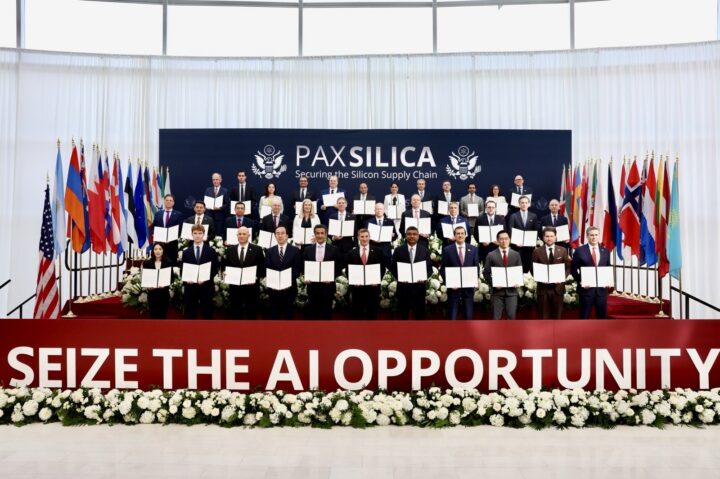
Nine new parties signed on to Pax Silica during the Pax Silica Summit at the U.S. Institute of Peace in Washington, June 25, 2026
Under Secretary of State for Economic Affairs Jacob Helberg/X
The State Department announced on Thursday that nine new parties had signed on to Pax Silica, the U.S.-led initiative uniting American allies with the aim of developing global supply chains for artificial intelligence and the production of semiconductors, chips, critical minerals and energy sources to reduce global dependence on China.
The announcement came from Jacob Helberg, the under secretary of state for economic affairs and the architect of the project, during the Pax Silica Summit at the U.S. Institute of Peace in Washington, which brought together artificial intelligence and tech companies, prominent investors, senior business executives and top officials from at least two dozen countries seeking partnerships and investment opportunities with fellow signatories of the alliance.
Helberg told attendees that the European Commission, the Netherlands, Germany and Greece had officially joined the alliance and that Argentina, Chile, Costa Rica, Kazakhstan and Panama would sign on this week, bringing the total number of signatories to 22.
Helberg also suggested Italy would soon join the alliance and said that 35 countries had signed on to a global AI opportunity declaration that the U.S. had spearheaded as part of the initiative.
Among those in attendance for the opening of the two-day summit were American Israeli venture capitalist Michael Eisenberg, U.S. Ambassador to India Sergio Gor, Indian Information Technology Minister Ashwini Vaishnaw and former Italian Ambassador to the U.S. Armando Varricchio.
The summit also was the setting for the “first trilateral economic dialogue” between the U.S., Israel and the UAE, Helberg said., where he was joined by Israel’s National AI Directorate head, Brig.-Gen. (Res.) Erez Eskel, and United Arab Emirates Minister of State Saeed Bin Mubarak Al Hajeri.
Helberg posted a photo of the three men standing in front of their respective countries’ flags to X and said, “In President Trump’s first term, the Abraham Accords showed peace builds prosperity. In his second term, under Secretary Rubio leadership, Pax Silica is showing shared supply chains builds shared economic security.”
It came more than seven months after the State Department launched Pax Silica with the goal of boosting diplomatic ties between U.S. allies by encouraging the partnerships that create shared economic incentives. Israel was one of the founding nations of Pax Silica when the U.S. launched the initiative last December alongside Australia, Japan, Singapore and South Korea. The United Arab Emirates and Qatar joined the alliance in January.
Helberg used his remarks on Thursday to encourage U.S. allies to embrace collective efforts to address shared challenges on AI and energy.
“Governments everywhere are asking many of the same questions,” Helberg said. “How do we build trusted AI ecosystems? How do we secure resilient supply chains? How do we ensure our citizens share in the prosperity that AI can create?”
“No country can answer those questions alone,” he continued.
The undersecretary of state touted to Jewish Insider in February Israel and Qatar’s participation in the expanding alliance, despite the deeply hostile relationship between the two countries, as proof that bypassing traditional security agreements and instead encouraging increased economic cooperation through U.S.-led frameworks can create pathways to diplomacy.
“This is the first time that Israel and Qatar have been brought under the same framework and signed the same document to actually agree that shared supply chains are more important than shared ideologies,” Helberg told JI at the time.
He told the Financial Times this week that Israel and the UAE’s successful use of American technology in building out their respective tech sectors served as evidence that the U.S. was not using the initiative to solely promote its own interests. “These countries punch far above their weight, so that should be a really strong counterexample to folks,” he said.
Helberg posted on X on Thursday that the U.S., Israel and the UAE held a first trilateral economic dialogue on the margins of the summit. “In President Trump’s first term, the Abraham Accords showed peace builds prosperity,” he said. “In his second term, under Secretary Rubio leadership, Pax Silica is showing shared supply chains builds shared economic security.”
Helberg unveiled several new ventures on the first day of the summit, including the Pax Silica Artificial Intelligence Assistance Project, which he described as a service “for Pax partners that ship high-value AI supply chain products through Panama,” and PaxPass, an application he said was aimed at streamlining the movement of “the critical goods that power the AI economy,” along with a $50 million commitment from the U.S. to finance the platform. He also revealed plans for the U.S. and Kazakhstan to jointly establish an economic security zone in the Central Asian country to protect mineral security.
He announced the establishment of The Foundry School, a workforce development initiative partnering the State Department with Stanford University to “equip entrepreneurs, engineers and advanced manufacturing leaders across the Pax Silica economies.” Helberg said the State Department would also sign a memorandum of understanding with Stanford to “develop a first-of-its-kind curriculum for institutions across Pax Silica economies to adopt and teach.”
“Our hope is that this is only the first of a handful of such zones across the Pax Silica network, creating a connected ecosystem where investment, innovation and trusted production reinforce one another across partner countries,” Helberg told attendees.
The congressman said he’s confident Congress will pass the Jewish American Security Act by the end of the year
Marc Rod
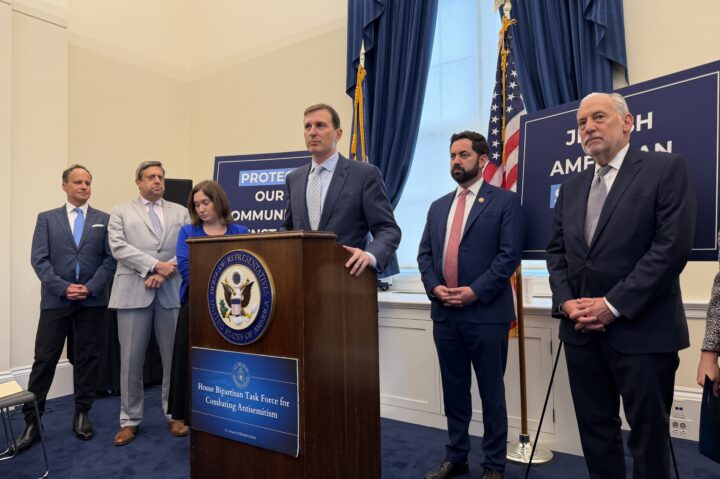
Rep. Dan Goldman (D-NY) speaks at a press conference announcing the Jewish American Security Act being introduced in the House on June 10, 2026.
Rep. Dan Goldman (D-NY), the chair of the House antisemitism task force, argued in an interview with Jewish Insider on Wednesday that the Jewish community needs non-Jewish allies to help fight antisemitism, following a press conference introducing the Jewish American Security Act (JASA), a bipartisan and bicameral package aimed at tackling attacks on Jewish institutions, campus antisemitism and online antisemitism.
“It’s really important that we gain and bolster allies from outside the Jewish community, because ultimately antisemitism is hate, and hate is easily transferable, and history has taught us that,” Goldman said. “The way we are going to combat antisemitism is not just through Jewish advocacy but through a broad coalition of people who support the democratic value of equal rights and social justice, and so we’re excited that this bill can be a vehicle towards bringing people of all backgrounds together to fight.”
Though some in the Jewish community feel that they’ve been abandoned by longtime allies since the Oct. 7 attacks, Goldman argued that it’s important to continue to reach out to and cultivate allies, in part because “Jewish community is too small to do it ourselves, and we need allies.”
Asked whether there are groups outside the Jewish community supporting JASA, Goldman said, “Broadly speaking, I’ve had really meaningful conversations with a lot of leaders in other communities, and I think that there is a recognition that it is incredibly important to have a united front against hate.”
In spite of Congress’ now yearslong struggle to pass legislation to address the significant rise in antisemitism since Oct. 7, 2023, Goldman said he’s confident that Congress will pass JASA before the end of the year.
The New York congressman said that “part of the reason you see such widespread bipartisan support, and you see so many of the Jewish organizations supporting it, is because we worked very intentionally to streamline it into things that can get bipartisan agreement, so that we can actually get it passed.”
“I’m very optimistic that we are going to pass it this year, because of that broad bipartisan support and because there are no poison pills,” Goldman continued.
He said that the bill’s sponsors have spoken to leadership on both sides of the aisle about the bill, and have received support for it.
Rep. Mike Lawler (R-NY), the lead Republican cosponsor of the bill in the House, said at the press conference that, as a representative of one of the largest Jewish communities in the country, “this issue matters.”
“I am grateful for the local law enforcement agencies in my district that coordinate very closely with our synagogues and with our yeshivas to protect our Jewish students, but it is not enough. We need additional resources to ensure everyone’s safety in New York. We’ve seen firsthand why this program matters,” the lower Hudson Valley Republican said, referring to Nonprofit Security Grant Program funding. “As a practicing Catholic who goes to church, fact is, I can walk into my church without fear. I can walk into my church without passing a security guard stationed outside. Jewish Americans don’t have that luxury, and it’s outrageous, and it should anger each and every one of us.”
He said the bill would also improve protections for Jewish students “by ensuring colleges and universities have clear accountability and enforcement mechanisms” and “increas[ing] transparency and accountability for online platforms as antisemitic content continues to spread across the internet.”
Rep. Jared Moskowitz (D-FL), a cosponsor of the bill, said at the press conference, “This bill shouldn’t be necessary. It shouldn’t be necessary. We shouldn’t have to do this. We’re not doing this because it’s optional. We’re doing it because it is necessary.”
“If people stop trying to hurt Jewish kids in preschools, we won’t have to build walls around them. If people stop trying to blow up synagogues, then we wouldn’t have to have armed guards at every entrance, but we’re seeing all over the country now people going to synagogues to stage foreign policy protests,” Moskowitz said. “We see people in the street, Jews in the street, wearing a Jewish star, having to put that Jewish star away, and if they don’t, they’re accosted.”
He said he saw firsthand the impact and necessity of NSGP funding when he served as Florida’s director of emergency management, where he was responsible for administering those grants at the state level.
Rep. Laura Gillen (D-NY), another supporter of the bill, told JI that antisemitism is an issue she’s been focused on since she was on the campaign trail, and said that the bill tackles many issues she pledged to address as a candidate.
“It talks about putting pressure on social media platforms to moderate hate speech, because we know that that is the hotbed of what is stirring up these hateful feelings — where people hide behind their computers, they say vicious vile things, and they create a lot of false information out there in the universe,” Gillen said.
She added that the security funding increase proposed in the bill, which puts NSGP funding at $1 billion, is also critical. “We saw they got a little bit more of a bump in [the] homeland security [appropriations bill], but we need a [much] bigger bump. There is a tremendous need across my district, and it’s not even just synagogues or yeshivas, it’s also other places of worship.”
Also speaking at the press conference were Amy Spitalnick, CEO of the Jewish Council for Public Affairs; Nathan Diament, executive director of the Orthodox Union Advocacy Center; Eric Fingerhut, CEO of the Jewish Federations of North America; Rabbi Jonah Pesner, director of the Religious Action Center of Reform Judaism; Jessica Bernton, director of congressional affairs at the American Jewish Committee; Lauren Wolman, senior director of government relations and strategy at the Anti-Defamation League; and Elizabeth Cullen, director of government relations at Hadassah.
The move marks the latest deterioration in the relationship between Jerusalem and Paris

Nathan Laine/Bloomberg via Getty Images
A display of air-to-surface munitions at the Elbit Systems Ltd. zone inside the Israel aerospace pavilion at the Paris Air Show in Paris, France, on Monday, June 16, 2025.
Israel is ending all defense procurement from France, the Israeli Defense Ministry said, citing Paris’ hostile posture toward Jerusalem and a desire to increase domestic production and purchases from allies.
“Israel will reduce all defense procurement from France to zero, replacing it with domestic Israeli procurement or purchases from allied countries,” Israel’s Ministry of Defense told Politico on Tuesday.
Maj. Gen. Air Baram, the director general of the ministry, said on Israel’s Channel 12 that the move is part of a larger effort to decrease military dependence on and partnerships with nations that have strained diplomatic relations with Israel.
The ministry also canceled meetings with France’s minister of the armed forces, instead insisting that “there will be no new professional engagement with the French military.”
The move is the latest rift in the bilateral relationship that has sharply deteriorated following the Oct. 7, 2023, terrorist attacks. During the Israel-Hamas war, France took a critical stance toward Jerusalem’s military conduct in the Gaza Strip and worked to pressure Israel to halt operations.
In September of last year, French President Emmanuel Macron became one of the first major U.S. allies to recognize Palestinian statehood. In that same month, Macron had said that Israel’s operations in Gaza were “making so many civilian casualties and victims that [Jerusalem is] completely destroying the credibility and image of Israel not only in the region but in public opinion everywhere.”
President Donald Trump has also expressed frustration with France for its actions amid the war in Iran, including prohibiting planes with military supplies destined for Israel from flying over its territory. He wrote on Truth Social that Paris has been “VERY UNHELPFUL” and that “The U.S.A. will REMEMBER!!!” — a post that surprised French officials.
Paris has also moved to limit Israeli participation in defense forums, barring dozens of Israeli companies from the Eurosatory 2024 exhibition, restricting their presence at the 2025 Paris Air Show and suspending export licenses.
Experts told Jewish Insider that the latest announcement is likely political posturing and will not have any practical impact on Israel given that defense ties between the two countries have already been on the decline.
“Israeli procurement from France was apparently quite limited and since the Israeli Ministry of Defense initiated the cut-off, they made the calculation that they could replace the items they obtain from France,” said Michael Eisenstadt, a fellow at The Washington Institute for Near East Policy. “I suspect there will be no practical consequence for Israeli manufacturers.”
A parliamentary report published in late 2025 found that France approved more than 200 dual-use export licenses to Israel in 2024 totaling €76.5 million — a roughly 60% drop from the previous year.
Eisenstadt noted that the latest action from Israel will not impact “collaboration between private companies or entities.” Existing agreements are expected to be upheld, and private firms can continue pursuing deals.
“Israel has lost patience with French criticism and unreliability,” Edmund Fitton-Brown, a former British diplomat and senior fellow at the Foundation for Defense of Democracies, told JI. “The fact is that Israel has historic reasons not to trust France, and now no longer needs France.”
Fitton-Brown said that moving forward Israel may increasingly “rely on the U.S. to represent its
interests in international affairs.” He similarly said that it will likely not have much impact on Israel.
“Israel is increasingly all-in with the U.S. as a defense partner, which makes diversifying defense supply an irrelevance,” Fitton-Brown said. “France has been the most disappointing of Israel’s European friends, adopting neutral or even hostile positions on a range of issues: recognition of a Palestinian state, a failure to back Israel fully against Hezbollah in Lebanon, ambivalence and obstruction regarding the U.S.-Israeli campaign against Iran.”
The Democratic lawmaker’s comments suggest he’s leaning towards voting against a war powers resolution on Iran
Tom Williams/CQ-Roll Call, Inc via Getty Images
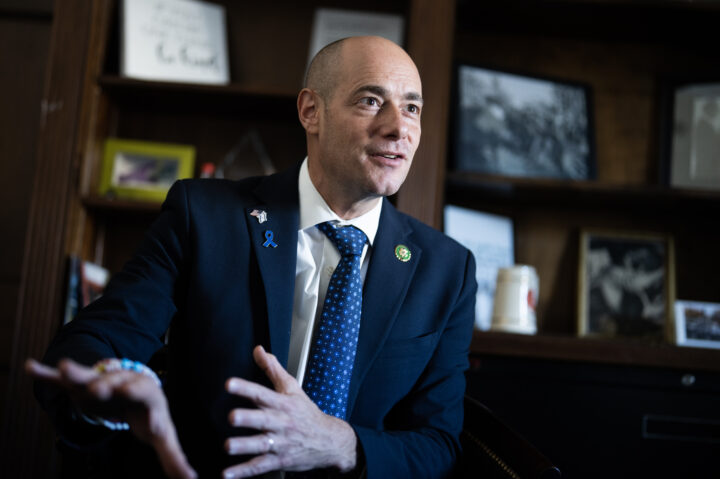
Rep. Greg Landsman (D-OH) is interviewed by CQ-Roll Call, Inc via Getty Images in his Longworth Building office on Friday, November 3, 2023.
Rep. Greg Landsman (D-OH) said that the U.S. and its allies “may very well need to take defensive action, targeting military assets in Iran,” in a statement shared with Jewish Insider on Wednesday.
While Landsman didn’t explicitly say in the statement that he intends to oppose the war powers resolution on Iran that may come to a vote before the House next week, his position suggests that he’s skeptical of that effort. Two House Democrats — Reps. Josh Gottheimer (D-NJ) and Jared Moskowitz (D-FL) — have already expressed outright opposition to the war powers resolution.
“Targeted strikes on known ballistic missiles and rocket infrastructure and other weapons depots, including nuclear assets, may very well save lives,” Landsman said. “The region and world would be a much safer place if the regime’s military capacity was leveled. These targeted strikes could prevent war, which should be the goal of any effort.”
“If targeted, defensive strikes are necessary, and these strikes are successful, the prospect of war and further violence is diminished. That’s what we should all want: an end to decades of bloodshed and mayhem by this regime. We should continue to work to weaken the regime’s ability to do harm,” Landsman added.
Emphasizing Iran’s long-standing pattern of terror throughout the region, including killing more than 30,000 demonstrators in two days last month, in addition to hundreds of Americans and fueling violence throughout the region, Landsman said that the U.S. has an opportunity to “end the bloodshed and mayhem.”
“For most of my life, the regime in Iran has caused bloodshed and mayhem. At some point, we have to say enough is enough, and begin to destroy its ability to kill innocent people, including its own citizens,” Landsman said. “If it weren’t for the regime, Yemenis, Iraqis, Lebanese, Palestinians, and Persians might all be free.”
Though the administration continues efforts to negotiate with Iran, Landsman said that the regime has “yet to show any interest in disarming or pulling back from funding violence and terror in the region. Instead, the regime is threatening further attacks on Americans and our allies.”
Landsman said that, in the case of any military action, the administration has an obligation to remain in close touch with senior congressional leaders and make its case to the American public. “This is true for targeted strikes on military assets, even if the purpose is to prevent war and further violence,” Landsman said.
“Going to war, which would be boots on the ground and an extended or ongoing military engagement, does require congressional approval,” he continued.
Former Democratic Rep. Kathy Manning: ‘There is no doubt that we are living through very difficult times for American Jews’
Matt Rourke/(AP
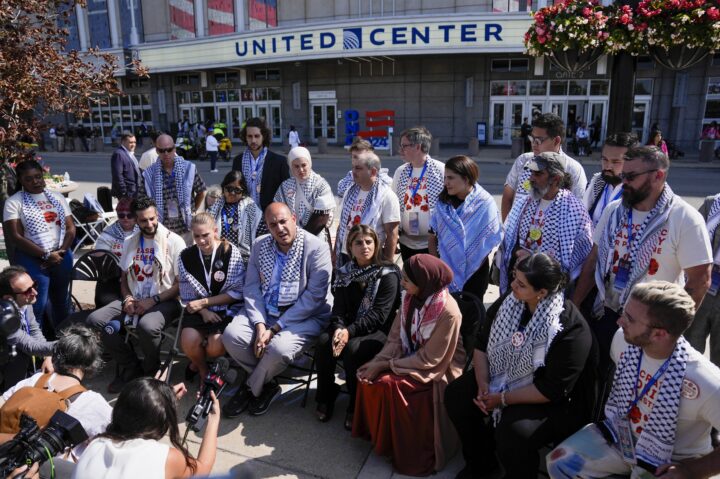
Uncommitted delegates hold a press conference outside the United Center before the Democratic National Convention Thursday, Aug. 22, 2024, in Chicago.
The debate over Israel within the Democratic Party has long been a particularly acute source of tension, in the wake of a protracted war in Gaza that deepened internal divisions over America’s increasingly contested relationship with one of its closest allies.
Recently, however, many Jewish and pro-Israel Democrats say they have observed a distinct and troubling new shift in that debate, as the range of politically acceptable opinions on Israel has strayed far outside the mainstream, with little pushback from party leaders.
Amid growing claims of Israel committing genocide as settled fact, openly pro-Hamas demonstrations, ongoing efforts to demonize pro-Israel engagement in Democratic primaries and rejections of Israel’s right to exist as a Jewish state, the political atmosphere is raising questions about whether the party is willing to collectively draw red lines around creeping extremism or if it is now accommodating anti-Israel sentiment that until not long ago had been more commonly viewed as off-limits.
While hostility toward Israel has been building for some time over its military assault in Gaza sparked by Hamas’ Oct. 7, 2023, attacks, Jewish Democrats warn that the party’s acquiescence to its anti-Israel wing risks alienating a core constituency that could have negative consequences in the midterms as well as the upcoming 2028 presidential election.
Their worries have dovetailed with a sharp rise in anti-Israel and antisemitic invective from the right that some Jewish Democrats contend is inseparable from a deeper antipathy that transcends traditional party lines.
“For those of us who care about a strong U.S-Israel relationship, there is reason to be concerned,” said Howard Wolfson, a longtime advisor to former New York City Mayor Michael Bloomberg. “The challenge is profound.”
Even as he said that challenge also extends to the right, Wolfson voiced apprehension that in his own party, “there are Democrats thinking of running for president who have said that they won’t take money from pro-Israel” political donors “and have thrown around the word genocide” while describing Israel’s conduct in Gaza. The Jewish community “has a real problem,” he lamented to Jewish Insider in a recent interview. “It is a subject of considerable angst and debate.”
Sara Forman, the former executive director of the New York Solidarity Network, an advocacy group that backs pro-Israel Democrats for state and local office, said, “The willingness to accommodate absurd assertions about Israel is a cancer that is spreading unchecked” within “the left ranks of the Democratic coalition” in addition to “factions of the Republican right wing,” a dynamic she and others attributed, in part, to the polarizing influence of online algorithms that frequently reward incendiary content.
“Right now,” she added, “I hate to say we are in an extremely frustrating situation where the identity of the Democratic Party is being redefined, and where a majority of center-left traditional liberal Jews are left somewhere in the wilderness.”
“To me,” she concluded, “it’s depressing.”
“It is very troubling for American Jews that we are even having to have this conversation,” Jon Reinish, a Democratic strategist often involved in Jewish and pro-Israel causes, told JI. “Putting aside what one thinks” about Israel, he added, “to see it become a flashpoint in politics feels pretty shitty, to be sure.”
The Jewish state, he told JI last week, “is something that transcends language in a political primary and goes back to something deep within us emotionally, in terms of our family and how we think of our own history.”
“In the last presidential election we saw Jews, especially in the suburbs, swing more toward the Republican candidate than they had since” Ronald Reagan in 1980, Reinish noted. “If I’m Democratic leadership, I would be looking very closely at that.”
Over just the past few weeks, the scope of tolerable views on Israel has slid into markedly antagonistic territory, according to interviews with more than a dozen Jewish and pro-Isrsel Democrats who voiced a growing sense of alarm over the party’s direction.
Earlier this month, for instance, Rep. Alexandria Ocasio-Cortez (D-NY) used her first appearance at the Munich Security Conference to not only repeat calls for conditioning U.S. aid to Israel but also to suggest that such support had enabled a genocide in Gaza. Though her comments were not new, that she had made them on one of the world’s most high-profile foreign policy stages underscored how her positions are continuing to gain greater currency in the party.
Some observers were also unnerved by Ocasio-Cortez’s decision to level an accusation toward Israel of genocide while in Germany, seen as insensitive to the history of the Holocaust.
Jewish Democrats say they have been unsettled by the growing ease with which anti-Israel critics have invoked charged claims of genocide without understanding its meaning or historical significance. “The genocide conversation,” according to Steve Fulop, the former mayor of Jersey City who now leads the Partnership for New York City, an influential business advocacy group, “has unfortunately monopolized the left and has become more commonplace and accepted.”
Fulop, a grandson of Holocaust survivors, said the issue was not a major focus of conversation when he ran an unsuccessful primary campaign for governor of New Jersey last year. “In the last six months,” he told JI last week, “it has become more prevalent and more of a talking point.”
This month, the subject emerged in a special election for a House seat in a wealthy northern New Jersey suburb, where a far-left candidate, Analilia Mejia, clinched the Democratic nomination — beating a former congressman, Tom Malinowski, who had faced outside spending from AIPAC due to his support for conditioning aid to Israel.
While AIPAC drew widespread backlash for its role seen as unwittingly helping to elevate a harsher critic of Israel to the House in Mejia, many pro-Israel Democratic elected officials in the state have since coalesced behind the nominee, suggesting her staunchly anti-Israel views are little impediment to winning the party’s broad support. In addition to accusing Israel of genocide, the only candidate in the primary to do so, Mejia, a progressive activist, denounced Israel after the Oct. 7, 2023, attacks without mentioning Hamas and expressed “incredible discomfort” with Israel’s existence as a Jewish state.
Even as Malinowski, for his part, disagreed with Mejia’s anti-Zionist sentiments, he echoed other Democrats who chose to endorse Mejia in the April special general election because, he wrote last week, he “strongly” believes that the “seat must remain in Democratic hands.”
Speaking broadly about anti-Israel currents now shaping the party, one Jewish Democratic member of the House said they have been unnerved by what they called an “obsession” with Israel among many far-left activists and candidates that reflects “litmus tests” not evenly applied to other key foreign policy issues.
“The line of what’s acceptable has shifted massively, especially since Oct. 7,” the House member, granted anonymity to speak candidly about the party, told JI last week.
“What I’m watching right now, in 2026, is a breakdown in respectful language toward the Jewish community,” Joel Rubin, a progressive strategist and former State Department official, explained in an interview with JI last week. “It is very troubling and implies hostility that is undeserved — considering nobody should be treated to that kind of language. But it is also really dangerous for the Democratic Party and our electoral prospects to have this internal hostility and disunity.”
In New York City, which elected a fierce critic of Israel as mayor last November, Jewish Democrats say that line has moved in a particularly troubling direction. More recently, for example, Brad Lander, a former city comptroller now challenging Rep. Dan Goldman (D-NY) in a heavily Jewish House district, drew scrutiny for hiring a campaign consultant who had boosted antisemitic conspiracy theories using a pseudonymous X account that also celebrated Iran and Hamas, among other controversial social media posts.
Even as Lander fired the consultant, Kaif Gilani, after his online activity was uncovered by JI earlier this month, the episode still fueled questions about whether he was adequately vetted, given that the consultant had established a profile as a well-known promoter of New York City Mayor Zohran Mamdani during the recent election. It also underscored just how common such extremism has now become in New York City — where protesters have in recent months openly chanted their support for Hamas outside synagogues.
Meanwhile, leading progressive lawmakers such as Ocasio-Cortez and Rep. Ro Khanna (D-CA), both of whom are seen as potential presidential contenders, have avoided publicly distancing themselves from a popular far-left streamer, Hasan Piker, who recently sided with Hamas while sharing his views on one of those protests, near a synagogue in Queens hosting an event promoting Israeli real estate investment.
Joel Rubin, a progressive strategist and former State Department official now at work on a book about Democratic foreign policy, said he interprets such rhetoric as part of a broader “political tactic by some folks in the base to try to silence Jewish voices and to intimidate them into not advocating on these issues.”
“What I’m watching right now, in 2026, is a breakdown in respectful language toward the Jewish community,” he explained in an interview with JI last week. “It is very troubling and implies hostility that is undeserved — considering nobody should be treated to that kind of language. But it is also really dangerous for the Democratic Party and our electoral prospects to have this internal hostility and disunity.”
“There has always been this struggle within the Democratic Party of the argument, on every issue, of what is acceptable and what is not,” Sam Lauter, a political consultant and pro-Israel activist in the Bay Area, told JI. “With regard to Israel, that argument is not new, but what is new is how much it’s increased and what has become acceptable and what has been just dismissed.”
The increasingly charged tenor of conversation around Israel “is not the way Democrats should be thinking about communicating to voters if we want to win elections outside of deep blue areas,” Rubin suggested. “My biggest fear is that people are afraid to stand up and speak out.”
Kenneth Baer, a former Obama administration official who now directs a communications firm, sounded a similar note of caution. “Democrats are running to outdo each other to criticize Israel to curry favor with the massively online left and the interest groups that constitute the party,” he told JI recently. “The political dynamics of 2026 may mean this doesn’t matter in November, but in 2028 and beyond, running to the extremes is not a political winner.”
“There has always been this struggle within the Democratic Party of the argument, on every issue, of what is acceptable and what is not,” Sam Lauter, a political consultant and pro-Israel activist in the Bay Area, told JI. “With regard to Israel, that argument is not new, but what is new is how much it’s increased and what has become acceptable and what has been just dismissed.”
Still, he argued, pro-Israel Democrats have also “missed out” on the opportunity to forcefully defend their positions. “It has been very clear for years that people who disagree with us have been organizing at a grassroots level while building up support and making their viewpoint a part of the party mainstream,” he said. “And our community stopped engaging at that level years ago, which is why many of us have been screaming that this is a huge problem.”
Former Rep. Steve Israel (D-NY), who previously helmed the Democratic Congressional Campaign Committee, attributed the changing landscape in large part to what he views as a demographic shift driven by younger voters “generations away from romantic images of Israel” that are now “replaced by algorithm-fueled social media portraying Israel dropping bombs on schools and hospitals in Gaza.”
“In politics, perception is reality, and the reality for younger people is that Israel is wrong,” he told JI.
But he said it would be a miscalculation to disengage from that conversation. “Pro-Israel activists who don’t understand the need to push back proceed at their own peril,” he said. “You can’t surrender the narrative, which means supporters of Israel on both sides of the aisle need to find a much more effective narrative, particularly toward young voters.”
Many pro-Israel activists are at a loss, however, for how to recapture the debate, as Middle East policy now appears likely to be a focus of the next presidential election.
“It’s easy to observe a problem and then not have specific ideas on the solution,” Israel told JI. “That is a fundamental question now.”
“I don’t have a great answer, to be honest with you,” said Wolfson, the Bloomberg advisor. “I find it is far easier to identify the breadth of the problem than to identify a solution.”
According to Lauter, “the Overton Window has shifted” for Democrats, “and what needs to also shift is our community’s understanding of how to deal with it and approach it.”
“Let’s see how the midterms go and which candidates jump in,” said Aaron Keyak, the deputy special envoy to monitor and combat antisemitism in the Biden administration who now serves on the board of Combat Antisemitism Movement. “But in the lead-up to 2028,” he told JI, “the Middle East policy discussion will certainly be more prominent.”
“Regardless of what we think or say today, the particular policy conversation leading up to 2028 is going to be driven by the candidates, so until we can fill out the answer to the ‘what’ and ‘why’ questions, we need to be able to answer the ‘who’ one,” Keyak added.
In the meantime, said former Rep. Kathy Manning (D-NC), who is now the board chair of Democratic Majority for Israel, the party still boasts a number of pro-Israel elected officials as well as candidates, including some her group recently announced it is endorsing in a range of contested House primaries.
“There is no doubt that we are living through very difficult times for American Jews,” she told JI in a recent interview, pointing to what she described as “unprecedented condemnation” of the U.S. alliance with Israel from both sides of the aisle. “What gives me hope,” she said, “is I know from my experience campaigning in a purple state in a competitive seat that the vast majority of Democrats still believe that Israel has the right to exist as a Jewish state and has the right to defend itself and its people.”
“We don’t have to love Israel,” but voters should understand the strategic benefits of working with a key Middle East ally, Hank Sheinkopf, a veteran Democratic strategist in New York City, said. “It ain’t about Jews,” he told JI. “It’s about the future of the United States of America.”
As the midterms near, Manning maintained that nominating pro-Israel Democrats will be a crucial step toward reclaiming the House. “The seats that are going to make the difference to taking back the majority are seats where candidates have to appeal not just to Democrats but also to independents and Republicans,” she said. “I think that it’s important for us to understand where voters are, regardless of what the loudest voices online or on the stage might be saying.”
Hank Sheinkopf, a veteran Democratic strategist in New York City, agreed with that sentiment, arguing that pro-Israel party members should be seeking to push the debate “back to the middle” and pressing a “straightforward geopolitical argument” to highlight the advantages of the U.S.-Israel relationship rather than relying on expenditures that have proven to be divisive in primaries.
“We don’t have to love Israel,” but voters should understand the strategic benefits of working with a key Middle East ally, Sheinkopf said. “It ain’t about Jews,” he told JI. “It’s about the future of the United States of America.”
Julie Menin was elected the first Jewish speaker of the New York City Council on Wednesday
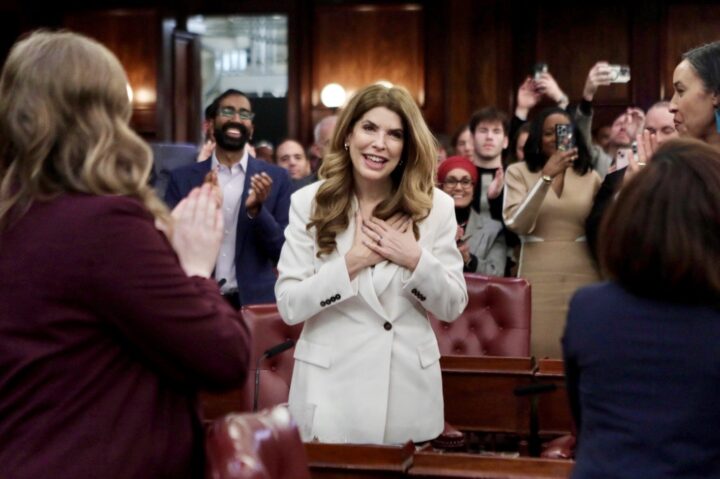
Julie Menin/X
New York City Councilmember Julie Menin is unanimously elected Council speaker on January 7, 2026.
Julie Menin’s election on Wednesday as speaker of the New York City Council was a reassuring sign to Jewish leaders who have long seen the 58-year-old centrist Democrat as a key ally and believe that she will act as a check on Mayor Zohran Mamdani with regard to issues involving Israel and antisemitism.
In a unanimous vote, Menin, a pro-Israel lawmaker and veteran city official who lives on the Upper East Side, became the council’s first Jewish speaker, pledging in her victory speech to focus on “dissolving division” and to “calm tensions” as she prepares to work with a mayor whose hostile views on Israel have long been a defining characteristic of his political ascendance.
“We live in a day with the first Muslim mayor of New York City and now the first Jewish speaker of the council serving at the same time,” Menin said on Wednesday.
Despite the positive tone, Menin, who as speaker now holds the second-most powerful elected role in city government, is still facing the looming prospect of conflict with Mamdani over their differing stances on Israel, which has already animated their nascent relationship.
In her speech, Menin alluded to some tensions that could stoke divisions, insisting that “we must never jeopardize a New Yorker’s right to worship.”
“Because we cannot let what happened outside Park East Synagogue ever happen again, at any house of worship,” Menin said, referring to a protest outside a Manhattan synagogue in November that targeted an event about immigration to Israel and featured chants including “death to the IDF” and “globalize the intifada,” a slogan that Mamdani has refused to condemn.
Mamdani had faced intense criticism after he had admonished the synagogue for promoting what he called “activities in violation of international law,” a statement he later revised.
More recently, after Mamdani had repealed a pair of executive orders tied to Israel and antisemitism on his first day in office last week, Menin said in an interview with The New York Post that she called the mayor to voice her concerns, noting there will “obviously be continued conversation around this.”
Menin added in a separate interview with The New York Times published on Wednesday that she had a “productive conversation” with Mamdani regarding his decision to rescind an executive order issued by former Mayor Eric Adams that adopted a working definition of antisemitism used by the International Holocaust Remembrance Alliance, which labels some criticism of Israel as antisemitic.
While Mamdani indicated during the election that he would seek to invalidate the order, the move triggered widespread backlash from Jewish leaders who said it raised questions over his commitment to effectively fighting antisemitism.
Menin, for her part, telegraphed a more diplomatic position to the Times, even as she had said she was “extremely concerned” by the repeals. “It’s one tool that can be utilized,” she said of the definition. “It’s obviously not the only tool.”
Her assessment underscores what Jewish leaders close to Menin characterized as an even-keeled and largely unflappable approach to governance, which could now be tested on issues she has described as intensely personal.
Menin, a daughter and granddaughter of Holocaust survivors, has long warned of rising antisemitism in New York and has advocated for increased funding to help promote Holocaust education. Menin visited Israel during a solidarity trip after the Hamas terror attacks of Oct. 7, 2023 — after which she introduced a program to send eighth graders to the Museum of Jewish Heritage to raise awareness about the global history of antisemitism.
Chris Coffey, a Democratic strategist who has served as an informal advisor to Menin, said she is “results-oriented and not focused on labels,” while predicting “she will work with the mayor when she can.”
“There may be times when they don’t agree and they will work through it,” he told Jewish Insider earlier this week, saying Menin is “more interested in results than drama.”
Yeruchim Silber, director of New York government relations at Agudath Israel of America, an Orthodox advocacy group, said that Menin “has a long history of working with the Jewish community,” calling her “an important part of the [former New York Mayor Bill] de Blasio administration,” when she led efforts to promote participation in the 2020 census.
He told JI he was “confident she will be able to work collaboratively with” Mamdani’s administration “on all issues important to the community.”
Still, other related issues could emerge as a more challenging test, as Jewish leaders speculate about what actions Mamdani will take next. One point of major tension stems from the partnership between Cornell University and Israel’s Technion, which the mayor’s team had indicated during the election that he would reassess.
Menin, a staunch opponent of Israel boycotts, has praised the joint Cornell Tech campus on Roosevelt Island, which sits in her district, as a crucial hub for local tech and business innovation. “That is an area, of course, of disagreement,” Menin said last month regarding Mamdani’s skepticism of the partnership.
A spokesperson for Menin did not respond to a request for comment from JI on her differences with the mayor.
Menin and Mamdani have in recent weeks largely struck a collaborative tone, appearing at their first joint press conference on Monday to sign executive orders to counter deceptive business practices such as junk fees. Menin has emphasized a shared focus on affordability goals including universal daycare, a key priority of Mamdani’s fledgling administration.
But their courteous public relationship belies other underlying tensions. For his part, Mamdani — who never formally voiced a preference in the contest for council speaker — had privately sought to thwart Menin’s effort as she consolidated backing from a range of members and locked up a supermajority several weeks before the Jan. 1 inauguration. Last month, in a notable snub, Mamdani also did not include Menin in a group of more than 100 elected officials he picked to advise his transition.
Menin, meanwhile, declined to endorse Mamdani, and during the primary chose not to join a summer meeting he had arranged with local Jewish elected officials to address their concerns about his critical views on Israel.
Now that they are working together, some Jewish allies of Menin said they expect that she will put her differences with Mamdani aside, unless provoked to take action with regard to key issues on which she is not aligned with the mayor.
One Jewish leader close to Menin, who asked to remain anonymous to speak candidly, said the new speaker “will be willing to partner with” Mamdani’s administration “to improve the city,” but suggested that it is in the mayor’s “hands to stop doing actions that isolate and antagonize the Jewish community.”
“She is definitely of a mindset of wanting to work together but doing what he did on inauguration day was definitely viewed as a first punch,” the Jewish leader told JI, referring to the executive orders that Mamdani revoked.
Jake Dilemani, a Democratic consultant who served as an informal advisor to Menin in her 2021 Council bid, said that the speaker “is focused on governance and delivering results, and has a strong track record on affordability and consumer protection issues.”
“So, the expectation is this will be a cornerstone of her speakership and that she will work with Mayor Mamdani to put points on the board,” he told JI. “She equally has a strong record on Jewish issues and fighting antisemitism, and it is something that is very personal for her. I fully expect that she will work productively with the mayor on many issues, but will stand up to the administration should she deem it necessary.”
The Democratic primary will offer an early test of the pro-Israel community’s ability to reelect a reliable ally

Mary Altaffer/AP
Rep. Dan Goldman (D-NY), left, is joined by New York City Comptroller Brad Lander during a news conference outside the Metropolitan Detention Center in the Sunset Park neighborhood of Brooklyn on Tuesday, Aug. 16, 2022.
With Brad Lander’s announcement on Wednesday of his primary challenge to Rep. Dan Goldman (D-NY), allies of the progressive New York City comptroller are feeling particularly bullish about his prospects.
Lander, a former longtime city councilman, is widely known in Goldman’s left-leaning, heavily Jewish district, which covers Lower Manhattan as well as parts of Brooklyn. Polling has suggested a primary matchup will be competitive. Lander is also expected to notch a key endorsement from Zohran Mamdani, the mayor-elect of New York City and a democratic socialist who performed strongly in the deep-blue district last month.
But even as Lander now seeks to capitalize on the newfound momentum from Mamdani’s victory, some experts speculated that he could face more obstacles than his supporters have envisioned in his bid to unseat a two-term incumbent with vast personal wealth and who is nationally recognized as a top Democratic foe of President Donald Trump.
“A Democratic primary for Congress during a midterm election in which the narrative will strongly focus on rebuking President Trump and his agenda means, for candidates, a heavy reliance on credibility taking on the president,” Jake Dilemani, a Democratic consultant, told Jewish Insider on Tuesday.
Goldman, a Jewish Democrat who served as a Trump impeachment prosecutor before he was elected, “has those credentials and the ability to show voters how he took on Trump in the past and won,” Dilemani said. “His antagonistic history with President Trump is unique compared to the rest of the field.”
While both Lander and Goldman have been forceful opponents of Trump’s deportation efforts, Hank Sheinkopf, a veteran Democratic strategist, called Goldman “the guy who took on Trump before it was fashionable,” arguing that he “has plenty to run on.”
He also predicted that Lander “is going to have problems going after Goldman” over his support for Israel “because [Lander is] a Jew who identifies as a liberal Zionist,” a term increasingly used as a pejorative on the far left. Lander, 56, has long been a vocal critic of Israel, but he is not aligned with the anti-Zionist left in refusing to recognize Israel’s right to exist as a Jewish state, a disagreement that could fuel some tension during his campaign.
“You can’t dislodge an incumbent without a negative campaign. What’s the negative campaign? It’s not clear yet,” Sheinkopf told JI. “Goldman has a better playbook to work with.”
In a statement to JI on Tuesday, Maddy Rosen, a spokesperson for Goldman, said the congressman “is focused on stopping the Trump administration from what they’re doing to immigrant families in his district right now.”
“He’s proud of his progressive record in Congress and will deal with Brad and other challengers in the new year,” Rosen added.
A spokesperson for Lander declined to comment. Mamdani’s team did not respond to a request for comment.
Lander, who ran an unsuccessful campaign for mayor, during which he emerged as a top ally of Mamdani, had been widely viewed as poised for a leading role in the mayor-elect’s administration. Instead of offering him a job, Mamdani reportedly encouraged him to challenge Goldman, promising an endorsement in next year’s June primary, likely to be among the most bitterly contested Democratic fights of the upcoming election cycle.
Goldman, 49, does still possess some notable vulnerabilities that have made him a target of the left. His outspoken support for Israel amid its war in Gaza irked many progressive voters, for instance, while his ties to AIPAC have fueled criticism from another potential rival, Alexa Avilés, a far-left city councilwoman who has been weighing a campaign.
Yuh-Line Niou, a former state assemblywoman who narrowly lost to Goldman during his first House bid in 2022, was considering a rematch but decided not to run to avoid splintering the anti-Goldman vote, she said on Tuesday.
Chris Coffey, a Democratic consultant who lives in the district, posited that by entering the race earlier than his potential opponents, Lander is now “trying to box out” the Democratic Socialists of America — which has officially endorsed Avilés for the primary.
“I think Dan will be able to raise money and have folks spend on his behalf,” Coffey added. “Overall a lot of money will be spent on this race.”
A spokesperson for AIPAC, which has endorsed Goldman and supported his first House campaign, declined to comment on the brewing primary battle.
Even absent outside spending, Goldman, an heir to the Levi Strauss fortune whose estimated net worth is up to $250 million, can draw on his own personal wealth to help fund his reelection bid and mount an offensive against Lander — who is hoping to capture the enthusiasm of the party’s grassroots base and is reportedly courting endorsements from progressive leaders including Sen. Bernie Sanders (I-VT).
During his first congressional primary three years ago, Goldman dropped nearly $5 million of his own money into the race, prevailing in a crowded field of prominent progressive opponents with a plurality of the vote. Goldman easily won reelection last year, beating a handful of lesser-known challengers.
The Israeli PM said the country’s ‘support quickly evaporated when Israel did what any self-respecting nation would do in the wake of such a savage attack: We fought back’
Michael M. Santiago/Getty Images
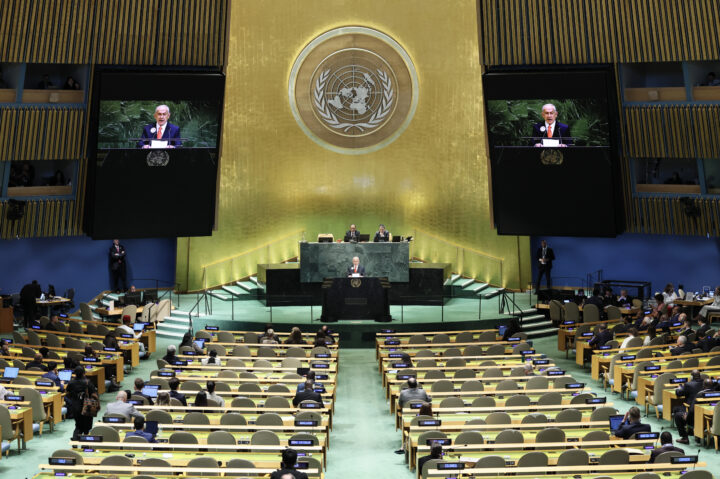
Israeli Prime Minister Benjamin Netanyahu addresses world leaders during the United Nations General Assembly (UNGA) at the United Nations headquarters on September 26, 2025 in New York City.
In Israeli Prime Minister Benjamin Netanyahu’s address to the United Nations General Assembly on Friday morning, he painted a picture of a nation abandoned by its allies, who he said had caved to “radical Islamist constituencies and antisemitic mobs” — a message underscored by the backdrop of a mostly empty General Assembly room, following the walkout of dozens of diplomats at the start of his speech.
Netanyahu began with a victory lap, hailing Israel’s military successes against Hezbollah, Iran and even Hamas over the past year. But much of the speech was defensive in nature, relying on rhetoric he has invoked frequently over the last two years. He articulated the reasons why Israel is still fighting Hamas, despite the fact that Israel “crushed the bulk of Hamas’ terror machine.” And he attacked the U.N. and the countries that he said had shown up for Israel in the days after the Oct. 7 attack but that have since changed course.
“In the days immediately following Oct. 7, many of them supported Israel. But that support quickly evaporated when Israel did what any self-respecting nation would do in the wake of such a savage attack: We fought back,” he said.
He defended Israel’s handling of the war in Gaza as moral and appropriate, saying the nation faces “the false of charge of genocide.”
“The truth has been turned on its head. Hamas is a genocidal terrorist organization whose charter calls for the murder of all Jews on the planet. This genocidal organization is given a pass while Israel, which does everything it can to get civilians out of harm’s way, Israel is put in the dark. What a joke,” said Netanyahu.
Known for his theatrics in his annual U.N. address, Netanyahu wore a large button with a QR code that linked to a website featuring gruesome videos of Hamas’ attack on southern Israel two years ago. He also told the crowd that he had directed the IDF to set up loudspeakers to broadcast his speech out loud on the Gaza border, a measure he said was meant as an attempt to reach Israeli hostages still held in Gaza — and that the remarks were being carried live on the cell phones of Gazans, to convince Hamas to “lay down your arms.”
Netanyahu repeatedly invoked the Sept. 11 terror attacks and the global war on terror as proof of the depravity Israel is fighting in Gaza.
“Giving the Palestinians a state one mile from Jerusalem after Oct. 7 is like giving Al-Qaida a state one mile from New York City after Sept. 11. This is sheer madness. It’s insane, and we won’t do it,” said Netanyahu. The Israeli prime minister has doubled down in his pledge to never allow the creation a Palestinian state after France, the United Kingdom, Australia and Canada unilaterally recognized a Palestinian state this week.
He slammed those nations, saying their move “reward[s] the worst antisemites on earth.” They chose to recognize a Palestinian state, Netanyahu said angrily, even though “nearly 90% of Palestinians supported the attack on Oct. 7 … just the way they celebrated another horror, 9/11.”
Netanyahu offered little to those who want to see Israel present a plan for the end of the war and for the governance of Gaza without Hamas, though he said Israeli “victory” would open opportunities for peace in the region.
“Victory over Hamas will make peace possible with nations throughout the Arab and Muslim world. Our victory would lead to a dramatic extension and expansion of the historic Abraham Accords, which President Trump brokered between Arab leaders and myself five years ago,” said Netanyahu. He did not address whether he would move to annex parts of the West Bank, which Saudi Arabia — Israel’s top target for normalization — said earlier this week would be a “red line,” and that President Donald Trump said yesterday he will not allow.
He closed with a prayer for a speedy victory, even if Israel has to achieve it alone.
“The rise of Israel did not mean that the attempts to destroy us would end. It meant that we could fight back against those attempts, and that is exactly what Israel has done since Oct. 7,” said Netanyahu. “Two years later, the resolve of Israel and the strength of Israel burn brighter than ever. With God’s help, that strength and that resolve will lead us to a speedy victory into a brilliant future of prosperity and peace.”
Please log in if you already have a subscription, or subscribe to access the latest updates.
 Continue with Google
 Continue with Apple