










































Education Committee finds SJP and faculty groups play central role in campus antisemitism
Schools with Faculty and Staff for Justice in Palestine chapters were seven times more likely to experience violence against Jews, the report found
GETTY IMAGES
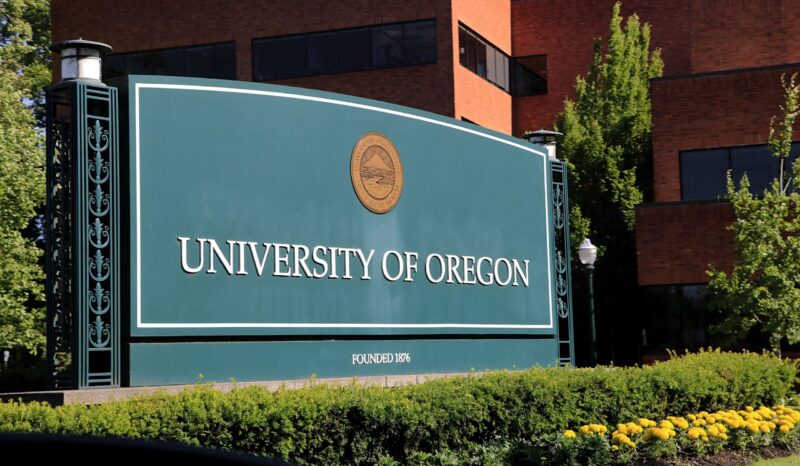
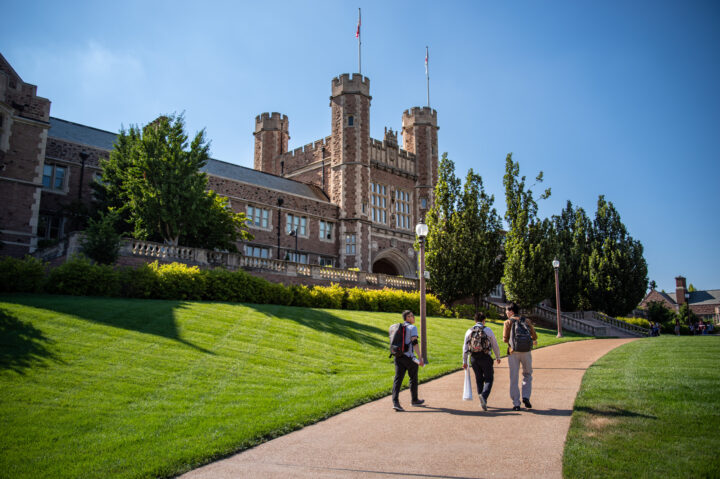
Three people with backpacks on sidewalk in front of the campus administrative building on sunny day moving away.


 Add JewishInsider on Google
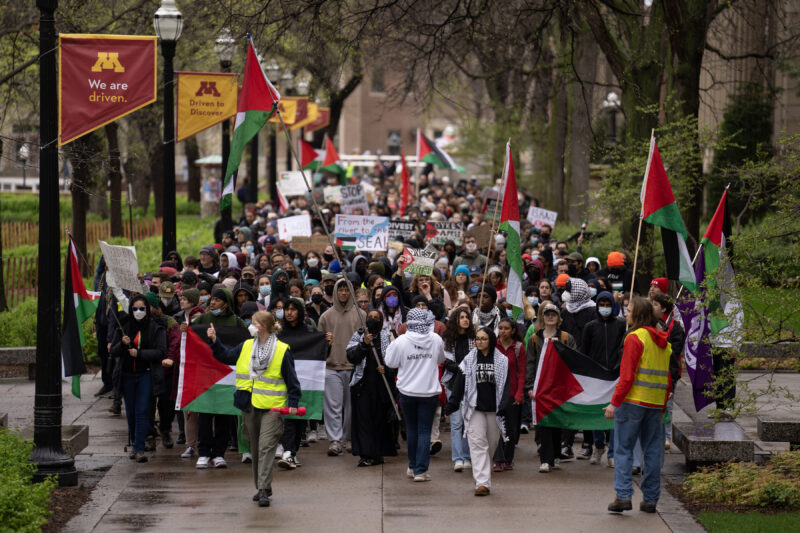
A newly released report from House Republicans on the Education and Workforce Committee alleges that faculty members and student groups have played a central role in promoting and amplifying antisemitism on college campuses, particularly those affiliated with Students for Justice in Palestine (SJP).
The report, titled “How Campuses Became Hotbeds: The Rise of Radical Antisemitism on College Campuses,” was released Tuesday and examines campus activity following the Oct. 7, 2023, Hamas terrorist attacks on Israel.
The report finds that faculty affiliated with Faculty and Staff for Justice in Palestine (FSJP) “played a significant role in legitimizing and amplifying antisemitism on college campuses,” and that campuses with FSJP chapters were seven times more likely to experience “violence against Jews.”
It alleges that some faculty members sought to “strip Jewish students of protections, incited protests that turned violent, taught antisemitic content in their courses and hosted programming that isolated Jewish students and demonized Israel.”
According to the report, FSJP chapters have pressured universities to boycott Israel, reject the International Holocaust Remembrance Alliance’s working definition of antisemitism and circulated statements that justified violence against Israel.
In one example, the report indicates that the FSJP chapter at Sarah Lawrence College challenged the school’s decision to put the word “antisemitism” before the word “racism” in a two-day orientation curriculum. “We’re worried [it] sends a message to incoming students about whose oppression matters,” the school’s chapter wrote.
“Faculty members also perpetuate antisemitism through university centers, such as Middle East studies centers, that offer a one-sided view of Israel as a ‘settler colonialist’ enterprise,” the report states. “It also views Jews as white and the privileged ‘oppressor,’ rather than a diverse minority that has been persecuted for thousands of years.”
The report found that in September 2024, the University of California Berkeley announced Ussama Makdisi as the inaugural chair of a newly created program in Palestinian and Arab Studies. However, earlier that year, Makdisi made a post on social media supporting the actions of Hamas on Oct. 7, 2023, writing: “I could have been one of those who broke through the siege on October 7.”
The report also alleges that student groups, most notably SJP, have “consistently acted as ringleaders for antisemitic harassment faced by Jewish students on campus.” It argues that institutions of higher education have “given in” to student demands and “failed” to discipline students promoting antisemitism. SJP chapters in particular “organize violent antisemitic disturbances, host antisemitic speakers and pressure universities to boycott Israel.”
The report cites another incident at Sarah Lawrence College in which the school’s SJP chapter posted a statement calling on peers to “defend the student intifada,” described the Oct. 7, 2023 terrorist attacks as an “uprising” and shared an image “of a Hamas bulldozer tearing through Israel’s security fence.” The group later received a student leadership award after being nominated by the school’s FSJP chapter.
“At the award ceremony, the individual presenting the award described SJP as having ‘engaged in empathetic and powerful activism,’” the report states.
“Every campus that the Committee investigated while preparing this report featured an SJP chapter, or a variant of one, that served as a ringleader for antisemitic activity on campus,” the report adds, noting that many colleges and universities not only “failed” to respond to SJP, but also allowed “hostility towards Jewish students to fester.”
The report also suggested that foreign influence in American higher education is part of the problem, pointing to satellite campuses in Qatar operated by Northwestern University and Georgetown University. It alleges that both institutions have “housed faculty or fellows and student groups that foment antisemitism” without consequences.
“Neither NU-Q nor GU-Q have disciplined any faculty, students, or staff for antisemitism since October 7, 2023,” the report states. “The committee found that after October 7th, GU-Q entities that should be neutral promoted, participated in or hosted deeply one-sided events that legitimize antisemitic rhetoric.”
The report cites a series of incidents involving faculty and staff at Northwestern’s Qatar campus, including Professor Marc Jones, who it says has circulated a conspiracy theory that Israelis steal Palestinian organs and described Israel as “worse than Hamas.” It also references visiting Professor William Youmans, described as an Al Jazeera specialist, who called Israel a “terrorist state” and defended Hamas following the Oct. 7 attacks.
Additionally, the report highlights a social media post from Sami Hermez, director of Northwestern in Qatar’s Liberal Arts Program, in which he wrote that “Zionists have control over European policy and power,” adding, “If you want to make the leap that Jews control Europe, I don’t care.”
At Georgetown University’s Qatar campus, the report alleges that student groups displayed posters reading, “We stand with violence on Israelis,” and that at an SJP event, some students “drew hearts around Hamas’ name,” while others left messages including, “Oh Allah, deal with the Zionists,” and expressed a desire for the Jewish people “to fall.”
The report also outlines a series of recommendations aimed at addressing these problems, including adoption of the IHRA definition of antisemitism.
It also calls on Congress to pass legislation such as the Civil Rights Protection Act, which would require higher education institutions to be more transparent about procedures and investigations related to civil rights complaints, as well as the Defending Education Transparency and Ending Rogue Regimes in Nefarious Transactions (DETERRENT) Act, which would lower the financial threshold at which universities must report foreign gifts and contracts.
The report further suggests requiring U.S. universities operating overseas to make course syllabi publicly available, arguing that doing so would allow the government to hold faculty “who have exhibited blatant antisemitism” accountable.
“The findings in this report make clear that antisemitism in higher education is not confined to encampments at a handful of elite universities, nor did it begin or end with the events of October 7th,” the report states. “The evidence demonstrates that antisemitism is driven by persistent leadership failures and radical faculty and student groups that legitimize and foment antisemitism in classrooms and on campus grounds.”
More Stories
KINGS COUNTY KERFUFFLE
Treasurer for anti-AIPAC PAC behind effort to unseat Brooklyn Republicans
DEBATE DEBACLE
El-Sayed dodges Rogers’ attacks on terrorism ties during heated Senate debate

PROBLEMATIC POST
Paxton senior advisor endorsed antisemitic slur on social media

REGGIO REGRETS
Reggio Emilia mayor walks back anti-Israel litmus test for preschool educators
EMPIRE STATE FEUD
Mamdani rips Blakeman’s claims he wouldn’t protect Jews as ‘directly racist’
SPENDING SCRAPPED
GOP leadership super PAC cancels spending plans against Rep. Landsman
Please log in if you already have a subscription, or subscribe to access the latest updates.
 Continue with Google
 Continue with Apple