
















































Norway’s sovereign wealth fund cuts Israeli holdings, while courting top American pro-Israel execs
The $2 trillion fund is divesting from 11 Israeli companies while holding onto relationships with prominent American executives who have stood firmly behind Israel since Oct. 7
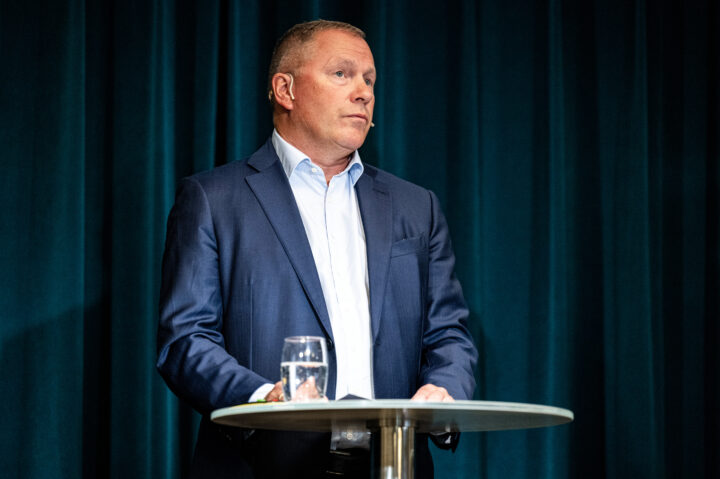
Carina Johansen/Bloomberg via Getty Images
Nicolai Tangen, chief executive officer of Norges Bank Investment Management, during the presentation of the sovereign wealth fund's half-year earnings at the Arendalsuka conference in Arendal, Norway, on Tuesday, Aug. 12, 2025.


 Add JewishInsider on Google
Norway’s sovereign wealth fund said on Monday that it was divesting from 11 Israeli companies and had terminated its contracts with external fund managers in Israel over concerns regarding the humanitarian crisis in Gaza and the West Bank.
“These measures were taken in response to extraordinary circumstances,” Nicolai Tangen, CEO of Norges Bank Investment Management, which manages the Norwegian Sovereign Wealth Fund, said in a statement. “The situation in Gaza is a serious humanitarian crisis. We are invested in companies that operate in a country at war, and conditions in the West Bank and Gaza have recently worsened. In response, we will further strengthen our due diligence.”
The decision follows a review initiated last week by Norway’s finance minister amid media reports that the fund had in recent years increased its holdings in an Israeli jet engine company that provides services to the Israeli military.
The new announcement comes amid heightened tensions between Israel and Norway in the wake of Hamas’ Oct. 7, 2023, attacks and the ensuing war in Gaza. In what was largely interpreted as a symbolic rebuke of Israel last year, for instance, Norway said it would recognize a Palestinian state. In response, Israel revoked the accreditation of eight Norwegian diplomats in Tel Aviv who had served in Norway’s representative office in the Palestinian Authority.
Yonatan Freeman, an expert on international relations at the Hebrew University of Jerusalem, said that there is “clear public pressure on the Norwegian government,” whose ruling Labour Party is up for reelection next month, “to respond to the Israeli war in Gaza,” and the wealth fund’s latest move “seems to be, in part, a symbolic gesture to that end.”
“Symbolic, because Israeli companies have long contributed to the fund’s performance and to Norway’s economy more broadly — through tech innovation, cybersecurity and medical devices,” Freeman told Jewish Insider on Monday. “Israel also imports Norwegian goods, such as salmon, which make up a significant portion of its fish market.”
Last year, the fund also said that it had divested from Israeli telecommunications firm Bezeq after a state ethics watchdog had raised objections to the company’s servicing of Israeli settlements in the West Bank.
In an interview with a Norwegian broadcaster last week, Tangen said the fund has a mandate to invest in Israel but ultimately defers to the ethics council that oversees the bank’s holdings, according to The Wall Street Journal. “Being invested in Israel is a political question, it is not a decision we make in the oil fund,” Tangen said. “We must have a very clear division of roles here, and we carry out the mandate that we have.”
The bank, the world’s largest sovereign wealth fund, held investments in 61 Israeli companies at the end of June, according to its announcement on Monday.
“A truly consequential move would have been a full divestment from Israeli firms and a severing of trade ties, which undeniably could hurt Israel’s financial capacity to wage war,” Freeman told JI. “But Norway knows that would come at a steep cost — economically and diplomatically.”
Tangen has worked to build relationships with American business leaders he has hosted on his podcast in recent years, including Michael Dell of Dell Technologies, Jonathan Gray of Blackstone, Paul Singer of Elliott Management and Ruth Porat of Alphabet — many of whom have prominently engaged in philanthropic efforts to support Israel following the Oct. 7 attacks.
The bank has also hosted several other pro-Israel U.S. business executives at its annual investment conference in Oslo, including Marc Rowan of Apollo Global Management and David Solomon of Goldman Sachs.
Representatives for Dell, Gray and other executives who have been courted by Tangen did not respond to requests for comment on Monday.
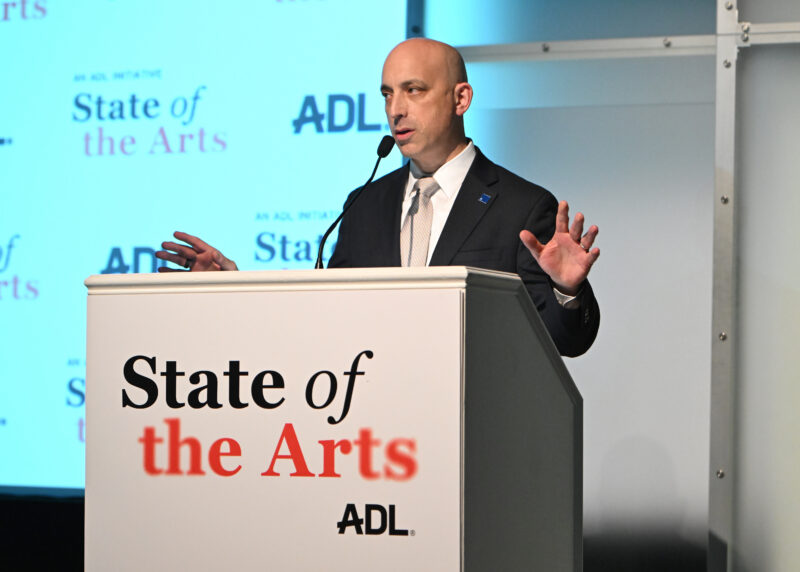
Even as the fund did not announce a wholesale divestment from Israeli holdings, its decision drew scrutiny from the Anti-Defamation League, whose CEO, Jonathan Greenblatt, characterized the divestment strategy as perpetuating double standards in a statement to JI on Tuesday.
“Hamas is celebrating this divestment in the tunnels of Gaza,” Greenblatt said. “Demonizing the Middle East’s only democracy while practically giving a free pass to authoritarian regimes isn’t ethical investing — it’s capitulating to forces that seek to isolate Israel.”
Israeli companies face the “highest exclusion rate” — 32% — in the fund’s equity portfolio, which includes 63 countries and 8,659 holdings, according to a new analysis by JLens, a Jewish investor network affiliated with the ADL. Ari Hoffnung, managing director of JLens, called the disparity “outrageous,” arguing in a statement to JI that “Norway’s ‘ethical guidelines’ aren’t about ethics — they’re about singling out the Jewish state.”
Some experts speculated that the fund’s decision could draw backlash from the Trump administration and Congress as well.
Emmanuel Noval, a lecturer on international relations at Tel Aviv University, said the decision “might backfire” and could “face legal issues in the U.S.,” as congressional lawmakers have ramped up efforts targeting anti-Israel boycott and divestment campaigns.
Rich Goldberg, a senior advisor at the Foundation for Defense of Democracies who recently wrapped up a stint as a senior counselor to the White House’s new National Energy Dominance Council, criticized the wealth fund’s investing practices, which he said deserved broader scrutiny amid ongoing trade talks with the United States.
“It’s important to recognize that Norges isn’t just attacking Israel, it’s been attacking America for years through its ESG investment and divestment strategy,” Goldberg told JI on Monday, referring to environmental, social and governance reporting. “Israel is typically the canary in the coal mine.”
“I’d urge our trade negotiators to take a hard look at all of Norges’ anti-American practices and make demands for fundamental change a condition of any trade deal with Norway,” he added.
The White House did not respond to a request for comment on Monday.
More Stories

CAMPAIGN TRAIL
‘There is no Palestinian nation,’ Ofer Winter says as party dips in polls

REGIONAL SHIFT
Amb. Kaploun: More Latin American countries plan to adopt IHRA definition of antisemitism
BUSY IN BEIRUT
Reps. Gottheimer, LaHood visit Lebanon, meet President Aoun

education consternation
Department of Education accuses colleges and universities of hiding foreign funding ties
Daily Overtime
Slotkin sees no ‘Jewish vote’ in Michigan
POLICY PIVOT
On Oct. 7 anniversary, senior Democrats call for changes in U.S.-Israel policy
Please log in if you already have a subscription, or subscribe to access the latest updates.
 Continue with Google
 Continue with Apple