




























Jewish leaders in the area had raised concerns that messaging from Hernandez’s opponent, including calling her an enabler of genocide, was not addressed by Democratic Party leaders
Samantha Chow/AP
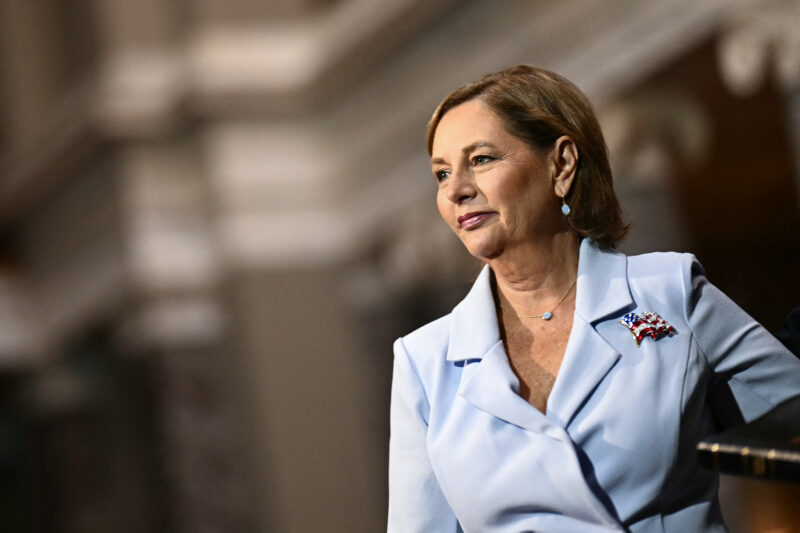
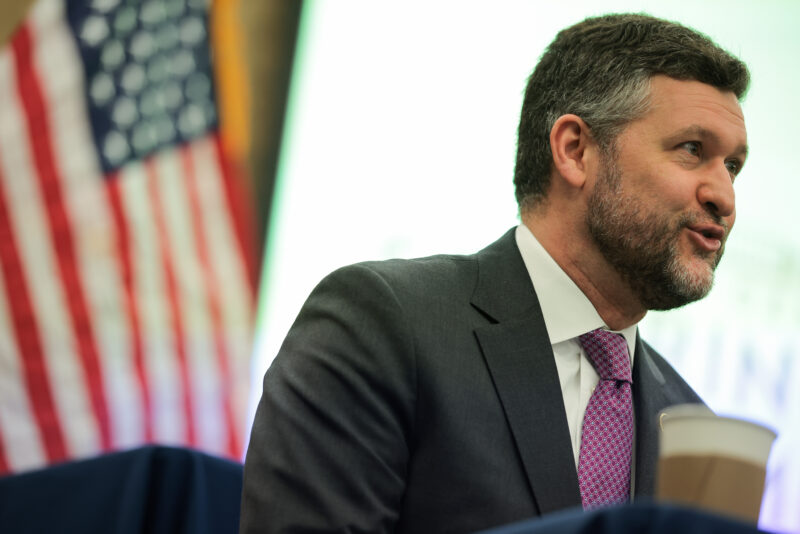
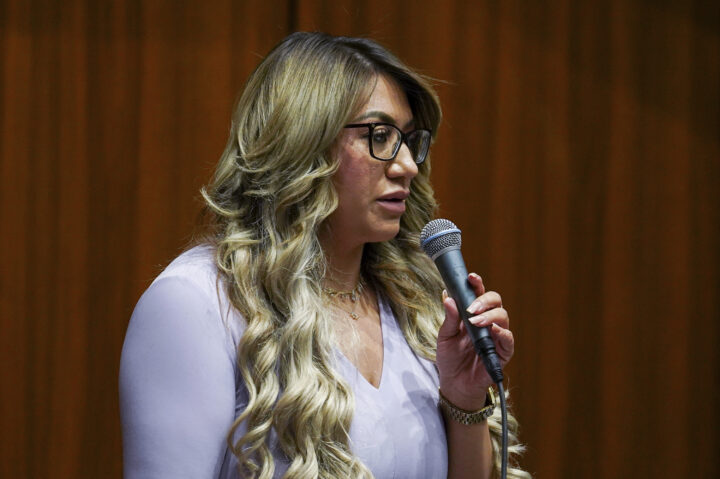
State Rep. Alma Hernandez, D-Tucson, speaks during a House session, Wednesday, April 23, 2025, at the state Capitol in Phoenix.


 Add JewishInsider on Google
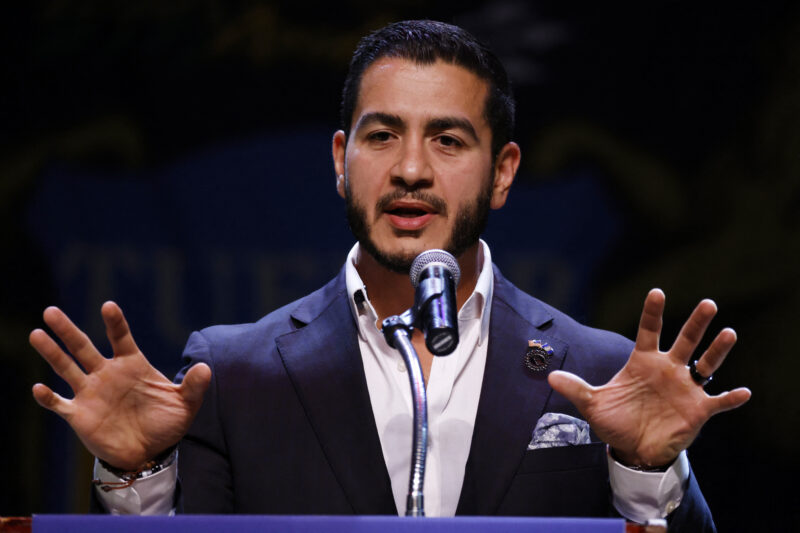
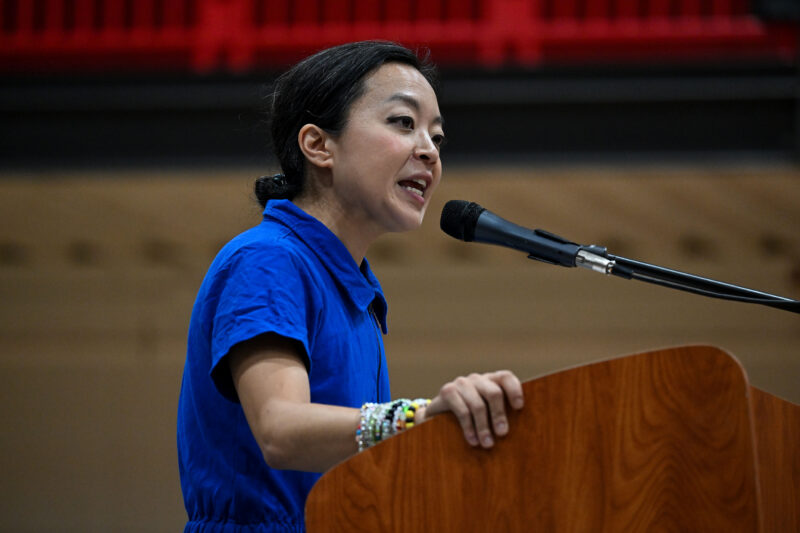
Alma Hernandez, a Jewish Democratic legislator in Arizona who is known as an outspoken supporter of Israel, claimed victory on Wednesday in a bitterly contested primary for an open state Senate seat in Tucson, hailing the win as a repudiation of the far left.
Hernandez, who is 33 and identifies as a “proud Zionist,” faced off against Rocque Perez, a former Tucson City Council member, whom she accused of using rhetoric that crossed a line into antisemitism with no pushback from the range of elected officials supporting his campaign.
With all votes counted in Arizona’s 20th Legislative District, Hernandez pulled in 54% of the vote share, defeating Perez by 8 points, according to unofficial results on the secretary of state’s website. The election results have yet to be officially certified.
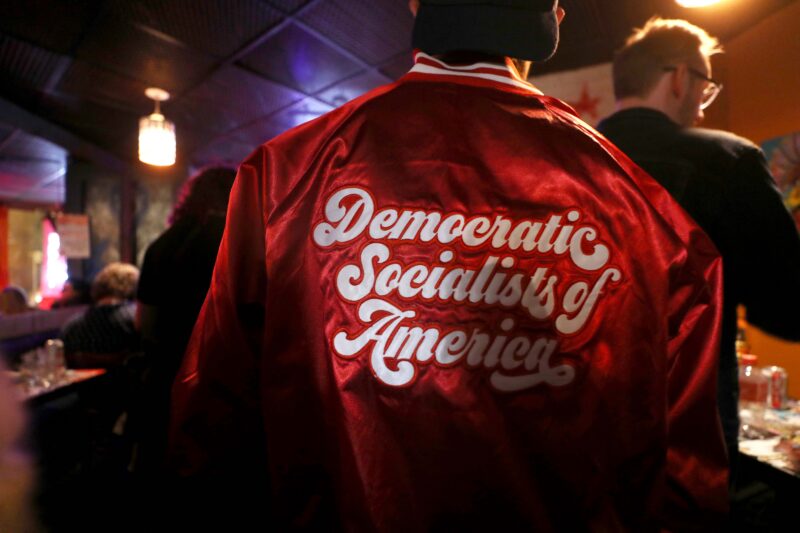
“The voters in my district rejected antisemitism and rejected the DSA’s agenda, and clearly rejected what the mayor, the congresswoman and the county attorney wanted,” Hernandez, a term-limited House member, said in a statement to Jewish Insider, referring to the Democratic Socialists of America. “We proved that elections are won by knocking on doors and talking to voters, not by social media or online outrage and your friends’ endorsements.”
Throughout the campaign, Perez, who had been endorsed by Tucson Mayor Regina Romero, Rep. Adelita Grijalva (D-AZ) and Pima County Attorney Gabriella Cázares-Kelly, among others, had fixated on Hernandez’s pro-Israel views, casting her as having been influenced by “foreign” and “overseas interests” and labeling her an enabler of “genocide” and “bankrolled” by AIPAC, which does not engage in state-level races.
In one fundraising message, Perez asked his supporters to contribute $5 to “unseat a Zionist!”
Jewish leaders in Arizona had raised concerns about Perez’s messaging, saying that his attacks were an example of how rising anti-Zionism on the far left has intersected with antisemitism and is met with silence from Democratic Party leaders.
Before Tuesday’s primary, the Center for Jewish Resilience at Jewish Philanthropies of Southern Arizona, which monitors incidents of antisemitism in the area, distributed a letter to city council members backing Perez that highlighted what the group called his “repeated pattern of public rhetoric” espousing “longstanding antisemitic tropes and narratives.” It did not receive responses.
“It was our hope that these concerns would be taken seriously,” Carina Bien-Willner, the center’s director of public affairs, said in a statement to JI last month.
Perez, who has not yet conceded, did not return a request for comment on Thursday.
Hernandez, whose pro-Israel sentiments and votes with Republicans in the state legislature have fueled tensions with Democrats, said her victory had made “clear that running a campaign centered on attacking a Jewish elected official and making ‘genocide’ the defining issue is not a winning message in Arizona.”
“Despite not being the establishment candidate, we won by staying authentic, working hard and focusing on delivering results,” she told JI.
Hernandez is all but certain to prevail in November in the safe blue seat.
The outcome of Hernandez’s race also represented a counternarrative to broader national voting trends that have seen left-wing populists make inroads in recent congressional primaries across the country, including in Colorado this month and New York last month.
Rep. Greg Stanton (D-AZ) likewise fended off a left-wing challenger in Arizona’s primaries this week, winning a decisive 62% of the vote over Kai Newkirk, who lost by 25 points with most of the results tallied.
“I’ll continue to be unapologetically myself, and I look forward to serving the people of LD20 in the Arizona Senate,” Hernandez said in her statement.
The longtime Democratic insider prevailed in the crowded primary for the country’s most heavily Jewish congressional district, where the candidates’ views on Israel were a key focus of the race
John Lamparski/Bloomberg via Getty Images
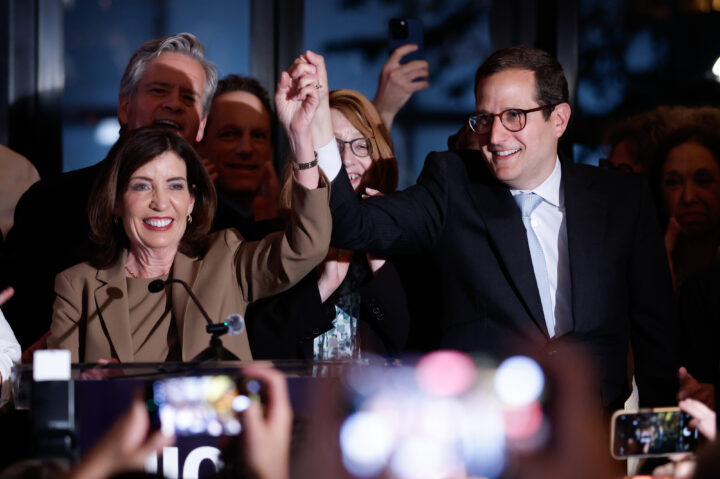
Kathy Hochul, governor of New York, and Assemblymember Micah Lasher, a House candidate, during a primary election night watch party in New York, on June 23, 2026.
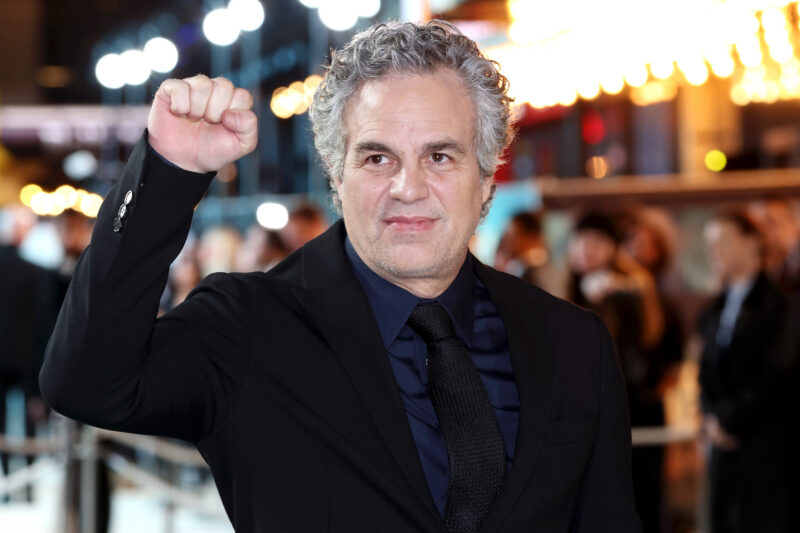
New York state Assemblymember Micah Lasher, a Jewish Democrat, claimed victory on Tuesday night in a hard-fought primary for a coveted House seat in the heart of Manhattan, according to the Associated Press.
Lasher had won 39% with most of the vote tallied by the time his race had been called. He prevailed over a fellow assemblymember, Alex Bores, who pulled in 35%, as well as Jack Schlossberg, the Kennedy scion, who came in third with just 10% — followed by Nina Schwalbe and George Conway, both in single digits.
Lasher, 44, a longtime member of the Democratic establishment in New York, pitched himself as the most experienced candidate in the race, leaning into his identification as a policy wonk. He was backed by the district’s retiring congressman, Rep. Jerry Nadler (D-NY), as well as Gov. Kathy Hochul. He also drew a significant share of outside support from former New York City Mayor Michael Bloomberg, who spent $10 million to help boost Lasher’s campaign.
The closely watched primary became one of the most expensive on record, due in part to outside spending from AI-linked super PACs that helped to raise Bores’ profile as a leading advocate for industry regulation.
The race also focused heavily on Israel — though most of the top contenders were largely aligned on key issues. The district, New York’s 12th, is home to the largest Jewish constituency in the country, and many Jewish voters identify with the sort of liberal Zionist sentiments that Lasher expressed during the campaign.
In contrast with other primaries in New York City where Israel emerged as a lightning rod, the race to succeed Nadler was marked by more moderate views on Middle East policy. Lasher backed U.S. funding to boost Israel’s Iron Dome missile-defense system and opposed efforts to condition aid that single out Israel, for instance.
Lasher is now all but assured a seat in Congress thanks to the heavily Democratic tilt of the district.
“I think the message I send to Jewish voters is 44 years being a proud Zionist Jew and, God willing, another 44 years,” he said at a Jewish community forum in May, drawing applause from the audience.
Still, Lasher raised frustrations near the end of the race that the conversation had become too narrowly focused on Israel.
“I spend a great deal of time wrestling with the challenges and the horrors of what is going on in Israel,” Lasher noted earlier this month. “I am not obsessed with Israel, and I worry sometimes that our political dialogue — and the political dialogue in this race — is obsessed with Israel.”
Hamawy, despite his past ties to a convicted terrorist, faced minimal scrutiny from outside groups — including many of his primary rivals
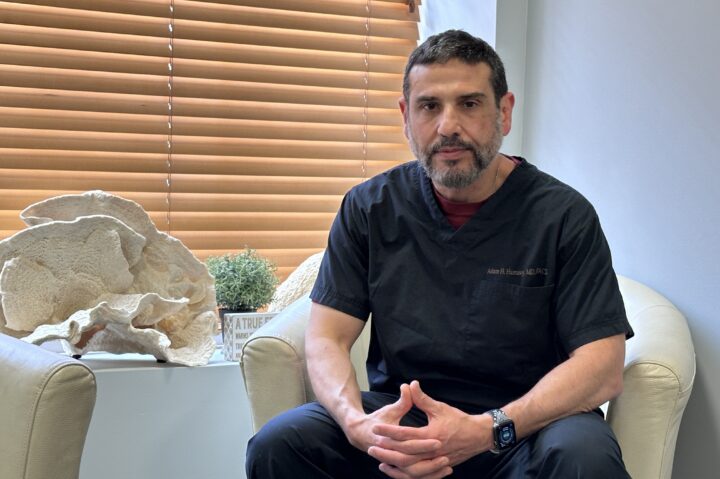
Islam Dogru/Anadolu via Getty Images
Adam Hamawy, a plastic surgeon, is seen during an exclusive interview at in New York, United States on April 24, 2024.
Adam Hamawy’s victory on Tuesday in a closely watched congressional primary in New Jersey, which elevated an outspoken critic of Israel whose past ties to a convicted terrorist had drawn scrutiny during the campaign, is raising questions over why the far-left Democrat did not face outside opposition from the pro-Israel group AIPAC or its well-funded super PAC.
Hamawy, who won 28% of the vote in New Jersey’s 12th Congressional District, prevailed with a modest plurality over the multi-candidate primary field competing to succeed Rep. Bonnie Watson Coleman (D-NJ). With 93% of the vote counted on Wednesday, Brad Cohen, the mayor of East Brunswick and a Jewish Democrat who touted his support for Israel while identifying as an AIPAC member, placed second with 15%. Hamawy is all but assured a seat in Congress next year as the district heavily favors Democrats.
Despite a double-digit deficit, Cohen’s performance exceeded many expectations, indicating that he likely could have finished in a stronger position with help from AIPAC’s super PAC, United Democracy Project, some local Jewish leaders suggested in interviews on Wednesday.
While Cohen posted relatively robust fundraising figures, pulling in $700,000 over the course of the race, he struggled to keep up with Hamawy, a plastic surgeon and Army veteran who claimed just over $1 million. Notably, Hamawy also drew support from a newly created super PAC, American Priorities, launched as a left-wing counterweight to AIPAC, which spent more than $1.5 million in the primary to bolster his ascendant campaign.
UDP’s conspicuous absence as American Priorities aggressively promoted Hamawy during the final days of the primary allowed the new group to shape the narrative as he drew skepticism over his efforts to downplay a decades-old association with a radical Muslim cleric convicted of inspiring the 1993 World Trade Center bombing as well as his work for a now-shuttered al-Qaida-linked front group in Bosnia.
Such vulnerabilities were the sort that UDP would presumably have been eager to exploit to thwart an extreme detractor of Israel who had argued against the country’s Iron Dome missile-defense system that protects civilians from attacks.
UDP, which looked at all of the candidates in the crowded field, had considered backing Cohen but ultimately determined he did not have a credible chance of winning, according to a source familiar with the situation who spoke on the condition of anonymity to address a confidential matter.
Patrick Dorton, a spokesperson for UDP, defended the group’s choice not to engage. “We play in races where we have a reasonable opportunity to win,” he explained in a brief interview with JI on Wednesday. “This was a multi-candidate field with obviously the anti-Hamawy vote very split.”
“We didn’t see a path to victory,” Dorton said broadly of the primary. “We did a careful analysis of the race, including polling, and came to the conclusion not to get involved.”
Steve Klinghoffer, a Jewish community leader and philanthropist and a former AIPAC board member, strongly disagreed with UDP’s assessment. He said he had “numerous conversations” with AIPAC to try to convince the group to get involved in the primary but declined to share what he had been told in response.
“If they stay out there’s a good reason,” noted Jason Shames, CEO of the Jewish Federation of Northern New Jersey, who said he spoke with AIPAC about the primary and got the sense that the group did not “see much upside” in being directly involved. “I give them the benefit of the doubt,” he told JI, calling the group “very careful” and “more strategic” than critics might think.
“In my assessment, this was a missed opportunity, and it’s greatly disturbing,” Klinghoffer told JI, calling the primary “highly winnable” and citing “private polling that showed it would be closer” if AIPAC had devoted its resources to the contest.
Still, Jewish and pro-Israel leaders in New Jersey were largely divided about AIPAC’s decision, with some saying they trusted UDP’s calculus and others expressing more skepticism about its motivations.
“If they stay out there’s a good reason,” noted Jason Shames, CEO of the Jewish Federation of Northern New Jersey, who said he spoke with AIPAC about the primary and got the sense that the group did not “see much upside” in being directly involved. “I give them the benefit of the doubt,” he told JI, calling the group “very careful” and “more strategic” than critics might think.
Ben Chouake, the president of NORPAC, a pro-Israel advocacy group in New Jersey that endorsed Cohen, said there were more complex challenges at play that had influenced the result beyond AIPAC’s decision to hold its powder.
“We supported Brad Cohen and raised a fair amount of money for him and tried to put together a ground game within the Jewish community,” he told JI. “But I don’t think our community, as a whole, is as unified as it needs to be.”
But he believed AIPAC’s involvement “absolutely” could have made a difference in the race, saying the vote tally was not insurmountable. “I think it was a worthwhile effort for us,” he stressed. “I’m not upset that we did it.”
Cohen, who sought to draw attention to Hamawy’s controversial past ties in the closing stretch of the race, did not respond to messages from JI seeking comment.
Even as UDP now sits on a nearly $95 million war chest to use in the midterms, it also has reason to stay on the sidelines, as the AIPAC brand has become increasingly toxic among Democrats who have vowed to reject its support.
The super PAC had also endured an embarrassing setback in March in a nearby northern New Jersey Democratic special election, where it spent heavily to block Tom Malinowski, a moderate former congressman who had expressed interest in conditioning U.S. aid to Israel. The foray backfired, however — propelling a progressive activist with far more antagonistic positions on Israel to the House.
The reputational damage stemming from that effort still lingers in New Jersey, according to some Jewish leaders. One pro-Israel leader speculated that AIPAC simply “got gun-shy,” after its handling of the March election. Outside the state, UDP has otherwise shown a penchant for caution — most recently investing in a Democratic congressional race in a Maryland district home to a more moderate constituency.
“My guess is they probably were afraid this time that by coming in to support Brad, it might have harmed a very good candidate,” a Jewish Democrat told JI, noting it “raises a question of what AIPAC’s strategy” is going forward. “I think they need to also look in the mirror” and “assess this terrain very carefully” in weighing “what they’re going to do in the future.”
“Unfortunately, it’s a tougher climate for AIPAC and other pro-Israel PACs, especially on the Democratic side,” Mark Levenson, a Jewish community leader in New Jersey, told JI. “The environment has changed.”
Amid a national political landscape now favoring anti-establishment, left-wing sentiment of the sort espoused by Hamawy and his progressive allies in other key races, AIPAC likely “understood its brand had taken a hit, particularly in New Jersey,” said one Jewish Democrat who viewed Hamawy’s election as a troubling sign of the party’s direction. “AIPAC called it wrong previously.”
“My guess is they probably were afraid this time that by coming in to support Brad, it might have harmed a very good candidate,” the activist said on Wednesday, noting it “raises a question of what AIPAC’s strategy” is going forward. “I think they need to also look in the mirror” and “assess this terrain very carefully” in weighing “what they’re going to do in the future.”
Dan Cassino, a political scientist and pollster at Fairleigh Dickinson University, said it was “hard to imagine that there were a lot of Hamawy supporters who would have turned against him because AIPAC was opposed to him,” given their already jaundiced view of the group.
“If AIPAC had gotten involved very early, and thrown around enough money to dissuade some candidates from running, they could have made a difference,” he told JI. “But once that field was set, I don’t think they could have changed the result,” he said, pointing out the “risk that getting involved in a race that led to another win for a disfavored candidate would hurt AIPAC’s credibility even more.”
Micah Rasmussen, the director of Rider University’s Rebovich Institute for New Jersey Politics, argued it “would be foolish to blame AIPAC for the results of the election,” saying the “single thing that could have changed the outcome is for the field of candidates to have consolidated behind one candidate as a viable alternative to Adam Hamawy.”
“Whatever else might be said about AIPAC, they are not political novices,” he told JI. “No one can believe they sat on their hands because they couldn’t think of anything else to do.”
“You’re really left to wonder,” Rasmussen mused, “whether they view Adam Hamawy as a foil or a lightning rod for Jewish voters across the country.”
But with Iran maintaining various capabilities and continuing its attacks, other leading GOP senators say it would be premature to end the war now
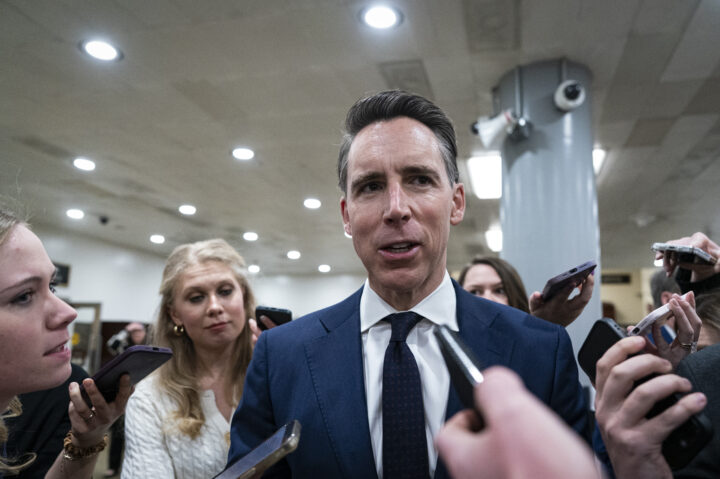
Al Drago/Getty Images
Sen. Josh Hawley (R-MO) speaks to reporters prior to the Senate Republicans weekly policy luncheon, in the US Capitol on March 25, 2025 in Washington, DC.
Both of Missouri’s Republican senators, Josh Hawley and Eric Schmitt, argued that the administration seems to have largely achieved its key objectives for the war in Iran — a posture that distinguishes him from most GOP colleagues and highlights subtle but emerging divisions among Republicans on the proper scope and duration of the war.
Pointing to comments by President Donald Trump saying that the war was substantially complete and that the U.S. had achieved its objectives, Hawley said on Fox News earlier this week, “I agree with what the president said last night. You look at all the success that we’ve had in the last 10 days. I mean, this thing is a victory. I think we should be hailing our military. We ought to be saying we’ve achieved our objectives here. … If this isn’t success, I don’t know what would be. … Now it’s time to declare victory.”
He also posited that Iran has nothing remaining with which to reconstitute its nuclear program — though the regime maintains a stockpile of enriched nuclear material which many experts argue cannot be fully secured without some form of on-the-ground presence.
Continuing a trend of making contradictory comments on the war’s timeline, Trump had said the same day that the U.S. could and would go much further in Iran, and that the U.S.’ aims could expand significantly.
Asked by Jewish Insider on Thursday about the metrics by which he was judging the success of the war, Hawley — who is one of the more prominent senators from the populist wing of the GOP — said he was referring to Trump’s own comments on the subject.
“I assume our overriding national security objective when it comes to Iran is to prevent them from getting nukes. And between our bombing last June and in the last … 12 days, I don’t know how they’re going to reconstitute their nuclear program anytime in, maybe, our lifetimes,” Hawley said.
“Our military has done an amazing job. I think it’s been an overwhelming display of force,” Hawley continued. “I know my Democrat colleagues, a bunch of them are saying, ‘This has accomplished nothing, nothing’s happened.’ It seems to me a lot has happened. And I think we should say that’s a good thing.”
Pressed on whether the war can be ended while Iran continues to fire missiles and drones at countries throughout the Middle East and is dropping mines in the Strait of Hormuz, Hawley said he would defer to Trump’s judgement on when to end the war.
“My point is just that I think the military has achieved a tremendous amount. It has ended [Iran’s] nuclear program for all intents and purposes. It has destroyed their navy. It has eliminated most of their ballistic missiles — those are good things,” he continued. “I’d be glad to take that [win].”
“Seems pretty good to me,” Hawley added.
Schmitt, who is also aligned with the populist wing of the party, likewise emphasized the progress the U.S. has made and pushed for a quick conclusion to the war.
“I know they’re way ahead of schedule. I’d look for a swift end to it,” Schmitt told JI. “I’m not interested in forever war in the Middle East, I don’t think the president is either. And I think that, again, they’ve laid out clear objectives and [are] making a lot of progress.”
Other Republicans are taking a distinctly different approach. Sen. Kevin Cramer (R-ND) told reporters on Thursday that “victory isn’t determined by declaration, it’s determined by the outcome.” He argued that the U.S. can’t and shouldn’t end the war prematurely.
“If you pull 90% of the weeds of our garden and you leave 10%, you’re going to have a weedy garden,” Cramer continued. “The last 10% are the hardest, in many cases.”
The North Dakota senator, who sits on the Senate Armed Services Committee, expressed surprise that the U.S. had not been better prepared to secure the Strait of Hormuz, calling it a potential “miscalculation” and saying that the attacks on ships in the critical waterway “could have been avoided.”
Sen. Lindsey Graham (R-SC), one of the most vocal supporters of the Iran war on Capitol Hill, said that he thinks there are “weeks more of this coming.”
“I don’t see this conflict ending today. I think the mission is to make sure they cannot regenerate, that they’re going to be beyond capable of building missiles to hit us, and they’ll never go back to the nuclear business,” Graham continued.
Also on Thursday, in a rare Senate floor speech, Sen. Mitch McConnell (R-KY), emphasized that the war against Iran cannot be decoupled from the global axis, including Russia and China, with which Iran is aligned.
Russia, McConnell emphasized, has reportedly been providing Iran with targeting intelligence. He criticized Special Envoy Steve Witkoff, who said earlier this week that he takes Russia at its word that it has not been doing that.
“I’ve warned successive presidents to take the Russian-Iranian axis, actually, more seriously,” McConnell said. He emphasized the supportive role that Ukraine has taken in helping to protect the U.S.’ allies in the Gulf, and criticized administration officials for not moving more quickly in pre-war discussions to acquire Ukrainian anti-drone technology.
He also urged lawmakers who oppose the war to nonetheless support an expected request for supplemental military funding as “an overdue opportunity to invest in urgent and strategic defense priorities.”
While Republicans are now rejoicing over their narrow win, it otherwise largely demonstrated how Democratic leaders effectively sacrificed the seat to the GOP rather than elevate an extremist member of their own party
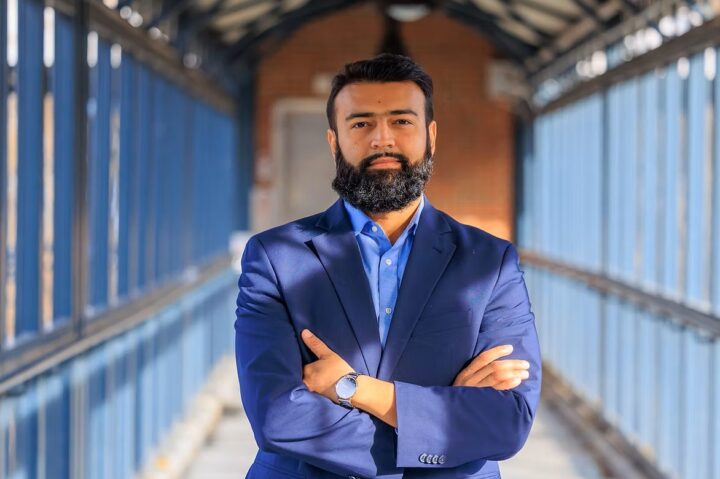
Muhammed Casim's campaign page
Muhammed Casim
In a low-profile electoral upset that defied the difficult national political environment facing the GOP, a Republican candidate declared victory this week in a down-ballot race for a seat on the Prince William Board of County Supervisors in Virginia — for the first time in nearly 40 years.
But while Republicans are now rejoicing over their narrow win, it otherwise largely demonstrated how Democratic leaders effectively sacrificed the seat to the GOP rather than elevate an extremist member of their own party who had claimed the nomination.
The result underscored the extent to which local Democrats had swiftly mobilized to oppose their own nominee, Muhammed Casim, who faced backlash over a series of recently uncovered past social media comments in which he used racist, misogynistic and antisemitic language. The posts, written more than a decade ago, used the n-word as well as demeaning rhetoric targeting women. He also accused Israel of genocide and promoted a conspiratorial post about U.S. financial assistance to the Jewish state, among other extreme comments.
More broadly, the outcome is an atypical example of how the Democratic Party worked to meaningfully confront extremism within its own ranks, even if its efforts came at the expense of an easily winnable local seat that instead flipped to Republicans for the first time in decades.
Casim apologized for his comments but refused bipartisan calls to drop out of the race, which had motivated a Democratic challenger to launch a write-in campaign that ultimately helped siphon votes away from his embattled bid. He lost to Republican Jeannie LaCroix by a margin of 258 votes. Write-in candidates pulled in 744 votes — a relatively sizable total that appeared to have made a difference in the closely contested race.
“Opposing antisemitism, racism or misogyny isn’t a partisan position,” Marc Broklawski, a Jewish vice chair of the Virginia Democratic Party, told Jewish Insider on Wednesday. “It’s a floor, not a ceiling, and the least we should expect from any party, official candidate or voter. When Democrats hold that floor even when it’s costly, that’s something to be proud of. When we don’t, voters notice that too.”
Casim’s campaign did not respond to a request for comment on Wednesday.
Though some prominent Democrats have sought to reject radicalism in their party, many Jewish party activists have begun to express a growing sense of unease about whether their longtime political home will remain welcoming, amid rising hostility toward Israel that has frequently crossed into antisemitism while producing alliances with controversial figures.
This week, for instance, leading Jewish groups spoke out against New York City Mayor Zohran Mamdani’s decision to host Mahmoud Khalil, the campus anti-Israel activist facing deportation who had justified Hamas’ terror attacks, for dinner at his official residence, while Democratic officials largely stayed silent.
Likewise, a mounting number of Senate Democrats have endorsed Graham Platner in his insurgent bid for Senate in Maine, brushing aside concerns about a recently covered Nazi tattoo whose provenance he has struggled to explain as well as associations with antisemitic conspiracy theorists that have continued to raise alarms among many Jewish party members.
And in Virginia, Jewish Democrats have denounced an anti-Israel state legislator, Sam Rasoul, who has called Zionism “evil” and a “supremacist ideology,” even as high-ranking state party officials have been reluctant to weigh in on his incendiary commentary.
By contrast, several Jewish activists and party strategists said they were encouraged that most Democratic leaders had enforced red lines in the Virginia supervisor election. Even if the party had been forced to endure a short-term hit in losing the seat, they suggested, it was healthy to set standards — particularly in a time of rising extremism on both sides of the aisle.
“Virginia Democratic leaders were clearly repulsed by Muhammed Casim’s racist, misogynistic and antisemitic social media posts,” Sara Forman, a Jewish party strategist who previously worked in the state, told JI. “Their actions, including calling Casim out publicly, should send a strong signal nationally that the entirety of the Democratic Party has not capitulated to the leftist narrative entirely.”
Such opposition was not unanimous, however, as the local party accepted Casim’s apology and said it would stand behind his campaign. “There’s a lesson in there about the integrity of voters and the lack of integrity — and therefore weakened legacy — among some Dem leaders,” Shannon Watts, a gun control activist who has also criticized Platner, wrote in an X post on Wednesday.
“Leadership means speaking out clearly and consistently against antisemitism, racism, misogyny, and not only when it is easy, but especially when it is not — and from whomever,” Eileen Filler-Corn, a Jewish Democrat and former speaker of Virginia’s House of Delegates, told JI. “These values should unite us. We can disagree on policy and politics, but standing against hate and discrimination in all forms should never be up for debate. Our credibility with voters depends on our willingness to apply that standard fairly and without hesitation.”
Still, with most Democratic elected officials in the county refusing to support Casim after his posts had surfaced near the end of the race, nonpartisan Jewish leaders and members of both parties voiced satisfaction regarding the strong show of resistance.
“We think it is imperative that both parties call out the fringe and hateful elements in their own parties, so we’re certainly glad to see the Democratic Party do it in this instance — especially when it was hard and cost them a seat,” Vicki Fishman, the director of Virginia government and community relations at the Jewish Community Relations Council of Greater Washington, told JI. “It’s an important lesson for everybody that hate is hate, and when you see the ugly rhetoric in your own house for what it is, it’s important to call it out.”
Gary Katz, a Jewish Republican activist in nearby Loudoun County, said he was “encouraged by the outcome” of Tuesday’s race, “where principled voices within the Democratic Party chose to reject a nominee whose past comments reflected racism, misogyny and antisemitism — even at the risk of losing the seat to a Republican.”
He said the dynamic “mirrors efforts we’ve seen in the GOP, such as in Fairfax County, to keep hateful elements from gaining leadership roles,” referring to a recent election where Republicans beat back an extreme candidate for county chair who had spread antisemitic conspiracy theories.
“It’s a reminder that combating the rising scourge of antisemitism requires people of good conscience in both parties to prioritize our shared values over partisan wins,” Katz told JI on Wednesday. “We need more of this vigilance to ensure that extreme fringes on either side never hold power, and that we support responsible leadership, even when we disagree politically, rather than those who align with us but betray our core principles.”
Already several members of the state’s congressional delegation have begun to coalesce around Mejia’s campaign
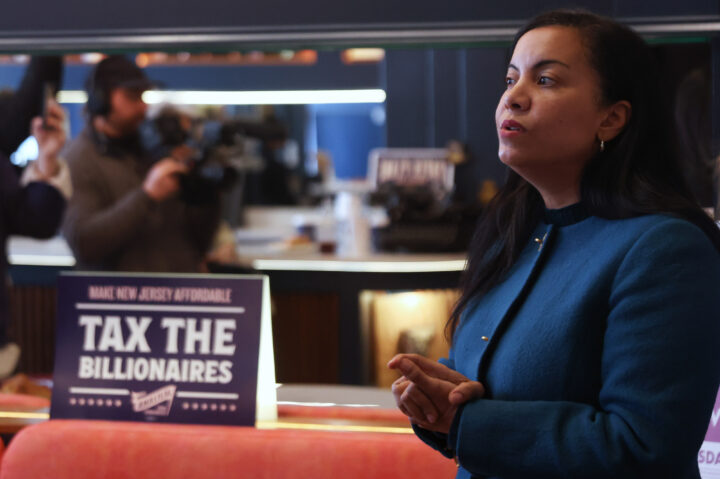
Heather Khalifa/Bloomberg via Getty Images
Analilia Mejia speaks to supporters and members of the media at Paper Plane Coffee Co. in Montclair, N.J., on Thursday, Jan. 29, 2026.
With progressive activist Analilia Mejia’s expected victory in the special election Democratic primary in New Jersey’s 11th Congressional District, attention is now turning to the upcoming April special general election and the June regular election primary as the last chances for moderates and pro-Israel groups to defeat her.
AIPAC’s super PAC, the United Democracy Project, which spent $2.3 million attacking former Rep. Tom Malinowski (D-NJ), said in a statement that its “focus remains on who will serve the next full term in Congress” and that it will be “closely monitoring … the June NJ-11 primary, to help ensure pro-Israel candidates are elected to Congress.”
Mejia is on track to receive less than 30% of the primary vote in a relatively moderate suburban district, creating an opportunity for a moderate candidate to challenge her. But several Jewish leaders, as well as a local analyst, said that that will be difficult to achieve.
“June is potentially irresistible for the other candidates who ran … if any of these candidates could get a one-on-one shot at making it in June,” Micah Rasmussen, the director of the Rebovich Institute for New Jersey Politics at Rider University, said. But unless the field can consolidate, Rasmussen said, it’s hard to see how the result would be any different in June.
Rasmussen said he doesn’t share the view of some Democrats that voters would be frustrated with a Democratic candidate who decides to challenge Mejia.
Though they haven’t formally endorsed her yet, other members of New Jersey’s congressional delegation appear to be coalescing around Mejia — Reps. LaMonica McIver (D-NJ), Bonnie Watson Coleman (D-NJ) and Rob Menendez (D-NJ) participated in a town hall focused on Immigration and Customs Enforcement organized by Mejia on Saturday, and Menendez — a relative moderate aligned with the state’s party machine — posted a photo with her on Sunday.
Malinowski has not yet conceded the race, but said during the primary that he would not run again in June if he lost. Essex County Commissioner Brendan Gill also does not plan to run again. That leaves the most likely moderate challenger as former Lt. Gov. Tahesha Way, who was endorsed by Democratic Majority for Israel and is believed to be AIPAC’s choice in the race.
Way is holding in third with 17% of the vote. Her campaign did not respond to a request for comment on whether she plans to run again.
Local Jewish leaders on Friday were generally pessimistic about the chances of taking Mejia down in the June primary — for the full term in Congress — but there could be a path to defeating the ascendant progressive.
“I sat on a debate stage with Analilia Mejia when she said that Israel has a right to exist, but not as a Jewish state,” Jeff Grayzel, a local Jewish leader who ran for the seat with ambitions of uniting the Jewish community behind his campaign, said. “It is said that Jews will be blessed when they stand together and will experience misfortune when they are divided. My pleas for Jewish unity in this race went unheeded. In my messaging to the Jewish community, I warned of a repeat of New York City in NJ-11, and this result is a consequence of a house divided. I pray our people can unify to find a path forward.”
Rasmussen said that Malinowski, who came closest to beating Mejia, would be the strongest candidate in a head-to-head race against Mejia in June, and Rasmussen said he could envision a scenario in which Malinowski ultimately took another shot at the seat despite his previous pledge not to.
“I think it’s a little bit tougher for Tahesha Way to do that,” Rasmussen said. “She would very clearly have outside spending with her. She’d very clearly have fundraising with her. But it’s a little tough to go from a 17% result to a majority result. We’ll see what happens. It doesn’t mean she shouldn’t think about it, she shouldn’t consider it, but it’s probably a stretch.”
Jeff Grayzel, a local Jewish leader who ran for the seat with ambitions of uniting the Jewish community behind his campaign, lamented Mejia’s victory as a disappointing development for supporters of Israel, and said the Jewish community needs to come together.
“I sat on a debate stage with Analilia Mejia when she said that Israel has a right to exist, but not as a Jewish state,” Grayzel said. “It is said that Jews will be blessed when they stand together and will experience misfortune when they are divided. My pleas for Jewish unity in this race went unheeded. In my messaging to the Jewish community, I warned of a repeat of New York City in NJ-11, and this result is a consequence of a house divided. I pray our people can unify to find a path forward.”
Though Mejia is well to the left of candidates that the district typically picks, Rasumussen said that it’s “hard to come up with a situation” where the district — drawn to favor Democrats with a highly motivated Democratic voter base in a midterm year — would become competitive for Republicans in the April 16 special general election to fill out the remainder of Gov. Mikie Sherrill’s House term.
“However, that’s not to say that Republicans won’t try,” Rasmussen said. “If I were a Republican who had the ability to invest resources, I would certainly be taking a very close look at this race on these next three elections that are going to be happening this year in this district, and trying to see if I can take advantage of the very particular circumstances.”
“I think it’s pretty clear why voters went to Mejia, and it’s not because she is a socialist or because she is the most left of any candidate in the race,” Micah Rasmussen, the director of the Rebovich Institute for New Jersey Politics at Rider University, said. “Voters were driven away from Malinowski because of that advertising. They did not view a machine candidate as a viable alternative. They saw Mejia as the candidate in the race who could most stand up to Trump … the candidate who had the clearest position on ICE.”
Rasmussen said that UDP’s advertising against Malinowski “very clearly … worked,” citing the significant drop in Malinowski’s share of the vote from the first early votes to be submitted — where he was receiving 60-70% of the vote — and votes submitted later in the cycle, as well as votes on election day.
“It’s pretty clear that the reason they went in [Mejia’s] direction is because she carved out a different position on ICE, which is very clearly on voters minds, and just convinced voters that she was the person who could best stand up to Trump, and that, it seems is what Democratic voters are looking for,” Rasmussen said.
He was skeptical of the narrative that the result was a sign of a broader voter appetite for socialist or socialist-adjacent policies in moderate suburban districts.
“I think it’s pretty clear why voters went to Mejia, and it’s not because she is a socialist or because she is the most left of any candidate in the race,” Rasmussen said. “Voters were driven away from Malinowski because of that advertising. They did not view a machine candidate as a viable alternative. They saw Mejia as the candidate in the race who could most stand up to Trump … the candidate who had the clearest position on ICE.”
The race also saw substantially higher turnout than most anticipated — surpassing 2024 primary turnout levels in not just the 11th District but every congressional district in New Jersey, according to Rasmussen — a sign of strong Democratic motivation to vote, likely spurred by President Donald Trump.
Gill’s fourth-place finish — despite entering the race as the favorite given the backing he received from New Jersey Democratic institutions — is a clear signal that the state’s Democratic machine has largely lost its ability to shape elections to its will, Rasmussen added.
Both objectives — 'total victory' over Hamas and Palestinian statehood — are at present incompatible with the realities on the ground

Elke Scholiers/Getty Images
IDF soldiers prepare tanks on August 18, 2025 near the Gaza Strip's northern borders, Israel.
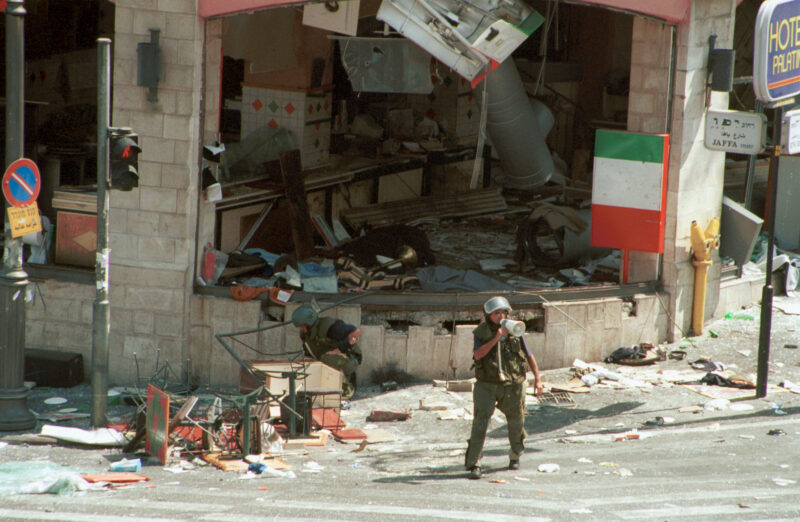
Israel is finalizing plans this week for a ground offensive into Gaza City, with the goal of having fully evacuated the city by the symbolic date of Oct. 7, 2025. Speaking at his weekly Sunday meeting, Israeli Prime Minister Benjamin Netanyahu said that Israel would “complete the victory” over Hamas. Tens of thousands of IDF reservists will begin receiving call-up notices today in preparation for the offensive.
The plans come amid a renewed push for Palestinian statehood, led by France and Saudi Arabia, that has seen a surge in support from global heads of state, including Canadian Prime Minister Mark Carney and Australian Prime Minister Anthony Albanese.
Palestinian statehood efforts also have support in Congress, where Rep. Ro Khanna (D-CA) is leading a group of House Democrats in calling on President Donald Trump to recognize a Palestinian state.
But both objectives — “total victory” over Hamas and Palestinian statehood — are at present incompatible with the realities on the ground.
Netanyahu has not wavered from his stated objective of “total victory” — even as he has yet to articulate, in practical terms, what that looks like — or how the Gaza City offensive will achieve it.
The goal of “total victory” over Hamas also runs into the challenge that the U.S. and Western allies faced amid the spread of ISIS a decade ago — that eliminating a group’s top leadership (as Israel has done in its targeting of Yahya and Mohammed Sinwar, Mohammed Deif and Marwan Issa, among others), but not its ideology, will attract new recruits to swell the ranks left empty by those who came before them.
Outside of Israel, efforts to unilaterally recognize Palestinian statehood have ignored core challenges facing both Palestinian society and government, the former of which was plagued by antisemitic and anti-Israel rhetoric long before Oct. 7, 2023, and the latter of which has for decades been mired in corruption and nepotism and lacks the ground support needed for long-term stability.
Further, leading Israeli officials have described the renewed Palestinian statehood push as a reward for Hamas’ Oct. 7 attacks and view a path to statehood rooted in the deadliest attack in Israeli history as obscene — and one that ignores the long path of deradicalization and reforms necessary before such measures are discussed.
Marcus Sheff, the executive director of IMPACT-se, an NGO that monitors and provides recommendations for curricula and educational materials across the Arab world, noted that many of the European governments that back unilateral Palestinian statehood are the same nations that “directly or indirectly” fund Palestinian curricula that incite violence against Jews and Israelis, damaging efforts to prepare a population for statehood.
“To talk about any Palestinian state without taking on, headfirst, the necessity of deradicalizing Palestinians through the education system, and even worse, being a party to their radicalization by financing it, is actually quite bizarre,” Sheff added.
The limitations of reality are a reminder that wars are fought in clashes and not catchphrases, in policies rather than platitudes. It’s easier to declare a Palestinian state than to do the work of nation-building, just as it is easier to pledge “total victory” over a deeply entrenched ideology than to strategically chart the course of its defeat.
The president also said that he would require Iran to allow entry for international inspectors to ensure the regime doesn’t rebuild its nuclear program

U.S. President Donald Trump speaks to reporters before boarding the Marine One presidential helicopter (Photo by Chip Somodevilla/Getty Images)
President Donald Trump announced Friday afternoon that he was suspending the possibility of sanctions relief efforts with Iran after Supreme Leader Ayatollah Khamenei defiantly proclaimed victory over the U.S. and Israel in a videotaped message.
“During the last few days, I was working on the possible removal of sanctions, and other things, which would have given a much better chance to Iran at a full, fast, and complete recovery – The sanctions are BITING! But no, instead I get [sic] hit with a statement of anger, hatred, and disgust, and immediately dropped all work on sanction relief, and more,” Trump said in the Truth Social post.
Previously, Trump had announced the potential for sanctions relief towards Iran during a press conference at the NATO Summit on Wednesday as part of a desire to help them recover from the war in exchange for other concessions. Later that day, Witkoff confirmed the administration had begun rolling back sanctions, although an administration official denied there was a change in policy.
In addition to ending any sanctions relief efforts, Trump said in a White House press conference that he would require Iran to allow entry for international inspectors to ensure the regime doesn’t rebuild its nuclear program.
The pivot comes as Israel Defense Minister Israel Katz announced that Israel will adopt the “Lebanon model” against Iran. The plan calls for continuing strikes against military targets to further degrade Iran’s military capabilities and cement the progress made during this month’s war.
Greene has a history of promoting antisemitic conspiracy theories, including on the campaign trail

Marjorie Greene (Greene for Congress)
Controversial congressional candidate Marjorie Taylor Greene appears to be headed for Washington following her victory on Tuesday in the Republican runoff in Georgia’s 14th congressional district. Her win raises concerns among Jewish organizations who have sounded the alarm over her candidacy for months. The district’s overwhelmingly Republican make-up all but ensures that Greene will win the general election in November.
Greene has been a vocal promoter of the QAnon conspiracy theory — which alleges that President Donald Trump is working to take down a network of Democratic politicians and celebrities who practice satanism, pedophilia and cannibalism — and has posted Facebook videos expressing antisemitic, racist and Islamophobic views.
Even after launching her campaign, Greene continued to unapologetically propagate antisemitic conspiracy theories, including falsely accusing Democratic megadonor and Holocaust survivor George Soros of “turning people over to Nazis where they were burned in offices” in a recent television interview. She also dismissed questions about a photo she took with a former Ku Klux Klan leader who described her as a “friend.”
“Ms. Greene has a history of propagating antisemitic disinformation,” Allison Padilla-Goodman, Southern division vice president of the Anti-Defamation League, said in a statement to Jewish Insider. “ADL previously called on Ms. Greene to disavow her relationship with a prominent white supremacist leader and retract past antisemitic statements. ADL said that ‘failure to do so is a moral failure and unbecoming of someone seeking elected office.’ Ms. Greene’s continued insistence on propagating such antisemitism shows she has decided to double down on hate, which, to say the least, is deeply problematic.”
Republican leaders spoke out against Greene after her Facebook videos surfaced, but only House Minority Whip Steve Scalise (R-LA) actively worked to boost her opponent, physician John Cowan, frustrating some House Republicans, according to Politico. Scalise, House Minority Leader Kevin McCarthy (R-CA) and the National Republican Campaign Committee did not respond to requests for comment.
The Republican Jewish Coalition opposed Greene during the runoff and endorsed Cowan.
“We are really proud to have endorsed John Cowan. We do not endorse Greene and we think she is the antithesis of what our party stands for,” RJC communications director Neil Strauss said in a statement to JI. “We can hold our heads up high tonight for standing up to Greene, just like we did when we stood up to [Rep.] Steve King by supporting Randy Feenstra.”
Rabbi Abraham Cooper, associate dean of the Simon Wiesenthal Center, said he was hopeful that Republican leaders would continue to distance themselves from Greene.
“During the primary campaign, top national Republican leaders in Congress, led by the House Minority Leader, denounced her bigotry with good reason. Some even endorsed her opponent. Yet she will likely be elected to Congress this fall,” Cooper said in a statement to JI.
Cooper called on Republican leaders to marginalize Greene within the Republican caucus as they did with King after he questioned why white supremacy was considered offensive.
“If Ms. Green[e] doesn’t change course,” Cooper said, GOP leaders “may have to apply [the] same standards to her.”
In Georgia’s deep red 9th district, State Rep. Matt Gurtler, who also refused to apologize for taking a photo with the same former KKK leader, lost his runoff race against gun store owner and Navy veteran Andrew Clyde.
Please log in if you already have a subscription, or subscribe to access the latest updates.
 Continue with Google
 Continue with Apple