


























Plus, Barrack hikes back Golan Heights claim
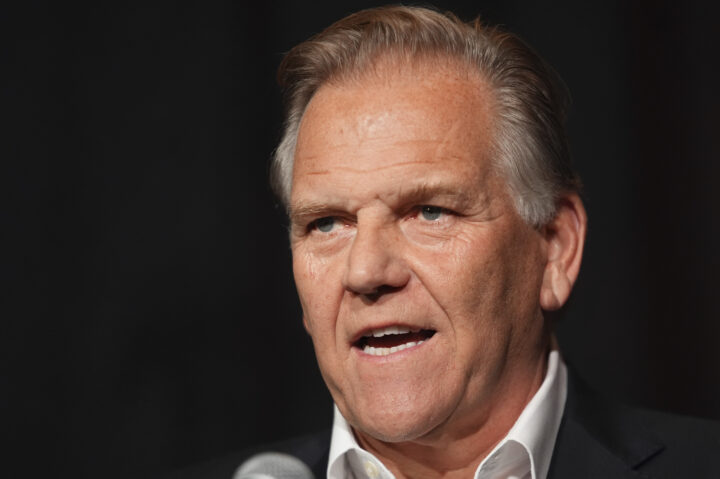
AP Photo/Paul Sancya, File
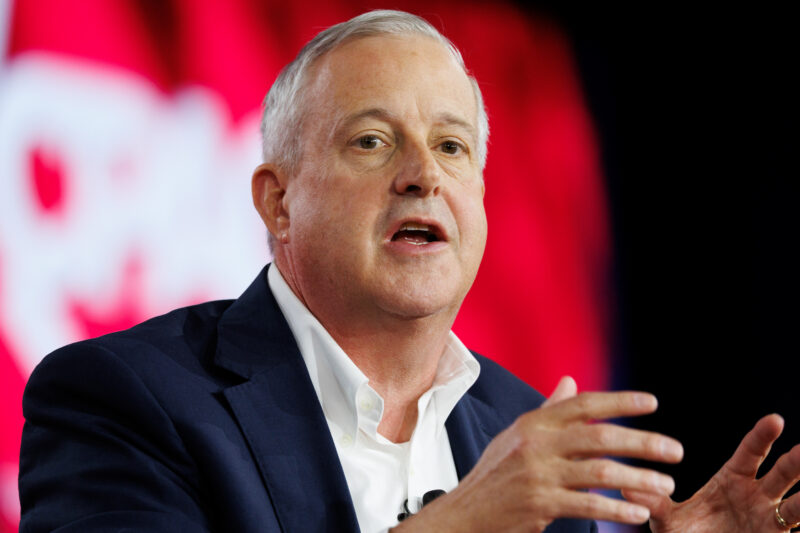
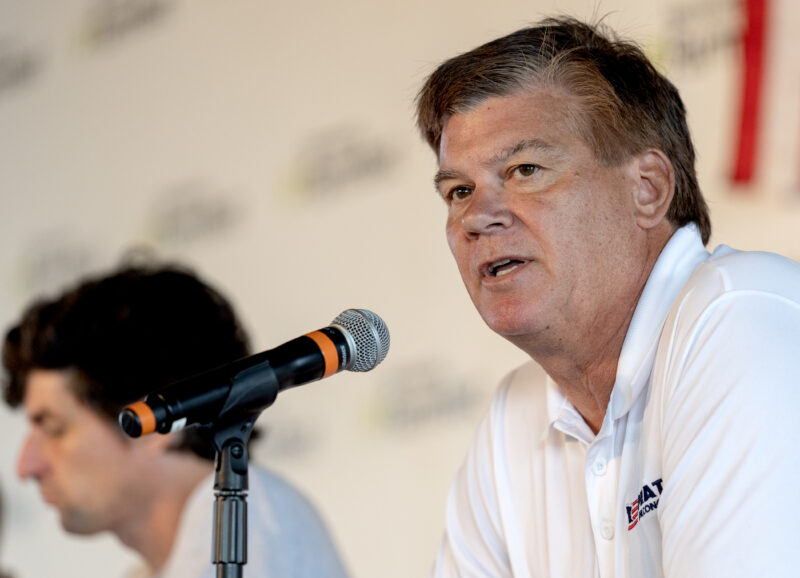
Republican Michigan Senate candidate Mike Rogers speaks during an election night watch party, Nov. 5, 2024, at Suburban Showplace Collection in Novi, Mich.


 Add JewishInsider on Google
Good Monday morning.
In today’s Daily Kickoff, we report on U.S. Ambassador to Turkey Tom Barrack’s recent comments on control of the Golan Heights, talk to Palestinian analyst Ahmed Fouad Alkhatib about his new book about Hamas’ hold over Gaza and cover Hasan Piker’s suggestion that Jews who support Israel are inviting violence. Also in today’s Daily Kickoff: Josh Harris, Avi Nesher and Artem Dolgopyat.
Curated by JI Executive Editor Melissa Weiss, with assists from Danielle Cohen-Kanik and Marc Rod.
Today’s Agenda
Treasury Secretary Scott Bessent is set to hold a press conference today on Iran, days after announcing that the U.S. planned to impose “the toughest sanctions in history” on the Islamic Republic. In a post on X last night, Bessent said, “We are now entering the endgame. At dawn begins an economic D-Day — the single greatest financial offensive ever marshaled against an adversary.”
Ahead of Bessent’s speech — which came as the Iranian rial hit another record low — China’s Foreign Ministry released a readout on Sunday of a previously undisclosed meeting last week between China’s vice foreign minister and Iranian Deputy Foreign Minister Kazem Gharibabadi in which Beijing said it was “closely monitoring the situation in the Middle East and is actively committed to promoting peace talks.”
In Aspen, Colo., the Democratic Governors Association wraps up its annual two-day summer policy conference and board retreat this week. Speakers include Colorado Gov. Jared Polis, Pennsylvania Gov. Josh Shapiro and Kentucky Gov. Andy Beshear.
The Montreal City Council is slated to hold a vote this evening on a resolution that would declare a genocide in Gaza and “recognize and denounce the apartheid regime in Palestine.” The resolution, being promoted by the opposition Projet Montréal party, has stirred controversy in the city and drawn pushback amid an uptick in antisemitic crimes.
One Thing To Know
analysis
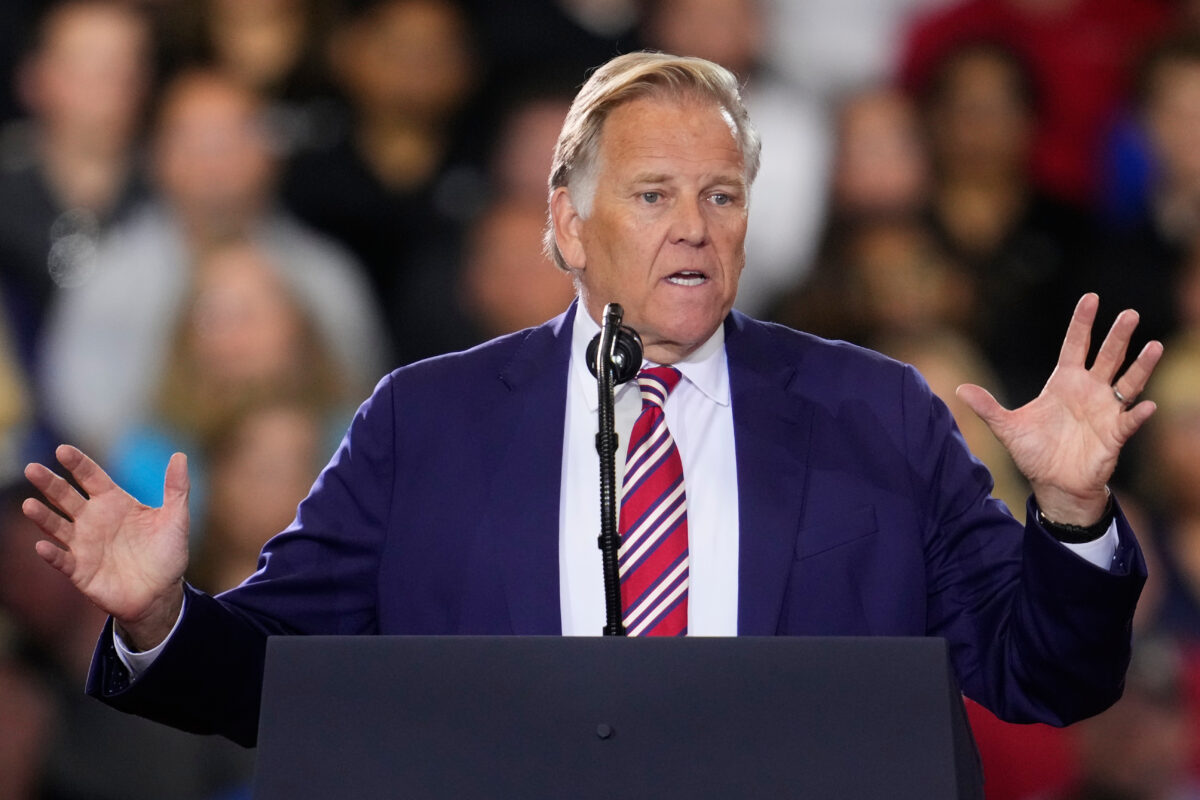
The debate over AIPAC’s involvement in the high-stakes Michigan Senate race is drawing renewed attention after an Axios report outlined a request from allies of former Rep. Mike Rogers (R-MI) for the pro-Israel group’s super PAC to lay low for the general election. The Rogers campaign advisors suggested instead that the group transfer money for the race to a separate pro-Rogers entity so as not to make its outside spending a major issue in the contest.
The episode has touched a lot of raw nerves in both the pro-Israel world and the Republican political landscape. Rogers, a longtime supporter of the U.S.-Israel relationship, is highlighting his relationships with Michigan’s Jewish community, and has made attacking Democratic nominee Abdul El-Sayed’s anti-Israel virulence and his relationship with antisemitic figures like Hasan Piker a central element of his campaign message.
AIPAC’s super PAC, United Democracy Project, spent about $32 million in the Democratic primary to try to defeat El-Sayed, and there’s little doubt its money — in the absence of any moderate group willing to spend similar resources to stop a far-left candidate like El-Sayed from winning — made the race more competitive than it otherwise would have been. But it also gave El-Sayed a talking point in attacking outside money in the race that diluted the impact of the aggressive advertising campaign, especially at a time when support for Israel itself is diminishing within the Democratic Party.
The Big Reads
BARRACK’S ROW
U.S. Ambassador to Turkey Tom Barrack on Sunday reaffirmed the U.S. policy on the Golan Heights, days after suggesting on a livestream that the Israelis “still occupy the Golan against the [United Nations] resolutions,” despite the Trump administration’s 2019 recognition of the area as Israeli territory, Jewish Insider’s Marc Rod reports. In a statement to JI after facing pushback on his initial comments, Barrack said, “The reference to the United Nations was offered as evidence of the point I was making — that territory taken by force remains contested for generations, in this case for more than fifty years and still unresolved at the UN — which is why I argue that negotiated understandings, not maps, are what endure.”
BOOKSHELF
During the war between Israel and Hamas sparked by the Oct. 7, 2023, attacks, dozens of relatives of the Atlantic Council’s Ahmed Fouad Alkhatib were killed in Israeli airstrikes. But ultimate blame for their deaths, the author of Hamas and Its Two Million Hostages argued to Jewish Insider’s Matthew Shea, is with the terror group and not Israel. In his first book, Alkhatib said he sought “to weave in elements of my personal story with Gaza’s contemporary history, and add a human dimension to what I felt was Hamas’ devastating impact on the Palestinian people, their destructive role in setting back the Palestinian national project and the radicalization of the society.”
VEILED THREAT
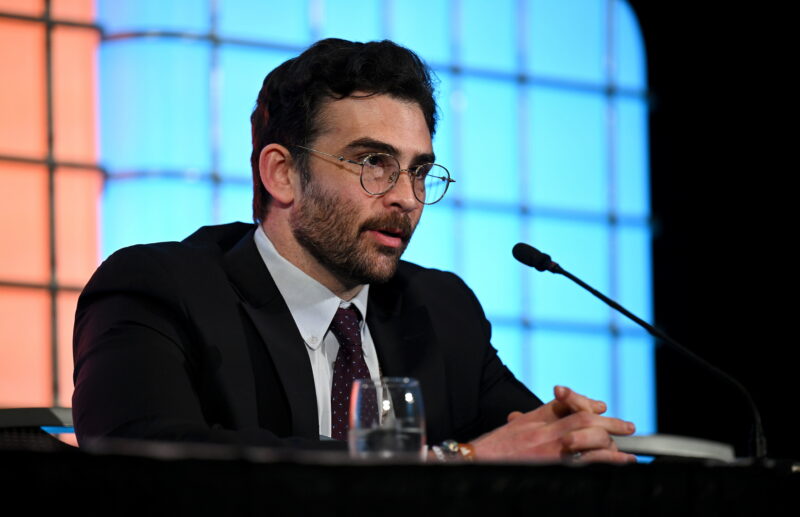
Antisemitic social media influencer Hasan Piker, who has campaigned with a number of progressive Democratic candidates this year, said on his Twitch stream last week that American Jews who express support for Israel are inviting violence against themselves, Jewish Insider’s Haley Cohen reports. In his commentary, Piker added that Jews who tie their “entire identity” to Israel, which he referred to as “Jewish ISIS,” are “making antisemitism worse.” Two hours into his nearly seven-hour stream last week, Piker said, “If Jews in America keep putting this idea out there that they are singularly invested in Israel, eventually someone’s going to come around and take action, not against the State of Israel, mind you, but against American Jews.”
The Rundown
EDUCATION IMPACT
TURKEY TROUBLE
MONEY MOVES
On Our Radar
● The Live Briefing. Word on the street, clips, podcasts and quick updates — the items we’re tracking all day in our Live Briefing on the app (on Apple and Android) and website.
House Minority Leader Hakeem Jeffries (D-NY) met privately with White House advisor Jared Kushner in recent weeks to discuss policy issues as Democrats look poised to retake control of the House in the midterm elections…
The U.S. canceled an upcoming joint amphibious landing exercise with South Korea, with Washington reportedly citing constraints due to the Iran war…
Mossad Director Roman Gofman and Syrian Foreign Minister Asaad al-Shaibani met on Sunday in an effort to lower tensions after Israel struck a Syrian air base last week…
U.K. power companies were put on high alert following a successful effort by hackers with suspected Iran ties to shut down a small British energy plant, weeks after Iran-linked hackers were suspected of targeting water systems in at least seven U.S. states…
Iranian authorities are increasingly cracking down on coffee shops that are serving as gathering spots for young Iranians to socialize, often citing the country’s restrictive modesty laws…
Rep. Anna Paulina Luna (R-FL) is planning to introduce legislation amending the Foreign Agents Registration Act that would require influencers to disclose funding from foreign governments to push political messages; the legislation has the backing of Reps. Jared Moskowitz (D-FL), Vicente Gonzalez (D-TX) and Derrick Van Orden (R-WI)…
The New York Times spotlights Powerus as the Florida-based startup, which makes 3D-printed drone interceptor components, begins production in a newly opened facility in the United Arab Emirates in its first foray into the Middle East; the expansion is part of a broader effort to quintuple production by 2027 to match growing needs from the U.S. and its allies…
Blackwater founder Erik Prince launched Vectus Air Defense Systems, which will provide “layered air-defense networks” in partnership with Ukrainian drone software group Swarmer, for which he serves as non-executive chair…
Paramount condemned Mark Ruffalo’s use of “antisemitic tropes … in purported service of a business dispute” after the actor and activist, who has opposed Paramount’s bid to takeover Warner Bros. Discovery, accused CEO David Ellison and his father, Oracle founder Larry Ellison, of “powering some of the most destructive and inhuman forces in the world”…
Josh Harris, a minority owner of the Crystal Palace Football Club, told Sportico that the team is “trying to look at whether there are investors that might want to join us” as the owners of the English Premier League club consider a potential sale…
City & State NY looks at the NYPD’s continued relationship with Israeli law enforcement — including a full-time liaison stationed in Israel — despite New York City Mayor Zohran Mamdani’s anti-Israel rhetoric, finding that “[n]owhere has the gap between Mamdani’s views on Israel and his actual policy been greater than his management of the NYPD”…
Variety interviews Israeli filmmaker Avi Nesher about his new film “Our Loves,” inspired by the real-life relationships of survivors of the Oct. 7, 2023, attacks, which is set to premiere next month at the Toronto International Film Festival…
Seven anti-Israel protesters who were convicted last month of shutting down traffic on the Golden Gate Bridge during a 2024 demonstration were sentenced to 30 days in jail and six months probation, with the imposition of jail time on hold until the defendants file appeals…
A Jewish camp in Belgrade, Maine, is seeking a protective order from a neighbor with whom camp officials have clashed for years; the camp alleged that Nathan Hewett has sought to disturb campers and staff, and said that earlier this month he fired nearly two dozen gunshots nearby, sending the camp into lockdown…
The Wall Street Journal looks at the Alternative for Germany’s attacks on the Bauhaus art and design school, as the far-right party seeks to portray the art movement — which was banned by the Nazis — as “inhumane” and anti-German…
AirMail and Politico profile Yashar party leader Gadi Eisenkot, as the latest poll from Israel’s Kan network shows Israeli Prime Minister Benjamin Netanyahu with 51 seats — short of the 61-seat majority needed to form a coalition…
Military officials from Burundi and Uganda met with officials in Israel last week to discuss the deployment of troops from both countries to join the international security force in Gaza…
Israel announced that it had discovered the wreckage of the Altalena, nearly 80 years after the vessel, which had been carrying arms to the Irgun when those aboard clashed with the IDF after the ship ran aground in Tel Aviv, was sunk on the orders of Prime Minister David Ben-Gurion in June 1948…
Peter Berkowitz was named the next James R. Schlesinger distinguished professor at the University of Virginia’s Miller Center of Public Affairs…
Worthy Reads
Find more Worthy Reads in our Live Briefing via our app (on Apple and Android) and website.
What Bernie Wrought: In The Free Press, Joel Rubin, the former Jewish outreach director on Sen. Bernie Sanders’ (I-VT) 2020 presidential campaign, argues that Sanders and his political infrastructure have helped bring about the Democratic Party’s turn against Israel and a broader rise in antisemitism. “No longer are there any guardrails within the Sanders team that take the broader Jewish community’s sensitivities into account. … Rather, for the past several years, Sanders has helped build a political infrastructure on the American left in which hostility toward Israel has increasingly become a marker of ideological authenticity.” [FreePress]
That Other King: In The Washington Post, Rabbi Elie Kaunfer reflects on the upcoming High Holy Days of Rosh Hashanah and Yom Kippur in the context of the “No Kings” protests that have taken place across the U.S. over the last year. “At the emotional center of both holidays is a word that recurs in their liturgies: king. … But 2,000 years before anyone printed a protest sign, the ancient rabbis who composed these words wrestled with the same discomfort we feel today. Indeed, the rabbinic approach to God as King can be summed up simply: Whatever you think a human king is, God is the opposite.” [WashPost]
Base Running: The Financial Times’ Jacob Judah does a deep dive into the debate over how — or whether — to rebuild U.S. military facilities in the Middle East that were damaged by Iranian fire. “As Pentagon planners have reimagined how to fight against advanced adversaries, large and fixed bases have been losing favour as the staging and supply hubs for military operations. The preference in Washington has been to move towards a more dispersed deployment model that makes it harder to target American forces.” [FT]
Picture of the Day

Israeli Olympic gold medal gymnast Artem Dolgopyat won his third European Championship title for his floor routine during last week’s competition in Zagreb, Croatia. MARKO LUKUNIC/PIXSELL/MB MEDIA/GETTY IMAGES
Birthdays
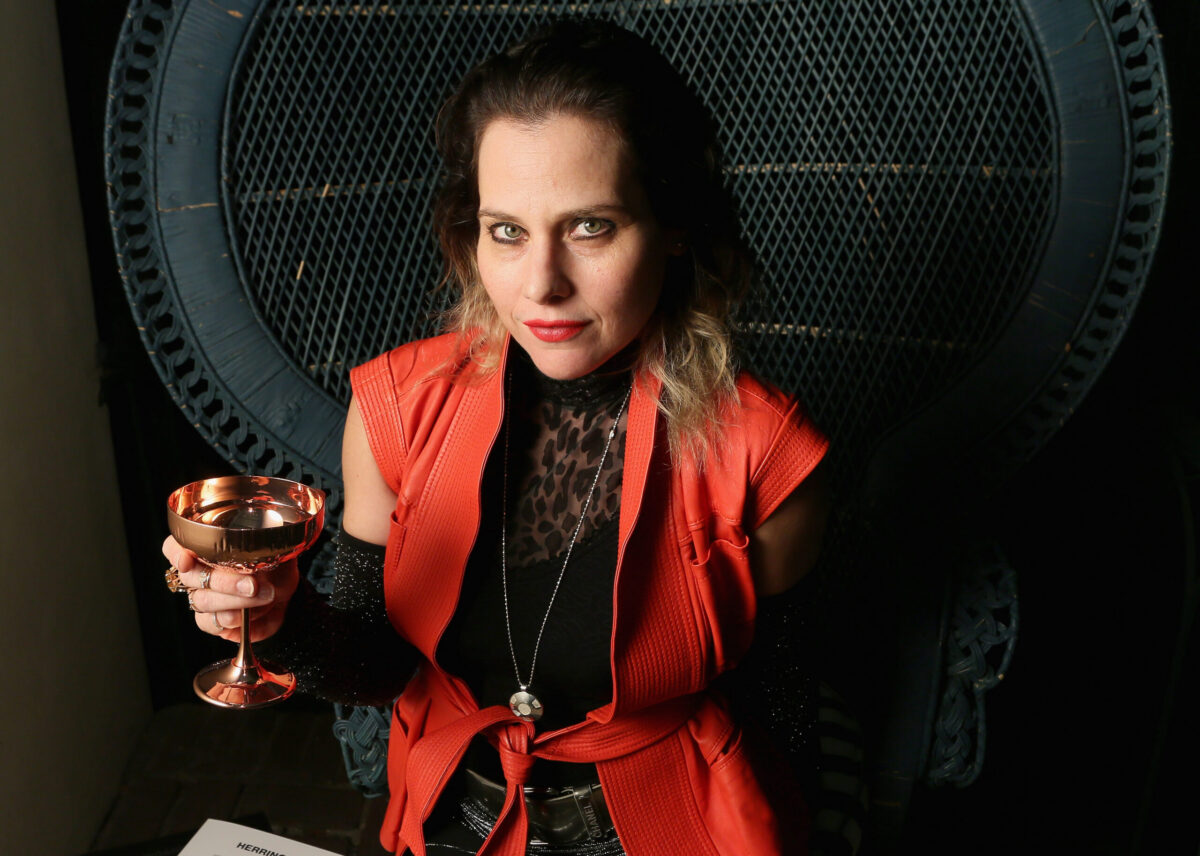
Meital Dohan, Israeli actor and musician, turns 50
Meir Stern, rosh yeshiva of the Yeshiva Gedola of Passaic, N.J., turns 91
J. David Bleich, professor of Jewish law and ethics at Yeshiva University, he also teaches at Cardozo Law School, turns 90
Lois Tager, author, speaker, geriatric care manager and online counsellor for seniors in Scottsdale, Ariz.
Mel Karmazin, former president of Infinity Broadcasting, he eventually became the CEO of CBS and of Sirius Radio, turns 83
Joe Manchin, former U.S. senator (I-WV), turns 79
Dakota Jackson, celebrity furniture designer known for his eponymous furniture brand, turns 77
Lawrence Bacow, former president of Harvard and Tufts universities, turns 75
Jonathan Romain, rabbi emeritus of the Maidenhead Synagogue in Berkshire, England, turns 72
Ricki Seidman, senior counselor to the secretary of Homeland Security during the Biden administration, turns 71
Mike Huckabee, U.S. ambassador to Israel, turns 71
Phil Rosen, retired in 2024 as head of the real estate practice at Weil, Gotshal & Manges, he is the vice chair of Birthright Israel Foundation and chair of World Jewish Congress-American section
Adam Gopnik, author of nine books, essayist and longtime staff writer for The New Yorker, turns 70
Steve Guttenberg, actor, producer and director, turns 68
Marvin Krislov, president of Pace University, turns 66
Jonathan Aviv, professor of otolaryngology at Mount Sinai Hospital in NYC, turns 66
Marc Terrill, president emeritus of The Associated: Jewish Federation of Baltimore
Donna Barwald, professional organizer
Marlee Matlin, 1986 winner of the Academy Award for Best Actor for her role in “Children of a Lesser God,” she is the first deaf performer to have won the award, turns 61
Nick Denton, founder and CEO of Gawker Media until it was bankrupted by Hulk Hogan and Peter Thiel, turns 60
Andrew Romanoff, former speaker of the Colorado House of Representatives, he is now executive director for Disability Law Colorado, turns 60
Lonnie Nasatir, president of the Jewish United Fund/Jewish Federation of Metropolitan Chicago
David Gregory, CNN political analyst, he is the former host of NBC’s “Meet the Press,” turns 56
Todd Young, U.S. senator (R-IN), turns 54
Avigail Sperber, Israeli cinematographer and film and television director, turns 53
Miriam Shaviv, content marketing lead at Dow Jones Risk & Compliance, turns 50
Jon Daniels, former GM of MLB’s Texas Rangers, now a senior advisor for the Tampa Bay Rays, turns 49
Emily Cherniack, Boston-based, founder and executive director of the group New Politics
Michael M. Rosen, counsel at Irell & Manella and a nonresident senior fellow at the American Enterprise Institute
Jenn Hyman, co-founder and former CEO of Rent the Runway, a company focused on the renting of high-end clothing and accessories, turns 46
Jon Scheyer, head coach of the Duke men’s basketball team after serving as assistant to the legendary Coach K (Mike Krzyzewski), turns 39
David Perelman, CEO of the JCommerce Group, an e-commerce enterprise that services the Jewish community
Galia Slayen, VP of strategic communications at The Lede Company
Samantha Feinstein, owner of Sustayne and co-owner of Peabody Group
Natalie Short, SVP at Edelman Smithfield
Griffin Gluck, film and television actor, turns 26
The U.S. envoy to Syria’s comments came at odds with Trump’s recognition of Israeli sovereignty over the Golan in 2019
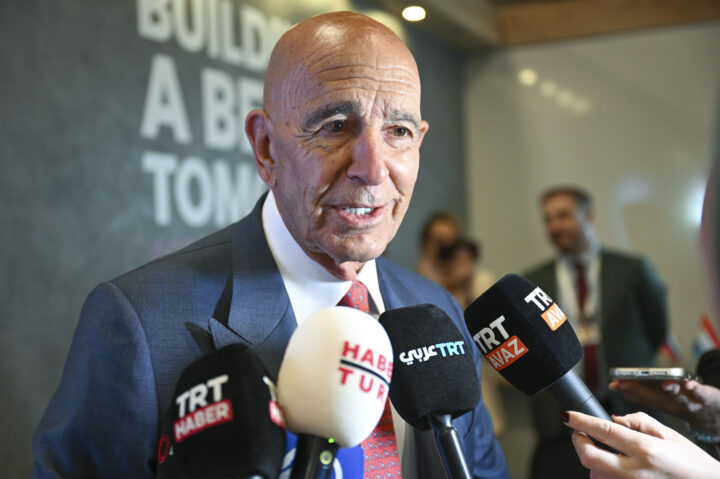
Special Envoy for Syria Tom Barrack speaks during an interview within Antalya Diplomacy Forum, held under the theme of 'Mapping Tomorrow, Managing Uncertainties' in Antalya, Turkiye on April 17, 2026.
U.S. Ambassador to Turkey Tom Barrack, who also serves as the U.S. special envoy for Syria, on Friday described Israel as occupying the Golan Heights, despite the U.S.’ recognition of Israeli sovereignty in the region.
“In the Golan with Syria — they still occupy the Golan against the [United Nations] resolutions, against all of the international order which has said the Golan is Syria’s,” Barrack said during an appearance on commentator Mario Nawfal’s livestreamed show.
Barrack’s comments did not address the U.S.’ 2019 recognition of the Golan Heights as sovereign Israeli territory — a decision made by President Donald Trump during his first term and maintained by the Biden administration.
“My comments were descriptive of a well-known historical record and were made in the course of explaining why I do not anticipate annexation in Lebanon,” Barrack said in a statement on Sunday. “The reference to the United Nations was offered as evidence of the point I was making — that territory taken by force remains contested for generations, in this case for more than fifty years and still unresolved at the UN — which is why I argue that negotiated understandings, not maps, are what endure. It was not an endorsement of the UN’s position. United States policy on the Golan was set by President Trump in 2019 and is unchanged. “
Barrack’s comments came in response to a question about whether Israel seeks to annex Lebanese territory — something Barrack ultimately denied.
The comments had prompted backlash from a range of figures on the right.
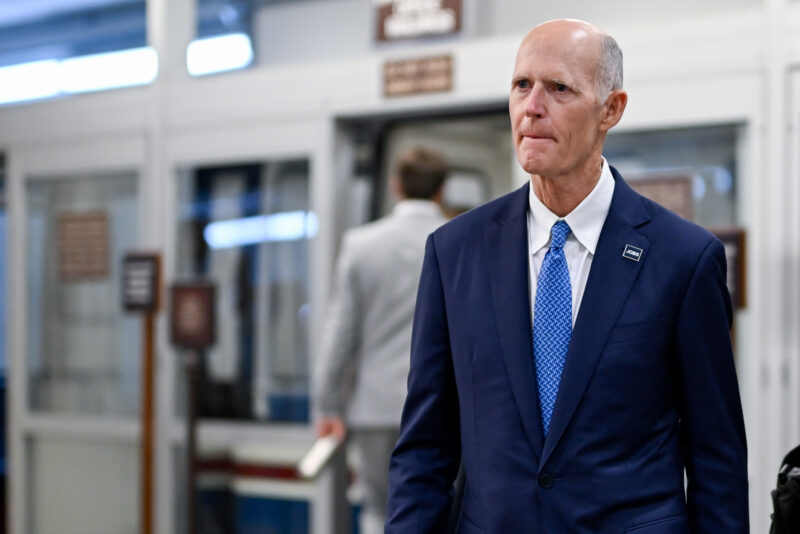
“The Senate confirmed [Barrack] to enact the PRESIDENT’S AGENDA, which millions of Americans voted for,” Sen. Rick Scott (R-FL) said on X. “It seems the Ambassador forgot that or failed to do his research, so here’s a refresher for him… President Trump has been CLEAR about Israel’s sovereignty over the Golan Heights for years!”
Far-right influencer Laura Loomer blasted Barrack and demanded that he be forced to resign, calling Barrack “clearly compromised by Arab money.” Bush administration official David Wurmser called the comments a “clear statement” that Barrack “regards the President’s policy and U.S. recognition of the Golan as part of Israel as null and void” and urged him to clarify if he supports U.S. policy, believes he can change U.S. policy on his own or whether U.S. policy has changed.
The U.S. ambassador also dismissed the idea of forced demilitarization of Hezbollah — as required under both U.N. Security Council resolutions and recent Israel-Lebanon diplomatic agreements — as an impossibility.
“We’re asking [the Lebanese Armed Forces], please go shoot your cousins if they don’t give you the AK-47. It’s not going to happen that way. It’s too difficult for it to happen that way,” Barrack said. “So I think what [U.S. Ambassador to Lebanon Michel] Issa is doing in this whole process is saying there’s got to be a better way. How do we get Hezbollah to not utilize those weapons?”
He seemed to rationalize Hezbollah’s continued defiance of demilitarization efforts as resistance to Israeli demolition of Lebanese homes and as the only way for the terror group to financially survive, by receiving monetary support from Iran.
Addressing other comments in the interview, which many saw as a call for negotiating with Hezbollah and Iran over Hezbollah’s demilitarization, Barrack described the Lebanese government as the “sole legitimate authority.”
“My point was that implementation of the June framework requires an honest reckoning with who holds the weapons and who supplies them. I was describing the difficulty of the problem, not proposing a new table,” Barrack said. “Hezbollah is a designated foreign terrorist organization. We do not negotiate with it, and nothing I said suggests otherwise. My remarks should be read in their full context.”
He added that “any honest observer” must determine how to move Iran and Hezbollah.
“How does Hezbollah come to accept disarmament? And who, other than Tehran, sustains the communities of the south, so that the money on which that arsenal’s political cover depends is replaced by something better? Naming those questions is not conferring standing on anyone,” Barrack said. “It is the precondition of answering them — and answering them is precisely what the framework’s designers are working at.”
Barrack praised the defense agreement between Turkey, Pakistan and Saudi Arabia as an accomplishment for the Trump administration, pressing regional powers to take responsibility for their own security — similar to the president’s efforts to pressure European NATO allies to spend more on their own defense.
“It’s not anti-Israel, it’s not pro-Sunni and it’s not anti-America,” Barrack said. “It’s, ‘Guys, we need to band together.’”
He also suggested that others in the region shouldn’t be concerned by Turkey’s apparent growing regional ambitions.
“Turkey’s going into a new, powerful mode, which makes everybody nervous, but it’s a great thing for Turkey,” Barrack said. “They — as a hub, as a non-Arab, really workable, kind, loving, Islamic country with eight countries around it and four seas … it’s threatening in its geographical presentation. So I’m hopeful the calmer heads will be there.”
Barrack is in the midst of a media tour addressing Israel’s decision to strike the runway of a Syrian airbase with the goal of preventing Turkey from deploying troops to the site. Barrack and other U.S. officials have criticized the strikes.
On Friday, Barrack suggested two potential motivations for the strikes: that Israel was “baiting the Turks” or that there had been a “miscommunication” among different elements of the Israeli government that led an Israeli commander to carry out a strike without any intention of sparking further conflict or causing injuries.
Speaking on the incident on “PBS NewsHour” on Friday, Barrack said that Israel believed it had a tacit agreement with Turkey and Syria that the countries would not deploy military equipment that could obstruct an Israeli attack path to Syria, but Barrack said that the other parties did not agree that they had any such accord.
He said that Israel had communicated its concerns about the deployment to Syria, and that Syria had denied any Turkish movement toward the base, with further talks planned the following week. “Something went awry and Israel decided they needed to bomb the craters on two runways. The problem with this is Turkey did not know it was coming,” Barrack continued.
Barrack suggested on both shows that recent tensions between Turkey and Israel are largely a political gambit by both sides ahead of elections in their countries — despite Turkish President Recep Tayyip Erdoğan’s now yearslong threats to invade or attack Israel. And he said on Nawfal’s show that Turkey is “concentrating on restraint” and is “not predatory” and “not interested in attacking or even engaging in any kind of kinetic or adversarial relationship with Israel.”
He said that the U.S. saw no malign intent or aggressive action by Syria or Turkey.
However, in the same interview, Barrack expressed an understanding of Israel’s concerns about the new Syrian government, particularly when it first took power, and insisted that Israel’s incursion into Syria was designed as a protective measure, not as an effort to expand its territory, as some in anti-Israel circles have claimed.
Nawfal’s show, on which Barrack appeared, has also featured a range of anti-Israel figures and conspiratorial anti-Israel narratives. Other recent guests have included Anthony Aguilar, the former U.S. Marine turned anti-Israel activist who claimed to have seen Gaza Humanitarian Foundation contractors kill a child in Gaza only for that child to be found alive and well; former Trump administration official Joe Kent; and anti-Israel commentator and retired Gen. Douglas Macgregor.
Israeli strikes on a Syrian airbase this week served as the latest disagreement between the U.S. and Israel over how to engage with Damacus and increased Turkish influence inside the country
Syrian Presidency
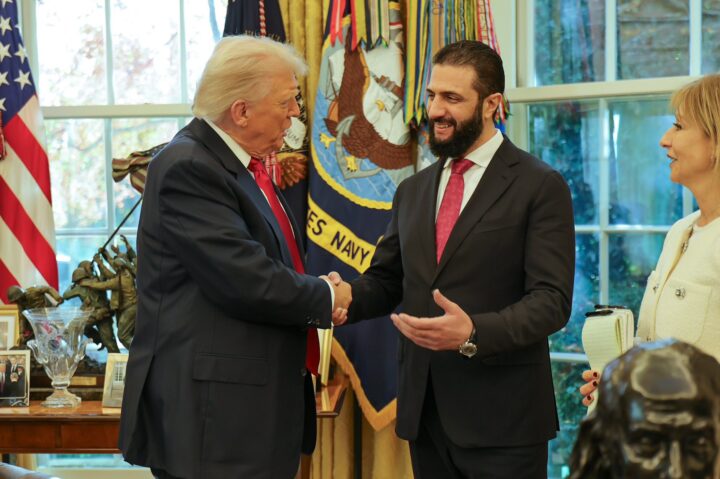
President Donald Trump greets Syrian President Ahmad al-Sharaa in the Oval Office on Nov. 10, 2025.
The aftermath of Israeli airstrikes in Syria earlier this week are shining a light on the growing divide between the United States and Israel over how to approach Damascus’ government and its relationship with Turkey.
Israel said it struck Syria’s Abu al-Duhur air base in the country’s northwest on Monday based on intelligence that Turkey was preparing to deploy forces there, arguing that such a move would threaten Israeli security. Turkey and Syria denied any involvement from Ankara at the base, though the Syrian foreign minister said a Turkish military delegation had visited it shortly before the strikes.
The incident garnered a rebuke from U.S. Ambassador to Turkey Tom Barrack, who labeled the Israeli move as an “unnecessary escalation that does not advance regional stability.”
The episode is the latest disagreement between the U.S. and Israel over how to engage with Syria’s government and increased Turkish influence inside the country following the fall of former President Bashar al-Assad in December 2024.
The Trump administration has sought to stabilize and support the government of President Ahmad al-Sharaa while maintaining close diplomatic ties with Ankara. Israel, however, has remained more skeptical of Syria’s new leadership — owing in part to al-Sharaa’s having previously led an al-Qaida offshoot — and has viewed Turkey’s military posturing north of its borders as a security threat.
Jonathan Ruhe, a fellow at the Jewish Institute for National Security of America, told Jewish Insider, “The United States and Israel haven’t seen eye-to-eye on Syria since the fall of the Assad regime, both in terms of what al-Sharaa’s government represents and how to approach Syria’s new leadership.”
For Israel, Ruhe said, the removal of Assad and the weakening of Iran’s position in Syria did not eliminate the threat from the country. Instead, Jerusalem increasingly sees Turkey — a major backer of al-Sharaa — as a potential replacement for Iran as the dominant outside power in Syria.
“From Day One, Israel has worried that al-Sharaa simply replaces the Iranian threat in Syria with a Turkish one,” Ruhe said. “For the Trump administration, Syria and Turkey represent diplomatic and investment opportunities, not military problems.”
Israel, Ruhe said, has pursued a “proactive military approach,” including strikes aimed at preventing weapons and military infrastructure from falling into the hands of Islamist actors and Ankara.
“This explains Israel’s proactive military approach to Syria, starting with its decision to eliminate Assad’s arsenals as al-Sharaa took power in late 2024,” Ruhe said. “After targeting potential Turkish bases in central Syria last year, the latest airstrikes show Israel is willing to preempt Turkey’s military presence in northern Syria, farther from Israel’s borders.”
Meanwhile, the U.S. has taken a different approach as President Donald Trump has repeatedly expressed fondness for al-Sharaa and Turkish President Recep Tayyip Erdoğan – even as Israel has taken a more hostile stance to both leaders.
James Jeffrey, who served as the first Trump administration’s special envoy for Syria and ambassador to Turkey, said Washington has long been aware of tensions between Erdoğan and Israeli Prime Minister Benjamin Netanyahu.
“The U.S. has been pressing for deconfliction arrangements and talks between Israelis and Turks and formally Israel and Syria,” Jeffrey said. “The U.S.’ short- term goal is to calm [the] situation.”
Barrack told The Jerusalem Post following the strikes that the U.S. is looking to resume a deconfliction mechanism between the countries.
Sinan Ciddi, a senior fellow at the Foundation for Defense of Democracies, said Washington is also looking to avoid new conflicts in the region while it tries to wind down tensions with Iran.
“I suspect the Trump administration, mainly as advised by Tom Barrack, feels the administration is juggling way too many balls in the region, Iran being the main one, and the last thing they need is military escalation on the part of Israel,” Ciddi said.
That approach has increasingly put Washington and Jerusalem at odds when Israeli security concerns have collided with the administration’s broader effort to stabilize Syria.
Ciddi noted that Barrack — in his additional role as special envoy to Syria — is contributing to the divide between U.S. and Israel policy approaches to Damascus. He pointed to Barrack’s controversial comments equating Israel to Hezbollah and promoting Turkey’s inclusion in the F-35 fighter jet program as being at odds with Israeli interests.
“He is the premier voice that Trump listens to in this space,” Ciddi said, noting that Barrack holds “a clear preference for siding with Turkey” and “is unduly influencing Trump himself and preventing other members of his administration from providing him best advice.”
“I think Tom Barrack and some of the other members of the Trump administration clearly believe that Israel is really pushing an agenda that compromises U.S. national interests, which I would not agree with,” he added.
Analysts warned that continued disagreements between the U.S. and Israel could eventually produce a much more serious problem for Washington, particularly if the administration is unable to balance its partnerships with Jerusalem and Ankara.
“The danger is at some point Israel could miscalculate and get into a serious incident with Turkey either in Syria or [in the Eastern Mediterranean],” Jeffrey said. “This would be a huge blow to the U.S. [which is] tied closely with both. And, most importantly, it would advantage Iran in Syria and beyond.”
Ciddi also said the U.S.-Israel divergence over Syria leads “nowhere good,” especially given the increasingly hostile posturing between Turkey and Israel inside Syria.
“Incidents like this over and over again, added to heated rhetoric and posturing, could lead to a significant miscalculation or an intentional action that results in a retaliatory response that would put Turkey and Israel into armed conflict,” Ciddi said.
The U.S. ambassador to Turkey floated an overland route for regional trade centered on Iraq, sidelining the India-Middle East-Europe Economic Corridor meant to run through Israel
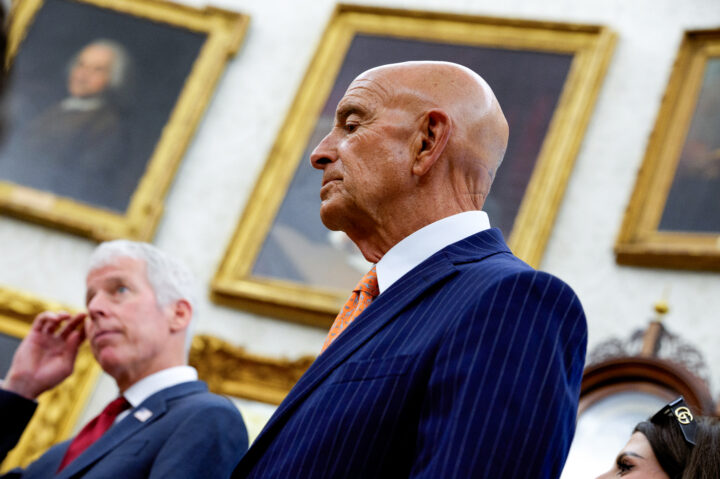
Photo by Andrew Harnik/Getty Images
U.S. Ambassador to Turkey Thomas Barrack attend a meeting with U.S. President Donald Trump and Prime Minister of Iraq Ali al-Zaidi in the Oval Office of the White House on July 14, 2026 in Washington, D.C.
U.S. Ambassador to Turkey Tom Barrack on Friday promoted a new regional trade and security alignment in the Middle East centered around Iraq, Turkey and neighboring Arab states, appearing to sideline a similar regional project including Israel.
Speaking at the U.S.-Iraq Business Summit, Barrack told attendees that Iraqi Prime Minister Ali al-Zaidi, who visited with President Donald Trump at the White House this week, is considering a transformative agreement “that will make the Strait of Hormuz” — which has been effectively shut down due to the Iran war and continued hostilities — an “afterthought in two years” by shifting trade that usually passes through the waterway to overland routes.
“What this young leader [al-Zaidi] has in mind — aligned with Syria, Jordan, Turkey, Lebanon, Egypt — is a program that will make the Strait of Hormuz an afterthought in two years,” Barrack said. “We’re going from just-in-time delivery on boats through these minor straits to just-in-case delivery going the other way.”
The proposal appears to serve as an alternative framework to the stalled India-Middle East-Europe Economic Corridor (IMEC), which has faced roadblocks following regional turmoil and the Oct. 7, 2023, Hamas terror attacks. While the original IMEC agreement included Israel as a vital transit point connecting India to Europe via the UAE and Saudi Arabia, the newly envisioned corridor relies instead on a coalition featuring Syria, Lebanon and Jordan.
The State Department also released a statement on Friday welcoming the announcement of cooperation between Iraq and Syria on the “rehabilitation and reconstruction of the Iraq-Syria crude oil pipeline as a priority infrastructure project of bilateral and regional strategic significance.”
“We feel the chaos on one side, but actually, what’s happened is a brilliant realignment of security and strategic alliances in the region,” Barrack said in his remarks, with “Iraq being at the forefront of a new strategic security alliance.”
Barrack praised Trump for recognizing the necessity of working with localized “strong leaders” rather than enforcing Western-style regime change, which he admitted has historically failed.
“The connectivity of what can happen is mind-boggling,” he continued. “So, if we now take from Turkey, Azerbaijan, to Turkmenistan through Central Asia, the amount of gas that can be sent the other way towards Europe through commerce, we’re starting to find a way to create a different fabric.”
Plus, Israel-Ukraine relations face grain of contention

Joe Raedle/Getty Images
Rep. Debbie Wasserman Schultz (D-FL)
This P.M. edition is reserved for our premium subscribers like you — offering a forward-focused read on what we’re tracking now and what’s coming next. Please don’t hesitate to share your thoughts and feedback by replying to this email.
📡On Our Radar
Notable developments and interesting tidbits we’re tracking
The gunman who attacked the White House Correspondents’ Dinner on Saturday night, Cole Tomas Allen, was arraigned in Washington this afternoon. He is being charged with transportation of a firearm between states, discharging a firearm during a crime of violence and attempting to assassinate the president of the United States, which carries a potential life sentence.
Assistant U.S. Attorney Jocelyn Ballantine said Allen, 31, had “a 12-gauge, pump-action shotgun, a .38-caliber semiautomatic pistol and … three knives and other dangerous paraphernalia” during the attack. He will remain in detention with another hearing scheduled for Thursday…
White House Press Secretary Karoline Leavitt confirmed that President Donald Trump met with his national security team this morning where they discussed Iran’s latest proposal to end the war, which reportedly includes reopening the Strait of Hormuz but postponing talks on the country’s nuclear program…
German Chancellor Friedrich Merz said the U.S. is “being humiliated” by Iranian leaders after negotiations between the two countries this weekend were called off.
“The Iranians are obviously very skilled at negotiating, or rather, very skillful at not negotiating, letting the Americans travel to Islamabad and then leave again without any result,” Merz told a group of students. The result is “an entire nation is being humiliated by the Iranian leadership, especially by these so-called Revolutionary Guards,” he added…
Russian President Vladimir Putin praised how “courageously and heroically the people of Iran are fighting for their independence” in a meeting with Iranian Foreign Minister Abbas Araghchi today in St. Petersburg. Araghchi thanked Russia for standing by its side and said the countries will continue their “strategic partnership”…
Hezbollah leader Naim Qassem said today that the terror group will not disarm, despite the Lebanese government’s intent to remove the group from power in the south of the country under the terms of the ongoing ceasefire with Israel. Hezbollah and Israel have continued to exchange fire throughout the ceasefire, including a wave of Israeli airstrikes today in response to Hezbollah’s deadly drone attack that killed an IDF soldier and wounded six yesterday…
New Department of Homeland Security training materials allow green card applicants to be denied for antisemitic and anti-Israel social media posts and activism, as well as anti-American activism, The New York Times reports. The documents, distributed to immigration officers last month, cite “as an example of questionable speech a social media post that declares, ‘Stop Israeli Terror in Palestine’ and shows the Israeli flag crossed out”…
Ukrainian Foreign Affairs Minister Andrii Sybiha summoned Israel’s ambassador to the country to protest the arrival of a ship allegedly carrying grain taken from Russian-occupied Ukraine at Israel’s Haifa Port, Sybiha said on X. Sybiha also denounced Israel’s “lack of appropriate response to Ukraine’s legitimate request” regarding a similar vessel that docked in Haifa last week.
Israeli Foreign Minister Gideon Sa’ar slammed Sybiha for his announcement: “Diplomatic relations, especially between friendly nations, are not conducted on Twitter or in the media,” Sa’ar wrote. He said that “evidence substantiating [Ukraine’s] allegations have yet to be provided” and that “the matter will be examined”…
Several pro-Israel House Democrats in Florida could lose their seats after Gov. Ron DeSantis unveiled a new congressional map that eliminates their districts — state lawmakers are expected to approve the map for use in this year’s midterm elections at a special session of the state Legislature tomorrow.
The new map could give the GOP up to four additional House seats by redrawing Democratic-leaning districts, including those of Reps. Jared Moskowitz (D-FL), Debbie Wasserman Schultz (D-FL) and Darren Soto (D-FL)…
Claims by New Jersey congressional candidate Adam Hamawy that the Gazan hospital where he volunteered as a trauma surgeon in 2024 during Israel’s war with Hamas was a “completely benign civilian hospital with no tunnels underneath it” are false, The Washington Free Beacon reports.
While Hamawy claimed in an interview shortly after he returned that “there were definitely no tunnels underground and no command base there,” Hamas leader Yahya Sinwar was killed a year later “in a tunnel directly under the hospital emergency department, where he was leading a high-level meeting with senior Hamas terrorists,” the Free Beacon writes…
All five of Pennsylvania’s living former governors, both Democrats and Republicans, released a statement today calling on state officials to prioritize the safety and security of Gov. Josh Shapiro, Jewish Insider’s Gabby Deutch reports.
The letter came days after state Treasurer Stacy Garrity — Shapiro’s leading Republican opponent in this year’s gubernatorial race — said the state will not pay for security upgrades made to Shapiro’s privately owned family residence, done after the state-owned governor’s mansion was targeted in an antisemitic arson attack last spring…
The New York Times chronicles Google co-founder Sergey Brin’s turn away from the Democratic Party and increasing political involvement, including against the proposed “billionaire tax” in his home state of California.
“I fled socialism with my family in 1979 and know the devastating, oppressive society it created in the Soviet Union. I don’t want California to end up in the same place,” Brin told the Times. Brin, who is Jewish, has also been disturbed by the Democratic Party’s leftward shift on Israel policy…
Toronto-based Jewish advocate Adam Hummel argues in the “Boundless Insights” Substack that “anti-Zionism” is an obsolete position, given the 78-year-old existence of the State of Israel.
“Israelis don’t owe anyone an argument for their existence. … The debate is over, not because one side won, but because the thing itself came into being. They are a people. They speak a language. They live on a piece of land and have mortgages. That is what peoples do. The Greeks do it. The Poles do it. The Québécois do it. The arguments about whether they should are, at this point, a leisure activity for people who live elsewhere”…
⏩ Tomorrow’s Agenda, Today
An early look at tomorrow’s storylines and schedule to keep you a step ahead
Keep an eye out in Jewish Insider for a profile of Keith Sonderling, the acting secretary of labor, who is Jewish and the grandson of Holocaust survivors, following the resignation of Secretary Lori Chavez-DeRemer.
The Zionist Rabbinic Coalition will present its first “Pillar of Zion” award to Rep. Steny Hoyer (D-MD) at the organization’s fifth annual National Conference in Washington. Other speakers at the three-day conference will include Israeli Ambassador to the U.S. Yechiel Leiter; State Department antisemitism envoy Yehuda Kaploun; Assistant Attorney General for Civil Rights Harmeet Dhillon; and Jonathan Schanzer, executive director of the Foundation for Defense of Democracies.
Stories You May Have Missed
REPORTER’S NOTEBOOK

‘Two thoughts ran through my head. The main one: I’m getting married in six days. I can’t die now. The second: I can’t believe this is happening to me again’
FOLLOW THE MONEY
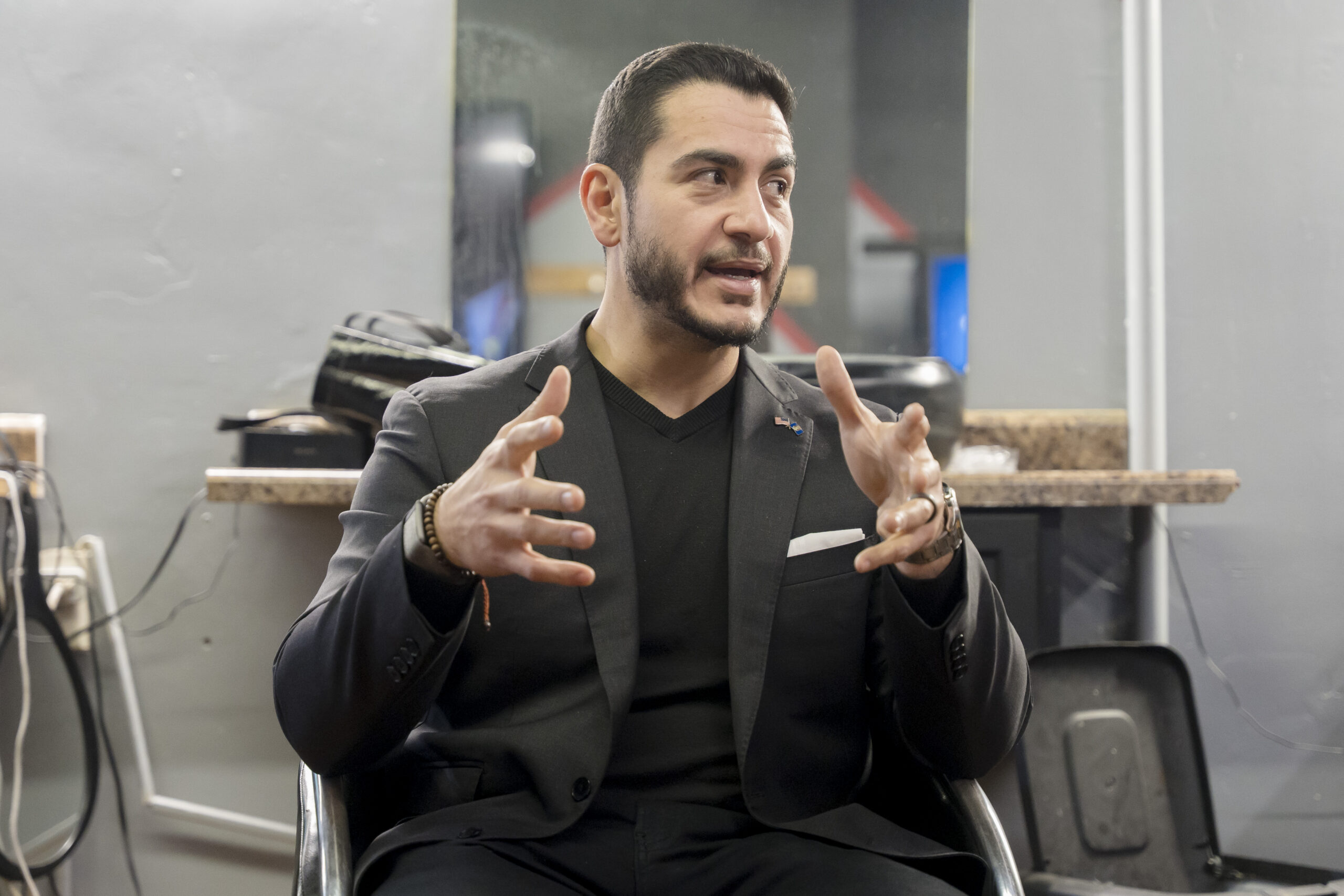
The Michigan Senate contender accepted $7k from the chair of Al-Awda/PRRC — and hired her son
Plus, half of young Americans view Israel as a burden
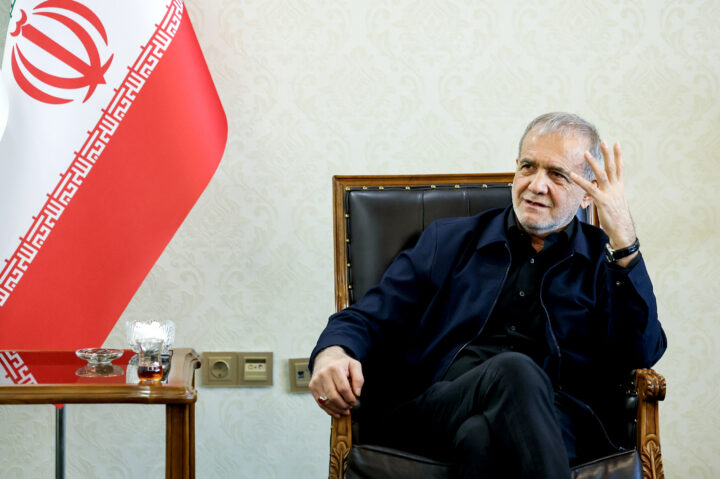
Iranian Presidency/Handout/Anadolu via Getty Images
Iranian President Masoud Pezeshkian delivers a speech on April 19, 2026.
This P.M. edition is reserved for our premium subscribers like you — offering a forward-focused read on what we’re tracking now and what’s coming next. Please don’t hesitate to share your thoughts and feedback by replying to this email.
📡On Our Radar
Notable developments and interesting tidbits we’re tracking
Talks between Israel and Lebanon, which are currently underway, were moved from the State Department to the White House. Vice President JD Vance and Secretary of State Marco Rubio were spotted arriving there together this afternoon, and a White House official told Jewish Insider that President Donald Trump would greet the participants at the opening of the discussion…
U.S. Ambassador to Israel Mike Huckabee, who returned to Washington in order to participate in the talks, also stopped by Capitol Hill where he met with Sen. Ted Cruz (R-TX)…
While the bombing campaign in Iran is on pause, the battle at sea continues: U.S. forces boarded another vessel carrying Iranian oil in the Indian Ocean this morning and Trump said he had ordered the U.S. Navy to “shoot and kill any boat” placing mines in the Strait of Hormuz — just as a third U.S. aircraft carrier arrived in the region…
Trump also said Iran is “having a very hard time figuring out who their leader is,” indicating the regime may still be struggling to present the U.S. with a unified proposal. “The infighting is between the ‘Hardliners,’ who have been losing BADLY on the battlefield, and the ‘Moderates,’ who are not very moderate at all (but gaining respect!),” he claimed.
In response, Iranian parliament Speaker Mohammad Bagher Ghalibaf and President Masoud Pezeshkian, both considered relative moderates, issued nearly identical statements on X pledging “complete obedience to the Supreme Leader”…
Iranian officials tell The New York Times their new supreme leader, Mojtaba Khamenei, is alive but injured, and so far ruling differently than his late father; the younger Khamenei is relying on Islamic Revolutionary Guards Corps commanders to provide him advice to make decisions “as though he is the director of the board.”
Khamenei’s injuries are extensive and he is largely inaccessible in person: “One leg was operated on three times, and he is awaiting a prosthetic. He had surgery on one hand and is slowly regaining function. His face and lips have been burned severely, making it difficult for him to speak, the officials said, adding that, eventually, he will need plastic surgery”…
U.S. officials are expressing concern over the military’s ability to defend Taiwan from China in the near future should the need arise, given that the U.S. has burned through more than 1,000 Tomahawk missiles and more than 1,500 air-defense missiles in the course of the war with Iran so far, supplies that could take up to six years to replace…
Israeli Foreign Minister Gideon Sa’ar named Israel’s first Christian ambassador, George Deek, as the country’s special envoy to the Christian world, JI’s Lahav Harkov reports, after several recent controversies in Israel relating to Christians. Deek is part of the Arab Orthodox Christian community in Jaffa…
Sen. Elissa Slotkin (D-MI) joined other Michigan Democrats in denouncing Amir Makled, a Democratic nominee for regent of the University of Michigan, over Makled’s past comments expressing antisemitic sentiments and support for terrorism.
“I’m going to have a problem with any candidate — Democrat, Republican or independent — who shares antisemitic and hateful posts on social media. Especially when they refuse to disavow those comments or show remorse,” Slotkin said in a statement to JI’s Marc Rod, in response to a question about Makled…
Defense Secretary Pete Hegseth did not give advance notice to senior Republican senators before announcing yesterday that he was firing Navy Secretary John Phelan, causing surprise and confusion on Capitol Hill. “I found out about it the way everybody else did,” Senate Majority Leader John Thune (R-SD) told JI’s Emily Jacobs and Marc Rod of the Pentagon’s announcement on social media of Phelan’s dismissal.
Trump praised Phelan in a post on Truth Social this afternoon and said he’d “certainly like to have him back within the Trump Administration sometime in the future” — Phelan had reportedly bumped heads with Hegseth but had a close relationship with the president…
Nearly half of young American adults view Israel as a burden to the United States, according to a new Harvard Youth Poll of 18- to 29-year-olds. The survey found that 46% of young Americans consider Israel to be mostly a burden to the U.S., compared to just 16% who say Israel is mostly a benefit, JI’s Gabby Deutch reports.
In addition, Ukraine, which has also received U.S. support in its lengthy war with Russia, was also determined to be more of a burden by young Americans — 31% of respondents said Ukraine is mostly a burden, while 21% said it is mostly a benefit…
The Wall Street Journal‘s Matthew Hennessey issued a defense of Elliot Kaufman, a member of the Journal‘s editorial board, after Trump slammed him on Truth Social as an “idiot” and a “moron.”
“What triggered the president’s ire was an op-ed under Mr. Kaufman’s byline headlined ‘The Iranians Take Trump for a Sucker.’ That’s a provocative title, yes, but the piece delivers on the provocation. Mr. Kaufman wasn’t calling Mr. Trump a sucker; he was merely pointing out that the Iranians are acting like they think he is one. The piece offers plenty of recent evidence to support that claim,” Hennessey wrote…
American journalist Shelly Kittleson details in The Atlantic her experience being kidnapped and held hostage by the Iran-backed Kataib Hezbollah terror group in Iraq for nine days earlier this month…
Former Disney CEO Bob Iger, who stepped down last month, is returning to Joshua Kushner’s venture firm, Thrive Capital, in an advisory role…
⏩ Tomorrow’s Agenda, Today
An early look at tomorrow’s storylines and schedule to keep you a step ahead
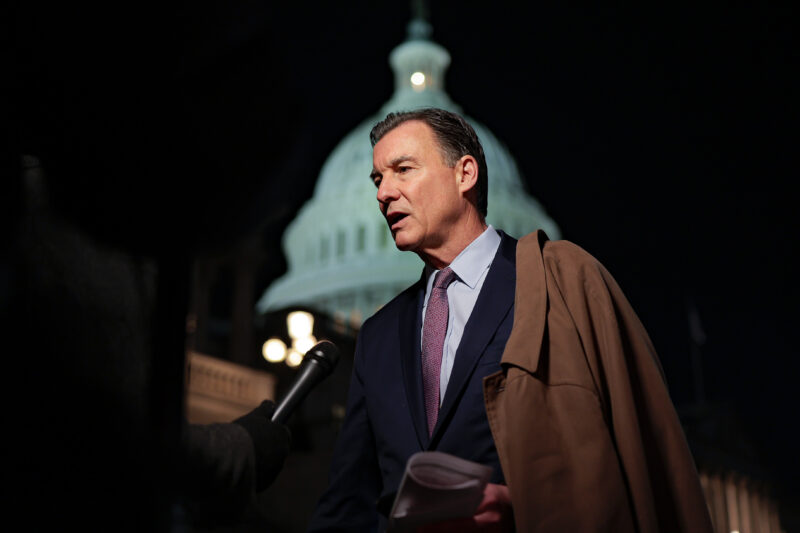
Keep an eye out in Jewish Insider for an interview with Rep. Tom Suozzi (D-NY) as he introduces a buffer zone bill in Congress, which follows legislation under consideration in New York and elsewhere, aiming to protect attendees at houses of worship.
Washington is abuzz ahead of the White House Correspondents’ Dinner, being held at the Washington Hilton on Saturday night. The event will be headlined by American Israeli mentalist Oz Pearlman and attended by Trump for his first time as president, alongside celebrities (including Trump fan Nicki Minaj), politicians and media figures. Politicos and reporters will schmooze at events beginning this evening through Sunday morning.
We’ll be back in your inbox with the Daily Overtime on Monday. Shabbat Shalom!
Stories You May Have Missed
SHAPIRO SPOTLIGHT
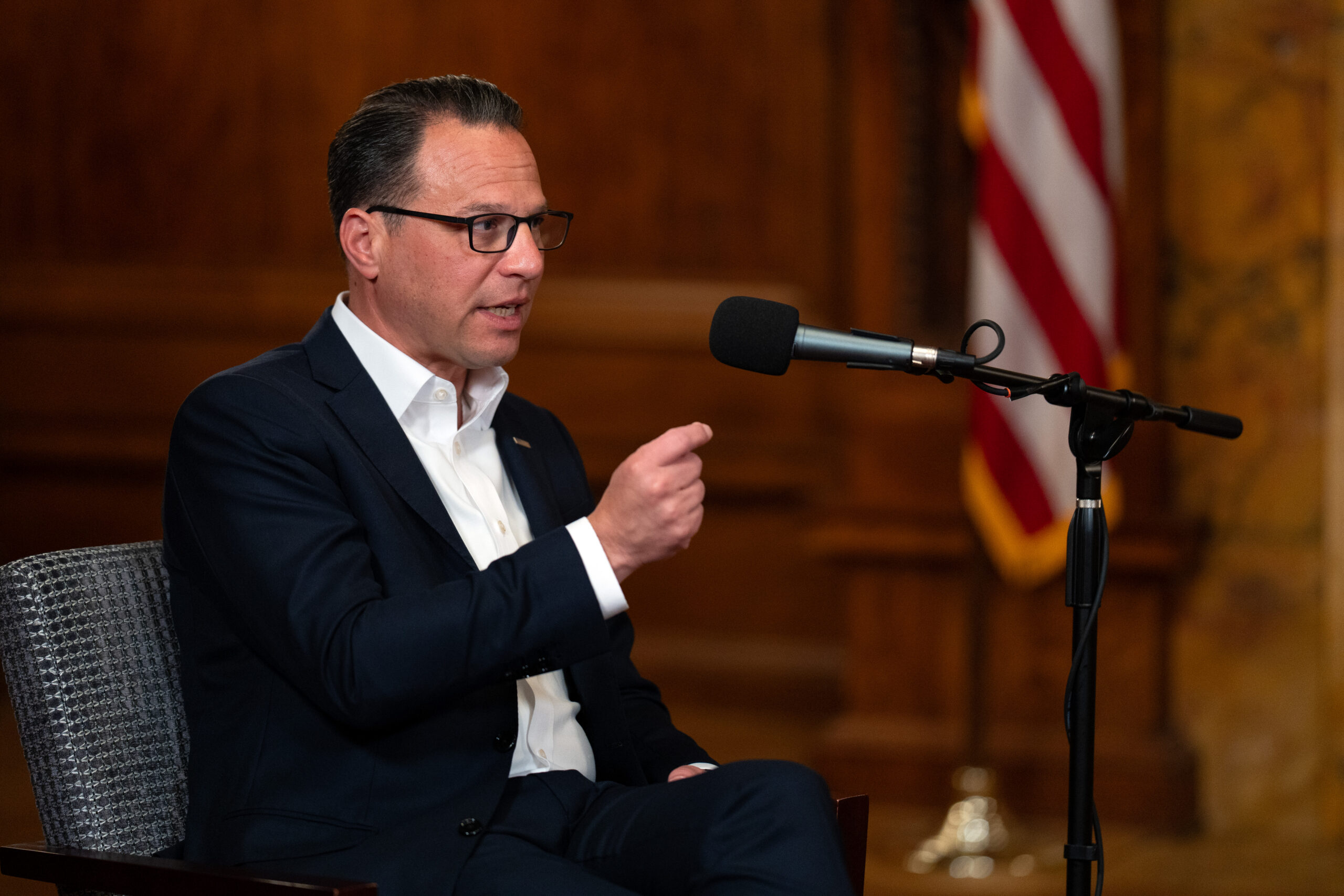
In an interview with JI, Shapiro said he ‘[hasn’t] really thought about’ whether he would appear on Hasan Piker’s stream but that he hasn’t been invited
DEFINITION DEBATE
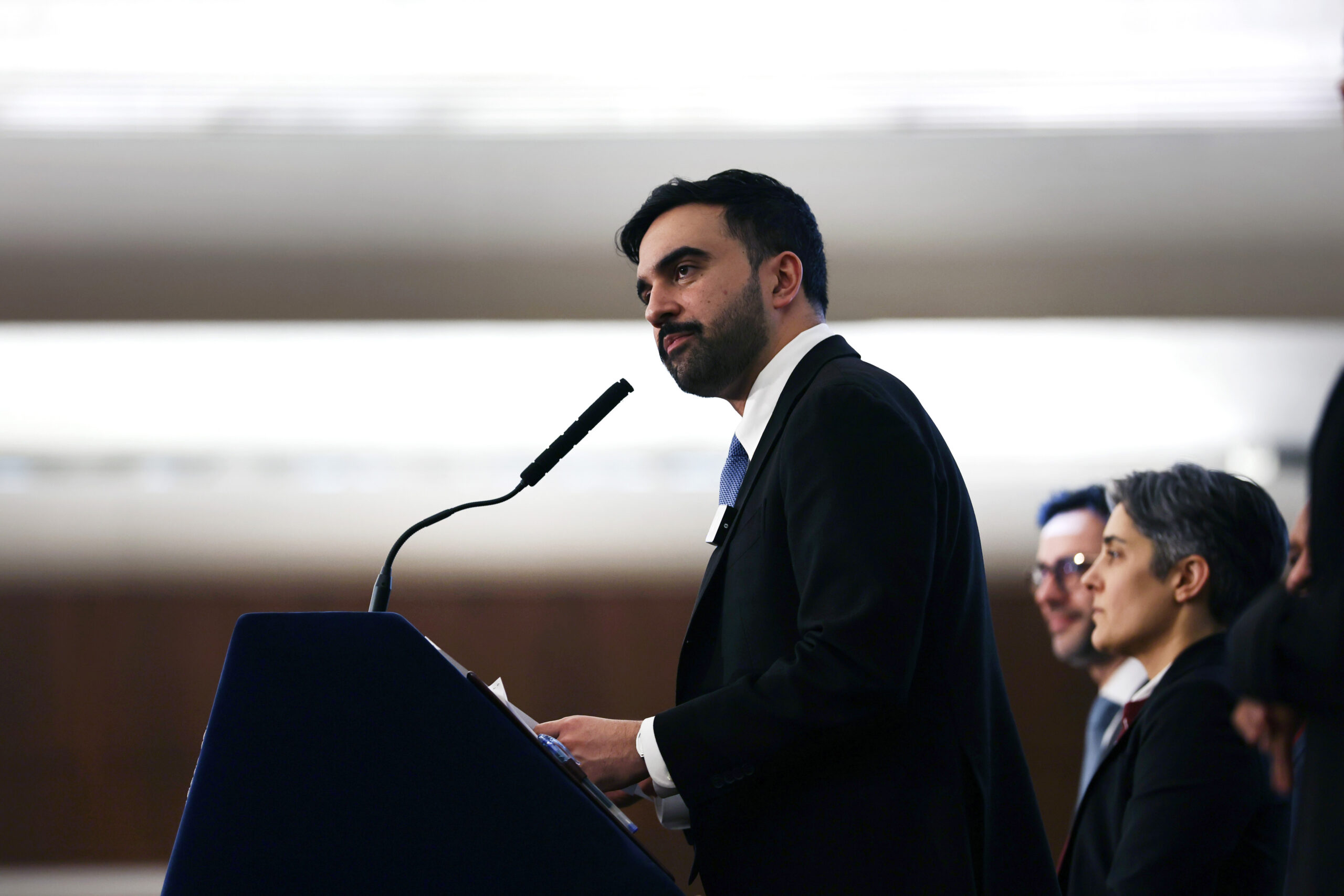
In testimony before the City Council’s antisemitism task force, an NYPD official said Mamdani played no role in a controversial change in reporting data from hate crimes
Plus, Dems concerned over fraying Israel-Europe ties

Gage Skidmore
Elizabeth Warren
This P.M. edition is reserved for our premium subscribers — offering a forward-focused read on what we’re tracking now and what’s coming next. Please don’t hesitate to share your thoughts and feedback by replying to this email.
📡On Our Radar
Notable developments and interesting tidbits we’re tracking
White House Press Secretary Karoline Leavitt maintained this afternoon that President Donald Trump is “generously offering a bit of flexibility” to Iranian leaders and has not given them a “firm deadline” to provide a proposal to the U.S., contrary to reports that said Trump only intended to wait a few days before ending the ceasefire that he extended yesterday.
Leavitt also said the president did not view Iran’s seizure of two ships near the Strait of Hormuz today as a violation of the ceasefire: “These were not U.S. ships. These were not Israeli ships,” she said — a change in tone for Trump, who has taken a hardline against Tehran’s escalatory actions in the key waterway.
Meanwhile, mediating countries are reportedly working to get Tehran and Washington back to the negotiating table, with a meeting possibly on Friday. Iranian President Masoud Pezeshkian said Iran “has welcomed dialogue and agreement and continues to do so,” but that “breach of commitments, blockade and threats are the main obstacles” to continuing talks…
Even as negotiations to end the war are still in flux, Trump thanked Iran for granting his request not to execute eight women who were reportedly due to be killed by the regime tonight, instead releasing four of them and holding the other four in jail for one month…
The Financial Times profiles Pakistani army chief Asim Munir as he emerges as an unexpected key mediator between the U.S. and Iran, utilizing his ties to Tehran’s security establishment — including the Islamic Revolutionary Guard Corps — and personal rapport with Trump to help secure a comprehensive deal…
Former Secretary of State Mike Pompeo is keeping the door open to a possible 2028 presidential run, saying “only the good Lord knows” what comes next as he continues to reestablish himself in the private sector and policy world after serving in the first Trump administration.
In a wide-ranging interview with Jewish Insider’s Emily Jacobs, Pompeo also praised Columbia University, where he now teaches at the School of International and Public Affairs, for “beg[inning] to get back the correct leadership … in a way where more voices can be heard”…
U.S. Ambassador to Turkey Tom Barrack stood by his comments that drew criticism over the weekend in which he repeatedly criticized Israel and praised Turkey, saying he was merely “stating the obvious.”
“When I described the Israel-Hezbollah ceasefire as a ‘time out’ and said that ‘everybody has been equally untrustworthy,’ I was simply stating the obvious reality on the ground. This is realism, not criticism of any side,” Barrack told Fox News Digital. He also reaffirmed his comments that the goal in Lebanon is “not killing Hezbollah,” and that Turkey should be readmitted to the F-35 fighter jet program…
A group of Jewish District of Columbia residents gathered at the city’s municipal building today for a scheduled meeting with Janeese Lewis George, a D.C. councilmember and one of the leading candidates in this year’s mayoral race, but she never showed, two people who were in the meeting told JI’s Gabby Deutch.
A staff member for Lewis George told attendees at the start of the meeting that she was having a busy morning, and they should begin the conversation without her. At the end of the meeting, when Lewis George still had not arrived, the staff member apologized that she could not attend…
New York City Council Speaker Julie Menin warned this morning that if Mayor Zohran Mamdani vetoes the council’s legislation intended to regulate protests at religious and educational sites, the city will face “more divisiveness,” calling the decision a critical test for the mayor, JI’s Haley Cohen reports.
Menin, New York City Comptroller Mark Levine and Manhattan Borough President Brad Hoylman-Sigal, speaking at 92NY on the future of Jewry in New York, beseeched the Jewish community not to flee despite tensions with the mayor. “This is not a time to lose hope. Hopefully the three of us here can embody the future of the commitment to fighting antisemitism, the commitment to supporting the Jewish community,” Menin said…
Rep. Tom Suozzi (D-NY) is set to introduce a federal buffer zone bill, similar to that of the New York City Council, alongside Anti-Defamation League CEO Jonathan Greenblatt on Friday, as Suozzi seeks reelection to his swing-district seat on Long Island…
Democratic lawmakers and strategists are expressing concern over the rising popularity of far-left Michigan Senate candidate Abdul El-Sayed, fearing that if he clinches the Democratic nomination, he would lose in a general election to former Rep. Mike Rogers (R-MI), the GOP front-runner, Semafor reports. Democrats must retain the Michigan Senate seat to have any hope of taking back the chamber in the midterm elections.
Rep. Hillary Scholten (D-MI), who is backing Rep. Haley Stevens (D-MI) in the race, told the outlet that “all three candidates are qualified, but dinged El-Sayed for campaigning with [Hasan] Piker and said ‘we are continuing to see consistent polling that suggests that Haley is the only one that can win in a general election’”…
Maine Senate candidate Graham Platner said he would not support keeping Senate Minority Leader Chuck Schumer (D-NY) as the party’s leader in the chamber, naming as potential replacements Sens. Chris Van Hollen (D-MD), Mark Kelly (D-AZ), Chris Murphy (D-CT) or Brian Schatz (D-HI). He also said he would oppose a ban on semiautomatic assault weapons, a priority policy for much of the Democratic caucus…
Sen. Elizabeth Warren (D-MA) dismissed criticism of Platner after campaigning with him in Maine last weekend: Asked on CNBC about her comment that Platner is “my kind of man” given his past incendiary rhetoric and actions including his Nazi chest tattoo, Warren said, “He has apologized, he’s out meeting with the people of Maine every single day so they can evaluate not who Graham Platner was but who Graham Platner is today.”
Warren sidestepped a question specifically about Platner’s 2014 praise of Hamas tactics during an attack on Israeli soldiers, as reported by JI: “You guys want to be the party of inclusivity, right?” host Sara Eisen asked regarding the report. “I want to be the party that stands up for hardworking people,” Warren answered…
Schumer dodged a question yesterday asking if he is on the wrong side of his party after most Democratic senators voted in favor of blocking arms sales to Israel — a measure he opposed. “Our caucus is united and focused on ending the war in Iran,” he said, and touted Democrats’ war powers resolutions before walking away…
Rep. David Scott (D-GA) died today at 80. Scott, who voted on the House floor last night, had been running for reelection for his 13th term…
⏩ Tomorrow’s Agenda, Today
An early look at tomorrow’s storylines and schedule to keep you a step ahead
Keep an eye out in Jewish Insider for the results of this afternoon’s war powers resolution vote in the Senate, which is expected to be blocked by Republicans as the previous four were.
Israeli Ambassador to the U.S. Yechiel Leiter and Lebanese Ambassador to the U.S. Nada Hamadeh will meet at the State Department tomorrow for the second round of direct talks between the two countries. Lebanon is reportedly seeking a one-month extension to the ongoing ceasefire, which is set to expire on Sunday; Hezbollah, which has said it is not bound by the agreement, has continued to fire rockets and a drone at Israeli troops in southern Lebanon.
Paramount Skydance CEO David Ellison will host an exclusive dinner honoring President Donald Trump and CBS News’ White House correspondents at the recently renamed Donald J. Trump Institute of Peace. Ellison is currently seeking regulatory approval of Paramount’s deal to acquire Warner Bros. Discovery.
The Jewish Democratic Council of America will host a candidate forum for New York’s 17th Congressional District featuring leading candidates Beth Davidson, a Rockland County legislator, and Cait Conley, a national security veteran.
Stories You May Have Missed
DEM DIVIDES
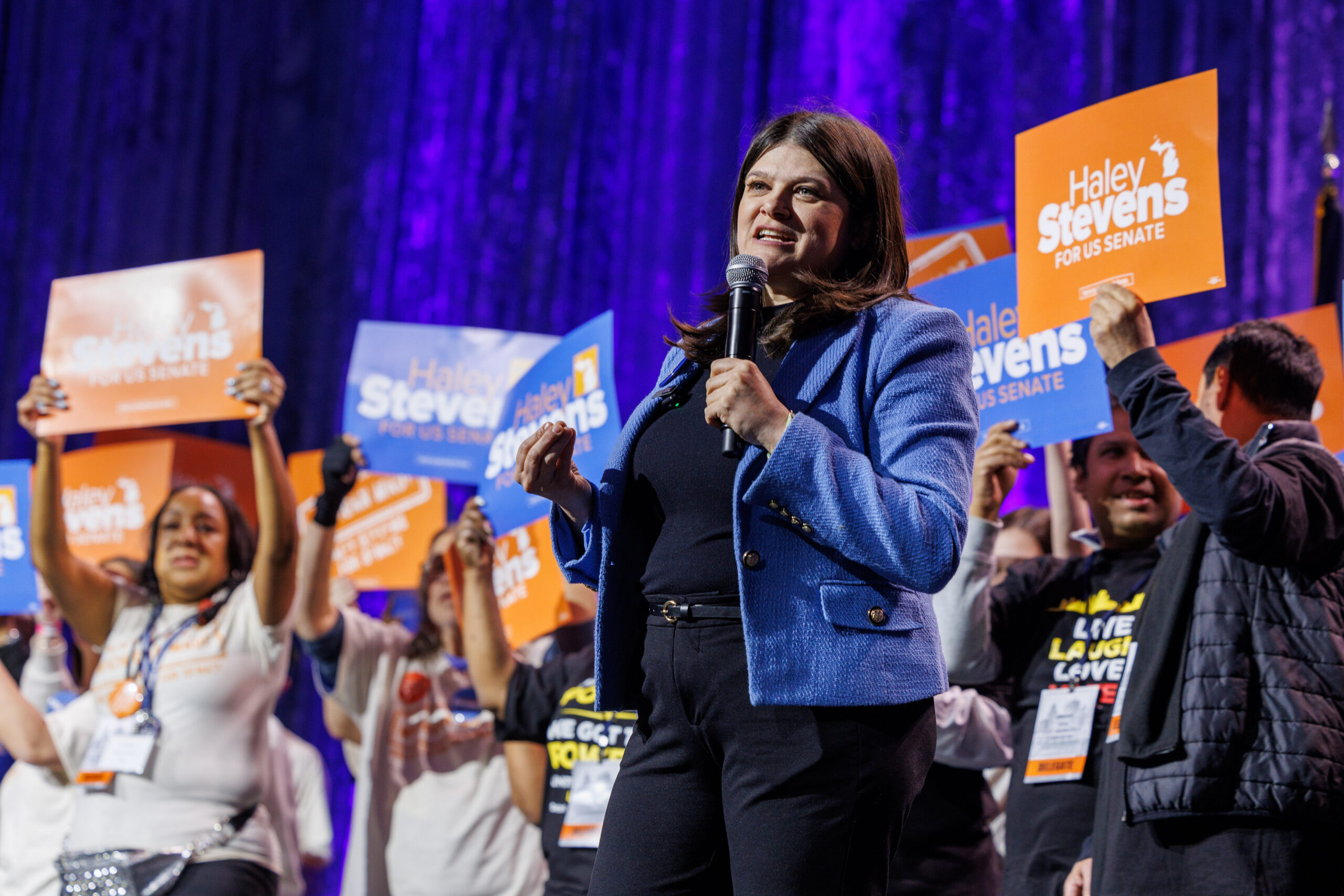
Jewish Democrats described a ‘shell-shocked’ atmosphere at their statewide convention that saw marked hostility to pro-Israel voices
CAMPAIGN CLASH
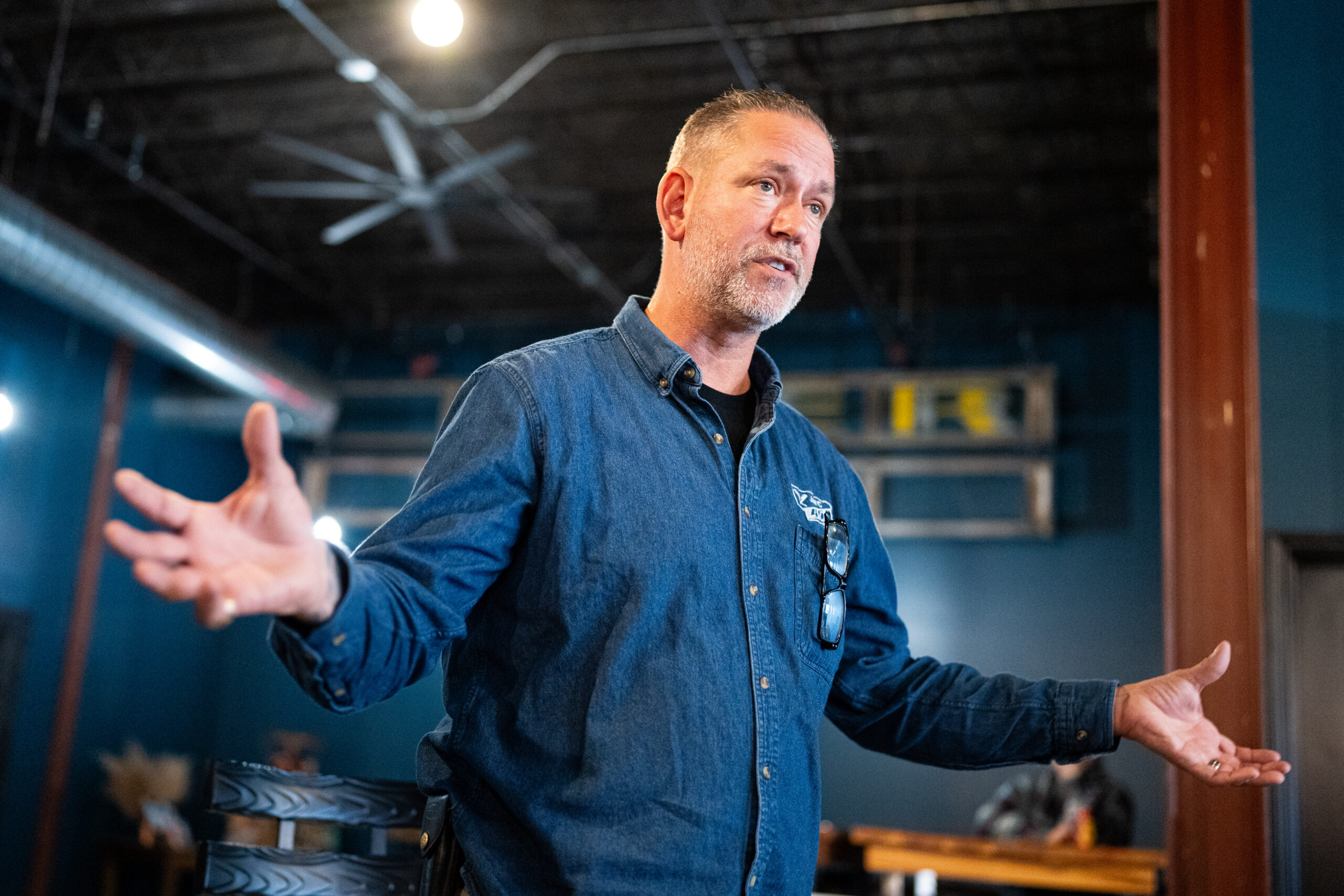
Daniel Moraff also recruited Rep. Summer Lee, a leading anti-Israel Democrat, to pursue her political career
Barrack called Israel and Hezbollah ‘equally untrustworthy’ in comments at the Antalya Diplomacy Forum
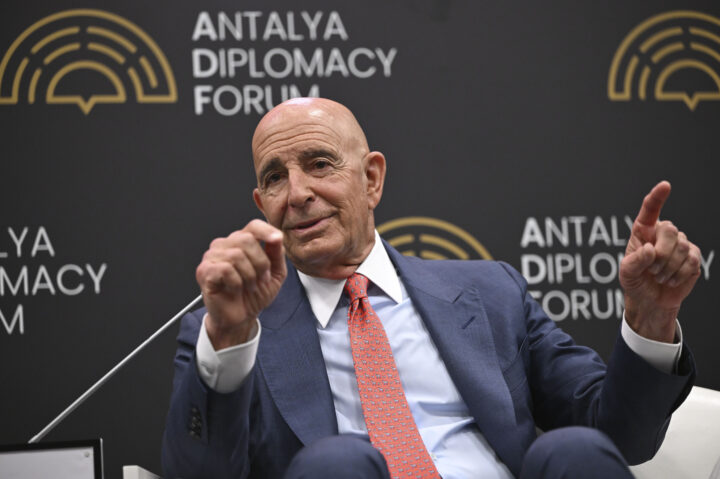
Utku Ucrak/Anadolu via Getty Images
Ambassador to the Republic of Turkiye and Special Envoy for Syria Tom Barrack attends ADF2026 Talks within Antalya Diplomacy Forum, held under the theme of 'Mapping Tomorrow, Managing Uncertainties' in Antalya, Turkey on April 17, 2026.
U.S. Ambassador to Turkey Tom Barrack faced fresh condemnation from two Senate Republicans and conservative influencers for a series of comments he made at the Antalya Diplomacy Forum in Turkey this weekend in which he repeatedly criticized Israel and praised Ankara.
The U.S. envoy has faced criticism and scrutiny from fellow Republicans previously for his perceived closeness with Turkish President Recep Tayyip Erdogan and his government, comments critical of Israel and more.
In response to comments by Barrack claiming that the current ceasefire in Lebanon “is so delicate because everybody has been equally untrustworthy” — referring to both Israel and Hezbollah — Sen. Lindsey Graham (R-SC) said he “respectfully and strongly disagree[s].”
Barrack said at the conference there needs to be “a path with Hezbollah, and that path has to be not killing Hezbollah” — a group that the U.S. has long designated as a terrorist organization and has been responsible for the deaths of hundreds of Americans. He further said that Iran and Hezbollah both should be involved in talks to end the fighting in Lebanon.
“I always get in trouble because Hezbollah, in American parlance, and most of the West, is a Foreign Terrorist Organization. Hezbollah, in Lebanon, is also a political organization,” Barrack added.
The ambassador repeatedly criticized provisions in past ceasefire agreements that allowed Israel to take action against Hezbollah in its own self-defense, which he argued made the agreements weak and functionally nonbinding on Israel. He further dismissed the idea that the Lebanese Armed Forces would act to disarm Hezbollah, as is required under the terms of the current and past ceasefires.
“The majority of the Lebanese Armed Forces are not going to go shoot their cousins, especially at a time where Israel is bombarding them, which only gives efficacy to the reason Hezbollah should exist, to protect itself from Israel. So what’s the answer? The answer has got to be underlying prosperity,” Barrack said. “When you have a sovereign nation like Iran, which is supporting a militia, you cannot get rid of that militia by killing them.”
He said he believes that bringing Lebanon into the Abraham Accords, and working closely with Turkey, is the long-term answer to addressing Hezbollah.
“The brilliance of [the ceasefire agreement] is it stopped senseless killing and President [Donald] Trump and Secretary [of State Marco] Rubio stepping in strongly with Israel and saying, ‘We need a timeout,’” Barrack continued. “Everybody is in atrophy over this idiotic war. So will the ceasefire stick? What will we do? It’s baby steps. Everybody’s rushing to fill in those pieces.”
Barrack also criticized the Israeli government’s posture toward Turkey. “I think this rhetoric is going to go away,” he said, referring to Israel’s view of Turkey as a rising threat and aspiring regional hegemon. “Turkey is not a country to be messed with.”
The ambassador said that, in his personal opinion, “the smartest thing that Israel could do is to entice and embrace Turkey” to join the U.S.-led international stabilization force in Gaza, a prospect that Israel has resoundingly rejected as a result of ongoing Turkish hostility and Ankara’s relationship to Hamas leaders.
Barrack also praised Turkey for refusing to designate Hamas as a terrorist organization and for serving as a mediator with the group. “It could have never happened had they agreed with us that Hamas was a Foreign Terrorist Organization and you have to exclude them,” Barrack said, referring to the ceasefire between Israel and Hamas.
Barrack broadly dismissed the notion that antisemitism is a widespread problem in the Arab world or elsewhere, arguing that he grew up as a “Lebanese Catholic in a very Jewish neighborhood, everybody’s done business with Jews — that’s not the issue. Zionism was a question as to a definition.”
Barrack said that he and Trump believe that Turkey should be accepted into the F-35 fighter jet program — downplaying Ankara’s decision to buy a Russian S-400 missile-defense system, which led to U.S. sanctions that still prevent Turkey from rejoining the F-35 program. He also brushed off the long-running Turkish provocations against Greece.
“Sanctions, again, in my humble opinion — they don’t work, because what happens is the sanctioned country, they become so smart, so ingenious, that they figure out ways around the sanctions and alliances with other nations that don’t serve the U.S. benefit,” Barrack said, celebrating efforts by the Trump administration to ease sanctions on Turkey.
Sen. Rick Scott (R-FL) responded on X that he remains committed to blocking Turkey from receiving the F-35 or other U.S. defense systems.
“Turkey, the country that funds Hamas, the Muslim Brotherhood, hates Israel, loves Russia and Iran … good luck getting the F35, F16, and any other American made defense platform,” Scott said. “I told Erdoğan in 2018 and I tell him again: you’re NOT getting the F35.”
Conservative commentator Mark Levin, who has repeatedly criticized Barrack, said that the ambassador “sounds like an Erdogan mouthpiece.”
“Will somebody give this wrecking ball Barrack the hook. He’s THE worst,” Levin said in another X post, and called Barrack “poison” and “awful” in other posts.
Barrack was critical of Israel’s interventions in Syria, which Israel has said were an effort to protect Druze minorities from ongoing atrocities by government-aligned forces. He suggested Israel was not legitimately concerned with protecting the Druze and said that Syria was “brilliant” for not engaging against Israel’s “constant” incursions.
He repeatedly lavished praise on the new Syrian government, and on the Turkish government for backing it.
“My bet is we’ll get to a non-aggression and normalization agreement with Syria [and Israel] sooner than Lebanon,” Barrack said.
Barrack additionally declared, repeating past rhetoric that earned criticism from U.S. lawmakers and analysts, that the only system of government that has worked in the Middle East is “powerful leadership regimes — either benevolent monarchies, a kind of monarchial republic,” and that “countries that have put on this cloak of democracy … have failed,” referring to countries that implemented reforms following the Arab Spring.
He said that Israel’s best path forward would be “aligning its interests with the Gulf, with these strong civilizations.”
Barrack, the U.S. ambassador to Turkey, plays an outsized role in setting foreign policy in the region, lawmakers and experts say
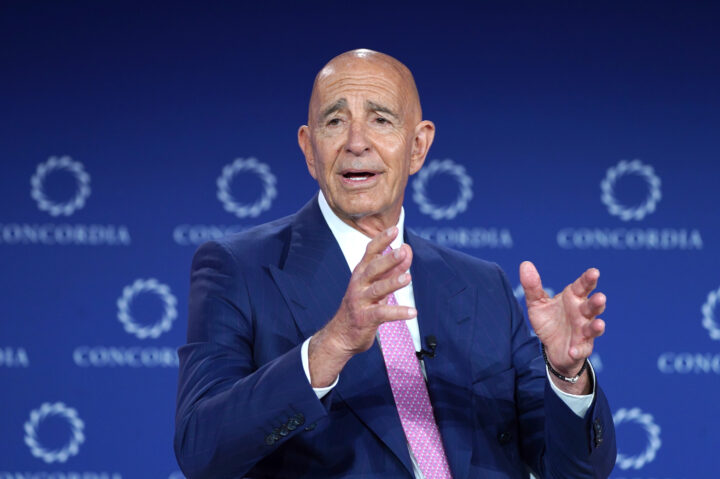
Leigh Vogel/Getty Images for Concordia Annual Summit
U.S. Ambassador to Turkey Tom Barrack speaks during the 2025 Concordia Annual Summit on September 24, 2025 in New York City.
Simmering frustrations among lawmakers with U.S. Ambassador to Turkey Tom Barrack — who also serves as special envoy to Syria and manages a wide remit in America’s Middle East policy — have recently emerged with force, as multiple lawmakers tell Jewish Insider they have concerns about the U.S. envoy’s expansive role.
Barrack’s critics see the envoy pushing U.S. policy in concerning directions, toward an overly close relationship with Turkey despite the country’s overt anti-Israel posture and regional ambitions and, most recently, as a key enabler of the Turkish-backed Syrian government’s offensive against U.S.’ longtime Kurdish allies in the Syrian Democratic Forces.
Over the course of months, the envoy has also made comments that have concerned lawmakers, including questioning Israel’s status as a democracy, downplaying the threat from Hezbollah and supporting a Turkish role in the International Stabilization Force in Gaza, despite Turkey’s long record of hostility to Israel.
A Republican senator, granted anonymity to speak candidly, told JI last week that Barrack’s role in U.S. policy in the region makes them “nervous.”
“He’s running a Turkish line, and there are very legit[imate] concerns” about his role and influence, the senator said.
A senior Senate Democrat involved in foreign policy issues also said he had concerns about Barrack, suggesting the envoy was pursuing personal business interests through his post.
“Barrack is clearly knowledgeable about the region, he’s clearly energetic and engaged. But that’s the only good I can say. I have real concerns about his motives and the consequences of his actions,” the Democratic senator said.
“That’s something I really worry about. When the president himself is among the most corrupt in American history, we can’t be surprised when the people he puts in positions of power conduct themselves in the same way, but it’s really dangerous,” the lawmaker added. “We’re losing our reputation as a good partner, a reliable ally and a country committed to supporting anti-corruption efforts.”
Asked about Barrack’s role in the administration, Sen. Richard Blumenthal (D-CT) told JI, “I’m hopeful that the interests of the Kurds will be protected. America needs to stand up to the Turks where necessary and insist that those rights be adequately represented.”
Lawmakers’ concerns have become public at a series of hearings on the Hill in recent weeks.
At a House Foreign Affairs Committee hearing on Syria last week, Rep. Josh Brecheen (R-OK), a leading skeptic among House Republicans of repealing U.S. sanctions on Syria, said he feels that Barrack’s dual role as ambassador to Turkey and Syria special envoy is hampering the U.S.’ ability to take a tougher stance with Syria.
“[Barrack] has to maintain a good relationship with Turkey. Would we not be well-served for someone to be specific to Syria, whether it be an envoy specific to Syria or an ambassador — how would that not help us to make sure that Tom Barrack can maintain a good relationship with Turkey but we’d have somebody to play hardball with Syria?” Brecheen said.
Brecheen said he’s worried that Turkish President Recep Tayyip Erdoğan seeks to reestablish the Ottoman Empire and that Syrian President Ahmed al-Sharaa is deceiving the U.S. and still maintains a jihadist ideology. He said current U.S. policy appears to be facilitating Turkish and Russian interests.
Nadine Maenza, the former chair of the U.S. Commission on International Religious Freedom, who testified before the committee, responded that she shares Brecheen’s concerns.
“It’s been very difficult to have him have both hats on, and I think we’ve seen that with the State Department not having a role to play in Syria policy and waiting for Barrack to make decisions,” Maenza said. “I don’t think that serves the president well, if his goal is peace and stability in the Middle East.”
At another House Foreign Affairs Committee hearing earlier this month, Rep. Brad Sherman (D-CA) highlighted Barrack’s past comments on Hezbollah, which he said “have often sent the wrong signals.” David Schenker, a senior fellow at The Washington Institute for Near East Policy who served in the first Trump administration, also repudiated Barrack’s comments.
Barrack has faced criticism off the Hill in conservative circles as well: a Wall Street Journal editorial last month blasted his “not-so-excellent Syrian adventure,” characterizing the ambassador as overly close with Turkey and pushing an anti-SDF policy in the administration.
Responding to the editorial, former Sen. Rick Santorum (R-PA) blasted Barrack for having “betrayed [the Kurds], Christians in Syria and our country for Turkey.” “His behavior is a disgrace. He should be recalled,” Santorum added.
Former National Security Advisor John Bolton — who has since come under fire by President Donald Trump — said last year that Barrack has been “publicly making excuses for al-Sharaa’s reluctance to open full diplomatic relations with Israel. It is not generally a U.S. ambassador’s job to justify another country’s actions. He should be warned about the symptoms he is displaying.”
Conservative commentator Mark Levin similarly criticized Barrack last summer for rebuking Israel’s attacks on Syrian government-aligned forces carrying out massacres of Druze and other minority groups.
His concerns were echoed by right-wing influencer Laura Loomer, who said that Barrack’s “delusions that he can play nice with [al-Sharaa], who is literally ISIS, is going to continue to destabilize the Middle East and get more innocent non-Muslims killed,” describing Barrack’s approach to Syria as completely wrong-headed.
“I have heard from different sources that [the Turks] perceive Tom Barrack to be their man, and this is the first time in a long time they feel that they have a U.S. envoy that’s essentially on their side, if you want to use that terminology, and is basically positioning Ankara to really realize a lot of their policy goals, their geostrategic goals,” Sinan Ciddi, the director of the Turkey program at the Foundation for Defense of Democracies, told JI.
Barrack, while being “a problematic actor,” is also “deeply influential,” Ciddi said, characterizing him as one of the two most influential figures in the U.S.’ regional policy alongside White House Special Envoy Steve Witkoff. Like Witkoff, Barrack is a longtime friend and business associate of Trump.
“He is making moves, he’s implementing policies as special envoy and as ambassador that I think present deep risks and and could have potentially detrimental consequences, because it’s going to alienate the United States at the least, but at worst, they could really inflame a considerable number of situations that we’re active looking at,” Ciddi said.
He raised concerns about three particular policies that Barrack has appeared to promote: providing Turkey with advanced F-35 fighter jets despite U.S. sanctions, bringing Turkey into the International Stabilization Force in Gaza and pushing for an influential role for Turkey in Syria and a favorable stance toward the new Syrian government.
He said that Barrack and the Trump administration more broadly appear to view Turkey as a partner that they can cooperate with on goals including stabilizing Syria and Gaza.
Israeli officials, however, view the situation in a very different light, and “feel that through Barrack’s adventurism, what we are seeing are dangerous moves to position Turkey in the Levant and the Middle East as an aggressive actor,” Ciddi said. “They feel that Turkey is, through Barrack, finding a means and opportunity to weaken Israel.”
Ciddi warned that Turkey having any role in the stabilization force in Gaza would be “fundamentally very, very dangerous” given Turkey’s friendliness with Hamas and hostility toward Israel. And he said that providing Turkey with the advanced F-35 jets would be “deeply problematic” given its close relationship with Russia, along with various other issues, a dynamic that has troubled lawmakers and European allies.
Ciddi also said that Barrack’s public comments, or lack thereof, about Turkey’s closeness with Hamas and Iran, about Hezbollah and about Israel’s status as a democracy should be concerning for “all the countries that have signed up to the Abraham Accords, or any country in the region that’s taking a position against jihadist movements and Salafist movements.”
Michael Makovsky, the CEO of the Jewish Institute for National Security of America, told JI that, “half the things the guy says I can’t understand, and the other half I don’t agree with.” Makovsky said he’s been particularly troubled by Barrack’s influence on Syria policy, seemingly pushing the U.S. toward support for al-Sharaa.
“I think that’s been a big mistake,” Makovsky said, criticizing the “betrayal of the Syrian Kurds, which I found rather obscene” and emphasizing that the Kurds had been a critical ally of the U.S. in the fight against ISIS. He noted that al-Sharaa remains aligned with jihadists who have carried out massacres of Syrian minority groups.
“We’re all in on [al-]Sharaa, and I think that’s partly because Trump met him and likes him, but even before that, it’s because this is what Barrack wants,” Makovsky continued. “He seems to often reflect exactly the Turkish view, and I don’t think the Turkish view on Syria aligns with our own interests at all.”
He said that he was also troubled by Barrack’s claim that Israel is not a democracy, saying that it was a poor message from a U.S. official and suggested that he does not properly understand the region.
Congressional correspondent Emily Jacobs contributed reporting.
Sen. John Kennedy told JI that Barrack was ‘very incorrect’ when casting doubt on Israel’s status as a democracy
Leigh Vogel/Getty Images for Concordia Annual Summit
U.S. Ambassador to Turkey Tom Barrack speaks during the 2025 Concordia Annual Summit on September 24, 2025 in New York City.
Republican lawmakers are criticizing U.S. Ambassador to Turkey Tom Barrack over his recent comments questioning whether Israel is a democracy while voicing support for Turkey joining the proposed U.S.-led International Stabilization Force to operate in Gaza.
Barrack raised eyebrows with his comments on Sunday at the Doha Forum in Qatar — where the Syria envoy appeared to cast doubt on Israel’s status as a democracy while suggesting that “benevolent” monarchies were typically more successful in the region. Earlier last week, the ambassador drew attention for endorsing Turkey’s inclusion in the ISF because their “criticized relationship” with Hamas would “soften whatever has to be done” to disarm them.
Barrack’s comments in Doha were made in the context of criticizing previous efforts by the U.S. and others to impose democratic governing models in the Middle East. “Almost every decision that the West has imposed on the region, rather than allowing it to evolve on its own, has been a mistake,” Barrack said.
“The first thing that has to happen is that we have to allow them, Syria, to define it themselves without going in with Western expectations and saying, ‘We want a democracy in 12 nights,’” Barrack said on Sunday. “We’ve never had a democracy [in the Middle East]. I don’t see a democracy anywhere. Israel can claim that it’s a democracy, but in this region, really what has worked the best, whether you like it or don’t like it, is a benevolent monarchy.”
At the Milken Institute’s Middle East and Africa Summit in Abu Dhabi, United Arab Emirates, on Friday, Barrack said, “If you think about it, having Turkey, who has a relationship and an Islamic foothold, will soften whatever has to be done in this, disarming Hamas. … How are you going to disarm them? Are you really going to militarily disarm them? Are we going to be in the soup again? Do you have caches and say, show up at public storage, and we’ll give you a ticket, and this is going to go into the IDF?”
Sen. John Kennedy (R-LA) told JI that Barrack was “very incorrect” with his musing about Israel’s standing as a democracy. “I think Israel is a democracy, and Israel is our only true friend in the Middle East,” Kennedy said.
Asked for his reaction to Barrack’s public support for Turkey joining the ISF, the Louisiana senator replied: “I don’t trust Turkey.”
Sen. Lindsey Graham (R-SC) said about Barrack’s comments, “If I had to give you an example of a robust democracy, it would be Israel. If you don’t like the government, stick around a month, they’ll get a new one.”
Daniel Shapiro, who served as U.S. ambassador to Israel during the Obama administration and as deputy assistant secretary of defense for the Middle East for a year and a half of the Biden administration, told JI that Barrack’s comments about Israel’s democratic bona fides were “a bit chilling.”
“There’s no cause for calling into question Israel’s status as a democracy,” Shapiro said. “I’ll give him the benefit of the doubt that that was simply a misstatement that he probably will think better of.”
“I know it’s better when ambassador’s statements are fully aligned with the policies of their administration,” he continued. “This administration generally may be less coordinated in that regard than others because our president speaks so frequently and extemporaneously, but that actually raises the importance of ambassadors ensuring that they are fully aligned with whatever the president’s policy is.”
The remarks also prompted criticism from foreign policy analysts and experts, who suggested the ambassador to Ankara was acting more in the interests of Turkey than the United States.
“There’s no question that he often reflects the Turkish view on a number of things,” Michael Makovsky, president of the Jewish Institute for National Security of America, told JI. “That might be his view, or in my opinion, he doesn’t really understand the Middle East or proper U.S. interests in the Middle East. Generally, he often reflects Turkish views of the region.”
“That happens sometimes with ambassadors, they sometimes strongly reflect the views of the countries to which they’re posted, but he’s really been out there on this,” he continued. “Personally, that is concerning to me.”
Makovsky questioned Barrack’s broader approach to the media while criticizing his remarks about whether Israel is a democracy as “a bit incomprehensible.”
“I find that Barrack speaks a lot in public or to journalists, to the media. Frankly, a number of the statements he makes are kind of hard to understand, and certainly this is one of them,” he explained, describing Barrack’s previous statements to the media as “word salads.”
Sinan Ciddi, a senior fellow at the Foundation for Defense of Democracies, similarly voiced concerns about Barrack’s warm stance toward the Turkish government.
“He’s made it no secret that he is essentially very pro-Turkey, and that he sympathizes [with the view that] the key to stability or [achieving] U.S. interests goes through projecting Turkish interests in the region,” Ciddi told JI. “For a long time [he has been] suggesting that if there is going to be lasting peace and essentially a cessation of hostilities inside of Gaza, then Turkey has to play a role, which means putting Turkish troops inside of Gaza as part of the stabilization force.”
“Obviously, Israel has a problem with that,” he added. “Not only Israel, but also significant parts of the U.S. government and a handful of Arab states, because they feel that a Turkish presence there would unsettle the balance there because of Turkey’s ties to Hamas.”
Ciddi noted that the United Arab Emirates, Saudi Arabia and Egypt have all voiced concerns about what type of involvement Ankara would have in the ISF. He added that Turkish President Recep Tayyip Erdogan sees the ISF “as a momentous opportunity to step into Gaza and undermine Israel and really project Turkey’s power.”
The Arab states are “deeply worried that Turkey’s military presence there would be to basically prop up Hamas. They’re not going to be there to essentially disarm and dissolve Hamas, that Turkey is basically going to stand shoulder to shoulder [with Hamas],” Ciddi told JI. “That’s going to just basically heighten tensions between Turkey and Israel and could lead to the potential of an arms conflict between them. Nobody wants that. Nobody understands why Barrack is pushing for that.”
“Either Tom Barrack is ignorant of the facts pertaining to Turkey’s deep enmeshment and involvement with Hamas over the years, particularly since Oct. 7 in terms of the material support it has provided Hamas … or he is choosing to ignore that,” he continued. “I think he’s either coming at it from a perspective of ignorance, or he’s choosing to ignore it. But neither bodes well, and that is the unfortunate circumstance.”
Ciddi also accused Barrack of “essentially running a portfolio where he feels very emboldened as ambassador to Ankara, as well as special envoy to Syria,” citing that he “doesn’t come from a traditional diplomacy or foreign service background. He knows he has the ear of [President Donald] Trump. He knows he’s one of the few people that Trump listens to.”
Barrack faced backlash from Israel on Tuesday for his recent comments, with Walla News reporting that Israeli Prime Minister Benjamin Netanyahu and his team view Barrack as too closely aligned with Turkey.
“Barrack is acting like a Turkish ambassador and undermining regional stability,” a senior Israeli official told the outlet, adding that Barrack is “overly influenced by Turkish interests in Syria” and is operating “to a significant extent in line with Syrian interests.”
An Israeli diplomatic source confirmed the Walla report, adding that they were “stunned by [Barrack’s] statements praising benevolent monarchies and belittling Israeli democracy,” and saying that the remarks were unprecedented.
The White House did not respond to JI’s request for comment.
Lahav Harkov contributed to this report.
Please log in if you already have a subscription, or subscribe to access the latest updates.
 Continue with Google
 Continue with Apple