

























Analysts say Iran and the U.S. remain too far apart on compensation demands and Washington's military posture in the region for a deal

AFPTV / AFP via Getty Images
A cargo ship anchoring near the Strait of Hormuz off the eastern coast of the United Arab Emirates on July 12, 2026.


 Add JewishInsider on Google
Talks to reopen the Strait of Hormuz appear unlikely to produce an agreement, analysts told Jewish Insider this week, with little sign that Washington and Tehran can bridge their competing demands over the waterway. The Trump administration is more likely to pursue continued economic pressure than return to military confrontation, the experts suggested — but that strategy may not be enough to force Tehran to back down.
Reports indicate that an agreement between Iran and Oman on managing traffic through the strait is imminent, but a final deal has failed to materialize despite days of negotiations. Mohsen Rezaei, secretary of Iran’s Supreme National Security Council, insisted on Tuesday that any agreement reached between the two countries is separate from Tehran’s broader closure of the waterway, which will only be lifted once the U.S. accedes to Tehran’s demands, including full compensation for its war costs.
Trump has also applied conditions of his own, stating the U.S. would also seek compensation from Iran for the current conflict as well as previous ones. Experts maintained to JI that a broader agreement between Washington and Tehran over the strait appears increasingly unlikely, with both sides seeking to preserve the leverage they have gained.
“Iran is unlikely to give up control of the strait anytime soon, having spent years threatening to choke the waterway and finally proving it can with relatively few cheap missiles and drones,” Ari Cicurel, associate director of foreign policy at the Jewish Institute for National Security of America, told JI. “The mere threat of attacks remains Iran’s best leverage after a war that gutted its economy, which is why its demands for reopening [the strait] center on Washington lifting the blockade and pulling back forces, the two things that give the United States its own leverage, leaving the two sides’ positions increasingly incompatible.”
Steven Cook, a senior fellow at the Council on Foreign Relations, said his “sense is that we are going to have a long and drawn-out contest of wills over the strait.”
“The president has toggled between threatening force, using force and negotiating. He seems to like the idea of economic pressure, but of course there is no way of knowing that the resulting economic pain will dislodge the regime,” he continued.
Michael Koplow, chief policy officer at the Israel Policy Forum, similarly noted the Trump administration is more likely to continue pursuing economic pressure than return to military hostilities, citing American munitions shortages, the war’s unpopularity with the public and Congress and the approaching midterm elections.
“Given the extreme unlikelihood of any successful negotiation between the U.S. and Iran, the two plausible scenarios are either a continuation of the status quo, or Trump using an Iran-Oman agreement on Hormuz to declare victory and extricate himself from the situation altogether,” Koplow said. “Trump’s preferred option is economic pressure … The economy has priced in the Hormuz closure, so if the U.S. keeps up economic pressure without returning to war, Trump can at least count on no drastic changes on inflation or public opinion, even if neither improves before the election.”
Elliott Abrams, who served as Iran envoy in the first Trump administration, said Washington has caused “great economic damage” to Iran by maintaining its blockade on oil exports, something he called “the right policy now.” He noted that Iran’s inflation rate “is just under 90 percent and it loses hundreds of millions of dollars a day in oil revenue.”
Cicurel cautioned, however, that economic pressure may not be enough to force Tehran to surrender its leverage over the strait, pointing to the Iranian regime’s history of passing along economic hardships to the country’s citizens while continuing to direct resources toward its military. He suggested Washington could instead seek to weaken Iran’s control over the strait by establishing “protected windows of time” for commercial vessels to transit and offering financial backing to shipping companies and insurers.
“The Iranian regime has long shown it can absorb immense economic pressure at the expense of the Iranian people while funneling resources into the military programs that have now handed it this leverage,” Cicurel said. “Neither economic pressure nor the limited tit-for-tat strikes over the past few weeks have changed Tehran’s calculus on leverage it waited years to gain.”
Additionally, Abrams indicated that the decision may not be entirely up to Trump should Tehran grow impatient under increased economic pressure.
“The problem for Trump is that Iran may decide not to allow him to sit and wait. It is a vicious and brutal tyranny, but the rulers know that they risk another uprising as the economy worsens. That may lead them to attack Gulf Arab states, Israel and U.S. bases again,” Abrams said. “At some point Trump will have to hit back. The decision to return to war is really in the Ayatollah’s hands right now.”
Cook also noted that the economic pressure strategy “has costs for Americans too.”
“So far, prices at the pump have generally been manageable, but that cannot go on forever,” Cook said. “Americans have also been helped by the fact that experts undercounted how much oil is in storage around the globe. That’s a good problem to have, but it doesn’t change the fact that less oil (and other products like fertilizers and aluminum) is flowing through the strait. At some point, the laws of economics are going to catch up with us.”
Rep. Debbie Wasserman Schultz said that Steve Witkoff denied that Iran had received any sanctions relief, and ended the call when pressed

Samuel Corum/Getty Images
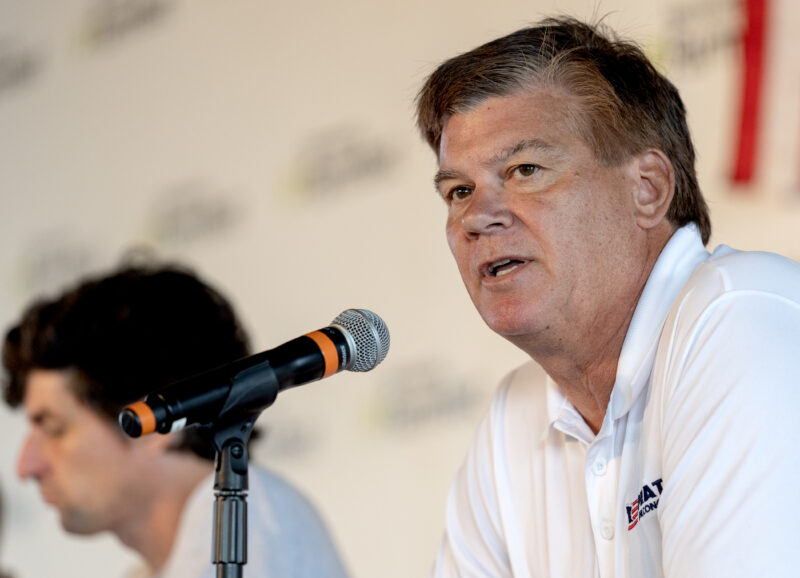
Rep. Brian Mast (R-FL) speaks during a House Committee on Foreign Affairs hearing on Capitol Hill on January 11, 2024 in Washington, DC.
Rep. Brian Mast (R-FL), the chair of the House Foreign Affairs Committee, suggested following both unclassified and classified briefings from the Trump administration on Iran on Monday that talks with the regime for a final agreement could continue past the 60-day timeline laid out in the U.S.-Iran memorandum of understanding finalized earlier this month.
“I think [the] 60-day window … is probably more of a fluid thing, just like you think about some of the stuff that went on with the Gaza-Israel [negotiations and the] Board of Peace, right?” Mast said.
“You get to some things, you don’t necessarily get to everything … over a 60-day window,” Mast said. “I think you get to some, I don’t think you get to everything. I don’t think that it just ends after 60 days by any means.”
He said that the briefings didn’t specifically touch on whether there had been any reassurances that a final deal would be reached.
“There are reassurances that people want in specific sectors,” Mast said, including that Iran will not return to pursuing nuclear weapons. “That would be important to have inked.”
Talks over and efforts to implement the ceasefire plan in Gaza have continued long beyond their original timeline, particularly efforts to disarm Hamas — which the group continues to resist — and to deploy an international military force to stabilize the territory, both of which are lynchpins to moving the peace process forward.
Some in Washington have worried about similar stagnation in the U.S.-Iran talks, and that the MOU might become the new status quo.
The administration held an unclassified briefing open to all House members on the phone on Monday afternoon, which included Secretary of State Marco Rubio and White House Special Envoy Steve Witkoff. Immediately after, the top lawmakers on key House committees, including Mast, received a classified briefing from Deputy National Security Advisor Andy Baker.
Senate lawmakers, who are in recess, also participated in a separate phone briefing on Monday afternoon.
Rep. Debbie Wasserman Schultz (D-FL) told Jewish Insider she pressed Witkoff at the end of the unclassified phone briefing about comments he had made earlier in the briefing claiming that no waivers had been used to allow Iran to sell oil.
Wasserman Schultz pointed out to Witkoff that the Treasury Department issued a license last week to allow the sale and importation of Iranian oil and petrochemical products, and said Witkoff “really was taken aback and [he] had difficulty answering.”
She said Witkoff had initially denied that any sanctions had been waived or any oil sales had been permitted since the MOU was signed. But when confronted about the waiver, she said Witkoff “acted like he wasn’t aware of it.” She said that Witkoff said he would follow up with her and officials subsequently “turned tail and cut off the call.”
“What was clear to me was that Mr. Witkoff either, disturbingly, had no idea that what he was saying was not true, or he did know what he was saying wasn’t true,” she said. “I don’t know which it was. … We’ll see if they actually get back to me …. But really it’s part of a larger pattern with this administration of misleading Congress on Iran. They’re constantly moving the ball.”
Rep. Greg Meeks (D-NY), the ranking member of the House Foreign Affairs Committee, offered a similar account of confusion among administration officials over the sanctions relief, and said Rubio told lawmakers Iran would not receive any money if it did not comply with the MOU, something he said was out of step with the actual terms of the MOU.
“The secretary of state indicated that there was no money going to Iran, but when you look at the MOU, it says money would start going to Iran at the implementation of the MOU,” Meeks said. “The Iranians are claiming they are receiving some funds now. … The Treasury Department has made ways for money to go to Iran, and unfortunately I think that Mr. Witkoff in the [unclassified] briefing did not realize that.”
Both Meeks and Wasserman Schultz said the call indicated that Witkoff and others involved in the talks are not qualified to handle the negotiations.
Mast called the MOU a “work in progress” and said there are “reasons to be hopeful and reasons to be skeptical” about the deal. Chief among the reasons for skepticism, he said, is that Iran is untrustworthy and does not act in good faith.
But he said that the damage done through U.S. operations against Iran — burying Iran’s nuclear program and doing hundreds of billions of dollars of damage to the country and critical industries — provides reasons for optimism.
Asked about the sanctions relief already provided to Iran, and the potential additional financial benefits Iran stands to gain, Mast told JI it’s a question of “math” — he estimated that the U.S. did half a trillion dollars in damage to Iran, and said that any reconstruction funding or investments from other countries or released frozen assets “subtracts from that math.”
Mast also argued that reconstruction funding would be going to companies involved in the effort, including potentially American companies, rather than the regime, but acknowledged that money is fungible and “it affects the math equation.” He also argued that any release of frozen assets would be based on a “behavior change.”
Pressed on whether he thought Iran’s behavior to this point merited the oil sanctions waiver, Mast said that depends on the timeline of Iranian behavior examined — Iran’s pace of attacks on commercial shipping has slowed from its peak during the war, but its behavior now is “very similar” to “what was a year, or three years ago.”
“I think [the Iranians are] doing everything to prove they are who they are,” Mast said. “They will lie about everything and, you know, say they agree to something and then not [follow through]. It’s a very good reason to be skeptical of anything about them, but again, it’s a different world post-[Operation] Epic Fury.”
Rep. Adam Smith (D-WA), the ranking member of the House Armed Services Committee, emerged from the classified session pessimistic that the administration is in a position to achieve the goals it has set out for the talks.
“We know where they want to go, what they want to negotiate. The evidence that they’re progressing towards that outcome isn’t great,” Smith said. “They’re hoping to get the Strait [of Hormuz] open and reach some sort of economic deal with Iran and negotiate on the nuclear program, which they sort of outlined, and they said they’re optimistic about it. I don’t see as much cause for optimism personally.”
He said that the information provided in the classified briefing was not substantially different from that which was shared on the unclassified call.
Meeks said he left the classified briefing with “some of the same questions I had before I went in.” He said that he thinks the U.S. is in a worse position after the war, and said he wants to have additional briefings.
“I can’t tell you that I got information that says you’ve done anything or made any great progress subsequent to the war that had not already been accomplished before the war, and much of what they have talked about has been or was in the JCPOA,” Meeks said, referring to the 2015 Iran nuclear deal.
Mast said he does not plan to call any public hearings with administration officials on Iran in the Foreign Affairs Committee, but wants to hear in a classified setting from senior administration officials. He also said that administration officials said they would convey lawmakers’ desire for additional briefings.
Wasserman Schultz criticized the administration for calling the open briefing in the late afternoon on a day when many members are traveling to Washington, and holding it in an unclassified setting where they would be unable to discuss many substantive details.
Trump designated the Islamic Revolutionary Guard Corps as a terrorist organization during his first term; the group has been tied to plots to assassinate him and other U.S. officials
Nathan Howard-Pool/Getty Images
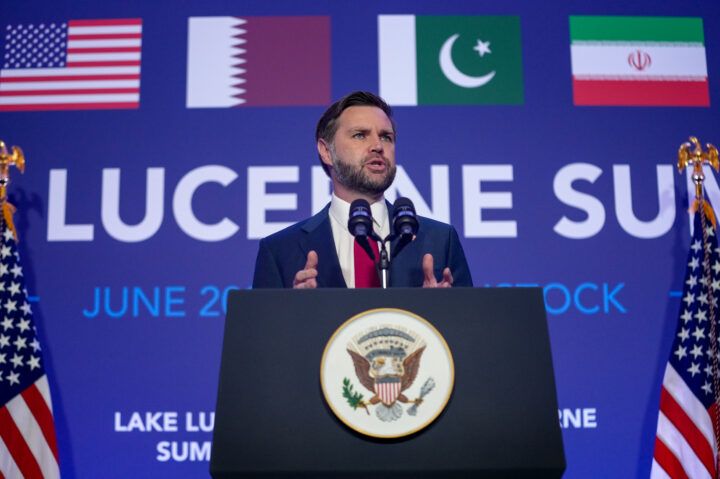
Vice President JD Vance speaks to members of the media at the Buergenstock Resort Lake Lucerne, after the U.S. and Iran held high-level talks at the Lake Lucerne Summit on June 22, 2026 near Stansstad, Switzerland.
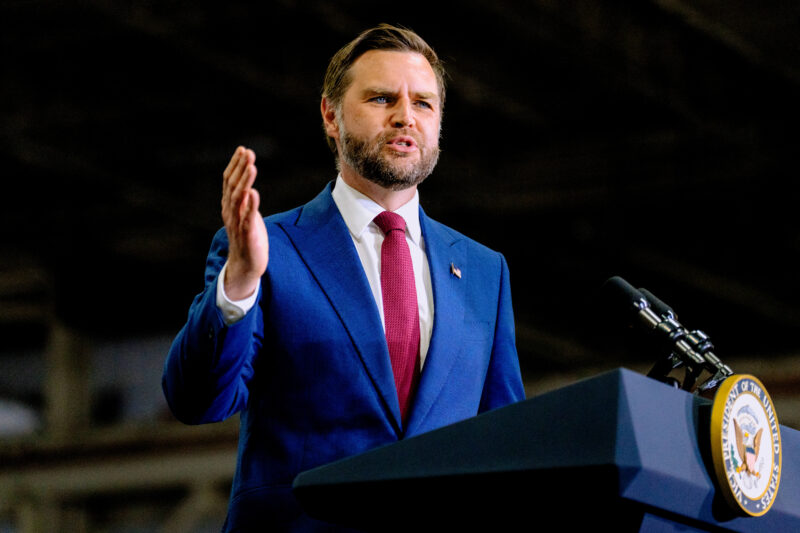
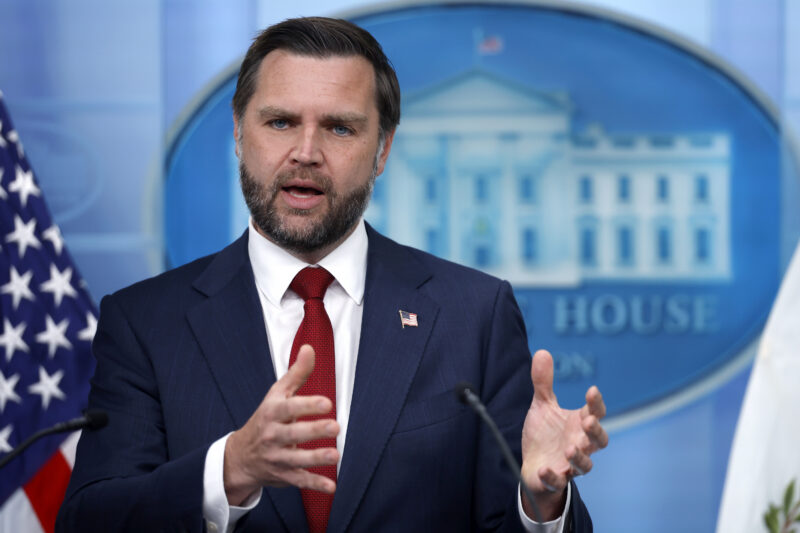
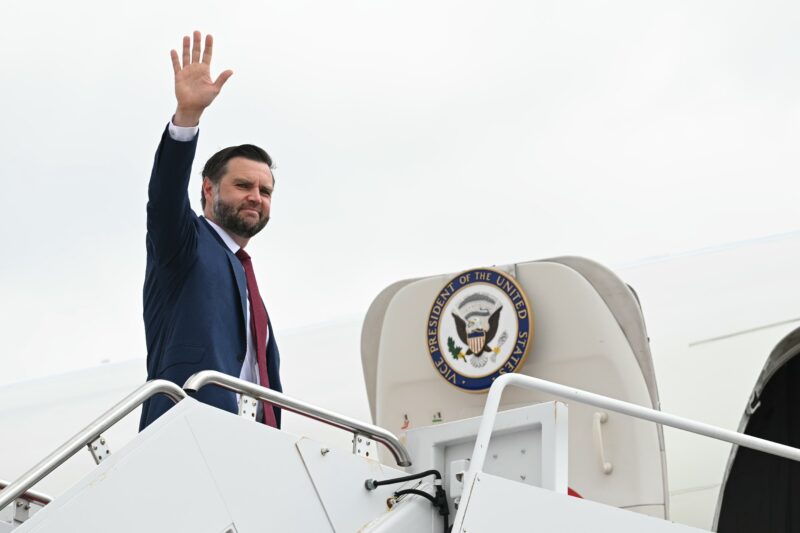
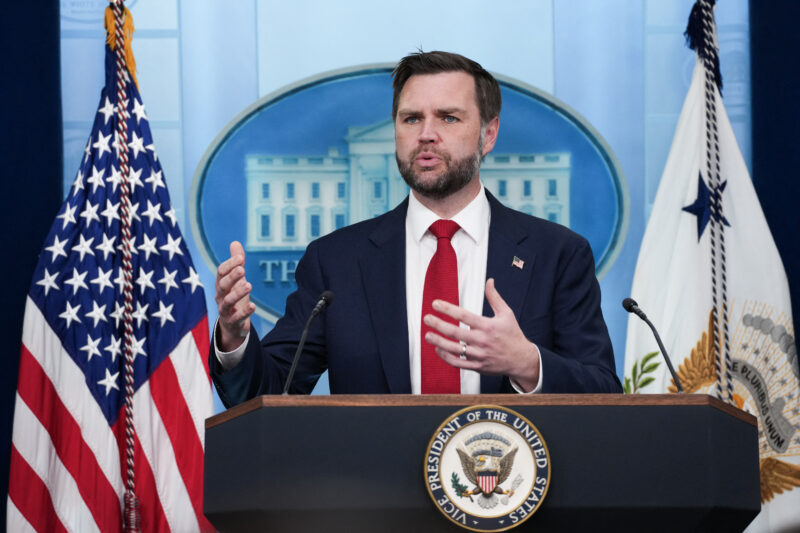
Vice President JD Vance said this week that U.S. military officials are working directly with Iran’s Islamic Revolutionary Guard Corps, a U.S.-designated Foreign Terrorist Organization. The vice president made the comments after departing Switzerland following the conclusion of talks with Iran that lasted until Monday.
“One of the things we wanted to come out [of the negotiations]” was a “channel on the Iranian side” to seek conflict resolution, Vance told the outlet UnHerd aboard Air Force Two. “Which we did. They were like, ‘OK, fine, we’ll send somebody from the IRGC to go hang out in Doha with somebody from CENTCOM,’ and that’s how we’re going to settle a lot of these disputes,” he said.
President Donald Trump designated the IRGC an FTO during his first term in 2019 and ordered the strike that killed IRGC Quds Force head Qasem Soleimani in 2020. Announcing the designation, the State Department said the group “has been directly involved in terrorist plotting; its support for terrorism is foundational and institutional, and it has killed U.S. citizens.” The IRGC also “continues to provide financial and other material support” for terror groups including Hezbollah, Kataib Hezbollah, Hamas and Palestinian Islamic Jihad, the statement added.
The group played a central role in Iran’s attacks around the region during the U.S.-Iran war, including an attack on the U.S. Fifth Fleet headquarters in Bahrain earlier this month, and is linked to dozens of recent plots and attacks in Europe. U.S. authorities have also repeatedly alleged IRGC involvement in assassination schemes targeting current and former American officials, including Trump.
Vance said that the Emiratis — “by far the most hawkish, by far the most pro-Israel country in the [Gulf Cooperation Council]” — are also “having conversations with the Iranians that have never happened before, including with the IRGC,” namely about economic incentives to urge Iran to cooperate.
Regarding criticism of the memorandum of understanding reached with Iran, Vance said, “There are many things I don’t like about the comparison to the [2015 Joint Comprehensive Plan of Action], but one of them is that the MOU is a much more generic document than the JCPOA.”
“It really is a foundational document,” he said of the MOU. “Let’s open the strait, let’s stop shooting at each other, and let’s see if we can make a nuclear deal. And from their perspective, it’s, ‘Let’s lift the blockade, let’s stop shooting at each other, and let’s see if there’s a sanctions deal.’ That’s fundamentally where it’s coming from.”
Vance claimed the Iranians are now offering “things radically different from the JCPOA” and “want a fundamentally transformed relationship with the United States and the world.”
Some GOP legislators swiftly moved to tie Vance to the MOU — hours after it was announced
Roy Rochlin/Getty Images
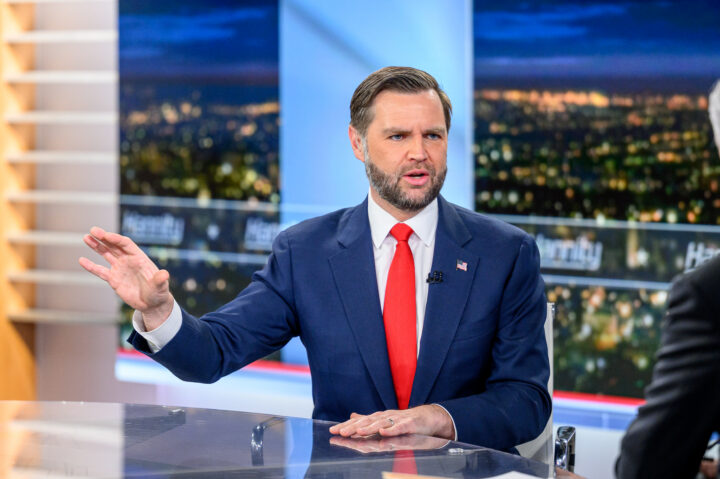
Vice President JD Vance
Vice President JD Vance is increasingly becoming the face of Washington’s negotiations with Iran — setting him up to claim victory if the agreement is successful, or to take the fall if talks with the historically intransigent adversary collapse.
President Donald Trump said as much yesterday in France: “If it works out, I’m going to take the credit. If it doesn’t work out, I’m blaming JD,” Trump quipped on the sidelines of the G7 summit, hours before signing the agreement alongside French President Emmanuel Macron in Versailles.
Trump is far from the only Republican in Washington to tie Vance to the deal. Some GOP legislators swiftly moved to tie Vance to the MOU — hours after it was announced. Sen. Lindsey Graham (R-SC), who has long advocated for military pressure against Iran, was one of the first, saying Sunday that it was “imperative that the architect of the deal, Vice President Vance and his negotiating partners, be part of the process in presenting the final deal to Congress.”
But the pressure on Vance quickly has spread through the party. On Wednesday, Sen. Josh Hawley (R-MO), a longtime backer of the president who is largely aligned with the GOP’s isolationist wing (where Vance has also found his political home), told reporters, “I wish the VP all the best of luck.” Sen. Ted Cruz (R-TX), without mentioning Vance by name, said that in moving forward with the MOU, “the president, unfortunately, is receiving bad advice once again.”
The criticism of Vance over the agreement with Iran extends beyond the capital. Conservative commentator Ben Shapiro said on Fox News on Wednesday that the MOU “appears to be, just from the text, a disaster that does not achieve any of the actual signal goals that were set by the administration at the beginning.” Directly addressing Vance’s role, Shapiro said, “The vice president of the United States, the chief negotiator on this particular project, has not well served the president.” Read more here on Shapiro’s comments.
Vance’s high-profile presence around the Iran negotiations draws attention to other senior members of the Trump administration — including Secretary of State Marco Rubio and Defense Secretary Pete Hegseth — who have been notably absent from the White House’s public efforts to talk up the MOU.
Axios reported earlier this week that Rubio and Hegseth — who during the course of the war with Iran had often been front and center explaining the administration’s policies and actions — had opposed the MOU, while Vance, White House Special Envoy Steve Witkoff and Jared Kushner backed the agreement.
Rubio, who has long taken a more hawkish approach to foreign policy — not just on Iran, but also on China, Russia, Cuba and other U.S. adversaries — was on hand this week at the G7. Rubio has been in France this week with Trump and was at his side when the president signed the agreement, but has largely avoided publicly commenting on the deal and its contours.
Iran has long boasted of its ability to drag out negotiations, betting (usually correctly) that it can take the economic hits and outlast the West. It may well be that Vance, who worked in venture capital and had not yet entered politics during the Obama administration’s yearslong talks that led to the 2015 Joint Comprehensive Plan of Action, is less familiar with Iran’s intransigence and ability to slow-walk diplomacy.
After the midterms — now less than five months away — attention will shift to 2028. By then, if the administration’s timeline holds, a deal with Iran will either have been struck or will have collapsed. For Vance, who along with Rubio is expected to make a White House bid in two years’ time, the failure to bring about a resolution with Iran could become a major liability in the 2028 GOP primary.
Plus, Israel-Ukraine relations face grain of contention

Joe Raedle/Getty Images
Rep. Debbie Wasserman Schultz (D-FL)
This P.M. edition is reserved for our premium subscribers like you — offering a forward-focused read on what we’re tracking now and what’s coming next. Please don’t hesitate to share your thoughts and feedback by replying to this email.
📡On Our Radar
Notable developments and interesting tidbits we’re tracking
The gunman who attacked the White House Correspondents’ Dinner on Saturday night, Cole Tomas Allen, was arraigned in Washington this afternoon. He is being charged with transportation of a firearm between states, discharging a firearm during a crime of violence and attempting to assassinate the president of the United States, which carries a potential life sentence.
Assistant U.S. Attorney Jocelyn Ballantine said Allen, 31, had “a 12-gauge, pump-action shotgun, a .38-caliber semiautomatic pistol and … three knives and other dangerous paraphernalia” during the attack. He will remain in detention with another hearing scheduled for Thursday…
White House Press Secretary Karoline Leavitt confirmed that President Donald Trump met with his national security team this morning where they discussed Iran’s latest proposal to end the war, which reportedly includes reopening the Strait of Hormuz but postponing talks on the country’s nuclear program…
German Chancellor Friedrich Merz said the U.S. is “being humiliated” by Iranian leaders after negotiations between the two countries this weekend were called off.
“The Iranians are obviously very skilled at negotiating, or rather, very skillful at not negotiating, letting the Americans travel to Islamabad and then leave again without any result,” Merz told a group of students. The result is “an entire nation is being humiliated by the Iranian leadership, especially by these so-called Revolutionary Guards,” he added…
Russian President Vladimir Putin praised how “courageously and heroically the people of Iran are fighting for their independence” in a meeting with Iranian Foreign Minister Abbas Araghchi today in St. Petersburg. Araghchi thanked Russia for standing by its side and said the countries will continue their “strategic partnership”…
Hezbollah leader Naim Qassem said today that the terror group will not disarm, despite the Lebanese government’s intent to remove the group from power in the south of the country under the terms of the ongoing ceasefire with Israel. Hezbollah and Israel have continued to exchange fire throughout the ceasefire, including a wave of Israeli airstrikes today in response to Hezbollah’s deadly drone attack that killed an IDF soldier and wounded six yesterday…
New Department of Homeland Security training materials allow green card applicants to be denied for antisemitic and anti-Israel social media posts and activism, as well as anti-American activism, The New York Times reports. The documents, distributed to immigration officers last month, cite “as an example of questionable speech a social media post that declares, ‘Stop Israeli Terror in Palestine’ and shows the Israeli flag crossed out”…
Ukrainian Foreign Affairs Minister Andrii Sybiha summoned Israel’s ambassador to the country to protest the arrival of a ship allegedly carrying grain taken from Russian-occupied Ukraine at Israel’s Haifa Port, Sybiha said on X. Sybiha also denounced Israel’s “lack of appropriate response to Ukraine’s legitimate request” regarding a similar vessel that docked in Haifa last week.
Israeli Foreign Minister Gideon Sa’ar slammed Sybiha for his announcement: “Diplomatic relations, especially between friendly nations, are not conducted on Twitter or in the media,” Sa’ar wrote. He said that “evidence substantiating [Ukraine’s] allegations have yet to be provided” and that “the matter will be examined”…
Several pro-Israel House Democrats in Florida could lose their seats after Gov. Ron DeSantis unveiled a new congressional map that eliminates their districts — state lawmakers are expected to approve the map for use in this year’s midterm elections at a special session of the state Legislature tomorrow.
The new map could give the GOP up to four additional House seats by redrawing Democratic-leaning districts, including those of Reps. Jared Moskowitz (D-FL), Debbie Wasserman Schultz (D-FL) and Darren Soto (D-FL)…
Claims by New Jersey congressional candidate Adam Hamawy that the Gazan hospital where he volunteered as a trauma surgeon in 2024 during Israel’s war with Hamas was a “completely benign civilian hospital with no tunnels underneath it” are false, The Washington Free Beacon reports.
While Hamawy claimed in an interview shortly after he returned that “there were definitely no tunnels underground and no command base there,” Hamas leader Yahya Sinwar was killed a year later “in a tunnel directly under the hospital emergency department, where he was leading a high-level meeting with senior Hamas terrorists,” the Free Beacon writes…
All five of Pennsylvania’s living former governors, both Democrats and Republicans, released a statement today calling on state officials to prioritize the safety and security of Gov. Josh Shapiro, Jewish Insider’s Gabby Deutch reports.
The letter came days after state Treasurer Stacy Garrity — Shapiro’s leading Republican opponent in this year’s gubernatorial race — said the state will not pay for security upgrades made to Shapiro’s privately owned family residence, done after the state-owned governor’s mansion was targeted in an antisemitic arson attack last spring…
The New York Times chronicles Google co-founder Sergey Brin’s turn away from the Democratic Party and increasing political involvement, including against the proposed “billionaire tax” in his home state of California.
“I fled socialism with my family in 1979 and know the devastating, oppressive society it created in the Soviet Union. I don’t want California to end up in the same place,” Brin told the Times. Brin, who is Jewish, has also been disturbed by the Democratic Party’s leftward shift on Israel policy…
Toronto-based Jewish advocate Adam Hummel argues in the “Boundless Insights” Substack that “anti-Zionism” is an obsolete position, given the 78-year-old existence of the State of Israel.
“Israelis don’t owe anyone an argument for their existence. … The debate is over, not because one side won, but because the thing itself came into being. They are a people. They speak a language. They live on a piece of land and have mortgages. That is what peoples do. The Greeks do it. The Poles do it. The Québécois do it. The arguments about whether they should are, at this point, a leisure activity for people who live elsewhere”…
⏩ Tomorrow’s Agenda, Today
An early look at tomorrow’s storylines and schedule to keep you a step ahead
Keep an eye out in Jewish Insider for a profile of Keith Sonderling, the acting secretary of labor, who is Jewish and the grandson of Holocaust survivors, following the resignation of Secretary Lori Chavez-DeRemer.
The Zionist Rabbinic Coalition will present its first “Pillar of Zion” award to Rep. Steny Hoyer (D-MD) at the organization’s fifth annual National Conference in Washington. Other speakers at the three-day conference will include Israeli Ambassador to the U.S. Yechiel Leiter; State Department antisemitism envoy Yehuda Kaploun; Assistant Attorney General for Civil Rights Harmeet Dhillon; and Jonathan Schanzer, executive director of the Foundation for Defense of Democracies.
Stories You May Have Missed
REPORTER’S NOTEBOOK

‘Two thoughts ran through my head. The main one: I’m getting married in six days. I can’t die now. The second: I can’t believe this is happening to me again’
FOLLOW THE MONEY
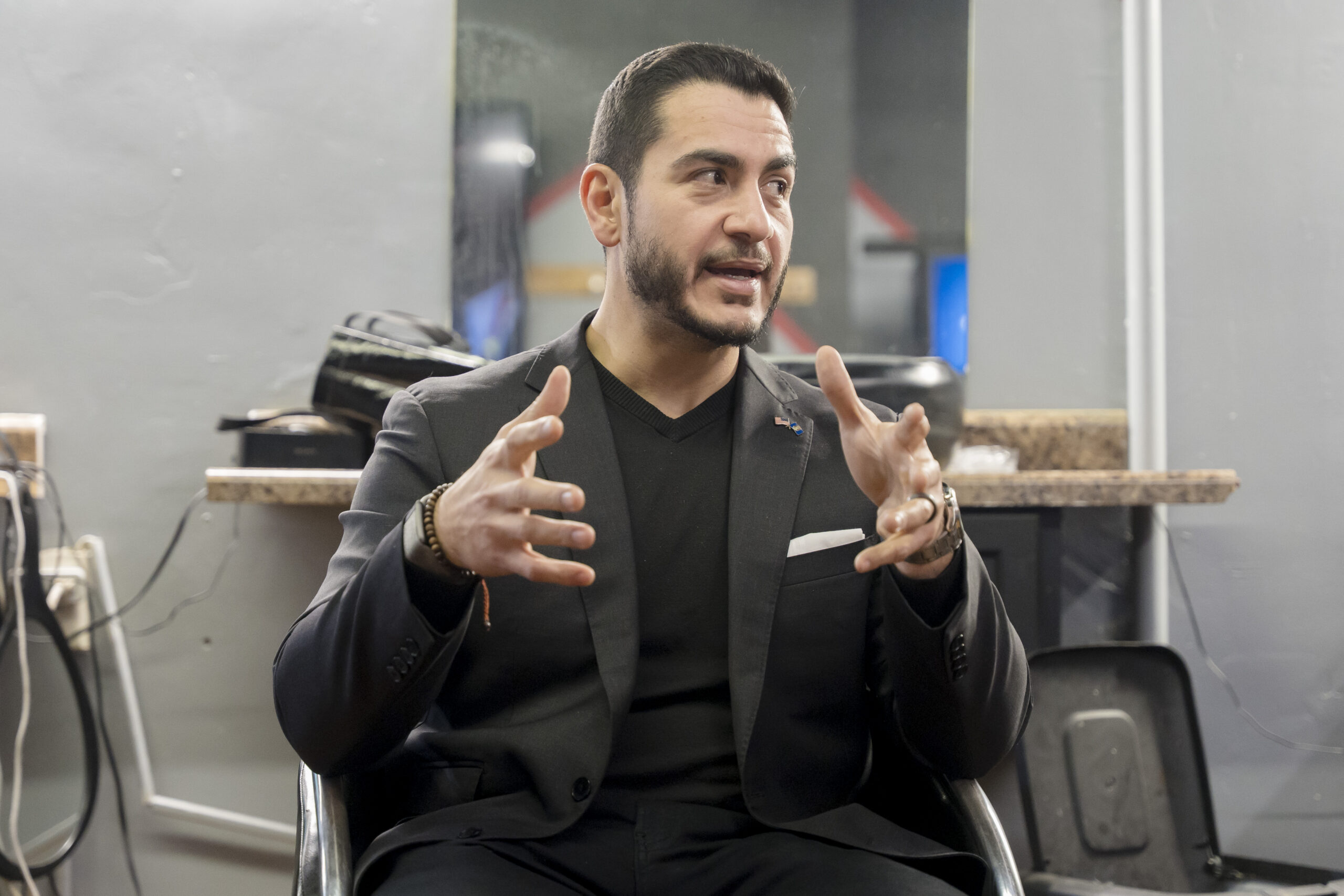
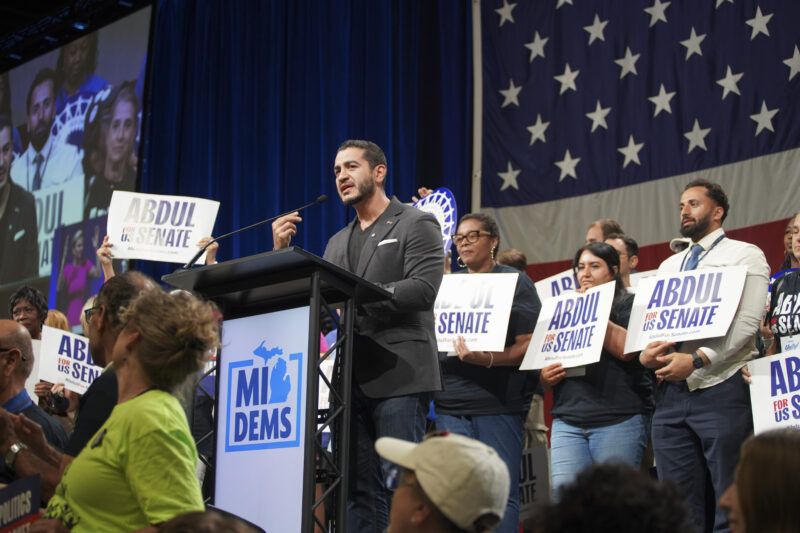
The Michigan Senate contender accepted $7k from the chair of Al-Awda/PRRC — and hired her son
Plus, half of young Americans view Israel as a burden
Iranian Presidency/Handout/Anadolu via Getty Images
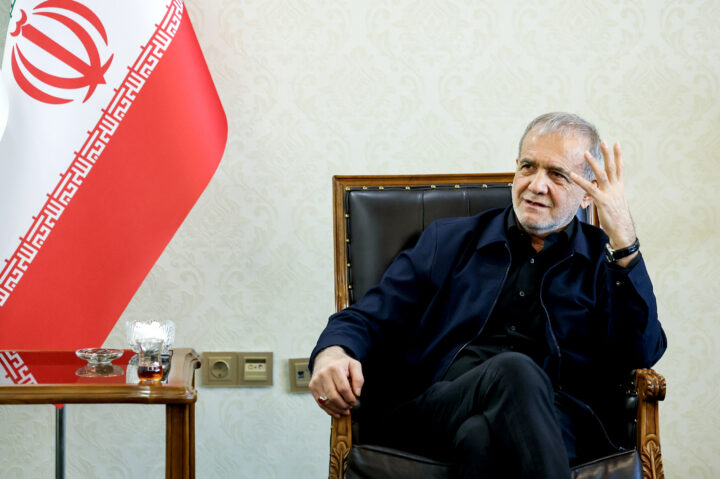
Iranian President Masoud Pezeshkian delivers a speech on April 19, 2026.
This P.M. edition is reserved for our premium subscribers like you — offering a forward-focused read on what we’re tracking now and what’s coming next. Please don’t hesitate to share your thoughts and feedback by replying to this email.
📡On Our Radar
Notable developments and interesting tidbits we’re tracking
Talks between Israel and Lebanon, which are currently underway, were moved from the State Department to the White House. Vice President JD Vance and Secretary of State Marco Rubio were spotted arriving there together this afternoon, and a White House official told Jewish Insider that President Donald Trump would greet the participants at the opening of the discussion…
U.S. Ambassador to Israel Mike Huckabee, who returned to Washington in order to participate in the talks, also stopped by Capitol Hill where he met with Sen. Ted Cruz (R-TX)…
While the bombing campaign in Iran is on pause, the battle at sea continues: U.S. forces boarded another vessel carrying Iranian oil in the Indian Ocean this morning and Trump said he had ordered the U.S. Navy to “shoot and kill any boat” placing mines in the Strait of Hormuz — just as a third U.S. aircraft carrier arrived in the region…
Trump also said Iran is “having a very hard time figuring out who their leader is,” indicating the regime may still be struggling to present the U.S. with a unified proposal. “The infighting is between the ‘Hardliners,’ who have been losing BADLY on the battlefield, and the ‘Moderates,’ who are not very moderate at all (but gaining respect!),” he claimed.
In response, Iranian parliament Speaker Mohammad Bagher Ghalibaf and President Masoud Pezeshkian, both considered relative moderates, issued nearly identical statements on X pledging “complete obedience to the Supreme Leader”…
Iranian officials tell The New York Times their new supreme leader, Mojtaba Khamenei, is alive but injured, and so far ruling differently than his late father; the younger Khamenei is relying on Islamic Revolutionary Guards Corps commanders to provide him advice to make decisions “as though he is the director of the board.”
Khamenei’s injuries are extensive and he is largely inaccessible in person: “One leg was operated on three times, and he is awaiting a prosthetic. He had surgery on one hand and is slowly regaining function. His face and lips have been burned severely, making it difficult for him to speak, the officials said, adding that, eventually, he will need plastic surgery”…
U.S. officials are expressing concern over the military’s ability to defend Taiwan from China in the near future should the need arise, given that the U.S. has burned through more than 1,000 Tomahawk missiles and more than 1,500 air-defense missiles in the course of the war with Iran so far, supplies that could take up to six years to replace…
Israeli Foreign Minister Gideon Sa’ar named Israel’s first Christian ambassador, George Deek, as the country’s special envoy to the Christian world, JI’s Lahav Harkov reports, after several recent controversies in Israel relating to Christians. Deek is part of the Arab Orthodox Christian community in Jaffa…
Sen. Elissa Slotkin (D-MI) joined other Michigan Democrats in denouncing Amir Makled, a Democratic nominee for regent of the University of Michigan, over Makled’s past comments expressing antisemitic sentiments and support for terrorism.
“I’m going to have a problem with any candidate — Democrat, Republican or independent — who shares antisemitic and hateful posts on social media. Especially when they refuse to disavow those comments or show remorse,” Slotkin said in a statement to JI’s Marc Rod, in response to a question about Makled…
Defense Secretary Pete Hegseth did not give advance notice to senior Republican senators before announcing yesterday that he was firing Navy Secretary John Phelan, causing surprise and confusion on Capitol Hill. “I found out about it the way everybody else did,” Senate Majority Leader John Thune (R-SD) told JI’s Emily Jacobs and Marc Rod of the Pentagon’s announcement on social media of Phelan’s dismissal.
Trump praised Phelan in a post on Truth Social this afternoon and said he’d “certainly like to have him back within the Trump Administration sometime in the future” — Phelan had reportedly bumped heads with Hegseth but had a close relationship with the president…
Nearly half of young American adults view Israel as a burden to the United States, according to a new Harvard Youth Poll of 18- to 29-year-olds. The survey found that 46% of young Americans consider Israel to be mostly a burden to the U.S., compared to just 16% who say Israel is mostly a benefit, JI’s Gabby Deutch reports.
In addition, Ukraine, which has also received U.S. support in its lengthy war with Russia, was also determined to be more of a burden by young Americans — 31% of respondents said Ukraine is mostly a burden, while 21% said it is mostly a benefit…
The Wall Street Journal‘s Matthew Hennessey issued a defense of Elliot Kaufman, a member of the Journal‘s editorial board, after Trump slammed him on Truth Social as an “idiot” and a “moron.”
“What triggered the president’s ire was an op-ed under Mr. Kaufman’s byline headlined ‘The Iranians Take Trump for a Sucker.’ That’s a provocative title, yes, but the piece delivers on the provocation. Mr. Kaufman wasn’t calling Mr. Trump a sucker; he was merely pointing out that the Iranians are acting like they think he is one. The piece offers plenty of recent evidence to support that claim,” Hennessey wrote…
American journalist Shelly Kittleson details in The Atlantic her experience being kidnapped and held hostage by the Iran-backed Kataib Hezbollah terror group in Iraq for nine days earlier this month…
Former Disney CEO Bob Iger, who stepped down last month, is returning to Joshua Kushner’s venture firm, Thrive Capital, in an advisory role…
⏩ Tomorrow’s Agenda, Today
An early look at tomorrow’s storylines and schedule to keep you a step ahead
Keep an eye out in Jewish Insider for an interview with Rep. Tom Suozzi (D-NY) as he introduces a buffer zone bill in Congress, which follows legislation under consideration in New York and elsewhere, aiming to protect attendees at houses of worship.
Washington is abuzz ahead of the White House Correspondents’ Dinner, being held at the Washington Hilton on Saturday night. The event will be headlined by American Israeli mentalist Oz Pearlman and attended by Trump for his first time as president, alongside celebrities (including Trump fan Nicki Minaj), politicians and media figures. Politicos and reporters will schmooze at events beginning this evening through Sunday morning.
We’ll be back in your inbox with the Daily Overtime on Monday. Shabbat Shalom!
Stories You May Have Missed
SHAPIRO SPOTLIGHT
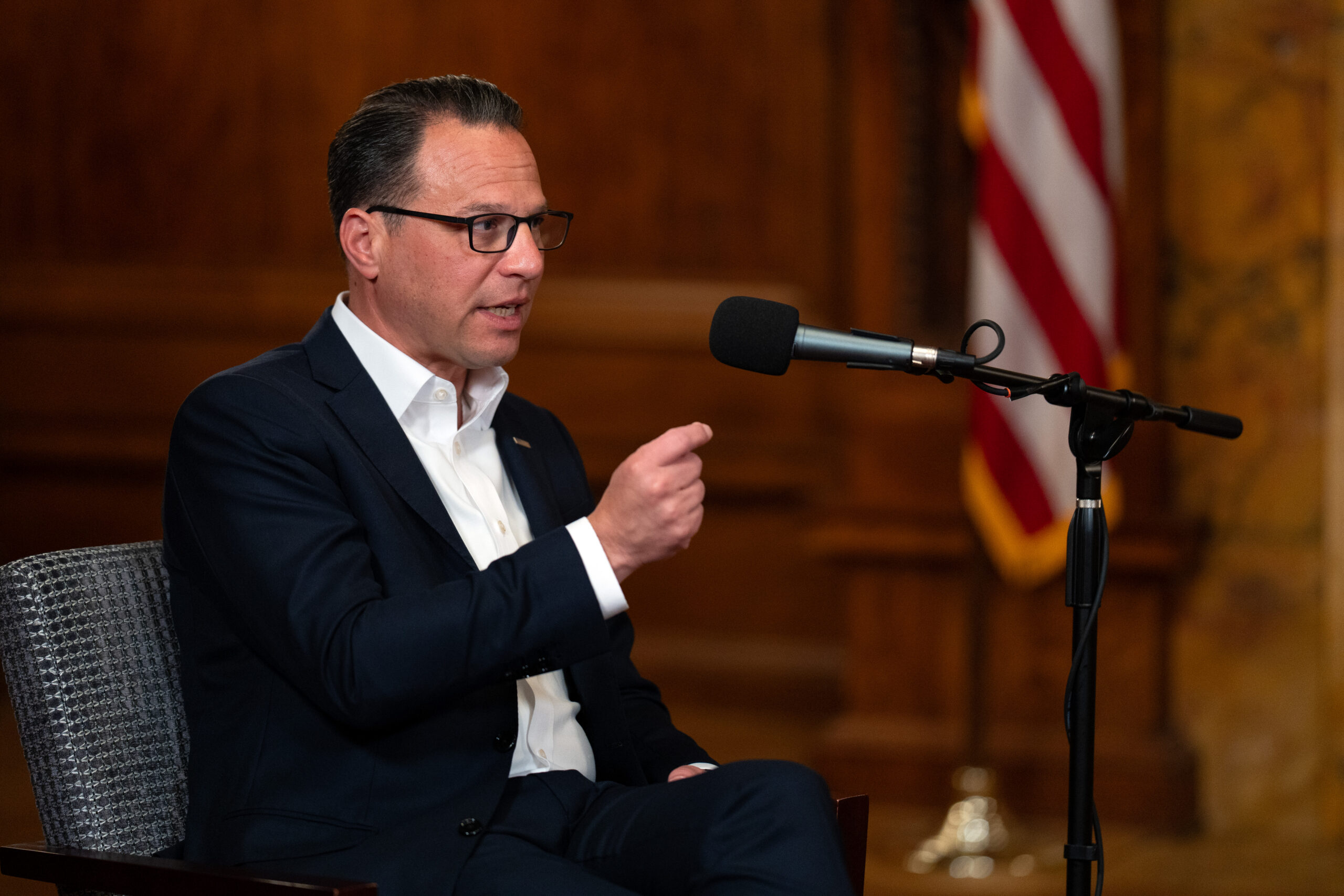
In an interview with JI, Shapiro said he ‘[hasn’t] really thought about’ whether he would appear on Hasan Piker’s stream but that he hasn’t been invited
DEFINITION DEBATE
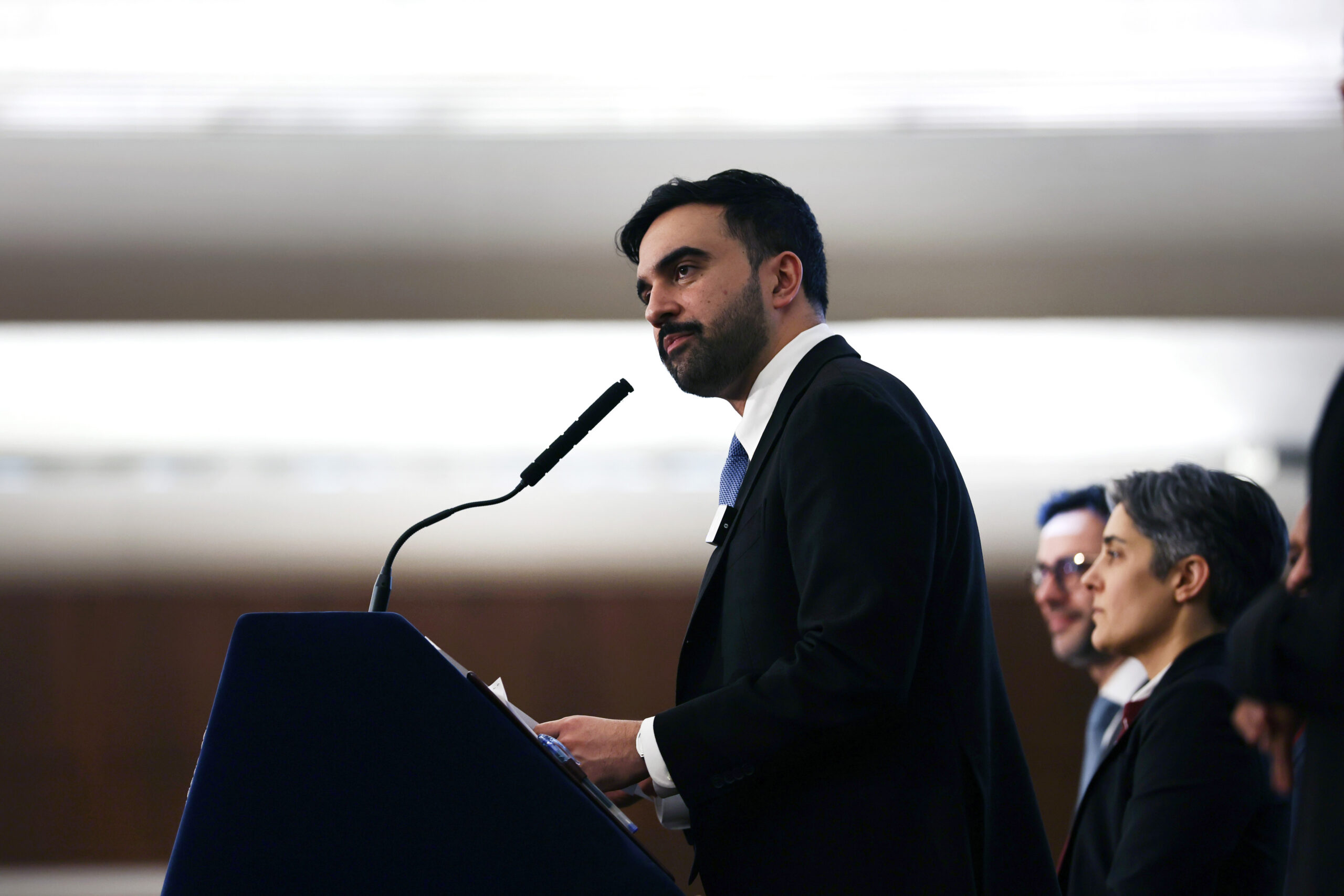
In testimony before the City Council’s antisemitism task force, an NYPD official said Mamdani played no role in a controversial change in reporting data from hate crimes
Any potential agreements between Jerusalem, Beirut and Washington will ultimately hinge on whether Hezbollah can be fully disarmed
Andrew Harnik/Getty Images
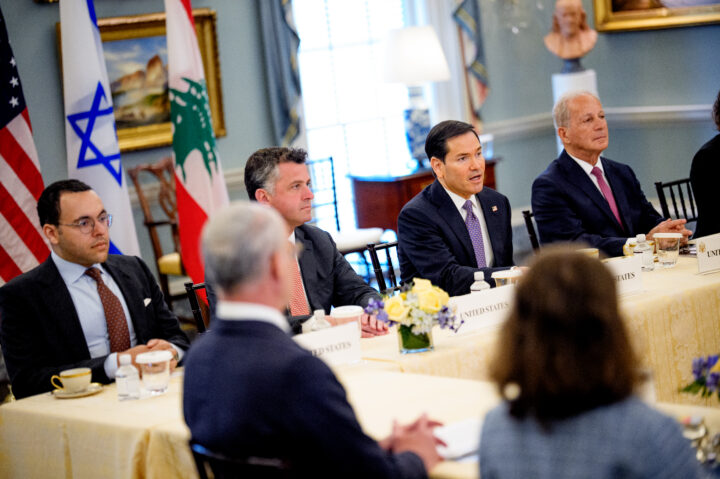
U.S. Secretary of State Marco Rubio (2nd-R), accompanied by U.S. State Department Counselor Michael Needham (C), and U.S. Ambassador to Lebanon Michel Issa (R), speaks as they begin working-level peace talks with Lebanese Ambassador to the U.S. Nada Hamadeh Moawad and Israeli Ambassador to the U.S. Yechiel Leiter at the U.S. State Department on April 14, 2026 in Washington, DC.
The first round of direct talks between Israel and Lebanon has been received positively by diplomats, pro-Israel lawmakers and experts, who see it as a sign of Hezbollah’s waning influence in Lebanon. But despite the optimism surrounding the discussions, experts caution that disarming the terrorist group remains a daunting obstacle that stands in the way of any meaningful change — one that would require a significant shift from the Lebanese government and its armed forces.
On Tuesday, Israeli and Lebanese leadership convened at the State Department in Washington for the highest-level direct discussions in more than 30 years, aiming to outline a framework for “lasting peace” and a “permanent end” to Hezbollah’s influence, according to Secretary of State Marco Rubio.
Rep. Jared Moskowitz (D-FL) told Jewish Insider that “it is great” that talks are taking place, expressing hope that “the Lebanese government, the United States and the Israeli government make a deal, and collectively, they push Hezbollah out.”
“That way the Lebanese people can be freed from the Iranian extremism that they have in their country,” Moskowitz said. “The Lebanese people are being held captive by the Iranian government because of Hezbollah. It’s obviously good for the United States, it’s good for Israel, but more importantly, I think it’s good for the people of Lebanon. I think disarming Hezbollah is obviously key to all this.”
Moskowitz added that while the Lebanese government appears to want to disarm Hezbollah, “they probably need help.”
“It’s not going to happen overnight, but I think it’s historic, and this is what the entire region wants,” he said. “This is what the Gulf states want. Everybody wants to come out of the extremism and the terrorism that Iran is trying to spread in the region.”
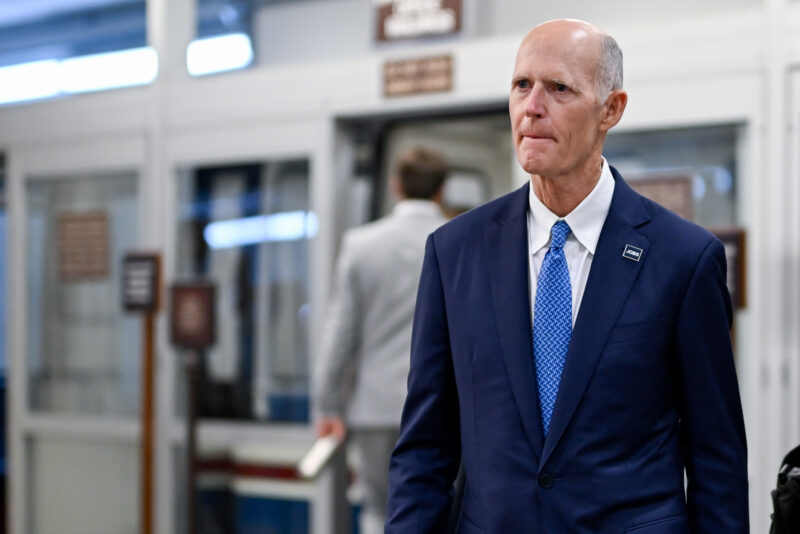
Sen. Rick Scott (R-FL) similarly told JI that Hezbollah disarmament is an important factor in talks.
“Why would you have talks if they [Hezbollah] are not going to disarm?” Scott said. “I’m not the prime minister of Israel but my condition would be that Hezbollah has got to disarm.”
Scott dismissed the notion that the Lebanese government and the Lebanese Armed Forces have not done enough to disarm the group, stating that the main problem is “not caused by Lebanon or by the military of Lebanon, it’s caused by Hezbollah.”
Sen. John Cornyn (R-TX) said that disarming Hezbollah should be a “red line” for Israel in talks. He added that Israel “needs a buffer zone so Hezbollah can’t continue to rain down terror on Israelis.”
“Hezbollah has historically been the best trained, best equipped opponents to Israel,” Rep. Don Bacon (R-NE) said. “Israel’s done a great job with them over the last two years, but they’re hardcore fervent believers in destroying Israel.”
Experts similarly described the talks as a meaningful development. John Hannah, a senior fellow at the Jewish Institute for National Security of America, called the discussions an “important breakthrough” and a sign of Hezbollah’s diminishing influence.
“Everyone should welcome the opening of a direct political dialogue between Israel and Lebanon,” Hannah said. “The fact that [the talks are] occurring at all is an important sign of Hezbollah’s declining hegemony over the Lebanese state.”
Robert Satloff, executive director of the Washington Institute for Near East Policy, described the talks as a “win-win-win” in a social media post, adding that Hezbollah emerged as a “big loser.”
“Today is a day to celebrate — we all saw a glimpse of what is possible after so much violence and conflict,” Satloff wrote on Tuesday. “That is a very good thing.”
Still, experts say disarming Hezbollah, which parties agree is necessary for any lasting piece, remains highly difficult and uncertain.
Even before Tuesday’s opening round of discussions, Hezbollah senior member Wafiq Safa said Hezbollah is “not bound” by any deals reached between Israel, Lebanon and the United States.
“It’s hard to be an optimist when it comes to the core question of Hezbollah’s disarmament,” Hannah said. “Even after all that’s been done over the past few years to weaken the group and its Iranian sponsors — including the loss of its legitimacy in the eyes of a majority of Lebanese — it’s not at all apparent that the raw balance of forces inside Lebanon has shifted sufficiently to favor Hezbollah’s near-term demise.”
Hannah described disarming Hezbollah as “worth trying,” but ultimately a “long shot.”
“Since the war against Iran broke out on Feb. 28, Hezbollah has shown through its sustained attacks on Israel that, while much diminished, its forces retain far more significant capabilities than many believed,” he said. “And in the wake of its battle against Israel, Hezbollah is making clear that if push comes to shove, it’s prepared to burn down the state before surrendering its weapons.”
Blaise Misztal, JINSA’s vice president for policy, said the task cannot be accomplished through Israeli military action alone and will ultimately depend on whether Lebanon and the LAF are willing to act.
“[Disarming Hezbollah] can only be fully done by a strong and committed Lebanese government,” Misztal said. “Israel can secure southern Lebanon with ground operations and strike Hezbollah sites in Beirut or the Bekaa Valley, but that will merely distance and degrade the threat, never fully remove it.”
“The question is whether the Lebanese government is, or can be convinced to be, strong and committed enough to take on the task of asserting its control over its own territory,” he added. “Thus far, it has failed to demonstrate either the political will or military capability to do so.”
Hannah similarly noted that “Israel is rightly unwilling to pay the necessary cost in blood, treasure and diplomatic opprobrium” required to fully dismantle Hezbollah, leaving the responsibility to Lebanon and its armed forces.
“The factor that has truly held Lebanon back from disarming Hezbollah has been Hezbollah’s retention of, as far as we can tell, overwhelming support among Lebanese Shiites,” David Daoud, a senior fellow at the Foundation for Defense of Democracies, said. “Having retained that popular support, it can deter the government from pursuing forcible disarmament by dangling the threat of civil war.”
But experts weren’t optimistic that the Lebanese government and LAF are capable — or willing — to take on that role. Hannah said Lebanon’s military “doesn’t appear to have the stomach to truly confront Hezbollah and dismantle the group’s armed wing,” noting that it has already “failed” to disarm the group in southern Lebanon, “much less the rest of the country.”
“It seems even less likely than before the Iran war that the LAF would now be willing to take on the risk of massively confronting Hezbollah,” he said, “in spite of the misery Hezbollah’s unilateral decision to enter the conflict on Iran’s behalf is now inflicting on the rest of Lebanon.”
David Daoud, a senior fellow at the Foundation for Defense of Democracies, also said Beirut “ultimately holds the key” to resolving the issue of Hezbollah’s disarmament. He said that while Lebanon has taken “immense and commendable” steps in “proscribing Hezbollah’s military activities,” the country’s “unwillingness to act against Hezbollah has been missing from the equation” and has “allowed the group to regenerate in the past.”
He added that Hezbollah still “retains enough military strength to make disarmament daunting” for Lebanese forces and the LAF, and that the group continues to wield significant political power.
“The factor that has truly held Lebanon back from disarming Hezbollah has been Hezbollah’s retention of, as far as we can tell, overwhelming support among Lebanese Shiites,” Daoud said. “Having retained that popular support, it can deter the government from pursuing forcible disarmament by dangling the threat of civil war.”
Daoud also raised concerns about Lebanon’s intentions in negotiations, arguing that Beirut may not truly be seeking meaningful change.
“A good test will be the extent to which the LAF fulfills the Lebanese government’s order from early April to put all of Beirut under its full control,” John Hannah, a senior fellow at the Jewish Institute for National Security of America, said. “Will the LAF truly confront and disarm Hezbollah in the capital or simply repeat the phony disarmament it claimed to have completed in the south?”
“Lebanon is seeking to use the negotiations to return to the status quo, and is willing to ‘pay the price’ of a joint photograph with an Israeli ambassador to achieve that objective,” he said. “This is because the situation in Lebanon is indeed dire — economic collapse compounded by war, the direct impact of the war itself and the emergence of sectarian tensions that could boil over into full-on conflict.”
If those dynamics remain unchanged, he warned that Hezbollah could indefinitely delay disarmament and eventually rebuild its strength.
“A good test will be the extent to which the LAF fulfills the Lebanese government’s order from early April to put all of Beirut under its full control,” Hannah said. “Will the LAF truly confront and disarm Hezbollah in the capital or simply repeat the phony disarmament it claimed to have completed in the south?”
Satloff said the challenge will ultimately require translating diplomacy into “practical steps,” including a shift in how the Lebanese military approaches disarmament.
“While some of this can happen in the negotiating room when the parties meet again, nothing can substitute for strong measures by the Lebanese state to isolate, weaken, delegitimize and disarm Hezbollah while promoting the idea of peace,” he said.
He suggested that turning Beirut into a “true weapons-free zone” is necessary “but not sufficient,” pointing to additional steps such as removing Hezbollah officials from government, expelling Iranian operatives from the country and shutting down the group’s financial and institutional networks.
‘The Prime Minister believes any negotiations must include limitations on ballistic missiles and a halting of the support for the Iranian axis,’ Netanyahu’s office says

Avi Ohayon (GPO) / Handout/Anadolu via Getty Images
Israeli Prime Minister Benjamin Netanyahu makes statements at Ben Gurion Airport ahead of his visit to Washington DC, where he will meet with US President Donald Trump in Tel Aviv, Israel on February 02, 2025.
Israeli Prime Minister Benjamin Netanyahu’s office announced a last-minute trip to Washington on Wednesday to discuss talks between the U.S. and Iran, a day after President Donald Trump praised the negotiations with Tehran.
“The Prime Minister believes any negotiations must include limitations on ballistic missiles and a halting of the support for the Iranian axis,” the statement, sent Saturday night, read.
White House Special Envoy Steve Witkoff and Jared Kushner met with Iranian Foreign Minister Abbas Araghchi in Oman on Friday.
Later Friday, Trump told reporters on Air Force One that the talks had been “very good.”
“Iran looks like it wants to make a deal very badly,” he said. “We have to see what that deal is, but I think Iran wants to make a deal very badly, like they should. Last time, they didn’t want to make a deal, but I think this time they feel differently.”
Asked about Iran’s demand that the talks only be about nuclear weapons, Trump said, “That would be acceptable. One thing, right up front, no nuclear weapons. … They weren’t willing to do that [last year]; now they are willing to do much more.”
The president also said that he is in “no rush” in the negotiations, adding, “If you remember in Venezuela, we waited around for a while.”
Trump indicated that the military threat to Iran still stands: “We have a big armada, a big fleet heading in that direction that will be there soon, so we’ll see how that works out. … If they don’t make a deal, the consequences are very steep.”
Sen. Lindsey Graham (R-SC) expressed skepticism that the negotiations would bring about an acceptable agreement, and called for Congressional review and approval, which the 2015 Iran nuclear deal lacked.
“I hope it can meet our national security objectives and the needs of the people of Iran through diplomacy,” Graham wrote on X. “Given Iran’s behavior regarding deals, it could be a tough sell. However, I am open-minded, understanding [that] any agreement with the Islamic Republic and the United States must come to Congress for review and a vote.”
Meanwhile, in Iran, videos and photos were posted online of Iranians once again protesting the regime using methods other than mass demonstrations, The Wall Street Journal reported, including shouting slogans at funerals, doctors condemning the arrest of colleagues for treating wounded protesters, hosting memorials for wounded protesters and more.
The lack of clarity is reason for concern in Jerusalem, where the line on any potential American agreement with Iran has long been zero enrichment, extensive limitations on ballistic missiles and regional proxy activity
Sayed Hassan/Getty Images
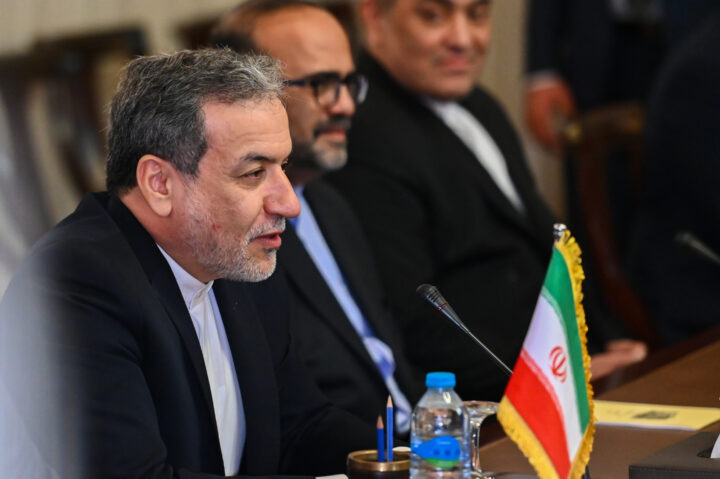
Iran's Foreign Minister Abbas Araghchi meets with his Egyptian counterpart on October 17, 2024 in Cairo, Egypt.
For a brief moment on Wednesday, it looked like Iran talks were off. Tehran wanted to move their location from Turkey to Oman and narrow the scope of the negotiations to its nuclear program. The Trump administration saw this as a bad sign, and anonymous American officials began leaking to the media that Iran wasn’t taking the negotiations seriously.
Secretary of State Marco Rubio acknowledged that the negotiations were uncertain in remarks to the press at the Critical Minerals Ministerial, a conference of 43 foreign and other ministers: “As far as the talks are concerned, I think the Iranians had agreed to a certain format. For whatever reason, it changed … We’ll see if we can get back to the right place. The U.S. is prepared to meet them,” he said.
Meanwhile, President Donald Trump relayed a warning to Iranian Supreme Leader Ali Khamenei in a prerecorded interview with NBC News: “I would say he should be very worried.”
It didn’t take long – just over two hours, to be precise – between the news of the apparent collapse of talks between the U.S. and Iran and Iranian Foreign Minister Abbas Araghchi’s announcement on X that they were back on: “Nuclear talks with the United States are scheduled to be held in Muscat on about 10 am Friday.” Anonymous American sources then confirmed to various media that negotiations were set to take place, after leaders of Arab and Muslim countries urged the Trump administration to give them a chance, despite Iran’s prevarications.
Still, Araghchi’s statement alludes to one of the major reasons that the talks were, briefly, called off: Are they only “nuclear talks” or are they about a range of malign behavior by the Islamic Republic?
The Iranian answer to that question is clear, but the Trump administration sent mixed messages.
The Trump interview with NBC provided few clues. The president expressed support for the protesters against the Iranian regime, saying “we’ve had their back.”
Yet, in a bit of revisionist history, he portrayed his recent threats to Iran as being solely about the nuclear file: “They were thinking of starting a new [nuclear] site in a different part of the country. We found out about it and said, ‘you do that, we’re going to do very bad things to you,'” Trump said. He didn’t mention ballistic missiles in the interview.
Rubio, however, specified that “as far as the topics [of negotiations] and what the agenda needs to be, I think that in order for talks to actually lead to something meaningful, they will have to include certain things, and that includes the range of their ballistic missiles, that includes the sponsorship of terrorist organizations across the region, that includes the nuclear program and that includes the treatment of their own people.”
“Beyond that,” Rubio said, “the president retains a number of options as to how to respond to [the violent crackdown on protesters] and future events.”
Vice President JD Vance told Megyn Kelly that stopping Iran from getting a nuclear weapon was the main concern: “In a perfect world, would I love it if a bunch of freedom-loving Iranians… had a government that was much more friendly to the United States of America? Would that be a good thing? Absolutely.”
“But fundamentally,” he added, “the president has been focused … on this question of ensuring that they don’t get a nuclear weapon. .. I feel 100% confident that even if the Iranians were rushing toward a nuclear weapon, they couldn’t get one during the Trump administration. But we’re not thinking about the next three years; we’re thinking about the next 30 years.”
Vance argued that “global nuclear proliferation” is “the biggest threat to the world,” and as such, Trump is seeking to stop Iran from obtaining nuclear weapons so that other countries in the region do not seek to attain them, as well, and is willing to work with unfriendly countries like Russia and China to achieve that because it is “the most important thing you can do for peace and stability.”
The lack of clarity is reason for concern in Jerusalem, where the line on any potential American agreement with Iran, going back to the Obama-era negotiations, has long been zero enrichment and extensive limitations on ballistic missiles and regional proxy activity.
Israel regarded U.S.-Iran negotiations with deep skepticism even before the latest bumps on the road to Oman, with Israeli Prime Minister Benjamin Netanyahu telling White House Special Envoy Steve Witkoff during his visit to Israel on Tuesday that “Iran proved time after time that its promises cannot be trusted.” Talks that do not include missiles and proxies will likely be viewed with alarm.
Israeli PM Netanyahu: ‘We are on the verge of a very great achievement. ... It is not yet final; we are working on it diligently’
Chris McGrath/Getty Images
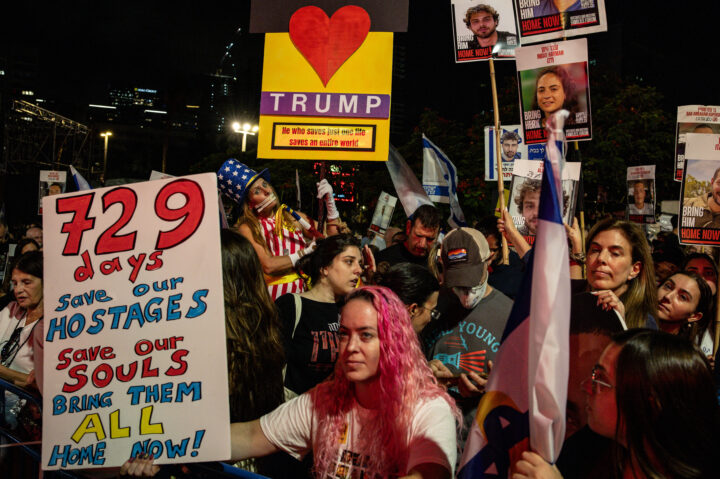
People chant slogans and hold placards in support of hostages still held by Hamas during a solidarity protest, calling for an end to the war and the release of all remaining Israeli hostages on October 4, 2025, in Tel Aviv, Israel.
Israeli Prime Minister Benjamin Netanyahu, hostage families and others in Israel expressed cautious optimism over the weekend, after Hamas agreed to enter talks to free the 48 remaining hostages in exchange for a partial Israeli withdrawal from Gaza.
An Israeli team consisting of Strategic Minister Ron Dermer, diplomatic advisor Ophir Falk, Coordinator for the Hostages and Missing Gal Hirsch and representatives of the Mossad and Shin Bet are expected to head to Cairo on Monday for proximity talks to negotiate the implementation of President Donald Trump’s 20-step plan to end the war. Trump’s special envoy, Steve Witkoff, and Jared Kushner, who has been involved in the talks, will represent the U.S.
Netanyahu said in a video statement Saturday night that Israel and the U.S. intend to “limit this negotiation to a few days” and that it would be about “technical details” of the Trump plan.
“We will not tolerate any more delay tactics, time-wasting or evasion on the part of Hamas,” he said.
As Trump noted on Truth Social, the ceasefire would immediately take effect once it is agreed to by Hamas. The terror group would have to release the remaining 48 hostages – 20 of whom are thought to be alive – in exchange for Israel’s freeing of over 1,700 Palestinian prisoners, hundreds of whom are serving life sentences on terrorism charges, and the rest arrested in Gaza in the last two years. Then, Israel would withdraw to an initial line, as part of a gradual withdrawal toward a buffer zone along Gaza’s perimeter.
The details likely to be negotiated include the precise line to which Israel will withdraw initially and, at the end of the process, which countries will make up the International Stabilization Force meant to be the “long-term internal security solution” to keep Gaza demilitarized and prevent the resurgence of terrorism, according to the Trump plan, and who will be part of the transitional technocratic committee meant to govern Gaza. Former U.K. Prime Minister Tony Blair and Apollo Global Management CEO Marc Rowan are expected to be involved in the Peace Board led by Trump that will oversee the transitional government.
Netanyahu vowed that “Hamas will be disarmed and the Strip demilitarized. This will happen either via a diplomatic route, according to the Trump plan, or via a military route by us.”
The talks come after Hamas released a statement early Saturday in which it embraced parts of the Trump plan — exchanging Israeli hostages for Palestinian prisoners, an influx of aid and encouraging Palestinians to remain in Gaza — but rejected the concessions the plan would entail, including the demilitarization and deradicalization of Gaza. Hamas said it would punt that decision to “a collective national position … to be discussed within a comprehensive Palestinian national framework, in which Hamas will be included.”
Despite Hamas accepting only a fraction of his plan, Trump wrote on Truth Social that he believes the terrorist group is “ready for a lasting PEACE” and called on Israel to “immediately stop the bombing of Gaza so that we can get the hostages out safely and quickly.”
IDF Chief of Staff Eyal Zamir then “instructed to advance readiness for the implementation of the first phase of the Trump plan for the release of the hostages,” according to an IDF statement early Saturday morning. At the same time, Zamir said, “all troops must maintain high alertness and vigilance, in addition to reinforcing the need for a rapid response to neutralize any threat.”
In his video statement, Netanyahu presented Trump’s plan as being coordinated with Jerusalem. “As a result of the intense military pressure we applied and the diplomatic pressure, Hamas was pressured into agreeing to the plan we presented,” Netanyahu said.
The prime minister added that “we are on the verge of a very great achievement. … It is not yet final; we are working on it diligently, and I hope, with G-d’s help, that in the coming days, during the Sukkot holiday, I will be able to inform you about the return of all our hostages, both living and deceased, in one phase, while the IDF remains deep within the Strip and in the controlling areas within it.”
Tel Aviv’s Hostage Square was filled with demonstrators on Saturday night, calling for the deal to be implemented.
Liran Berman, brother of hostages Ziv and Gali Berman, said that “with hope comes fear. Will the deal be signed? When will I see my brothers again? We are suspended between hope and dread. We have lived through Hamas’s lies before. We cannot let another deal collapse. Not again. President Trump, we stand with you. Do not stop. It is now or never.”
Former hostage Gadi Moses said, “I know the road is still long and riddled with obstacles, but today I can say that for the first time since my release from captivity, I have heard declarations that may give us some hope. This is the time to cease fire and focus on returning all the hostages and ending the war.”
Also Saturday, Netanyahu held meetings and discussions with the leaders of right-wing parties in his governing coalition, National Security Minister Itamar Ben-Gvir and Finance Minister Bezalel Smotrich, both of whom have called to annex and settle the Gaza Strip.
Ben-Gvir said that “we will be happy like everyone to see all the hostages returning to us,” but “if Hamas continues to exist after all the hostages are freed, Otzma Yehudit [Ben-Gvir’s party] will not be part of the government. We will not be part of a national defeat that will turn into a ticking time bomb until the next massacre.”
Smotrich did not threaten to leave the coalition, but he said that Netanyahu made a “severe mistake” by acquiescing to Trump’s call to stop the attack on Gaza City rather than holding “negotiations under fire.”
“It’s a recipe for Hamas to waste time and wear down Israel’s stance,” he posted on X.
Opposition leader Yair Lapid has said his party will vote to prop up the government if parties within the coalition attempt to bring it down to stop a hostage and ceasefire deal.
On Saturday afternoon, Lapid said: “When Shabbat ends and you hear Smotrich and Ben-Gvir’s threats, remember they have nothing to threaten with. We won’t let them sabotage the deal. A clear majority of the Knesset and a clear majority of the nation support the Trump plan.”
Qatar’s be-everywhere, invest-in-everything strategy has allowed Doha to gain footholds across the global economy and in diplomatic circles

Jacquelyn Martin/AP
Qatari Prime Minister and Minister of Foreign Affairs Sheikh Mohammed bin Abdulrahman bin Jassim Al-Thani, attends a news conference about the Israel-Hamas war, and pressure to reduce civilian casualties, Friday, Dec. 8, 2023, in Washington.
Ceasefire and hostage-release talks have been ongoing in Doha, Qatar, for the last week. But one of the most consequential meetings in the negotiations could be happening tonight in Washington, when President Donald Trump hosts Qatari Prime Minister Mohammed bin Abdulrahman Al Thani for dinner at the White House.
This continues a new tradition for Trump of hosting prominent Gulf royals who aren’t the heads of state of their respective countries for dinner at the White House. In March, Trump hosted a dinner in the White House’s State Dining Room for Sheikh Tahnoon bin Zayed Al Nahyan, the United Arab Emirates’ national security advisor and chairman of several sovereign wealth funds.
Qatari officials have been in the U.S. all week. Qatari Emir Sheikh Tamim bin Hamad Al Thani was rumored to have met with Trump on the sidelines of the FIFA finals in New Jersey on Sunday, after being spotted in New York over the weekend.
White House Middle East envoy Steve Witkoff, whose trip to Doha last week was postponed over stalled talks, told reporters over the weekend that he planned to meet with Qatari negotiators on the sidelines of the match. And Trump shared a suite with senior Qatari sports officials at the match, including Nasser bin Ghanim Al-Khelaifi, the president of the Paris Saint-Germain team who played in New Jersey on Sunday and chairman of beIN Sports, previously known as Al Jazeera Sport. (In a weekend interview at the FIFA match, Trump even noted Qatar’s “big presence.”)
Qatar also loomed large in Washington this week, where legislators on the House Education and the Workforce Committee pressed university leaders from Georgetown, CUNY and the University of California, Berkeley about their foreign funding sources during a hearing about antisemitism in higher education. Former Rep. Jim Moran (D-VA), one of Qatar’s top lobbyists in Washington, was seen sitting right behind Georgetown University interim President Robert Groves as Groves testified on Tuesday. The school has received over $1 billion from Qatar, and has a campus in Doha.
Qatar’s be-everywhere, invest-in-everything strategy has allowed Doha to gain footholds across the global economy and in diplomatic circles. And since the start of the war, it has sought to highlight its role as a facilitator of ceasefire talks between Israel and Hamas, the latter of which Doha supports financially and diplomatically.
With Iran weakened following last month’s war, Qatar remains the Hamas sponsor with the most leverage on the terror group. Despite pledges last year to expel senior Hamas officials to Turkey, many of those officials remain in Qatar.
Earlier this week, Trump threatened steep tariffs on Russia if Moscow doesn’t reach a peace agreement with Ukraine before the end of August. But the Qatari royal family, with endless wealth and more favored global standing, does not face the same fiscal and geopolitical challenges and limitations as Russian President Vladimir Putin. It’s unclear what leverage Trump could use to push Qatar to exert pressure on Hamas as he seeks a resolution to the war.
Doha has the power to push Hamas to accept a ceasefire. Whether tonight’s dinner will exact a change in Qatar’s approach to Hamas remains to be seen. The sit-down between Trump and the Qatari prime minister could change the tide in the 21-month war, or it could serve as yet another missed opportunity in a war full of stalemates and diplomatic posturing — with fresh casualties mounting on both sides and 50 hostages still languishing in captivity.
Please log in if you already have a subscription, or subscribe to access the latest updates.
 Continue with Google
 Continue with Apple