

































The Florida Republican cited rising antisemitism in Canada as reason for the emergency measure
Daniel Heuer/Bloomberg via Getty Images
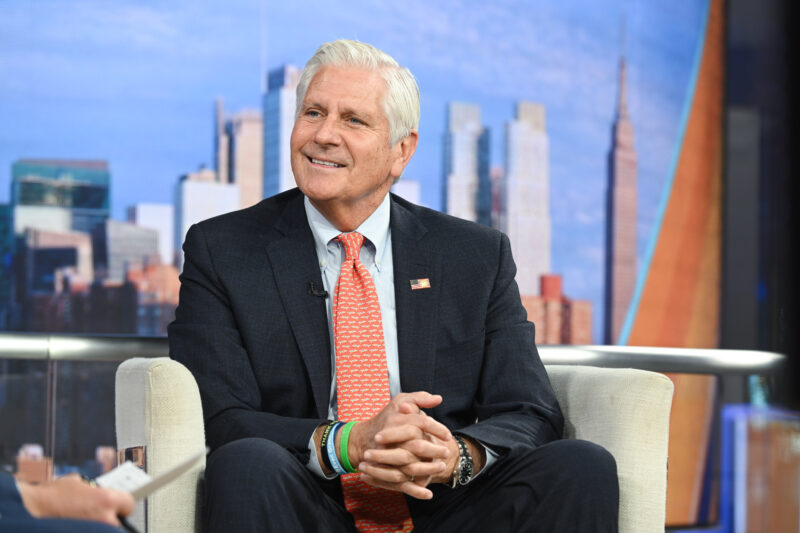
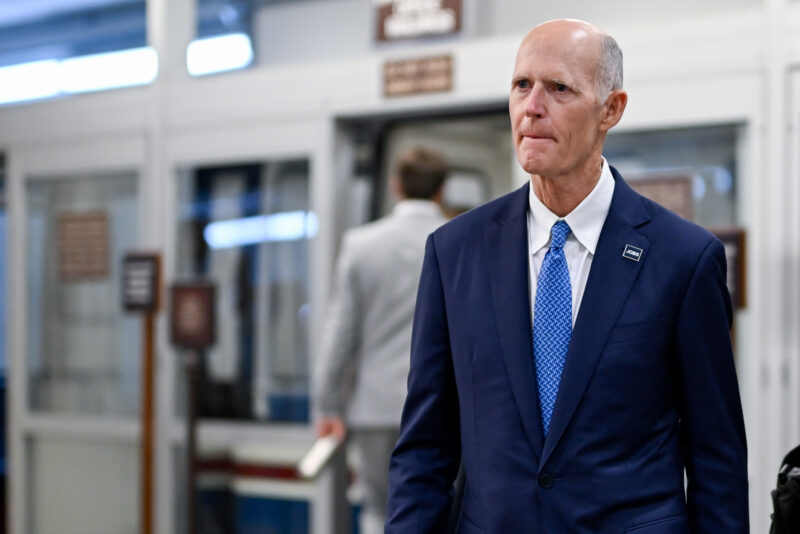
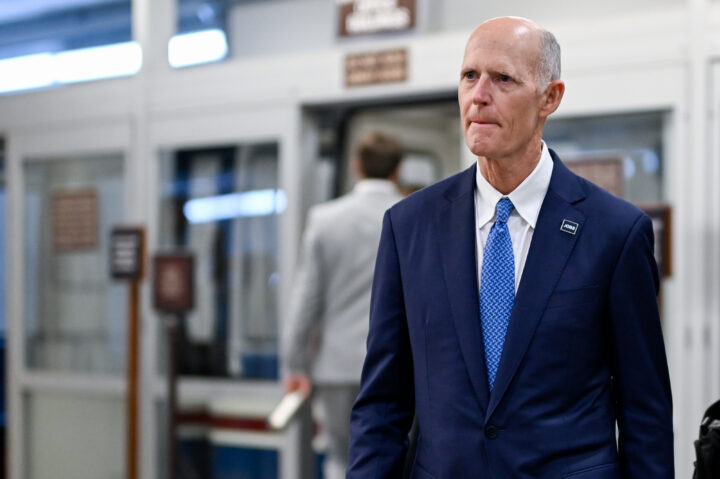
Sen. Rick Scott (R-FL) at the US Capitol in Washington, on July 16, 2026.


 Add JewishInsider on Google
Sen. Rick Scott (R-FL) is urging President Donald Trump to establish an expedited legal pathway for Jewish Canadians to obtain refugee status in the United States amid rising antisemitism in Canada.
In a letter to the president on Tuesday, Scott encouraged Trump to set up a refugee program for Canadian Jews to legally seek refuge from religious persecution in their home country. The Florida senator noted that Trump recently amplified a report on Christian leaders urging him to create a legal pathway for Jews in Canada to come to the U.S., and vowed to support the president if he pursued the idea.
“The Jewish community throughout Canada is experiencing a rapid increase in threats, harassment, and violence. A significant number of these intolerable instances occur in places of worship, schools, and Jewish-owned small businesses,” Scott wrote in the letter, obtained by Jewish Insider.
“As a result of this proliferation of antisemitism, you expressed consideration for an expedited legal pathway for the Canadian Jewish community to find refuge in our great nation,” he continued. “Should you pursue this effort, please know that I stand behind this noble decision.”
Scott predicted that Florida, which is home to some of the largest Jewish communities in the U.S., would embrace Canadian Jews who relocate to the state in search of a more welcoming environment.
“If those in the Canadian Jewish community wish to lawfully come to the United States, Florida will happily welcome them to our proud and thriving state,” Scott wrote. “Unlike other neighboring nations and states, Florida will defend the Jewish community from antisemitism and provide our friends with new opportunities to prosper and live their American Dream.”
“Florida will continue to stand at the ready to assist your administration’s efforts in protecting the Jewish community abroad and at home,” he added.
The White House did not respond to JI’s request for comment on the letter or if the president was considering such a move, which would run counter to the Trump administration’s hardline immigration approach aimed at restricting legal and illegal immigration.
Last Monday, Trump shared a report from Just the News highlighting a letter to him from the National Association of Christian Lawmakers, in which the group called on him to direct the State Department and the Department of Homeland Security to develop “lawful, secure, and appropriately expedited pathways” for Jewish Canadian nationals and their immediate family members to seek refuge in the U.S. as Canada’s Jewish community faces increased threats.
In July, Oklahoma GOP Gov. Kevin Stitt sent Trump a letter vowing to welcome to his home state Jewish Canadian families who legally come to the U.S. while fleeing antisemitism.
“Should Jewish families lawfully come to the United States in search of safety and opportunity, I want you to know that Oklahoma would proudly welcome those who choose to make our state their home,” Stitt wrote to Trump at the time.
Stitt wrote that Oklahoma had been “blessed with a strong and vibrant Jewish community, especially in Tulsa, that has contributed to our state’s success since before statehood and stands ready to welcome new neighbors. I know those traditions of faith, family, entrepreneurship and civic engagement would continue to flourish here.”
“You shouldn’t live in fear because of your faith. In Oklahoma, you can practice freely without fear of violence,” Stitt said in a post on X highlighting his letter to Trump late last month.
The bill has been spearheaded by Sen. Ted Cruz and Rep. Brad Knott; Cruz’s staff reached a compromise on Sunday with Rep. Tom Suozzi to secure his support.
Jewish Federations of North America
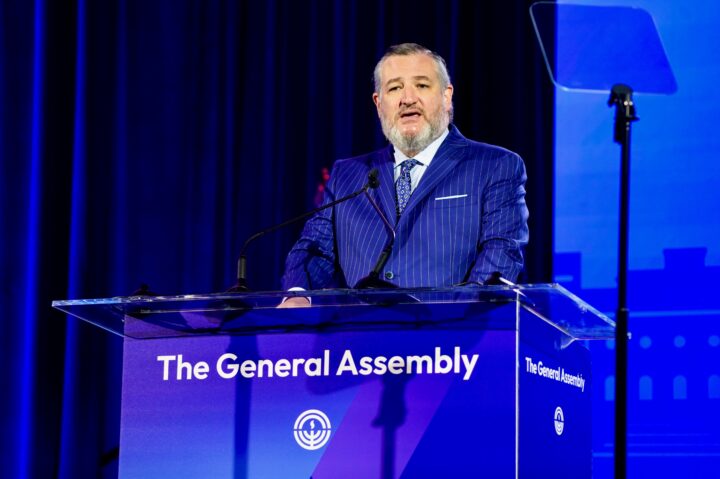
Sen. Ted Cruz (R-TX) speaks at the Jewish Federations of North America's General Assembly on Nov. 18, 2025.
Sen. Ted Cruz (R-TX), Rep. Brad Knott (R-NC) and Rep. Tom Suozzi (D-NY) are preparing to introduce federal legislation that would establish a 100-foot buffer zone around religious institutions, within which conduct that disrupts religious services or interrupts access to the place of worship would be banned during religious services.
The Right to Worship Act aims to address demonstrations around synagogues and other houses of worship that have become a growing concern for the Jewish community following anti-Israel and antisemitic protests outside synagogues that have turned violent. Several states have pursued similar legislation.
Cruz and Knott have been working on the bill for some time, and two sources familiar with the situation said that “intense negotiations” had been ongoing between Cruz and Suozzi’s teams to reach a bipartisan compromise balancing the desire to protect religious worship and free speech rights. A source said a deal was reached on Sunday evening.
“The First Amendment guarantees every American the right to freely exercise their faith, and Congress has a duty to ensure that guarantee is met,” Cruz said in a statement to Jewish Insider. “In recent years, we have seen organized acts of hate meant to disrupt and deny that right, which have been untenably defended as speech. That is why I am introducing the Right to Worship Act, and I urge my colleagues to support it.”
According to draft bill text viewed by JI, the buffer provision would impose fines for such activity, and impacted individuals, the Department of Justice or state attorneys general would be able to bring suits under the statute. It also includes language protecting non-disruptive First Amendment activity.
Knott did not respond to requests for comment and Suozzi did not comment for this article.
Sander Gerber, the CEO of Hudson Bay Capital and a lead architect of the Taylor Force Act, helped craft the new legislation, inspired in part by the decades-long weekly antisemitic protests outside his father’s synagogue in Ann Arbor, Mich. — an issue Gerber’s father previously sought to appeal to the Supreme Court.
Gerber said that officials at various levels, including the Department of Justice under the Trump administration have said that they’re unable to step in under the existing FACE Act because the conduct at the Ann Arbor synagogue is not physically threatening or obstructive. The FACE Act, invoked on multiple occasions by the current Justice Department, bars the use of force, threats or obstruction to block access to reproductive health services or to obstruct the right to worship.
“The Ann Arbor City Council passed a resolution saying these protesters are antisemitic. The mayor said he can’t move them away because his legal team won’t let them. Leo Terrell at DOJ said there’s nothing he can do because they’re not threatening,” Gerber told JI. “So it’s a gap in the FACE Act. Here you have intentional disruption [and] harassment, so how do you navigate free speech within that?”
Moshe Davis, who led former New York City Mayor Eric Adams’ office to combat antisemitism, has also been involved in crafting the bill, which he said aims to fill gaps in existing law and in some of the state and local buffer zone bills like the one in New York City, which he described to JI earlier this year as “watered down.”
He said he began working with Gerber on the legislation after being pushed out of the New York City government by Mayor Zohran Mamdani, and the pair got in touch with House Speaker Mike Johnson (R-LA) — who has been strongly supportive — about the effort after a spate of incidents at houses of worship, as well as communicated with the Department of Justice to work through any potential First Amendment Issues. He also praised Cruz and his staff’s work on the bill.
“I started this work in New York City, responding to the mobs targeting synagogues,” Davis told JI. “What we have seen since is a national problem that reaches every faith and requires a federal answer. No American should be afraid to walk into their house of worship.”
Johnson did not respond to requests for comment.
Nathan Diament, the executive director of the Orthodox Union Advocacy Center, which has also been working to support the bill, said, “The need for this legislation in the face of recent actions taken against shuls, as well as other houses of worship, is clear. And — it’s realistic for Congress to pass this bill in September.”
Suozzi previously introduced the SACRED Act, an alternative buffer zone bill, earlier this year, with the backing of several major Jewish community groups. Suozzi’s bill, cosponsored by Max Miller (R-OH), is different from the new one in that it allows greater leeway for demonstrations inside the buffer zone as long as they are nonviolent and nonthreatening.
Suozzi’s bill was also backed by the Anti-Defamation League, American Jewish Committee, Orthodox Union, Hadassah, Hindu American Foundation, Islamic Society of North America, Jewish Federations of North America, UJA-Federation of New York, the Holocaust Memorial and Tolerance Center and Agudath Israel of America. Leaders of communities impacted by antisemitic violence have been lobbying in support of Suozzi’s bill.
“No one should have to fight their way through harassment and intimidation to simply pray in peace. That’s why ADL is grateful members like Senator Cruz and Representatives Suozzi and Knott have recognized the urgency of this growing problem and made a clear commitment to protecting safe access to houses of worship,” Lauren Wolman, the senior director of government relations and strategy for ADL said in a statement.
“ADL has always championed the core principle at the heart of this issue: everyone, regardless of their faith, should be able to worship freely and safely,” Wolman continued. “We look forward to continuing to work with Congress to build consensus around the long-overdue critical protections needed to help safeguard the First Amendment right to religious worship.”
In the Senate, Sen. Bernie Moreno (R-OH) previously expressed interest in attempting to advance the SACRED Act by unanimous consent.
Davis said that advocates have also been in communication with groups representing other religions to secure their support as well. NORPAC, the grassroots pro-Israel group, lobbied in favor of the bill in advance of its formal introduction during its Capitol Hill advocacy day in May, and the Combat Antisemitism Movement has worked to support the legislation as it has taken shape.
The Family Research Council, a Christian group, is also among the organizations supporting the bill.
Proponents have already launched an advocacy website, ProtectingWorship.org to rally support for the bill in advance of its introduction. The site highlights incidents targeting both the Jewish and Christian communities, and defends the constitutionality of the legislation.
“Outside synagogues, churches, mosques, and temples, organized groups have learned to exploit a gap in federal law — surrounding houses of worship with amplified noise, blocking entrances, and creating an atmosphere of intimidation designed to make worshippers turn around and go home,” the website states. “They stop just short of physical violence, because they know the law stops there too.”
The website emphasizes the bill is narrowly tailored, of significant government interest, that there are many other channels for protest and that it’s neutral to the content of the protests. It also provides legal memoranda from two different law firms supporting the draft legislation.
Two of the four Democrats in the race have also faced scrutiny over antisemitic activity online
Bill Clark/CQ-Roll Call, Inc via Getty Images
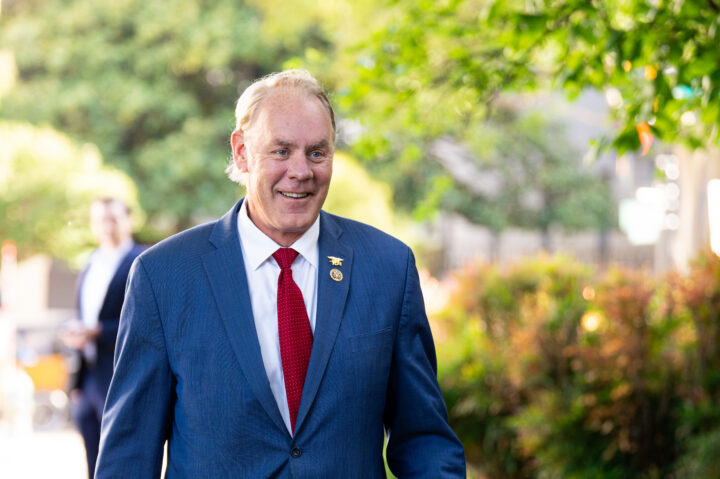
Rep. Ryan Zinke (R-MT) arrives for the House Republican Conference caucus meeting at the Capitol Hill Club in Washington on Wednesday, May 13, 2026.
In the contentious Democratic primary in Montana’s 1st Congressional District, Israel and antisemitism have become flashpoints in ways that members of the local Jewish community say they find concerning and potentially dangerous.
Rep. Ryan Zinke (R-MT), who currently represents the seat, is retiring at the end of his current term, and Democrats view it as a potential pickup opportunity in a favorable midterm climate. Former Sen. Jon Tester (D-MT) narrowly won the district in 2024, despite losing statewide. However, the Cook Political Report rates the district as “Likely Republican,” and the Democratic Congressional Campaign Committee hasn’t put the district on its target list at this point.
Though the district leans Republican, that hasn’t stopped a majority of Democrats in the field from racing to the left on Israel policy, a dynamic that was on clear display at a recent debate.
Ryan Busse, a businessman and author who is the top fundraiser among the Democratic candidates, declared that the U.S. has been “forced into a war by another country,” alleging that Israel dragged the U.S. in its military campaign against Iran.
“This war that we’re fighting, that you’re funding, that your tax dollars are funding, is largely a war propagated by Israel,” Busse said. “I’m not taking any AIPAC dollars, wouldn’t dream of it. I think we should be really wide-eyed about the degree to which Israel has too much influence over our foreign policy. “
He also declared that Israel is not a “functioning democracy” and said that Israel is committing war crimes with American tax dollars and that he would fight to stop that aid in Congress.
Russell Cleveland, a Navy veteran and entrepreneur, said that Israel “has a right to exist without fear, but that doesn’t mean that those rights can infringe on other countries’ rights or other people’s rights to exist without fear as well” and said that Israel committed genocide in Gaza.
He asserted that Israel is being held to a different standard than other countries and is effectively controlling U.S. policy.
“We have hitched our wagon so hard to Israel in turning a blind eye to their actions on a national stage that we’re willing to disregard what we would hold to account any other country for the same exact violence and war crimes and violations of international law,” Cleveland said. “We cannot allow another country to have that type of control on not only what we’re doing in terms of sending armaments and money, but also that’s an ally to the United States, so everything that they do, we too are responsible for.”
Sam Forstag, a wildland firefighter and union leader with the backing of prominent national progressives and D.C.-based groups, said that he agreed with Busse and Cleveland, also disavowing AIPAC support while blaming U.S. support for Israel for a lack of services and government assistance at home.
“We need to have strict enforced humanitarian requirements on any aid that we are providing countries overseas,” Forstag said. “That needs to apply to Israel, that needs to apply to any country, because if we cannot afford to feed our hunger, if we cannot afford to make sure that the elderly in this country are not living on the streets, we sure as hell cannot afford to rain cruelty in chaos overseas, Israel or Iran.”
Matt Rains, an Army veteran, rancher and photographer, was the only one of the four Democratic candidates to stake out an opposing view and offer a defense of the U.S.-Israel relationship.
He emphasized that he has spent time in the region, and that he understands “we need to value our alliance with Israel, and I am in support of that because I am against hatred, I’m against racism, I’m against antisemitism, I’m against terrorism.”
Rains said that actually working toward a two-state solution requires people who have firsthand experience and understand the situation on the ground, arguing that many draw incorrect conclusions from news reports.
Busse has been the top fundraiser in the field, pulling in $529,000, followed by Forstag with $448,000, Cleveland with $325,000 and Rains with $125,000. Cleveland, however, trails the rest of the field in cash-on-hand.
Antisemitic activity online has also cast a cloud over two of the candidates in the race.
Cleveland liked an antisemitic Instagram comment that read, “I wouldn’t vote for anybody who takes money from those stinking Jews,” on a post endorsing him.
Cleveland denied any knowledge of the post and disavowed it. He told the Bozeman Daily Chronicle that his campaign “incidentally liked [this] comment” and that “My team and I do not condone these types of antisemitic comments, nor support them. … This is antisemitic. I don’t approve of that comment. I wouldn’t have liked it intentionally.”
Busse’s son Lander has also landed in hot water over a series of controversial social media posts which included a spat with a local rabbi.
The younger Busse responded to a statement from Israeli Prime Minister Benjamin Netanyahu declaring that “Free Palestine is today’s version of Heil Hitler” with a gif of a “Breaking Bad” character saying, “Well, Heil Hitler b****.”
He also demanded that a local Chabad rabbi, Chaim Bruk, acknowledge that Israel is an apartheid state and conducting a genocide. When Bruk declined to do so, the younger Busse responded “aight then f*** you.”
He also said in another post “F*** ISRAEL.”
The elder Busse told the New York Post, “I don’t condone any language or actions that minimize the very real tragedy of the Holocaust, and I don’t condone any antisemitic behavior or language.”
He said he opposes antisemitism and that his son is “definitely not antisemitic in any way shape or form,” but denied having seen his son’s social media posts, which were subsequently deleted.
Bruk, the longest-serving rabbi in Montana, told Jewish Insider that he felt it was necessary to engage with Lander Busse as the son of a person running for office, when the younger Busse was spreading comments that could prompt hate against the Jewish community.
Bruk said that he also wanted to give the elder Busse “an opportunity to reach out and see if he has a very different opinion than his son — which he has not done as of today.”
Bruk argued that he’s seen little evidence that Busse’s own opinions differ from those of his son, noting that, while they haven’t engaged in the same sort of vulgarity, Busse, Cleveland and Forstag had all made concerning comments about Israel and Jews.
“I have always strongly opposed antisemitism and will continue to do so unequivocally. I am deeply troubled by the rise in antisemitic activity and rhetoric across our country, and I stand firmly with Jewish communities,” Busse said in a statement to JI. “At the same time, I am troubled by the current Israeli government’s policies and leadership. In my view, criticism of a government’s actions and policies should not be conflated with prejudice against an entire people or faith. We should be able to reject antisemitism in all forms while also engaging in honest and thoughtful discussion about the actions of governments, including Israel’s.”
But Bruk said he takes Cleveland at his word that he did not personally or intentionally like the antisemitic Instagram post.
Cora Neumann, a Jewish state senator who was a previous Democratic nominee for the 1st District seat, said she feels that many of the candidates for the seat are “getting pulled into national issues that don’t impact us, just to posture and play political games,” particularly when it comes to Israel.
She said she has found the attacks on AIPAC, which come despite the fact it hasn’t been involved in the race, “very problematic,” and has been concerned by candidates blaming Israel for the war in Iran. She said she has reached out to several of the candidates to share her perspective.
But she said she hasn’t seen many of the candidates in the race “take pause and think twice about the way you speak” about Israel, even after being warned that their rhetoric might fuel antisemitism, “which shows a disregard for a vulnerable population in the U.S. and around the world.”
“I think this is a poison that has taken hold in our party and it has made my family less safe, and there has been little to no action taken to combat it, locally or nationally,” Neumann told JI. “Democrats need to reflect on our values and who we are and if we really feel that this is acceptable. … Democrats need to seriously reflect on why they’ve let it get so out of hand.”
Asked about concerns from members of the local Jewish community about the way Israel and AIPAC have been invoked in the race, Cleveland said in a statement to JI that, “Being critical of the actions of Israel with regard to its military aggression and violation of international law is not antisemitic.”
“We cannot simply label criticism of any one country as prejudice just because many of us oppose more war, death and destruction. The best possible outcome in the region is one where all people, no matter whether they are from Israel, Palestine, or Lebanon, are treated equally and without prejudice,” Cleveland said. “I want peace for the people of Israel, just as I do for those in any other country or territory. I believe this can be achieved through application of freedom of religion, coexistence, and seeking strength through diversity. This, however, can only be achieved through strict adherence to international law and practice of equal rights of all people.”
In an interview with JI, Rains, an Army captain who served in Iraq and traveled throughout the world in that role and a subsequent one as a photojournalist, said that he has a “vital perspective” of understanding the dynamics in the region firsthand, rather than being “told by other people how to think and believe” on the internet.
His travels took him throughout Israel and the West Bank, and he said that he found many of the media narratives that people in the United States hear about Israel and the conflict to be exaggerated.
He said he feels that the other candidates in the race are “jumping on [the anti-Israel] bandwagon” without a proper understanding of the situation. “You just want to scream because it’s truly a lack of understanding and knowing what is reality and what you’re just being fed through the internet and buying into.”
He said that growing animosity toward Israel and calls to cut off aid are jeopardizing a critical alliance, which will ultimately make the United States less safe and lead to more regional instability and more wars.
He said that he’s also been stunned by what he has seen as an embrace of antisemitism in the United States, pointing significant blame toward the Trump administration for spreading and normalizing “comments that are there to rile up people.” He said that he would be vocal as a member of Congress in emphasizing that antisemitism is not acceptable.
He called the spread of antisemitic rhetoric in the primary race “one of the most shocking things of this campaign.” He said he didn’t anticipate that the issue would be one that he would campaign on, but said he felt a responsibility to not “let hatred creep in” in his own party.
Rains’ photojournalism work also brought him to Myanmar, where he said he was the first photojournalist on the ground documenting the Rohingya genocide in the early 2010s. Having seen such atrocities firsthand — and encountering fierce police resistance to documenting them — he called the accusations of genocide against Israel “absolutely frustrating,” and criticized those in his party who have spread that narrative.
Having worked on strategic planning matters in Iraq, Rains said that he’s been frustrated by what he saw as a failure of proper planning in the U.S. operations in Iran. “The threat of the regime [was] horrific,” Rains said, but he doesn’t have faith in the Trump administration to ensure that Iran is more stable and has better governance at the end of war.
“My biggest frustration is there’s a risk — kind of what happened in Afghanistan when we left there — for a worse government to backfill and make it more hostile than it was,” Rains said.
Bruk and Neumann both spoke positively of Rains’ stance on issues of concern to and of his engagement with the Jewish community.
Bruk said Rains is the only one of the four Democratic candidates who has visited the local synagogue and Chabad center and “made it clear that he stands with the Jewish people and he stands with the people of Israel and their right to their own nation.” He said Rains and his campaign had reached out to visit the synagogue of his own initiative.
Bruk said it’s important to him that the growing Montana Jewish community has a representative who cares about them and who “isn’t ready to throw them locally under the bus because of some international issue with which they agree or disagree” — regardless of potential policy differences on Israel.
Neumann said that she’s also been impressed by the “moral clarity” Rains has shown on the issue and others.
“I think to be able to stand up against the intense headwinds and national pressure to speak on Israel, even if it’s not relevant to your constituents, to be able to stand up against that pressure shows incredible moral character, and that’s what I look for in candidates,” Neumann said.
Bruk said he’d also had a conversation with Forstag and was optimistic that his rhetoric would change going forward. “I think he genuinely didn’t realize that it’s not just about some lobbying PAC that gives, you know, very little money to Montana at all, but it ends up creating an environment in which Jews become fair game,” Bruk said.
He said that he felt from their conversation that Forstag didn’t realize that AIPAC had had little to no involvement in politics in the state. Bruk said he emphasized to Forstag that invoking AIPAC on the campaign trail can increase the dangers to the Jewish community.
“I don’t think he realized the practical ramifications,” Bruk said, and said he was comforted to see Forstag’s rhetoric seemingly shift since then.
Neumann said she also found Forstag to be “receptive and sensitive to feedback on how problematic this disproportionate focus on Israel is.”
Plus, bipartisan push for Jewish American Security Act

Jeffrey Dean/Bloomberg via Getty Images
Representative Thomas Massie, a Republican from Kentucky, speaks during a campaign event ahead of a primary election at Veterans Memorial Park in Vanceburg, Kentucky, US, on Monday, May 18, 2026.
Good Wednesday morning.
In today’s Daily Kickoff, we break down the results of yesterday’s critical primaries, including Rep. Thomas Massie’s loss in Kentucky and Chris Rabb’s win in PA-03, and report on the introduction by Sens. Jacky Rosen and James Lankford of the Jewish American Security Act. We look at how Democratic officials speaking at the Center for American Progress’ convening on Tuesday sidestepped discussions about Israel even as it held multiple sessions on the Middle East, and cover a new report from Israel’s Institute for National Security Studies warning about the effects of the erosion of American Jewish support for Israel on the relationship between Washington and Jerusalem. Also in today’s Daily Kickoff: Mahmoud Ahmadinejad, Nick Valensi and Israeli Foreign Minister Gideon Sa’ar.
Today’s Daily Kickoff was curated by JI Executive Editor Melissa Weiss and Israel Editor Tamara Zieve, with assists from Danielle Cohen-Kanik and Marc Rod. Have a tip? Email us here.
What We’re Watching
- The House of Representatives is expected to vote today on the Iran war powers resolution sponsored by Rep. Greg Meeks (D-NY), the ranking Democrat on the House Foreign Affairs Committee. The vote comes a day after Sen. Bill Cassidy (R-LA), who last week fell short in his reelection bid after President Donald Trump endorsed an opponent, flipped his vote to advance a similar Democratic-led measure in the Senate. More below.
- The House Education Committee’s subcommittee on Health, Employment, Labor, and Pensions is holding a hearing this morning on antisemitism in the healthcare field, with the Louis D. Brandeis Center for Human Rights Under Law’s Deena Margolies, Dr. Jacob Agronin, Bend the Arc CEO Jamie Beran and American Jewish Medical Association CEO Eveline Shekhman set to testify. Read more here.
- Former Rep. Tom Malinowski (D-NJ) is among those slated to speak at a hearing being convened this morning by the House Foreign Affairs Committee on the State Department’s budget request for its adjacent entities.
- The House Judiciary Committee is holding a hearing on the Southern Poverty Law Center in a session titled “The Southern Poverty Law Center: Manufacturing Hate.”
- Elsewhere in Washington this morning, the Jewish Federations of North America, Conference of Presidents of Major American Jewish Organizations, Combat Antisemitism Movement and the Weitzman National Museum of American Jewish History are hosting a congressional breakfast to celebrate Jewish American Heritage Month. Sam Salz, who in 2022 became one of the only Orthodox Jews to play Division I college football when he walked on to Texas A&M’s team, will give the breakfast’s keynote address.
- Down Pennsylvania Ave., the Hudson Institute is holding an event with Sarah Rogers, the under secretary of state for public diplomacy, on modernizing public diplomacy to address global challenges. Sen. Eric Schmitt (R-MO) is slated to give introductory remarks at the event.
- The Federalist Society is hosting its inaugural Legislative Branch Summit today in Washington.
- In Israel, the Knesset unanimously advanced a bill to dissolve the body, which if passed would automatically trigger elections, which are slated to take place no later than October 27. The bill will still need to go through several more readings and votes before it is passed.
What You Should Know
A QUICK WORD WITH JI’S JOSH KRAUSHAAR
Pro-Israel and Republican Jewish groups helped oust one of their leading GOP antagonists on Tuesday night, aligning with President Donald Trump to defeat Rep.Thomas Massie (R-KY) in the most expensive House primary in recent memory.
Ed Gallrein, a military veteran and farmer recruited by the Trump White House to challenge Massie, decisively defeated the congressman by 10 points, 55-45%. Massie, a libertarian lawmaker who long cast lonely Republican votes against Israel funding and resolutions condemning antisemitism, increasingly trafficked in bigoted rhetoric in the closing weeks of the campaign.
In his concession speech, Massie continued his antisemitic vitriol against his opponent, telling the crowd: “I had to call my opponent and concede, and it took a while to find Ed Gallrein in Tel Aviv.” Even though Trump’s outspoken opposition was the leading factor behind his demise, he routinely blamed Jewish and pro-Israel donors like Miriam Adelson for costing him his seat and insinuated that Israel was buying seats in Congress.
Massie first drew the ire of Trump for voting against his “big beautiful” reconciliation bill last year, and the anger was exacerbated by his work with Democrats to force the Department of Justice to release all of the files involving Jeffrey Epstein.
Outside groups, including a Trump-aligned super PAC (MAGA KY) and those affiliated with the Republican Jewish Coalition, AIPAC and Christians United for Israel, spent aggressively with ads and billboards attacking Massie over his record, with several pointing out his opposition to Israel and Trump’s foreign policy.
Massie’s defeat also underscores Trump’s strong and continued support within the party, with his endorsements in primaries almost always translating into his candidate’s victory. His opposition to Sen. Bill Cassidy (R-LA) led to his defeat last week, and he successfully ousted most of the Indiana GOP state senators who opposed his redistricting efforts.
POLICY PRIORITIES
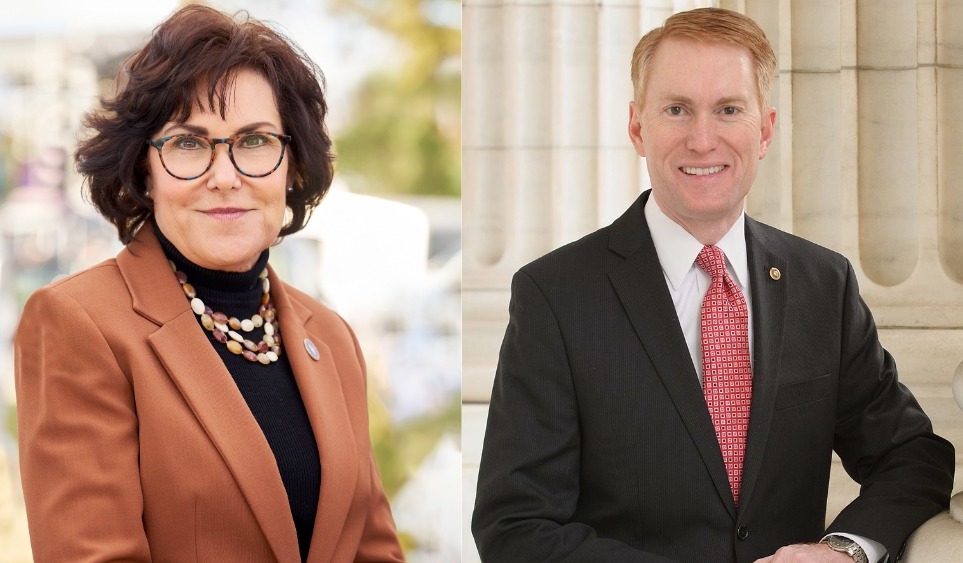
Sens. Jacky Rosen (D-NV) and James Lankford (R-OK) on Tuesday introduced the Jewish American Security Act, a broad new effort by the lawmakers, who co-chair the Senate antisemitism task force, to address antisemitism across multiple sectors of American society, Jewish Insider’s Marc Rod reports. Similar legislation is also expected to be introduced in the House.
About the bill: The bill contains various provisions aimed at increasing security for Jewish communities through additional funding and federal resources. Key provisions include: additional security assistance and improvements to security grant programs for Jewish communities; addressing antisemitism on college campuses through new federal oversight measures including a federal official to handle campus antisemitism; and addressing the spread of antisemitism online by requiring new transparency reports from social media companies, among a range of related steps in each category.
EIGHTH TIME’S THE CHARM
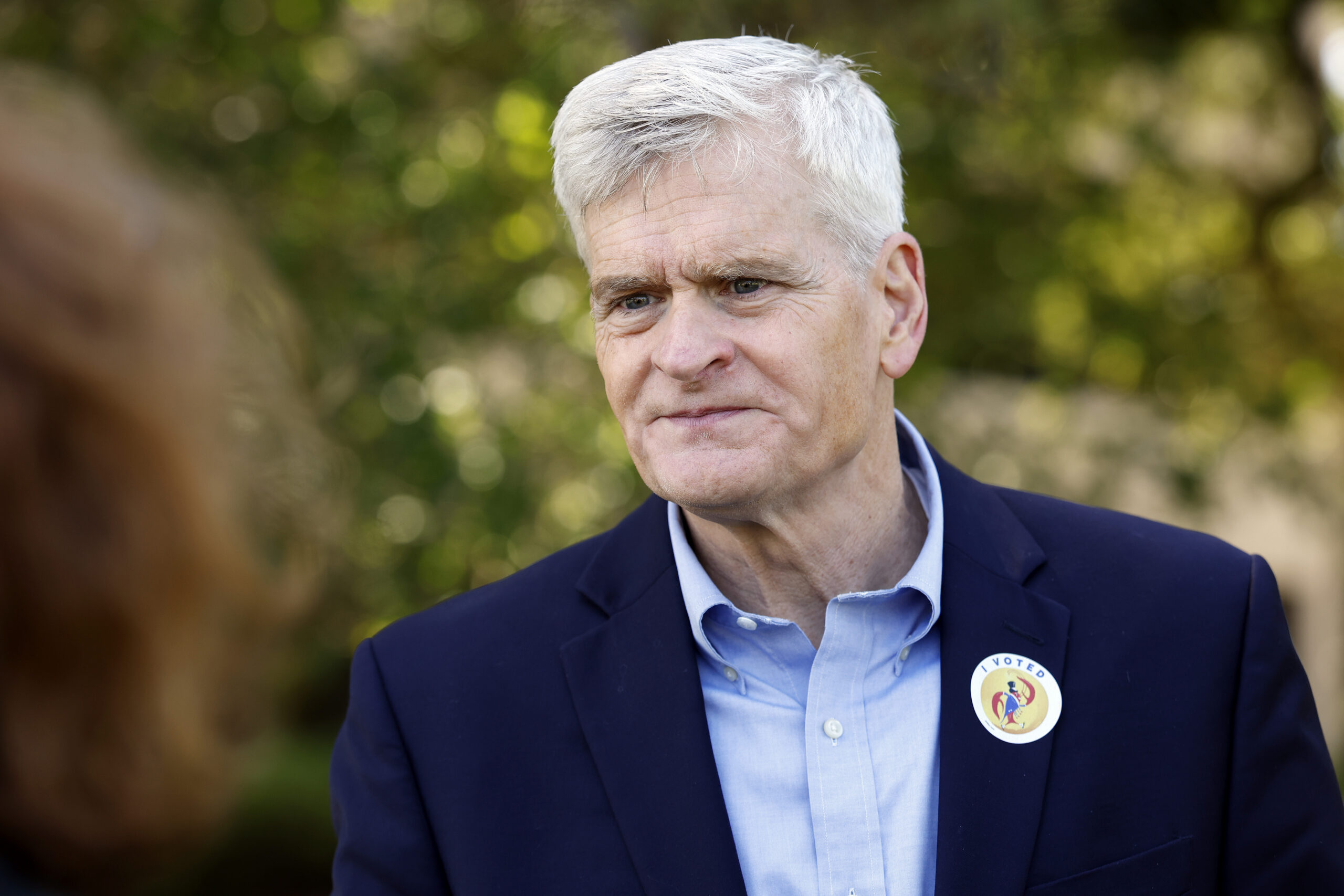
Sen. Bill Cassidy (R-LA) joined with Democrats to vote for a procedural motion advancing legislation that would end U.S. military operations against Iran, allowing the war powers resolution to move forward on Democrats’ eighth such attempt since the war began, Jewish Insider’s Marc Rod reports.
State of play: Cassidy, who last week fell short in his reelection primary effort against a Trump-backed challenger, joined three other Republicans — Sens. Susan Collins (R-ME), Lisa Murkowski (R-AK) and Rand Paul (R-KY) — in voting for the procedural motion, which was approved by a 50-47 vote. Sen. John Fetterman (D-PA) voted against the motion. The passage of the motion will now tee up further debate on and an additional vote on the resolution itself, at a time to be determined.
Money messages: Treasury Secretary Scott Bessent called on U.S. allies on Tuesday to “step up” and join Washington in taking aggressive economic action against Iran and its broader terrorism financing networks, JI’s Matthew Shea reports.
LEAVING FINGERPRINTS
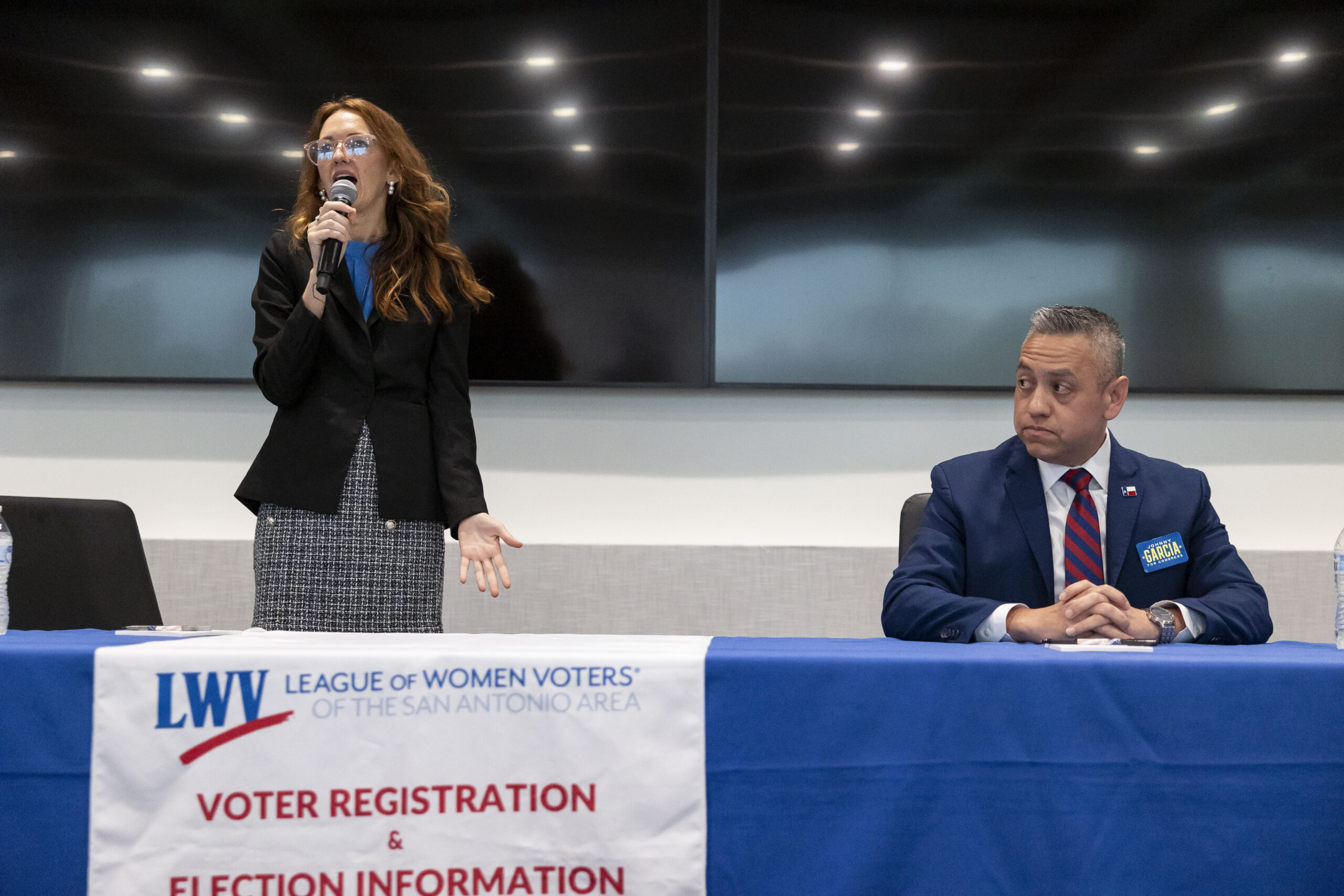
A newly launched super PAC with ties to Republicans has spent nearly half a million dollars to help boost a Democrat running for a competitive open House seat in Texas who is facing growing bipartisan furor over a series of virulently antisemitic social media remarks, Jewish Insider’s Matthew Kassel reports.
Boosting Galindo: Lead Left PAC, the GOP-linked group, has been aggressively promoting Maureen Galindo, a fringe San Antonio activist who finished first in the primary and has said that Jews “own Hollywood” and “worship the synagogue of Satan.” Last week, she said that, if elected, she would turn a local immigration detention center “into a prison for American Zionists and former ICE officers for human trafficking,” while adding, “It will also be a castration processing center for pedophiles which will probably be most of the Zionists.”
Bonus: Rep. Alexandria Ocasio-Cortez (D-NY) slammed Galindo’s comments, saying that “bigoted garbage and antisemitism should be nowhere near our politics” and suggesting that the “donors behind the Republican super PAC funding her should be exposed.”
MENDING FENCES

A new study from the Tel Aviv University-affiliated Institute of National Security Studies warns that American Jews’ ties with Israel have weakened in recent years, and Israeli leaders do not seem to care enough about how these shifting attitudes might affect Israel’s national security. If Israel ignores the growing distance with the American Jewish community, the country could face long-term consequences, authors Ted Sasson and Avishay Ben Sasson-Gordis argue, Jewish Insider’s Gabby Deutch reports.
Words of warning: “An American Jewish community that is less supportive of Israel would leave Israel more isolated globally, less capable of extending soft power, and less confident in its role as the nation-state of the Jewish people,” Sasson, a Middlebury College professor and INSS scholar, and Ben Sasson-Gordis, director of the Israel-United States Research Field at INSS, write.
DEM DISCUSSIONS
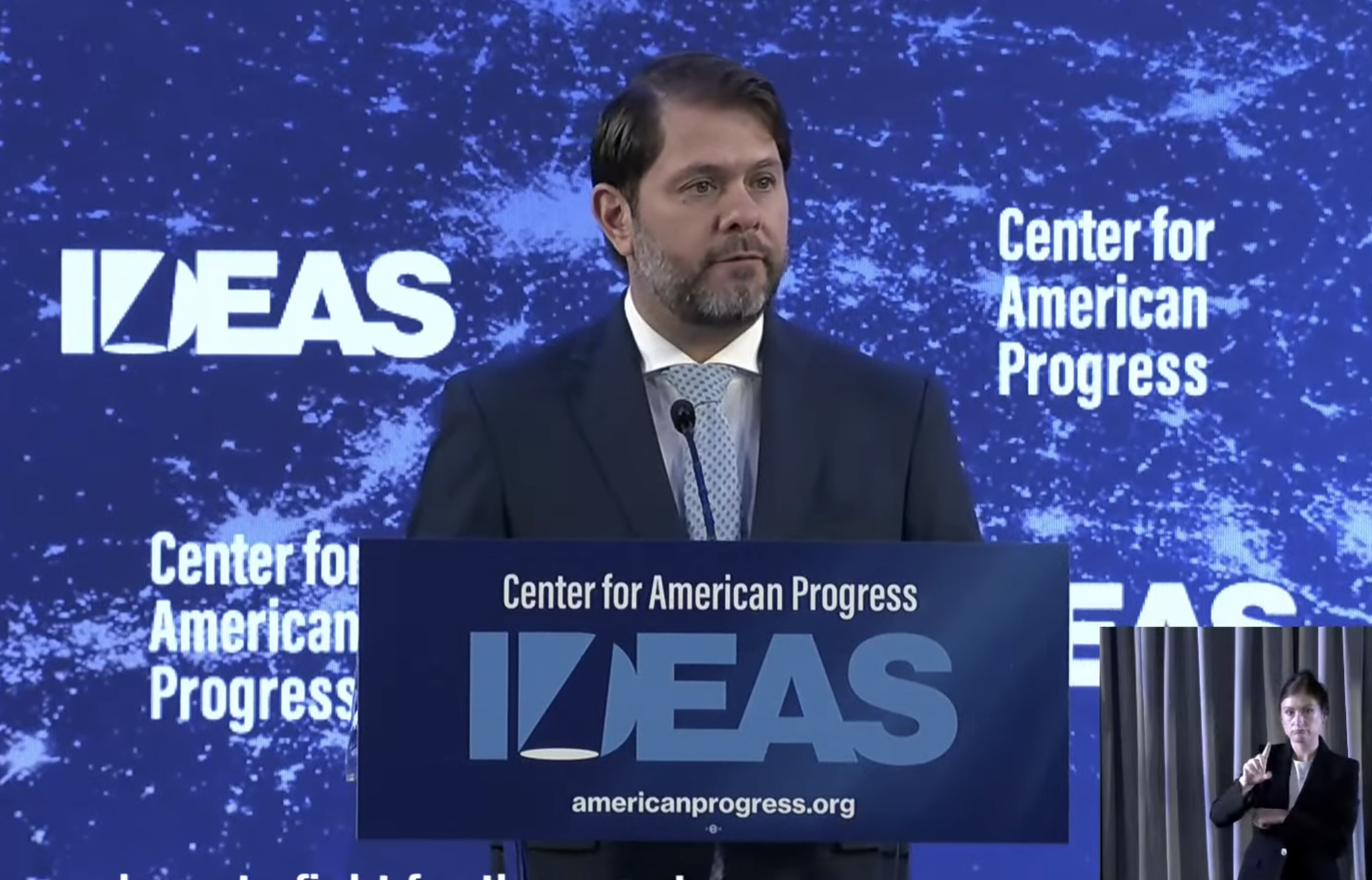
On Tuesday, more than a dozen Democrats pitched their vision for America to a roomfull of liberal donors, staffers and funders at the Center for American Progress’ IDEAS Conference, a convening that pledged to bring together “the broad center-left’s leading thinkers and doers” to offer ideas on a range of policy topics. American foreign policy was one of those topics. In the two sessions on national security, each of which devoted significant discussion to the Middle East, one topic was notably absent: Israel, Jewish Insider’s Gabby Deutch reports.
Iran war opposition: Sen. Ruben Gallego (D-AZ) kicked off the gathering with an address billed as “National Security Ideas for the Future.” He cited his own experiences as a member of the Marine Corps who served in Iraq, arguing that the war in Iran is misguided and harming Americans. ”I’m here today because right now our country is in danger. Will this president continue to drag America into another endless Middle East war?” Gallego said. “This is a war that wasn’t planned, wasn’t authorized and is not making us safer. [Donald] Trump got his war, and working families got stuck with the bill every day.”
FLOURISHING FRIENDSHIPS

While some geopolitical relationships have been tested by the Iran war, others have been strengthened: Emerging alignments between Israel, the United Arab Emirates and India are creating new opportunities for cooperation among three countries increasingly bound by shared defense and economic interests, experts told Jewish Insider’s Matthew Shea reports.
Overlapping interests: On Friday, India and the UAE agreed on the framework for a strategic defense partnership, a step that could deepen ties between New Delhi and Abu Dhabi amid the regional fallout from the war. Hussain Abdul-Hussain, a research fellow at the Foundation for Defense of Democracies, told JI that the partnership also extends to Israel, which has remained a key ally of both countries. He said the emerging alignment is rooted in overlapping economic and strategic interests and shared adversaries.
Worthy Reads
Narrative War: Days after The New York Times’ Nicholas Kristof published a piece alleging numerous abuses of Palestinian prisoners by Israeli security officials, Kristof’s colleague on the Opinion desk, Bret Stephens, observes the documented history of news outlets publishing falsehoods about Israel without basic fact-checking. “The common thread in these and many other stories is that they all involve strenuous, if ultimately embarrassed, efforts to prove that Israelis deliberately seek to kill the innocent and maim the vulnerable, apparently for no other reason than gratuitous cruelty. This isn’t a matter of reporters’ impartially trying to expose wrongdoing wherever they find it — if that were the case, the errors wouldn’t invariably lean in the same ideological direction. It isn’t speaking truth to power. It’s feeding narratives to the credulous.” [NYTimes]
Drawing Down Aid: In The Wall Street Journal, the American Enterprise Institute’s Daniel Samet argues in favor of winding down U.S. aid to Israel, calling it a “political liability” that could affect the future of the relationship between the countries. “Military aid to Israel, which Washington began supplying in significant amounts during the 1960s, has been a sound investment. The U.S. has financed a reliable ally that fights and wins wars against America’s enemies. Yet Israel no longer commands the affection of the American people as widely as it once did. Ending military assistance is a political imperative in changing times.” [WSJ]
Word on the Street
U.S. forces in the Indian Ocean seized an Iran-linked oil tanker that had been under U.S. sanctions since March; the vessel was believed to be carrying upwards of a million barrels of crude oil that was loaded earlier this year from Iran’s Kharg Island…
The New York Times reports on an Israeli-developed plan, backed by the U.S., for former Iranian President Mahmoud Ahmadinejad, who was under house arrest in Tehran, to be installed as the leader of Iran; the plan reportedly fell apart after the hard-liner was injured on the first day of the war in a strike intended to free him from house arrest and, per the Times, “became disillusioned with the regime change plan”…
Ahmadinejad biographer and Israeli analyst Meir Javedanfar dismissed the report, calling it “a disinformation campaign initiated by those that tried to assassinate him”; Javedanfar said that the “disinformation is being used to create chaos within the ranks of the Islamic Republic of Iran” following what he described as “an assassination attempt gone wrong”…
Iranian state media reported that Tehran had offered a new proposal to the U.S. that would include the withdrawal of U.S. troops from areas near Iran, an end to hostilities targeting both Iran and Hezbollah in Lebanon and reparations for damages the regime sustained in the recent war…
The United Arab Emirates said that three drones that targeted the country’s nuclear power plant over the weekend originated from Iraq, deepening speculation that Iran, which backs militias in the country, was behind the attack…
The Wall Street Journal spotlights the challenges facing Kuwait following the closure of the Strait of Hormuz that has halted the Gulf state’s ability to ship crude oil…
President Donald Trump endorsed Texas Attorney General Ken Paxton’s primary challenge against Sen. John Cornyn (R-TX) on Tuesday, dealing a significant blow to Cornyn’s bid for a fifth term, Jewish Insider’s Emily Jacobs reports…
Former CIA officer Amaryllis Fox Kennedy, an ally of Director of National Intelligence Tulsi Gabbard, is departing her senior roles at the Office of the Director of National Intelligence and the Office of Management and Budget to return to the private sector…
The Senate passed a resolution honoring Jewish American Heritage Month by unanimous consent…
Rep. Ro Khanna (D-CA), responding to Rep. Thomas Massie’s (R-KY) primary defeat, said that Massie “lost because he had the guts to stand up to the Epstein class and against the war”; the California Democrat, who is mulling a 2028 presidential bid, said he welcomed “voters who feel rejected by Trump,” pledging to “build a movement to stand for Team America”…
The South Carolina Statehouse approved a new congressional map that would eliminate the district represented by Rep. Jim Clyburn (D-SC), the state’s only Democratic district; the new map will next head to the state Senate for a vote…
New York City Mayor Zohran Mamdani has in recent days held a series of meetings and listening sessions with Wall Street executives, including JPMorgan Chase CEO Jamie Dimon and Goldman Sachs CEO David Solomon, after Mamdani angered business leaders by filming a video outside the home of Citadel’s Ken Griffin in which the mayor announced a plan to tax second homes in the city…
Police in New York are investigating the death of a Jewish bakery owner and former Hatzolah volunteer whose body was found in the Queens neighborhood of Flushing after he was shot in the neck and back…
The Strokes announced that guitarist Nick Valensi, who is Jewish, won’t be participating in the band’s upcoming summer tour, weeks after Strokes frontman Julian Casablancas said on the “SubwayTakes” web series that “American Zionists get the benefits of white privileged people, but talk like they are Black people during slavery”…
Mohamed Hagi, Somaliland‘s newly arrived ambassador to Israel, announced that Hargeisa planned to open its embassy in the country in Jerusalem…
Israeli Finance Minister Bezalel Smotrich claimed that the International Criminal Court was seeking a warrant for his arrest; the ICC would not comment on the claim, saying that requests for warrants are confidential…
In what he said was a response to the ICC’s request for a warrant, Smotrich threatened to evict residents of the West Bank Bedouin village of Khan al-Ahmar…
Comedy writer Barry Blaustein, a longtime collaborator of comedian Eddie Murphy who worked on the screenplays of “Coming to America” and “The Nutty Professor,” died at 71…
Pic of the Day

Israeli Foreign Minister Gideon Sa’ar, who is in Prague this week for meetings with senior officials, announced the launch of the Israel-Czech Republic Business Forum alongside his Czech counterpart, Petr Macinka.
Birthdays
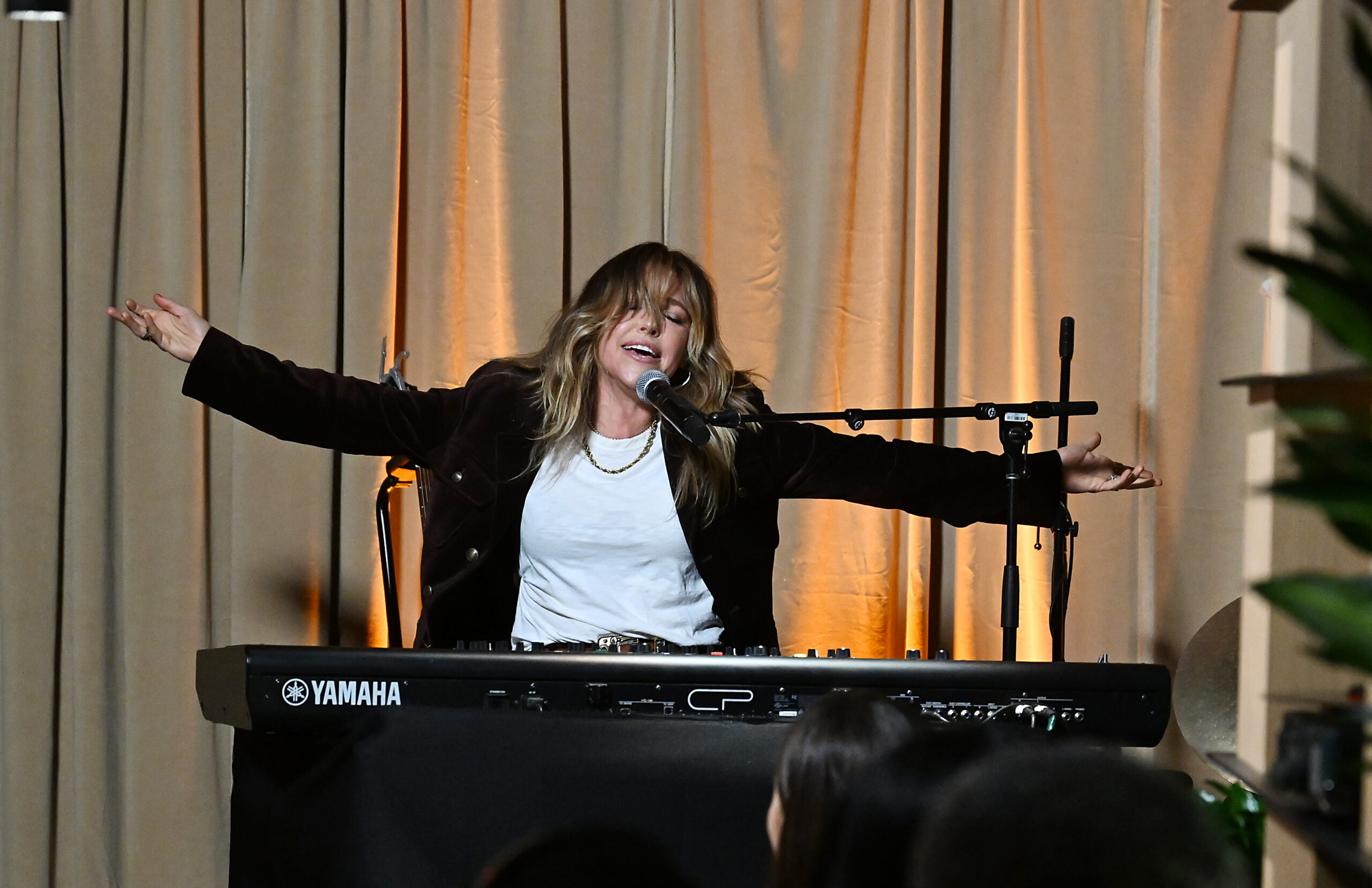
Emmy Award-winning singer and songwriter, Rachel Platten turns 45…
CEO at Kings’ Care – A Safe Place, operator of multiple drug and alcohol rehabilitation and treatment centers, Ilene Leiter… Canadian businesswoman and elected official, she served in the Ontario Assembly and in the Canadian House of Commons, Elinor Caplan turns 82… Former member of the New York State Assembly until 2020, representing the 97th Assembly District in Rockland County, Ellen Jaffee turns 82… Former member of the U.S. House of Representatives (D-CT) for 20 years, he was born in a DP camp in Germany after WWII, Sam Gejdenson turns 78… Chagrin Falls, Ohio, attorney, Robert Charles Rosenfeld… CEO emeritus of the Jewish Community Relations Council of New York, Michael S. Miller… Seamstress and weaver, Bernice Ann Penn Venable… Retired in 2022 as a federal judge for the Southern District of Texas, she is now a mediator and arbitrator, Judge Nancy Ellen Friedman Atlas turns 77… Five-time Emmy Award-winning producer and writer who has worked on “Saturday Night Live,” PBS’ “Great Performances” and “It’s Garry Shandling’s Show,” Alan Zweibel turns 76… U.S. Sen. Mike Crapo (R-ID) turns 75… Former director of international affairs, policy and planning at the Conference of Presidents of Major American Jewish Organizations, following 12 years at the ADL, Michael Alan Salberg… Professor at Tulane, he was president of the Aspen Institute, CEO of CNN and managing editor of Time, Walter Isaacson turns 74… Born in upstate New York as Michael Scott Bornstein, former Israeli ambassador to the U.S. and then member of the Knesset, Michael Oren turns 71… Actor and singer, known for her work in musical theater, Judy Kuhn turns 68… CEO and founder of Abrams Media, chief legal analyst for ABC News and the founder of Mediaite, Dan Abrams turns 60… NYC location scout and unit production manager for feature films, TV and commercials, David Brotsky… Co-founder and CEO of Breitbart News, Larry Solov turns 58… Senior advisor at Majority Democrats, Ami Copeland… French singer and actor, at 13 she became the youngest singer to ever reach No. 1 in the French charts, Elsa Lunghini turns 53… Co-president of Major League Baseball’s Tampa Bay Rays, Matthew Silverman turns 50… Principal of public policy at Amazon, Philip Justin “PJ” Hoffman… Program officer of Jewish life at the Michigan-based William Davidson Foundation, Vadim Avshalumov… Founder and CEO of Berkeley, California-based Caribou Biosciences, a genome engineering company, Rachel Haurwitz, Ph.D…. Senior director of government relations and strategy for the ADL, Lauren D. Wolman… Executive communications leader, Susan Sloan… VP of digital advocacy at McGuireWoods Consulting, Josh Canter… Beauty pageant winner who was awarded the title of Miss Israel 2014, Doron Matalon turns 33… Master of public policy candidate at Oxford University, Aylon Berger turns 26… Conservative political activist, he is a survivor of the Marjory Stoneman Douglas High School shooting, Kyle Kashuv turns 25…
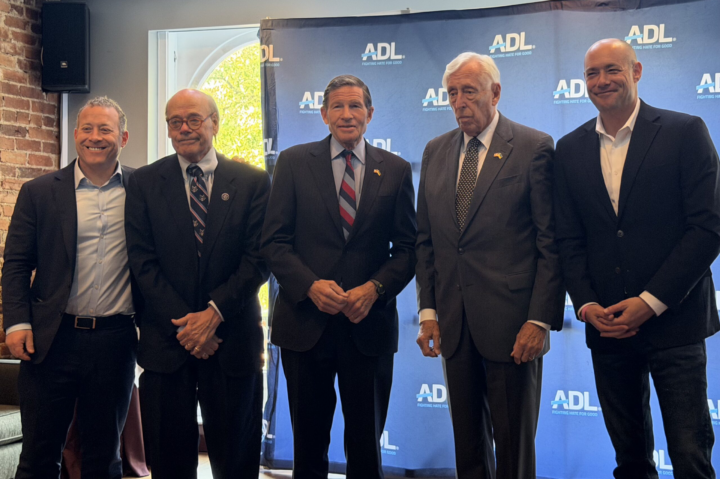
Former House Majority Leader Steny Hoyer said antisemitism has worsened to the point that Jews aren’t guaranteed safety in the U.S.
Marc Rod
Lawmakers attend Anti-Defamation League reception honoring Jewish American Heritage Month on Capitol Hill on Tuesday, May 12, 2026
A series of largely Democratic lawmakers painted an unusually dire portrait of the state of rising antisemitism and threats to the Jewish community in remarks at an Anti-Defamation League reception honoring Jewish American Heritage Month on Capitol Hill on Tuesday evening.
Several emphasized the need for those in the audience, many of them young Jewish congressional staffers and Washington professionals, to continue speaking out and fighting for the Jewish community in a time of crisis.
Rep. Steny Hoyer (D-MD), the retiring former No. 2 House Democrat, said that antisemitism has escalated to the point that Jews are no longer guaranteed safety in the United States.
“There were two places in the world where Jews felt really safe. One, of course, was Israel, and the second was the United States of America,” Hoyer said. “That’s not true today, and that is a sad statement of what’s going on in the country today. So you all need to be involved. You all need to when you see something that’s not right, not fair, not just stand up, speak up and make a difference.”
Rep. Laura Friedman (D-CA) emphasized that efforts to fight antisemitism have often been met with additional hostility.
“It is a very scary time for the Jewish community,” Friedman said. “And to make matters worse, when we express that we’re scared and that there’s this rising level of hatred directed towards the Jewish community, we’re often met with people telling us that we’re not allowed to feel that way. And how dare we even say that there’s anything wrong with treatment towards Jews in this country?”
She offered as an example of “how bad it’s gotten” that her synagogue was graffitied this year with a swastika, and that she ended up in an argument online with local activists “who were trying to tell me why it was appropriate for people to put swastikas on the sides of buildings in the Jewish part of Los Angeles, where there are Holocaust survivors still living, why they thought that was OK and not antisemitic.”
Friedman used as another example a recent ad created by a super PAC backing Rep. Thomas Massie (R-KY) in his reelection race attacking a Jewish conservative donor, Paul Singer, who is supporting Massie’s opponent, which prominently featured a graphic of a Jewish star alongside the Singer’s face.
“A super PAC thought it was totally fine to do a hit on a candidate by showing one of their donors and by flashing a Jewish star behind that donor to let everyone know that, ‘Hey, if everything else we’ve said about this candidate isn’t convincing enough, they have a donor who’s Jewish,’” Friedman said.
“I don’t think anyone can sit this one out and you all being here is part of that effort, so thank you … for showing up, thanks for the work you do,” she concluded.
Rep. Haley Stevens (D-MI), who is running for Senate in Michigan and has faced attacks over her support for Israel and ties to the Jewish community, said that she would not “sugarcoat” the situation, explaining that “the faces of hate in this country have morphed into violent extremism,” with an increasing pace of violent attacks targeting the Jewish community, including in her own district.
“Extremist words matter. They absolutely matter,” Stevens said.
She also maintained that she is “unequivocal in declaring that I am very much a proud Zionist” in spite of facing attacks for that stance. “When I show my face in my community, every so often [I] get chased out because of violent extremism, because people feel so emboldened to shout at me that I am a ‘Zionist pig.’ That cannot be acceptable.”
Rep. Steve Cohen (D-TN), whose congressional district was recently carved up by Tennessee Republicans, likely ending his career, warned that prejudice is still a real and very active problem.
He recounted a story of when he ran for governor in 1994: “I went to a little radio station in Dixon, Tenn. — one person radio station, gravel road. [I] came in, talked to the man for a while and he said, ‘Son, you Jewish?’ I said, ‘Yes sir.’ He said, ‘Good luck,’” Cohen recounted. “It ain’t changed a lot since then. Be careful. There’s a lot of mamzers out there. They don’t know us, but they don’t like us,” he said, using the Hebrew word for bastard.
Rep. Greg Landsman (D-OH) said that it is “obviously a very bad time” for the American Jewish community and “in my opinion, it’s going to get a lot worse.” He urged the crowd “to lead through such difficult, chaotic, awful times.”
Rep. Mike Lawler (R-NY) lambasted New York City Mayor Zohran Mamdani as emboldening and encouraging antisemitism.
“We see a mayor in New York City who has, in many respects, OKed his supporters engaging in antisemitic hate, engaging in conduct that threatens Jewish students and Jewish lives,” Lawler added. “We see these protests happening outside places of worship — these are real issues that we have to combat.”
He also emphasized that antisemitic influencers like Hasan Piker, Candace Owens and Tucker Carlson have been using antisemitism as a “grift” and playing on hatred to “make a buck” and create further division.
Rep. Jake Auchincloss (D-MA) said that it is “unacceptably scary to be a Jew in the United States” and that the country is “violating the core promise that George Washington made” to the Jewish community in Rhode Island in 1790 that the country would be one of religious freedom and pluralism.
Auchincloss highlighted his efforts in Congress to combat antisemitism on social media, describing platforms as having become “failed societies online. It’s become so toxic, it’s become so rotten on these platforms that antisemitism is mushrooming as a symptom of something that is deeply rotten underneath.”
Rep. Kim Schrier (D-WA) said that Jews are “all feeling so threatened right now” and emphasized the need for broader understanding of antisemitism.
“They need to understand that anti-Zionism is kind of a new iteration [of antisemitism], if you don’t want another country wiped off the map,” Schrier said. “And I just think we all need to recognize that we all need to call it out, whether it’s in our party or another party.”
Rep. Jamie Raskin (D-MD), the ranking member of the House Judiciary Committee, said that “antisemitism and racism are the gateway to the destruction of liberal democracy” and that “the extremism, the fascism, the racism and the antisemitism” are infecting politics in the U.S. and around the world.
He praised Hungary as an example of a country that had been able to buck such trends, ousting its longtime right-wing government.
Several of the lawmakers who addressed the group also offered remembrances about Abe Foxman, the former longtime ADL leader who died last weekend.
“We’re all thinking about Abe Foxman right now, who looms over this room in a powerful way and taught us so much,” Rep. Josh Gottheimer (D-NJ) said. “I think what he taught us most was to be courageous, to fight, to never back down. That’s my ask of you. It’s tough out there, by the way. The harder they hit us, the more fight I feel.”
Rep. Debbie Wasserman Schultz (D-FL) said that Foxman was “a giant, a hero of mine, hero of so many, and really built this organization practically from the ground up.” She said she’d been stunned by his death, having spoken to him at a Holocaust remembrance event at the Capitol just weeks ago.
Sen. Richard Blumenthal (D-CT) also urged those in attendance to follow Foxman’s model, and emphasized the need for additional funding for the Nonprofit Security Grant Program.
In a statement, Lauren Wolman, ADL’s senior director of government relations and strategy, said the group was “honored to host our annual Jewish American Heritage Month (JAHM) reception celebrating Jewish Members of Congress and congressional staff.”
“At a time when many of these dedicated public servants are navigating rising antisemitism and growing challenges on Capitol Hill, the reception served as an important opportunity to celebrate their work and create a space for Jewish professionals to come together in community, connect with one another, and feel supported,” Wolman continued.
‘Fortnite’ was rated the best at implementing safeguards to combat antisemitism, with ‘Grand Theft Auto Online,’ ‘Call of Duty’ and ‘Minecraft’ following closely behind

Thomas Fuller/NurPhoto via Getty Images
The Fortnite logo is displayed on a smartphone screen in the Apple app store on March 6, 2026.
A first-of-its kind leaderboard evaluating how major video game companies address antisemitism and extremism in online games was released on Wednesday by the Anti-Defamation League, Jewish Insider has learned.
The leaderboard assessed 10 of the most popular games and their respective companies on their policies and in-game safety features. “Fortnite” was rated the best at implementing safeguards to combat antisemitism, with “Grand Theft Auto Online,” “Call of Duty” and “Minecraft” following closely behind. Other major games evaluated included “Roblox,” “Valorant,” “Clash Royale,” “Counter-Strike 2” and “PUBG: Battlegrounds.”
ADL evaluated the product features of each individual game and the relevant policies that govern that game — for some games, the policies that govern them were specific to the game, while for some it was the company policies that apply to all of their games.
The leaderboard, created by the ADL Center for Technology and Society in partnership with the ADL Ratings and Assessment Institute, builds on the annual survey work that CTS did in partnership with gaming analytics firm NewZoo, from 2019-2023.
Games received labels of advanced, moderate or limited protections based on criteria including: antisemitism and hate policy; extremism/terrorism policy; in-game display of code of conduct; documentation of escalation to law enforcement; and in-game tooling.
The latter criteria, which accounts for 60% of a game’s overall score, includes players’ ability to block and/or mute other players; players’ ability to report players for voice, text, usernames and user-generated content; and the game’s prevention of antisemitic and hateful extremist usernames.
Bonus points were awarded for clear appeals processes and engagement with ADL, and points were deducted for harmful content on public-facing game stores. The antisemitism watchdog shared detailed findings with each gaming company and invited them to discuss the assessment before the leaderboard’s release, to which Epic Games, Supercell and Minecraft responded.
Popular online games boast hundreds of thousands of players, with 85% of U.S. teens reporting playing video games in 2024, according to the Pew Research Center. The Pew study found that 80% of all teens think harassment over video games is a problem for people their age, and 41% of those who play them say they’ve been called an offensive name while playing.
The leaderboard comes one year after ADL conducted a study where it asked 15 participants (university students, recent graduates and young adults) to play four leading online games (“Valorant,” “Counterstrike 2,” “Overwatch 2” and “Fortnite”) in one-hour increments with different identities (Jewish and Muslim religious and ethnic identities, as well as in national identities such as Chinese, Mexican and Israeli). It found that almost half of game play experiences included some form of harassment, such as slurs, trash-talking or disrupted play, and one-third included identity-based harassment, such as “gas the Jews” or calling people the “N-word.”
The ADL said it plans to feature the results in an online Gaming Leaderboard, designed to be a resource that will track how gaming companies manage their online multiplayer ecosystems over time to guide parents, gamers, policymakers and the gaming industry itself.
“When a parent wants to know if an online game is safe for their child, there has been no one-stop shop to understand how a particular game approaches online safety,” Daniel Kelley, senior director of the ADL Center for Technology and Society, said in a statement. “This leaderboard addresses that critical gap by offering the most comprehensive evaluation of safety measures in online multiplayer games to date, with a focus on how companies manage antisemitism and extremism.”
The prominent NYC Reform leader condemned Mamdani’s recent decision to host Mahmoud Khalil at his residence

Screenshot
Rabbi Ammiel Hirsch speaks at the Stephen Wise Free Synagogue in New York City on Feb. 28, 2025
The vehicle ramming and shooting attack on a Michigan synagogue last Thursday was the latest example of a “direct connection between hatred of Israel and hatred of Jews,” Rabbi Ammiel Hirsch, a prominent Reform rabbi who leads Manhattan’s Stephen Wise Free Synagogue, said during a sermon on Friday evening.
From the pulpit, Hirsch urged both the Jewish community and U.S. elected officials — including New York City Mayor Zohran Mamdani — to take seriously the “moral and political blindness” that is “casting a darkening shadow over all that we hold dear.”
“We must grapple seriously with this phenomenon of antisemitism; not only for the sake of the Jews, but for the sake of America,” said Hirsch, one day after the suspect, Ayman Mohamad Ghazali, drove a truck full of explosives through the front entrance of Temple Israel, one of the country’s largest Reform congregations, as 140 children were inside the building.
Armed security stationed at the synagogue engaged with Ghazali who killed himself when his truck caught fire during the gunfight with security officials. One other person — the synagogue’s director of security, Danny Phillips — was injured.
“It is still the case that decent people see an attack on an American nursery school and are aghast at the brazen immorality, the unfathomable indecency, and the bottomless depravity. They send thoughts and prayers — and these sentiments are sincere. But there is an encroaching moral and political blindness in the West casting a darkening shadow over all that we hold dear,” said Hirsch.
He highlighted a connection between “hateful words and hateful deeds — between bad ideas and bad outcomes.”
“There is a direct connection between the obsessive and frenzied incitement against Israel, and incitement against American Jews. Everyone knows this. Why is it even controversial to say?” said Hirsch. “If [far-right commentator] Tucker Carlson pulls out of nowhere wild blood libels against Chabad that they pushed America into war — will it surprise anyone if the next Bondi Beach [massacre] is being hatched as we speak? And those on the other end of the political spectrum who shout ‘globalize the intifada’ — they mean Oct. 7 brought to the West, the Midwest and West Bloomfield.”
Hirsch said society “must do the much harder work of eradicating ideologies of hate in our communities. It means facing the problem of extremism and antisemitism head-on. It means acknowledging with honesty that antisemitism today is not only the domain of white supremacists and neo-Nazis.”
Hirsch, a self-described liberal who voiced opposition to Mamdani throughout the mayoral election, called the mayor’s statement on the Michigan attack “half-fine.”
Hirsch said he “welcomed” that Mamdani “expressed his horror, emphasized that his thoughts are with the congregation, called the attack ‘antisemitic violence” and pledged increased NYPD presence at Jewish institutions in New York.
“But unless you say the second half, the first half is just cover — a distraction — an evasion, a diversion from the source of the problem.”
“What about committing to using the bully pulpit of the mayor to influence greater tolerance for Jews in this city?” continued Hirsch. “What about castigating anti-Israel hate that so influences anti-Jewish hate? Help us understand why the attempted murder of children at Temple Israel is so morally clear while the actual murder and hostage-taking of children in their living rooms in Israel is so morally opaque?”
Hirsch condemned Mamdani’s recent decision to host Mahmoud Khalil, a former leader of Columbia University’s anti-Israel protest movement, at his official residence.
“The issue is not Mahmoud Khalil’s right to speak, or his immigration status. It is that Mayor Mamdani hosted him for an iftar meal and proudly posted his picture as if he is some kind of heroic freedom fighter. This is the man who said about Oct. 7, ‘we could not avoid such a moment.’ This is the man who called for the ‘collapse of the Zionist project and the ideology that it’s built on.’ Along with upholding his asserted right to free speech, do you have anything to say about the actual content of Mahmoud Khalil’s speech?”
This past Shabbat marked a gathering of “determination and defiance,” said Hirsch.
“On some level, to be a Jew is, itself, an act of defiance. We will not cower. We will not cringe. We will not crawl. We have seen it all before, we have survived it all. We are not going anywhere. You can harm us, you can inflict pain upon us, you can kill some of us, but you cannot destroy us.”
The International Federation of Social Workers is set to hold a vote on Feb. 18 to expel Israel over its members’ service in the IDF

Leon Neal/Getty Images
A university student studying social work helps provide emotional support to families who have been forced to evacuate from their homes in the south of Israel on October 16, 2023 in Beit Shemesh, Israel.
The largest global membership organization for social workers from around the world will vote next week on whether to expel Israel’s leading social work body, sparking a feverish advocacy campaign by Jewish and Israeli practitioners to urge members to vote against the measure.
The vote by the International Federation of Social Workers is scheduled for Feb. 18, and it comes after several members in the IFSW complained that some Israeli social workers served in combat roles in the Israel Defense Forces during Israel’s war against Hamas in Gaza. The IFSW alleges that military service violates social workers’ professional and ethical commitments to nonviolence.
The Israeli Union of Social Workers — and its allies in the United States and Canada — argue that such a request ignores Israel’s mandatory draft policy, holds Israel to a different standard from other member nations and singles out the only Jewish state. The leader of the Israeli body said it would be “entirely unimaginable” for Israeli social workers to ask not to serve in combat, noting that it would come across as “elitist” and “mark our union as illegitimate in the eyes of both the government and the public.”
“If we believed that removing the [IUSW] from the IFSW would promote peace, guarantee the rights and security of both nations — we ourselves would vote in favor,” IUSW’s chair, Inbal Hermoni, wrote in a letter urging countries to vote against the measure. “This is a noble goal. However, this is not the case.”
The IFSW comprises 141 country members — including Russia, Iran and China — representing more than 3 million people. The only other country to ever face a similar punishment from the IFSW was South Africa, which was suspended during the era of apartheid rule.
Last year, the IFSW voted to formally censure Israel — the second time the body had done so.
“This position was grounded in our ethical mandate: social workers are called to uphold human dignity, promote peace, and work for social justice. Active participation in combat contradicts these principles,” IFSW President Joachim Mumba, who is from Zambia, said last year.
Social workers, psychologists, doctors and other practitioners in the so-called “helping professions” have complained about antisemitism that they say has become normalized since the Oct. 7, 2023, terror attacks in Israel — with double standards, anti-Zionist litmus tests and outright antisemitism now viewed as widespread and even acceptable among others working in those fields.
“This vote shouldn’t be seen in isolation. It’s a reflection of the systemic hostility towards Israel and towards Jews that have come to permeate these professional spaces,” said Guila Franklin Siegel, chief operating officer of the Jewish Community Relations Council of Greater Washington. “In fighting against this, we are fighting against a much bigger problem.”
Andrea Yudell, a therapist in Washington, told Jewish Insider on Thursday that voting to expel Israeli social workers “would effectively legitimize the hostility that we’ve been seeing in the field.”
A petition organized by several groups for Jewish therapists in the U.S. and Canada is urging the National Association of Social Workers and the Canadian Association of Social Workers — the two membership organizations in each country — to publicly oppose next week’s vote.
“It imposes a nationality-based collective sanction, treating professionals as ethically suspect solely because of their national affiliation. No other national association is held to this standard,” the petition states. It has been signed by more than 11,000 people. Spokespeople for NASW and CASW did not respond to requests for comment.
Several U.S. Jewish organizations are helping to circulate the petition and generate attention about the vote, which the Anti-Defamation League called “collective punishment.”
The issue, according to Jewish social workers, goes deeper than just professional drama among the practitioners. The spread of antisemitism in a field predicated on compassion could threaten to alienate or harm Jewish clients who turn to social workers to help meet their emotional and material needs.
“It’s not just the social workers themselves. It’s the people we are trying to serve. Those people. It’s unethical to them,” said Jennifer Kogan, a licensed clinical social worker in Washington, D.C. “Jewish clients are affected by this. They don’t feel safe.”
The event comes days after students who caused $1 million in damages during a protest against Israel’s war in Gaza were allowed to return to campus

GENNA MARTIN/San Francisco Chronicle via Getty Images
Suzzallo Library at the University of Washington.
A university professor who resigned from her position following a Title VI antisemitism investigation, and another who organized large-scale anti-Israel demonstrations, are among several controversial speakers scheduled to speak at an event on Friday hosted by the University of Washington.
The day-long conference, called “The World as Palestine: On Advocacy, Activism, and Justice,” is organized by the Middle Eastern Studies department and is scheduled to be held in the university’s student union building.
Andrea Brower, a former instructor in a “Solidarity and Social Justice” program at Gonzaga University in eastern Washington, is scheduled to speak during the program’s opening panel, “Reflections from Eastern Washington’s Palestinian Liberation Movement.” She resigned in 2024 after the school opened an antisemitism investigation into the protests she led on campus against Israel’s war in Gaza and her criticism of the university’s investment in companies with ties to Israel.
The panel will examine “academic dissent, critical thought, and resistance with reflections from Eastern Washington’s Palestinian liberation movement,” according to its registration page.
Another speaker on the panel will be Majid Sharifi, the director and professor of international affairs at Eastern Washington University. When Iran fired hundreds of ballistic missiles and drones at Israel in October 2024, Sharifi told CBS News Miami that Iran was “defending itself” after its “sovereignty was violated” by Israel’s assasination months prior of Hamas leader Ismail Haniyeh in Tehran.
The third speaker alongside Brower and Sharifi is Kathryn DePaolis, an associate professor and interim chair and director of the School of Social Work at Eastern Washington University. DePaolis helped create a new group called the Inland Northwest Coalition for the Liberation of Palestine two months after the Oct. 7, 2023, Hamas terrorist attacks. During Israel’s war in Gaza, the organization staged Palestinian “die-ins” in front of the Spokane courthouse.
“The event isn’t about the scholarship of activism, which would be different — it’s activism itself,” a Jewish faculty member at UW told Jewish Insider. “It’s using state resources to promote an ideology and worldview that contributes to antisemitism and anti-Zionism on campus.”
Other panel topics are “Lessons from the Palestinian and Filipino Struggles for Liberation” and “Activism and Civic Engagement in Washington State.” Laila Taji, an author speaking on the latter panel, has ties to the radical student group Students United for Palestinian Equality & Return (SUPER UW), which led a destructive protest on campus last year over the school’s ties to Boeing — and Boeing’s ties to the IDF — that caused more than $1 million in damages to the university’s engineering building.
The event will also screen “The Palestine Exception,” a documentary about “professors and students as they join calls for a ceasefire and divestment from companies that do business with Israel and face waves of crackdown from administrators, the media, the police and politicians,” according to the film’s synopsis.
Neither the UW administration nor Washington Gov. Bob Ferguson responded to requests for comment from JI about the selection of speakers for the event at the university, which is a public college.
The event comes days after students from SUPER UW who were suspended and arrested last spring for their participation in the engineering building vandalism were allowed to return to campus, Victor Balta, a spokesperson for the university, confirmed to JI. “The student conduct hearing process has been completed and the students have been found responsible for violations of the student conduct code and held accountable. The students were out of class and banned from campus for three quarters,” said Balta. Twenty-one students were suspended at the time.
“Suspensions also resulted in forfeiture of tuition paid or the repayment of tuition by any student who must remain in good standing in order to receive financial aid, such as tuition exemption grants for graduate students or work study. Once a suspension is concluded, any outstanding balances due must be paid in order to be eligible for re-enrollment,” Balta continued.
The students could still face criminal charges, though none have been brought in the nine months since the protest. The incident also led the Trump administration’s Task Force to Combat Antisemitism to open a review into the university.
SUPER UW was suspended as an official student organization in December 2024 after its members were charged with “vandalism,” “unauthorized keys, entry, or use,” “failure to comply” and “disruption and obstruction” by the school’s administration, according to the group. As a result, SUPER UW does not have access to school resources but can still gather on campus.
In August, Secure Community Network, found that a manifesto released by SUPER UW — which the student group published on Medium shortly before its building takeover began — was inspired by a foreign terrorist entity.
The document praised Hamas’ Oct. 7 terrorist attacks in Israel as a “heroic victory” and said the group looks to “the rich history of struggle in our university for strength and inspiration as we take action.” SUPER UW also released a statement of solidarity with the Samidoun Palestinian Prisoner Solidarity Network, a fundraising arm of the terror group Popular Front for the Liberation of Palestine that was designated as a terror group by the U.S. Treasury Department in October 2024.
The Sunday evening gala honored the investor and philanthropist David Rubenstein and Esther Safran Foer, the former longtime CEO of Sixth & I Synagogue and the Capital Jewish Museum’s founding board president.

Gabby Deutch
CNN anchor Dana Bash says the HaMotzi blessing with investor and philanthropist David Rubenstein and Esther Safran Foer, the former longtime CEO of Sixth & I Synagogue and the Capital Jewish Museum’s founding board president
When several hundred people gathered on Sunday evening at the French Embassy in Washington for the Capital Jewish Museum’s second annual gala, they did so in service of a simple theme: “preserving history and building bridges.”
That message was particularly resonant as the evening’s honorees and organizers paid tribute to a tragic moment in recent history that will be part of the story of Washington’s Jewish community forever: the murder of Israeli Embassy staffers Sarah Milgrim and Yaron Lischinsky outside the museum in May.
“It was a horrific, brazen act of antisemitic violence, a wrenching reminder of the importance of what the museum does every day of its existence and the fact that it collects artifacts, but it is a living, breathing place for a viable Jewish community to go, and that’s what was happening that day,” CNN anchor Dana Bash, who emceed the gala, said at the start of the event, as she introduced a moment of silence for Milgrim and Lischinsky.
The Capital Jewish Museum opened in downtown Washington in 2023 with a commitment to teaching the history of the District’s local Jewish community, in the context of the city’s unique role as a nexus for civic-minded Americans. Speakers throughout the evening, including Washington Mayor Muriel Bowser and Maryland Gov. Wes Moore, touted the diversity and warmth of Washington while taking not-so-subtle jabs at President Donald Trump’s recent takeover of the city’s police force.
“You know that the real D.C. is 700,000 people that actually live here, go to work, raise their families and are tax-paying Americans,” Bowser said. “While we are diverse, we are also a connected city, and so we know in our honorees tonight that they have followed their faith [and] invested in their families, their city and their nation.”
The Sunday evening gala honored the investor and philanthropist David Rubenstein and Esther Safran Foer, the former longtime CEO of Sixth & I Synagogue and the Capital Jewish Museum’s founding board president. The two were asked, in conversation with Bash, where each traces their love of history.
For Rubenstein, the co-founder of the private equity giant Carlyle, who has supported major American institutions like the National Archives and the Kennedy Center, the answer was a sixth grade teacher who encouraged him to watch President John F. Kennedy’s inaugural address, sparking a lifelong love of American history. He used historical reference points — immigration quotes from 1915 and the doomed voyage of the MS St. Louis, a European ship with Jewish refugees on board that was turned away by the U.S. — to bemoan antisemitism as “at a level I’ve never seen before in my lifetime.”
Foer described a lifelong search for answers about her family’s story in Ukraine, which they fled after the Holocaust. She detailed that quest in her 2020 memoir, I Want You To Know We’re Still Here.
“Pulling together the family history and the context of the history of the times has been kind of a lifelong obsession for me,” said Foer, who was born in Poland in a displaced persons camp soon after World War II ended.
“My background is a Holocaust background, but when I wrote my book and I was working on the title, my working title was, ‘I Want You To Know We’re Still Here,’ and it ultimately became a title, because that’s our story. The Holocaust happened at a terrible time, a terrible place, but there’s a vibrant Jewish life here, in other countries. We need to celebrate that, and a museum is a way to celebrate that, to keep telling the stories.”
The Anti-Defamation League called The New Yorker’s invitation of Hasan Piker ‘the latest example of mainstream media normalizing his brand of antisemitism and anti-Zionism’
Phillip Faraone/Getty Images for Politicon
Hasan Piker speaks onstage during Politicon 2018 at Los Angeles Convention Center on October 20, 2018 in Los Angeles, California.
Hasan Piker, the far-left streamer who frequently stirs controversy for using antisemitic rhetoric in his commentary on Israel and Jewish issues, will join a roundtable discussion next month hosted by The New Yorker Festival, the publication announced on Wednesday in a full lineup of events.
The conversation on Oct. 26, which will focus on “how the internet has reshaped political life” and its implications “for the future of democracy,” will also feature Saagar Enjeti, a right-wing populist pundit who co-hosts the “Breaking Points” podcast. It will be moderated by Andrew Marantz, a staff writer for The New Yorker, who published a feature story last March about Piker’s popularity among an audience of young, male voters who have recently gravitated to the right.
Piker, whose videos on Twitch and YouTube reach millions of viewers, has faced criticism for justifying Hamas’ Oct. 7, 2023, terror attacks, while forcefully denying some of the terror group’s atrocities — such as widespread reports of sexual violence that he has dismissed as “rape fantasies” and “hallucinations.”
In one stream last year, Piker, 34, argued that “it doesn’t matter if rapes f***ing happened on Oct. 7 — like that doesn’t change the dynamic for me even this much,” adding that “the Palestinian resistance is not perfect.”
He has also described Orthodox Jews as “inbred,” called a Jewish man a “bloodthirsty, violent pig dog” and compared Zionists to Nazis, among other slurs seen as antisemitic.
His festival appearance drew criticism from the Anti-Defamation League, which denounced The New Yorker’s “decision to platform Piker” as “the latest example of mainstream media normalizing his brand of antisemitism and anti-Zionism.”
The streamer’s “toxic and extreme rhetoric opposing Zionism and the Jewish state normalizes antisemitism, reinforces bigotry and launders terror — and it has no place at a conference devoted to prominent influencers,” an ADL spokesperson told Jewish Insider on Wednesday, arguing that Piker’s “extreme statements” on a range of topics “should permanently disqualify him from appearing at any major media festival.”
“His appearing at a festival alongside such notables as Salman Rushdie, who lived for decades under threat of death from the Iranian regime, is deeply ironic, considering that Iran supports Hezbollah and the Houthis, two groups that Piker has openly admired and celebrated,” the spokesperson added, referring to the British-Indian writer who is among several prominent guests now scheduled to join the event next month.
A spokesperson for The New Yorker declined to comment when reached by JI on Wednesday.
In his extensive online monologues, Piker has notably defended the Lebanese terrorist group Hezbollah, compared the Houthis in Yemen to the hero of an anime show and characterized the Oct. 7 attacks as an inevitable response to “violent means of maintaining an apartheid,” among other extreme comments.
Piker, a fierce opponent of Israel’s right to exist, has more recently equated liberal Zionism with Nazism, according to a video of his remarks posted to social media last month.
“Zionism is an exterminationist ideology built around ethno-religious supremacist values,” he said in a conversation with Rep. Rashida Tlaib (D-MI) at the Democratic Socialists of America’s convention earlier this month. “So when people say, like, ‘Oh, well, I’m a liberal Zionist, I want there to be a Jewish ethno-state,’ I’m like, OK, what do you mean? It’s like saying you’re like a liberal Nazi. Like, you want an Aryan majority ethno-state?”
Rep. Ritchie Torres (D-NY) has accused Piker of engaging in “textbook antisemitism” and called on Twitch, which is owned by Amazon, to cut ties with the streamer, describing his comments as a leading contributor to “an explosion of Jew-hatred on social media” in the wake of Hamas’ Oct. 7 attacks.
Piker has rejected allegations of antisemitism, while insisting his views have been misconstrued as opposition to Jewish people rather than the Israeli government, a claim his critics have interpreted as disingenuous.
The streamer has otherwise mocked widespread concerns about rising global antisemitism — calling the issue a distraction from Israel’s military conduct in Gaza.
But even as he has faced backlash for promoting antisemitic rhetoric, Piker has continued to draw friendly profiles in mainstream outlets such as The New York Times and GQ magazine, which is owned by The New Yorker’s parent company, Condé Nast. He has also hosted several high-profile lawmakers on his streaming platform, including Sens. Bernie Sanders (I-VT) and Ed Markey (D-MA) and Reps. Alexandria Ocasio-Cortez (D-NY) and Ro Khanna (D-CA).
Piker did not respond to a request for comment on Wednesday about his planned comments for the roundtable next month.
The New Yorker Festival, an annual multiday event in New York City featuring well-known figures in arts, media and politics, previously faced backlash in 2018 for inviting Steve Bannon, a former White House chief strategist to President Donald Trump who now hosts a popular MAGA-world podcast, to headline a conversation with the magazine’s editor, David Remnick.
Following major dropouts from participants who protested Bannon’s appearance at the festival — as well as internal objections raised by the magazine’s employees — Remnick announced he had decided to pull the invitation, saying that he did not “want well-meaning readers and staff members to think” that he had “ignored their concerns” regarding the controversial Trump ally.
The American Eagle CEO is building a legacy in business — and in Jewish giving
NEW YORK, NEW YORK - JUNE 14: Jay Schottenstein attends the 80th Annual Father of the Year Awards on June 14, 2022 in New York City. (Photo by Noam Galai/Getty Images)
In the recent viral debate surrounding American Eagle’s “great jeans” ad campaign with Sydney Sweeney, which used a double entendre that drew accusations of promoting eugenics, it seemed many critics overlooked that the clothing retailer’s chief executive is a leading Jewish philanthropist who has long been committed to fighting antisemitism.
It was the sort of irony befitting Jay Schottenstein, 71, a mild-mannered billionaire entrepreneur from Columbus, Ohio, who oversees a sprawling business network that, in addition to American Eagle, includes DSW, the designer shoe chain he leads as executive chairman, among other holdings in wine, real estate and furniture.
But outside of philanthropic circles — where he is widely recognized as one of the most consequential sponsors of Jewish causes in the United States and Israel — his relatively private lifestyle has otherwise obscured his long-standing dedication to a range of issues including educational efforts, archeological research and translations of ancient Jewish texts.

“I think most people really don’t know who he is,” said Brad Kastan, a Jewish Republican donor who lives in Columbus and has long been friendly with Schottenstein. “He kind of keeps a low profile.”
Still, Schottenstein, who is Modern Orthodox, remains “accessible,” according to Kastan. The retail mogul, he told Jewish Insider, often can be seen walking to synagogue on Shabbat from his home in Bexley, a Columbus suburb, to attend Congregation Torat Emet, which he has endowed. “Because he’s a proud observant Jew,” Kastan added, Schottenstein “literally walks from Bexley to Ohio State, which has got to be six or seven miles, to go to football games on Shabbos.”
Meanwhile, Schottenstein, whose family is friendly with President Donald Trump, is a major player in Ohio politics, contributing to candidates from both parties, even as he largely favors Republicans. Most recently, he has donated to Vivek Ramaswamy, who is the likely GOP nominee in next year’s Ohio governor’s race.
For years, Schottenstein, who was instrumental in lobbying for legislation to allow Ohio to buy Israel bonds, has been a go-to resource among pro-Israel candidates looking for guidance on key issues about the Middle East. “If you support Israel and you’re running for office and you’re looking for advice or support in the Jewish community in central Ohio,” said Kastan, “you’re going to find your way to Jay’s office.”
The Ohio benefactor has built deep ties to Israel, where the National Campus for the Archaeology of Israel, which is under construction, bears his name. Ehud Olmert, the former Israeli prime minister, has called him a friend, and he was a top contributor to Israeli Prime Minister Benjamin Netanyahu’s 2015 reelection bid. American Eagle also operates dozens of stores in Israel.
Schottenstein, who has said he was in Israel during the Oct. 7, 2023, Hamas attacks, has stepped up his efforts to support the Jewish state in the aftermath of the incursion. He has led donations to victims of the attacks and co-founded a fund to lend financial support to families of IDF soldiers killed in the war in Gaza, among other things.
“You watch what’s going on in Israel, how everyone’s pulling together, and there’s a lot of pain,” Schottenstein said in a podcast interview last year. “I mean, this is real pain to the Jewish people. In my lifetime, I don’t think we’ve ever experienced a war like this — never experienced a time like this. But thank God, we have a strong Israel. We have a strong sense of being.”
Through his foundation, which he leads with his wife, Jeanie, whom he met at Hillel as an undergrad at Indiana University, Schottenstein has supported a growing number of Jewish institutions. These include Chabad, Agudath Israel, Hillel, Hadassah, Yeshiva University and United Hatzalah, the latter of which honored him with a humanitarian award last year.
Howie Beigelman, president and CEO of Ohio Jewish Communities, which represents the state’s eight Jewish Federations and affiliated nonprofit agencies, said that the “Schottensteins broadly are among the most generous and committed givers today,” adding that “their giving also now includes their children and grandchildren in an unmatched dedication to Jewish causes close to home and across the globe.”
Eli Beer, the founder of United Hatzalah, an Israeli emergency medical services volunteer organization, told JI that he has known Schottenstein and his wife for 18 years.
“I can say with certainty that the most important value for them is tikkun olam, repairing the world and making it a better place,” Beer explained. “Eighty percent of our conversations and time together, whether at their home for a weekend or just visiting, revolve around charity and how they can help more people in education, health and even sports, especially those who are underprivileged.”
Howie Beigelman, president and CEO of Ohio Jewish Communities, which represents the state’s eight Jewish Federations and affiliated nonprofit agencies, said that the “Schottensteins broadly are among the most generous and committed givers today,” adding that “their giving also now includes their children and grandchildren in an unmatched dedication to Jewish causes close to home and across the globe.”
“Where they stand out, of course, is in transformation projects that are charitable moonshots,” Beigelman told JI. “But they also work to find leaders they believe in and work with them to ensure the mission and the cause they champion has what it needs to succeed. And despite the reach of their generosity, and the significant amounts, they also remain deeply connected to each cause and each organization.”
Schottenstein, a descendant of Lithuanian immigrants who inherited his family’s retail business in the early 1990s, credits his late father, Jerome, a prominent supporter of Jewish causes, with fueling his continued devotion to philanthropy.
For some religious Jews, the Schottenstein name is all but synonymous with the eponymous, 73-book English translation of the Babylonian Talmud that the family sponsored over 15 years at an estimated cost of $250,000 to produce each volume.
“I think the Schottenstein name, the tradition established by his father and his grandfather, they have established a worldwide brand not just in their stores, but in Torah learning,” Malcolm Hoenlein, executive vice chairman emeritus of the Conference of Presidents of Major American Jewish Organizations, told JI. “In many cases they are models of philanthropy — and really exemplify impact giving.”
Schottenstein, who calls the translation one of his proudest achievements, took over the project from his father when he died in 1992. Published by ArtScroll, it was completed in 2005 and has since “revolutionized the study of the texts,” Malcolm Hoenlein, executive vice chairman emeritus of the Conference of Presidents of Major American Jewish Organizations, told JI recently.
Earlier this year, Schottenstein, speaking at a gathering of the Mesorah Heritage Foundation, which supports ArtScroll, said the organization, where he serves as board chair, had distributed paperback copies of the Talmud to Israeli soldiers fighting in the war. “Nobody could have imagined how the Gemaras would be used, on the battlefield, in tanks, in bunkers, in buildings,” he said in a speech in February. “Every rest period, you’d see guys studying.”
“I think the Schottenstein name, the tradition established by his father and his grandfather, they have established a worldwide brand not just in their stores, but in Torah learning,” Hoenlein told JI. “In many cases they are models of philanthropy — and really exemplify impact giving.”
Schottenstein’s passion for Jewish causes has on occasion intersected with his business. In 2024, for instance, he chose to mark the 30-year anniversary of American Eagle as a publicly traded company on the New York Stock Exchange by blowing a shofar rather than ringing the opening bell. Months before the Oct. 7 attacks, meanwhile, American Eagle placed a mezuzah on the front door of its flagship location in Times Square.
And the fashion company itself has partnered with the Anti-Defamation League on initiatives to help raise awareness about rising antisemitism, an American Eagle spokesperson confirmed to JI.
“My affinity for philanthropy is guided by faith, family and caring for others,” Schottenstein said in a statement to JI on Monday. “One’s value is not determined by possessions, rather by the number of people we have positively impacted. Of all the accomplishments in my life, the most rewarding have been giving back to those who need it most.”
He declined to comment on his company’s recent jeans ads.
At the Israel on Campus Coalition’s conference, some students praised Trump’s campus crackdowns — but want lasting changes over financial settlements
Spencer Platt/Getty Images
Columbia students participate in a rally and vigil in support of Israel in response to a neighboring student rally in support of the Palestinians at the university on October 12, 2023 in New York City.
WASHINGTON — When hundreds of pro-Israel college students from around the country gathered in the nation’s capital earlier this week for the Israel on Campus Coalition’s three-day annual national leadership summit, the rise of antisemitism on campuses sparked by the aftermath of the Oct. 7th terrorist attacks nearly two years ago was still a topic of conversation throughout panels and hallways.
This year, however, some students also said that antisemitism is lessening — though they offered mixed views about what is leading to the improved campus climate.
Some attributed it to the Trump administration’s ongoing pressure campaign on universities to crack down on antisemitic behavior, which has included federal funding cuts from dozens of schools. Others said their campuses started to take a serious approach to antisemitism, before President Donald Trump was reelected, in the fall semester following the wave of anti-Israel encampments from the previous spring.
But many student leaders from universities that have been targeted by the Trump administration — facing billions of dollars in slashed funds — said that if their school enters into negotiations to restore the money, they would like a deal to include structural reforms, unlike the one made last week between the federal government and Columbia University.
The penalties under that deal were largely financial, with Columbia agreeing to pay a $200 million settlement over three years to the government.
Harvard University has signaled a willingness to settle next, The New York Times reported this week, which could see the school agree to the Trump administration’s demand for as much as $500 million to end its clash.
“If there is a settlement in the coming days, I don’t think that Harvard paying a fine would be helpful,” Kyra Esrig, an incoming sophomore at Harvard, told Jewish Insider at the ICC summit. Instead, Esrig hopes to see “more of a focus on antisemitism itself without this maneuvering to get it to be a DEI incentive that every time they talk about antisemitism they have to add that they’re not anti-Muslim as well.”
“I want to see something specific in writing — [outlining] the steps the university will take to change antisemitism. I want to see an action-specific type of agreement. If the university treads more carefully around the issue, if the university is at least a little more responsive to people’s concerns around antisemitism, I think that will be a good thing.”
Esrig does not believe antisemitism has improved on campus since the Trump administration slashed $2.6 billion in funding from the university in the spring.
“It’s not like the Trump administration came into power and then there was sweeping change. For Harvard to change its culture, that’s an incredibly difficult thing to do and I don’t know that the Trump administration can go about issuing that.”
“I’m not entirely sure what the Trump administration is trying to gain,” Ezra Galperin, an incoming junior at the Ithaca, N.Y. school, told JI. “I think Cornell’s administration has been pretty effective in combating antisemitism — before there were threats from the Trump administration — with President Kotlikoff coming on. [Kotlikoff] makes a point of listening to Jewish students.”
Rather, “a lot of the positive changes are coming from the original backlash after Oct. 7,” she said, pointing to the university expanding its kosher lunch options in August 2024.
“That’s a result of the powerful force of Jewish students at Harvard saying that we need certain resources,” Esrig said.
Cornell University faced a $1 billion funding cut in April from the federal government amid a civil rights investigation into its handling of antisemitism. Ezra Galperin, an incoming junior at the Ithaca, N.Y., school studying government, noted an improvement in campus antisemitism this year compared to last.
But he attributes the shift to the university’s new president, Michael Kotlikoff, who stepped into the role in March.
“I’m not entirely sure what the Trump administration is trying to gain,” Galperin told JI. “I think Cornell’s administration has been pretty effective in combating antisemitism — before there were threats from the Trump administration — with President Kotlikoff coming on. [Kotlikoff] makes a point of listening to Jewish students.”
“There’s progress to be made, but I don’t think it warrants a millions of dollars fine,” Galperin said.
If Cornell does enter into a settlement with the government, there are two reforms Galperin hopes to see. “I want to make sure organizations like Students for Justice in Palestine that stir things up on campus are held accountable,” he said. “I want to see accountability for the grad students union who is seemingly selective in the students they choose to represent, alienating those who are pro-Israel. That’s my main hope for the year.” (Cornell SJP was suspended in March for disrupting the “Pathways to Peace” event where former Israeli Foreign Minister Tzipi Livni, former U.S. Ambassador to Israel Dan Shapiro and former Palestinian Prime Minister Salam Fayyad spoke.)
“What I would like to see, in light of the cuts, is a deal to be made which would include a mask ban imposed and enforced, for regulations to be actually written down more clearly and then enforced and then for punishments to be enforced on those who have breached the regulations that are made,” said Maximillian Meyer, a rising junior at Princeton University and student president of the campus group Princeton’s Tigers for Israel.
“If a deal is to be struck, I do hope it’s something tangible,” Galperin continued. “There is a sense that the Columbia deal was insufficient and a bit of a ploy.”
Maximillian Meyer, a rising junior at Princeton University and student president of the campus group Princeton’s Tigers for Israel, said he is taking a wait-and-see approach to the government’s crackdown on his campus, which also faced a funding freeze in April.
“I would be in support of a settlement — but not just any settlement,” Meyer told JI.
“What I would hope the Trump administration’s cuts would do, at a minimum, is to compel the university administration to enforce its own regulations. Even since the Trump administration made its cuts, the Princeton administration has not enforced its policies on time, place and manner restrictions.
“What I would like to see, in light of the cuts, is a deal to be made which would include a mask ban imposed and enforced, for regulations to be actually written down more clearly and then enforced and then for punishments to be enforced on those who have breached the regulations that are made,” Meyer continued, pointing to anti-Israel demonstrators repeatedly disrupting former Israeli Prime Minister Naftali Bennett’s speech at the university — including pulling a fire alarm — just days after the Trump administration slashed funding.
“The university should have been prepared for disruptions, but was undeterred by Trump’s funding cuts,” Meyer said. He called on Princeton to “work with the Trump administration to do something about [antisemitism]” rather than “the university’s current posture which is fighting against the administration.”
But Uriel Alvin, a student at City College of the City University of New York, expressed concern that any government intervention does more harm than good on campus.
“After the [Gaza solidarity] encampments [in spring 2024], we saw protests afterwards because of NYPD’s involvement shutting down the encampments,” said Uriel Alvin, a student at City College of the City University of New York. “I think having intervention causes more problems — adds to the flame more than it puts it out. I don’t think it was helpful for Columbia either.”
Alvin said he has worried about wearing a kippah on campus since Oct. 7, and that he “hasn’t felt any better this year.”
Earlier this month, Félix Matos Rodríguez, chancellor of CUNY, was called to testify during a House Committee on Education and Workforce hearing over his alleged failure to address campus antisemitism. That hearing, or any approach that involves the government, “wouldn’t help things,” Alvin said.
“After the [Gaza solidarity] encampments [in spring 2024], we saw protests afterwards because of NYPD’s involvement shutting down the encampments,” he said.
“I think having intervention causes more problems — adds to the flame more than it puts it out. I don’t think it was helpful for Columbia either.”
Please log in if you already have a subscription, or subscribe to access the latest updates.
 Continue with Google
 Continue with Apple