











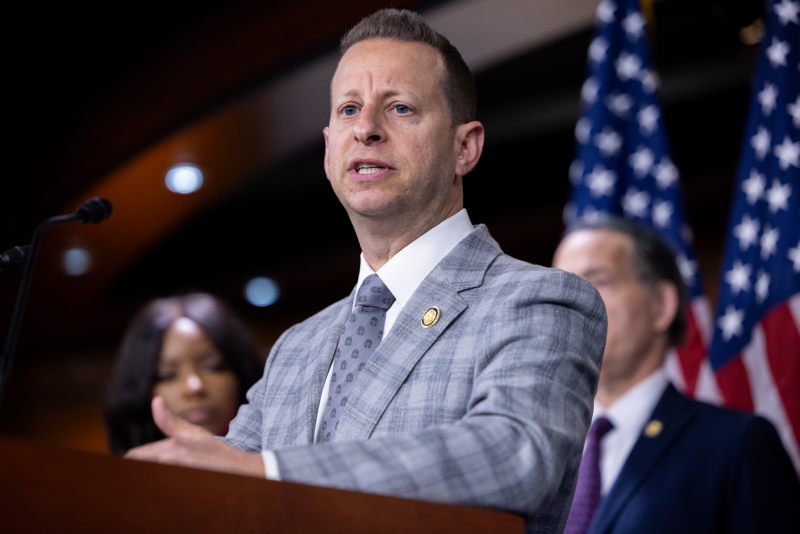
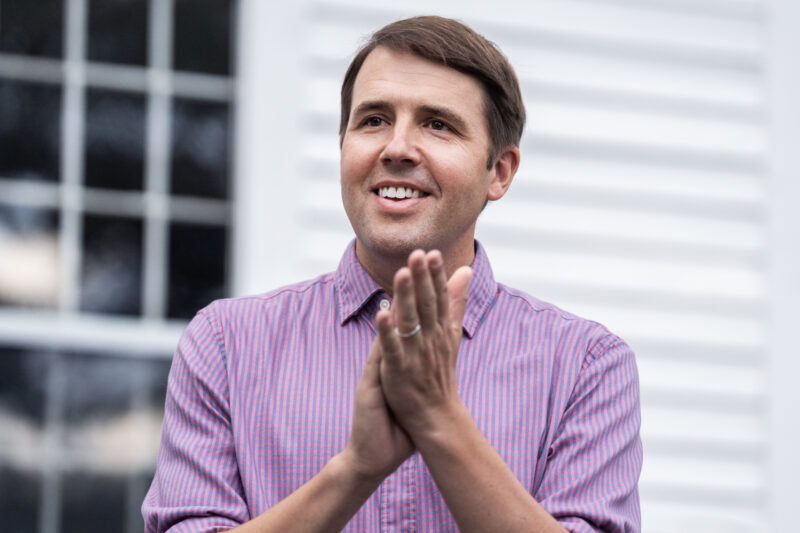
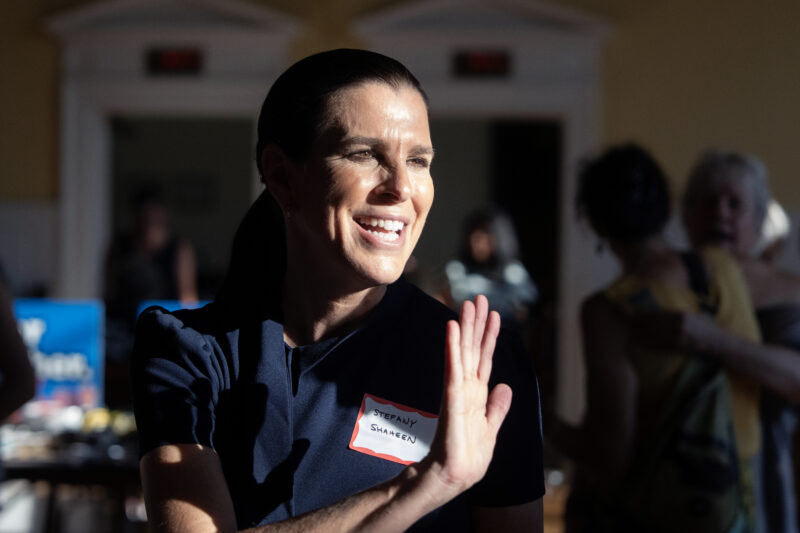


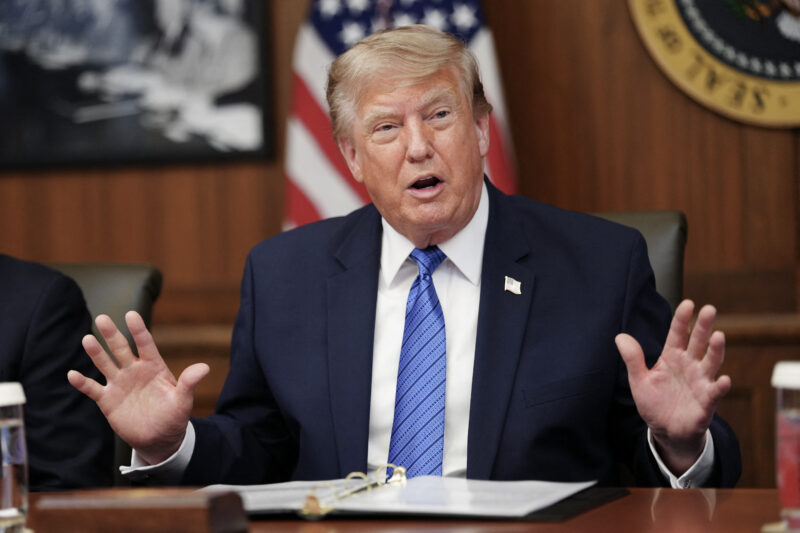







President Trump intends to convey Rosh Hashanah greetings ahead of the new year
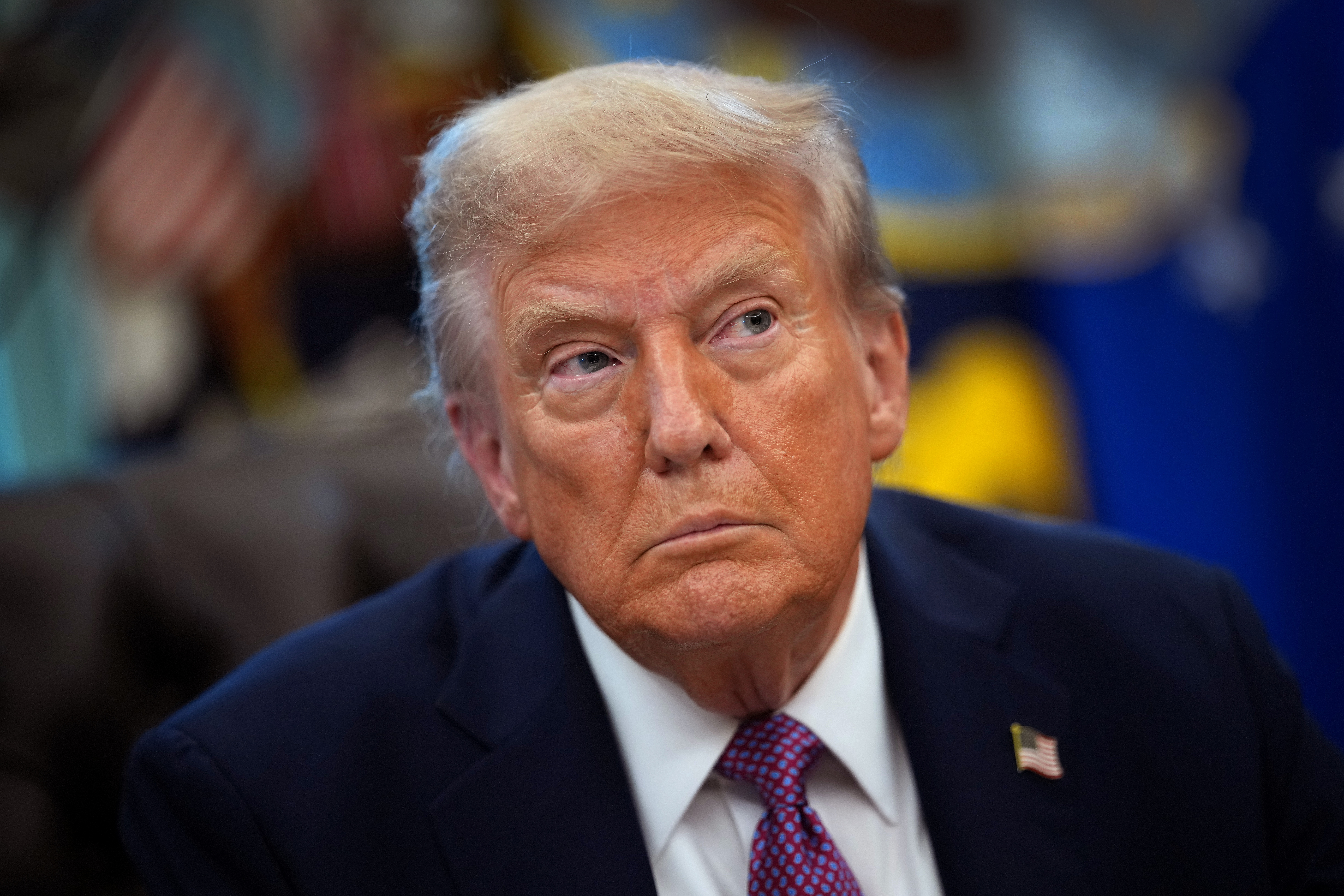
Kevin Dietsch/Getty Images
President Donald Trump in the Oval Office of the White House on Sept. 5, 2025 in Washington, DC.


 Add JewishInsider on Google
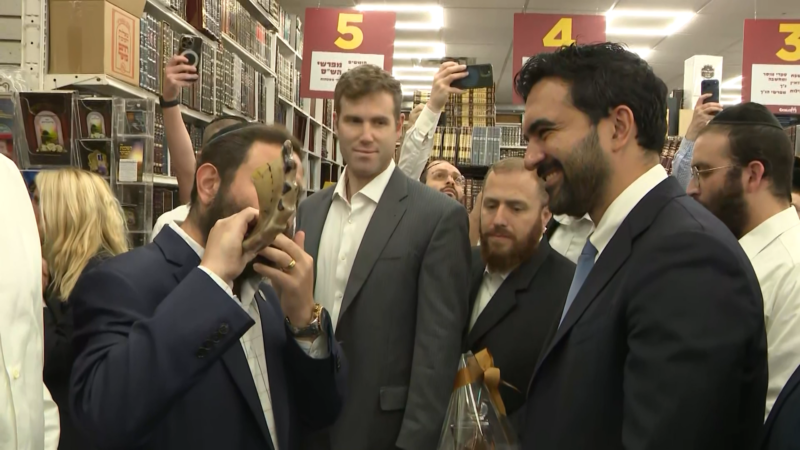
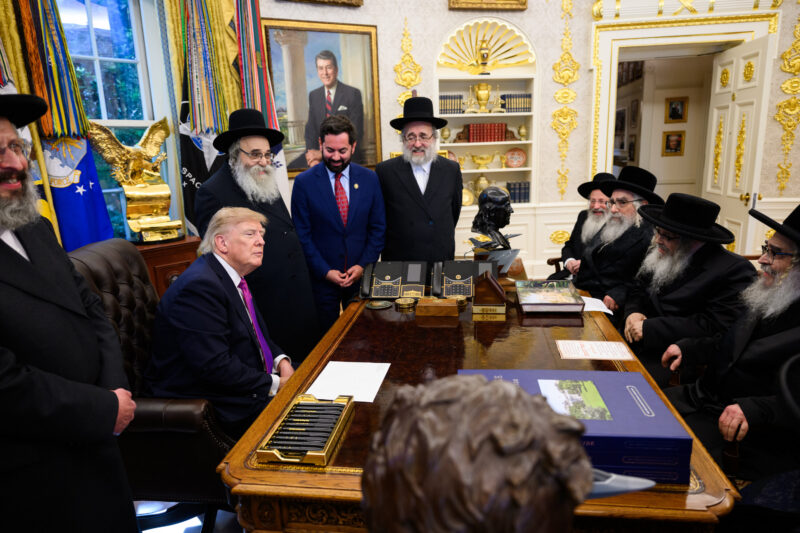
President Donald Trump is expected to meet with several Hasidic Jewish rabbis at the White House on Thursday ahead of Rosh Hashanah, according to people familiar with the matter.
The planned Oval Office meeting was initiated by Martin Marks, the White House Jewish liaison, one source told Jewish Insider, speaking on condition of anonymity to discuss private outreach. Marks did not respond to a text message seeking comment Monday.
A White House official confirmed the meeting to JI. “Before the Rosh Hashanah holidays, President Trump looks forward to greeting rabbis representing some of the largest Hasidic communities in the United States,” the official said. “President Trump has consistently won nearly 100% of the votes in these Hassidic enclaves, and the last time they were gathered at the White House was in 1979.”
The White House has not publicly announced the gathering, which has drawn some resistance from a few Trump allies over reports the meeting will include members of the Satmar community, an anti-Zionist Hasidic sect that believes only the messiah is supposed to bring about a Jewish state.
According to two sources, several leaders from Hasidic communities in New York confirmed their attendance at the meeting, including the two rival Satmar sects in Brooklyn as well as Kiryas Joel; the Bobov sect in Brooklyn; the Vizhnitz sect in Monsey; and the Skver sect in New Square.
The 85-year-old Skver Rebbe, David Twersky, whose endorsements in House elections are highly coveted, will send his son to the meeting in his place, according to a Satmar source.
“As of now it is happening,” one Bobov leader told JI on Monday, but added a caveat that with the Trump administration “things move very quickly” and could change.
Shlomo Schorr, the director of legislative affairs at Agudath Israel of America’s New Jersey office, said he also heard that Rabbi Malkiel Kotler, a dean of Beth Medrash Govoha in Lakewood, N.J., the largest yeshiva in the United States, had been invited to the meeting and planned to attend.
Schorr’s understanding, he told JI, was that the meeting would be “a quick photo op” and provide Trump a chance to wish the Jewish leaders a happy Rosh Hashanah in advance of the Jewish new year next week that marks the start of the High Holy Days.
The Satmar source said that the meeting had “no purpose” aside from a broad recognition of mutual respect. “The president knows this community was strongly supportive of him,” he explained to JI.
Rabbi Aaron Teitelbaum, who leads the Satmar community in Kiryas Joel, reportedly told followers on Saturday night he planned to ask for Trump’s help opposing the politically divisive Israeli military draft for yeshiva students.
Laura Loomer, the far-right activist who is a close ally of Trump, cited such comments on social media over the weekend while raising her objections to the meeting.
“These are anti-Israel pro-Mamdani rabbis who are being hosted with open arms in the Oval Office,” she said of the Satmar leaders, arguing that the meeting “is going to severely piss off the Jewish Republicans in the MAGA base who voted for President Trump.”
While neither of the Satmar rebbes endorsed Zohran Mamdani for New York City mayor, a prominent representative of one sect backed his general election campaign. Leaders of the Satmar community, which frequently endorses Democrats, have also met privately with Mamdani, and Zalman Teitelbaum, the Satmar rebbe in Williamsburg, recently defended the mayor amid accusations of promoting antisemitism.
Sid Rosenberg, a conservative radio host in New York, agreed with Loomer, calling the meeting a “huge mistake” and criticizing the Kiryas Joel Satmar leader as “a terrible guy” who “has no right being anywhere near” the president.
The Satmar source clarified that he would not raise the draft in the meeting. “He doesn’t plan to bring it up,” he told JI, noting that the rabbi “always shoots from the hip.”
Plus, Jewish Detroit knocks for Stevens
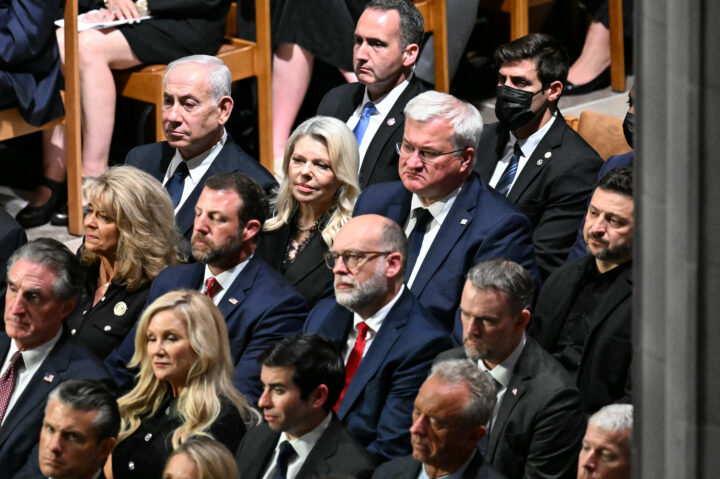
Alex WROBLEWSKI / AFP via Getty Images
Israli Prime Minister Benjamin Netanyahu (upper L) and Ukrainian President Volodymyr Zelensky (R) attend the funeral service for Sen. Lindsey Graham at the Washington National Cathedral in Washington, DC, on July 28, 2026.
Good Wednesday morning,
In today’s Daily Kickoff, we report on yesterday’s funeral for Sen. Lindsey Graham in Washington and cover the Oval Office meeting between President Donald Trump and Israeli Prime Minister Benjamin Netanyahu. We spotlight the get-out-the-vote campaign for Haley Stevens led by concerned Jewish Detroiters and the United Democracy Project’s new ad targeting her Michigan Senate primary challenger, Abdul El-Sayed. Also in today’s Daily Kickoff: Rep. Jake Auchincloss, Sen. Richard Blumenthal and Charles Asher Small.
We also have a new on-demand Live Briefing that you can access throughout the day via our new app (on Apple and Android) and on our website.
Today’s Daily Kickoff was curated by Israel Editor Tamara Zieve and U.S. Editor Danielle Cohen-Kanik, with an assist from Marc Rod. Have a tip? Email us here.
What We’re Watching
- U.S. Central Command and the Saudi Arabian Armed Forces conducted joint strikes in eastern Iraq early Wednesday against Iranian proxies whom the Islamic Revolutionary Guard Corps had “directed to attack U.S. forces and Saudi energy infrastructure,” CENTCOM said, adding that the militaries struck multiple logistics and weapons sites in response to more than 30 IRGC-directed drone attacks in the past 72 hours.
- The strikes came after CENTCOM said on Tuesday evening that it had intercepted multiple ballistic missiles fired by the IRGC in an “attempted surprise attack” on U.S. forces in the Middle East, marking a rupture in the pause in hostilities between the U.S. and Iran that had been in place since last week. The Jordanian military also announced that it had intercepted five missiles launched from Iran overnight.
- The Senate is expected to vote on another war powers resolution this afternoon seeking an end to U.S. military operations in Iran.
- Sen. Lindsey Graham’s (R-SC) funeral continues today in South Carolina, where he will receive a public procession at the Statehouse in Columbia and a private burial.
What You Should Know
A QUICK WORD WITH JI’S MARC ROD
A who’s who of international leaders, Cabinet members, senators and ambassadors gathered on Tuesday at the National Cathedral and on Capitol Hill for a somber and emotional tribute to the late Sen. Lindsey Graham (R-SC), a giant both in Washington and on the world stage.
Graham distinguished himself over his career as one of the most important foreign policy voices in the Republican Party and a global statesman, evident in the fact that Israeli Prime Minister Benjamin Netanyahu and Ukrainian President Volodymyr Zelensky sat just seats away from one another at the afternoon memorial service, representing two of the countries that Graham championed during his time in office.
In one sign of how appreciated Graham’s pro-Israel leadership was to so many in the Jewish community, a number of attendees were seen wearing kippot at the National Cathedral service. Among the notable guests at the service were: philanthropist Miriam Adelson; Israel’s former Minister of Strategic Affairs Ron Dermer; Israeli opposition leader and Netanyahu rival Yair Lapid; Republican Jewish Coalition CEO Matt Brooks; Axios reporter Barak Ravid; and the parents of slain American Israeli hostage Omer Neutra.
Fox News host Sean Hannity gave special attention to Graham’s dedication to Israel in his eulogy, offering effusive praise to Netanyahu and the importance of the U.S.-Israel relationship.
“Lindsey would have been blown away that you took this long journey with your beautiful bride to be here today. He loved you. He loved the state of Israel, he loved the people of Israel,” Hannity told Netanyahu and his wife, Sara, from the lectern. “Under your leadership, Israel has been one of America’s most consistent and loyal allies. He was never shy to say it, to the day he passed. Just as President Trump has been Israel’s strongest friend in the history of the White House … Lindsey was that friend to Israel in the United States Senate.”
FRIENDLY FACE
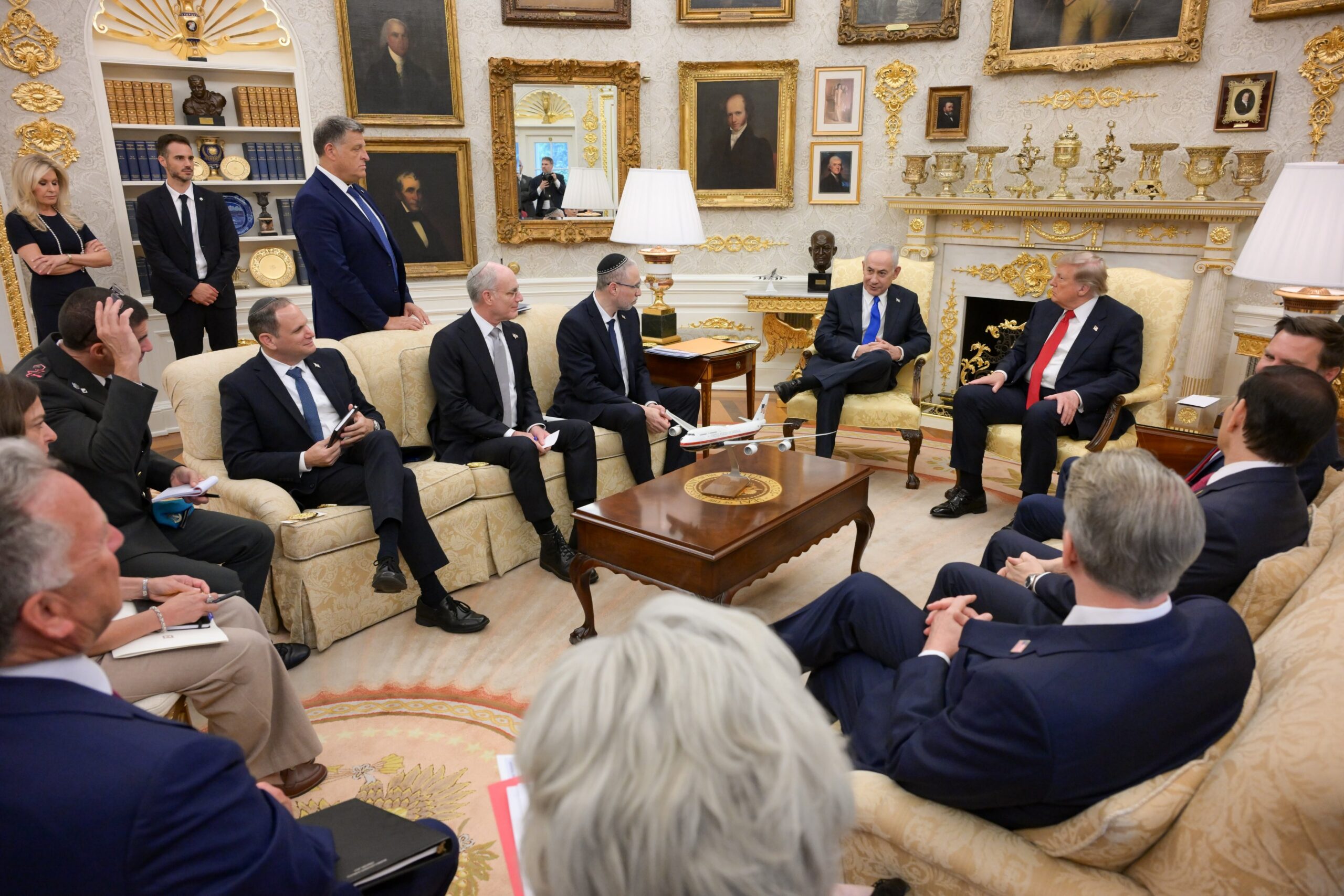
Israeli Prime Minister Benjamin Netanyahu hailed his sit-down with President Donald Trump in the Oval Office on Tuesday as “one of the best conversations I’ve ever had with a president of the United States, our friend Donald Trump.” The Israeli prime minister called the meeting “excellent,” Jewish Insider’s Matthew Shea reports.
What he said: “When I say excellent, I don’t mean it lightly,” he added, speaking in a video statement after the summit. It was “a conversation with full partnership, mutual support, with understanding on the shared goal that Iran will not have nuclear weapons and also other goals,” he said. Caroline Glick, Netanyahu’s international affairs advisor, told JI the meeting was “extremely positive” and pushed back against reports of a rift between Jerusalem and Washington.
Yes, but: Earlier Tuesday, Trump expressed discontent with Netanyahu’s reported forthcoming warnings regarding Iranian nuclear activity at Pickaxe Mountain, dismissing the issue as “not a big problem” in a sharp public split hours ahead of their Oval Office meeting.
shul politics
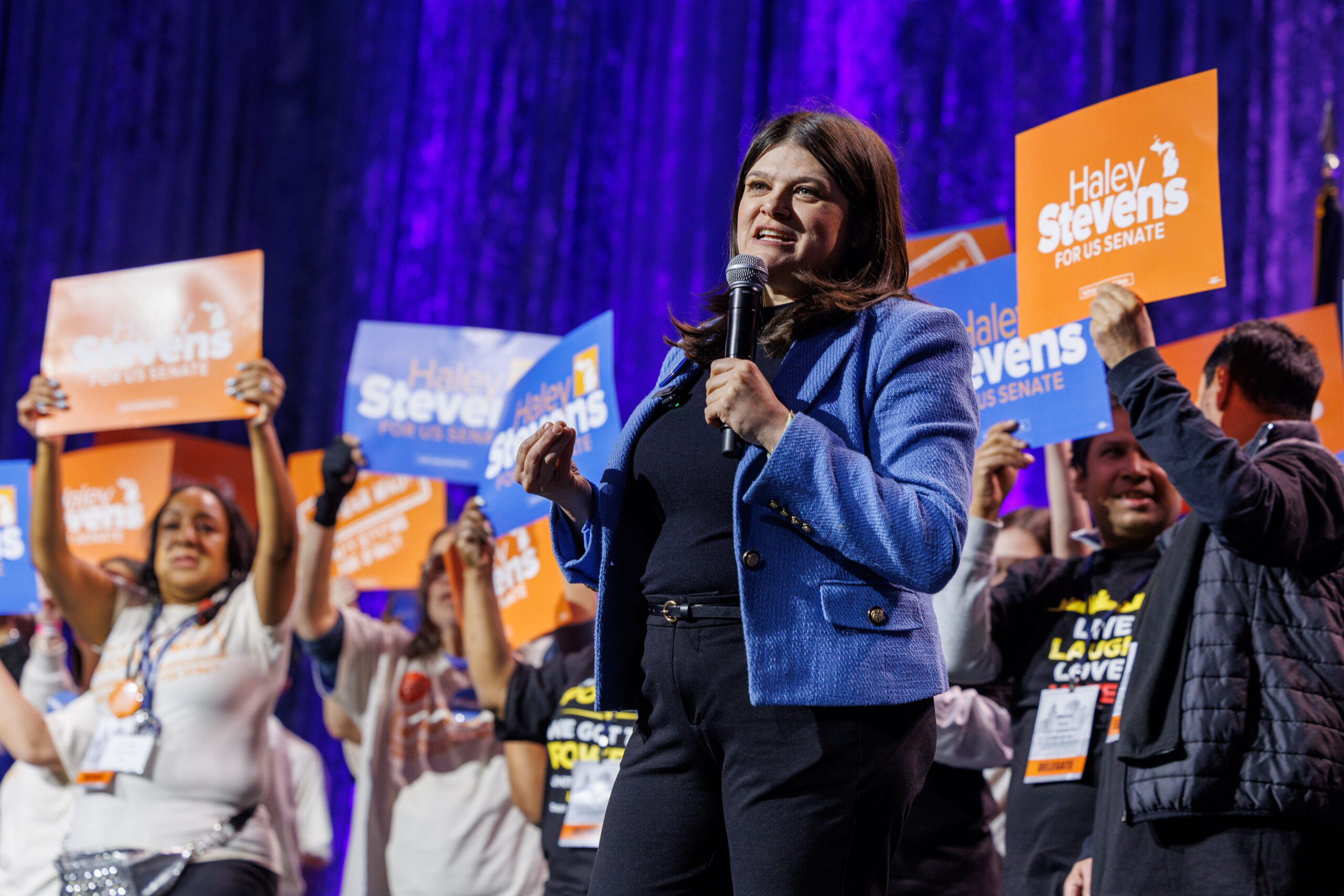
Several large Detroit-area synagogues emailed their congregants earlier this summer to urge them to vote in Michigan’s Aug. 4 primary — what seemed at first to be a somewhat bland call to make their voices heard and exercise their civic duty. Then, as primary day drew closer, the messages took on a sharper edge from the usual staid, nonpartisan rhetoric that houses of worship might have sent in the past ahead of major elections, Jewish Insider’s Gabby Deutch reports.
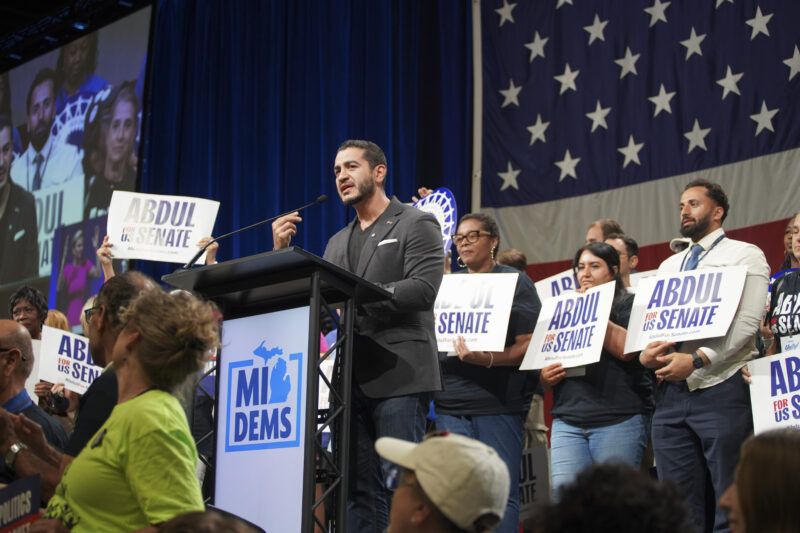
Unprecedented advocacy: “While we aren’t going to tell you who to vote for and we have never sent a message like this in our congregation’s history, these are no ordinary times,” the leaders of Temple Israel, the Reform synagogue in West Bloomfield that was the site of a violent antisemitic attack in March, wrote in an email last month. Leading rabbis across the state are urging their congregants to vote for Rep. Haley Stevens (D-MI) — even if they’re not saying so explicitly. Her opponent, Abdul El-Sayed, who has made attacking AIPAC a central tenet of his campaign, has refused to say whether he believes in Israel’s right to exist as a Jewish state.
PAST IS PRESENT
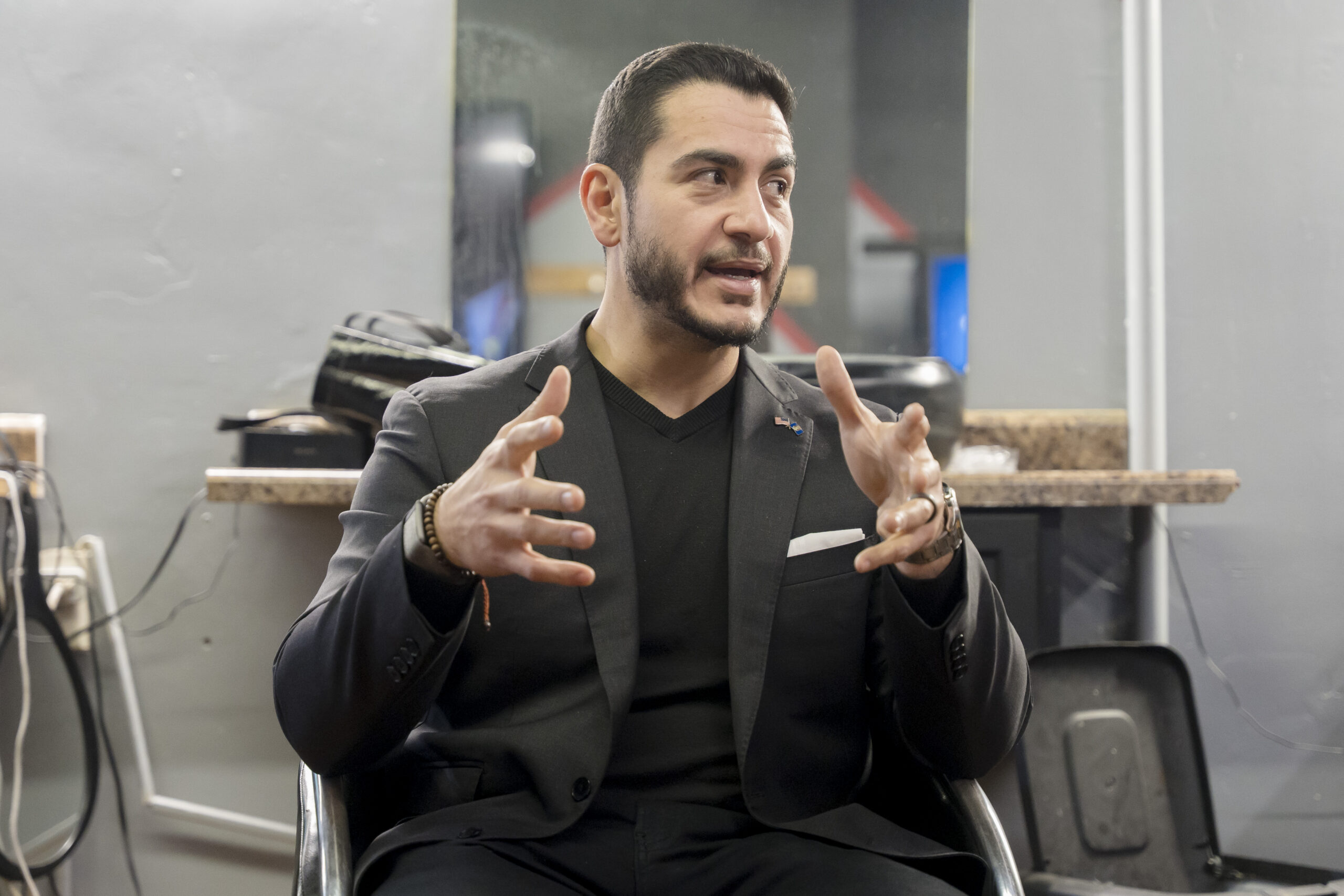
United Democracy Project, the AIPAC-affiliated super PAC, is running a new ad targeting Abdul El-Sayed, a far-left Democrat in Michigan’s closely contested Senate primary, over his past support of the “uncommitted” movement and his criticisms of popular Democratic leaders — a messaging strategy the group has used as an effective attack line against anti-Israel opponents in previous election cycles, Jewish Insider’s Matthew Kassel reports.
Ad attack: The 30-second TV spot, released on Tuesday in advance of the Aug. 4 contest, cites comments in which El-Sayed had criticized Barack and Michelle Obama while accusing El-Sayed of “helping Trump win” the election in 2024 because of his promotion of the “uncommitted” effort that urged Democratic primary voters to leave their ballots blank as a protest against former President Joe Biden’s support for Israel amid the war in Gaza.
Survey says: A new poll shows Rep. Haley Stevens (D-MI) leading former GOP Rep. Mike Rogers by two points if she proceeds to the general election — with her opponent, Abdul El-Sayed, trailing Rogers by seven points, JI’s Gabby Deutch reports.
AID ARGUMENTS

Rep. Jake Auchincloss (D-MA) appeared before a packed house of more than 700 Jewish constituents at a major Conservative synagogue in the heart of his Boston-area district on Monday evening, facing a barrage of questions from skeptical attendees over his vote to cut U.S. military aid to Israel, Jewish Insider’s Marc Rod reports.
In the room: Auchincloss appeared in conversation with Jeremy Burton, the CEO of the Jewish Community Relations Council of Greater Boston, at Temple Emanuel in Newton, Mass., before taking around two dozen questions from the audience. Attendees said that most of the crowd was not supportive of Auchincloss’ vote and was not persuaded by his explanation, but most of those who spoke to JI came away expecting that he’ll maintain significant Jewish community support and appreciation of his engagement.
ON THE HILL

The Senate on Tuesday advanced a major Russia sanctions package, negotiated and championed by Sen. Lindsey Graham (R-SC) before his death, to which lawmakers added a provision extending long-standing sanctions on Iran, currently set to expire at the end of the year, Jewish Insider’s Marc Rod reports. The bill advanced by an 86-12 procedural vote.
Last-minute edit: The addition of the five-year extension of the Iran Sanctions Act of 1996 to the package is a relatively minor change to the hard-fought bill, which will extend a key piece of the U.S. economic pressure campaign on Iran and address President Donald Trump’s late-stage demands that threatened to upend a bipartisan agreement. Asked Tuesday about the decision to add the Iran sanctions provisions, its lead Democratic sponsor, Sen. Richard Blumenthal (D-CT), told JI, “[Sen.] Darline Graham [R-SC] asked us — asked me — to do it. And by the way, that Iran provision was in the bill as originally written, so restoring it was a pretty simple yes.”
GLOBAL ANTISEMITISM
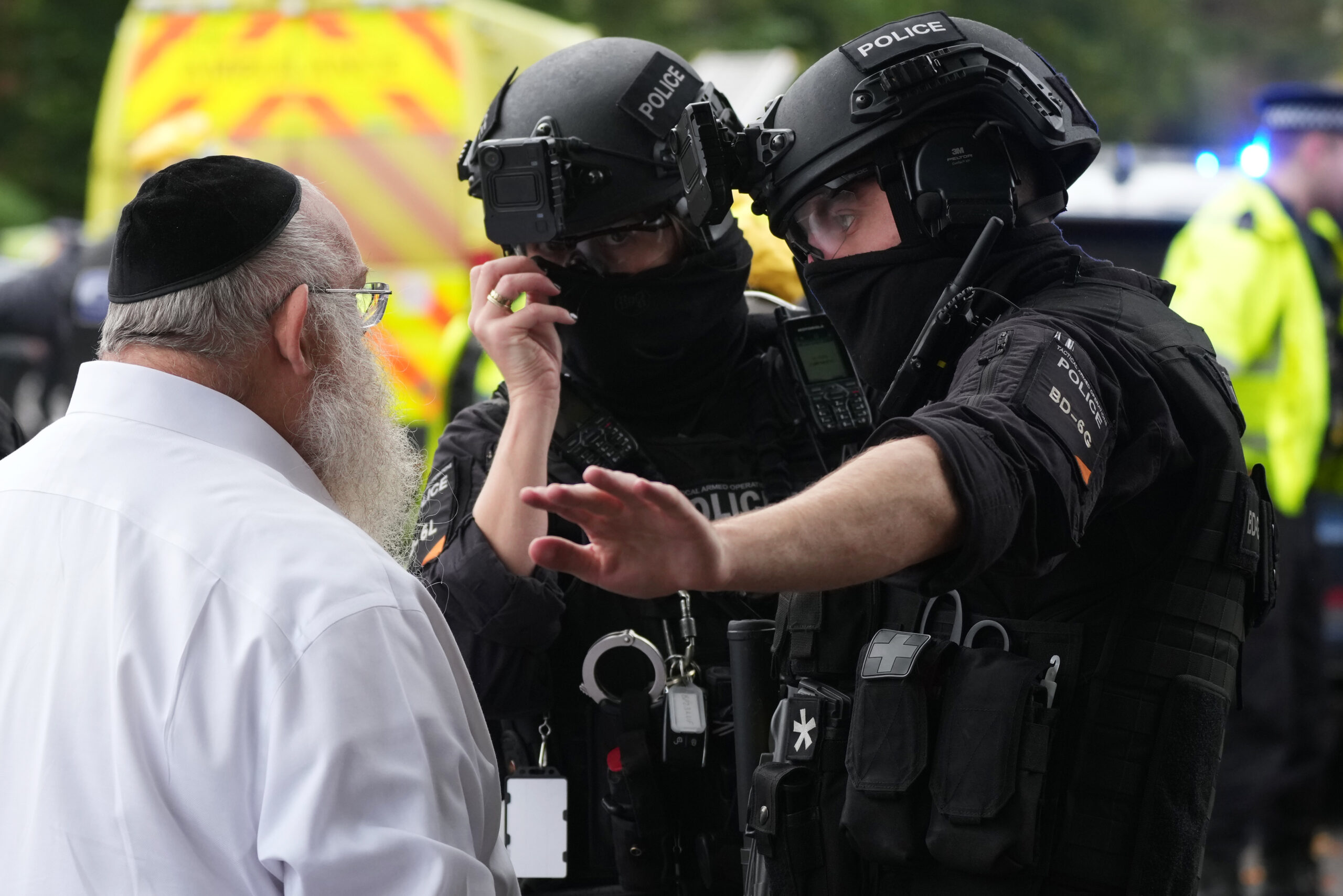
Germany remained the country with the most antisemitic incidents relative to its Jewish population in 2025, among Diaspora countries with major Jewish populations, according to a new report from leading Jewish groups released on Wednesday. According to the report, nearly 70 antisemitic incidents per 1,000 Jewish residents were recorded in Germany in 2025, Jewish Insider’s Haley Cohen reports.
J7 report: Not since the terror attack on a Jewish community center in Buenos Aires, Argentina, more than 30 years ago has the Jewish Diaspora experienced as deadly a year as 2025. Worldwide, 20 people were killed last year in four antisemitic attacks across three continents — all in “J7” countries, the seven countries with the largest Jewish Diaspora populations. The data comes from the second annual Report on Antisemitism by the J7.
Worthy Reads
Graham’s Send-Off: The Atlantic‘s Mark Leibovich chronicles Lindsey Graham’s elaborate Washington send-off, showing how the senator’s genius for ingratiating himself with the powerful — President Donald Trump above all — carried through to the very end. “Trump acknowledged that he and Graham ‘did not exactly get off to the best of starts.’ Eventually, though, they would forge an important, if volatile, partnership. The president recounted an especially rough patch during the 2016 presidential campaign when Graham called Trump a ‘jackass’ and Trump responded by sharing Graham’s private cellphone number at a rally in South Carolina. For old times’ sake, Trump recited the number in his speech today: ‘202-228-0292, if anybody wants to give it a shot.’ He added that Graham had the last laugh, ‘because while I blew up his phone for one day, we became great friends, and Lindsey did not stop calling me for the next 10 years.’” [Atlantic]
Diplomacy by Misdirection: In The Wall Street Journal, Walter Russell Mead argues that President Donald Trump and Tehran have both utilized deliberate misdirection as part of their strategy in the on-again, off-again U.S.-Iran conflict. “Observers have long noted the fog of war, in which the chaos of conflict makes it difficult to determine exactly what is going on. In 2026 we are seeing something different: the slop of war, in which decoy diplomacy combines with military head-fakes to obscure the actual state of play. … If the war has brought Mr. Trump some unpleasant surprises, it has also demonstrated his resourcefulness. … Iran may be a hedgehog, but Donald Trump is a fox, and he’s unlikely to give up until he’s tried every trick in the book.” [WSJ]
The Other Nuke Deal: Eric Edelman, former under secretary of defense for policy, writes for the Jewish Institute for National Security of America that the emerging U.S.-Saudi civilian nuclear cooperation deal invokes a significant threat of nuclear proliferation. “While details remain scarce, there is good reason to be concerned that the deal would not only be a departure from longtime U.S. policy but also have the potential to upend the traditional U.S. strategic objective of attempting to slow, halt, and reverse the adoption of nuclear weapons. The U.S. might inadvertently make itself into a handmaiden for a nuclear proliferation cascade that would break a nonproliferation regime that is already under enormous stress from a range of geopolitical forces.” [JINSA]
Threats from Within: The New York Times’ Bret Stephens warns defenders of Israel not to downplay the threat that Israeli settler violence in the West Bank poses to both Israeli and Palestinian interests. “There is an immediate danger in that the spiraling West Bank violence could easily produce a third intifada that an exhausted Israel can ill afford militarily or diplomatically, to say nothing of the human cost in both Israeli and Palestinian lives. There’s a still greater long-term risk that the Netanyahu government’s excuse making for Jewish lawlessness and terrorism leads to what the scholar and diplomat Michael Oren, in a prescient Commentary essay from 2009, called ‘the hemorrhaging of sovereignty.’” [NYTimes]
A larger selection of Worthy Reads is available in our Live Briefing.
Word on the Street
In an interview on Fox News’ “Hannity,” on Tuesday, Israeli Prime Minister Benjamin Netanyahu said that he will attend the United Nations General Assembly in New York in September, despite New York City Mayor Zohran Mamdani’s threats — which he has since acknowledged he cannot act on — to arrest him. “I’m going to New York. I’m going to speak the truth in front of this hate-spewing elected official who’s pitting one group of New Yorkers against the others. He’s turning them against New York Jews”…
Asked by Sean Hannity what he would do if forced to make an emergency landing in a country that would enforce the International Criminal Court warrant against him, Netanyahu replied that he “has special forces around” who could “get a new task”…
Despite both being in Washington on Tuesday, Netanyahu and Ukrainian President Volodymyr Zelensky did not hold an official meeting, though the two leaders were spotted speaking in person for the first time in several years at the National Cathedral ahead of the funeral proceedings. Israeli Foreign Minister Gideon Sa’ar and Ukrainian Foreign Minister Andrii Sybiha also spoke by phone, where Sa’ar invited Sybiha to visit Israel…
Sybiha also called his Iranian counterpart, Abbas Araghchi, for a “frank conversation,” Sybiha said on X on Tuesday, where he told Araghchi that Iran should refrain from any “escalatory steps” in regards to Ukraine’s recent strike on a cargo vessel carrying military supplies between Iran and Russia…
European allies are resisting U.S. efforts to create a joint patrol for the Strait of Hormuz until an enduring ceasefire with Iran is in place, Politico reports…
Iran rejected an Omani proposal whereby ships crossing the Strait of Hormuz would be split through both countries’ territorial waters, and instead proposed a deal that would see the routes stay largely in Iranian waters, Deputy Foreign Minister Kazem Gharibabadi said on state television on Tuesday…
Iran is set to receive an initial delivery of Chinese-made shoulder-fired air-defense missile launchers in the coming weeks, Reuters reports, citing sources familiar with the $60 million to $70 million purchase of between 300 and 400 systems…
Israeli Defense Minister Israel Katz told Israel’s Channel 14 on Tuesday that Jerusalem “very much want[s] to strike Iran’s energy targets,” but Washington “is not approving it at the moment because of the concern that Iran would attack neighboring countries, causing a global oil crisis”…
The Times of London reports on the efforts by the CIA and Mossad to track down Iranian Supreme Leader Ayatollah Mojtaba Khamenei, who has not been seen since February…
The Financial Times examines the UAE’s attempts to quietly restart diplomatic and economic relations with Iran even as Tehran has continued to fire on other Gulf states and Abu Dhabi maintains its ties with Jerusalem and Washington…
CENTCOM announced on Tuesday that it signed an agreement with the UAE to establish the first bilateral task force focused on developing military artificial intelligence. The group, named Task Force Talon Synapse, will formally launch in the coming weeks and will be based in Abu Dhabi, with around 20 American and Emirati personnel with expertise in AI, data and cybersecurity…
In the Washington Examiner, Mozah Alkindi, a self-described Emirati Muslim, calls out Mamdani’s rhetoric on Israel amid growing antisemitism in New York City. “Disagreement is normal. Opinions, preferences, and even biases are part of any society. What is not normal is allowing those differences to become a reason to hate or dehumanize people who think differently”…
Jay Clayton was confirmed by the Senate on Tuesday evening on a party line vote as director of national intelligence…
Kentucky Gov. Andy Beshear, a Democrat, called on Sen. Mitch McConnell (R-KY), who has been hospitalized for over a month, to “directly and verbally address the people of Kentucky and provide proof of your capacity to serve, or resign”…
A man armed with a hammer entered the premises of the Lev Leviev School in Queens on Tuesday where a Jewish day camp was operating and shoved a child into a fence before being subdued by camp personnel. Queens Shmira, a local public safety organization, told JI’s Haley Cohen and Will Bredderman that the incident was not a hate crime but was rather perpetrated by an “emotionally disturbed individual.” The NYPD took a person of interest into custody and the child was treated for a laceration on site before being transported to a hospital…
eJewishPhilanthropy’s Judah Ari Gross interviews Charles Asher Small, the founder and director of the Institute for the Study of Global Antisemitism and Policy, who has long been raising the alarm about Qatar, seeing it as an unabashed enemy of the West and responsible for much of the antisemitism that has been unleashed post-Oct. 7, 2023…
The New York Times Magazine chronicles the internal upheaval at the Heritage Foundation under President Kevin Roberts after he defended Tucker Carlson for hosting white-nationalist influencer Nick Fuentes — an event that triggered an exodus of the organization’s traditional conservative staff and brought in new hires who have reportedly accelerated Heritage’s turn against its old pro-Israel, free-market consensus…
Executives at former New York City Mayor Michael Bloomberg’s data and media conglomerate, Bloomberg LP, are reportedly in preliminary talks about potentially taking the company public…
CBS News announced that New York Times columnist Ross Douthat will join the network as a correspondent on “60 Minutes,” and Sebastian Junger, Gianna Toboni and Trevor Phillips will join as contributors…
Israeli cybersecurity firm Cyera signed a letter of intent to acquire Israeli cybersecurity startup Oasis Security for $1 billion…
Casey Wasserman confirmed on Tuesday that he sold his stake in his namesake management company, now called The Team, to Providence Equity Partners, which has held a majority stake since 2022…
Pic of the Day
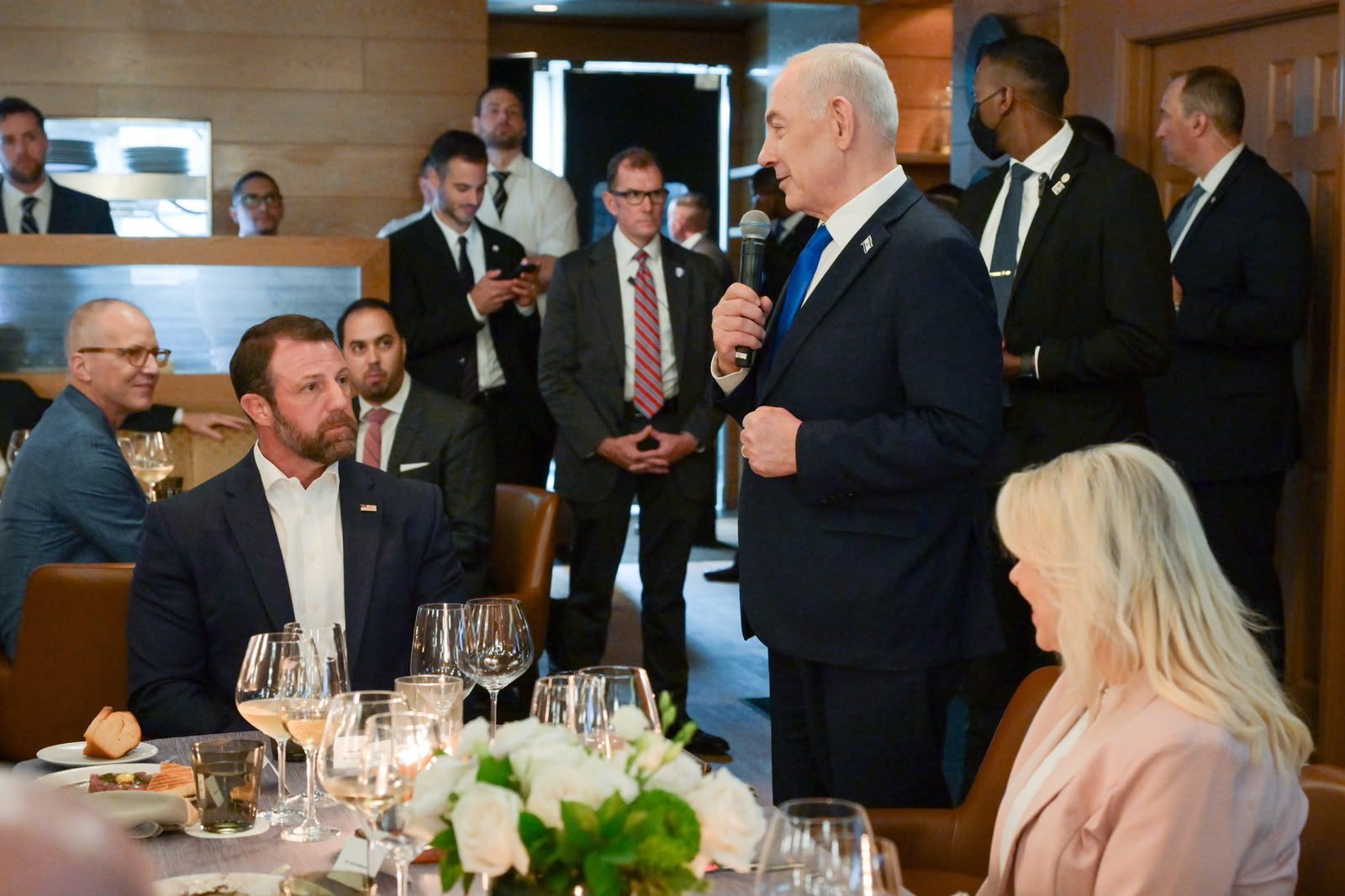
Israeli Prime Minister Benjamin Netanyahu spoke at a memorial dinner at the Four Seasons hotel in Washington on Monday night, held in honor of the late Sen. Lindsey Graham (R-SC). The event was attended by family and friends of Graham, administration officials and members of Congress.
“America has lost a great patriot. Israel has lost one of its greatest friends and supporters. And I have lost a dear friend,” Netanyahu said. “Lindsey was wholeheartedly committed to the security of the United States, the security of Israel and the unrelenting fight against antisemitism. I will miss him greatly, and all of us will miss him greatly.”
During the event, Netanyahu was photographed in conversation with Lindsey Graham’s sister, Sen. Darline Graham (R-SC), as well as Steven Miller, the White House deputy chief of staff for policy, and Sen. Chris Coons (D-DE).
Birthdays
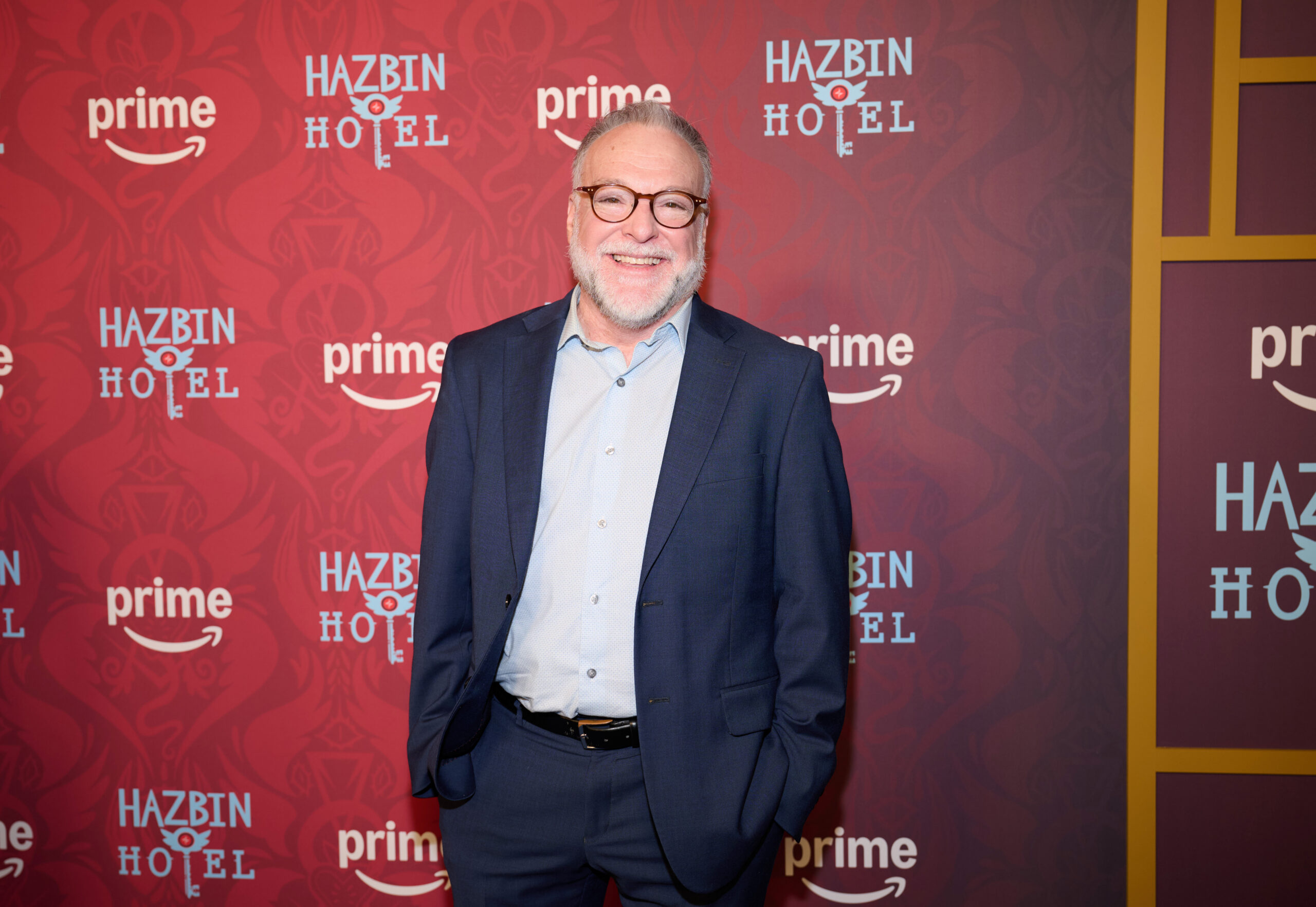
Actor and comedian, best known for his voice work in animation and video games, Richard Steven Horvitz turns 60…
Shoe designer, entrepreneur and founder of an eponymous shoe company, Stuart A. Weitzman turns 85… Chairman of BOK Financial Corporation in Tulsa, Okla., George Bruce Kaiser turns 84… Denver-based attorney, film producer and author of both fiction and nonfiction, Kenneth Eichner turns 72… Israeli electrical engineer and inventor, he is best known as the inventor of the USB memory stick, Dov Moran turns 71… Freelance writer and editor, Carol Eisenberg… Attorney general of Israel from 2016 to 2022, Avichai Mandelblit turns 63… Global economics reporter for The New York Times, Peter S. Goodman turns 60… Co-president of private equity firm Clayton, Dubilier & Rice, and co-chairman and governor of the NBA’s Charlotte Hornets, Richard J. Schnall turns 57… Twin brothers, Los Angeles-based philanthropists and businessmen, Shlomo Yehuda Rechnitz and Yisroel Zev Rechnitz turn 55… Actor, filmmaker and musician, he is best known for his role in the CBS sitcom “How I Met Your Mother,” Joshua Radnor turns 52… MS NOW anchor, Peter Alexander turns 50… VP of community engagement at BBYO, Jayme David… Director of the Straus Center at Yeshiva University, he is also the rabbi of NYC’s Congregation Shearith Israel (The Spanish and Portuguese Synagogue), Rabbi Meir Yaakov Soloveichik turns 49… Data and investigative journalist at the Associated Press, Aaron Kessler… Former member of the Canadian Parliament, David de Burgh Graham turns 45… Iraq war veteran, political and communications strategist, she is now a visiting fellow at George Mason University’s National Security Institute, Allison Jaslow… Rabbi, writer, educator and physician assistant, Rabbi Levi Welton… White House principal deputy communications director during the Biden administration, Herbie Ziskend… EVP in the Los Angeles office of Edelman, Jason Levin… Israeli actor, model and television presenter, Maya Wertheimer turns 36… Policy advisor to Sen. Ed Markey (D-MA), Daniel Ryan Vinik… Tony Award-winning actor, Ari’el Stachel turns 35… Uriel Wassner… Broadcaster for the Windy City Bulls, Sam Brief… Quarterback for the NFL’s Washington Commanders, Sam Hartman turns 27…
Caroline Glick, an advisor to Netanyahu, pushed back on reports of a rift between the two leaders
Prime Minister's Office
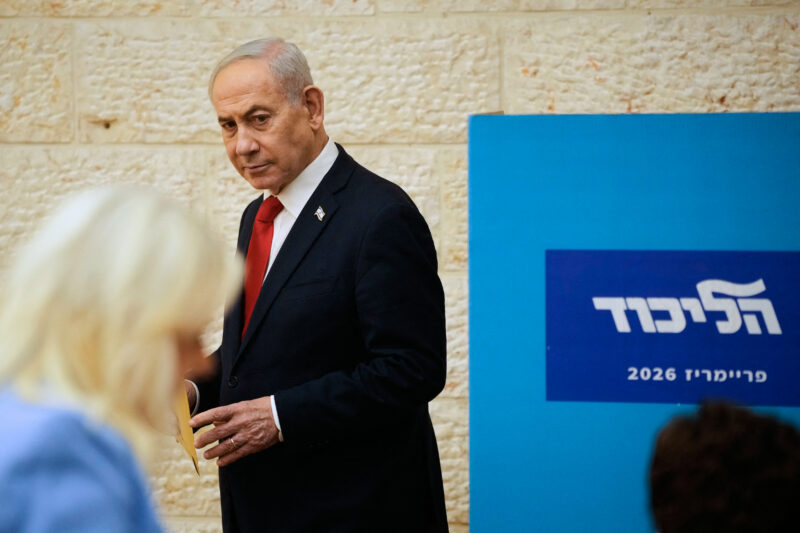
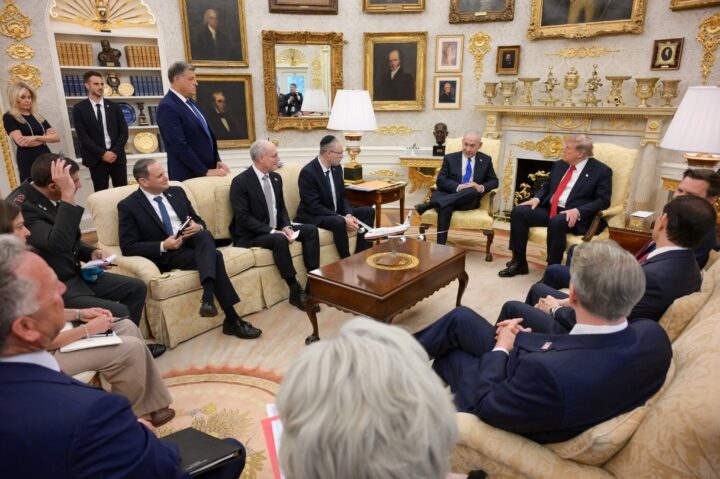
Israeli Prime Minister Benjamin Netanyahu meets with President Donald Trump in the Oval Office on July 28, 2026.
Israeli Prime Minister Benjamin Netanyahu hailed his sit-down with President Donald Trump in the Oval Office on Tuesday as “one of the best conversations I’ve ever had with a president of the United States, our friend Donald Trump.”
The Israeli prime minister called the meeting “excellent.”
“When I say excellent, I don’t mean it lightly,” he added, speaking in a video statement after the summit. It was “a conversation with full partnership, mutual support, with understanding on the shared goal that Iran will not have nuclear weapons and also other goals,” he said.
Caroline Glick, Netanyahu’s international affairs advisor, similarly described the meeting as “extremely positive” and pushed back against reports of a rift between Jerusalem and Washington.
“The two sides continue to be totally committed to our shared goal of preventing Iran from acquiring nuclear weapons, and that was obviously the focus of the discussion, but we discussed a whole range of regional issues,” Glick told Jewish Insider.
Glick said the Israeli delegation left the meeting feeling “terrific” about the strategic alignment between Washington and Jerusalem.
Addressing reports of friction between the two leaders over strategy in the Iran war and Trump’s proposed sale of F-35 fighter jets to Turkey, Glick said “nothing specific” on the jet deal came up during the meeting. She added that Trump and Netanyahu “have an incredible relationship,” dismissing talk of tension as a “media-manufactured crisis.”
“They have arguments from time to time… but they are on the same page 100% with everything relating to the goal of all operations regarding Iran,” Glick said. “The discussion was what you would expect from an alliance. You had two leaders who know each other very well, have enormous amounts of respect for one another and share common goals that they are completely committed to achieving.”
Hours before the meeting, Trump had expressed frustration with Netanyahu’s reported intention to raise with him Israeli intelligence regarding Iranian nuclear activity, saying in an interview on Fox News, “I don’t need Bibi to tell me that. Bibi is telling me that because he wants me to stay involved.”
While analysts framed the Oval Office meeting as a key opportunity for Netanyahu to gauge where Trump stands on Iran, Glick declined to say where the administration truly prefers diplomacy or resuming strikes, stressing instead that both nations are moving toward a unified outcome.
“All the trends are moving towards the achievement of our joint goal, which is to prevent Iran from having nuclear weapons,” Glick said. “So if it’s the hard way, the easy way, the middle way, the side way, it’s all geared towards moving the ball into that goal. I don’t think you can characterize it one way or another. It’s not a linear process.”
Hostilities between the U.S. and Iran remain paused as the U.S. is in “very deep talks” with Iran, Trump said on Monday, though the president has repeatedly threatened to return to military action if talks fail.
Glick said the trilateral agreement between the U.S., Israel and Lebanon was “touched on” but “wasn’t the focus,” saying that it will be left to the meetings between the parties set to take place in Rome next week.
She also noted that the two leaders briefly discussed the issue of expanding the Abraham Accords, with both remaining committed to bringing additional nations into the normalization framework.
“We believe that the prospects for expanding them are very high and look forward to doing so,” Glick said. “But as the prime minister always says, if we discuss which specific country, it will only undermine the process.”
The president said Iran ‘desperately’ wants to meet with the U.S. but ‘until they're ready to meet in a meaningful way, we have no interest in meeting with them’
Aaron Schwartz/CNP/Bloomberg via Getty Images
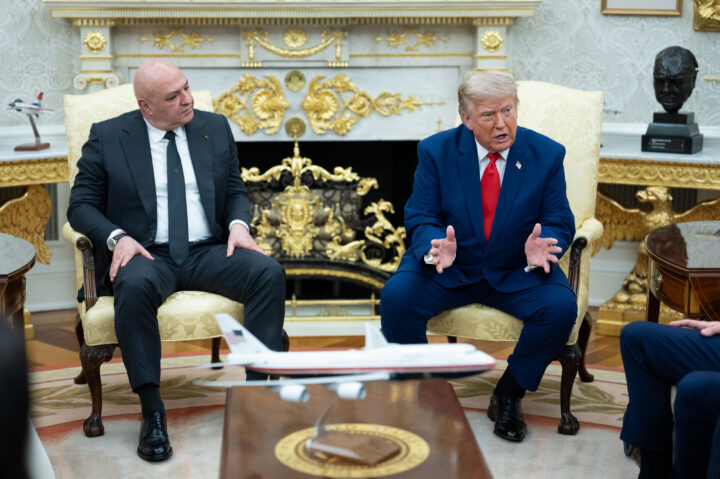
Joseph Aoun, Lebanon's president, left, and President Donald Trump during a meeting in the Oval Office of the White House on July 21, 2026.
President Donald Trump warned on Tuesday that the U.S. would “pretty soon” strike Iran’s Pickaxe Mountain, the underground facility suspected of housing components of Tehran’s nuclear program.
The president made the comments from the Oval Office while welcoming Lebanese President Joseph Aoun for a meeting about the ongoing U.S.-led talks between Israel and Lebanon. Trump was asked about a Wall Street Journal report that Israeli intelligence shared with the U.S. indicated that Iran moved thousands of centrifuges into its clandestine Pickaxe Mountain site last fall.
“I think that they may have [moved the centrifuges],” Trump said. “It doesn’t mean anything unless they have the [nuclear] material. They don’t have it. We follow the material. That’s where the action is.”
“We’ll be hitting that area probably pretty soon. There’s not a thing they can do about it,” he continued. “Normally, I wouldn’t say that. If I thought they could do something about it, I would never say that, but we’ll be hitting that area pretty soon, and very heavily.”
The president predicted that it would take Iran between 20 to 25 years to rebuild its nuclear program if U.S. forces immediately ceased striking Iranian nuclear targets, though he noted that the U.S. was “not finished at all” in Iran and was “not leaving right now.”
He added that Iran “wants to meet desperately” with the U.S. to end the war “because they’re getting decimated,” but “until they’re ready to meet in a meaningful way, we have no interest in meeting with them.”
Joining Trump for his meeting with Aoun were Vice President JD Vance, Defense Secretary Pete Hegseth, Treasury Secretary Scott Bessent and White House Chief of Staff Susie Wiles.
On the subject of Lebanon, Trump told reporters that he was willing to speak to Hezbollah’s leaders directly to advance peacemaking efforts with Israel.
“I would speak to Hezbollah. I speak to everybody. I’ll speak to people that a lot of people think I shouldn’t be speaking to and things work out,” Trump said. “If [Aoun] wanted me to speak to Hezbollah, you know he’s lived with Hezbollah for a long time, and if the president wanted me to speak to Hezbollah, I would.”
Trump praised Aoun directly and detailed his own affinity for Lebanon, telling reporters that the U.S. is “going to help [the country] a lot” and describing the U.S.-Lebanese relationship as “very good.”
“I think that Lebanon has been a very mistreated country for a long period of time,” Trump said.
The president said that he planned to discuss with Aoun Israel’s ongoing troop withdrawal from southern Lebanon and ways to empower the Lebanese Armed Forces.
“We’ll be speaking about that today with the president, and we have some very concrete plans already in store for that with others going in and helping,” Trump said. “But they’re also becoming much more self-sufficient, and we will be speaking about that.”
Iranian state media and Iran’s foreign ministry have said that Trump’s claims that Iranian leadership had approved the deal are ‘speculative’
Brendan SMIALOWSKI / AFP via Getty Images
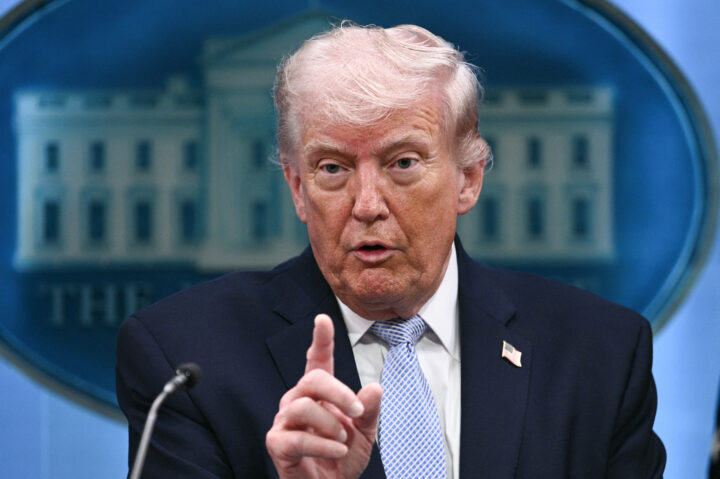
US President Donald Trump speaks about the conflict in Iran in the James S. Brady Press Briefing Room of the White House on April 6, 2026, in Washington, DC.
President Donald Trump said on Thursday that negotiations with Iran had reached a breakthrough and that he expected there to be a signing, possibly in Europe, in the coming days. With the diplomatic developments, Trump said he would cancel planned strikes against Iran, and call off an operation to take control of Kharg Island.
“Based on the fact that discussions with the Islamic Republic of Iran have been brought to the highest level of Iranian leadership and approved, I have, as President of the United States of America, cancelled the scheduled strikes and bombings against Iran this evening,” Trump posted on Truth Social.
In the Oval Office, the president said the deal was “in pretty final shape” and predicted that it would “get done over the next few days.” He also claimed that the agreement would ultimately deliver on his assurance that Iran would be prevented from having nuclear weapons and open up the Strait of Hormuz.
“The signing of the agreement will be in Europe, perhaps during the weekend,” Trump told reporters in the Oval Office on Thursday afternoon. “I won’t be able to be there, but Vice President [JD] Vance and the [White House special] envoy [Steve] Witkoff will.”
Trump also said that Iran’s supreme leader had approved the deal. However, Iranian state media and a spokesperson for Iran’s foreign ministry have reportedly asserted that Trump’s claims that Iranian leadership had provided approval are “speculative” and that “nothing has been finalized.”
The president spoke with the Emir of Qatar following the announcement and also with Israeli Prime Minister Benjamin Netanyahu. Reports indicated that Netanyahu was initially surprised by the statement. However, after the conversation between the two leaders, the Prime Minister’s Office said that Netanyahu “expressed his appreciation” for the framework and the inclusion of key objectives related to Iran’s nuclear program and support for terrorism.
The U.S. and Iran have reportedly closed vital gaps on three main issues that have prolonged diplomatic efforts, including the protocol for releasing Iranian frozen assets, reopening the Strait of Hormuz, and negotiations over Iran’s nuclear program.
The announcement came after two days of tit-for-tat strikes between the U.S. and Iran. Earlier on Thursday, Trump warned that the U.S. would hit Iran “VERY HARD TONIGHT” and threatened to seize Kharg Island, which handles roughly 90% of Iran’s oil exports.
‘I would say the ceasefire is on massive life support,’ the president said on Monday after rejecting Iran’s latest proposal
Aaron Schwartz/Sipa/Bloomberg via Getty Images
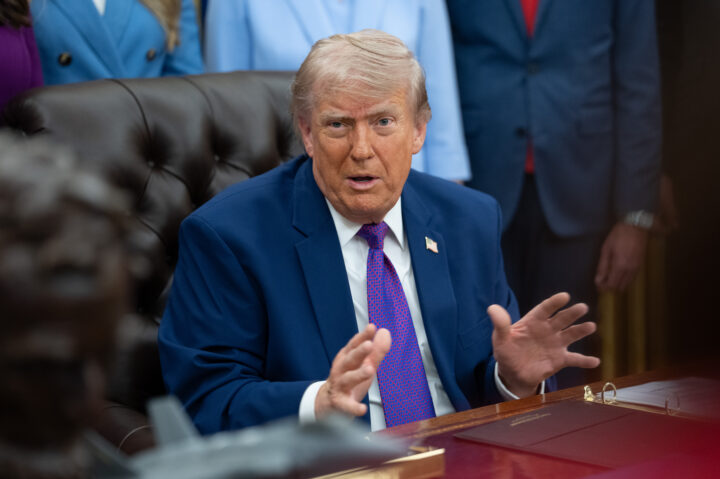
President Donald Trump speaks during a maternal healthcare event in the Oval Office of the White House in Washington, DC, US, on Monday, May 11, 2026.
President Donald Trump said on Monday that the U.S. ceasefire in Iran is “unbelievably weak” and on “massive life support” after rejecting the regime’s latest proposal to end the war.
Trump made the comments while speaking to reporters from the Oval Office on Monday during an event on expanding maternal healthcare access. Asked about the status of the ongoing ceasefire, Trump described it as being at its “weakest” point and criticized the last offer sent by the Iranians in ongoing peace talks as “a piece of garbage.”
“It is unbelievably weak, I would say. I would call it the weakest right now,” Trump said of the ceasefire. “After reading that piece of garbage they sent us, I didn’t even finish reading it. I said, ‘I’m not gonna waste my time reading it.’ I would say it’s one of the weakest, right now. … I would say the ceasefire is on massive life support, where the doctors walks in and says, ‘Sir, your loved one has approximately a one percent chance of living.’”
The comments come ahead of the president’s reported Monday afternoon meeting with his national security team, including Vice President JD Vance, Secretary of State Marco Rubio, Defense Secretary Pete Hegseth, Joint Chiefs Chairman Gen. Dan Caine, CIA Director John Ratcliffe and Special Envoy Steve Witkoff.
The group is set to discuss next steps in Iran, according to Axios, including a potential return to military action and possibly resuming Project Freedom, the operation aimed at reopening the Strait of Hormuz to commercial traffic, after Trump suspended it last week.
Several Republican lawmakers have begun to urge the president to return to military operations, including Senate Armed Services Committee Chairman Roger Wicker (R-MS), who told Trump on X that he’s “been generously patient with the murderous Iranian Islamist regime” but it’s time to “get back to business” and “restart Project Freedom.”
Sen. Lindsey Graham (R-SC) said on Sunday it’s “time to consider changing course” from the diplomatic route. “Project Freedom Plus sounds pretty good right now,” he added, referencing a plan by Trump to involve other countries in the mission to open the strait. Rep. Derrick Van Orden (R-WI) said bluntly in response to a post from the White House, “Start bombing again. It is the only thing they understand.”
Trump also said on Monday that he was “disappointed” with Kurdish leaders in Iraq for not following through with supporting an armed offensive against the Iranian regime, accusing them of not providing arms to the Iranian people in an effort to spark a popular uprising.
The Iranian people, Trump said, “have no weapons, they have no guns. We thought the Kurds were going to give them weapons, but the Kurds disappointed us. The Kurds take, take, take, and they have a great reputation in Congress. Congress says: ‘Oh, they fight so hard.’ They fight hard when they get paid. So I’m very disappointed in the Kurds.”
“I said it wasn’t going to work,” he continued, referencing reported U.S. and Israeli efforts to convince Kurdish leaders to launch a ground invasion of Iran. “I said they’ll never get there and I was right. I like to be right, in this case [it’s] too bad, but we sent some guns with ammunition and they were supposed to be delivered, but they kept it. I said they’re gonna keep it, but what do I know?”
Kurdish leaders have denied U.S. claims that they held on to weapons that American forces provided to them to pass along to the Iranian people, or that they received any arms from the U.S. in the first place.
The president dialed in his daughter and son-in-law to speak to guests at an informal pre-gathering over speakerphone
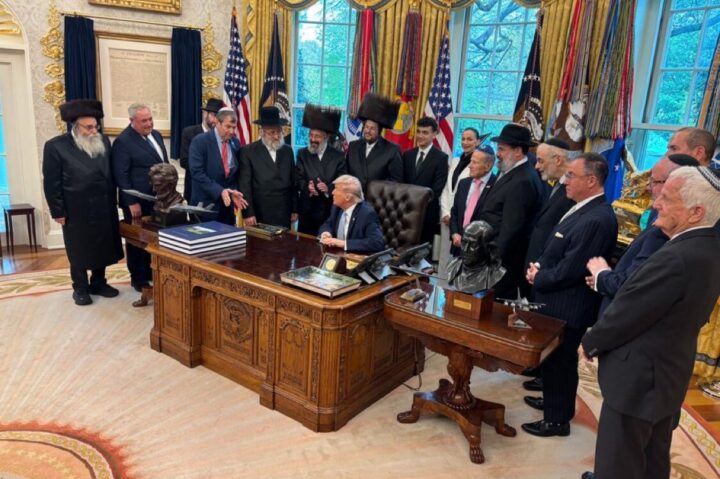
Prominent Jewish figures and senior Trump administration officials gathered at the White House on Monday afternoon for an event hosted by President Donald Trump commemorating the Passover holiday.
Administration officials in attendance at the event, which was closed to the press and took place in the Indian Treaty Room, included Commerce Secretary Howard Lutnick; White House Staff Secretary Will Scharf; James Blair, the White House deputy chief of staff for legislative, political and public affairs; Jacob Reses, chief of staff to Vice President JD Vance; Environmental Protection Agency Administrator Lee Zeldin; Martin Marks, the White House Jewish liaison; and Rabbi Yehuda Kaploun, the Trump administration’s special envoy to monitor and combat antisemitism.
Marks delivered comments to the crowd remarking on the holiday and the Trump administration’s record of support for Israel, according to an attendee.
Others spotted at the event were Rabbi Moshe Margaretten, president of the Tzedek Association; Matt Brooks, CEO of the Republican Jewish Coalition; William Daroff, CEO of the Conference of Presidents of Major American Jewish Organizations; Jeff Miller, chairman of the United States Holocaust Memorial Council; Jonathan Burkan, United States Holocaust Memorial Council member; Rabbi Levi Shemtov, the executive vice president of American Friends of Lubavitch (Chabad); Paul Packer, the former chairman of the U.S. Commission for the Preservation of America’s Heritage Abroad, Rabbi Chaim Dovid Zwiebel, executive vice president of Agudath Israel of America and Rabbi Meir Soloveichik, member of the Religious Liberty Commission and vice chair of the United States Commission on International Religious Freedom.
Jerry Wartski, a Holocaust survivor, and freed Israeli American hostage Edan Alexander were also in attendance.
Prior to the official reception, Trump invited about 20 guests to join him in the Oval Office. During the brief gathering, the president called Jared Kushner, an informal advisor to the White House and his son-in-law, and his daughter Ivanka. Kushner, who is Jewish, and Ivanka Trump, who converted to Judaism, spoke to attendees over speakerphone, one guest told Jewish Insider.
The president said he was told ‘on good authority’ that the regime has stopped killing protesters and will not carry out executions
Francis Chung/Politico/Bloomberg via Getty Images
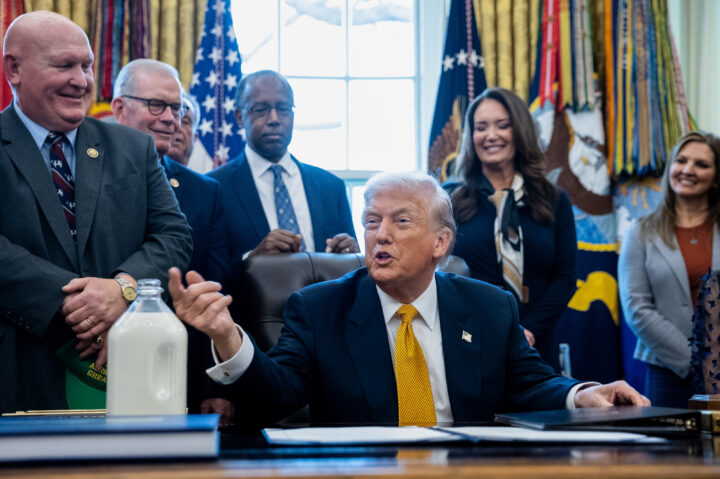
President Donald Trump speaks during a signing ceremony in the Oval Office of the White House in Washington, DC, US, on Wednesday, Jan. 14, 2026.
President Donald Trump indicated that his threats to Iran over its use of violence on protesters have had their desired effect, saying on Wednesday afternoon that “the killing in Iran is stopping.”
Speaking to reporters at a bill signing in the Oval Office, Trump said, “We have been notified and pretty strongly — but we’ll find out what that all means — but we were told that the killing in Iran is stopping, it’s stopped, and that there’s no plan for executions. … So I’ve been told that on good authority. We’ll find out about it, I’m sure, if it happens, we’ll all be very upset.”
“They’re not going to have an execution, which a lot of people were talking about for the last couple days. Today was going to be the day of execution,” the president said, referring to at least one protester who was due to be executed by the regime today, his family and human rights groups said.
Trump later claimed that information was provided to him “by very important sources on the other side, that the killing has stopped and the executions won’t take place. There was supposed to be a lot of executions today and that the executions won’t take place.”
“And we’re going to find out. I mean, I’ll find out after this, you’ll find out, but we’ve been told on good authority. And I hope it’s true. Who knows, right? Who knows,” he said.
Pressed about videos of body bags emerging out of Iran that indicate large-scale killings, Trump downplayed the issue, saying, “People were shooting at them with guns, and they were shooting back. It’s one of those things.”
Asked if this means military action against Iran is now “off the table,” Trump replied, “Well, we’re going to watch and see what the process is. But we were given a very good statement by people who are aware of what’s going on.”
The rhetoric marked a shift for the president, who a day prior had posted on social media a message to “Iranian patriots” who he told to “save the names of the killers and abusers” and that “help is on its way.” Reports indicate Iranian officials had made contact with the Trump administration seeking a diplomatic off-ramp to the escalating tension.
Despite past clashes and concerns from Jewish groups, the two New Yorkers emphasized cooperation and characterized the Oval Office meeting as ‘productive’
Yuri Gripas/Abaca/Bloomberg via Getty Images
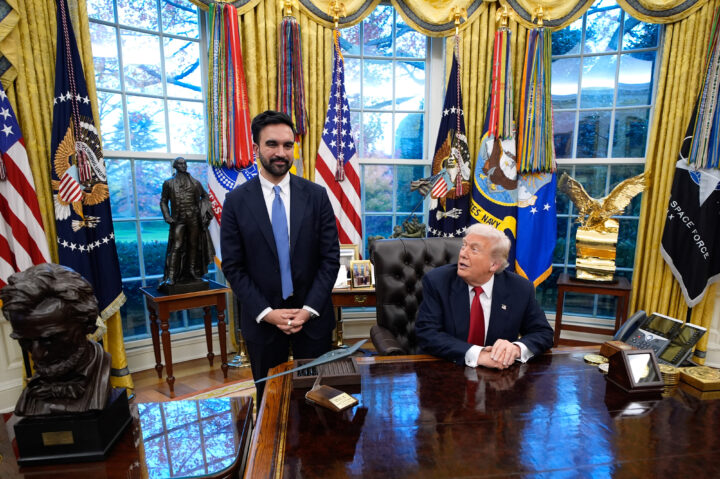
Zohran Mamdani, mayor-elect of New York, left, and US President Donald Trump during a meeting in the Oval Office of the White House in Washington, DC, US, on Friday, Nov. 21, 2025. Trump said he talked about the need for New York utility Consolidated Edison Inc. to lower rates during a meeting with Mamdani at the White House.
In a surprisingly chummy press conference, President Donald Trump and New York City Mayor-elect Zohran Mamdani spoke about their “productive” Oval Office meeting on Friday, yet mostly dodged questions on Israel and antisemitism.
“We had a great meeting. One thing in common, we want this city of ours that we love to do very well, and I wanted to congratulate the mayor. He really ran an incredible race against a lot of smart people,” said Trump. “We talked about getting housing built and food prices. The better he does, the happier I am.”
Mamdani said he “appreciated” the opportunity to meet with Trump and that he looks forward to working “together to deliver that affordability.”
Mamdani’s rise to mayor has drawn concern from pro-Israel and Jewish groups over his past rhetoric regarding Israel, including his inability to condemn the phrase “globalize the intifada,” which calls for violence against Jews. Mamdani has also threatened to arrest Prime Minister Benjamin Netanyahu if he visits New York
On Thursday Mamdani distanced himself from protestors who gathered outside Park East Synagogue in Manhattan, however he suggested that the event, which provided information on immigrating to Israel, violated international law.
In response to a question directed at Mamdani regarding Thursday’s incident, Trump allowed the mayor-elect to evade the question, ultimately taking the conversation in a different direction. It was only at the conclusion of the press conference that Mamdani returned to the subject, reiterating similar comments he has made in the past, saying that he will “protect Jewish New Yorkers.”
During the campaign, Trump said that any Jewish person who votes for Mamdani is a “self-professed Jew hater” and a “stupid person.” However, the president let much of his apparent differences with the mayor-elect on Israel slide.
When asked whether he would stop Mamdani from arresting Netanyahu, Trump simply replied that the two “didn’t discuss” it, refraining from any confrontation on the issue.
Mamdani said he “desperately” wants peace in the Middle East, however, he also noted that he wanted an end to taxpayer’ dollars “funding violations of human rights,” seeming at times to gesture toward Israel without calling out the Jewish state by name.
“I’ve spoken about the Israeli government committing genocide, and I’ve spoken about our government funding it,” said Mamdani. “We have to follow through on international human rights, and still today those are being violated.”
Trump did not interject, instead remaining cordial with Mamdani and proceeding to call him “a rational person” that “wants to see New York be great again.”
In the run-up to the meeting, the president and Mamdani had traded barbs with each other. Mamdani has vowed to “Trump-proof” New York City, sharply criticizing the president’s immigration and economic policies. Meanwhile, Trump has called Mamdani “my little communist mayor” and has threatened to withhold federal funds.
When asked about whether he will provide Mamdani with federal funding, Trump said he plans to “help him,” adding that he believes the mayor-elect “has a chance to do a great job.”
“Some of his ideas, really, are the same ideas that I have,” said Trump. “We agree on a lot more than I would have thought. I want him to do a great job.”
Trump indicated Saudi Arabia may receive F-35s of a similar caliber to Israel’s uniquely advanced model
Win McNamee/Getty Images
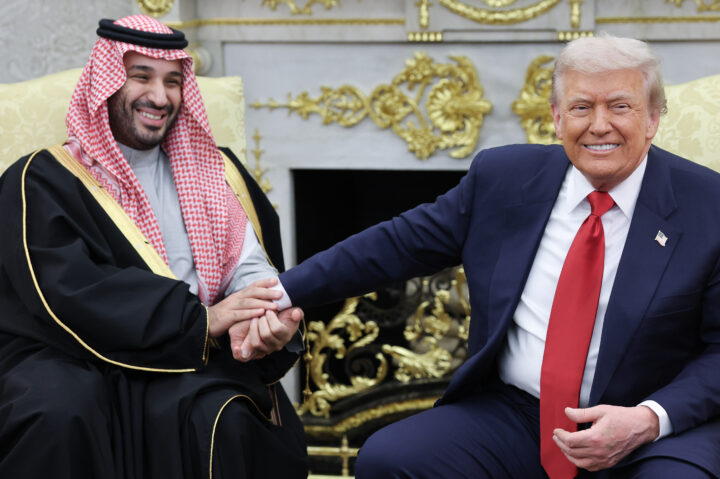
President Donald Trump (R) meets with Crown Prince and Prime Minister Mohammed bin Salman of Saudi Arabia during a bilateral meeting in the Oval Office of the White House on November 18, 2025.
In an Oval Office appearance following their meeting on Tuesday, President Donald Trump and Saudi Crown Prince Mohammed bin Salman announced progress on multiple bilateral initiatives, including a U.S.-Saudi defense pact and Riyadh’s purchase of F-35 fighter jets.
Trump indicated Riyadh may receive a similar jet to Israel’s advanced F-35I Adir model: “When you look at the F-35 and you’re asking me ‘Is it the same [as Israel’s]?’ I think it’s going to be pretty similar,” said Trump. “This [Saudi Arabia] is a great ally, and Israel’s a great ally. I know they’d like you [MBS] to get planes of reduced caliber, but I don’t think that makes you too happy. … We’re looking at that exactly right now but as far as I’m concerned, [both countries are] at a level where they should get top of the line.”
The U.S. is obligated to uphold Israel’s qualitative military advantage in the region, which the sale of the F-35 stealth fighter jets could threaten. The U.S. has thus far only sold the F-35s to longstanding military allies.
In addition, U.S. national security hawks have raised worries that, given Saudi Arabia’s growing relationship with China, some of the sophisticated technology in the advanced military systems could fall into the hands of America’s leading geopolitical rival.
With Saudi Arabia now the only other country in the Middle East besides Israel to obtain the fighter jet, questions remain around which model and allowances Riyadh will receive. The F-35I is Israel’s unique model; other countries fly standard F-35A, B or C models. In addition, the U.S. has granted Jerusalem customization rights and operational freedoms with the F-35 that other countries do not have, including the ability to install its own software and gear, access to deeper source code and domestic maintenance and repair authorities, all of which contribute to its qualitative military edge.
When asked why normalization with Israel is not a prerequisite to the deal, Trump said, “Israel will be happy. Israel’s aware and they’re going to be very happy,” but did not elaborate.
MBS said Riyadh is still interested in such normalization: “We believe having a good relationship with all the Middle Eastern countries is a good thing. We want to be part of the Abraham Accords, but we want also to be sure that we secure a clear path of a two state solution.”
“Today we had a healthy discussion that we are going to work on that to be sure that we can prepare as soon as possible to have that,” he continued.
Trump said he had not received a definitive “commitment” from MBS, but said that the crown prince has “a very good feeling toward the Abraham Accords.”
“Definitely, Mr. President,” MBS replied. “We want peace for the Israelis, we want peace for the Palestinians. We want them to coexist peacefully in the region. We will do our best to reach that day.”
Trump said the two countries “have reached an agreement” on a defense pact, without offering further details, and also noted that he expects the U.S. to reach a civil nuclear agreement with Saudi Arabia, saying he can “see that happening,” but also stressing that “ it is not urgent.” He also confirmed the U.S. is working on approving export licenses for “certain levels of chips” to Saudi Arabia.
“We may have announcements on that later today,” said Secretary of State Marco Rubio. “But that’s what we’ve been working on, is the mechanics by which something like that can be achieved. And that’s part of this broader engagement and cooperation between our two countries.”
MBS also confirmed that Saudi investment in the U.S. will be increased, following on Trump’s visit to Riyadh for a U.S.-Saudi investment forum in May when Saudi Arabia pledged to make a $600 billion investment in the U.S in sectors such as defense, energy and technology.
“Today and tomorrow we can announce that we are going to increase that $600 billion to almost $1 trillion of investment, real investment and real opportunity,” said MBS. “The agreement that we are signing today in many areas in technology and AI and materials … that will create a lot of investment opportunities for our countries.”
Trump welcomed the announcement. “When you invest a trillion dollars, that’s national security for us too because it creates jobs, it creates a lot of things,” he told reporters. “When you hear one country is putting a trillion dollars into the United States that creates national security … that’s a real ally that will do that. It creates a lot of power for the United States.”
The comments, made after meeting with Turkish President Erdogan, are the first time Trump addressed the issue in his second term
Andrew Harnik/Getty Images
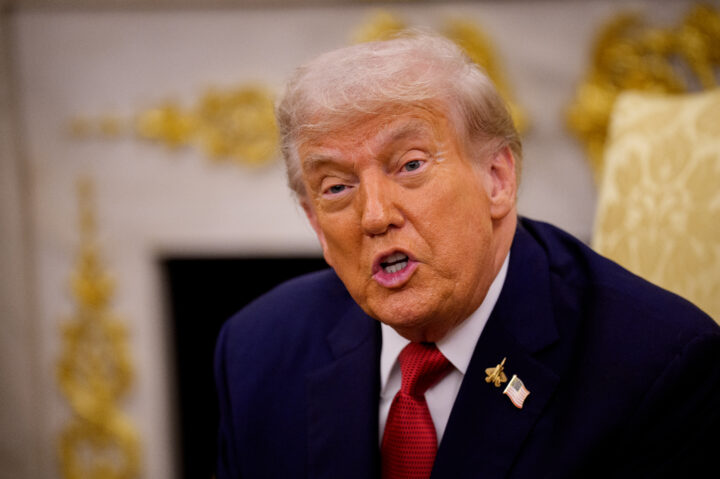
President Donald Trump in the Oval Office at the White House on September 25, 2025 in Washington, DC.
President Donald Trump pledged on Thursday that he will not allow Israel to annex the West Bank, the first time Trump has addressed the matter in his second term.
Asked about reports that he told Arab leaders this week he would not permit Israel to make the move, Trump confirmed to reporters in the Oval Office that he opposes annexation. “I will not allow Israel to annex the West Bank, nope, I will not allow it. It’s not gonna happen,” he said, hours after a meeting with Turkish President Recep Tayyip Erdogan.
Asked if he spoke with Israeli Prime Minister Benjamin Netanyahu about the issue, Trump said, “Yeah, but I’m not going to allow it. Whether I spoke to him or not — I did — but I’m not allowing Israel to annex the West Bank. There’s been enough, it’s time to stop now.”
Netanyahu will address the United Nations General Assembly in New York on Friday, and he and Trump will meet in the Oval Office on Monday, for their fourth White House meeting of the year.
In his own General Assembly address earlier this week, Trump pledged his support for Israel and sharply criticized several European nations who had unilaterally recognized a Palestinian state. He did not mention annexation or include any criticism of Israel in his remarks.
Netanyahu has pledged to respond to those moves next week, with annexation of the West Bank viewed as one possible action he could pursue, under pressure from right-wing elements of his governing coalition.
Trump: ‘He needs certain things, and we need certain things, and we’re going to come to a conclusion’
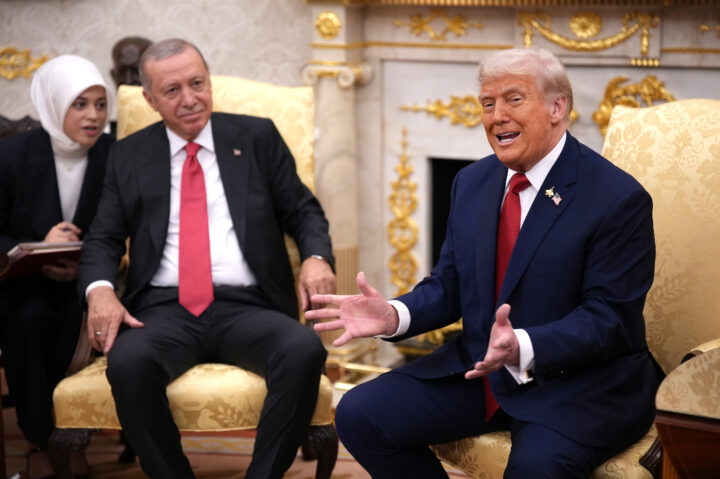
Photo by Andrew Harnik/Getty Images
President Donald Trump delivers remarks during a meeting with President of Turkey Recep Tayyip Erdogan in the Oval Office at the White House on September 25, 2025 in Washington, D.C.
President Donald Trump suggested on Thursday that he was likely to permit Turkey to purchase F-35 fighter jets as soon as “the end of the day,” ending a nearly eight year blockade on Ankara’s acquiring the top-of-the-line fighter jet as a result of its 2017 purchase of a Russian S-400 missile system.
Speaking to reporters from the Oval Office alongside Turkish President Recep Tayyip Erdogan ahead of a meeting between the two and their respective teams, Trump said without mentioning the F-35’s or the less-advanced F-16 jets by name that he expected the Turkish leader would “be successful with buying the things” he would “like to buy.”
“He needs certain things, and we need certain things, and we’re going to come to a conclusion. You’ll know by the end of the day,” Trump said at the outset of his meeting with Erdogan.
The White House declined to comment on what the president was referring to or if an announcement regarding resumed F-35 sales to Ankara was imminent.
Erdogan has focused his visit to the White House, his first such trip in six years, around securing U.S. sanctions relief and approval for new arms deals, including the F-35 jets and other fighter and Boeing aircraft. Trump implemented the sanctions during his first term after Turkey purchased a Russian air defense system that U.S. officials warned could be used by the Russians to harness data on the F-35’s capabilities and compromise the aircraft.
The sanctions, pursued through the Countering American Adversaries Through Sanctions Act, are still in place due to Turkey’s refusal to replace the Russian system. The Biden administration approved the sale of F-16 jets to Turkey in early 2023 on the condition of Ankara allowing Sweden to join NATO.
The prospect of Trump changing course on the sale has sparked bipartisan concern from some lawmakers. While some see such a sale as a way to incentivize better behavior from Ankara, others have warned that the embrace could have the opposite effect.
A bipartisan coalition of House lawmakers wrote a letter to Secretary of State Marco Rubio and Defense Secretary Pete Hegseth on Thursday urging the Trump administration against approving a deal for F-16s or F-35s.
It was signed by Reps. Chris Pappas (D-NH), Gus Bilirakis (R-FL), Dina Titus (D-NV), Nicole Malliotakis (R-NY), Brad Sherman (D-CA), Frank Pallone Jr. (D-NJ), Don Bacon (R-NE), Jim Costa (D-CA), Josh Gottheimer (D-NJ), Stephen Lynch (D-MA), Dan Goldman (D-NY), Brian Fitzpatrick (R-PA), Brad Schneider (D-IL), Tom Suozzi (D-NY), Wesley Bell (D-MO), Ted Lieu (D-CA), Mike Lawler (R-NY), Rob Menendez (D-NJ), Greg Landsman (D-OH) and Gabe Amo (D-RI). The American Jewish Committee, CUFI Action Fund and FDD Action were among the organizations that endorsed the letter.
“The security risks of Turkey’s acquisition and continued possession of the Russian S-400 system are well known. The S-400 poses a direct threat to U.S. military aircraft, including both the F-16 and F-35, by enabling Russian intelligence to gain insight into sensitive U.S. military technology if operated alongside these platforms,” the lawmakers wrote.
“Congress has consistently upheld bipartisan restrictions on Turkey’s access to the F-35. Any move to reverse this policy without first securing the statutorily required certification would be a clear violation of U.S. law, undermine Congressional authority, and signal to others that U.S. law and strategic principles can be disregarded,” they added.
The Israeli prime minister also expressed an openness for a new relationship with Syria after Trump removed sanctions on the country
Andrew Harnik/Getty Images
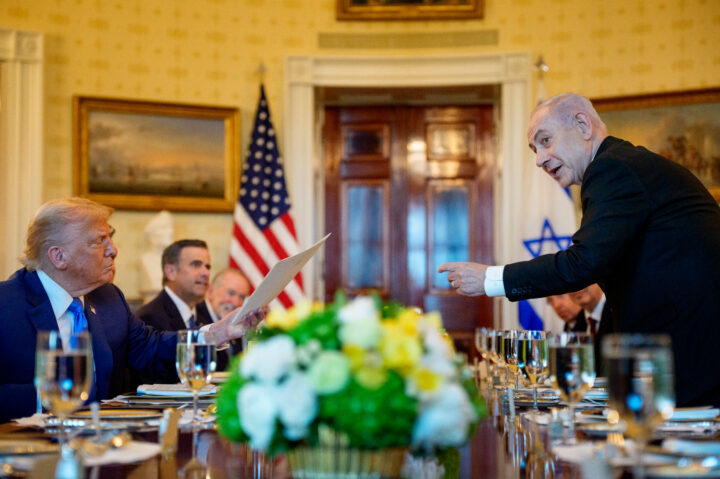
Israeli Prime Minister Benjamin Netanyahu hands off a letter he sent to the Nobel Peace Prize committee to nominate U.S. President Donald Trump for the Nobel Peace Prize during a dinner in the Blue Room of the White House on July 07, 2025 in Washington, DC.
Israeli Prime Minister Benjamin Netanyahu greeted President Donald Trump in the White House Monday evening with effusive warmth, expressing the “appreciation and admiration” of Israel, the Jewish people and “the leadership of the free world” for the U.S.’ recent bombing campaign against Iran’s nuclear facilities.
He also offered Trump an avenue toward his elusive goal: receiving a Nobel Peace Prize.
“He is forging peace as we speak, in one country and one region after the other. So I want to present you, Mr. President, the letter I sent to the Nobel Prize Committee,” Netanyahu announced, saying it would be a “well-deserved” honor for Trump.
“Coming from you in particular, this is very meaningful,” Trump said. “It’s a great honor.”
Similar exchanges of flattery are not an unusual occurrence in the Trump White House. But the warmth and back-slapping present a marked shift even from Netanyahu’s last visit to Washington in April — when he sought to head off U.S. tariffs and urge Trump not to make a nuclear deal with Iran — and a sign of how much has changed in the last three months.
In April, Netanyahu avoided reporters’ questions about Iran. This time, he and Trump took a victory lap together after a 12-day war in which Israel, with key support from the U.S., exacted significant damage on Iran’s nuclear program.
“It was an amazing job,” Trump said of the American bombers’ attacks on three nuclear sites in Iran. “This stopped a lot of fighting. When that happened, it was a whole different ballgame.”
Asked whether he would support additional strikes on Iran, Trump said that he “can’t imagine wanting to do that,” saying that he thinks Iran wants peace.
“They want to meet. They want to work something out. They’re very different now than they were two weeks ago,” Trump said. He ceded the floor to Netanyahu when a reporter asked if the war between Israel and Iran was over.
“I think the partnership between Israel and the United States, the partnership between President Trump and me, produced a historic victory. It’s an incredible victory,” Netanyahu said. He likened Iran to a tumor, noting that doctors must still check in on cancer patients after a tumor has been removed.
“You have to constantly monitor the situation to make sure that there’s no attempt to bring it back,” Netanyahu said. “This has already changed the face of the Middle East, but it’s not over.”
Taking cues from Trump, Netanyahu offered tentative hope for a new relationship with Syria. Israeli leaders, including Netanyahu, have been cautious when considering how to deal with Ahmed al-Sharaa, the new president of Syria. Trump, meanwhile, has expressed optimism about al-Sharaa and moved to remove sanctions on Syria. The Trump administration on Monday removed Hayat Tahrir al-Sham, a group previously led by al-Sharaa, from its list of foreign terrorist organizations.
But on Monday, Netanyahu said there is an “opportunity to explore” with the new government in Israel’s northern neighbor — and gave Trump some credit for it.
“I think this presents opportunities for stability, for security and eventually for peace,” said Netanyahu. “I think that opportunity has been opened by the president and by the changed security situation, which we brought about with the collapse of the Assad regime.”
Trump and Netanyahu did not share much publicly about the recent reports suggesting a ceasefire deal between Israel and Hamas is under consideration.
When asked if he thinks there can be a two-state solution, Trump again handed the mic to Netanyahu.
“You have the greatest man in the world to answer that age-old question,” said Trump. Netanyahu said no.
“We’ll work out a peace with our Palestinian neighbors, those who don’t want to destroy us, and we’ll work out a peace in which our security, the sovereign power of security, always remains in our hands,” said Netanyahu. “People will say, ‘It’s not a complete state, it’s not a state, it’s not that’ — we don’t care. We vow never again.”
Please log in if you already have a subscription, or subscribe to access the latest updates.
 Continue with Google
 Continue with Apple