













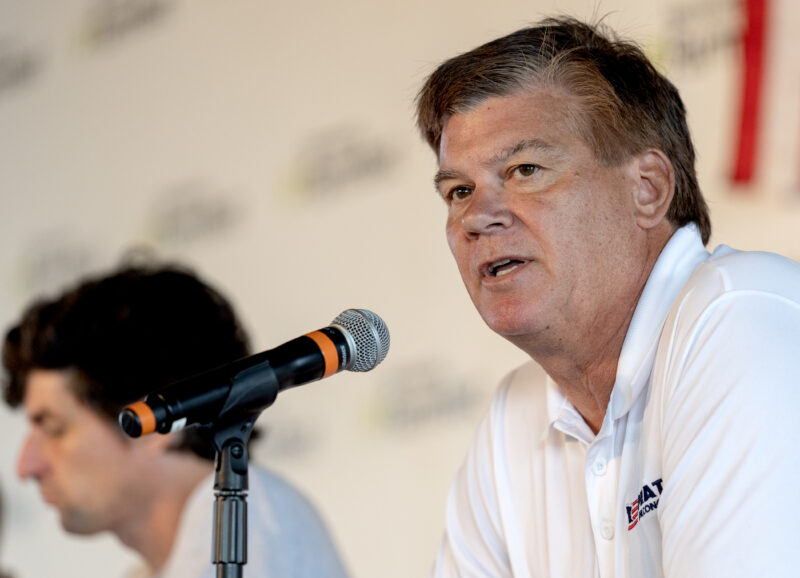










Rep. Wesley Hunt, made a series of inflammatory remarks about Saudi Arabia during his military service and failed Senate bid that could complicate his confirmation
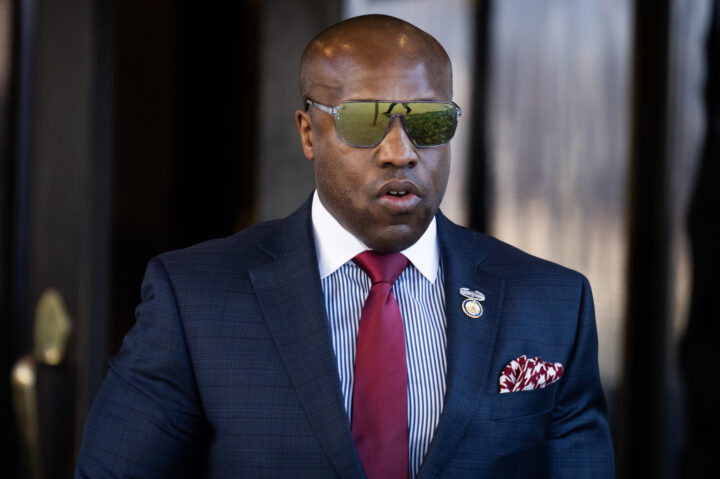
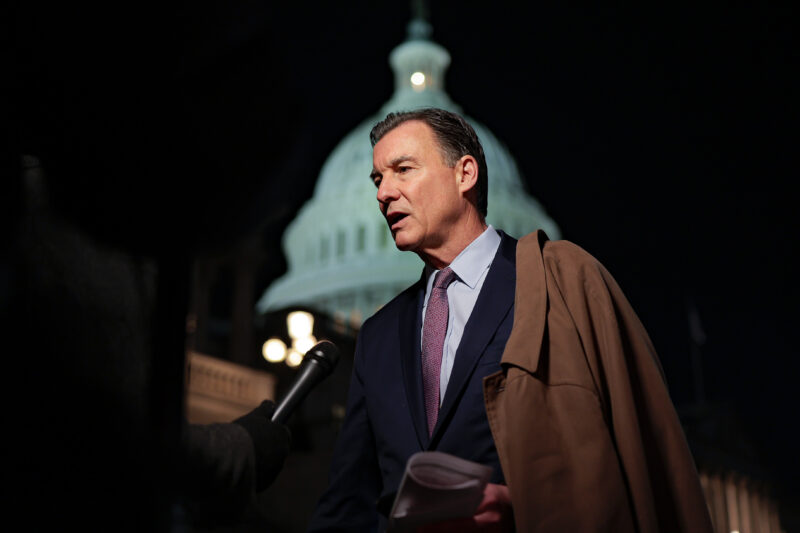
Tom Williams/CQ-Roll Call, Inc via Getty Images
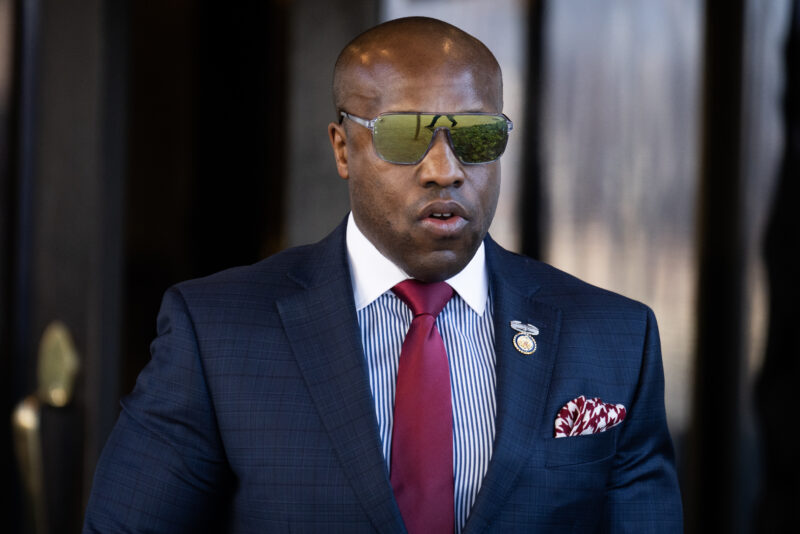
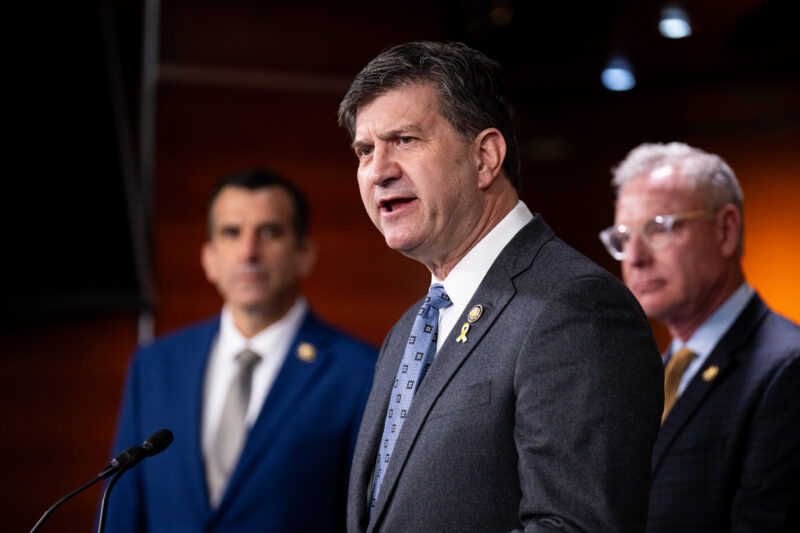
Rep. Wesley Hunt (R-TX) leaves a meeting of the House Republican Conference at the Capitol Hill Club on Wednesday, January 22, 2025.


 Add JewishInsider on Google
Before being nominated to be U.S. ambassador to Saudi Arabia earlier this week, Rep. Wesley Hunt (R-TX) pointed to his experience serving as a military diplomatic liaison to Saudi Arabia to offer strident criticisms of the U.S. ally.
The past comments could prove to be an issue in his confirmation process, or lead to a frosty reception if he is confirmed, a prospect that currently appears uncertain.
As previously reported by Jewish Insider, in 2022, Hunt suggested that he did not view Saudi Arabia as a “true ally” and highlighted the Saudi nationality of many involved in the 9/11 attacks.
“I learned a lot about what our interests need to be and who we need to be in the business of supporting for the future, because [Israel is] our one true ally in the region,” Hunt said during a virtual event with AIPAC.
He added that the U.S. “cannot let our guard down” with Middle East partners generally because “some of these countries are bad actors. They’re rogue nations, some of them.”
During his failed Senate campaign, Hunt — along with many other Texas Republicans — made his opposition to Islamic Sharia law a central element of his campaign, repeatedly pointing to his own experience in Saudi Arabia and Iraq as an example of its dangers.
“People who dismiss Sharia law as fear-mongering have never lived under it,” Hunt said. “I lived in Saudi Arabia. I lived in Iraq. I’ve seen what that system looks like in real life, not on cable news. Public beheadings happened there not long ago. Women couldn’t even drive when I was stationed there.”
Hunt also said, of Sen. John Cornyn (R-TX), “He’s been soft on this because he’s never faced what I’ve seen. He’s never stood face-to-face with evil in its purest form. He’s never witnessed the public beheadings, the brutal treatment of women, or the barbaric enforcement of Sharia law.”
He said that Sharia law “should be banned in America” and joined the Sharia-Free America Caucus, warning that Sharia law is on the rise in America, though no U.S. jurisdiction enforces the Muslim legal code.
Other U.S. officials have historically been critical of Saudi Arabia’s restrictive laws for women and other elements of the country’s judicial system, which have since been loosened.
Also during the Senate campaign, Hunt said he had not felt safe, during his time living in Saudi Arabia, from jihadi sympathizers following the killing of Osama bin Laden.
“These are our allies that we are working with every single day, and we were actually fearful of our lives,” Hunt said at the time. “Now, imagine letting people, with that mindset, come to our country, and you wonder why we are waking up to having dead national guardsmen … the mentality of these people never ended. It never stops. The jihad never ends. We are the infidel.”
Semafor reported on Thursday that some Republican senators harbor concerns about Hunt’s nomination and are unlikely to allow it to move forward quickly.
The congressman previously served as a military diplomatic liaison in the kingdom; it’s unclear whether the Senate will be able to process his nomination before the end of the current Congress
Tom Williams/CQ-Roll Call, Inc via Getty Images
Rep. Wesley Hunt (R-TX) leaves a meeting of the House Republican Conference at the Capitol Hill Club on Wednesday, January 22, 2025.
President Donald Trump on Monday informed the Senate that he plans to nominate Rep. Wesley Hunt (R-TX) as the U.S. ambassador to Saudi Arabia, moving toward filling one of the numerous Middle East ambassadorship posts that have sat vacant since the start of his second administration.
Hunt, a former Army officer and Apache helicopter pilot, served two deployments in Saudi Arabia as a military diplomatic liaison. He is serving his second term in the House, but lost a primary bid for Texas’ Senate seat earlier this year.
“It is the honor of a lifetime to accept President Trump’s nomination to serve as the next United States Ambassador to the Kingdom of Saudi Arabia,” Hunt said in a statement on X. “Having served in the region both in combat as an Army officer and for two years as a diplomatic liaison in the Kingdom, I understand the strategic importance of the partnership between the United States and Saudi Arabia and the profound responsibility of this position.”
Hunt said in 2022 during a virtual event with AIPAC that Israel is the “one true ally” of the United States in the Middle East, while noting that many of 9/11 hijackers, as well as Osama Bin Laden himself, were from Saudi Arabia.
“I learned a lot about what our interests need to be and who we need to be in the business of supporting for the future, because that’s our one true ally in the region,” Hunt said at the event.
Addressing the then-fledgling Abraham Accords, Hunt was supportive but cautious. “Some of these countries are bad actors. They’re rogue nations, some of them,” he continued. “Just because we have something set up like the Abraham Accords — which I think is good for the entire world, especially for the region — we cannot let our guard down.”
He recently joined a letter calling for a Department of Justice investigation into efforts by an official in New York City Mayor Zohran Mamdani’s administration to meet with the Iranian ambassador to the United Nations.
Hunt has been a co-chair of the Congressional Caucus on Black-Jewish Relations.
But he was one of just 21 House members who voted last year against a resolution expressing support for the State Department’s global guidelines on combating antisemitism. Antisemitism envoy Ambassador Yehuda Kaploun has been working to tackle antisemitism in Saudi Arabia, including stripping antisemitic content from the country’s school curricula.
During the AIPAC event, Hunt also described himself as the “energy congressman of the world,” given that he represents the offices of many major energy companies in Houston, making it part of his job to defend the energy industry — also a major industry for Saudi Arabia.
It will be logistically difficult for the Senate to consider Hunt’s nomination before the midterm elections, and with a slew of previous nominees still under consideration, it’s unclear whether the Senate will be able to process Hunt’s nomination before the end of the year. Should Democrats retake the upper chamber, Hunt’s confirmation would be more difficult.
The nomination comes at a highly sensitive time in the U.S.-Saudi relationship, as the two countries move toward a nuclear deal that would reportedly allow for nuclear enrichment inside Saudi Arabia, which is set to be reviewed by Congress in the coming months.
Saudi Arabia is also at a major crisis point with the Iran-backed Houthi terrorists in Yemen as hostilities have flared after several years of quiet. The Houthis this weekend seized critical port cities and islands along the coastline of the Red Sea and launched missiles from Iraq that disabled the pipeline that Saudi Arabia had been using to bypass the Strait of Hormuz.
President Donald Trump said he doesn’t plan to intervene, despite reported Saudi pleas.
The kingdom has also recently been recalibrating its regional position, with Saudi Arabia moving away from normalization with Israel, experiencing tensions with its regional rival the United Arab Emirates, forming new ties with Turkey and Pakistan and again allowing the promotion of Islamist extremism.
Sonderling’s nomination has drawn support from the Louis D. Brandeis Center for Human Rights Under Law, which advocates for Jewish civil rights
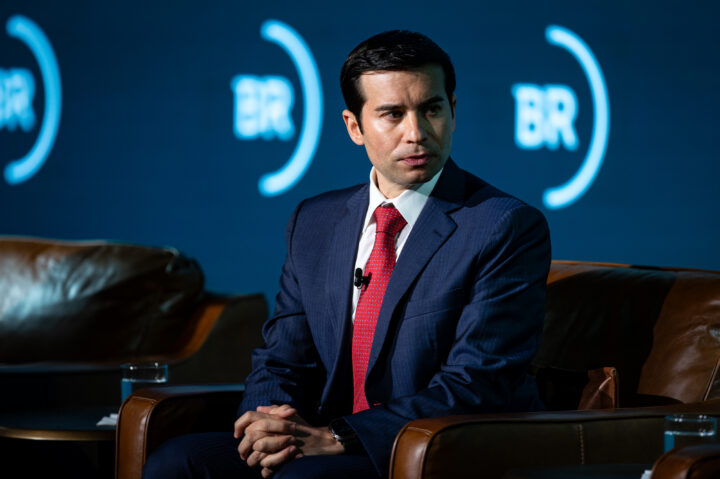
Al Drago/Bloomberg via Getty Images
Keith Sonderling, US deputy labor secretary, during the Business Roundtable CEO Workforce Forum in Washington, DC, US, on Tuesday, June 17, 2025.
Keith Sonderling, the acting labor secretary nominated by President Donald Trump to officially assume the role, told lawmakers during his confirmation hearing on Thursday that the federal government must play a role in shielding workers from religious discrimination, invoking his own Jewish family history to highlight his dedication to the issue.
Responding to a question from Sen. Susan Collins (R-ME) regarding the department’s responsibility to protect American workers against religious discrimination, Sonderling referenced his background and emphasized that the Department of Labor under his leadership would remain committed to rooting out bias.
“My family’s personal story, as you heard, both my grandparents were Holocaust survivors,” Sonderling said. “They came over here before some of these laws were in place, and they were discriminated against based upon that, and weren’t given the employment opportunities that others were solely based upon their religion. Unfortunately, we still see that today, and that’s a very important role that we have in this administration — to root out all religious bias, including antisemitism.”
Sonderling has been operating as acting labor secretary since former Secretary Lori Chavez-DeRemer resigned in April. He also served on the Equal Employment Opportunity Commission from 2020 until his term expired in 2024.
Sonderling made similar comments regarding the discrimination his grandparents faced during his confirmation hearing to be deputy secretary last year.
Sonderling, speaking before the Senate Committee on Health, Education, Labor and Pensions, explained that the Department of Labor launched the “Center for Faith” in March, a website which allows users to click on their state to review localized religious protections, identify workplace discrimination and access federal resources.
“We put out more guidance for religious workers to be able to come forward,” Sonderling said. “Also, too, it’s religious discrimination if religious organizations can’t get the same federal services that other organizations could get.”
“So it’s very important to me. It’s very important to the president,” he continued. “He’s issued executive orders on antisemitism, on anti-Christian bias and on religious discrimination as a whole, and we will prosecute those cases as equally as we will any other case.”
Sonderling’s nomination has drawn strong support from the Louis D. Brandeis Center for Human Rights Under Law, a nonpartisan organization that advocates for Jewish civil rights.
Brandeis Center CEO Kenneth Marcus said in a statement following the hearing that Sonderling is the “right leader to protect Jewish workers,” pointing to the nominee’s personal background and his established track record of combating antisemitism in the workplace in his previous roles in government.
“Antisemitism in the American workplace is rising at an alarming rate, and the moment demands a Department of Labor unafraid to confront it, along with every other form of discrimination,” Marcus said. “As the grandson of Holocaust survivors, Keith understands what’s at stake in this fight in a way few others do.”
“At the EEOC, he worked to educate employers and employees on antisemitism directly, and as deputy secretary and acting secretary at the Department of Labor, he repeatedly demonstrated that combating antisemitism and discrimination is a top priority,” Marcus added.
Sen. Rand Paul (R-KY), the committee’s chair, voted no, while Sen. John Fetterman (D-PA) crossed party lines to back the nomination

Drew Angerer/Getty Images
Rep. Markwayne Mullin (R-OK) speaks during a news conference with members of the House Intelligence Committee at the U.S. Capitol August 12, 2022 in Washington, DC.
The Senate Homeland Security and Governmental Affairs Committee voted 8-7 Thursday to advance Sen. Markwayne Mullin’s (R-OK) nomination to be secretary of homeland security to the full Senate, largely along party lines.
Sen. Rand Paul (R-KY), the committee chair, was the lone Republican to oppose the nomination, while Sen. John Fetterman (D-PA) voted in support. Mullin’s nomination now heads to the full Senate, where a simple majority is required for confirmation.
Prior to the vote, Sen. Gary Peters (D-MI), the committee’s ranking member, announced he would oppose the nomination, arguing that Mullin “is not up to the challenge.”
“When I heard President [Donald] Trump would be nominating Sen. Mullin, I kept an open mind,” Peters said on Thursday. “However, throughout the nomination process, he has failed to be forthright and transparent. Sen. Mullin also showed that he doesn’t have the experience or the temperament to lead this critical department.”
Some committee members had expressed frustration during his hearing on Wednesday that Mullin was not forthcoming about a trip he took as a member of Congress, which he claims was classified.
Explaining his vote as the lone Democrat in support, Fetterman said on social media: “My AYE is rooted in a strong committed, constructive working relationship with Senator Mullin for our nation’s security.” He added that he had approached the confirmation “with an open-mind.”
During Mullin’s contentious hearing on Wednesday, Paul had voiced opposition to Mullin, citing personal animosity stemming from remarks the Oklahoma senator made about a past assault on Paul.
Mullin last month called Paul a “freaking snake” and said he “understood” why Paul’s neighbor had attacked him — an assault that left Paul with serious injuries and resulted in a prison sentence for the assailant. Mullin declined to apologize during the hearing, prompting Paul to threaten to cancel the vote.
The vote also comes as DHS enters the second month of a funding lapse amid a standoff between lawmakers over funding and reforms for U.S. Immigration and Customs Enforcement.
The lapse has impacted agencies including the Transportation Security Administration, Federal Emergency Management Agency, ICE and the Coast Guard, raising security concerns amid heightened threats tied to the ongoing war with Iran.
During his confirmation hearing, Mullin said it was a “horrible time” for the department to be without full funding and acknowledged the increased threat environment.
Lawmakers also raised concerns about the Nonprofit Security Grant Program, which provides funding to help protect religious institutions.
Following last week’s violent attack at Temple Israel in suburban Detroit, Mullin was pressed on the need to streamline the program amid persistent challenges, including underfunding and delays tied in part to the DHS funding lapse.
Mullin agreed, saying “there’s a better way to do this,” adding that he would be “laser-focused” on improving the program.
The nominee faced opposition from Democrats and Sen. John Curtis over his past views on Israel and Jewish people
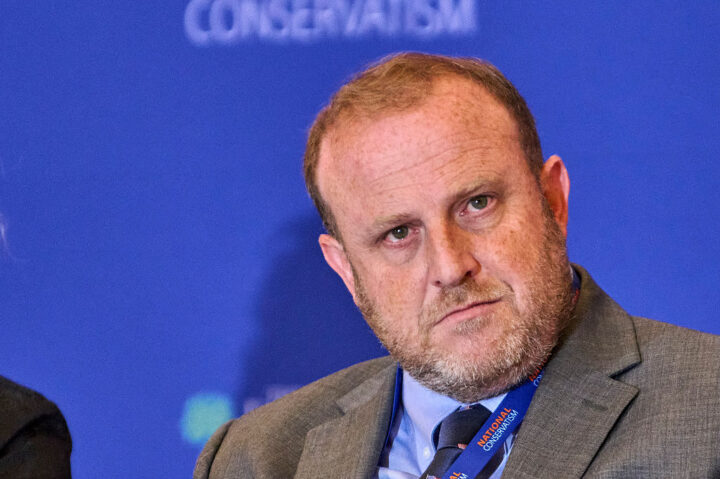
DOMINIC GWINN/Middle East Images/AFP via Getty Images
Jeremy Carl speaks at the National Conservatism Conference in Washington D.C., Sept. 3, 2025.
With no clear path to confirmation in the Senate a month after he was grilled and struggled to explain his past views and writings at a confirmation hearing, Jeremy Carl withdrew his nomination to be assistant secretary of state for international organizations on Tuesday.
Carl faced unified opposition from Democrats on the Senate Foreign Relations Committee, as well as Sen. John Curtis (R-UT), who said after the hearing he found Carl’s past comments downplaying the U.S.-Israel relationship and his “insensitive remarks about the Jewish people unbecoming of the position for which he has been nominated.”
The nominee had previously expressed a range of derogatory views about Jews, describing them as having a victim mentality, downplaying the significance of the Holocaust to the Jewish story and experience and musing about the need to address the what he called the “Jewish Question.” He also espoused a view of the United States as a white, Christian nation, claiming that white people are undergoing a “cultural genocide” and deliberate replacement.
Curtis’ opposition was sufficient to prevent Carl’s nomination from advancing out of the committee, leaving Carl with no clear path to confirmation.
“I am tremendously grateful to President Trump for nominating me and then (upon expiration of my original nomination) renominating me for this role, and I am also grateful to Secretary Rubio and his team for their continued support throughout this long and time-consuming process,” Carl said on X.
He added that, with no path to unanimous support from Republicans on the committee, he did “not wish to have the President, Secretary Rubio, or the rest of his team waste valuable time and energy attempting to change that decision.”
GOP Sen. John Curtis said of Carl, ‘I find his anti-Israel views and insensitive remarks about the Jewish people unbecoming of the position for which he has been nominated’
DOMINIC GWINN/Middle East Images/AFP via Getty Images
Jeremy Carl speaks at the National Conservatism Conference in Washington D.C., Sept. 3, 2025.
The nomination of Jeremy Carl, tapped to be the assistant secretary of state for international organizations, appears bound to fail after Sen. John Curtis (R-UT) announced his opposition to Carl’s confirmation following a contentious confirmation hearing in the Senate Foreign Relations Committee this morning.
Curtis and a series of Democrats questioned Carl over past antisemitic, anti-Israel and otherwise inflammatory comments that the nominee had made online and in a series of podcast appearances. All Democrats are expected to oppose the nomination.
Curtis, in his questioning, honed in on past remarks by Carl that the U.S. spends too much time and energy on Israel “often to the detriment of our own national interest.” He emphasized that a key part of Carl’s role would be to resist antisemitism and anti-Israel bias at the United Nations, and sought to elucidate Carl’s views on whether the U.S. should provide diplomatic support to Israel at the U.N. and whether he understands the value of the U.S.-Israel relationship.
Carl, in spite of his past comments, said he would push back on anti-Israel and antisemitic bias, and highlighted his past ties to former Secretary of State George Shultz and Turning Point USA founder Charlie Kirk in order to demonstrate his pro-Israel bona fides.
Curtis said that, in light of Carl’s own past comments and his failure to push back against antisemitic sentiments expressed by a podcast host with whom he conducted an interview, he was skeptical of Carl’s ability to serve as a credible voice on these issues with foreign diplomats who hold anti-Israel and antisemitic views.
“When asked by other diplomats, who do come with these agendas that you referred to in your remarks, how do you push back on that when you didn’t push back on that moderator?” Curtis questioned.
Pressed further on whether there are any other allies that he thinks the U.S. dedicates too much time and attention to, Carl evaded the question.
“You’re [nominated to be] the principal manager of the U.S. multilateral policy, and anti-Israel bias in international organizations is part of a broader strategy to undermine the United States [and] our legitimacy,” Curtis told Carl at the end of his questioning. “I don’t know that I’ve been convinced that you understand the threat posed to the West and [in that] narrative.”
A Curtis spokesperson told Jewish Insider after the hearing that he plans to oppose Carl’s nomination, which will be enough to block the nominee from advancing out of committee, assuming no Democrats on the committee support him.
“After reviewing his record and participating in today’s hearing, I do not believe that Jeremy Carl is the right person to represent our nation’s best interests in international forums, and I find his anti-Israel views and insensitive remarks about the Jewish people unbecoming of the position for which he has been nominated,” Curtis said in a statement after the hearing.
A series of Democrats lined up during the hearing to criticize Carl and highlight his inflammatory past comments.
Sen. Jacky Rosen (D-NV), sitting beside a poster with a quote from Carl, “the Jews love to see themselves as oppressed,” said that the “nomination should alarm every senator who believes in basic decency, truth and responsibility that does come with public service.”
She emphasized that Carl’s Jewish heritage — he grew up Jewish before converting to Christianity — does not excuse his “antisemitism” and “hateful rhetoric” and that a vote for Carl “tells Jewish Americans they simply don’t matter,” and disrespects the memories of those who fought in World War II.
“If you have empathy for the Jewish community, communities experiencing hate [or are] simply tired of advancing nominees who I doubt will be respected on the world stage, you must vote against Mr. Carl’s nomination,” Rosen concluded.
Under questioning from Sen. Cory Booker (D-NJ), Carl expressed generalized regret about past comments downplaying the impacts of the Holocaust on the Jewish people and arguing that the Jewish people are too focused on that historical trauma.
“Sometimes I take an idea too far, and I made some comments in interviews about minimizing the effect of the Holocaust that were absolutely wrong. And I’m not going to sit here and defend them here,” Carl said.
Pressed by Booker on whether he believes that the ethnic and racial makeup of the country is important — for example, whether the country would be worse off if it were 40% Jewish — Carl said, “echoing President Trump, I believe unity rather than diversity is a strength” but insisted that he does not believe any race is inherently superior.
Carl also affirmed his belief in the Great Replacement Theory, which claims that there is an intentional effort by elites to replace white Americans with immigrants, saying “the Democratic Party, through its immigration policies, has certainly shown signs of that.”
“You have no decency. You have no honor. You say inflammatory things because you think it will ingratiate you to those who are paying your salary, and you sit here before me and try to wrap yourself in the American flag?” Booker said. “I believe in this nation. I believe in the principles. I believe in those who fought and died for our country. You disgrace that legacy and the ideals that we all swear an oath to uphold.”
Booker went on to blast Carl for his defense of those involved in the Jan. 6, 2021 attack on the U.S. Capitol.
Sen. Chris Murphy (D-CT), pointing to Carl’s past comments asserting that anti-white discrimination is the most widespread and problematic form of discrimination in the modern day and that white Americans are undergoing a “cultural genocide,” pressed Carl to specify what he believes constitutes white culture and the elements of it that are being erased.
Carl appeared to struggle to provide specific answers, ultimately arguing that white Christian churches are distinct from Black churches “in terms of its tone and style on average,” “foodways could be different” and “music could be different,” pointing to the Super Bowl halftime Show, which was performed in Spanish by Puerto Rican artist Bad Bunny.
“I’m not a racial nationalist … I’m a civic nationalist,” Carl said. “I am concerned with the majority common American culture that we had for some time, that through particularly mass immigration, I think has become much more balkanized, and I think that weakens us.”
Carl said that he stands by his view that “white Americans are often very disfavored in overt ways” in the U.S. legal system but insisted that he does not believe that white culture is superior.
Sen. Tim Kaine (D-VA) highlighted statistics showing the prominence of white people in positions of power nationwide.
“Sen. Rosen … was reading comments to you where you had been saying, ‘Man, Jews play the victim. Jews like to be the victim,’ and yet you’re making a claim that whites are victimized by a cultural genocide, when all the statistics would say, not just in history, but today, that whites are very well represented at every level of every institution,” Kaine said.
When Sen. Jeanne Shaheen (D-NH), the committee’s ranking member, pressed Carl on how lawmakers can “trust that you can represent the United States of America to the rest of the world in an unbiased manner when you have taken no steps to restrain your conduct” during his confirmation process, Carl said he “understand[s] the importance of restraint and conduct” but said he needs to “balance that with my current job [as a senior fellow at the Claremont Institute], which involves advocacy” until such point as he is actually confirmed.
Sen. Jeff Merkley (D-OR) accused Carl of “judging people by the color of their skin,” going on to argue that Carl is underqualified and inexperienced for the position, having no past staff experience in the U.S. Mission to the United Nations or in any official diplomatic roles.
He pressed Carl for specifics about the U.S. policy toward a series of United Nations organizations — seemingly testing Carl’s knowledge of the U.N. system and the Trump administration’s policy toward it. Carl generally did not provide specific answers, pointing to his status as a private citizen.
All the committee’s Republicans and two Democrats — Sens. Jeanne Shaheen and Jacky Rosen — voted in favor
Screenshot
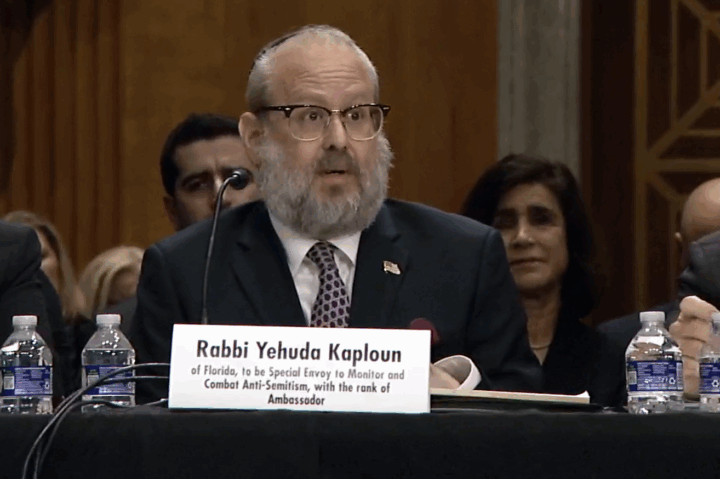
Rabbi Yehuda Kaploun, the Trump administration's nominee to be special envoy to monitor and combat antisemitism
The Senate Foreign Relations Committee voted on Wednesday to advance Rabbi Yehuda Kaploun’s nomination to be the Trump administration’s antisemitism envoy, clearing the way for a full Senate vote on his confirmation.
All 12 Republicans on the committee voted in favor, while eight of the 10 Democrats on the panel were opposed. The two Democrats who voted to support Kaploun were the committee’s ranking Democrat, Sen. Jeanne Shaheen (D-NH), and Sen. Jacky Rosen (D-NV), a close ally of the Jewish community.
Kaploun, an Orthodox Jewish businessman and Chabad rabbi, was a campaign surrogate for President Donald Trump’s 2024 bid and has, since he was first nominated for the post in April, become a fixture at D.C.-area events focused on combating antisemitism.
The leaders of various mainstream Jewish organizations — including the Jewish Federations of North America, the Conference of Presidents of Major American Jewish Organizations, the Anti-Defamation League and the American Jewish Committee — have urged Senate leaders to move ahead with the confirmation process and act swiftly to fill the post.
The 14-8 vote, which came two weeks after Kaploun’s confirmation hearing, offers a preview of how senators on both sides of the aisle could land on his nomination when it comes before the full Senate. Sen. Rand Paul’s (R-KY) decision to vote to advance Kaploun’s nomination, given his record of bucking the president’s choice of Cabinet nominees and legislative matters, suggests Republicans are likely to be unified in supporting Kaploun on the floor.
Shaheen and Rosen’s support for Kaploun’s nomination indicates that he could secure a handful of Democratic votes as well. Sen. John Fetterman (D-PA), who has not said where he stands on Kaploun’s nomination, has crossed party lines to support several of Trump’s Cabinet picks, including U.S. Ambassador to Israel Mike Huckabee.
Shaheen said during Wednesday’s vote that she had reservations about prior comments Kaploun had made about lawmakers, including statements she described as “very partisan.” Still, she planned to support his confirmation and said she hoped Kaploun would approach the role in a nonpartisan way.
“I’m going to vote for Mr. Kaploun, but I continue to be concerned about his past statements that he’s made, particularly about members of Congress. They have been very partisan. I think partisanship weakens the collective effort to combat antisemitism,” Shaheen said. “I agree with the past special envoy [Deborah Lipstadt], who has been supporting Mr. Kaploun, that this position should be above partisanship.”
“I hope that he will recognize that once he assumes this position, that he should be above partisanship and focus on combating antisemitism,” she added.
The president is standing by Amer Ghalib, the Hamtramck, Mich., mayor nominated to be U.S. ambassador to Kuwait, telling Republicans he won’t withdraw the pick
JEFF KOWALSKY/AFP via Getty Images
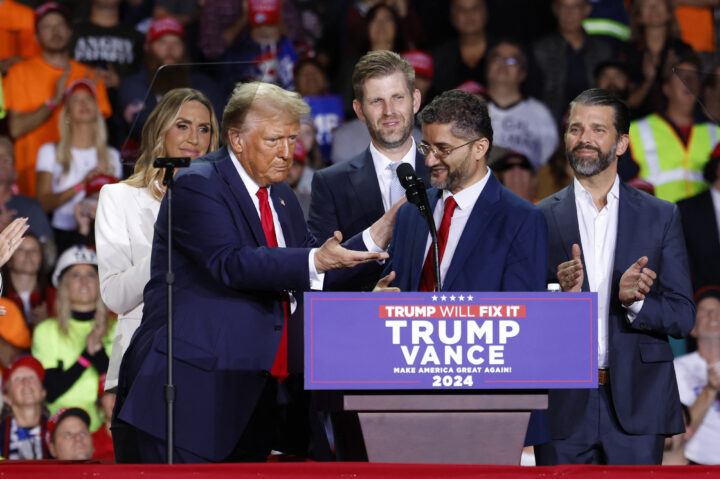
President Donald Trump introduces Democratic Muslim mayor of Hamtramck Amer Ghalib during his last campaign rally at Van Andel Arena in Grand Rapids, Michigan.
The White House has told Republicans that President Donald Trump will not pull the nomination of Amer Ghalib, the mayor of Hamtramck, Mich., to be U.S. ambassador to Kuwait and wants the Senate Foreign Relations Committee to hold a vote on his candidacy, despite the growing bipartisan opposition to his nomination, Jewish Insider has learned.
White House officials have communicated to committee Republicans in recent days that Trump would not withdraw Ghalib’s nomination because the president credits the Democratic Hamtramck mayor with helping him turn out Michigan’s Arab-American vote and win the state in last November’s presidential election, two sources familiar with the ongoing discussions told JI.
“We were told Trump believes he [Ghalib] helped him deliver Michigan. He doesn’t want to abandon him,” one GOP senator on the committee said of the White House’s characterization of the president’s thinking.
Pressed about the four committee Republicans who already committed to joining all Democrats in opposing Ghalib’s confirmation, the White House has told senators and senior committee staffers that Trump wants Ghalib’s nomination to receive a vote regardless of the outcome.
“If Trump wants his friend to go down that way, that’s OK. He can go down that way,” another Republican on the committee said, expressing confidence that Ghalib had no path to advance out of committee.
No Democratic senators on the committee will support advancing Ghalib’s nomination to the full Senate if and when it comes up for a vote, a source familiar with the Democratic whip count told JI. With all Democrats opposed, Ghalib could only afford to lose one Republican to be reported favorably out of committee.
Four committee Republicans have already come out publicly against his nomination — Sens. Ted Cruz (R-TX), John Curtis (R-UT), Dave McCormick (R-PA) and John Cornyn (R-TX). At least two others confirmed to JI that they have voiced their reservations about Ghalib to the White House in the wake of his confirmation hearing last week, when Ghalib faced a bipartisan grilling over his long record of promoting antisemitic ideas and his embrace of anti-Israel positions as an elected official. Those senators have not yet made those concerns public.
The White House did not respond to JI’s request for comment on Tuesday.
Sen. Jim Risch (R-ID), the committee’s chairman, acknowledged to JI on Tuesday evening that he had not yet scheduled Ghalib’s nomination for a vote, but demurred when asked if he planned to do so.
A committee spokesperson for Risch declined to comment.
“A lot of what Trump is doing is kind of testing whether these guys have a gag reflex,” one Democratic committee member said of the situation, surmising that the president’s actions were partially aimed at assessing how much Republicans were willing to push back on nominees and legislative proposals that they object to.
Amer Ghalib’s path to confirmation is unclear as at least four Republicans now oppose him becoming ambassador
Win McNamee/Getty Images
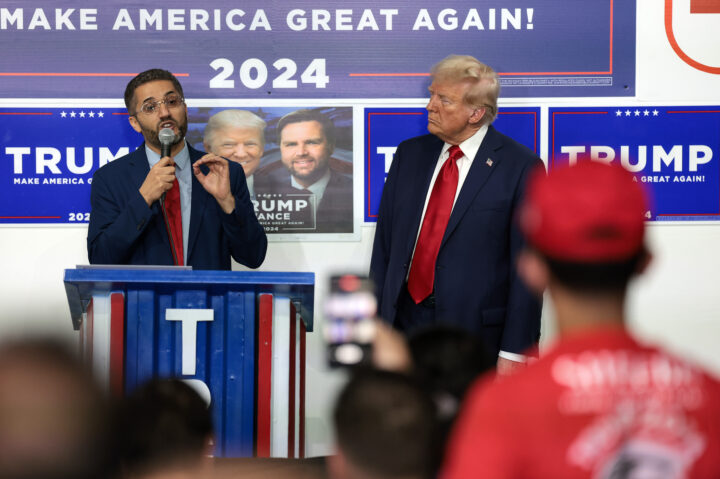
Hamtramck, Mich. Mayor Amer Ghalib introduces President Donald Trump, as Trump visits a campaign office on Oct. 18, 2024, in Hamtramck, Michigan.
The nomination of Amer Ghalib, the mayor of Hamtramck, Mich., to be U.S. ambassador to Kuwait is facing what appear to be insurmountable odds as opposition to his confirmation grows among Senate Republicans.
No Republican or Democratic senators have come to Ghalib’s defense after his performance at his confirmation hearing before the Senate Foreign Relations Committee last week, when he faced a bipartisan grilling over his long record of promoting antisemitic ideas and his embrace of anti-Israel positions as an elected official.
Senators on both sides of the aisle had privately expressed reservations about Ghalib’s nomination prior to the hearing, but his attempts to evade responsibility for his record while under oath prompted several Republicans on the committee to go public.
Sen. Ted Cruz (R-TX) announced at the end of Ghalib’s hearing last Thursday that he would not be able to support moving his nomination out of committee to the Senate floor. Sens. John Curtis (R-UT), John Cornyn (R-TX) and Dave McCormick (R-PA) have since followed suit. Others on the panel, including Sen. Pete Ricketts (R-NE), have said they plan to raise their concerns about Ghalib with the committee chairman, Sen. Jim Risch (R-ID), and the White House.
“Based on the hearing that we had last week, I’m going to vote no against him,” McCormick told Punchbowl News on Tuesday. “I don’t think he demonstrated that he’s qualified for the role.”
Asked about Ghalib and the concerns surrounding his nomination while speaking to reporters on Tuesday morning, Senate Majority Leader John Thune (R-SD) said he was “vaguely familiar” with the Hamtramck mayor’s nomination but had not “examined” the matter closely.
The White House did not respond to Jewish Insider’s multiple requests for comment on the status of Ghalib’s nomination or the growing number of GOP senators coming forward to oppose him.
Ghalib is not believed to have any support on the Democratic side, reinforced by his lackluster answers to questions about his documented history of antisemitic remarks from Sens. Chris Murphy (D-CT), Tim Kaine (D-VA) and Jeanne Shaheen (D-NH), the top Democrat on the committee. He also has an embattled standing within the Democratic Party because of his decision to help President Donald Trump win the state of Michigan for Republicans last November.
“I think that you have dug your hole deeper today,” Murphy, who already opposed Ghalib prior to last week, told the nominee at his confirmation hearing.
A source familiar with the Trump administration’s thinking said he ‘did not have the votes’ to be confirmed, though his nomination was advanced out of committee last week

KHALIL MAZRAAWI/AFP via Getty Images
Joel Rayburn, then-deputy assistant secretary for Levant affairs and special envoy for Syria, speaks during a session on reconciliation and reconstruction at the 2019 World Economic Forum on the Middle East and North Africa in Jordan on April 6, 2019.
The White House has pulled Joel Rayburn’s nomination to be assistant secretary of state for near Eastern affairs, two sources familiar with the matter confirmed to Jewish Insider on Monday.
A source familiar with the Trump administration’s thinking said Rayburn was withdrawn because “he did not have the votes.”
“The administration will proceed in a different direction,” the source said of moving forward with a new nominee.
Despite claims that Rayburn lacked the votes, the former Syria envoy’s nomination had been advanced to the full Senate by the Senate Foreign Relations Committee last week.
Sen. Rand Paul (R-KY) was the only committee Republican to come out against Rayburn’s nomination on the GOP side.
That vote was made possible by Sen. Jacky Rosen (D-NV), who crossed party lines to move Rayburn forward after his nomination had languished due to opposition from Paul and all committee Democrats.
Rayburn has been viewed critically by some isolationist figures, both within the administration and on Capitol Hill. Paul, a longtime critic of American engagement abroad, had said he was skeptical of Rayburn’s denials, including under oath at his confirmation hearing in May, that he had knowledge of efforts to mislead President Donald Trump about U.S. troop presence in Syria while serving as Syria envoy in the first Trump administration.
Votes to advance Rayburn’s nomination out of committee were repeatedly canceled over the summer as other committee Republicans and the White House lobbied Rosen and Paul to switch their respective positions. His nomination was first submitted to Congress in early February.
Ingrassia pulled himself from consideration to be head of the Office of Special Counsel after three Republican senators vowed to oppose his embattled nomination
Pete Kiehart for The Washington Post via Getty Images
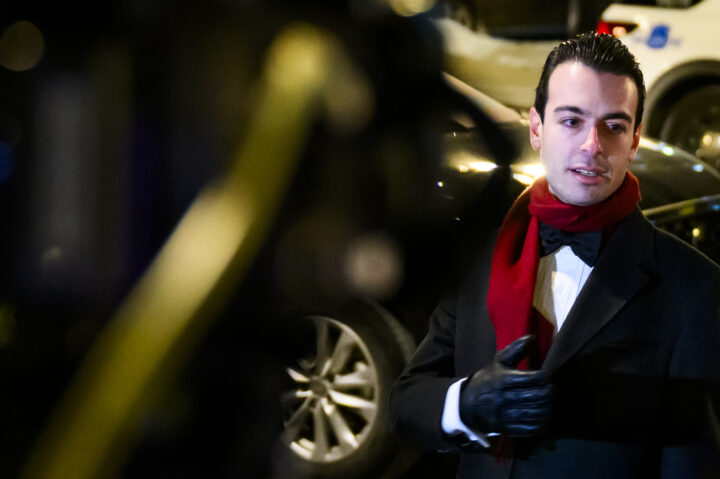
Paul Ingrassia, forer White House liaison to the Justice Department, left, announces the release of brothers Andrew and Matthew Valentin outside of the DC Central Detention Facility on January 20, 2025 in Washington, DC.
Paul Ingrassia announced on Tuesday he was withdrawing his embattled nomination to lead the Office of Special Counsel amid growing GOP opposition to his recently unearthed antisemitic and racist text messages.
Ingrassia, 30, currently serves as the White House liaison for the Department of Homeland Security. Prior to that role, he briefly served as the liaison to the Department of Justice at the beginning of President Donald Trump’s second term, but was reassigned after clashing with the DOJ’s chief of staff.
“I will be withdrawing myself from Thursday’s HSGAC [Senate Homeland Security & Governmental Affairs Committee] hearing to lead the Office of Special Counsel because unfortunately I do not have enough Republican votes at this time,” Ingrassia wrote in a post on Truth Social. “I appreciate the overwhelming support that I have received throughout this process and will continue to serve President Trump and this administration to Make America Great Again!”
Trump nominated Ingrassia in late May to lead the Office of Special Counsel, which is tasked with investigating and prosecuting whistleblower claims and accusations of corruption within the federal government. He was scheduled to receive a confirmation hearing in committee on Thursday.
The nomination was initially poorly received by some Republicans on the committee due to his past incendiary comments, including antisemitic conspiracy theories posted to social media. Two GOP committee members had privately expressed concerns to the White House about Ingrassia’s candidacy in recent months, those senators told Jewish Insider on condition of anonymity.
Ingrassia’s standing plummeted further after Politico reported on Monday that he had sent text messages in a group chat of Republican operatives stating that Martin Luther King Jr. Day should be “tossed into the seventh circle of hell” and described himself as having a “Nazi streak … from time to time.”
Ingrassia wrote in the text chain that he would “never trust a chinaman or Indian,” a comment made in reference to former Republican presidential candidate Vivek Ramaswamy. Another message stated that “We need competent white men in positions of leadership … The founding fathers were wrong that all men are created equal.”
The revelation prompted immediate outcry on Capitol Hill, with Democrats reiterating their prior calls to pull Ingrassia’s nomination and Republicans publicly and privately urging the White House to do the same. Three Republicans on the Homeland Security Committee — Sens. Ron Johnson (R-WI), Rick Scott (R-FL) and James Lankford (R-OK) — told reporters that they would vote against Ingrassia’s nomination at his confirmation hearing.
Johnson said that Ingrassia’s nomination “never should’ve gotten this far” and that the White House “ought to withdraw” his name from consideration.
“I don’t plan on voting for him. I can’t imagine how anybody can be antisemitic in this country,” Scott said, later adding that he had informed the White House of his decision after the most recent text messages were published.
Asked by reporters at the Capitol on Tuesday if the White House should pull Ingrassia’s nomination, Senate Majority Leader John Thune (R-SD) replied, “I hope so. He’s not going to pass.” He responded, “Yeah,” when asked if it’d be a mistake for Ingrassia to appear before the Homeland Security Committee on Thursday.
Ingrassia also lost the backing of the Zionist Organization of America, the sole Jewish group that was supporting Ingrassia’s nomination, over the texts. The group announced on Tuesday that they were pulling their endorsement as a result of the messages.
“In this age of Jew hatred, even a hint of antisemitism can’t be tolerated,” Mort Klein, the group’s president, told the Washington Post of the decision.
At a luncheon hosted by the White House on Tuesday for GOP senators, several Republicans took part in a discussion about Ingrassia’s nomination being “dead,” according to one senator who participated in the conversation.
“He’s going to be pulled,” the senator said of Ingrassia, citing several conversations this week with the White House.
Sen. Richard Blumenthal (D-CT), who also serves on the panel, similarly predicted the White House would withdraw his nomination, saying there was no reason to force the confirmation hearing to proceed on Thursday when he had no chance of being confirmed.
“I expect it because there’s no way he’ll be confirmed. I don’t know why anyone would put him through the gauntlet of questions that I would be asking him, along with others,” Blumenthal told JI. “They should mercifully spare him the ignominy of being overwhelmingly disapproved.”
Ingrassia’s nomination was already considered controversial prior to the leak of his text messages, the result of his ties to avowed white nationalists and antisemites like Kanye West and Nick Fuentes, his record of public statements embracing conspiracy theories and his already rocky tenure in the second Trump administration, which had seen him depart from two roles due to friction with colleagues in less than a year.
Ingrassia was also the subject of an internal investigation at the Department of Homeland Security this month after a sexual harassment complaint was filed against him, though the complaint was later withdrawn and no wrongdoing was found.
Ingrassia has also been consistently critical of the U.S.-Israel relationship and has repeatedly asserted since Hamas’ Oct. 7, 2023, attacks on Israel that the United States should not provide any aid to the Jewish state.
As the Hamas attacks were still underway, Ingrassia posted on X calling illegal immigration to the U.S. “comparable to the attack on Israel.” Days later, Ingrassia wrote in a since-deleted post on the platform that the Israel-Palestine conflict was a “psyop.”
The ADL called Hamtramck, Mich. mayor Amer Ghalib as someone who ‘routinely traffics in antisemitism’ and ‘attempted to justify the 10/7 massacre’
JEFF KOWALSKY/AFP via Getty Images
President Donald Trump introduces Democratic Muslim mayor of Hamtramck Amer Ghalib during his last campaign rally at Van Andel Arena in Grand Rapids, Michigan.
Sen. Jeanne Shaheen (D-NH), the top Democrat on the Senate Foreign Relations Committee, announced this week that the nomination of Amer Ghalib, the mayor of Hamtramck, Mich., as U.S. ambassador to Kuwait has been delayed.
Ghalib has faced scrutiny for his anti-Israel history, including questioning reports of Hamas atrocities on Oct. 7 and supporting the anti-Israel Boycott, Divestment and Sanctions movement, and for liking antisemitic comments on social media.
Shaheen told Agence France Press last month that Sen. Jim Risch (R-ID), the Foreign Relations Committee chairman, had agreed to postpone consideration of Ghalib as lawmakers gathered additional information about his background.
Asked about the delay by Jewish Insider, Shaheen said that “there were some questions” about Ghalib to which committee members are awaiting written answers. She said she did not recall the subject of the pending questions.
“SFRC has worked at a historic pace to move President Trump’s nominees through our committee,” Risch said in a statement to JI on the nomination. “That pace continues along with our commitment to thorough vetting, and this vetting sometimes means that certain nominations will take longer to process.”
The Hamtramck mayor said in a Facebook post on Sunday that Trump called him to emphasize that he continues to support Ghalib’s nomination but acknowledged that there have been objections.
“He renewed his unlimited support to me” for the nomination, Ghalib said, but “admitted during his call that attempts by some parties have hindered this appointment, and assured me that he will not accept to stand before my appointment for this task that I am honored to do to serve this great country, any obstacle, from any party.”
Ghalib, who was born in Yemen, made history in 2021 when he was elected as Hamtramck’s first Arab and Muslim mayor. As mayor, Ghalib, a Democrat, led Hamtramck to pass a measure to boycott and divest from Israel. He also has a history of liking antisemitic social media posts.
Ghalib made waves nationally last fall when he endorsed President Donald Trump’s 2024 bid in September and campaigned on the president’s behalf with Arab and Muslim voters who had grown frustrated with Democrats over the Biden administration’s handling of Israel’s wars with Hamas in Gaza and with Hezbollah in Lebanon.
Trump went on to nominate Ghalib as U.S. ambassador to Kuwait in late March of this year.
The White House did not respond to JI’s requests for comment on the status of Ghalib’s nomination, which the Anti-Defamation League called for Trump to withdraw in March.
“Ghalib routinely traffics in antisemitism, actively supports the antisemitic BDS movement, attempted to justify the 10/7 massacre and refused to take disciplinary action against an appointee who attempted to justify the Holocaust,” the ADL said in a post on X at the time.
Ghalib visited Washington for meetings with White House officials in late August, when senators were in their home states for a monthlong recess. Ghalib met during the trip with James Blair, the White House deputy chief of staff for legislative, political and public affairs. No senators posted anything about meetings with Ghalib during that time period or since then, and two Republicans who serve on the committee told JI that they had received no outreach about meeting with the nominee.
Ghalib’s confirmation hearing has not yet been scheduled.
The Senate Foreign Relations Committee declined to bring his nomination to a vote and there are no apparent plans to call a vote on the Senate floor
KHALIL MAZRAAWI/AFP via Getty Images
Joel Rayburn, then-deputy assistant secretary for Levant affairs and special envoy for Syria, speaks during a session on reconciliation and reconstruction at the 2019 World Economic Forum on the Middle East and North Africa in Jordan on April 6, 2019.
This week brought more signs that progress on Joel Rayburn’s nomination to be assistant secretary of state for Near Eastern affairs has ground to a halt, more than a month after his confirmation hearing in mid-May, with the Senate Foreign Relations Committee declining to call up Rayburn’s nomination for a vote on Thursday and no apparent plans to move the process to the Senate floor.
Rayburn served in President Donald Trump’s first administration and is seen as less aligned with the isolationist figures who have taken other senior roles in the second Trump administration.
The nominee was set for a vote in the Senate Foreign Relations Committee in early June, but postponed after an unidentified senator requested that the vote be “held over” until the committee’s next business meeting.
It also emerged at that time, and in the ensuing weeks, that Sen. Rand Paul (R-KY) opposes Rayburn’s confirmation, as do all of the Democrats in the Senate Foreign Relations Committee, leaving the vote tied — a failure in committee.
The committee held another business meeting on Wednesday to vote on 10 Trump nominees and could have called up the Rayburn nomination again — but Rayburn, this time, was left off of the schedule, a further indication that he lacks the support to advance.
Senate Republicans could still call a vote on the Senate floor to discharge Rayburn’s nomination from the committee and move him to a full floor vote — which would likely be successful — but Sen. John Barrasso (R-WY), the No. 2 Senate Republican, told Jewish Insider earlier this week that he’s not aware of any discussions about doing so.
Barrasso referred questions to Sen Jim Risch (R-ID), the chairman of the Senate Foreign Relations Committee, who did not respond to a request for comment.
With just one more week in session remaining until the July Fourth recess and all eyes on the budget reconciliation bill that Republicans hope to pass before the holiday, it appears unlikely that such a vote will occur in the immediate term.
Rayburn’s nomination was first submitted to Congress in early February.
The State Department did not respond to a request for comment on whether the administration is considering withdrawing Rayburn’s nomination.
Black will serve as chief executive officer of the DFC, which acts as the federal government’s primary lender and investor in development projects abroad, if confirmed

Screenshot: Truth Social
President Donald Trump nominates Ben Black to lead U.S. IDFC
Ben Black, President Donald Trump’s nominee to lead the U.S. International Development Finance Corporation, had his confirmation hearing before the Senate Foreign Relations Committee on Tuesday.
Black will serve as chief executive officer of the DFC, which acts as the federal government’s primary lender and investor in development projects abroad, if confirmed. The DFC was created during the first Trump administration, the result of merging the Overseas Private Investment Corporation and the Development Credit Authority of the United States Agency for International Development (USAID).
Black was introduced at the start of the hearing by Sen. Tom Cotton (R-AR), who described Black in opening remarks as a “true America First patriot” who “will bring a wide range of experience and expertise to this job.”
“I’m here today to offer my full support for Mr. Black’s nomination to serve in this position. Created during the first Trump administration, the International Development Finance Corporation facilitates overseas investment projects that better position us to compete with Communist China’s global infrastructure pursuits,” Cotton said.
“This position requires a person with expertise in strategic investment opportunities, an understanding of America’s foreign policy priorities, and tested leadership capabilities. For these reasons, I am confident that President Trump made the right choice in selecting Mr. Black for the job,” he continued.
Black said during his opening statement that if confirmed, “I look forward to working with Congress to shape and to continue to grow DFC’s capabilities and capacity, so that it can properly fulfill the responsibilities it has been given. The challenges facing our nation and the world today can seem overwhelming, but the opportunity for DFC to be part of meaningful solutions is enormous.”
Black is a managing director of Fortinbras Enterprises, a credit investment fund, and CEO and director of Osiris Acquisition Corp, another investment firm. He was a term member at the Council on Foreign Relations from 2015 to 2020. Black previously worked at Apollo Global Management, the firm founded by his father, Leon Black, and was a senior portfolio manager at Knowledge Universe Holdings.
Black is an alumni of Harvard’s John F. Kennedy School of Government, Harvard Business School and Harvard Law School. He also studied taxation at the New York University School of Law and received his BA in history from the University of Pennsylvania, where he graduated with honors.
Rayburn, the nominee to be assistant secretary of state for Near Eastern affairs, faces opposition from Sen. Rand Paul
KHALIL MAZRAAWI/AFP via Getty Images
Joel Rayburn, then-deputy assistant secretary for Levant affairs and special envoy for Syria, speaks during a session on reconciliation and reconstruction at the 2019 World Economic Forum on the Middle East and North Africa in Jordan on April 6, 2019.
The Senate Foreign Relations Committee delayed an anticipated vote on Thursday on Joel Rayburn’s nomination to be assistant secretary of state for Near Eastern affairs as he faces opposition from Sen. Rand Paul (R-KY), which could imperil his nomination.
The news is another setback for Middle East hawks who saw Rayburn, who held a series of national security positions in the first Trump administration, as more aligned with their worldview, as compared to the isolationists populating many senior roles throughout the administration.
Thursday’s delay came because an unidentified member exercised a prerogative to delay the vote on Rayburn until the committee’s next business meeting, which would still allow the committee to vote on him in the near future. But Rayburn may face bigger problems: If no Democrats support Rayburn, the vote on his nomination would be tied, meaning it cannot advance out of committee.
It’s not clear whether any Democrats will support him. At that point, Rayburn’s nomination could still be advanced through a full Senate floor vote, assuming a sufficient number of other Republicans support the nominee.
Paul told Jewish Insider that he was primarily concerned that Rayburn was involved in a deliberate effort in the Trump administration to obscure the U.S. troop presence in Syria from Trump and disobey orders to withdraw U.S. forces.
“My concern is that James Jeffrey directly disobeyed direction from President Trump. Said he was hiding the numbers of troop levels over there, and Rayburn worked for him at the time, and still remains close to him,” Paul said, referring to the then-U.S. envoy to the global counter-ISIS coalition. “I don’t know how that could have happened without him knowing about it, and I think we need people at the State Department who will follow the direction of the president.”
Paul said he had not been the senator who requested a delay in the committee vote on Rayburn.
Ingrassia’s comments and associations ‘are obviously concerning and we’ll have our staff doing a full background check,’ Sen. Thom Tillis said
Pete Kiehart for The Washington Post via Getty Images
Paul Ingrassia, forer White House liaison to the Justice Department, left, announces the release of brothers Andrew and Matthew Valentin outside of the DC Central Detention Facility on January 20, 2025 in Washington, DC.
Multiple Senate Republicans said Wednesday that they plan to scrutinize President Donald Trump’s nomination of Paul Ingrassia, a far-right figure picked last week to lead the Office of Special Counsel, charged with fighting corruption and fighting federal whistleblowers.
Ingrassia has trafficked in conspiracy theories, including, as early as Oct. 8, 2023, describing the Hamas attack and ensuing war as a “psyop,” as well as defending prominent antisemites including Kanye West, Andrew Tate and Nick Fuentes.
Several Republican members said they were not deeply familiar with Ingrassia’s record but planned to dig into it further before his nomination hearing.
“We just got news of the nom[ination] coming forward. Those [comments] are obviously concerning and we’ll have our staff doing a full background check, but those are, on their face, concerning,” Sen. Thom Tillis (R-NC) told Jewish Insider.
Tillis was a vocal opponent of Ed Martin, previously Trump’s nominee to be U.S. attorney for Washington, D.C., over his defense of those involved in the Jan. 6, 2021, attack on the U.S. Capitol, including a known Nazi sympathizer. Amid that opposition, Trump withdrew the nomination.
Sen. Josh Hawley (R-MO) said he wasn’t familiar with Ingrassia but that he planned to take a deeper look at him. “I’m not familiar with his record, but I don’t like the guys you just named or their views,” Hawley said, referring to Tate and Fuentes.
Sen. John Cornyn (R-TX) expressed surprise about Ingrassia’s history and affiliations, and said he would “certainly monitor the situation.”
Paul Ingrassia was tapped to serve as the head of the Office of Special Counsel, which enforces ethics laws
Pete Kiehart for The Washington Post via Getty Images
Paul Ingrassia, forer White House liaison to the Justice Department, left, announces the release of brothers Andrew and Matthew Valentin outside of the DC Central Detention Facility on January 20, 2025 in Washington, DC.
President Donald Trump announced his intention to nominate far-right commentator Paul Ingrassia to head the agency tasked with rooting out corruption and protecting whistleblowers in the federal government.
Ingrassia, 29, currently serves as the White House liaison for the Department of Homeland Security. He briefly served as the White House liaison to the Department of Justice early in Trump’s second term, but was reassigned after clashing with the DOJ’s chief of staff after urging the president to hire only individuals who exhibited what Ingrassia called “exceptional loyalty,” according to ABC News.
In Trump’s post on Truth Social announcing Ingrassia’s nomination to head the Office of Special Counsel, an independent federal agency tasked with investigating and prosecuting office government and political corruption, the president called him a “highly respected attorney, writer, and Constitutional scholar.”
Ingrassia has trafficked in a number of conspiracy theories, as have several other controversial administration appointees, including Department of Defense Press Secretary Kingsley Wilson and acting Under Secretary for Public Diplomacy Darren Beattie.
On Oct. 7, 2023, as the Hamas attacks were still underway, Ingrassia posted on X calling illegal immigration to the U.S. “comparable to the attack on Israel,” writing, “The amount of energy everyone has put into condemning Hamas (and prior to that, the Ukraine conflict) over the past 24 hours should be the same amount of energy we put into condemning our wide open border, which is a war comparable to the attack on Israel in terms of bloodshed — but made worse by the fact that it’s occurring in our very own backyard. We shouldn’t be beating the war drum, however tragic the events may be overseas, until we resolve our domestic problems first.”
He wrote three days later that the U.S. “should not be committing any foreign aid (as well as military presence) whatsoever to any country – Israel, Ukraine, Taiwan, NATO, etc. – until we secure our borders and get a sensible handle over our border crisis. Practically speaking, this will take several years (at least) to get under control. In the meantime: no immigration, no foreign aid, troops, equipment, or anything, period.”
On Oct. 12, 2023, responding to a post alleging to uncover DNA sequences of “Canaanites, Israelites [and] Judahites,” Ingrassia wrote, “This is further evidence that Israel/Palestine is a deeply complex region of the world with a complicated history, that most Americans don’t adequately understand, nor could be expected to understand.”
In that post, he bashed former National Security Advisor John Bolton, Sen. Lindsey Graham (R-SC), former Vice President Mike Pence and former U.S. Ambassador to the U.N. Nikki Haley, calling them “Warmongering Troglodytes” and saying the alleged DNA evidence was “further reason to dismiss the dangerous and reckless calls” made by these officials to strike Gaza.
On Oct. 15, just days after the attacks, Ingrassia wrote, “I think we could all admit at this stage that Israel/Palestine, much like Ukraine before it, and BLM before that, and covid/vaccine before that, was yet another psyop.”
A year later, on Oct. 3, 2024, he posted that there were no funds for hurricane relief because “we’re too busy stuffing the pockets of Zelenskyy and Netanyahu. What a disgrace our government is! Truly the enemy of the people.”
Ingrassia has further associated himself with white nationalists and antisemites, including Nick Fuentes and Kanye West, now known as Ye, posting a Substack in April 2023 titled “Free Nick Fuentes.”
In the post, he applauded the social media platform X for restoring certain accounts including that of far-right provocateur Laura Loomer and alleged sex trafficker Andrew Tate, but argued that it should go further to restore Fuentes’ and Ye’s then-banned accounts: “Notably, the accounts of once banned high-profile users such as Donald Trump, Andrew Tate, Roger Stone, and Laura Loomer have been reinstated with apparent impunity to use the platform as they please. But for every Trump and Tate, there remains the still banned Fuentes and Ye.”
The attorney has defended Tate and his brother — whom British authorities charged on Wednesday with rape, human trafficking and assault — saying in 2023 that the two “have become public enemies number one and two in the eyes of the Matrix, the deep state, and the satanic elite that attempt to systematically program and oppress all men from womb-to-tomb.”
Prior to joining the administration, Ingrassia was a regular contributor to the Gateway Pundit, a website known for publishing falsehoods and conspiracy theories. He wrote articles on the site falsely alleging Haley was ineligible to run for president in 2024 because she did not qualify as a U.S. citizen, arguing civil rights laws were never intended to protect LGBTQ persons and calling former President Joe Biden’s victory in 2020 “beyond all doubt fraudulent,” among others.
Ingrassia has repeatedly used the term “globalists” to describe Jewish public figures, including Sen. Jacky Rosen (D-NV), Michigan Senate candidate Sandy Pensler and hedge fund manager Paul Singer.
Last year, following an appearance on Steve Bannon’s War Room show, Ingrassia wrote on X, “Discussed a very important topic this morning on War Room about how some RINO members — like @RepGallagher — of the House, many with dark money ties to notorious anti Trump billionaire globalist, Paul Singer, are actively working behind the scenes to turnover House control to Democratic hands with early retirements and thus pass legislation to remove President Trump from the ballot on bogus 14th Amendment grounds.”
Sens. Mark Kelly, Elissa Slotkin and Jack Reed broke with their party on the vote

Nathan Posner/Anadolu via Getty Images
Elbridge Colby, nominee to be Under Secretary of Defense for Policy, is seen ahead of his confirmation hearing at the Senate Committee on Armed Services in Washington, DC on March 4, 2025.
The Senate voted to advance the nomination of Elbridge Colby to be undersecretary of defense for policy on Monday, teeing up a final confirmation vote for later this week, with three Democrats crossing party lines to vote in favor of advancing to a final vote on his confirmation.
Colby’s nomination advanced in a 53-39 vote on Monday evening, with no Republicans voting against him. It was unclear going into Monday’s vote what the final whip count would be, the result of Colby’s nomination being advanced in a secret vote during a classified session of the Senate Armed Services Committee last week.
A final vote on Colby’s confirmation is scheduled for Tuesday morning.
Sen. Jack Reed (D-RI), the top Democrat on Armed Services, Sen. Mark Kelly (D-AZ) and Sen. Elissa Slotkin (D-MI) voted for the procedural motion to advance Colby’s nomination to a final vote on Monday. All three serve on Armed Services, and Slotkin worked with Colby in the past. Slotkin, who has worked for the Defense Department and the Central Intelligence Agency, told Jewish Insider in February that she was familiar with Colby’s record because he “used to be my assistant.”
Sens. Ruben Gallego (D-AZ), Cory Booker (D-NJ), John Fetterman (D-PA), Kirsten Gillibrand (D-NY), Jon Ossoff (D-GA), Bernie Sanders (I-VT) and Tim Sheehy (R-MT) did not attend Monday’s vote.
The Democratic backers of Colby come as something of a surprise given the tough questioning the nominee faced from Democrats at his confirmation hearing on his skepticism of U.S. support for Ukraine and other issues.
Colby has faced pushback from some Republican lawmakers over his past support for accommodating a nuclear Iran. He walked back some of those positions, including that the U.S. could contain a nuclear armed Iran and that it should not attack Iran to stop it from obtaining a nuclear weapon, during his confirmation hearing last month.
Several Republicans could vote against Colby on the final vote on Tuesday, but none of the potential critics previewed their plans to JI on Monday.
Colby said at the hearing that a nuclear Iran would be an “existential danger” to the United States and that he would provide the administration with military options to prevent such an outcome. He also said his past comments had been intended to push back on what he viewed as an overly hawkish public consensus at the time.
Those comments, along with a private lobbying effort by Colby and his allies to assuage concerns and distance himself from other controversial Pentagon hires, had a positive impact on skeptical senators who had been hesitant about voting to confirm him.
“Speaking for me, he did answer things the way he needed to answer them, adequate at least to my satisfaction,” one GOP senator told JI last month. “He has said the things he needed to say to the satisfaction of people who like me and maybe others — I can’t speak for any of them … and he was pretty convincing.”
Jewish Insider’s senior congressional correspondent Marc Rod contributed to this report.
Please log in if you already have a subscription, or subscribe to access the latest updates.
 Continue with Google
 Continue with Apple