



















































Plus, inside Temple Israel's difficult road ahead

Bill Clark/CQ Roll Call via AP Images
UNITED STATES - JUNE 18: Democratic candidate for Georgia's 6th Congressional district Jon Ossoff speaks to campaign workers and volunteers at his campaign office in Chamblee, Ga., on Sunday, June 18, 2017. Ossify is facing off against Republican Karen Handel in the special election to fill the seat vacated by current HHS Secretary Tom Price will be held on Tuesday.


 Add JewishInsider on Google
👋 Good Wednesday morning!
In today’s Daily Kickoff, we visit West Bloomfield Township, Mich., as the Jewish community reels from last month’s attack at a local synagogue, and report on antisemitic and conspiratorial rhetoric from Maureen Tkacik, a top editor at The American Prospect. We talk to former Rep. Mike Rogers about the GOP’s shifting attitudes toward Israel, and report on Rep. Alexandria Ocasio-Cortez’s pledge to reject defensive funding for Israel. Also in today’s Daily Kickoff: Bill Ackman, Amar’e Stoudemire and Joshua Kramer.
Ed. note: In observance of Passover, the next Daily Kickoff will arrive on Monday, April 6. Chag sameach!
Today’s Daily Kickoff was curated by JI Executive Editor Melissa Weiss and Israel Editor Tamara Zieve, with assists from Danielle Cohen-Kanik and Marc Rod. Have a tip? Email us here.
What We’re Watching
- President Donald Trump will give a primetime address on the state of the war with Iran tonight at 9 p.m. ET. The president’s speech, which will be televised on the major networks, will take place hours after the start of the Passover holiday. Trump said last night that the U.S. would end operations in Iran in the next two to three weeks — regardless of whether a deal is reached with Tehran.
- The USS George H.W. Bush aircraft carrier strike group departed Norfolk, Va., on Tuesday for its scheduled deployment. The Navy did not say where the ship would be positioned, but the deployment comes as the USS Gerald R. Ford, which had previously been positioned in the Middle East, was taken out of service for repairs.
- Emergency responders in Israel treated 14 people, including an 11-year-old girl and a 13-year-old boy, for injuries this morning after Iran fired four missile barrages at Israel.
- In New Jersey, Democrat Analilia Mejia and Republican Joe Hathaway, candidates in the special election to succeed Gov. Mikie Sherrill in the state’s 11th Congressional District, will participate in a New Jersey Globe-sponsored debate this evening.
What You Should Know
A QUICK WORD WITH JI’S MARC ROD
Hasan Piker, the far-left, antisemitic streamer, was recently asked by Politico who his favorite presidential candidates are for the Democratic nomination in 2028. He offered a few unsurprising names: progressive Reps. Alexandria Ocasio-Cortez (D-NY) and Ro Khanna (D-CA), United Auto Workers President Shawn Fain… and Sen. Jon Ossoff (D-GA), the mild-mannered purple-state senator up for reelection this year.
Piker, in the interview, called Ossoff, “my dark-horse pick, depending on how he presents himself if he has ambitions for higher office.”
But does Ossoff, a Jewish senator who is facing a tough reelection in a state President Donald Trump carried twice, return Piker’s affections? His team has been unresponsive about his views on Piker, even as some leading Democrats have spoken out against the influencer and kept their distance.
Multiple spokespeople for Ossoff didn’t respond to several inquiries this week from JI.
Ossoff’s silence about Piker could strain his already rocky relationship with Georgia’s Jewish community. Key Jewish leaders and donors have repeatedly expressed outrage with the senator over his votes in favor of resolutions to block U.S. arms sales to Israel, and some have threatened to withhold support from his presidential campaigns.
ALTERED LIVES
They survived the Temple Israel attack. They can’t escape what followed

Pop. Pop. Pop. A preschool teacher at Temple Israel heard the shots, locked eyes with her co-teacher, and mouthed: Don’t show any emotion. Weeks later, every child who was in the building that day is safe. But the people who lived through the attack — and the broader Jewish community of Metro Detroit — are still grappling with trauma, shattered security and a world that has largely moved on, Jewish Insider’s Gabby Deutch reports from West Bloomfield, Mich. “People are traumatized, and there’s no way around it,” Rabbi Josh Bennett, who has been on the pulpit at Temple Israel for 33 years, told JI last week.
Second chances: Jeremy Moss, a Democratic state senator who is running for Congress this year, is the only Jewish member of the Michigan state Senate. He is also the only LGBTQ member of the Senate. He knows that those two parts of his identity are often treated differently. “In the past several years, when I talk about antisemitism, it feels like I’m talking alone, or that I’m challenged, or that I’m lectured, not necessarily by my colleagues, but lectured about what is antisemitism from others, rather than allowing my own experience to be accredited, to be valid,” he added. “It’s a very isolating, lonely feeling, and it really makes you realize how small the Jewish community is and how difficult it is to get our lived experience heard and supported.” The attack on Temple Israel, and the fact that no one died, offers a “second chance,” Moss said.
on the mike
Mike Rogers confronts changing GOP attitudes on Israel on the campaign trail
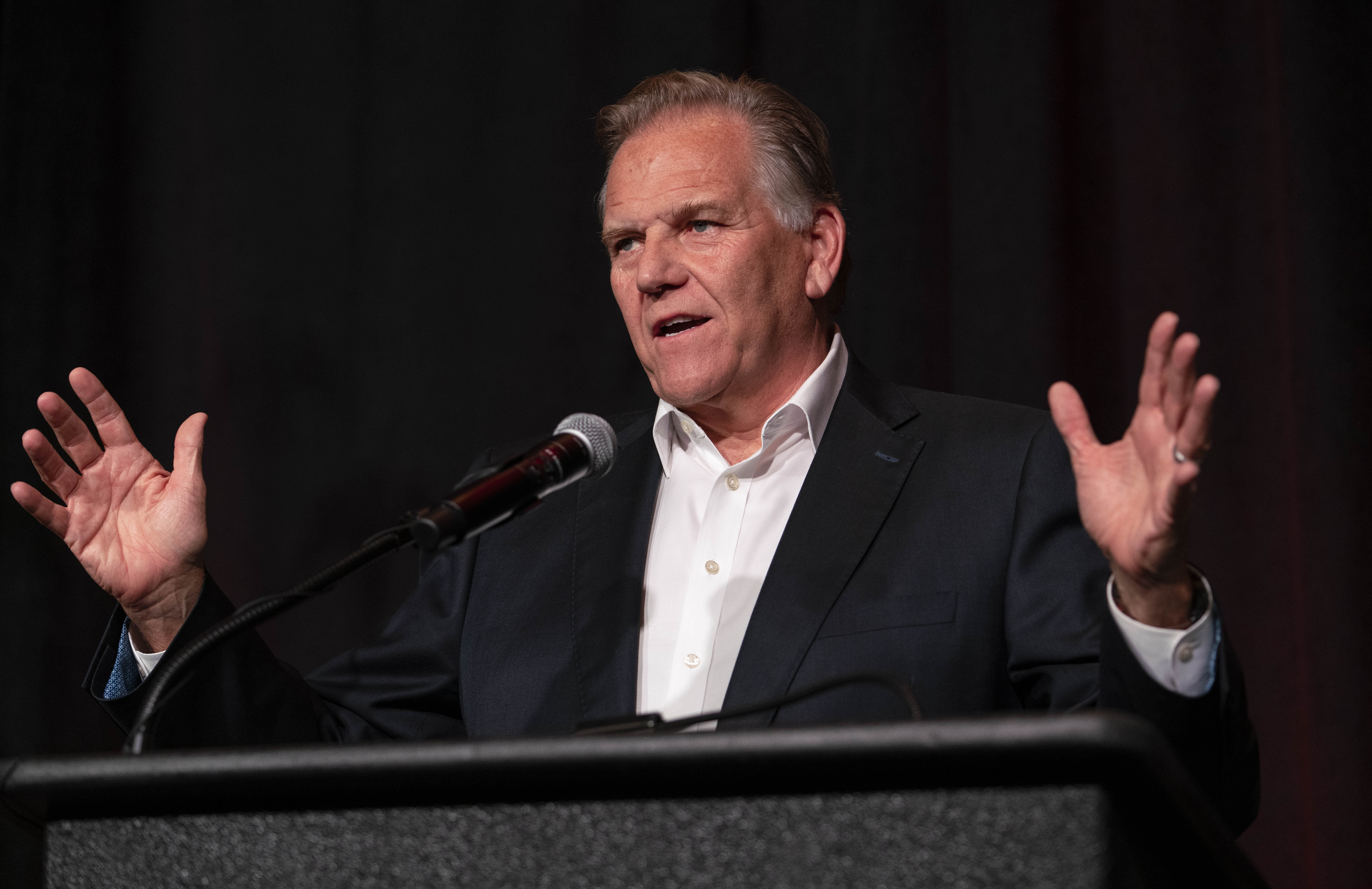
As former Rep. Mike Rogers (R-MI) campaigns for the open Senate seat in Michigan, he is not shy about his support for Israel. But he has lately encountered more people pushing back on American support for the Jewish state, and he is worried not enough is being done, including in his own party, to fight that trend. “I don’t think we have an effort to counter the [anti-Israel] narrative,” Rogers, a former chairman of the House Intelligence Committee, told Jewish Insider’s Gabby Deutch in an interview near Detroit last week.
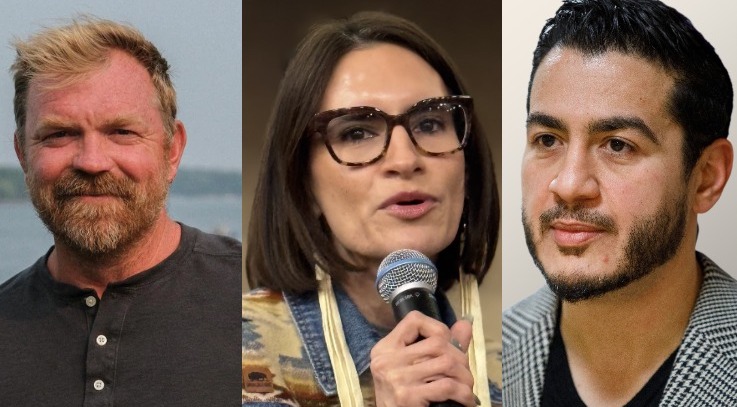
Primary position: “You don’t have to love Israel, but you have to respect the fact that the nation is trying to defend itself and its people who have maybe, probably, the most horrific history of being treated in the world of any other race on planet earth,” Rogers said. Rogers is the only major Republican candidate in the Senate race, while three Democrats are locked in a tight battle for the nomination, with several months still to go until the August primary.
NEWSROOM NOISE
Top American Prospect editor peddles antisemitic conspiracy theories online
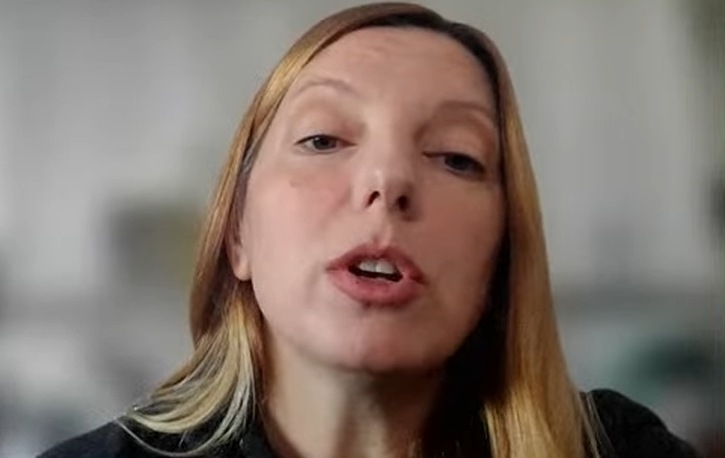
Maureen Tkacik, a top editor for The American Prospect, an influential progressive magazine in Washington, has made no secret of her self-avowed hatred of Israel, particularly in the wake of Hamas’ Oct. 7, 2023, attacks and the ensuing war in Gaza. In recent months, however, she has increasingly entertained conspiracy theories about Israel, used antisemitic rhetoric and expressed her approval of far-right extremists stoking anti-Jewish sentiment, raising questions over her ongoing association with a periodical that had long been viewed as a paragon of modern liberalism, Jewish Insider’s Matthew Kassel reports.
Social media scrutiny: In some social media posts she has indicated that she believes it is possible Israel was involved in the assassinations of both President John F. Kennedy and conservative activist Charlie Kirk. “JFK did not want Israel to develop the nuclear weapons they still refuse to acknowledge having,” she wrote last month, in response to commentary from far-right commentator Tucker Carlson tacitly suggesting that Israel was behind the killing, a conspiracy theory that has recently gained renewed currency on the far right. In other posts, Tkacik has railed against “ZOG,” short for “Zionist Occupied Government,” which the American Jewish Committee and Anti-Defamation League have called a white supremacist conspiracy theory alleging that the United States is controlled by Jews.
TARGETED THREAT
Palestinian journalist calls for violence against pro-Israel commentator
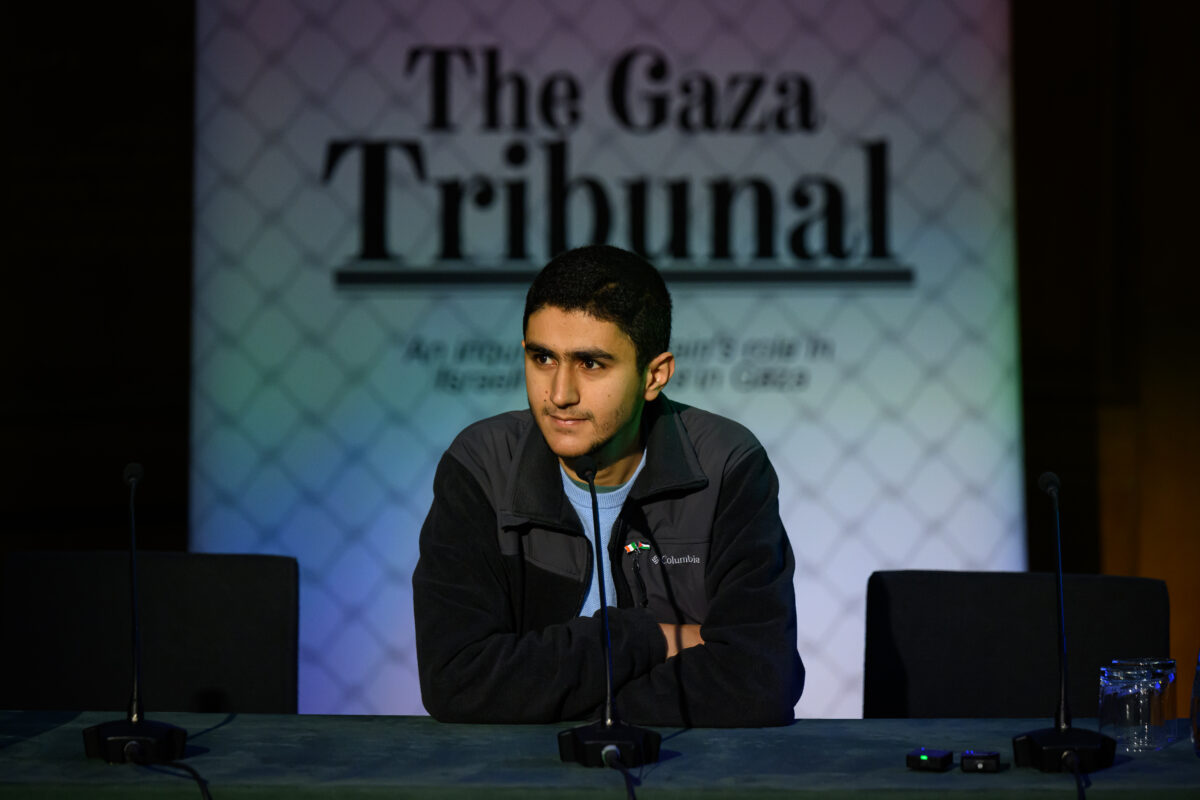
An Ireland-based Palestinian journalist who has contributed to outlets including The Guardian, Al Jazeera, Drop Site, Middle East Eye, The New Arab and The Electronic Intifada shared posts on his Instagram story encouraging violence against an Irish pro-Israel commentator, Druze Israeli politicians and Israelis generally, Jewish Insider’s Marc Rod reports.
From Gaza to Ireland: Abubaker Abed had been based in Gaza and was evacuated during the war, ending up in Ireland. According to screenshots of Abed’s Instagram stories shared by others on X, he called for violence against Israelis and against Rachel Moiselle, a popular pro-Israel Irish commentator, in response to Israel’s passage this week of a death penalty law for Palestinian terrorists. The screenshots are no longer active on Abed’s account and could not be independently verified by JI. Abed did not respond to a request for comment.
AID ARGUMENT
Report: AOC says she’ll reject defensive funding for Israel, IHRA definition of antisemitism

Rep. Alexandria Ocasio-Cortez (D-NY) reportedly committed on Tuesday to opposing “any spending on arms for Israel, including so-called defensive capabilities” for Israel as well as the International Holocaust Remembrance Alliance’s working definition of antisemitism, according to an editor from City & State New York. The New York Democrat made the comments on a Democratic Socialists of America endorsement call on Tuesday evening, Jewish Insider’s Marc Rod reports.
Voting history: Though Ocasio-Cortez has not voted in favor of aid to Israel, she did vote against an amendment last year by then-Rep. Marjorie Taylor Greene (R-GA) to cut funding for defensive systems such as Iron Dome, earning the ire of the far left. “I have not once ever voted to authorize funding to Israel, and I will never,” Ocasio-Cortez reportedly said during the forum. “The Israeli government should be able to finance their own weapons if they seek to arm themselves.”
DATING DILEMMAS
Nearly half of young Jewish American women are dating less over antisemitism fears

Nearly half (47%) of young Jewish women reported dating less as a result of increased antisemitism and other negative consequences of the Oct. 7, 2023, Hamas terror attacks, according to a new survey by Jewish Women International, Jewish Insider’s Danielle Cohen-Kanik reports.
Survey says: Over one-third (36%) of respondents said they’ve ended existing romantic relationships due to these dynamics, while 18% said they’ve stopped online dating altogether. Many of the Jewish American women surveyed, who were between the ages of 20 and 34, reported other negative impacts to their romantic relationships including strained conversations (75%), arguments (53%) and decreased contact or connection (39%). Read the full story here.
Worthy Reads
Europe’s War Too: In Politico, Axel Springer CEO Mathias Döpfner rejects efforts in European capitals to distance the continent from the war in Iran. “Of course it is our war. It is far more our war than America’s. The infiltration of European societies by Islamist networks is further advanced and more acute here than in America. (And solidarity with Israel, whose very existence is under threat, ought to be far stronger in Germany than in the United States.) But even if one believed it was not our war, or even if one were disappointed not to have been briefed on the plans, there remains a potent strain of European society where proclaiming hatred of Donald Trump is greater than sound self-interest. In those circles, one can almost sense something like schadenfreude whenever something goes wrong for the Americans once again.” [Politico]
Wrong Man for the Job: In The Washington Post, the Foundation for Defense of Democracies’ Behnam Ben Taleblu raises concerns about the Trump administration’s willingness to engage with Iranian parliament Speaker Mohammad Bagher Ghalibaf, as it mulls a Venezuela-like approach to Iran. “If Trump replicates his Venezuela decision and promotes a regime insider like Ghalibaf to the helm, he is unlikely to attain the stability and calm that he seeks in the Middle East. Iranians did not turn out in droves in January and give their lives for musical chairs or ornamental change in Tehran. They are not likely to stop protesting against a corrupt establishment that turned Iran into a failed state and is complicit in their killing.” [WashPost]
These Boots…: Wall Street Journal columnist William Galston considers the challenges facing the Trump administration as Washington weighs ground operations in Iran. “The prospects for negotiations reopening the strait and ending the war are dismal, and there is no guarantee that force can accomplish what diplomacy cannot. The U.S. is in no position, militarily or politically, to mount the kind of all-out invasion of Iran that brought down Saddam Hussein in Iraq. But anything less will probably allow the Iranian regime to survive, which it will trumpet as a victory against the Great Satan.”[WSJ]
Modern-Day Exodus: In Tablet, Rachel Sharansky Danziger, a daughter of refusenik Natan Sharansky, reflects on the retelling of the Passover story as she contemplates passing her own family’s stories to her children. “The Haggadah taught me how to tell my parents’ story, and how to give my kids the liberty to explore it for themselves. Time will tell what they’ll make of it. But in the meantime, my struggles with the latter taught me something about Passover in turn. Perhaps when the authors of the Haggadah told us to see ourselves as if we came out of Egypt, they meant something more than envisioning ourselves wearing tunics, marching out of Egypt with matzos in our sacks. Perhaps they meant that we should take this opportunity to experience what it means to become the authors of our own story.”[Tablet]
Word on the Street
President Donald Trump said he is considering pulling the U.S. out of NATO after members of the alliance failed to assist the U.S. in its military operations targeting Iran…
Arab officials told The Wall Street Journal that the United Arab Emirates is preparing to assist the U.S. in opening up the Strait of Hormuz by force…
The UAE’s Foreign Ministry denied the report, saying that the country “maintains a defensive posture focused on protecting its sovereignty, its people, and its infrastructure, and reserves its right to self-defence in response to ongoing unlawful and unprovoked attacks”…
Supporters of Iranian human rights activist Narges Mohammadi, who is imprisoned in Iran’s Zanjan prison, said the Nobel Peace Prize laureate suffered a heart attack last week and had been denied medical access…
Politico reporter Karl Mathiesen, who earlier this week published a glowing profile of U.N. Special Rapporteur Francesca Albanese, deleted his X account after the resurfacing of his past social media posts, including questioning if “US reluctance to stand up to Israel” was because of the “Jewish lobby”…
American freelance journalist Shelly Kittleson was abducted in Baghdad; a U.S. official said Kittleson was taken by the Iran-backed Iraqi militia Kataib Hezbollah, which previously kidnapped Israeli-Russian researcher Elizabeth Tsurkov and held her for more than two years…
Argentina announced its designation of Iran’s Islamic Revolutionary Guard Corps as a terror organization, citing the group’s support for Hezbollah, which was behind the 1992 bombing of the Israeli Embassy in Buenos Aires and the 1994 bombing of the AMIA Jewish community center…
Michigan state Rep. Carrie Rheingans, who backed out of an upcoming rally with Senate candidate Abdul El-Sayed over the participation of far-left streamer Hasan Piker, told the Michigan Advance that while she is still supporting El-Sayed in the primary, “I don’t appreciate many of Piker’s antisemitic comments. … Maybe Hasan Piker has some room to learn how his comments affect other people, but I have to say, Jews, Muslims, and Arabs in Michigan are hurting for a lot of really good reasons right now”…
A federal judge ordered the University of Pennsylvania on Tuesday to comply with a subpoena from the Trump administration requesting detailed information about Jewish university affiliates as part of the government’s crackdown on campus antisemitism, Jewish Insider’s Haley Cohen reports…
New York City Mayor Zohran Mamdani lifted City Hall’s ban on TikTok for use by government officials…
Mark Cuban said he regretted selling the Dallas Mavericks to the Adelson and Dumont families, saying he “made a lot of mistakes in the process” of the December 2023 sale…
“Denial,” the 2016 film starring Rachel Weisz about former antisemitism envoy Deborah Lipstadt’s legal battle against Holocaust denier David Irving, will be added to Netflix’s offerings this month…
ESPN reports that Israeli American basketball coach Amar’e Stoudemire will be inducted into the Naismith Basketball Hall of Fame Class of 2026…
The U.K.’s Jewish Leadership Council condemned the decision by the organizers of the annual Wireless festival to have Kanye West, known as Ye, headline each night of the three-night festival, saying that West has “repeatedly used his platform to spread antisemitism and pro-Nazi messaging”…
The mayor of the British city of Bath resigned after controversy over his sharing of social media posts suggesting that the arson attack targeting Hatzola ambulances in London’s Golders Green suburb was an Israeli false flag operation…
Bill Ackman purchased a $20 million luxury apartment in Tel Aviv’s Rothschild 10 development…
Israel is ending all defense procurement from France, the Israeli Defense Ministry said, citing Paris’ hostile posture toward Jerusalem and a desire to increase domestic production and purchases from allies, Jewish Insider’s Matthew Shea reports…
Cleveland native Joshua Kramer was named the next CEO of Ohio Jewish Communities, succeeding Howie Beigelman; Kramer, who will assume the role in June, has led the American Jewish Committee’s New York regional office since 2021…
Director Slava Tsukerman, whose 1982 “Liquid Sky” became a cult classic, died at 86…
Pic of the Day
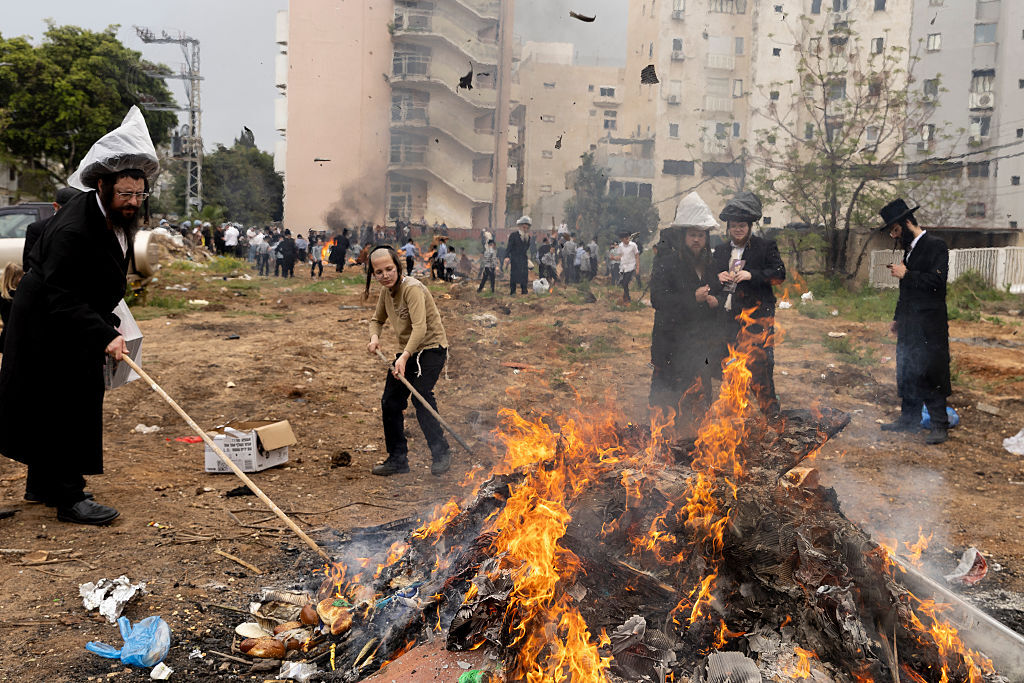
Men in the Israeli city of Bnei Brak on Tuesday burned pieces of leavened bread in preparation for the Passover holiday.
Birthdays
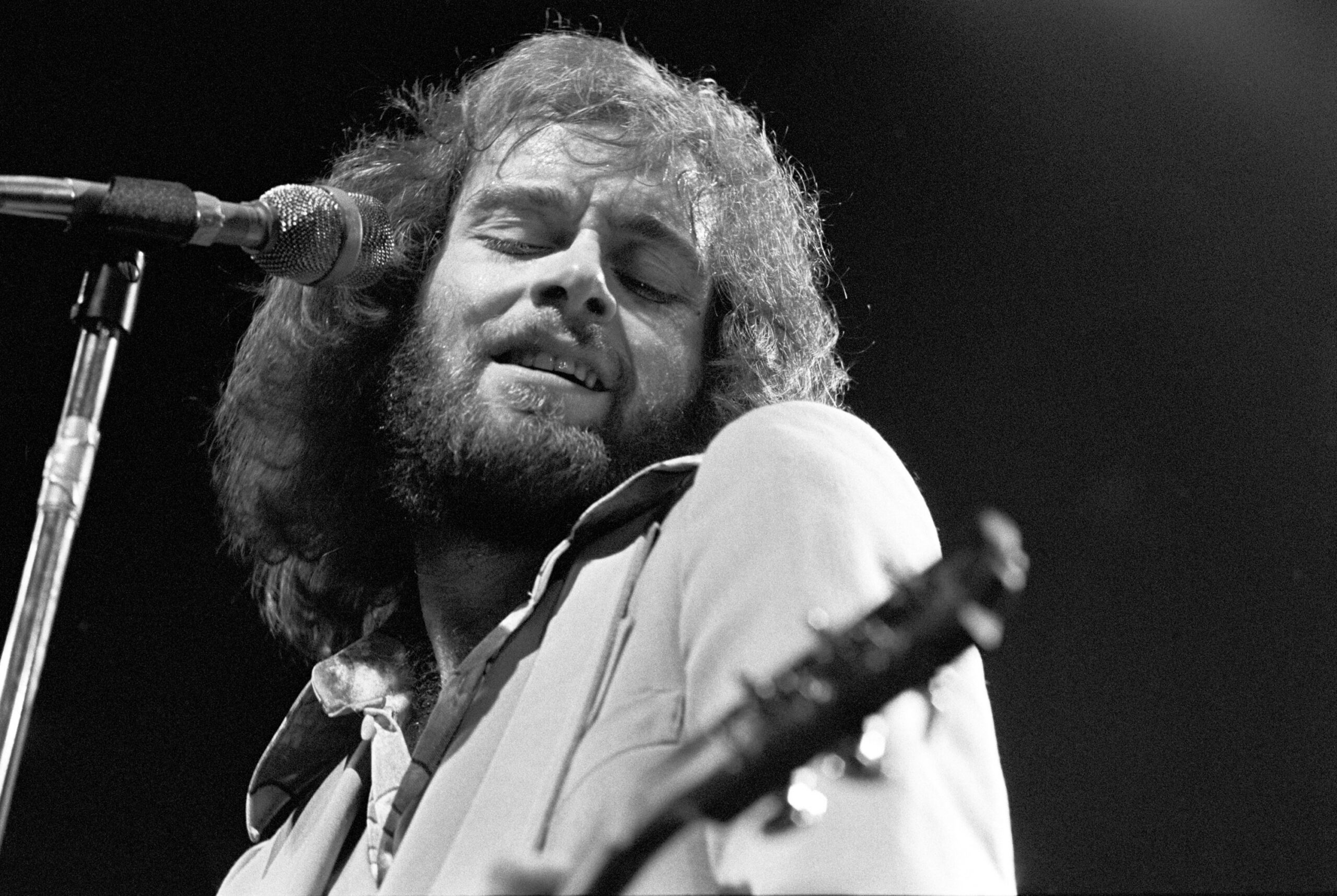
Singer-songwriter best known as the original lead guitarist for Sha Na Na and as the youngest person, at age 18, to play on the main stage at Woodstock in 1969, Henry Gross turns 75…
Physicist and 1997 Nobel Prize laureate Claude Cohen-Tannoudji (the hyphenated last name means simply the Cohen family from Tangiers) turns 93… Psychotherapist in South Florida, Annie Schlachet Garfield, LCSW… Former member of the Knesset for the Likud party, he is a nephew of Moshe Dayan, Uzi Dayan turns 78… Former Sephardic chief rabbi of Israel, Rabbi Shlomo Moshe Amar turns 78… Research professor at Boston University noted for her studies in relation to parrots, Irene Maxine Pepperberg, Ph.D. turns 77… Former president and CEO of the Michigan League for Public Policy, she was previously a Democratic member of the Michigan Senate, Gilda Z. Jacobs turns 77… Associate justice of the Supreme Court of the U.S. since 2006, Justice Samuel Anthony Alito Jr. turns 76… Professor at SUNY New Paltz, her writing is focused on presidential war powers and national security law, Nancy Kassop turns 76… Producer and director for film and television including the “Men in Black” trilogy, he was originally a cinematographer for the Coen brothers, Barry Sonnenfeld turns 73… Lecturer at Stony Brook University’s School of Journalism, he is a columnist for Straus Media, Jonathan P. Friedman… Six-term member of the U.S. House of Representatives from Florida, he is the founder of the Ben Gamla Charter School in Florida (2007) and now lives in Ra’anana, Israel, Peter Deutsch turns 69… President of Baltimore-based HealthSource Distributors, Jerry L. Wolasky turns 68… Author of over 200 children’s books, Mark Shulman turns 64… Former member of the Knesset for the Kadima party, she made aliyah from the Soviet Union in 1979, Yulia Shamalov-Berkovich turns 62… VP of the Euro-Asian Jewish Congress and a leader of the Jewish community of Kyiv, Ukraine, Alexander “Aaron” Levin turns 58… Lawyer, turned political thriller novelist, Brad Meltzer turns 56… Israeli writer, speaker and blogger, Daniel Ravner turns 50… Senior policy advisor to then-VPOTUS Kamala Harris, earlier she was the COO at J Street, Jessica “Jess” Smith turns 49… Professor at Villanova University, he won a gold medal in soccer at the Pan American Maccabi Games in 2008, Bret Myers turns 46… Four-year star basketball player at the University of Maryland including a national championship (2006), she was drafted by the WNBA but played mostly in Israel, Shay Doron turns 41… Film and television actor, Joshua Ryan Zuckerman turns 41… Associate at Debevoise & Plimpton, Noah L. Schwartz… Former assistant secretary for public affairs at the U.S. Treasury, her grandmother is noted philanthropist Lynne Honickman, Julia Aviva Hahn turns 35… Ronald Lippman…
Izabella Tabarovsky’s ‘Be a Refusenik’ offers a productive mindset and practical ideas for Jewish students facing antisemitism
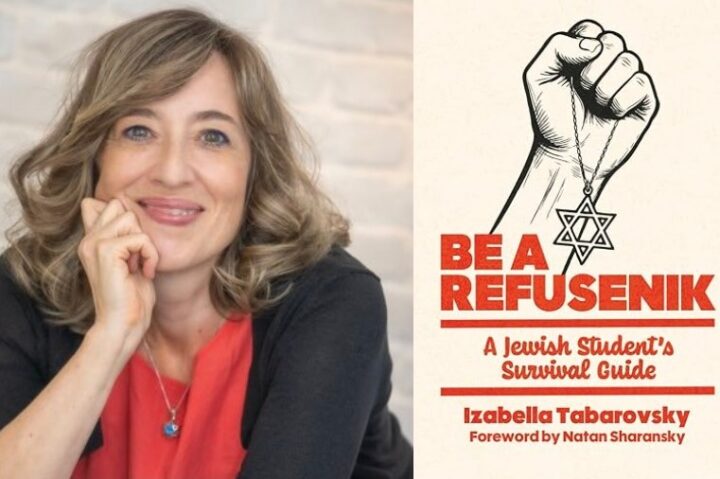
Izabella Tabarovsky
Pocket your kippah. Tuck your Star of David into your shirt. Keep your head down as you walk through the quad, That’s just some of the advice Jewish college students around the country told the Soviet-born writer and activist Izabella Tabarovsky they were given by the leaders of major Jewish organizations as a strategy to weather the anti-Israel and antisemitic storms that have raged on campus since Oct. 7, 2023.
Tabarovsky’s counter-message: Don’t hide. Reclaim your Zionism. And take inspiration from the Soviet refuseniks of the 1980s who stared down Communist Party strongman Leonid Brezhnev, held fast to their Judaism and eventually won their freedom.
Tabarovsky lays out some of these strategies for college students in a new book, Be a Refusenik: A Jewish Student’s Survival Guide, in which she argues that the anti-Israel sentiment on college campuses in recent decades, which has metastasized into antisemitism, mirrors Soviet anti-Jewish propaganda. In the book, Tabarovsky looks back to that era not only to understand the root causes of contemporary antisemitism, but to take inspiration on how to fight it.
The book features a history of Soviet anti-Zionist propaganda with its parallels to the rhetoric on college campuses today, interviews with refuseniks – Soviet Jews who were denied the right to emigrate to Israel, and often imprisoned for trying – and campus activists, and a foreword from the best-known refusenik, Natan Sharansky. Tabarovsky, who was born in the Soviet Union, emigrated to the U.S. in 1990 and now lives in Israel, also offers concrete strategies for students encountering antisemitism to stand proud and strong as Jews.
Tabarovsky told Jewish Insider that she saw a need for her book after many discussions with young Jews: “We’re in a bleak moment, and a lot of books diagnose the bleakness. … I saw a hunger for an inspirational message.”
In the near-decade that she has been writing about the subject, it has become “widely accepted among scholars and people involved in this [activism] that the patterns of anti-Zionist demonization and erasure are some of what Soviet Jews experienced in [former Soviet Union leader Leonid] Brezhnev’s USSR,” she said.
“If American Jews are today encountering the same language, the same explanatory logic and worldview … wouldn’t it make sense to look at how Soviet Jews responded?” Tabarovsky said. “We have this heroic story at the center of the Soviet Jewish story, which is really bleak, but had one really bright light that led to massive change.”
Tabarovsky clarified that, while the U.S. is a democracy and the Soviet Union was an oppressive totalitarian regime, “historic parallels are complex and nothing is ever exactly the same. I would never say that America today is like Brezhnev’s USSR, and the dangers that American Jews face are incomparable to what somebody like Sharansky faced.”
However, she said, “what is similar are the ideological echoes and anti-Zionist erasure. … In every society, there is a scale of punishments that’s different. What’s the worst thing that can happen in America? Your reputation is ruined; you lose your career, you’re ruined financially. All of these things can happen to people who declare themselves Zionists.”
While the refuseniks are remembered for their attempts to emigrate from the Soviet Union, Be a Refusenik focuses on their domestic dissident activity, especially their underground actions to strengthen Jewish identity, spread Jewish education, teach Hebrew and learn about Israel and Zionism. They were “crowdsourcing Jewish knowledge” when the Soviet party line was that “Zionism is racism, is Nazism,” Tabarovsky recounted.
Part of the strategy Tabarovsky suggests for young Jews on campus is modeled after “an inner journey the refuseniks took” in strengthening their Jewish identity.
“Some refuseniks told me this is how they viewed it,” Tabarovsky said, “the system refused to allow them something they wanted, but before that, they refused [to accept] something about the system itself. They refused [to accept] the antisemitism that the system demanded from them, that they erase their Jewish identity, that they give up their sense of peoplehood. … The refuseniks said ‘we don’t buy it; we refuse [to accept] this version of reality. We believe something different.’”
Tabarovsky noted that in her speaking engagement with young American Jews, she realized that many are unfamiliar with the refuseniks, and when she would ask for examples of Jewish heroes, they would usually mention the Warsaw Ghetto Uprising or the Maccabees.
“[Refuseniks] are a real example of Jewish courage and defiance. … They found each other and created a different reality. They wrote their own Jewish story and recreated the Jewish identity that had been taken away from them. … They are the role models we need,” she said.
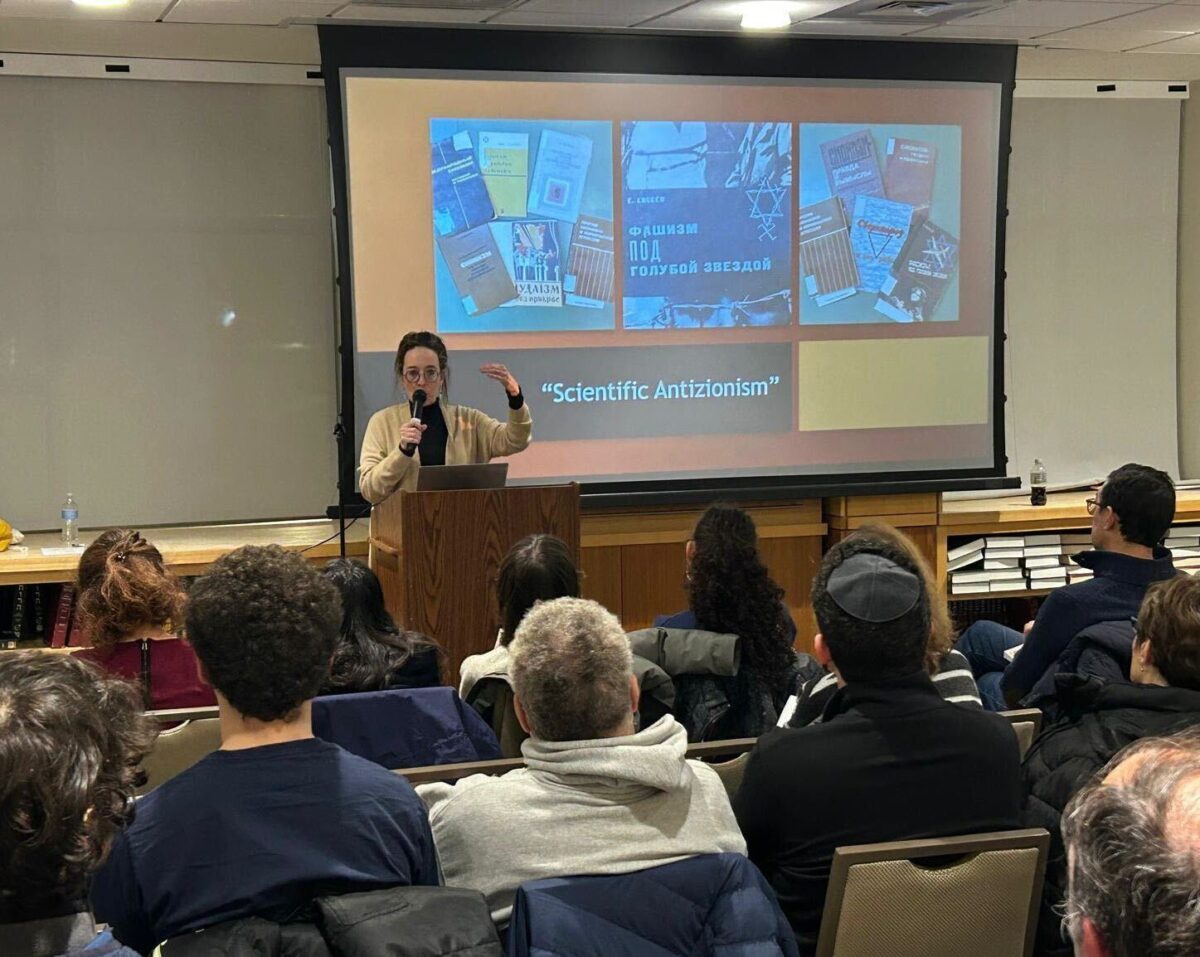
Izabella Tabarovsky speaking at a Be a Refusenik book talk in Needham, MA, organized by Jewish Alumni Strong and Association of Jewish Princeton Alumni. (Yelya Margolin)
Tabarovsky said that American Jews need to rebalance the narratives of Jewish victimhood and heroism, because victimhood has become too dominant.
“You read the horrible things refuseniks went through, but none of them talked about themselves as victims,” she said. “They felt like protagonists in their own story. They took responsibility; they took risks consciously. We need to think of ourselves in these terms, as well.”
Tabarovsky said she heard from many students who were told by large Jewish organizations to keep their heads down and try not to provoke or attract attention, or engage, and applauded those who did not take that advice.
To Jewish students, Tabarovsky suggests: “Reclaim your Zionism.”
“Build a community. Find other people like you. Re-empower yourself and think about your situation strategically,” she said. “The Jewish community has been improvising responses on the fly, while the other side is in the driver’s seat, creating all these propagandistic narratives. … We need to think strategically about how we need to organize ourselves.”
Once that happens, Tabarovsky said she is confident that Jewish students “will know how to act.” One example she cited was Lishi Baker, a rising senior at Columbia studying Middle East history, who she said saw American flags being defaced during anti-Israel protests at Columbia University and organized a counter-protest with American, not Israeli flags, to show that the protests are not only anti-Israel, but anti-American.
Tabarovsky called on students “to be more creative in the way they protest. The other side is doing all kinds of things to attract the media. The Soviet Jewry movement was so creative and knew how to attract attention.”
The former Soviet dissident said the Iranian people’s fear of the regime has weakened, making the time ripe for a revolution

Noam Galai/Getty Images
Israeli politician Natan Sharansky speaks during 'March For Israel' at the National Mall on November 14, 2023 in Washington, DC.
For decades, former Israeli politician and Soviet refusenik Natan Sharansky has championed the cause of freedom from oppressive regimes. Dissidents across the world have found inspiration in his books and sought his advice and support.
Iranians seeking to topple the totalitarian mullahs’ regime are no different.
Soon after Israel began its strikes on the Islamic Republic’s nuclear, weapons production and military sites, Sharansky, who has been in contact with Iranian dissidents, expressed hope that the war would increase pressure on the regime from within Iran, leading to its downfall.
That hope has been reflected in statements by President Donald Trump and Israeli Prime Minister Benjamin Netanyahu during the operation, though after the interview, Trump told reporters on Air Force One that he favors stability over regime change.
Sharansky spoke with Jewish Insider on Tuesday about the prospects of the Iranian people rising up against Supreme Leader Ayatollah Ali Khamenei, even after a shaky ceasefire had been declared between Israel and Iran.
This interview has been edited and condensed for clarity.
Jewish Insider: What did this war between Israel and Iran mean for the possibility of regime change in Iran?
Natan Sharansky: It’s difficult to speak now, because we don’t know what kind of [ceasefire] agreement it is, whether it is the type with Hezbollah, the type that prevents Iran from rebuilding their ballistic missiles.
What is important is that the regime has been very weakened in the eyes of its own people.
A regime like Iran needs control not only over practical matters, it needs a way to keep its people under control, and the only control they had is through fear. The moment the level of fear goes down, or the empire looks weak, or some serious event causes people to doubt it, the regime can fall apart very quickly.
If some people cross the line of fear and go to the streets and resist, [the regime] can fall in a few days, as it did in Eastern Europe or in Tahrir Square in Egypt.
[On Monday], I thought we were very close. The fact that Israel was destroying the symbols of the regime, one after the other — the [Islamic Revolutionary Guard Corps] headquarters, the Interior Ministry that controlled people’s movement — meant the regime was being weakened in the eyes of its own people.
JI: Do you really think the mullahs’ regime is so close to collapse?
NS: In a totalitarian society, there are three kinds of people. There are those who are with the regime; there are the dissidents, the very few who speak out; and the majority, the double-thinkers, who don’t believe in the regime, don’t want the regime, but are afraid to speak out.
Iran was unique among the dictatorial countries in the Middle East [in] that it had a very developed civil society. There were women’s organizations, students, trade unions organized against the regime.
I can tell you that in the estimation of many dissidents when we had a meeting 15 years ago in Prague, we chose Iran as the most likely candidate for a revolution.
In 2009, you had the beginning of a revolution, but [former President Barack] Obama decided engagement with the regime was more important than changing the regime, so the regime was strong enough to destroy [the opposition].
Now, not only is the regime weaker in the eyes of the people, but it was exposed as a paper tiger so quickly and it lost all symbols of power.
JI: The public conversation in the U.S. has been very nervous about the prospect of regime change.
NS: This debate about whether they should change the regime or not — it’s like whether to attack [the nuclear facility in] Fordow or not. You don’t change the regime by throwing another bomb.
The regime can be changed by people on the inside, if they stop being afraid. If a small group stops being afraid and goes to the streets, it’s very risky. If many people think it’s possible and millions stop being afraid, that’s the end of the regime.
[French President Emmanuel] Macron said yesterday that he was angry and that the Iranian people should decide, not the Americans. He’s right that it’s for the people to decide, but the people have been controlled by fear for many years.
We don’t have to physically change the regime; we have to help the people see the regime is weak. At the moment we have the Nachshons [the first Israelite to enter the Red Sea before it was split in the Exodus story]. This is how it happened in many other places, like in Romania. The moment they go out and show they are not afraid, the regime will be finished in two or three days.
I think we are now very close to this.
JI: Do you think statements about regime change from Israeli leaders and President Trump helped?
NS: The leaders of the free world need to show their real attitude toward the dictatorship and their support for the people. Especially the Americans and Europeans. That was the failure in 2009. All that was needed was for leaders to say, “We are with you,” but they said the opposite, that they want engagement.
Today it is the opposite. It is the clear position of the free world that in heart and spirit they are with the people of Iran who want to be free. It doesn’t mean we’re saying we will change the regime — we cannot do that, it would just mean continuing the war. It does not mean trying to turn Iran into a colony.
[The purpose of the war is] for them not to continue to blackmail [Israel] and make our lives miserable as they tried to do for many years, but we should be interested in the Iranian people seeing that the regime is weak and the sympathy of the world is on their side.
Israel mostly behaved very cleverly and toed a thin line to make it clear that we are not fighting with the civilians, we are damaging the regime and the image of the regime in Iran as much as possible. I think that even if some ministers did not understand that is the aim, Israel’s leaders did this well.
JI: What do you think was the impact of the bombing of the gate to the notorious Evin Prison, where dissidents are held and tortured?
NS: It was the right thing to do, but maybe it would have been wiser to do it two to three days later, when the authorities lost control of the streets and the prisoners could run away. Is it legitimate to help political prisoners run away? Of course it is legitimate. But it’s a good thing to do when the regime starts losing control.
JI: Does the ceasefire make regime change more or less likely?
NS: We have to see the conditions of the ceasefire, and whether it will help the regime restore the sense that they are strong. It’s clear that the regime is much weaker internationally and the nuclear threat that was so big and looming above us for decades is now [lessened]. Whether this regime is weakened from the inside, we have to see.
JI: As someone in contact with dissident movements, what are you hearing about the movement in Iran?
NS: A lot of dissidents in America and in London and inside Iran are really mobilizing.
I was told yesterday that the price of a Starlink internet receiver rose from $400 to $2,800 in a few days. That means that while, officially, the internet is blocked, people want to be in contact. They want to coordinate and smuggle more and more of this equipment. That’s one parameter from which you see that people feel the moment is coming.
I would like to see this, but we don’t know exactly what is happening.
I think that the moment Hezbollah fell, the [Iranian] regime felt it was in danger. They executed hundreds of people. Iran probably leads the world in executions, but in recent months they accelerated and almost doubled them. They’re very rational; this is how they control people. It’s important to them that people are scared. Even if the attack by Israel was a surprise, Iran was prepared for it in terms of how to control the people.
What happened in the last 12 days is that people could see how weak the regime is. There is a very close connection between the regime’s level of control of the people and how it looks. A dictator who looks weak cannot survive. That is why we are very close.
JI: What are dissidents currently doing against the regime?
NS: There are many different groups of dissidents. There are those representing different aspects of human rights and groups who speak for the Kurds, Azeris, Balochis — only half of the population of Iran are Persians. It’s always like this when facing a totalitarian regime. You have groups with different interests and the secret police plays off of this.
That’s OK. The important thing is whether, at this critical moment of revolution, they can speak in one voice. That is a process that is happening these days. Those in America, those in London and in some other European countries and those who are in the field — their interconnection is growing with every minute. That is why I mentioned Starlink; it’s very important because the authorities tried to break the internet communications between the people.
The only thing that is working is state propaganda, which is why it is so important that Israel struck the centers of official propaganda.
Many channels of contact are being established these days, which is very important. Some leaders are taking initiative. It’s important that different groups succeed in uniting for at least a short period of time and speak in one voice. It seems to me that inroads are being made, and from what I hear, very intensely.
BIBI MEETS THE PRESS: Israeli PM Benjamin Netanyahu, speaking on NBC’s Meet the Press, said that both the radical Shi’ites, led by Iran, and the radical Sunnis, led by al-Qaida and ISIS, should be weakened: “Weaken Both Sides: I think that there are two actions you have to take. One is to take the actions that you deem necessary to counter the ISIS takeover of Iraq, and the second is not to allow Iran to dominate Iraq the way it dominated Lebanon and Syria. So you actually have to work on both sides. As I say, you try to weaken both. There are actions that could be taken. Whatever I have to say on specific actions, I’ll obviously pass along to President [Barack] Obama and the U.S. Administration in other means, not even on Meet the Press…” (more…)
Please log in if you already have a subscription, or subscribe to access the latest updates.
 Continue with Google
 Continue with Apple