

















































The Maine Democrat, who won his primary in June, had been dogged by controversy for months before a rape allegation finally cost him his political allies
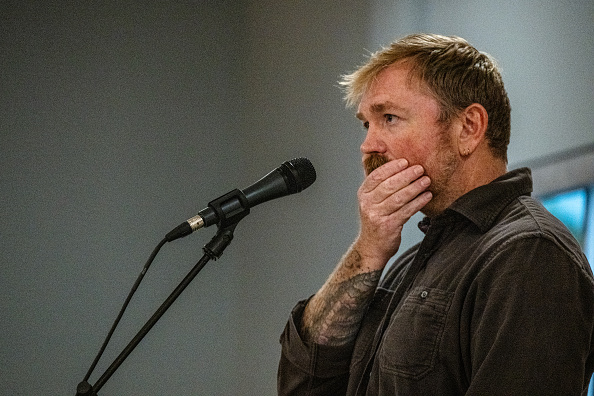
Photo by Laura Brett/Getty Images
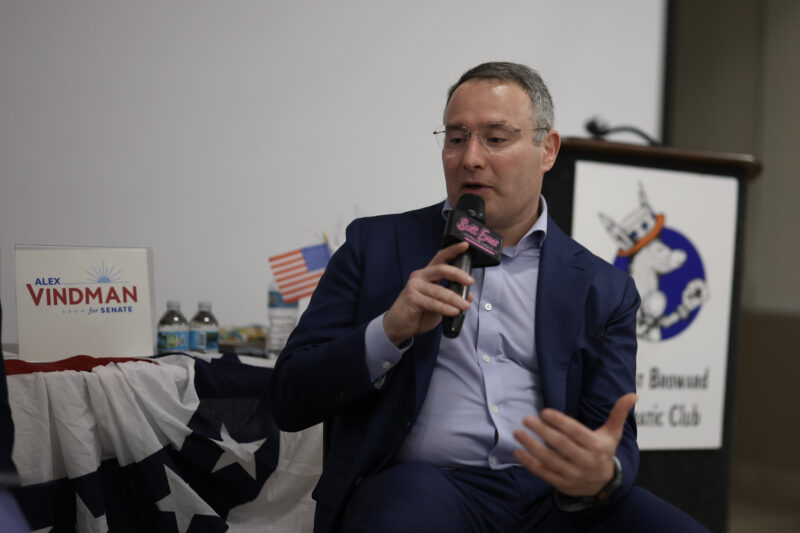
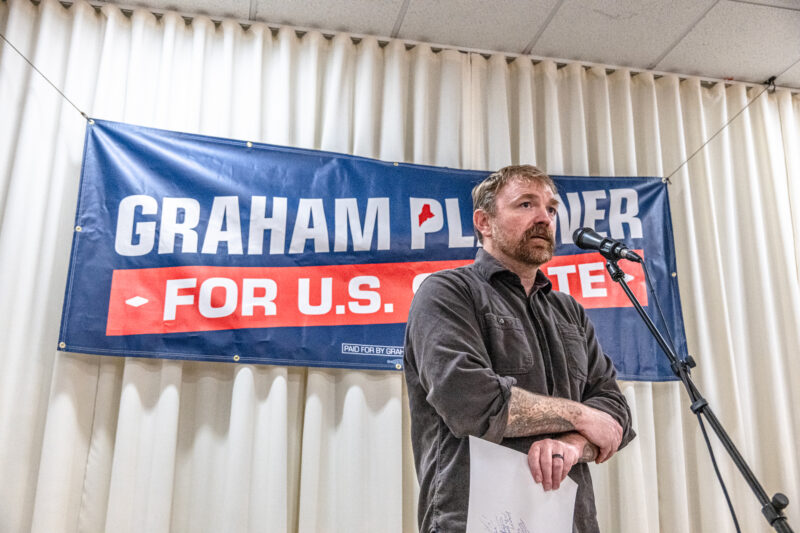
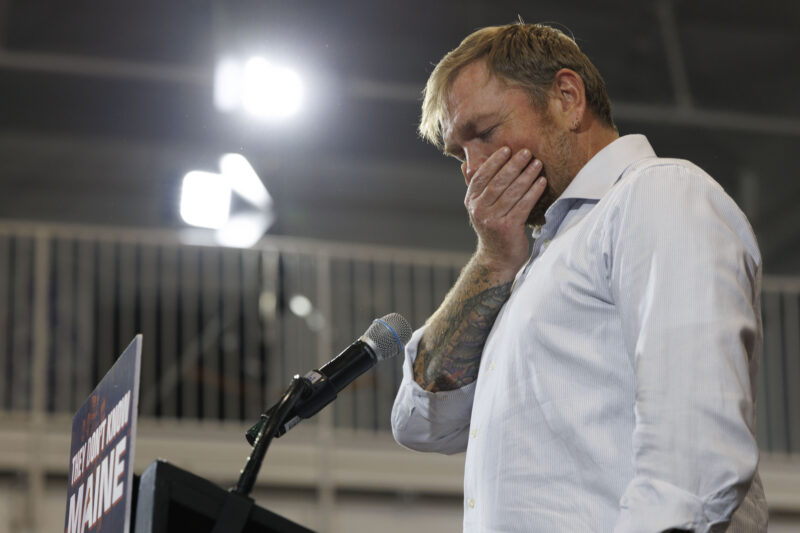
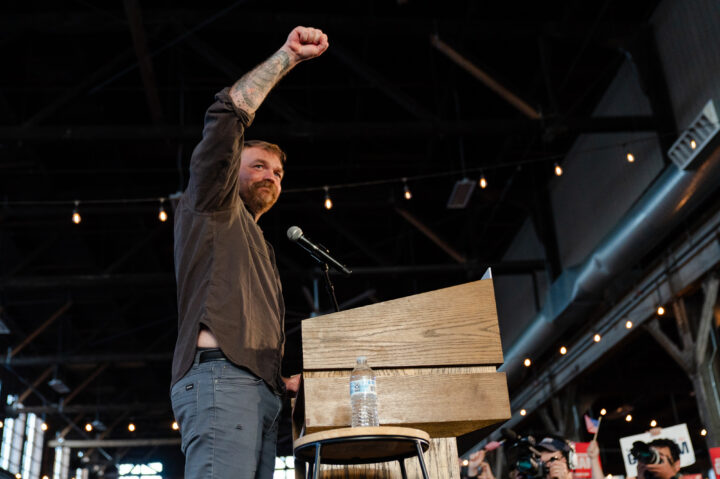
Democratic U.S. Senate candidate Graham Platner speaks to voters at a town hall on June 7, 2026 in Portland, Maine.


 Add JewishInsider on Google
Maine Senate candidate Graham Platner, the scandal-plagued progressive insurgent, announced on Wednesday evening that he plans to drop out of the race amid intense pressure, two days after a former romantic partner accused him of rape.
Even as he announced his withdrawal, Platner remained defiant, claiming that the allegations against him were a conspiracy aimed at forcing him out of the race.
The sexual assault allegation by Jenny Racicot, who shared the details of the incident with Politico, followed months of controversies — including allegations of domestic abuse — that Platner withstood with the backing of top Democrats, including Sens. Elizabeth Warren (D-MA) and Bernie Sanders (I-VT) and, after the primary, Senate Minority Leader Chuck Schumer (D-NY). He lost the support of his political allies after the report was published on Monday.
Even before that, Platner had been dogged by controversy for months. Last October, Platner acknowledged that he had a tattoo of a Nazi symbol known as a Totenkopf for nearly two decades.
He denied knowing what the symbol meant, but a past acquaintance told Jewish Insider that Platner was aware of its Nazi association. Another former romantic partner, Lyndsey Fifield, who accused Platner of domestic violence, shared text messages with the New York Times showing she had informed friends of the Nazi symbol months before it became public knowledge and said he and his Marine colleagues had chosen the symbol deliberately.
In Reddit posts, Platner regularly used slurs, criticized sexual assault victims and praised Hamas’ tactics during the terror group’s 2014 war against Israel.
In his announcement, Platner continued to deny the sexual assault allegation, claiming that “large forces,” the “corporate media” and the “political establishment” are conspiring against him — specifically timed in order to force him off the ballot before the drop-out deadline next week.
“We live in a political system that is not built for normal people,” Platner asserted. “It is a system that is built structurally to make sure that movements like ours cannot flourish, that if they begin to succeed, they can be crushed. … We did it the way that we were told we are supposed to make change, and we won, and now they are not going to let us have it, not if it’s me.”
He said he’s leaving the race because “those in power … are using these allegations as an excuse” to block his ability to fundraise, access voter data and otherwise campaign.
Platner insisted he was not attempting to influence the process to replace him on the ballot — a claim disputed by the Maine Democratic Party and numerous news reports. He said that the process “needs to be open, transparent and democratic” and not shaped by “party apparatchiks” or party leadership in Washington.
He also said he “intend[s] to file my paperwork to withdraw,” indicating he had not yet actually done so.
In his statement, Platner also referenced his repeated claim that Israel committed genocide in Gaza, a charge that had become central to his campaign.
“All we were asking for was healthcare, was to end the genocide, to use our taxpayer dollars at home to uplift our communities, instead of waging war overseas,” Platner said.
Shortly before Platner’s announcement, the Maine Democratic Party’s state committee members met and voted to hold a nominating convention to choose a new nominee should Platner withdraw from the ballot. Party leaders said they’d disclose further details about the process “soon.”
Media reports indicate that county committees would be charged with selecting 500 to 600 total delegates for the convention.
In a text message to supporters on Wednesday, Platner’s campaign manager claimed that the Maine Democratic Party has been coordinating behind closed doors with the Democratic Senatorial Campaign Committee to cut Platner’s camp and supporters out of the nominating process.
Platner entered the Senate race to challenge Sen. Susan Collins (R-ME), a five-term incumbent, last August. From the beginning of the race, he touted his bona fides as a veteran who served in Iraq and Afghanistan and positioned himself as an anti-war candidate. He has blamed his past conduct on PTSD and his resulting alcohol dependence.
From the beginning, Platner positioned himself as a working-class outsider taking on the establishment — including both Collins and the Democratic establishment, which was backing Janet Mills, Maine’s governor, in the Democratic primary. His viral first campaign video was produced by Morris Katz, a political consultant who had also made political ads for New York City Mayor Zohran Mamdani.
Criticism of Israel was central to Platner’s campaign. He regularly attacked AIPAC and described Collins as “bought and paid for by [Israeli Prime Minister] Benjamin Netanyahu.” Liberal Jewish groups, including the Jewish Democratic Council of America and J Street, had opted not to endorse Platner, even after Mills dropped out of the race in April. Platner handily won the Democratic primary in June. Mills did not endorse him.
Democrats saw the race as a possible pickup opportunity in a midterm election year when many voters in the purple state are disillusioned by President Donald Trump.
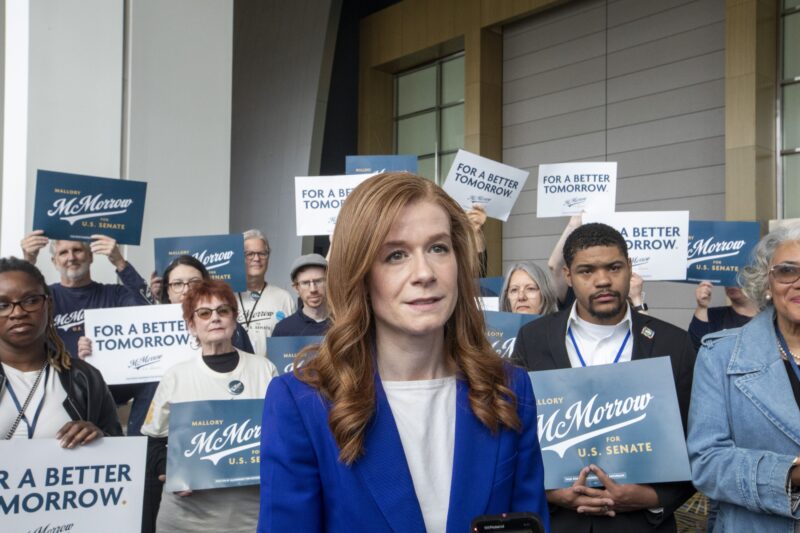
Numerous Maine Democrats have already announced plans or filed paperwork to take Platner’s place on the ballot, including former Maine Centers for Disease Control Director Nirav Shah, former state Senate President Troy Jackson, former House candidate Jordan Wood, former Senate candidate David Costello, Secretary of State Shenna Bellows, former House candidate Paige Loud, state Rep. Valli Geiger and brewery owner Dan Kleban.
Geiger claimed on Wednesday that she was Platner’s preferred replacement, but a campaign spokesperson denied that, though the spokesperson said he had encouraged her to run if he dropped out.
Senate leaders threatened to withhold funding from the race if Platner remains the nominee, while several of his progressive backers rescinded their endorsements
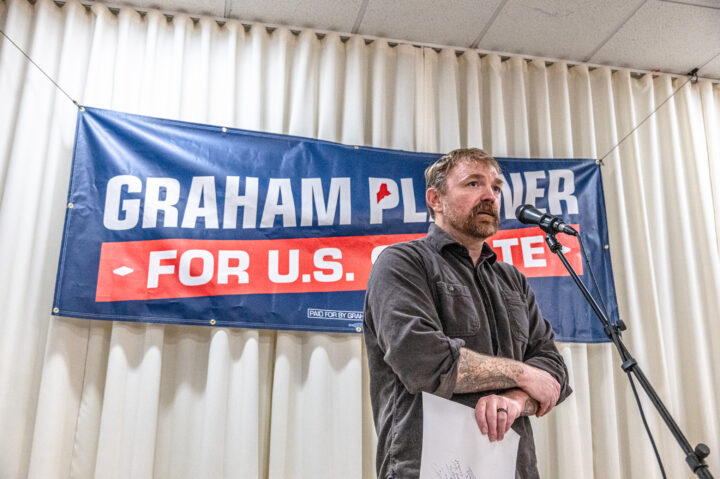
Laura Brett/Getty Images
Democratic U.S. Senate candidate Graham Platner speaks to voters at a town hall at the Elks Lodge 188 on June 7, 2026 in Portland, Maine.
Democratic leaders coalesced around calls for Maine Senate candidate Graham Platner to withdraw from the race on Monday following a Politico report in which an ex-girlfriend of Platner’s accused the Democrat of sexual assault, an account the outlet backed up with her correspondence and other interviews.
Platner denied the allegation outright but said in a video statement that he’s “mindful of the political reality it will inflict” and would be “taking the time to reflect on the best path forward.” If Platner voluntarily drops out by July 13, the Maine Democratic Party would have until July 27 to pick a replacement to appear on the ballot.
Senate Minority Leader Chuck Schumer (D-NY) and Sen. Kirsten Gillibrand (D-NY), the chair of the Democratic Senatorial Campaign Committee, said in a joint statement that Platner should withdraw, and that the DSCC would not invest financially in the Maine Senate race if Platner remained the nominee.
“The allegations reported today are incredibly disturbing — violence, abuse and sexual assault are absolutely unacceptable,” Schumer and Gillibrand said. “Graham Platner needs to immediately withdraw as the Democratic nominee for Senate and allow Maine Democrats the opportunity to choose a new candidate who can defeat Susan Collins.”
Schumer and Gillibrand had offered tepid support for Platner in the wake of previous scandals he has weathered on the campaign trail.
Senate Majority PAC, the Senate Democratic super PAC, said in a statement that Platner should withdraw and that the PAC would be “redirecting resources away from the Maine Senate race.” The group said the race would be winnable “if Platner is not on the ballot.”
The Maine Democratic Party’s leadership also called on Platner to end his candidacy.
“Over the past several weeks, multiple women have made serious, credible allegations against Graham Platner. Today’s statements take those allegations even further,” party leaders said in a statement. “Maine Democratic Party leadership is calling on Graham Platner to withdraw as the Democratic nominee for U.S. Senate.”
The party leaders said it’s “essential that we refocus this campaign” on defeating Sen. Susan Collins (R-ME) and the Trump administration.
Maine Statehouse Speaker Ryan Fecteau, a Democrat, also called on Platner to drop out, saying it’s clear that he cannot win the seat.
Several prominent progressives who had previously defended and supported Platner, even through his previous scandals and controversies — including his now-covered Nazi tattoo and domestic abuse allegations — also said that the latest sexual assault allegations were a breaking point.
Sen. Elizbeth Warren (D-MA) said that there can be “no tolerance for sexual assault” and that “the best path forward is for Graham Platner to step aside.”
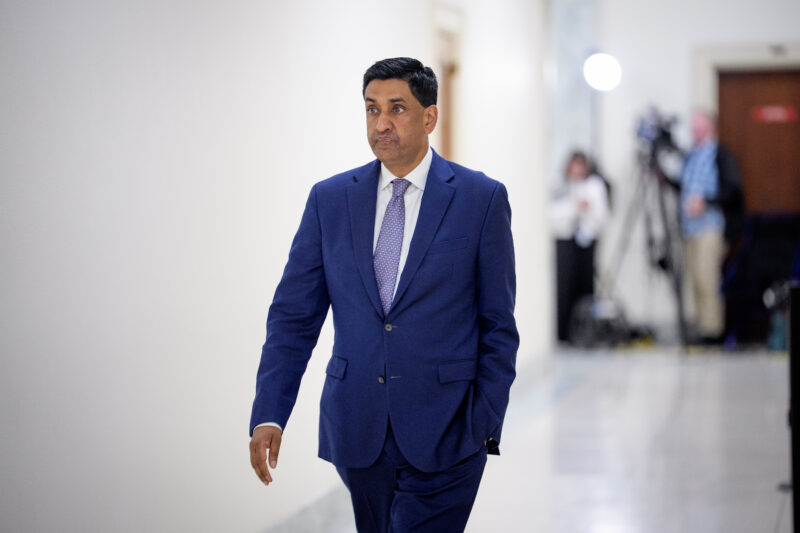
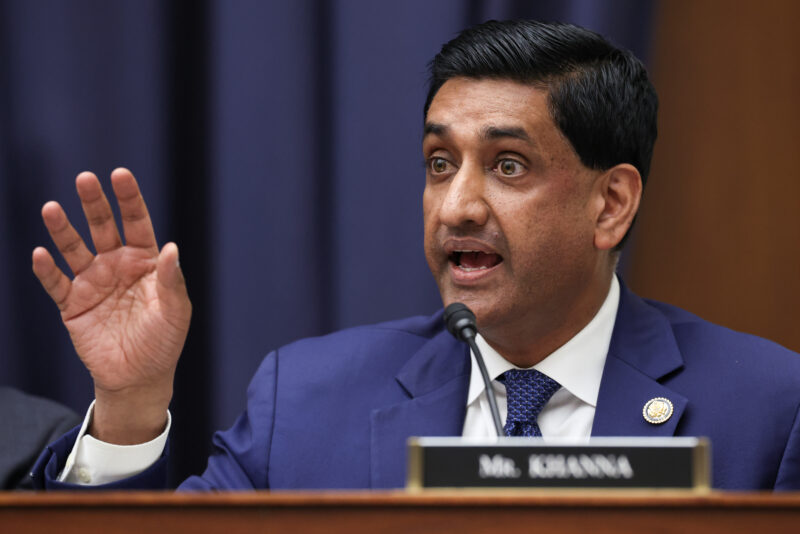
“I’ve been very clear that sexual assault or violence against women is a red line. These allegations are very serious and credible. Graham Platner should drop out from the race. I am withdrawing my endorsement,” Rep. Ro Khanna (D-CA) said on Monday evening.
Sen. Ruben Gallego (D-AZ) called the allegations “troubling and deeply serious” and likewise rescinded his endorsement.
Sen. Ed Markey (D-MA) said, “The allegations reported against Graham Platner are deeply disturbing and must be taken seriously. I cannot support his candidacy.”
Sen. Martin Heinrich (D-NM) similarly rescinded his endorsement and called for Platner to step aside.
Some of Platner’s prominent media boosters also said that they wanted to see him pull out of the race or otherwise criticized him.
“Platner needs to drop out ASAP — these are awful, credible allegations,” said Jon Favreau, co-host of “Pod Save America.” “It’s now abundantly clear that he just hasn’t been honest about his past and can’t be trusted as a candidate for office.”
Sens. Bernie Sanders (I-VT), one of Platner’s most prominent progressive backers, has not yet addressed the latest allegations.
The End Citizens United PAC also pulled its support for Platner, as did the Sanders-linked Our Revolution, though the group warned “the Democratic establishment: this is not your opening.” TrackAIPAC also pulled its endorsement of Platner.
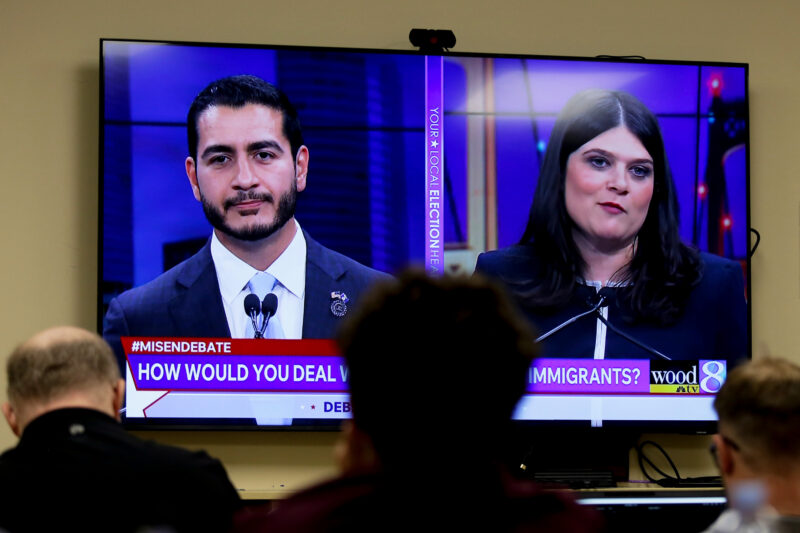
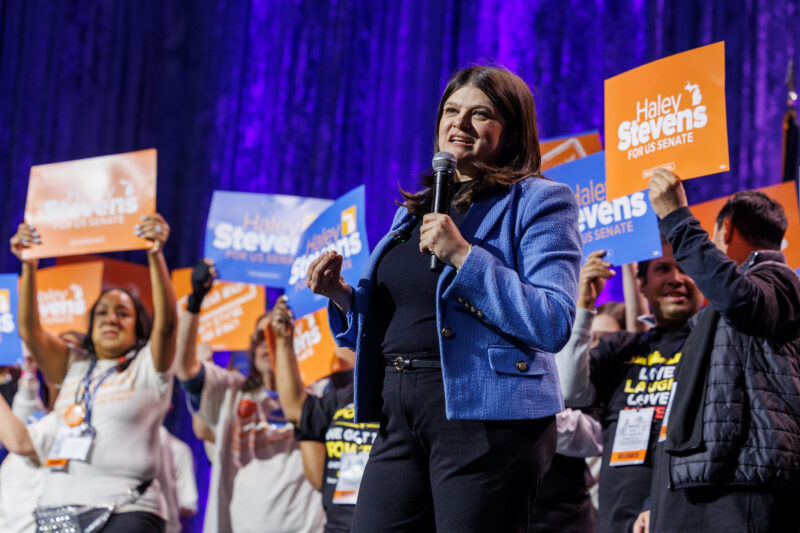
Rep. Haley Stevens (D-MI), who is running for U.S. Senate in Michigan, also condemned Platner, who campaigned alongside her primary rival, Abdul El-Sayed.
“The allegations against Graham Platner are extremely troubling and completely unacceptable,” Stevens said. “There should be no room for this conduct in the U.S. Senate or any public office. Graham Platner must step aside.”
Numerous other Democratic Senate candidates followed her. El-Sayed, in a statement, did not unequivocally call for Platner to withdraw.
Speculation has already turned to who might replace Platner on the ballot, with many pointing to logger and former state Senate President Troy Jackson, a former gubernatorial candidate who finished third in the 2026 primary, as an alternative choice with a similar background and politics to Platner.
Jackson also campaigned alongside and supported Platner, something that could hinder his electoral prospects.
Jackson was endorsed by the Maine Democratic Socialists of America in his gubernatorial bid.
Former acting Centers for Disease Control Director Nirav Shah, who finished second in the primary, has also been floated as a potential replacement and has reportedly expressed interest.
Maine Gov. Janet Mills, the favored candidate of the Democratic establishment who suspended her campaign for the seat before the primary, could also see a second wind.
A recent poll also tested “Grey’s Anatomy” star and Maine resident Patrick Dempsey’s popularity in the state, as well as Secretary of State Shenna Bellows, who also ran in the gubernatorial primary; state Sen. Joe Baldacci; former House candidate Jordan Wood; Rep. Chellie Pingree (D-ME); former state Rep. Sara Gideon, who lost to Collins in 2020; former Rep. John Baldacci (D-ME); Attorney General Aaron Frey; and former Rep. Mike Michaud (D-ME).
State Sen. Baldacci said that the party “can’t handpick a replacement candidate without some process involving all Democrats” in the state.
Retiring Rep. Jared Golden (D-ME), who had been eyed by Democrats as a potential recruit for the seat, said last month that he was not interested in replacing Platner on the ballot.
House Minority Leader Hakeem Jeffries and Sen. Mark Warner declined to defend the embattled Maine Senate candidate, but Rep. Ro Khanna said he’ll continue to support him
Sophie Park/Bloomberg via Getty Images
Graham Platner, Democratic Senate candidate for Maine, arrives to speak during a Fighting Oligarchy event in Portland, Maine, on May 25, 2026.
Top Democrats faced questions over Maine Senate candidate Graham Platner’s scandals on Sunday, days after The New York Times shared details of abusive behavior alleged by past romantic partners.
Rep. Ro Khanna (D-CA), who has endorsed Platner, said he continues to support him even as he criticized Platner’s past behavior and said his campaign should not attack his accusers, while Sen. Mark Warner (D-VA) and House Minority Leader Hakeem Jeffries (D-NY) declined to offer any support for Platner and said that Platner and Maine voters will need to address the scandal.
Khanna, who campaigned with Platner in Maine after last week’s Times scoop, said on CBS’ “Face the Nation” that Platner’s past actions were “misogynistic, they were shameful, they were wrong, but they didn’t come as a surprise to a lot of the folks in Maine,” arguing that the state’s voters knew the presumptive Democratic nominee went through a dark period after his time serving in Iraq and Afghanistan.
“He took accountability, he himself has said that it was shameful,” Khanna said, explaining that he continues to support Platner because of his policy platform. “The Maine voters that I met said they don’t like it. They knew that he had these chapters. They are willing to extend him grace and redemption, and they’re focused now on what he’s running for.”
He said that if there was “evidence of violence” or “evidence of sexual assault” he would not be supporting Platner.
One of Platner’s ex-girlfriends interviewed by theTimes detailed instances when Platner was physically aggressive, including forcing her into a room and preventing her from leaving. She said he had also grabbed her hard enough to leave marks.
“Even according to The New York Times piece, they said there was no harm, no injury. There was toxicity, and there was verbal intimidation, which I condemn,” Khanna told host Margaret Brennan. “But Graham has made it clear that there was no evidence of violence. That to me is a red line.”
He also defended Platner’s ex-partners, and said that Democrats should not be attacking them, praising them for coming forward, even as Platner’s campaign has disparaged one of the accusers as a Republican operative.
“They should not attack her. They should not attack The New York Times reporters who wrote the story,” Khanna said.
In an interview with ABC News’ “This Week,”, Warner declined to offer any support for Platner, and suggested he wants to stay far away from the issue.
“If the allegations are true, they are disturbing. End of the day, though, Maine voters are going to decide this,” Warner continued, adding that he’s focused on his own reelection campaign in Virginia.
Asked about whether Platner has handled the issue properly, Warner said that President Donald Trump’s 2016 campaign appeared to rewrite the rules of what was acceptable in the political realm. He suggested that similar activity would likely have been considered more damaging in decades past.
“At the end of the day, American voters will make those decisions,” Warner said. “I don’t know Mr. Platner, I’ve never met him. I would just say this: the allegations [that] are made, I think you ought to have at least some attempt to prove … or disprove them, if that’s the case.”
He said that he wishes “all candidates in both parties maybe held themselves to a different standard,” before again reiterating that it’s up to Maine voters to judge whether Platner’s past is disqualifying.
Jeffries also declined to offer support for Platner in an interview on Fox News’ “Sunday Briefing” show.
“Violence against women in any way, shape or form is unacceptable. It’s a red line, and nobody should cross that,” Jeffries said. “Any abuser who comes forward has to be treated with dignity and respect.”
He said, however, he isn’t involved in the Maine Senate race and that he hasn’t spoken about the race with Khanna.
Asked whether Platner’s candidacy, and Platner’s attacks on AIPAC and the pro-Israel community, are evidence that the Democratic Party has an antisemitism problem, Jeffries said that Platner is “going to have to speak for himself,” but that antisemitism shouldn’t be a partisan issue.
“We should all be committed to crushing antisemitism and all other forms of hatred into the ground,” Jeffries said.
Pressed subsequently about Adam Hamawy, the Democratic New Jersey Congressional nominee with a history of connections to convicted terrorists and terrorist organizations, Jeffries — who congratulated Hamawy on his victory last week — repeatedly sidestepped the issue.
“I haven’t spoken to him, he’s going to have to speak for himself and address these allegations,” Jeffries responded, when asked about Hamawy’s testimony in defense of Omar Abdel-Rahman, the terrorist mastermind known as the Blind Sheikh, before pivoting to attacking the administration over the war in Iran and high gas prices.
Pressed again, he criticized Republicans for their own hateful comments and the administration for the rising cost of living.
Warren lauded Platner’s economic populist message rather than address his extremist rhetoric

Brian Stukes/Getty Images for Vanderbilt Policy Accelerator
Sen. Elizabeth Warren (D-MA) speaks during the Vanderbilt Policy Accelerator (VPA) Luncheon at Eaton DC on April 22, 2026 in Washington, DC.
Sen. Elizabeth Warren (D-MA) dismissed criticism of Maine Senate candidate Graham Platner’s scandals on Wednesday, after calling him “my kind of man” at his rally in Maine on Saturday.
“You care about character,” CNBC host Sara Eisen said to Warren. “This is a guy that had a chest tattoo with a Nazi symbol — OK, he apologized for it. It’s a guy that reportedly wrote that people concerned about rape should take some responsibility for themselves and not get so effed up that they wind up having sex with someone they don’t mean to. He praised military tactics used by Hamas, reportedly, in comments online when they were murdering Israeli soldiers. So I’m just curious why you think he’s ‘your kind of man’?”
Warren responded, “So, as you rightly point out, he has apologized. He’s out meeting with the people of Maine every single day so they can evaluate not who Graham Platner was but who Graham Platner is today.” She went on to say her comment was in reference to her experience reading an interview of Platner’s where he condemned the lack of consequences for bankers during the 2008 financial crisis.
Eisen said, “OK, well, ‘I dig it,’ next to a video of a bunch of terrorists killing five soldiers?” referring to a Jewish Insider report unearthing Platner’s 2014 Reddit comments. “I don’t know, I mean, you guys want to be the party of inclusivity, right?”
“I want to be the party that stands up for hardworking people,” Warren answered. “I want to be the party that is transformative of an economy that right now is hip deep in corruption … and that’s what Graham Platner wants to do and I’m there to stand with him and to help in that fight.”
Please log in if you already have a subscription, or subscribe to access the latest updates.
 Continue with Google
 Continue with Apple