
























































The new report from the hawkish think tank calls for the countries to sign one final 10-year MOU while focusing more on military cooperation and engagement
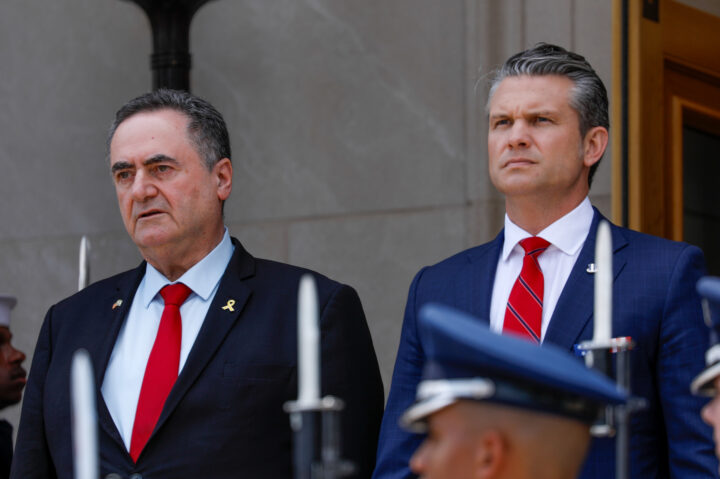
WASHINGTON DC, UNITED STATES - JULY 18 : U.S. Secretary of Defense Pete Hegseth (R) welcomes Defense Minister Israel Katz (L) during an official ceremony at the Pentagon in Washington, United States on July 18, 2025. (Photo by Yasin Ozturk/Anadolu via Getty Images)


 Add JewishInsider on Google
As Israel and the Trump administration negotiate the next U.S.-Israel memorandum of understanding, a new report from the Jewish Institute for National Security of America demonstrates how even among hawkish experts in Washington, the question is increasingly not how to preserve the traditional military aid model, but what should replace it.
The report, titled “Shifting the Center of Gravity: Transforming the U.S.-Israel Security Partnership,” recommends that the two countries sign one final 10-year MOU — a sea change for Israel supporters who previously wouldn’t have dreamt to advocate for the end of these kinds of agreements between Jerusalem and Washington, though they largely hope for it to be replaced with cooperative and enduring programs.
The report comes as Israeli Prime Minister Benjamin Netanyahu has himself championed the eventual end of direct U.S. aid to Israel and as elements of both parties become resistant to defense spending overseas, a new reality that is forcing a reassessment of how Washington can sustain its commitment to Israel without relying on the traditional aid model.
Blaise Misztal, JINSA’s vice president for policy, told Jewish Insider that the strategy is catered to “America’s benefit” and seeks to make the U.S.-Israel partnership “more effective for both countries.”
“Closer alignment and cooperation with Israel across military, technological and economic lines of effort will help make America safer abroad, more prosperous at home and one step ahead of its adversaries,” Misztal said. “One specific area where we believe this should happen immediately is with shifting the center of gravity of U.S. force posture in the Middle East to Israel.”
JINSA’s report calls for maintaining $3.8 billion in annual U.S. assistance through fiscal year 2038, while pairing that funding with a series of initiatives designed to deepen operational and strategic integration between the two militaries, including a larger U.S. military footprint in Israel, a permanent U.S. military presence at Israel’s Ovda Airbase, a deeper U.S.-Israeli defense industrial partnership and a limited U.S.-Israel mutual defense treaty (with a deliberately narrow threshold for activation).
At the center of JINSA’s proposal is an expanded U.S. military presence in Israel. Beyond Ovda Airbase, the report calls for expanding U.S. access to other Israeli air and naval bases and creating a forward CENTCOM headquarters in Israel for regional planning, mission command and oversight of U.S. forces, as well as establishing a U.S. prepositioned arsenal hub and expanding and modernizing the existing war reserve stockpile.
The strategy also envisions joint development and production of advanced weapons and critical munitions. It recommends formally incorporating Israel into the Trump administration’s Golden Dome missile-defense initiative and expanding U.S. procurement and coproduction of Israeli air- and missile-defense systems.
JINSA further recommends expanding intelligence sharing on Iran, its proxies and other shared adversaries, including China and Russia, while establishing a “Model Ally” status for Israel that would provide a framework for deeper joint research and development, co-production, reciprocal offsets and an updated assessment of Israel’s Qualitative Military Edge. The report argues that greater integration of the two countries’ defense industries would strengthen their respective industrial bases and supply chains.
The proposal would also elevate the political and military commitments underpinning the relationship. JINSA recommends deepening CENTCOM-led defense cooperation between Israel and key Arab states with the eventual goal of a limited, U.S.-led regional mutual defense arrangement conditioned on normalization with Israel.
“The question for policymakers is not what America owes Israel. It is what America gains from having Israel as an ally — and how much more both countries can gain by making that alliance stronger,” JINSA said in a statement accompanying the report.
The report argues that Israel’s recent cooperation with the United States in the war in Iran demonstrates the value of a more integrated partnership.
“Israel fought shoulder-to-shoulder with America, carrying an equal share of the combat burden and risk, with historic levels of joint planning, intelligence integration, and operational coordination, while hosting and protecting more than 100 U.S. military aircraft and thousands of American servicemembers,” the statement said. “It also deployed advanced air defenses and troops to help defend a U.S. partner, the United Arab Emirates.”
JINSA also points to Israel’s defense spending as evidence of its willingness to share the burden of regional security, arguing that the country’s defense spending of nearly 8% of GDP exceeds NATO’s new 5% benchmark and is roughly three times the share spent by many European countries.
The analysis by the Jewish Institute for National Security of America found that Tehran made 47% more in the three weeks following the MOU than it normally did in a month before the war

Photo by AFP via Getty Images
A cargo ship is pictured off coast of the Khor Fakkan Container Terminal, the only natural deep-sea port in the region, along the Gulf of Oman on June 28, 2026.
Iran netted nearly $5 billion in the 22 days after Washington and Tehran signed their memorandum of understanding on June 17, according to a new report from the Jewish Institute for National Security of America.
The findings come as President Donald Trump announced on Monday that the U.S. would reimpose its naval blockade on Iranian ports effective July 14 at 4 p.m. ET, with an added 20% U.S. toll on all shipping through the strait.
The U.S. had lifted the blockade last month upon the signing of the MOU with Iran, at which time the Trump administration also issued a waiver that allowed the sale of Iranian oil. That waiver was revoked last week in response to Iranian attacks on shipping vessels in the strait, but the damage, JINSA says, was already done.
The JINSA report, published on July 8, found that once the initial maritime blockade was lifted mid-June, the Iranian regime “rushed to export its oil at the first opportunity.” Shipping data analyzed in the report indicates that Iran exported 50 million barrels of crude within the first two weeks after the blockade was lifted. By early July, total exports under the temporary truce topped 55 million barrels, netting the regime more than $4.5 billion.
Before the conflict, Iran typically exported between 47 million and 50 million barrels in a single month, averaging roughly $3.05 billion in revenue, according to the report. Because the U.S. waiver allowed Iran to sell its crude at standard market prices rather than the heavily discounted rates it usually relied on to bypass international sanctions, the regime pulled in 47% more cash in the 22 days following the MOU than it normally did in an entire month before the war.
Tehran has simultaneously maintained a tight grip on the Strait of Hormuz that has severely constrained broader global shipping, in what the report describes as a “bad omen for the future of maritime security in the Middle East — and U.S. deterrence of Iran.”
Daily global transit through the Strait of Hormuz fell from 15 million barrels of crude oil per day before the war to 4.8 million barrels per day during the first week after the MOU was reached — less than a third of normal volumes. By contrast, Iran managed to export 5 million barrels of its own crude oil per day during that same week.
Beyond standard oil sales, the report notes that Iran maintained an aggressive financial squeeze on foreign vessels transiting the region. Citing Israeli media reports, the report said Iranian authorities blocked commercial oil tankers from passing through the Strait of Hormuz unless they paid a transit fee of up to $2 million per vessel.
Tracking data from the shipping analytics firm Kpler suggests that these unauthorized checkpoints generated roughly $300 million in extra revenue for Tehran, directly violating the agreement’s terms guaranteeing free passage for international trade.
Makovsky said Trump’s reported deal with Tehran ‘wouldn’t be worth the paper it’s written on’
Aaron Schwartz/Sipa/Bloomberg via Getty Images
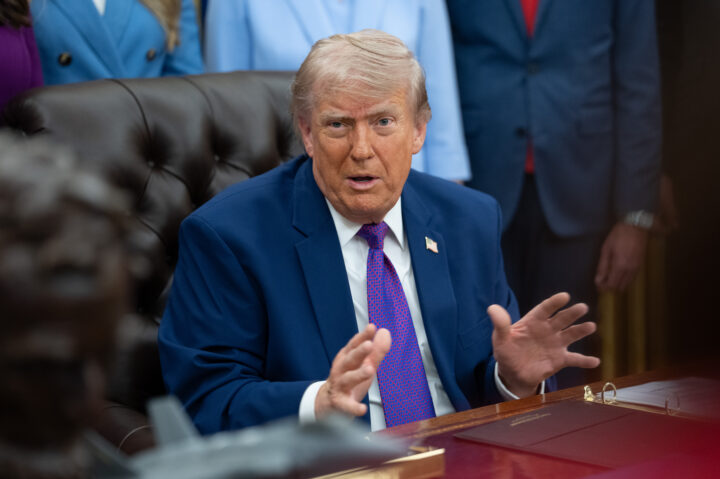
President Donald Trump speaks during a maternal healthcare event in the Oval Office of the White House in Washington, DC, US, on Monday, May 11, 2026.
Michael Makovsky, the president and CEO of the hawkish Jewish Institute for National Security of America, criticized the Trump administration’s recent handling of the U.S. war in Iran, expressing concern about the possibility of a broader peace deal that does not address key issues.
“The U.S. has lost the plot on Iran,” Makovsky told Jewish Insider on Friday. “After significant military achievements, declaring the ceasefire was a huge mistake, and there was too much hype about what pressure a blockade alone would achieve. The net result has reduced U.S. leverage, and the perception that America is vulnerable if gasoline nears $5 per gallon.”
Makovsky said that the U.S. “should not pursue a deal” with Iran, arguing that such an agreement “wouldn’t be worth the paper it’s written on.” He said that a deal “will only enrich and strengthen the regime and demoralize the Iranian people.”
“Instead, the U.S. should resume military operations for a couple weeks, weaken the regime and its nuclear and conventional capabilities further, cease the military campaign while maintaining the blockade and support the Iranian people in every way possible,” he said.
Makovsky spoke to JI in response after President Donald Trump’s announcement on Friday that he was nearing a decision on the agreement reportedly reached by U.S. and Iranian negotiators to extend the ongoing ceasefire by 60 days, reopen the Strait of Hormuz and continue nuclear talks. Makovsky made the comments prior to this weekend’s fighting between the two countries, with the U.S. striking Iranian air defenses and drone sites after Iran downed an American MQ-1 drone and shot missiles at U.S. forces based in Kuwait.
“Based on what appears to being negotiated, the Strait of Hormuz will be opened in return for certain Iranian pledges about what will be worked out in further negotiations,” Makovsky said. “There are even reports about a possible international investment fund in Iran, which would be preposterous with this regime.”
After holding a Situation Room meeting on Friday, Trump reportedly requested several amendments to the negotiated deal, including firmer commitments around Iran’s stockpile of enriched uranium, leading to another round of negotiations. Iranian state media reported on Monday that its delegation was suspending talks with the U.S. over Israel’s continued strikes against Hezbollah in Lebanon.
Plus, pro-Israel lawmakers criticize Israel on Syria strikes

Anna Moneymaker/Getty Images
Sen. Lindsey Graham (R-SC) in the Senate Judiciary Committee on January 30, 2025 in Washington, D.C.
Good Thursday afternoon.
This P.M. briefing is reserved for our premium subscribers like you — offering a forward-focused read on what we’re tracking now and what’s coming next.
I’m Danielle Cohen-Kanik, U.S. editor at Jewish Insider and curator, along with assists from my colleagues, of the Daily Overtime briefing. Please don’t hesitate to share your thoughts and feedback by replying to this email.
📡On Our Radar
Notable developments and interesting tidbits we’re tracking
A bipartisan group of pro-Israel lawmakers — Sens. Jeanne Shaheen (D-NH) and Joni Ernst (R-IA) and Rep. Joe Wilson (R-SC) — released a statement today criticizing Israeli strikes in Syria overnight.
The lawmakers, who recently returned from Syria, said that the message they heard during their visit “was clear: Syria needs a chance to succeed and move past the violence and strife that consumed the country for over 14 years. Last night’s destabilizing strikes on Syria by Israel make that goal more difficult to achieve.”
“The Syrians are prepared to move forward with Israel to advance peace. It is unclear how long the door to this opportunity will remain open. We call on Israel to seize the moment and immediately cease hostilities,” the group said.
The statement is one of the most public signs yet of friction between even staunch supporters of Israel in Congress and the Israeli government over its approach to the new Syrian government, which has included repeated rounds of strikes on Syrian targets even amid diplomatic engagements. Many U.S. lawmakers, meanwhile, are urging a more optimistic approach.
Syrian state media reported that the strikes also included a ground raid by the IDF near Damascus, which would be the first reported instance of an Israeli ground incursion so far into the country’s territory since the fall of the Assad regime. Syrian forces had reportedly recently uncovered surveillance equipment at a military base in the area…
The IDF also carried out strikes today on Houthi military targets in Sanaa, Yemen, after several Houthi missile and drone attacks on Israel in recent days. Israeli media reported that the strikes, one of which targeted a gathering of top Houthi leaders, may have eliminated the terror group’s minister of defense and chief of staff…
Back in Washington, Israeli Minister of Strategic Affairs Ron Dermer reportedly participated in President Donald Trump’s roundtable on Gaza at the White House yesterday, according to Axios, as he made a last-minute visit to the capital.
A source told the outlet that former British Prime Minister Tony Blair and former Trump Mideast advisor Jared Kushner got the green light from the president to develop a post-war plan for Gaza, though few details were hashed out at the meeting.
Dermer reportedly stressed that Israel doesn’t want to occupy Gaza in the long term and wants to see alternative options for parties that could govern Gaza that are not Hamas. “Dermer’s message was: As long as our conditions are met, we will be flexible about everything else,” the source told Axios…
France, Germany and the U.K. sent a letter to members of the U.N. Security Council this morning announcing they are triggering snapback sanctions on Iran, as anticipated after recent diplomatic talks to roll back the Iranian nuclear program yielded little progress.
The move triggers a 30-day timeline before the sanctions go into effect, during which the European countries said they are open to continuing negotiations with Iran.
Secretary of State Marco Rubio said the U.S. will work with the UNSC to “successfully complete” the reinstatement of sanctions. “At the same time,” he said, “the United States remains available for direct engagement with Iran … Snapback does not contradict our earnest readiness for diplomacy, it only enhances it.”
Iran has threatened previously to withdraw from the Nuclear Non-Proliferation Treaty if snapback sanctions were imposed, which could have wide-ranging consequences, including a potential regional nuclear arms race…
The UNSC was also busy today with a vote to extend the mandate of UNIFIL, the U.N.’s forces in southern Lebanon, whose mission was due to expire on Sunday. The body voted unanimously to extend the mandate one final time until Dec. 31, 2026, when UNIFIL will have one year to withdraw from Lebanon completely.
Dorothy Shea, acting U.S. representative to the U.N., said in a statement supporting the vote, “The United States notes that the first ‘I’ in UNIFIL stands for ‘Interim.’ The time has come for UNIFIL’s mission to end. This is the last time we will support an extension of UNIFIL”…
Sen. Lindsey Graham (R-SC) threatened Norway and its officials with retaliatory tariffs and visa restrictions in response to the decision by Norges Bank Investment Management — the Norwegian sovereign wealth fund — to sell its stake in the American machinery company Caterpillar in response to the Israeli military’s use of its products against Palestinians.
“To those who run Norway’s sovereign wealth fund: if you cannot do business with Caterpillar because Israel uses their products, maybe it’s time you’re made aware that doing business or visiting America is a privilege, not a right,” Graham said on X…
Back in Israel, Prime Minister Benjamin Netanyahu and World Food Program Executive Director Cindy McCain shared a joint statement after meeting in Jerusalem today, where they agreed that “every effort must be made to ensure that humanitarian aid reaches the most vulnerable people where they are, and that humanitarian aid is provided exclusively to civilians”…
Meanwhile, the Boulder chapter of the group “Run for Their Lives,” which hosts weekly marches to advocate for the release of the hostages held in Gaza, announced it will no longer publicly advertise its walking route, after participants faced continued threats and harassment in the wake of a firebombing attack on one gathering several months ago.
In recent weeks, protesters have stalked and shouted slurs at participants, such as “genocidal c**t,” “racist” and “Nazi,” and have threatened organizers’ children, according to the Colorado Jewish Community Relations Council…
No industry is safe: The Wall Street Journal reports on the tech worker “revolt” over Gaza and how companies are responding, including moderating internal message boards by deleting content and closing discussion threads.
Anti-Israel activists have recently escalated their protests against Microsoft, setting up an encampment at the company’s Redmond, Wash., headquarters, occupying President Brad Smith’s office and rowing kayaks up to the waterfront homes of top executives (Microsoft has asked the FBI for help in tracking and combating these activities)…
⏩ Tomorrow’s Agenda, Today
An early look at tomorrow’s storylines and schedule to keep you a step ahead
Keep an eye on Jewish Insider for reporting on the obstacles Israel and the U.S. may face in negotiating a new memorandum of understanding as the current MOU nears its expiration in 2028.
On Monday, Sen. Bernie Sanders (I-VT) will host a campaign event with Graham Platner, the anti-Israel Democrat challenging Sen. Susan Collins (R-ME), as Collins has been facing increasing antagonism from crowds at home.
We’ll be back in your inbox with the Daily Kickoff and the Daily Overtime on Tuesday. Shabbat shalom and happy Labor Day weekend!
Stories You May Have Missed
SULLIVAN SAYS
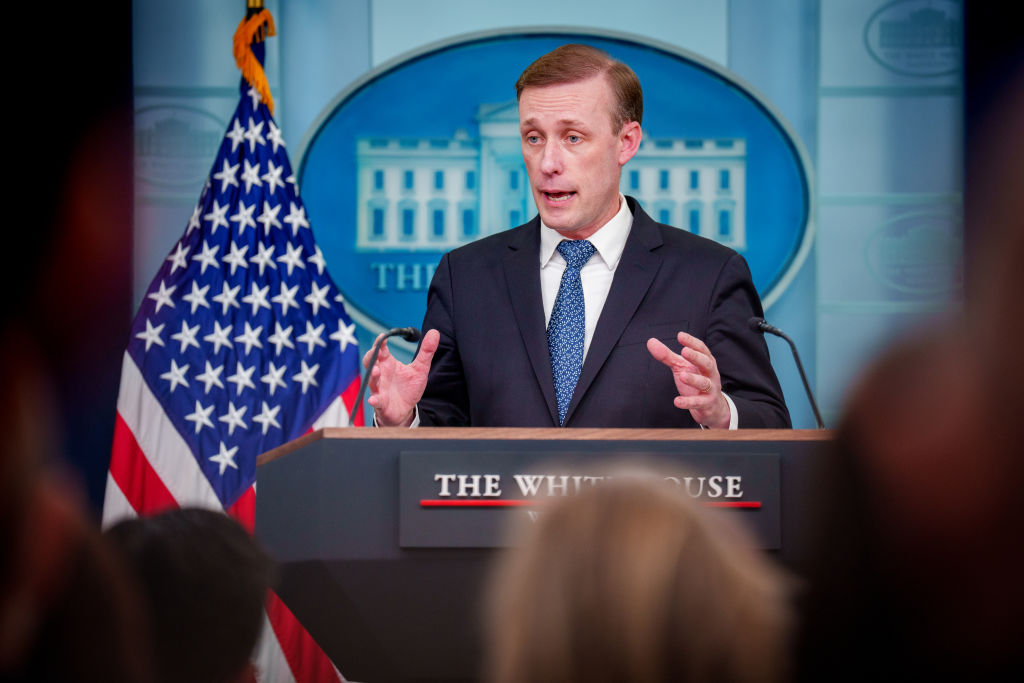
In an interview with ‘The Bulwark,’ the former national security advisor argued that the argument in favor of restricting military aid is ‘much stronger’ than it was a year ago
BELL CURVE

Former Rep. Cori Bush or a political ally could attempt to unseat the first-term congressman
Plus, Minneapolis shooting echoes Tree of Life

Nicholas Kamm/Getty Images
Ron Dermer speaks at the American Israel Public Affairs Committee (AIPAC) policy conference in Washington, DC.
Good Wednesday afternoon.
This P.M. briefing is reserved for our premium subscribers like you — offering a forward-focused read on what we’re tracking now and what’s coming next.
I’m Danielle Cohen-Kanik, U.S. editor at Jewish Insider and curator, along with assists from my colleagues, of the Daily Overtime briefing. Please don’t hesitate to share your thoughts and feedback by replying to this email.
📡On Our Radar
Notable developments and interesting tidbits we’re tracking
Israeli Minister of Strategic Affairs Ron Dermer made a last-minute visit to Washington today, according to Israeli media, while President Donald Trump convened a meeting on a “comprehensive plan” for postwar Gaza, as Middle East envoy Steve Witkoff told Fox News last night. It’s unclear if Dermer participated in the meeting himself.
Also in attendance at the White House were former British Prime Minister Tony Blair and Trump’s son-in-law and former Mideast advisor Jared Kushner, according to Axios, who have been working with Witkoff on the issue for several months…
Dermer canceled a meeting with World Food Program head Cindy McCain, who is in Israel for the first time since Oct. 7, as he headed to Washington. McCain did meet with IDF Chief of Staff Eyal Zamir and the head of COGAT, the IDF unit that facilitates humanitarian aid in Gaza. Recall that a whistleblower recently alleged that the WFP had rejected security coordination with the IDF, hampering aid distribution efforts in Gaza…
The alleged gunman who opened fire today on a Catholic school in Minneapolis, killing two children and injuring at least 17 people, most of them students at the school, used a gun that had antisemitic and anti-Israel writings across it, according to the Anti-Defamation League.
Unverified images of the alleged shooter’s gun, taken from a video posted to a YouTube account believed to be associated with the shooter, show scrawlings on the gun and related paraphernalia that say “6 million wasn’t enough,” “Burn Israel,” “Israel must fall” and “Destroy HIAS,” a reference to the Jewish refugee organization.
HIAS, which was also invoked by the Tree of Life synagogue shooter in Pittsburgh in 2018, told Jewish Insider that because of the organization’s focus, it is “sadly often the subject of hateful antisemitic conspiracy theories”…
Israeli Foreign Minister Gideon Sa’ar is in Washington today as well, meeting this afternoon with Secretary of State Marco Rubio in Foggy Bottom. Sa’ar said the two had “a productive meeting on mutual challenges and interests for both our nations” and discussed the Iranian nuclear threat in the aftermath of the U.S. and Israeli strikes in June, among other issues…
Rubio held a call with the foreign ministers of France, Germany and the U.K. today, during which all of the officials “reiterated their commitment to ensuring that Iran never develops or obtains a nuclear weapon,” as the European nations gear up to trigger snapback sanctions at the U.N. Security Council in the coming days…
a16z Speedrun, a startup accelerator program backed by the Andreessen Horowitz venture capital firm, is in Israel this week. Last night, the program convened a dinner of 20 budding startup founders from elite IDF units…
Hollywood heavyweights including Brad Pitt and Joaquin Phoenix are joining the production team of “The Voice of Hind Rajab,” a film about the killing of a six-year-old Palestinian girl in Gaza in January 2024. Jonathan Glazer, who made headlines for using his Oscar acceptance speech last year to equate Israel’s actions in Gaza with the Holocaust, is a director of the project…
Variety spotlights a new film in production starring Jon Voight and directed by the controversial Bryan Singer, which a source described as set in the Middle East during the First Lebanon War. “It makes Israel look really bad and could be polarizing,” the source said…
⏩ Tomorrow’s Agenda, Today
An early look at tomorrow’s storylines and schedule to keep you a step ahead
Keep an eye on Jewish Insider tomorrow morning for reporting on how security experts are viewing the threat of Iranian influence and attacks in the U.S. in the aftermath of disturbing revelations of Iranian attacks in Australia, and on how the replacement of Sergio Gor with Dan Scavino as head of the Presidential Personnel Office may impact national security personnel decisions in the administration.
Also tomorrow, the Atlantic Council will host an event in Washington on the “past, present, and future” of the India-Middle East-Europe Economic Corridor, an initiative launched at the G20 Summit in 2023.
Stories You May Have Missed
MINNEAPOLIS MOMENT

Democratic insiders told JI that DNC chair Ken Martin withdrew his Israel resolution largely to avoid a disruptive floor debate over Israel on Wednesday
THE CENTER SHIFTS
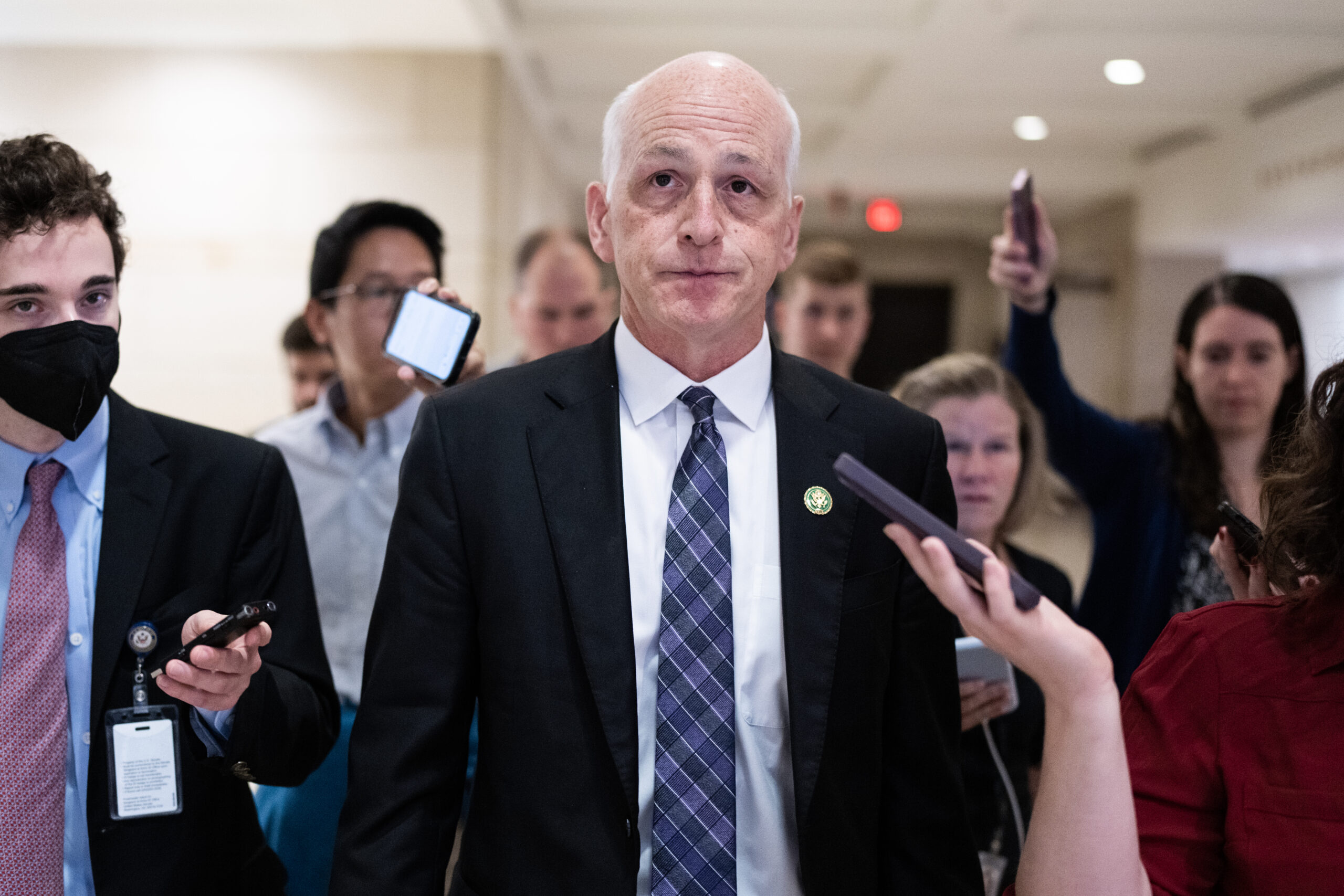
Rep. Adam Smith, ranking member of the House Armed Services Committee, said he recognizes restricting offensive weapons to Israel could ‘embolden Hamas’ but it is ‘time to try something else’
Plus, the clock keeps ticking on snapback sanctions

Audrey Richardson/Bloomberg via Getty Images
Ken Martin, chairman of the Democratic National Committee (DNC), speaks to members of the media during a news conference in Aurora, Illinois, US, on Tuesday, Aug. 5, 2025.
Good Tuesday afternoon.
This P.M. briefing is reserved for our premium subscribers like you — offering a forward-focused read on what we’re tracking now and what’s coming next.
I’m Danielle Cohen-Kanik, U.S. editor at Jewish Insider and curator, along with assists from my colleagues, of the Daily Overtime briefing. Please don’t hesitate to share your thoughts and feedback by replying to this email.
📡On Our Radar
Notable developments and interesting tidbits we’re tracking
Shortly after members of the Democratic National Committee passed a resolution today introduced by DNC Chair Ken Martin that voiced support for humanitarian aid to Gaza and a two-state solution, called for the release of hostages and condemned Hamas, Martin announced he was withdrawing the measure and instead forming a task force to continue discussing the issue.
The surprise reversal came after a competing resolution that called for an arms embargo and suspension of U.S. aid to Israel was voted down. Upon huddling with the co-sponsors of the failed measure, Martin said at the meeting of the Resolutions Committee where the votes took place, “There is a divide in our party on this issue. This is a moment that calls for shared dialogue and calls for shared advocacy.”
“And that’s why I’ve decided today, at this moment, listening to the testimony and listening to people in our party, to withdraw my amendment resolution to allow us to move forward in a conversation on this as a party,” Martin continued. He said that he would “appoint a committee or a task force comprised of stakeholders on all sides of this to continue to have the conversation, to work through this, and bring solutions back to our party”…
Overseas, Sen. Jeanne Shaheen (D-NH), Rep. Joe Wilson (R-SC) and U.S. Syria envoy Tom Barrack, ending their visit to Damascus, traveled to Beirut today where they joined Sen. Lindsey Graham (R-SC).
Along with diplomat Morgan Ortagus and U.S. Ambassador to Lebanon Lisa Johnson, the delegation met with Lebanese President Joseph Aoun, Prime Minister Nawaf Salam, Parliament Speaker Nabih Berri and head of the Lebanese Armed Forces Gen. Rodolph Haykal, with whom they discussed U.S. support of the LAF.
Barrack and Ortagus have been shuttling between Lebanon, Syria and Israel over the past several months in an effort to improve security relations in the region.
During a press conference the lawmakers held in Beirut, Graham announced his support for the United States signing a defense agreement with Lebanon, where the U.S. would commit to defending Lebanon militarily.
“How many nations have a defense agreement with the United States? … The number of nations that America is willing to go to war for is very few. Why do I mention Lebanon being in that group? You have one thing going for you that is very valuable to me. Religious diversity,” Graham said.
The South Carolina senator continued, “Christianity is under siege in the Mideast. Christians are being slaughtered and run out of all over the region, except here. So what I am going to tell my colleagues is, ‘Why don’t we invest in defending religious diversity in the Mideast? Why don’t we have a relationship with Lebanon where we would actually defend what you’re doing?’ I think it’s in America’s interest to defend religious diversity.”
Though it’s been discussed in Israeli and American administrations for decades, the U.S. does not have a mutual defense agreement with Israel, another Middle East country with a large Christian population and religious diversity…
Meanwhile, a meeting of the E3 — France, Germany and the U.K. — and Iran in Geneva today ended with reportedly little progress on scaling back the Iranian nuclear program, leaving the European countries to decide if they’ll follow through on a recent threat to reinstate snapback sanctions at the end of the month…
The Norwegian Sovereign Wealth Fund, the world’s largest sovereign wealth fund, announced it’s selling its shares of the U.S. machinery company Caterpillar over Israel’s use of its bulldozers, which the fund said had contributed to Palestinian suffering, as well as its shares in four Israeli banks, including the country’s two largest.
The fund has already liquidated its holdings in over a dozen Israeli companies and cut ties with Israeli hedge fund managers over concerns with the country’s war in Gaza and treatment of Palestinians…
On the Hill, leading Jewish organizations are set to send a letter to Senate leadership today urging the body to confirm the Trump administration’s nominees for special envoy to monitor and combat antisemitism, Rabbi Yehuda Kaploun, and international religious freedom ambassador, former Rep. Mark Walker (R-NC), Jewish Insider has learned. Schumer currently has a hold on dozens of President Donald Trump’s nominees…
⏩ Tomorrow’s Agenda, Today
An early look at tomorrow’s storylines and schedule to keep you a step ahead
Keep an eye on Jewish Insider tomorrow morning for reactions from Jewish Democrats on Martin’s decision to withdraw his resolution at the DNC and an interview with Democrat Maura Sullivan, the Marine veteran and former Defense Department official running to succeed Rep. Chris Pappas (D-NH).
Stories You May Have Missed
PHONE A FRIEND
Vermont’s democratic socialist senator is on a campaign swing as part of his ‘Fighting Oligarchy’ tour
DOWN UNDER DICTATE

PM Anthony Albanese blasted the ‘extraordinary and dangerous acts of aggression orchestrated by a foreign nation on Australian soil’
Plus, University of Florida's new (interim) leader
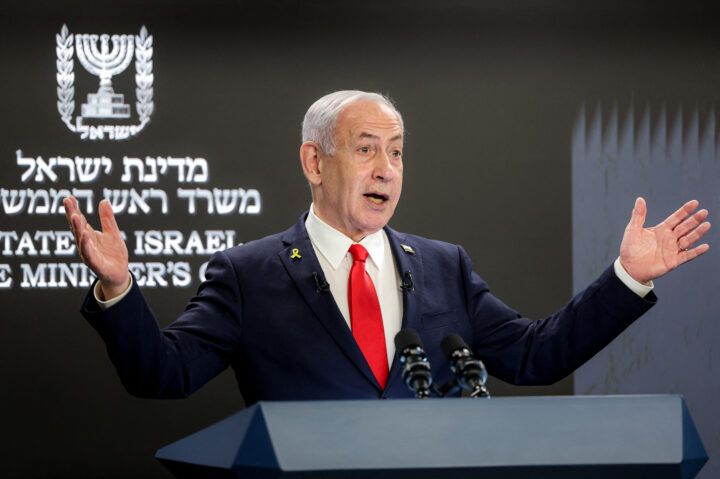
ABIR SULTAN/POOL/AFP via Getty Images
Israel's Prime Minister Benjamin Netanyahu gives a press conference at the Prime minister's office in Jerusalem on August 10, 2025.
Good Monday afternoon.
This P.M. briefing is reserved for our premium subscribers like you — offering a forward-focused read on what we’re tracking now and what’s coming next.
I’m Danielle Cohen-Kanik, U.S. editor at Jewish Insider and curator, along with assists from my colleagues, of the Daily Overtime briefing. Please don’t hesitate to share your thoughts and feedback by replying to this email.
📡On Our Radar
Notable developments and interesting tidbits we’re tracking
Israeli Prime Minister Benjamin Netanyahu called an IDF strike today on a Gaza hospital that reportedly killed 20 people, including at least four journalists, a “tragic mishap” that Israel “deeply regrets.”
“Israel values the work of journalists, medical staff, and all civilians,” Netanyahu said in his statement. “The military authorities are conducting a thorough investigation. Our war is with Hamas terrorists.”
President Donald Trump, asked by reporters in the Oval Office this morning about the strike, said he was “not happy about it. I don’t want to see it.” Trump said at a press conference later he believes that in two to three weeks “you’re going to have … a pretty conclusive ending” to the war in Gaza…
Also turning up the pressure on Netanyahu, IDF Chief of Staff Eyal Zamir said Sunday that the IDF has met its objectives in its war in Gaza, “including deeply damaging Hamas,” and “as a result of the military pressure, we created the conditions for the release of the hostages.”
Zamir reportedly advocated for Netanyahu to accept the deal that Hamas said it agreed to last week and reiterated his concern that the IDF’s impending takeover of Gaza City will imperil the lives of the remaining living hostages…
Lawmakers are making the most of their August recess with several in the Middle East this week.
Sen. Joni Ernst (R-IA) met with Netanyahu in Jerusalem today, after several meetings with Qatari officials in Doha last week.
Sen. Lindsey Graham (R-SC) is in Lebanon today, where he visited a memorial at the U.S. Embassy in Beirut for fallen service members, including the 241 Americans killed in the bombing of U.S. Marine barracks by Hezbollah, under the direction of Iran, in 1983.
Meanwhile, Rep. Joe Wilson (R-SC) and Sen. Jeanne Shaheen (D-NH) joined U.S. Syria envoy Tom Barrack in Damascus, where they met with Syrian President Ahmad al-Sharaa to “discuss a bright, unified, and stable future for Syria.”
Wilson and Shaheen also met with Syria’s minister of social affairs and labor, religious clerics and a leader of the Syrian Democratic Forces. Both lawmakers have led efforts in Congress to repeal congressional sanctions on Syria in order to aid reconstruction and stabilization…
Barrack also visited Israel on Sunday and met with Netanyahu, Minister of Strategic Affairs Ron Dermer, Defense Minister Israel Katz and Foreign Minister Gideon Sa’ar to discuss security arrangements between Israel and Syria as well as Israel and Lebanon, according to Axios…
France requested to delay a U.N. Security Council vote on a French proposal to extend the mandate of the United Nations Interim Force in Lebanon until Friday, due to disagreements with the U.S. — which holds veto power — over a sunset date for the extension.
The current French proposal would allow the force to remain in place indefinitely, while the Trump administration wants an extension of only one year before UNIFIL disbands and withdraws from Lebanon, sources confirmed to Jewish Insider. If no consensus is reached, France could request another delay until Aug. 31, when the current mandate expires…
On the domestic front, the University of Florida’s Board of Trustees voted unanimously to appoint Dr. Donald Landry as interim president of the school, after Florida’s Board of Governors rejected Santa Ono, the former president of the University of Michigan, for the job.
Landry, a renowned physician and chair emeritus of Columbia University’s Department of Medicine, will replace current UF interim President Kent Fuchs, who said the process of choosing a new president had become “more challenging” after Ono’s rejection…
⏩ Tomorrow’s Agenda, Today
An early look at tomorrow’s storylines and schedule to keep you a step ahead
Keep an eye on Jewish Insider tomorrow morning for reporting on how the University of Michigan is becoming an epicenter of anti-Israel activism to start the new school year, and Jewish groups’ response to European officials targeting Katharina von Schnurbein, the EU antisemitism coordinator, for her defense of Israel.
Tomorrow morning, the Democratic National Committee’s Resolution Committee is expected to take up two Israel-related resolutions, including an anti-Israel measure that calls for an arms embargo and a suspension of U.S. military aid to Israel. The resolutions will then be brought to the general session on Wednesday. We’ll be paying close attention to how much support that anti-Israel resolution receives.
Also tomorrow, the Treasury Department will officially remove Syria from its sanctions list for the first time since 2005.
Added to our calendar for next week, Sen. Bernie Sanders (I-VT) is slated to appear at a rally with Graham Platner, a Democrat running against Sen. Susan Collins (R-ME), who has emerged as a harsh critic of Israel during his nascent campaign.
Stories You May Have Missed
MAGA MEETS THE HOLY LAND

One influencer on the delegation organized by Israel365 said he previously believed IDF soldiers were anti-Christian, but ‘they were just kind of like homies’
THE HOT CORNER

A new web series launched by ADL and Maccabi USA explores ‘how sports can inspire dialogue and challenge antisemitism’
Plus, Texans do the electoral shuffle

MARC ISRAEL SELLEM/POOL/AFP via Getty Images
Israeli Prime Minister Benjamin Netanyahu stands amid debris outside the Soroka Hospital in the southern city of Beersheba, after it was hit by a missile fired from Iran on June 19, 2025.
Good Thursday afternoon.
This P.M. briefing is reserved for our premium subscribers like you — offering a forward-focused read on what we’re tracking now and what’s coming next.
I’m Danielle Cohen-Kanik, U.S. editor at Jewish Insider and curator, along with assists from my colleagues, of the Daily Overtime briefing. Please don’t hesitate to share your thoughts and feedback by replying to this email.
📡On Our Radar
Notable developments and interesting tidbits we’re tracking
Israeli Prime Minister Benjamin Netanyahu appeared on “Triggernometry,” a conservative podcast based in the U.K., in an episode released yesterday, where he was pressed by co-hosts Konstantin Kisin and Francis Foster about inflammatory comments made by Israeli Finance Minister Bezalel Smotrich about settling Gaza and “things that sound like ethnic cleansing.”
Netanyahu dismissed the comments as democratic disagreements, saying, “In a parliamentary system, people are free to say, sometimes they say things they don’t quite mean. … To the extent that we have these conversations around the Security Cabinet, that is actually not being discussed by these people.”
Netanyahu distanced himself from his ministers who have advocated for reestablishing an Israeli civilian presence in Gaza, clarifying, “It’s not my policy. I don’t intend to build settlements or communities in Gaza, not Israeli ones.”
The prime minister disagreed that the comments from Smotrich may be exacerbating Israel’s “PR problem”: “They ask me, you know, ‘Your minister of finance says this, and what do you say?’ Well, I say I disagree with him, and I say that, you know, he’s entitled to say these things. That’s not ethnic cleansing. It’s a view, a legitimate view, which I happen to disagree with”…
And today, Netanyahu announced that he is working “to approve the plans that the IDF presented” to him and Defense Minister Israel Katz for the impending IDF takeover of Gaza City. “In parallel,” he said, “I have instructed to begin immediate negotiations for the release of all our hostages and the end of the war, on conditions that are acceptable for Israel.”
Netanyahu made no mention of the latest deal reportedly agreed to by Hamas, which only includes the release of some of the 50 remaining hostages…
Israel is also facing increased diplomatic ire over its actions in the West Bank, after Smotrich announced last week his approval of plans to build the E1 settlement, which were previously frozen for decades due in part to U.S. disapproval of its controversial location, which would make a contiguous Palestinian state nearly impossible.
Twenty-two countries, including the U.K., Australia, France and Japan, issued a statement today condemning the move as “unacceptable and a violation of international law,” and the U.K. Foreign Office summoned Israeli Ambassador to the U.K. Tzipi Hotovely in further protest.
Asked about the settlement approval, U.S. Ambassador to Israel Mike Huckabee told the Associated Press that a two-state solution is not a “high priority” for the Trump administration and that there are too many unanswered questions about a potential Palestinian state…
On the campus beat, a New York Times report published yesterday on the hurdles international students are facing entering the U.S. this academic year opened with the line, “Many Iranians are not going to American universities this fall.”
The article, largely sympathetic to the plight of students attempting to enter the U.S., highlighted the revocation of more than 6,000 student visas by the State Department, the majority of which were due to breaking U.S. law and support for terrorism; Secretary of State Marco Rubio’s announcement that the department would review visas of students who participated in disruptive campus anti-Israel protests; and new social media vetting of visa applicants, particularly “for expression of pro-Palestinian sentiment,” as barriers to international student enrollment…
Sen. Joni Ernst (R-IA), on a visit to Doha, met today with Qatari Emir Tamim bin Hamad Al Thani and Prime Minister Mohammed bin Abdulrahman Al Thani. Ernst has previously led efforts to pressure Qatar into forcing Hamas to release the hostages held in Gaza…
In the Lone Star State, Rep. Chip Roy (R-TX), a prominent member of the Freedom Caucus and a thorn in the side of President Donald Trump and House Speaker Mike Johnson (R-LA), announced a bid for Texas attorney general today, seeking to replace Trump ally AG Ken Paxton, who himself is running for U.S. Senate against Sen. John Cornyn (R-TX) in a highly competitive primary.
The Texas game of electoral musical chairs comes as the state is in the midst of a contentious mid-decade redistricting process, which will likely see its Legislature turn even deeper red.
One high-profile Democrat in the Texas Statehouse, James Talarico, was backed by Miriam Adelson’s Texas Sands PAC, Politico revealed today, despite Talarico’s public stance against GOP billionaires‘ influence in politics. The group was his largest donor last year and one of his largest ever…
New York City Mayor Eric Adams, no stranger to scandal, is facing more electoral trouble of his own as he runs for reelection as an independent, facing off against former New York Gov. Andrew Cuomo and Democratic nominee Zohran Mamdani.
Yesterday, reports alleged that Adams’ former advisor and current campaign volunteer, Winnie Greco, surreptitiously gave a reporter an envelope of cash, stashed inside a bag of potato chips. Today, the Manhattan district attorney unsealed four indictments against Adams’ former chief advisor, Ingrid Lewis-Martin, accusing her of receiving more than $75,000 in bribes, and six other individuals, most of whom are associates or supporters of Adams…
⏩ Tomorrow’s Agenda, Today
An early look at tomorrow’s storylines and schedule to keep you a step ahead
Keep an eye on Jewish Insider for reporting on a trip of young MAGA influencers to Israel that changed hearts and minds and an interview with Rep. John McGuire (R-VA) on his reflections from his own recent trip to the Jewish state.
The foreign ministers of Britain, France and Germany will speak with Iranian Foreign Minister Abbas Araghchi by phone tomorrow, sources tell the Substack Diplomatic, to discuss their recent threat to reinstate snapback sanctions on Tehran if it does not sufficiently roll back its nuclear program by the end of this month.
An Iranian delegation will also travel to Vienna tomorrow to meet with the International Atomic Energy Agency, a week after IAEA Deputy Director General Massimo Aparo visited Iran in a bid to restart the agency’s cooperation with Tehran.
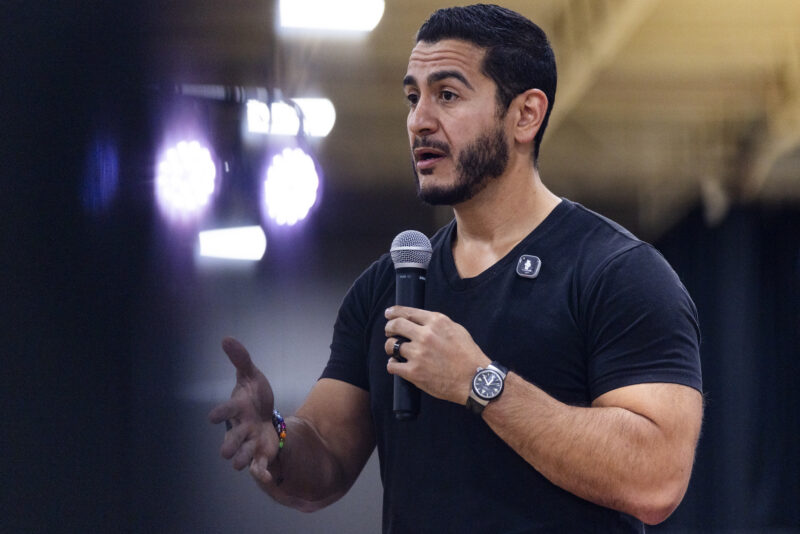
On Sunday, the Michigan Democratic Jewish Caucus will host its annual “Summer Simcha” event. Among the attendees will be state Sen. Mallory McMorrow, Abdul El-Sayed and, appearing by video, Rep. Haley Stevens (D-MI) — all of whom are vying for Michigan’s open Senate seat. State Sen. Jeremy Moss, who’s looking to claim Stevens’ seat in the House, and University of Michigan Regent Jordan Acker, who had his home and office vandalized by anti-Israel attackers, will be in attendance. Sen. Elissa Slotkin (D-MI) will also appear by video.
We’ll be back in your inbox with the Daily Kickoff and the Daily Overtime on Monday. Shabbat shalom!
Stories You May Have Missed
MORAN’S MORASS

Former Rep. Jim Moran and his team have held dozens of meetings with members of Congress since the Oct. 7 Hamas terror attacks in 2023, mainly to talk about the Qatari role in the Middle East peace process
WEIRDING OUT

Democrat Graham Platner entered the race accusing Israel of genocide in Gaza
Plus, Bibi faces coalition chaos

Gage Skidmore
Sen. Amy Klobuchar (D-MN) speaking with attendees at the Moving America Forward Forum hosted by United for Infrastructure at the Student Union at the University of Nevada, Las Vegas in Las Vegas, Nevada.
Good Wednesday afternoon.
This P.M. briefing is reserved for our premium subscribers like you — offering a forward-focused read on what we’re tracking now and what’s coming next.
I’m Danielle Cohen-Kanik, U.S. editor at Jewish Insider and curator, along with assists from my colleagues, of the Daily Overtime briefing. Please don’t hesitate to share your thoughts and feedback by replying to this email.
📡On Our Radar
Notable developments and interesting tidbits we’re tracking
Sen. Amy Klobuchar (D-MN) rebuked antisemitic comments made by Minneapolis mayoral candidate Omar Fateh’s campaign staff in a statement to Jewish Insider today, after initially declining to comment when JI unearthed the statements last week.
Klobuchar’s spokesperson said the senator “strongly and immediately condemned the Hamas terrorist attack, and condemns any statements to the contrary.” She called Fateh’s staffers’ comments “outrageous” and said they “have no place in our politics.”
Klobuchar reiterated her endorsement of Mayor Jacob Frey in the race; Frey’s other supporters, including Minnesota Gov. Tim Walz, and other state Democratic officials have thus far refrained from commenting on the situation…
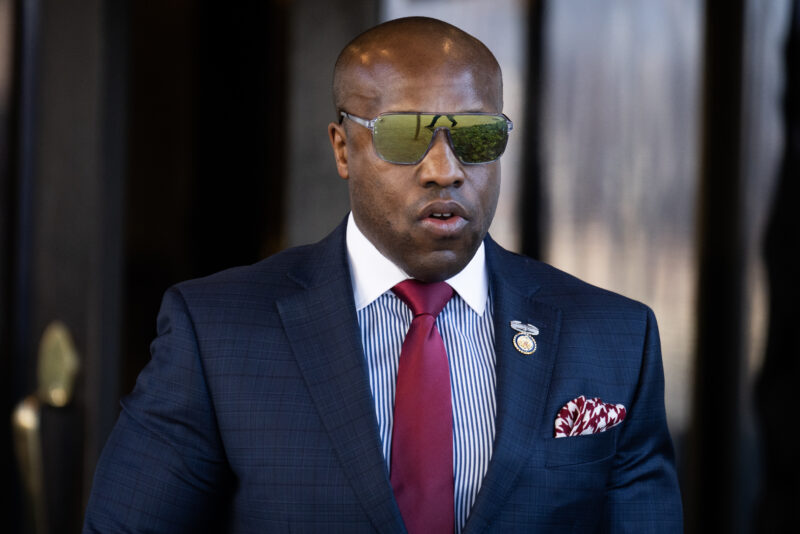
Staying in the Midwest, protesters interrupted Rep. Wesley Bell’s (D-MO) first in-person town hall last night in St. Louis over Bell’s support for Israel, shouting over the congressman and getting into altercations with police.
In response to a question about “the ongoing genocide in Palestine,” Bell said, “Let’s talk about the word genocide, because we see that differently.” He repeatedly asked protesters to stop shouting and listen.
“There’s a lot of folks who don’t want to have the conversation,” Bell said. “They just want to spew what they think is important, but they don’t want to have an actual debate because these are tough issues. So, now we’re going to have the conversation — whether you like it or not”…
Meanwhile on the campaign trail, Politico reported this morning on Rep. Chris Pappas’ (D-NH) new competitor in the Democratic primary for New Hampshire’s open Senate seat, political activist Karishma Manzur.
Manzur said she would have supported recent resolutions from Sen. Bernie Sanders (I-VT) — which the moderate Pappas said he would have opposed — seeking to block some arms sales to Israel, saying she “will be against any money to any country to kill people” and that the U.S. should take “concrete actions against the harrowing acts of torture of Palestinians” by the IDF …
President Donald Trump called in to Fox News host Mark Levin’s radio show yesterday and said that, at the time of the U.S. strikes on Iran’s nuclear facilities in June, he believed Iran “would have had nuclear weapons in a period of four weeks.”
“If we didn’t [strike Iran], they would probably by this time, just about this time, have a nuclear weapon and they would have used it,” the president said.
Trump also told Levin that the U.S. Air Force pilots who conducted the strikes told him that they and their predecessors had been practicing the flight to Iranian airspace for 22 years…
The New York Times published an analysis on the damage inflicted by U.S. strikes on the Iranian nuclear site Fordow based on the site’s structure and the munitions used…
The State Department responded today to a bipartisan congressional letter led by Pappas last month expressing lawmakers’ concerns that the administration was considering selling F-35 fighter jets to Turkey in a reversal of U.S. policy, which currently bans the sale of the jets in light of Turkey’s purchase of an S-400 missile defense system from Russia.
Paul Guaglianone, senior bureau official in the department’s Bureau of Legislative Affairs, wrote in a letter to Pappas that the “U.S. position on Turkey’s acquisition and continued possession of the Russian S-400 system has not changed, and the requirements for Turkey to acquire U.S. F-35 aircraft are well-known”…
Secretary of State Marco Rubio also announced this morning that the U.S. is sanctioning four additional officials from the International Criminal Court, two judges and two prosecutors, in addition to the four judges sanctioned by the U.S. in June, over the ICC’s continued “efforts to investigate, arrest, detain, and prosecute American and Israeli nationals”…
In Israel, coalition politics are heating up over a potential ceasefire and hostage-release agreement with Hamas, which reports indicate the terror group recently accepted but Israel has not yet responded to.
Israeli media reported that Finance Minister Bezalel Smotrich told hostage families he would resign if Prime Minister Benjamin Netanyahu agreed to a ceasefire, and Minister of National Security Itamar Ben-Gvir is likely to do the same, as he did in January when Israel agreed to a previous ceasefire deal.
Meanwhile, opposition MK Benny Gantz, whose Blue and White-National Unity party is currently hemorrhaging in the polls, is reportedly considering rejoining Netanyahu’s coalition to help bolster support for a deal…
Back stateside, Israeli scholar and dance instructor Yael Nativ is suing the University of California, Berkeley, alleging that the university denied her a teaching position because she is Israeli. Nativ had previously taught at Berkeley and was encouraged to apply to teach another course.
When Nativ’s application was rejected shortly after the Oct. 7, 2023, terror attacks, according to the suit, the dance department chair wrote to her, “My dept cannot host you for a class next fall. Things are very hot right now and many of our grad students are angry. I would be putting the dept and you in a terrible position if you taught here”…
⏩ Tomorrow’s Agenda, Today
An early look at tomorrow’s storylines and schedule to keep you a step ahead
Keep an eye on Jewish Insider tomorrow morning for reporting on Graham Platner, the oyster farmer turned Democratic challenger to Sen. Susan Collins (R-ME), who called AIPAC “weird” in a recent interview.
Tomorrow afternoon, the American Jewish Committee will host a briefing on “Justice for Victims of Hamas’ Sexual Violence: The U.N. Blacklist and What Comes Next,” referring to the U.N.’s recent decision to “blacklist” Hamas as a group that uses sexual violence as a weapon of war.
Stories You May Have Missed
FOREIGN POLICY FEID

Trump’s senior director for counterterrorism: ‘I was worried by this neo-Buchanan isolationism, but I look at President Trump’s actions, they have no hold on him’
TRIP TALK
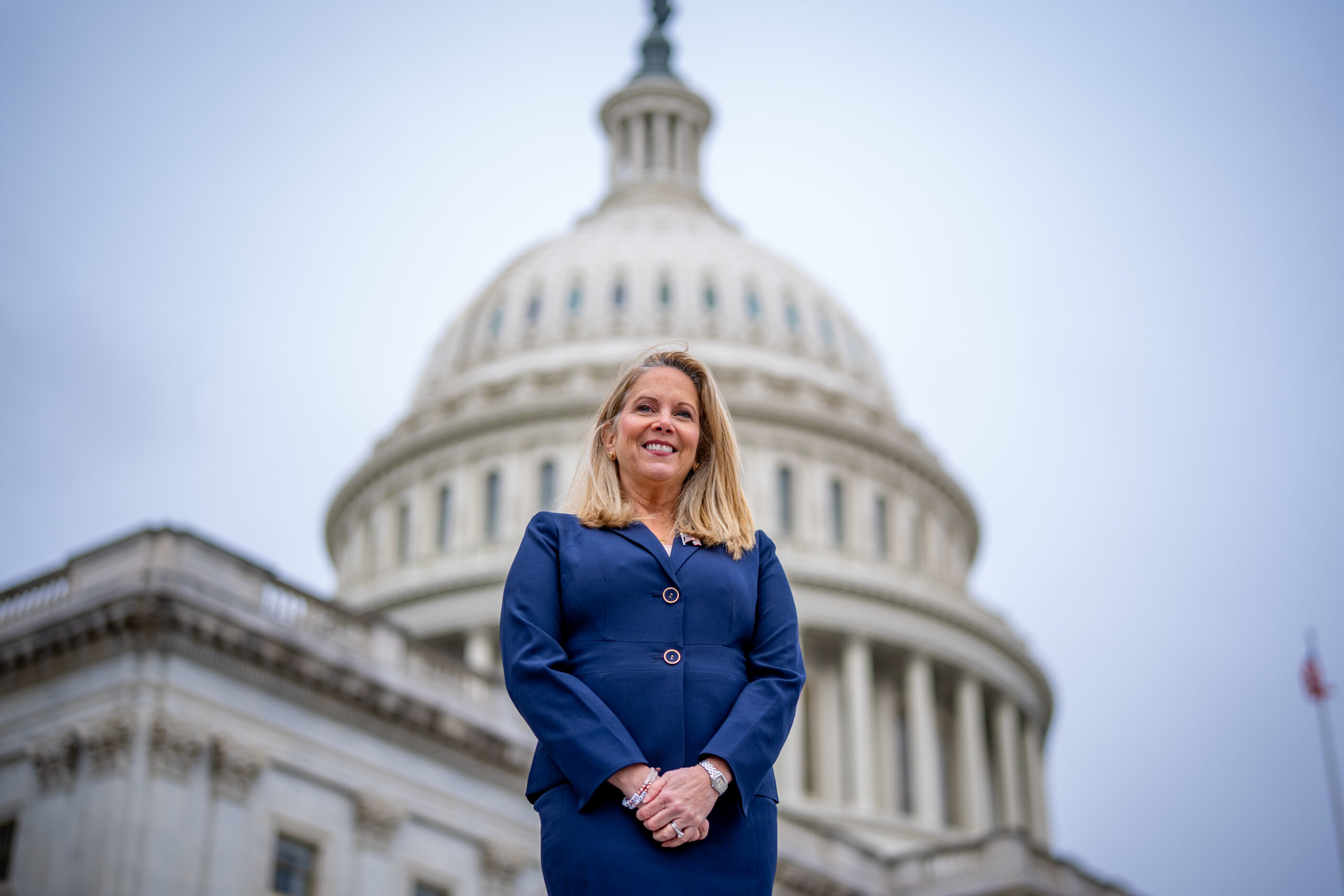
The New York Democrat told JI ‘the majority of people see the value and the special nature of our relationship with our ally Israel’
Plus, Loomer lashes out
Annabelle Gordon/Bloomberg via Getty Images
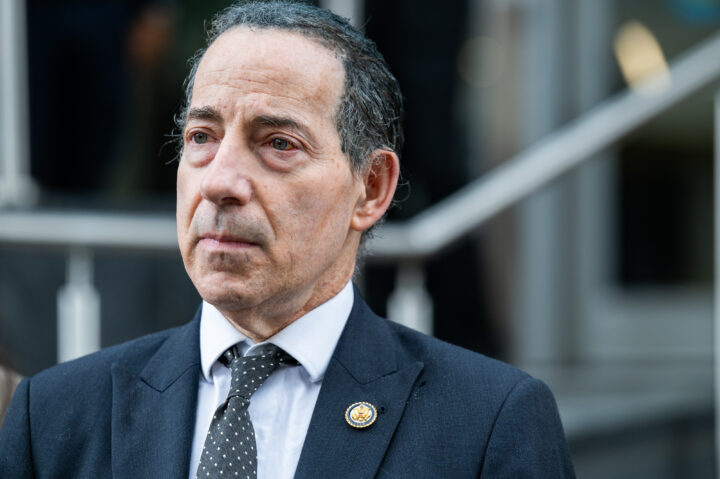
Rep. Jamie Raskin (D-MD) during a news conference in Washington, D.C., on Thursday, May 22, 2025.
Good Tuesday afternoon.
This P.M. briefing is reserved for our premium subscribers like you — offering a forward-focused read on what we’re tracking now and what’s coming next.
I’m Danielle Cohen-Kanik, U.S. editor at Jewish Insider and curator, along with assists from my colleagues, of the Daily Overtime briefing. Please don’t hesitate to share your thoughts and feedback by replying to this email.
📡On Our Radar
Notable developments and interesting tidbits we’re tracking
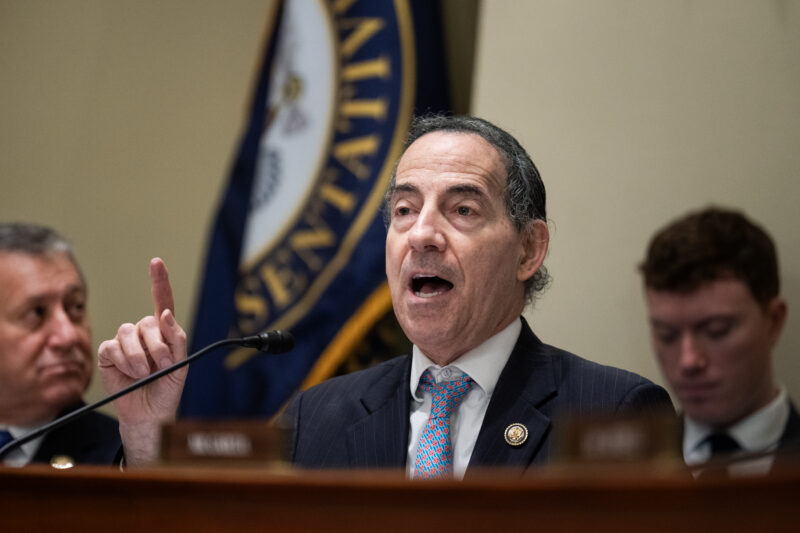
Ron Halber, CEO of the Jewish Community Relations Council of Greater Washington, called Rep. Jamie Raskin’s (D-MD) decision to co-sponsor legislation severely restricting U.S. aid to Israel “extremely disappointing,” telling Jewish Insider today that he had a “very honest and frank conversation” with the congressman, whom he considers a friend.
Halber framed his concerns with Raskin, a prominent progressive Jewish lawmaker, within the broader trend of the Democratic Party moving away from its long-standing support for Israel. “It’s difficult when two-thirds of our community is voting for a political party whose base is hostile to Israel,” he remarked.
“Once the war comes to an end, the whole Jewish community is going to have to re-strategize,” Halber said.
The JCRC of Greater Washington CEO said he had asked Raskin to remove himself as a co-sponsor of the bill and instead issue a statement conveying his concerns with Israel’s war in Gaza. “If he doesn’t, we will be disappointed, but that’s his decision to make and he has to live with the ramifications of his decision”…
Speaking this morning at a briefing co-hosted by the American Jewish Congress and World Zionist Organization, U.S. Ambassador to Israel Mike Huckabee sounded a cautious note on the current ceasefire negotiations with Hamas, as reports indicate the terror group has accepted a Qatari- and Egyptian-backed proposal.
“Whether or not [Hamas is] serious about bringing this to a close, all I can tell you is I hope so. But what’s happened before, even when they say they are thinking seriously about bringing this to a conclusion, making a deal, they always add one or more things that are completely unacceptable, bring those to the table, then it all starts over again,” Huckabee said.
Israel has yet to respond to the proposal and White House Press Secretary Karoline Leavitt said at a press briefing today that the U.S. “continues to discuss” it…
Huckabee and his wife, Janet, hosted U.S. Ambassador to France Charles Kushner and his wife, Seryl, in Jerusalem tonight…
Israeli Defense Minister Israel Katz met with Lt. Gen. Eyal Zamir, the IDF’s chief of staff, today to approve the IDF’s plans to take over Gaza City. Israeli officials said Gazans will have until Oct. 7 to evacuate the city, to coincide with the second anniversary of Hamas’ attacks, at which point the IDF offensive will begin. It remains to be seen if a ceasefire and hostage-release deal will be reached before then…
The Israeli government also voted today to approve a $9 billion increase to the country’s budget for the year, including $473 million for humanitarian aid for Gaza…
In other negotiation news, Israeli Minister for Strategic Affairs Ron Dermer is scheduled to meet this evening in Paris with Syrian Foreign Minister Asaad al-Shibani and U.S. Ambassador to Turkey and Syria envoy Tom Barrack to discuss security arrangements on the Israel-Syria border.
The meeting comes a day after Barrack, while visiting Beirut, said Israel needs to “comply with [an] equal handshake” to the Lebanese government’s commitment to disarm Hezbollah by fully withdrawing its troops from Lebanon…
Back stateside, the president of the American Association of University Professors said in a recent interview, “We believe strongly that no weapons should be sent to Israel, at all. Not defensive or offensive, nothing,” escalating the association’s adversarial stance against the Jewish state…
The New York Times chronicles the Trump administration’s attempts to wrest financial settlements from elite universities, including ongoing negotiations with Harvard and the University of California, Los Angeles, the latter of which may pay the administration upwards of $1 billion, according to a draft agreement…
Media mogul Shari Redstone told the Times that she decided to sell Paramount to Skydance in a recent $8 billion merger in part due to her frustrations over anti-Israel bias at CBS, particularly after the Oct. 7 attacks. “Once that happened, I wanted out,” Redstone said. “I wanted to support Israel, and address issues around antisemitism and racism”…
Rep. Ritchie Torres (D-NY) endorsed New York Gov. Kathy Hochul in her reelection bid today, after initially exploring a run against her and criticizing her tenure…
The Free Press reports on growing frustration with Laura Loomer, a right-wing provocateur and informal advisor to President Donald Trump, inside the White House, with some officials speculating she may be paid or influenced by lobbying firms and business interests.
Loomer lashed out on X, telling Free Press reporter Gabe Kaminsky he should “contact your anonymous White House sources who are so horrified by ‘lobbyists’ and their intentions and ask them how they feel about their friendship with” Jeff Miller, a Republican strategist, board member of the Republican Jewish Coalition and Trump-appointed member of the U.S. Holocaust Memorial Council…
⏩ Tomorrow’s Agenda, Today
An early look at tomorrow’s storylines and schedule to keep you a step ahead
Keep an eye on Jewish Insider tomorrow morning for an interview with top New York Democrat Rep. Laura Gillen (D-NY) on her takeaways from a recent visit to Israel.
This evening, Maryland Gov. Wes Moore, a potential 2028 presidential contender, will speak at D.C.’s Politics & Prose on “the role of states in preserving and advancing U.S. democracy.”
Tomorrow, the historic Sinai Temple in Los Angeles will host a conversation with Ahmed Fouad Alkhatib, the director of the Realign for Palestine program at the Atlantic Council who was born and raised in Gaza. It’s the second event in a series the prominent Conservative synagogue has held about the war in Gaza for its congregants, the first of which was held last month with Gaza Humanitarian Foundation head Johnnie Moore. Read JI’s coverage of Moore’s conversation here.
Stories You May Have Missed
CALIFORNIA COMPETITION

Sherman, a stalwart pro-Israel Democrat, is facing several politically connected Democratic challengers in next year’s primary
CLARK’S CLARIFICATION
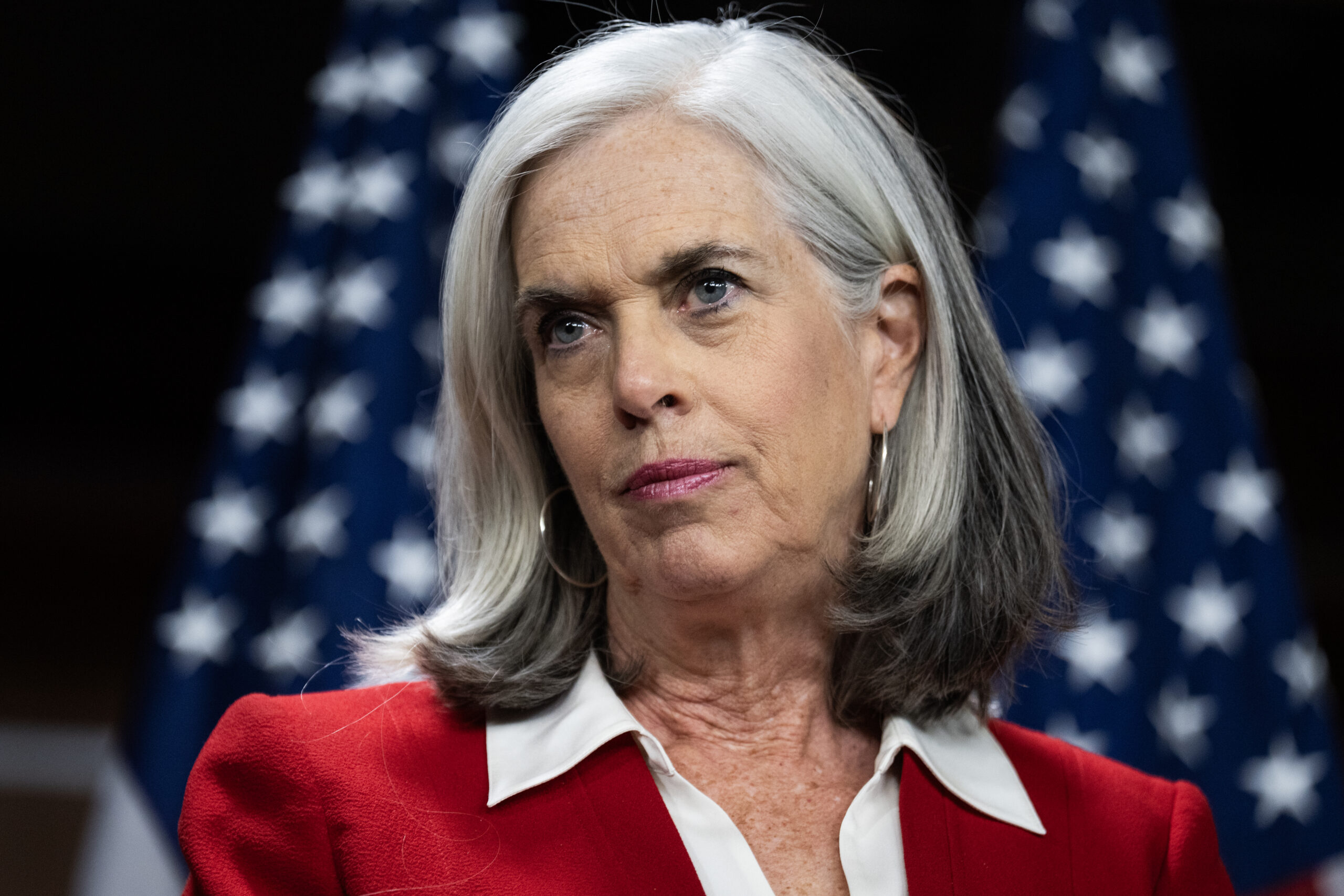
AIPAC said its endorsement is ‘unchanged’ and based on the House minority whip’s ‘long-standing support for the U.S.-Israel relationship’
Plus, Santa Ono lands on his feet

Tom Williams/CQ-Roll Call, Inc via Getty Images
Then-Rep. Ruben Gallego (D-AZ) in Rayburn Building on Capitol Hill on June 9, 2022.
Good Monday afternoon.
This P.M. briefing is reserved for our premium subscribers like you — offering a forward-focused read on what we’re tracking now and what’s coming next.
I’m Danielle Cohen-Kanik, U.S. editor at Jewish Insider and curator, along with assists from my colleagues, of the Daily Overtime briefing. Please don’t hesitate to share your thoughts and feedback by replying to this email.
📡On Our Radar
Notable developments and interesting tidbits we’re tracking
President Donald Trump posted on Truth Social this morning, “We will only see the return of the remaining hostages when Hamas is confronted and destroyed!!! The sooner this takes place, the better the chances of success will be. … Play to WIN, or don’t play at all!”
Hours later, reports indicated that Hamas had accepted a new ceasefire and hostage-release proposal from Qatari Prime Minister Mohammed Al Thani and Egyptian officials in Cairo, after a meeting in Doha last week between Al Thani and Mossad Director David Barnea.
A source told Axios that the deal is “98% similar” to the latest U.S.-backed proposal initiated by Middle East envoy Steve Witkoff.
Though neither American nor Israeli officials have confirmed the news, Prime Minister Benjamin Netanyahu said in a statement this afternoon, “Like you, I hear the reports in the media, and from them you can be impressed by one thing — Hamas is under immense pressure“…
Meanwhile at home, the embrace of anti-Israel actors by the Democratic mainstream continues.
Over the weekend, Sen. Ruben Gallego (D-AZ), a potential 2028 Democratic presidential contender from a swing state, told a local political outlet about New York City Democratic mayoral nominee Zohran Mamdani, “It’s OK to say ‘I disagree with this, this, and this, but I agree with that.’ But the idea that we’re just gonna throw out people that are really bringing in new ideas to the fold, exciting people, just because they’re slightly to the right or to the left of us is dumb.”
It’s a notable marker, a pragmatic lawmaker with national aspirations calling Mamdani — a democratic socialist who has refused to condemn the phrase “globalize the intifada” — “slightly to the left” of the Democratic center.
And this morning, opinion writer Jerusalem Demsas, formerly of The Atlantic, announced the launch of her new liberal media company, The Argument. The publication will feature writings from center-left heavyweights including Derek Thompson and Matthew Yglesias and received funding from similarly aligned investors including Arnold Ventures and Open Philanthropy.
In her announcement video, Demsas said conservatives are “persecuting Americans for exercising their basic freedoms” over news clips covering anti-Israel protest leader Mahmoud Khalil’s detention by the federal government.
The continued embrace of Khalil by Democratic thought leaders and influencers is significant as Khalil has continued to escalate his anti-Israel rhetoric, including in a recent appearance on “The Ezra Klein Show” podcast where he said about the Oct. 7 attacks that “we couldn’t avoid such a moment” and about Hamas’ killing of civilians that “we cannot go and ask Palestinians to be perfect victims”…
Former University of Michigan President Santa Ono announced today that he’s been appointed as the inaugural director of the Ellison Institute of Technology. Ono had been named president of the University of Florida but was rejected in an unprecedented move by the Florida Board of Governors, partially over concerns of his handling of antisemitism and an anti-Israel encampment at the Ann Arbor campus.
Now, Ono will report directly to Larry Ellison, the second wealthiest man in the world, who is the founder of the software company Oracle and a major donor to Jewish and Israeli causes…
The Association of American Geographers is set to consider a resolution on Oct. 3 to boycott Israeli academic institutions, the latest professional association to face calls from its members to do so…
⏩ Tomorrow’s Agenda, Today
An early look at tomorrow’s storylines and schedule to keep you a step ahead
Keep an eye on Jewish Insider tomorrow morning for an interview with Rev. Johnnie Moore, the head of the Gaza Humanitarian Foundation, about the repeated death threats and vandalism he’s faced at his home, and a look at Rep. Brad Sherman’s (D-CA) primary challenge.
Tomorrow afternoon, the Hudson Institute will host a conversation with Sebastian Gorka, deputy assistant to the president and senior director for counterterrorism at the National Security Council, on U.S. strategy on counterterrorism and its impacts on U.S. policy in the Middle East.
Stories You May Have Missed
BACKING THE BLOCK
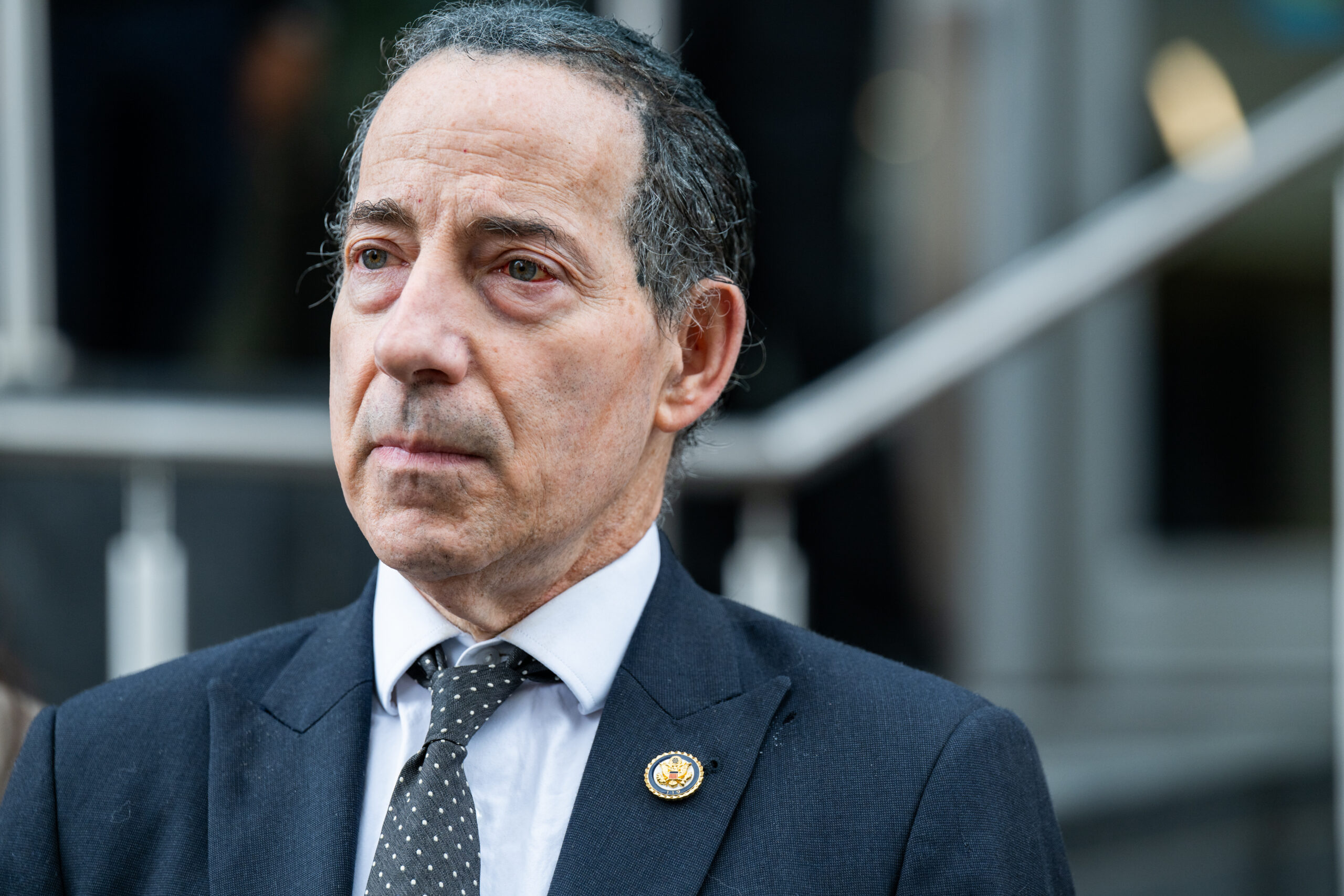
One of the most visible and well-known progressive Jewish lawmakers in Congress became a cosponsor of the ‘Block the Bombs Act’
CLARK’S BARK
Rep. Katherine Clark is the highest-ranking Democrat to have used the term, even as only a small number of other lawmakers have done so
Plus, NY Dems continue to withhold Mamdani backing

GETTY IMAGES
Three people with backpacks on sidewalk in front of the campus administrative building on sunny day moving away.
Good Thursday afternoon.
This P.M. briefing is reserved for our premium subscribers like you — offering a forward-focused read on what we’re tracking now and what’s coming next.
I’m Danielle Cohen-Kanik, U.S. editor at Jewish Insider and curator, along with assists from my colleagues, of the Daily Overtime briefing. Please don’t hesitate to share your thoughts and feedback by replying to this email.
📡On Our Radar
Notable developments and interesting tidbits we’re tracking
Mossad Director David Barnea was in Doha today meeting with Qatari Prime Minister Mohammed bin Abdul Rahman al-Thani, which Israeli officials downplayed as being unrelated to a ceasefire and hostage-release deal.
However, with Israel’s expanded operations in Gaza not expected to begin for several weeks and a flurry of diplomatic meetings underway (the Qatari PM also met with Middle East envoy Steve Witkoff in Ibiza last weekend), the negotiating parties likely view this time as a last-ditch opportunity to secure a deal…
Axios spotlights a trip of 15 young MAGA influencers to Israel, organized by the advocacy group Israel365, which describes itself as an “Orthodox Jewish institution that believes that Jews and Christians must respect one another,” and partially bankrolled by the Israeli Foreign Ministry.
Even as Israel’s falling public approval in the U.S. is driven by Democrats and to a lesser extent independents, the story notes that the Israeli government “sees shifting attitudes among young Republicans as the more immediate threat”…
In the world of academia: Professors Jon Shields and Yuval Avnur share their findings from a new study on the diversity of thought in college syllabi in the Wall Street Journal.
Drawing on the Open Syllabus Project, which has a database of over 27 million syllabi, they find that Edward Said’s Orientalism — one of the preeminent anti-West and anti-Israel academic texts — is the 16th most assigned text in the database, featured in nearly 16,000 courses in universities around the world.
However, Shields and Avnur find that Orientalism is rarely assigned with any of its critiquing texts, including Sam Huntington’s Clash of Civilizations and Bernard Lewis’ Islam and the West. At just 5% of syllabi, Huntington is assigned alongside Said the most commonly, and similar critics almost never.
The professors conclude with a warning to academics who are shaping the next generation of scholars and thinkers: “More of us should follow the minority of professors who teach the real controversy — not only the dominant texts but also work that is critical of them. … If we shut out the views of half or more of the population, we shouldn’t be surprised when the democratic process leads to the diminution of our subsidies and other privileges”…
Rep. Dan Goldman (D-NY) told Politico this morning that he won’t endorse New York City Democratic mayoral nominee Zohran Mamdani until he takes “concrete steps” to address concerns from Jewish New Yorkers around hate crimes.
Goldman said, “We’ve had a good conversation, and I am pleased in some respects with many of the things he said, and I’m interested to see how he moves forward, and what actions and concrete steps he takes to address the significant concerns of the 1.3 million Jews in New York City who are justifiably and understandably very afraid given the most recent hate crime statistics that came out”…
House Minority Leader Hakeem Jeffries (D-NY) is also still withholding his endorsement from Mamdani, declining to give CNBC a direct answer this morning on if he intends to support the Democratic nominee. He did say that in a “constructive and candid” conversation last month, Mamdani had asked him to help organize meetings with other members of the New York congressional delegation as well as working class communities that Jeffries represents, and that he had assisted Mamdani in doing so…
On the far left side of the American political spectrum, the Democratic Socialists of America adopted a resolution at their National Convention last weekend called “For a Fighting Anti-Zionist DSA,” which makes certain actions in support of Israel — including “making statements that ‘Israel has a right to defend itself’ and making or endorsing statements or legislation equating anti-Zionism with antisemitism” — “expellable” offenses for DSA members.
The DSA did not ultimately debate a resolution censuring Rep. Alexandria Ocasio-Cortez (D-NY) — one of the most vocal anti-Israel members of Congress — over her “tacit support for Zionism” at the convention…
⏩ Tomorrow’s Agenda, Today
An early look at tomorrow’s storylines and schedule to keep you a step ahead
Keep an eye on Jewish Insider tomorrow morning for more reporting on the reaction to former Transportation Secretary Pete Buttigieg’s newly hostile posture towards Israel, which is alarming many mainstream Democrats about the direction their party is headed.
Tomorrow, we’ll be watching the summit between President Donald Trump and Russian President Vladimir Putin taking place in Alaska, which aims to end the war in Ukraine. The conflict, along with the war in Gaza, has plagued Trump since he took office as he’s been unable to fulfill his campaign promise of ending wars abroad.
We’ll be back in your inbox with the Daily Overtime on Monday. Shabbat shalom!
Stories You May Have Missed
ONLINE ARCHIVE

The Minneapolis mayoral candidate’s communications manager wrote on social media that Israel ‘must be dismantled’
FAMILY FEUD

Jewish Democrats are pushing for defeat of a resolution calling for an arms embargo and advocating for a competing, pro-Israel resolution backed by the DNC chair
Plus, Jews across the aisle sound alarm on DNC resolution

Wisam Hashlamoun/Anadolu via Getty Images
Streaks of light from Iranian ballistic missiles are seen in the night sky above Hebron, West Bank, as Iran resumes its retaliatory strikes against Israel.
Good Wednesday afternoon.
This P.M. briefing is reserved for our premium subscribers like you — offering a forward-focused read on what we’re tracking now and what’s coming next.
I’m Danielle Cohen-Kanik, U.S. editor at Jewish Insider and curator, along with assists from my colleagues, of the Daily Overtime briefing. Please don’t hesitate to share your thoughts and feedback by replying to this email.
📡On Our Radar
Notable developments and interesting tidbits we’re tracking
Jewish Insider sat down with the Jewish Institute for National Security of America (JINSA) team in Washington today. They presented findings from a recent trip to Israel and a report on the estimated costs to the U.S., Israel and Iran from the 12-day war between Israel and Iran in June. Several key takeaways:
The U.S. used around 150 THAAD interceptors — approximately 25% of its stockpile — defending Israel from Iranian missiles and drones. Given that the U.S. acquired 11 interceptors in 2024, will acquire 12 in 2025 and is expected to acquire between 25-37 in 2026, it will take years to replenish U.S. capabilities at current production.
Also putting pressure on production, Saudi Arabia inaugurated its first THAAD system from the U.S. last month and is meant to receive hundreds of interceptors in the coming years.
From JINSA’s analysis, it appears that Israel, using its Arrow missile-defense system, shot fewer interceptors per incoming projectile than the U.S. did, suggesting that Israel’s systems may have better interception rates. In addition, Israel’s Arrow system is significantly cheaper to operate, at $2-3 million per interceptor versus THAAD’s $13-14 million.
On Iran’s nuclear and ballistic missile programs, the JINSA team found that rebuilding from the damage inflicted by the U.S. and Israel would be indistinguishable from building them from scratch. More important than Iran’s capability is its psychological fortitude and desire to rebuild its programs, after dozens of top nuclear and military officials were taken out in the span of days…
France, Germany and the U.K. sent a letter to U.N. Secretary-General Antonio Guterres and the Security Council last month announcing their readiness and “unambiguous legal grounds” to reinstate snapback sanctions on Iran if it does not reengage in nuclear negotiations by the end of August.
Iran suspended its negotiations with the U.S. — as well as its cooperation with the International Atomic Energy Agency, the U.N.’s nuclear watchdog — in June following the Israel-Iran war. IAEA Deputy Director Massimo Aparo was in Iran earlier this week for talks on the agency’s relationship with Tehran…
Inside Germany, The Washington Post reports, Chancellor Friedrich Merz is facing backlash from his own center-right party and allies after his Friday announcement that the government plans to suspend weapons shipments to Israel “that could be used in the Gaza Strip,” prompted by Israel’s decision last week to expand the war. It was a major shift for Berlin, as Germany has been one of Israel’s most reliable allies in Europe while its neighbors have turned against the Jewish state over the war in Gaza…
Democratic Majority for Israel weighed in on an anti-Israel resolution being considered by the Democratic National Committee that calls for Democrats to recognize a Palestinian state and for the suspension of all military aid to Israel.
DMFI CEO Brian Romick said in a statement that the organization is “deeply troubled” by the “flawed, irresponsible resolution.” “Shockingly, this resolution does not even mention the barbaric attacks of October 7 nor the terrorist group Hamas at all,” he continued. Matt Brooks, CEO of the Republican Jewish Coalition, applauded DMFI for the statement, saying, “That’s how it should be done”…
⏩ Tomorrow’s Agenda, Today
An early look at tomorrow’s storylines and schedule to keep you a step ahead
Keep an eye on Jewish Insider tomorrow morning for reporting on the extreme anti-Israel views of individuals connected to Minneapolis mayoral candidate Omar Fateh‘s campaign, as well as an interview with Jack Ciattarelli, the Republican gubernatorial nominee in New Jersey, as he spends time in Israel this week.
Nancy Jacobson, a former Democratic fundraiser now the CEO of the independent No Labels organization, and entrepreneurs Irwin Simon and Matthew Rabinowitz will be hosting a fundraiser in New York City for former Gov. Andrew Cuomo this evening, Jewish Insider has learned. The event is anticipated to raise over $200,000 for Cuomo as he continues his campaign for mayor of New York City as an independent.
Stories You May Have Missed
BEHIND THE BILLBOARD

The American Eagle CEO is building a legacy in business — and in Jewish giving
CHRISTIAN CONCERNS

Even as the president has prioritized tackling antisemitism in his second term, leading conservatives are quietly pushing for more engagement against far-right hate
Please log in if you already have a subscription, or subscribe to access the latest updates.
 Continue with Google
 Continue with Apple