
























DMFI President Brian Romick: ‘Our hope is that this pause will be temporary and that, through a candid conversation about the path forward, we can resume our endorsement’
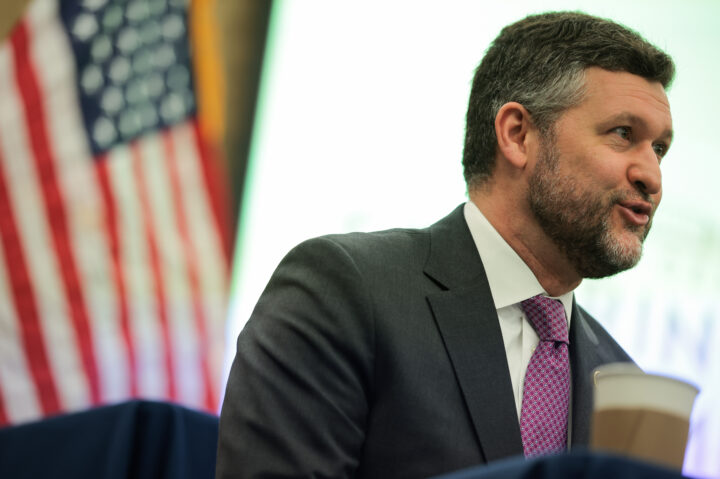
Kayla Bartkowski/Getty Images
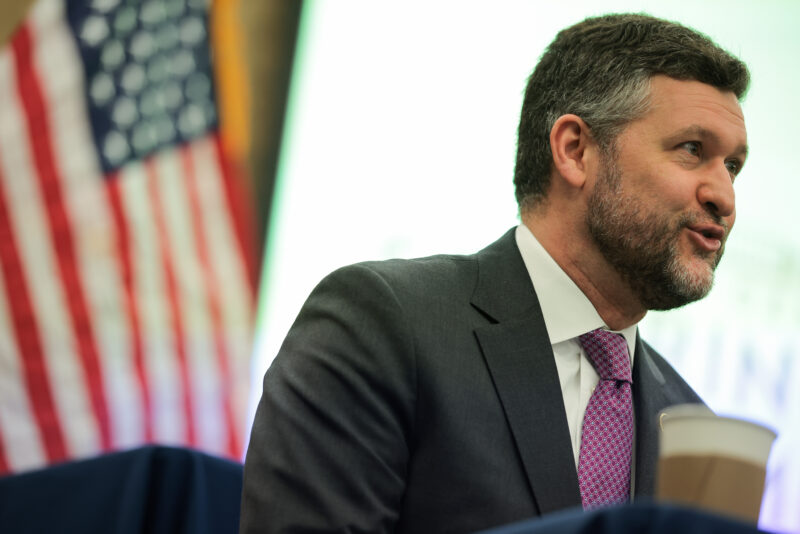
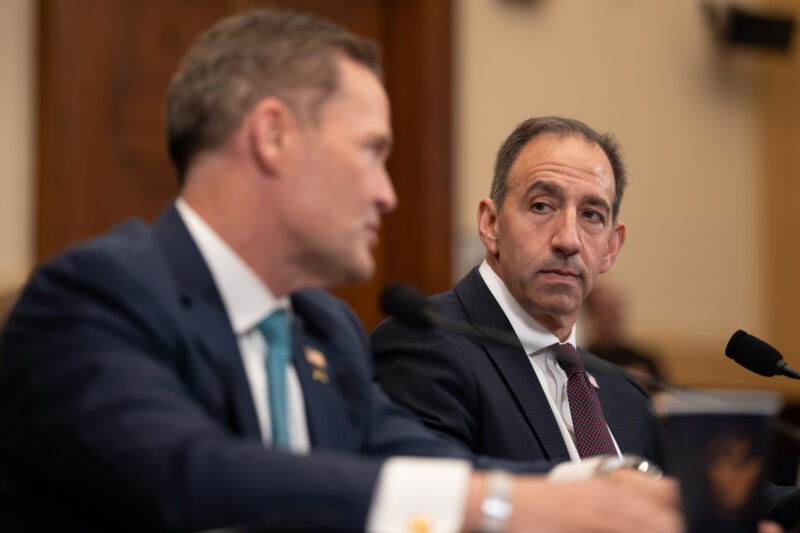
Rep. Pat Ryan (D-NY) speaks during a Democratic Steering and Policy Committee hearing in the U.S. Capitol on April 10, 2025 in Washington, DC


 Add JewishInsider on Google
DMFI PAC, Democratic Majority for Israel’s political arm, is pausing its endorsements of nine Democratic House members who voted this month to end all U.S. aid to Israel, underscoring the depth of its frustration even as the group also seeks to preserve relationships with lawmakers it had championed.
In a new letter that the group intends to circulate among the lawmakers, Brian Romick, the president of DMFI PAC, expressed his disappointment with their votes in favor of the amendment introduced by Rep. Thomas Massie (R-KY), which did not pass, and said their endorsements would be temporarily suspended with a goal of engaging in a constructive dialogue on the issue.
“Because of that vote, we are pausing our endorsement and taking your name off the list of supported lawmakers on the DMFI PAC website,” Romick said in the letter, the full text of which was shared exclusively with Jewish Insider on Sunday. “At the same time,” he added, “our hope is that this pause will be temporary and that, through a candid conversation about the path forward, we can resume our endorsement.”
The Democrats include Reps. Laura Friedman (D-CA), Josh Harder (D-CA), Chrissy Houlahan (D-PA), Glenn Ivey (D-MD), Kevin Mullin (D-CA), Richard Neal (D-MA), Joe Neguse (D-CO), Brittany Pettersen (D-CO) and Pat Ryan (D-NY).
DMFI PAC has previously backed other pro-Israel Democrats who also voted against funding to Israel, notably including Rep. Jake Auchincloss (D-MA). But the nine members now receiving letters were the only incumbents it had endorsed this cycle who approved the amendment, according to a spokesperson.
DMFI PAC’s diplomatic approach highlights the politically sensitive terrain that pro-Israel groups find themselves navigating after the controversial vote. The amendment drew backing from a total of 103 House Democrats, nearly half the caucus, many of whom were seen as supporters of Israel and said they approved the measure to register opposition to Israeli Prime Minister Benjamin Netanyahu as well as the Iran war.
The group’s decision comes after AIPAC retaliated against 18 of its Democratic endorsees who voted for the amendment by removing fundraising links from its online political portal or cutting language that had thanked some members for their support of Israel.
In an interview with JI on Sunday, Romick said the group’s intention with the letter is “to give people a path back to the pro-Israel movement” rather than permanently ending its longstanding relationships over a measure that it had strongly urged Democrats to vote against.
“Obviously it was a rough vote and it’s been a rough moment,” Romick acknowledged. “But the pro-Israel movement right now needs to be making friends, and I think being able to say ‘I support Israel’s security, I support Palestinians’ national aspirations over the long term, even if it’s not something today’ — I think that’s a reasonable position” and “we want to try to help Democrats land there and continue to support Israel’s security.”
He believes “members are looking for a path back to being in the pro-Israel movement,” he said, citing his recent conversations with House lawmakers. “I don’t think we should be pushing away friends right now.”
It remains to be seen whether all of the former DMFI PAC endorsees will be receptive to preserving “strong relationships and open channels of communication,” as described in the letter from Romick.
A spokesperson for Ryan, for example, said after the vote that he no longer wanted DMFI PAC’s support. The moderate New York lawmaker also promised to return his campaign donations from AIPAC, whose backing he likewise rejected in a social media post.
An AIPAC spokesperson told JI last week that its “members nationwide saw Rep. Ryan reject their participation in the political process,” and said the group is now “helping his donors receive a refund.”
Rep. Brad Schneider (D-IL), a pro-Israel stalwart who voted against the amendment, told JI he was encouraged by DMFI’s outreach to the lawmakers whose endorsements have been paused. “I think it’s the right decision,” he told JI.
“I know that if we’re going to improve the prospects for positive outcomes in the Middle East,” he added, “we need to find common ground with people across a lot of different ideas and ideologies, bring people together and move forward in a single direction, and that’s what I hope we can do.”
There hasn’t been much incentive for party groups to set red lines against radicals looking to disrupt the party in lower-profile races
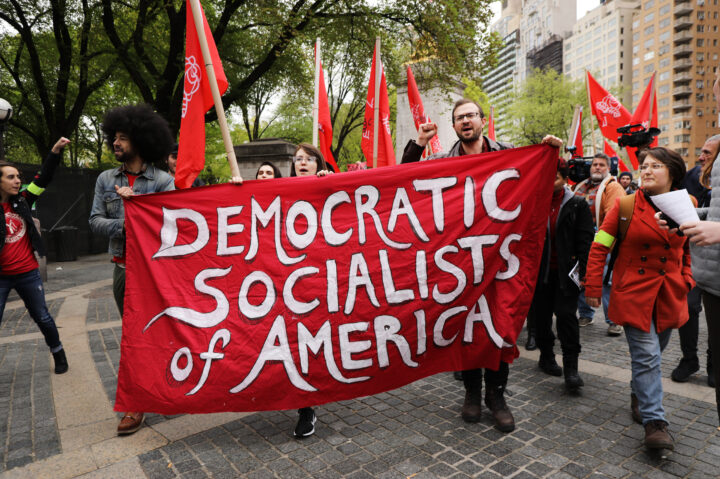
Spencer Platt/Getty Images
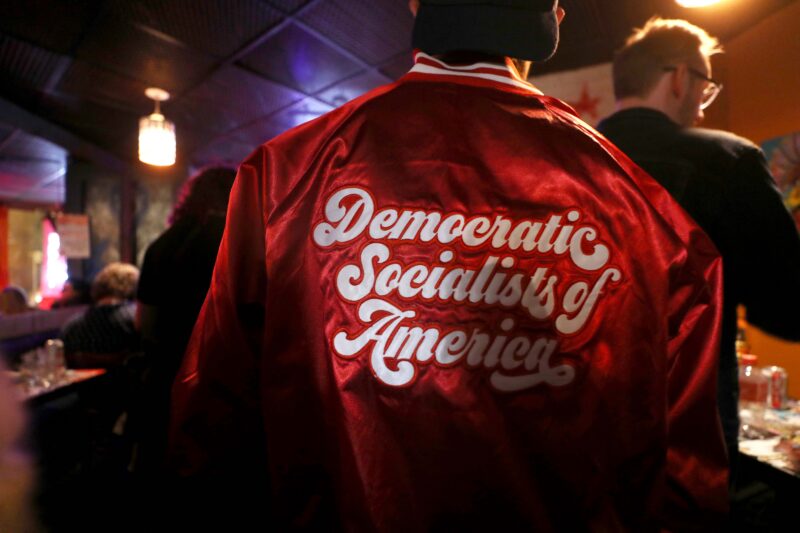
Members of the Democratic Socialists of America May 01, 2019 in New York City.
As the Democratic Party lurches left in the run-up to the midterms — and amid the rise of high-profile, far-left Senate candidates such as Graham Platner in Maine and Abdul El-Sayed in Michigan — candidates affiliated with the Democratic Socialists of America (DSA) have gradually been making inroads and positioning themselves to win nominations in several key House races.
This has happened without much protest or opposition from Democratic Party leadership. And given that the urban districts where the DSA-endorsed candidates have the most support are so heavily Democratic, there hasn’t been much incentive for party groups to set red lines against radicals looking to disrupt the party in these lower-profile races.
One of the most insidious aspects of the advocacy of many DSA chapters is the demand that its endorsees cut ties with any Jewish group that recognizes the State of Israel. Some chapters celebrated or justified Hamas’ Oct. 7 terror attacks against Israel.
“They are trying to do in America what [the Boycott, Divestment and Sanctions movement] seems to do internationally, which is to make being Jewish unacceptable in polite society,” Ron Halber, the CEO of the Jewish Community Relations Council of Greater Washington, recently said on a webinar of D.C-area Jewish leaders.
But despite the group’s radical views, DSA-endorsed candidates have a real shot at prevailing in several upcoming Democratic primaries in major cities.
Pennsylvania state Rep. Chris Rabb, one of several Democrats looking to succeed retiring Rep. Dwight Evans (D-PA) in his Philadelphia district, has the notoriety of recirculating an Instagram post blaming the Bondi Beach terrorist attack that killed 14 Jewish Australians on “Zionists,” insinuating the terror attack was a false flag. (His campaign later blamed a former staffer for reposting the item.)
Rabb, who has been endorsed by many of the leading anti-Israel progressives in Congress, also recently campaigned with antisemitic streamer Hasan Piker. His far-left views and virulent criticism of Israel has alarmed Gov. Josh Shapiro, according to Axios, and the popular Pennsylvania governor has worked behind the scenes to oppose his campaign.
Democratic sources familiar with the primary, however, suggest that any behind-the-scenes efforts aren’t having much effect in derailing the DSA candidate’s campaign. Rabb’s two leading opponents — surgeon Ala Stanford and state Sen. Sharif Street — are both mainstream Democrats and may potentially split the more-moderate vote. The primary is on Tuesday.
Next month, a similar clash between the Democratic mainstream and socialist wing of the party is taking place in New York City, where state Assemblymember Claire Valdez, who is backed by Mayor Zohran Mamdani and New York’s DSA chapter, is squaring off against Brooklyn Borough President Antonio Reynoso, the progressive establishment’s favorite.
The race, in one of the most left-wing districts in the city, which covers part of Brooklyn and Queens, will mark a major test of Mamdani’s political capital — and whether the DSA brand is more compelling to progressives than the endorsement of Reynoso by retiring liberal stalwart Rep. Nydia Velazquez (D-NY).
Reynoso, in an interview with The New York Editorial Board, proclaimed himself the underdog in the race despite boasting endorsements from organized labor, the outgoing congresswoman, state Attorney General Letitia James and the left-wing Working Families Party line. “Zohran Mamdani is a celebrity-status, inspiring figure at the levels of AOC and Bernie Sanders. He is a movement and is deeply important,” Reynoso said.
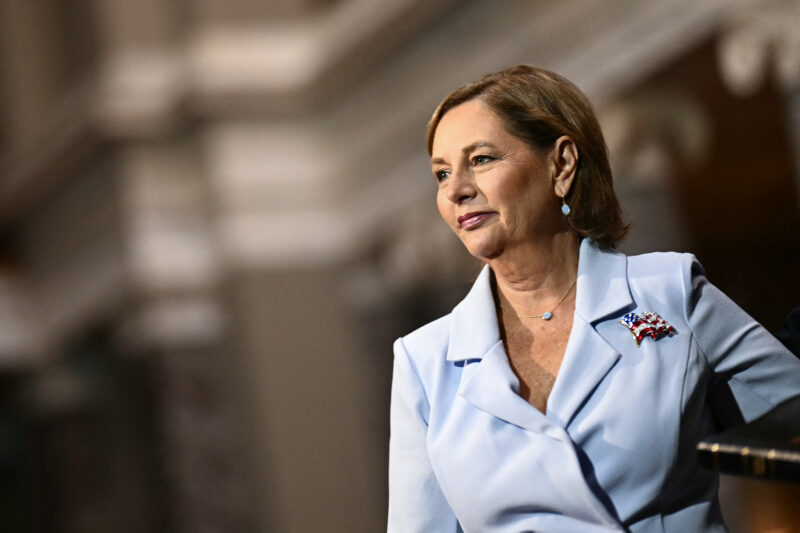
Meanwhile, in Denver, another DSA hotbed, Rep. Diane DeGette (D-CO) faces a primary threat from DSA-backed challenger Melat Kiros, a 28-year-old attorney. Kiros has made criticism of Israel a centerpiece of her campaign, accusing Israel of genocide, and she supports an arms embargo against the Jewish state. Kiros dominated DeGette at a districtwide party convention filled with activists in March, and the congresswoman has been airing ads touting her progressive record, in anticipation of a competitive June primary.
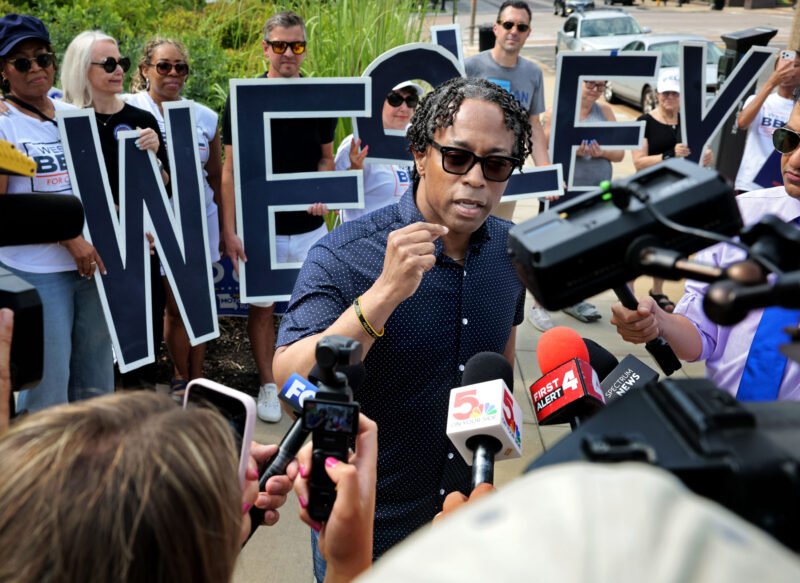
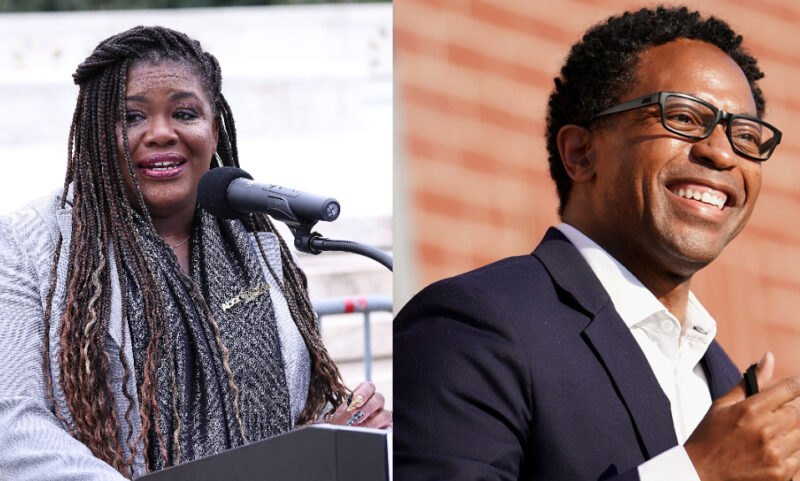
And in St. Louis, the local DSA chapter is again backing former Rep. Cori Bush (D-MO), who was one of the most extreme anti-Israel lawmakers when serving in Congress, in her attempt at a comeback against Rep. Wesley Bell (D-MO).
(The other major contest featuring a DSA-endorsed contender is next month’s D.C. mayoral primary, where Jewish groups have been alarmed by Janeese Lewis George’s rhetoric around Israel and antisemitism.)
All told, there could be at least four Democratic Socialists of America-endorsed lawmakers in the next Congress, with limited party efforts to marginalize the extremists from within. It underscores how fast the Democratic Party is evolving, and how quickly the guardrails that kept the party centered — and largely free of antisemitism — are falling out of place.
The group is endorsing candidates Ashely Hinson in Iowa, Mike Rogers in Michigan, Kurt Alme in Montana and Michael Whatley in North Carolina
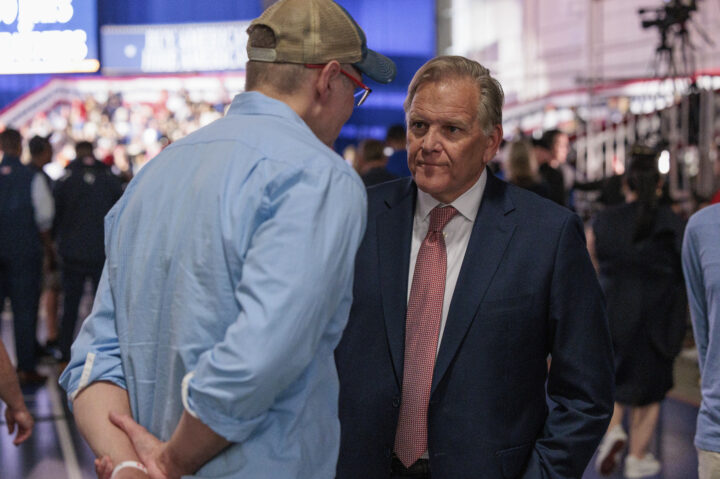
Andrew Roth/Sipa USA via AP Images
Republican Michigan Senate candidate Mike Rogers attends President Donald Trump's rally in Warren, Mich., on April 29, 2025.
The Republican Jewish Coalition announced Tuesday that it is endorsing four Republican Senate candidates for open seats: Rep. Ashley Hinson (R-IA), former Rep. Mike Rogers (R-MI), former U.S. Attorney Kurt Alme in Montana and former Republican National Committee Chair Michael Whatley in North Carolina.
The group also announced endorsements of sitting Sens. Dan Sullivan (R-AK), Ashley Moody (R-FL), Pete Ricketts (R-NE) and Jon Husted (R-OH), all of whom are up for reelection in November.
“All eight of these incumbent Senators and candidates exemplify what it means to be a true conservative fighter for the American people,” RJC CEO Matt Brooks and National Chairman Norm Coleman said in a statement. “Each has stood firmly against the rising tide of antisemitism, in support of the US-Israel alliance, and for our shared values. The Republican Jewish Coalition knows that these leaders will deliver on the issues of primary concern to the American Jewish community, and we are proud to endorse them.”
The two said that the “frontlines” of the fight to keep the Senate in Republican hands “are in these eight key states” — highlighting the expanding battleground in this November’s Senate contests.
The RJC, in a statement, particularly highlighted Whatley’s work to support Israel and the Jewish community following the Oct. 7, 2023, attacks on Israel, describing him as “outspoken in his support for our greatest ally [who] forcefully condemned Hamas terrorism, and reaffirmed the Republican Party’s unwavering backing of Israel’s right to defend itself.”
RJC was a key backer of Rogers in the 2024 Senate race, and is expected to be strongly involved again in the Michigan race.
State Rep. Chris Rabb is backed by Sen. Chris Van Hollen and Reps. Jamie Raskin, Ilhan Omar, Ro Khanna and Pramila Jayapal; he’s running against state Sen. Sharif Street
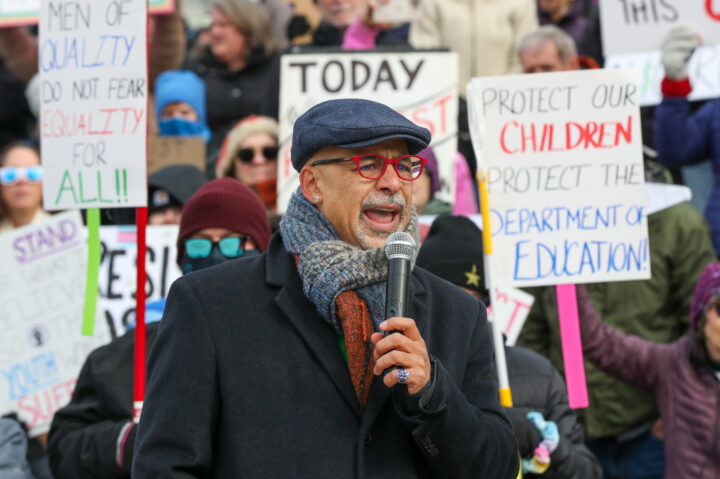
Paul Weaver/SOPA Images/LightRocket via Getty Images
Pennsylvania state Rep. Chris Rabb speaks during a protest outside of the Pennsylvania Capitol.
Anti-Israel Pennsylvania state Rep. Chris Rabb has collected a series of high-profile congressional endorsements in recent days, as he seeks the Democratic nomination in Pennsylvania’s 3rd Congressional District against state Sen. Sharif Street and Ala Stanford.
Street is a pro-Israel Muslim Democrat and fixture of state Democratic politics, including serving as the former state party chair and Stanford is a doctor and organizer supported by the retiring incumbent, Rep. Dwight Evans (D-PA).
Rabb has been endorsed in recent days by Sen. Chris Van Hollen (D-MD) and Reps. Jamie Raskin (D-MD), Ilhan Omar (D-MN), Ro Khanna (D-CA), Pramila Jayapal (D-WA) and Jared Huffman (D-CA), as well as the Philadelphia Inquirer and the Congressional Progressive Caucus. Far-left streamer Hasan Piker has also praised Rabb on his show.
Rabb has made his criticism of Israel and pro-Israel groups a central part of his House campaign, including accusing Israel of committing genocide. Street, while critical of the Israeli government, has been largely supportive of the Jewish state and has sought to promote ties between the Jewish and Muslim communities.
Rabb also raised significantly more than either of his competitors in the first quarter of 2026, though Street still held a $100,000 advantage in total fundraising and narrowly led Rabb in cash-on-hand. Stanford had nearly twice as much as Rabb in the bank at the end of March.
The pro-Israel Democratic group also backed Chris Pappas and Roy Cooper in their battleground Senate races

Carlos Osorio/AP
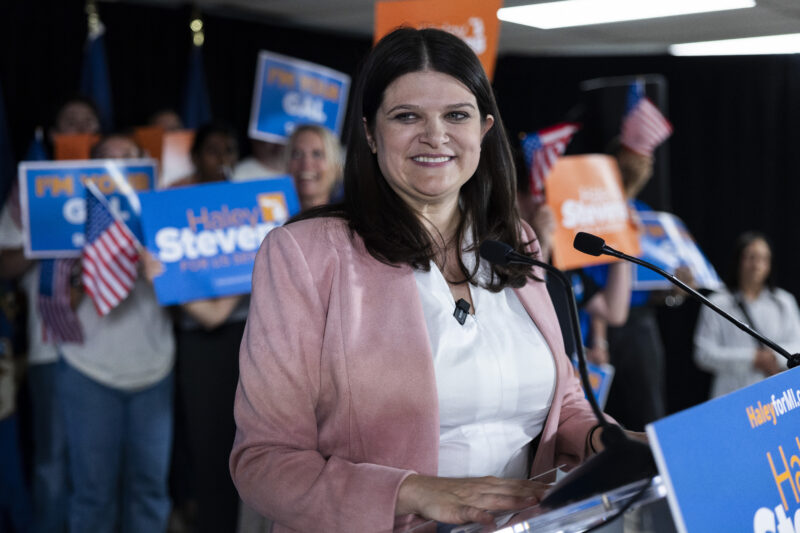
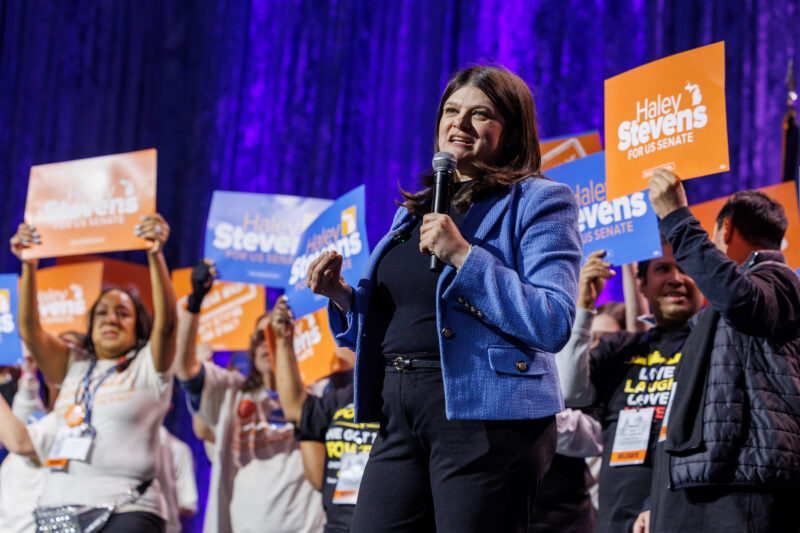
Rep. Haley Stevens (D-MI) speaks Tuesday, Aug. 2, 2022, at an election night party in Birmingham, Mich.
Democratic Majority for Israel on Thursday announced its endorsements of Reps. Haley Stevens (D-MI), Angie Craig (D-MN) and Chris Pappas (D-NH) and former Gov. Roy Cooper as they seek the Senate seats in their respective states.
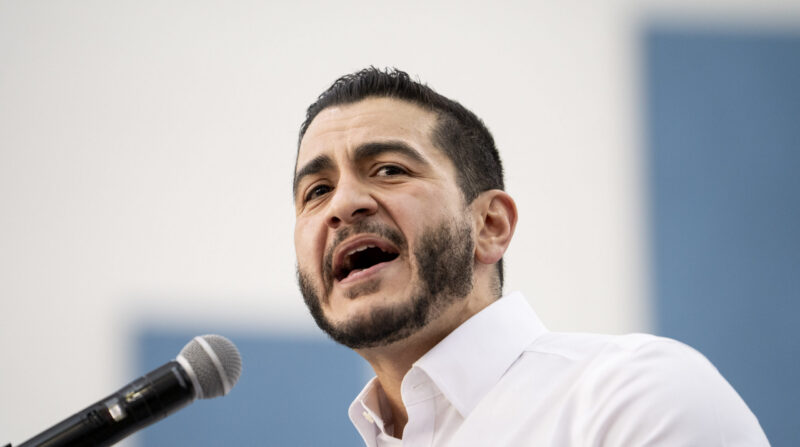
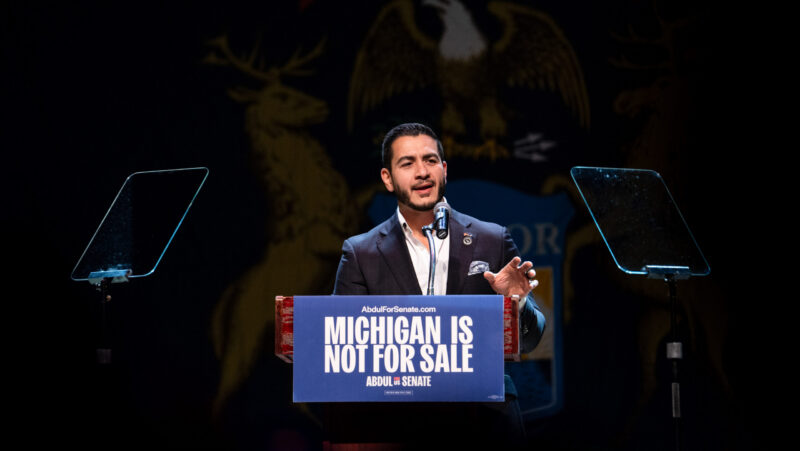
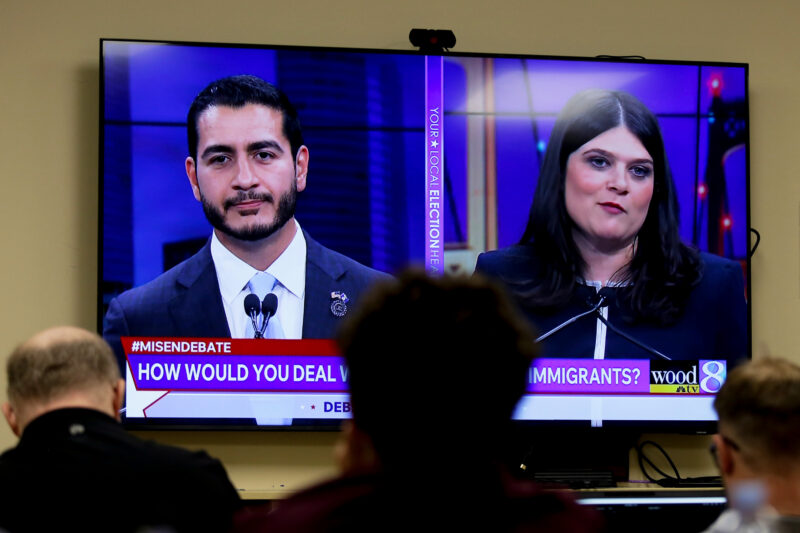
Stevens faces a particularly competitive primary against state Sen. Mallory McMorrow and former Wayne County health director Abdul El-Sayed, both of whom have sided with the far left on Israel issues and publicly rejected pro-Israel backing. El-Sayed has attacked Stevens over her pro-Israel stance.
DMFI’s endorsement marks the first formal involvement by a pro-Israel group in the race. AIPAC’s PAC and super PAC, which have previously provided significant support for Stevens, have not yet issued an endorsement.
Craig, another moderate pro-Israel Democrat, also faces a left-wing opponent critical of Israel in Lt. Gov. Peggy Flanangan. Cooper and Pappas, both moderates who have been supportive of Israel, are seen as the clear frontrunners in their primaries.
“Chris Pappas, Haley Stevens, Angie Craig, and Roy Cooper are battle-tested leaders who know how to win tough races, hold the Trump administration accountable, and deliver real results for working families. They’ve stood firm against extremism, antisemitism, and efforts to undermine America’s alliances,” DMFI PAC Chair Brian Romick said in a statement.
“Each is a champion of the U.S.-Israel relationship and a clear-eyed advocate for Israel’s security and the region’s long-term stability.”
“DMFI PAC is proud to support these exceptional candidates, and we’re firmly committed to helping them win their races,” he added.
Stevens, in a statement thanked DMFI for its support.
“I’m honored to have DMFI PAC’s endorsement in this race. As a proud pro-Israel Democrat, I believe America is stronger when we stand with our democratic allies, confront antisemitism and extremism, and keep our promises to our friends abroad and our working families here at home,” Stevens said in a statement. “In the Senate, I’ll keep fighting to protect our democracy, support Israel’s security, ensure the ceasefire holds in Gaza, and deliver for Michiganders in every corner of our state.”
The former TV news anchor boasts a consistently conservative, pro-Israel voting record, and has a history of winning tough races
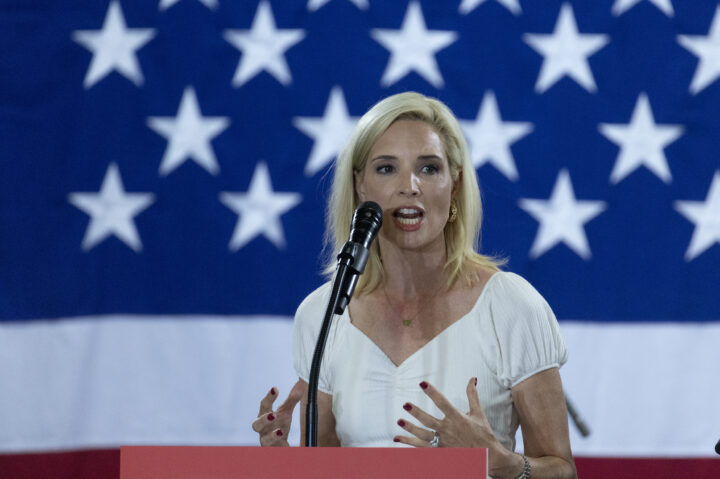
Scott Olson/Getty Images
U.S. Rep. Ashley Hinson speaks to guests during her Ashley's BBQ Bash fundraiser on August 23, 2025 in Cedar Rapids, Iowa. The event was the fifth annual, which she holds to support Iowa Republican causes and candidates.
Rep. Ashley Hinson (R-IA) has emerged as the front-runner in the contest to replace retiring Sen. Joni Ernst (R-IA), with national Republicans swiftly coalescing around her bid for the GOP nomination as they look to avoid a messy primary battle.
Hinson, a politically tested lawmaker who has long been viewed as a potential successor to Ernst, launched her Senate campaign within hours of Ernst’s announcement last Tuesday that she would not seek a third term.
Hinson, in her candidate announcement, said that she would be President Donald Trump’s “strongest ally” in the Senate and would work to “deliver the America First agenda.” She also praised Ernst for her military service and time in public office, saying that, “Our country and state are better off because of Joni’s selfless service.”
Hinson, a prolific fundraiser who entered the race with a $2.8 million war chest, began racking up endorsements shortly after her campaign launch. Trump endorsed Hinson on Friday, as did Senate Majority Leader John Thune (R-SD) and Sen. Tim Scott (R-SC), chairman of the National Republican Senatorial Committee, Senate Republicans’ campaign arm.
Trump described Hinson as “a wonderful person” whom he knows “well,” and praised her devotion to her family before touting her commitment to “our incredible Iowa workers.”
“She is working hard to Create Jobs, Cut Taxes, Promote Products and Services MADE IN AMERICA by our incredible Iowa Workers, Support our Great Farmers and American Agriculture, Champion Innovation, Continue to Help Secure our now very Secure Southern Border, Stop Migrant Crime, Murderers, and other Criminals from illegally entering our Country, Strengthen our Military/Veterans, and Defend our always under siege Second Amendment,” Trump wrote of Hinson on his Truth Social platform.
“From a foreign policy perspective, or even culturally with respect to antisemitism and all that sort of thing, I don’t think that you’re going to see a lot of difference between Joni Ernst, who’s been a strong supporter of Israel and who I think has been a really effective leader on the national stage, and Ashley,” David Kochel, a veteran GOP campaign operative, told JI.
Ernst and Hinson are close professionally and personally; in addition to being friends, the two have long been aligned on foreign and domestic policy and worked together on scores of bicameral legislative efforts.
Both lawmakers have been repeatedly endorsed by AIPAC and the Republican Jewish Coalition, though neither organizations have officially gotten behind Hinson’s Senate bid yet. While Ernst hasn’t endorsed in the race either, Hinson is the candidate she is most aligned with ideologically.
“From a foreign policy perspective, or even culturally with respect to antisemitism and all that sort of thing, I don’t think that you’re going to see a lot of difference between Joni Ernst, who’s been a strong supporter of Israel and who I think has been a really effective leader on the national stage, and Ashley,” David Kochel, a veteran GOP campaign operative, told Jewish Insider.
“On issues of concern to Jewish Americans, Ashley Hinson has been an absolute stalwart,” Sam Markstein, who serves as national political director for the RJC, told JI.
Markstein described Hinson as “an incredibly strong voice in Israel’s defense,” citing her “calling Hamas’ terror attack ‘evil,’ and affirming Israel’s right to defend itself immediately” after the Oct. 7, 2023, attacks on Israel as examples. He also noted that she has “consistently voted for vital military aid to Israel and Iron Dome defense systems,” and pointed to her cosponsoring legislation “to pressure the Biden administration to deliver critical aid that they were holding up as the Jewish state was fighting a seven-front war.”
“She has stood strongly against the Iranian regime by supporting measures to reinstitute maximum pressure and reimpose crippling sanctions. Ashley Hinson also has a very strong record on combating antisemitism. Notably, unlike some on the neo-isolationist far right, when Ashley Hinson says, ‘America First,’ for her, and for the RJC, that means standing strongly with our allies, like Israel, peace through strength, using decisive military action when necessary and rejecting forever wars,” Markstein said.
The swift action on Hinson’s part in launching her campaign and locking down major endorsements has propelled her campaign to front-runner status in the race, and a smooth primary contest could benefit what are already strong general election chances for Republicans in the Hawkeye State.
“Ashley’s been pretty good on the Trump record,” Kochel said. “I think things are going to consolidate pretty quickly around her.”
“She is definitely going to be the leading candidate in the Republican primary, and she’s going to be a very tough candidate in the general election as well,” he told JI.
Thus far in the primary, Hinson is facing Jim Carlin, a Republican former state senator who initially entered the contest to challenge Ernst from the right after winning 27% of the vote against Sen. Chuck Grassley (R-IA) in a 2022 primary, and Joshua Smith, a former libertarian and podcast host who is a sharp critic of the U.S.-Israel relationship.
Smith has espoused virulently anti-Israel beliefs on social media, posting in March of this year on X that Israel is a “fake state of anti Jesus heathens who are fine with killing children” and claiming in a post last May that Jewish people suffer from a “Jewish victim complex.”
Hinson began her career in local television as a broadcast journalist in Cedar Rapids, Iowa, and went on to win two Midwest regional Emmy Awards and become a health reporting fellow for the Radio Television Digital News Association. She entered politics in 2016, when she won a competitive seat in the Iowa state House of Representatives representing the purple Cedar Rapids area by a two-to-one margin.
Hinson was elected to the House in 2020 after defeating former Rep. Abby Finkenauer, a Democrat who flipped Iowa’s 1st Congressional District blue in 2018, by more than two points.
The other rumored candidate looking at the race is U.S. Ambassador to NATO Matt Whitaker, Trump’s former acting attorney general during his first term who lost to Ernst in the GOP primary for her Senate seat in 2014. But with Trump and leading Republicans rallying behind Hinson, the prospects of Whitaker running has dimmed.
The Democratic side of the aisle has a crowded field of candidates competing for the party’s nomination, including state Rep. Josh Turek, state Sen. Zach Wahls and Jackie Norris, chairwoman of the Des Moines Public Schools board.
“Whoever wins the Republican nomination for U.S. Senate in Iowa will have a very, very strong chance of succeeding Joni Ernst,” Sam Markstein, who serves as national political director for the RJC, told JI. “Regarding Ashley Hinson specifically, ask yourself what the telltale signs of a well-run operation are, and you’ll see she is clearly checking all of the boxes: the speed and efficiency of her campaign launch, announcing support from President Trump, as well as House and Senate leadership.”
Democrats have expressed an interest in contesting the open Senate seat in Iowa, a now reliably Republican state that was a battleground before Trump’s political ascendance.
The party has some renewed confidence in their political standing in the state, after Democrats flipped a state Senate seat in a special election last month. The state currently has one state elected official that’s a Democrat: State Auditor Rob Sand.
Whether national Democrats will allocate resources to the Hawkeye State remains to be determined, but winning statewide as a Democrat in deep red Iowa will be a difficult challenge. Democrats haven’t won a Senate race in Iowa since 2008, when former Sen. Tom Harkin handily won a fifth term, prompting Republicans to dismiss the notion that this race will be competitive.
“Whoever wins the Republican nomination for U.S. Senate in Iowa will have a very, very strong chance of succeeding Joni Ernst,” Markstein told JI.
“Regarding Ashley Hinson specifically, ask yourself what the telltale signs of a well-run operation are, and you’ll see she is clearly checking all of the boxes: the speed and efficiency of her campaign launch, announcing support from President Trump, as well as House and Senate leadership. This, and more, illustrates that she’s focused, organized, and has an excellent team around her, all of which is needed to win,” he continued.
The NRSC sent a memo to donors last week expressing confidence that Democrats would face an uphill slog in Iowa, and touted Hinson as a “formidable contender” who “would be exceedingly difficult for any Democrat to challenge.”
A source familiar with how the NRSC is viewing the contest told JI that, “Democrats are trying really hard to say that Iowa is in play and that it is a competitive race. That’s just not electorally where we view it.”
“It’s also just not ultimately what the field on their side signals. They have a very messy, competitive primary right now. It does not appear that [Senate Minority Leader Chuck] Schumer is going to be able to clear the field. That is obviously a direct contrast to what we’re seeing so far on our side,” the source said, noting the growing support for Hinson on the GOP side of the aisle.
Kochel noted that, “Iowa historically was a swing state. [Former President Barack] Obama won it twice and Trump’s won it three times, but certainly the registration advantage that Republicans have has been growing. As the electorate has changed in the last 10 years, more non-college [educated], white, working-class voters are becoming more and more Republican. We’ve got a lot of those in Iowa.”
“Demographically, Iowa is kind of getting away from the Democrats a little bit,” he continued, predicting, “We’ll see this race settle into a pretty familiar framework.”
The senator asked several pro-Israel organizations to refrain from involvement in races where he endorsed candidates without Jewish communal support

Kevin Dietsch/Getty Images
Sen. Mark Kelly (D-AZ) talks to campaign volunteers on Election Day on November 08, 2022 in Tucson, Arizona.
Sen. Mark Kelly (D-AZ) is facing new scrutiny from some Jewish community leaders in Arizona who are frustrated by his endorsements boosting the activist left in a series of recent House primaries in which he has withheld support for pro-Israel candidates and has even worked to actively oppose their campaigns behind the scenes, according to people familiar with the matter.
Kelly’s engagement has strained what had been seen as a positive relationship with the pro-Israel community in Arizona, according to multiple local Jewish leaders who have voiced disappointment with his approach. Meanwhile, his recent interventions have raised questions about the political motivations of the Democratic senator in a key battleground state who has long been associated with his party’s moderate, centrist wing.
The most recent source of tension with Jewish and pro-Israel leaders stems from Kelly’s endorsement of Adelita Grijalva in a Tucson House primary this month to succeed her late father, former Rep. Raul Grijalva (D-AZ), a longtime critic of Israel who died in March.
While the younger Grijalva, a former Pima County supervisor, has a limited record of commentary on Israel and Middle East policy, her affiliation with a range of far-left leaders, including Rep. Ilhan Omar (D-MN) and Alexandria Ocasio-Cortez (D-NY), has raised concerns among mainstream Jewish activists who favored one of her primary opponents, Daniel Hernandez, a former state lawmaker and pro-Israel progressive.
Grijalva, who struggled to articulate her positions on key issues such as conditioning aid to Israel — suggesting during the race, for instance, that U.S. involvement in the ongoing conflict “has not been helpful at all” — handily won the primary and is all but assured a seat in the deeply Democratic district.
“Senator Kelly supports Adelita because she’s ready to fight for his home district in Congress, and clearly the district agrees,” a spokesperson for Kelly said in a statement to Jewish Insider on Thursday. “He respects that some folks may have a difference of opinion, and values the strong relationships he has in the Arizona Jewish community.”
Still, the pro-Israel community in Arizona was troubled that Kelly had bolstered her campaign, owing in part to their differences in tone on Middle East policy. Among other issues, Grijalva called for a ceasefire just 10 days after Hamas’ Oct. 7, 2023, terror attacks, whereas Kelly expressed continued support for Israel in the aftermath of the incursion and faced protesters outside his Phoenix office who demanded he back an end to the war. While serving as a county supervisor, Grijalva had also reluctantly voted for a resolution condemning Hamas, voicing frustration that she “couldn’t talk about peace and humanitarian aid” for Gaza.
One Jewish activist in Tucson, who like others spoke on condition of anonymity to avoid reprisals, called Kelly’s endorsement “a slap in the face” to the pro-Israel community in Arizona. “He tries to make himself seem like a very moderate, pro-Israel guy — especially when he’s fundraising,” the local activist claimed. “There’s a lot of mistrust in the community right now.”
From an even more personal standpoint, the senator and his wife, former Rep. Gabby Giffords (D-AZ) — who also endorsed Grijalva — have long been close with Hernandez and his family. In 2011, Hernandez, who was then a 20-year-old intern for Giffords, had been credited with helping to save her life immediately after she was shot in the head by a gunman during a political event in the Tucson area.
Despite such history, Kelly privately urged a leading pro-Israel group, Democratic Majority for Israel, to stay out of the primary, according to people familiar with the matter who spoke with JI this week. The organization’s political arm, DMFI PAC, ultimately endorsed Hernandez a month before the election, but it did not invest financial resources in the race, where polling indicated he was unlikely to prevail. He came in third place with just 14% of the vote.
“If you know the story, your mouth was wide open,” one Jewish community leader in Arizona remarked on Kelly’s decision to oppose Hernandez. “It could easily have been ‘I can’t help you but I’m not going to hurt you.’ But it wasn’t — it was like a stab in the heart.”
In a statement to JI on Wednesday, a spokesperson for DMFI PAC — which has backed Kelly in both of his previous Senate races — said the group “makes its own decisions on endorsements and spending,” adding, “No one else does.”
Hernandez did not respond to a message seeking comment.
Thomas J. Volgy, a former mayor of Tucson and a professor of political science at the University of Arizona, pushed back against accusations that Kelly is now emboldening the party’s far left. He said that Kelly is “not a single-issue politician” and had likely endorsed Grijalva based on “his understanding that she was the most qualified candidate in the field” — and “because she is consistent with his position on a range of issues, including on Israel but also across the spectrum.”
In a more closely contested Phoenix House race last cycle, Kelly had also engaged in private outreach to AIPAC, asking the pro-Israel lobbying group to keep away from the open-seat race in which he endorsed Raquel Terán, a left-leaning former state lawmaker and party chair, according to people with knowledge of the situation.
Like Grijalva, Terán, a prominent progressive activist who drew support from Squad-aligned House members, refused to publicly clarify her views on key Middle East policy questions during the race, fueling concerns among Jewish leaders who had backed Yassamin Ansari, a former vice mayor of Phoenix endorsed by DMFI’s political arm. Terán had also drawn criticism from Jewish community members over her decision to oppose an antisemitism reporting bill that had been widely approved by the Arizona state Legislature while she was in office.
In his outreach to AIPAC, whose super PAC has engaged in several recent primaries, Kelly sought to allay reservations with Terán’s continued lack of clarity on Middle East policy issues, offering assurances that if she were elected, he would help to personally oversee her House votes related to Israel, according to people familiar with the situation.
A spokesperson for AIPAC, which chose not to get involved in the race last year, declined to comment.
Ansari, the first Iranian-American to hold public office in Arizona who had explicitly opposed placing conditions on aid to Israel, won the primary by just 39 votes after a closely watched recount, buoyed in part by nearly $300,000 in outside spending from DMFI PAC.
Jason Morris, a pro-Israel activist and attorney in suburban Phoenix who supported Ansari and was informed of Kelly’s conversation with AIPAC during the race, said he found the senator’s endorsement of Terán “baffling,” and he voiced skepticism about the senator’s apparent proposal to serve as a counsel on Middle East issues in Congress.
Morris acknowledged that he assesses candidates “from a much more narrow perspective than the senator,” a former NASA astronaut and Navy pilot who is perhaps best known for his advocacy on gun control. But he said that Kelly’s efforts have left an impression that the senator is largely unconcerned about rising hostility toward Israel within the party, arguing that his endorsements are, inadvertently or not, “fueling the left and the most progressive Israel haters in the Capitol.”
Jewish and pro-Israel activists in Arizona have been puzzled over Kelly’s moves, with some speculating that he is seeking to appease the left even as he continues to be identified as a moderate Democrat. “He’s watched the party shift to the left in Arizona,” one pro-Israel leader told JI, arguing that Kelly has helped “create a permission structure” in the state for establishment Democrats to support candidates who are not seen as dependable allies on Israel. “I think he thinks he can have his cake and eat it too.”
“He wants to make sure that he’s got cred with the lefties,” another Jewish community leader said of Kelly, who saw his national profile rise last year as he was cited among a handful of candidates under consideration to be former Vice President Kamala Harris’ running mate. “In the Jewish community in Arizona, there’s a growing anxiety of, is this what’s to come?”
Kelly, who has visited Israel at least twice since the Oct. 7 Hamas attacks, has maintained his support for Israel in the Senate, even as he has been a critic of Israel’s military actions in Gaza and its handling of the unfolding humanitarian crisis in the enclave.
Last year, he raised the prospect of conditioning aid to Israel if the country did not “do better” to prevent civilian deaths in Gaza, though he later clarified that he was not yet ready to support such measures.
More recently, he has registered concerns with President Donald Trump’s decision to strike Iran’s nuclear facilities without congressional approval. In April, Kelly, who serves on the Senate Armed Services Committee, was among just three Democrats who broke with his party to confirm Elbridge Colby as under secretary of defense for policy — despite the nominee’s public skepticism of support for Ukraine and comments on containing a nuclear Iran that had provoked anxiety in the pro-Israel community.
But while some pro-Israel leaders in Arizona have interpreted such activity as a sign that Kelly is now beginning to gradually move away from reflexively backing Israel, Morris, the Phoenix-based attorney, said he is more concerned about what he called the senator’s “indifference” to the pro-Israel community as it raises objections to his recent endorsements in key House races.
“Ultimately,” Morris told JI in a recent interview, “you have to conclude that this is about what’s best for the senator — and not necessarily what’s best for the pro-Israel community.”
In its announcement shared with JI, the group said ‘it is essential to elect champions of both the gay community and of Zionists’

Alexi Rosenfeld/Getty Images
Former governor and Mayoral candidate, Andrew Cuomo, (C) marches in the Celebrate Israel Parade up Fifth Avenue on May 18, 2025 in New York City.
A new coalition of pro-Israel LGBTQ activists is backing former New York Gov. Andrew Cuomo as its first choice in a ranked slate of candidate endorsements for New York City mayor, according to a statement shared exclusively with Jewish Insider on Thursday.
“Amidst the unprecedented rise in antisemitism and anti-Israel sentiment and activity within our city, we, LGBTQ Zionists of New York, feel a deep responsibility to share our endorsements for the Democratic primaries,” the group said in its announcement. “We believe it is essential to elect champions of both the gay community and of Zionists — those who support the Jewish people’s right to self-determination and the existence of the State of Israel.”
The group cited Cuomo’s “longstanding support for LGBTQ rights and plan to address antisemitism in the city,” which includes, among other things, a vow to adopt the International Holocaust Remembrance Alliance’s working definition of antisemitism into city law.
Cuomo, the Democratic front-runner who often touts his support for Israel and has called rising antisemitism “the most important issue” in the race, has been consolidating support from Jewish leaders in recent weeks, amid concerns over the increasing favorability of his top rival, Zohran Mamdani, a state assemblyman from Queens who has repeatedly refused to acknowledge Israel’s right to exist as a Jewish state and described himself as an anti-Zionist.
In the wake of Hamas’ Oct. 7, 2023, attacks, many Jewish and pro-Israel activists have increasingly felt unwelcome expressing their Zionism in LGBTQ spaces — where the ongoing war in Gaza has fueled rising anti-Israel sentiment that has also shaped the June 24 mayoral primary in New York.
“New York City is home to the largest LGBTQ community in America and the largest Jewish population outside of Israel,” the group said. “The stakes of this election are beyond historic — they’re personal. As we enter Pride Month, we are grateful for our selected candidates’ work thus far. We stand with immense pride as New Yorkers, as LGBTQ Jews, and as Zionists, and we will advocate for a future where we are seen, heard and celebrated for all that we are — and nothing less.”
In addition to Cuomo, the coalition ranked Whitney Tilson, a former hedge fund executive who has been outspoken in his support for Israel and his criticism of rising antisemitism, as its second pick for mayor. Brad Lander, the Jewish city comptroller who has long identified as a “progressive Zionist,” is its third choice, followed by Zellnor Myrie, a state senator from Brooklyn, and Scott Stringer, a former comptroller who is also Jewish.
The coalition represents hundreds of LGBTQ activists in New York City from a broad range of organizations, a spokesperson told JI. The group, which says it plans to engage in get-out-the-vote efforts in the final leg of the race, is led by Roniel Tessler and Alex Kaufman, who were motivated to pursue grassroots LGBTQ Zionist organizing following the Oct. 7 attacks.
The group also endorsed several downballot candidates, including Mark Levine, the Jewish Manhattan borough president now running for comptroller; Jenifer Rajkumar, a Queens state assemblywoman hoping to unseat Jumaane Williams in the race for public advocate; and Patrick Timmins, who is mounting a campaign against the Manhattan district attorney, Alvin Bragg.
In a heated City Council race in Park Slope, the group threw its support behind Maya Kornberg, a Jewish political scientist now challenging Shahana Hanif, the incumbent, who has faced backlash from Jewish voters over her harsh criticism of Israel and alleged insensitivity to antisemitic incidents in her district.
“We are endorsing candidates who will confront, condemn and work to resolve the dangerous rise of antisemitism in our city, and ensure Jewish, LGBTQ and Zionist voices are protected and respected,” the group said in its statement on Thursday.
In the coming days, Cuomo is expected to garner endorsements from several prominent Orthodox leaders in Brooklyn and Queens

Yuki Iwamura-Pool/Getty Images
Democratic mayoral candidate Andrew Cuomo speaks during in the New York City Democratic Mayoral Primary Debate at NBC Studios on June 4, 2025 in New York City.
With just under three weeks until New York City’s mayoral primary on June 24, former Gov. Andrew Cuomo is slowly but surely securing commitments from a range of key leaders in the Orthodox Jewish community, a large and politically influential voting base whose widespread support is seen as crucial to his pathway to the Democratic nomination.
In the coming days, Cuomo is expected to garner endorsements from several prominent Orthodox leaders in Brooklyn and Queens, including major Hasidic sects in Borough Park and Williamsburg that can traditionally turn out thousands of votes, according to people familiar with the situation who spoke on condition of anonymity to address private plans.
But as most top Orthodox leaders have not historically taken sides until relatively late in the primary season, some Jewish community activists are voicing anxiety about their continued delay in publicly backing Cuomo — as he increasingly faces competition to his far left from Zohran Mamdani, a Queens state assemblyman whose fierce opposition to Israel has drawn mounting accusations of fueling antisemitism.
“Now that the race has been essentially a two-man race for the past few months, what are they waiting for?” one Jewish leader, granted anonymity to speak candidly, told Jewish Insider. “Are they considering Mamdani?”
Mamdani, a longtime supporter of boycott and divestment campaigns against Israel, has stirred growing controversy over his extreme positions in recent months. Perhaps most notably, he has refused to recognize Israel’s right to exist as a Jewish state, an issue he skirted again during the first mayoral debate last night. “I believe Israel has the right to exist,” he said carefully, “as a state with equal rights.”
Though he has otherwise denounced antisemitism and made some overtures to the Jewish community, mainstream Jewish leaders remain alarmed by Mamdani’s rhetoric and concerned by a poll that showed him uncomfortably close to Cuomo in the final round of ranked-choice voting.
Some Jewish leaders believe that the Orthodox community, whose support could help tip the scales in a close election, is not recognizing the urgency of the moment as Mamdani continues to surge.
“The Orthodox Jewish community is not afraid enough,” Sam Berger, an Orthodox Queens state assemblyman who endorsed Cuomo in March, said in a statement to JI. “While the public generally takes its time to pay attention, we do not have that luxury this year. After two antisemitic attacks in under two weeks echoing the same rhetoric we have persistently warned against from the No. 2 mayoral candidate, we need to vote like our lives depend on it.”
Last week, Leon Goldenberg, an Orthodox leader in Brooklyn who serves as an executive board member of the Flatbush Jewish Community Coalition, announced his support for Cuomo, preempting an endorsement from his own group that is likely to come in the next week or so. His personal endorsement, he told JI in an interview, was intended to raise awareness about the stakes of the primary.
Cuomo, who has frequently touted his support for Israel and called antisemitism “the most important issue” in the race, has activity courted the Orthodox community, in an effort to repair relationships that had deteriorated over policies he implemented amid the COVID pandemic, which many voters still recall as discriminatory.
“The meetings all went well, and I do believe that before this race is over that most of the Orthodox Jewish groups will support the former governor for his mayoral bid because we’re very concerned about the prospect of Zohran Mamdani becoming the next mayor,” said one Orthodox rabbi in Far Rockaway, Queens, who is part of a group of Jewish leaders endorsing Cuomo, speaking on the condition of anonymity to address the race. “I don’t remember a more important election for the Orthodox community in my lifetime.”
“If it hasn’t woken people up, hopefully it will in the next few weeks,” he told JI.
The New Jersey Democratic congressman is counting on winning a significant share of the state’s 600,000 Jewish voters in next month’s primary

GETTY IMAGES
Rep. Josh Gottheimer, D-N.J., leaves the U.S. Capitol after the House passed the One Big Beautiful Bill Act on Thursday, May 22, 2025.
As Rep. Josh Gottheimer (D-NJ) works to come from behind in the closing weeks of the New Jersey Democratic gubernatorial primary, the veteran congressman is counting on support from the state’s sizable Jewish community to launch him to victory in the June 10 election.
“It’s a key part, a critical part of the coalition,” Gottheimer told Jewish Insider on Monday. “These off-year primaries are — despite what we’re all working to do — it’s always a lower turnout in the off years. And I’d say the Jewish community is very engaged, and I think they play a really important role in the election.”
He argued that he has an extensive record both in office and before his time in Congress fighting antisemitism and supporting the U.S.-Israel relationship, and has forged deep bonds with the Jewish community, particularly at a time when it has been subjected to increased antisemitism.
“I think that [the Jewish] community around the state recognizes that,” Gottheimer said. “I think I’ve made a very strong case of why I’d be an excellent governor for the Jewish community, and for all communities.”
Gottheimer recently picked up the endorsement of the Lakewood Vaad, an influential group of rabbis in one of the state’s largest Orthodox Jewish communities, which urged both Democrats and unaffiliated voters to vote for Gottheimer in the Democratic primary. The endorsement came comparatively early for the Vaad, which in the past has endorsed candidates as late as on Election Day.
As of last week, Lakewood had more than 20,000 unaffiliated Orthodox Jewish voters, in addition to nearly 3,000 Orthodox voters registered as Democrats, according to Shlomo Schorr, the director of legislative affairs for Agudath Israel of America’s New Jersey office. In surrounding communities in Ocean County where the Vaad’s sphere of influence extends, there are 3,500 Orthodox Democrats and 2,250 unaffiliated Orthodox voters, Schorr said.
“It’s a three-part punch: it’s Lakewood coming out early, it’s Lakewood saying to the Democrats they should vote for Josh and it’s them saying [to] the unaffiliated who have the ability to show up that day and declare as a Democrat that they should as well show up for Josh,” a Gottheimer-backing New Jersey strategist said.
Even as Gottheimer has lagged behind other opponents, such as Rep. Mikie Sherrill (D-NJ), the establishment favorite in the race, in the limited public polling available, one Gottheimer advisor suggested that current polling could be missing the preferences of the Orthodox community.
“Orthodox communities such as the Vaad are generally missed as a part of traditional polls because the community is not inclined to participate in traditional opinion polling,” the advisor told JI. “If you wanted to look for a hidden vote that wouldn’t be counted, there’d certainly be evidence that that is one.”
The New Jersey strategist predicted that the Lakewood endorsement would produce a “domino” effect: as the largest Jewish community in the state, Lakewood turning out for Gottheimer could drive turnout among other New Jersey Jewish communities, signaling “that Josh has a viable path to victory and to win.” Some other Jewish community leaders, including a Jersey Shore-based Sephardic Orthodox group, have also endorsed Gottheimer.
If those communities turn out in force for Gottheimer, it could total between 30,000 and 50,000 votes, the strategist said, which “is enough to — 100% — win that election.” They continued, “Josh’s path to victory is Bergen County turning out and the Jewish community turning out.”
Gottheimer also emphasized to JI that he’s been speaking to Jewish communities throughout the state for months, and has won endorsements from mayors and other local officials in areas with large Jewish communities statewide, both Orthodox and non-Orthodox.
“We have very big support — I’ve spent a lot of time — because I think the Jewish community wants somebody who’s going to stand up and fight antisemitism and hate, who’s going to make sure we teach children in K-12 about the Holocaust, about what happened on Oct. 7 [2023], actual facts, and who’s going to be a nationwide leader on these issues,” Gottheimer said.
“A lot of Jewish voters feel abandoned, and they want someone who’s going to be a champion of them and of the community,” Gottheimer said.
Schorr said the Vaad is anticipating that it can convince not only Democrats but an even more significant number of unaffiliated voters in Lakewood and beyond to pull the lever for Gottheimer in a race that is expected to be fought on the margins.
Along with its endorsement, the Vaad is spending heavily on ads and get-out-the-vote efforts to help raise awareness around the primary, for which early voting begins next Tuesday and ends on Sunday.
Schorr, who clarified that he was not involved in the endorsement discussions and that his own group is not taking sides in the race, acknowledged that the Vaad’s endorsement could “heavily tilt” the election. But he said the late push may face some logistical hurdles with just weeks remaining until the primary.
“There’s not that much time,” he told JI on Tuesday. “Their struggle will be to get people to turn out for the Democratic candidate.”
Livingston, N.J. Mayor Ed Meinhardt, a former synagogue president who has endorsed Gottheimer, said he expects the Jewish community in his town and surrounding areas — including two large Orthodox congregations — to support Gottheimer, adding that Gottheimer’s “path to victory very much goes through the Jewish population of western Essex” County.
Sherrill represents Livingston and other areas of Essex, and local observers expect her to carry a significant share of the Jewish vote in her congressional district.
“I think what Congressman Gottheimer is doing is taking the vote away from Congresswoman Sherrill,” Meinhardt said. “I believe what Congressman Gottheimer is doing is actually splitting the vote and taking the vote away from her and putting it back into his camp … That’s why he’s spent so much time in this area.”
Another local source familiar with the race said that “given the way the numbers are looking, having the Jewish community come out and vote would appear to be a boon for [Gottheimer], and if the Jewish community doesn’t come out and vote for him, it’s going to hurt.”
The source said that the Jewish community in New Jersey — totaling more than 600,000, making it the largest non-Christian religious community in the state — could be enough to swing the race if Jewish voters show up in force and if Gottheimer is able to turn out and unify Jewish voters statewide, outside of his existing Bergen County constituency.
“There’s 120,000 people in Lakewood, so let’s say they could deliver 40,000 votes, give or take, maybe less … but there’s enough there that if the entire community came out and voted for one candidate, there’s a good chance that candidate’s going to win,” the source said.
David Bercovitch, the co-founder of a new political advocacy group called Safeguard Jewish South Jersey, which has endorsed Gottheimer, said the congressman “has garnered the support of so many in the Jewish community because he embodies the values of everyday New Jerseyans.”
“He is a strong advocate on the issues of concern for the Jewish community, as his track record in Congress shows,” Bercovitch told JI. “I believe many will be surprised by the results on June 10 in large part because of his tremendous advocacy for the Jewish community.”
In the GOP primary, the Vaad also endorsed Jack Ciattarelli, a former state assemblyman who won Lakewood in his previous bid for governor in 2021, even as Gov. Phil Murphy, a term-limited Democrat, had notched the coalition’s backing at the time.
Please log in if you already have a subscription, or subscribe to access the latest updates.
 Continue with Google
 Continue with Apple