























The senator credited al-Sharaa with diminishing Iran’s influence in Syria and urged Israel to recognize how the move could benefit the region

Photo by Kevin Dietsch/Getty Images
Sen. Lindsey Graham (R-SC) speaks during a news conference at the U.S. Capitol on July 30, 2021 in Washington, DC.


 Add JewishInsider on Google
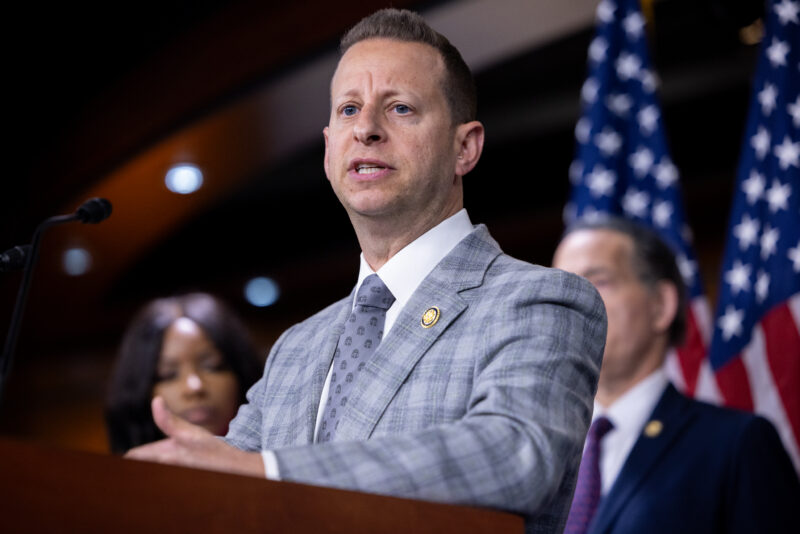
In a change of tone, Sen. Lindsey Graham (R-SC) said on Wednesday that Syrian President Ahmad al-Sharaa deserves a chance to rebuild the war-torn country, arguing that his efforts to curb Iran’s influence in Syria should prompt Israel to reassess its approach to the new government.
Graham, who has long been skeptical of Syria’s new government, released a statement at the conclusion of his visit to Ankara, Turkey, this week for the NATO summit, where he took part in several bipartisan meetings between U.S. lawmakers and world leaders including al-Sharaa.
The South Carolina senator said he left his meeting with the Syrian president feeling encouraged, saying the Syrian leader has earned U.S. backing as he seeks to rebuild the war ravaged country.
Graham’s latest statement came hours after President Donald Trump notified Congress that he’s moving to remove Syria from the State Sponsor of Terrorism list, which the president had been publicly considering.
“I believe it is in America’s national security interest to work with him and give him a chance to see if he can put together a lasting, functioning government in Syria,” Graham said of al-Sharaa. “A fractured Syria, on the other hand, plays into the hands of our enemies. I think President al-Sharaa presents the best chance for a functioning, united Syria over time.”
“I very much understand Israel’s concerns, but President al-Sharaa has been a true thorn in the side of Iran. He has dramatically reduced Iran’s influence in Syria, which is a giant step forward for the Syrian people and a blow to Iran,” he continued. “It is time to recognize what he’s done regarding Iran and give him the capability to improve the lives of the Syrian people, realizing that the status quo is unacceptable for all.”
The comments mark a notable shift for the South Carolina senator, who has been among the most vocal skeptics of the new Syrian government since it took power in March 2025. Graham had tried to convince the Trump administration to place binding conditions on the repeal of Caesar Act sanctions on Syria last year, which the White House and Syrian diaspora groups successfully pushed congressional Republicans to lift unconditionally.
Graham vowed to “do everything in my power to revive the Caesar Act sanctions, making them even more bone crushing” in response to the Syrian government’s military offensive in January against territory held by the Kurdish-led Syrian Democratic Forces. He introduced legislation that month imposing sanctions on any government or group involved in targeting Kurdish forces in Syria.
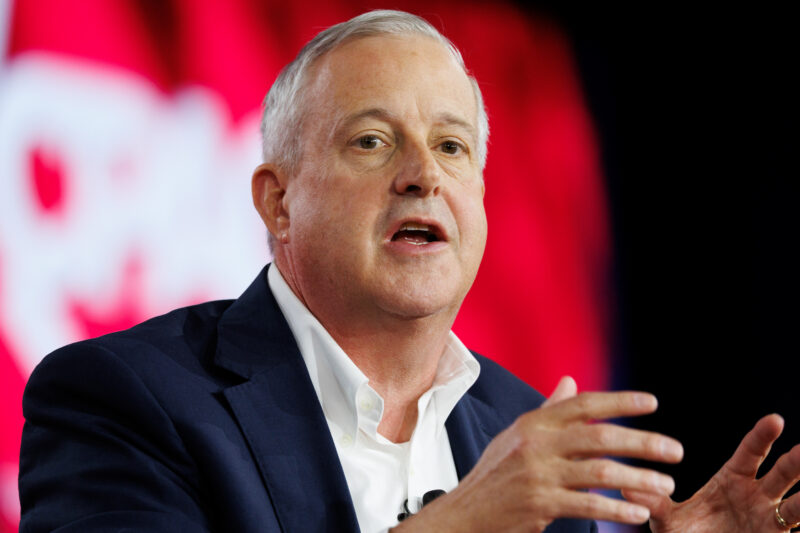
Former Israeli Ambassador to the U.S. Michael Herzog told JI, 'President Trump, who has been a hero to many Israelis, is now openly criticized from within the Israeli government, including Netanyahu's close circle.'

Jack GUEZ / AFP via Getty Images
A billboard depicting an image of President Donald Trump with a message thanking him, is displayed on the side of a building in the Israeli coastal city of Tel Aviv on March 12, 2026.
The long love affair between Israelis and President Donald Trump, on the rocks over the last few weeks as the U.S. and Iran hammered out an end to the war, appears to be over, with humiliations mounting for Jerusalem. “I call all the shots,” not Israeli Prime Minister Benjamin Netanyahu, Trump said earlier this month. More recently, the Israeli leader’s bombing campaign in Beirut was “vicious,” Trump said. And perhaps most humiliating of all, Trump suggested that Syrian President Ahmad al-Sharaa could better take care of Hezbollah than the IDF.
The Israeli public — the spurned lover who once hailed the U.S. president with billboards hung in the center of Tel Aviv reading “Thank you God & Donald Trump” — is not taking it well. Former Israeli Ambassador to the U.S. Michael Herzog told JI, “President Trump, who has been a hero to many Israelis, is now openly criticized from within the Israeli government, including Netanyahu’s close circle.”
And this criticism is not only expressed behind closed doors. Channel 14, the popular right-wing outlet that promotes Netanyahu, has been criticizing Trump resolutely, with some of its anchors publicly cursing Vice President JD Vance and the president’s close advisors, White House Special Envoy Steve Witkoff and Jared Kushner.
It was not always this way. For most of the time since Trump reentered the White House in January 2025, he has been popular in Israel, with polls consistently showing high ratings for the American president.
For Israelis, Trump is the one who brokered the hostage-release agreement with Hamas; Trump is the one who made the strikes in Iran and the bombing of the nuclear enrichment facilities in Fordow and Natanz a reality; and Trump is the one who established the Abraham Accords and is willing to expand them, giving Israelis the chance to sunbathe in the UAE, and perhaps in other countries in the Gulf in the near future. And although some won’t admit it, many Israelis also like his tendency to speak very bluntly, and crudely: a president born in Queens, full of Israeli chutzpah.
In recent weeks, the attitude toward Trump among the Israeli public, and the Israeli leadership, has radically and rapidly changed. But this process began even before the signing of the memorandum of understanding with Iran. Over the past few months, time and again, Netanyahu has tried to convince Trump to resume strikes on Iran, only to be rejected. A source familiar with the discourse between the two leaders described to JI a situation that has played out repeatedly since April: the Israeli prime minister explains why only the military option is the correct approach to Iran, while Trump listens but prefers the diplomatic path.
And then Trump, in his typical fashion, says that Netanyahu will do whatever the U.S. president tells him to do — which has some degree of truth — but is not a good look for a prime minister seeking reelection. Trump has repeatedly criticized Israeli policy in Lebanon and publicly reprimanded Netanyahu for not being responsible enough. When the U.S. president once again floated the possibility that al-Sharaa should handle Hezbollah, which has fired thousands of rockets and drones toward Israel and most recently killed four Israeli soldiers overnight Thursday, the criticism in Israel escalated.
Trump had previously suggested that the Syrians take on Hezbollah, as reported by Kann earlier this week, during an official meeting between the Israeli and Lebanese ambassadors in April, though those in attendance were unenthusiastic about the idea. To understand the Israeli approach toward Trump’s suggestion, one can look at what the chairman of the Knesset Foreign Affairs and Defense Committee, Likud MK Boaz Bismuth, posted on X: “President Trump, we don’t trust the terrorist Jolani, we have Golani,” referencing a well-known IDF combat infantry brigade.
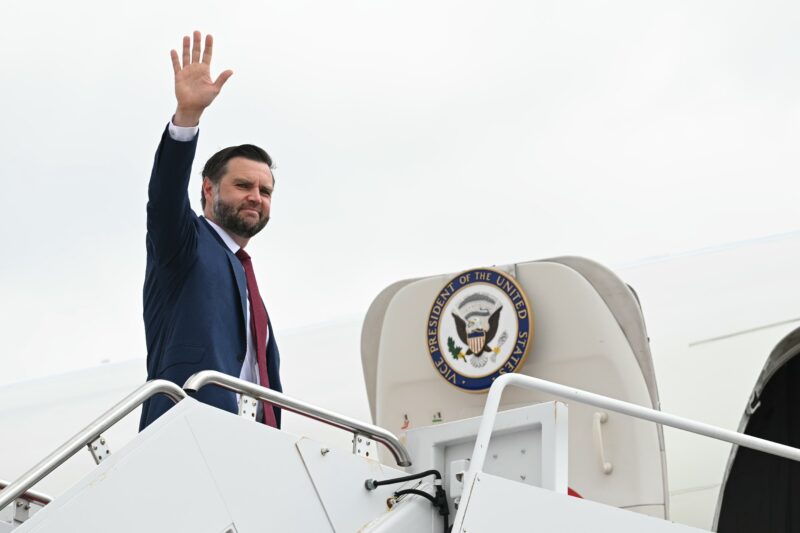
The opinion within the Trump administration has been made clear. “Trump is the only head of state in the entire world who is sympathetic to the nation of Israel at this moment and time,” Vance told reporters on Thursday. “If I was in the Cabinet of the Israeli government, I might not be attacking the only powerful ally that I have left in the entire world,” he said. “The problem for Israel is not Donald J. Trump. And anybody in Israel who thinks their biggest problem is the president of the U.S. needs to wake up and smell the reality of the situation that country is in.”
Yet now, after the agreement has been published, the criticism remains unchanged. An Israeli official told JI that the agreement raises several troubling signs, among them: the uncertainty over whether all enriched uranium will be removed from Iran, or only the high-level uranium; under the terms of the agreement, Iran, it appears, will be allowed to enrich uranium at a low level on its soil, meaning it can continue to operate centrifuges; and the issue of oversight is not explained.
“The second shocking thing here is the betrayal of the Iranian people. The second clause in the MOU agreement states that neither country will interfere in the internal affairs of the other. This means the Iranians can execute protesters, and nothing will be done to them,” the Israeli official said. “This entire war started because Trump said that ‘help is on the way,’ and that we would not allow tens of thousands of protesters to be shot and slaughtered. Beyond the concern that Iran will remain a nuclear threshold state, there is also a moral problem here.”
Avner Vilan, a former senior security official and Iran expert, also raised concerns about the agreement. “Iran is receiving a great deal of relief right now, but there is still a long way to go to reach an agreement in the nuclear field. This is an agreement that gives the murderous terror regime in Iran infinite immunity and incentives, allowing it to survive almost indefinitely, while recognizing the strategic significance of Hormuz,” he told JI.
Vilan also referred to the statements made by Trump in recent days that sparked concern within the Israeli defense establishment. Trump has legitimized Iran’s ballistic missile arsenal, and this, as Vilan points out, despite the fact that Israel defined this threat as an existential threat almost on par with the nuclear one. “This is more disturbing than the state of relations between Trump and Netanyahu, and of course, it doesn’t help that the president calls the State of Israel a ‘very small partner.’ At the beginning of the war, we were a ‘Model Ally.’ Not a small partner,” Vilan notes. “Israel’s point of strength for years was that the way to D.C. goes through Jerusalem. Today, that is no longer the case at all.”
“Israelis expected that the amazing military achievements the U.S. and Israel scored together would be translated into a strong, enduring diplomatic outcome focused on the nuclear issue,” says former Ambassador Herzog. “Instead, the U.S. opted out of the war with a general MOU that focuses on the Strait of Hormuz and the global economy, in return for releasing generous funds to Iran and postponing the core nuclear negotiations. There is little reason to believe that the Iranian regime will now agree to give up the nuclear option or change its orientation, especially as the U.S. military option is taken off the table.”
What looked like a year of celebrating blue, white and red cooperation has been fading more and more in recent weeks. The disappointment among senior Israeli officials is likely intensifying, due in part to the widespread praise that Trump has long received in Israel. It wasn’t for nothing that Trump said last month that he could run in the upcoming elections for prime minister in Israel and win. Even if he were on the ballot, with the thrill now gone, he wouldn’t stand a chance.
An attack by ISIS forces on U.S. servicemembers earlier this month prompted U.S. airstrikes and an entry ban on Syrian nationals, despite Trump’s embrace of Syria President Ahmad al-Sharaa
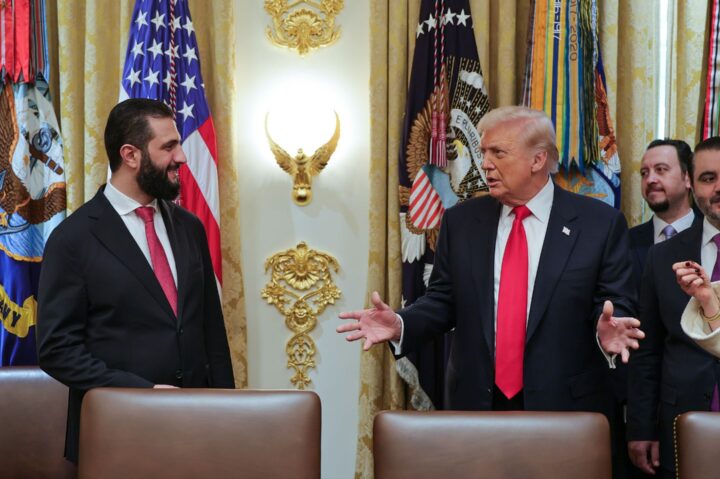
Syrian Presidency/Anadolu via Getty Images
President Donald Trump meets with Syrian President Ahmad al-Sharaa at the White House on Nov. 10, 2025.
Following the fall of the Assad regime in Syria, President Donald Trump has taken an unusually open approach toward Damascus, seeking to usher in a new era of stability and regional integration. But that strategy is beginning to face significant tests from jihadist elements embedded within Syrian President Ahmad al-Sharaa’s own military ranks.
In his second term, Trump has made unprecedented moves to normalize relations with Damascus and promote a new political order in Syria following the fall of the Assad regime last year. During a Middle East visit in May, Trump became the first American president in 25 years to meet with a Syrian leader and announced the lifting of U.S. sanctions on Syria that had been in place for more than a decade. On Nov. 10, Trump hosted al-Sharaa at the White House in a historic visit, during which Syria formally joined the U.S.-led anti-ISIS coalition. The administration has also sought to broker a security agreement between Syria and Israel.
Despite those efforts, experts warn that Trump’s push for stabilization is increasingly being challenged by the incorporation of jihadist-aligned figures into Syria’s emerging military and security apparatus.
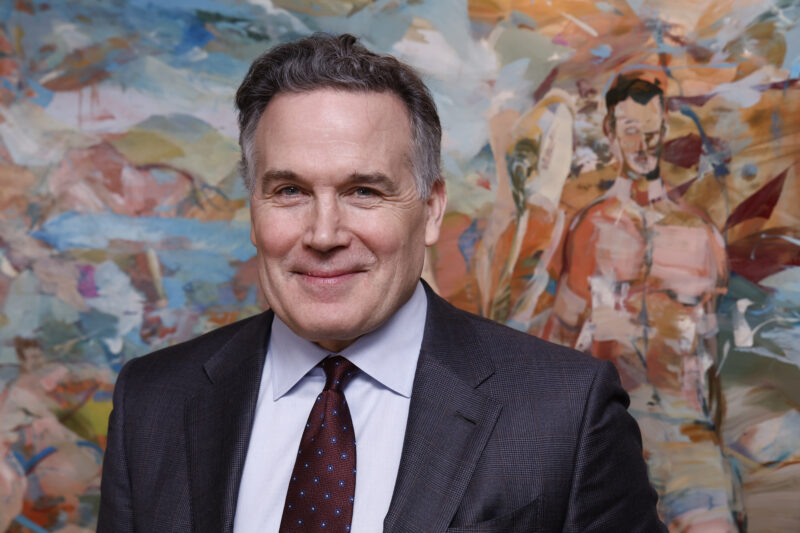
“What my colleagues and I have been warning this entire year is that al-Sharaa was putting his jihadist allies into the new Syrian military without apparent measures to prevent bad things from happening,” said David Adesnik, vice president of research at the Foundation for Defense of Democracies, who added that those with jihadist beliefs were integrated in “large groups.”
Those concerns were underscored earlier this month, when two U.S. soldiers and one civilian contractor were killed in Syria in an attack claimed by the Islamic State (ISIS) — the first U.S. casualties in the country since Assad’s fall in December 2024. Reports indicated the assailant was a lone gunman who had previously served in Syria’s Internal Security service and had extremist leanings.
“The ISIS attack that killed U.S. service members and a civilian should be a wakeup call that the terrorist group is still a threat, and will seize opportunities to reconstitute,” said Dana Stroul, director of research at The Washington Institute for Near East Policy. “So far, the Trump team has tested al-Sharaa’s forces by asking them to go after ISIS threats and the record is fairly positive. But the ‘Defeat ISIS mission’ is not complete.”
While ISIS remains active in parts of Syria — particularly in the country’s northeast, where U.S. forces have long maintained a presence — some experts told Jewish Insider that jihadist figures aligned with al-Sharaa in the new Syrian military are the more immediate challenge to stabilization efforts.
John Hannah, a senior fellow at the Jewish Institute for National Security of America, said al-Sharaa’s decision to formally align with the U.S.-led anti-ISIS coalition has not only provoked ISIS, but also energized jihadist elements within Syria’s ranks.
“ISIS has been relatively quiet since the collapse of the Assad regime. That’s clearly changed over the past couple of months,” Hannah said. “That decision to sign on with a posse led by the Americans against fellow Muslims served as a major provocation — not just to ISIS, but to the broader jihadist community, including fighters now inside Syria’s new formal security structures.”
“There have been deep feuds among jihadis, and al-Sharaa was on one side in a feud against the Islamic State,” said David Adesnik, vice president of research at the Foundation for Defense of Democracies. “Al-Sharaa is also invested very heavily in a better relationship with the United States. The last thing he needs is a guy in his own ranks killing Americans and potentially throwing all of this off.”
In a Truth Social post, Trump vowed “very serious retaliation” to the attack, writing that the Syrian president “is extremely angry and disturbed by this attack.” The U.S. conducted strikes on multiple ISIS targets in Syria last Friday.
Adesnik said Trump’s comments likely accurately “represent al-Sharaa’s views,” noting that ISIS has long been a rival to al-Sharaa within the jihadist ecosystem.
“There have been deep feuds among jihadis, and al-Sharaa was on one side in a feud against the Islamic State,” Adesnik said. “Al-Sharaa is also invested very heavily in a better relationship with the United States. The last thing he needs is a guy in his own ranks killing Americans and potentially throwing all of this off.”
Days after the attack, Trump signed an executive order barring Syrian nationals from entering the United States. The order “adds full restrictions and entry limitations” on Syria “based on recent analysis.”
Stroul said that while this is “not a significant change in U.S. policy toward Syria,” it will be “received poorly by Syrians.”
“On a positive note, the EO clearly acknowledged the work of the one-year-old government in Damascus to address its security challenges, in coordination with the U.S.,” said Stroul. “This suggests that once the U.S. has confidence in the security procedures of Damascus, it could reverse this decision.”
But signs of ideological extremism within Syria’s new military have continued to surface. Shortly before the attack, video surfaced of what appeared to be a group of Syrian army soldiers chanting a jihadist declaration of war against Israel during a military parade in Damascus.
“It should have been obvious quite a while back that there were large groups within the Syrian military that had precisely this belief,” Adesnik said. “It goes back to the fact that [Syria’s new leadership] has integrated a large number of al-Sharaa’s jihadi forces, or aligned jihadi forces, into the military. Being deeply anti-Israel to the point of supporting Hamas is sort of par for the course if you’re a jihadist.”
Adesnik added that such views are consistent with al-Sharaa’s past rhetoric on Israel. Pro-Israel critics of al-Sharaa have pointed to the Syrian leader’s past ties to Al-Qaida, a U.S.-designated Foreign Terrorist Organization and group he joined following the 2003 U.S. invasion of Iraq. While operating for the group as a foot soldier, al-Sharaa was captured by U.S. military forces and imprisoned. He later founded one of the terror group’s Syrian branches.
U.S. officials have played down concerns about Syrian intentions toward Israel. Tom Barrack, the U.S. ambassador to Turkey and special envoy to Syria, told reporters last week that Damascus is not interested in aggression against the Jewish state. But Israeli officials have taken a more pessimistic view, with Israeli Diaspora Affairs Minister Amichai Chikli writing on X that war with Syria is “inevitable.”
“The SDF have been America’s most reliable and effective partner in fighting ISIS for more than a decade,” John Hannah, a senior fellow at the Jewish Institute for National Security of America, said. “The logic of incorporating those SDF units wholesale into al-Sharaa’s army and then unleashing them with U.S. backing on the ungoverned spaces of Syria’s central desert where ISIS has found real sanctuary is compelling.”
The White House has aimed to broker a security agreement between Damascus and Jerusalem, in which the Jewish state would relinquish territory it holds within Syria. However, Israel has differed on this approach due to security concerns and a deep distrust of the leadership in Damascus. The two sides reportedly remain far apart on any potential agreement.
The U.S. currently maintains roughly 1,000 troops in Syria, supported by U.S. air power, and continues to work with the Kurdish-led Syrian Democratic Forces (SDF), a longtime American partner that has played a central role in combating ISIS. Hannah argued that integrating the SDF into Syria’s new security structures could help counteract jihadist and ISIS influence in the country.
“The SDF have been America’s most reliable and effective partner in fighting ISIS for more than a decade,” Hannah said. “The logic of incorporating those SDF units wholesale into al-Sharaa’s army and then unleashing them with U.S. backing on the ungoverned spaces of Syria’s central desert where ISIS has found real sanctuary is compelling.”
Adesnik echoed that view, calling SDF integration “definitely a good idea,” while cautioning that progress is likely to be slow.
“There was an interim agreement in March, but the odds of that happening in the next few weeks are very low,” Adesnik said. “As long as it doesn’t go completely off the rails, they’ll probably kick the can down the road.”
Despite the challenges to stabilization, Stroul said that U.S. policy toward Syria will likely “remain consistent,” and that she expects the Trump administration to continue embracing the new government in Damascus and al-Sharaa’s leadership.
“President Trump is about to sign into law the bipartisan NDAA which lifts the sweeping Caesar sanctions against Syria — this was requested by the Trump team and the al-Sharaa government to Congress,” said Stroul. “This is a critical step in sanctions relief that will allow foreign investment to flow into Syria without fear of U.S. punitive action, and is a major signal of support for the post-Assad Syria.”
Rabbi Yosef Hamra is the brother of the last chief rabbi of Syria
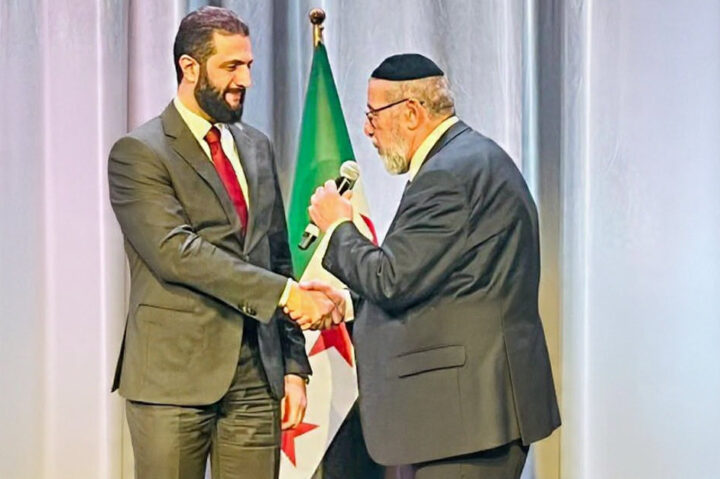
X/Jewish Heritage in Syria Foundation
Rabbi Yosef Hamra, the brother of the last chief rabbi of Syria, shakes hands with Syrian President Ahmad al-Sharaa during a meeting between al-Sharaa and a variety of Syrian diaspora activists on Sunday, Nov. 9th, 2025.
Rabbi Yosef Hamra, the brother of the last chief rabbi of Syria, who now lives in Brooklyn, was invited to offer a blessing to Syrian President Ahmad al-Sharaa during a meeting between al-Sharaa and a variety of Syrian diaspora activists in Washington on Sunday.
The moment produced a striking visual — a handshake between a kippah-wearing rabbi and the new president of Syria, a former Islamist terrorist affiliated with Al-Qaida and ISIS.
“Syrian Jews coming up and sitting down with the president — this is really history,” Henry Hamra, who leads the Jewish Heritage in Syria Foundation with his father, told Jewish Insider. “A lot of people from over here, from our community, were very, very emotional about it. It’s a beautiful thing, and my father was so touched and it was a great moment.”
Hamra said that al-Sharaa had thanked his father for the blessing and said that he would “love to see you again in Syria. And I think it’s happening very soon.”
He said that al-Sharaa had also, during the meeting, expressed a commitment to religious inclusion and pluralism.
“The Jewish community in Syria is exactly the same thing as every community,” Hamra said. “That’s what the president said — there’s no difference between the Syrian Jewish and the Syrian Christian and the Syrian Muslim. We’re all in this together … that’s what he was emphasizing also. And he spoke about all the religions — that everything is the same, the Kurds, the Alawites, everybody is the same.”
Forces aligned with al-Sharaa’s government have carried out massacres targeting the Alawite, Druze and other minority communities.
“We should get ourselves together and try to rebuild again [in] Syria,” Hamra said.
He said the members of Jewish Heritage in Syria also had the opportunity to discuss with both Syrian leaders and U.S. Syria envoy Tom Barrack the work they are doing to support sanctions relief and restore Jewish antiquities and religious sites in Syria. The Jewish group was invited to the meeting by the Syrian Foreign Ministry.
Hamra said that he had invited Barrack to tour Jewish sites in Syria, and Barrack expressed an interest, sharing his personal phone number with Hamra.
“I think the government [is] very, very open for us to start the process of building up, and that’s a great thing,” Hamra said.
Mouaz Moustafa, a Syrian-American activist who leads the Syrian Emergency Task Force, which has been working with JHS in advocating for the repeal of sanctions on Syria under the Caesar Act, said it was “inspirational” and moving to see the meeting between al-Sharaa and Rabbi Hamra.
Henry Hamra, who fled Syria in 1992 at age 15, also recently ran for the Syrian parliament on a platform focused on advocating for sanctions relief, though he was not successful.
Hamra reiterated to JI his desire to see the repeal of the Caesar Act sanctions.
“My goal is to help the Syrian people who suffered a lot, and I think they should have another chance to live in freedom again,” he said. Moustafa, Hamra and Hamra’s father have argued that any restoration work on Syria’s ancient synagogues will be impossible until all sanctions are lifted.
Opponents of the sanctions relief effort say that keeping the sanctions in place is necessary to maintain U.S. leverage and ensure accountability on American priorities like protecting minority groups from further attacks.
Mast, who had already expressed concerns about lifting the sanctions, met with Syrian President Ahmad al-Sharaa earlier this week, alongside other lawmakers

Kent Nishimura/Getty Images
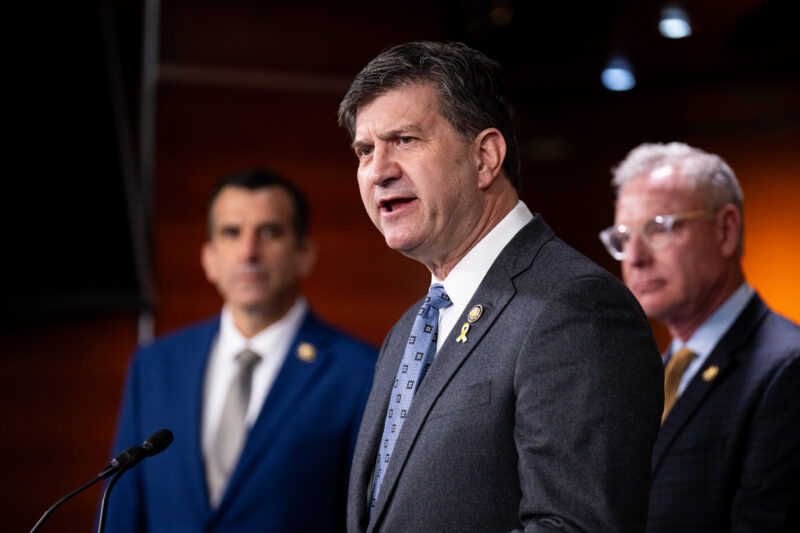
Rep. Brian Mast (R-FL) speaks during a news conference at the U.S. Capitol on September 9, 2024 in Washington, DC.
House Foreign Affairs Committee Chair Rep. Brian Mast (R-FL) told Jewish Insider that, after his meeting with Syrian President Ahmad al-Sharaa earlier this week, he’s going to “think about” his skeptical stance on the repeal of sanctions on Syria under the Caesar Civilian Protection Act.
Mast has previously expressed concerns about lifting the sanctions, a move which the Trump administration supports.
The Senate approved the repeal of the Caesar Act as part of its draft of the 2026 National Defense Authorization Act, but the House has not yet approved similar legislation. Mast would need to approve the Senate proposal for it to be included in the final defense bill. He told The Hill last week that “discussions on Caesar Repeal are ongoing but my concerns should be obvious to anyone following the situation in Syria.”
The House Financial Services Committee voted on a bipartisan basis in July for legislation conditioning the lifting of the sanctions on Syria meeting a series of human rights, anti-corruption and counterterrorism standards.
Asked if the meeting had changed his views on the issue, Mast said that he had read at length about al-Sharaa and his background — al-Sharaa is a former terrorist commander affiliated with ISIS and Al-Qaida — prior to the meeting. Mast is a military veteran who lost his legs to a terrorist bombing in Afghanistan.
“We had a lot of conversation, good conversation,” Mast said. “I asked him very pointedly [to] explain why we’re no longer his enemy. He gave a pretty good answer. Said he was hoping for a noble future for his people, one free of radicalism, fundamentalism … and ISIS. So it was a good answer.”
Opponents of the full repeal effort argue that sanctions should remain on the books to ensure Syrian compliance with U.S. priorities and human rights, particularly in light of the massacres of religious minority groups.
A bipartisan group of lawmakers that attended the Sunday dinner called the discussion ‘open,’ ‘moving’ and ‘constructive’
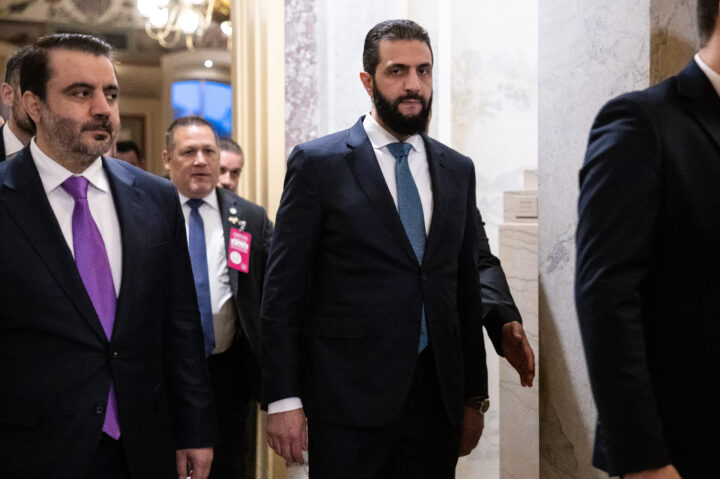
Francis Chung/POLITICO via AP Images
Syrian President Ahmed al-Sharaa departs a meeting in the Senate Foreign Relations Committee hearing room at the U.S. Capitol, Nov. 10, 2025.
Senators offered a positive readout from a dinner meeting with Syrian President Ahmad al-Sharaa on Sunday evening prior to al-Sharaa’s Monday summit at the White House with President Donald Trump.
Sen. Markwayne Mullin (R-OK) told Jewish Insider that al-Sharaa was “very charismatic” and “had a very open conversation” about his “checkered past” with senators. “I found it to be straightforward. I thought his answers were what we needed to hear, but I think he honestly believed it too,” Mullin said of the dinner.
“I was with him in Damascus in August. I led the first delegation there with [Rep.] Jason Smith (R-MO), [Rep.] Jimmy Panetta (D-CA) and [Sen.] Joni Ernst (R-IA). This was kind of more of the same, just building on that,” Mullin told JI. “When we talked in August, there were some issues that he brought up with sanctions towards the Assad regime that we need to work on. I’ve already been working on that, so we wanted to give him an update on it.”
The Oklahoma Republican said progress was being made on lifting the sanctions, something he attributed to the fact that the U.S. wants the al-Sharaa regime to “be successful.”
“He may not fit the mold of what you’d want as a leader in Syria. Actually, if you look at it, he’s probably what needs to be in Syria right now, because they’ve been at war for so long,” Mullin said. “As I told him, it’s trust — but verify. And so far, he’s making all the right moves. He’s trying to actually formalize relationships with Israel, that’s huge for that region. So, as he continues to move down this path, we want to continue to help him be successful.”
Sen. Elissa Slotkin (D-MI) told JI that, as a longtime Middle East and counterterrorism official, “it was quite a change to be sitting across the table from someone a decade ago I may have looked at in a very different light. But he was very impressive.”
She said that Michigan has a large Syrian-American community that supports efforts to lift sanctions and reopen Syria to the world, “so it was actually in some parts, even quite moving.” Slotkin said she also supports lifting sanctions to “do what I can to give them a shot,” and added that she wants to visit Syria.
“There were a number of people at the dinner, Democrats and Republicans, who have former service in the global war on terror,” Slotkin continued. “There was something really almost emotional about sitting across the table from someone who years ago would have been an adversary who now seems like he’s trying to really make Syria work. It was quite moving.”
Sen. Chris Coons (D-DE) echoed his colleagues’ comments about wanting to see al-Sharaa be successful in ushering Syria into a peaceful era.
“We need Syria to succeed. We want Syria to succeed. Peace between Syria and Israel is absolutely essential. Respect and support for the Syrian Democratic Forces is essential,” Coons told JI, referring to the Kurdish-led group that has been a key U.S. ally inside Syria.
The Delaware senator said that the Sunday evening discussion “was broadly a constructive conversation. For some of the members who were present, it was their first time meeting him. For most of us, it was our second or third conversation with him.”
“Having a pathway towards repealing the state sponsor of terrorism designation and repealing or downgrading the Caesar sanctions were key asks of his, and I believe the NDAA has a Risch-Shaheen provision that repeals the Caesar sanctions,” Coons added.
Sen. Richard Blumenthal (D-CT) called the meeting “encouraging and positive.”
“I think that the relationship with Israel is still challenging,” Blumenthal told JI. “I asked him very specifically about it, but on the whole, I think it’s a new chapter for the region that could be extremely promising.”
Ernst, who also attended the dinner, described it in a statement as “frank and constructive,” praising Trump for engaging with al-Sharaa.
“Today’s visit is an important step toward building trust, fostering dialogue, and uniting Syria’s diverse ethnic and religious communities,” Ernst said. “Under President Trump’s leadership, there is a real opportunity to advance peace in the Middle East and make the vision of a more stable and prosperous world a reality.”
Other lawmakers who attended the dinner were Reps. Brian Mast (R-FL), Marlin Stutzman (R-TN), Joe Wilson (R-SC) and Abe Hamadeh (R-AZ). Mast, according to Politico, was not planning to attend the meeting but happened to be at the same hotel where the meeting was occurring and was asked to join.
He offered a more tepid readout than many of the other attendees.
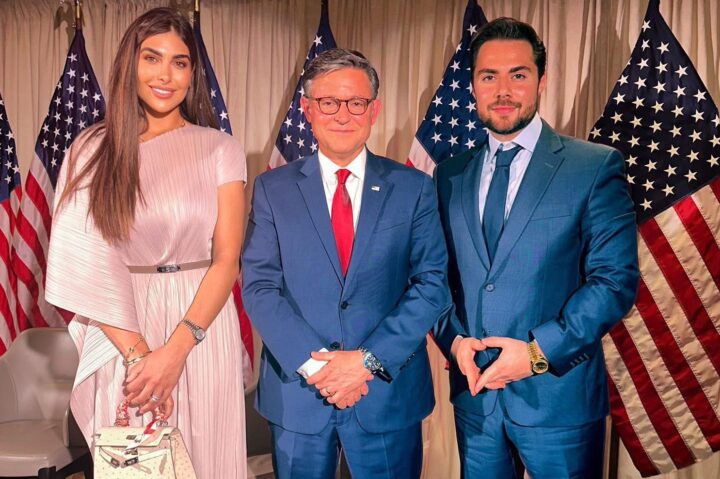
Jasmine Naamou and Tarek Naemo, a Florida couple advocating closer U.S.–Syria ties, have courted lawmakers including Sen. Jeanne Shaheen, Rep. Joe Wilson and even House Speaker Mike Johnson as they promote Damascus in D.C.
X/Syrian American Alliance for Peace & Prosperity
asmine Naamou and Tarek Naemo meet with House Speaker Mike Johnson (R-LA), June, 10, 2025
The fall of Bashar al-Assad’s brutal regime in Syria last December happened slowly, and then all at once — leaving a region reeling from whiplash and a country digging itself out from the rubble, now under the leadership of a former militia head who cut his teeth as an Al-Qaida terrorist.
This week, that leader, Syrian President Ahmad al-Sharaa, is coming to Washington, the first time a Syrian president has ever been invited to the White House.
Alongside al-Sharaa’s rise in Damascus has been a flurry of activity in Washington, as lawmakers tried to make sense of a country that one day was considered a rogue nation locked in protracted civil war and the next was viewed as a free state on the path to stability.
Two people in particular have become fixtures on Capitol Hill, pushing the message that Washington should lift sanctions on Damascus and build stronger ties with Syria: Jasmine Naamou and Tarek Naemo, a married couple who live in Daytona Beach, Fla., with a knack for social media self-promotion and a willingness to strike up a conversation with anyone.
On the eve of al-Sharaa’s meeting with President Donald Trump, the couple arranged a meeting with the Syrian leader and Rep. Brian Mast (R-FL), chair of the House Foreign Affairs Committee.
Naamou and Naemo first came to Capitol Hill this year as activists with the Syrian American Alliance for Peace and Prosperity, a nonprofit that emerged early this year to advocate for closer ties between the U.S. and Syria, though Naamou said she doesn’t work directly with them anymore. The organization arranged meetings for Syria’s foreign minister in New York this year, and in April it brought two members of Congress — Reps. Cory Mills (R-FL) and Marlin Stutzman (R-IN) — to Syria for the first visit by U.S. officials in years. Naamou and Naemo were on the trip with them.

Mills and Stutzman’s visit preceded a more senior delegation, with Sen. Jeanne Shaheen (D-NH), the top Democrat on the Senate Foreign Relations Committee, and Rep. Joe Wilson (R-SC), who has held several senior foreign policy roles, visiting the country together.
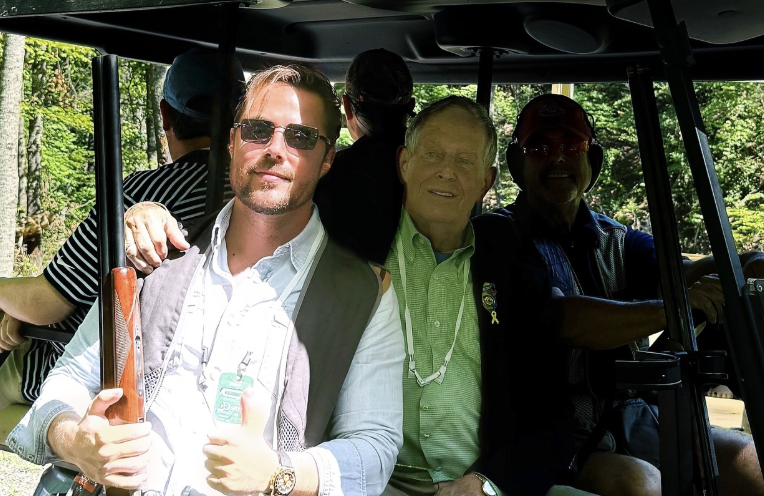
All of those lawmakers have met with either Naamou or Naemo this year, documented with slick photos shared on the couple’s Instagram accounts. Naamou has 319,000 followers, and a pinned photo with House Speaker Mike Johnson (R-LA); Naemo has 2.2 million followers and flaunts photos with the Saudi investment minister and Turkey’s ambassador to Syria — plus an image of him holding a rifle and sitting on a golf cart with Wilson. He refers to Wilson as “my dearest friend.”
Naamou spoke to Jewish Insider on Friday ahead of al-Sharaa’s visit to preview what she hopes the Syrian leader will discuss with Trump, with normalization with Israel high on the list.
“We want regional stability. Israel’s a neighbor. They’re a friend of America. We want them to be friends of Syria. We want to normalize relations,” said Naamou, who was driving to the airport, bound for Washington to be there for al-Sharaa’s visit. She also expressed hope for a U.S. security presence in Syria: “I believe they’re moving in the right direction of getting that security agreement in place. From what I’ve heard, they are in discussions of having a U.S. air base in Damascus to help with those security discussions between Syria and Israel. So I really do see the steps moving in the right direction.”
Ahead of his visit, the United Nations lifted sanctions on al-Sharaa, a move that followed a similar executive order by Trump in June. “President Trump is committed to supporting a Syria that is stable, unified and at peace with itself and its neighbors,” the White House said at the time.
Naamou and her husband both work in real estate in central Florida, though they also have ties to a Saudi sovereign wealth fund, according to Intelligence Online, a publication focused on diplomacy. Naamou said investment is a focus of their advocacy to American officials.
“They’re also going to have discussions on reintegrating investments in Syria because President Trump, when he went over to Saudi Arabia on his Middle East trip, he had announced the whole cessation of sanctions,” said Naamou.

Florida oceanside city become such fixtures on Capitol Hill? Naamou, who is 30, dates her own advocacy to her college days at the University of Florida, where she studied international relations and political science because of what was happening in Syria. She said the political relationships started back home in Florida, too.
“I live in Volusia County, and it’s a relatively small county, and everyone kind of knows each other,” she said. “You just go to events, and you meet people, and things happen, and you discuss things, and then you find things in common.”
They’ve also met with Reps. Byron Donalds (R-FL), who is running for governor of Florida; Anna Paulina Luna (R-FL); Maxine Waters (D-CA) and Abe Hamadeh (R-AZ), who is the child of Syrian immigrants.
“I see huge bipartisan support now,” Naamou said. “We like to term Syria as a swing state. Syria is multi-layered. Syria is one of the only countries in the Middle East that is so complex. You have all three Abrahamic religions present in Syria. You have all different types of ethnicities present. And so Syria is very key in the region, because it can be swung either way.”
“Either way,” in this case, means West or East — bringing Syria into the U.S.-led Western world, or into the Russia-Iran-China orbit.
“They want the U.S., and they want to acclimate here with our values,” said Naamou, who was born in Michigan to a Syrian father. She described the rapid changes in Syria as a “snowball effect.”
“I’ve never seen, when a regime has fallen, such a fast paced amount of change happen in such a short period of time,” said Naamou. She wants to see it continue: all sanctions lifted, American investment, closer ties.
“I’m hoping that we see a larger acceptance of Syria in general,” she said. “I’m hoping that we’re able to somehow, in any way, reshape the narrative into a positive light.”
Ernst called Qatar ‘a partner nation who has been working so heavily on securing peace and stability in the Middle East’ in reference to Israel’s strike in Doha
AJC/Martin H. Simon
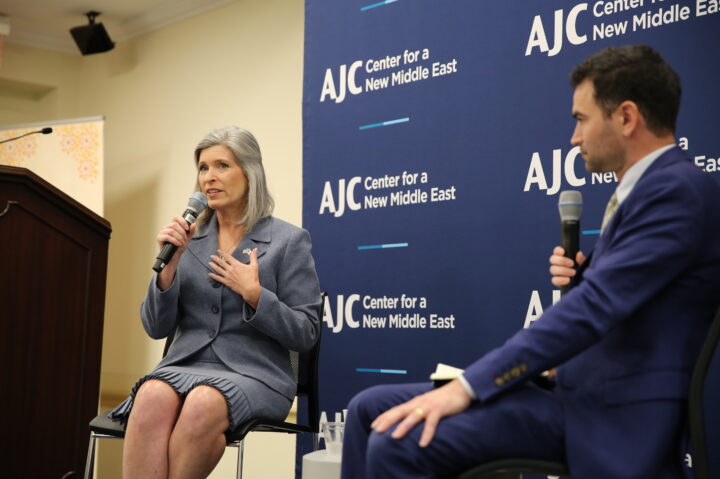
Sen. Joni Ernst (R-IA) speaks at AJC's Abraham Accords 5th Anniversary Commemoration on Capitol Hill in Washington on Sept. 10, 2025.
Sen. Joni Ernst (R-IA) said that she came away with optimism for the future of Syria from a meeting with Syrian President Ahmad al-Sharaa last month, while adding that she remains skeptical and emphasizing the need to “trust but verify.”
“This is an opportunity right now. Whereas before, we have been on opposing forces, now is the time when we can come together for the prosperity of the region and stability in Syria,” Ernst said at an American Jewish Committee event on Wednesday in Washington. “Yes, I’m skeptical, but I am optimistic.”
Ernst, a vocal supporter of Israel, joined a statement shortly after that meeting condemning Israel for carrying out strikes against Syrian government targets.
Ernst said that she’d had a striking exchange with al-Sharaa over their shared time in combat in Iraq — Ernst as a U.S. service member and al-Sharaa as a member of Al-Qaida.
“I told him I, as well, served in Iraq. He was kind of taken aback by that, but then we laughed,” Ernst said.
She said that she will give the new Syrian government the “benefit of the doubt, as long as they are earning that benefit.” But, she continued, “The minute things start going south, we no longer support and we made that very clear to the president while we were on that visit.”
She said that the best way to ensure that Syria turns toward the West and to prevent encroachment by Iran, Russia, China and Turkey is to maintain a presence and influence with Syria’s leadership.
Ernst — who has been among the most strident critics of Qatar in the Senate and argued on multiple occasions that it is not doing enough to pressure Hamas to free the hostages — offered a cautious response to the Israeli strike on Hamas leaders in Doha.
“We understand that Israel is in a place where they have said Hamas will be destroyed, end of story. We support them on that effort,” Ernst said. “The problem is when you are striking a partner nation who has been working so heavily on securing peace and stability in the Middle East, and that country on this particular strike happened to be Qatar, so the president was disappointed in that. I did not feel that it furthered our relationship” with Qatar.
She emphasized that, though Qatar is hosting Hamas leadership, it also hosts the largest U.S. Air Force base in the Middle East.
Addressing isolationist voices on both political sides, the retiring Ernst emphasized that relationships globally matter, and that the U.S. must maintain them.
“If you don’t have a seat at the table, you are not able to shape and influence the outcome,” Ernst said. “So it is very important that the United States remain engaged around the globe. Now I would also say presence is power.”
Rep. Marlin Stutzman visited Syria last week as one of the first members of Congress to visit the country following the fall of the Assad regime

Rami Alsayed/NurPhoto via Getty Images
The President of the Syrian Arab Republic, Ahmad Al-Sharaa, delivers a speech at the People's Palace during the swearing-in ceremony of the new government, in Damascus, Syria, on March 29, 2025.
New Syrian President Ahmad al-Sharaa discussed last week his conditions for normalizing relations with Israel with Rep. Marlin Stutzman (R-IN), who was one of the first American lawmakers to visit the country since the overthrow of the Assad regime.
Al-Sharaa’s apparent openness to normalization is a striking step given his history as a fighter and leader in Al-Qaida and ISIS, and the campaign of Israeli military strikes against Syria, motivated by concerns about al-Sharaa and other new Syrian leaders’ jihadist pasts, among other issues.
During a meeting at the presidential palace in Damascus, al-Sharaa told Stutzman that his concerns regarding Syria’s relationship with Israel are keeping Syria as a unified country and not allowing regions to be divided off, Israel’s military encroachment into Syria around the Golan Heights and the Israeli bombing campaign targeting Syrian military assets.
Al-Sharaa said any agreement with Israel would have to address those points, but Stutzman told Jewish Insider last week that “outside of those couple of items — and I’m sure there’s going to be other issues that he would bring to the table, but [al-Sharaa] was open to those conversations about normalizing relations with Israel.” Stutzman said he felt al-Sharaa was being honest and upfront about those conditions.
He said they did not specifically address the issue of whether al-Sharaa’s government is seeking to reclaim the Golan Heights, which Israel captured in the Six-Day War in 1967. Israel has floated the prospect of attempting to create and protect an autonomous zone for the Druze minority in southern Syria and strongly opposes any sanctions relief for the regime, as has been floated by lawmakers in the U.S.
The congressman noted that al-Sharaa used the word “Israel” on various occasions, rather than using euphemisms like “Zionist [entity]” preferred by Israel’s antagonists in the region, which Stutzman suggested was a positive sign.
The Indiana congressman said he believed al-Sharaa, who some in the United States and Israel — including members of the Trump administration — think still harbors jihadist aims, is sincere in his interest in reforming Syria and moving beyond Islamist extremism.
“He sees the prosperity of the West, it seems to me like he may want to be a part of that, and I think that’s something we should be open to,” Stutzman explained. “His past is dubious. We can’t ignore it. But at the same time, it seems like he’s stretching a hand to the West to have a dialogue.”
Stutzman called for a “trust-but-verify approach” to the new regime. He said that he and al-Sharaa had discussed the issue of lifting U.S. sanctions, which Stutzman said would ultimately be a decision best left to President Donald Trump and Secretary of State Marco Rubio.
“He wanted to keep Syria unified. That was a really top priority for him,” Stutzman said. “And respecting all human rights, religious rights, he seemed agreeable to that. Actions speak louder than words, and that’s what we have to watch, but I truly believe that we should be engaging in a conversation with him.”
“He’s already pushing Hezbollah and the Iranians out of the region, and he has a good relationship with Turkey for the most part, and is reaching out to the countries in the Middle East,” Stutzman added, saying that welcoming members of Congress into the country for an unrestricted visit was another positive sign.
Stutzman said he believes al-Sharaa is currently committed to keeping Iran, Russia and China out of Syria, but said that if al-Sharaa cannot find friends in the West, he will likely turn to American adversaries.
He said that al-Sharaa is highly interested in building economic relationships with Gulf states and making Syria peaceful and prosperous.
“He was very thoughtful and measured, but you could tell a couple of times he got excited, he was getting excited when I asked him about his vision for Syria economically, and he started talking about trade and commerce and tourism and the relationship with Qatar and Saudi Arabia and UAE, and the fact that they could be an energy resource to the West as well as trade routes,” Stutzman said.
Al-Sharaa pitched to Stutzman plans to build rail lines and trucking routes through Syria to the Gulf and the West to cut down shipping times, as well as a gas line to Europe that could help undermine Russia’s energy dominance.
The Indiana lawmaker noted that he was particularly struck by the fact that a Christian woman, Hind Kabawat, is a member of al-Sharaa’s Cabinet. She met with Stutzman and Rep. Cory Mills (R-FL), who also traveled to Syria, and took them to meet with other Christian leaders.
He said that he was also impressed by al-Sharaa’s opening of the presidential palace to the Syrian people.
Stutzman added that, in general, he saw a sense of optimism among the Syrian people, which “shows you how bad it was before.” He added, “their spirit is not broken,” drawing stark contrasts between his visit to Syria and the dejected people he saw on a visit to Russia in 1995 after the fall of the Soviet Union.
“There seemed to be a sense of hope and optimism,” he said. “The opportunities there are endless if President al-Sharaa takes advantage of it.”
He said that Christian leaders in Syria with whom he met were aware of but did not seem especially worried by al-Sharaa’s jihadist background. The Christian leaders noted that al-Sharaa’s father was an academic, that some of them had known al-Sharaa in their school days and that al-Sharaa, while a member of terrorist groups, had been fighting against the Assad regime.
The surprise trip came about through long relationships between Stutzman and members of the Syrian American community, including the leaders of the Syrian American advocacy group that organized the trip, who live in Indiana.
“I’ve learned a lot from them, and they asked me to be supportive of lifting sanctions,” Stutzman said. “I said, ‘It’s hard to just say that without knowing more and seeing what’s on the ground.’ And so the opportunity came to go over, and that’s why I went.”
Please log in if you already have a subscription, or subscribe to access the latest updates.
 Continue with Google
 Continue with Apple