
























UCLA banned SJP as a campus organization indefinitely in March 2025

Getty Images
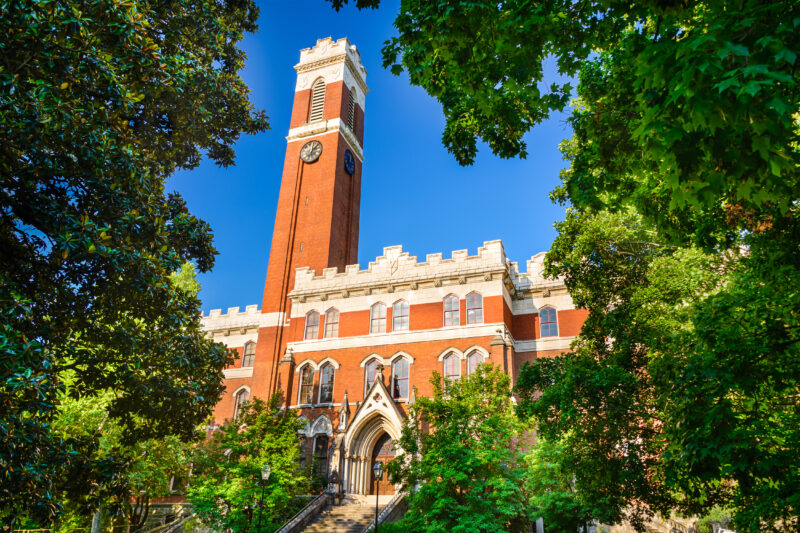
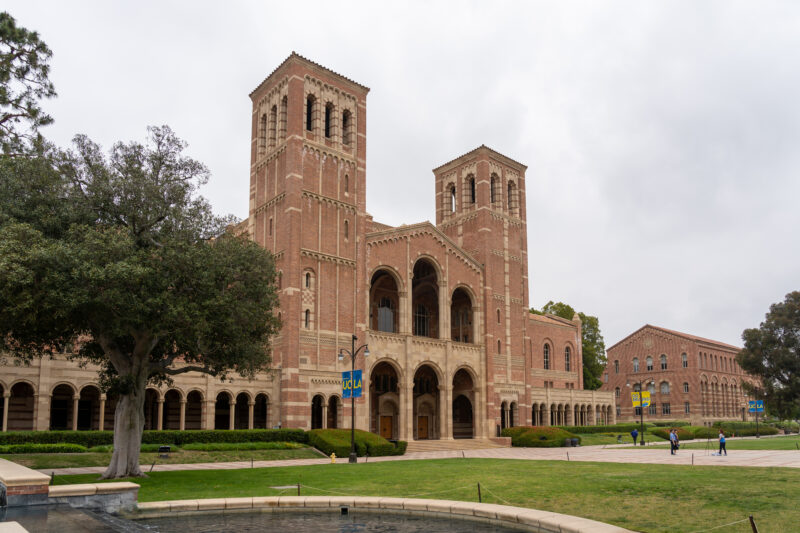
Royce Hall building on University of California (UCLA) campus in Los Angeles, California, USA - May 28, 2023.


 Add JewishInsider on Google
Despite being banned from campus, UCLA’s Students for Justice in Palestine chapter is actively lobbying candidates to influence upcoming student government elections, Jewish Insider has learned.
SJP contacted candidates and asked them to complete an attached questionnaire in order to secure the group’s endorsement, according to an email reviewed by JI. SJP is permitted to endorse in the race as an “external organization” since it is no longer officially recognized on campus, according to the election board’s guidelines.
“This is more proof that the anti-Jewish movement — even when banned from our campus — continues to break the rules to intimidate their fellow UCLA students,” UCLA Hillel’s executive director, Daniel Gold, told JI. “Student government should honor premier student leaders — and should be free of any influence by those banned for bad behavior.”
A UCLA student affairs spokesperson told JI, “Students for Justice in Palestine is not recognized as an official organization at UCLA nor receives any university resources. We want to make clear that candidates for student government may choose to ignore questions as they see fit.”
UCLA banned SJP as a campus organization indefinitely in March 2025 after the group led a demonstration outside the home of UC Regent Jay Sures, who is Jewish. SJP members left red handprints on Sures’ garage door, accusing him of having “blood on his hands” amid the Israel-Hamas war.
Last month, UCLA’s student government condemned a campus event featuring former Israeli hostage Omer Shem Tov, labeling the speaker selection as “selective platforming of narratives that obscure the broader reality of ongoing state violence” and “a troubling disregard for Palestinian life.”
Sures, who is also vice chairman of United Talent Agency, told JI at the time that UCLA’s student government was “shortsighted, antisemitic or both,” and called its members “lunatics” for condemning Shem Tov’s speech.
Efforts to delegitimize Hillels tell Jewish students ‘that their identity is suspect and that their safety and belonging is up to the vote of their fellow students,’ AJC’s Laura Shaw Frank said
JOSEPH PREZIOSO/AFP via Getty Images
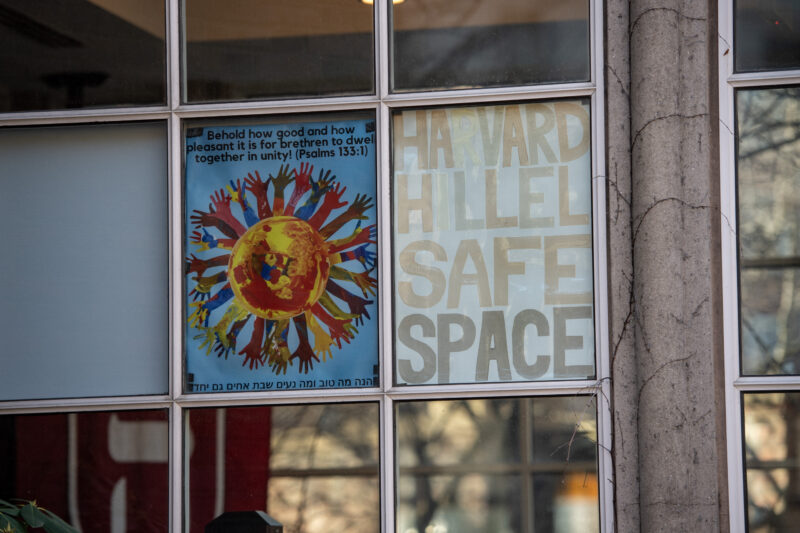
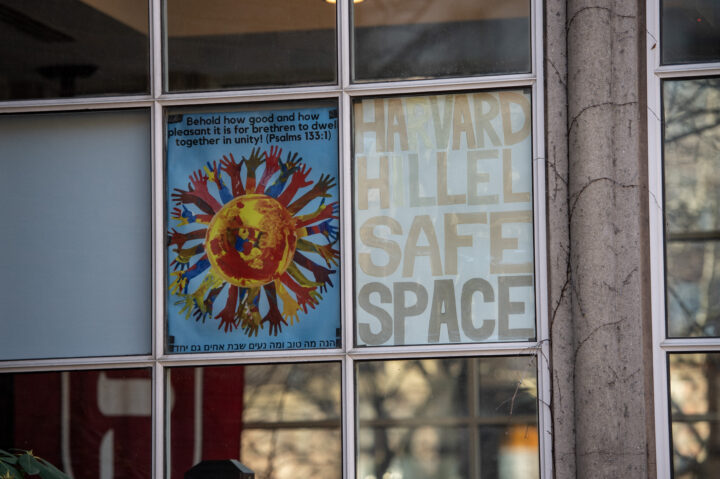
A sign calls the building a safe space at the Jewish student organization HILLEL society's building at Harvard University in Cambridge, Massachusetts on December 12, 2023.
In the aftermath of the New School student government’s vote to defund and sever ties with Hillel, Jewish leaders are warning that the latest front in campus anti-Israel activity is designed to delegitimize the world’s largest Jewish campus organization.
“Hillel is a space of Jewish belonging on campus. It is a place Jewish students need, and particularly need right now. For anyone to call into question a place that Jewish students go for their needs is beyond the pale. This absolutely crosses a red line,” Laura Shaw Frank, vice president of the American Jewish Committee Center for Education Advocacy, told Jewish Insider.
Last week, the New School’s student senate approved a resolution to strip funding and cease collaboration with Hillel, alleging that Hillel violated international law by running programming in Israel, including Birthright trips and volunteer opportunities with the Israel Defense Forces.
While the New School’s administration rejected the vote, the move marked the first time a student government has moved to officially cut ties with the organization that acts as a hub of campus life for Jewish students — although many have called on their universities to end partnerships with Hillel, particularly after the Oct. 7, 2023, terrorist attacks in Israel and the ensuing war in Gaza.
Now some in the Jewish community believe that student governments on other campuses will imitate the behavior.
“We’re very heartened by the New School making clear this is not going to happen and we’re pretty confident other university leaders would do the same,” said Shaw Frank. “At the same time, it has to be made clear that Hillel is one of the key places on campus that Jewish students go for support, Jewish identity and celebration, and this kind of message is that their community spaces are conditional, that their identity is suspect and that their safety and belonging is up to the vote of their fellow students.”
“None of those things are acceptable, so we will be doing everything in our power to ensure that any kind of trend in this direction is shut down. It’s completely unacceptable and antisemitic.”
Shira Goodman, the Anti-Defamation League’s vice president of advocacy, labeled the incident at the New School “an escalation,” voicing concern that campus organizations are targeted solely for supporting Israel.
“We’ve seen in the last two years calls to dissociate from Hillel; that was among some of the encampment demands and there have been protests blocking access to Hillel and Chabad events,” Goodman told JI. “We hadn’t seen a campus resolution like that so we’re certainly worried that it will become a bigger trend.”
Those concerns come as campus antisemitism and anti-Israel activity — which reached historic levels during Israel’s war with Hamas and has quieted down since a ceasefire was reached in the fall — appears to be ramping up again as the end of the academic year approaches.
The outgoing chair of University of Michigan’s faculty senate, who has a history of anti-Israel advocacy, attacked Israel at a commencement ceremony on Saturday in comments that deviated from his prepared remarks. The university apologized for his behavior.
Last month, UCLA’s student government condemned a campus event featuring former Israeli hostage Omer Shem Tov, labeling the speaker selection as “selective platforming of narratives that obscure the broader reality of ongoing state violence” and “a troubling disregard for Palestinian life.” UCLA said it stood by Hillel for hosting the event.
On Monday, the ADL sent a letter to around 150 campuses expressing concern about the resurgence of antisemitic harassment, including the recent reestablishment of encampments at Occidental College and Smith College. (Both were quickly dismantled.)
Goodman was skeptical that resolutions aimed at shutting down Hillel will be successful or that they could replace campus Boycott, Divestment and Sanctions efforts. While BDS initiatives had largely disappeared prior to Oct. 7, the months following the Hamas attack and the start of the war in Gaza sparked a resurgence in efforts to enact them on various campuses.
“Given that most of those resolutions have been unsuccessful in getting campuses to divest — although some have led to being able to present to investment committees — I think these will also be unsuccessful,” she said.
Still, both types of resolutions lead to a hostile campus climate for Jewish students, she said.
“These student government bodies are supposed to be places that deal with student organizations, funding, policies that impact students and they’re spending a lot of time on these issues that don’t impact students daily lives and are becoming increasingly hostile to the Jewish students on campus.”
Shaw Frank and Goodman both said that a silver lining of recent campus turmoil is that institutions are now better equipped to handle antisemitism than they were in 2024, when anti-Israel encampments first roiled campuses nationwide and university administrators floundered in shutting them down and negotiating with student protesters.
“I think with respect to the demonstrations that took place in 2024, it was very clear to campus administrators that their campuses were being shut down and they were unable to continue their work as institutions of learning,” said Shaw Frank. “Employing time, place and manner restrictions as we and other Jewish organizations called for largely solved the problem.”
She added that the current situation “is much smaller” than it was two years ago. “Most students are no longer active in this space on campus, even in places that were hotbeds of protests in 2024. The protests are much more anemic now. We know that students who see themselves as activists tend to choose places like student government. A small number of students have a disproportionately powerful impact,” said Shaw Frank.
Jewish leaders are looking to university administrations to take decisive action in protecting Jewish students.
“We want to make sure that they use the policies that they enacted, or decided to enforce, after 2024 and that they continue to do that, they continue to be clear that there are consequences for violating university policies and that all students can access their educational and extracurricular activities equally,” said Goodman.
Shaw Frank added, “This is a moment when university leadership must not only speak out very clearly to state this is unacceptable, but also ensure that their codes of conduct and guidelines are up to date and their departments of student life are educated about antisemitism.
“We urge universities to ensure that it is very clear to their student governments and student bodies what types of resolutions are OK and what are not OK.”
Hillel called the vote ‘deeply painful and antisemitic’; the New School said it would ensure the student government ‘acts within its actual purview’ moving forward

Getty Images
New York City street view with The New School modern building.
The New School rejected a student government vote on Saturday to defund and sever ties with the private New York City university’s Hillel chapter, a vote that prompted condemnation from local lawmakers and Jewish groups, while drawing praise from a controversial Muslim advocacy organization.
On Friday, the New School’s student senate approved a resolution to strip funding and cease collaboration with Hillel, the world’s largest Jewish student organization. In a 38-page report, the student organization alleged that Hillel violated international law by running programming in Israel, including Birthright trips and volunteer opportunities with the Israel Defense Forces.
The move marked the first time a student government has voted to cut ties with the organization that acts as a hub of campus life for Jewish students — although many have called on their universities to end partnerships with Hillel, particularly after the Oct. 7, 2023, terrorist attacks in Israel and the ensuing war in Gaza .
The New School Hillel called the vote “a deeply painful and antisemitic act, one that attempts to isolate Jewish students from a global community they have every right to belong to.”
Local elected officials also condemned the vote in statements on Saturday.
Rep. Ritchie Torres (D-NY) called “the attack on Hillel … an ominous sign of the times we live in.”
“This is hateful and vile antisemitism, plain and simple,” said Rep. Dan Goldman (D-NY). Meanwhile, CAIR-NY’s executive director, Afaf Nasher, applauded the move, saying in a statement Saturday, “We welcome The New School’s decision to suspend funding for Hillel as a necessary step toward accountability and adherence to international human rights principles.”
The New School resoundingly rejected the student senate’s vote, saying on Saturday that it “does not have the authority to determine the recognition, funding, eligibility, or official status of registered student organizations.”
The university also said it would take “immediate steps” to address the student senate’s action “and ensure it acts within its actual purview” going forward.
The Jewish Community Relations Council of New York said it “appreciate[s] the New School administration for swiftly rejecting the unauthorized student government vote targeting Hillel” and called the vote a crossing of “every red line.”
“We have been in direct contact with the local Hillel chapter to express our full support and unwavering solidarity,” the JCRC said in a statement. “We are also grateful for the partnership and leadership of our community allies at UJA-Federation of New York and appreciate the immediate outreach and strong solidarity expressed by Speaker Julie Menin.
“For many Jewish students, Hillel is the primary space on campus where they practice their faith, celebrate their culture, express their identity, build community, and feel safe at a time of skyrocketing antisemitism. Efforts to isolate or remove Hillel from campus life are direct attacks on Jewish identity and Jewish student life. That crosses every red line. No other community would accept being targeted or excluded in this way, and neither will the Jewish community.”
Plus, a publisher's nutty smear targeting Jews
According to reports, President (Andrew Harnik/Getty Images)
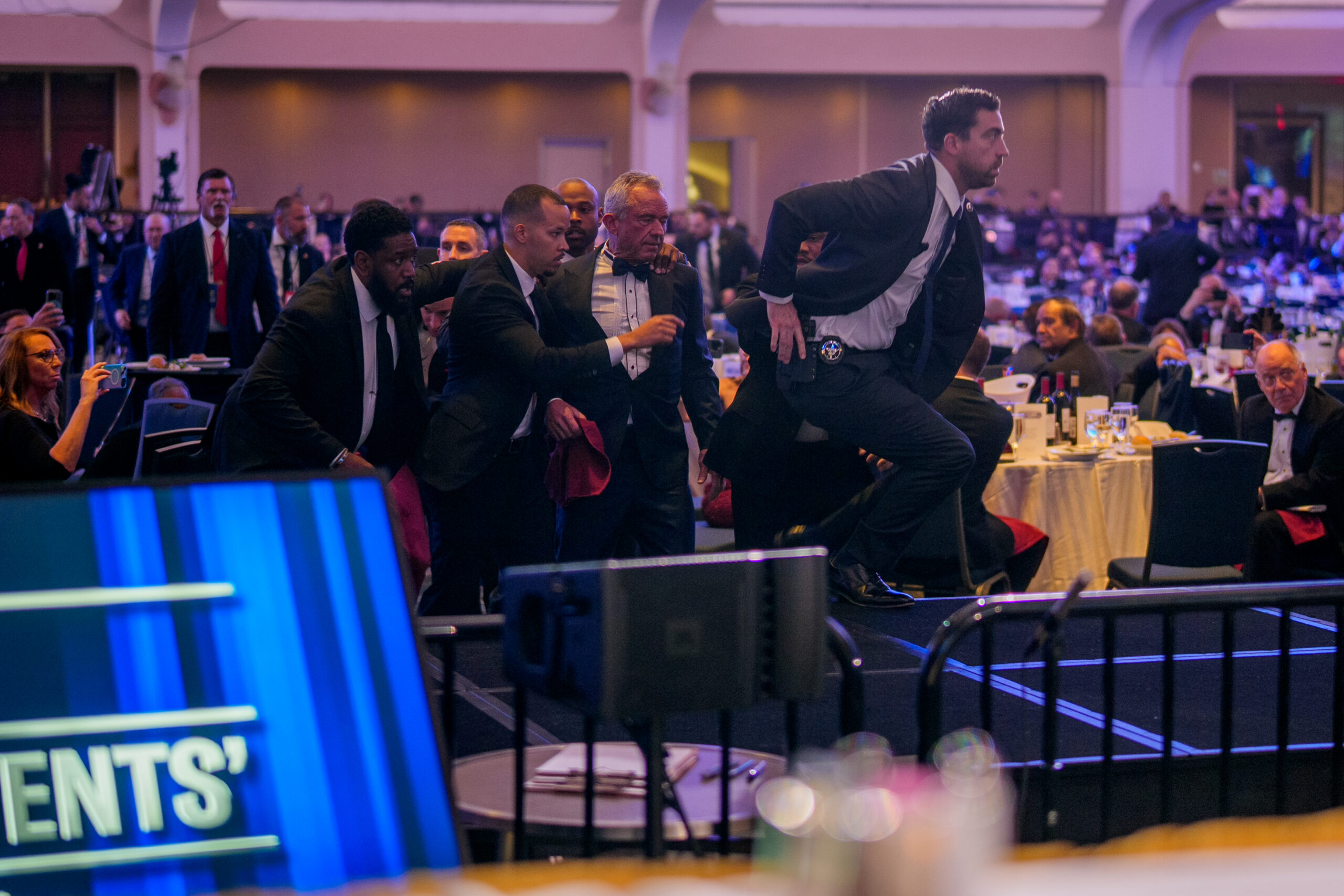
Health and Human Services Secretary Robert F. Kennedy Jr. (C) is taken out of the ballroom by security agents during a shooting incident at the annual White House Correspondents Association Dinner at the Washington Hilton on April 25, 2026 in Washington, DC.
👋 Good Monday morning!
In today’s Daily Kickoff, JI’s Marc Rod gives a first-person account from inside the chaos of the White House Correspondents’ Dinner after an assassination attempt on Trump administration officials. We report on the merger between former Israeli Prime Ministers Naftali Bennett and Yair Lapid as they seek to oust Benjamin Netanyahu, and talk to University of California regent Jay Sures about the UCLA student government’s recent condemnation of an event with a former Israeli hostage. Also in today’s Daily Kickoff: Daniel Shapero, Josh Kushner and Tzipi Hotovely.
Today’s Daily Kickoff was curated by JI Executive Editor Melissa Weiss and Israel Editor Tamara Zieve, with an assist from Danielle Cohen-Kanik. Have a tip? Email us here.
What We’re Watching
- King Charles III and Queen Camilla land in Washington today for their first state visit to the U.S. since assuming the throne. They’ll arrive to a city reeling from this weekend’s attempted attack on Trump administration officials at the White House Correspondents’ Dinner. More below from JI’s Marc Rod, who was attending the event at the Washington Hilton on Saturday night.
- The king and queen will be welcomed by President Donald Trump and First Lady Melania Trump, and will have afternoon tea before attending a White House garden party.
- Trump is expected to convene a Situation Room meeting — sans King Charles — on Iran as the countries remain at an impasse amid stalled talks. The meeting comes days after plans for White House Special Envoy Steve Witkoff and Jared Kushner to go to Islamabad for a second round of talks were scrapped, with Trump telling Fox News on Sunday, “If they want to talk, they can come to us or they can call us.” Tehran has reportedly offered to reopen the Strait of Hormuz and end the war without resolving its disputes with Washington over the future of the Iranian nuclear program.
- Iranian Foreign Minister Abbas Araghchi is in Moscow today, where he is slated to meet with Russian President Vladimir Putin.
- Israeli President Isaac Herzog is in Kazakhstan today, where he is slated to meet with President Qasym-Jomart Toqayev.
- Israel Tech Week kicks off today in Miami. Speakers include Daniel Flesch, Phil Goldfeder and Gabe Groisman.
What You Should Know
A QUICK WORD WITH JI’S MARC ROD
The White House Correspondents’ Dinner on Saturday night began normally enough — a bustle of reporters, administration officials and members of Congress among other A-listers streaming from the packed lobby of the Washington Hilton down into the basement ballroom.
White House Correspondents’ Association President Weija Jiang, a CBS News White House reporter, finished her introductory remarks, and the thousands of guests packed into the ballroom tucked into their salads.
Then, a loud, shattering bang rang out from the other side of the ballroom. Initially, I didn’t think anything of it — I thought someone had dropped a large tray of food (as President Donald Trump said later, he thought the same thing).
Videos and other accounts of the evening indicate that someone from the security staff shouted from the front of the room that guests should get down. I didn’t hear it. My first indication that something was wrong was when I started seeing other guests ducking under the tables and security officers drawing their guns.
I tried to duck under the tablecloth, but no luck — another occupant of the table was already underneath, and there was no room. My heart pounding, I was forced to do my best to stay low — but I was in the backmost row of tables, right by a door, sitting directly in the aisle.
If a shooter came into the ballroom from behind me, I was a sitting duck. I was completely helpless and exposed.
Two thoughts ran through my head. The main one: I’m getting married in six days. I can’t die now. The second: I can’t believe this is happening to me again. (For those readers who are newer to Jewish Insider — I was also on scene for the Jan. 6, 2021, attack on the U.S. Capitol.)
JOINING FORCES
Naftali Bennett, Yair Lapid announce Knesset run ‘Together’
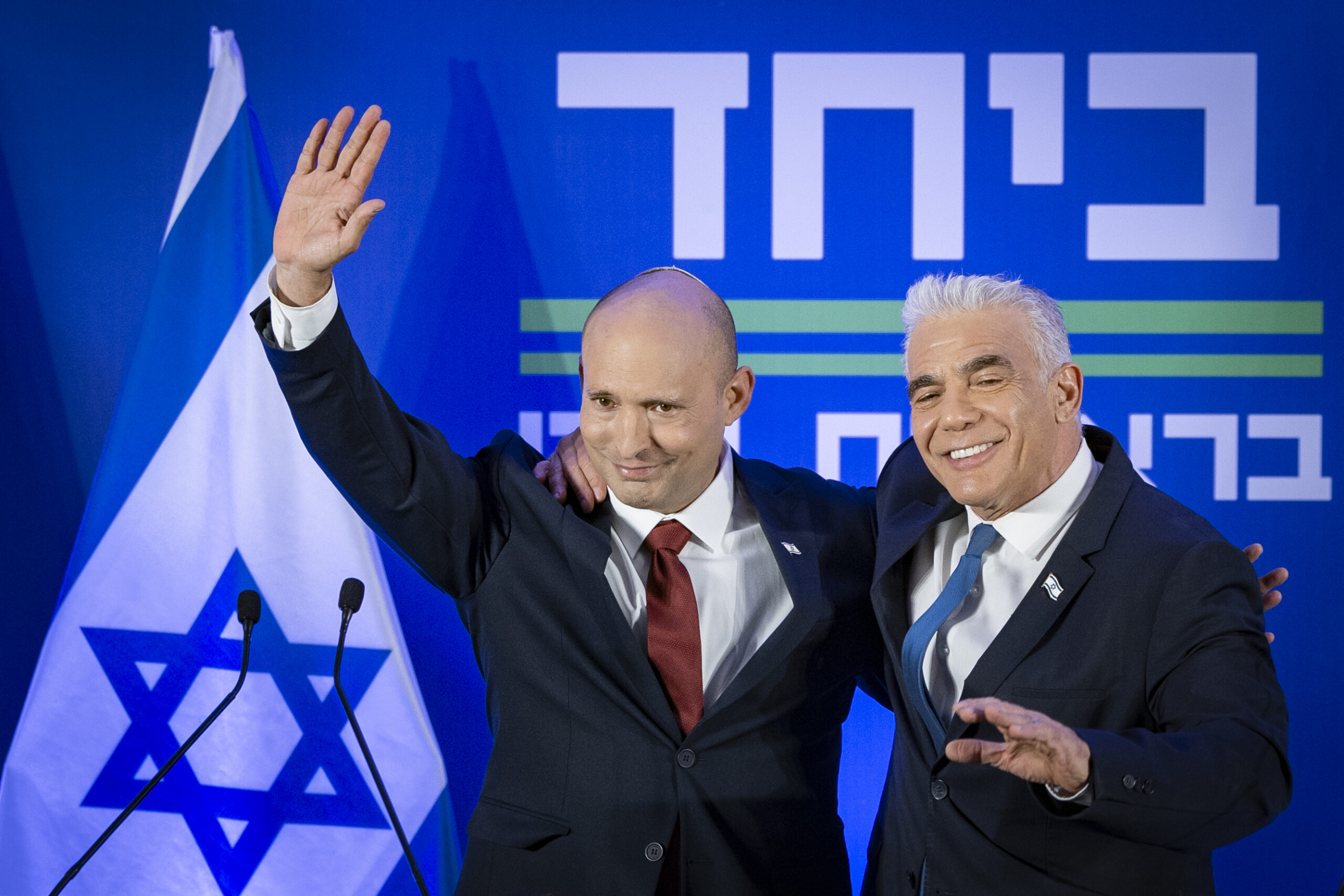
Former Israeli Prime Ministers Naftali Bennett and Yair Lapid will run in this year’s Knesset election as a joint party called “Together,” led by Bennett, they announced on Sunday. The move comes as the bloc of Zionist parties running against Prime Minister Benjamin Netanyahu’s bloc has recently polled higher than the parties in Netanyahu’s coalition, but with fewer than the 61-seat majority needed to form a government, Jewish Insider’s Lahav Harkov reports.
Behind the scenes: Sources close to both party leaders told JI that they began discussing a joint run a week ago, and reached the final decision on Saturday night. Bennett will lead the party after having a consistently stronger showing in polls in recent months. Bennett, a former IDF combat officer, described the merger as “the most Zionist and most patriotic thing we have ever done for our country.” Lapid said that the country “needs unity like air to breathe.”
Survey says: A poll conducted for Israel’s Walla news site on Monday found that Lapid and Bennett would lose seats if an election were held today, in comparison to previous polls when they were running separately.
EXCLUSIVE
UC Regent Jay Sures slams UCLA student body as ‘lunatics’ for condemning former Israeli hostage’s speech
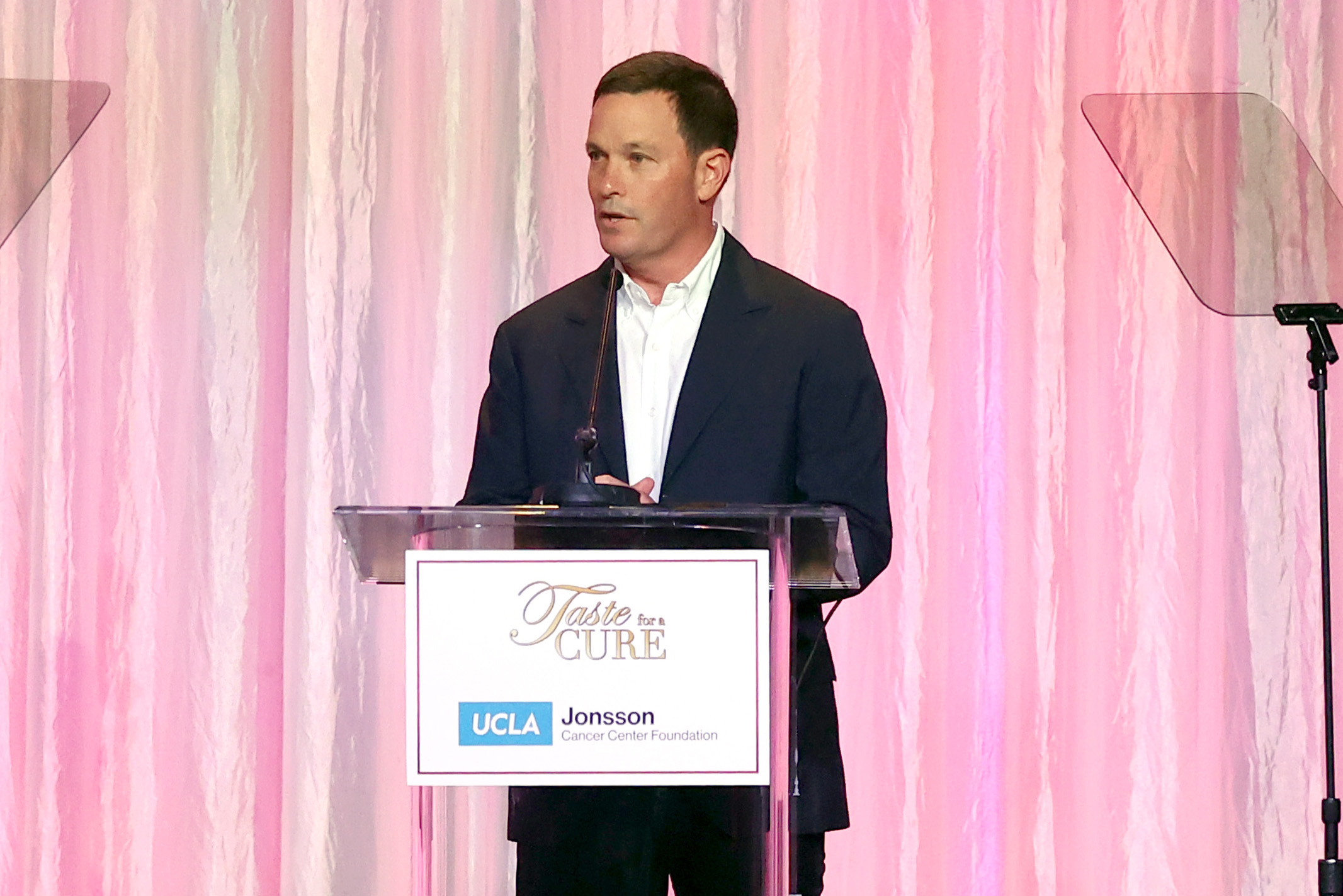
Jay Sures, vice chairman of United Talent Agency and a regent of the University of California system, slammed the members of UCLA’s Undergraduate Student Association who authored a letter condemning former Israeli hostage Omer Shem Tov’s recent campus appearance as “shortsighted, antisemitic or both,” in an interview with Jewish Insider’s Haley Cohen.
What he said: “Why would anybody send out a letter condemning a hostage who is a student who was held in captivity for over 500 days? You have to be a complete lunatic to sign on to that letter,” Sures told JI on Friday, shortly after he issued a letter to the body stating he was “disgusted and appalled” by its condemnation.
SHELL GAME
Publisher of Drop Site News pushes conspiracy theory about a California Jewish family-owned business
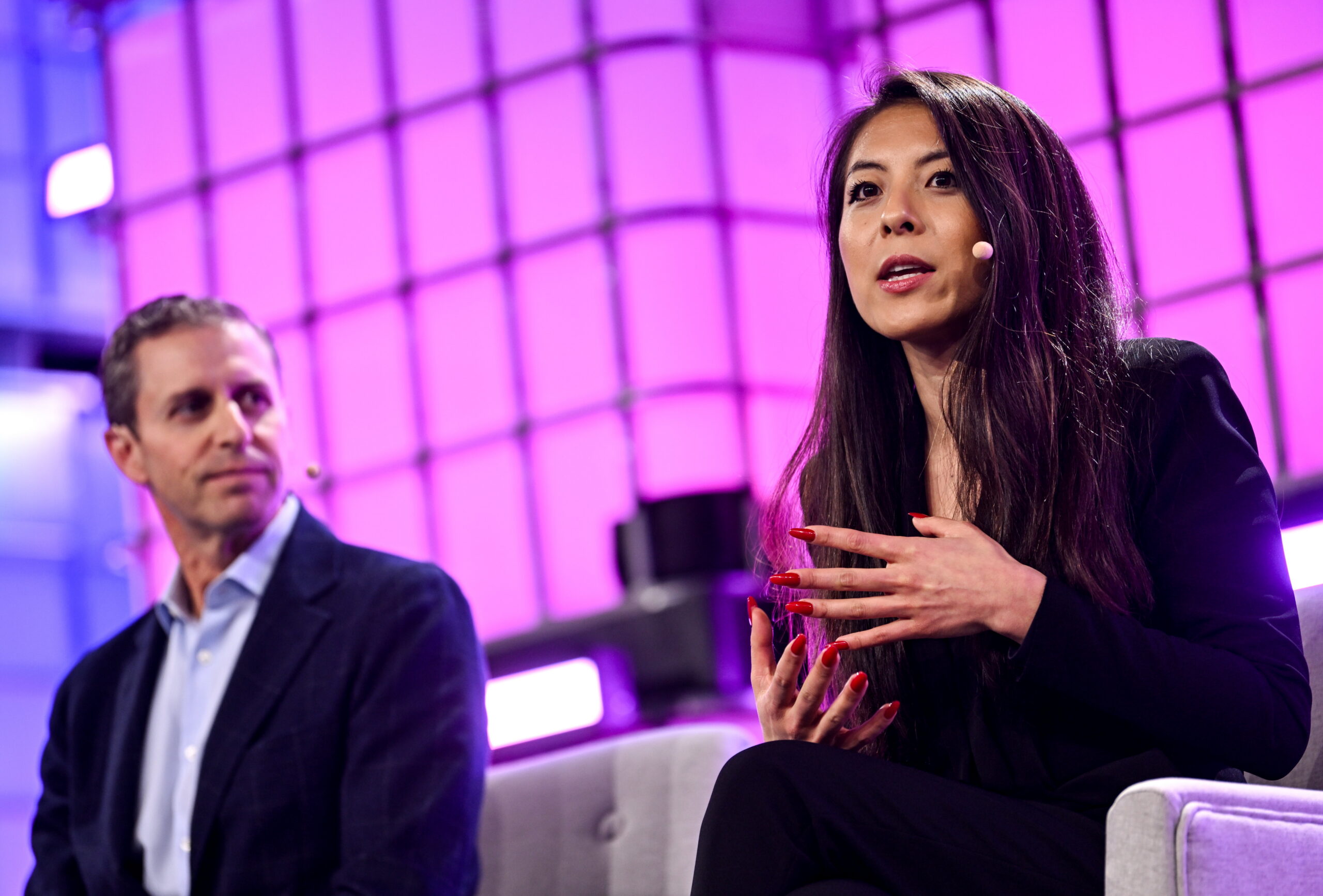
Nika Soon-Shiong, the publisher of Drop Site News who is also the daughter of Los Angeles Times owner Patrick Soon-Shiong, is circulating conspiracy theories seeking to tie a California-based Jewish couple behind a major pistachio processor to the recent U.S.-Israeli military strikes in Iran, Jewish Insider’s Matthew Kassel reports.
Singled out: In a recent social media post that drew more than 1 million views, Soon-Shiong, citing unverified online claims that the United States and Israel had targeted pistachio warehouses in Iran this month, singled out Stewart and Lynda Resnick, the billionaire owners of the Wonderful Company, which grows and processes a large percentage of California’s pistachios as well as other products including almonds and mandarin oranges.
ON THE TRAIL
Mamdani veto of educational buffer zone bill draws rebuke from Jewish groups
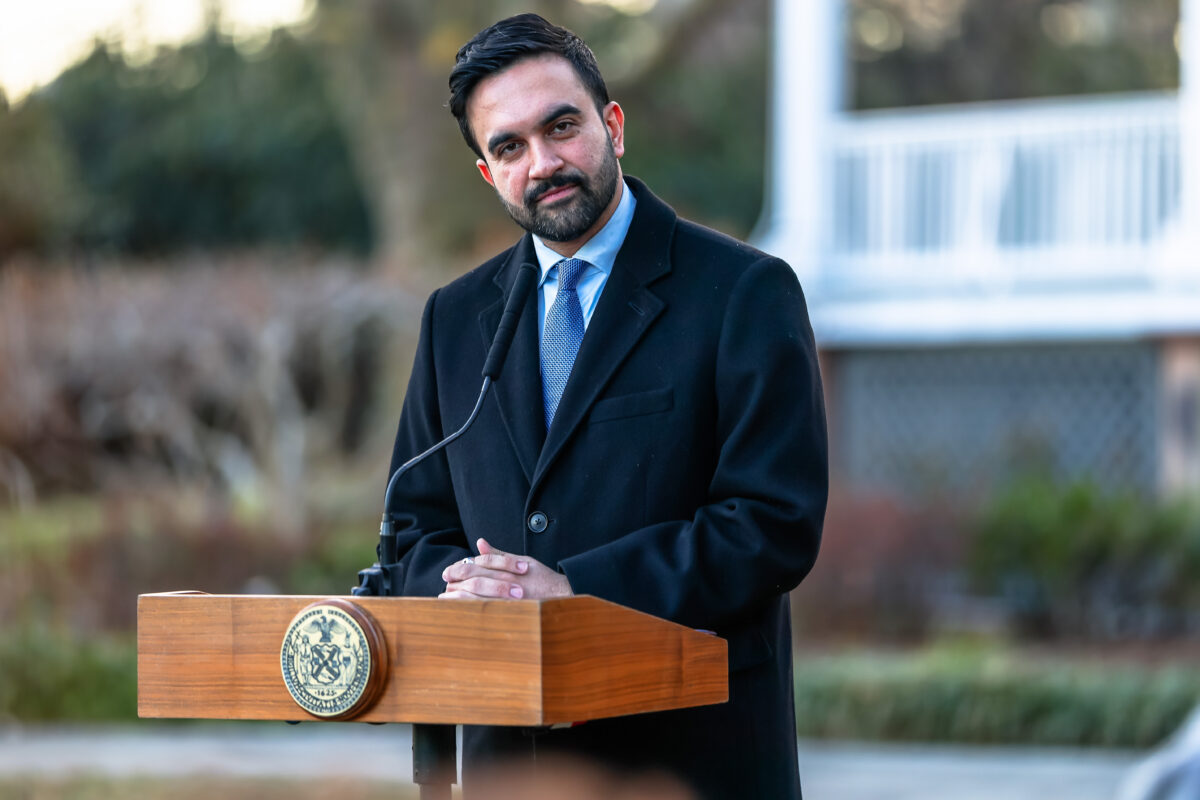
New York City Mayor Zohran Mamdani exercised his veto power for the first time since entering office on Friday to block a bill that would standardize NYPD policy around protests at educational institutions, Jewish Insider’s Will Bredderman reports.
What they said: “We are deeply disappointed by Mayor Mamdani’s decision,” said the UJA-Federation of New York, the Anti-Defamation League of New York/New Jersey, Jewish Community Relations Council of New York, American Jewish Committee New York, the Conference of Presidents of Major American Jewish Organizations, the New York Board of Rabbis, Orthodox Union, The Rabbinical Assembly, StandWithUs and Teach NYS, in a rare united response. “This veto is a profound failure of City Hall to demonstrate to all New Yorkers that our safety is a priority.”
STAYING PUT
Virginia Del. Sam Rasoul, who faced backlash over anti-Israel rhetoric, won’t run for Congress
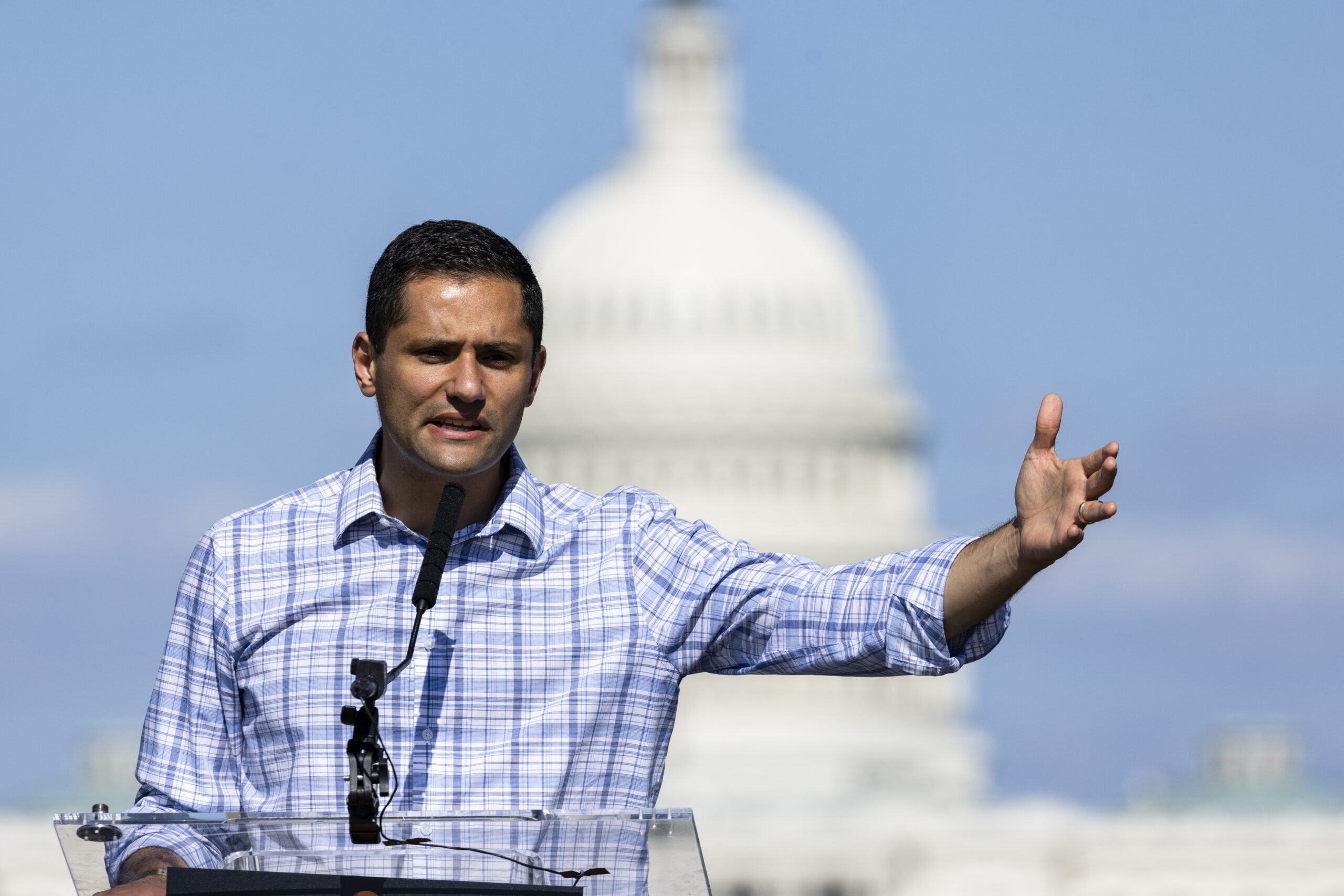
A Virginia state lawmaker with a history of inflammatory anti-Israel rhetoric who had been exploring a congressional run announced on Friday that he would instead remain in the state’s House of Delegates. Sam Rasoul, a Roanoke Democrat who is the son of Palestinian immigrants, said he would hold onto his seat in the state Legislature to continue focusing on his work chairing the Education Committee, a role that has garnered concern from the state’s Jewish community due to his heated comments, Jewish Insider’s Gabby Deutch reports.
Zoom out: The decision comes days after Virginia voters approved a new congressional map that is likely to deliver four additional House seats to Democrats, prompting a reshuffling as politicians in the state opt to run — or not to run — for the newly drawn Democratic-friendly seats.
LINKEDIN LEADER
LinkedIn veteran Daniel Shapero tapped as new CEO
Microsoft, the parent company of LinkedIn, has tapped Daniel Shapero, the professional networking site’s current chief operating officer, as its next CEO, current chief executive Ryan Roslansky announced earlier this week, Jewish Insider’s Haley Cohen reports.
Announcement: Shapero, who has been serving as COO since 2021, wrote on the platform Wednesday, “Today, I’m taking on the role as CEO of Linkedin. I joined Linkedin in May 2008 as employee #300ish, and it’s easy to say that my time at the company has been one of the most meaningful experiences of my life.” The network has close to 1.5 billion users worldwide.
Worthy Reads
Riyadh’s Reluctance: Foreign Policy’s Steven Cook considers why Saudi Arabia is not playing a more central role in the U.S. and Israeli conflict with Iran. “This is not to suggest that Saudi Arabia should get into the fight, but it is revealing that a country that billed itself as a rising power and the most important country in the Middle East is betwixt and between when its neighborhood is burning down. The Saudis clearly have interests at stake, but rather than taking action, they have been issuing strongly worded statements while others, including their adversaries, are shaping the region. It seems that Riyadh would be better off taking concrete steps to protect its interests. What is the saying about it’s better to be at the table than be the meal?” [FP]
Feeding Israel to the Left: In his Substack “The Abrahamic Metacritique,” Hussein Aboubakr Mansour raises concerns about the willingness of Democratic leaders to shift leftward on issues related to Israel amid pressure from the activist left. “The establishment’s reasoning is basic strategic calculation: the left will not relent on Israel; a civil war inside the party over the Jewish state would destroy the coalition; therefore, the rational move is to concede this issue, preserve party unity, and proceed with the moderate agenda on everything else: affordability, climate, migration, AI, etc. Feed this one thing to the beast, and the beast will be satisfied. It is an intelligent calculation, a genius one, really, but it is also a catastrophic one, because it rests on a complete misapprehension of what is being conceded and to whom.” [AbrahamicMetacritique]
Battle Royal: For Fox News, presidential historian Tevi Troy does a deep dive into the history of visits to the U.S. from U.K. royals. “When [Queen Elizabeth II] visited Eisenhower in 1957, she helped smooth over tensions that had emerged between Britain and the U.S. as a result of the Suez Crisis. … And now, as King Charles embarks on his first visit to the U.S. in President Donald Trump’s second term, the U.S. and Britain are in the midst of a disagreement over the war with Iran. Charles is not a political ruler, but perhaps his visit, like his mother’s in 1957, can smooth over tensions and help maintain the special relationship America has long had with the United Kingdom.” [FoxNews]
Word on the Street
Axios reports that during the active conflict with Iran in March, Israel sent the United Arab Emirates an Iron Dome battery, interceptors and several dozen IDF troops to operate the missile-defense system; a senior Emirati official told Axios, “We are not going to forget it,” while a second official said, “It was a real eye-opening moment. To see who our real friends are”…
A new memo from the State Department acknowledges that the U.S.’ decision to launch Operation Epic Fury against Iran came — at least in part — at Israel’s request, Jewish Insider’s Gabby Deutch reports…
An 11-year-old Israeli girl who was critically wounded in an Iranian cluster bomb attack on her home in Bnei Brak earlier this month died of her injuries…
In an interview with The Wall Street Journal, Tucker Carlson suggested that he was given advance notice of the joint U.S.-Israel operation targeting Iran in late February, saying he received a text message at 10 p.m. ET on Feb. 27 — hours before the start of the operation — that read, “We’re going”; Carlson did not say who sent the message, acknowledging only that it was not President Donald Trump or Vice President JD Vance…
The WSJ notes that at the last meeting between Trump and Carlson, the president displayed a letter from evangelical leader Franklin Graham calling Carlson an antisemite…
The Treasury Department announced sanctions on a Chinese oil refinery and more than three dozen shipping firms and vessels tied to Iran’s oil export industry…
The New York Times examines the Trump administration’s “haphazard” approach to sanctions on Russia and Iran as Moscow and Tehran leverage their oil reserves amid a volatile market…
The Financial Times looks at the United Arab Emirates’ recent request that Pakistan repay $3.5 billion in loans, citing Islamabad’s deepening ties with Saudi Arabia and what the UAE “considers Pakistan’s meek response to Iranian attacks on the Gulf”…
UAE President Mohamed bin Zayed’s son-in-law Mohammed bin Hamad Al Nahyan and EDGE Group CEO Faisal Al Bannai — both of whom advise MBZ — visited Trump at Mar-a-Lago in Palm Beach, Fla., and made a swing through the U.S. to meet with SpaceX founder Elon Musk, Jared Kushner, investors Marc Andreessen and Ben Horowitz and defense firm Anduril, The Circuit’s Jonathan Ferziger reports…
Talks between the U.S. and Israel on the next 10-year memorandum of understanding are expected to begin next month, and will include Maj. Gen. (res.) Amir Baram, the director-general of Israel’s Defense Ministry, and Israeli Ambassador to the U.S. Michael Leiter representing Israel and Secretary of State Marco Rubio, U.S. Ambassador to Israel Mike Huckabee and State Department senior advisor Michael Needham…
Sen. Thom Tillis (R-NC) dropped his opposition to Kevin Warsh’s nomination to be chairman of the Federal Reserve, clearing the way for Warsh to assume the role when Jerome Powell’s term ends next month…
A federal judge in Texas halted the deportations of six family members of an Egyptian man who firebombed demonstrators, killing an elderly woman, at a Boulder, Colo., march last year raising awareness about the Israeli hostages in captivity in Gaza…
Thrive Capital founder Joshua Kushner announced on Friday the launch of Thrive Eternal, a capital holding company that will acquire a minority, non-controlling stake in the San Francisco Giants as its first major partnership, Jewish Insider’s Melissa Weiss reports…
The New York Times interviews Hollywood agent Michael Glantz, who went viral after being filmed eating his burrata salad at the White House Correspondents’ Dinner on Saturday as other guests around him ducked for cover…
Counterterrorism authorities investigating a string of antisemitic attacks in London arrested a 37-year-old man on suspicion of preparing to carry out terrorist acts; more than two dozen people have been arrested in connection with attacks against the country’s Jewish community since late March…
The Telegraph goes behind the scenes of the Met Police’s effort to track down arsonists targeting synagogues in the London area…
Israeli President Isaac Herzog is expected to push for a mediated resolution to reach a plea deal in Prime Minister Benjamin Netanyahu’s ongoing corruption trial, bucking pressure from the White House to pardon the prime minister…
Israel’s Cabinet signed off on the nomination of Michael Lotam to be the country’s first ambassador to Somaliland, four months after Jerusalem recognized the sovereignty of the East African nation…
The Cabinet also approved the appointment of former Israeli Ambassador to the U.K. Tzipi Hotovely to serve as the head of the National Public Diplomacy Directorate within the Prime Minister’s Office, which has been vacant for more than two years…
Israel launched a wide-scale, multimillion-dollar campaign – led by former Trump administration official Brad Parscale — to create pro-Israel web content that would be picked up by AI platforms…
Cardiologist Eugene Braunwald, who as a child fled Nazi Europe and went on to reshape how modern medicine approaches heart attacks, died at 96…
Diplomat Lionel Rosenblatt, whose experiences living in Haifa, Israel, as a child inspired him to join the U.S. Foreign Service and later lead Refugees International, died at 82…
Pic of the Day

Stars of the upcoming Keshet 12 series “Unconditional” attended the world premiere screening of the drama, about a mother-daughter pair stranded in Russia, ahead of its broadcast tonight, at the Cinematheque in Tel Aviv, Israel.
Birthdays
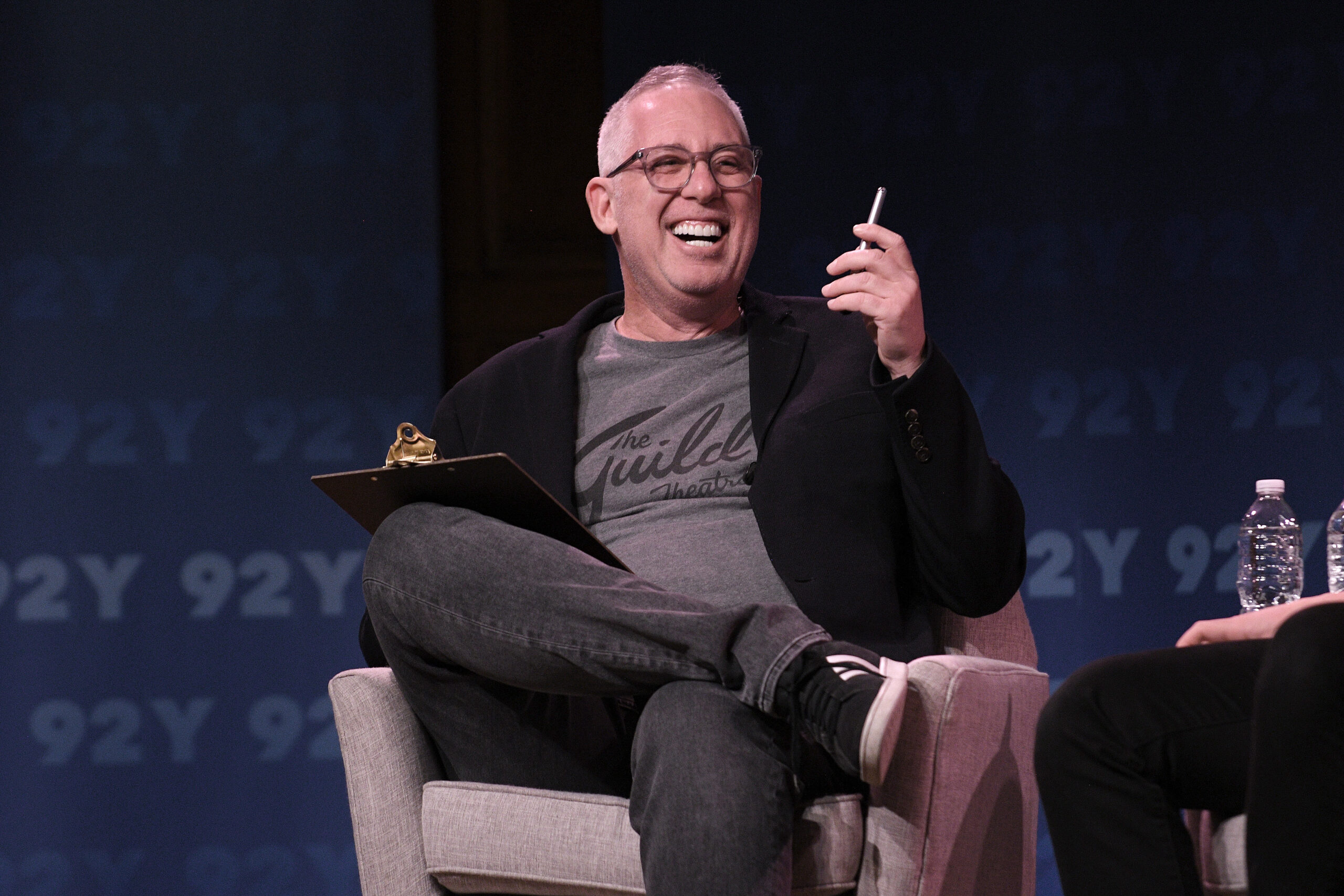
Showrunner, director, screenwriter and producer, Brian Koppelman turns 60…
Financial executive, he retired in 2014 as head of marketing for money manager Van Eck Global, Harvey Hirsch turns 85… Nonprofit executive who has managed the 92nd Street Y, the Robin Hood Foundation, the AT&T Foundation and Lincoln Center, Reynold Levy turns 81… U.S. senator (R-WV), Jim Justice turns 75… Physician and a former NASA astronaut, she is a veteran of three shuttle flights with more than 686 hours in space, Ellen Louise Shulman Baker, M.D., M.P.H. turns 73… Director-general of the Israel Antiquities Authority until 2020, he was previously a member of Knesset and deputy director of the Shin Bet, Yisrael Hasson turns 71… VP at Covington Fabric & Design, Donald Rifkin… Biologist and professor of pathology and genetics at Stanford University School of Medicine, he won the 2006 Nobel Prize in medicine, Andrew Zachary Fire turns 67… Co-founder of Casamigos Tequila and owner of restaurants, bars and lounges worldwide, Rande Gerber turns 64… Former member of the Knesset for the Shinui party, Yigal Yasinov turns 60… CEO of ZAM Asset Management, Elliot Mayerhoff… Founder and CEO of NYC-based Gotham Ghostwriters, he served as a senior advisor for Sen. Joseph Lieberman in his vice presidential and presidential campaigns, Daniel Gerstein turns 59… Israeli actor, entertainer and television host, Yitzhak “Aki” Avni turns 59… Attorney and journalist, she is a contributing editor at Newsweek and senior editor at Slate, Dahlia Lithwick turns 59… Author, political analyst and nationally syndicated op-ed columnist for The Washington Post, Dana Milbank turns 58… U.S. senator (D-NJ) since 2013, he was previously the mayor of Newark, Cory Booker turns 57… Israeli television and radio journalist and former member of the Knesset for the Jewish Home party, Yinon Magal turns 57… Professor of science writing at Massachusetts Institute of Technology, Seth Mnookin turns 54… Cinematographer and director, Rachel Morrison turns 48… Identical twin brothers, between the two of them they won 11 Israeli championships in the triathlon between 2001 and 2012, Dan and Ran Alterman both turn 46… Israeli screenwriter and producer, she has written numerous advertisements and screenplays, Savion Einstein turns 44… VP of AIPAC’s mid-Atlantic region, Leah Berry… Television and film actress, Ariel Geltman “Ari” Graynor turns 43… Basketball coach, analyst and writer, Benjamin Falk turns 38… Senior creative director at Trilogy Interactive, Jessica Ruby… Head of climate data at Watershed, Jonathan H. Glidden… Research fellow at Emory University law school, David Jonathan Benger… Entrepreneurial investor, Noah Swartz turns 33… Medical resident at UCLA Health, Amir Kashfi…
Shem Tov was kidnapped by Hamas from the Nova Music Festival on Oct. 7 and held captive in Gaza for 505 days
Getty Images
Royce Hall building on University of California (UCLA) campus in Los Angeles, California, USA - May 28, 2023.
UCLA’s student government condemned a recent campus event featuring former Israeli hostage Omer Shem Tov, labeling the speaker selection as “selective platforming of narratives that obscure the broader reality of ongoing state violence” and “a troubling disregard for Palestinian life.”
In an undated letter to UCLA administration, as well as the organizers of the event — UCLA Hillel and the UCLA Y&S Nazarian Center for Israel Studies — and “affiliated campus stakeholders,” the UCLA Undergraduate Students Association Council wrote that it “condemns” the April 14 event, held on Yom HaShoah, which was titled “505 Days in Captivity: Omer Shem Tov’s Testimony of Resilience.”
The council represents over 29,000 undergraduates at UCLA.
“While we affirm the humanity of all people impacted by violence, we reject the selective platforming of narratives that obscure the broader reality of ongoing state violence. Israel is currently continuing to carry out what has been widely identified by human rights advocates as a genocide in Gaza, while also expanding its illegal military campaign into Lebanon. In this context, elevating a single narrative, absent of critical political and humanitarian framing, serves to legitimize and normalize these ongoing atrocities,” the letter states.
“Institutional sponsorship of this event reflects a troubling disregard for Palestinian life … Universities must not be complicit in the production or amplification of one-sided narratives that erase systems of oppression and occupation,” the letter continued. “USAC calls on UCLA to immediately reconsider its role in sponsoring future programming that advances incomplete and harmful representations of ongoing violence.”
“Hillel at UCLA would like to apologize for absolutely nothing,” the group’s executive director, Daniel Gold, told Jewish Insider.
“Members of UCLA student government have once again shown they are anti-dialogue, anti-learning, anti-truth, anti-student, and anti-Jewish in condemning our beautiful event last week with Omer Shem Tov,” Gold said.
Shem Tov was kidnapped by Hamas from the Nova Music Festival on Oct. 7, 2023, and held captive in Gaza for 505 days.
A spokesperson for UCLA told JI, “The event’s message was one of resilience and respect for human rights and dignity — a message we support. We stand by UCLA Hillel, UCLA Y&S Nazarian Center for Israel Studies and the UCLA Chapter of Students Supporting Israel’s invitation to have this very important dialogue.”
“We will review the process by which this letter was issued. The condemnation of such a peaceful event to share a story of resilience in the face of extreme suffering is antithetical to the values of our Bruin community,” the spokesperson said.
UCLA Chancellor Julio Frenk spoke at the event, introducing Shem Tov.
The federal government has been in a monthslong legal battle with UCLA, including a February lawsuit alleging that the campus failed to protect Jewish and Israeli faculty and staff in accordance with Title VII of the Civil Rights Act of 1964, which prohibits employment discrimination.
The resolution came after a pro-Israel student group hosted IDF soldiers, which protesters disrupted by calling them ‘baby killers’ and comparing the IDF to the KKK
G Fiume/Getty Images
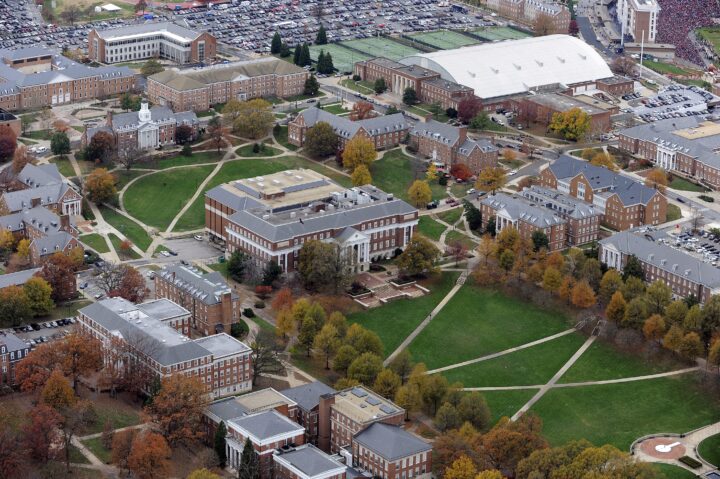
An aerial view of the University of Maryland campus in College Park, Maryland.
The University of Maryland, College Park student government unanimously passed two resolutions hostile towards Israel on Wednesday night, including one that called for the school to ban members of the Israel Defense Forces from speaking on campus.
The resolution, targeting Israelis, called for the university to prohibit people who are “committing war crimes” and “genocide” from speaking on campus.
It came as a response to an event hosted by the campus chapter of Students Supporting Israel on Oct. 21 featuring former IDF soldiers who spoke to students about their experiences serving during Israel’s war with Hamas.
During the event, protesters packed the outside hallway shouting “baby killers” and “IOF [Israel “Occupation” Forces] off our campus,” while several others protested from outside of the building with chants comparing the IDF to the Ku Klux Klan, the university’s student-run Jewish newspaper, The Mitzpeh, reported.
The second resolution called on the university to issue an apology to students who faced disciplinary action for protesting that event. The resolution stated that “two student journalists were wrongfully detained by the University of Maryland Police Department for over an hour while attempting to document the event.” At the time, UMPD said in a statement that the student journalists refused to provide identification or credentials.
Both resolutions passed 25-0, with one abstention.
UMD has one of the largest Jewish student populations in the country — nearly 20% of the College Park undergraduate student body of more than 30,000 students is Jewish, according to Hillel International. But there are “very few” Jewish students remaining in student government, junior criminology and criminal justice major Meirav Solomon told Jewish Insider.
Solomon was removed as a student government member in 2023 after being put on a “blacklist” of students who she said were accused of “not believing in human rights.” She told The Mitzpeh at the time that the list profiled candidates with “Jewish-sounding names,” and most students denounced by the document had never voiced a public opinion on the Israeli-Palestinian conflict.
The current student government is mostly composed of Students for Justice in Palestine members, or people who support the group, Solomon said.
The latest resolutions follow the passing of a separate resolution — voted on at the start of Yom Kippur — calling on the university and its charitable foundation to implement a boycott of companies and academic institutions with ties to “Israel’s regime of apartheid and occupation.”
“Jewish students on campus are already feeling very unsafe,” said Solomon. “But these resolutions have the most shocking language I’ve seen. This is extreme language and doubles down on making Jewish students feel that they don’t have a voice in student government.”
When the BDS vote was announced in October, UMD President Darryll Pines told the university’s newspaper, The Diamondback, that the university supports SGA’s right to debate the issue. But he added that the university wants to ensure the process is “open and fair and has dialogue from all parties of our broad student body.”
“Resolutions voted on by the Student Government Association are student-led and reflect perspectives of voting members of the SGA,” a university spokesperson told JI at the time of the BDS resolution vote. “They have no bearing on university policy or practice.”
This story was updated on Thursday to reflect the outcome of the vote.
Please log in if you already have a subscription, or subscribe to access the latest updates.
 Continue with Google
 Continue with Apple