
















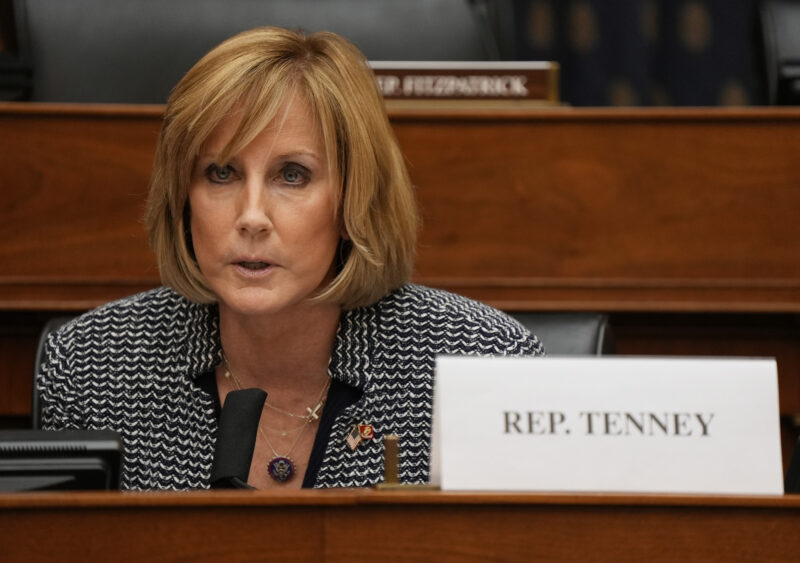
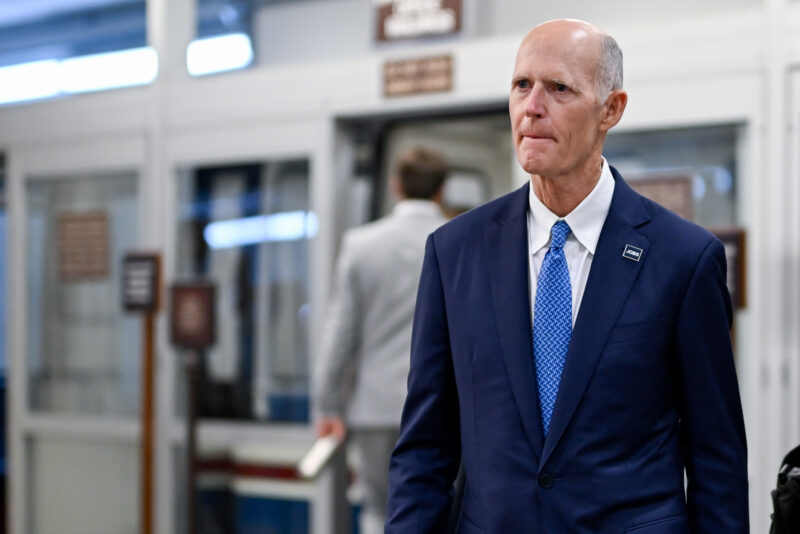
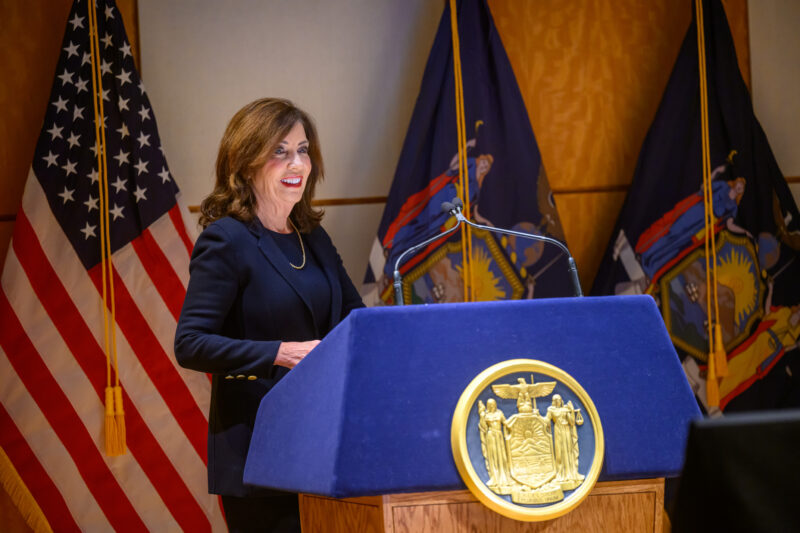
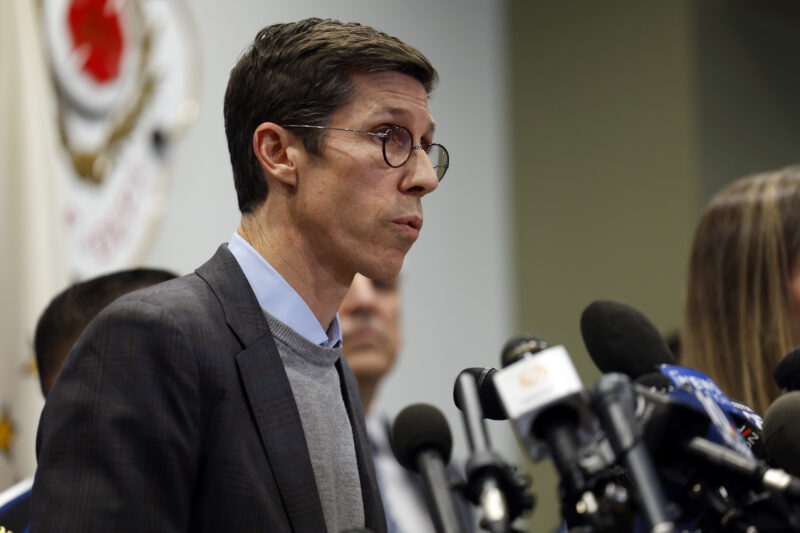



















Eric Pratt faces far-left former state Sen. Matt Little in Minnesota’s 2nd Congressional District, and is aiming to cast himself as a common-sense moderate
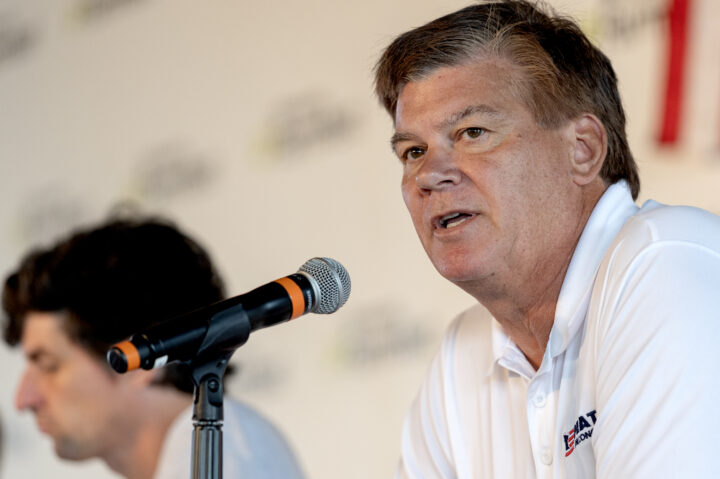
Carlos Gonzalez/The Minnesota Star Tribune via Getty Images
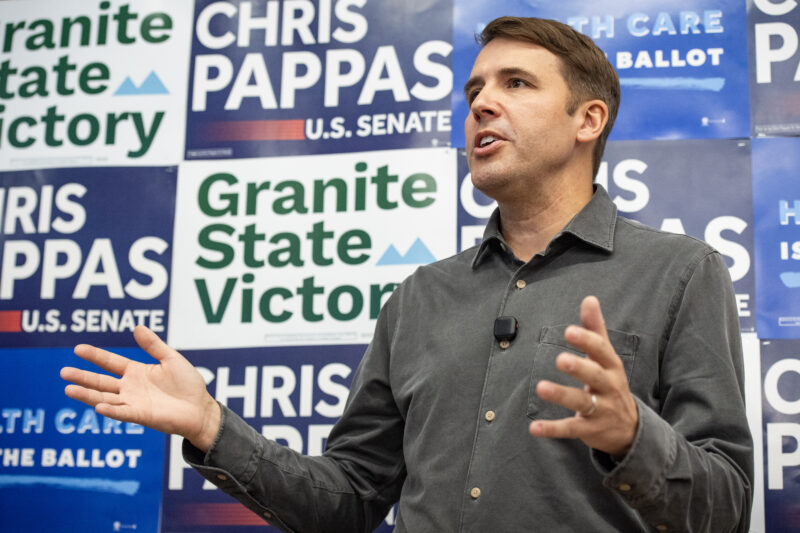
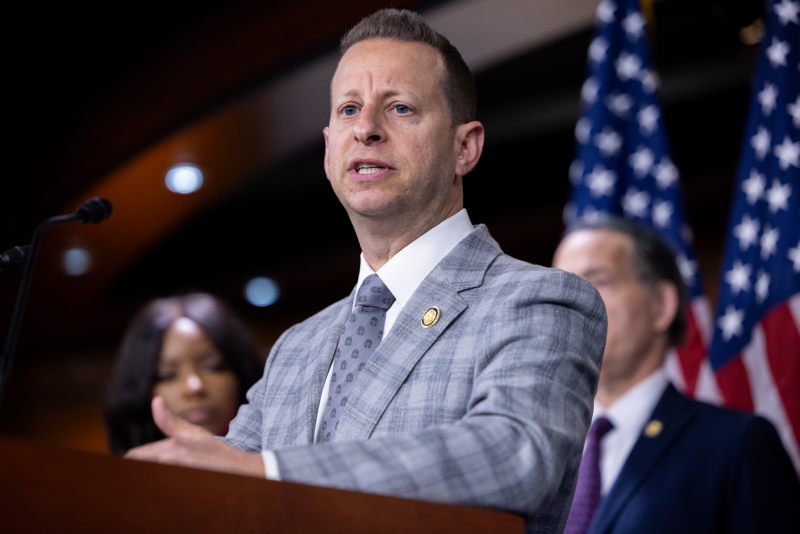
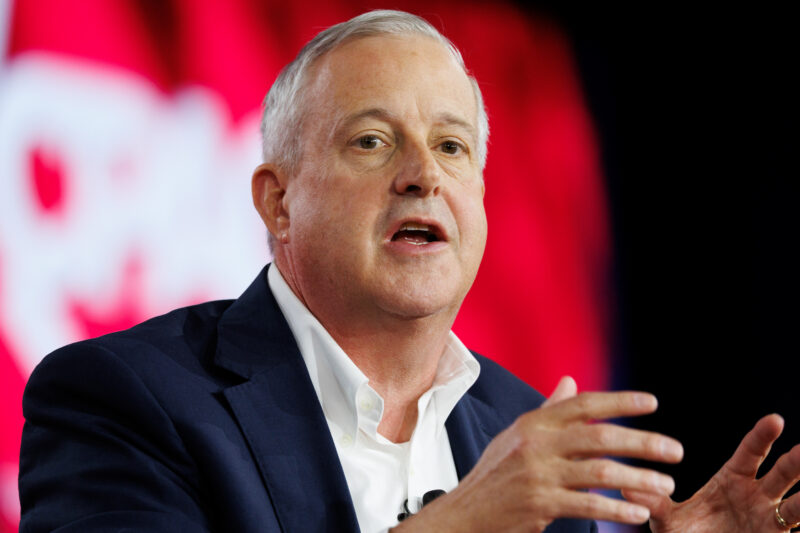
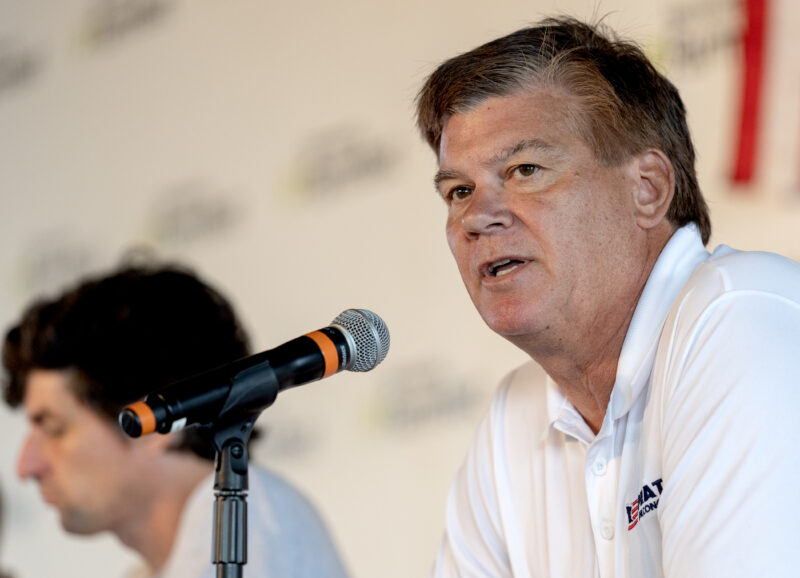
Minnesota state Sen. Eric Pratt answers a question during a Congressional Candidate Forum at Minnesota Farmfest in Morgan, Minn., on Tuesday, August 4, 2026.


 Add JewishInsider on Google
Facing down a far-left candidate in a swing district near Minnesota’s Twin Cities, Republican state Sen. Eric Pratt is hoping he’s “boring enough to win.”
In a bid to replace Rep. Angie Craig (D-MN), a moderate who flipped the district in 2018, Democrats nominated former state Sen. Matt Little, who defeated two primary rivals as the farthest-left candidate in the race, while staking out anti-Israel policies, including calling for a full arms embargo on the Jewish state.
Pratt, in an interview with Jewish Insider this week, argued that the seat, which the Cook Political Report rates as “likely Democrat,” remains a swing district and “is a much different race without Angie Craig.”
He’s pitching himself as a moderate voice in contrast to Little.
“My opponent is not an Angie Craig Democrat,” Pratt continued. “He’s been endorsed by Bernie Sanders, Keith Ellison, he runs in circles with Ilhan Omar and Peggy Flanagan. He’s on the extreme side of his party and that’s not what the 2nd District is.”
He argued that the district has many “independent voters with conservative values” who are open to splitting their tickets. The district, he said, “wants stability and common sense over chaos … and that’s the appeal that I’m trying to make, that I am the common-sense candidate.”
Pratt is running on issues including the cost of living, controlling federal spending, growing the economy and deregulation.
“Somebody was just telling me, I might be boring enough to win this seat. And I think they’re kind of right in that,” Pratt said. “These are suburban families. They want great opportunities for their kids. They want good education. They want to make sure that they have jobs that they can support their families in and get ahead.”
Pratt said he’s running for Congress to be a “problem solver” and to serve his community as he did as a school board member and state senator. He emphasized that every bill he’s passed in the state Senate has been bipartisan and that he’s “really more focused on trying to help my neighbors than play politics.”
Pratt also takes a starkly different view of the U.S.-Israel relationship than Little, who he accused of pursuing a strategy of isolationism, rather than building alliances.
“Having a Democratic society, an ally in the Middle East, helps the United States be safe. And we have to foster that alliance,” Pratt said. “Allies can be critical of each other and they can question each other, but at the end of the day, we’ve got to be friends marching in the same direction. … We can’t demonize our friends, we’ve got to support them.”
He said that the U.S. needs to make sure that all of its allies, including both Israel and European nations, have the resources they need to defend themselves and withstand attacks — “that’s what it means to be a good ally” — but he said he also welcomes efforts by allies, including Israel, to become more self-sufficient.
Pratt said that he’s open to a two-state solution between Israel and the Palestinians, so long as Israel has a role in negotiating it and that its sovereignty remains intact. He also emphasized that terrorist organizations cannot control the Palestinian government.
Asked about the war in Iran, Pratt said that he saw Iran’s nuclear program and the threat of an Iranian nuclear weapon as a “clear and present danger to the United States.” He lamented that the popular uprising that many had hoped for to topple the Iranian regime ultimately didn’t come to fruition and it has proved more resilient than expected, “but at the end of the day, failure can’t be an option.”
“We have to find a way out of this — but we have to find a way out of this that allows us to claim a victory, to make sure Iran never gets a nuclear weapon and make sure that we have the free flow of resources coming through the Strait of Hormuz,” Pratt said. “Whatever we do, we have to finish this. It’s been almost 50 years that Iran has been at war with us, and we’ve got to finish it.”
Asked about antisemitism in the United States, Pratt emphasized the need to protect civil liberties and said that attacks on Jewish institutions and harassment of Jewish students on campuses shouldn’t be permitted. He said that institutions, including schools, that allow discrimination should lose their federal funding.
He also said that Congress and lawmakers should oppose any Boycott, Divestment and Sanctions efforts targeting Israel.
Melissa Hernandez was backed by the United Democracy Project super PAC, which helped her draw closer to Aisha Wahab in the final count than some observers had initially expected
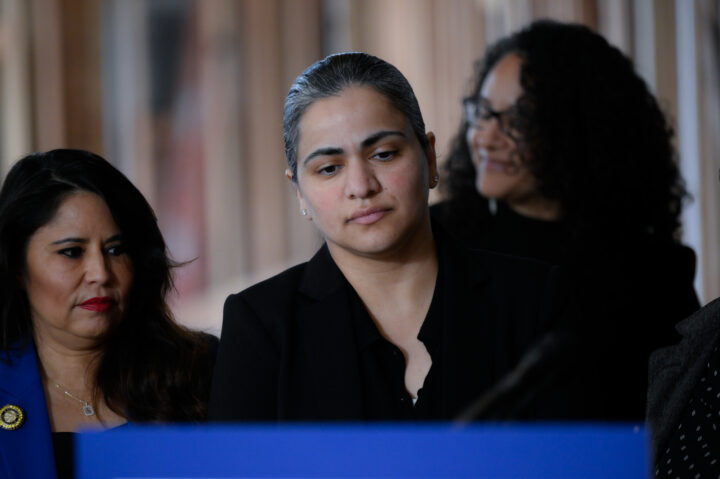
Tayfun Coskun/Anadolu via Getty Images
California state Sen. Aisha Wahab attends a press conference in Hayward, Calif., on March 2, 2026.
Aisha Wahab, a progressive California state senator, narrowly defeated former local mayor Melissa Hernandez in a special election in California’s 14th Congressional District, and will replace former Rep. Eric Swalwell (D-CA) in the House.
Hernandez was backed by more than $2.5 million in spending from the AIPAC-linked United Democracy Project super PAC, among other outside groups, which helped her draw closer to Wahab in the final count than some observers had initially expected.
Ultimately, Wahab finished with 53% to Hernandez’s 47%, pulling ahead after the two were neck-and-neck for much of the count. The two are set to face off again in November in the regular general election to serve out a full term in Congress.
The results are the latest stumble for UDP in a cycle where its track record has been decidedly mixed. UDP did not immediately respond to a request for comment on whether it intends to remain engaged in the district in the general election contest.
Wahab’s positions on Israel and antisemitism legislation had worried some leaders in the Jewish community, though another argued that she was not as extreme as members of the anti-Israel Squad. On her campaign website, Wahab included a page naming specific pro-Israel donors who were supporting Hernandez’s campaign.
“My record speaks for itself: I have consistently stood against antisemitism, supported the safety and security of Jewish communities, worked in partnership with Jewish colleagues, and defended Israel’s right to exist — while also maintaining that as an American elected official, I have both the right and the responsibility to question the policies of any foreign government and to speak out when innocent civilians are suffering,” Wahab said in a statement to Jewish Insider.
Over one-third of the vote remains to be counted in the too-close-to-call race
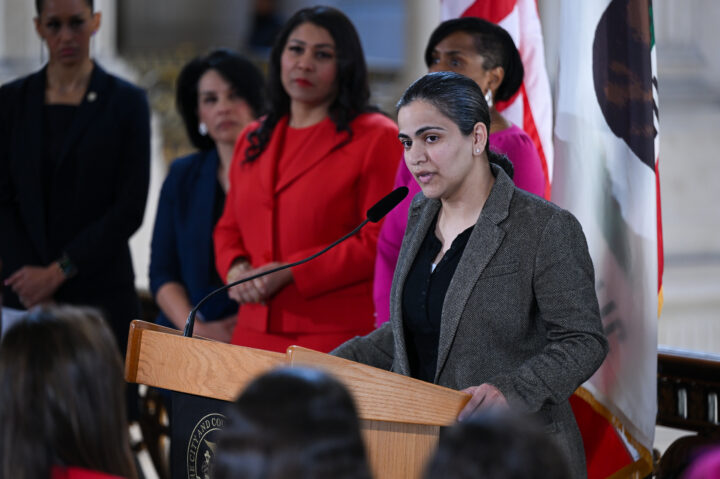
Tayfun Coskun/Anadolu Agency via Getty Images
State Sen. Aisha Wahab speaks during the Bay Area Abortion Rights Coalition (BAARC) and commemoration of the 50th Anniversary of Roe v. Wade event at the City Hall in San Francisco, California, on January 25, 2023.
Aisha Wahab, a progressive state senator from California, held a narrow lead on Wednesday over Melissa Hernandez, a moderate former local mayor, in the special election runoff for an East Bay House seat that drew a late surge of outside spending from AIPAC.
With 62% of the vote counted in Tuesday’s election, Wahab had 51%, leading Hernandez, at 49%, by just two points or 1,356 votes, according to the unofficial initial returns. The preliminary figures — with about 40,000 votes yet to be tallied — largely accounted for early mail ballots. Experts said that the late mail and Election Day votes would, in the coming days, paint a clearer picture of the direction of the race.
The early count suggested Hernandez benefited in part from the district’s estimated 73,000 Republican voters, whom AIPAC’s super PAC, United Democracy Project, had courted in the closing stretch of the race to help boost her campaign.
Wahab, the first Afghan American and Muslim to serve in the California state Senate, was viewed as the favorite, after she finished with double-digit leads over Hernandez in the special and the regularly scheduled primary elections. Hernandez won just 17% in the top-two special primary, trailing Wahab by more than 25 points. But two Republicans on the ballot tallied about 25% — indicating the GOP vote was likely to swing heavily to the more moderate Hernandez in Tuesday’s election.
The runoff in California’s progressive-leaning 14th District, which could take several days to be tallied, will decide who completes the remainder of former Rep. Eric Swalwell’s (D-CA) term, after he resigned from Congress amid sexual abuse allegations that he has denied.
The race had flown under the radar until UDP and other allied groups began spending for Hernandez, drawing national attention to the increasingly bitter contest. In just over two weeks, UDP invested nearly $2.5 million in the runoff. UDP’s spending — which appears to be its final investment before the general election — came after the group had failed to thwart Abdul El-Sayed, the far-left Democratic nominee in Michigan’s costly Senate race.
Some Jewish community leaders and Democratic strategists who followed the East Bay contest had questioned UDP’s last-minute decision to spend in the primary, seeing Wahab as practically unbeatable.
Still, one Democratic strategist told Jewish Insider before the election that outside polling had shown a tighter race than expected, suggesting that UDP had seen a plausible path to victory that was borne out in Tuesday’s results.
“We made a race that wasn’t close when we started into a nail-biter,” Patrick Dorton, a spokesperson for UDP, said in a brief statement to JI on Wednesday.
UDP’s spending also drew opposing expenditures from J Street, the progressive Israel advocacy group, and American Priorities, a new anti-Israel super PAC created to counter AIPAC — both supporting Wahab.
In a statement on Wednesday, American Priorities said it expected Wahab would prevail “once every ballot is counted.”
“Aisha Wahab ran a great campaign and she is leading today because voters in this district know her and trust her,” the group added, while accusing UDP and its allies of spending “millions trying to buy a different outcome.”
In contrast with the Michigan Senate primary and other Democratic races this cycle, Israel and Middle East policy were not among the top issues of debate in the runoff, despite some key differences between the candidates.
Wahab criticized Hernandez for having “denied the genocide in Gaza,” for example, and during a recent interview with the antisemitic streamer Hasan Piker expressed support for the Block Bombs Act — which would impose restrictions on weapons sales to Israel.
One Jewish leader who met with Wahab, however, told JI she was “not someone who wants to see Israel disappear” and had expressed interest in developing a “strong relationship with the Jewish community.” He raised concerns that UDP’s attacks could end up pushing Wahab to more hostile positions on Israel policy.
“My record speaks for itself,” Wahab said in a statement to JI before the runoff. “I have consistently stood against antisemitism, supported the safety and security of Jewish communities, worked in partnership with Jewish colleagues, and defended Israel’s right to exist — while also maintaining that as an American elected official, I have both the right and the responsibility to question the policies of any foreign government and to speak out when innocent civilians are suffering.”
No matter the outcome of Tuesday’s runoff, the two candidates will face off again in the general election this November for a full two-year term.
While Jewish community leaders expressed concerns about Aisha Wahab, one said they were skeptical that she was beatable and that the AIPAC spending risked further alienating the potential nominee
Tayfun Coskun/Anadolu via Getty Images
California state Sen. Aisha Wahab attends a press conference in Hayward, Calif., on March 2, 2026.
After a night of mixed results in Tuesday’s primary elections, AIPAC’s United Democracy Project super PAC is turning its eyes toward the special election runoff in California’s 14th Congressional District, where progressive state Sen. Aisha Wahab and moderate local mayor, Melissa Hernandez, are competing to replace disgraced former Rep. Eric Swalwell (D-CA).
Wahab entered the race as the heavy favorite and dominated the primaries for both the regular and special elections. In the special election primary, Wahab finished with 43% to Hernandez’s 17%, and led Hernandez 38%-17% in the regular primary. The special election runoff is set for Aug. 18.
Her record raises concerns for some members of the Jewish community — she has not been supportive of numerous priority bills and resolutions aimed at tackling antisemitism and has been a vocal critic of Israel, including describing the war in Gaza as a genocide and championing legislation in the state Senate on the issue.
UDP’s initial ad buy in the race totaled $1.2 million.
One of UDP’s ads accuses Wahab of being soft on crime — pointing to an amendment she led to a sex trafficking bill — and describes Hernandez as tough on crime and supported by police. Other pro-Hernandez groups are running with a similar message. Another highlights her background and work on affordability issues.
In a page on her website responding to attacks, Wahab’s campaign accused Hernandez of “relying on misleading attacks and AIPAC-linked dark-money PACs to tear Aisha Wahab down.” The page takes aim at Hernandez for having “denied the genocide in Gaza” — she declined to provide a yes-or-no answer on the subject at a candidate forum — and shared a spreadsheet naming all of the individual “AIPAC-linked donors” supporting Hernandez’s campaign.
“Wahab has accused Israel of committing genocide and has separately published the names of Jewish donors to her opponent on her website. She’s pretty extreme in her points of view on Israel,” UDP spokesperson Patrick Dorton told Jewish Insider. “It’s a race where Wahab is talking about ideological issues and Hernandez is talking about economic and affordability issues that are important to voters in the district.”
Bold America PAC, linked to the Congressional Hispanic Caucus, has spent more than $2 million so far attacking Wahab and supporting Hernandez. The group has taken some donations from an AIPAC-affiliated group. A new pro-Hernandez group, Safer Alameda County, has spent $51,000 so far.
Daniel Klein, the CEO of Jewish Silicon Valley — which is nonpartisan and does not take stances in elections — said that Jewish community leaders are paying close attention to the race, and he has heard significant concern about Wahab’s votes on major antisemitism legislation and her close relationship with state teachers’ unions, which have opposed antisemitism bills.
“That is, I think, creating some angst — or at least more attention to this race — amongst many members of the Jewish community and Jewish communal organizations,” he continued, relating conversations he’s had with members of the community. “These are pieces of legislation that are intended to protect our children, right? They should be fairly non-controversial.”
Wahab was one of three senators who voted against SB 1287, which required overhauls of campus codes of conduct to address antisemitic and anti-Israel demonstrations, and abstained from a floor vote on AB 715, which aimed to address antisemitism in K-12 schools.
Klein said he has not had the opportunity to meet with Wahab personally and is happy to meet with any elected leader. He said he had spoken with Hernandez, who seemed to him primarily focused on local issues and national partisan politics, rather than foreign policy, though he said that she seems to understand the Jewish community’s concerns about antisemitism and is receptive to hearing from the community.
“My record speaks for itself: I have consistently stood against antisemitism, supported the safety and security of Jewish communities, worked in partnership with Jewish colleagues, and defended Israel’s right to exist — while also maintaining that as an American elected official, I have both the right and the responsibility to question the policies of any foreign government and to speak out when innocent civilians are suffering,” Wahab said in a statement to JI.
Though she did not support the two bills mentioned by Klein, she has supported other priority legislation for the Jewish community in the state Senate. She also introduced a resolution in 2025 with Jewish state Sen. Scott Weiner calling for the release of hostages and an end to the humanitarian crisis in Gaza.
Another Jewish leader said Hernandez had attended various Jewish community events and generally has good relationships with the community but isn’t particularly involved with its issues. The district itself is not home to a sizable Jewish community.
Oleg Ivanov, executive director of StandWithUs Northern California, said, “We’re of course concerned that as a state senator, Aisha Wahhab has called Israel’s defense against the Hamas attack [on Oct. 7, 2023,] genocide. So we’re concerned that she is spreading this debunked blood libel about Israel, which we feel all that does is it makes Jews and Israelis here in her district unsafe. As we’ve seen in many cases, this kind of irresponsible language has led to direct violence against Jews and Israelis.”
Ivanov said he hasn’t had any interaction with Hernandez, but praised her for declining to describe the war in Gaza as a genocide. He also criticized Wahab’s opposition to antisemitism-related legislation.
But another Jewish leader in the district, who requested anonymity to speak candidly, said that the strong consensus among political observers in the area is that Wahab “pretty much [has] this in the bag, and that Hernandez is a lazy campaigner.” Other moderate groups that had looked at the district “just have not been impressed with Hernandez,” the leader continued.
The Jewish community, the leader said, doesn’t want Wahab to win, but that might already be a foregone conclusion.
“I’m not in principle against AIPAC getting involved in these kinds of primaries like some other people [are], but based on all the local knowledge that we’re hearing from politicos, it’s not a good use of time or money,” the leader said. “People are kind of scratching their heads — not because there aren’t concerns about Wahab … but let’s play where we can win.”
The leader said they’re also concerned that AIPAC’s involvement risks pushing Wahab further to left, describing Wahab currently as a less-than-ideal choice but necessarily aligned with the Squad — i.e., not opposed to Israel’s existence or outright at odds with the Jewish community.
The leader noted Wahab abstained on, rather than outright opposed, AB 715, one of the antisemitism bills. They also noted that Wahab’s family are refugees who escaped radical Islam in Afghanistan during the Soviet-Afghan war. Wahab has relationships with some Jewish community groups in the Bay Area, particularly social services organizations that have been involved in Afghan refugee resettlement work.
“I don’t like the idea that the pro-Israel community is jumping into a race they can’t win against the presumptive winner and potentially pushing her into the arms of the worst members of Congress,” the leader said. “I think that people need to play their cards carefully here. There’s shades of gray at play.”
State Sen. Jarrett Keohokalole criticized Israel’s military campaign in Gaza and has called out Case’s support from AIPAC, but analysts say he has more work to do to take down the veteran lawmaker
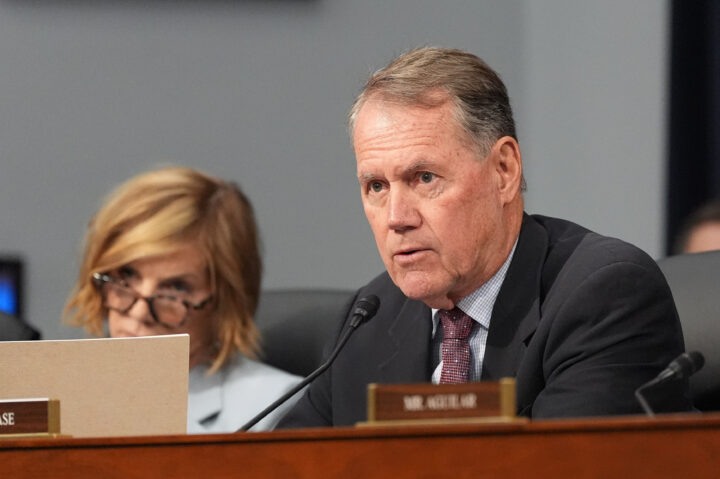
Alex Brandon/AP
Rep. Ed Case (D-HI) questions Defense Secretary Pete Hegseth at a House Appropriations subcommittee budget hearing for the Department of Defense, Tuesday, May 12, 2026, in Washington.
Rep. Ed Case (D-HI), a longtime pro-Israel moderate in the House, is facing his first serious primary challenge in years from state Sen. Jarrett Keohokalole, arguing — as other insurgent Democrats around the country have — that the district needs a new generation of leadership.
Case, 73, has long been a political institution in Hawaii. He has represented the 1st Congressional District in the heart of Honolulu since 2019, after previously serving the state’s 2nd District — which covers all areas outside of Honolulu — from 2002 to 2007, following several years in the Statehouse. He ran unsuccessfully for U.S. Senate before making his return to the House.
As one of the most moderate Democrats in the chamber — siding at times against the Biden administration and with Republicans — he has been something of an unusual fit for the strongly Democratic district.
Hawaii’s primary is set for Aug. 8.
Keohokalole’s campaign site makes little mention of Middle East policy, broadly calling for “reimagining the United States’ role on the world stage as a global peace leader by working to end unnecessary and costly conflicts, including opposing escalation toward war with Iran, and strengthening congressional oversight over military action and executive war powers.”
But the state senator, who is 42, said in late 2025 he supported efforts led by Sen. Bernie Sanders (I-VT) to stop U.S. military sales to Israel, arguing that the small size of Gaza “all but guarantees that [Israeli Prime Minister Benjamin] Netanyahu’s campaign of ‘targeted’ airstrikes will kill innocent adults, children, and infants. Hamas was wrong. So is this.”
Keohokalole said Israel has an inherent right to defend its sovereign territory “but for this to keep going the way it’s going, I think it reflects poorly on everyone involved in the campaign there, and this is going to persist for decades. People are not going to forget this, and I don’t think we should be associated with the carnage.”
He has also called out Case for receiving support from AIPAC.
But Colin Moore, an associate professor at the University of Hawaii, said that the subject has not been a central issue on the campaign to the extent that it has been in other recent Democratic primaries. “Maybe at the margins, but it’s not been an issue that either campaign has made central,” Moore said.
Case, at the beginning of the cycle, faced another challenge as well from a state representative, but that candidate dropped out of the race, consolidating the anti-Case vote, Moore explained.
Moore said that Keohokalole has been stepping up his outreach, making a strong push on social media and garnering national media attention. “It’s still likely that Ed Case will win, but I think it will be closer than I expected it to be a couple of months ago,” Moore said.
Limited polling has made it difficult to assess the state of the race, however. Case maintains a significant fundraising advantage, with $890,000 on hand to Keohokalole’s $252,000 as of the end of March.
“Ed Case has always been the most vulnerable of the four members of Hawaii’s congressional delegation,” Moore continued. “He’s … somewhat of an unusual figure to represent urban Honolulu, which is one of the most democratic districts in the country, to be a Blue Dog centrist Democrat.”
Case left the centrist Blue Dog coalition in 2023, but has remained a moderate.
Some of Case’s breaks with his party during the Biden and Trump administrations have angered local voters and the Hawaii Democratic Party, making him increasingly vulnerable to a challenger, something Moore said “has been a long time coming.”
The recent far-left victories against older, more moderate lawmakers in New York City and Denver are also driving enthusiasm and interest in Keohokalole’s campaign, Moore added. “That, I think is at least contributing to the vibes shift here, in a sense that the race might be tightening a little bit.”
But Moore also warned from drawing too many conclusions from the New York and Colorado results. “Hawaii is a Democratic state, [but] it’s not necessarily a progressive state, and it doesn’t always follow those trends all that closely,” he said.
Case remains very well known in the district and popular with center-left voters and unions, and he has played to his strengths, highlighting his seniority, his track record in delivering results for the district and his support for the military, “and that resonates a lot.”
Moore said that this style of politics — emphasizing seniority and delivering federal funding — has long been successful in Hawaii politics, perhaps more so than in other parts of the country.
In order for Keohokalole to win, he’d need a significant fundraising boost in the final weeks of the campaign so that he could make a larger media push, Moore said, explaining that the race is still largely flying under the radar for most voters and Keohokalole has more work to do to convince voters that he poses a serious challenge to Case.
Recent polling has shown a relatively close race between the moderate Stevens and far-left El-Sayed, with El-Sayed leading in several surveys
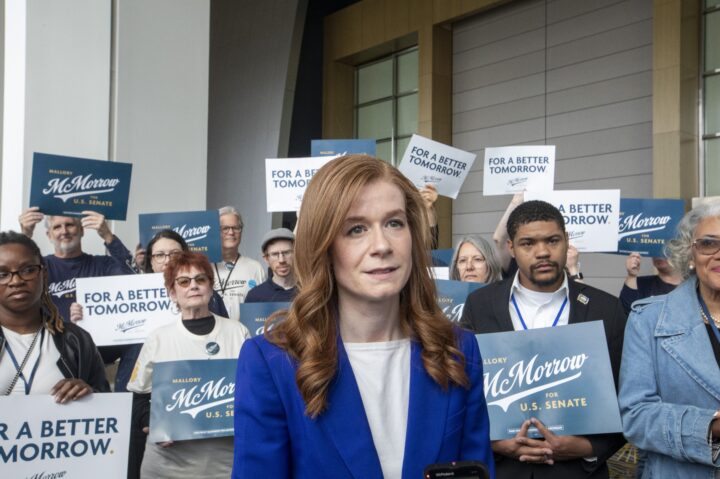
Jim West/UCG/Universal Images Group via Getty Images
Mallory McMorrow, a candidate for U.S. Senate, campaigns at the Michigan Democratic Nominating Convention
Michigan state Sen. Mallory McMorrow dropped out of the Democratic primary for U.S. Senate on Sunday, narrowing the race to a contest between Rep. Haley Stevens (D-MI) and Abdul El-Sayed, a former public health official.
McMorrow suspended her campaign without endorsing either of her rivals, saying only that “whoever wins this primary on August 4th will have my full support.”
Recent polling has shown a relatively close race between the moderate Stevens and far-left El-Sayed, with El-Sayed leading in several surveys. With McMorrow generally claiming around 10% of the vote in polls, her withdrawal could shift dynamics in the race.
At the same time, mail-in ballots in the state have already been dispatched — with McMorrow’s name still on them.
The end of McMorrow’s campaign marks a significant fall for the up-and-coming state senator, who posted strong performances in early polls but has seen flagging support and enthusiasm in recent months.
McMorrow’s voting base will likely end up divided among both candidates, and both are making efforts to attract her supporters.
McMorrow had sought to carve out a middle ground between Stevens and El-Sayed, running as a somewhat progressive anti-establishment candidate but claiming a more pragmatic lane than El-Sayed, who some Democrats worry will not be electable in a general election against former Rep. Mike Rogers (R-MI), the expected GOP nominee.
That positioning extended to the tightrope she tried to walk on Israel policy issues, criticizing Israel and agreeing with those who characterized the war in Gaza as a genocide while also condemning antisemitism in the anti-Israel movement.
Democrats who backed McMorrow for electability reasons, and some female voters, will likely end up in Stevens’ camp. But others, who were attracted by McMorrow’s anti-establishment message and more progressive posture than Stevens, will likely move toward El-Sayed. El-Sayed is also likely to pick up those voters turned off by Stevens’ staunch support for Israel — to the extent such voters hadn’t already abandoned McMorrow.
In her statement on McMorrow’s withdrawal, Stevens said she plans to continue to make her case that she’s “the strongest Democrat to defeat Mike Rogers.” In his statement, El-Sayed emphasized, “we cannot allow the establishment to decide our nominee for us.”
McMorrow’s withdrawal from the race may give space for Michigan’s political establishment to coalesce behind Stevens to block El-Sayed. Shortly after McMorrow dropped out, Attorney General Dana Nessel endorsed Stevens, saying that the “choice is clear.”
Former Sen. Debbie Stabenow (D-MI) previously endorsed Stevens, who has also been privately backed by Senate Minority Leader Chuck Schumer (D-NY).
Also in the wake of McMorrow’s decision, Republicans have continued to work to boost El-Sayed. Sen. Bernie Moreno (R-OH) accused Washington Democrats of “working overtime to stack the deck against” El-Sayed and boost Stevens.
Outside spending will also likely play a significant role in shaping the final month of the campaign. The AIPAC-linked United Democracy Project super PAC has already spent more than $10 million in the race, launching its first negative ads attacking El-Sayed late last week.
And after McMorrow withdrew from the field, the anti-Israel American Priorities super PAC told Politico it is “fully committed” to ensuring El-Sayed is the Democratic nominee “and we will do what it takes to get there” — the biggest test yet of the progressive, anti-Israel movement’s ability to win in a critical swing state.
The far-left state senator is now making his attacks against the pro-Israel group a central message of his campaign
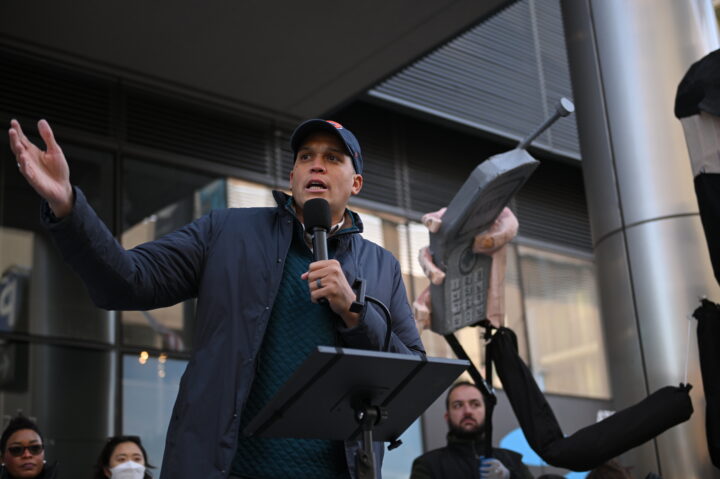
Daniel Boczarski/Getty Images for People's Action
Sen. Robert Peters, IL State Senate 13th District, speaks during the protest in Chicago to hold AT&T accountable for contracts with DHS, CBP, and ICE on November 16, 2025 in Chicago, Illinois.
Robert Peters, a far-left state senator from Illinois who is now competing in a crowded Democratic primary for a safely blue Chicago-area House seat, has made anti-AIPAC messaging a central focus of his campaign, castigating the pro-Israel group as a corrupting force in congressional elections funded by Trump-aligned interests scheming to promote a “right-wing agenda.”
Just last week, for instance, Peters joined forces with a coalition of progressive House candidates in Illinois to decry AIPAC’s recently reported political engagement in key congressional races in the state, claiming that anyone who accepts support from the group will become “a ‘yes man’ to Trump donors to commit unspeakable horrors in another part of the world.”
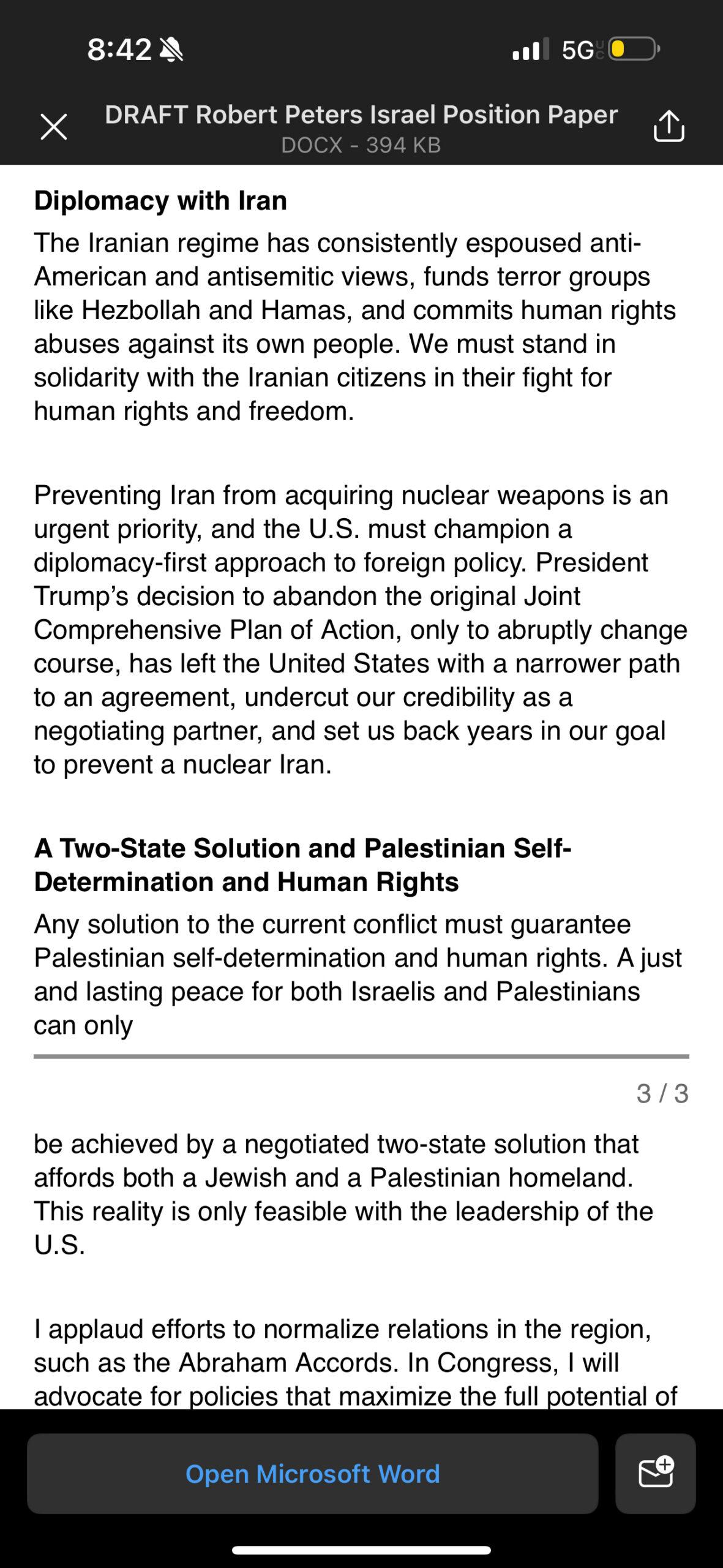
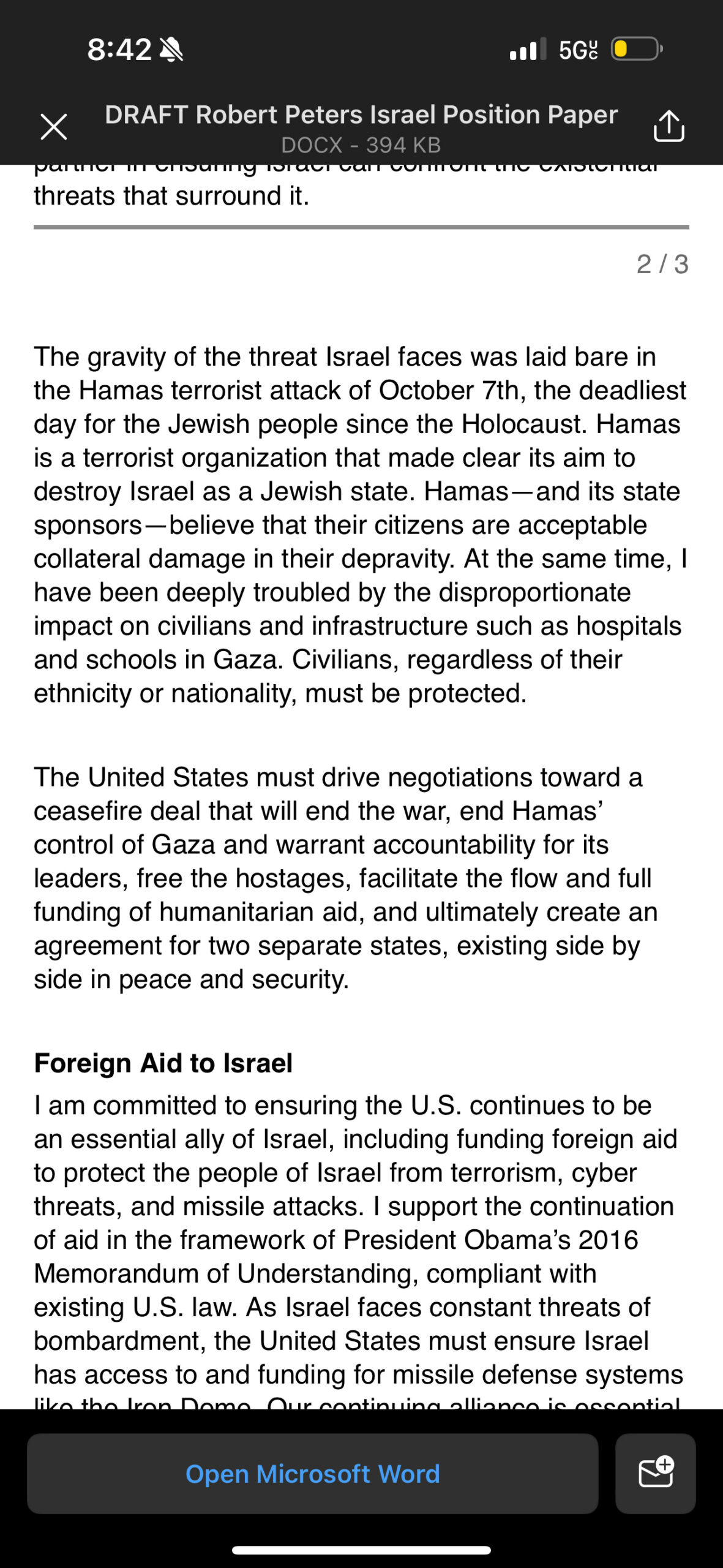
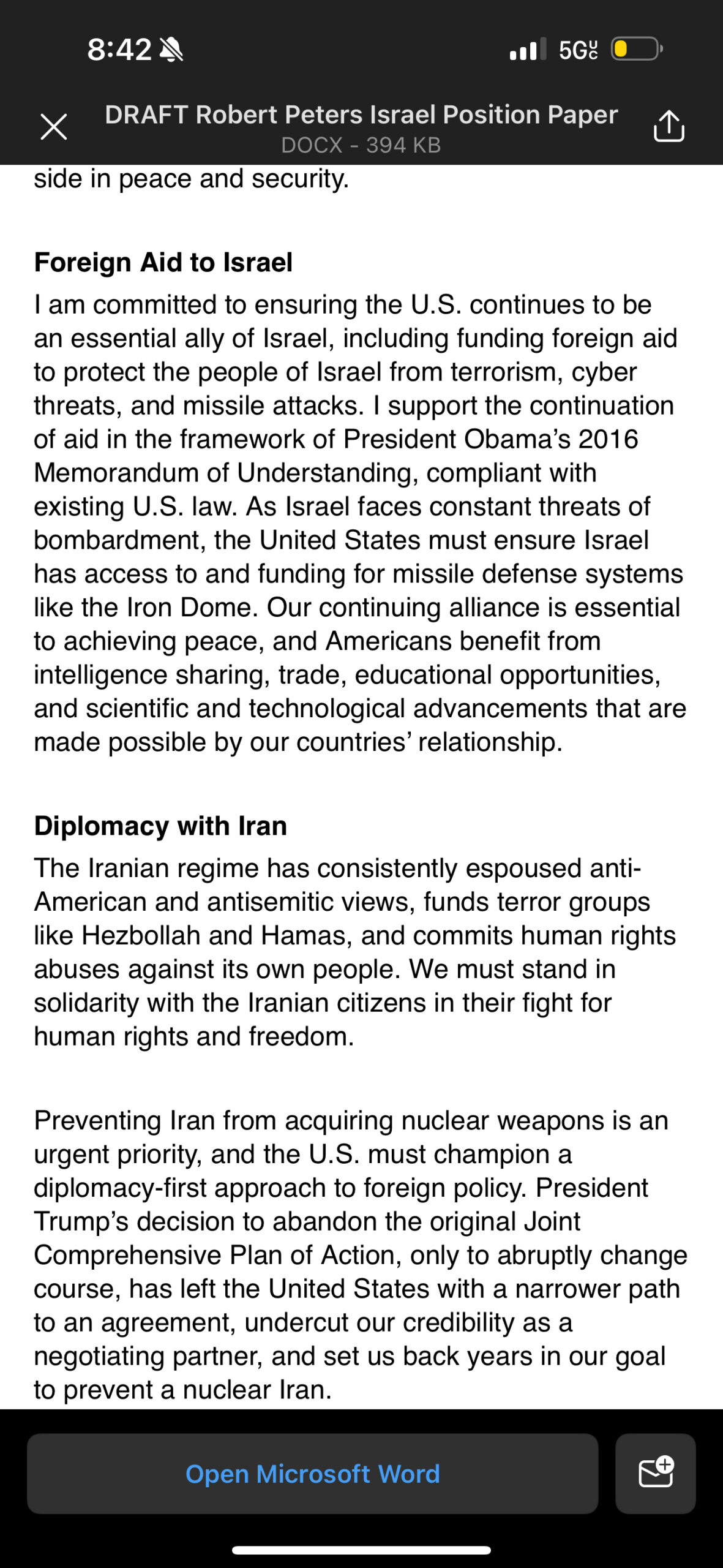
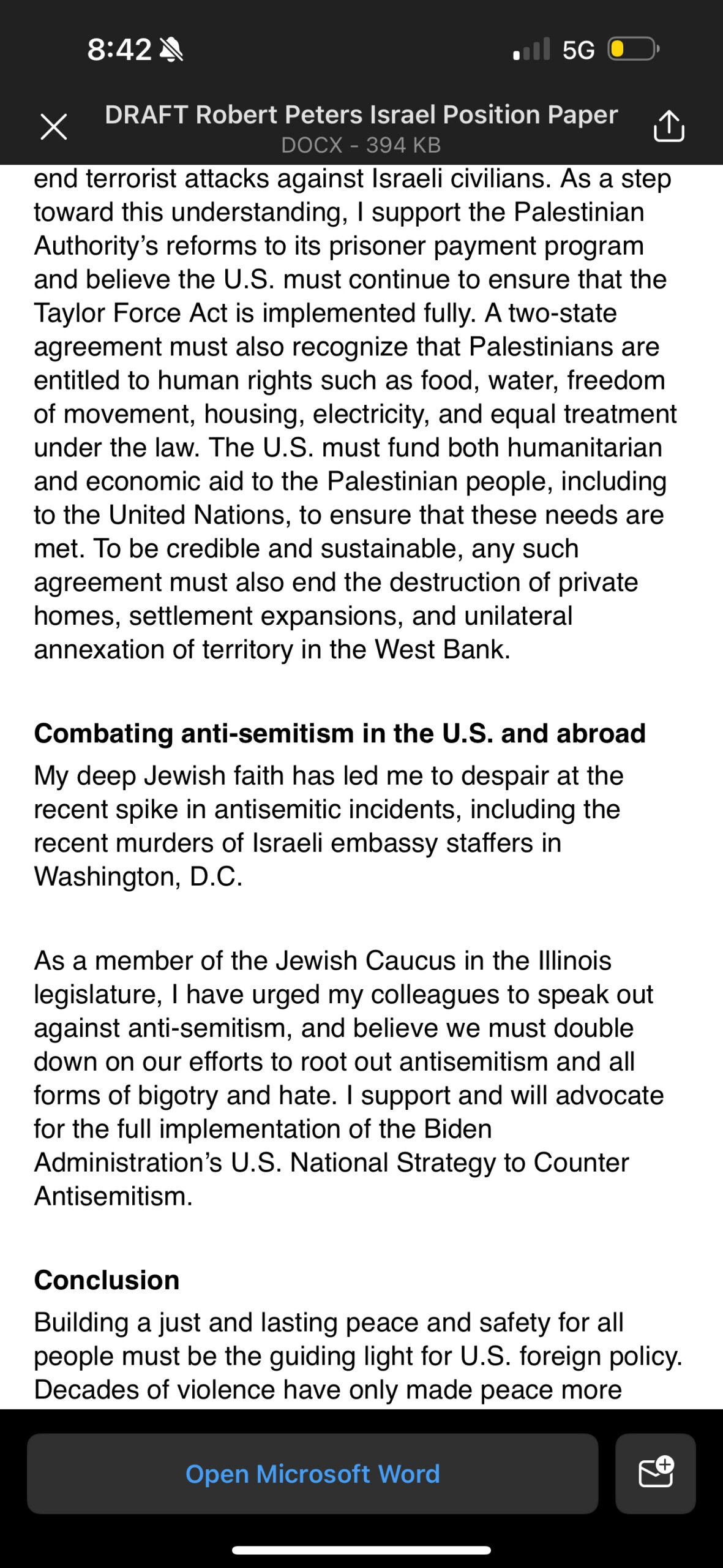
Not long after he had launched his campaign last year, however, Peters met privately with an AIPAC official in Chicago and then filed an Israel position paper at the group’s request, according to a person with close ties to the organization who reviewed the document at the time it was submitted.
The behind-the-scenes engagement — rumors about which have circulated among Peters’ opponents — raises questions about the sincerity of his hostile rhetoric toward AIPAC as he now is building support from prominent Israel critics.
Most likely, the source familiar with the matter suggested to Jewish Insider this week, Peters was “seeking AIPAC’s good grace” in a strategic effort to preempt attacks from its super PAC, United Democracy Project, which often targets candidates who stray from pro-Israel messaging.
“Israel is a vital partner to the United States, and Congress must ensure that this special relationship is preserved,” Peters wrote in his paper, confirming in a separate section he is “committed to ensuring the U.S. continues to be an essential ally of Israel, including funding foreign aid to protect the people of Israel from terrorism, cyber threats and missile attacks.”
The group is now facing scrutiny over its alleged covert funding of a newly formed super PAC, called Affordable Chicago Now!, which is investing heavily in Peters’ race to help boost a top rival, Cook County Commissioner Donna Miller, a pro-Israel Democratic candidate. Peters, for his part, has accused “AIPAC and Trump donors” of “pouring cash” into Miller’s primary bid, warning “AIPAC and Trump allies” are now “trying to buy this seat,” though AIPAC has not endorsed her and UDP is not publicly involved in the race in Illinois’ 2nd Congressional District. (UDP did not respond to a request for comment.)
The policy paper that Peters allegedly submitted to AIPAC — screenshots of which were obtained by JI — is far more measured than the anti-Israel stances he now espouses. Most strikingly, he voiced support for upholding continued U.S. military aid to Israel, which the group views as one of its top litmus tests. Earlier this month, for example, UDP invested millions on attack ads in a special House primary in a wealthy suburb of northern New Jersey, hitting an erstwhile ally, former Rep. Tom Malinowski (D-NJ), who had entertained policies to condition assistance to Israel.
“Israel is a vital partner to the United States, and Congress must ensure that this special relationship is preserved,” Peters wrote in his paper, confirming in a separate section he is “committed to ensuring the U.S. continues to be an essential ally of Israel, including funding foreign aid to protect the people of Israel from terrorism, cyber threats and missile attacks.”
By contrast, Peters has more recently condemned AIPAC-backed candidates as pro-Israel pawns “OK with unconditional military aid” to support what he calls Israeli Prime Minister Benjamin Netanyahu’s “war machine,” which he says committed genocide in Gaza. If elected, Peters has pledged to sign on to the Block the Bombs Act, a bill that seeks to impose sweeping new conditions on U.S. weapons transfers to Israel.
Matthew Fisch, a spokesperson for Peters, said in a statement to JI on Wednesday that the state senator has shared his Israel position paper “with a range of stakeholders and individuals upon request, some of whom responded with feedback for our campaign.”
“Among those stakeholders was AIPAC staffer Martin Ritter, who has a longstanding relationship with Robert going back to his days as an organizer with the Chicago Teachers Union,” Fisch said. He claimed that Ritter, who directs AIPAC’s Midwest outreach in Chicago, “requested the document and provided feedback, which our campaign promptly rejected.”
Peters “is not and has never been open to receiving support from AIPAC for his campaign,” Fisch said, noting the candidate’s “positions on this issue are well documented and have been widely discussed.”
When JI first reached out to Peters’ campaign last October to inquire about the paper, Fisch said the document had been “drafted in the early months of the campaign to share with any and all stakeholders from across the spectrum of viewpoints,” and that it had “reflected Robert’s nuanced position on a range of subjects in the context of that moment.”
He did not respond to follow-up questions from JI at the time asking if the paper had been submitted to AIPAC.
Peters, a Jewish convert, had long been prominently opposed to Israel’s war in Gaza, joining at least one anti-Israel protest affiliated with the far-left Jewish Voice for Peace and IfNotNow, the latter of which is now backing his campaign. He called for a ceasefire in mid-November 2023, just over a month after the Hamas attacks of Oct. 7, writing in an opinion piece that he had “watched the unprecedented bombing campaign rain down on” Gaza and “saw that it was being done in our name, as Jews and as Americans.”
But even as Peters’ outspoken views on Israel would seem to preclude any outreach to AIPAC, the source familiar with his engagement, granted anonymity to discuss a sensitive topic, said he had regularly been in touch with the group at least until January, when he spoke with Ritter to express his concerns that the paper had been leaked.
Fisch confirmed that a call took place last month but said Ritter initiated it. “At the time, he falsely insisted to Robert that AIPAC was not supporting Commissioner Miller,” he told JI, “something that proved demonstrably false just a few days later.”
“Robert has always supported conditioning aid and ensuring it is in full compliance with the Leahy Law and international law,” Matthew Fisch, a spokesperson for Peters, told JI, adding the paper “does not mention the Block the Bombs Act because it was drafted prior to the bill’s introduction.”
Ritter, for his part, referred questions to an AIPAC spokesperson. “Like many advocacy organizations,” the spokesperson said in a statement to JI, “AIPAC routinely meets with candidates across the country to understand their views on issues important to its members.”
In some ways, the paper seems written specifically to meet AIPAC’s approval — including in its support for “fully” implementing the Taylor Force Act, a key legislative tool favored by the lobbying group that withholds direct aid to the Palestinian Authority until it ceases payments to convicted terrorists or members of their families.
But Fisch insisted that the paper is consistent with Peters’ long-standing Middle East policy positions. “Robert has always supported conditioning aid and ensuring it is in full compliance with the Leahy Law and international law,” he told JI, adding the paper “does not mention the Block the Bombs Act because it was drafted prior to the bill’s introduction.”
In a section of the paper on foreign aid to Israel reviewed by JI, Peters made no explicit argument for conditions, saying only that he supports “the continuation of aid in the framework of President Obama’s 2016 Memorandum of Understanding, compliant with existing U.S. law.” The 10-year agreement, set to expire in 2028, provides $3.8 billion in military aid and missile-defense funding to Israel annually — assistance the Block the Bombs Act is designed to challenge. Critics have argued the proposed legislation would effectively amount to an arms embargo on Israel for many key weapons systems.
Peters, 40, has largely positioned himself as a progressive front-runner in the March 17 primary, where 10 candidates are competing to fill the seat being vacated by Rep. Robin Kelly (D-IL), who is running for Senate. In addition to Peters and Miller, the primary field includes former Rep. Jesse Jackson Jr. (D-IL), who is drawing support from an AI-backed super PAC, and state Sen. Willie Preston, among others candidates.
During a recent candidate forum, Preston accused Peters of being dishonest in his AIPAC messaging. “Robert Peters tells you AIPAC hates him,” Preston said, according to video of the event reviewed by JI. “He sought their support — they just didn’t give it to him.”
Peters, in his own remarks at the forum, said that he shared a “position paper” with “Palestinian-led organizations,” among other organizations he claimed “groups like AIPAC fundamentally hate,” according to the video. He denounced AIPAC as a “right-wing, Trump-allied” organization, and said that “anybody taking” its support “is disqualified to represent” the district in Congress.
Peters has claimed major endorsements from leading Israel critics, including Sens. Bernie Sanders (I-VT) and Elizabeth Warren (D-MA) and Reps. Ro Khanna (D-CA) and Delia Ramirez (D-IL) — who introduced the Block the Bombs Act last May. He has also won support from anti-Israel groups such as the Working Families Party, which endorsed his campaign on Tuesday, and the anti-Israel AIPAC Tracker, which has argued that candidates “only submit a policy paper to AIPAC if” they are “angling for” support from the organization.
Peters is not the only Israel critic now seeking the Democratic nomination in an Illinois primary race to have allegedly engaged in discussion with AIPAC. Daniel Biss, the mayor of Evanston who is hoping to succeed retiring Rep. Jan Schakowsky (D-IL) in the suburbs of Chicago, sought backing from the group before he announced his run for Congress last year, JI has reported, though he denies having done so.
Biss has claimed publicly he met with AIPAC in an effort to stave off potential spending by the group in his race.
In recent weeks, AIPAC has become a particularly divisive subject of debate in Illinois as the group has ramped up its spending while facing accusations it is attempting to hide its involvement in some districts by operating under the cover of newly created super PACs not required to disclose their funding sources until after the primaries.
“He is practiced in the ways of politics,” Tom Bowen, a Democratic strategist in Chicago who is not involved in Peters’ primary, told JI on Wednesday. “That he submitted a paper in order to demonstrate he would be a collaborative elected official, I’m not surprised at all. Robert understands politics, and you have to build coalitions in order to legislate.”
Last week, for example, Schakowsky said she was rescinding her endorsement of Miller because of support the county commissioner has reportedly received from AIPAC-aligned forces in her primary. “Illinois deserves leaders who put voters first,” the congresswoman said in a statement, “not AIPAC or out-of-state Trump donors.”
In a separate Democratic House primary in the state, meanwhile, Anthony Driver Jr., a progressive candidate critical of Israel, said recently that he was rejecting a campaign contribution from a prominent Jewish party donor in Chicago, Michael Sacks, over his ties to AIPAC — a move Sacks lamented as a sign of growing “anti-Israel sentiment and outright Jew hate.”
Tom Bowen, a Democratic strategist in Chicago who is not involved in Peters’ primary, said he would not be surprised if the candidate had privately engaged with AIPAC, calling him a savvy political operator.
“He is practiced in the ways of politics,” he told JI on Wednesday. “That he submitted a paper in order to demonstrate he would be a collaborative elected official, I’m not surprised at all. Robert understands politics, and you have to build coalitions in order to legislate.”
As for why he is “saying what he’s saying today,” Bowen suggested that there is “obviously political opportunity in corralling support from the folks in Congress who make” Israel “a top issue for national fundraising.”
“In many races in Illinois now, it is very difficult to forge broad coalitions,” Bowen added. “Ultimately,” the candidates are working to build coalitions “they think they need to win.”
Weiner, a longtime California state senator, could face a crowded field of Democrats if Pelosi retires — including AOC’s former chief of staff
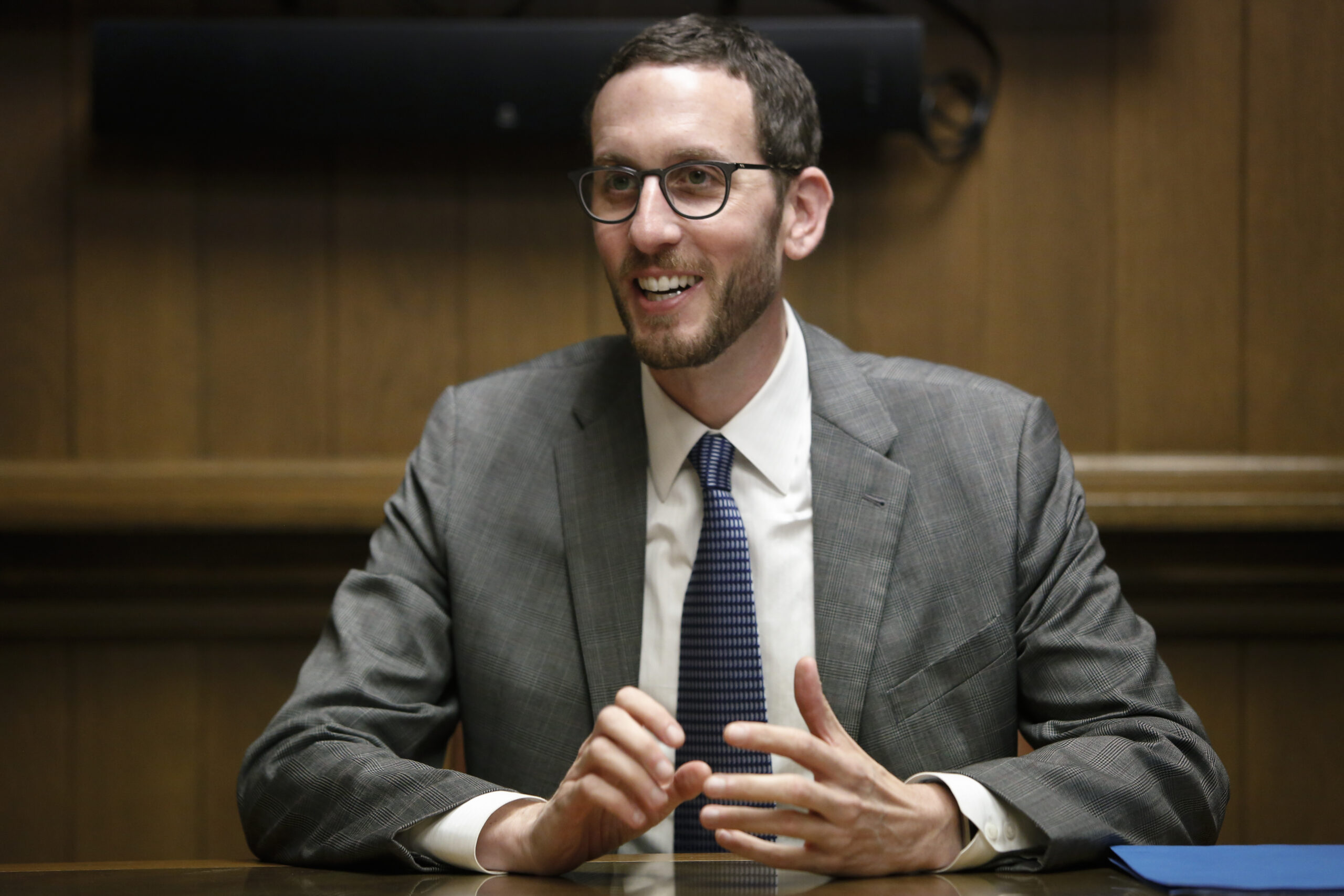
Russell Yip/San Francisco Chronicle via Getty Images
California State Senator Scott Wiener addresses the SF Chronicle Editorial Board on Thursday, Jan. 18, 2018 in San Francisco, Calif.
Scott Wiener, a veteran California state senator from San Francisco, has long coupled his lifelong support for Israel with vocal opposition to Israeli Prime Minister Benjamin Netanyahu and far-right members of his governing coalition.
Now, the 55-year-old Jewish Democrat finds himself navigating delicate political terrain as he balances those competing views while mounting a new campaign to replace Rep. Nancy Pelosi (D-CA) in the Bay Area congressional seat that she has held for nearly four decades.
With Pelosi rumored to soon announce she will retire at the end of her current term, Wiener has been fielding attacks from a far-left primary rival, Saikat Chakrabarti, as Israel and Gaza emerge as a source of division in the nascent race that is already shaping up to be among the more bitterly contested Democratic battles of the upcoming election cycle.
Chakrabarti, 39, a former chief of staff to Rep. Alexandria Ocasio-Cortez (D-NY), is a fierce critic of Israel who has called its war in Gaza a genocide and pushed for ending all military funding to the Jewish state. He has also backed a controversial House bill, called the Block the Bombs Act, that aims to impose severe restrictions on U.S. weapons sales to Israel — and is needling Wiener for so far declining to clarify his own position on the measure, which is not likely to pass.
In an interview with Jewish Insider earlier this week, Wiener continued to deflect when asked for his stance on the matter, saying only that, if elected next year, “there will be new bills introduced” when he serves in the House. Despite treading cautiously around the legislation, however, Wiener confirmed that he is broadly in favor of withholding offensive arms to the current Israeli government that, in his view, “is not committed to peace or democracy.”
The U.S.-Israel alliance, Wiener emphasized, “is incredibly important, and the U.S. should continue to support Israel’s defense,” such as funding for its Iron Dome missile-interception system. But he said he could no longer justify sending weapons to Israel because of his increasing disgust with Netanyahu’s government.
“I have been very clear and consistent for years, going back before Oct. 7, that I think the current government of Israel is horrific,” he said. “It’s an extremist, messianic government that, in addition to destroying Gaza and upending the West Bank, is harming Israel by upending Israel’s standing in the world and undermining democracy in the country — and it’s very troubling to me.”
Even as he endorsed a measure that represents a red line for many pro-Israel advocates, Wiener has continued to show his support for the Jewish state, co-leading a legislative delegation to Israel last year, where he visited sites targeted by Hamas in the Oct. 7, 2023, terror attacks and met with Israeli leaders, including President Isaac Herzog.
His evolving views on the Middle East policy underscore a broader shift within the Democratic Party in the wake of the war in Gaza, as a growing number of candidates and elected officials embrace efforts to impose conditions on military aid to Israel that, until recently, had seen more narrow support among anti-Israel detractors on the far left.
“I pray the ceasefire holds and we can move toward a more durable peace,” Wiener told JI. “But we also have a situation where you have Netanyahu and his government, and you have Hamas, so the situation is being driven by extremes. I hope that changes.”
In a heavily progressive city like San Francisco, Wiener’s more pointed views on Israel are hardly unusual — even if his approach is unlikely to satisfy the hard-line activists who, in the months after Oct. 7, frequently accosted him in public and accused him of supporting genocide.
Wiener, who co-chairs the California Legislative Jewish Caucus, believes much of the rhetoric that he faced was antisemitic and that protestors failed to recognize he had voiced support for an end to the fighting, as well as the release of all hostages, going back to the fall of 2023. “For some people, it’s never going to be good enough, unless you call for Israel’s elimination,” he said.
“I pray the ceasefire holds and we can move toward a more durable peace,” Wiener told JI. “But we also have a situation where you have Netanyahu and his government, and you have Hamas, so the situation is being driven by extremes. I hope that changes.”
“Without judgement, I don’t think that he’s in a different place than a lot of his would-be colleagues, and that is something the Jewish community has to grapple with,” Tyler Gregory, who leads the Jewish Community Relations Council Bay Area, told JI, referring to changing attitudes toward Israel among Democrats.
Tyler Gregory, who leads the Jewish Community Relations Council Bay Area, described Wiener as “the Jewish community’s champion” and said that “he has taken so many hits” that Jewish community members feel “a protective instinct” and “a strong sense of loyalty to him and what he has represented since Oct. 7.”
He called Wiener “firmly pro-Israel,” even if “a lot of people in our community may not be fully aligned with his politics.”
“Without judgement, I don’t think that he’s in a different place than a lot of his would-be colleagues, and that is something the Jewish community has to grapple with,” Gregory told JI, referring to changing attitudes toward Israel among Democrats.
Wiener said he has not yet engaged in discussions with pro-Israel groups like AIPAC — as Democratic candidates have faced pressure to swear off donations from the lobbying organization over its support for the Israeli government. “Obviously I have some disagreements with AIPAC,” Wiener told JI. “I’ll leave it at that.”
While he has been seen as a progressive leader in the state for his advocacy on such issues as LGBTQ rights and criminal justice reform, Wiener, who has said he moved to San Francisco nearly 30 years ago so that he could live more openly as a gay man, has faced local backlash from the left over his efforts to promote increased real estate development, fueling attacks that he is aligned with corporate interests.
But as the city’s voters have recently shown an appetite for more measured local representation, Wiener could find a more receptive audience than his chief opponent, Chakrabarti, who is running an insurgent campaign to push Pelosi into retirement.
Asked to comment on a recent social media post in which Chakrabarti said that “legislators continue to give Israel a blank check because of money from the Israel lobby,” Wiener said “that kind of rhetoric can tip into antisemitism.”
“There are times when some of those criticisms basically are like attacks on people for accepting contributions from Jewish community leaders,” he told JI, citing a recent questionnaire distributed by the California Faculty Association asking political candidates if they had ever accepted money from AIPAC or the Jewish Public Affairs Committee of California.
“I have a real criticism of what the government of Israel is doing today, and I do not believe our government should be complicit in it,” Chakrabarti said in a statement to JI. “I have a criticism of lobbying groups that spend huge amounts of money in our elections to influence our foreign policy. And it is precisely because we have a real issue with antisemitism today that I hope Sen. Wiener does not use this campaign to conflate a criticism of Israel with antisemitism to score political points.”
Such instances, Wiener argued, “can very quickly bleed out into attacking candidates because they have support in the Jewish community and receive contributions from respective leaders in the Jewish community — and then that gets lumped in as, ‘Oh, that’s the Israel lobby,’ and that can be antisemitic.”
“I hope this doesn’t go there,” he said of the race. “But we will see.”
In a statement to JI on Wednesday, Chakrabarti said that he “will always call out antisemitism no matter where I hear it, and I would hope we can all agree that we should never target any group with hate. This should be a basic American value.”
“I have a real criticism of what the government of Israel is doing today, and I do not believe our government should be complicit in it,” he added. “I have a criticism of lobbying groups that spend huge amounts of money in our elections to influence our foreign policy. And it is precisely because we have a real issue with antisemitism today that I hope Sen. Wiener does not use this campaign to conflate a criticism of Israel with antisemitism to score political points.”
Wiener, who says he raised $730,000 in the 24 hours after launching his campaign last week, has long been interested in running for Pelosi’s seat and created an exploratory committee two years ago to plant a marker in the district as he waited for her to retire.
But he moved forward with his bid rather than deferring to Pelosi’s schedule after Chakrabarti, a wealthy former tech entrepreneur, entered the race last February and drew national attention.
Wiener’s top priorities include housing, healthcare, clean energy and “always standing up for the Jewish community” amid a rise in antisemitism “across the political spectrum,” he said.
Pelosi, who is expected to announce her plans for the coming election cycle early next month, “is fully focused on her mission” to pass a state redistricting measure in the Nov. 4 election, a spokesperson told JI.
Her daughter, Christine Pelosi, is among other potential primary candidates viewed as eyeing the House seat.
“We’re ready to go,” Wiener said of his fledgling campaign. “I’ve been in this community, working in this community, representing this community, for a long time. I feel great about our support.”
Mayor Jacob Frey’s most prominent backers are declining to criticize his rival for employing staff that celebrated the Oct. 7 Hamas attack
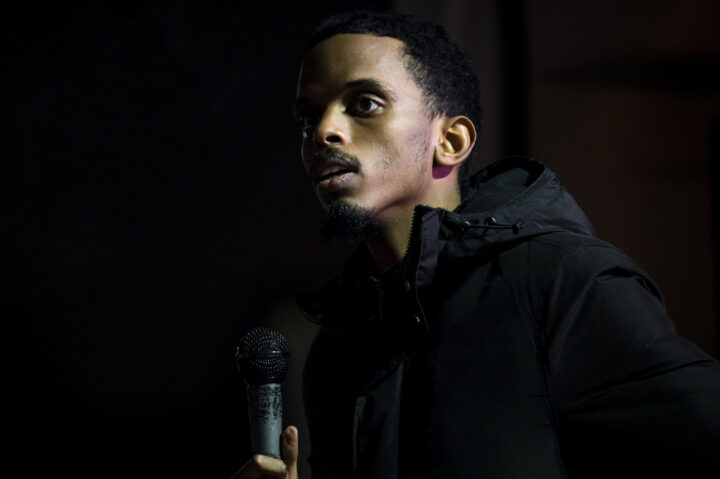
Stephen Maturen/Getty Images
Omar Fateh, a member-elect of the Minnesota State Senate, speaks during a vigil for Dolal Idd, who was shot and killed by Minneapolis Police on December 31, 2020, in Minneapolis, Minnesota.
Leading elected officials in Minnesota are remaining silent in response to a top Minneapolis mayoral candidate, far-left state Sen. Omar Fateh, whose campaign has faced scrutiny for employing staffers who have celebrated Hamas’ Oct. 7, 2023, attacks and called for Israel’s destruction, among other extreme views he has yet to publicly address.
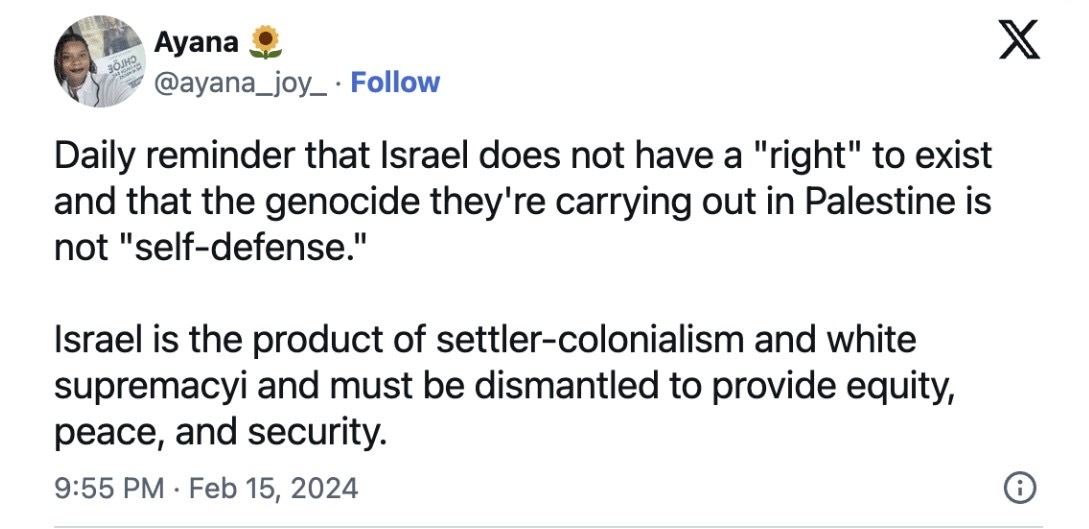
Fateh, a 35-year-old Democratic socialist, now employs a campaign communications manager, Anya Smith-Kooiman, who, in now-deleted social comments recently unearthed by Jewish Insider, has endorsed the Hamas attacks as a justified act of “resistance,” said Israel “does not have a ‘right’ to exist” and “must be dismantled,” and amplified a comment dismissing widespread reports of sexual violence on Oct. 7 as “propaganda,” according to screenshots.
Meanwhile, David Gilbert-Pederson, a local political activist and City Council aide who has been listed as a Fateh campaign staffer in filings, has unreservedly praised the Oct. 7 attacks, insisting in remarks on a December 2023 panel discussion that supporters of the Palestinian cause must “stand in unconditional solidarity with those resisting oppression.”
But even as some of the state’s leading Democratic lawmakers have endorsed Fateh’s rival, incumbent Mayor Jacob Frey, who is seeking a third term, they have so far declined to weigh in on the staffers’ comments and Fateh’s decision to hire them, which has raised questions about his acceptance of extreme rhetoric on a particularly sensitive issue.
Sen. Amy Klobuchar (D-MN) and Gov. Tim Walz, who are Frey’s most high-profile backers in what is expected to be a hotly contested race, both avoided addressing the matter to JI. A spokesperson for Klobuchar declined to comment on Friday, and representatives for Walz did not return multiple requests for comment.
Prominent Democratic officials who have not taken sides in the mayoral contest also did not respond to requests for comment — including Peggy Flanagan, the lieutenant governor who is now running for U.S. Senate, and Rep. Angie Craig (D-MN), a pro-Israel lawmaker also seeking to replace retiring Sen. Tina Smith (D-MN). A spokesperson for the senator did not respond to a message seeking comment about Fateh.
The muted responses underscore an increasing reluctance among many Democratic elected officials and public figures to speak out against extremist or antisemitic language related to the ongoing war between Israel and Hamas.
In Minneapolis, only one of the three City Council members who have endorsed Frey’s reelection bid was open to weighing in on the matter, denouncing the campaign staffers as well as Fateh’s judgement for choosing to employ them.
“Defending the Oct. 7 terrorist attack is disgraceful, and it’s embarrassing that Sen. Fateh is OK with this behavior,” Linea Palmisano, a Democratic councilwoman, told JI on Friday. “Who mayors surround themselves with matters, and anyone who stands by these remarks isn’t ready for the job.”
LaTrisha Vetaw and Michael Rainville, the other Council members supporting Frey, did not return requests for comment.
While Fateh himself has not used the same rhetoric as his allies, the state legislator has been a staunch critic of Israel — calling for a ceasefire 10 days after the Hamas attacks and accusing Israel of genocide in its war in Gaza.
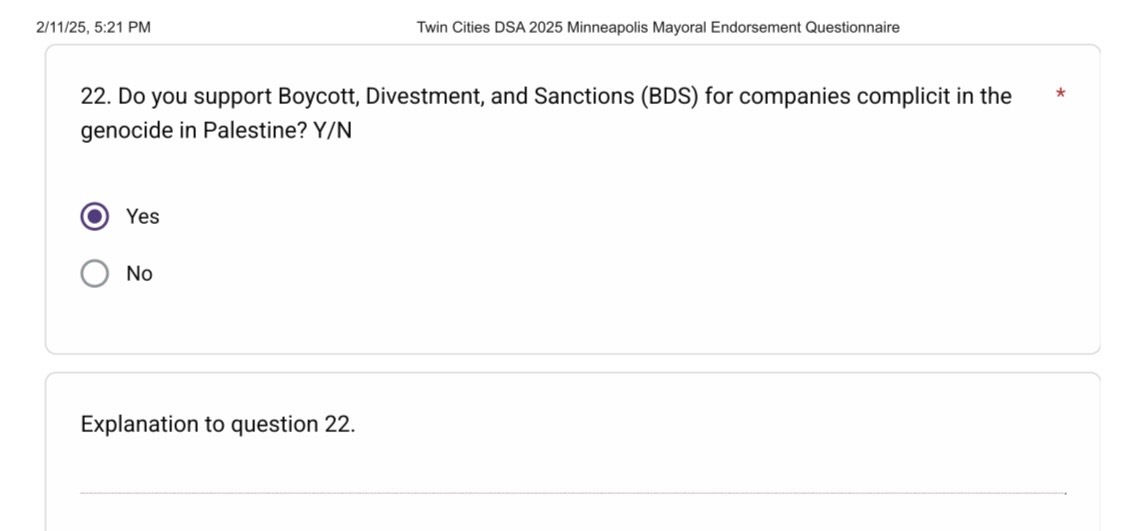
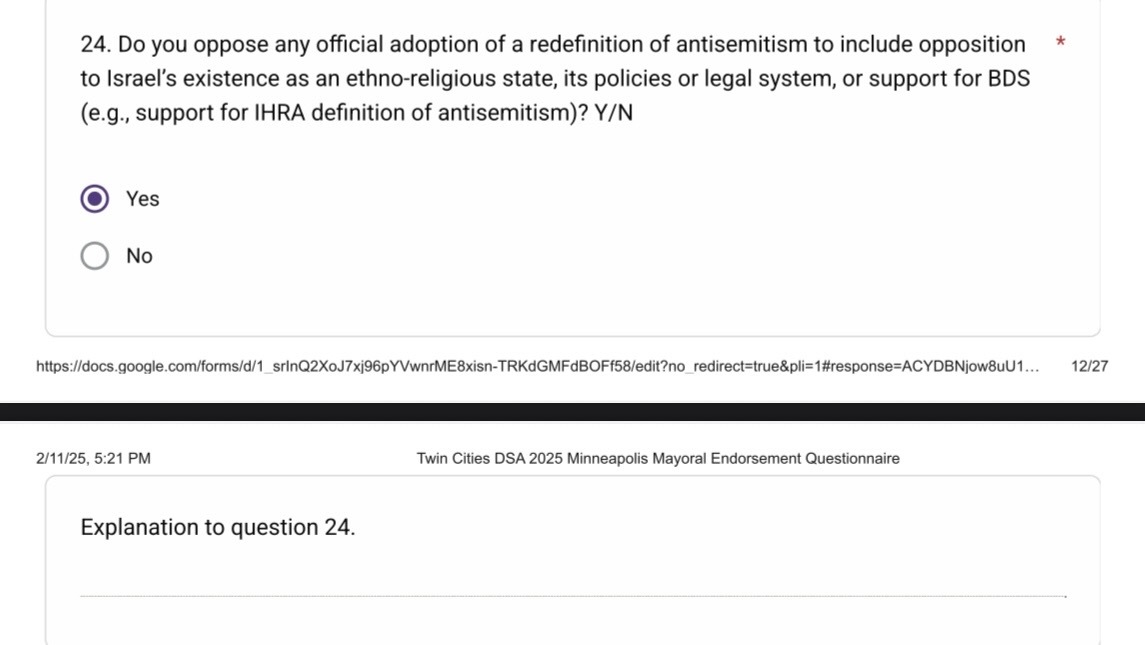
Fateh has also voiced his support for the Boycott, Divestment and Sanctions movement targeting Israel, which some critics have accused of stoking antisemitism, and has pledged not to engage with the local Jewish Community Relations Council, according to a candidate questionnaire solicited by the Twin Cities chapter of the Democratic Socialists of America, a supporter of his campaign.
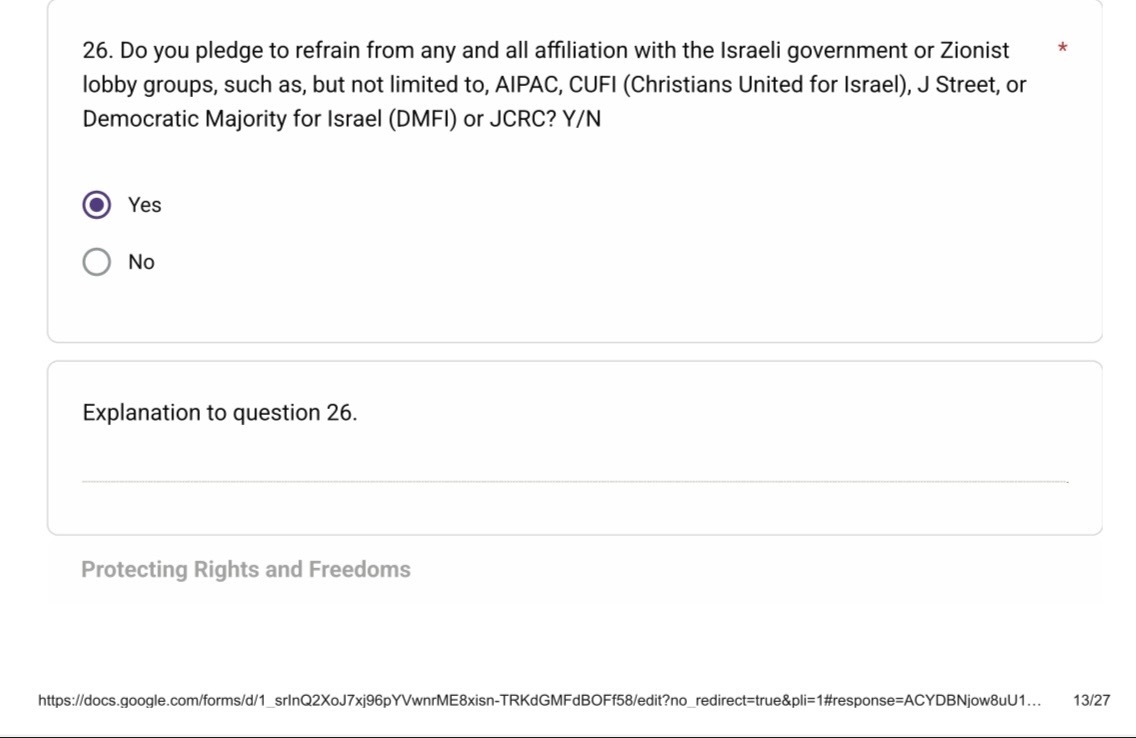
In the document, portions of which were recently obtained by JI, Fateh vowed to “refrain from any and all affiliation” with the JCRC, which the DSA dismissed as a “Zionist lobby group” akin to AIPAC, J Street and Christians United for Israel — even as the group is nonpartisan and represents the Jewish community to Minneapolis government officials.
Fateh did not share an explanation for his answer despite space to do so, according to the document reviewed by JI.
Steve Hunegs, executive director of the JCRC of Minnesota and the Dakotas, sharply criticized the state senator’s responses to the DSA in a statement to JI on Friday, while questioning his commitment to combating antisemitism.
“Sen. Fateh’s campaign slogan promises a ‘city that works for everyone,’” Hunegs said. “But how can Sen. Fateh be understood as anything other than a divider when he’s pledged to boycott Jewish organizations? Likewise, how can Jews feel that our safety will be a priority when Sen. Fateh’s staff traffic in antisemitism? As proud Jews we aren’t going to allow Sen. Fateh, the DSA or Hamas apologists drive us from the public square.”
Fateh’s campaign did not respond to a request for comment on Friday.
Fateh, who assumed office in 2021 as the first Muslim and first Somali American to serve in the Minnesota state Senate, won the state Democratic Party endorsement last month over Frey, who has challenged the results.
The mayor, 44, is the second Jewish mayor to represent Minneapolis and has been increasingly outspoken against rising antisemitism in the wake of Hamas’ attacks, while opposing some resolutions on Israel in the City Council that he has dismissed as one-sided. He has also been a critic of Israel Prime Minister Benjamin Netanyahu and his handling of the war in Gaza amid a worsening humanitarian crisis.
The Minneapolis mayoral candidate’s communications manager wrote on social media that Israel ‘must be dismantled’
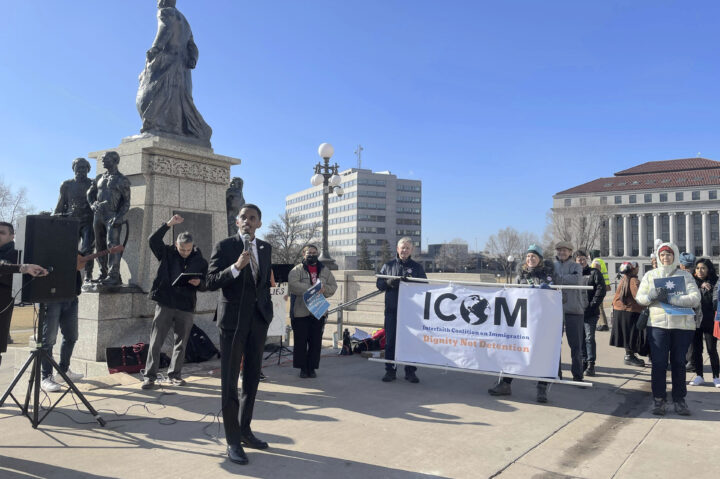
Trisha Ahmed/AP Photo
Minnesota Sen. Omar Fateh, of Minneapolis, speaks in front of the state capitol building in St. Paul, Minn., on Monday, Feb. 12, 2024.
Two political activists closely affiliated with Omar Fateh, a far-left Minnesota state senator who is now running for mayor of Minneapolis, have expressed a range of extreme views on the Hamas terror attacks of Oct. 7, 2023, endorsing the violence as a justified act of resistance and accusing Israel of initiating the war in Gaza, among other inflammatory comments.
Their rhetoric could fuel concerns among local Jewish leaders who sounded alarms about Fateh’s close alliances with anti-Israel activists after he won the state Democratic Party endorsement last month over Jacob Frey, the incumbent seeking a third and final term. Fateh, a 35-year-old democratic socialist whose campaign has recently drawn comparisons to New York City Democratic mayoral nominee Zohran Mamdani, has likewise been a staunch critic of Israel, calling its conduct in Gaza a genocide and pushing for a ceasefire 10 days after Hamas’ attack.
In a mayoral candidate questionnaire solicited by the Twin Cities chapter of the Democratic Socialists of America — which endorsed his bid after facing widespread criticism over its response to the Oct. 7 attack — Fateh also backed the Boycott, Divestment and Sanctions movement targeting Israel, according to portions of the form reviewed by Jewish Insider.
He additionally pledged, without explanation, to “refrain from any and all affiliation” with what the DSA questionnaire dismissed as “Zionist lobby groups,” citing AIPAC, J Street, Christians United for Israel and, most notably, the Jewish Community Relations Council, a nonpartisan organization that typically engages with a diverse group of elected officials in both parties. The local JCRC — which represents the Jewish community to Minneapolis government officials — has voiced reservations about its ability to interact with Fateh if he is elected, in light of his statements on Israel.
But some of Fateh’s campaign staffers have gone significantly further than the state legislator, raising questions over his tolerance for incendiary language on a sensitive issue that has stoked growing internal tensions in the state party and could possibly inflect an increasingly bitter mayoral race in the lead-up to November.
In a series of now-deleted social media posts, for instance, Fateh’s communications manager, Anya Smith-Kooiman stated that Israel “does not have a ‘right’ to exist” and “must be dismantled,” while amplifying comments dismissing widespread reports of sexual violence on Oct. 7 as “propaganda” and hailing the attacks as a form of “resistance” that succeeded where the peace process had failed.

Elsewhere, Smith-Kooiman, who joined Fateh’s campaign in December, according to her LinkedIn page, declared a month after the Oct. 7 attacks that she did “not give a flying f**k about Hamas,” claiming “the root of the problem is a colonial government segregating, ethnically cleaning, murdering Palestinians, stealing their land with impunity and not expecting a resistance group to violently fight back.”
“Colonial and oppressive regimes love to call everyone but themselves a terrorist,” she continued in her November 2023 post to X, now removed from her profile. “Israeli terrorism created Hamas and the cycle will go on and on until Israel, Britain and the U.S. are held accountable for their violence and thievery. Let’s address root causes: imperialism.”
More recently, Smith-Kooiman, in a June social media post, advocated for the release of what she called “all Palestinian hostages,” equating prisoners held in Israel with the captives who were kidnapped by Hamas on Oct. 7.
In addition to Smith-Kooiman, another activist with ties to Fateh’s mayoral bid, David Gilbert-Pederson, has unreservedly praised the Oct. 7 attack, which he has characterized as a heroic feat of defiance against “imperial domination.”

Speaking on a panel discussion about “connecting movements for collective liberation” in December 2023, Gilbert-Pederson — who has been listed as a Fateh campaign staffer in filings — celebrated “what happened collectively for the people of Palestine on Oct. 7,” saying it was not his place to cast judgment on the violence.
“We as Americans, people who live in the imperial core, our job is to stand in unconditional solidarity with those resisting oppression,” Gilbert-Pederson, a close ally of Rep. Ilhan Omar (D-MN), explained in his panel remarks. “Unconditional solidarity does not mean that we get to say, ‘Oh, this tactic you did, we don’t really like that,’ or, ‘We agree with you, but I think that some of your methods are too extreme.’ That’s not what unconditional solidarity means.”
“We live in the core of the empire,” he said, “so it is our job to demand that our government divest from Israel, divest from the colonial project, and start to free the U.S. as well.”
Broadly summarizing his approach, he argued that “all resistance to that kind of imperial domination is justified.”
Fateh’s campaign did not respond to a request for comment on Wednesday about Gilbert-Pederson and Smith-Kooiman, both of whom have previously faced some scrutiny for their rhetoric on Israel and Oct. 7, or his answers to the DSA’s questionnaire.
For his part, Frey, a Jewish Democrat, has been outspoken against rising antisemitism in the wake of Hamas’ attacks. The mayor, 44, has clashed with the City Council over anti-Israel resolutions he has dismissed as one-sided, even as he has condemned Israeli Prime Minister Benjamin Netanyahu and his government’s handling of the ongoing war in Gaza.
Asked about any ideological differences between him and Massie, Reed offered a one-word answer: ‘Israel’

Kentucky State Legislature
Kentucky state Sen. Aaron Reed
Local and national Republicans are eyeing Kentucky state Sen. Aaron Reed as a potential primary challenger to Rep. Thomas Massie (R-KY), as President Donald Trump and his political allies mount an aggressive effort to unseat the incumbent lawmaker.
Reed, a first-term Kentucky lawmaker, identifies as a supporter of Israel and has offered support for the U.S. strikes on Iran that Massie has vocally opposed.
Massie has long been a thorn in the side of Republicans, opposing many high-profile bills, including Trump’s signature “big, beautiful” budget reconciliation bill, and is also a regular opponent of U.S. support for Israel and legislation to combat antisemitism. The president’s allies recently launched a $1 million ad blitz against Massie, the opening salvo of a Trump-backed effort to unseat the lawmaker, who has swatted down previous primary challenges.
Reed, in a brief interview with the Louisville Courier Journal this week, said that he has “no plans yet” to enter the House race, and will make a decision on running “when God tells me.” In the meantime, the White House plans to host Reed in Washington in the coming weeks to discuss a potential primary challenge, Politico reported.
Middle East policy is emerging as a key divide between the two Republicans: Asked by the Courier Journal about any ideological differences between him and Massie, Reed offered a one-word answer: “Israel.” Reed’s Kentucky state Senate biography page lists him as a member of the Kentucky-Israel Caucus.
While Massie was one of the most vocal Republican critics in Congress of the Trump administration’s decision to strike Iranian nuclear facilities, introducing a war powers resolution that aimed to stop U.S. military action against the Iranian regime, Reed has been openly supportive of the strikes.
“President Trump’s decisive strike on Iran’s nuclear sites was a masterclass in leadership. Using 6 bunker busters from our Air Force B-2 bombers and Tomahawk missiles from our U.S. Navy submarines, we took out Fordow, Natanz, and Esfahan with precision,” Reed said on X. “This bold move may have stopped WW3 before it started. No other military could’ve pulled this off. God bless our American warriors.”
The state lawmaker later described the U.S.-brokered ceasefire between Israel and Iran as “another masterclass in leadership.”
“This is what Peace Through Strength looks like,” Reed said. “America doesn’t run from a fight. We stand tall, we stand firm, and under decisive leadership, we win.”
Reed is a former Navy SEAL who now owns two gun stores and was elected to the statehouse in 2024.
The state senator, frequently seen wearing a cowboy hat, was elected in spite of opposition from the Senate Republican caucus, narrowly beating a party-backed candidate by approximately 100 votes in one of the most expensive Kentucky Senate primaries in state history and garnering the support of Massie himself.
At the time, Reed called Massie, “one of America’s greatest congressmen,” and described himself as aligned with Massie, a position that could complicate a primary challenge.
According to Louisville Public Media, Reed is aligned with the informal “liberty wing” of the Kentucky GOP, which takes a harder line on government spending and social conservative issues than the GOP majority.
Asked about Reed’s chances of unseating Massie if he enters the race, Al Cross, a longtime political commentator in Kentucky, referred Jewish Insider to comments he made to the Associated Press that Massie likely remains the favorite given his strong following in his district “made substantial by personal contact, not just social media.”
Elon Musk, the former Trump advisor-turned-rival said this week that he’d donate to support Massie against the Trump-backed challenge.
Reed did not respond to a request for comment from JI.
Please log in if you already have a subscription, or subscribe to access the latest updates.
 Continue with Google
 Continue with Apple