














































Wahab holds narrow lead over AIPAC-backed Hernandez in East Bay congressional runoff
Over one-third of the vote remains to be counted in the too-close-to-call race
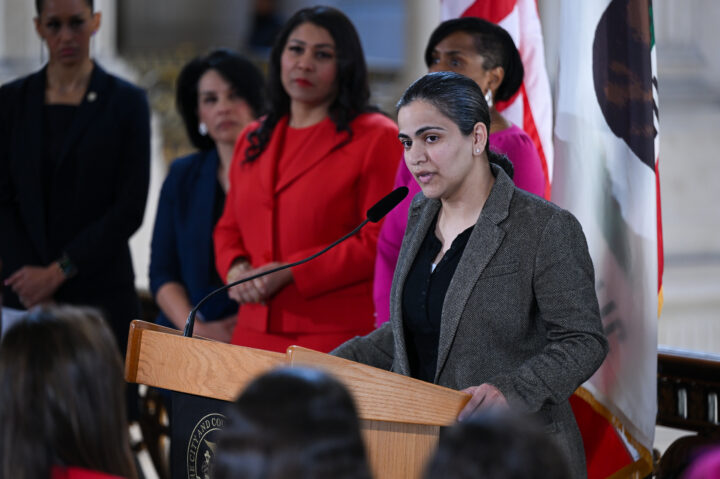
Tayfun Coskun/Anadolu Agency via Getty Images
State Sen. Aisha Wahab speaks during the Bay Area Abortion Rights Coalition (BAARC) and commemoration of the 50th Anniversary of Roe v. Wade event at the City Hall in San Francisco, California, on January 25, 2023.


 Add JewishInsider on Google
Aisha Wahab, a progressive state senator from California, held a narrow lead on Wednesday over Melissa Hernandez, a moderate former local mayor, in the special election runoff for an East Bay House seat that drew a late surge of outside spending from AIPAC.
With 62% of the vote counted in Tuesday’s election, Wahab had 51%, leading Hernandez, at 49%, by just two points or 1,356 votes, according to the unofficial initial returns. The preliminary figures — with about 40,000 votes yet to be tallied — largely accounted for early mail ballots. Experts said that the late mail and Election Day votes would, in the coming days, paint a clearer picture of the direction of the race.
The early count suggested Hernandez benefited in part from the district’s estimated 73,000 Republican voters, whom AIPAC’s super PAC, United Democracy Project, had courted in the closing stretch of the race to help boost her campaign.
Wahab, the first Afghan American and Muslim to serve in the California state Senate, was viewed as the favorite, after she finished with double-digit leads over Hernandez in the special and the regularly scheduled primary elections. Hernandez won just 17% in the top-two special primary, trailing Wahab by more than 25 points. But two Republicans on the ballot tallied about 25% — indicating the GOP vote was likely to swing heavily to the more moderate Hernandez in Tuesday’s election.
The runoff in California’s progressive-leaning 14th District, which could take several days to be tallied, will decide who completes the remainder of former Rep. Eric Swalwell’s (D-CA) term, after he resigned from Congress amid sexual abuse allegations that he has denied.
The race had flown under the radar until UDP and other allied groups began spending for Hernandez, drawing national attention to the increasingly bitter contest. In just over two weeks, UDP invested nearly $2.5 million in the runoff. UDP’s spending — which appears to be its final investment before the general election — came after the group had failed to thwart Abdul El-Sayed, the far-left Democratic nominee in Michigan’s costly Senate race.
Some Jewish community leaders and Democratic strategists who followed the East Bay contest had questioned UDP’s last-minute decision to spend in the primary, seeing Wahab as practically unbeatable.
Still, one Democratic strategist told Jewish Insider before the election that outside polling had shown a tighter race than expected, suggesting that UDP had seen a plausible path to victory that was borne out in Tuesday’s results.
“We made a race that wasn’t close when we started into a nail-biter,” Patrick Dorton, a spokesperson for UDP, said in a brief statement to JI on Wednesday.
UDP’s spending also drew opposing expenditures from J Street, the progressive Israel advocacy group, and American Priorities, a new anti-Israel super PAC created to counter AIPAC — both supporting Wahab.
In a statement on Wednesday, American Priorities said it expected Wahab would prevail “once every ballot is counted.”
“Aisha Wahab ran a great campaign and she is leading today because voters in this district know her and trust her,” the group added, while accusing UDP and its allies of spending “millions trying to buy a different outcome.”
In contrast with the Michigan Senate primary and other Democratic races this cycle, Israel and Middle East policy were not among the top issues of debate in the runoff, despite some key differences between the candidates.
Wahab criticized Hernandez for having “denied the genocide in Gaza,” for example, and during a recent interview with the antisemitic streamer Hasan Piker expressed support for the Block Bombs Act — which would impose restrictions on weapons sales to Israel.
One Jewish leader who met with Wahab, however, told JI she was “not someone who wants to see Israel disappear” and had expressed interest in developing a “strong relationship with the Jewish community.” He raised concerns that UDP’s attacks could end up pushing Wahab to more hostile positions on Israel policy.
“My record speaks for itself,” Wahab said in a statement to JI before the runoff. “I have consistently stood against antisemitism, supported the safety and security of Jewish communities, worked in partnership with Jewish colleagues, and defended Israel’s right to exist — while also maintaining that as an American elected official, I have both the right and the responsibility to question the policies of any foreign government and to speak out when innocent civilians are suffering.”
No matter the outcome of Tuesday’s runoff, the two candidates will face off again in the general election this November for a full two-year term.
More Stories
analysis
Sounds of silence: Texas Dems decline to speak out against Piker before his UT event
exclusive
Rosen, Lankford press Zuckerberg over antisemitic bot accounts on Facebook, Instagram
exclusive
Gottheimer urges DOJ to investigate N.J. city for antisemitic discrimination
QUESTIONABLE COMPANY
Jewish letter in support of El-Sayed includes numerous fringe figures
BUSY IN BEIRUT
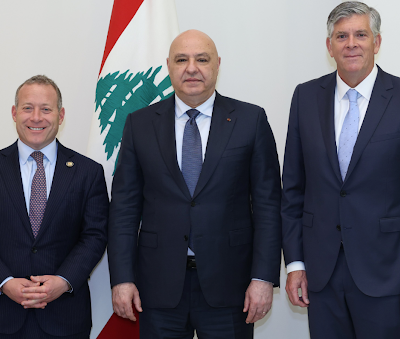
Reps. Gottheimer, LaHood visit Lebanon, meet President Aoun
in the courts
‘Un-American’: Ohio man who tried to host home minyan tells of harassment ahead of Supreme Court case
Please log in if you already have a subscription, or subscribe to access the latest updates.
 Continue with Google
 Continue with Apple