


























Pretoria angered after Israel offers parched region water management aid; Jerusalem declares South African diplomat serving Palestinians persona non grata
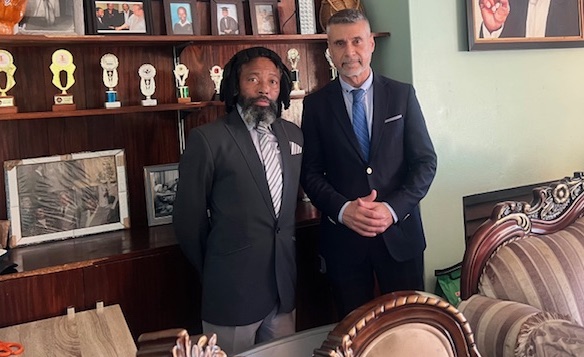
Amb. David Saranga/X
King Buyelekhaya Zwelibanzi Dalindyebo, the monarch of the AbaThembu people, and Amb. David Saranga.


 Add JewishInsider on Google
South Africa and Israel banished each other’s highest-ranking diplomat serving in each country, after a video of Israel offering water technology and medical aid to minority tribes angered Pretoria last week.
The diplomatic row took place days before Congress is expected to vote on renewing the African Growth and Opportunity Act, which would allow many products from the continent to enter the U.S. duty-free. The Trump administration has considered removing South Africa from the program because it is a “unique problem,” as U.S. Trade Representative Jamieson Greer described it in December. Removal from AGOA would adversely affect about half of South Africa’s exports to the U.S., its second-largest trading partner, Bloomberg reported.
Pretoria declared Israel’s chargé d’affaires, Ariel Seidman, persona non grata on Friday, and hours later, Israeli Prime Minister Benjamin Netanyahu and Foreign Minister Gideon Sa’ar expelled South African envoy Shaun Edward Byneveldt, whom they called “the senior diplomatic representative of South Africa.” Byneveldt is South Africa’s “ambassador to Palestine,” but he was based in Tel Aviv, and diplomats serving the Palestinians are accredited by Israel.
Israel and South Africa have not exchanged ambassadors in recent years. South Africa announced in 2019 that it had downgraded its embassy in Tel Aviv to a liaison office. Israel maintained an ambassador in Pretoria until South Africa petitioned the International Criminal Court to arrest Netanyahu and then-Defense Minister Yoav Gallant in 2023.
However, with an active Jewish community of over 50,000, Israel has dispatched Amb. David Saranga, the Foreign Ministry’s director of digital diplomacy and a former ambassador to Romania, to be a kind of ambassador-at-large, visiting South Africa for specific meetings and projects.
Saranga visited South Africa’s Eastern Cape last Sunday, as a guest of King Buyelekhaya Zwelibanzi Dalindyebo, the monarch of the AbaThembu people. The group is part of the Xhosa nation, the second-largest tribe in the country. Dalindyebo had visited Israel weeks earlier. The largest tribe, the Zulu, dominates South African politics through the African National Congress, the largest party in the country’s parliament.
In a post on X, Saranga characterized the Eastern Cape as “a region rich in heritage, poor in infrastructure,” noting that in some areas, “access to clean drinking water remains a luxury rather than a given” and “healthcare challenges are equally severe.” Saranga helped arrange partnerships between Innovation:Africa, Israel’s Sheba Hospital, Dalindyebo and other traditional leaders in the region.
Saranga and Dalindyebo held a joint press conference with other traditional leaders outside the tribal leader’s home during the Israeli diplomat’s visit last week, videos of which were posted to social media by the Israeli embassy. In one of them, Dalindyebo said of the South African government’s opposition to cooperation with Israel: “They can go to hell if they wish.” Saranga can be seen chuckling next to him.
“As a king, I am a bona fide head and owner of the land. If any government, if any constitution disputes that, someone must educate me afresh,” Dalindyebo said, asserting his authority to accept aid from Israel if he so chooses.
Days later, the Eastern Cape province’s premier, Lubabalo Oscar Mabuyane, expressed “shock and concern” that Israel acted without consulting his office, calling it “a clear breach of diplomatic protocol.” Israel argued to the South African Jewish Report that it was acting within diplomatic norms.
On Friday, South Africa’s Department of International Relations and Cooperation (DIRCO) gave Seidman a 72-hour deadline to leave the country following what it called “unacceptable violations of diplomatic norms and practice which pose a direct challenge to South Africa’s sovereignty.” According to DIRCO, the violations included a failure to inform the department of visits by “senior Israeli officials” and insults to South African President Cyril Ramaphosa on official Israeli social media accounts.
South African political news site The Common Sense reported that the ANC, of which Mabuyane is a member, was “panicked by an Israeli effort to expand a service delivery programme in the Eastern Cape and the positive reception to that programme by communities,” and “feared that positive imagery of ordinary South Africans cooperating with Israelis would be very damaging to the government’s hostile foreign policy towards Israel.”
The South African Jewish Board of Deputies contrasted DIRCO’s actions against Israel with its “willful blindness toward ongoing international atrocities [in Sudan and Iran] … This glaring inconsistency exposes the hypocrisy at the heart of DIRCO’s actions.”
“Given the dire lack of basic services for countless South Africans, it is striking that just days after Israel offered water solutions to a desperate community in the Eastern Cape, DIRCO expelled the Israeli charge d’affairs, diverting attention from real domestic issues,” the SAJBD added.
The South African Zionist Federation said that the expulsion of Seidman “is an act of staggering moral bankruptcy — a choice that exposes a ruling party more committed to ideological hostility than to the welfare of the people it has so profoundly failed.”
SAZF argued that DIRCO’s actions were “never truly about process, protocol, or sovereignty.”
“A diplomat was declared persona non grata not for espionage, not for misconduct, not for breaching protocol — but for the unforgivable crime of helping South Africans get water. Clean water,” the organization stated. “In a country where taps run dry, where children walk kilometers with buckets, where elderly women queue for hours at communal pumps, and where the state has normalised collapse, neglect, and decay, the ANC chose to punish the one party actually delivering solutions. … When water flowed where excuses had ruled, the ANC did not respond with humility or gratitude. It responded with expulsion.”
SAZF also accused the government of corruption: “What the ANC cannot tolerate is … aid that bypasses the patronage machine. Help that cannot be claimed, captured, or corrupted. … The message sent by this government is as obscene as it is clear: if assistance cannot be politically owned, it must be destroyed, even if people suffer.”
Zamaswazi (Swati) Dlamini-Mandela and Zaziwe Dlamini-Manaway traveled to the region earlier this month, ahead of an announced ceasefire between Israel and Hamas
Courtesy
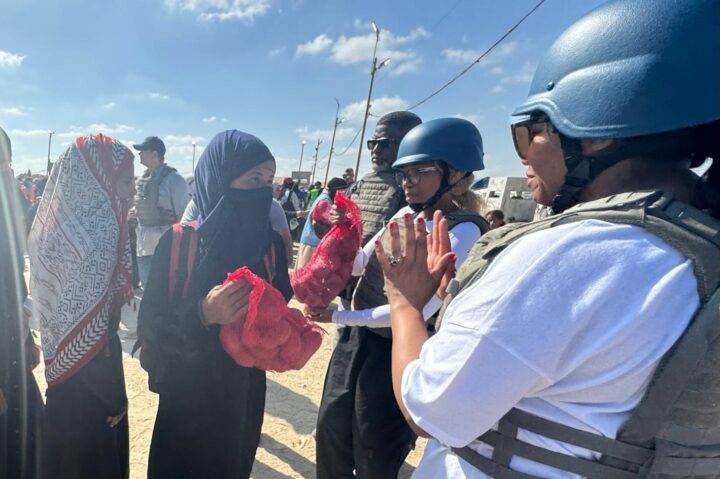
Zamaswazi (Swati) Dlamini-Mandela and Zaziwe Dlamini-Manaway assist the Gaza Humanitarian Foundation in its efforts to distribute aid in the Gaza Strip, Oct. 2025
“What has emerged from all my conversations is that the yearning for peace is very intense,” former South African President Nelson Mandela, visiting Israel in 1999 as part of a broader Middle East trip, said as he reflected on his meetings with leaders across the region. The trip came four months after Mandela, who built his legacy working to dismantle South Africa’s decades-long apartheid system and begin a process of national reconciliation, retired from politics.
More than a quarter century later — despite the ceasefire between Israel and Hamas, the degradation of Iran and its proxy network and numerous wars between Israel and its neighbors — that peace remains elusive. It was against that backdrop that two of Mandela’s granddaughters, Zamaswazi (Swati) Dlamini-Mandela and Zaziwe Dlamini-Manaway, traveled to Israel and the Gaza Strip earlier this month.
Their trip came amid strained relations between Pretoria and Jerusalem, whose leaders and senior officials have been increasingly at odds in recent years. The country’s Jewish community has raised concerns over South Africa’s deepening relations with Iran and aggressive posture toward Israel, which it accused of genocide in a December 2023 International Court of Justice filing.
Dlamini-Manaway and Dlamini-Mandela’s trip to Israel, organized by the National Black Empowerment Council, included meetings with Israeli hostage families and survivors of the Oct. 7, 2023, Hamas terror attacks, visits to Israel’s holy sites and a day on the ground in Gaza where Mandela’s granddaughters assisted the Gaza Humanitarian Foundation in its efforts to distribute aid in the enclave. They left the region days before a ceasefire between Israel and Hamas was announced and the remaining 20 living hostages were released.
The Mandela granddaughters “thought that this could be a unique opportunity to bring necessary attention to what’s being done, while at the same time, as mothers, being able to say that they did something that was in the humanitarian tradition of their grandparents,” Darius Jones, the founder and executive director of the NBEC, told JI.
During the women’s trip, a flotilla, led by anti-Israel activists including Greta Thunberg, made its way through the Mediterranean Sea in an effort to reach the Gaza Strip. Aboard one of the ships was their cousin Nkosi Zwelivelile “Mandla” Mandela, another grandchild of Nelson Mandela. The ships attempting to illegally reach Gaza were intercepted by Israel, and participants were deported to their countries of origin.
The approach taken by Dlamini-Manaway and Dlamini-Mandela was, Jones explained, to “really be a part of something that can have meaningful impact, rather than just try to do a performative stunt, which is not about the people, but more about self-aggrandizement.”
This interview has been edited and condensed for clarity.
Jewish Insider: What made you come to Israel now, in this moment? It’s obviously a very interesting point in time, and not necessarily one that would invite a lot of visitors.
Zamaswazi (Swati) Dlamini-Mandela: Coming to Israel has always been a lifelong dream. Both of our grandparents, Nelson and Winnie, visited Israel. And my grandmother, I remember when she came back, she was like, it’s a trip that we have to take whenever we can, in our own time.
I would have never imagined that I would be going in the middle of a war. When we were telling our families, they were literally shocked. Our kids were horrified, because they have this picture painted in their mind that there’s literally going to be missiles flying over our heads and all kinds of stuff. So it was scary for our family, but I think for us, we were like, what an opportune time to go.
For us, it’s important to actually go and actually experience the story for yourself. Coming from a high-profile family like ours, and also living in the media for years, all our lives have been pretty much lived in public, it’s very interesting what type of bias or viewpoints the news can take. So we always felt like, ‘Let’s go and see for ourselves. Let’s experience for ourselves, and let’s actually go on humanitarian missions to try and understand and really get to know what’s going on.’ For me, there’s no better way than actually physically being in a place to actually experience it. We’ve lived through wars here in South Africa, so that didn’t even scare me. It really wasn’t a thing that deterred me at all.
Zaziwe Dlamini-Manaway: I just knew that if my grandmother was alive, she would have said, ‘You definitely have to go, and make it as balanced as possible, and learn and don’t always take one side, because there’s always different sides to a story.’ So for me, I wanted it to be an experience where I could get both sides — the Israeli side and the Palestinian side. The first thing that I said when this trip came up was, ‘We have to go to Gaza.’ It was instinctive to me. It’s like, I have to go to Gaza, because that’s all we see in South Africa. We only see Gaza. We only see women and children. We only see Gaza flattened. So that was very important for me to see and witness for myself. Our grandmother and our family [have] been ridiculed in the media. So we are very, very cognizant of what we hear and what we take in, because we’ve lived it, and we know that the media can distort things tremendously.
JI: What did you know about Israel and about the region before this trip?
SDM: There’s the obvious history and the long-term conflict between Israel and Palestinians. I think for the most part, for me, I’ve consumed the history on a very high level. I didn’t have the same experiences that my grandparents had, because we were so much younger then, when my grandfather visited. At the time, you know, [Palestinian Authority President] Yasser Arafat was still alive. We were so much younger then. I know it as much as I think the average person knows it. But certainly this was a deep dive into a layered, complicated, complex, difficult history between a few nations.
So I would say before this, I almost didn’t know enough, but I certainly learned a lot, and I’ve come away so much more enriched by my time there. There’s words that you hear, like checkpoints, right? ‘Controlled movements,’ ‘apartheid states,’ those are the things that you always heard and because it’s similar to our history. So in a sense, I was like, ‘Oh, OK, this resonates with our history because of what we went through in apartheid.’ So I think those are the things that you always heard and you always knew about, and you always obviously read about, but when it comes to the actual details of the history, I can’t say I really knew it, but I certainly have come away way more enriched.
ZDM: It was a war. Our kids were terrified for us to go there. It’s a totally different country when you’re actually on the ground. Completely. It’s not what is perceived to us at home, I would say.
JI: You came at a time when we in Israel were approaching, now it’s past, the anniversary of the Oct. 7 attacks.
ZDM: [On Oct. 7, 2023,] I remember all I heard on the news was there was an attack in Israel, and there were hundreds of people killed. But I didn’t actually understand the magnitude and the gravity of what actually happened on Oct. 7. We went to a kibbutz that was literally at arm’s length … to Gaza. It was a complete massacre, a complete massacre of innocent children, parents, people who survived the Holocaust. That was completely horrifying to me, I couldn’t even imagine … the [Nova music] festival. I think Swati cried the whole day at the site.
I did not understand the magnitude of what actually happened on that day. It wasn’t portrayed to me. I was completely horrified by what happened. It was a massacre, it was deliberate, it was calculated. It was a complete obliteration of innocent women and children on one day. It pains me to think that this happened.
But the people that I met — the mothers, the survivors — are still so hopeful, are still so resilient. It’s really something to look up to, because even through so much pain and agony and anguish, they are still hopeful that there could be a place where they can both — both nations, both people, Jewish and Palestinians — can live in a place peacefully, even in their differences. But Oct. 7, for me, was horrific. It was horrific, and it wasn’t told to us South Africans, I can safely say.
SDM: Hearing firsthand accounts of people who actually survived that day and what they experienced and their loss of loved ones, families whose loved ones were kidnapped, dead and alive, children who were kidnapped, and how children were used as pawns to negotiate with the government.
Going into Gaza on that specific day [with the Gaza Humanitarian Foundation] was also incredible, because you heard so many stories about aid not being delivered, aid not getting to the people and malnutrition. And it’s not perfect, right? In any war, nothing is going to be perfect. Aid delivery is never going to be perfect. What we were a part of, what we experienced, was an organization that certainly is trying to make their impact. There were 10,000 or so women and children that we saw that were able to be fed, that, if [they] needed medical care, there was medical care that was available to them.
On the flip side of that, you have [Israeli] families that are still grieving the loss of loved ones who have not even returned, the hostages that still have not returned. The sheer devastation on both sides was very apparent that day. I think that was my biggest takeaway, that there’s suffering on both sides. Like Zaziwe said, to talk to and hear the stories of people who survived and who still have so much hope for the country and who still want peace. They’re desperate for peace.
And I think the fact that we were also there on the day when [President Donald] Trump and [Israeli Prime Minister Benjamin] Netanyahu met to talk about a peace deal and a peace agreement, to us, was a turning point, the fact that there can be peace, and there’s a potential peace that can come to the region. But the healing still needs to come. So we pray for peace. We really pray for peace. We’ve seen what the devastation is firsthand with our own eyes, we’ve seen it, and so we pray that the peace deal will come through, and it will hold.
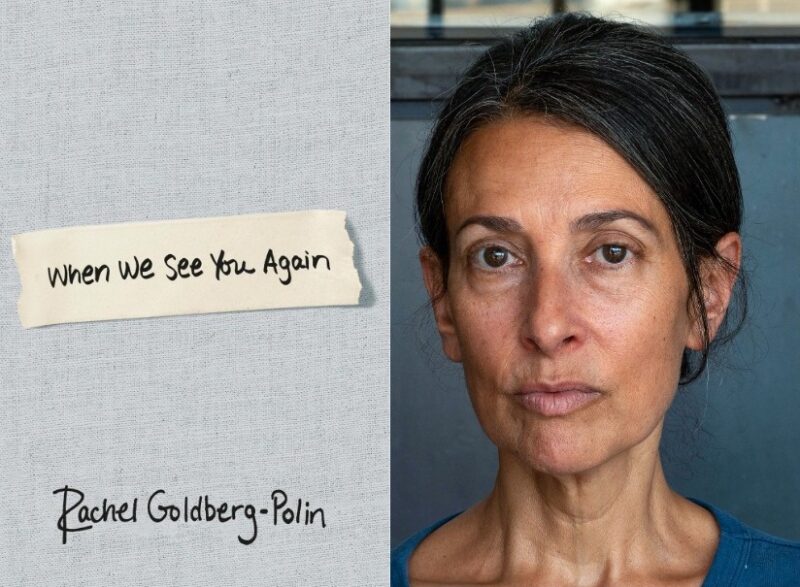
JI: I saw that you met with Rachel Goldberg-Polin. Swati, before you got on the call, Zaziwe was telling me about her son, and she said he was 25 — he was basically the same age as Rachel’s son, Hersh. What was that meeting like?
ZDM: First of all, this woman is so strong. She is such a strong, strong lady. And what she went through with her only son, I can’t even imagine. She held on for over 300 days knowing that her son was alive, and then literally, right before the IDF was going to rescue him, [Hamas] killed him. Hearing her story was so profound, and really was a moment that I’ll never forget in my life. She literally took me into the day of what happened on Oct. 7. She had a smile on her face the whole time. When she was telling us a story, she was sad, but she had a smile on her face. She was so hopeful, and she was the perfect example of resilience, the perfect example of a person who wants peace, the perfect example of someone who said, ‘I really hope there’s an Israel where Palestinians and Israelis and Jews can live side by side.’ And she even said, ‘I really hope that one day we can have a TRC [Truth and Reconciliation Commission] like you guys.’ She’s like, ‘That’s my wish. I want us to have a TRC in Israel.’
I was in awe of this woman. My son is 25 in two weeks, so I completely resonated with her. I completely connected with her, and she was so loving, and just wanted peace for her country that she loves, and I will never forget that experience. She literally described that day to me, from morning to end, from the moment when she found out that her son was actually held captive, and the message that he sent to her was, ‘Mommy. I’m sorry.’ Can you imagine? I mean, can you imagine knowing that your son has been injured, has been taken captive? Living in agony that your son is in captivity and is injured over 300 days? I can’t even imagine. I can’t even imagine. She is resilience to me, she really is.
SDM: She was so strong, she was so kind, she was so determined to still ensure that the rest of the hostages get home. She gave us so much hope, because she’s like, ‘I want peace.’ It’s not something that you would expect. She’s an advocate for the families who probably don’t have the strength to be able to tell the story or to be able to push and fight. We were just in awe of her. She has hope, and she wants healing for the nations. She really wants healing for the nations. And she spoke about the women and children of Gaza. She spoke about what that means to her and the impact of that. So she spoke about everything. It wasn’t just a one-sided view for her. The human spirit’s ability to be able to live through such trauma and tragedy and still come out and still be so hopeful, for me, she was the epitome of that.
JI: You went to a Gaza Humanitarian Foundation site. What was that experience like? What did you do? What were your interactions like?
ZDM: It was a very hot day, very, very hot. And I think they said that they had about, I think about 4,000-5,000 people before? So on that day they were expecting the biggest crowd. It was about 10,000 people that they were expecting. So, I mean, TV doesn’t do justice. It really doesn’t. When you’re actually on the ground and you actually see people running, literally running for food, it’s something that you can’t even explain.
The men arrive first, they get their supplies, which is pretty chaotic for about 15, 20 minutes, because they’re literally fighting for their aid. So it’s very, very chaotic. And then after that, the women are so organized. The women and children are so organized. They stand in a line, unprovoked, very simple. They just know the order of things. So Swati and I and our team literally spent the whole day giving food, potatoes and eggs to the women, and there were lots of children as well. And I must say, everyone was just so grateful. They were so grateful. They were happy that we were there. There was no interruption. There was nothing untoward. All they came to do was to get food, nourishment and go home. And this happens every single day for these people. You saw the repercussions of what a war entails. Women and children are the biggest casualties, literally, because there were more women and children there.
JI: What was their physical condition?
ZDM: I don’t know what they looked like before. I mean, obviously you could see the desperation. You could definitely see the desperation in them. They definitely do need aid and food, they definitely do. But I’ve seen what the hostages look like when they leave [Gaza], when they’ve been released, and they literally are people who are starving. They’re people who haven’t had anything for months on end. So for me, I compared what I’ve seen to the people, the women and children of Gaza. It’s a totally different image, for me, from what I saw. Obviously they want nourishment. Obviously they would like three meals a day. Obviously. But for me, there’s a difference between what I’ve seen between the hostages who were released and what I saw firsthand in Gaza, I’ll leave it at that.
SDM: It was nice to see that the organization works with Palestinians to facilitate the aid to the community. It’s obviously going to grow over time, which is what was explained to us, because 750,000 people had moved down to that area. GHF is building a bigger facility to actually give more aid, medical care in a way in which it’s safe for the people, as safe as it can be, for the Palestinians who need the aid, as well as the people who are working on the ground. I think from what you heard and what you saw, they’re really doing their best to try and see that they can bring aid to as many people as they can as an organization. I kept saying, ‘Is the food going to run out?’ But they kept bringing trucks. They just kept bringing trucks with potatoes and food packs for the families and nutritional snacks.
And I think seeing firsthand what, like Zaziwe just said, women and children are always the biggest casualties of war, children that are not in school. It was incredibly insightful for us to be able to at least be there and participate and see it and be able to help GHF on that day, because they do so much.
JI: So talking about being in Gaza distributing aid, the irony of the both of you being there distributing aid last week, was that at the same time that was happening, a cousin of yours was on a flotilla headed to Gaza. It’s the irony of ironies that there was a grandchild of Nelson Mandela delivering aid — actually, there were two — and it wasn’t the one who was making splashy headlines.
SDM: We’re a big family, first and foremost. Our grandparents have always, always taught us to carve out our own paths and walk our own journeys. My grandfather, he went to Israel and he went to Gaza. My grandmother didn’t have the opportunity to do the same. So for me, at the end of the day, we’re grateful that he’s back home and he’s safe, he’s fine. We were on a humanitarian mission for ourselves. We are a family that has different ways in which we want to contribute to society and to humanity, and we allow each other room to do that in ways which are befitting to the individual.
So we were on our own mission, and we respect his mission and what he was doing. Ultimately, at the end of the day, the goal is about the people, right? That’s what the goal is, and that’s what the goal should always be. It should be about the people.
ZDM: I think that Swati said it perfectly. We’re a big family, and we all have our own ways of doing things, but the ultimate goal is peace to the region, and we want this war to end. We want all the hostages to come home, and we want the innocent people of Gaza and the Palestinians to also get the aid and food that they need. And we just want this war to end so we all have different ways of doing it, and we’re thankful that he’s home, but for us, we were there as granddaughters of Nelson and Winnie Mandela.
JI: People like to take your grandfather’s words and legacy to shape specific narratives around current events, and this has been going on for many, many years all around the world. When it comes to Israel, the term apartheid gets thrown around a lot. You’ve now been on the ground. You have experienced Israel for yourselves. How do you feel about the politicization of your grandfather’s words when it comes to Israel?
SDM: I’m not a politician. I have been asked many times in my life if I’m going to follow in their footsteps, and I always say, given my personal experience, I don’t really have the desire to. I think that we have a great example to follow in a leader like my grandfather. I’m not here to be a global activist like our grandparents were. I’m just here to make my little, little, little impact in whichever small way that I can, and I think just to be educated. The world has changed so much. Like Zaziwe said, if my grandmother was alive, my grandmother would have come to the region, without a shadow of a doubt, she would have been there because she was — both our grandparents were — those people. But I’m my own person, and I’m here to walk my own path. And people, I think it’s time for us to just walk our own paths.
ZDM: I would say, I think our grandfather’s legacy quotes, what is lived up to is so powerful and so profound, and people can distort it and make it their own. Educate yourself, really educate yourself and really listen, really listen to the words that he spoke, maybe listen to what he said and just do your homework. I just don’t think that you should take and hear everything that you hear from the media, or take what somebody says on a stage and take it for what it really, really is.
This trip was so important to us now, because I thought we have to go there ourselves and see it. And I know most people won’t have the opportunity, but it’s really important to invest time into what you actually believe in, what your conviction tells you about yourself. You need to actually invest. I mean, just not take it at face value, because it can be so distorted, and you can be so deceived, completely deceived, about a situation or about a person.
What I took away was, for me, I literally, if I’m passionate about something, and I can sit there and say, I believe in this, or A, B, C or D, I need to actually put in the time to actually understand what I actually am investing my time and what I’m putting my name behind. Grandad’s name is used and said all over the world, but I find that people don’t really, don’t listen to what he actually really said, both him and my grandmother. You just have to put in time and really invest and educate yourself about what you believe in.
The secretary of state also assured lawmakers that all Trump administration officials are unified in their opposition to Iran maintaining domestic nuclear enrichment capabilities
BRENDAN SMIALOWSKI/AFP via Getty Images
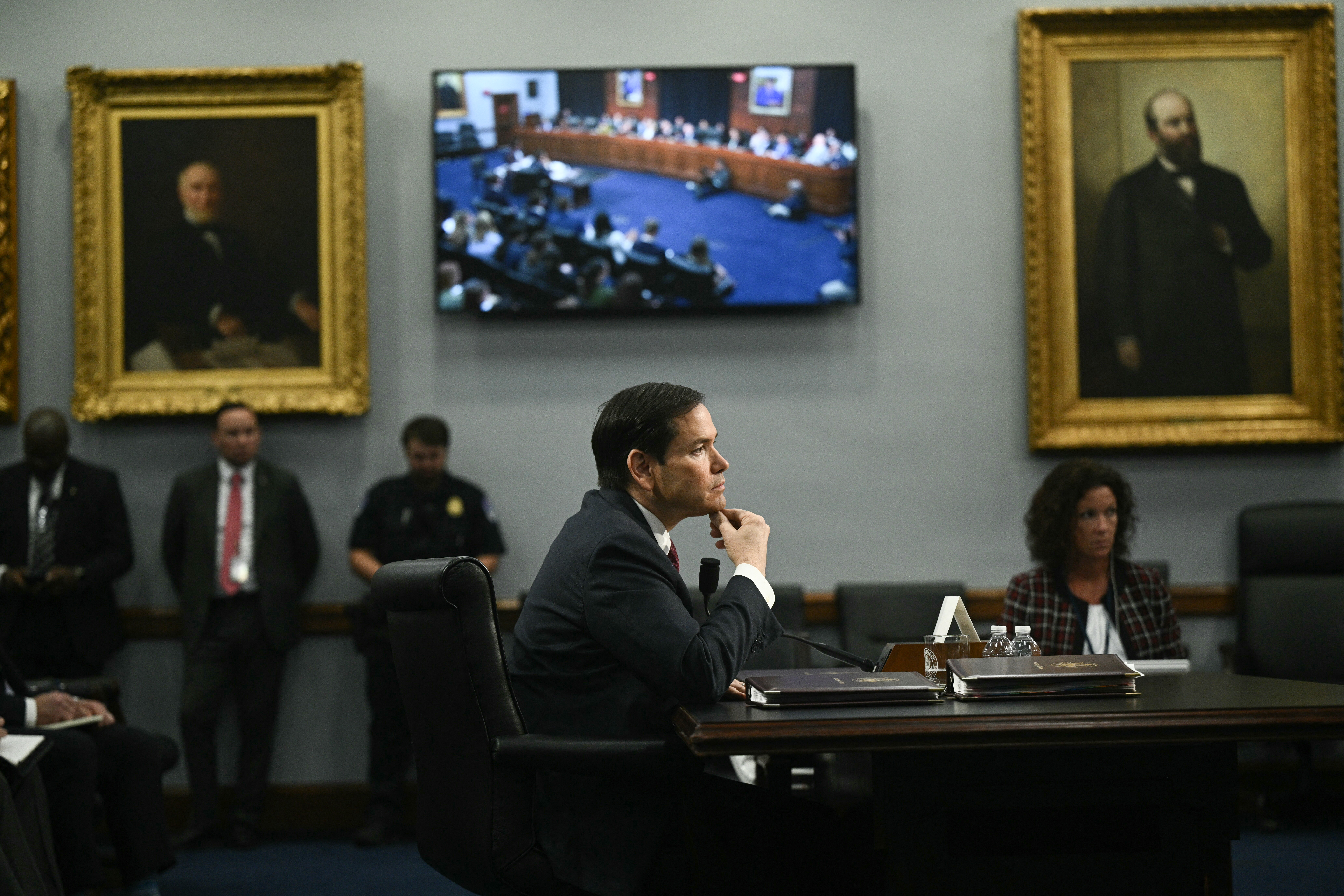
Secretary of State Marco Rubio testifies before a House Subcommittee on National Security, Department of State, and Related Programs hearing on the budget for the Department of State, on Capitol Hill in Washington, DC on May 21, 2025.
In his second consecutive day of hearings on Capitol Hill, Secretary of State Marco Rubio said that he expects that additional Arab countries will join the Abraham Accords by the end of the year, if not earlier.
“We do have an Abraham Accords office that is actively working to identify a number of countries who have lined up and already I think we may have good news, certainly before the end of this year, of a number of more countries that are willing to join that alliance,” Rubio said a House Foreign Affairs Committee hearing on Wednesday.
The comments are consistent with other recent remarks by President Donald Trump and Middle East envoy Steve Witkoff.
Rubio added that the administration is currently working on selecting an ambassador for the Abraham Accords, as required under law, to submit for congressional confirmation.
He said that there is “still a willingness” in Saudi Arabia to normalize relations with Israel, but “certain conditions are impediments,” including the Oct. 7, 2023, Hamas attacks on Israel and the ensuing war.
Rubio’s testimony largely reinforced and added on his comments the day before, on issues including Iran and Syria.
He again insisted that all elements of the Trump administration, including Vice President JD Vance and Witkoff, are unified behind the position that Iran cannot be allowed to maintain its capacity to enrich uranium.
And he affirmed that U.S. law requires that any deal with Iran be submitted to Congress for review and approval, noting that he had been in Congress when that law was passed.
At an afternoon hearing with the House Appropriations Committee, Rubio again said that sanctions relating to Iranian proxy terrorism or other malign activities will not be impacted by a nuclear deal that does not address those subjects. Republicans in the past have questioned the distinction between nuclear and non-nuclear sanctions, particularly as part of the original 2015 nuclear deal, which took a similar approach. And they’ve argued that any sanctions relief would allow Iran to expand its support for regional terrorism.
Rubio said the administration is continuing to ramp up sanctions on Iran, and said that European parties to the deal are “on the verge” of implementing snapback sanctions on Iran. He said that the administration would support legislation to implement additional sanctions on Iran’s oil sector.
He denied knowledge of a Tuesday leak by administration officials that Israel was making plans to strike Iran’s nuclear program, adding, “I also don’t think it’s a mystery, though … that Israel has made clear that they retain the option of action to limit Iran from ever gaining a nuclear capability.”
Expanding on comments he made the day before, Rubio said that he favors moving the mission of U.S. security coordinator for Israel and the Palestinian territories under the authority of the U.S. ambassador to Israel so that it can be a better-integrated part of the U.S.’ Israel policy. But he vowed that the core function of the office will continue.
Rubio denied reports of talks between the United States and Saudi Arabia about potential nuclear cooperation outside of a “gold standard” deal, which would include banning domestic enrichment.
The secretary of state reiterated comments about the critical necessity of providing sanctions relief to Syria to help contribute to stability, but he said that continued sanctions relief “does have to be conditioned on them continuing to live by the commitments” that the Syrian government has made verbally, including to combat extremism, prevent Syria from becoming a launchpad for attacks on Israel and form a government that represents, includes and protects ethnic and religious diversity.
He indicated that the U.S. is not actively working to shut down the United Nations Relief and Works Agency, but pledged that the United States will not be providing any further aid to or through that organization and will use its power and funding to look for alternatives.
He said it will be up to other countries whether they continue working with UNRWA, though he noted that the U.S. has been the agency’s largest donor.
Rubio said that he would be supportive, in concept, of legislation to expand current U.S. anti-boycott laws to include compulsory boycotts imposed by international organizations. That legislation was pulled from a House floor vote after right-wing lawmakers falsely claimed it would ban U.S. citizens from boycotting Israel.
Pushing back on calls for the U.S. to withhold weapons sales to the United Arab Emirates over its support for one of the parties involved in the Sudanese Civil War that the U.S. has found is committing genocide, Rubio said that the U.S. is not fully in alignment with the UAE but argued that it’s critical for the U.S. to continue engaging with and maintain a strong relationship with the UAE for its broader foreign policy goals in the Middle East.
He said that maintaining such a relationship and expanding the U.S.’ diplomatic and economic relationship with Abraham Accords countries is also important to ensuring that the Accords continue to be successful.
Rubio said that the State Department had approved restarting aid programs for Jordan that remained frozen — though he noted most were initially exempted from the administration’s blanket freeze. He acknowledged that the frozen programs had been “a source of frustration for [Jordan], and frankly for me.” He continued, “Ultimately, we’re going to get all those programs online, if they’re not online already.”
In a heated back-and-forth with Rep. Pramila Jayapal (D-WA), who was brandishing a pocket Constitution, Rubio again defended the administration’s policy of revoking student visas from individuals accused of involvement in anti-Israel activity on college campuses, saying that they are coming to the United States to “tear this country [apart]” and “stir up problems on our campuses.”
Addressing the case of Rümeysa Öztürk, a Tufts University graduate student that supporters have said was detained solely for writing an op-ed in a student newspaper criticizing Israel, Rubio claimed the situation is not as has been represented. “Those are her lawyers’ claims and your claims, those are not the facts,” Rubio said.
Asked by Jayapal about a comment — “Jews are untrustworthy and a dangerous group” — made by an Afrikaner refugee recently admitted to the United States from South Africa, Rubio said that he would “look forward to revoking the visas of any lunatics you can identify.”
But when presented with the fact that the individual in question was admitted as a refugee, not on a visa, Rubio said that refugee admissions are “a totally different process,” adding “student visas are a privilege.”
Please log in if you already have a subscription, or subscribe to access the latest updates.
 Continue with Google
 Continue with Apple