














































Plus, inside J Street's turn against Iron Dome

Anna Moneymaker/Getty Images
Sen. Chris Murphy (D-CT) speaks during a news conference following the weekly Senate Democratic policy luncheon meeting at the U.S. Capitol Building on September 19, 2023, in Washington, DC.


 Add JewishInsider on Google
Good Tuesday morning.
In today’s Daily Kickoff, we have the scoop on United Democracy Project’s $790,000 ad buy targeting GOP Rep. Thomas Massie in Kentucky, and report on Sen. Chris Murphy‘s praise for dozens of Iranian ships that bypassed the U.S. blockade of the Strait of Hormuz. We interview Rachel Goldberg-Polin about the release of her new book, out today, and report on Jack Schlossberg’s plans to skip upcoming Jewish candidate forums in the Manhattan congressional district where he is mounting a bid. Also in today’s Daily Kickoff: Sue Altman, Idan Ofer and Jessica Chastain.
Today’s Daily Kickoff was curated by JI Executive Editor Melissa Weiss and Israel Editor Tamara Zieve, with assists from Danielle Cohen-Kanik and Marc Rod. Have a tip? Email us here.
What We’re Watching
- Yom HaZikaron, Israel’s Memorial Day, will conclude later today as the country moves directly into Yom HaAtzmaut, Israel’s Independence Day. A prerecorded official torchlighting ceremony meant to mark the transition between the holidays will air this evening at Mt. Herzl in Jerusalem.
- Argentine President Javier Milei will be among those to participate in the torchlighting ceremony in Jerusalem, which traditionally honors supporters of Israel and designees from across Israeli society who are honored for their contributions to the country.
- EU foreign ministers are meeting today in Luxembourg, where Spanish Foreign Minister José Manuel Albares is leading an effort for the bloc to suspend its cooperation agreement with Israel.
- Talks between the U.S. and Iran, which were slated to begin today, remain unclear as both sides send mixed signals over the status of the negotiations. Iran has reportedly informed regional mediators that it plans to send a delegation today even as it publicly distances itself from the talks, while unnamed U.S. officials said Vice President JD Vance will travel to Islamabad today ahead of the expiration of the two-week ceasefire.
- The Senate is set to vote for a fifth time on a war powers resolution limiting U.S. actions in Iran.
- This afternoon, the Helsinki Commission is holding a hearing on Capitol Hill on Iranian support for Russia.
- Also this afternoon, the Senate Foreign Relations Committee is convening senior State Department officials for a hearing on U.S. counterterrorism efforts in Africa.
- The House Ethics Committee is holding a sanctions hearing for Rep. Sheila Cherfilus-McCormick (D-FL), as the Florida Democrat faces allegations that she illegally misdirected FEMA funds.
What You Should Know
A QUICK WORD WITH JI’S josh kraushaar
Amid the downbeat assessment of Israel’s political standing in the U.S., two new polls that came out last week suggest that the Jewish state still can rely on a sizable, if largely Republican, base of support.
The biggest takeaway from these two new polls — one commissioned by NBC News and one conducted by the respected GOP firm Echelon Insights — is that Israel has become a partisan issue, with Democrats turning decidedly against the Jewish state while Republicans have become strongly supportive.
All told, the polls show the public evenly divided over Israel, with the splits largely along party, ideological and generational lines. The results indicate President Donald Trump’s embrace of the Jewish state has caused Democrats to take an instinctively more negative view — in a continuation of how politics has generally operated in the Trump era.
Echelon Insights, which surveyed 1,022 respondents from March 12-16, found 44% of respondents held a favorable view of Israel, while 38% held an unfavorable view. While Israel’s plus-6 net favorability score is nothing to write home about, the results are noticeably better than a recent Pew Research Center poll that drew outsized attention for finding Israel’s net favorability rating at a dismal minus-23 (37/60%).
SCOOP
AIPAC’s super PAC takes aim at Thomas Massie with major ad buy

United Democracy Project, the AIPAC-linked super PAC, is taking aim again at Rep. Thomas Massie (R-KY) with a significant buy for a television ad targeting the anti-Israel congressman, Jewish Insider’s Marc Rod reports.
About the ad: The buy totals $790,000 for a week of broadcast and cable ads in the Cincinnati, Louisville and Charleston media markets. The ad, which features a graphic of Massie’s face on a flipping coin, accuses Massie of changing his policy positions from when he was first elected, saying he “started out as a conservative Republican but now votes with liberal Democrats” on issues including border security and Israel.
Exclusive: The Republican Jewish Coalition announced Tuesday that it is endorsing four Republican Senate candidates for open seats: Rep. Ashley Hinson (R-IA), former Rep. Mike Rogers (R-MI), former U.S. Attorney Kurt Alme in Montana and former Republican National Committee Chair Michael Whatley in North Carolina, JI’s Marc Rod reports.
on whose side?
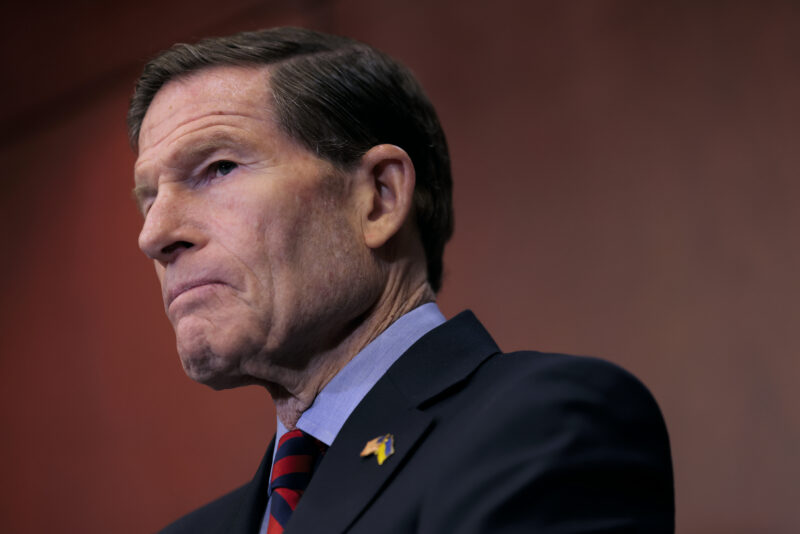
Sen. Chris Murphy applauds Iranian ships against U.S. Navy

Sen. Chris Murphy (D-CT) on Monday appeared to cheer on the reported evasion by more than two dozen Iranian ships of the U.S. maritime blockade of the Strait of Hormuz, Jewish Insider’s Melissa Weiss reports.
Comment card: The Connecticut Democrat, one of the most vocal critics of Israel in the Senate, responded on X with a one-word comment — “awesome” — to an unconfirmed report that at least 26 vessels belonging to the shadow fleet, which is overseen by the Islamic Revolutionary Guard Corps, had bypassed the blockade.
IRON DOME DECISIONS
J Street accelerates leftward shift as progressives move to end Iron Dome funding

In recent years, as the progressive Israel advocacy group J Street joined left-wing calls to place restrictions on U.S. military aid to Israel, support for funding Israel’s Iron Dome missile-defense system remained a sacred cow for the group. That consensus has shattered in recent weeks. Instead of steering the conversation among Democrats, where J Street maintains a solid base of support, the organization found itself playing catch-up to the progressive lawmakers it supports after several of them announced in early April that they think the U.S. should no longer fund Iron Dome batteries, Jewish Insider’s Gabby Deutch reports.
Change in position: J Street released a statement on April 13 calling for the U.S. to cease funding Iron Dome batteries, arguing that Israel — a wealthy nation with a substantial defense budget — should pay for its own missile-defense systems. In conversation with JI on Monday, J Street’s chief policy officer, Ilan Goldenberg, acknowledged that progressives’ rapid shift on the issue factored into J Street’s announcement, even as the group insists it was moving in that direction anyway. “It stirred up the conversation a little more, but that memo was already written,” Goldenberg said.
ABSENCES AND ANSWERS
Jack Schlossberg to skip Jewish candidate forums as questions remain around his stance on Israel
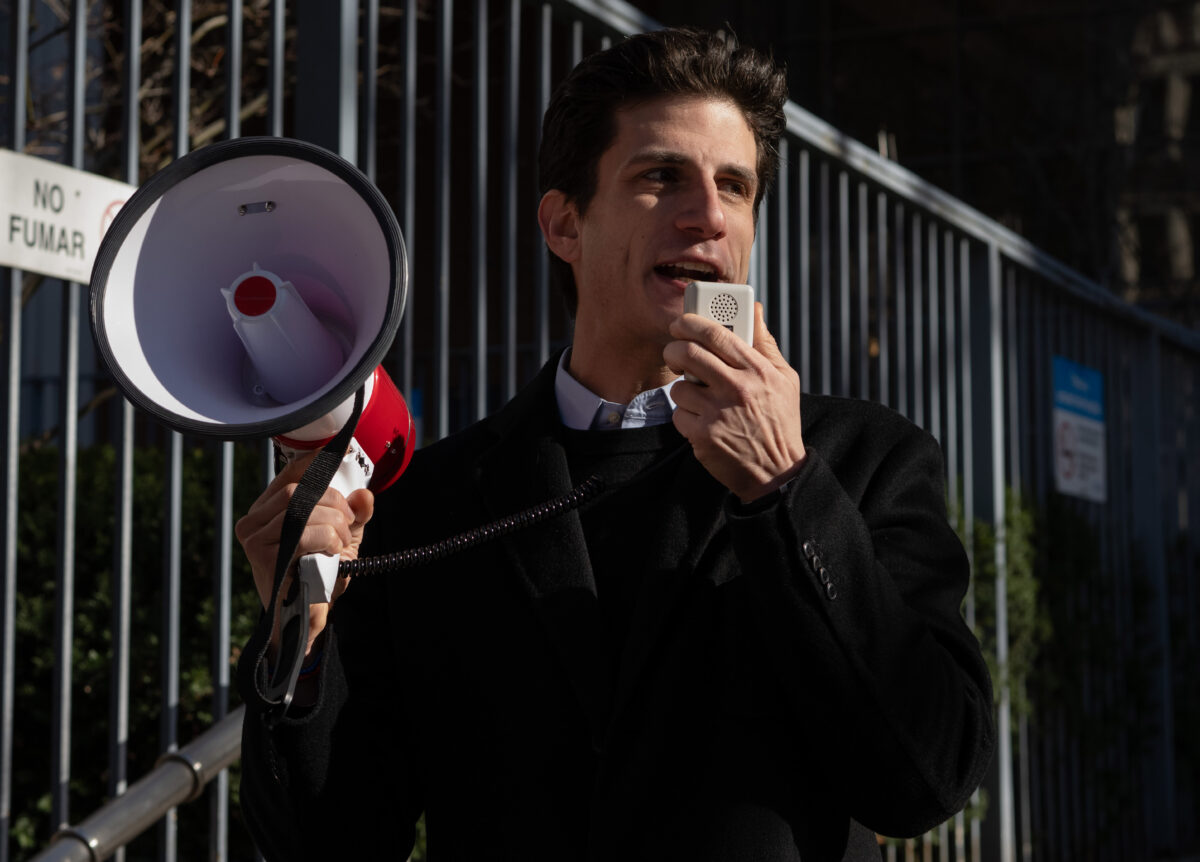
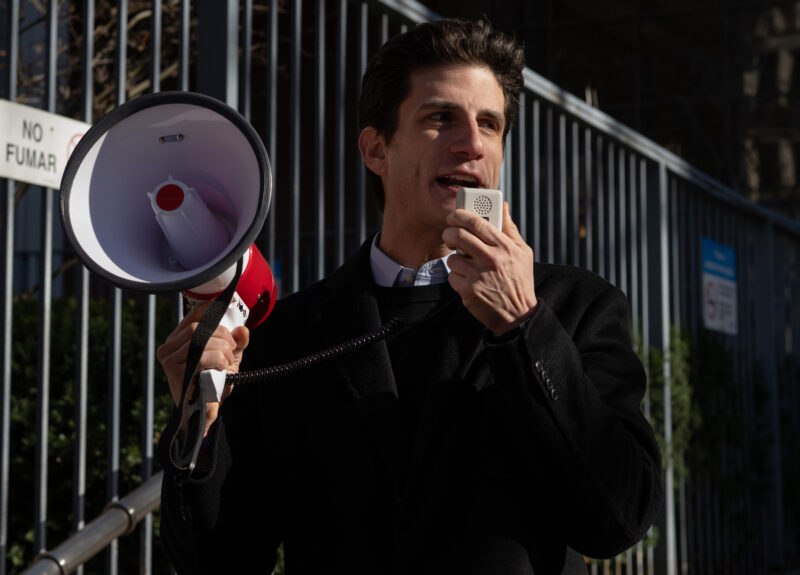
As Jack Schlossberg gains a foothold in his primary campaign for a coveted open House seat in the heart of Manhattan, his views on Israel policy are drawing closer scrutiny, as he begins to stake out a stance on the increasingly heated subject of Democratic debate. His decision to skip at least two upcoming Jewish community candidate forums occurring next month, meanwhile, is also raising some eyebrows in the district, which has a large Jewish constituency, Jewish Insider’s Matthew Kassel reports.
Not attending: On Middle East policy, the 33-year-old Kennedy scion has embraced positions that place him to the left in the crowded field on Israel issues. Some Jewish leaders say that they are interested in hearing more from Schlossberg as he emerges as a leading candidate in the race. He attended Shabbat services in March at the Conservative Park Avenue Synagogue on the Upper East Side, a day after the terrorist attack against Temple Israel in suburban Detroit.
PHILLY FIGHT
Progressive heavyweights line up behind Israel critic Chris Rabb in crowded Pa. congressional primary

Anti-Israel Pennsylvania state Rep. Chris Rabb has collected a series of high-profile congressional endorsements in recent days as he seeks the Democratic nomination in Pennsylvania’s 3rd Congressional District against state Sen. Sharif Street and Ala Stanford, Jewish Insider’s Marc Rod reports. Rabb has made his criticism of Israel and pro-Israel groups a central part of his House campaign, including accusing Israel of committing genocide.
Backing Rabb: Rabb has been endorsed in recent days by Sen. Chris Van Hollen (D-MD) and Reps. Jamie Raskin (D-MD), Ilhan Omar (D-MN), Ro Khanna (D-CA), Pramila Jayapal (D-WA) and Jared Huffman (D-CA), as well as the Philadelphia Inquirer and the Congressional Progressive Caucus. Far-left streamer Hasan Piker has also praised Rabb on his show.
LOVE AND PAIN
In new book, Rachel Goldberg-Polin recounts the before and after (and ever after) of her son’s life and death

In the months after the death of Hersh Goldberg-Polin at the hands of his Hamas captors, his parents became the faces of a unique kind of grief — one that they experienced in the public eye. Rachel Goldberg-Polin recounts some of those moments in her new book, When We See You Again, which comes out today, a chronicle of her life before, during and after her son’s captivity and murder, Jewish Insider’s Melissa Weiss reports.
Writing as therapy: “I don’t think of this book at all as a memoir or a tell-all,” Goldberg-Polin told JI. “It’s like little Tupperware of pieces of a life that was, and then figuring out a life that is, and how do you do this? How do we do this, breathing in a world where we no longer have air?” She had started writing because she found it therapeutic. “I couldn’t bear the intensity of the suffering that I was carrying; [it] was making my knees buckle and my soul buckle,” Goldberg-Polin explained.
Worthy Reads
MBS Scales Back: The New York Times’ Vivian Nereim observes Saudi Arabian Crown Prince Mohammed bin Salman’s pivot away from his grandiose Vision 2030 endeavor to more modest projects and advancement amid financial challenges. “Over the past 10 years, the government has managed to reduce its reliance on oil revenue, finding new sources of funding by introducing taxes and fees. But the prince’s plans and ambitions have grown more rapidly than the state’s financial capacity. … But in recent years, the prince has refashioned himself as a mediator and diplomat, while pulling back on some of the most ostentatious elements of his plans.” [NYTimes]
The New Gulf Doctrine: In Semafor, former senior Qatari defense official Nawaf Al-Thani posits that the recent war with Iran has changed the decades-old doctrines that have guided regional relations for the last half-century. “It won’t happen overnight, because states don’t abandon half a century of accumulated practice in weeks, but change will come because the old formula was too generous and cautious. What follows this war will be narrower, harder, and more demanding. There may still be trust, but it will require verification of a far more definitive kind.” [Semafor]
The Missiles That Bind: In the Jewish New Syndicate, William Daroff and Betsy Berns Korn, respectively the CEO and chair of the Conference of Presidents of Major American Jewish Organizations, argue that “a shared civilian battlefield” is the “new reality” tying Israel to Gulf states in the wake of the war with Iran. “The experience no longer divides along national lines. The same missile that sent a family in Tel Aviv to a shelter sent a family in Abu Dhabi to do the same. The geography differs. The fear does not. The ceasefire quiets the sirens for now, but it does not erase what people across the region now understand.” [JNS]
Word on the Street
The Board of Peace’s Nickolay Mladenov suggested that negotiators working to get Hamas to agree to disarm have “maximum a couple of weeks” to reach a deal with the terror group, which has already blown past its deadline to accept the board’s disarmament proposal…
The Iranian ship seized by the U.S. Navy in the Gulf of Oman was believed to be carrying dual-use items from China that had potential military uses…
Pakistan has reportedly paused plans to move forward on a $1.5 billion deal to supply weapons to Sudan after Saudi Arabia, a close ally of Islamabad, with which it signed a defense pact last year, said it would not finance the sale…
The Wall Street Journal reports on the “hidden war within a war” that took place between Iran-backed militias in Iraq and Gulf states during the broader war with Iran…
CBS News goes to Tehran to meet with members of the country’s 12,000-strong Jewish community to discuss the recent U.S. and Israeli war with Iran…
Sen. Roger Wicker (R-MS), the chairman of the Senate Armed Services Committee, said that Congress “should not support the [Lebanese Armed Forces] unless it acts to disarm Hezbollah completely — and immediately”…
Sue Altman, a progressive organizer and former top staffer for Sen. Andy Kim (D-NJ), who is running for Congress in New Jersey’s 12th Congressional District, slammed her anti-Israel primary opponent Adam Hamawy for “cheerleading and wishing for the deaths of Israeli children” with his comments opposing Israel’s Iron Dome missile-defense system, Jewish Insider’s Marc Rod reports…
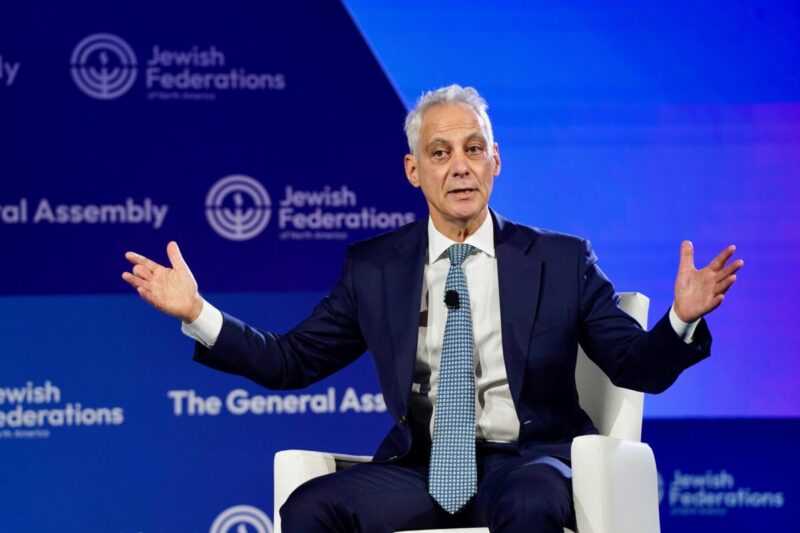
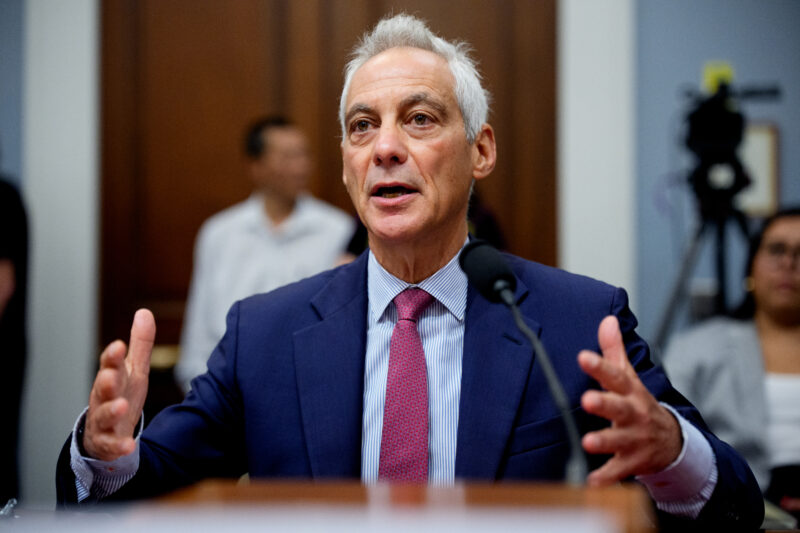
NBC News looks at former U.S. Ambassador to Japan Rahm Emanuel’s leftward shift on Israel as he mulls a potential White House bid in 2028…
In a Wall Street Journal op-ed, Alan Dershowitz, a registered Democrat who has long been a vocal critic of his party, announced he was reregistering as a Republican, arguing that the Democratic Party’s “hostility to Israel represents a deeper and more dangerous shift away from the center and toward a radical approach that is bad for America and the free world”…
Mohamed Abdou, a former Columbia University professor terminated for praising Hamas and advocating for jihad following the Oct. 7, 2023, terrorist attacks in Israel, is scheduled to speak on Tuesday at an event organized by New York University students, Jewish Insider’s Haley Cohen reports…
The Real Deal profiles Israeli businessman Idan Ofer as the founder of Quantum Pacific Group looks to break into the New York real estate market by acquiring offices to convert into residential properties…
The Washington Post does a deep dive into the finances of Nick Fuentes, who had made close to $1 million, largely through donations from superfans who pay for extra access to the far-right antisemitic conspiracy theorist…
Apple TV is expected to release the long-delayed thriller series “The Savant,” which stars Jessica Chastain as a researcher who uses the dark web to track down extremists and domestic terror groups; the series, which was delayed following the assassination of Charlie Kirk last September, is largely based on the work of an Anti-Defamation League employee…
Residents of Scarsdale, N.Y., are calling on the president of the school board to resign after his daughter, a student at Scarsdale High School, praised the recent vandalism of posters promoting a student-led Israeli culture club that were ripped down and discarded in a urinal…
U.K. Prime Minister Keir Starmer admitted to having unintentionally misled legislators about the security clearance of Peter Mandelson, who was appointed to be London’s envoy to the U.S. despite having failed vetting over his ties to Jeffrey Epstein; Starmer said that the government itself had been misled by lower-level Foreign Office staffers who greenlit Mandelson…
An Australian man who mimicked the terror attack at a Hanukkah celebration at Sydney’s Bondi Beach weeks after the deadly shooting and made antisemitic comments was sentenced to a year in jail; the man’s attorney said, “What he did say was antisemitic but he didn’t go out of his way to be an antisemite”…
Hungarian Prime Minister-elect Péter Magyar said that Budapest would comply with the International Criminal Court’s arrest warrant for Israeli Prime Minister Benjamin Netanyahu, should the Israeli leader enter Hungary; Netanyahu had earlier this month accepted an invitation to travel to the country later this year to take part in a ceremony commemorating the 70th anniversary of the Hungarian Uprising…
The Financial Times profiles Marion Maréchal, the niece of French far-right leader Marine Le Pen, as she works to build a broad right-wing alliance modeled on similar efforts by Italian Prime Minister Giorgia Meloni that would propel Le Pen’s National Rally party to electoral victory next year…
Swiss football club FC Basel, which was set to host Kanye West during his planned European tour this summer, canceled his upcoming show, following similar moves in the U.K., France and Poland, over West’s history of making antisemitic comments…
Israeli computer scientist Michael Rabin, who in 1976 was a co-recipient of the Turing Award, died at 94…
Pic of the Day

Israeli President Isaac Herzog laid a wreath on Tuesday morning at the Memorial Day ceremony for Israel’s fallen soldiers at the Hall of Remembrance on Mount Herzl in Jerusalem.
Birthdays

Once the top-ranked collegiate female tennis player in the U.S. and currently the head women’s tennis coach at the University of Oklahoma, Audra Marie Cohen turns 40…
Comedian, screenwriter, film director and actress, she returned to Broadway in 2018 after a 60-year hiatus, Elaine May turns 94… Art collector and museum trustee in Chicago, he is a retired attorney, Don Kaul turns 91… President and executive director of the Ben and Esther Rosenbloom Foundation, Howard Rosenbloom turns 87… British chemist and emeritus professor at the University of Cambridge, Sir Alan Roy Fersht turns 83… Award-winning folklorist, author, poet and editor of dozens of books, Howard Schwartz turns 81… Former lieutenant governor of Connecticut, Nancy S. Wyman turns 80… Southern California-based interior designer, Marilyn Weiss… Emergency physician in Panorama City, Calif., Joseph Edward Beezy… Founding director of Microsoft’s long-running research program on quantum physics at UCSB, an early winner of a MacArthur genius fellowship (1984), Michael Hartley Freedman turns 75… Rabbi, psychologist, writer and editor, Susan Schnur turns 75… Professor emeritus at George Mason University Law School (now known as Antonin Scalia Law School), he lectures frequently at Federalist Society chapters across the country, Michael Ian Krauss turns 75… Australian barrister who is a minister for local government following 31 years as mayor of Botany Bay, Ron Hoenig turns 73… Rabbi at Temple Ner Simcha in Westlake Village, Calif., Michael Barclay turns 63… Ukrainian-born industrialist, now also an Israeli citizen, he co-founded the Genesis Prize and the Genesis Philanthropy Group, Mikhail Fridman turns 62… Chicago-based lobbyist and attorney, Scott D. Yonover… Art collector and dealer, who together with his father and brother are reputed to own $1 billion of art including over 1,000 pieces by Andy Warhol, Alberto “Tico” Mugrabi turns 56… International breaking news reporter at The New York Times, Ephrat Livni… Founder of I Was Supposed to Have a Baby (IWSTHAB), an online community geared toward Jewish women experiencing infertility, Aimee Friedman Baron… Pulitzer Prize-winning investigative reporter for The New York Times and best-selling author, Jodi Kantor turns 51… CEO of Unistream, Ifat Bechor… Head of customer success at SnapStream, Eric Weisbrod… Retired actress and voice actress, her career included the voice of Regina “Reggie” Rocket on Nickelodeon’s “Rocket Power,” Shayna Bracha Fox turns 42… Investor relations officer at Gryphon Investors, he is a past president of the Berkeley Hillel, Robert J. Kaufman… Salesforce marketing and cloud consultant at Jackson Family Wines, Joshua Gibbs… Outfielder for MLB’s Texas Rangers, he is a two-time World Series champion and a two-time All-Star, he played for Team Israel in the 2013 and 2023 World Baseball Classics, Joc Pederson turns 34… Writer, magazine editor and actress, she was the founder and editor-in-chief of the since closed online Rookie Magazine, aimed primarily at teenage girls, Tavi Gevinson turns 30…
A spokesperson for Murphy said the senator's social media post was 'sarcasm'

Jemal Countess/Getty Images for Fair Share America
Sen. Chris Murphy (D-CT) speaks at the U.S. Capitol on April 10, 2025 in Washington, DC.
Sen. Chris Murphy (D-CT) on Monday appeared to cheer on the reported evasion by more than two dozen Iranian ships of the U.S. maritime blockade of the Strait of Hormuz.
The Connecticut Democrat, one of the most vocal critics of Israel in the Senate, responded on X with a one-word comment — “awesome” — to an unconfirmed report that at least 26 vessels belonging to the shadow fleet, which is overseen by the Islamic Revolutionary Guard Corps, had bypassed the blockade.
A spokesperson for Murphy clarified to Jewish Insider, “The tweet was sarcasm. Chris obviously thinks it’s terrible that Donald Trump continues to mishandle every aspect of a war he started but clearly has no strategy to end.”
Over the weekend, Murphy appeared at the Alex Soros-backed Global Progressive Summit in Barcelona, where he claimed that the U.S. was “in the middle of” a “totalitarian takeover.”
This post was updated at 9:25 a.m. ET on 4/21/2026 to add comment from Murphy’s office.
Attendees included Sen. Chris Murphy, Israeli lawmaker Ahmed Tibi, South African President Cyril Ramaphosa and Brazilian President Lula de Silva
Elisa Schu/picture alliance via Getty Images
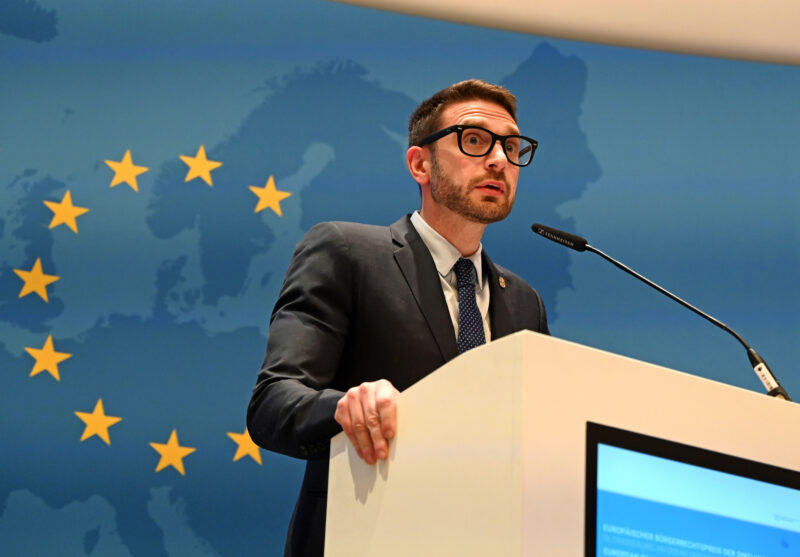
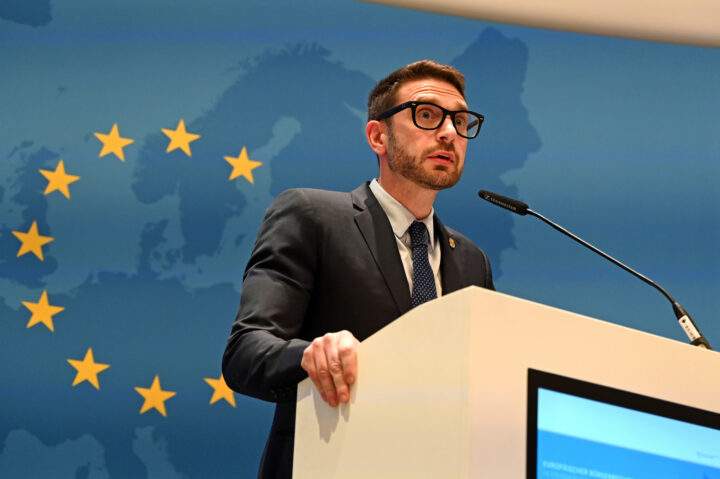
Alex Soros speaks during the presentation of the European Civil Rights Prize for Sinti and Roma on Oct, 23 2025.
A range of Israel critics, from Sen. Chris Murphy (D-CT) to Israeli lawmaker Ahmed Tibi, were among those gathered in Barcelona, Spain, over the weekend for the inaugural Global Progressive Summit, backed by left-wing philanthropist Alex Soros.
The conference brought together representatives from over 40 countries, offering, according to its website, “a necessary alternative to conservative and far-right forces.” Among its goals, the site says, is “to make progressive solutions visible and credible, proving they are the key to humanity’s prosperity.”
Spanish Prime Minister Pedro Sánchez, an outspoken critic of Israel who called on Saturday to downgrade EU-Israel relations, hosted the two-day conference, whose American attendees also included Minnesota Gov. Tim Walz, with Soros.
Sen. Bernie Sanders (I-VT), New York City Mayor Zohran Mamdani and former Secretary of State Hillary Clinton sent video messages.
South African President Cyril Ramaphosa, whose government petitioned the International Criminal Court to prosecute Israeli leaders, Brazilian President Lula de Silva and U.K. Justice Secretary David Lammy were also in attendance.
Tibi is one of the Knesset’s veteran Arab lawmakers and a former advisor to Palestinian leader Yasser Arafat. Other prominent attendees included former Palestinian Authority Prime Minister Mohammed Shtayyeh; Neera Tanden, CEO of the Center for American Progress; and Owen Jones, a writer and former advisor to former U.K. Labour leader Jeremy Corbyn, who was stripped of his leadership position and ultimately booted from the party over his antisemitic views.
Bringing some ideological diversity to the attendee lineup were Clinton, who has been broadly supportive of Israel in recent years; Tanden, a longtime Clinton confidante; and Albanian Prime Minister Edi Rama, a supporter of Israel and chairman of the Albanian Socialist Party. (Clinton’s longtime aide Huma Abedin is married to Alex Soros.)
Murphy said in his remarks that Trump “is out to end our democracy. We are not on the verge of a totalitarian takeover, we are in the middle of it.”
Lula called on U.N. Security Council members to “fulfill their obligation and guarantee peace,” and “stop this madness of war, because the world cannot bear anymore wars.”
Sánchez spoke about “attacks against the multilateral system, the repeated attempts to undermine international law and the dangerous normalization of the use of force,” an apparent reference to the recent war in Iran.
”They know their vision of how the world should be ordered is falling apart due to the tariffs and wars,” he added.
Soros, one of the progressive movement’s most influential donors and son of billionaire philanthropist George Soros, has also been outspoken against the war in Iran, praising Spain for refusing to allow the U.S. to use bases on its soil and reprimanding other European countries for not doing the same.
Trump has criticized Sánchez for Spain’s recalcitrance regarding the Iran war, including on Saturday, writing on Truth Social: “Has anyone looked at how badly the country of Spain is doing. Their financial numbers, despite contributing almost nothing to NATO and their military defense, are absolutely horrendous. Sad to watch!”
Israeli Foreign Minister Gideon Sa’ar responded to Sánchez’s call to downgrade relations between the EU and Israel, writing on X that Jerusalem “will not accept a hypocritical lecture from someone who has relationships with totalitarian regimes that violate human rights, such as [Recep Tayyip] Erdogan’s Turkey and [Nicolas] Maduro’s Venezuela, a government that receives thanks from Iran’s brutal regime and terrorist organizations and has dedicated itself to spreading antisemitism.”
Please log in if you already have a subscription, or subscribe to access the latest updates.
 Continue with Google
 Continue with Apple