
































The Senate majority leader also said the deal triggers requirements for the administration to provide Congress with the opportunity to review the agreement under INARA

Kayla Bartkowski/Getty Images
Sen. Majority Leader John Thune (R-SD) calls on reporters following the weekly Senate Republican caucus policy luncheon at the U.S. Capitol on January 14, 2025 in Washington, DC. Senators spoke about the Laken Riley Act which was named after a nursing student who was murdered in February 2024 by Jose Ibarra, a migrant from Venezuela who crossed the border in September 2022, that could give state attorney generals far-reaching veto power over federal immigration policy.


 Add JewishInsider on Google
With scant details provided by the Trump administration about the contours of the peace deal with Iran, Senate Majority Leader John Thune (R-SD) said on Monday afternoon that he doesn’t yet know enough about the administration’s deal with Iran to determine whether it is a good deal that will prevent Iran from acquiring a nuclear weapon.
“I don’t know enough about it to say,” Thune told reporters. “I think the issues are going to be compliance, and how you can enforce that, and what are the financial incentives that the Iranians have from our country, and what are they conditioned upon.”
The South Dakota Republican said that a positive deal would include financial incentives that are conditioned upon Iran winding down its nuclear program, the disposal of Iran’s enriched uranium and Tehran giving up its capacity to have a nuclear program in the future.
Thune also indicated that he believes the deal should be submitted to Congress for review under the Iran Nuclear Agreement Review Act.
“There are some requirements that are triggered because of the nuclear components of the deal, in terms of notification or informing Congress,” Thune said. “I know there is probably some expectation that there may be a vote at some point, whether that’s on a resolution of disapproval or something. We’ll see. I just don’t know enough about it yet. And I don’t think even the people who follow this stuff closely up here know that much.”
The administration hasn’t publicly commented on the issue of INARA yet, and has offered varying timelines for when it might release the text of the agreement. In media appearances, Vice President JD Vance has been framing specific nuclear issues as part of the next round of talks, rather than the current MOU, which could give the administration an avenue to attempt to dodge INARA review.
Thune said that “somebody” from the administration, whether that be Vance or other officials, “will need to” come to the Hill to brief members.
“For sure, our members are going to have a lot of questions about it,” Thune said.
Sen. John Barrasso (R-WY), the No. 2 Senate Republican, indicated he was similarly in the dark about the agreement.
“I haven’t seen anything from the president in terms of what’s in it. I’ve seen some press reports,” Barrasso told reporters. “I want to see what’s actually in it and I congratulate the president for his continued efforts.”
But asked whether he was concerned that the deal would be an effective surrender to Iran in providing sanctions relief, Barrasso rejected the idea out of hand.
“President Trump is never, ever going to do what you just suggested,” Barrasso said. “He’s not going to accept a deal that doesn’t eliminate nuclear weapons, isn’t enforceable, isn’t verifiable and doesn’t take Iran completely out of what they’ve been doing to try to undermine and attack us for the last 47 years.”
The order leaves out scrutiny of Qatar and Turkey — a strategy that experts say reflects both legal realities and geopolitical constraints
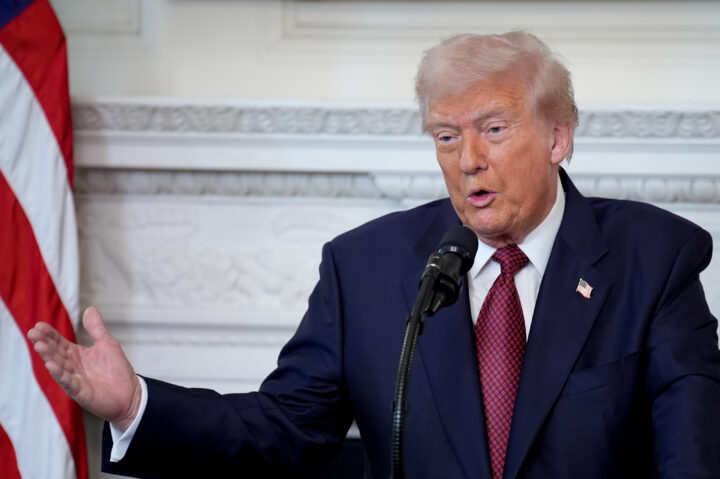
Yuri Gripas/Abaca/Bloomberg via Getty Images
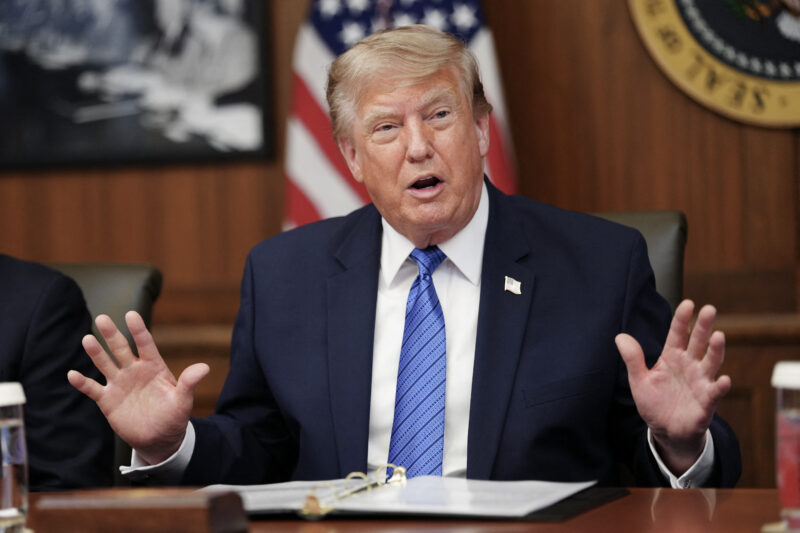
US President Donald Trump during a breakfast with Senate Republicans in the State Dining Room of the White House in Washington, DC, US, on Wednesday, Nov. 5, 2025.
President Donald Trump’s recent executive order directing a review of Muslim Brotherhood chapters for potential terrorism designations is limited in scope, and leaves out scrutiny of Qatar and Turkey — a strategy that experts say reflects both legal realities and geopolitical constraints.
The order, which was signed on Nov. 24, directs Secretary of State Marco Rubio and Treasury Secretary Scott Bessent to identify which branches of the Muslim Brotherhood — with a focus on chapters in Jordan, Lebanon and Egypt — should be designated as Foreign Terrorist Organizations and which should be deemed Specially Designated Global Terrorists.
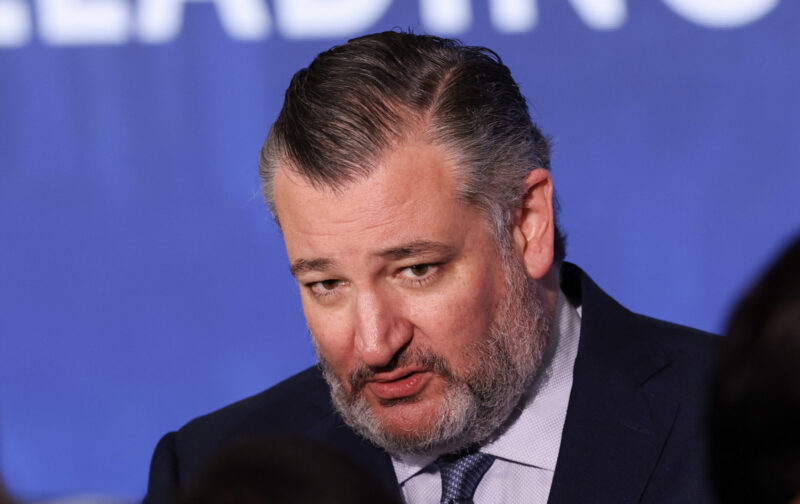
Rather than apply a terrorist designation to the entire Muslim Brotherhood as a whole, Trump’s executive order first looks at individual branches. This strategy is echoed in a Senate bill, sponsored by Sen. Ted Cruz (R-TX), which requires an assessment of every branch of the Muslim Brotherhood in an effort to designate the organization for its involvement.
The House version of the legislation was modified in committee last week and now more closely resembles the Trump executive order.
Michael Jacobson, a senior fellow at The Washington Institute for Near East Policy, said the approach “makes sense,” adding that a “one-size-fits-all” designation would be unproductive. He also noted that it will allow the administration to more effectively pursue chapters of the organization.
“The bottom-up approach will allow the administration to proceed in a more strategic and calculated fashion,” said Jacobson. “Targeting individual chapters and entities could also open up additional avenues for investigation and action. Once individual branches are designated, the Treasury could then use its authorities to sanction those supporting these branches. I believe that this approach is also more likely to gain support from other governments.”
This same sentiment was echoed by Cruz, who called the “bottom-up” approach the “correct and sustainable strategy.”
“That strategy is built into both the president’s executive order, which was a bold and critical breakthrough in advancing American national security, and my bipartisan legislation,” Cruz told Jewish Insider. “It’s the consensus strategy, and it’s the right one.”
David Adesnik, vice president of research at the Foundation for Defense of Democracies, told JI that while a single designation done in “one fell swoop” might be appealing, it faces legal and factual challenges.
“The administration was rightly concerned that a judge could overturn a designation of the entire organization if he or she assessed that it didn’t meet the legal thresholds. This would have serious consequences in several respects,” said Michael Jacobson, a senior fellow at The Washington Institute for Near East Policy. “If a judge ruled against a Muslim Brotherhood ban, it would be interpreted by some as a signal that the MB is not a terrorist organization, end of story — also a message the administration was likely eager to avoid.”
“This is not a single unified organization,” said Adesnik. “There’s no headquarters, no address, no person who is the head. It’s very hard to make a terror designation if you’re not exactly sure who you’re designating.”
Jacobson said the administration also looked to avoid a blanket designation out of concern that any legal challenges that followed could hurt efforts to reign in the Muslim Brotherhood.
“The administration was rightly concerned that a judge could overturn a designation of the entire organization if he or she assessed that it didn’t meet the legal thresholds. This would have serious consequences in several respects,” said Jacobson. “If a judge ruled against a Muslim Brotherhood ban, it would be interpreted by some as a signal that the MB is not a terrorist organization, end of story — also a message the administration was likely eager to avoid.”
Some critics of the executive order, including far-right influencer Laura Loomer, who is a confidant of the president, have expressed frustration over the administration’s decision not to name Qatar and Turkey in the order.
“The Muslim Brotherhood designation signed by President Trump today doesn’t have any teeth,” Loomer posted on X on Nov. 24. “This designation is probably the weakest designation of the Muslim Brotherhood we could have ever received, as it doesn’t even apply to Qatar and Turkey.”
Both Qatar and Turkey have strengthened ties with the United States during Trump’s second term, however the two countries are also significant supporters of the Muslim Brotherhood and have been known to provide sanctuary for their members.
“Claiming to get tough on the Muslim Brotherhood without a serious strategy to clamp down on the support provided by the movement’s most important state sponsors in Qatar and Turkey is not a serious policy,” said John Hannah, a senior fellow at the Jewish Institute for National Security of America. “Out of consideration for America’s longstanding partnerships with both countries and President Trump’s particular affinity for their leaders, one hopes that there is a plan to bring real pressure to bear on both Doha and Ankara in private to cease and desist their wide-ranging support for MB affiliates across the Middle East and globally.”
But while Qatar and Turkey’s ties to the Muslim Brotherhood are problematic, experts said they were not included because they do not currently have chapters of the organization in their countries, which the executive order focuses on.
“If we’re targeting chapters of the Brotherhood, there are no Brotherhood chapters in those countries,” said Adesnik. “So the real question is, how do you deal with what are effectively state sponsors of the Brotherhood? And does that state sponsorship cross the line into terrorism or sponsorship of terrorism?”
The Senate bill also does not address how Turkey and Qatar would be targeted as state sponsors of the organization.
However, experts and legislators remain wary of the threat posed by the two nations and have expressed that plans to root out the Muslim Brotherhood should account for Turkey and Qatar.
“Claiming to get tough on the Muslim Brotherhood without a serious strategy to clamp down on the support provided by the movement’s most important state sponsors in Qatar and Turkey is not a serious policy,” said John Hannah, a senior fellow at the Jewish Institute for National Security of America. “Out of consideration for America’s longstanding partnerships with both countries and President Trump’s particular affinity for their leaders, one hopes that there is a plan to bring real pressure to bear on both Doha and Ankara in private to cease and desist their wide-ranging support for MB affiliates across the Middle East and globally.”
With the current executive order, the White House is seeking to first designate branches in countries that experts said are involved in violence from within the country. This will also likely include entities that finance other Foreign Terrorist Organizations, according to Jacobson.
In Jordan, Lebanon and Egypt, threats connected to the Muslim Brotherhood have become national issues of concern.
“The Islamic Group [Muslim Brotherhood chapter in Lebanon] clearly built up the ability to carry out attacks against Israel and cooperated very openly with Hezbollah,” said David Adesnik, vice president of research at the Foundation for Defense of Democracies. “Authorities there really aren’t doing anything about it, partly because they lack power and have other issues to address. So it’s a pretty fair point.”
In April 2025, Jordanian authorities arrested 16 individuals and thwarted a plot that was to involve rocket and drone attacks inside the country. The suspects were linked to the Muslim Brotherhood, which is the government’s largest opposition group. Following the arrests, the Jordanian government banned the group entirely.
Adesnik said that while Jordan has initiated a “thorough crackdown” to address the problem, it is notable that there was “clearly a branch that had migrated toward planning for terrorism.”
In Lebanon, he called the Muslim Brotherhood a “persistent issue.”
“The Islamic Group [Muslim Brotherhood chapter in Lebanon] pretty openly built up a capability to carry out attacks against Israel and cooperated very clearly and openly with Hezbollah,” said Adesnik. “Authorities there really aren’t doing anything about it, in part because they don’t have a lot of power and they have a lot of other problems to deal with. So it’s a pretty reasonable case.”
Adesnik called the administration’s targeting of Egypt the “thorniest case from a definitional perspective.” He noted that while Egyptian President Abdel Fattah el-Sissi’s regime in Cairo has spent more than a decade cracking down on the Brotherhood “aggressively,” concerns still remain over the presence of branches such as Harakat Sawa’d Misr, also known as Hasm, which was already designated by the U.S. as a Specially Designated Global Terrorist Entity in 2018.
“The question is just what’s left of the Brotherhood there?” said Adesnik. “Is it doing enough to merit a designation?”
Please log in if you already have a subscription, or subscribe to access the latest updates.
 Continue with Google
 Continue with Apple