









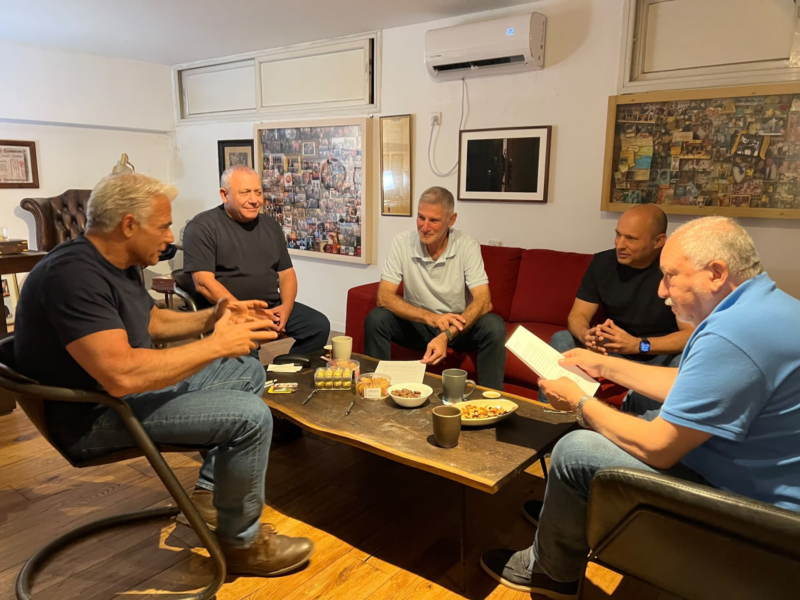
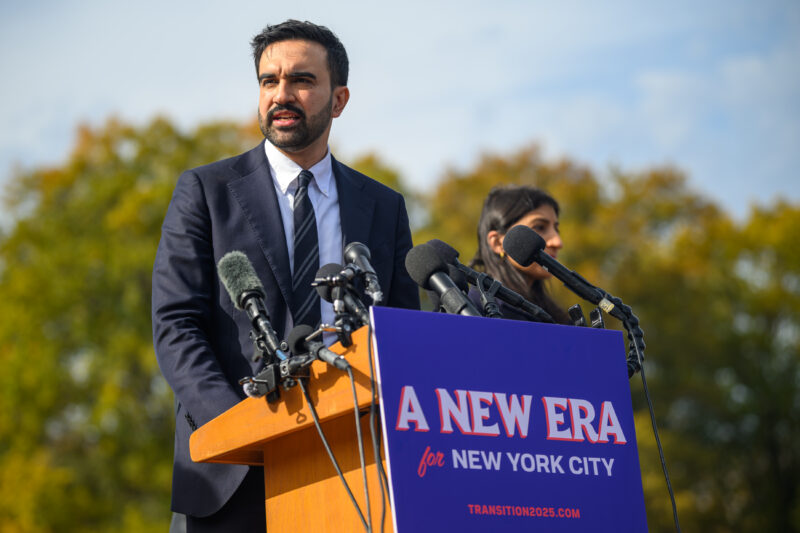

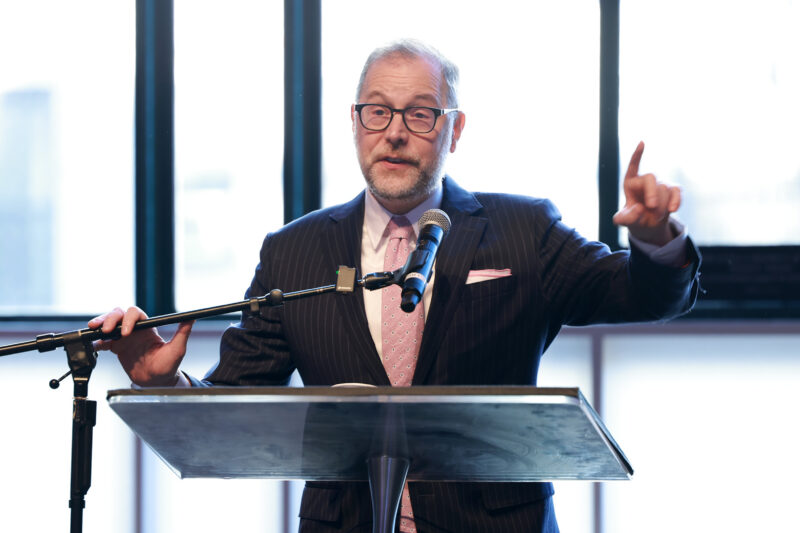
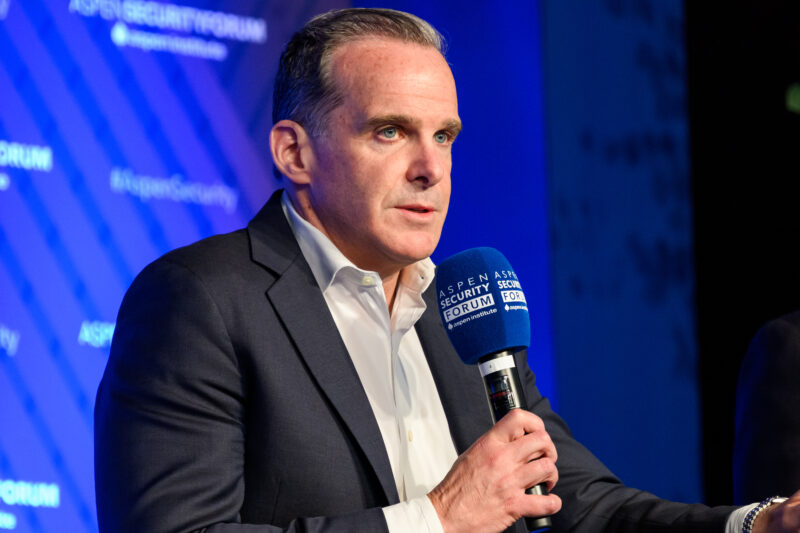





















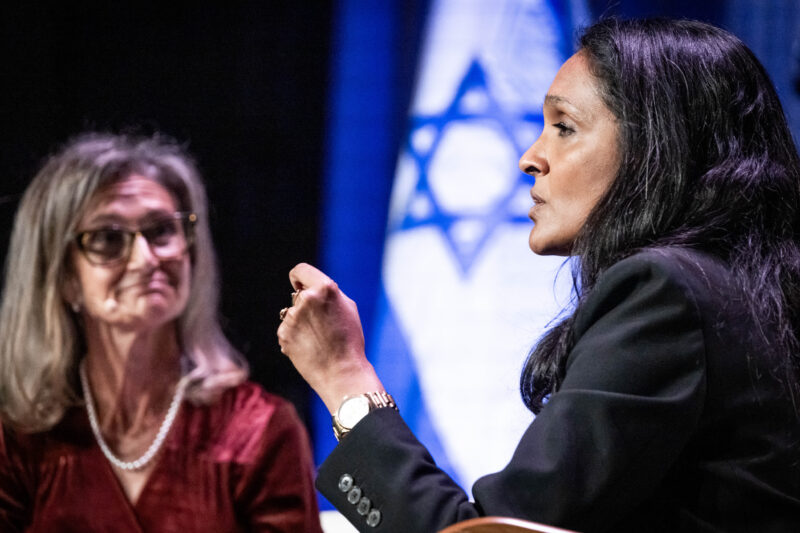


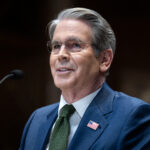





At gala, Birthright Foundation CEO Elias Saratovsky announced two new goals: a $900 million fundraising campaign and bringing 200,000 participants to Israel over the next five years

NIRA DAYANIM/EJEWISHPHILANTHROPY
Birthright Israel Foundation marks 25 years at a gala at Manhattan’s Pier Sixty, Nov. 3rd, 2025


 Add JewishInsider on Google
In 1999, with the lofty goal of bringing every young Jewish adult to Israel free of cost, the nascent Birthright Israel launched its first trip to the Jewish state. Over the next 25 years, the organization would bring over 900,000 young Jews from some 70 countries to Israel.
Last night, at a gala marking a quarter century of activity at Manhattan’s Pier Sixty, Birthright Israel Foundation’s CEO Elias Saratovsky announced two new goals: a $900 million fundraising campaign aimed at securing the organization’s future and bringing 200,000 participants to Israel over the next five years.
The campaign has already secured more than $220 million in commitments, Saratovsky told eJewishPhilanthropy — $132 million toward its $650 million goal for trips, and $90 million toward its $250 million goal for legacy commitments.
“We have a solid foundation of gifts,” he told eJP. “We’re grateful to everyone who has given so far, and now the opportunity we have in front of us is to ask the entire Jewish community to support an organization that has impacted the entire Jewish world over the last two and a half decades.”
Alongside Jewish summer camps, Birthright trips are credited with increased connection to Israel and Jewish engagement among participants, research from Brandeis University’s Cohen Center for Modern Jewish Studies has found. A participant on the first Birthright Israel trip, Saratovsky also credits that experience for his own Jewish involvement.
But at $5,000 per participant, the signature trips are also a mammoth financial undertaking, requiring both logistical mastery and a constant funding stream. (See: the organization’s efforts to quickly charter a cruise ship in order to evacuate participants who were stranded in Israel after the skies were closed during the war with Iran last June.)
Since its early days, Birthright has benefited from support from some of the Jewish community’s most prolific donors — chief among them Charles Bronfman and Michael Steinhardt, as well as Sheldon and Dr. Miriam Adelson, who donated half a billion to the organization over 15 years; following Sheldon Adelson’s death in 2021, the family scaled back its contributions, encouraging other donors to fill the gap.
Many of those supporters — representing nearly every major Jewish foundation and individual donor family — turned out for the Manhattan gala — a sprawling, candlelit affair packed to capacity. Attended by nearly 1,000 trip alumni, along with Jewish professionals and donors, Lynn Schusterman was honored for her contribution to the project, delivering a speech about the love that her late husband, Charles, had for Israel and the butterfly effect she’s witnessed since the program launched.
“Each of you in this room has the power and the responsibility to decide how the story of Israel and the Jewish people unfolds. When my late husband, Charlie, passed away, I had this idea of creating what I call ‘the Charlie’ — young people who had gone on Birthright, got past their community and [gave] back from what they had learned and the impact of Birthright,” said Schusterman.
The event was emceed by Jonah Platt. Schusterman’s daughter, Stacy, and the co-president of the Charles and Lynn Schusterman Family Philanthropies, Lisa Eisen, co-chaired the event. Other speakers included Birthright Israel cofounder Charles Bronfman, Saratovsky and Birthright Israel CEO Gidi Mark.
“This is a room filled with leaders, with dreamers, with community,” said Platt.
Fortunately, for an organization seeking nearly $700 million in donations, it was also a room filled with philanthropists.
Every one of the ads the Maine Democratic Senate candidate is running on Facebook and Instagram states his opposition to AIPAC, and several accuse Israel of genocide
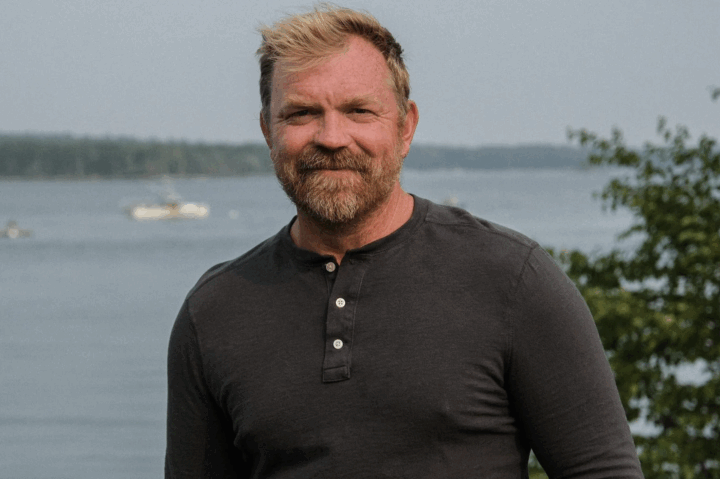
Graham Platner for Senate
Graham Platner
Democratic Maine Senate candidate Graham Platner is putting anti-AIPAC and anti-Israel messaging front-and-center in fundraising appeals he’s circulating on social media.
Platner is currently running a series of Facebook and Instagram advertisements soliciting donations for his campaign that highlight his opposition to AIPAC and accuse Israel of committing genocide. The pitches indicate that Platner is treating the issue as central to rallying support for his campaign.
“My opponent has already been endorsed by AIPAC — an endorsement I will never get. Because what is happening right now in Gaza is a genocide,” Platner says in one direct-to-camera video ad focused specifically on his opposition to AIPAC. “I need your help because we refuse to take money from AIPAC, and we refuse to take money from the billionaires who support it.”
Every one of the eight active ads that Platner is running on Facebook and Instagram, according to Meta’s political advertising library tool, includes a repudiation of AIPAC, and around half accuse Israel of genocide. In most of Platner’s other ads, that language comes alongside comments on a range of other issues.
Some of the written advertisements being circulated by Platner’s campaign on Facebook and Instagram include language such as “there is a genocide happening in Palestine,” “why are we funding Netanyau’s genocide in Palestine?” and “I won’t kowtow to AIPAC or billionaires.”
Platner’s campaign did not respond to a request for comment.
Platner, in the days since launching his campaign, has been repeatedly and vocally critical of Israel and of AIPAC, including calling the group “weird.”
Platner’s potential general election opponent, Sen. Susan Collins (R-ME) has been a vocal supporter of Israel in the Senate, as chair of the Senate Appropriations Committee. It’s not clear yet how Platner’s stance on Israel will play in the election, but Collins is already attacking him for his views.
The candidate’s advocacy on the Israeli-Palestinian conflict appears to date back to his high school days — a page from his yearbook that Platner’s campaign shared on X shows him holding a sign that appears to read “Free Kosovo Chechnya Kashmir Palestine Kurdistan Tibet.”
Plus, the House Rs and Ds in Israel this week

NEVE DEKALIM, GAZA STRIP - AUGUST 16: Israeli police arrest anti-disengagement activists trying to prevent the entry of shipping containers August 16, 2005 into Neve Dekalim, the largest Jewish settlement in the Gaza Strip. As Israel's disengagement of some 8000 settlers from the Gaza Strip enters its second day, diehard settlers dug in for the final fight against Israel's historic Gaza Strip pullout after 38 years of occupation. (Photo by Shaul Schwarz/Getty Images)
Good Tuesday morning.
In today’s Daily Kickoff we talk to key figures from the period of Israel’s disengagement from Gaza 20 years ago and report on Israeli Prime Minister Benjamin Netanyahu’s new plans to expand the war in Gaza. We also interview a cousin of Evyatar David, days after Hamas released a video of him being forced to dig his own grave. We review the latest round of fundraising reports filed by leading pro-Israel advocacy groups and interview James Walkinshaw, the favorite to win a special general election in Virginia’s 11th Congressional District in September. Also in today’s Daily Kickoff: Gideon Sa’ar, Rabbi Hirschy Zarchi, William Daroff and Elbridge Colby.
What We’re Watching
- Israeli Foreign Minister Gideon Sa’ar is in New York this morning for a meeting of the U.N. Security Council on the situation of the hostages held in Gaza. Sa’ar prompted the special session after videos of two hostages — Evyatar David and Rom Braslavski — were released by Hamas and the Palestinian Islamic Jihad. Before the session, Sa’ar will hold a meeting with American Jewish leaders. Read more here.
- Northwestern University President Michael Schill will appear before the House Education and Workforce Committee today for a closed-door transcribed interview about alleged failures to protect Jewish students on the Illinois campus.
- Also in Israel this week are two delegations of freshman House members, one from each caucus, organized by the AIPAC-affiliated American Israel Education Foundation. The Democratic trip is led by Rep. Steny Hoyer (D-MD), the former House majority leader, and Rep. Pete Aguilar (D-CA), the caucus chair.
- The Republican trip is led by House Majority Whip Tom Emmer (R-MN), and includes Reps. Guy Reschenthaler (R-PA), Michael Baumgartner (R-WA), Josh Brecheen (R-OK), Rep. Troy Downing (R-MT), Julie Fedorchak (R-ND), Randy Fine (R-FL), Brandon Gill (R-TX), Craig Goldman (R-TX), Harriet Hageman (R-WY), Abe Hamadeh (R-AZ), Mark Harris (R-NC), Jeff Hurd (R-CO), Brian Jack (R-GA), John McGuire (R-VA), Bob Onder (R-MO), Derek Schmidt (R-KS), Jefferson Shreve (R-IN), Marlin Stutzman (R-IN) and Tony Wied (R-WI). Their visit will include meetings with Israeli Prime Minister Benjamin Netanyahu and Opposition Leader Yair Lapid.
What You Should Know
A QUICK WORD WITH ji’s josh kraushaar
A new poll of New York City Jewish voters commissioned by the pro-Israel New York Solidarity Network underscores the presence of a cohesive constituency opposed to Zohran Mamdani’s candidacy to become New York City mayor — but also illustrates some of the divisions preventing the city’s Jewish community from speaking with a loud, united voice.
The poll, conducted by the respected Democratic polling firm GQR, found Mamdani, the Democratic nominee, winning only 37% of Jewish voters, with 25% backing Mayor Eric Adams, 21% supporting former Gov. Andrew Cuomo and 14% preferring Republican nominee Curtis Sliwa. The results show that even though most Jewish voters identify as Democrats, a clear majority won’t support the Democratic nominee because of his record on issues of concern to the Jewish community — in a city where registered Democrats outnumber Republicans 6-to-1.
Adams performs particularly well among Orthodox Jews, winning 61% of their vote, while Cuomo leads among Conservative Jewish voters with 35% support. But among unaffiliated and Reform Jews, Mamdani leads with a near majority of the Jewish vote.
Asked if Jewish voters were pro-Israel, two-thirds (66%) responded in the affirmative, while 31% said they weren’t. That’s a slightly larger share of non-Zionist Jews than we’ve seen in national polling. Nearly two-thirds (63%) also said that the “globalize the intifada” rhetoric that Mamdani has defended is antisemitic, with just 27% disagreeing.
policy reckoning

Twenty years ago this month, Israel dismantled 21 settlements in the Gaza Strip, in what was known as the disengagement, initiated and overseen by then-Prime Minister Ariel Sharon. Two decades later, Israel is fighting its longest war in Gaza, after the Oct. 7, 2023, attacks perpetrated by the Hamas terrorist organization that has controlled Gaza since 2006. In the interim years, Hamas and other Palestinian terrorist groups in Gaza shot hundreds and sometimes thousands of rockets at Israeli population centers each year, prompting five major Israeli military operations in Gaza. Key figures from that period told Jewish Insider’s Lahav Harkov that the Israeli government’s failure to formulate a day-after plan for Gaza — a criticism that has been leveled at Jerusalem in the current war — is in part to blame for the unfulfilled promises of the disengagement.
Pressure point: Gilad Erdan, a former senior Israeli cabinet minister and ambassador to the U.S., was a freshman Likud lawmaker when the disengagement was announced, and became a leading figure in the party’s rebellion against Sharon. Erdan noted to JI that Sharon not only claimed the disengagement would improve Israel’s security, he said that “if Israel doesn’t take this step, there will be other diplomatic plans [that the world will] try to force on Israel, and this step will free us of pressure from the international community. It’s clear that it didn’t reduce pressure, it increased it.”
Not followed through: Elliott Abrams, who was deputy national security advisor to the George W. Bush administration at the time of the disengagement, told JI that Sharon did have a larger overarching idea behind the move, but subsequent prime ministers did not follow through with it. “Sharon said at the time that Israel needs to establish its borders, and I think he would have done something … with the West Bank. Whatever the future of Israel is, it doesn’t include Gaza, which has no use economically and no significance religiously,” was the logic, Abrams said.
WAR PATH
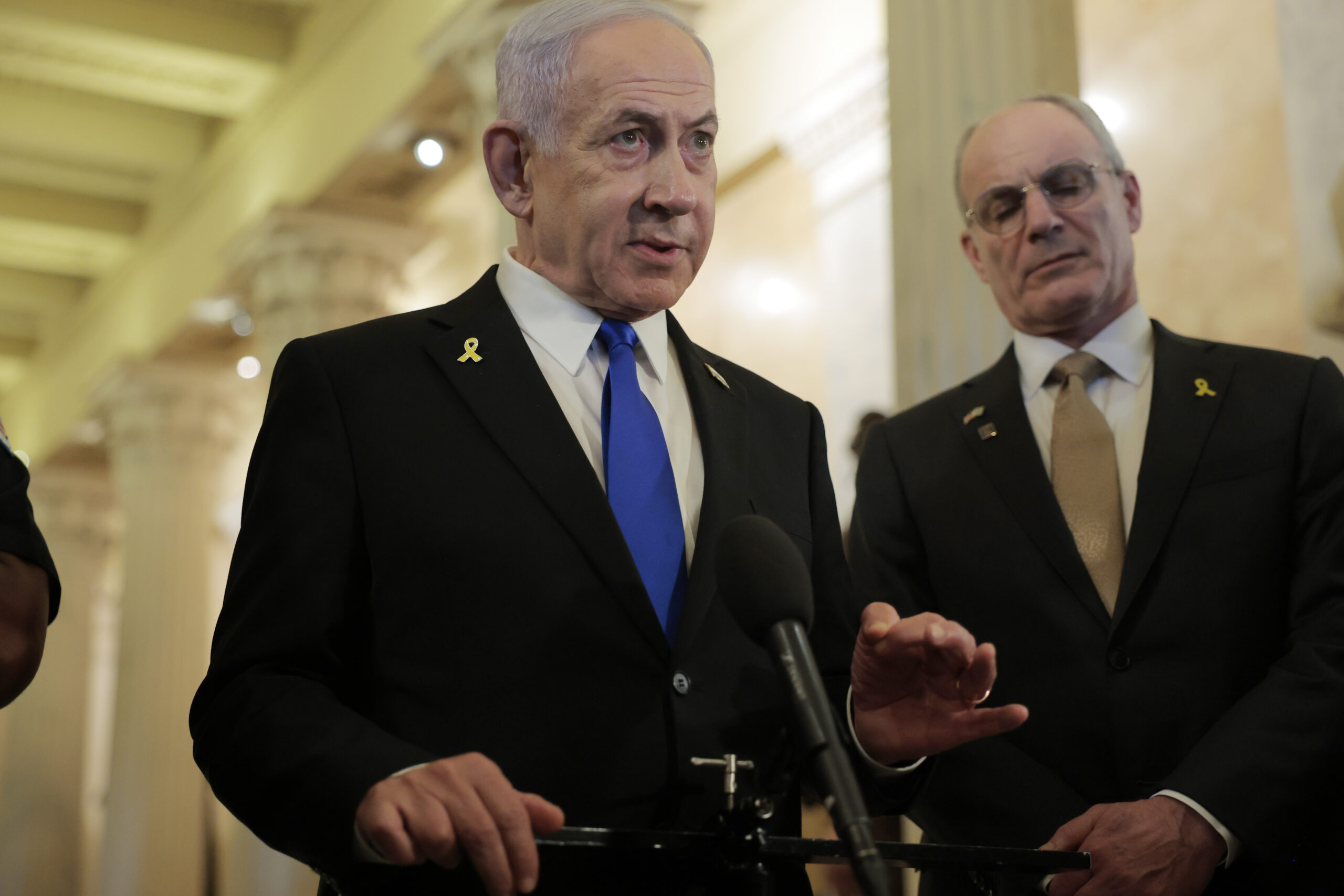
Israeli Prime Minister Benjamin Netanyahu plans to ask the Security Cabinet to back expanding Israel’s military efforts in Gaza, Israeli media reported on Monday. “We are going to conquer the [Gaza] Strip,” a senior source in Netanyahu’s office told Israel’s Channel 12. “The decision was made. Hamas will not free more hostages without us fully surrendering, and we will not surrender. If we don’t act now, the hostages will die of hunger and Gaza will remain under Hamas’ control,” the source added, Jewish Insider’s Lahav Harkov reports.
A few caveats: Netanyahu did not use the term conquer or occupy with all of the Cabinet ministers to whom he conveyed his position, according to Israeli public broadcaster Kan. Maariv reported that Netanyahu has not made a final decision yet about whether the IDF should take control of all of Gaza, and noted that legally, he cannot decide on his own without the Security Cabinet.
COUSIN’S CRY

Days after Hamas released a video showing hostage Evyatar David emaciated and being forced to dig his own grave in a tunnel under Gaza, David’s family called on the Trump administration to do anything it can to ensure that the hostages are released. “Evyatar is fighting for his life with what little strength he has left,” Matan Eshet, David’s cousin, told Jewish Insider’s Lahav Harkov on Monday. “You can see it in his eyes. You don’t need a medical degree to understand that Evyatar only has a few days to live.”
Unrecognizable: David, 24, was kidnapped by Hamas terrorists from the Nova Festival on Oct. 7, 2023. In a video released over the weekend, an extremely gaunt David was shown in a tunnel under Gaza digging, with his bones protruding. He wrote on a calendar documenting the small amounts of food — either lentils or beans — his captors have given him on some days, and on other days he wrote “no food.” Eshet said his family is “feeling broken” after seeing the new footage. “It’s not Evyatar. He doesn’t look like that or sound like that. That’s not how he moves. We see the distress in so many ways. He looks like a shadow of himself,” Eshet said. “He has to get medical care and food already.”
More from David’s family: Ilay David, brother of hostage Evyatar David, said on CNN on Monday, “Hamas is using my brother in this twisted, sick experiment on human lives. It’s not pressured enough … All leaders of all nations should stand up united and put every ounce of pressure they can on Hamas. Hamas must be begging for a deal.”
MONEY MATTERS
The latest round of fundraising reports filed by leading pro-Israel advocacy groups suggests that they are in strong financial shape as the midterms come into view, even as some of the top pro-Israel candidates have underperformed with their fundraising in key races. United Democracy Project, a super PAC affiliated with the pro-Israel lobbying group AIPAC, raised $13.5 million in the first half of 2025, according to its mid-year fundraising report filed late last week, with nearly $39 million on hand at the end of June, Jewish Insider’s Matthew Kassel reports.
Shot up: Those figures were far higher than the $8.8 million in contributions the group had pulled in during the same six-month period in 2023, at the beginning of the last election cycle. The group, which ultimately raised much more in the months following Hamas’ Oct. 7, 2023, attacks, had $9 million on hand at the time, federal filings show. Among the top donors to UDP this cycle are Blair Frank, a portfolio manager at Capital Group, who gave $1.5 million — marking the only seven-figure contribution. The Kraft Group, a holding company led by Robert Kraft, the owner of the New England Patriots, gave $500,000 — as did four other donors including Sanford Grossman, Michael Leffell, David Messer and Andrew Schwartzberg, according to the new filings.
DISTRICT DYNAMICS
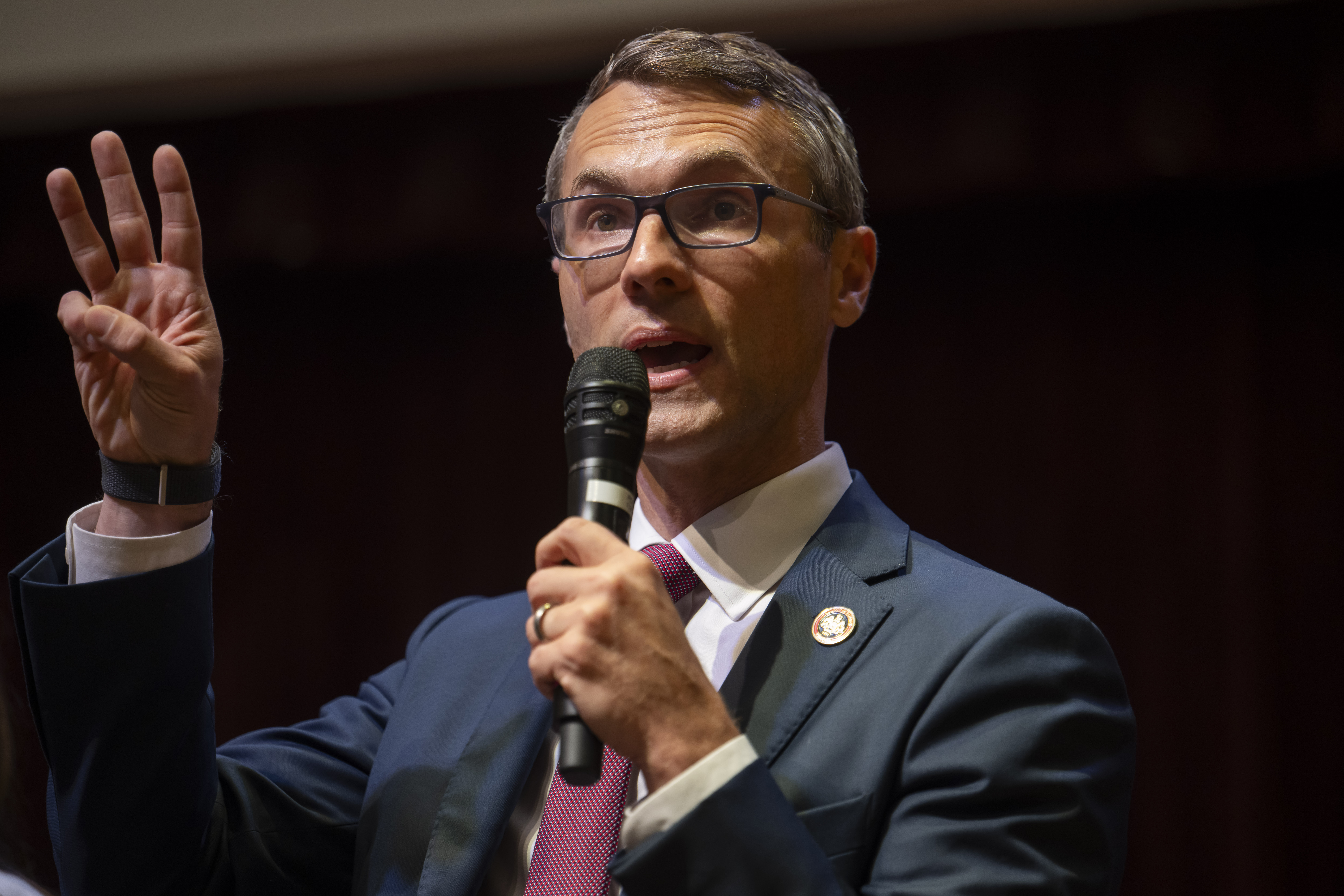
James Walkinshaw, a longtime former aide to Rep. Gerry Connolly (D-VA), aims to follow in his late mentor’s footsteps as the strong favorite to win a special general election in Virginia’s 11th Congressional District in September, Jewish Insider’s Marc Rod reports.
Comparisons: Asked if he sees any major differences between himself and Connolly — whether on policy or his approach to the role of a member of Congress — Walkinshaw said that there are few, and that he was aligned with his former boss’ views on most issues. But when it comes to Israel, Walkinshaw sounds likely to adopt a more moderate tone on Middle East policy, something of a contrast from Connolly, who took an increasingly critical view of the Jewish state during his tenure in the House. “I think the U.S.-Israel relationship has immense historical importance. It has immense strategic importance to the United States, and I want to see a strong U.S.-Israel relationship with bipartisan support,” Walkinshaw told JI.
selective security

Harvard University’s recent decision to cover security costs for Harvard Hillel was celebrated by many Jewish students as a way to alleviate growing security costs amid a surge in campus antisemitism. But for others, it raised questions about why the agreement did not extend to other Jewish groups affiliated with the school, such as Harvard Chabad, Jewish Insider’s Haley Cohen reports.
Left out: “Of course, there is a sense that there should be a responsibility” to cover Chabad’s security as well, Harvard Chabad Rabbi Hirschy Zarchi told JI, although he said that he has never directly asked the administration to do so. Alex Bernat, Harvard Chabad’s outgoing undergraduate student president who graduated in the spring, said it’s “crucial” that Chabad receive the same funding. “If you want to make claims about protecting the Jewish community, you have to protect the whole Jewish community,” he told JI.
Worthy Reads
The Blame Game: Coleman Hughes writes in The Free Press about the West’s “moral confusion” in assigning blame for the humanitarian crisis in Gaza. “There’s no doubt that there is a humanitarian disaster in Gaza. But the information pipeline between Gaza and the West is fundamentally broken, biased, untrustworthy, and weaponized against Israel. And the less skeptical that Western journalists are, the more sources like Hamas and the Gaza Health Ministry can disseminate misinformation without penalty, perpetuating the false narrative that Israel is the genocidal aggressor in a war waged against them by a group whose mission is, in fact, genocide.” [FreePress]
PR Course Correction: The Atlantic’s Franklin Foer writes about how Israel can turn international public opinion around. “Every image of a child with protruding ribs is both a human tragedy and a propaganda victory for Hamas — and proof of how a just war badly lost the plot. I believed in Israel’s casus belli. I don’t believe in this. No justification can redeem the immorality of a policy built on deprivation. As Gaza braces for the worst, Israel still has a narrow window to correct its course. By flooding the zone [with aid], Israel has one last chance to redeem itself.” [TheAtlantic]
Questioning the War: The Wall Street Journal’s Anat Peled spotlights the growing number of voices in Israeli society, mostly on the center-left, that are questioning the morality of Israel’s actions in Gaza and calling for an end to the war. “In recent weeks, more Israelis — including prominent public figures — have called to end the war in Gaza while decrying the dire humanitarian situation in the enclave, marking a shift in the public discourse. A majority of former directors of the Israeli military; Mossad; Shin Bet, the country’s internal security agency; and the police, called on the Israeli government on Sunday to end the war against Hamas. The cause began as a just one after the Oct. 7, 2023, attacks, they said. But now it has become futile … Nightly news reports have featured more Gazans talking about suffering in the strip. Photos of Gazans killed in the war are now more visible in some public spaces such as protests. More than 1,000 leading Israeli artists created a stir when they signed a petition calling to end the killing of children and civilians in Gaza.” [WSJ]
Baltics Balance: The Jerusalem Post’s Herb Keinon writes about Israel’s “pivot to the Baltics,” as Israeli President Isaac Herzog and Foreign Minister Gideon Sa’ar return from separate trips to Lithuania, Latvia and Estonia. “Calls for punitive measures against Israel are growing louder in EU corridors. In that environment, courting sympathetic voices in the Baltics – where the diplomatic weather is noticeably warmer – isn’t just smart; it’s necessary. … What’s at stake here is more than just goodwill. There are real, high-stakes policy implications. The EU is currently debating whether to suspend the EU-Israel Association Agreement, a framework governing economic and political cooperation between Israel and the EU. Sa’ar’s visit to the Baltics in June – before going to Brussels – was part of an effort to prevent such a move, and Herzog’s visit now continues that effort.” [JPost]
Word on the Street
A new Pentagon report confirmed that the U.S. withdrew troops from three military bases in Syria and Iraq in May, who were stationed there to combat ISIS forces…
Air Mail writes about the issue of ordinary Israelis engaging in espionage on behalf of Iran, with the Shin Bet confirming more than 60 Israeli citizens are being prosecuted for treason…
Sen. Elizabeth Warren (D-MA) defended New York City Democratic mayoral nominee Zohran Mamdani’s policy proposals for the city on Monday in a heated debate with CNBC host David Faber. Warren called Mamdani’s primary win “democracy at work”…
House Speaker Mike Johnson (R-LA) visited the town of Ariel yesterday, making him the highest-ranking elected federal official to visit a West Bank settlement…
The Federal Emergency Management Agency said in grant notices made public Friday that states must guarantee they will not engage in boycotts of Israeli companies in order to qualify for a tranche of more than $1.9 billion in natural disaster preparedness grants…
The Israeli Cabinet voted unanimously yesterday to oust Attorney General Gali Baharav-Miara, with whom the current government has been at odds since it was formed, accusing her of political bias. Shortly after the vote, the Israeli Supreme Court issued an injunction temporarily blocking the firing and ordering the government to continue abiding by Baharav-Miara’s legal opinions until the court issues a final ruling…
The third season of the TV series “Tehran,” which follows an undercover Mossad agent in Iran, may come to Apple TV soon, according to The Hollywood Reporter. Though it aired in Israel over two years ago, Apple has repeatedly delayed the season’s release in the U.S. due to the Oct. 7 attacks and the ensuing war in Gaza…
Rest of World examines how the rise of data centers in the Gulf amid the race to develop artificial intelligence infrastructure will stress already water-scarce countries including the UAE and Saudi Arabia…
The Anti-Defamation League said on Monday that the Portland Police Department is investigating the recent vandalism of the Oregon Jewish Museum and Center for Holocaust Education with swastikas as a hate crime…
New Lines Magazine chronicles the violent clash inside Sweida Hospital in southern Syria last month as government-aligned militias and Bedouin groups clashed with the local Druze population last month…
Pic of the Day
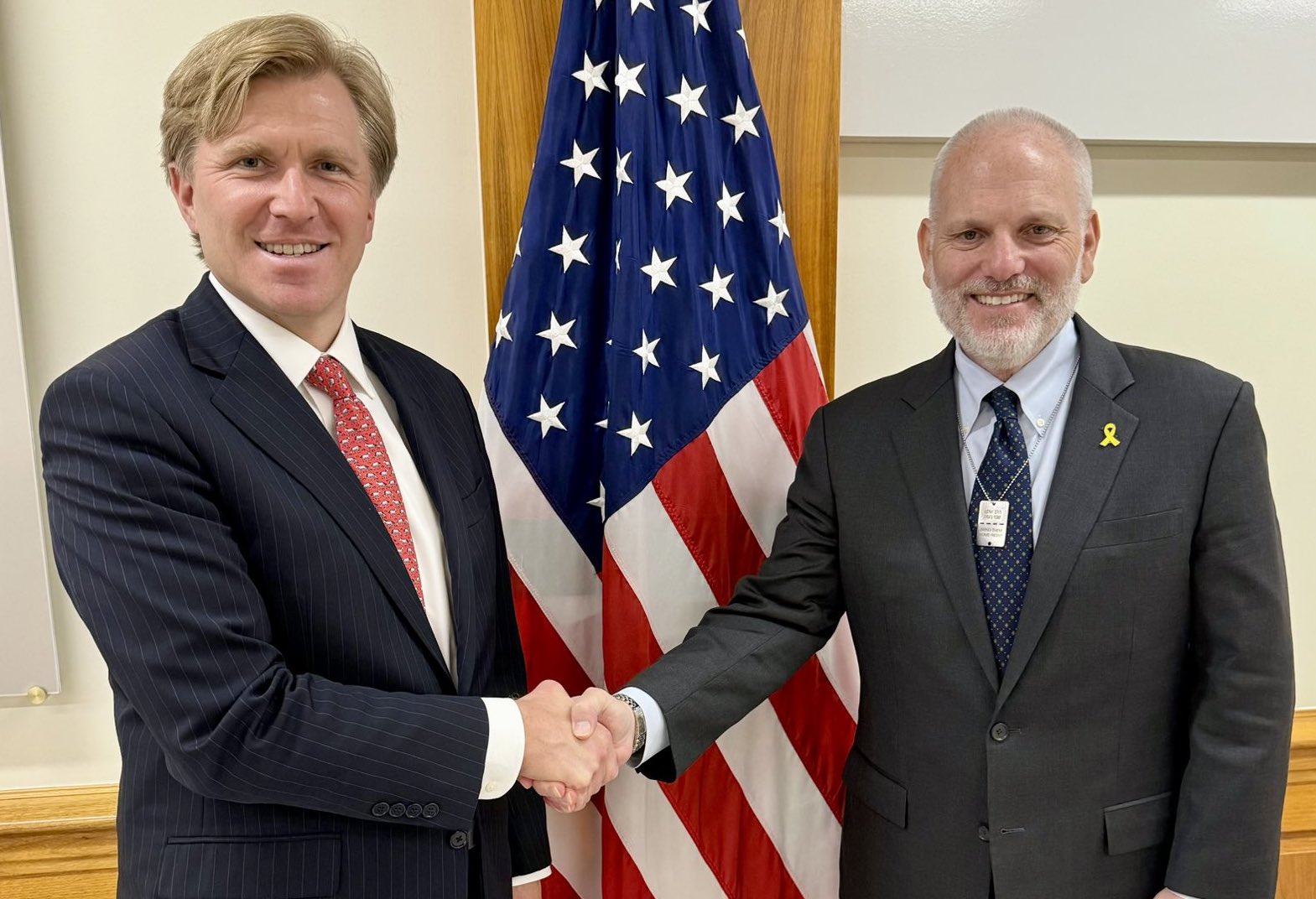
Conference of Presidents of Major American Jewish Organizations CEO William Daroff (right) met with Under Secretary of Defense Elbridge Colby at the Pentagon yesterday. Daroff told Jewish Insider that Colby “expressed a clear and serious understanding of U.S. strategic interests in the Middle East, including the vital importance of deterring Iran, preventing regional adversaries from gaining dominance, and sustaining Israel’s security following the Twelve Day War,” and that he was “encouraged by [Colby’s] principled and grounded approach.”
Birthdays

Professional boxer who held the WBA super welterweight title from 2009 to 2010, in 2014 he was ordained as a rabbi and then known as the “Boxing Rabbi,” Yuri Foreman turns 45…
Chairman of Delphi Capital Management, he is the founder and chairman of Open to Debate, a public policy debate series, Robert Rosenkranz turns 83… Former chairman of the World Zionist Organization who later served as chairman of the Jewish National Fund, Avraham Duvdevani turns 80… Former Israeli ambassador to France, following seven years as a member of the Knesset, Yael German turns 78… Author of 25 nonfiction books, including The Portable Curmudgeon, Zen to Go and Advice to Writers, Jon Winokur turns 78… Historian, Nazi hunter and director of the Simon Wiesenthal Center in Jerusalem until 2024, Efraim Zuroff turns 77… Banker, once known as “Austria’s woman on Wall Street” and founder of Bank Medici in 1994, Sonja Kohn turns 77… Former Soviet Refusenik, he served as speaker of the Knesset for seven years, Yuli-Yoel Edelstein turns 67… Intellectual property and entertainment attorney based in Ithaca, N.Y., he is an adjunct professor of law at both Cornell and Touro, Howard Leib… Member of the British House of Lords, he was chief executive of the Office of the Chief Rabbi Lord Sacks and then chief executive of the United Jewish Israel Appeal, Baron Jonathan Andrew Kestenbaum turns 66… Businessman Murray Huberfeld… Songwriter, author, political columnist and noted baseball memorabilia collector, Seth Swirsky turns 65… Chair of the Department of Jewish History at Baltimore’s Beth Tfiloh Dahan High School, Neil Rubin, Ph.D…. Actor who starred in “Weekend at Bernie’s,” his father and grandfather were both rabbis, Jonathan Elihu Silverman turns 59… President at ConservAmerica, he is an adjunct professor at Carnegie Mellon University, Jeffrey Kupfer… President of the Center for Jewish History in NYC and professor at Fairfield University, Dr. Gavriel David Rosenfeld turns 58… Former member of the Knesset for the Kulanu party, Roy Folkman turns 50… Director of the Center for Middle East Policy at The Brookings Institution for 13 years until this past June, he is soon to become a senior fellow at the Middle East Institute, Natan Sachs… Investment and foundation manager at Denver-based Race Street Management and a board member of JFNA, Cintra Pollack… VP of government affairs at WISPA – the Association for Broadband Without Boundaries, Matt Mandel… Chairman of The New York Times Company and publisher of The New York Times, Arthur Gregg (A.G.) Sulzberger turns 45… Former director of responsible innovation at Meta / Facebook, now a consultant, he is also the spiritual leader of Chochmat HaLev, a progressive spiritual community in Berkeley, Calif., Zvika Krieger… Member of the comedy duo Jake and Amir, Jacob Penn Cooper Hurwitz turns 40… Longtime member of the Israeli national soccer team who also played in Europe’s UEFA Champions League, Gil Vermouth turns 40… Co-founder of Cadence, an AI-driven performance nutrition platform, Lila Cohn… Front end engineer at Platform.sh, Abby Milberg… 2023 graduate of Harvard Law School, now an assistant corporation counsel for New York City, Michael E. Snow… Senior advisor for implementation at the Johns Hopkins Center for Gun Violence Solutions, Lisa Geller… Leslie Saunders… Director of antisemitism programs at the Anti-Defamation League, Anyu Silverman…
Most of DMFI’s fundraising haul this year comes from one wealthy Democratic donor in Indiana

Alex Wong/Getty Images
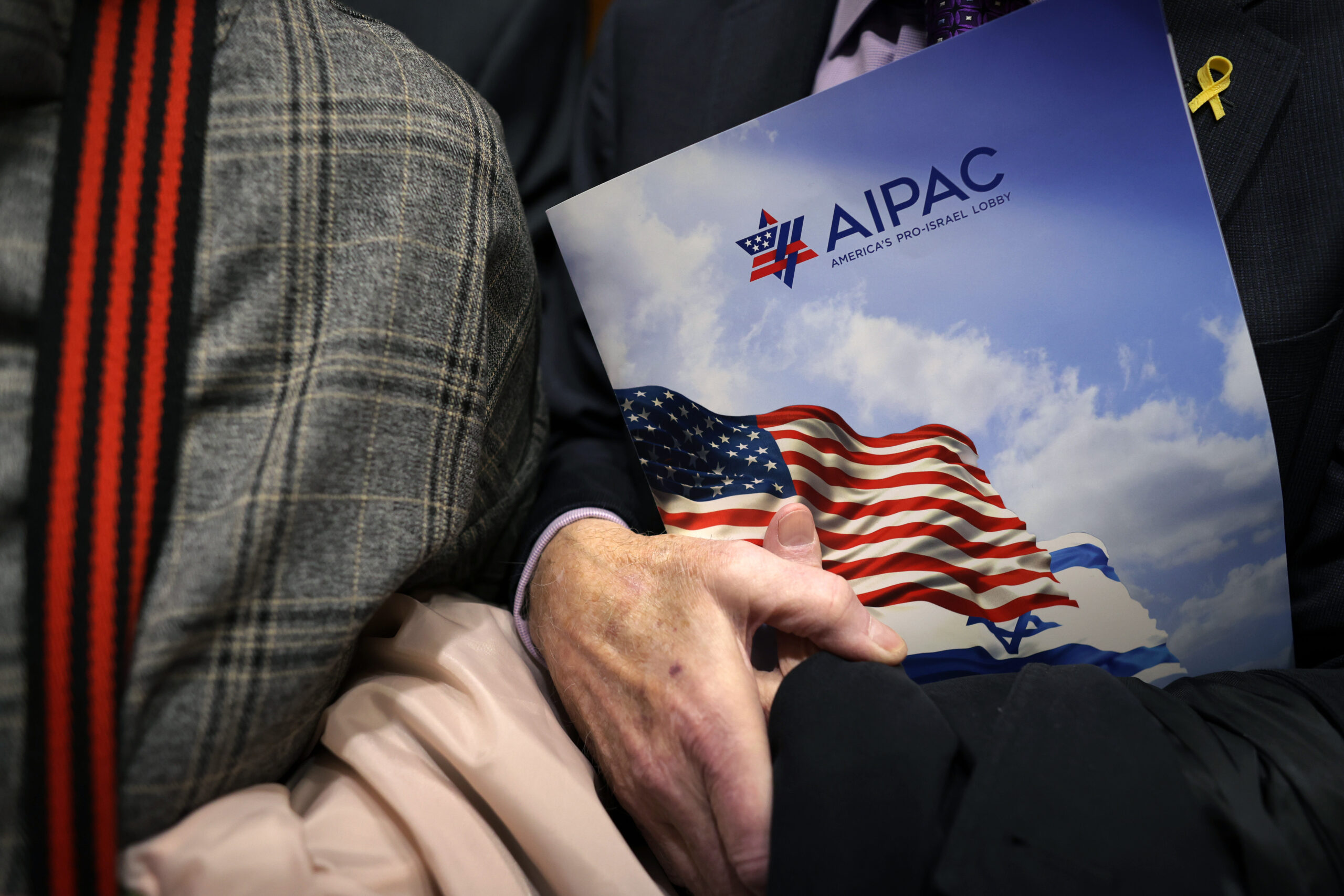
A visitor holds an AIPAC folder in an elevator in Rayburn House Office Building on March 12, 2024 on Capitol Hill in Washington, DC.
The latest round of fundraising reports filed by leading pro-Israel advocacy groups suggests that they are in strong financial shape as the midterms come into view, even as some of the top pro-Israel candidates have underperformed with their fundraising in key races.
United Democracy Project, a super PAC affiliated with the pro-Israel lobbying group AIPAC, raised $13.5 million in the first half of 2025, according to its mid-year fundraising report filed late last week, with nearly $39 million on hand at the end of June.
Those figures were far higher than the $8.8 million in contributions the group had pulled in during the same six-month period in 2023, at the beginning of the last election cycle. The group, which ultimately raised much more in the months following Hamas’ Oct. 7, 2023, attacks, had $9 million on hand at the time, federal filings show.
Among the top donors to UDP this cycle are Blair Frank, a portfolio manager at Capital Group, who gave $1.5 million — marking the only seven-figure contribution. The Kraft Group, a holding company led by Robert Kraft, the owner of the New England Patriots, gave $500,000 — as did four other donors including Sanford Grossman, Michael Leffell, David Messer and Andrew Schwartzberg, according to the new filings.
Meanwhile, AIPAC’s bipartisan political action committee, which has yet to issue endorsements in a range of key House and Senate races, raised $2.6 million last month — and was sitting on nearly $14 million at the end of June, its latest monthly filing shows. By contrast, the group had raked in around $1.5 million in June 2023, with nearly $1.4 million on hand.
The fundraising indicates that pro-Israel donors are being driven to contribute amid a new shift in which a growing number of Democratic lawmakers, as well as some Republicans, have endorsed blocking aid to Israel over its handling of the humanitarian crisis in Gaza. That trend has coincided with the Democratic nomination of Zohran Mamdani, an avowed critic of Israel, in New York City’s mayoral race, opening up an ongoing debate over the party’s future direction.
Marshall Wittmann, an AIPAC spokesperson, said in a statement that “grassroots pro-Israel activists are deeply engaged in the political process given the critical importance of the U.S.-Israel relationship as the Jewish state battles aggression from Iran and its terrorist proxies.”
“As the 2026 midterm elections approach, that increased involvement will ensure that the voice of the pro-Israel community will be heard,” Wittmann told Jewish Insider on Monday.
On the Democratic, rather than bipartisan, side of the equation, DMIF PAC, Democratic Majority for Israel’s political arm, reported raising $2.1 million so far this year, with $2.6 million on hand heading into July.
While the group’s latest cash haul was buoyed largely by a single $2 million contribution from Deborah Simon, a pro-Israel donor in Indiana, its new filing indicates a healthier financial situation than its last mid-year report in 2023, when DMFI PAC pulled in just over $700,000 during the first six months of that year, with only a small amount more in reserve funds.
DMFI PAC, which worked alongside UDP to unseat two Squad-aligned Israel critics in House races last cycle, has not yet announced endorsements in next year’s primaries.
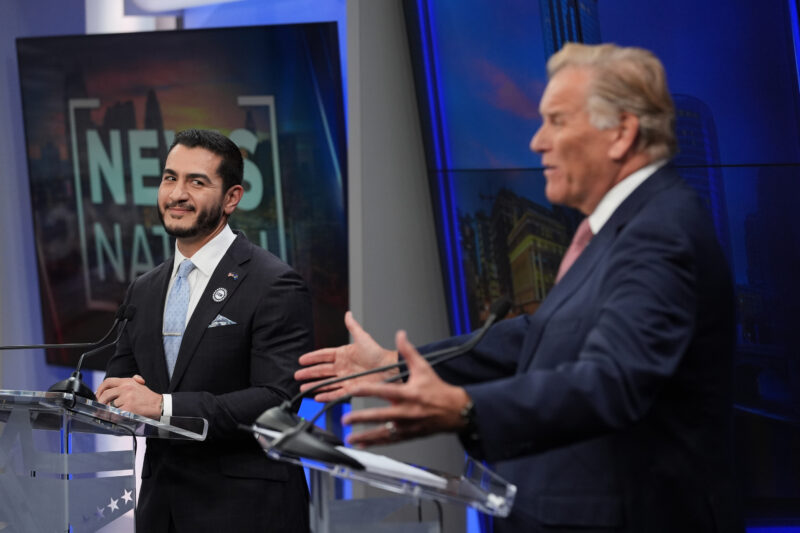
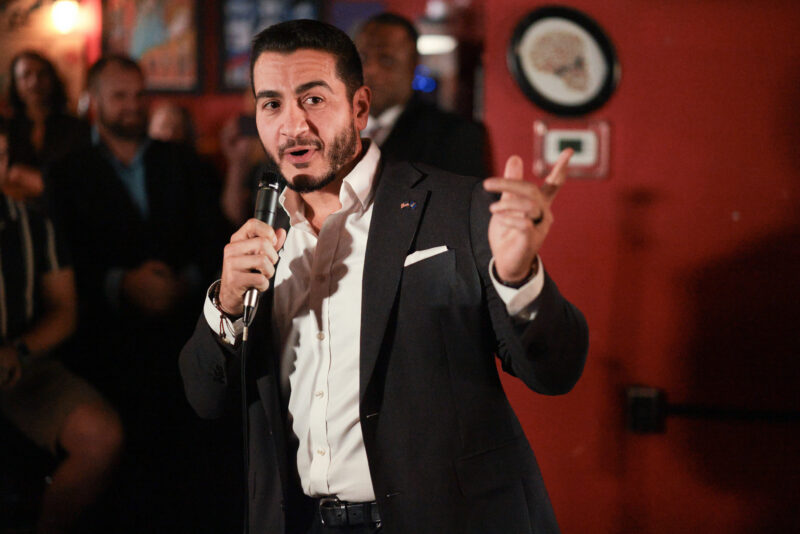
Despite relatively robust fundraising for the two groups, such donor enthusiasm has yet to translate to some key races in which pro-Israel candidates are lagging behind their opponents. Rep. Haley Stevens (D-MI), a longtime ally of AIPAC who is running for Senate, was recently outraised by state Sen. Mallory McMorrow and Abdul el-Sayed, an outspoken critic of Israel. And in an open-seat House primary in the Chicago suburbs, Laura Fine, a state senator who is touting her pro-Israel positions, fell well behind her two left-leaning rivals.
One prominent pro-Israel activist who is close to AIPAC, speaking on the condition of anonymity to address what he called an “undeniable shift” in the Democratic Party on Israel, said he was unfazed by such fundraising at this stage of the primary cycle — noting that Stevens in particular has a “reservoir of support that is out there waiting” within the Jewish and pro-Israel communities.
“We are committed to the cause which we think is deeply in America’s interest, and we’re not going to give up,” he told JI. “People like us are just going to get more animated by this, not scared off.”
In an interview with JI, Varela said that ending the war in Gaza requires Israel’s ousting of Hamas from power
Campaign website
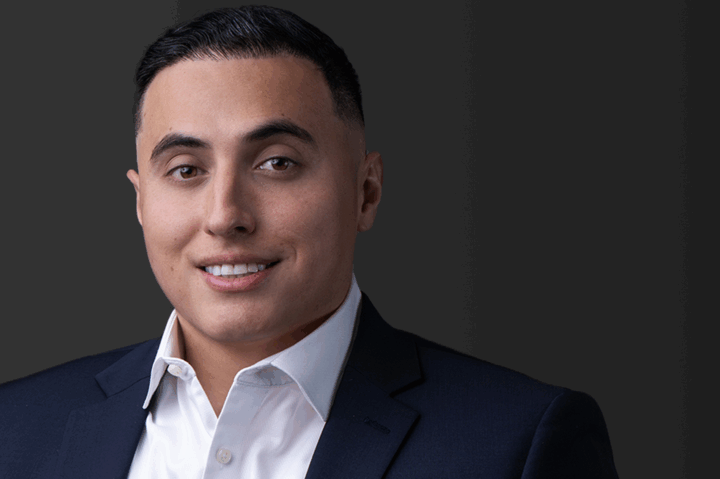
Brian Varela
In a Democratic Party that has lost its grip on the working class — long its base of support and wellspring of its values — Brian Varela is offering a way back home.
Varela, a small business owner and New Jersey political activist vying for the Democratic nomination for New Jersey’s 7th Congressional District, is leaning in to his working-class Colombian roots, suggesting that the Democrats need candidates, like him, who are better connected to the middle-class voters in his district.
“I think that one of the things that the national Democrats really messed up on last year was not understanding what the working-class voter was going through,” said Varela, both of whose immigrant parents worked blue-collar jobs. “And that’s why, while national Democrats were talking about how great the economy was, working-class voters did not understand. I understood that because I’ve lived it. And I think that being able to have that background that is very much aligned with a lot of the people in the district puts you in a unique position, not just to understand them, to represent them.”
With that moderate pitch as a first-generation American who has made good, Varela, 36, has firmly established himself as a serious contender for the Democratic nomination for New Jersey’s 7th Congressional District with his recent announcement of a $700,000 fundraising haul in his first three months in the race.
Varela, who self-funded around half of that total, is one of several Democrats, including former Biden administration official Michael Roth, former Navy helicopter pilot Rebecca Bennett and local Democratic official Greg Vartan, aiming to defeat Rep. Tom Kean Jr. (R-NJ), in a district Kean won by five points in 2024.
Varela has been active for years in various capacities in New Jersey politics: He started as a press intern for Republican Gov. Chris Christie in 2010, later running as a Democratic candidate opposing the party machine against now-Rep. Rob Menendez (D-NJ) and subsequently leading the New Jersey chapter of the Forward Party, the centrist third party founded by former presidential candidate Andrew Yang.
“I consider myself more of a moderate,” Varela told Jewish Insider in an interview. “I do believe that we do need to be tight around budgets, and we can’t just go and haphazardly be cutting programs, but we do need to understand that we cannot allow the deficit to continue increasing. But at the same time, I think that there are some great programs that may seem like social programs, but are actually more programs that are going to help us grow our economy.”
He said he also supports “economic populist” programs like growing the middle class through universal childcare, and investing in research and development, infrastructure and education — particularly in skilled trade programs in high schools and trade schools.
He said his life story and the hardships he faced growing up separate him from the Democratic field — as well as from Kean, whose father was the governor of New Jersey and whose grandfather also served in Congress — and align him with the voters in the district, adding that Democrats need candidates who are better connected to the working class.
Varela said that Israel has been a “strong ally for us, and I think it’s important to make sure that we are there for Israel, that we help Israel with their ability to defend themselves.”
He said he supports continued U.S. aid to Israel, as well as aid to Gaza, and supports a two-state solution in the long term. He said that bringing the conflict in Gaza to a close will require “root[ing] out Hamas entirely,” ending attacks from both sides and bringing “all shareholders to the table” including the United States, the United Nations and surrounding countries.
Varela said he did not have sufficient information to weigh in on the Trump administration’s strikes on Iran, but said that it’s “absolutely critical” that Tehran not obtain a nuclear weapon and that he would support renewed diplomatic efforts floated by the Trump administration.
To address rising antisemitic attacks and other incidents at home, Varela said that the U.S. needs to step up hate crimes enforcement, specifically voicing support for legislation raising the penalties for such activity.
“As a society, as an American culture, any hate crime performed is ultimately destroying our fabric, destroying the future of our country, and we need to be unequivocally and unapologetically at the front lines of combating this kind of hate,” Varela said.
Varela said he entered the race because “I think we need a fighter, and I’ve been a fighter my whole life,” from working full-time to cover his schooling costs to supporting his family when his mother got sick, struggling with financial difficulties, raising his younger brother and building a childcare business during the COVID-19 pandemic.
“But we navigated that and fast forward to now, we built the business with over 100 employees,” Varela said, adding that his company has been recognized locally and nationally for its growth.
He added that he thinks that Congress needs more leaders from different backgrounds and more “humble beginnings,” and said, “I can bring a serious diversity of perspective to representation, and not just the Congress, to our party as a whole.”
He said that Kean is “disconnected … from his voters” and doesn’t understand the impacts of legislation cutting assistance programs like the recently passed budget reconciliation bill.
Varela’s fundraising places him second in the Democratic primary, behind Bennett, who has raised $914,000 total, and ahead of Roth, who has raised $303,000 total and Vartan, who has raised $157,000.
Bennett closed the quarter with $672,000 on hand, Varela with $622,000, Roth with $225,000 and Vartan with $79,000.
Many lawmakers from both parties known for their pragmatism and moderation struggled to raise big bucks for their campaigns

Andrew Harnik/Getty Images
Sen. Joni Ernst (R-IA) speaks during a Congressional Gold Medal ceremony on Capitol Hill on June 26, 2025 in Washington, DC.
The latest round of fundraising reports for members of Congress paints a concerning picture about the future of the ideological center. Many lawmakers from both parties known for their pragmatism and moderation struggled to raise big bucks for their campaigns, while a number of insurgent candidates on the left and the right wings of their parties scored significant fundraising hauls.
Some of the middling fundraising numbers from experienced, establishment-oriented lawmakers will lead to speculation they are considering retirement.
On the GOP side, Sen. Joni Ernst (R-IA), a senator deeply immersed in national security issues, only raised $723,000 in the last three months — barely inching past two of her Democratic opponents. That’s an underwhelming sum for Ernst, who has typically been a strong fundraiser but has been taking heat from both the right and left. It will only raise speculation about her political future.
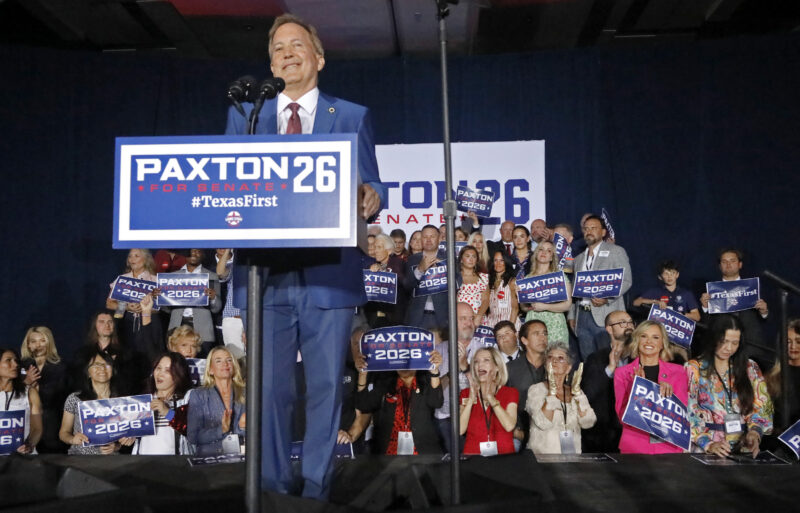
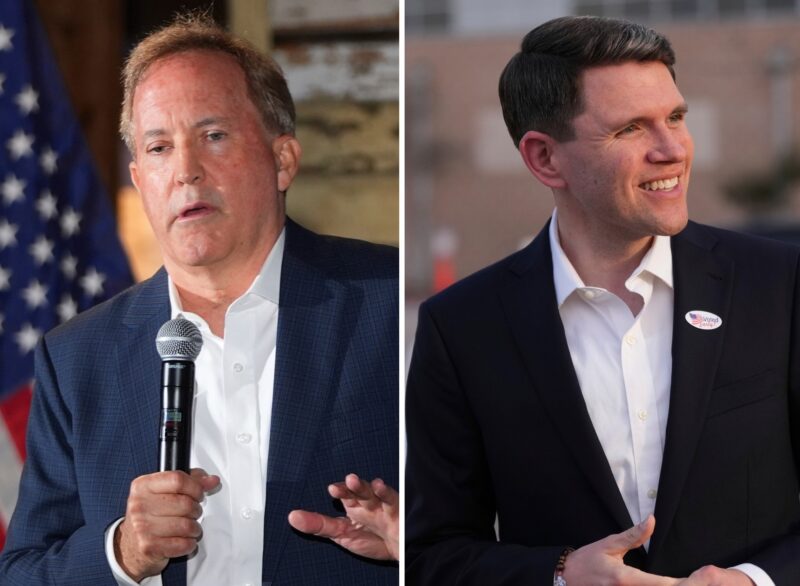
Sen. John Cornyn (R-TX), facing a primary challenge from right-wing Texas Attorney General Ken Paxton, also didn’t hit the $1 million mark in fundraising, bringing in just $804,000. Paxton, despite worries about his electability and scandals surrounding him, raised $2.9 million.
In the House, Rep. Mike McCaul (R-TX), the respected former chairman of the House Foreign Affairs Committee, raised just $93,000 for the quarter, with less than $100,000 in his campaign account. While he’s not in a competitive district, that small sum has raised retirement speculation as well.
On the Democratic side, there were some fresh signs that mainstream, pro-Israel candidates aren’t getting quite the same fundraising traction as they have in the past.
We noted earlier in these pages that in the Michigan Senate Democratic primary, pro-Israel stalwart Rep. Haley Stevens (D-MI), was outraised by both state Sen. Mallory McMorrow and Abdul el-Sayed, an outspoken anti-Israel voice.
In the race to succeed retiring Rep. Jan Schakowsky (D-IL), the two Democratic candidates running as progressive critics of Israel — Evanston Mayor Daniel Biss and social media influencer Kat Abughazaleh — outdistanced state Sen. Laura Fine, a strong supporter of Israel in the state Legislature.
There were some encouraging signs from several moderate Democrats in high-profile races: Rep. Angie Craig (D-MN) outraised progressive Lt. Gov. Peggy Flanagan, $1.47 million to $917,000, in the Minnesota Senate race. Rep. Raja Krishnamoorthi (D-IL), a suburban congressman with a generally pro-Israel record, led the Illinois Senate field in fundraising. And Rep. Chris Pappas (D-NH), a battle-tested pragmatic lawmaker, raised a solid $1.8 million without much primary opposition in the New Hampshire Senate race.
But the party’s biggest fundraisers remain the true-blue left-wingers: Rep. Alexandria Ocasio-Cortez (D-NY) raised a whopping $5.8 million in the last three months as she receives more and more presidential buzz. Sen. Bernie Sanders (I-VT), despite not even running for reelection next year, brought in more than $4.5 million in the second quarter.
House Minority Leader Hakeem Jeffries (D-NY), by comparison, raised less than half of AOC’s second quarter total — at $2.37 million. And Senate Minority Leader Chuck Schumer (D-NY), who isn’t in cycle until 2028, brought in just $155,000 to his campaign account.
Sherrill, a pragmatic suburban lawmaker and military veteran, will face Republican former state Rep. Jack Ciattarelli in the November general election

AP Photo/Heather Khalifa
Rep. Mikie Sherrill, D-N.J., greets people during a "Get Out the Vote" rally, Saturday, June 7, 2025, in Elizabeth, N.J.
Rep. Mikie Sherrill (D-NJ) comfortably prevailed in New Jersey’s Democratic gubernatorial primary last night, translating strong fundraising and backing from numerous party leaders into a double-digit margin of victory in the six-candidate field. With most of the ballots tallied, Sherrill won just over one-third of the Democratic vote.
Sherrill, a pragmatic suburban lawmaker and military veteran, will face Republican former state Rep. Jack Ciattarelli in the November general election. Boosted by President Donald Trump’s endorsement, Ciattarelli easily won the GOP nomination.
Sherrill continues the trend of moderate-minded candidates prevailing in recent Democratic primary fights. Three of her Democratic opponents ran to the congressman’s left, with left-wing Newark Mayor Ras Baraka even getting arrested at a federal immigration facility. That activist messaging didn’t end up winning him much traction in the race.
Baraka’s anti-Israel record and past praise of Louis Farrakhan concerned Jewish leaders, but he ultimately finished well behind Sherrill, in second place with 20% of the vote.
Rep. Josh Gottheimer (D-NJ) ran to the center in the race, spent heavily and worked hard to win over the significant Jewish vote in the state, landing key endorsements from several Orthodox groups. But aside from handily winning his home county of Bergen, he struggled to make inroads in other parts of New Jersey, tallying 12% of the vote. (In Ocean County, where the congressman picked up a key endorsement of the Lakewood Vaad, he lagged in third place.)
Sherrill has compiled a largely pro-Israel record during her time in Congress, and called for more action against antisemitism in the aftermath of the murder of Israeli Embassy staffers outside the Capital Jewish Museum. But she hasn’t been as outspoken as Gottheimer on issues affecting the Jewish community, and declined interview requests from Jewish Insider during the last month of the campaign to more fully discuss her views on antisemitism.
Ciattarelli also spoke out against antisemitism on the campaign trail, and touted his visit to Israel last summer as he campaigned in Lakewood.
The November general election will offer the first test of whether Trump’s significant gains in the Garden State in last year’s presidential election will hold now that he’s been in office for months — or whether there’s an emerging backlash to his polarizing governance. Trump only lost the once solidly-blue state to then-Vice President Kamala Harris by six points, a much narrower margin than Democrats anticipated.
Ciattarelli ran against outgoing Gov. Phil Murphy, a Democrat, in 2021, and also ran a surprisingly competitive race against the incumbent, losing by just three points.
Banning endorsees from accepting pro-Israel Democratic donations would be ‘repudiating a core element of the Democratic platform and the Biden-Harris agenda’

Kevin Dietsch/Getty Images
Rep. Pramila Jayapal (D-WA) questions a witness in the House Judiciary Committee on April 28, 2022, in Washington, D.C.
Mark Mellman, the president of Democratic Majority for Israel’s political arm, warned leaders of the Congressional Progressive Caucus that it would be engaging in potentially discriminatory behavior if it changes its endorsement rules to exclude members who accept campaign contributions from the pro-Israel group.
The idea was recently floated as a possibility by Rep. Pramila Jayapal (D-WA), the CPC chairwoman.
“Reforming our campaign finance system as a whole is a laudable goal,” Mellman explained to Jewish Insider on Tuesday morning. “But I don’t think the progressive caucus is going to want to allow endorsees to ‘accept’ anti-Israel money, but then turn around and discriminate against pro-Israel Democratic money, especially since they’d be repudiating a core element of the Democratic platform and the Biden-Harris agenda, which is support for a strong U.S.-Israel relationship.”
Mellman was responding directly to comments from Jayapal, who suggested to Punchbowl News on Monday that caucus leaders had been weighing the imposition of such a provision. Her remarks came amid rising tensions between far-left and moderate Democrats over the CPC’s recent endorsement of DMFI-backed Rep. Shontel Brown (D-OH), who is seeking reelection today in the Cleveland-area primary.
Jayapal said the CPC’s executive board had been mulling the possibility of revising its political action committee’s endorsement process “based on,” among other things, “whether somebody accepts this kind of giant PAC money, whether it’s from the crypto billionaires or whether it’s from DMFI.”
DMFI has spent more than $1 million on Brown’s behalf as she faces a primary rematch with Nina Turner, a former Ohio state senator and presidential campaign surrogate for Sen. Bernie Sanders (I-VT). Turner had earned an endorsement from the CPC’s PAC when she unsuccessfully campaigned for the seat in a heated special House election last year.
Brown, who prevailed with support from establishment Democrats and pro-Israel groups, among others, joined the progressive caucus after she assumed office in November. She was endorsed by the CPC PAC last month, though not without some apparent resistance from left-leaning members who had previously supported Turner. Rep. Alexandria Ocasio-Cortez (D-NY), for instance, announced on Monday night that she was again endorsing Turner.
While Jayapal had also personally supported Turner in 2021, she has defended the CPC’s decision to back a fellow incumbent “in good standing for four months.” Still, speaking with Punchbowl, the chairwoman acknowledged “the frustration” among critics of the endorsement and said she is now reviewing the process behind it.
“Should we have a certain period of time,” Jayapal said, “whether it’s six months or a year or something, that you have to be a member of the CPC and [in] good standing?”
How DMFI fits into the equation is somewhat more opaque and may hint at deeper fissures within the party — particularly as Israel has increasingly become a litmus test for progressives who are critical of American support for the Jewish state.
If adopted, the DMFI rule change would likely alienate a large and diverse swath of CPC members who have earned support from the pro-Israel group, including Reps. Jerry Nadler (D-NY), Ritchie Torres (D-NY), Lois Frankel (D-FL), Brendan Boyle (D-PA), Teresa Leger Fernandez (D-NM) and Katie Porter (D-CA), among others.
At least 20 members of the CPC — which includes nearly 100 House Democrats — have earned endorsements from DMFI in recent years.
Asked for comment, a spokesperson for Jayapal deferred to a CPC communications director who suggested reaching out to CPC PAC Executive Director Evan Brown. He did not respond to email inquiries from JI.
DMFI is by no means new to intra-party conflict. The pro-Israel group has often squared off against progressive primary challengers, including Rep. Jamaal Bowman (D-NY), who unseated former Rep. Eliot Engel (D-NY), a longtime pro-Israel stalwart.
Last year in Ohio’s 11th District, DMFI spent more than $2 million in an effort to boost Brown over Turner, who argues that she was misrepresented as anti-Israel by outside groups. In her concession speech last year, she criticized the “evil money” that “manipulated and maligned” the election.
“Obviously this race sent a very powerful message over the summer when Shontel Brown won and Nina Turner lost,” Mellman said in an interview with JI on Monday. “It was very important to us to make sure that message was confirmed in this election.”
DMFI has invested fewer resources this election, but still boasted in a memo that it is the top outside spending group in the race, ahead of Protect Our Future PAC, Mainstream Democrats PAC and United Democracy Project, the super PAC recently created by AIPAC.
“It’s a similar message that we had during the special election, but the difference before was it was all prospective, and now we’ve got some actual facts,” Mellman told JI, praising Brown as a “pro-Israel champion” in the House.
In her second attempt, Turner has engaged in more direct outreach to Jewish voters in Cleveland while appearing to fine-tune her messaging on Israel.
But many community members continue to side with Brown. Pinchas Landis, an Orthodox Jewish rabbi from University Heights, says the congresswoman has remained outspoken in her support for the Jewish state, even amid resistance from what he characterized as “anti-Israel tendencies” within the party.
“We really feel that in the four months she’s been there that she’s really keeping that promise of standing strong,” he told JI. “There’s a lot of pressures right now in the different caucuses.”

Evan Vucci
President Donald Trump speaks about the mass shootings in El Paso, Texas and Dayton, Ohio, in the Diplomatic Reception Room of the White House, Monday, Aug. 5, 2019, in Washington.
President Donald Trump received an enthusiastic welcome from several hundred members of the Orthodox Jewish community at a re-election fundraiser held at the InterContinental New York Barclay on Tuesday.
Video recordings circulating on social media show the president being greeted by Rabbi Yosef Yitzchak Jacobson, who recited the Hebrew blessing traditionally said upon seeing a king or head of state.
After being greeted with chants of “four more years,” Trump said he will focus his remarks on Israel because “this is a group, I think, if I didn’t talk about Israel, they’d say, ‘What a rotten speech that was.'”
In his remarks, Trump spoke at length about the Jerusalem embassy move and the pressure he got before making the decision. “I gave you, in Jerusalem, the embassy. That was a big deal,” Trump told attendees.
Trump also mocked Israel’s political system in the wake of the last two election outcomes. “What kind of a system is it over there?” he asked. “They are all fighting and fighting. We have different kinds of fights. At least we know who the boss is. They keep having elections and nobody is elected.”
The president boasted that he has “an approval rating of 98 percent” in Israel, and quipped that “if anything happens here” with his impeachment, “I will take a trip over to Israel to run for prime minister there.”
Trump on the flare-up in Gaza: “We’re watching Israel very closely… There are missiles going in and going out. A very bad day… very scary. We are watching it very closely, however. But a lot of bad things are happening today. I mean literally, I wake up and they showed missiles being shot in Israel, and likewise going in the other direction. We have to take care of Israel… We are watching and we are looking out for, really, a great country and with great people. Great people. It’s been misunderstood for a long time. It’s a tiny speck. When you look at these massive empires that it’s surrounded [by]. It’s a tiny speck, and they are almost saying, ‘How can this happen?’ But it happens because they are a great people and they are a very advanced people, and they have a great protector in Donald Trump.”
Speaking of Hillary Clinton, Trump noted, “75 percent of your people voted for her… She would never do anything for Israel.”
Hasidic singer Beri Weber performed during the luncheon.
This post was updated at 11:45 pm
Please log in if you already have a subscription, or subscribe to access the latest updates.
 Continue with Google
 Continue with Apple