














































































Despite the success of DSA challengers at activist-dominated party meetings, analysts are skeptical they will succeed in the state’s Democratic primaries

Aaron Schwartz/Getty Images
Sen. John Hickenlooper (D-CO) listens to testimony at the Dirksen Senate Office Building on Capitol Hill on February 03, 2026 in Washington, DC.


 Add JewishInsider on Google
Far-left challengers to Sen. John Hickenlooper (D-CO) and Rep. Diana DeGette (D-CO) are picking up support in internal party proceedings in what some progressives are touting as a sign of the incumbents’ vulnerabilities.
But local experts say those developments shouldn’t necessarily be read as signs that the two establishment Democrats are on their way out — the state’s Democratic Party processes tend to favor more progressive candidates, and both Hickenlooper and DeGette still have strong advantages going into the primary later this year.
In the Senate race, Hickenlooper, facing state Sen. Julie Gonzales, dropped out of the Democratic caucus nominating process, choosing to qualify for the June primary through petition signatures instead, a sign he’s facing resistance from typically left-wing party activists.
In the 1st Congressional District, far-left candidate Melat Kiros won nearly two-thirds of the Democratic Party delegates’ votes in Denver last weekend, nearly doubling DeGette’s support, and calling DeGette’s spot on the ballot into question.
Gonzales is a former member of the Democratic Socialists of America who was elected to the state Senate with the help of the group, but left the organization ahead of her run for Congress.
From the start of her campaign, she’s made criticism of Israel a centerpiece of her bid, accusing Israel of genocide, supporting an arms embargo and vowing, “I will never vote to send U.S. taxpayer dollars to Israel. Especially when communities here at home are being told there’s no money for schools or healthcare.”
Gonazales has also fundraised off of her opposition to Israel and AIPAC, calling the group’s support of Hickenlooper “repulsive and immoral,” and accusing Hickenlooper of funding “a genocide in Palestine” with taxpayer funds while depriving Americans of social services.
Another lesser-known candidate in the Senate, University of Colorado Professor Karen Breslin, is, like Gonzales and Kiros, endorsed by the extreme anti-Israel group Track AIPAC.
Kiros, 28, is running with the backing of the far-left Justice Democrats and the local DSA. Kiros has made an arms embargo on Israel one of her primary talking points, as well as described the war in Gaza as a genocide and Israel as an apartheid state. She said she was inspired to run for office in part by the defeats of anti-Israel Reps. Jamaal Bowman (D-NY) and Cori Bush (D-MO) last cycle.
Kiros lost her job at the law firm Sidley Austin in 2023 for publishing a column denouncing an open letter signed by hundreds of top law firms that called on law schools to do more to address antisemitism on their campuses. The primary premise of the column was that calling for the elimination of Israel is not antisemitic and that “conflat[ing] [antisemitism] with the geo-political question of Israel’s legitimacy is one of the greatest travesties in this conflict.”
In the op-ed, which she published a month after Hamas’ Oct. 7, 2023 attacks, Kiros wrote, “By conflating ‘calls for the elimination of the Israeli state’ with anti-Semitism, you delegitimize any solution that forces Israel to reckon with its colonial role in Palestine, including one-state solutions called for by Palestinians and Israelis alike,” she continued.
She also appeared to defend Hamas, and those who have expressed support for it, in the piece. Though she said that there was “no justification” for Hamas’ attacks, she also said that “it cannot be forgotten that violence does not occur in a vacuum” and questioned the description of “acts of Palestinian resistance” as “terrorism.”
“There has never been, in the history of the entire human race, a people whose land was violently taken from them, whose freedoms and rights were relegated to second-class citizenship, and whose very existence was systematically threatened by its occupier, who did not resist with violence in kind,” Kiros wrote. “And yet, acknowledging the seemingly obvious symptom of violent resistance to violent colonialism has led to the loss of employment and freedom to numerous individuals, particularly in places that claim to value freedom of speech.”
The piece is rife with factual errors and misrepresentations, including that Hamas only operates in Gaza and not the West Bank. It also described Israel’s founding as an act of colonialism imposed by a “brutalizing imperial power” to aid “a minority of Jewish people who subscribed to Zionism” and an effort to “discredit the indigeneity of the Palestinians and the existence of Palestine itself.”
While not as extreme as Kiros, DeGette has taken stances critical of Israel as well, including signing a letter calling for unilateral U.S. recognition of Palestinian statehood and opposing additional offensive aid to Israel.
“I have been saying for months that I would not support additional offensive weapon sales to Israel that could be used against innocent Palestinians,” she said in December. “More weapons are the last thing we need in the region. We need a permanent ceasefire, a massive surge of humanitarian aid, and lasting peace for both Israelis and Palestinians.”
Local political strategists said that, while these party processes should be a signal for both incumbents to take their opponents seriously, they aren’t necessarily a sign that either is likely to be defeated in the upcoming election. The delegates and activists who participate in such votes are generally more progressive and politically engaged than the electorate at large.
“It’s always been very much an insider game,” Jim Carpenter, a longtime Colorado political strategist, said of the process. “It’s always been … relatively easy to get your supporters into that and make an awful lot of noise that then kind of fades out in the primary. … The people who participate in the caucuses [are] a very different set of people than vote in the primary.”
“That reflects the party insiders, not the broader party rank-and-file,” Carpenter said.
The Denver area in particular has a large and active DSA contingent and progressives have tended to do well in internal proceedings in recent years, but those results have been a poor predictor and rarely reflective of the primary voting base, Carpenter said. If anything, finishing in the top spot in the internal process has sometimes been a poor omen for campaigns.
“If you’re putting money on this in Polymarket, you wouldn’t really want to use the caucuses as a leading indicator,” Rick Ridder, a longtime Democratic political strategist and pollster in Colorado, told Jewish Insider.
Ridder also emphasized that, with significant financial advantages over their opponents, both Hickenlooper and DeGette are positioned to win, noting that for more than 50 years, the candidates who have spent the most on television and digital ads have won in federal and statewide races.
Carpenter echoed that view, saying that as long as the two incumbents continue to raise money and remain active on the trail to emphasize their records and turn out their base, they should be well-positioned to win, though they have to take the challenges seriously, particularly when some Democrats are looking for generational change.
“Political prognostication is a dangerous business but I think they’ll be fine once the primary campaign really starts, and they can then more directly communicate with voters, and there’ll be a much bigger pool,” he said, noting that independents, with whom Hickenlooper has long been popular, can also vote in Democratic primaries in Colorado.
Carpenter said that Gonzales has a minimal statewide profile and has not proven to be a strong fundraiser so far, potentially leaving her with few resources to take on Hickenlooper. He added that the DSA and Justice Democrats, backing Kiros, are vocal and active, but “don’t have a constituency here.”
Hickenlooper, who also achieved ballot access through the petitioning process in 2020, has already collected the signatures necessary to qualify for the primary election, and framed his participation in the caucus process as aimed at energizing supporters.
“The campaign has already submitted the petitions needed to get on the ballot so our focus in participating in the process up to this point was to help energize the base, meet with voters, and support the work of our county parties,” Hickenlooper’s spokesperson said. “The Senator appreciates everyone who participated in the process and really enjoyed having conversations with folks across the state.”
Gonzales claimed that Hickenlooper’s decision was an attempt to avoid voters.
“How you show up matters, not just when things are easy, but especially when things are hard. I’ve spent my career walking picket lines, organizing tenants + teachers, and listening to working people across Colorado. That’s what you do when you actually want to earn people’s trust,” she said on X.
Like Hickenlooper’s campaign, DeGette’s campaign similarly downplayed the results of the delegate vote in a statement.
“Diana DeGette has worked hard for Denver for over 30 years and is grateful she is on track to make the ballot through the assembly process, despite the major technical issues with the party’s software platform and serious questions about the process,” a DeGette spokesperson told Colorado Politics, addressing the results of the delegate poll. “She enjoyed connecting with Democrats about the issues that matter to them.”
Kiros told the Denver Post the results were “a testament to the organizing we were doing and the lack of organizing [DeGette] was doing on her part — and her thinking she would coast through.”
The recent caucuses were also plagued by technical issues related to a new app-based voting system.
Hickenlooper had $3.9 million on hand as of the end of 2025, dwarfing Gonzales’ $161,000 war chest. Degette finished the year with $535,000, as compared to Kiros’ $64,000. Hickenlooper is also well ahead of Gonzales in polling.
Plus, Dermer departs

Michael M. Santiago/Getty Images
Council Member Alexa Aviles speaks during a press conference outside of City Hall on April 10, 2025 in New York City.
Good Wednesday morning!
In today’s Daily Kickoff, we report on the far-left challengers gearing up to compete against Democratic incumbents in New York City and cover Michigan Democratic Senate candidate Abdul El-Sayed’s evasive answer to whether he supports Israel’s right to exist as a Jewish state. We report on the reaction of Jewish groups to former state Assemblyman Michael Blake, who is running in the Democratic primary against Rep. Ritchie Torres, for featuring a clip of an antisemitic influencer in his campaign launch video. We also cover the announcement by former Rep. Elaine Luria (D-VA) that she will run to reclaim the congressional seat she lost in 2022, and report on Israeli Minister of Strategic Affairs Ron Dermer’s resignation. Also in today’s Daily Kickoff: Shulem Lemmer, Gal Gadot, and Bill and Hillary Clinton.
Today’s Daily Kickoff was curated by Jewish Insider Israel Editor Tamara Zieve and U.S. Editor Danielle Cohen-Kanik, with an assist from Marc Rod. Have a tip? Email us here.
What We’re Watching
- The International Conference of Chabad-Lubavitch Emissaries begins today in New York City, bringing together 6,200 rabbis from 111 countries.
- Former First Lady Michelle Obama will appear at Washington’s Sixth & I Synagogue this evening to discuss her forthcoming book, The Look.
- Finance industry executives — including Blackstone CEO Stephen Schwarzman, JPMorgan Chase CEO Jamie Dimon, Apollo Global Management CEO Marc Rowan and Nasdaq CEO Adena Friedman — were invited to dinner at the White House with President Donald Trump this evening.
What You Should Know
A QUICK WORD WITH JI’S Josh Kraushaar
Beware the law of unintended consequences: President Donald Trump’s zeal to aggressively redraw maps in GOP-friendly states is looking like it will bring less of a political advantage to Republicans than originally expected.
Indeed, if the overall political environment remains in the Democrats’ favor — which would be consistent with the historical precedent of the opposition party gaining seats in the first midterm election of a new president — the House is likely to flip back to the Democrats’ control in 2027.
Here’s the lowdown: California’s referendum on redistricting, which passed overwhelmingly on Election Day, will allow Democrats to gain as many as five seats with a new, more-partisan map — with three Republican-held seats (of GOP Reps. Doug LaMalfa, Kevin Kiley and Ken Calvert) all but guaranteed to flip.
That should offset the expected GOP gains in Texas, which started the whole redistricting gamesmanship off with a partisan redraw that guarantees Republicans to pick up at least three Democratic-held seats, with the hope that Republicans can win two additional seats that became more favorable to them.
But there’s a catch with the Texas map. Two of the redrawn districts — the seats of Democratic Reps. Vicente Gonzalez and Henry Cuellar — are in predominantly Hispanic areas along the U.S.-Mexico border that swung dramatically to Trump in 2024, but had a long tradition of voting Democratic before then. If Democrats rebound with Hispanic voters — as happened in New Jersey and Virginia on Election Day — and the national environment remains rough for Republicans, it’s not hard to see the two Democratic incumbents hanging on.
Adding another wrinkle to the GOP’s redistricting plans: A Utah judge rejected the preferred map drawn by Republican state lawmakers, and selected a new map that would guarantee a Democratic district in Salt Lake City. That would automatically flip one seat to the Democrats, given that the state’s current delegation is made up of four Republicans, all in solidly Republican districts.
NEXT STEPS

The organized left scored a major victory last week when Zohran Mamdani was elected mayor of New York City, elevating to executive office a politician who became one of the nation’s most prominent democratic socialists during the campaign. Now, as the movement seeks to ride momentum from Mamdani’s win and grow its influence at the federal level, some emerging challengers are setting their sights on a handful of pro-Israel New York Democrats in the House — posing what is likely to be the first key test of its political credibility in the upcoming midterm elections, Jewish Insider’s Matthew Kassel reports.
Challenges ahead: While next year’s primaries are still more than six months away, some early signs indicate that the far left is already facing obstacles in its efforts to target established incumbents like Reps. Dan Goldman and Ritchie Torres, raising questions about its organizational discipline and messaging ability, not to mention alignment with Mamdani — who is now walking a delicate path in seeking buy-in from state leadership to deliver on his ambitious affordability agenda. Jake Dilemani, a Democratic consultant in New York, said “there is and should be euphoria among the left” after Mamdani’s victory, “but that does not necessarily translate into toppling relatively popular incumbents. One swallow does not make a summer,” he told JI on Tuesday.
EVASIVE MANEUVER
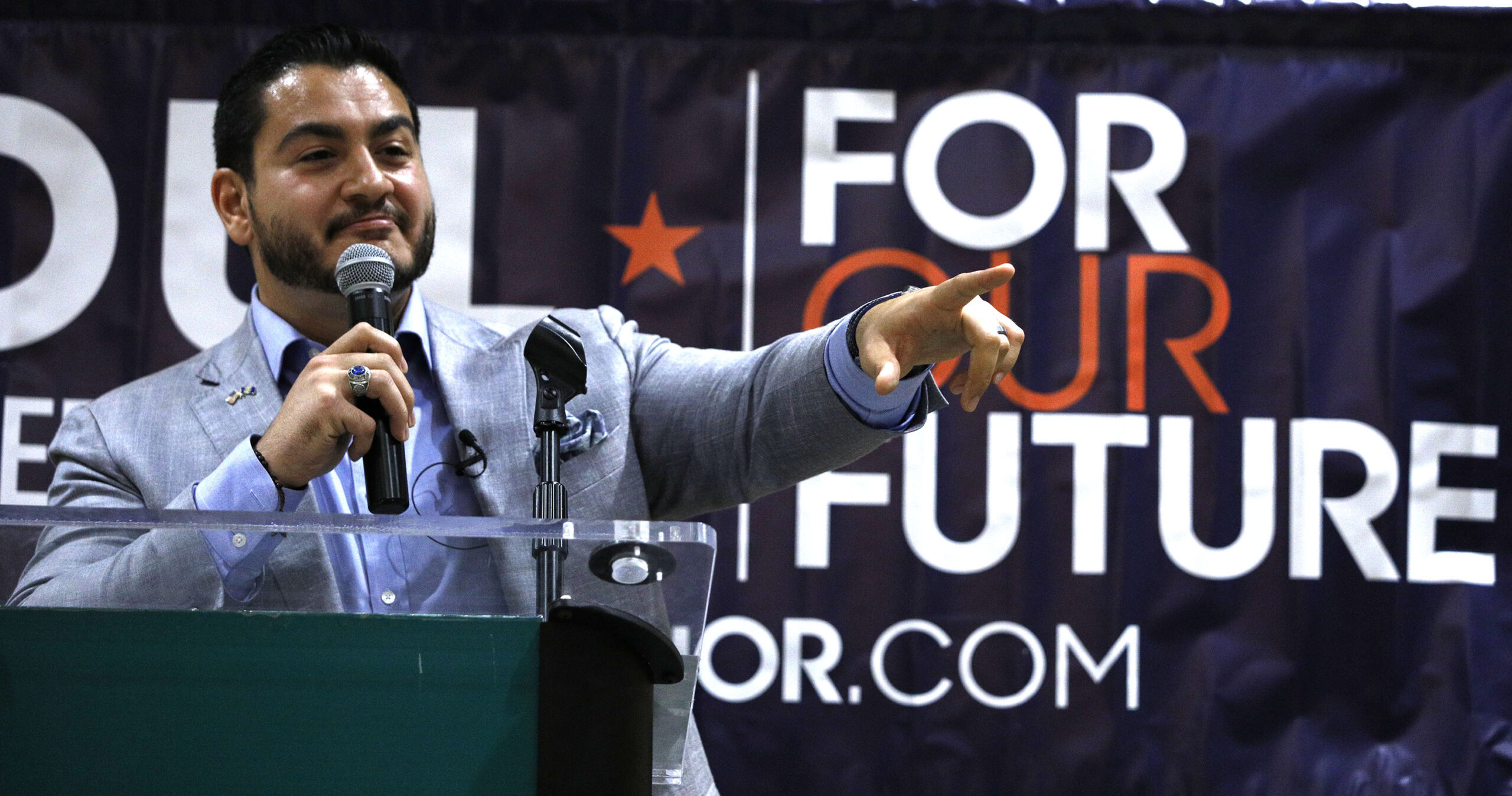
Michigan Democratic Senate candidate Abdul El-Sayed sidestepped a question about Israel’s right to exist during an interview with the anti-Israel media outlet Zeteo last week. Zeteo founder Mehdi Hasan asked El-Sayed how he would respond if and when he faces questions on the campaign trail about whether he supports Israel’s right to exist as a Jewish state, Jewish Insider’s Marc Rod reports.
What he said — and what he didn’t: El-Sayed initially responded by calling the question hypocritical and again dodged when pressed. He said that most U.S. presidents have expressed support for a two-state solution, and “Israel exists. Palestine doesn’t. And so I always wonder why nobody asks me why Palestine doesn’t have a right to exist.” El-Sayed accused the U.S. of supporting “the very people in Israel who want to foreclose on the possibility of Palestine existing. And so to me, frankly, it is about our principles and how we apply them evenly. If you believe in a two-state solution, then what are you doing to make it possible?” he continued.
EXCLUSIVE
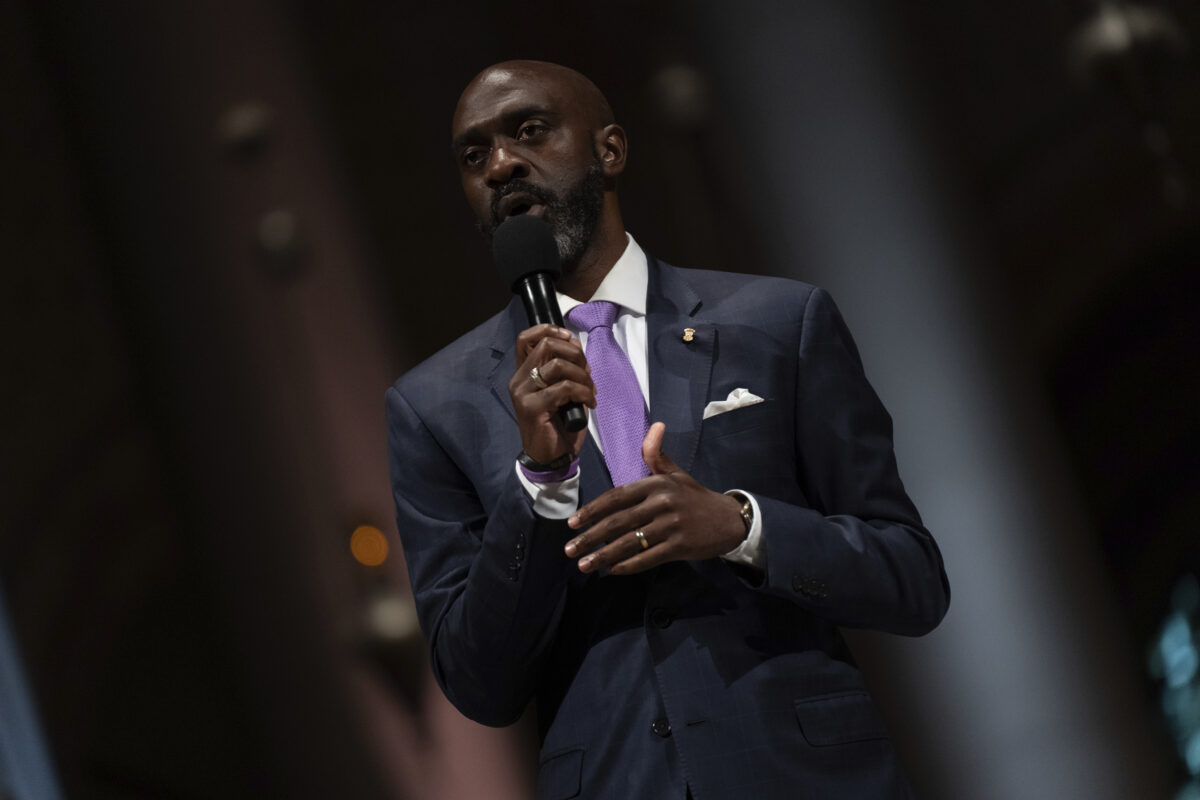
Major New York Jewish groups criticized former Assemblyman Michael Blake, who is running in the Democratic primary against Rep. Ritchie Torres (D-NY), for featuring a clip of an influencer who supported the shooting of two Israeli Embassy employees at the Capital Jewish Museum in Washington in his campaign launch video, Jewish Insider’s Marc Rod reports.
Pushback: “Hurling a bus load of antisemitic tropes and platforming bigots who cheer antisemitic violence in a launch video is not the pro-humanity flex one thinks it is,” the Jewish Community Relations Council of New York said in a statement. The Anti-Defamation League of New York and New Jersey said that “we can all agree that Michael Blake’s platforming of anti-Zionist influencer Guy Christensen should be roundly condemned.”
comeback campaign

Former Rep. Elaine Luria (D-VA), who was an outspoken voice in support of Israel and against antisemitism during her time in the House, announced a bid on Wednesday to reclaim the congressional seat she lost in 2022, Jewish Insider’s Marc Rod reports.
Looking back: Luria, who is Jewish, was a leading moderate voice in the House in support of Israel and against antisemitism, at times criticizing members of her own party and breaking with the Biden administration on its Israel policy. She was one of the few House Democrats who consistently opposed efforts by the Biden administration to rejoin the Iran nuclear deal and Luria organized and led a group of pro-Israel House Democrats to speak on the House floor in 2021 in support of Israel and its military operations, responding to a competing effort by far-left Democrats in opposition. She also repeatedly called out antisemitism from Democratic colleagues.
STEPPING DOWN

Israel’s influential minister of strategic affairs, Ron Dermer, resigned from his post on Tuesday, three years after assuming the role, Jewish Insider’s Tamara Zieve reports. “This government will be defined both by the attack on October 7th and by the prosecution of the two-year, seven-front, war that followed,” Dermer, widely regarded as Prime Minister Benjamin Netanyahu’s closest advisor, wrote in his resignation letter.
Staying around: Dermer has led Israel’s ceasefire and hostage-release negotiations since February. He is expected to stay on as Netanyahu’s envoy to continue handling the future of the Gaza portfolio, political sources recently told JI. U.S.-born and a former Israeli ambassador to Washington, Dermer has long played a central role in managing Israel’s relationship with the U.S. “What the future holds for me, I do not know. But I do know this: No matter what I do, I will continue to do my part to help secure the future of the Jewish people,” Dermer said.
history lessons

Former Secretary of State Hillary Clinton said on Monday that President Donald Trump’s peace plan for Gaza could be a “new moment of hope and possibility.” But it will only be successful if there is “a level of organization” applied to the implementation, a lesson that can be drawn from the Oslo process, she said, during a panel hosted by Columbia University’s Institute of Global Politics, Jewish Insider’s Haley Cohen reports.
What she said: “One thing that can be learned from the Oslo process and applied to the situation now with the peace plan is that there was a process,” Clinton said. The event commemorated the 30th anniversary of the assassination of Israeli Prime Minister Yitzhak Rabin, who was murdered by a right-wing extremist, soon after signing the Oslo II Accords peace agreements with then-Palestinian Authority President Yasser Arafat in 1995 — two years after the signing of the Oslo I Accords. “You have to have a level of organization, it can’t just have few people at the top — whether it be a president or special envoy, as necessary as they are, you have to have teams of people who can be working with their counterparts,” continued Clinton, who is a professor of international and public affairs at Columbia.
What he said: In 40-minute remarks, former President Bill Clinton, who mediated the Oslo Accords signing — which he hosted at the White House — spoke about his close personal and professional relationship with Rabin, calling the assassination one of the worst days of his life. “We have to begin again, where the trust level is low,” Clinton said of achieving Israeli-Palestinian peace. “People in power might not be in favor of giving up on anything now.”
Worthy Reads
Hate on the Right, Then and Now: The New York Times’ Bret Stephens draws comparisons between today’s rising trend of antisemitism within the GOP to past iterations of antisemitic ideology on the right. “The MAGA movement is not antisemitic. But many of its core convictions are antisemitic-adjacent — that is, they have a habit of leading in an anti-Jewish direction. Opposition to free trade, or to a welcoming immigration policy, or to international law that crimps national sovereignty, are legitimate, if often wrongheaded, political positions. But they have a way of melding with hoary stereotypes about ‘the International Jew; working across borders against the interests of so-called real Americans.” [NYTimes]
After Mamdani, Healing Divisions: Rabbi Elliot Cosgrove, senior rabbi at Park Avenue Synagogue on the Upper East Side of Manhattan, reflects in the Forward about how the New York City Jewish community must unite in the aftermath of Mayor-elect Zohran Mamdani’s victory. “For me, personally, the fact that about a third of New York City’s Jewish voters checked the box for Mamdani is totally bewildering. I am not unaware of the bigger political trends, the shortcomings of the other candidates, or the systemic challenges our city faces; I understand why Mamdani won. But for me, his anti-Zionist rhetoric and his intent to shut down research and economic partnerships between Israel and New York — to name but a few of his promises that would negatively impact our community — not only disqualified him from receiving my vote, but were a meaningful enough concern that I chose to publicly urge Jews and their allies to vote against him as well. And yet, it would seem that what was self-evident to me was not so self-evident to a sizeable percentage of my kinfolk. … We need to learn to walk together again. If, as I have repeatedly claimed, ahavat yisrael — love of the Jewish people — is my North Star, then it is a principle I must uphold even and especially when it is uncomfortable to do so. It is a love that must extend to Jews whose views I neither share nor understand.” [Forward]
Takeover on the Quad: John Ellis, professor emeritus of German literature at the University of California, Santa Cruz, argues in The Wall Street Journal for placing universities in a “receivership” to address the dominance of left-wing ideology in higher education. “The discrepancy between what we fund the campuses for and what they are doing is enormous. Promotion of knowledge and understanding has given way to inculcation of a poisonous fringe ideology. Students are encouraged to despise their society and kept ignorant of anything that might make them think otherwise. … The only viable solution is to place schools in ‘receivership,’ a well-established procedure to reform ailing college departments. A new chairman is imposed on a department with a free hand to make whatever appointments he thinks necessary to restore the department to health. By action of lawmakers or trustees, a new president can be imposed on a campus with a mandate to return the school to its proper mission by appointing subordinate administrators, especially deans, committed to reform.” [WSJ]
Investing in the Jewish Future: In Sapir, Jordan Chandler Hirsch argues that the Jewish people should establish a sovereign wealth fund to secure long-term communal and national resilience. “A wealth fund would allow the Jewish community to invite allies and skeptics alike into mutually beneficial investments. It could help key players solve their problems and achieve their goals, thereby securing support for ours. Skeptics who distrust our institutionalism might respect our show of independence. Anti-establishment forces might welcome Jewish capital that strengthens their projects. Most important, a wealth fund could transform both our psychology and our posture — from supplicants seeking protection into partners offering opportunity. Despite its corporate veneer, a wealth fund would not merely reproduce institutionalism. If shtadlanut sought seats at the institutional table, a wealth fund would build its own table and invite others in.” [SAPIR]
Word on the Street
President Donald Trump sent a letter to Israeli President Isaac Herzog calling on him to “fully pardon” Israeli Prime Minister Benjamin Netanyahu, describing the corruption case against him as “a political, unjustified prosecution.” Herzog’s office put out a statement saying that while he “holds President Trump in the highest regard … anyone seeking a Presidential pardon must submit a formal request in accordance with the established procedures”…
Following a joint meeting in Paris, French President Emmanuel Macron and Palestinian Authority President Mahmoud Abbas announced the creation of a joint committee “for the consolidation of the state of Palestine,” which will work towards drafting a “constitution” for such a state…
Iran has smuggled advanced armaments to terror groups in the West Bank over several months, the Washington Free Beacon reports, including rockets, explosive drones, anti-tank missiles and rocket-propelled grenades, hoping to use it as another launch pad in addition to Gaza to attack Israel…
Sens. Jim Risch (R-ID), Jeanne Shaheen (D-NH), Richard Blumenthal (D-CT), Jacky Rosen (D-NV) and Chris Van Hollen (D-MD) met with Syrian President Ahmad al-Sharaa at the Capitol on Tuesday. A person familiar with the situation told Jewish Insider that Van Hollen had “reiterated his support for the lifting of the Caesar sanctions while also stressing his long-held position that the U.S. must ensure that the Government of Syria complies with the six conditions included in the amendment he and Senator Graham added to the NDAA”…
Rep. Tom Suozzi (D-NY) urged the State Department to take action to ensure the release of Kamran Hekmati, an Iranian-American dual citizen and Suozzi constituent imprisoned in Iran. “This is about more than one man. It’s about defending the basic rights of American citizens abroad and standing up to regimes that traffic in hostage diplomacy,” Suozzi said…
Rep. Gabe Amo (D-RI) led 125 House Democrats in a letter to Secretary of State Marco Rubio seeking “clarity on your plan to ensure desperately needed humanitarian aid reaches Palestinian civilians in Gaza” and urging that aid be distributed through “reputable international institutions”…
Saudi Arabia is set to host a U.S.-Saudi investment summit at the Kennedy Center in Washington next Wednesday, a day after Crown Prince Mohammed bin Salman‘s visit to the White House…
Rep. Ilhan Omar (D-MN) met with Malcolm Jallow, an anti-Israel left-wing member of the Swedish parliament who has espoused antisemitic views and has associations with pro-Hamas individuals…
The New York Times speaks to Iranians deported back to Iran by the Trump administration in the first U.S.-chartered deportation flight to the country in September…
The New York Times profiles Jack Schlossberg, grandson of President John F. Kennedy, who is preparing to run for Congress in New York’s 12th Congressional District…
After receiving backlash for canceling planned shows in Israel as a result of pressure by the BDS movement, British comedian John Cleese said he was only postponing the shows “following advice about safety.” The “Monty Python” actor, who has a history of anti-Israel commentary on social media, claimed he is “hugely fond of Israeli audiences”…
Argentine President Javier Milei met with Rabbi David Yosef, the Sephardic chief rabbi of Israel; Isaac Sacca, the Sephardic chief rabbi of Argentina; and Eyal Sela, the Israeli ambassador to Argentina…
Israeli authorities arrested four suspects after dozens of settlers launched an arson attack in the Palestinian villages of Bei Lid and Deir Sharaf in the West Bank….
Israeli actress Gal Gadot won Israel’s Genesis Prize, sometimes called the “Jewish Nobel,” for her outspoken support of Israel in Hollywood since the Oct. 7, 2023, terror attacks. Gadot said she will donate the $1 million award to organizations “that will help Israel heal”…
Israeli pop star Noa Kirel and soccer player Daniel Peretz tied the knot on Tuesday in an A-lister affair in Jaffa: spotted at the nuptials were Israeli celebrities Eden Daniel Gabay, Idan Raichel, Eran Zahavi, Reef Neeman, Ron Bitton, Ron Aluf and Mor Hamami…
Comcast CEO Brian Roberts recently toured a site in Saudi Arabia for a possible Universal theme park location, raising speculation that he might bring in Saudi funds for a potential Comcast bid to acquire Warner Bros. Discovery…
Wonderful, an Israeli AI startup, has secured $100 million in a Series A funding round led by Index Ventures, with backing from Insight Partners, IVP, Bessemer and Vine Ventures…
Song of the Day

Shulem Lemmer shared on social media “The March Medley” he performed together in June with the Israel Symphony Orchestra Rishon LeZion, featuring Gur’s “Shir Hamaalos” and Modzitz’s “Ein Kitzvah,” at the 2025 MDA Chassidut B’Class concert in the Caesarea amphitheater.
Birthdays

Rabbi of the Dohány Street Synagogue in Budapest, Hungary, Róbert Frölich turns 60…
Co-founder and dean of the Talmudical Yeshiva of Philadelphia, Rabbi Shmuel Kamenetsky turns 101… Professor emerita of history at Columbia University and expert on Japan, Carol Gluck turns 84… Author and senior fellow at USC’s Annenberg School, Morley Winograd turns 83… Accountant and former PwC partner in Phoenix, Steven M. Scheiner, CPA… Former New York state senator, he is a descendant of Rabbi Shmuel Salant, the former Ashkenazic chief rabbi of Jerusalem, Stephen M. Saland turns 82… Sportscaster for “Thursday Night Football” on Prime Video, after more than 50 years at NBC and ABC, Al Michaels turns 81… U.S. senator (D-RI), Jack Reed turns 76… Attorney in Brooklyn, Bernard C. Wachsman… Member of the New York state Assembly since 2006, her district includes Manhattan’s Upper West Side, Linda B. Rosenthal turns 68… Author of young-adult fiction and winner of the 2015 National Book Award for Challenger Deep, Neal Shusterman turns 63… Author, journalist and former political advisor to Al Gore and Bill Clinton, Naomi Rebekah Wolf turns 63… University of Chicago professor, he won the 2019 Nobel Prize in Economics, Michael Kremer turns 61… Mayor of Oakland, Calif., until 2023, Elizabeth Beckman “Libby” Schaaf turns 60… Partner in the Chicago office of Kirkland & Ellis, Sanford E. “Sandy” Perl turns 60… White House chief of staff for the last two years of the Biden administration, Jeffrey Zients turns 59… British journalist and political correspondent for BBC News, Joanne “Jo” Coburn turns 58… Hasidic lecturer with many thousands of followers, Rabbi Avraham Elimelech Biderman turns 58… SVP and general manager of MLB’s Minnesota Twins from 2016 until 2024, Thad Levine turns 54… Member of the Knesset until 2019 for the Yisrael Beiteinu party, Robert Ilatov turns 54… Restaurant critic and food writer for the Boston Globe, Devra First turns 53… Israeli fashion model and actress, Nina Brosh turns 50… Former member of the Knesset for the United Torah Judaism party, Eliyahu Hasid turns 49… Campus support director at Hillel International, Aviva Zucker Snyder… Actress best known for her roles on “The Young and the Restless” and “The Bold and the Beautiful,” Kelly Kruger turns 44… Co-founder of Purple Acorn, Dave Weinberg… Assistant professor of Jewish studies at Oberlin College, Matthew D. Berkman turns 41… Director of strategic talent initiatives at the Michigan Economic Development Corporation, Spencer F. Lucker… New Jersey-based primary care physician known as Doctor Mike, he is an internet celebrity on YouTube and Instagram, Mikhail Varshavski turns 36… Activist in the fight against antisemitism throughout the U.S., Adela Cojab turns 29… Catcher in the Washington Nationals organization, Cameron J. Stubbs turns 29…
Frey’s success against DSA-aligned state Sen. Omar Fateh may be repeated in Seattle, where Mayor Bruce Harrell leads over socialist Katie Wilson, though results are incomplete

Stephen Maturen/Getty Images
Minneapolis Mayor Jacob Frey speaks at an Election Night party on November 4, 2025 in Minneapolis, Minnesota.
Democratic Mayor Jacob Frey of Minneapolis won reelection on Wednesday over his far-left, DSA-aligned challenger, state Sen. Omar Fateh, marking a win for the more pragmatic wing of the Democratic Party.
A similar result may be emerging in Seattle, where preliminary results showed the Democratic incumbent, Mayor Bruce Harrell, leading over his socialist challenger, though many ballots remain to be counted.
Frey, who is the second Jewish mayor to preside over Minneapolis, secured his third term, winning by six percentage points, 50% to 44%, in the final round of the city’s ranked choice voting on Wednesday.
Fateh, a progressive affiliated with the Democratic Socialists of America, has accused Israel of committing “genocide,” among other anti-Israel views, and campaigned with Rep. Ilhan Omar (D-MN), who remains one of Israel’s harshest critics in Congress.
Members of Fateh’s staff had also expressed hostile views towards Israel; His communications manager, Ayana Smith-Kooiman, said in a series of now-deleted social media posts that Israel “does not have a ‘right’ to exist” and “must be dismantled,” and said she did not care about Hamas a month after the Oct. 7, 2023, terror attacks — statements that drew rebuke from Sen. Amy Klobuchar (D-MN).
Frey’s victory in Minneapolis signals a wariness of a socialist candidate in the heavily Democratic city, in contrast with Zohran Mamdani’s win in New York City’s mayoral election on Tuesday.
Meanwhile, in Seattle, the first wave of ballots counted Tuesday night found Harrell holding a seven-point lead over self-described socialist Katie Wilson, 53% to 46%.
Wilson, who has expressed hostile views towards Israel, including calling the Jewish state’s war on Hamas a “genocide,” led over Harrell in the primary. Wilson has expressed support in the past for divesting from investments in Seattle that support Israeli actions, which is in line with the BDS movement.
Additionally, some Seattle Jewish community leaders have expressed deep concern over Wilson’s candidacy and her relationships with anti-Israel activists, including Kshama Sawant, a former far-left Seattle city councilmember who has faced accusations of stoking antisemitism.
However, the race is still far from being decided. Many ballots are left to be counted, including a significant share from left-leaning parts of the city. The next tranche of ballots is set to be reported around 5 p.m. local time on Wednesday.
Please log in if you already have a subscription, or subscribe to access the latest updates.
 Continue with Google

 Continue with Apple