































Dozens of GOP lawmakers sent a letter last year urging the president to fill the position created in 2023
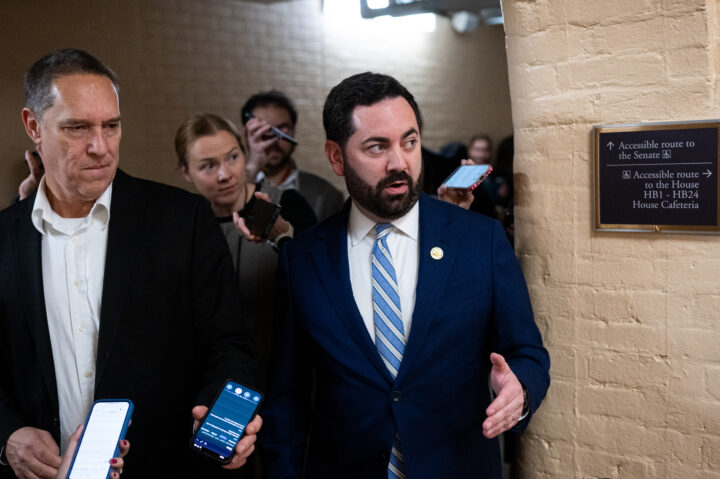
Bill Clark/CQ-Roll Call, Inc via Getty Images
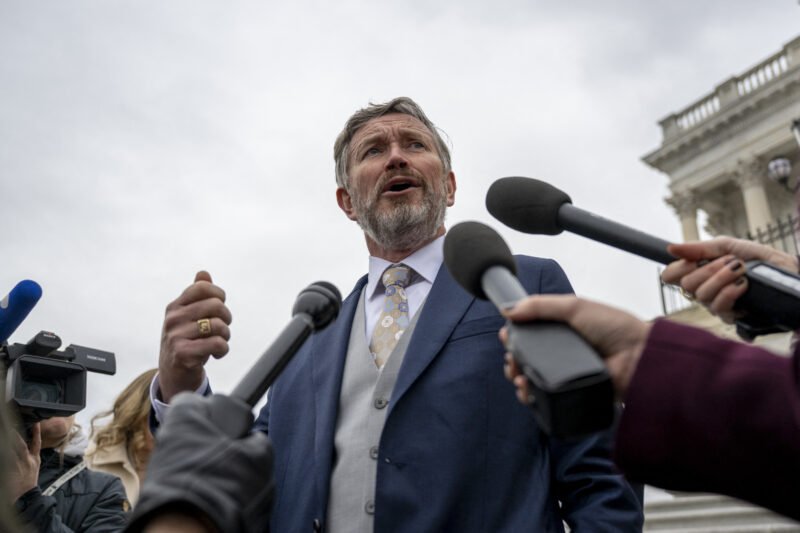
Rep. Mike Lawler, R-N.Y., speaks to reporters as he leaves the House Republican Conference meeting in the U.S. Capitol on Wednesday, December 10, 2025.


 Add JewishInsider on Google
Rep. Mike Lawler (R-NY) expects Congress to make another “big push” to urge President Donald Trump to fill the role of special envoy for the Abraham Accords once the Iran conflict subsides.
The role was created in 2023, when Lawler and Rep. Ritchie Torres (D-NY) introduced a bill to establish a Senate-confirmed, ambassador-level special envoy position dedicated to expanding the Abraham Accords and Middle East normalization. The measure was ultimately signed into law as part of the FY2024 National Defense Authorization Act (NDAA).
Tasked with strengthening and expanding regional normalization, the special envoy would be responsible for coordinating U.S. strategy across regional embassies, nongovernmental organizations, and international stakeholders.
But despite the legal mandate, the position has remained open. The vacancy has drawn frustration from congressional Republicans, with 47 House GOP members sending a letter in January 2025 urging Trump to immediately fill the post while condemning former President Joe Biden’s failure to do so during his term.
Lawler told Jewish Insider that he would “like to see it filled,” noting that the evolving situation in the region has increased the need for the position. He said it is something he will “continue to advocate for.”
“Obviously there’s been a lot happening in the Middle East over the last year and a half. As we see the situation in Iran get resolved, I do think the Abraham Accords is going to critical moving forward,” Lawler said. “I would like to see somebody fill that position and be entirely dedicated to that work, which I think is going to be a key part of keeping stability in the region.”
Asked whether he expects House Republicans to make another push similar to the January 2025 letter urging Trump to fill the position, Lawler replied: “I do. I think we will.”
“As you see the situation in the Middle East, from the standpoint of Iran, resolve, there will be a big push again on the special envoy.”
“Look, obviously a lot of the focus has been on the role of Steve Witkoff, the [White House] special envoy, and he has been hyper-focused on a lot of these issues that are covered in the Abraham Accords. So I think in some capacity they have been doing this work,” Lawler added. “But I think long term, this was a position we created to accentuate one of the president’s biggest achievements of his first term.”
The Democratic candidate also said he does not believe that far-left NYC mayoral candidate Zohran Mamdani is ‘taking actions I would claim to be antisemitic’
Campaign website
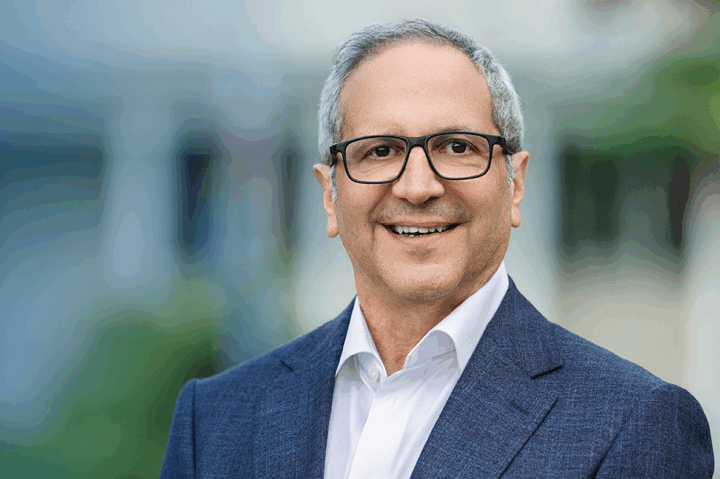
Peter Chatzky
Peter Chatzky, the deputy mayor of Briarcliff Manor, N.Y., and the latest of seven candidates to join the field of Democrats hoping to unseat Rep. Mike Lawler (R-NY) in New York’s Hudson Valley region, is standing out from the field with the comparatively critical stance he’s taking toward the U.S.-Israel relationship.
Though Chatzky called Israel a “critical ally of the United States,” he told Jewish Insider in a recent interview that he believes, from public information and reports he has seen, that Israel is violating conditions in U.S. arms sales law relating to humanitarian aid and international law — requiring the suspension of arms sales.
The district, New York’s 17th, has one of the largest Jewish constituencies in the country. Lawler has made his support for Israel a centerpiece of his time in Congress, and most of the Democratic candidates in the race are showcasing their pro-Israel bona fides.
“[U.S. support for Israel is] incredibly important to people in this district, many like me, many are Jewish. Many have family in Israel,” Chatzky said. “I think all of us in this district believe that Jews have a right to feel safe, particularly in Israel, and I think U.S. policy has to recognize that. I think the safety of the Jewish people, the safety of an ally, is paramount, and should be paramount in everything we do.”
At the same time, Chatzky said he believes findings from international observers and media that Israel is in violation of U.S. laws conditioning arms sales on adherence to human rights law and support for humanitarian aid. He said he’s also been concerned by pictures and video coming from Gaza.
“Israel has a 100% right, 1,000% right, to defend itself. I recognize war is brutal,” he said. “We have an obligation in the U.S., we have a legal obligation, we have a moral obligation, to uphold our own standards, our own laws. … I think the U.S. could be doing a much better job, and we should do it with every ally. This is not an Israel-specific thing. Every ally should be held to our high standards of morality and support for humanitarian aid.”
Chatzky said that the U.S. should be “maximizing efforts to provide humanitarian aid” and doing “all we can” to protect innocent civilians.
He said that the issue is “sensitive” in the district, and that there are some constituents who are not willing to engage with any criticism of Israel or suggestion of wrongdoing. Chatzky said he has family in Israel, but said he has not had the opportunity to visit the Jewish state.
He said he would not support efforts to impose specific conditions on arms sales to Israel that aren’t applied to any other U.S. allies, though he said he might support efforts to expand congressional oversight over such matters globally.
Chatzky said he supports a two-state solution, but that such an outcome depends on having representative governments that are willing to negotiate — something that is not currently the case in Gaza.
“Hamas is certainly not representative of all the people who are living on the Gaza Strip, the Palestinians. I don’t think they have the same sort of democracy-focused interests that true leadership would require to establish that two-state solution,” Chatzky said. “It’s still a lofty goal. It would be great. I don’t have the magic formula to get there next week.”
Asked about the U.S. strikes on Iran’s nuclear facilities in June, Chatzky said he doesn’t feel there has been enough “transparency” or “reliable information” available about the strikes, their effectiveness and the impact of those strikes on civilians. “It’s hard for somebody who doesn’t have access to all the privileged information to know what the facts are,” he continued.
He said he supports a negotiated solution to deal with Iran’s nuclear program, adding “nobody really wins if a nuclear war is initiated anywhere. And I think America always has to take whatever steps they can to limit that.”
While Chatzky said that he “can’t really defend” Democratic New York City mayoral candidate Zohran Mamdani’s refusal to fully disavow calls to “globalize the intifada,” he said that Mamdani “does seem to have tremendous support among some Jewish leaders.”
“I haven’t seen him taking actions I would claim to be antisemitic,” he continued. He said he thinks Mamdani understands and will do what is necessary to protect the Jewish community in New York City. “Making assumptions that he would somehow ignore such a significant chunk of his constituency — I’m not seeing anything in that in his campaign so far.”
Asked about the rise of antisemitism domestically more broadly, Chatzky said that “we have to take a critical look at everything governments are doing and make sure they’re not even accidentally inspiring more antisemitic behavior.”
“We have to just be careful about the policies we’re putting in place and who we’re blaming,” he continued. “We’re currently in an America that seems to be bent on divisiveness and finding people to cast blame on. And I’m worried some of the antisemitism we’re seeing is because of that sort of national attitude of ‘Who’s the bogeyman in this instance?’ And we have to avoid that at all costs.”
Chatzky, in his campaign, is highlighting past confrontations with President Donald Trump’s business as a private citizen, mayor and deputy mayor of Briarcliff Manor, N.Y. At different points in time Chatzky and the town successfully blocked or forced the Trump organization to modify plans for development and major events at Trump’s golf course in the district.
“I am the only one who’s actually battled toe-to-toe with Donald Trump,” Chatzky said.
Chatzky argued that he’s also the only candidate in the Democratic field with a decade of experience in elected office and 40 years of experience running a business, having founded a tech company.
He said that a crucial job for Congress will be to rebuild the institutions and reputation of government disrupted by Trump and his administration. He said he also wants to see the U.S. build its social safety net, something he said he’s always done for his own employees in his business career.
At the same time, he said he’s had experience at the local level working across the aisle with Republicans and with colleagues to his left, explaining, “it’s about building coalitions, which I think is badly needed in American national-level politics today. I think we all have to start speaking together much more comfortably.”
As of the end of the third quarter, Chatzky fell in the middle of the pack of Democratic candidates in fundraising. Rockland County legislator Beth Davidson led with $855,000, followed by national security veteran Cait Conley with $816,000, Chatzky with $680,000, nonprofit executive Jessica Reinmann with $535,000, former FBI agent John Sullivan with $301,000, former journalist Mike Sacks with $212,000 and Tarrytown village trustee Effie Phillips-Staley with $152,000.
The GOP congressman told JI that, should nuclear negotiations fail, Israel should not have to act against Iran without U.S. assistance
Bill Clark/CQ-Roll Call, Inc via Getty Images
Rep. Mike Lawler (R-NY) leaves the House Republicans' caucus meeting at the Capitol Hill Club in Washington on Tuesday, May 23, 2023.
Rep. Mike Lawler (R-NY), returning from a trip to Israel, Saudi Arabia and Jordan, characterized leaders in the region as being open to the Trump administration’s efforts to reach a new nuclear deal with Iran, but also suggested that they are skeptical that Iran will actually agree to a deal that dismantles its nuclear program.
“I think folks are realistic about the prospects of Iran coming to an agreement, but still want to give the process a chance and try to avoid a conflict if possible,” Lawler told Jewish Insider on Thursday. “But ultimately, you know, I think everybody is very clear about the fact that Iran cannot have a nuclear weapon.”
Lawler, joined by Reps. Michael McCaul (R-TX) and Sheila Cherfilus McCormick (D-FL), met with regional leaders, including Israeli Prime Minister Benjamin Netanyahu, Saudi Foreign Minister Adel al-Jubeir and Jordanian King Abdullah II.
On nuclear talks with Iran, the New York Republican said that leaders in the region are “cautiously optimistic that we can make progress in a negotiation, but I think realistic about the fact that we’ve been here before with Iran, and they continue to operate in the manner that they do.”
Lawler has been a leader in the House on Iran sanctions, sponsoring two bills that passed last year to crack down on the oil trade between Iran and China and a third that is moving ahead in the House this year.
Secretary of State Marco Rubio said in congressional testimony last week that negotiations between the U.S. and Iran are not engaging with Iran’s support for terrorism or its ballistic missile program, but said that sanctions targeting those areas would remain in place if they are not addressed under a deal. Many Republicans have argued in the past that Tehran would use any sanctions relief, regardless of target, to fund malign activities.
“Let’s see what actually comes out of these negotiations,” Lawler said, of Rubio’s comments. “But, my general view is that the nuclear program, obviously, is a major threat, but so too is their continued funding of terrorism, and all of these issues are going to have to be addressed, one way or the other.”
He said that “as part of any sanctions relief down the road, they would have to cease all terror activity and funding of it. But I think we’re a long ways away from that, and so that’s why I continue to push on the sanctions.”
Lawler described the Trump administration as being more aggressive than the Biden administration in implementing sanctions, including the two bills he spearheaded in the previous Congress, against Iran.
“This has been, from the standpoint of applying pressure, critical, but long term all of these issues are going to have to be addressed,” Lawler said. “One of the immediate issues is the nuclear program and trying to eliminate that through a diplomatic negotiation.”
Amid public reports that the U.S., Hamas and Israel are nearing an agreement on a new ceasefire proposal, Lawler said, “We’ll see if progress can be made there. Hamas continues to put in place demands that are never, ever going to be accepted by the United States or Israel.”
While Israel has said it would agree to the current U.S. proposal, Israeli officials have also implemented plans to expand operations in Gaza even as U.S. officials have reportedly been privately pressuring Israeli officials to end the war.
“Israel is continuing to proceed forward with respect to trying to eliminate the threat posed by Hamas. Obviously, the longer this drags on, the more difficult it is within the region,” Lawler said. “But I think everybody would like to see this come to an end, in which the hostages are released, the Palestinian people are able to live in a more stable area and get the humanitarian assistance that they need.”
Lawler also expressed support for the new American and Israeli effort to provide humanitarian aid to Palestinians, which began earlier this week.
He criticized the Biden administration for, in 2024, pressuring Israel against expanding operations against Hamas and Hezbollah, arguing that if Israel had heeded that pressure, Hamas and Hezbollah’s leadership would still be alive and the Assad regime would still be in power in Syria.
Lawler denied that the Trump administration had placed any similar pressure on Israel, despite public comments from President Donald Trump that Israel should not attack Iran’s nuclear program while talks are ongoing and reports of private pressure on a number of fronts.
“I think the administration has been very supportive, but they’re in the process of trying to negotiate,” Lawler said, of Trump’s recent comments opposing a strike on Iran. “And obviously, when you’re in the middle of a negotiation, any military action can undermine that negotiation … the talks are in a critical stage, and you have to allow those talks to unfold.”
He suggested that he believes that the administration would support a strike if the negotiations fail, and that Israel should not have to act on its own in such a scenario. “There should be coordination and cooperation if and when any action is taken,” Lawler said.
The congressman said that, despite the ongoing challenges, there are new opportunities in the Middle East and it is in some ways “in a stronger position for change than it was 19 months ago.”
“There’s a lot of work ahead, but I think the dialogue in all three countries was extremely positive and focused on the future and how we kind of bridge these divides and long-term normalization and economic cooperation between all countries in the region,” Lawler said.
Saudi Arabia, he said, was “extremely happy” with Trump’s recent visit. The U.S.-Saudi relationship, he continued, is on a “very positive” trajectory, and Saudi Arabia is poised to be a key player in helping to bring stability and prosperity to the Middle East.
Despite recent reports and public statements indicating that Saudi interest in normalizing relations with Israel has waned in the short term, Lawler said that “they understand how important it is both from the long-term stability and economic prosperity of the Middle East, but also on the global stage.”
“The sooner this conflict [in Gaza] comes to an end, I think the easier it will be to begin that process,” Lawler continued.
Lawler also described Jordan as “vital to the U.S., to Israel and to the peace and stability of the Middle East” and a “great ally and partner.”
He said that Jordan’s King Abdullah II had stressed the economic, natural resource and refugee challenges the country faces. Lawler argued that the U.S., Israel and Saudi Arabia should invest in Jordan to help support its stability, “which is vital to our national security interests and certainly that of Israel.”
Please log in if you already have a subscription, or subscribe to access the latest updates.
 Continue with Google
 Continue with Apple