







































Plus, lawmakers say Pentagon, Elbridge Colby icing them out
Kevin Dietsch/Getty Images
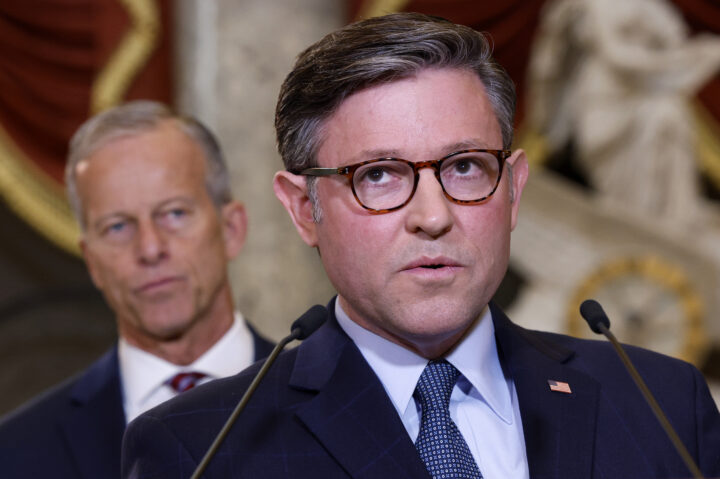
Speaker of the House Mike Johnson (R-LA), accompanied by Senate Majority Leader John Thune (R-SD), speaks during a news conference in Statuary Hall at the U.S. Capitol Building on October 3, 2025 in Washington, DC.


 Add JewishInsider on Google
Good Tuesday afternoon!
This P.M. briefing is reserved for our premium subscribers like you — offering a forward-focused read on what we’re tracking now and what’s coming next.
I’m Danielle Cohen-Kanik, U.S. editor at Jewish Insider and curator, along with assists from my colleagues, of the Daily Overtime briefing. Please don’t hesitate to share your thoughts and feedback by replying to this email.
📡On Our Radar
Notable developments and interesting tidbits we’re tracking
Election Day is underway, and voters are breaking turnout records in New York City. Already by noon today, more people had voted in the mayoral race than had voted in the entirety of the 2021 NYC mayor’s race. By 3 p.m., more than 1.4 million New Yorkers had voted in the race — more than in any NYC mayoral election since 2001, according to The New York Times — with several more hours before the polls close at 9 p.m.
President Donald Trump chimed in last night, urging New Yorkers to vote for former Gov. Andrew Cuomo. “Whether you personally like Andrew Cuomo or not, you really have no choice. You must vote for him, and hope he does a fantastic job,” he wrote on social media. Trump added in another post, “Any Jewish person that votes for Zohran Mamdani, a proven and self professed JEW HATER, is a stupid person!!!”…
One party leader not weighing in: Senate Minority Leader Chuck Schumer (D-NY), who has officially made it through the mayoral race without issuing an endorsement. He had said throughout the election that he had held “conversations” with Mamdani but resisted calls to either endorse his party’s candidate or to denounce his anti-Israel views. At a press conference in the Capitol this afternoon, Schumer told reporters he himself had voted and “look[s] forward to working with the next mayor” but would not reveal who got his vote…
Leading right-wing figures continue to contend with the normalization of antisemitism within the GOP: House Speaker Mike Johnson (R-LA) joined the list of Republicans who have publicly admonished Tucker Carlson for platforming neo-Nazi Nick Fuentes on his podcast, saying today, “Some of the things [Fuentes has] said are just blatantly antisemitic, racist and anti-American. Anti-Christian, for that matter. I think we have to call out antisemitism wherever it is. Whether it’s Tucker or anybody else, I don’t think we should be giving a platform to that kind of speech. He has a First Amendment right, but we shouldn’t ever amplify it. That’s my view.”
Senate Majority Leader John Thune (R-SD) also denounced antisemitism on the right in comments today, though without naming Carlson or Fuentes. “Well, there are lots of voices, obviously, out there, but I don’t think there ought to be any — there just should be no room at all whatsoever for antisemitism or other forms of discrimination. That’s certainly not what our party is about,” Thune said…
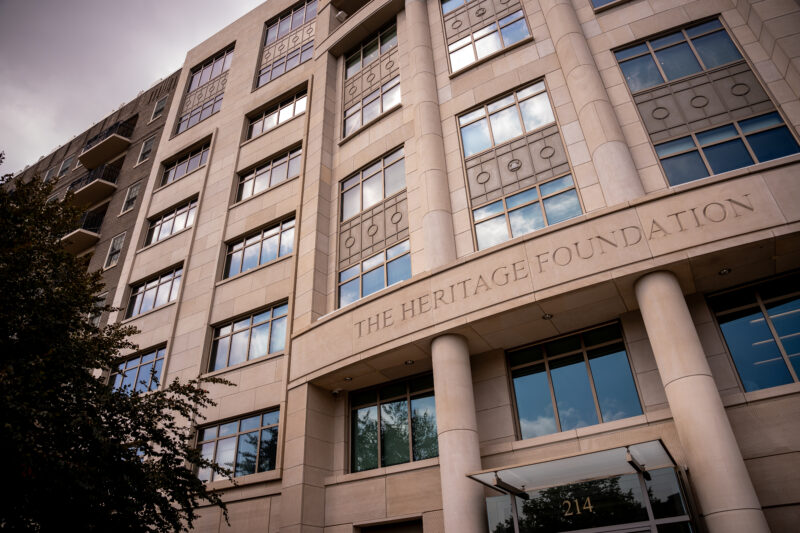
Backlash against the Heritage Foundation for defending Carlson also continues; the National Task Force to Combat Antisemitism, a conservative coalition aligned with Heritage, changed its tune today in an email to President Kevin Roberts, a day after the task force said it would stand by the organization.
In today’s email, obtained by Jewish Insider’s Gabby Deutch, the NTFCA co-chairs made several demands of Roberts, including removing his controversial video defending Carlson; an apology “to those Christians and Jews who are steadfast members of the conservative movement and believe that Israel has a special role to play both biblically and politically;” a conference hosted by Heritage on the boundaries of the conservative movement; hiring a visiting fellow “who shares mainstream conservative views on Israel, Jews and Christian Zionists” to win over Gen Zers; and to host Shabbat dinners with Heritage’s interns and junior staff members to educate them about Judaism.
The task force co-chairs said in the email that if an agreement is not reached soon, their relationship with Heritage “will be irrevocably harmed.” Co-chair Luke Moon told JI, “If the terms aren’t met, we will take the NTFCA elsewhere”…
Several Jewish organizations have cut ties with the NTFCA already over the incident, including the Zionist Organization of America and Young Jewish Conservatives; today, the Coalition for Jewish Values and Combat Antisemitism Movement did so as well.
“We cannot grant legitimacy to an effort to combat antisemitism operated by the Heritage Foundation while Heritage is validating antisemitism and giving it a platform,” CJV wrote. “Although our target” on the task force “was and remains primarily a left-wing cause, ‘no enemies on the right’ was always liable to be proven false.”
CAM, in its resignation letter to Roberts, affirmed its support of free speech and specified that “the genesis of this letter is our deep concern with how you, Mr. Roberts, on behalf of the Heritage Foundation, have chosen to exercise your rights” [emphasis original]…
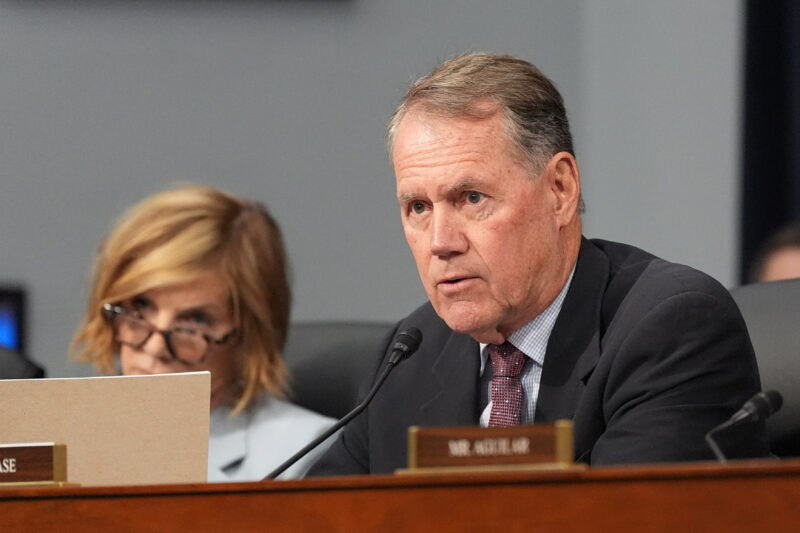
Bipartisan lawmakers expressed frustration with the Pentagon for not properly briefing them on national security issues at a Senate Armed Services Committee hearing today, after Defense Secretary Pete Hegseth announced a new rule last month requiring all Pentagon staffers to get approval before interacting with members of Congress.
Sen. Dan Sullivan (R-AK) called out Elbridge Colby, under secretary of defense for policy, specifically, saying it was even harder to contact him than Hegseth or Trump. “Man, I can’t even get a response, and we’re on your team,” Sullivan said…
The Trump administration is pushing Congress to repeal the Caesar Act sanctions on Syria ahead of Syrian President Ahmad al-Sharaa’s first visit to the White House on Monday, urging lawmakers to include it in the 2026 National Defense Authorization Act. The Senate already approved the repeal in its version of the NDAA last month, but the House version does not include a similar provision…
⏩ Tomorrow’s Agenda, Today
An early look at tomorrow’s storylines and schedule to keep you a step ahead
Keep an eye on Jewish Insider tomorrow morning for an interview with Republican Kentucky Senate candidate Nate Morris, who is seeking to take the seat of retiring Sen. Mitch McConnell (R-KY), and for a reflection on the late Vice President Dick Cheney’s legacy.
Tomorrow afternoon, the ADL will host a post-election briefing on the New York City mayoral race with its CEO, Jonathan Greenblatt, and Hindy Poupko, senior vice president of community strategy and external relations at UJA-Federation of New York.
Former Israeli hostage Emily Damari will appear at Temple Emanu-El in New York City tomorrow evening for her first public speaking engagement in the U.S., joined by author Noa Tishby.
Stories You May Have Missed
SCOOP
Before denouncing AIPAC, Moulton sought group’s endorsement for Senate campaign, source says
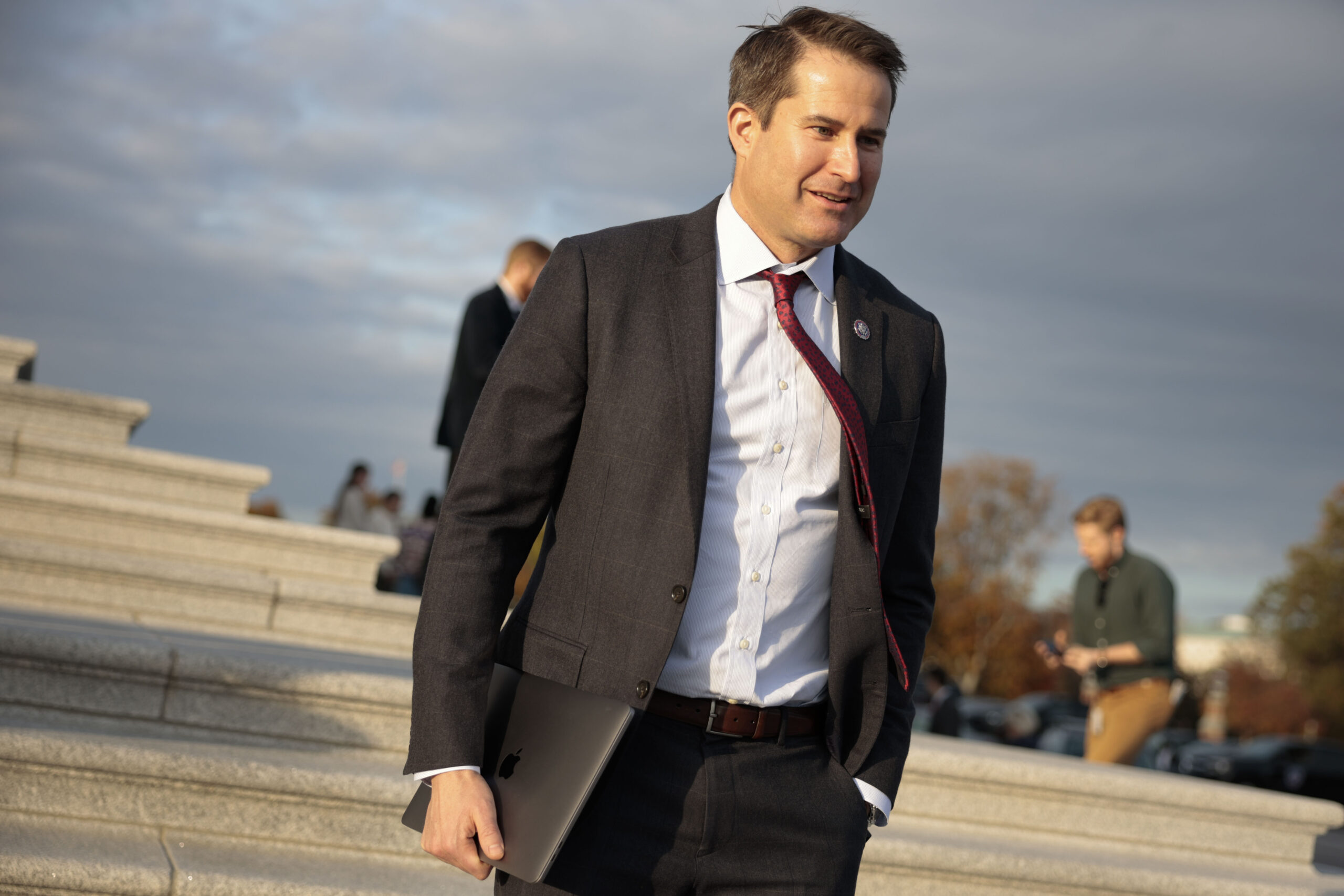
Moulton turned against the group when it was unable to guarantee him an endorsement upon the launch of his Senate campaign, a source told JI
THE X FACTOR
Conservatives resist blaming Musk for reinstating Nick Fuentes on X

X is the only mainstream social media platform where Fuentes is allowed to have an account; he was unblocked in May 2024 and now has over 1 million followers
Plus, Virginia LG candidate skirts antisemitism questions

Joshua Sukoff/Medill News Service
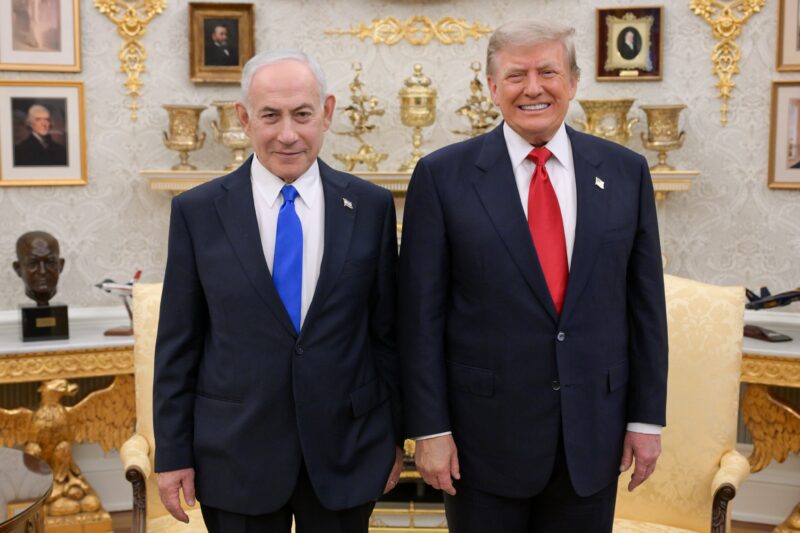
President Donald Trump holds a joint news conference at the White House with Israeli Prime Minister Benjamin Netanyahu on February 4, 2025. This is Trump’s first joint news conference with a foreign leader in his second term.
Good Monday afternoon!
This P.M. briefing is reserved for our premium subscribers like you — offering a forward-focused read on what we’re tracking now and what’s coming next.
I’m Danielle Cohen-Kanik, U.S. editor at Jewish Insider and curator, along with assists from my colleagues, of the Daily Overtime briefing. Please don’t hesitate to share your thoughts and feedback by replying to this email.
📡On Our Radar
Notable developments and interesting tidbits we’re tracking
It’s Election Day across the country tomorrow, and we’ll be watching several key races.
Front of mind is the New York City mayoral race where Democratic nominee Zohran Mamdani is expected to prevail, though it remains to be seen if he’ll claim an absolute majority.
All candidates are still vying for the Jewish vote: Over the weekend, divisions emerged in the anti-Zionist Satmar Hasidic community after one of its political leaders issued an endorsement of Mamdani — some leaders publicly broke ranks to reject the move and instead endorse his rival, former New York Gov. Andrew Cuomo.
Meanwhile, Republican nominee Curtis Sliwa visited the Lubavitcher Rebbe’s Ohel in Queens (and recalled a blessing he received from Rabbi Menachem Mendel Schneerson decades ago which Sliwa claimed “saved my life”)…
In nearby New Jersey, gubernatorial candidates Rep. Mikie Sherrill (D-NJ) and Jack Ciattarelli are doing the same. We’ve covered Sherrill’s recent outreach efforts to the state’s sizable Jewish community; on the GOP side, President Donald Trump posted on Truth Social on Sunday urging “ALL of my supporters in the Orthodox community in Lakewood [N.J.] and its surrounding towns to vote in HUGE numbers for Jack Ciattarelli,” naming in particular “all the Yeshiva students who turned out to vote for me last year.” Trump won around 88% of the heavily Jewish township’s vote in the 2024 presidential election…
And in Virginia, former Rep. Abigail Spanberger (D-VA) is likely to win the governor’s mansion against the state’s current lieutenant governor, Republican Winsome Earle-Sears, in a race set to make Old Dominion history — either way, the state will elect its first female governor.
Also on the Virginia ballot: Ghazala Hashmi, the Democratic state senator running for lieutenant governor, who has elicited concern from the state’s Jewish community over her past involvement in anti-Israel activism and her record on combating antisemitism.
In a brief interview today, Jewish Insider’s Editor-in-Chief Josh Kraushaar asked Hashmi how big of a challenge she thinks antisemitism is in Virginia. Hashmi replied: “I think we see growing challenges on so many levels of bigotry, and we have to be united in our efforts. I’m facing a great deal of Islamophobic attacks, as you probably have seen, so we have to respond to everything.” Pressed on what she thought about antisemitism specifically, Hashmi cut the interview short…
The fallout from the Heritage Foundation’s embrace of Tucker Carlson and refusal to disavow Nick Fuentes continues, as right-wing figures publicly declare themselves aligned with or opposed to the move. Orthodox conservative influencer Ben Shapiro said about Carlson, Fuentes and their ilk in a lengthy video statement today: “These people aren’t to my right. They’re not attached in any way to the fundamental principles of conservatism. And these people have already declared themselves my enemies. I’d be a fool not to take them seriously.”
Ryan Neuhaus, who served as Heritage Foundation President Kevin Roberts’ chief of staff until Friday, resigned after reposting numerous social media posts in defense of Roberts, including one saying that Heritage employees opposed to his statement were “virtue signaling” and calling for them to resign…
A new poll released today by the Democratic Majority for Israel finds that Democrats overwhelmingly support the ceasefire deal reached between Israel and Hamas and a majority of them think Trump played at least a “somewhat important role” in reaching the agreement, JI’s Danielle Cohen-Kanik reports.
A majority of those polled (56%) said they believe that the U.S. should keep its alliance with Israel, though only 32% felt so “strongly.” Three-quarters (75%) said they support Israel’s right to exist as a Jewish homeland, with 12% saying they don’t believe Israel has a right to exist…
The Wall Street Journal documents the rise and sustained popularity of Abdulmalik Al-Houthi, the reclusive commander of the Houthis in Yemen, who has continued to resist pressure by officials from Arab states to cease the terror group’s attacks on Israel and ships in the Red Sea, “and go back to being a relatively small-time player in the region’s conflicts.”
“‘They genuinely believe in this jihad to remove Israel from that land,’ said April Longley Alley, a former United Nations diplomat who has engaged with the Houthi leadership. ‘And they’re going to keep pushing’”…
Israeli Prime Minister Benjamin Netanyahu ordered the dispatch of a humanitarian and medical aid delegation from Israel to Jamaica today, to assist in relief efforts after Hurricane Melissa tore through the country earlier this week…
Sudanese refugees in Israel told The Times of Israel about the compounded pain and fear they experienced as the Oct. 7 Hamas attacks and the civil war in Sudan unfolded in parallel, decrying the lack of media coverage of Sudan while the world focused on Gaza…
Yad Vashem announced today that the museum has identified the names of 5 million Jewish victims of the Holocaust, and hopes to use artificial intelligence to name at least 250,000 more…
⏩ Tomorrow’s Agenda, Today
An early look at tomorrow’s storylines and schedule to keep you a step ahead
Keep an eye on Jewish Insider tomorrow morning for the backstory surrounding Massachusetts Senate candidate Rep. Seth Moulton’s (D-MA) attacks against AIPAC.
Tomorrow, the World Zionist Organization and Temple Emanu-El are holding a memorial event in New York City for slain Israeli Prime Minister Yitzhak Rabin on the 30th anniversary of his assassination. Speakers will include Rabin’s grandson, Jonathan Benartzi; Yehuda Kurtzer, president of the Shalom Hartman Institute; former U.S. Ambassador to Israel Dan Shapiro; Amy Spitalnick, CEO of the Jewish Council for Public Affairs; and Israeli American peace advocate Alana Zeitchik.
Stories You May Have Missed
UNIVERSITY INSIGHTS
Longtime higher ed leader Gordon Gee says fear, not free speech, is ruling America’s campuses

Gee, who served as president of five universities over 45 years, told JI he believes some administrators are opposed to reform efforts as a knee-jerk reaction to Trump
SHOW OF SOLIDARITY
Overhauled Kennedy Center takes on the mantle of combating antisemitism
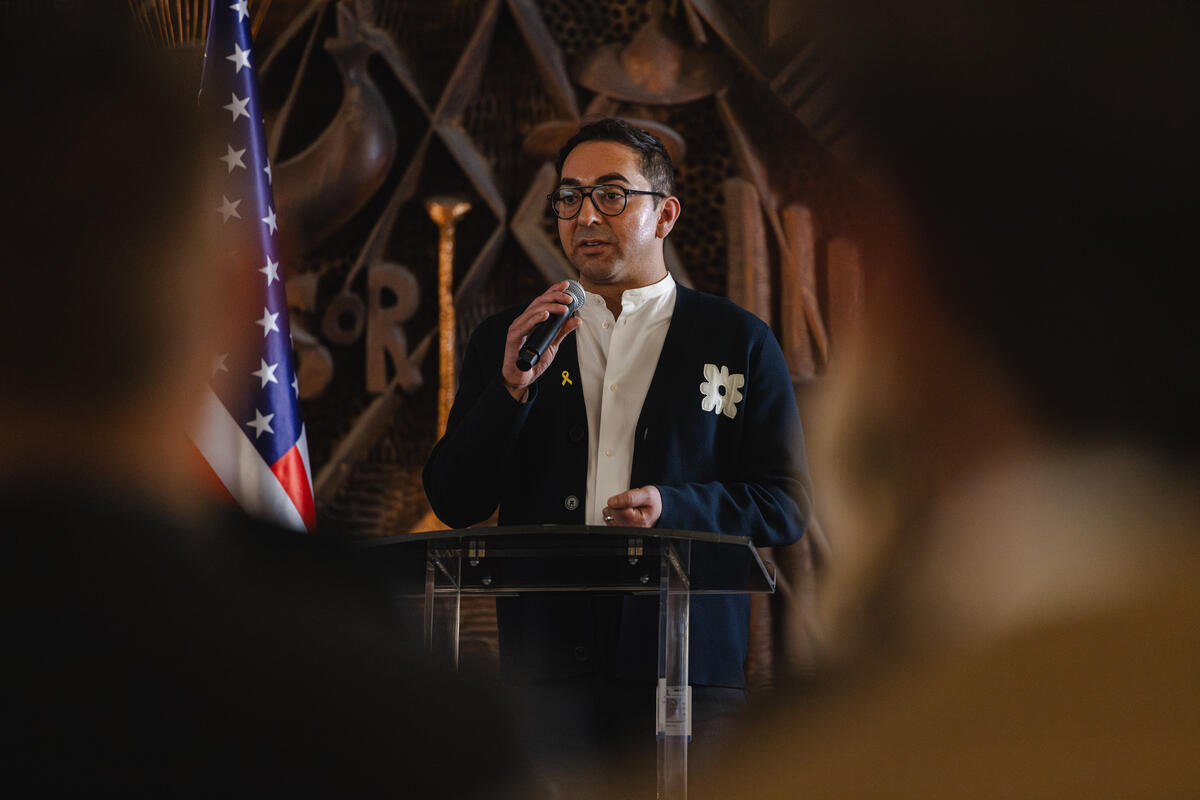
With a new board and leadership, the Kennedy Center is spotlighting Jewish culture and the fight against antisemitism in ‘solidarity’
Plus, Palantir CTO's Israeli inspiration

Joe Raedle/Getty Images
Tucker Carlson speaks during the memorial service for political activist Charlie Kirk at State Farm Stadium on September 21, 2025 in Glendale, Arizona.
Good Thursday afternoon!
This P.M. briefing is reserved for our premium subscribers like you — offering a forward-focused read on what we’re tracking now and what’s coming next.
I’m Danielle Cohen-Kanik, U.S. editor at Jewish Insider and curator, along with assists from my colleagues, of the Daily Overtime briefing. Please don’t hesitate to share your thoughts and feedback by replying to this email.
📡On Our Radar
Notable developments and interesting tidbits we’re tracking
Efforts are underway to establish an International Stabilization Force in Gaza, Axios scooped today, with U.S. Central Command taking the lead on drafting the plan and holding discussions with countries, including Indonesia, Azerbaijan, Egypt and Turkey, to potentially contribute troops.
Though Israeli officials have said they oppose Turkey’s involvement in Gaza, the U.S. still views Ankara as most capable of getting Hamas “to agree and behave,” one U.S. official told the outlet.
Israel’s main concern is the new force’s legitimacy with Gazans and its willingness to engage militarily with Hamas, a senior Israeli official said. The plan would also see the creation of a new Palestinian police force, with training and vetting by the U.S., Egypt and Jordan…
Kevin Roberts, president of the influential Heritage Foundation, released a video today affirming the organization’s support of anti-Israel commentator Tucker Carlson, defending the podcaster from the “pressure” of the “globalist class,” after reports arose that Heritage had scrubbed references to Carlson from one of its donation pages.
“When it serves the interests of the United States to cooperate with Israel and other allies, we should do so … But when it doesn’t, conservatives should feel no obligation to reflexively support any foreign government, no matter how loud the pressure becomes from the globalist class or from their mouthpieces in Washington,” Roberts said.
His comments come days after Carlson hosted neo-Nazi influencer Nick Fuentes on his podcast, whom Roberts said he was unwilling to “cancel.”
“We will always defend our friends against the slander of bad actors who serve someone else’s agenda. That includes Tucker Carlson, who remains — and as I have said before — always will be a close friend of the Heritage Foundation,” Roberts continued…
In the run-up to the New York City mayoral election, The Bulwark co-founder Bill Kristol — a longtime conservative commentator and founder of The Weekly Standard — said that he would vote for Democratic nominee Zohran Mamdani if he were a resident of the city.
“You know, New York City gets to have a left-wing mayor. It’s not the first time, and it’s different from the rest of the country. I wish they were a little less, you know, tolerant of certain things — on Israel, and so, against Israel and all that. But some of the economic stuff, I think, is just silly, but I don’t think it’s going to matter,” Kristol told The Forum. He called “the idea of going back to” former New York Gov. Andrew Cuomo “ridiculous”…
Cuomo, meanwhile, picked up the endorsement of Rep. Nick Langworthy (R-NY), the former chair of the New York State Republican Party, who said he’s had “plenty of disagreements — very publicly over the years — and fought tooth and nail with Gov. Cuomo. But there’s no doubt in my mind he would be a far superior mayor than a communist,” referring to Mamdani.
When asked if it’s a mistake for Republican nominee Curtis Sliwa to stay in the race, Langworthy said, “Everyone’s really got to check, is this a vanity project? Or is this something you’re trying to do to seriously be the mayor? There’s only one candidate running against Mamdani that has a credible path to win. And there’s Andrew Cuomo”…
Rep. Elise Stefanik (R-NY) is preparing to enter the race for New York governor shortly after the mayoral election, Axios reports, with more than $13 million on hand. Stefanik’s team reportedly believes New Yorkers will turn on the Democratic Party if Mamdani is elected mayor, leaving Democratic Gov. Kathy Hochul — who endorsed Mamdani — more vulnerable…
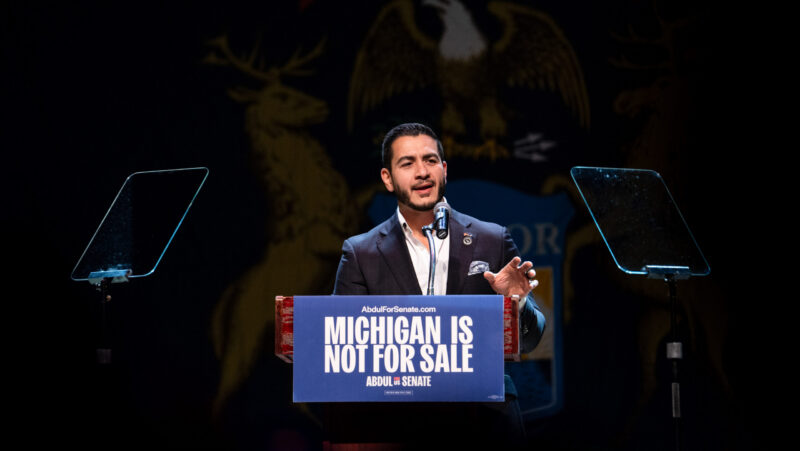
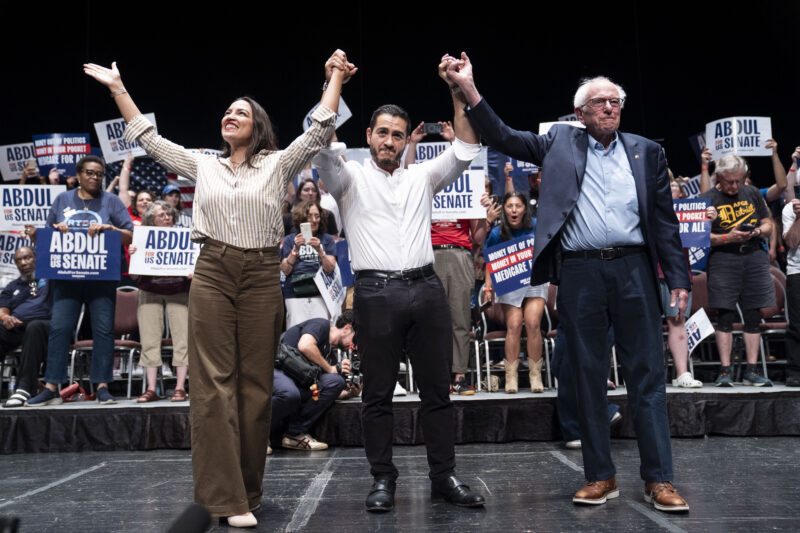
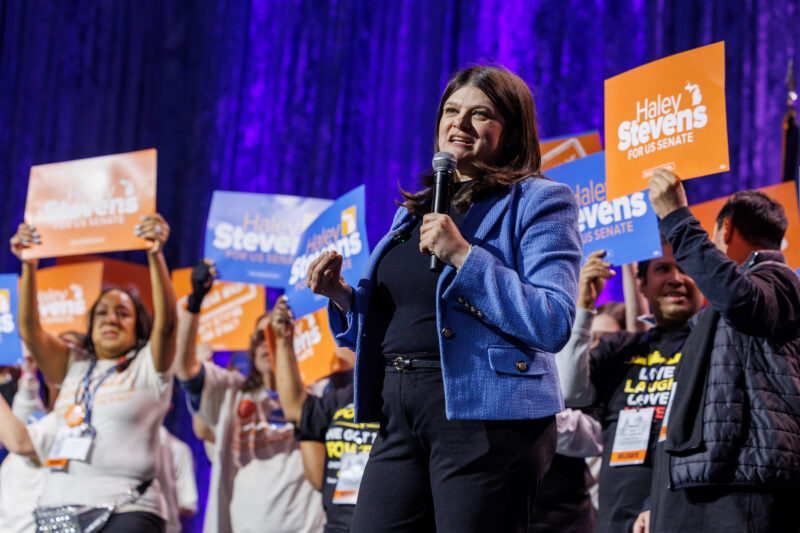
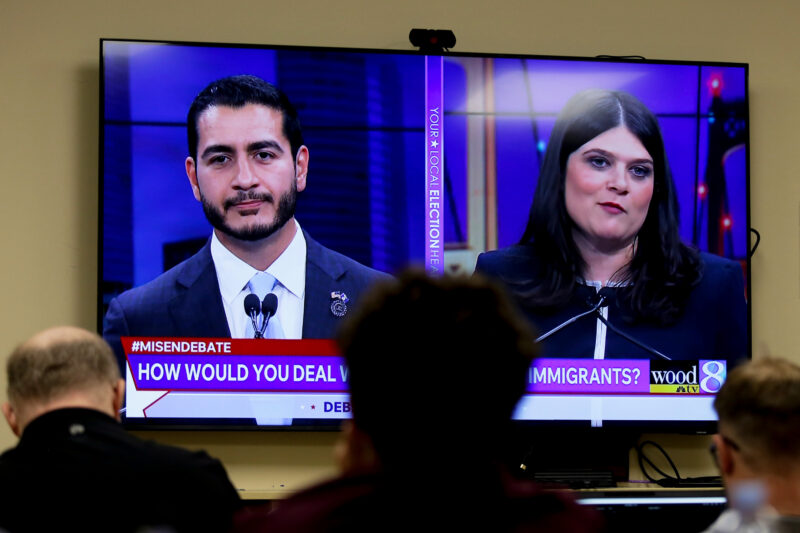
Rep. Haley Stevens (D-MI), the party front-runner for Senate in Michigan, is “underwhelming” the Democratic establishment, NOTUS reports, with strategists warning that her fundraising and campaign activity does not show her substantially pulling ahead of her opponents — state Sen. Mallory McMorrow and Abdul El-Sayed, the latter of whom is backed by Sen. Bernie Sanders (I-VT), both running to her left — as expected…
Palantir’s chief technology officer, Shyam Sankar, appearing on The New York Times’ “Interesting Times” podcast released today, affirmed that Israel is a “morally appropriate partner” for the software giant to conduct business with, and said that he was motivated to join up as a lieutenant colonel in the U.S. Army Reserves this year to lend his technological expertise because of his “observation in Israel after Oct. 7.”
“Israel is an incredibly technical country. Bountiful resources of technologists,” Sankar said. But when reservists were called up to join the IDF in its war in Gaza, “they were horrified at the state of technology, which is actually an implicit self-critique. … The IDF got more modernization done in the four months after Oct. 7 than in the 10 years that I’d worked with them prior”…
⏩ Tomorrow’s Agenda, Today
An early look at tomorrow’s storylines and schedule to keep you a step ahead
Keep an eye on Jewish Insider tomorrow morning for reporting on the Kennedy Center’s efforts to address antisemitism and fight cultural boycotts of Israel as its Trump-appointed director looks to make a mark on programming at the institution.
The Republican Jewish Coalition’s leadership summit kicks off tomorrow in Las Vegas, with featured speakers including House Speaker Mike Johnson (R-LA), Homeland Security Secretary Kristi Noem, Sen. Lindsey Graham (R-SC), Arkansas Gov. Sarah Huckabee Sanders, Rep. Randy Fine (R-FL), Israeli Ambassador to the U.S. Yechiel Leiter and many more. JI’s Matthew Kassel will be in attendance — be sure to say hello!
We’ll be back in your inbox with the Daily Overtime on Monday. Shabbat Shalom!
Stories You May Have Missed
CALIFORNIA CAMPAIGN TRAIL
Scott Wiener, looking to succeed Pelosi, balances progressive politics with Jewish allyship

Weiner, a longtime California state senator, could face a crowded field of Democrats if Nancy Pelosi retires — including AOC’s former chief of staff
TURNING UP THE VOLUME
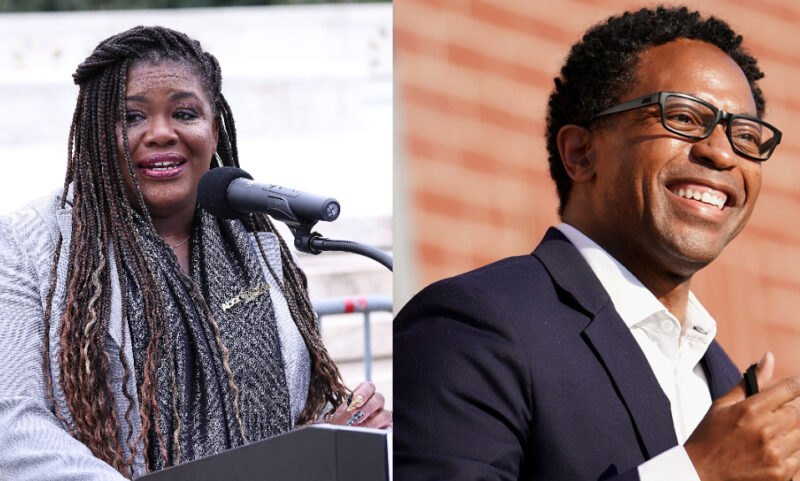
Former Rep. Cori Bush shows no signs of dialing down extreme rhetoric in comeback campaign
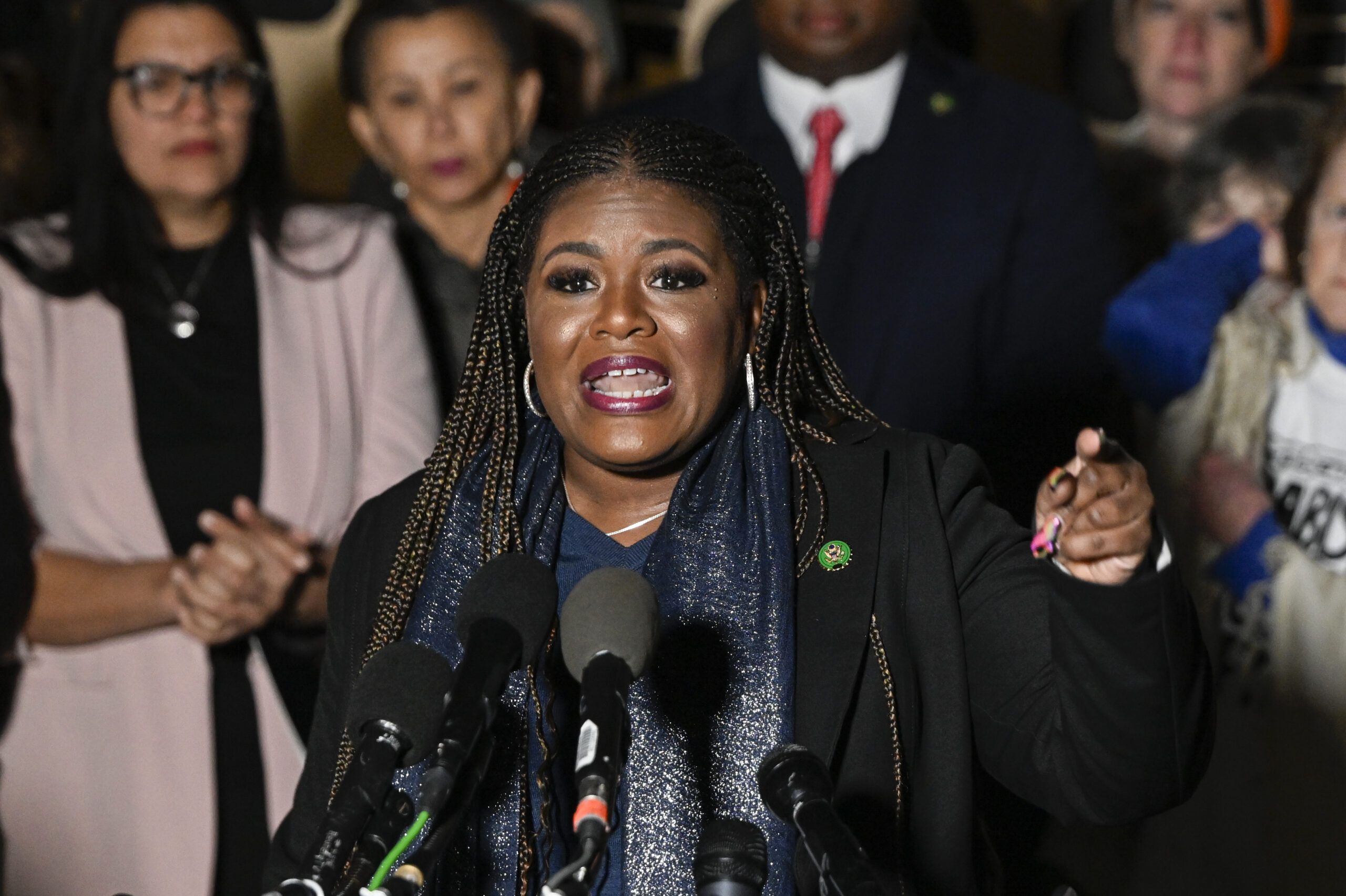
In a speech at a ‘No Kings’ rally, Bush spent time eulogizing convicted murderer Assata Shakur
The bill includes a total of $80 million in additional funding, as compared to 2025, for several cooperative programs with Israel
Tom Williams/CQ-Roll Call, Inc via Getty Images
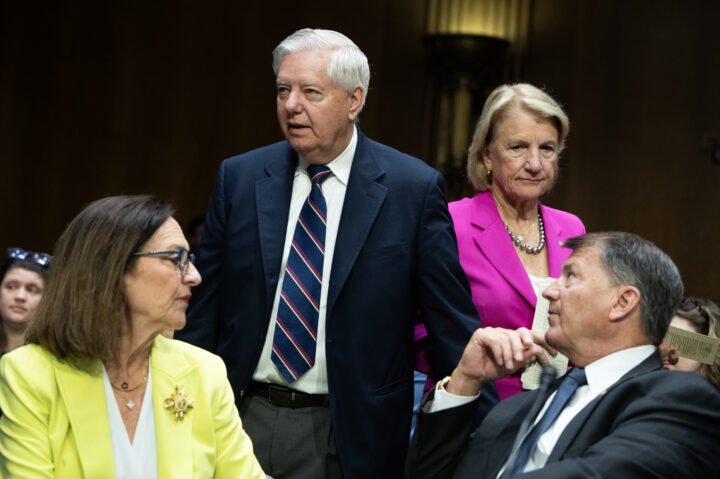
From left, Sens. Deb Fischer, R-Neb., Lindsey Graham, R-S.C., Shelley Moore Capito, R-W.Va., and Mike Rounds, R-S.D., attend the Senate Appropriations Committee markup of the "Department of Defense Appropriations Act, and the Departments of Labor, Health and Human Services, Education, and Related Agencies Appropriations Act," in Dirksen building on Thursday, July 31, 2025.
The Senate Appropriations Committee’s draft 2026 defense funding bill, approved by a broad bipartisan committee vote on Thursday, includes increases to several U.S.-Israel cooperative defense programs.
The bill includes a total of $80 million in additional funding, as compared to 2025, for several cooperative programs with Israel. It offers a total of $75 million for counter drone and missile programs, $47.5 million for cooperative programs in emerging defense technologies like artificial intelligence and $80 million for counter-tunneling programs, according to a summary released by the committee.
The bill includes $500 million for cooperative missile defense programs including Iron Dome, David’s Sling and Arrow provided annually under the terms of the U.S.-Israel memorandum of understanding.
It also offers additional security assistance funding for Bahrain and Jordan.
The committee debated and rejected two amendments by Democrats addressing the administration’s plans to retrofit a gifted Qatari jumbo jet to serve as Air Force One.
Sen. Jeanne Shaheen’s (D-NH) amendment would have prohibited funding to modify or operate the Qatari jet, highlighting security and corruption concerns about the gift; the unclear costs and timeline associated with the retrofit; and comments by the secretary of the Air Force indicating that the administration plans to pull funding from a nuclear missile program to fund the overhaul.
Recent reports suggest that renovations could cost close to $1 billion.
“This jet was just delivered to the Department of Defense. We need to have a classified briefing to understand any proposed modifications and the risk of not applying them,” Sen. Mitch McConnell (R-KY) responded, opposing the amendment. “The aircraft timeline is such that it’s not going to be modified with fiscal [year] [20]26 dollars in any event, making this a poison pill political amendment better suited for the [National Defense Authorization Act].”
President Donald Trump said that the plane could make its first flight in February.
Shaheen withdrew the amendment due to Republican comments that the amendment would kill the defense spending bill.
Sen. Chris Murphy (D-CT) offered a more limited amendment that would have blocked the administration from transferring the plane to a private entity before the end of its useful life, an attempt to head off reported plans to transfer the plane, after Trump’s term, to his presidential library, potentially for his personal use, after his presidency.
Republicans again argued that a full briefing is necessary on the administration’s plans before making any such moves, and that the amendment would kill the defense spending bill.
“To address this claim that’s been made a few times that this is a poison pill, if I understand correctly, that means that the Senate would refuse to fund the Pentagon unless it allows the president to accept a jet from a foreign prince. If that’s true, I’d like to understand why that is the line in the sand that would be drawn,” Sen. Jon Ossoff (D-GA) responded. “The only other argument that I can conceive is that we think the President would veto the entire Pentagon budget unless he’s able to accept a jet from a foreign prince. I’d like to see him make that argument to the American public.”
The committee rejected the Murphy amendment by a party line vote.
Sen. Lisa Murkowski said she opposed the two amendments to ensure the bill as a whole could still pass, but said, “I don’t want my ‘no’ vote to be assumed that I’m OK with where we are with this transfer, that I’m OK not knowing the numbers behind it, that I am perhaps OK with the appearances — because I have concerns about them.”
The Senate bill would provide billions in additional funding for air and missile defense systems and to replenish U.S. stockpiles of air defense interceptors, which saw heavy use during the recent war in Gaza.
“Recent operations in the Middle East illustrate how quickly modern warfare can exhaust our arsenal of critical [interceptor] munitions,” McConnell, who chairs the Defense Subcommittee, said. “The administration’s request did not fully maximize production capacity for certain critical munitions.”
“We made lots of improvements in the [administration’s] request given the challenges with missile stockpiles that we’re seeing in Ukraine and the Middle East,” Sen. Chris Coons (D-DE), the subcommittee ranking member, said. “I can’t explain why the administration didn’t propose to buy every single missile it could on existing production lines and expand others, but it didn’t.”
Generally, lawmakers on both sides of the aisle argued that the administration’s defense funding request was too low, and agreed on a bipartisan basis to propose providing $852.5 billion, 2.6% or nearly $22 billion above the administration’s request and the House’s draft of the bill, which the lower chamber approved last month.
The Jordanian king is a rare foreign head of state who regularly attends the annual Allen & Co. summer gathering
Royal Hashemite Court/X
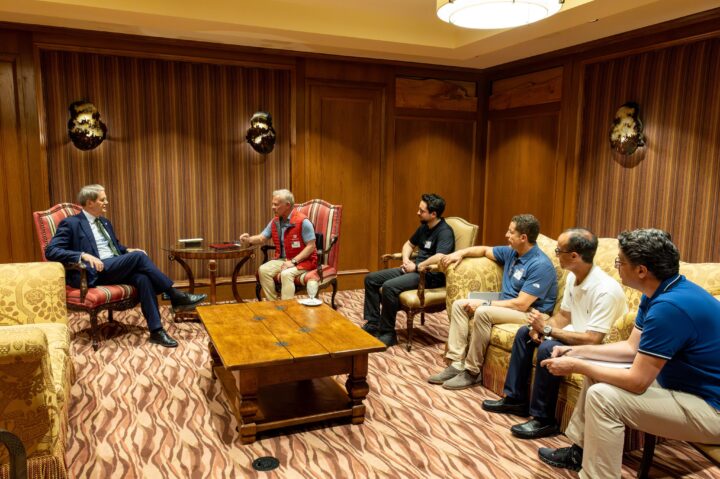
Jordanian King Abdullah II met with Treasury Secretary Scott Bessent on the sidelines of the Sun Valley Conference, July 2025
On the sidelines of the Sun Valley Conference this week, Jordanian King Abdullah II met with Treasury Secretary Scott Bessent. The Royal Hashemite Court said the two “discussed the positive economic relationship between the United States and Jordan.”
The Jordan Times, an English-language newspaper in the Hashemite Kingdom, wrote that in his meetings, the king “noted the importance of Jordan’s economic and administrative modernisation process in enhancing the Kingdom’s competitiveness and ability to attract investments, highlighting opportunities for building and strengthening economic partnerships.”
The Jordanian king is a rare foreign head of state who attends the annual confab hosted by Allen & Co. The gathering brings together thought leaders, tech and media titans and current and former government officials every summer in Sun Valley, Idaho. Last year, King Abdullah met with Jeff Bezos and other business leaders on the sidelines of the conference. Jordan’s Queen Rania and Crown Prince Hussein bin Abdullah were among the guests at the wedding of Bezos and Lauren Sánchez last month.
Other attendees at this year’s conference include Mark Zuckerberg, Andy Jassy, Sam Altman, Barry Diller, Alex Karp, Jared Kushner, Evan Spiegel, Ynon Kreiz, Charles Rivkin, David Zaslav, Brian Grazer, Bob Iger, David Ignatius, Bari Weiss, Senate Minority Leader Chuck Schumer (D-NY), Mike Bloomberg, Govs. Wes Moore and Glenn Youngkin, Jeffrey Katzenberg and Casey Wasserman.
Israel used Syrian airspace for its strikes on Iran last month, and the two countries are discussing a non-aggression pact that would lead to a return to pre-2025 borders

Rami Alsayed/NurPhoto via Getty Images
The President of the Syrian Arab Republic, Ahmad Al-Sharaa, delivers a speech at the People's Palace during the swearing-in ceremony of the new government, in Damascus, Syria, on March 29, 2025.
The goodwill gestures toward Israel from Syrian President Ahmed al-Sharaa began modestly.
In a surprise move that came only months after he and his Hayat Tahrir al-Sham group toppled the brutal regime of Bashar al-Assad, the Syrian president — “a jihadi in a suit,” as Israeli Foreign Minister Gideon Sa’ar called him over past ties to Al-Qaida — gave Israel Syria’s archive of documents relating to captured Israeli spy Eli Cohen, who was captured and executed in Syria in 1965, and the remains of soldier Zvi Feldman, who was killed in battle in 1982.
Then, al-Sharaa pressured the terrorist groups Palestinian Islamic Jihad and the Popular Front for the Liberation of Palestine to disarm, leading some of the groups’ leaders to flee the country.
And when Israel sent its bombers streaking toward Iran’s nuclear sites last month, Syria did not intervene with or publicly oppose Israel’s use of its airspace.
Taken together, these steps and others are leading to a warming of relations between Israel and its northern neighbor, a reality that seemed almost unthinkable just a few months ago. While officials and analysts are stopping short of calling the rapprochement peace talks, there is a new optimism — albeit cautious — following the strikes.
While at the White House on Monday, Israeli Prime Minister Benjamin Netanyahu spoke positively about an “opportunity for stability, security and eventually peace” with Syria. He said that prospect stems from “the fact that [President Trump] has opened up a channel … and the change of security situation brought about by the collapse of the Assad regime.”
Last week, Sa’ar said in a press conference that Israel “would like to have all our neighbors … in the camp of normalization and peace in the region. That includes Syria, as much as it includes Saudi Arabia … It is too early to prejudge what will happen in the future. We have certain security needs and interests, which we must take into account.”
A senior official in Netanyahu’s delegation to Washington emphasized this week that talk of peace between Israel and Syria is premature, saying that “agreements with Lebanon and Syria are not a matter of the short term, but they’re possible.”
“There are a lot of challenges,” the official said. “It would be irresponsible to talk about Syria entering the Abraham Accords or normalization at this time. We aren’t there.”
Still, the official said that opportunities opened up after the successful Israeli and American strikes on Iran, among them an agreement with Syria.
One way the 12-day Israeli operation against Iran’s nuclear and ballistic missile programs may have contributed to Israel’s cautious optimism about reaching understandings with Syria is that its airspace played an important role in Israel’s strikes and defense during that time — and Damascus did not get in the way.
Carmit Valensi, head of the Syria program at the Institute for National Security Studies at Tel Aviv University, told Jewish Insider that “there was intensive Israeli activity in Syria’s airspace on the way to attack Iran, and Israel shot down [Iranian] drones and missiles over Syrian territory.”
While al-Sharaa’s view of Iran as a “strategic threat to the entire region” is not unique among leaders in the Middle East, Valensi pointed out, “unlike other Arab countries that condemned Israel [for the strikes on Iran], al-Sharaa was totally quiet.”
Israel and Syria “have a shared goal to weaken Iran and its influence,” Valensi said. “I think that gave another push for the interests to bring relations closer.”
Ronni Shaked, a research fellow at the Harry S. Truman Institute for the Advancement of Peace at Hebrew University, views Syria’s willingness to allow Israel use of its airspace to strike Iran as the most significant of a number of “goodwill gestures” from Damascus to Jerusalem that may be contributing to Israel’s shifting approach to Syria.
Letting Israel use Syrian airspace during its war with Iran “gave Israel unusual freedom of action to easily reach the Iraqi border and then Iran, which took a great weight off of Israel,” Shaked said.
“He [Syrian President Ahmed al-Sharaa] is showing signs that he knows he has to change to get help from the West and so the world will recognize him as the legitimate leader,” said IDF Maj.-Gen. (res.) Ya’acov Amidror, a former Israeli national security advisor. “It’s also clear that Arab leaders are not willing to live next to a Taliban state.”
Other gestures in the months since al-Sharaa’s rise included giving Israel Syria’s archive of documents relating to Israeli spy Eli Cohen, who was captured and executed in Syria in 1965, and the remains of soldier Zvi Feldman, who was killed in battle in 1982.
In addition, Shaked noted that al-Sharaa pressured the terror groups Palestinian Islamic Jihad and the Popular Front for the Liberation of Palestine to disarm, leading some of the groups’ leaders to flee the country.
IDF Maj.-Gen. (res.) Ya’acov Amidror, a former Israeli national security advisor, told JI that the main reason for the shift was that “time passed, that’s all.”
“In the beginning, he was a mystery. No one knew who [al-Sharaa] was, only that he came from Al-Qaida, and we only saw Al-Qaida-type people around him,” Amidror said.
Since assuming leadership of Syria in December, however, Israel has seen that al-Sharaa “is trying to build something else in Syria,” Amidror said. “He is showing signs that he knows he has to change to get help from the West and so the world will recognize him as the legitimate leader. It’s also clear that Arab leaders are not willing to live next to a Taliban state.”
“Taking all of that together, Israel is willing to talk,” he added.
Trump’s May meeting with al-Sharaa in Saudi Arabia also motivated Jerusalem and Damascus to enter talks.
Shaked said that Syria “jumped on [the opportunity] … and said, ‘If Trump is willing to recognize us, then we can get rid of the sanctions and receive grants’” to help rebuild the country.
The meeting between Trump and al-Shaara “was the breakthrough that set the path we are on,” he added.
Valensi concurred, saying that “the direct motivation for Israel to change its approach is the Americans’ embrace of al-Sharaa.”
After Assad’s fall in December, Israel struck Syria’s air defenses, missile stockpiles and other military capabilities, and moved into the buffer zone between the countries. Valensi said that the “hawkish approach to al-Sharaa came from … the trauma of Oct. 7 [2023 terror attacks]. Israel is much more determined to stop threats that may develop on its border. And paradoxically, Israel had a feeling of increased self-confidence, strength and power after its significant military achievements against the axis of resistance and Hezbollah, including the beeper operation and killing [Hezbollah leader Hassan] Nasrallah.”
Even before the May meeting in Riyadh, Valensi said, Israel had begun to soften its approach, with indirect talks between the countries, fewer military strikes and talks about deconfliction with Turkey, mediated by Azerbaijan.
“I think Israel started to understand that there were risks to its approach, and was starting to create a hostile dynamic to Israel” within Syria, Valensi said.
Amidror stopped short of describing the current situation as a shift in Israel’s approach: “There isn’t a change yet. We aren’t giving anything up, but we are in talks … We’re not withdrawing [from the Syrian Golan] so fast.”
That could change in the future, however, Amidror added, saying that if al-Sharaa “really distances himself from where he came from and goes to a less extreme and more normal place, there is no reason for Israel to ignore it.”
Syrian media describes the talks as a “non-aggression pact,” Valensi said. Damascus has said it is looking to return to the 1974 ceasefire agreement that went into effect after the Yom Kippur War, which would entail Israel withdrawing from the Syrian side of the Golan Heights to where it was before the fall of former President Bashar al-Assad last year, and for there to be a buffer zone with U.N. forces between the countries.
Valensi was skeptical that Israel would be willing to withdraw from the peak of Mount Hermon, a point in Syria which the IDF deployed troops to shortly after the fall of Assad, after so many senior Israeli security figures have called it a strategic achievement.
“Peace with Syria removes the entire threat from the eastern front, which is Israel’s longest front and a strategic one. We have peace with Jordan, and if we had peace with Syria, it would be the greatest gift to Israel,” said Ronni Shaked, a research fellow at the Harry S. Truman Institute for the Advancement of Peace at Hebrew University.
“Israel may want a more gradual formula, a withdrawal in stages. I don’t know if al-Sharaa will accept that, and [withdrawal] is his basic condition,” she said.
Shaked argued that “Israel has no need for the Syrian Golan. I don’t know what we’re doing there. It’s nonsense, it’s a symbol. If we want peace, we need to stop conquering territory.”
“Peace with Syria removes the entire threat from the eastern front, which is Israel’s longest front and a strategic one. We have peace with Jordan, and if we had peace with Syria, it would be the greatest gift to Israel,” he said.
While talks are not focused on a comprehensive peace treaty yet, Shaked said anything is possible: “It was a great surprise when [former Egyptian President Anwar] Sadat came to Israel. We pinched ourselves and asked when we’re dreaming. New realities are created by brave leaders. If Netanyahu will be brave enough, he can give a little attention to this issue and make advances towards peace.”
Valensi, however, argued that “the conversation about expanding the Abraham Accords or normalization is not relevant now.” She noted that al-Sharaa has said that public opinion in Syria would not support normalization with Israel, and it would be too drastic of a shift. “Al-Sharaa is a new leader with very limited legitimacy. It’s a fragile situation … It’s unclear that al-Sharaa would want to take on that political risk,” she said.
Johnnie Moore, an evangelical leader and director of the Gaza Humanitarian Foundation who met with al-Sharaa last month, told the “Misgav Mideast Horizons” podcast last week that he “absolutely believe[s] that there will be peace between Syria and Israel. No question. It’s just a matter of time.”
As to an unconfirmed report that Netanyahu and al-Sharaa will meet in September before the U.N. General Assembly, Valensi said that “so many things can change in two months … Reality is so dynamic so I would not go that far. But if things continue on this trajectory, then it is possible.”
Still, al-Sharaa would have to do a lot of work on Syrian public opinion before being photographed with Netanyahu, she added.
Johnnie Moore, an evangelical leader and director of the Gaza Humanitarian Foundation who met with al-Sharaa last month, told the “Misgav Mideast Horizons” podcast last week that he “absolutely believe[s] that there will be peace between Syria and Israel. No question. It’s just a matter of time.” (The writer is a co-host of the podcast.)
Al-Sharaa, Moore said, is part of a new generation of Middle Eastern leaders who are “future-oriented” and focused on solving problems, in contrast with “older leaders who think only about the past.”
To get there, however, Moore said “there are practical things that have to be done, and there are things that will make the Syrians uncomfortable and things that will make Israel uncomfortable. And yet, I think it will be done.”
“I’m not sure it’s going to be done as quickly as everybody wants it, but I am certain it’s not going to take as long as people think it might,” he added.
The Foreign Affairs chair reportedly said ‘they would have to figure out which side they were on: American or China/Iran’

Samuel Corum/Getty Images
Rep. Brian Mast (R-FL) speaks during a House Committee on Foreign Affairs hearing on Capitol Hill on January 11, 2024 in Washington, DC.
Rep. Brian Mast (R-FL), the chairman of the House Foreign Affairs Committee, confronted the ambassadors of Rwanda, Jordan and Qatar, among other countries, over their relationships with U.S. adversaries in China and Iran, at a dinner last night, per a source familiar with the congressman’s remarks.
According to Politico, the Rwandan and Jordanian ambassadors to the United States hosted a dinner honoring Mast, the House Foreign Affairs Committee chair, also attended by the ambassadors of Qatar, Kuwait, France, Luxembourg, Singapore, Switzerland and Costa Rica.
Mast told the leaders “they would have to figure out which side they were on: American or China/Iran,” a source familiar with the situation told Jewish Insider. “Described as like chess. Sometimes you don’t get to choose who is a pawn and a queen, but you get to decide what side you are on.”
Mast is a longtime, and outspoken, pro-Israel lawmaker who volunteered with a group supporting the Israeli Defense Forces following his own military service.
Israel strikes offline nuclear reactor in Arak

JOHN WESSELS/AFP via Getty Images
Smoke billows from Soroka Hospital in Beersheba in southern Israel following an Iranian missile attack, on June 19, 2025.
Iranian ballistic missiles struck Soroka Hospital in Beersheba in southern Israel and sites in the Tel Aviv area on Thursday morning, wounding 89, including three seriously.
A missile struck the hospital’s old surgical building, severely damaging it and causing what a Soroka spokesperson described as “extensive damage in various areas” of the hospital complex. The surgical building had been recently evacuated in light of the war, and patients and staff had been moved to areas with reinforced walls. Injuries from the strike were light, hospital representatives said.
Soroka is the largest hospital in the Negev, such that the strike left a large swath of Israel without a functioning major medical center. Other hospitals in the area, including Barzilai Medical Center in Ashkelon and Assuta Medical Center in Ashdod, prepared to take in patients from buildings that were damaged. Magen David Adom provided four intensive care buses, able to transport a total of 23 ICU patients and 50 lightly injured casualties.
Israeli Foreign Minister Gideon Sa’ar wrote that “The Iranian regime fired a ballistic missile at a hospital. The Iranian Regime deliberately targets civilians. The Iranian regime is committing war crimes. The Iranian regime has no red lines.”
Prime Minister Benjamin Netanyahu posted on X that “Iran’s terrorist dictators shot missiles at Soroka Hospital in Beersheba and the civilian population in the center of the country. We will make the dictators in Tehran pay the full price.”
Israeli Defense Minister Israel Katz said in a statement that the price would be to destabilize the Islamic Republic’s regime.
“The prime minister and I instructed the IDF to increase the force of the attacks against strategic targets in Iran and against governmental targets in Tehran to remove the threats to the State of Israel and undermine the Ayatollahs’ regime,” he stated.
Iranian news agency IRNA claimed that the target of the strike was an IDF intelligence outpost in Beersheba’s HiTech Park, which is over a mile away from the hospital. A television channel tied to the Islamic Revolutionary Guard Corps said that the missile was aimed at a “military hospital” in response to strikes on “civilian hospitals” in Gaza.
In the same 30-missile barrage, Iranian missiles struck a school in Holon. No children were present, because schools have been closed across Israel since Friday, but three elderly residents of adjacent buildings were wounded in serious condition, in addition to 62 others with minor to moderate injuries.
Another missile struck near the Ramat Gan Diamond Exchange, abutting Tel Aviv, causing minor injuries to 21 people and damage to 20 buildings in the neighborhood, which includes some of Israel’s tallest buildings.
Shrapnel struck Sheba Medical Center, Israel’s biggest hospital, also in Ramat Gan.
Overnight, the IDF intercepted several drones launched by Iran at Israel towards central and northern Israel.
Jordanian authorities reported that an Iranian drone fell in a shopping center north of Amman, damaging a car and a bus station. Syrian media reported that an Iranian drone was shot down over the country.
The IDF struck an inactive nuclear reactor near Arak in Iran early Thursday after sending warnings to civilians in the area. The IDF Spokesperson’s Office said the strike included “the structure of the reactor’s core seal, which is a key component in plutonium production.”
“The strike targeted the component intended for plutonium production, in order to prevent the reactor from being restored and used for nuclear weapons development,” the IDF Spokesperson’s Office said.
The IDF also gave details of strikes on the active nuclear site in Natanz, which “contained components and specialized equipment used to advance nuclear weapons development and projects designed to accelerate the regime’s nuclear program.”
In addition, 40 IAF fighter jets struck dozens of military targets in Tehran and other parts of the country, including factories manufacturing ballistic missile and air-defense components, as well as air-defense batteries, surface-to-surface missile storage sites, radar systems and other targets.
IDF Chief of Staff Lt.-Gen. Eyal Zamir sent a letter of encouragement to IDF soldiers and commanders on Thursday, saying that they are “writing a new chapter in history for the State of Israel and the entire Middle East.”
”Thanks to a decisive and impressive surprise opening strike, we have achieved tremendous goals: We eliminated the regime’s command echelons, delivered a deep blow to the capabilities used for the Iranian nuclear program, identified and struck missile launchers, and we are continuing and increasing the strength of our operations as necessary,” Zamir wrote.
Iranian news reported that the country’s military shot down a second Israeli Hermes Drome. The IDF confirmed that Iran downed the first UAV a day earlier.
Israel’s Home Front Command loosened restrictions on Israelis on Wednesdays, allowing people to return to workplaces with safe rooms and for up to 30 people to attend synagogue at a time. Schools and kindergartens remained closed.
A poll published by the Israel Democracy Institute found that 70% of Israelis support the campaign launched against Iran last week, while 10% support the campaign but think the timing is wrong and 13.5% oppose it. Among Israeli Jews, 82% support the strikes, whereas only 11% of Israeli Arabs do, according to the poll. Jewish Israelis across the political spectrum support the operation: 57% of those who self-identify as left-wing, 75% of centrists and 90% on the right.
Though in past polls, most Jewish Israelis did not think Israel should strike Iran without help from the U.S., this week 69% thought it was the right decision. In addition, 68% of Jewish Israelis thought that Netanyahu’s motivation behind launching the operation against Iran was security-related, while 68% of Arab Israelis thought it was political.
The poll was conducted this Sunday-Tuesday among 594 Israelis, with a 3.61% margin of error.
In 'The Most American King,' author Aaron Magid argues that the Jordanian king’s staying power is what makes him interesting — and that the relative stability he has overseen demands attention in a region so often beset by chaos elsewhere

Thierry Monasse/Getty Images
King of Jordan Abdullah II bin Al-Hussein attends a signature of a Partnership Agreement in the Berlaymont, the EU Commission headquarter on January 29, 2025 in Brussels, Belgium. Today the Hashemite Kingdom of Jordan and the European Commission are poised to solidify a strategic partnership through an agreement.
American fascination with the Middle East and its colorful leaders — dictators and military generals and royals and Israeli premiers — dates back decades, from Saddam Hussein to Iran’s ayatollahs to Saudi Arabia’s Crown Prince Mohammed bin Salman.
One ruler has survived more or less unscathed over more than a quarter century, avoiding flashy headlines about power struggles or coups, all while keeping a tight grip on power and maintaining close, bipartisan ties with Washington.
That’s Jordan’s King Abdullah II, who has ruled the country since 1999, taking over from his father, King Hussein, who ruled for 47 years. In The Most American King, a new biography of King Abdullah, author Aaron Magid argues that the Jordanian king’s staying power is what makes him interesting — and that the relative stability he has overseen demands attention in a region so often beset by chaos elsewhere.
“Jordan is a critical U.S. strategic partner, both in terms of money and in terms of U.S. troops — there are thousands of U.S. troops based in Jordan,” Magid, a Middle East analyst and former Amman-based journalist, told Jewish Insider in an interview this week. “But unfortunately, journalists often chase violence and wars and conflicts, and the Hashemite Kingdom has been remarkably stable over the past 25 years … Jordan, because it has less violence, it gets a lower media profile.” (Magid was a reporter at JI from 2016 to 2018.)
The book charts King Abdullah’s journey from boarding school in the U.S. and studying at Georgetown University to ruling a country whose language he hardly spoke, given his many years spent living and learning abroad. But it’s that intimate knowledge of American culture that, Magid argues, has allowed King Abdullah to cultivate the kind of lasting, bipartisan relationships with lawmakers that many other nations covet. King Abdullah was the first Arab leader to meet with Presidents Barack Obama, Joe Biden and Donald Trump — in both terms — in the White House.
Magid drew a distinction between Washington’s longtime relationship with Amman and Trump’s efforts this year to build closer ties with Qatar, the United Arab Emirates and Saudi Arabia, each of which he visited in May.
“Qatar, which President Trump visited recently, is the same country that Trump called for a blockade against in 2017 for supporting terrorism. And Saudi Arabia, of course, right now might be close with Trump, but when the Democrats were in power, President Biden called them a pariah, and there’s a lot of Democratic opposition to Saudi Arabia,” Magid explained. “What makes Jordan unique is its ability to be close with both presidents and then have those very strong security ties as well.”
Jordan receives roughly $1.45 billion a year from the U.S., making it one of the largest recipients of American foreign assistance dollars. That’s despite King Abdullah’s public criticism of Israel, America’s strongest ally in the Middle East — and even harsher language from his wife, Queen Rania, who is of Palestinian descent.
Still, despite taking a publicly hardline stance against Israel’s conduct in Gaza, King Abdullah has not seriously considered pulling Jordan out of its 1994 peace treaty with Israel, nor has he severed the crucial security ties between the two countries. Jordan also helped shoot down Iranian missiles fired at Israel last year.
“There were many disagreements with [Israeli Prime Minister Benjamin] Netanyahu, personally … but at the same time, King Abdullah has ensured that even though many in the country support annulling the peace treaty, he’s refused to do that,” said Magid. “Part of the reason he does that is because he’s been getting about $1.5 billion a year from Congress, and if he were to sever the peace deal, it would be unlikely he would reach that number of aid, and that aid is critical for the country. But I think he does understand that having some sort of relationship with Israel is in his benefit and his national security interest.”
In his book, Magid reveals that King Abdullah’s public criticism of Israel was not a foregone conclusion.
“There was a honeymoon period in terms of King Abdullah’s relationship with Israel as king, and it lasted about a year, 1999 and 2000. He says in an interview, ‘I have many friends in the IDF.’ That’s not language you would ever hear from King Abdullah today,” Magid recounted. “He praised Ehud Barak as someone who is great to work with, not something you’d ever hear him say again about an Israeli prime minister. And then he even said that Israel’s withdrawal from Lebanon raised Israel’s moral credibility. Once again, you’d never hear King Abdullah or any Jordanian official say anything positive about Israel’s morals in today’s day and age.”
King Abdullah has generally succeeded at balancing the concerns of Jordan’s population, the majority of whom are Palestinian, with the nation’s security needs, argues Magid. But he has “done a very poor job of providing jobs for his people,” Magid said.
“Part of the issue for King Abdullah is he doesn’t have a grand accomplishment, either on the domestic front or on the foreign policy one,” said Magid. “But unlike his father, who had these grand moves, he has been much more toned down.”
During the reign of King Hussein, Jordan had some major victories, both strategic and tactical, as well as some major setbacks — like losing control of Jerusalem and the West Bank in the 1967 war with Israel. Still, the stability that King Abdullah has maintained is coupled with a high unemployment rate and a move even further away from democracy, which does not help his image in the eyes of his countrymen.
“When you ask people, often behind closed doors, who is more popular, his father or him, most people will say his father. His father was loved,” said Magid. “But it’s difficult to know, exactly, given that you can go to jail — and many people have gone to jail in Jordan — for criticizing the king.”
The GOP congressman told JI that, should nuclear negotiations fail, Israel should not have to act against Iran without U.S. assistance
Bill Clark/CQ-Roll Call, Inc via Getty Images
Rep. Mike Lawler (R-NY) leaves the House Republicans' caucus meeting at the Capitol Hill Club in Washington on Tuesday, May 23, 2023.
Rep. Mike Lawler (R-NY), returning from a trip to Israel, Saudi Arabia and Jordan, characterized leaders in the region as being open to the Trump administration’s efforts to reach a new nuclear deal with Iran, but also suggested that they are skeptical that Iran will actually agree to a deal that dismantles its nuclear program.
“I think folks are realistic about the prospects of Iran coming to an agreement, but still want to give the process a chance and try to avoid a conflict if possible,” Lawler told Jewish Insider on Thursday. “But ultimately, you know, I think everybody is very clear about the fact that Iran cannot have a nuclear weapon.”
Lawler, joined by Reps. Michael McCaul (R-TX) and Sheila Cherfilus McCormick (D-FL), met with regional leaders, including Israeli Prime Minister Benjamin Netanyahu, Saudi Foreign Minister Adel al-Jubeir and Jordanian King Abdullah II.
On nuclear talks with Iran, the New York Republican said that leaders in the region are “cautiously optimistic that we can make progress in a negotiation, but I think realistic about the fact that we’ve been here before with Iran, and they continue to operate in the manner that they do.”
Lawler has been a leader in the House on Iran sanctions, sponsoring two bills that passed last year to crack down on the oil trade between Iran and China and a third that is moving ahead in the House this year.
Secretary of State Marco Rubio said in congressional testimony last week that negotiations between the U.S. and Iran are not engaging with Iran’s support for terrorism or its ballistic missile program, but said that sanctions targeting those areas would remain in place if they are not addressed under a deal. Many Republicans have argued in the past that Tehran would use any sanctions relief, regardless of target, to fund malign activities.
“Let’s see what actually comes out of these negotiations,” Lawler said, of Rubio’s comments. “But, my general view is that the nuclear program, obviously, is a major threat, but so too is their continued funding of terrorism, and all of these issues are going to have to be addressed, one way or the other.”
He said that “as part of any sanctions relief down the road, they would have to cease all terror activity and funding of it. But I think we’re a long ways away from that, and so that’s why I continue to push on the sanctions.”
Lawler described the Trump administration as being more aggressive than the Biden administration in implementing sanctions, including the two bills he spearheaded in the previous Congress, against Iran.
“This has been, from the standpoint of applying pressure, critical, but long term all of these issues are going to have to be addressed,” Lawler said. “One of the immediate issues is the nuclear program and trying to eliminate that through a diplomatic negotiation.”
Amid public reports that the U.S., Hamas and Israel are nearing an agreement on a new ceasefire proposal, Lawler said, “We’ll see if progress can be made there. Hamas continues to put in place demands that are never, ever going to be accepted by the United States or Israel.”
While Israel has said it would agree to the current U.S. proposal, Israeli officials have also implemented plans to expand operations in Gaza even as U.S. officials have reportedly been privately pressuring Israeli officials to end the war.
“Israel is continuing to proceed forward with respect to trying to eliminate the threat posed by Hamas. Obviously, the longer this drags on, the more difficult it is within the region,” Lawler said. “But I think everybody would like to see this come to an end, in which the hostages are released, the Palestinian people are able to live in a more stable area and get the humanitarian assistance that they need.”
Lawler also expressed support for the new American and Israeli effort to provide humanitarian aid to Palestinians, which began earlier this week.
He criticized the Biden administration for, in 2024, pressuring Israel against expanding operations against Hamas and Hezbollah, arguing that if Israel had heeded that pressure, Hamas and Hezbollah’s leadership would still be alive and the Assad regime would still be in power in Syria.
Lawler denied that the Trump administration had placed any similar pressure on Israel, despite public comments from President Donald Trump that Israel should not attack Iran’s nuclear program while talks are ongoing and reports of private pressure on a number of fronts.
“I think the administration has been very supportive, but they’re in the process of trying to negotiate,” Lawler said, of Trump’s recent comments opposing a strike on Iran. “And obviously, when you’re in the middle of a negotiation, any military action can undermine that negotiation … the talks are in a critical stage, and you have to allow those talks to unfold.”
He suggested that he believes that the administration would support a strike if the negotiations fail, and that Israel should not have to act on its own in such a scenario. “There should be coordination and cooperation if and when any action is taken,” Lawler said.
The congressman said that, despite the ongoing challenges, there are new opportunities in the Middle East and it is in some ways “in a stronger position for change than it was 19 months ago.”
“There’s a lot of work ahead, but I think the dialogue in all three countries was extremely positive and focused on the future and how we kind of bridge these divides and long-term normalization and economic cooperation between all countries in the region,” Lawler said.
Saudi Arabia, he said, was “extremely happy” with Trump’s recent visit. The U.S.-Saudi relationship, he continued, is on a “very positive” trajectory, and Saudi Arabia is poised to be a key player in helping to bring stability and prosperity to the Middle East.
Despite recent reports and public statements indicating that Saudi interest in normalizing relations with Israel has waned in the short term, Lawler said that “they understand how important it is both from the long-term stability and economic prosperity of the Middle East, but also on the global stage.”
“The sooner this conflict [in Gaza] comes to an end, I think the easier it will be to begin that process,” Lawler continued.
Lawler also described Jordan as “vital to the U.S., to Israel and to the peace and stability of the Middle East” and a “great ally and partner.”
He said that Jordan’s King Abdullah II had stressed the economic, natural resource and refugee challenges the country faces. Lawler argued that the U.S., Israel and Saudi Arabia should invest in Jordan to help support its stability, “which is vital to our national security interests and certainly that of Israel.”
The Democratic lawmaker also said he’s working on legislation to create a bipartisan select committee focused on Middle East peace

EMIL NICOLAI HELMS/Ritzau Scanpix/AFP via Getty Images
Congressman Greg Landsman attends a press conference during the congressional delegation's visit to Denmark, in Copenhagen on Friday, April 25, 2025.
Rep. Greg Landsman (D-OH) told Jewish Insider following a visit to Israel and Jordan last week that there is a “unique, potentially generational opportunity” to change the Middle East if the U.S. can help put an end to Iran’s nuclear weapons program and its support for regional terrorism.
Landsman also told JI he’s working on legislation to create a bipartisan select committee focused on Middle East peace, an initiative he said would help elevate the issue and find bipartisan solutions.
As the Trump administration proceeds in talks with Iran, Landsman said U.S. lawmakers should insist on four key components in any potential nuclear deal: stringent monitoring and verification; an Iranian commitment to an exclusively civilian nuclear program; an end to all Iranian domestic enrichment and the removal of all enriched uranium from the country; and an end to Iran’s support for regional terrorism.
He said that eliminating Iran’s support for regional terrorism would radically change the lives of the Palestinian, Lebanese, Syrian, Jordanian, Yemeni, Iraqi and Israeli people — ”let these people go, leave them alone,” Landsman said.
“Everyone wins. Literally — everyone wins,” Landsman added. “That’s the key, and probably one of the most important things to Middle East peace. If [Middle East envoy Steve] Witkoff and the administration have those in play, and they’re willing to pull the right coalition together to get that done, that would be a game changer.”
He added that “anything short of that leaves the Middle East insecure and constantly in this cycle of violence. The suffering has to end.”
Landsman called on American, Israeli, Jordanian, Egyptian and Saudi leaders to make clear that any deal must include all four of those elements. He said he heard a consistent message to that effect from Israeli and Jordanian leaders he spoke with during his trip. Rep. Debbie Wasserman Schultz (D-FL), who also visited the Middle East during the recent congressional recess, delivered a similar readout.
“If [a deal is] short of any of those things, that’s a big problem,” Landsman continued, adding that the only way to compel Iran to agree to such a formulation is if it knows that the alternative is an Israeli or joint Israeli, American and allied strike on its nuclear program.
“There has to be that sense of urgency for them,” Landsman said.
The lawmaker continued that the administration’s varying comments about the nature and goal of its talks with Iran have created “uncertainty,” which is “the last thing the Middle East needs.”
“You need strong, determined, focused leadership with clear intent,” Landsman said.
The Ohio congressman added that those pushing for peace and an end to the war in Gaza should be focusing their attention on ending Iran’s malign influence and on calling on Hamas to release all of the hostages and relinquish its hold on power in Gaza.
He said that forcing Hamas out of power will require help from the international community.
“When you go over there, [you hear] that these Arab leaders are done with Hamas — they’re absolutely done,” Landsman said. “The more Hamas understands that everyone’s done with them, I think the sooner they will accept that it’s time to release the hostages and hand over Gaza to the Palestinians.”
He added that pressure is mounting on all parties involved to reach a deal to free the hostages and restore humanitarian aid to Gaza.
Coming off of the trip, Landsman announced that he’s working on legislation to create a congressional select committee — with bipartisan representation from both chambers of Congress — on Middle East peace. He said he’s working to receive support from congressional leadership.
“Congress has to be more engaged in building stronger relationships in Israel, especially within the Knesset, as well as with Palestinian leaders and leaders from partnering Arab nations,” Landsman said.
He argued that past select committees and commissions have helped bring lawmakers together with experts to implement important bipartisan legislation that has made real progress.
He said that greater “attention and dedication” from Congress will make it more likely that the hostages will be freed, the war in Gaza will end, humanitarian aid will resume and will be protected from Hamas diversion and that a coalition of U.S. partners will step up to remove Hamas from Gaza and invest in rebuilding.
“It’s just too big of a priority not to have this kind of dedicated long-term commitment from Congress,” Landsman said.
Landsman said another key takeaway from the trip was that Jordan is a “critical intelligence and security partner” for the United States and that cutting U.S. aid to Jordan “will do enormous damage to Jordan, and our allies, and to Israel and to us.”
The congressional delegation, led by House Minority Leader Hakeem Jeffries (D-NY) and Rep. Ann Wagner (R-MO), was in Israel during Holocaust Remembrance Day, and spent the day with hostage families and participating in a Knesset Holocaust remembrance ceremony.
Landsman said the ceremony strengthened “my commitment to Middle East peace and a Jewish state … You just realize how critically important it is to have a safe place for Jews, to have a Jewish state that is secure and that security is linked to the success and security of the neighborhood and getting to a place of peace and more and more countries normalizing relations with Israel, which is on the horizon.”

Anna Moneymaker/Getty Images
Rep. Debbie Wasserman Schultz (D-FL) speaks during a press conference on new legislation to support Holocaust education nationwide at the U.S. Capitol Building on January 27, 2023, in Washington, D.C.
Good Monday morning.
In today’s Daily Kickoff, we talk to Rep. Marlin Stutzman about his recent meeting with Syrian President Ahmad al-Sharaa in Damascus and Rep. Debbie Wasserman Schultz about her conversations with Israeli and Arab leaders during her recent trip to the Middle East. We report from a gathering in Denver of moderate Democratic elected officials from around the country, and interview former JFNA executive Elana Broitman about her newly released comic book about a menopausal superhero. Also in today’s Daily Kickoff: Nathan Fielder, Menachem Rosensaft and Hussein al-Sheikh.
What We’re Watching
- The American Jewish Committee’s Global Forum continues today. John Spencer, Ellie Cohanim and Bill Kristol will all speak on the main stage.
- Canadians head to the polls today in a federal election pitting Prime Minister Mark Carney and his Liberal Party against Conservative leader Pierre Poilievre.
- The Hostage and Missing Families Forum is hosting an event tonight at the Marlene Meyerson JCC Manhattan featuring former Israeli hostage Noa Argamani as well as the relatives of slain hostages Omer Neutra, Itay Chen and Shiri Bibas.
What You Should Know
A QUICK WORD WITH JI’S JOSH KRAUSHAAR
As official Washington spent this weekend at the parties surrounding the White House Correspondents Dinner, an intimate group of moderate Democratic elected officials, policy wonks and strategists met in Denver to present ideas for rehabilitating their party from the center, Jewish Insider Editor-in-Chief Josh Kraushaar reports in a dispatch from the event.
Will Marshall, president of the Progressive Policy Institute (PPI), gathered together a lineup of prominent Colorado centrists — Democratic Gov. Jared Polis and Sens. John Hickenlooper (D-CO) and Michael Bennet (D-CO), among them — along with some former red-state Democratic officials, including former Sen. Doug Jones (D-AL) and former Rep. Tim Ryan (D-OH) to brainstorm ideas for a new moderate movement.
Of note: Rep. Joe Neguse (D-CO), a rising star in the party who is rumored to be mulling a Senate bid as Bennet runs for governor, was in attendance and gave a paean to former President Bill Clinton’s brand of politics, directly quoting from a seminal speech from the then-candidate breaking with the left and calling for a more-mainstream direction for the party.
Neguse quoted from Clinton’s 1991 Democratic Leadership Council speech: “Our burden is to give the people a new choice rooted in old values, a new choice that is simple, that offers opportunity, demands responsibility, gives citizens more of a say, provides them responsive government.”
Neguse, Colorado’s first Black member of Congress, first ran for office as a progressive but has grown more pragmatic over time — and sounded like the type of future national leader the party is looking for. If Bennet wins the governorship in 2026, Neguse would be a strong contender to be appointed to his Senate seat.
Not at the moderate Democratic event: Colorado Attorney General Phil Weiser, who is running for governor and will be clashing with Bennet in the primary. In an interview with JI at an outreach event for Black voters, Weiser said he plans to position himself as a “populist problem solver” — while playing up his strong voice against President Donald Trump’s policies.
Weiser touted the fact that he’s already filed 13 lawsuits against the Trump administration, saying he’s on the front lines of fighting the “lawlessness of the White House.” In the campaign, he plans to contrast his active record litigating Trump’s immigration and tariff policies in the state with Bennet’s time as a lawmaker in Washington.
But Weiser also sounded like he would be tacking to the senator’s left in the primary.
Weiser’s speech on Saturday centered on how he would fight to protect DEI programs in the state. Asked about what he thought about the Democratic Socialists of America movement — which has a foothold within the party in Denver — he noted their “deep empathy for how working class people are struggling.” He also noted that he endorsed against a DSA-backed legislator who went on an anti-Israel, antisemitic rant in the state House.
Weiser, who speaks openly about his Jewish faith, also slammed the Trump administration for its overreach in cracking down against antisemitism, saying he was “horrified” about Trump’s actions. “Using antisemitism as a cudgel against marginalized individuals or to take away freedom is so horrifying to me,” he told JI.
Bennet, for his part, underscored how Colorado is one of the biggest Democratic success stories because it has nominated candidates who focus on returning results over red-meat slogans. On a PPI panel, he talked passionately about how the country’s health care and education systems are broken — and the Democratic Party has done little to fix it.
“Where is our agenda to reform the education system for the American people? Joe Biden said not a word about it, and these people deserve better than Donald Trump, who is destroying both what’s left of our health care system and what’s left of our education!”
He added: “Trump is not the cause of all our problems. He is the symptom of the lack of economic mobility that we have, the sense that people no matter how hard they work, can’t get ahead.”
peace prospects
Syria’s al-Sharaa discussed prospects for normalization with Israel with GOP lawmaker

New Syrian President Ahmad al-Sharaa last week discussed his conditions for normalizing relations with Israel with Rep. Marlin Stutzman (R-IN), who was one of the first American lawmakers to visit the country since the overthrow of the Assad regime, Jewish Insider’s Marc Rod reports.
Conditions: During a meeting at the presidential palace in Damascus, al-Sharaa told Stutzman that his concerns in Syria’s relationship with Israel are keeping Syria as a unified country and not allowing regions to be divided off, Israel’s military encroachment into Syria around the Golan Heights and the Israeli bombing campaign targeting Syrian military assets. Al-Sharaa said any agreement with Israel would have to address those points, but Stutzman told JI last week that al-Sharaa said that, “outside of those couple of items — and I’m sure there’s going to be other issues that he would bring to the table, but he was open to those conversations about normalizing relations with Israel.” Stutzman said he felt al-Sharaa was being honest and upfront about those conditions. He said they did not specifically address the issue of whether al-Sharaa’s government is seeking to reclaim the Golan Heights.
TAKING ON TEHRAN
Wasserman Schultz: Arab, Israeli leaders say Iran deal must cover proxy activity
Arab and Israeli leaders are insisting that any U.S. deal with Iran also include provisions to address Iran’s other malign activities in the region, including support for terrorist proxies, Rep. Debbie Wasserman Schultz (D-FL) told Jewish Insider’s Marc Rod following a trip earlier this month to meet with Israeli and Arab leaders in the Middle East. Wasserman Schultz traveled with Sen. Joni Ernst (R-IA) to the Middle East for the third time since Oct. 7, 2023, visiting Israel, the United Arab Emirates, Bahrain and Jordan.
Common goals: “There was a very clear urgency that the leaders we spoke to had to make sure that we … don’t let Iran up from their very weakened state. They’ve been badly pummeled and had significant defeats,” Wasserman Schultz told JI last week. “The consensus across the region, no matter where we went, was that we needed to make sure that continued and that we prevented them from achieving their nuclear weapons goals and that we particularly prevented them from continuing their support for terrorist activity.”
trump talks
In Time interview, Trump says he would meet with Iranian supreme leader

President Donald Trump said he’d be open to meeting directly with Iran’s president or Supreme Leader Ayatollah Ali Khamenei, but also suggested that the U.S. could attack Iran to keep it from acquiring a nuclear weapon, in an interview with Time magazine, released on Friday. When asked if he would consider such a meeting, the president responded, “Sure,” Jewish Insider’s Danielle Cohen reports.
War stance: Pressed if he is worried Israeli Prime Minister Benjamin Netanyahu could “drag you into a war” with Iran, Trump responded, “No. By the way, he may go into a war. But we’re not getting dragged in.” The president clarified that he did not mean the U.S. wouldn’t join a war if Israel initiates one: “You asked if he’d drag me in, like I’d go in unwillingly. No, I may go in very willingly if we can’t get a deal. If we don’t make a deal, I’ll be leading the pack.”
BOOKSHELF
Turning the page: how a former Jewish nonprofit exec found her superpower in storytelling

It’s an unlikely origin story for a comic-book superhero: standing at the front of a boardroom in a snazzy blazer, delivering an important presentation until it’s derailed by … a hot flash. That’s when she begins to discover her superpower. Meet Mina, the star of “Holy Menopause: Adventures of a Middle-Aged Superheroine,” a new comic book published by Bunny Gonopolskaya, the pen name of Elana Broitman, a former Jewish communal executive and government affairs consultant who is most familiar to Jewish communal leaders not as an artist or a writer, but as the former senior vice president of public affairs at Jewish Federations of North America until September 2023. Broitman talked to Jewish Insider’s Gabby Deutch about her new book.
Sexism shift: Broitman, 58, has held senior roles in the private sector, on Capitol Hill and at nonprofits. She never felt like sexism held her back in her career until she hit menopause — and sexism combined with more subtle ageism to make a potent, toxic combination. “I felt gaslighted and ignored,” Broitman told JI in an interview last week. “My way of working through emotions was always to just do some art. I started with a painting of an elderly Wonder Woman, because my whole concept was, Hey, we’re pretty badass, right? We’ve made it here. We have all this wisdom. We can do lots of things, and we’re not about to get dismissed.”
Worthy Reads
Power Chats: Semafor’s Ben Smith spotlights the growing use of “power group chats,” in which dozens, or sometimes hundreds, of power brokers and public figures engage in debate and conversation through the group messaging features of Signal and WhatsApp. “But their influence flows through X, Substack, and podcasts, and constitutes a kind of dark matter of American politics and media. The group chats aren’t always primarily a political space, but they are the single most important place in which a stunning realignment toward Donald Trump was shaped and negotiated, and an alliance between Silicon Valley and the new right formed. … The chats are occasionally marked by the sort of thing that would have gotten you scolded on Twitter in 2020, and which would pass unremarked-on on X in 2025. They have rarely been discussed in public, though you can catch the occasional mention in, for instance, a podcast debate between [Mark] Cuban and the Republican entrepreneur Vivek Ramaswamy, which started in a chat. But they are made visible through a group consensus on social media. Their effects have ranged from the mainstreaming of the monarchist pundit Curtis Yarvin to a particularly focused and developed dislike of the former Washington Post writer Taylor Lorenz.” [Semafor]
Has Ben-Gvir Really Changed?: The Atlantic’s Graeme Wood reflects on his interaction with Israeli National Security Minister Itamar Ben-Gvir at an event in New Haven, Conn., in which Ben-Gvir was pressed about his previous support for Jewish extremist Baruch Goldstein, whose portrait was displayed for decades in Ben-Gvir’s home. “[Ben-Gvir] framed his transformation as moral, and said he was not who he was when he was 17. Getting married and having six kids mellows a man out, he said. His whole answer took no more than a couple of minutes. I told Ben-Gvir that I found his contrition perfunctory and unconvincing, and I challenged him, if he was sincere, to prove it. I asked him to tell us all what it was like to idolize a murderer — and then to tell us what he would say to his younger self, or someone still in the thrall of a terrorist, to persuade him to give up violence and mellow out sooner rather than later. He couldn’t even bring himself to pretend. He just asserted that he had changed. ‘I’m sure you did things when you were 17 that you are not proud of,’ he said. (He removed the portrait when he was 44.) And he said again that time and family make a difference — but he added not a word about the inherent value of human life, or the disgrace brought upon religion and country by someone who massacres civilians, especially in a moment of total vulnerability.” [TheAtlantic]
Corbyn-ism Coming to America: In the Jewish Chronicle, Shany Mor raises concerns about the “Corbynization” of left-wing American circles. “As with so many more benign trends, Britain is just ten or so years ahead of the US. And the long march of geostrategic antisemitism’s institutional capture in the US is only about a decade behind Britain’s. Each major milestone – the capture of academia, the arts world, the various NGOs, a few major newspapers and journals of the smart set – was reached on these shores well before crossing the pond. And just as in Britain, so in the United States there is no realistic path to building a majority coalition around antisemitism either in its geostrategic or conventional forms. … American liberals, American Jews, and especially liberal American Jews would be well advised to be extra vigilant about this British import, which no tariff will protect them from. The British experience of the 2010s has a few useful lessons and warnings for what awaits the Americans in the 2020s.” [JewishChronicle]
Word on the Street
American and Iranian negotiators concluded a third round of nuclear talks in Oman over the weekend, amid disagreements over Iran’s domestic uranium enrichment; the parties will meet in Europe in the coming weeks…
The Trump administration restored thousands of foreign student visas — largely for students who had committed minor or dismissed infractions — that had been previously revoked…
Donald Trump Jr., alongside investment banker Omeed Malik and Alex Witkoff, the son of Middle East envoy Steve Witkoff, is opening a members club in Washington; Malik’s 1789 Capital had previously invested in Tucker Carlson’s new media company…
The chair of the United Arab Emirate’s Executive Affairs Authority met in Washington last week with senior Trump administration officials, including Treasury Secretary Scott Bessent and Commerce Secretary Howard Lutnick, National Security Advisor Mike Waltz and Middle East envoy Steve Witkoff…
Reps. Debbie Wasserman Schultz (D-FL), Mariannette Miller-Meeks (R-IA), Troy Carter (D-LA) and Brian Fitzpatrick (R-PA) introduced a resolution commemorating Jewish American Heritage Month…
Reps. David Kustoff (R-TN) and Wasserman Schultz introduced legislation to enable Holocaust survivors to recoup pre-Holocaust insurance policies, the latest in a long series of congressional attempts to move the issue forward…
The Los Angeles Times spotlights a lawsuit between Irish hotelier Patrick McKillen and members of the Qatari royal family over the alleged lack of payment for work done on the Maybourne Beverly Hills…
Israeli Foreign Minister Gideon Sa’ar spoke on Friday to Pennsylvania Gov. Josh Shapiro about the recent arson attack at the governor’s mansion in Harrisburg…
In The Wall Street Journal, Eugene Kontorovich calls on the Trump administration to again withdraw from UNESCO over what he alleges is antisemitism within the body, years after the Biden administration reversed a decision by the first Trump administration to pull out…
The NYPD is investigating clashes that took place last week outside of Chabad-Lubavitch headquarters in Crown Heights, Brooklyn, between demonstrators and counterprotesters during a surprise visit by Israeli National Security Minister Itamar Ben-Gvir…
“60 Minutes” correspondent Scott Pelley addressed the recent departure of the show’s executive producer in the final minutes of Sunday’s episode; Pelley cited disagreements with CBS parent company Paramount+ over the show’s coverage of “the Israel-Gaza war and the Trump administration”…
In the latest episode of HBO’s “The Rehearsal,” comic Nathan Fielder compared Paramount+ to Nazi Germany after discovering that a 2015 episode of his “Nathan for You” comedy series that dealt with antisemitism was removed from the streaming service…
NPR spotlights the “shlissel challah,” a key-shaped loaf that is traditionally made the Shabbat after Passover…
Israel slammed the Spanish government’s cancellation of a €6.6 million deal that would have seen Madrid purchase 15 million bullets from Israel’s IMI Systems…
Israel sent its envoy to the Vatican, Yaron Sideman, to attend the funeral of Pope Francis, opting against sending an official Israeli delegation, days after Israel’s Foreign Ministry deleted a post memorializing the pontiff, who died last week…
Israeli Prime Minister Benjamin Netanyahu accused Shin Bet head Ronen Bar of lying to an Israeli court that Netanyahu had demanded personal loyalty from him…
Senior Biden administration official Amos Hochstein said that Israel “missed” an opportunity to reach a normalization agreement with Saudi Arabia last year…
Hussein al-Sheikh was appointed vice president of the Palestine Liberation Organization amid an ongoing debate over who will succeed 91-year-old Palestinian Authority President Mahmoud Abbas…
Israel struck a Hezbollah facility in southern Beirut that contained precision missiles on Sunday evening…
At least 40 people were killed in an explosion at the port of Bandar Abbas in Iran following the outbreak of a small fire in a section of the port with large shipping containers…
Iran’s Infrastructure Communications Company said it repelled a large cyber attack the day after the port explosion…
Amateur golfer Jay Sigel, whose plans to go pro were deferred for several decades by a college injury, died at 81…
Pic of the Day

Attorney and professor Menachem Rosensaft, who was born in a displaced persons camp at Bergen-Belsen, spoke at a memorial ceremony on Sunday at the concentration camp marking the 80th anniversary of its liberation.
Birthdays

Comedy writer, television producer and showrunner, Daniel Joshua Goor turns 50…
Former Israeli ambassador to the U.S., he also served four terms in the Knesset, Zalman Shoval turns 95… White House chief of staff for Presidents Reagan and Bush 41, secretary of the Treasury and secretary of state, James Baker turns 95… Retired judge of the Maryland Court of Appeals (now known as the Supreme Court of Maryland), Judge Irma Steinberg Raker turns 87… Retired four-star United States Marine Corps general, Robert Magnus turns 78… Retired SVP and COO of IPRO and former president of the Bronx/Riverdale YM-YWHA and the Riverdale Jewish Center, Harry M. Feder… Cantor who has served in Galveston, Texas, Houston and Buffalo, N.Y., Sharon Eve Colbert… Criminal defense attorney, Abbe David Lowell turns 73… Director of congregational engagement at Temple Beth Sholom of Miami Beach, Fla., Mark Baranek… Associate Justice of the Supreme Court of the United States, Elena Kagan turns 65… American-born Israeli writer and translator, David Hazony turns 56… Director of criminal justice innovation, development and engagement at USDOJ during the Biden administration, Karen C. Friedman… Retired soccer player, she played for the U.S. Women’s National Soccer Team from 1997 to 2000, Sara Whalen Hess turns 49… Founder of GlobeTrotScott Strategies, Scott Mayerowitz… Actress and film critic, she is the writer and star of the CBC comedy series “Workin’ Moms,” Catherine Reitman turns 44… Model, actress and TV host, known for her role in the soap opera “Fashion House,” Donna Feldman turns 43… CEO and founder of The Branch, Ravi Gupta… Freelance journalist, formerly at ESPN and Sports Illustrated, Jason Schwartz… Senior editor at Politico Magazine, Benjamin Isaac Weyl… President of Saratoga Strategies, a D.C.-based strategic communications and crisis management firm, Joshua Schwerin… Head coach of the women’s soccer team at Yeshiva University, Ryan Alexander Hezekiah Adeleye turns 38… Israeli artist and photographer, Neta Cones… Marketing director at College Golf Experience, Jeffrey Hensiek… Associate in the finance department of Fried, Frank, Harris, Shriver & Jacobson, Robert S. Murstein… Senior reporter for Cybersecurity Dive, Eric J. Geller… Founder and CEO of Diamond Travel Services and CEO of A Better Way ABA, Ahron Fragin… Midfielder for Major League Soccer’s New York Red Bulls, Daniel Ethan Edelman turns 22…
‘I've been really fortunate to have the support of both Sen. Van Hollen and Sen. Cardin ... I will be Angela Alsobrooks as a senator,’ the Prince George’s County executive said

Kevin Dietsch/Getty Images
Maryland Democratic Senate candidate Angela Alsobrooks speaks to reporters following a Senate debate with Maryland Republican Senate candidate former Gov. Larry Hogan at Maryland Public Television on October 10, 2024 in Owings Mills, Maryland.
At the first and only Maryland Senate debate, held Thursday night, Prince George’s County Executive Angela Alsobrooks sidestepped a question on whether, as a senator, her position on Israel would be more aligned with retiring Sen. Ben Cardin (D-MD), a stalwart backer of Israel, or Sen. Chris Van Hollen (D-MD), who has emerged as one of the leading critics of the Jewish state in the Senate.
Alsobrooks, a Democrat, is running against former GOP Gov. Larry Hogan in the unusually competitive Senate race in the solidly-Democratic state.
“I’ve been really fortunate to have the support of both Sen. Van Hollen and Sen. Cardin, and we have a tremendous delegation who I’ve worked with over the years when it comes to this issue. I will be Angela Alsobrooks as a senator,” she said.
She later added that she would have attended Israeli Prime Minister Benjamin Netanyahu’s joint address to Congress, which Van Hollen skipped.
Hogan, the Republican former two-term governor, responded that he was “going to be a strong supporter of Israel, as I always have been. I’m going to be more like a champion for Israel like Ben Cardin, rather than trying to equivocate or do both side-isms or to follow Chris Van Hollen, who is probably the most anti-Israel member of the United States Senate.”
Alsobrooks further detailed her views on the Middle East: “Let me tell you what I believe: We recognize a horrific attack that occurred in Israel on Oct. 7, and I believe in this moment, we have an obligation to make sure that we’re getting those hostages home to their families, and that we get to a cease-fire, making sure as well that we get aid into Gaza for the Palestinians who are suffering. We’ve got to get to a two-state solution so that we have peace and security in Israel, peace, security and self-determination for the Palestinians in Gaza.”
Alsobrooks added that in the longer term, “Our multilateral relationships with UAE, Saudi Arabia, Jordan is going to be necessary for us to isolate Iran, to have the longterm sort of stability that we need. But I support Israel and support its right to defend itself, and I will continue to support that alliance.”
Taking aim at Alsobrooks for changing her position on offensive military aid to Israel, Hogan said, “I disagree with my opponent, who was calling for cutting off military aid to Israel and demanding an immediate cease-fire.” Alsobrooks said in May that she would vote against future arms sales to Israel if the IDF invaded Rafah and agreed with the Biden administration’s threat to withhold offensive weaponry.
“Just this week we celebrated the tremendous loss of life, the largest loss of Jewish life since the Holocaust, and we remember those victims and their families and those hostages that are still being held. It’s moments like this, people have to stand up and be counted, and we as a country have to stand with our allies, and Israel’s our most important ally, and we’ve got to stand up to our enemies. I don’t think you can try to walk down the middle of this issue. I think there’s no question we’ve got to back Israel,” he continued.

Wikimedia Commons/Ahmad Aburob/Facebook
Jordanians protest in Amman in June 2018, angry at the state of the economy in the country.
Stability in Jordan is key to stability in the region as the Trump Administration pursues its plan for peace between Israel and the Palestinians, Tamara Cofman Wittes of the Brookings Institution said on Tuesday, on a conference call from Tel Aviv.
“The survival of Jordan to me is pretty core to the survival of the Middle East,” Cofman Wittes said. The call was set up to discuss possible fallout if Israel were to annex of parts of the West Bank, referring to Israeli Prime Minister Benjamin Netanyahu’s comments on the matter during the election in April.
“The King [of Jordan] is already in a very delicate position… a majority of the Jordanian population is Palestinian. If we’re going to see significant, mass mobilization in the wake of an annexation move anywhere in the Arab world, you’re going to see it first in Jordan,” Cofman Wittes said. “I think that given the existing domestic challenges, it just adds this much more fuel to the fire.”
Ms. Cofman Wittes landed in Tel Aviv following a week of travel in the Hashemite Kingdom. She warned Tuesday that Jordanian frustrations are high. The citizenry’s anger over domestic issues — lack of jobs, crumbling infrastructure, poor healthcare and education – could be set off if they feel abandoned by their government and if the King is perceived to be supporting U.S. policy toward Israel and against Palestinian national aspirations.
Jordan maintains a “cool” peace with Israel and has oversight of the Temple Mount, the Muslim Holy Sites of Haram al-Sharif and Al-aqsa Mosque, and it’s unclear what the country’s role would be in any proposed peace plan by President Trump’s Middle East peace team of Jared Kushner and Jason Greenblatt. The two advisors are expected to visit Jordan this week to discuss the Bahrain summit with the King.
Cofman Wittes said that the King faces an impossible choice. He can accept the terms of the Americans and “sell out” the political and national interests of the Palestinians and potentially receive large investment. Or, he could maintain a delicate stability in his country by acting in the national consensus of the population.
“What is a head of government supposed to do in that circumstance?” Cofman Wittes asked. “He cannot sell out his national interest, even for the highest price – is basically saying, ‘Yes, I am prepared to destabilize my own rule, my own life-span in power for the sake of whatever check you say you’re going to write to me or you say whatever pledge you say the Gulf is going to give to me.’ I just don’t think that’s a deal any King of Jordan is going to go for.”
Please log in if you already have a subscription, or subscribe to access the latest updates.
 Continue with Google
 Continue with Apple