





















Mayor and police commissioner vow tight security as anniversary of attack coincides with start of Jewish New Year, intensifying antisemitism and Iran war
Michael M. Santiago/Getty Images
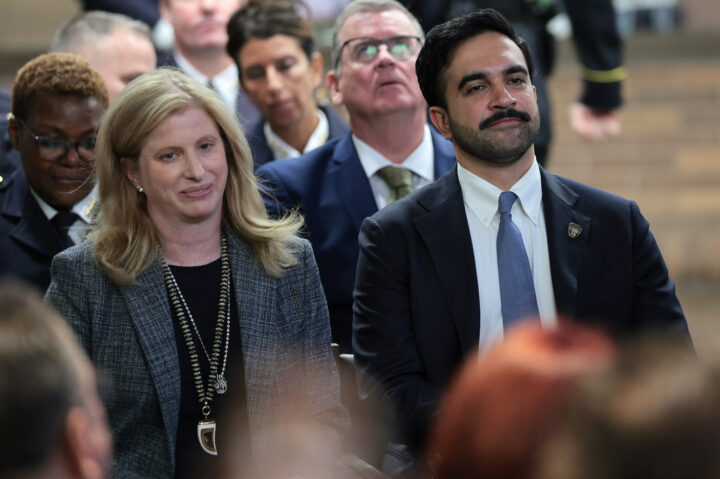
NYPD Commissioner Jessica Tisch and New York City Mayor Zohran Mamdani attend an unveiling ceremony for a new 9/11 Memorial Wall at One Police Plaza on Sept. 9, 2026 in New York City.


 Add JewishInsider on Google
New York City Mayor Zohran Mamdani and NYPD Commissioner Jessica Tisch revealed plans on Wednesday to step up security measures at the 9/11 memorial on Friday and around Jewish institutions that evening and on Saturday for Rosh Hashanah — asserting that the department is unaware of any impending threat, but acknowledging a dangerous environment amid rising antisemitism and the conflict with Iran.
The mayor and police chief appeared together at City Hall to discuss measures to ensure safety around both observances, including “heightened” local and federal security and restricted street and transit access around Ground Zero during the 25th anniversary ceremony for the victims of the attack during the day. In the evening, they said Jewish New Yorkers can expect police deployment to synagogues, yeshivas and other communal spaces, to deter any person hoping to replicate the acts of violence and vandalism inflicted in recent months.
“We know that for many Jewish New Yorkers, there have been moments of immense sadness over this past year. Too many of our neighbors have been the victims of antisemitic hate crimes and too many are understandably afraid to come together and celebrate openly,” said Mamdani, addressing his comments directly to the city’s Jewish community. “Your safety during these sacred days is of the utmost importance to our administration and we will work tirelessly to ensure that you can observe the holiday securely.”
Antisemitic hate crimes have spiked under Mamdani, according to NYPD statistics, which some Jewish leaders have blamed on the mayor’s broadsides against Israel. Yet he has kept in place Tisch, a scion of a prominent Jewish family and a strong supporter of the Jewish state, who on Wednesday vowed a “massive security operation” for the 9/11 memorial — and a “major” one for the Jewish High Holy Days.
“I want all Jewish New Yorkers to know this. You have a partner in the NYPD now and throughout the year. As of today, there are no specific credible threats directed at High Holy Day celebrations in New York City, but we remain vigilant,” Tisch said, even as she acknowledged the rise in antisemitic attacks. “There will be assets you see and others that you don’t. Our intelligence and counterterrorism bureau is watching the threat environment here at home and around the world, working closely with our federal, state, local and international partners.”
“So whether New Yorkers are gathered Friday morning to remember those we lost 25 years ago or entering a synagogue that evening to welcome the new year, they should know that the NYPD will be there,” she concluded.
Tisch acknowledged that the ongoing struggle with Iran has “amped up” NYPD deployments for large events. Meanwhile, Deputy Commissioner Rebecca Weiner, the department’s top intelligence official, told reporters that terror had become more “individualized and idiosyncratic” in the quarter-century since the destruction of the World Trade Center towers — and the department’s focus has pivoted from Islamism to the homegrown political extremes.
“It’s diversified tremendously ideologically. Now, we’re not primarily dealing with al-Qaida or even al-Qaida ISIS, but a proliferation of threats coming from conspiracy theories, grievances, nihilistic violence, far-left, far-right, anti-government, all of those things,” said Weiner. “A lot of the trip wires that we established in those early years post-9/11 had to be altered and that’s just what we’ve done here at the NYPD.”
The bipartisan and bicameral bill would ban activity that knowingly disrupts or impedes access to scheduled religious services within 100 feet of the entrance to a house of worship
Andrew Lichtenstein/Corbis via Getty Images
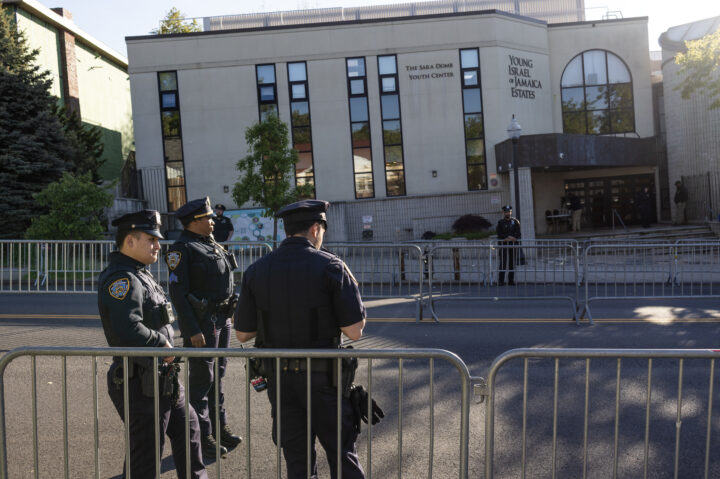
New York City police officers fence off and guard the Jewish Orthodox synagogue Young Israel of Jamaica Estates on May 12, 2026, in the borough of Queens, New York City.
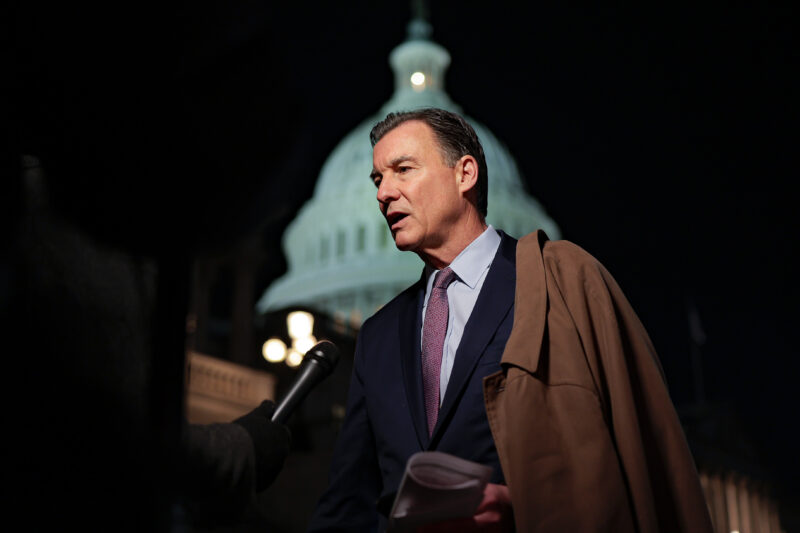
Sen. Elissa Slotkin (D-MI) joined Sen. Ted Cruz (R-TX) and Reps. Brad Knott (R-NC) and Tom Suozzi (D-NY) on Thursday in introducing the Right to Worship Act, a federal bill that would ban activity that knowingly disrupts or impedes access to scheduled religious services within 100 feet of the entrance to a house of worship during that time.
The bill is the product of months of negotiations among lawmakers and outside supporters. Cruz, Knott and Suozzi’s involvement, as well as the outlines of the bill, were first reported by Jewish Insider earlier this week. The legislation comes in part in response to a series of incidents of violence and harassment around Jewish institutions across the country.
The bill would ban activity that “meaningfully interferes with the ability of people to participate in the scheduled religious service, to the extent that the conduct causes a substantial interruption to the service’s normal operation” or “unreasonably hinders or deters a person from entering a house of worship, or threatens or intimidates a person, in a manner that prevents participation at a scheduled religious service.”
The legislation would bar such activities both during and in a one-hour period before and after any scheduled religious service.
The bill would carry escalating civil fines for repeated offenses, as well as allow impacted individuals, the U.S. attorney general or a state attorney general to commence a civil suit under the law.
It would include specific protections to permit demonstrations subject to federal, state or local permits and under reasonable time, place and manner restrictions.
Though it restricts conduct specifically during scheduled religious services, the bill does not require religious institutions to publicize their worship schedules.
It instead defines scheduled services as ones that are “observably underway or imminently beginning or concluding, as evidenced by the gathering or dispersing of congregants,” as well as any regularly occurring service “of which the defendant had actual knowledge” or any service about which the defendant was otherwise notified beforehand.
“Today, many Americans are unable to worship without fear of harassment, assault, or other forms of intimidation. The right to worship freely is foundational to our nation and was one of the motivations for its founding. No American should ever feel that their choice is between worshiping in fear and not worshiping at all,” Knott said in a statement. “The Right to Worship Act protects peaceful speech while restoring essential protections for Americans by empowering worshippers against those who seek to intimidate them.”
“I look forward to this bill becoming law and appreciate the many contributions made through bipartisan, bicameral work,” Knott, who became involved with the process at the recommendation of House Speaker Mike Johnson (R-LA), continued.
Slotkin, in a statement to JI, highlighted rising attacks on religious institutions in her state and nationwide.
“No one should ever fear going to their house of worship. Period,” Slotkin said. “The Right to Worship Act prohibits disruptive conduct, within 100 feet of a religious institution, that’s used to threaten or impede access. I look forward to working with my colleagues on getting this important piece of bipartisan legislation passed.”
Suozzi said in an interview with JI after announcing the bill, “I don’t think that a person should have to show particular courage just to pass a gauntlet to attend a religious service.”
”I don’t want to discourage protest, and I don’t want to discourage people from speaking out, but I don’t want to encourage a protest such that it makes it uncomfortable for someone to walk into their religious service or to bring their children to a religious service. It shouldn’t be that you [have to] stand up to this type of either threatening or intimidating behavior [to go to a religious institution],” he continued.
Suozzi said the bill would build upon the SACRED Act, an alternative and more limited version of a federal buffer zone bill he introduced earlier this year, as he looks to garner further bipartisan support. Suozzi engaged in extensive negotiations over the legislation, ultimately yielding a bipartisan compromise agreement.
“The First Amendment guarantees every American the right to freely exercise their faith, and Congress has a duty to ensure that guarantee is met,” Cruz said in a statement to JI earlier this week. “In recent years, we have seen organized acts of hate meant to disrupt and deny that right, which have been untenably defended as speech. That is why I am introducing the Right to Worship Act, and I urge my colleagues to support it.”
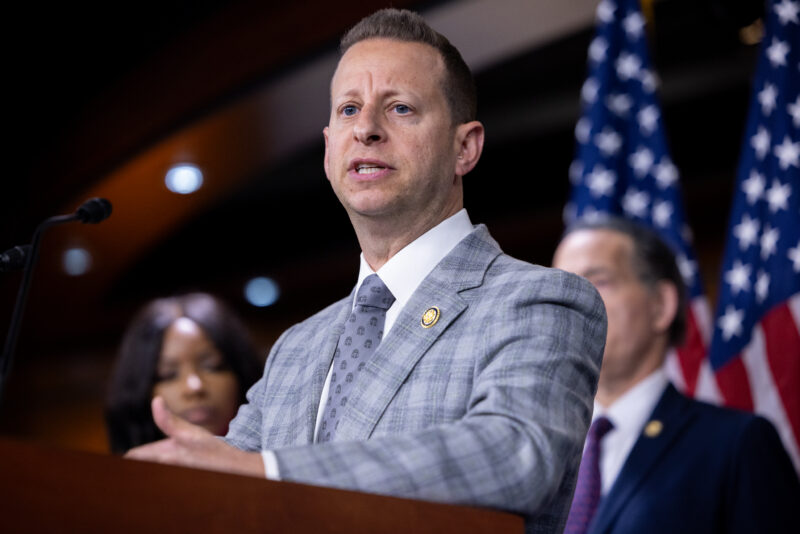
The bill is also being cosponsored by Reps. Josh Gottheimer (D-NJ) and Mike Lawler (R-NY).
The bill was developed in large part by Hudson Bay Capital CEO Sander Gerber, previously an architect of the Taylor Force Act, and Moshe Davis, who led the New York City Mayor’s Office to Combat Antisemitism under Eric Adams. Some Jewish groups — including the Orthodox Union, Combat Antisemitism Movement and Anti-Defamation League — have been working behind the scenes to support the bill and, ahead of its introduction, additional Jewish groups coalesced behind it.
The issue is a personal one for Gerber, whose father’s Ann Arbor synagogue has for more than two decades faced weekly antisemitic demonstrations during Shabbat services. His father has pursued various legal avenues to stop the incidents, including appealing the issue to the Supreme Court, to no avail.
“This issue’s been plaguing my father and the family for many years, and it’s a start — the Congress taking action to correct problems that local municipalities don’t have the infrastructure to deal with,” Gerber told JI.
Davis, who previously worked on the issue in the New York City government, told JI, “I am proud of Senators Cruz and Slotkin and Representatives Knott and Suozzi, who stepped up today to protect the right to worship.”
“The Right to Worship Act is the product of serious thought and deliberation, and it is the right way to address the disruptions and intimidation we have seen outside houses of worship across the country,” Davis continued. “I urge everyone to join this effort. No American should be afraid to walk into their house of worship.”
Suozzi said he thought the bill strikes a compromise that protects both freedom of speech and freedom of religion. He described it as the result of “very good, fair, but hard negotiating of people who really just want to get something done.”
The legislation leans on standards of reasonableness — barring conduct that “unreasonably hinders or deters” entrance to a house of worship when the perpetrator “reasonably should be aware” that their conduct “will cause such disruption or impediment” to religious services.
“This is not about people who are standing nearby and holding a sign, standing there quietly,” Suozzi said. “This is about people yelling and screaming or people who are doing it week after week after week after week only at the religious service.”
He said the negotiations were geared toward finding a standard that would be able to hold up if challenged in court and said that various lawyers were involved in crafting the bill. He said he’s also open to amendments and other viewpoints.
Gerber said that Suozzi had been a “great partner” and “worked hard to find a text to make this truly bipartisan, at the same time ensuring that it would address the Ann Arbor synagogue situation, which was my primary concern.” He said Suozzi “really cares about this situation.”
He also praised Cruz’s “courage … to be the lead introducer” in the Senate, which required significant legal knowledge and expertise to navigate the free speech issues involved. He praised Knott for taking a leading role in the issue as well.
Despite the short time remaining in the current congressional session, Suozzi said he feels fairly confident that the legislation can pass this year, noting the bipartisan support for and significant interest in the legislation.
Gerber put the chances of passing the bill before the end of the year at an optimistic 70%.
“It’s strongly bipartisan, it makes a lot of sense. The challenge will be if people on the fringe try to slow down the procedural process, and I hope there will not be amendments that might slow down the process,” Gerber continued. He urged the Senate and House Judiciary Committees to take the bill up.
The bill is supported by the Anti-Defamation League, Agudath Israel of America, American Jewish Committee, BAPS Swaminarayan Sanstha, Coalition of Hindus of North America, Hadassah, Hindu American Foundation, Islamic Society of North America, Jewish Federations of North America, UJA-Federation of New York, Orthodox Union, United Sikhs, Combat Antisemitism Movement and the American Muslim & Multifaith Women’s Empowerment Council (AMMWEC).
In a press release, the ADL said that the bill “builds on a framework the ADL helped develop” as part of the SACRED Act, Suozzi’s previous bill. The group said it documented more than 530 incidents of harassment at synagogues last year.
“No one should have to push through a hostile crowd or shout over a bullhorn in an attempt to pray,” ADL CEO Jonathan Greenblatt said in a statement. “ADL has championed safe worship zone legislation from the beginning, working hand in hand with lawmakers and other key stakeholders to build support and consensus around a critical bipartisan solution. The Right to Worship Act is the product of that work. We are grateful to Senators Cruz and Slotkin and Representatives Knott and Suozzi for their commitment to ensuring everyone, regardless of their faith, can worship freely and safely.”
The ADL said in the release that the bill strikes “the right balance” between protecting worship and protecting speech.
“Freedom of religion is not just the freedom to believe as your faith instructs. It must include the right to practice one’s religion without fear of harassment or violence,” said Nathan Diament, executive director of the Orthodox Union Advocacy Center, who was also deeply involved in negotiations and crafting the bill. “No one in America — be they Jewish, Christian, Muslim, or of another faith — should have to choose between their religion and their safety.”
The OU also emphasized that the bill “carefully strikes the balance” between free speech and protecting the freedom of religion.
“Every community deserves to gather safely in their house of worship,” Eric Fingerhut, CEO of JFNA, said in a statement. “Too often, we’ve seen Jewish Americans and other faith communities targeted or intimidated simply for practicing their faith. The Right to Worship Act gives law enforcement and communities the tools they need to prevent these disruptions before they escalate, while still respecting every American’s First Amendment rights. Safety and religious freedom aren’t in tension; this bill shows how we can protect both.”
AJC highlighted that more than a quarter of Jews said in an AJC survey last year that institutions with which they were affiliated had been targeted by vandalism, threats or attacks in the past five years.
“Every American should be able to gather and practice their faith without fear of intimidation, harassment, or violence,” AJC said in a statement. “Safeguarding the right to worship freely is fundamental to protecting religious liberty — one of our nation’s founding principles. We thank Senators Cruz and Slotkin and Representatives Knott and Suozzi for introducing this bipartisan bill and urge all of their colleagues to support it.”
Rabbi A.D. Motzen, the national director of government affairs at Agudath Israel of America, said that recent incidents outside synagogues nationwide demonstrate the need for the legislation.
“Houses of worship are sacred spaces. The Right to Worship Act helps protect Americans of all faiths by creating a 100-foot buffer zone around houses of worship and imposes civil penalties on those trying to disrupt or impede those gathering for religious services. Unfortunately, recent incidents in front of synagogues around the country highlight the need for additional protections,” Motzen said.
Alyza Lewin, president of U.S. affairs for CAM, said that the bill “answers the need for urgent national-level action to protect houses of prayer at a time of rising antisemitism across the United States.”
“For far too long, and particularly in the aftermath of Oct. 7, Jews have had to endure violent threats and intimidating harassment just to enter synagogues to practice their faith and gather as a community,” Lewin said. “This bill protects two First Amendment rights — to speech and the free exercise of religion. By balancing the two, the law will ensure that Jews, and members of all faiths, are able to worship and study in peace.”
Anila Ali, president of AMMWEC, said, “Every American should be able to enter a mosque, church, synagogue, temple, or any other house of worship without fear, intimidation, or harassment. Religious freedom is one of our nation’s most fundamental liberties, and protecting the right to worship peacefully strengthens — not weakens — our democracy. AMMWEC is proud to support the Right to Worship Act because every faith community deserves equal protection under the law.”
Anne Arundel County Executive Steuart Pittman is facing criticism from the newly created Annapolis Jewish federation
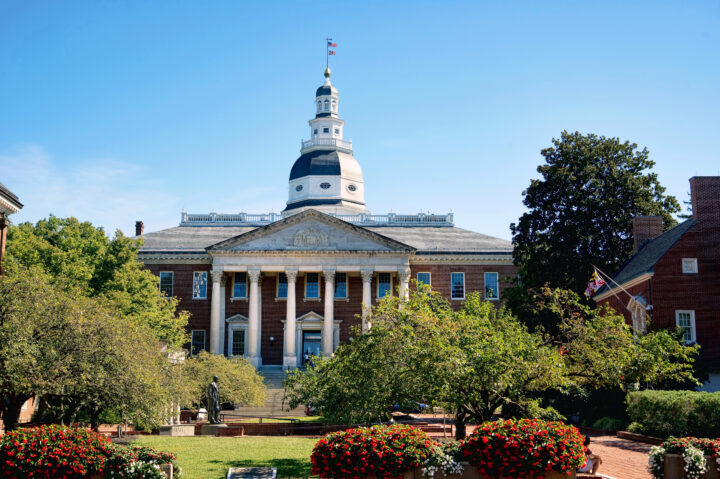
Maryland State Capital building in Annapolis, Maryland.
A Maryland Jewish group is “not taking no for an answer” after the Anne Arundel County executive repeatedly declined to include funding for security grants requested by Jewish institutions in his proposed budget.
Amid rising antisemitism in the state, the newly formed Jewish Federation of Annapolis & the Chesapeake wrote to Anne Arundel County Executive Steuart Pittman last month requesting similar security grants as neighboring counties have received for hate crime protection.
Pittman, whose second and final term ends in December, denied the request. In a county-wide email on April 24, he wrote, “I want to share some of my thinking on the tough decisions, on saying, ‘No, not this year.’”
“I’ll start with a proposal to create a county-funded and administered grant program to pay for security at organizations vulnerable to hate crimes,” Pittman wrote. “It came primarily from the four synagogues in Anne Arundel County, but has attracted support from others. I took the proposal seriously. Antisemitism is a national epidemic, as is hate against African Americans, Muslims, immigrants, and the LGBTQ+ community. All of these groups have enhanced security measures in the last year and a half.”
Still, he said his office would not be including a provision to fund a county-administered program that helps pay for security for vulnerable minority communities in the county in its final budget proposal for the next fiscal year.
“We’re not taking no for an answer from the county council,” Jennifer Laszlo Mizrahi, co-founder of the Jewish Federation of Annapolis & the Chesapeake, told Jewish Insider. “The county executive has now told us no three times. He told us in person, in an email that he sent to the entire county and now [on Friday] in a budget that he released publicly to the whole county.”
Laszlo Mizrahi said the federation, which was formed last year, has started conducting meetings with the five candidates running to replace the term-limited Pittman, and although the group cannot endorse a candidate, it plans to publish a voter’s guide to be distributed around local Jewish institutions.
While Anne Arundel County, which is home to Annapolis, the state’s capital, provides no Jewish security funding, the county — which has a fairly small Jewish population compared to other Maryland counties — receives federal and state security grants, which Laszlo Mizrahi called “extremely oversubscribed.”
“What makes us different from most small communities is that state capitals attract protesters who are angry and there have been a lot of people who are angry at Israel and come to our hometown,” she continued.
In Maryland, 356 antisemitic incidents were reported in 2024, according to the Anti-Defamation League, the sixth highest number reported in the country. This included 195 incidents of harassment, 154 incidents of vandalism and seven cases of assault.
In his email, Pittman pointed to surrounding counties — heavily Jewish Montgomery County, which has a $1.7 million safety grant program, and Howard County and Prince George’s County — having “much smaller programs in previous budgets.”
“None, in my view, come close to meeting the needs, and while some have said that even a small program sends a signal that we care, I believe that a small grant program that rejects most applicants leaves too many feeling rejected,” he wrote.
“I met with advocates for a safety grant program on March 19, with our Police Department and Hate Crimes Prevention Program present. I told them that there would be no grant program in our upcoming budget proposal, but that I wanted to hear more about the need, their security programs, and where the gaps exist. Police held a follow-up meeting with the group to go into more detail,” continued Pittman.
“A future county executive may see things differently, but I believe that the focus of our county work to protect synagogues and other vulnerable institutions should remain with our Police Department and Hate Crimes Prevention Program.”
“Our federation is brand new and we have a long way to go to play catch up,” Laszlo Mizrahi told JI. “One thing we have learned is that if you aren’t at the table, you are on the menu. When a county can find $400,000 in funding for more pickleball lighting, but can’t find security dollars, we know we need to work in partnership for a better future.”
“I believe we are going to achieve this because it is common sense,” she continued. “People understand the threat. We have a fabulous partnership with the police but when you call 911 it still takes time for them to come. When the crisis is a life or death matter of seconds, you need to have a guard on the premises. That’s where the gap is in terms of funding, particularly for the [preschools].
Pittman’s office did not respond to a request for comment from JI.
Support for the operation is highest among those who are the most connected to Israel and those who are most affiliated with Jewish institutions
Getty Images
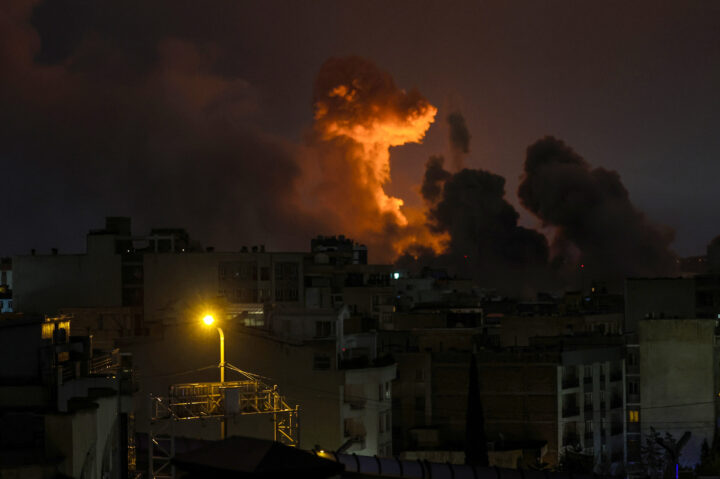
A large plume of smoke rises over Tehran after explosions were reported in the city during the night on March 28, 2026 in Tehran, Iran.
Two new polls of Jewish voters released this week show broad opposition to the U.S. military action against Iran, with support for the operation highest among those who are the most connected to Israel and those who are most affiliated with Jewish institutions.
A Mellman Group poll on behalf of the Jewish Electoral Institute (JEI)found that 32% of Jewish voters back the current military action against Iran, while 55% disapprove and 13% remain undecided. Support tracked closely along partisan lines, with 83% of Republicans, 49% of independents and 13% of Democrats approving the war.
Among those who said they were very connected to Israel, the poll found nearly two-thirds of Jewish respondents supportive, with just 27% opposed. But among those only “somewhat” connected to Israel, 58% said they disapprove of the war with just 25% approving. Nearly all of those Jewish respondents unconnected to Israel said they disapprove of the military action against Iran.
Support also was strongest based on those who are more religiously observant. The vast majority of Orthodox Jews (83%) approve of President Donald Trump’s military action, with just 11% opposing. But among Conservative Jews, opinion is more evenly split, with 40% approving and 48% disapproving. And among Reform Jews, support is the lowest, with just 24% approving and 67% disapproving.
There’s also a pronounced gender divide within the Jewish community: 40% of Jewish men support the military action against Iran, with 49% opposing. But among women, only 26% approve of the war in Iran, with 59% opposing.
The poll also found a significant share of Jewish Democrats (28%) and independents (29%) who said they feel “torn” about the war — agreeing that Iran is a threat to peace but disagreeing with Trump’s handling of the operation.
The “torn” constituency, which makes up 23% of the Jewish vote, generally draws from those who said they were opposed to the war in the end. When the “torn” constituency is broken out, there’s a more even divide between those who support the war (31%) and those who oppose it (41%).
The Mellman Group poll surveyed 800 Jewish voters between March 13-22.
A separate poll of Jewish voters, conducted by GBAO for the progressive Israel advocacy group J Street, found a similar response towards the war in Iran: A 60% majority of Jewish voters disapprove of U.S. military action against Iran, while 40% support the war. Of note: A sizable 20% minority of Jewish Kamala Harris voters expressed support for Trump’s military action.
The J Street poll, notably, found higher support for the war among Conservative Jews, with 62% supporting and 38% opposing. It also found moderate Jews nearly evenly split, with 51% of self-described moderates in support, and 49% opposed.
The survey also asked whether U.S. military action makes Israel more or less secure, and found a 45% plurality agreeing that it helped Israel’s defense, with 36% concluding it made Israel less safe. But a 58% majority also said that the war weakened the United States, with only 30% believing it strengthened American national security.
The J Street poll also found that 77% of Jews don’t think Trump has a clear plan and mission for the war in Iran.
And it found that 70% of Jewish respondents said their sympathies are more with the Israelis, with 30% expressing more sympathy with the Palestinians. Asked about Israeli Prime Minister Benjamin Netanyahu, 28% of Jewish respondents said they viewed him favorably, with 66% viewing him unfavorably.
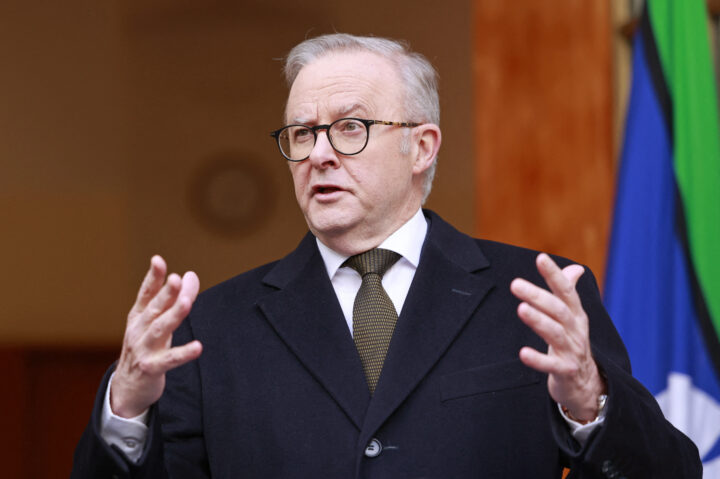
HILARY WARDHAUGH/AFP via Getty Images
Australian Prime Minister Anthony Albanese speaks during a press conference in Canberra on August 11, 2025.
Good Tuesday morning.
In today’s Daily Kickoff, we report on Australia’s expulsion of Iran’s top diplomat over evidence of Tehran’s involvement in attacks on Jewish institutions in the country, and have the scoop on New York Gov. Kathy Hochul’s plans to sign into law legislation requiring schools in the state to designate anti-discrimination coordinators. We report on Mahmoud Khalil and Rep. Rashida Tlaib’s upcoming appearances at the University of Michigan, and cover the House Education and the Workforce Committee’s investigations of allegations of antisemitism at three medical schools. Also in today’s Daily Kickoff: Israeli Foreign Minister Gideon Sa’ar, Katharina von Schnurbein and Ken Martin.
What We’re Watching
- The Treasury Department is lifting its remaining U.S. sanctions on Syria today, two months after an order from President Donald Trump.
- The Democratic National Committee’s Resolutions Committee is set to vote today on two Israel-related resolutions at the DNC summer meeting in Minneapolis. One resolution, proposed by a Gen Z DNC member from Florida, calls for an arms embargo on the Jewish state, and the other — backed by DNC Chair Ken Martin — calls for a ceasefire, an influx of humanitarian aid into Gaza and a two-state solution.
- New York Gov. Kathy Hochul is slated to sign into law legislation mandating that state schools designate anti-discrimination coordinators to enforce Title VI of the Civil Rights Act. More below.
- Iranian officials are in Geneva today to meet with U.K., French and German officials for nuclear talks.
What You Should Know
A QUICK WORD WITH JI’S MELISSA WEISS
Australian Prime Minister Anthony Albanese announced on Tuesday that Iranian Ambassador to Australia Ahmad Sadeghi, along with three other Iranian diplomats, is being expelled from the country over findings from Australia’s security service that Iran was behind multiple antisemitic attacks in the country — the first time Canberra has expelled a foreign ambassador since World War II.
Albanese, speaking at a press conference alongside the country’s top intelligence official, foreign minister and home affairs minister, called the plots “extraordinary and dangerous acts of aggression orchestrated by a foreign nation on Australian soil.”
The expulsion of the Iranian diplomats comes shortly after the arrests of two individuals in connection with a December 2024 Melbourne synagogue attack, in which a synagogue was firebombed while nearly two dozen people were inside. The arson at Sydney’s Lewis’ Continental Kitchen, which took place in October 2024, caused $1 million in damage to the kosher restaurant.
Sadeghi’s expulsion comes amid an explosion of antisemitism down under in the wake of the Oct. 7, 2023, Hamas attacks on Israel and Israel’s ensuing war against the terror group in Gaza. More recently, tensions between Canberra and Jerusalem have been strained following Australia’s revocation of visas for several Israeli officials and activists and its plans, announced earlier this month, to recognize a Palestinian state.
Iran and its proxies have an extensive history of plotting attacks against Jewish, Israeli and diplomatic targets abroad, dating back decades. Tehran and its Hezbollah proxy were determined by Argentine courts to be behind the 1992 bombing of the Israeli Embassy in Buenos Aires as well as the 1994 bombing of the AMIA Jewish community center in the city, which collectively killed 114 people and injured hundreds. More recently, Iran was discovered in 2011 to be plotting to assassinate the Saudi ambassador in Washington.
Tehran has also been discovered to be behind attacks and plots across Europe and Asia, though few countries have taken significant steps to address the Islamic Republic’s malign behavior. Israel has since last April, when Iran launched its first wave of ballistic missile attacks against the Jewish state, pushed for countries to designate the IRGC as a terrorist group.
Capitol Hill has backed such efforts, with more than 130 House legislators signing onto a letter in 2023 calling on the EU to issue such a designation.
mea culpa

An Israeli strike on a Gaza hospital yesterday that reportedly killed 20 people, including four journalists, was a “tragic mishap,” Israeli Prime Minister Benjamin Netanyahu said on Monday, not long after President Donald Trump criticized the attack, Jewish Insider’s Gabby Deutch reports.
Probe underway: “Israel deeply regrets the tragic mishap that occurred today at the Nasser Hospital in Gaza. Israel values the work of journalists, medical staff and all civilians,” the Prime Minister’s Office said in a statement. “The military authorities are conducting a thorough investigation. Our war is with Hamas terrorists. Our just goals are defeating Hamas and bringing our hostages home.” Trump told reporters in the Oval Office that he is “not happy” about Israel’s strike on the Nasser Hospital, in the southern Gaza Strip.
Inside Israel: IDF Chief of Staff Eyal Zamir said in remarks during a visit to a Haifa naval base on Sunday that the Israeli army has met its objectives in its war with Hamas in Gaza, “including deeply damaging Hamas,” and “as a result of the military pressure, we created the conditions for the release of the hostages.” Read more from JI’s Danielle Cohen-Kanik here.
new york minute
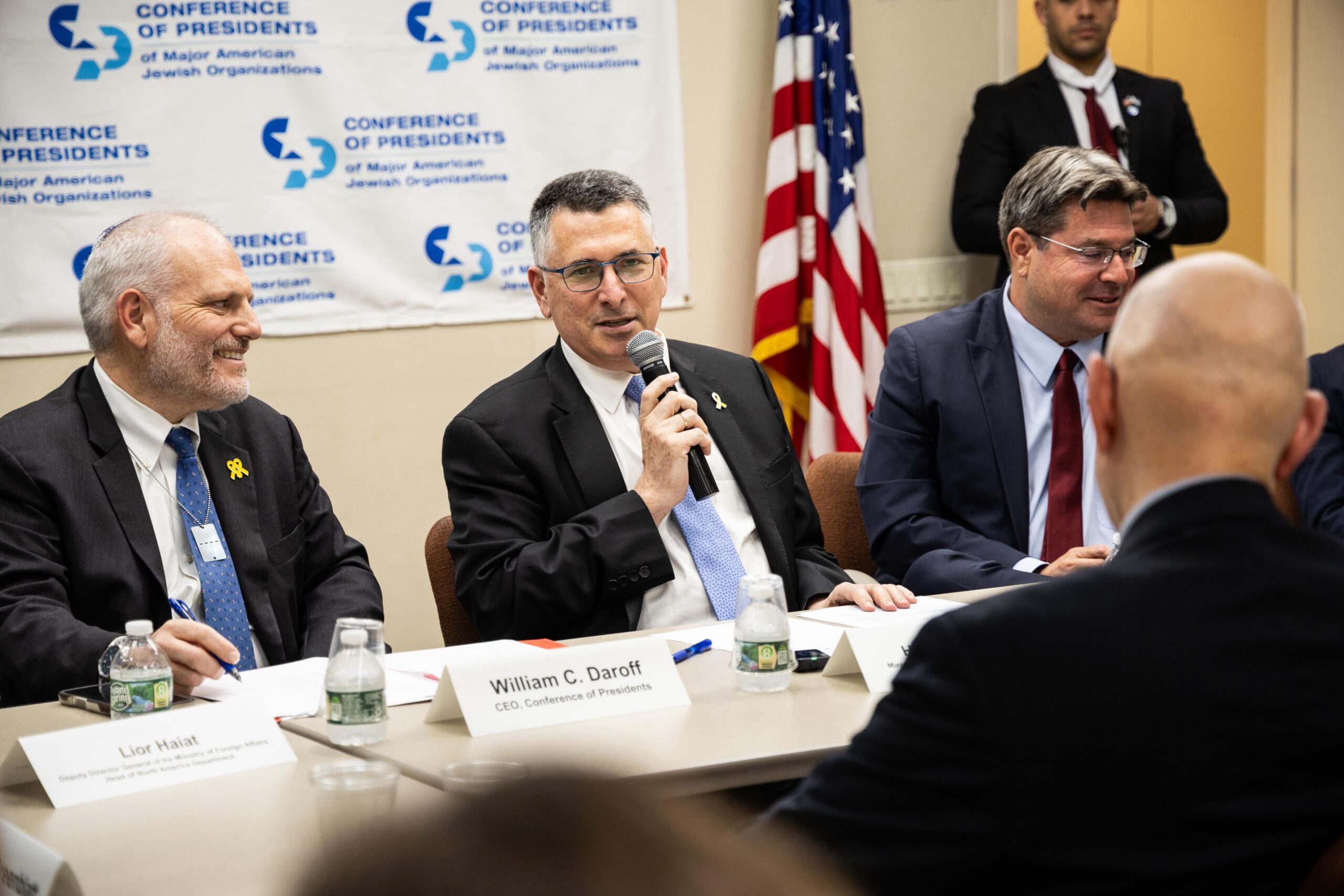
Israeli Foreign Minister Gideon Sa’ar met on Monday with American Jewish leaders in New York, speaking with the group at a moment when tensions between Diaspora Jews and Israel’s leaders over the conduct of the war in Gaza seem to be growing, Jewish Insider’s Gabby Deutch reports. The meeting was organized by the Conference of Presidents of Major American Jewish Organizations, and most of its members — representing the Reform, Orthodox and Conservative movements, as well as major national organizations including the Anti-Defamation League and the Jewish Federations of North America — were present in the room.
Mixed readouts: “We spoke about the war, the plight of the hostages, and the challenges facing Israel, with a clear focus on strengthening U.S.-Israel relations,” Conference of Presidents CEO William Daroff told JI about the “positive and wide-ranging” 90-minute meeting. “The exchange underscored our unity, our partnership with Israel and our shared commitment to the Jewish future.” But two attendees, who requested anonymity, described the meeting as antagonistic, saying Sa’ar took an argumentative tone against Jewish leaders in America who have raised concerns about the humanitarian situation in Gaza.
phone a friend
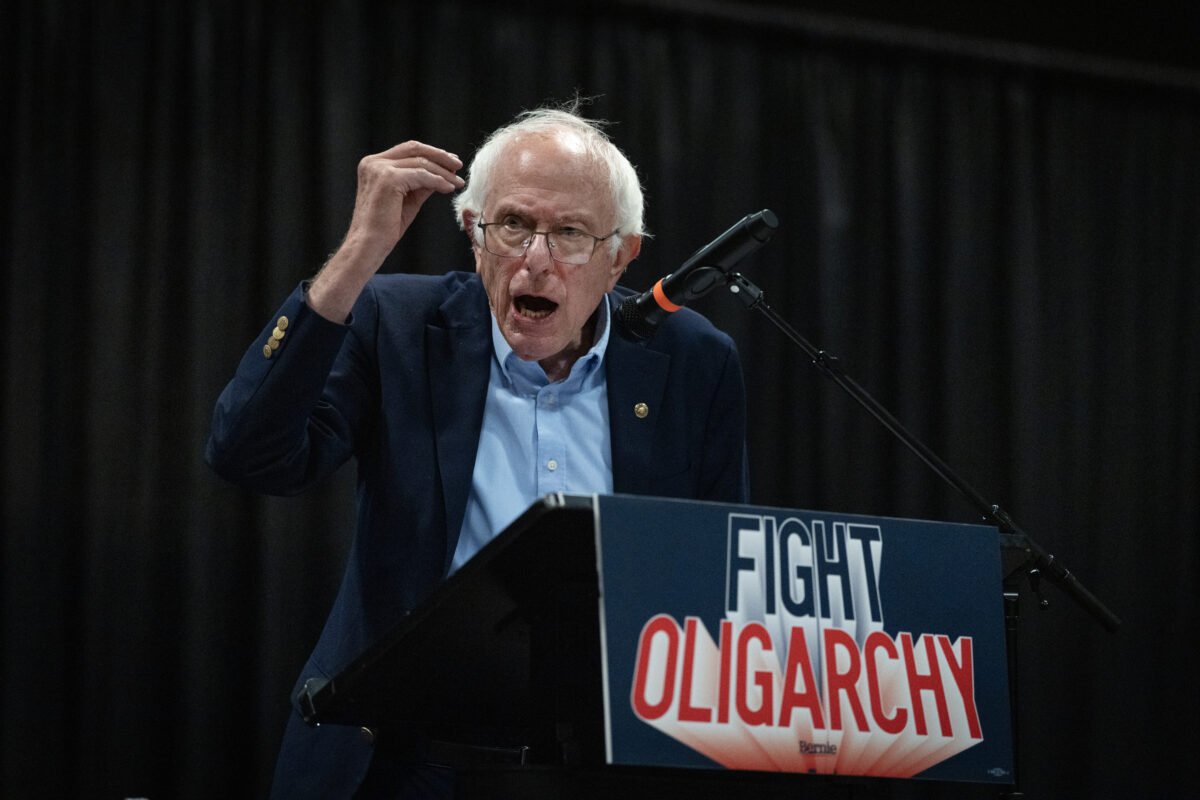
Sen. Bernie Sanders (I-VT) is slated to appear with Graham Platner, a Democrat running to unseat Sen. Susan Collins (R-ME), at a rally in Portland, Maine, on Labor Day, as the progressive leader from Vermont steps up his efforts to boost left-wing candidates who have been outspoken in their criticism of Israel and its ongoing war in Gaza, Jewish Insider’s Matthew Kassel reports.
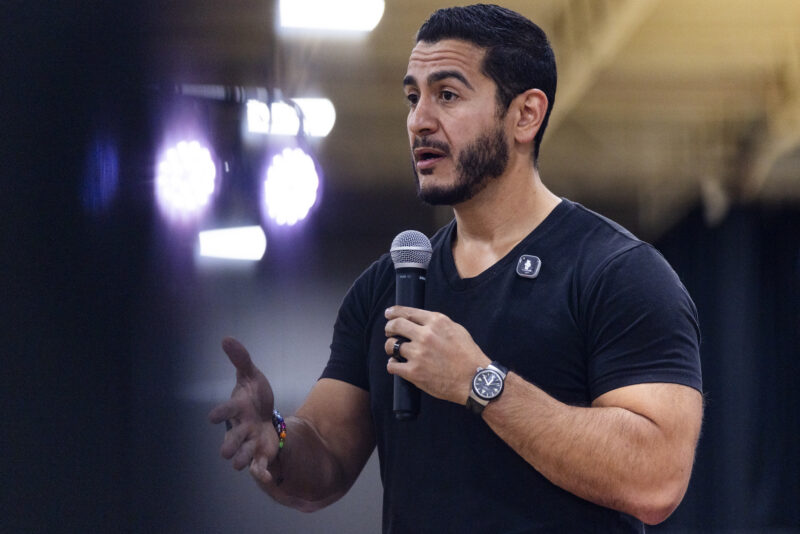
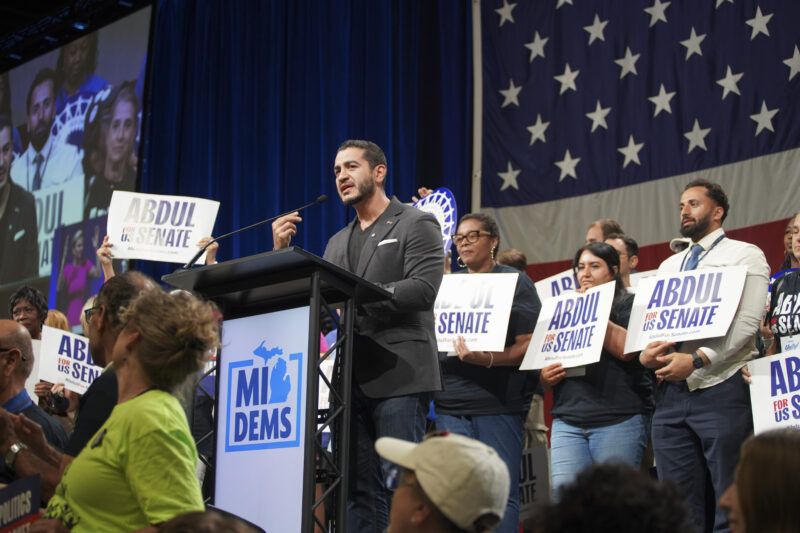
Michigan to Maine: Platner, who launched his campaign last week, has accused Israel of committing genocide in Gaza and backed Sanders’ recent resolutions to block arms sales to Israel. The Portland event on Sept. 1, the next stop on Sanders’ nationwide “Fighting Oligarchy” tour, follows a rally in Michigan on Saturday at which the senator sought to boost Abdul El-Sayed, a staunch critic of Israel who is vying to replace retiring Sen. Gary Peters (D-MI) in a crowded primary next year.
SCOOP

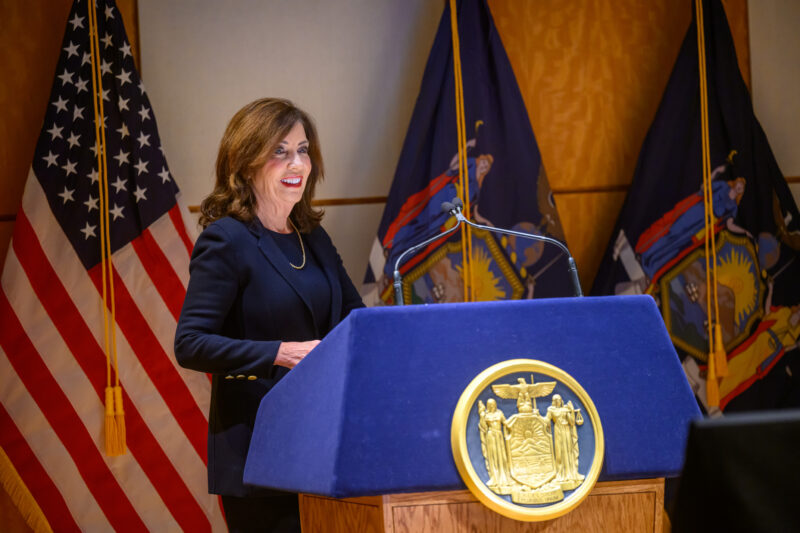
Responding to heightened campus antisemitism, New York Gov. Kathy Hochul will sign legislation on Tuesday afternoon that requires all colleges in the state to designate anti-discrimination coordinators to enforce Title VI of the Civil Rights Act of 1964, her office confirmed to Jewish Insider’s Matthew Kassel. The bill passed the Legislature unanimously in June.
‘Top priority’: “By placing Title VI coordinators on all college campuses, New York is combating antisemitism and all forms of discrimination head-on,” Hochul, a Democrat, told JI. “No one should fear for their safety while trying to get an education. It’s my top priority to ensure every New York student feels safe at school, and I will continue to take action against campus discrimination and use every tool at my disposal to eliminate hate and bias from our school communities.”
in the hot seat

The House Committee on Education and the Workforce will investigate three medical schools over their “failures to address antisemitism,” Rep. Tim Walberg (R-MI), the chair of the committee, announced on Monday. The three schools targeted in the probe are the University of Illinois College of Medicine (UICOM), University of California, San Francisco and University of California, Los Angeles Geffen School of Medicine, Jewish Insider’s Gabby Deutch reports.
‘Hostility and fear’: The investigations come as medical schools and the medical profession have faced increasing scrutiny over rising antisemitism since the Oct. 7, 2023, Hamas attacks. “The Committee has become aware that Jewish students, faculty, and patients have been experiencing hostility and fear at the university, and it has not been demonstrated that the university has meaningfully responded to address and mitigate this problem,” Walberg wrote to each institution, followed by a list detailing alleged incidents of antisemitism.
back to school

Days after the University of Michigan kicks off the new school year this week, the campus is slated to host two anti-Israel speakers — former Columbia University protest leader Mahmoud Khalil and Rep. Rashida Tlaib (D-MI), one of the most outspoken critics of Israel in Congress, Jewish Insider’s Haley Cohen reports.
Campus calendar: On Wednesday afternoon, Tlaib is scheduled to speak at an on-campus press conference titled “United Against Genocide, United Against Repression” hosted by The People’s Coalition Michigan. Later that evening, the campus chapter of Students Organize for Syria is scheduled to host Khalil, who was released in June from the immigration detention center where he had been held for three months as the Trump administration sought to have him deported. The events come days before thousands of pro-Palestinian activists are set to gather in Detroit, beginning Aug. 29, for the second annual People’s Conference for Palestine, under the slogan “Gaza is the Compass.”Read the full story here.
Worthy Reads
Israel, Alone: The New York Times’ Tom Friedman reflects on Israel’s increasingly isolated global status amid the continuation of its war in Gaza and its blunders on the battlefield. “[The Israeli government] is destroying Israel’s standing in the world, it is killing Gazan civilians with seemingly no regard for innocent human life, and it is tearing apart Israeli society and world Jewry, between those Jews who want to still stand with Israel no matter what and those who can no longer tolerate, explain or justify where this Israeli government is taking the Jewish state and now want to distance themselves from it. … So why is the world ganging up only on Israel now? Because it holds Israel to a higher standard than Hamas, because Israel has always held itself to a higher standard. And because the world can tell the difference now between a war being waged for the survival of the Jewish state and a war being waged for the political survival of its prime minister.” [NYTimes]
The Mamdani Effect: In The Washington Post, Ramesh Ponnuru considers the liabilities New York City mayoral nominee Zohran Mamdani brings to the Democratic Party as he looks increasingly likely to win the November general election. “This debate ignores what might be the biggest danger that Mamdani poses to the Democratic Party. That danger is not that his performance as mayor, assuming his polling lead holds, will turn off swing voters nationally (although it might). It’s that he will excite Democratic activists in all the wrong ways. His example will encourage them to do what a lot of them already want to do: get louder and lefter. Committed partisans are always tempted to find evidence, however dubious, that being more hard-line is the path to political victory. It happens to people of all political descriptions. In recent years, though, Democrats have been especially prone to political misjudgments of this kind.” [WashPost]
The New Anti-Zionism: In The Jerusalem Post, Betsy Berns Korn and Eric Mandel raise concerns about a new effort to push “Anti-Palestinian Racism,” as the effort, which originated in Canada, gets a foothold in the U.S. “If left unchallenged, APR will reshape public discourse, empower hostile NGOs, and normalize antisemitism in schools, governments, and even corporations. Policymakers must act now. Congress, state legislatures, and school boards should ensure anti-racism curricula are not hijacked to advance anti-Israel ideology. Universities should adopt the IHRA definition of antisemitism and resist attempts to elevate APR. Civil society must demand equal standards, where Palestinians are held accountable for terror and incitement just as Israelis are for policy decisions. The stakes could not be higher. Anti-Zionism has always adapted to survive, and APR is its newest disguise.” [JPost]
Word on the Street
The State Department is backing U.S. Ambassador to France Charles Kushner amid a diplomatic row with Paris following the weekend publication of a Wall Street Journal op-ed in which Kushner slammed the country for its failure to address antisemitism; France’s trade minister said in response to Kushner’s criticism that Paris “need take no lessons whatsoever” from the U.S. regarding antisemitism…
More than 75 Jewish organizations around the world signed on to a letter spearheaded by the American Jewish Committee voicing “unequivocal support” for Katharina von Schnurbein, the European Commission coordinator on combating antisemitism, amid calls for her dismissal by EU parliament members over her support for Israel, Jewish Insider’s Haley Cohen reports…
The Associated Press looks at internal dissent and fundraising challenges facing the Democratic National Committee and its chair, Ken Martin, amid the group’s summer gathering in Minneapolis, which kicked off on Monday…
In the Minnesota Star Tribune, Sarah Clarke, the wife of Minneapolis Mayor Jacob Frey, raises concerns about a planned protest outside the couple’s home on Thursday; in the op-ed, Clarke slams the “threats, harassment and even vandalism that my family endures when people feel entitled to target our family and home for perceived political gain”…
Police in Philadelphia are investigating the vandalism of the Weitzman National Museum of American Jewish History early Friday morning, in which red paint was sprayed on the side of the building over the words “the Weitzman stands with Israel,” which appeared under an Israeli flag…
The George Mason University chapter of Students for Justice in Palestine, which had been dormant since it was suspended in the aftermath of the arrests of several chapter leaders, posted a video ahead of the start of the fall semester in which a masked speaker pledged that “the spirit of resistance will not be quenched until we see full liberation of Palestine from the river to the sea”…
The Irish rap group Kneecap canceled the U.S. stops on its upcoming tour, citing the London court appearance of one of its members on terrorism charges as a scheduling conflict; Kneecap member Liam O’Hanna is facing the charges following his display of a Hezbollah flag at a November 2024 show…
Israel announced plans for a “phased reduction” in troops in southern Lebanon as part of an agreement in which Beirut will force the disarmament of Hezbollah…
Israel’s Foreign Ministry downgraded its ties with Brazil, following the South American country’s rejection of former Israeli Ambassador to Colombia Gali Dagan as Jerusalem’s envoy to Brasilia…
Belgium-born diamond baron Maurice Tempelsman, who for more than a decade was the partner of Jacqueline Kennedy Onassis, died at 95…
Pic of the Day
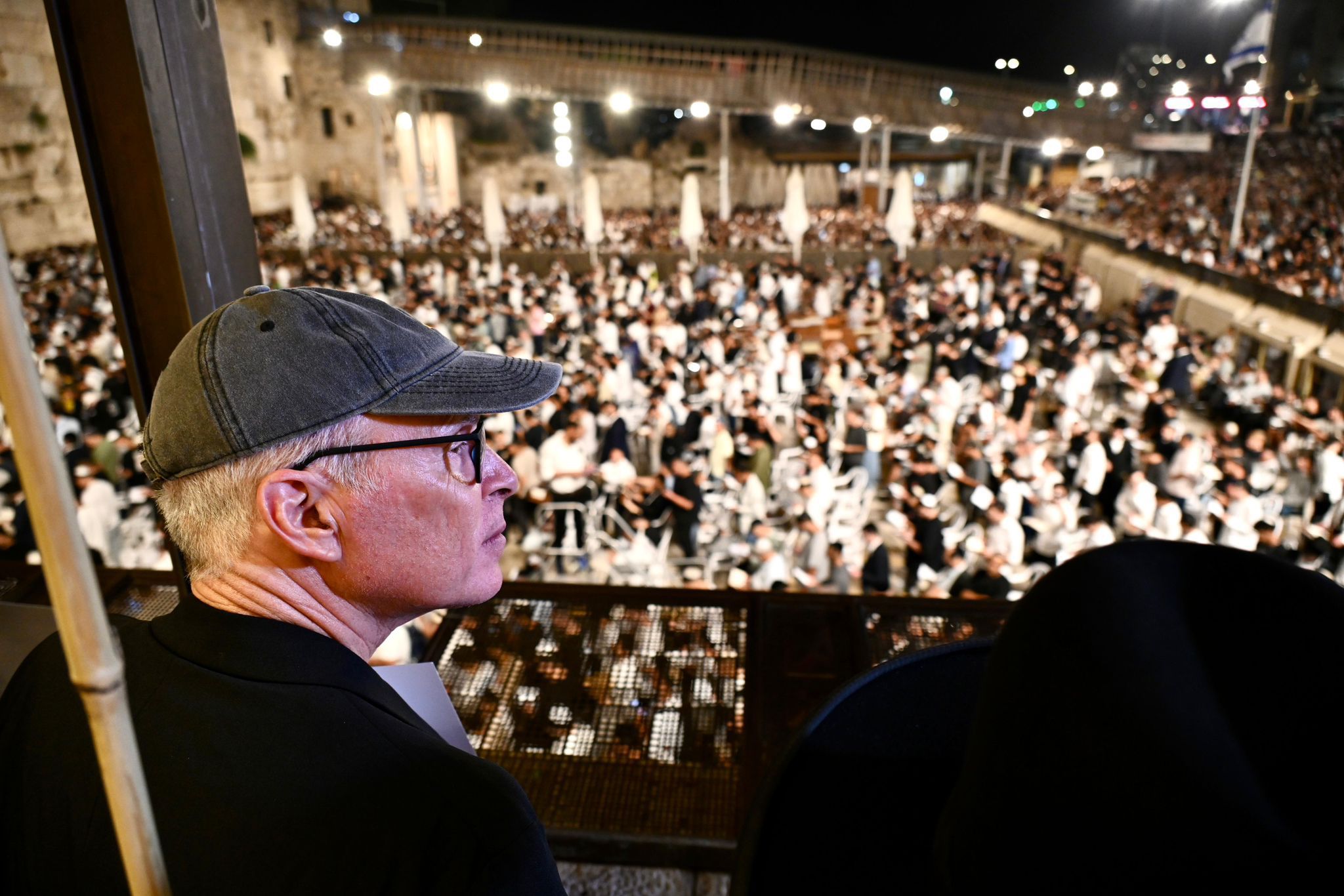
Former hostage Keith Siegel looked on at the First Selichot gathering at the Western Wall in Jerusalem last night, at the start of the Hostages and Missing Families Forum’s “National Day of Struggle” taking place today across the country to call attention to the plight of the remaining 50 hostages.
Birthdays
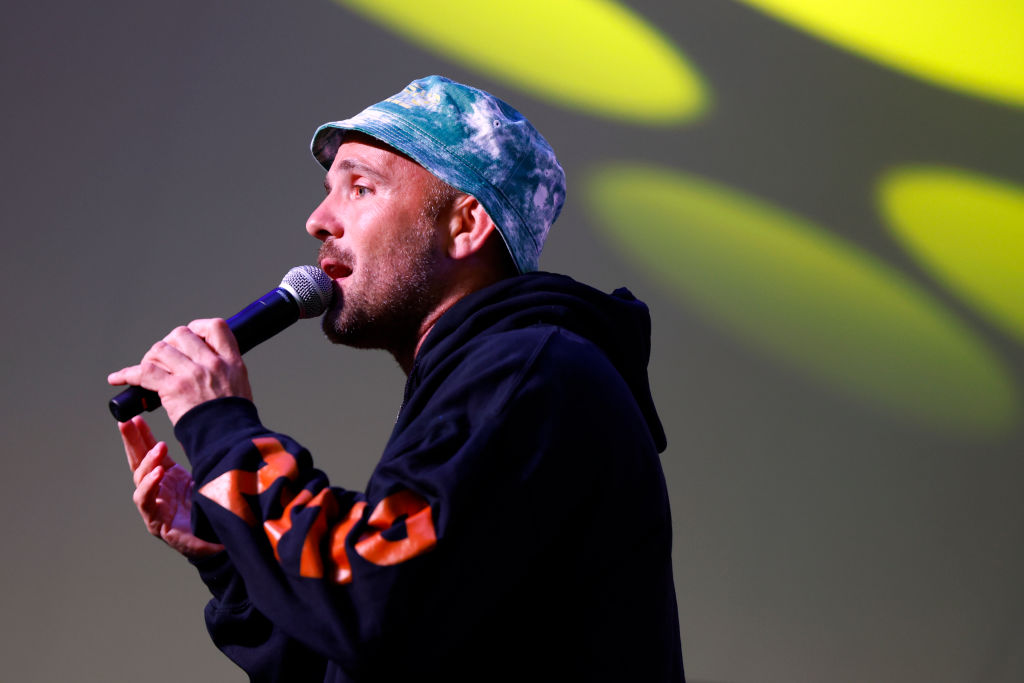
Rapper, known professionally as Kosha Dillz, Rami Matan Even-Esh turns 44…
Rabbi (now emeritus) of Congregation Beth Jacob of Atlanta, he made aliyah in 1991, Rabbi Emanuel Feldman turns 98… CEO of Siegelvision, a brand identity consultancy, he is also the founder and chairman emeritus of global brand strategy firm Siegel+Gale, Alan Siegel turns 87… Owner of You Save On Meds, Martin J. Portnoy… Mayor of Tel Aviv since 1998, Ron Huldai turns 81… Partner at the D.C. law firm of Williams & Connolly, Robert B. Barnett turns 79… Former Democratic member of the Florida House of Representatives, Irving Slosberg turns 78… Sales representative for ADT Security, Jay Caplan… Vaudeville performer, clown, mime, juggler and sleight of hand magician, known by his stage name “Avner the Eccentric,” Avner Eisenberg turns 77… Co-owner of Rochester, N.Y.-based August Moon Imports and World Tae Kwon Do Center, Jane Cota August… First vice president of the French Senate from 2020 until 2023, Roger Karoutchi turns 74… Venture capitalist, social policy researcher and philanthropist, Freada Kapor Klein turns 73… Board chair of Gap, a retail chain founded by his parents, Robert J. Fisher turns 71… EVP and managing director of polling and consulting at The Mellman Group, Michael J. Bloomfield… CEO of LawMedia Group (LMG), Julian Epstein turns 64… Journalist and co-author of the “Freakonomics” series, Stephen J. Dubner turns 62… Member of the Maryland Senate since 2020, Michelle “Shelly” Laskin Hettleman turns 61… President of NARAL Pro-Choice America for eight years until 2021, Ilyse Hogue turns 56… CFO at Cornerstone OnDemand, Perry Wallack… Managing partner of Austin-based Texas Venture Partners, Lorne Abony turns 56… Managing partner of RNS Strategies based in Portland, Ore., Robert Sacks… Professor at the Olin Business School of Washington University in St. Louis, Steven Malter turns 52… Deputy general counsel at ICANN Internet Corporation for Assigned Names and Numbers, the coordinator of the Internet’s naming system, Samantha Eisner… Co-founder and CEO of Danari Global, Ariel Maurice (“Ari”) Ratner… Founder and CEO of The Lemon Perfect Company, maker of the enhanced water brand Lemon Perfect, Yanni Hufnagel turns 43… Member of the Knesset for Yesh Atid, she served in the previous government as minister for social equality and minorities, Meirav Cohen turns 42… Singer-songwriter, vocalist, guitarist and co-writer for the indie rock band Tally Hall, Robert Howard “Rob” Cantor turns 42… Principal and founder of Inspire Capital and Development, Brielle Joy Appelbaum… Managing partner of Victor Capital Partners, Doug Korn… John Train… Carrie Shapiro…
State Rep. George Hruza described the incident as ‘Jew-hatred violence’ and an ‘act of pure evil’
First Alert 4 News
Screenshot
St. Louis’ Jewish community is reeling after a targeted antisemitic attack in the predawn hours of Tuesday morning on a family whose college-aged son served in the IDF.
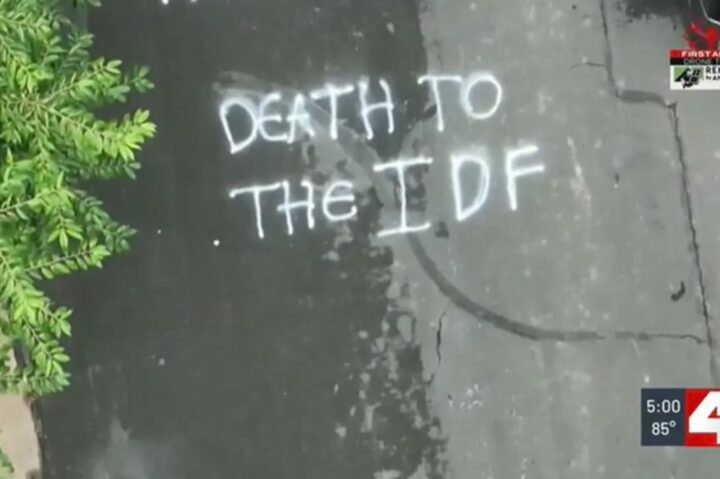
The family, living in a quiet suburban neighborhood with a significant Jewish population, found three of their cars burned and a message spray-painted on the street which read, in part, “Death to the IDF.” Another part of the message specifically targeted the IDF veteran, local news reports and members of the local Jewish community said, but has not been publicly disclosed.
The attack has shaken a Jewish community that has faced frequent and heated protests since the Oct. 7, 2023, attacks on Israel. This is the first time that activity has turned openly violent. Local and federal officials are investigating the attack as a hate crime.
“People are just really startled,” Rabbi Jeffrey Abraham, a board member of the Missouri Alliance Network, a local political organization dedicated to fighting antisemitism and supporting Israel, said.
He said the local Jewish community has been “on edge” for months following the violent antisemitic attacks in Washington and Boulder, Colo. “But when it actually happens in your own backyard, it takes on a different meaning. I think people are legitimately worried and also just really upset.”
Abraham said that he and other Jewish leaders are in close touch with local law enforcement, but attacks targeting individual families are harder to prevent than those targeting Jewish institutions.
“[Law enforcement] know any time we’re having a service or event, but it’s hard to protect everyone’s individual home in the middle of the night,” Abraham said. He said he’d had a conversation earlier Wednesday with a congregant who asked if he should take down his mezuzah, for fear that it would make his home a target.
Stacey Newman, director of the Missouri Alliance Network, said the community is “completely on edge.”
“Everybody’s worried about their kids,” Newman continued. Newman said she’s heard about another family whose children had served in the IDF that had asked local police to keep a closer watch on their home.
A coalition of Jewish organizations including the local American Jewish Committee, Anti-Defamation League and National Council of Jewish Women branches, the St. Louis Jewish Community Relations Council, Jewish Federation of St. Louis and the St. Louis Kaplan Feldman Holocaust Museum issued a joint statement condemning the attack.
“We condemn in the strongest terms the attack on members of our community last night. This is more than vandalism; it is a hateful act of intimidation and only the latest example of what happens when antisemitic and anti-Israel rhetoric are normalized,” the organizations said. “We are a resilient community, and we will not be deterred in our quest to uproot antisemitism and hatred, alone and with our partners. Antisemitism is a social ill that must be rejected by all of society.”
Local and federal officials have condemned the attack.
“This targeted attack against the Jewish community in St. Louis is horrific and must be met with full condemnation,” Sen. Eric Schmitt (R-MO) said. “Antisemitism has no place in our society. Everyone involved in this awful attack must be held accountable to the fullest extent of the law.”
Rep. Wesley Bell (D-MO) said, “Hate in any form is unacceptable and should never be tolerated. Those responsible must be held accountable to the full extent of law.”
Leo Terrell, who leads the Department of Justice’s antisemitism task force, described the incident as “horrific,” and said that he had engaged the FBI and the attorney general, as well as spoken directly to the family and informed them that the DOJ task force will be focused on the attack.
“I am outraged. Antisemitic violence has no place in America, not in St. Louis and not anywhere,” Terrell said. “We will pursue every avenue to bring the perpetrators to justice. If you commit antisemitic hate crimes, you will be caught. And you will be held accountable.”
State Rep. George Hruza described the incident as “Jew-hatred violence” and an “act of pure evil,” linking it to the attacks in Washington and Boulder, Colo.
“Nothing happening in the world at large can justify such a hateful act,” Hruza said. “This incident is antisemitism, plain and simple. This act did not arise in a vacuum. Since the mass murder, torture, rapes, and hostage-taking by the terrorist group Hamas on Oct. 7, 2023, antisemitic rhetoric has become commonplace in the United States. Tragically, with echoes of 1930s Germany, this rhetoric has fueled incitement to violence.”
Hruza, the son of a Holocaust survivor, said he is angry but committed to continuing to push to pass legislation to combat antisemitism in the state Legislature.
Newman and Abraham said that the IDF veteran in question had been individually targeted by protests in the past, when he delivered a speech in the community following his return from his service earlier this year.
A poster advertising that protest, reviewed by JI, includes the individual’s name and photograph, and the caption “Resistance is Justified, When People are Occupied,” and calls on supporters to “join us for a powerful demonstration to oppose the Zionist military presence in our community and to demand accountability for those who help commit atrocities abroad.”
Please log in if you already have a subscription, or subscribe to access the latest updates.
 Continue with Google
 Continue with Apple