












































































McGurk disputed Gordon’s account that Israel held up a hostage deal in January 2025, arguing that it was Hamas at fault for delaying the agreement

Tom Williams/CQ-Roll Call, Inc via Getty Images
Brett McGurk, then-White House Coordinator for the Middle East and North Africa, arrives to the U.S. Capitol on Thursday, April 18, 2024.


 Add JewishInsider on Google
Brett McGurk, the former Biden administration Middle East coordinator, has strongly disputed claims that Israel caused a delay in securing a hostage deal due to its insistence on maintaining a military presence in key locations in the Gaza Strip. Instead, McGurk argues, it was Hamas that held up the agreement with its maximalist positions, until its position ultimately weakened.
Speaking Thursday at an Atlantic Council event alongside Washington Post columnist David Ignatius about his new book, Brink: Inside the Race to Free the October 7th Hostages, McGurk took aim at recent narratives from some of his former Biden administration colleagues surrounding the agreement.
While McGurk did not name his former colleague explicitly, his remarks directly referenced a social media post last weekend by Phil Gordon, the former national security advisor to then-Vice President Kamala Harris. Gordon had suggested that a deal had finally been achieved in January 2025 because Israel had dropped its insistence on maintaining a military presence in the Philadelphi Corridor and conducting weapons checks in the Netzarim Corridor — implying a deal could have been struck months earlier had Jerusalem compromised sooner.
“I actually, David, had a former colleague who was not in the negotiations recently say the way they got the deal was that Israel dropped demands on [the] Philadelphi Corridor and these other things. Totally not true,” McGurk said. “Hamas accepted things they were not prepared to accept in the summer.”
Under the January agreement, Israeli forces remained in the Philadelphi Corridor for the entirety of Phase One, which provided for the release of 33 hostages. The agreement also included provisions for weapons checks on vehicles moving north through the Netzarim Corridor. McGurk argued that those terms were more favorable to Israel than what had been on the table the previous summer.
McGurk used as an example of Hamas’ intransigence a moment from his book which describes Hamas’ out-of-the-blue demand for 110 life-sentence Palestinian prisoners in exchange for nine ill and wounded civilians as, demonstrating how the terrorist group delayed the negotiation process even in times when Israel had agreed to the terms of a deal and was facing American pressure.
Plus, Rappaport's billion-shekel Big Mac

Chip Somodevilla/Getty Images
Then-U.S. President Barack Obama waves to reporters after returning to the White House on board Marine One September 3, 2015 in Washington, DC.
Good Friday morning.
In today’s Daily Kickoff, we report on New York City Comptroller Mark Levine’s follow-up comments over the Israel bonds controversy and cover Brett McGurk’s comments at an Atlantic Council event last night, where he pushed back on arguments from some Biden administration colleagues that former President Joe Biden should have applied more pressure on Israel to end the war in Gaza. We report on an unannounced meeting between U.S. Ambassador to Israel Mike Huckabee and Yashar party leader Gadi Eisenkot, and cover comments by former President Barack Obama in Belfast, Northern Ireland, where he said Israel’s founding had unjustly taken land from Palestinians. Also in today’s Daily Kickoff: Jessica Tisch, Assaf Rappaport and Tal Naim.
Curated by Israel Editor Tamara Zieve and U.S. Editor Danielle Cohen-Kanik.
Today’s Agenda
Rep. Alexandria Ocasio-Cortez (D-NY) is joining Michigan Democratic Senate nominee Abdul El-Sayed for rallies today at Oakland University in Rochester, Mich., and Eastern Michigan University in Ypsilanti, along with a “Latinos for Abdul” event in Detroit, after they launched their joint bus tour across Michigan’s Upper Peninsula yesterday. The trip marks Ocasio-Cortez’s first campaign appearance for El-Sayed during the general election.
Jewish groups including the Jewish Democratic Council of America and Westchester Jewish Democrats will hold a door-knocking and canvassing event on Sunday for Cait Conley, the Democratic nominee for New York’s 17th Congressional District, as she seeks to unseat Rep. Mike Lawler (R-NY).
One Thing To Know
PREDECESSOR PROBLEMS
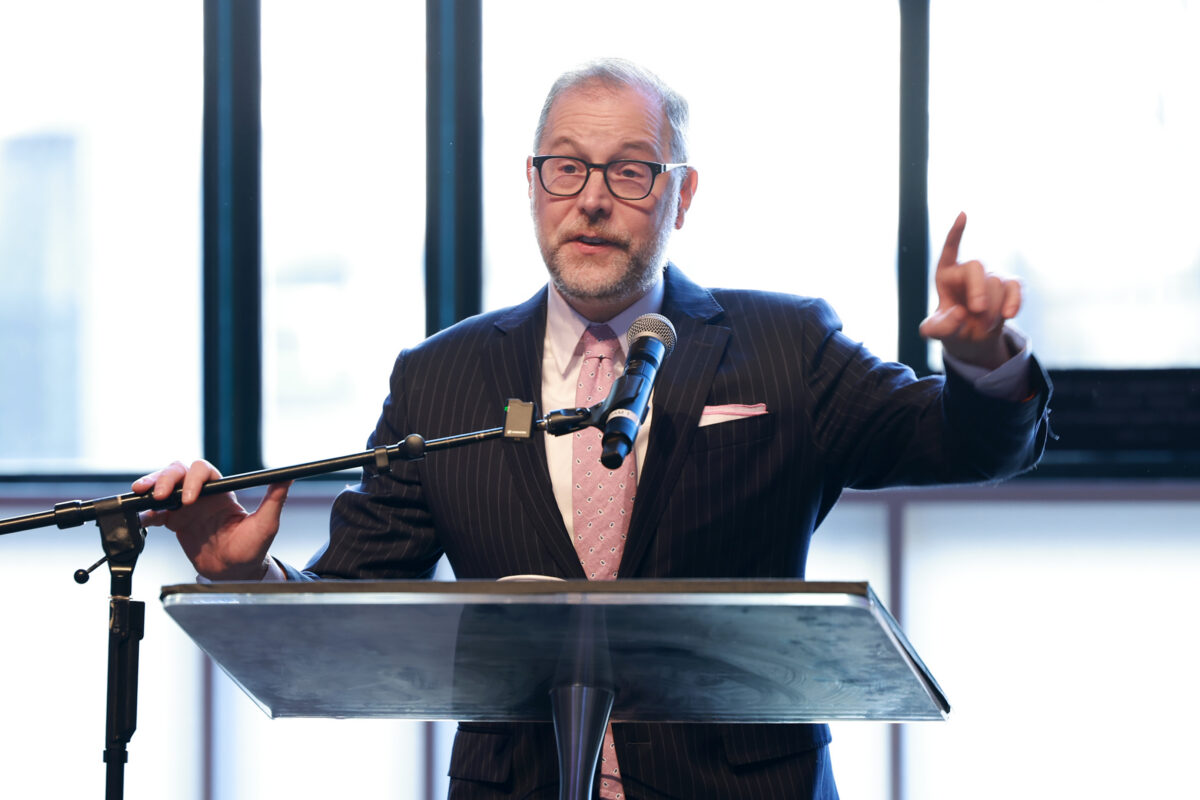
A day after New York City Comptroller Mark Levine sparked criticism by backing off a campaign promise to reinvest the city’s pension dollars in State of Israel bonds, mainstream Jewish groups rallied around the historically pro-Israel Democrat — though sources said they expect a change in his investment policy in the months ahead.
Levine, who ran on a vow to reverse his predecessor Brad Lander’s termination of the city’s half-century of investment in Israeli bonds, posted an extended statement to X on Thursday affirming his personal support for Israel and the city’s long-standing economic ties to the Jewish state. He noted that some $285 million in city pension funds, most of them outside of his direct management, remain invested in Israeli equities and firms.
Levine’s initial comments, made on Wednesday to The New York Times, about his decision not to reinvest in Israeli government securities emphasized regional and political instability as the basis for his decision. By contrast, his social media post stressed another reason — during his tenure, Lander had instituted policies over the pot of funds the comptroller directly controls to bar their investment in multiyear bonds of the sort Israel makes available to New York City to buy.
The Big Reads
DAYLIGHT DEBATE
Brett McGurk, a veteran national security official who has served in Republican and Democratic administrations, pushed back on Thursday against arguments from his Biden administration colleagues that former President Joe Biden should have applied more pressure on Israel to end the war in Gaza and secure the release of the hostages sooner, Jewish Insider’s Matthew Shea reports. Phillip Gordon, who served as national security advisor to then-Vice President Kamala Harris, argued that pressure on Jerusalem had worked and that “most” White House staff believed Biden should have taken an even tougher line against Israel. McGurk said at an Atlantic Council event about his book, Brink: Inside the Race to Free the October 7th Hostages, “If there was a shortcut, Joe Biden would have taken [it]. And if somebody could point to a key moment in which we would have been able to get a deal sooner, I’m open to that conversation. But I don’t think there was.”
MEETING MINUTES
U.S. Ambassador to Israel Mike Huckabee met quietly in recent days with Yashar party leader Gadi Eisenkot amid the final stretch of Israel’s high-stakes election campaign, Gili Cohen reports for Jewish Insider, the first known time U.S. officials have met with the former IDF chief of staff as a prime ministerial candidate, considered Israeli Prime Minister Benjamin Netanyahu’s chief rival in the contentious race. The meeting, according to a source familiar with the matter, focused on critical security concerns, including Gaza, West Bank escalation and rising settler violence. According to another source, the meeting went beyond formal diplomatic courtesy and served as a reconnaissance move by Washington to gauge Eisenkot’s regional outlook.
Poll projection: A Times of Israel poll published Thursday found that Eisenkot’s Yashar party has opened up a significant lead over Netanyahu’s Likud, though neither bloc is projected to win a 61-seat majority.
PRESIDENTIAL POV
Former President Barack Obama criticized Israel’s security policy as having “ceded moral ground” and said that Israel’s founding had unjustly taken land from Palestinians in remarks in Belfast, Northern Ireland, this week, Jewish Insider’s Marc Rod reports. At the same time, the former president also emphasized that both Israelis and Palestinians have a responsibility to change their approach in order to move toward peace. “The fact is that the Jewish people for millennia were oppressed, discriminated against, killed. Europe was responsible for much of that. They understandably sought a refuge in a place where they had historic ties. That is undeniable,” Obama said, according to transcripts and recordings of his remarks. “What is also undeniable is that they took the land of people and they were expelled. And those people, understandably, said, ‘This is an injustice, and I want my land back.’”
On the Oct. 7, 2023 attacks: “You could not have designed something that was less likely to produce meaningful change. In fact, it created the opposite,” Obama said.
The Rundown
TEXAS TALK
ON DEFENSE
NUCLEAR NEWS
MAINE EVENT
On Our Radar
● The Live Briefing. Word on the street, clips, podcasts and quick updates — the items we’re tracking all day in our Live Briefing on the app (on Apple and Android) and website.
President Donald Trump, asked in a Newsmax interview if he trusts Israeli Prime Minister Benjamin Netanyahu, responded, “I don’t trust anybody, honestly … in a world of politics, I don’t trust anybody.” Asked if he plans on being involved in Netanyahu’s reelection campaign, Trump said, “Well, they’d like me to be. Yeah, they’d like me to be. Look, I’ve had a very good relationship with him. We’ve had good success together”…
NYPD Commissioner Jessica Tisch received a standing ovation on Thursday at the Alfred E. Smith Memorial Foundation Dinner in Manhattan, where she accepted the “Happy Warrior” award and joked about the Democratic Socialists of America’s calls for Mayor Zohran Mamdani to fire her, while the mayor, seated one row below her on the dais, was met with scattered boos alongside cheers, The New York Times reports.
Also on the dais were Gov. Kathy Hochul, Senate Minority Leader Chuck Schumer (D-NY), New York Attorney General Letitia James, New England Patriots owner Robert Kraft and Tishman Speyer CEO Rob Speyer….
Democratic Senate candidates far outraised their Republican opponents in the third quarter across the most competitive races, Axios reports. James Talarico brought in $64 million in Texas to Ken Paxton’s $18 million, Abdul El-Sayed raised $30.7 million in Michigan to Mike Rogers’ $9.7 million, Troy Jackson pulled in $20.4 million in Maine to Sen. Susan Collins’ (R-ME) $5.2 million and Kansas pastor Adam Hamilton raised $11 million to Sen. Roger Marshall’s (R-KS) $800,000…
Politico talks to Rep. Haley Stevens (D-MI) about why she hasn’t campaigned alongside El-Sayed since endorsing him. “There’s changing dynamics, and there’s a new coalition that Abdul has built, and some people are a die-hard part of it, and some people are not. We’re seeing some constituent community pain coming out,” Stevens said…
The U.N. Security Council issued a statement on Thursday condemning the “escalatory” Houthi attacks against Saudi Arabia and affirming the Gulf kingdom’s “inherent right to self-defence in accordance with international law”…
The Treasury Department issued further sanctions against Iran’s financial networks on Thursday including against an Iraqi bank, Iranian offshore banks, exchange houses and financiers accused of helping Tehran access U.S. dollars and evade sanctions…
The Financial Times reports that the Trump administration is exploring options to ease restrictions on “shadow fleet” tankers linked to Russia and Iran in an attempt to lower fuel costs ahead of the midterm elections…
CNN reports that the U.S. military has drawn up potential strike plans for Iran that could include using the GBU-43/B “mother of all bombs” against energy infrastructure and nuclear sites if Trump orders renewed combat operations…
Secretary of State Marco Rubio spoke Thursday with Lebanese President Joseph Aoun following Beirut’s seizure of a shipment of explosives destined for Hezbollah, which Hezbollah lawmaker Hassan Fadlallah said were intended for use against Israeli forces…
The 10-year-old son of slain Hamas leader Yahya Sinwar wrote to his father that he wanted to “hold the Kalashnikov and shoot the Jews” when he grows up, accompanied by drawings of tanks, rifles and rockets, according to letters recovered by the IDF in Gaza and provided by the military to The Telegraph…
Netanyahu revealed on Thursday that he spoke with Syrian President Ahmad al-Sharaa last year after Israel bombed the Syrian Defense Ministry due to government forces targeting the Syrian Druze population…
Police arrested a teenager who had allegedly planned to carry out a mass shooting at a Hindu temple in suburban Chicago last weekend, officials said at a press conference on Thursday. Investigators found at the suspect’s home a rifle, loaded magazines, hundreds of rounds of ammunition and tactical gear, as well as items with Nazi symbols…
A Nazi-looted painting by Russian artist Wassily Kandinsky, which was returned to its heirs in 2023, sold for almost $42 million at an auction in London on Wednesday…
A Hamburg court sentenced two men to prison for plotting, on Iranian intelligence orders, to kill Jewish leaders in Germany including Josef Schuster, the president of the Central Council of Jews in Germany, and pro-Israel German politician Volker Beck…
The Jerusalem News Syndicate reports Paraguay announced that it will pursue full membership in the International Holocaust Remembrance Alliance and adopt its working definition of antisemitism…
Wiz co-founder Assaf Rappaport is poised to buy McDonald’s Israel franchise’s 230 branches for roughly 1 billion shekels ($320 million)…
Worthy Reads
Find more Worthy Reads in our Live Briefing via our app (on Apple and Android) and website.
The 61-Seat Problem: Suleiman Maswadeh, senior correspondent for Israel’s Channel 13, lays out in The Atlantic the math problem facing both Israeli Prime Minister Benjamin Netanyahu and the opposition ahead of the Oct. 27 election, with polls showing both blocs falling short of a 61-seat majority. “Most polls give the ‘change camp’ — shorthand for the anti-Netanyahu bloc, which stretches from the left to the nationalist right — no path to 61 without either the Haredi or the Arab parties. Its leaders face a choice: break a promise or risk failing to form a government, which would send Israel to yet another election. … Every major poll except those on Channel 14, the network that functions as Netanyahu’s house broadcaster, shows that his bloc cannot form a coalition either. … Netanyahu’s best scenario, Israeli analysts say, is a stalemate: No bloc reaches 61, and the country goes to another election. Netanyahu would then remain at the head of a caretaker government, in power without a new mandate.” [TheAtlantic]
Demand Better: In Newsweek, Ron Halber, CEO of the Jewish Community Relations Council of Greater Washington, and Joel Rubin, a former Obama administration deputy assistant secretary of state, lament that Jewish voters are being asked by both parties to overlook antisemitism from their own candidates, in the name of a greater electoral good. “Jewish voters are being told repeatedly in this election cycle to forgive and forget offensive comments and dangerous worldviews because the stakes are too high to do otherwise. As each party warns of an existential threat to the country if the other side wins, the common message to Jews is that we need to just keep our mouths closed and fall in line. We reject that deal. We reject the idea that hate speech should have a home in our political discourse. We reject the notion that acquiescing to discrimination is simply the price of admission to our political system. We reject the principle that ‘anything goes’ in pursuit of control of Congress.” [Newsweek]
Picture of the Day
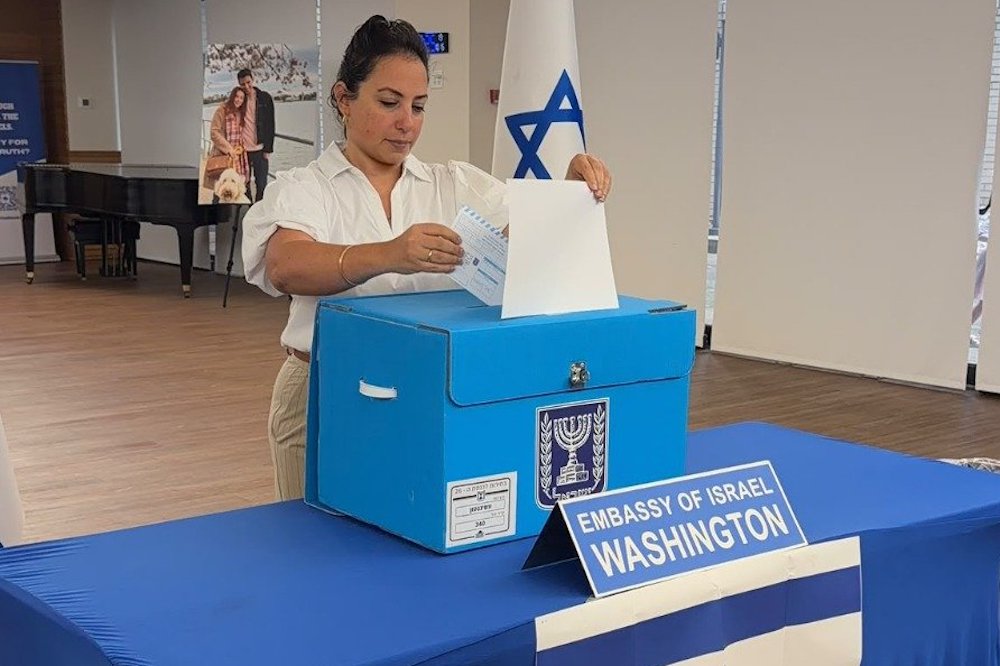
Tal Naim, spokesperson of the Israeli Embassy in Washington, cast her ballot on Thursday after early voting opened at Israeli diplomatic missions around the world ahead of the Oct. 27 elections. Tal Naim/X
Birthdays

Marc Levy, best-selling French novelist, one of whose books was made into DreamWorks’ “Just Like Heaven,” turns 65 on Friday Magali Cohen/Hans Lucas/ AFP via Getty Images
FRIDAY
Shimon Mizrahi, Israeli attorney, chairman of Maccabi Tel Aviv Basketball, turns 87
Alfred Altschul, retired CFO of Amtrak, Midway Airlines and Airlines Reporting Corporation, turns 87
Morton A. Klein, national president of the Zionist Organization of America (ZOA), turns 79
David Zucker, film director, producer, screenwriter and creator of “The Naked Gun” franchise, turns 79
Andrew S. Zimbalist, professor emeritus of economics at Smith College and author of 28 books, turns 79
Marvin C. Feuer, vice president for strategy at AIPAC
Elinor Lipman, novelist, short story writer and essayist, turns 76
Shmuel Slavin, chairman of Sela Capital Real Estate Ltd., he previously served as the director-general of Israel’s Ministry of Finance, turns 73
Jeff Narod, executive director of Clark University Hillel
David Linsky, member of the Massachusetts House of Representatives since 1999, turns 69
Daniel Benjamin, president of the American Academy in Berlin, he was the coordinator for counterterrorism during the Obama administration, turns 65
Howard David Krein, otolaryngologist who also specializes in facial and reconstructive surgery, turns 60
Scott Tobin, senior advisor at Battery Ventures’ Israel’s office
Adam Fetterman, attorney in North Palm Beach, Fla., he served in the Florida House of Representatives, turns 56
Gil Kenan, filmmaker, best known for directing “Monster House” and “Ghostbusters: Frozen Empire,” turns 50
Kala Savage, actor best known for her television roles in “Undressed,” “Santa Barbara” and “8 Simple Rules,” turns 48
Sue Bird, retired basketball player for the Seattle Storm of the Women’s National Basketball Association, she has five Olympic gold medals, turns 46
Brandon Jared Perlman, founder and CEO at Social Studies, Inc., he is also the founder of The Gramlist
Boyd Melson, three-time U.S. Army light-middleweight boxing champion, he boxed with a Star of David on his trunks, turns 45
Jason Langsner, VP of data at The Atlantic
Margalit Rosenthal, West Coast regional director at Foundation for Jewish Camp
Avi Fink, SVP for financial planning and analysis at Vibrant Emotional Health
Devora Kaye, senior director of communications at Mark43
Sam Ginsberg, business analyst at LWF Group and project manager at Aqualinq
SATURDAY
Jody Gottfried Arnhold, chair emeritus of the board of directors of NYC’s 92NY, turns 83
Ronald Murray Gould, judge of the U.S. Court of Appeals for the 9th Circuit since 1999, turns 80
Michael L. Tolkin, filmmaker and novelist, turns 76
Robert Neil Chatigny, U.S. district judge for the District of Connecticut since 1994, he took senior status in 2017, turns 75
Lawrence Bender, movie and television producer, his films have won eight Academy Awards, turns 69
Peggy Futerman, Rochester, N.Y., resident
Jeffrey Shallit, number theorist and professor emeritus at the University of Waterloo in Ontario, Canada, turns 69
Ellyn Setnor Bogdanoff, shareholder in Becker & Poliakoff, she has been a member of both houses of the Florida Legislature, turns 67
Rabbi Mayer Twersky, rosh yeshiva at Yeshiva University, he is a son of Professor Isadore Twersky and a grandson of Rabbi Joseph B. Soloveitchik, he also serves as the rebbe of the Talne Hasidic dynasty, turns 66
Andrew Straus, Oakland, Calif.-based former Northwest regional director of J Street, turns 66
Jeremy C. Stein, professor of economics at Harvard, he served as a member of the Board of Governors of the Federal Reserve System, turns 66
Shemsi Prinzivalli, N.J.-based licensed professional counselor
Josh Newman, former member of the California State Senate, turns 62
Cliff Asness, hedge fund manager, he is the co-founder of AQR Capital Management, turns 60
David Halbfinger, Jerusalem bureau chief of The New York Times, turns 58
Michael Granoff, founder of Maniv Investments in 1997 and Maniv Mobility (Israel’s first venture capital fund dedicated exclusively to the new mobility future), turns 58
Martin Heinrich, U.S. senator (D-NM), turns 55
Kenneth Baer, CEO and founder of Crosscut Strategies, a D.C.-based public affairs firm
Shari B. Diamond, rheumatologist and director of the rehabilitation division of Arthritis and Rheumatism Associates in the D.C. area
Ariel Levy, author and staff writer at The New Yorker, turns 52
Michael Beckerman, head of public policy for the Americas at TikTok, turns 48
Jessica Goldin, CEO of Wellbel, turns 47
Nicholas Britell, Emmy Award-winning film and television music composer, turns 46
Tomer Kagan, chief strategy officer of Relationship Labs, turns 43
Katharine Nasielski, D.C.-based director of federal affairs for New York University
Caroline Mehl, co-founder and executive director at the Constructive Dialogue Institute
Dalya Attar, member of the Maryland State Senate following seven years in the House of Delegates, turns 36
Adam Greenspan, staff software engineer at Zocdoc
SUNDAY
Irwin M. Jacobs, co-founder and former chairman of Qualcomm, turns 93
Marius Job Cohen, former mayor of Amsterdam and leader of the Dutch Labour Party, turns 79
Victor A. Friedman, linguist, he is a professor emeritus at the University of Chicago, turns 77
Marc Ginsberg, former U.S. ambassador to Morocco, the first Jewish ambassador to an Arab country, he is president of the Coalition for a Safer Web, turns 76
Max S. Maizels, physician and political activist in Henrico County, Va., turns 76
Joshua B. Sinai, professor of practice in intelligence and global security studies at Capitol Technology University
Marc Widelock, Bakersfield, Calif.-based attorney focused on adoption and reproductive law
Chuck Lorre, television director, writer, producer, composer and actor, turns 74
Bob Weinstein, film producer and founder of Watch This Entertainment, turns 72
Jonathan Tasini, president of the Economic Future Group, a consulting firm, turns 70
Eugene Yelchin, award-winning illustrator and writer of books for children, turns 70
Gary Gensler, chair of the U.S. Securities and Exchange Commission during almost all of the Biden administration, turns 69
Leon Calvin Murray, retired NFL running back, he writes of his conversion in From Rose Bowl to Rashi: My Unique Journey to Judaism, turns 68
Ben Caspit, Israeli journalist, political commentator and author of two books critical of PM Benjamin Netanyahu, turns 66
Andrew Getraer, former longtime director at Rutgers Hillel, followed by a year at the Harvard Hillel, he is now an adjunct professor at Sy Syms School of Business
David Fisher, founder of Coalesce Advisors, he is a former president at Birthright Israel Foundation
Steven Phillip Weitzman, professor and director of Jewish studies at the University of Pennsylvania, turns 61
David M. Price, weather anchor for NBC 4 New York, turns 60
Rachel Nichols, former ESPN television host, sports reporter and anchor, turns 53
Amy Lynn Webb, CEO of Future Today Strategy Group, she is an adjunct professor of strategic foresight at NYU, turns 52
Maryna Asauliuk, fashion designer, stylist and art director, turns 46
Suzanne Gershowitz, SVP and COO at the American Enterprise Institute
Graham Moore, Academy Award-winning screenwriter and author, turns 45
Julia Ioffe, founding partner and Washington correspondent for Puck News, turns 44
Annie Karni, congressional correspondent for The New York Times
Ayal Kellman, support team leader at Moovit
Idan Yaniv, popular Israeli singer, turns 40
Emma Green, staff writer at The New Yorker
Zohran Kwame Mamdani, mayor of New York City, turns 35
At an Atlantic Council event, McGurk said there was no clear path to an earlier hostage deal and cited Hamas' delays and shifting demands
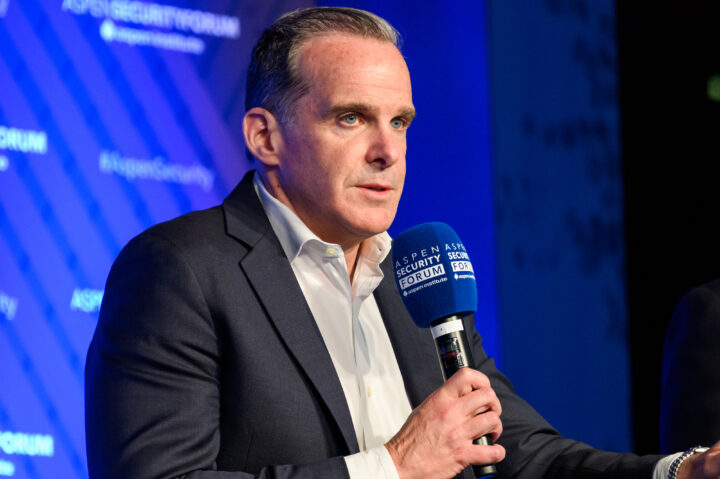
Aspen Security Forum
Former national security official Brett McGurk speaks at the Aspen Security Forum on July 16, 2025.
Brett McGurk, a veteran national security official who has served in Republican and Democratic administrations, pushed back on Thursday against arguments from his Biden administration colleagues that former President Joe Biden should have applied more pressure on Israel to end the war in Gaza and secure the release of the hostages sooner.
Debate in Democratic foreign policy circles over the Biden administration’s handling of the war in Gaza has intensified following the release earlier this month of McGurk’s new book, Brink: Inside the Race to Free the October 7th Hostages, in which he argues that Biden’s efforts to pressure Israel during hostage negotiations emboldened Hamas and complicated efforts to reach a ceasefire agreement.
In the book’s prologue, McGurk made the claim that “every time that Biden had curtailed assistance for Israel — or even threatened to do so — it had the perverse effect of emboldening Hamas, which would shut down the negotiations to release the hostages it was holding in exchange for a ceasefire.”
However, some of his former Biden administration colleagues have argued that Biden’s pressure on Israel was both necessary and effective. Among them are Phillip Gordon, who served as national security advisor to then-Vice President Kamala Harris, and Jake Sullivan, who served as Biden’s national security advisor.
Gordon — a prominent Democratic foreign policy voice, potential national security advisor in a future Democratic administration and a consistent critic of Israel’s conduct in Gaza — argued that pressure on Jerusalem had worked and that “most” White House staff believed Biden should have taken an even tougher line against Israel.
“I would say most of my former colleagues think that President Biden should have put more pressure on Israel to conduct the war differently and end it sooner, and few think that the biggest mistake Biden made was to show daylight with Israel,” Gordon wrote on X on Saturday, in a direct reference to McGurk’s book.
In July, unrelated to McGurk and prior to the book’s release, Sullivan told The New Yorker, “I will say straightforwardly — we should have put more pressure on Israel to take a different approach.”
Speaking Thursday at an Atlantic Council event about his book, McGurk was asked by Washington Post columnist David Ignatius to respond to his colleagues’ statements and address whether Biden should have applied more pressure on Israel to end the war sooner.
But McGurk pushed back on that argument, saying there was no clear opportunity to reach a deal faster and challenging critics to identify the specific moment and action that could have secured an agreement sooner.
“If there was a shortcut, Joe Biden would have taken [it]. And if somebody could point to a key moment in which we would have been able to get a deal sooner, I’m open to that conversation. But I don’t think there was,” McGurk said. “To say in 2026 [that we] should have done something. I think you have to say, ‘What, and in what moment?’”
McGurk pointed to repeated delays and shifting demands by Hamas as obstacles to the negotiations, including in May 2024, when the Biden administration put forward a ceasefire proposal that Israel accepted.
“Hamas doesn’t answer for five weeks. They then put on new demands that Israel answered at a very hard line, and the process kind of goes on and on,” McGurk said.
He also recalled negotiations in December 2024, when mediators were seeking a list of 33 hostages to be released as part of an agreement, but Hamas initially offered only 12, prolonging the process by another six weeks.
“All we need is a list of hostages coming out. Thirty-three hostages, and Hamas offered 12. And it took another six weeks to get the deal,” he said.
McGurk also pointed to an earlier breakdown during the November 2023 temporary truce brokered by Qatar, Egypt and the United States, when Hamas refused to release younger women as agreed and proposed releasing older men instead.
“We have a deal for all women and children, and Hamas sends a message saying, ‘No, we’re not going to release the younger women. Let’s skip to the older men,’” McGurk said. He argued that accepting the change could have jeopardized the release of the remaining women.
Meanwhile, Elliott Abrams, who served as the Trump administration’s special representative for Iran, rejected Gordon’s criticism and said McGurk’s account was “persuasive,” arguing that the dispute reflects a broader shift in Democratic foreign policy.
“McGurk’s account and critique are entirely persuasive, and I find Gordon’s attack on it to be a sad display of the way the Democratic Party is moving,” Abrams told Jewish Insider.
Abrams said Gordon was likely correct that many of his former colleagues favored greater pressure on Israel, noting that Gordon himself had advocated that approach. But Abrams argued that some officials’ criticism of Israel was also shaped by their future political ambitions.
“People whose main goal is a job in the next Democratic administration will be more and more critical of Israel — which is why McGurk should be honored for his candor and his refusal to bow to that kind of pressure,” he said.
Daniel Shapiro, who served as U.S. ambassador to Israel under Obama and deputy assistant secretary of defense under Biden, offered a more nuanced perspective, arguing that both McGurk and Gordon had identified real dynamics that shaped the hostage negotiations.
“Hamas wanted to drag out the negotiations. They often delayed giving answers. They hoped to keep hostages while reaching an end to the war,” Shapiro said. “Also true, Netanyahu at times seemed far less interested in concluding a hostage deal than in pursuing his broader war aims.”
Shapiro agreed that public friction between the U.S. and Israel often complicated negotiations, as Hamas viewed the tensions as an opportunity to seek better terms. However, he noted that Netanyahu sometimes initiated the disputes himself, giving Hamas an opening to exploit divisions between the allies.
“Any time there was public friction between the United States and Israel, Hamas tended to pull back from negotiations and harden their positions, hoping the United States would deliver a better deal for them from Israel,” Shapiro said. “And also true is sometimes the public friction between the United States and Israel was initiated by Netanyahu. So some of the opportunities Hamas had that resulted from that friction was responding to things that were initiated from his direction as well.”
Shapiro also noted that Israeli negotiators have since suggested that an agreement could have been reached sooner — with senior team members like IDF Brig. Gen. (res.) Oren Setter and IDF Maj. Gen. Nitzan Alon later stating that political delays caused missed opportunities for a deal in 2024 — and argued that the U.S. “was right to push Israel to recalibrate its operation in Rafah to allow Palestinian civilians to evacuate before the offensive and was right to express concern about a high rate of civilian casualties and insufficient humanitarian aid.”
Shapiro described the negotiations as “a messy and complex situation,” adding that the prolonged captivity of the hostages underscored how difficult it had been to secure a deal.
Jason Greenblatt, who served as the White House’s Middle East envoy during the first Trump administration, also rejected Gordon’s argument that Biden should have applied more pressure on Israel, agreeing with McGurk’s assessment that doing so would have strengthened Hamas’ negotiating position.
“Those who argue that President Biden should have pressured Israel even more have it completely backwards,” Greenblatt said. “Pressuring Israel instead of Hamas rewarded the terrorists and gave them reason to believe that the longer they held out, the more concessions Israel would be forced to make.”
Plus, Jewish Voice for Peace's political pivot
Tom Williams/CQ-Roll Call, Inc via Getty Images
Brett McGurk, then-White House Coordinator for the Middle East and North Africa, arrives to the U.S. Capitol on Thursday, April 18, 2024.
Good Thursday morning.
In today’s Daily Kickoff, we cover former White House senior official Brett McGurk’s condemnation of Hamas’ repeated refusals to reach a ceasefire agreement, and report on the anti-Israel group Jewish Voice for Peace’s pivot to electoral politics. We report on Israel’s strikes on Syria amid widespread attacks on the Syrian Druze community, and cover the departure of United Torah Judaism from Israeli Prime Minister Benjamin Netanyahu’s ruling coalition. Also in today’s Daily Kickoff: Wally Adeyemo, Ari Aster and Tali Cohen.
What We’re Watching
- This afternoon at the Aspen Security Forum, Adam Boehler, the Trump administration’s special envoy for hostage affairs, is set to take the stage for a one-on-one conversation with CNN’s Kaitlan Collins. Boehler’s appearance comes amid the cancellation of a number of Pentagon officials who had been slated to address the annual Colorado gathering.
- Later in the afternoon, former National Security Advisor Stephen Hadley, The New York Times’ David Sanger and Johns Hopkins’ Vali Nasr will participate in a panel discussion on Iran. Immediately following that session, former Commerce Secretary Penny Pritzker is slated to speak on a panel about international trade and economics.
- At a reception later in the evening, former Deputy National Security Advisor Dina Powell McCormick will speak about the book she co-authored with her husband, Sen. Dave McCormick (R-PA), Who Believed in You? How Purposeful Mentorship Changes the World.
What You Should Know
A QUICK WORD WITH JI’S JOSH KRAUSHAAR
The latest round of fundraising reports for members of Congress paints a concerning picture about the future of the ideological center. Many lawmakers from both parties known for their pragmatism and moderation struggled to raise big bucks for their campaigns, while a number of insurgent candidates on the left and the right wings of their parties scored significant fundraising hauls.
Some of the middling fundraising numbers from experienced, establishment-oriented lawmakers will lead to speculation they are considering retirement.
On the GOP side, Sen. Joni Ernst (R-IA), a senator deeply immersed in national security issues, only raised $723,000 in the last three months — barely inching past two of her Democratic opponents. That’s an underwhelming sum for Ernst, who has typically been a strong fundraiser but has been taking heat from both the right and left. It will only raise speculation about her political future.
Sen. John Cornyn (R-TX), facing a primary challenge from right-wing Texas Attorney General Ken Paxton, also didn’t hit the $1 million mark in fundraising, bringing in just $804,000. Paxton, despite worries about his electability and scandals surrounding him, raised $2.9 million.
In the House, Rep. Mike McCaul (R-TX), the respected former chairman of the House Foreign Affairs Committee, raised just $93,000 for the quarter, with less than $100,000 in his campaign account. While he’s not in a competitive district, that small sum has raised retirement speculation as well.
On the Democratic side, there were some fresh signs that mainstream, pro-Israel candidates aren’t getting quite the same fundraising traction as they have in the past.
CONFERENCE CONVERSATION
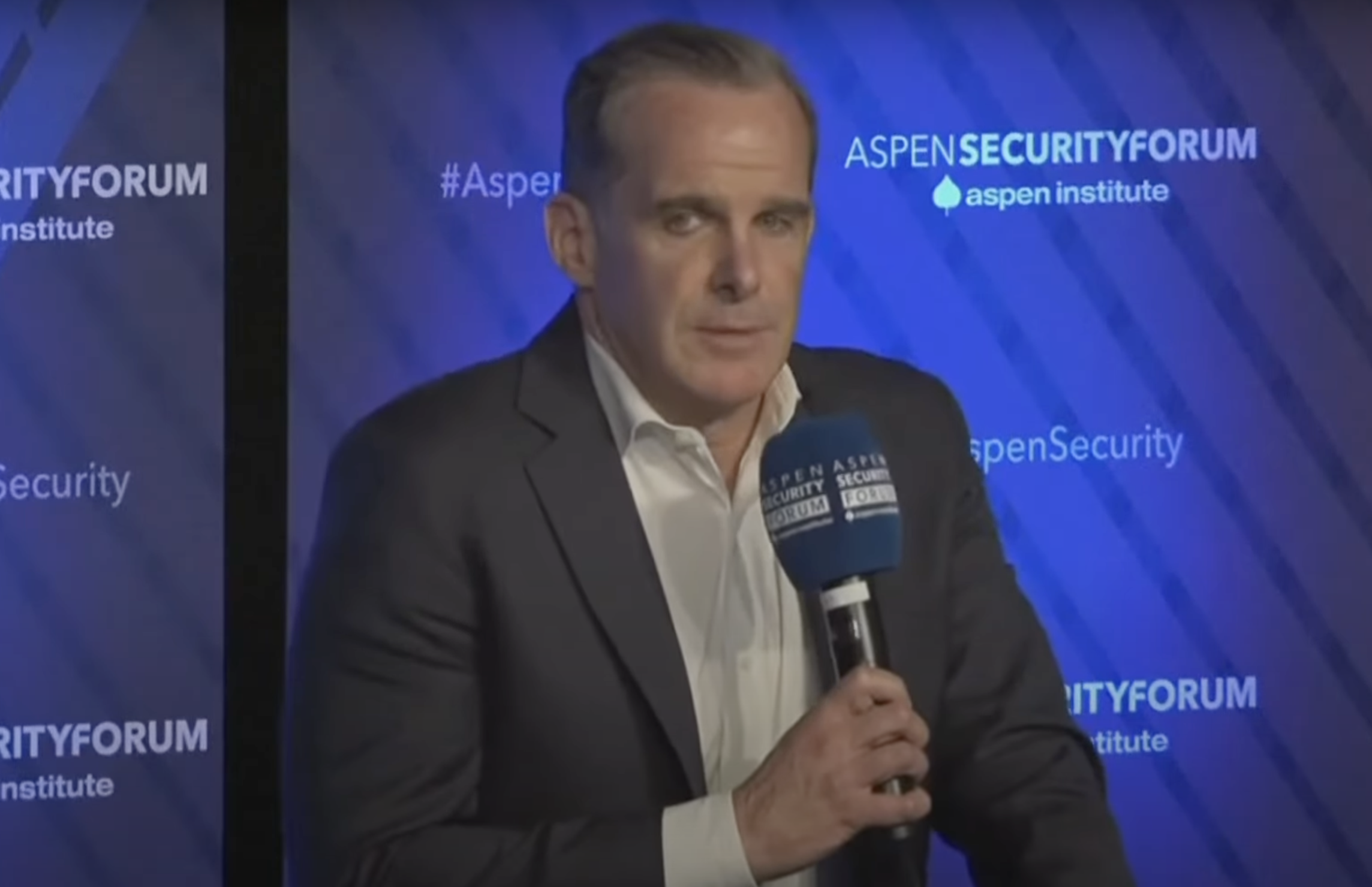
Former U.S. and Israeli officials speaking at the Aspen Security Forum on Wednesday emphasized that Hamas bears responsibility for the failure of hostage release and ceasefire talks, and discussed the possible paths to ending the war in Gaza, Jewish Insider’s Marc Rod reports from the conference. Brett McGurk, the top National Security Council official responsible for the Middle East under the Biden administration, argued on Wednesday that the history of ceasefire talks between Israel and Hamas “is being rewritten by people that weren’t involved in this.”
Missed opportunities: McGurk emphasized that Hamas repeatedly ignored and rejected proposals that fulfilled many of its demands over the course of the last year, arguing that Israel’s attacks on Hezbollah had helped force Hamas’ hand to a temporary ceasefire deal that went into effect in early 2025. “The moral toll of this awful situation tears at the soul of anyone who’s worked on this, anyone,” McGurk said. “But this war could have stopped multiple times if Hamas stopped the war and released hostages — multiple, multiple times.”
Looking ahead: Wally Adeyemo, the deputy secretary of the Treasury Department during the Biden administration, argued on an Aspen panel that postwar reconstruction of Gaza will require new tools, methods and partners.
UNDER THREAT

Israel struck the Syrian Defense Ministry’s headquarters in Damascus on Wednesday in response to violence against the country’s Druze minority, a week after Israeli Prime Minister Benjamin Netanyahu spoke in the White House of the “opportunity for stability, security and eventually peace” with Syria. The strikes came after clashes between Druze and Bedouin groups that began on Sunday, leaving as many as 250 dead over four days in Sweida, some 25 miles from the border with Israel and in the area of Syria that Israel seeks to have demilitarized, Jewish Insider’s Lahav Harkov reports.
Developments: Syrian government forces entered the fray on Tuesday, saying they aimed to stop the fighting and bring about a ceasefire, which they said they had reached on Wednesday. Syrian President Ahmed al-Sharaa, formerly the head of the Syrian branch of Al-Qaida, seeks to disarm Druze and other militias and have them integrate under the new government. Israeli Druze called for Israel to intervene from the outset of the violence on Sunday, saying that their Syrian counterparts were being massacred, raped and tortured by forces aligned with al-Sharaa. In Israel, videos and images circulated of Druze religious figures’ mustaches being forcibly shaved off by men in military fatigues. Secretary of State Marco Rubio said on Wednesday afternoon that Washington has “engaged all the parties involved in the clashes in Syria. We have agreed on specific steps that will bring this troubling and horrifying situation to an end tonight.”
Heard at Aspen: “Israel is in such an extraordinary position. … Think about Israel being born, created May 14, 1948, besieged over decades by attacks and enmity from all of its Arab neighbors, now the strongest country in the Middle East,” former U.S. Ambassador to China Nicholas Burns, a top foreign policy advisor to President Joe Biden, said in Aspen. “Israel’s in the strongest geopolitical position it’s ever been in, after the extraordinary events in Lebanon, in Gaza, in Iran, in Syria over the last two years.”
EXPLAINER
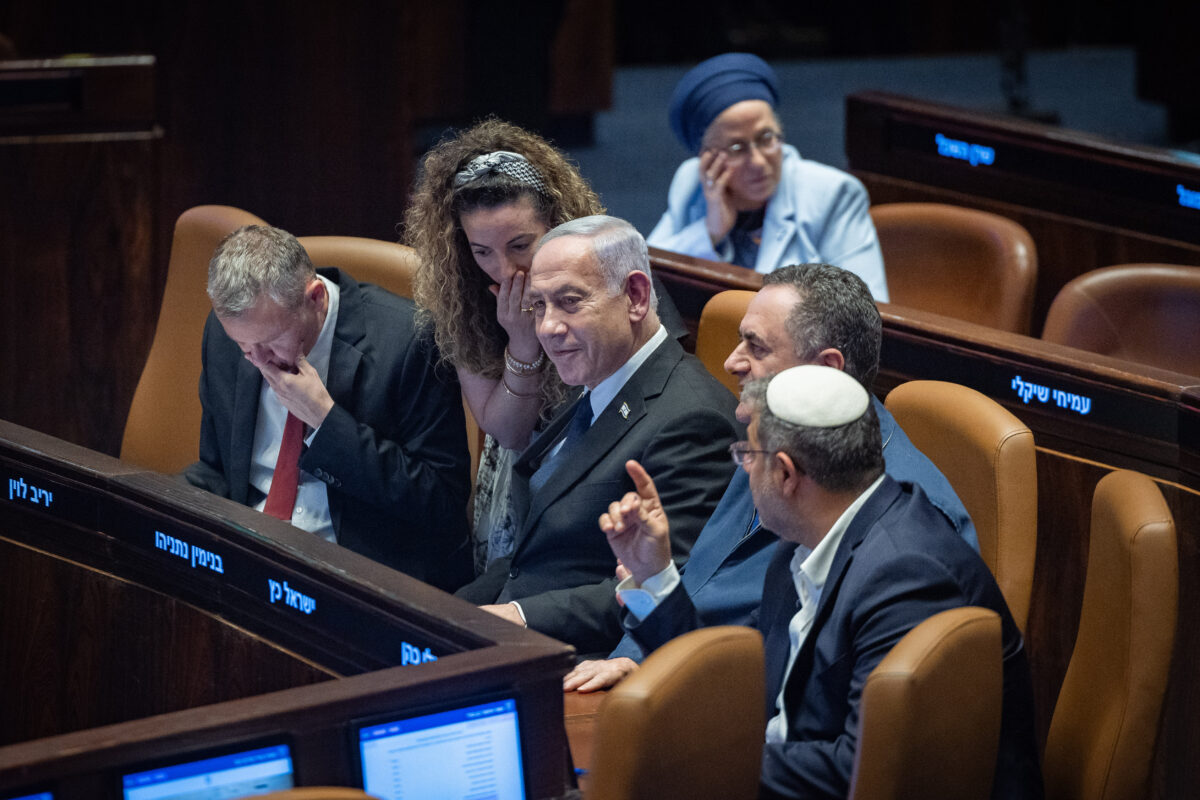
New Israeli elections are unlikely to happen this year, despite the departure on Wednesday of two parties from Israeli Prime Minister Benjamin Netanyahu’s government over disagreements over Haredi military exemption legislation, Jewish Insider’s Lahav Harkov reports. After months of disagreements, Ashkenazi Haredi faction United Torah Judaism left Netanyahu’s coalition in protest, leaving it with 61 out of the Knesset’s 120 seats.
Hanging on: On Wednesday, Sephardic Haredi party Shas’ five Cabinet ministers quit the government, though party leader Aryeh Deri will remain an observer in the Security Cabinet. Shas only quit the government — meaning its Cabinet posts — and did not pull its 11 lawmakers out of the parliamentary coalition. Shas, whose voter base is right-wing and even more supportive of Netanyahu than the prime minister’s own Likud party, said it will not vote with the opposition. This means that Netanyahu retains a majority in the Knesset, albeit a razor-thin one.
switching gears

Jewish Voice for Peace, a far-left anti-Israel advocacy group that has built a growing profile in the wake of Hamas’ Oct. 7, 2023, terror attacks, is pivoting to a new organizational structure that will soon allow it to engage more forcefully in electoral politics. The group recently began the process of consolidating its membership and organizing in an affiliated but lesser-known political nonprofit called Jewish Voice for Peace Action, devoting the bulk of its resources to lobbying and political activities, such as supporting and opposing candidates that had not traditionally been a part of its core focus. As a nonpartisan tax-exempt group, JVP, which has been at the forefront of campus anti-Israel protests and promotes efforts to divest from Israel, has been legally prohibited from taking sides in campaigns — a limitation the new structural change is designed to address, Jewish Insider’s Matthew Kassel reports.
Behind the decision: The shift comes as the activist left has felt newly emboldened by Zohran Mamdani’s shocking victory in New York City’s Democratic mayoral primary in June, fueling debates over the ideological direction of the party as it gears up for next year’s midterms. JVP Action, which recently changed its public name to Jewish Voice for Peace to match its sister organization, was an early supporter of Mamdani and has cited his outspoken opposition to Israel as a sign of evolving voter attitudes about the Israeli-Palestinian conflict. “There is unprecedented, mass support for Palestinians. Our movement has already grown larger, and more quickly, than many of us thought possible. But it’s clear we have not begun to tap our full potential,” JVP writes in a detailed new page on its website about the decision-making behind its shift.
HILL TALK

Members of the House Armed Services Committee sparred on Tuesday at their annual meeting on the National Defense Authorization Act, the massive annual defense and national security policy legislation, over reportedly rogue actions by Secretary of Defense Pete Hegseth and Under Secretary Elbridge Colby to pause U.S. aid to Ukraine without White House knowledge or support, Jewish Insider’s Marc Rod reports.
Other developments: The committee also approved a series of amendments on the Middle East and antisemitism during its markup, and voted on party lines to defeat amendments seeking to block the conversion of a Qatari jumbo jet to be Air Force One and to take the Pentagon to task over the Signalgate scandal.
ALL IN THIS TOGETHER
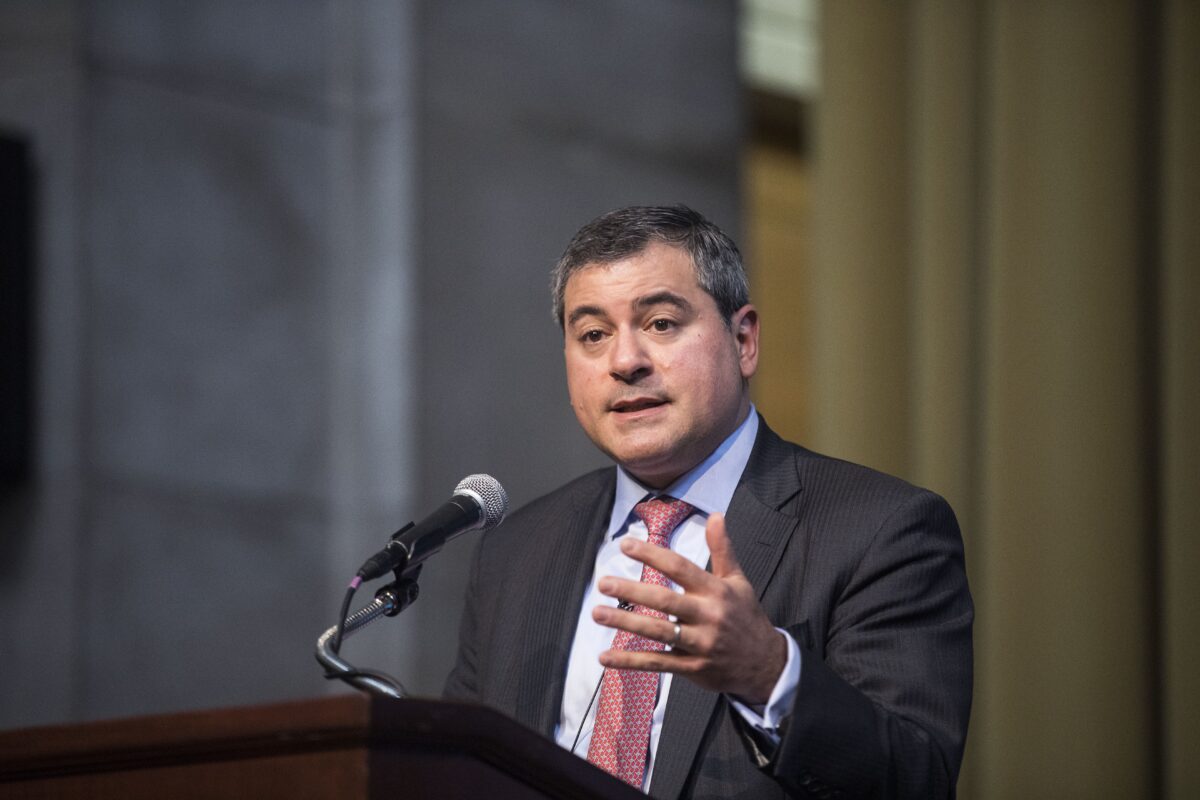
The pressures of the global oil market restrained Israel from bombing Iran’s Kharg Island oil facilities and Iran from closing the Strait of Hormuz or attacking Saudi Arabia’s Abqaiq oil facilities, an energy policy analyst argued at the Aspen Security Forum on Wednesday, Jewish Insider’s Marc Rod reports.
Explanation: “There was some measure of security that came from the fact that we’re in a global oil market and we’re all in this together,” Jason Bordoff, the founding director of the Center on Global Energy Policy at Columbia University, said on a panel on energy security. “If Iran had tried to do that, it would have imposed pain on itself, it would have imposed pain on China, it would have imposed pain on Gulf countries it was trying to keep on its side.”
Worthy Reads
Hamas’ MO: In Newsweek, former White House Middle East envoy Jason Greenblatt suggests that Hamas has committed “dehumanicide” against the Palestinian people. “I define ‘dehumanicide’ as when a people’s leadership condemns its population to death by treating them not as humans but as props. By camouflaging among civilians — placing weapons, tunnels, and command posts in and under hospitals, schools, mosques, and apartment buildings — Hamas has committed an act of dehumanicide. Hamas transformed civilian lives into strategic assets for international outrage. Hamas instrumentalized Gazans not as people to be protected, but as tools of their horrific, twisted, evil warfare. Hamas accepts these civilian deaths as the ‘cost of doing business.’ Indeed, Hamas welcomes the deaths because it knows the world will use them as cudgels against Israel so that Hamas can prolong its long war against the Jewish state.” [Newsweek]
MAGA Revisionism: In The Free Press, Rebeccah Heinrichs looks at the effort by “conspiracy theorists, cranks, and the craven” of the MAGA wing of the Republican Party to revise how Americans view their own history. “While Donald Trump reaffirms the principles that underpinned his first term — that America remains the leader of the world’s most successful military alliance (NATO), a committed supporter of the Jewish State, lead defender of the global commons, and is willing to use military force when necessary — he is increasingly out of step with a critical constellation of right-wing influencers, podcasters, and contrarian intellectuals. For them, America’s history as a global superpower is morally suspect, if not outright criminal. Our victories become losses, our alliances sinister entanglements, and our deterrence campaigns provocations. Why? Because they must revise the past to justify and satisfy their policy preferences in the present.” [FreePress]
Dear Zohran…: The New York Times’ Tom Friedman raises concerns about New York City Democratic mayoral candidate Zohran Mamdani’s continued defense of the phrase “globalize the intifada,” despite pushback from Democratic officials and the Jewish community. “First, if you are discussing a mantra — like ‘globalize the intifada’ — that takes 15 minutes to explain why it doesn’t mean what it obviously means, I’d suggest that you distance yourself further from that mantra. … When I see someone running for mayor defending a useless, meaningless, far-left mantra that helps no one, and who prefers commenting at a distance and not convening energetically, it makes me wonder how he will deal with the really hard issues on the West Bank of the East River — not the West Bank of the Jordan — that most New York voters care most about.” [NYTimes]
A Grieving Mother’s Plea: In The Hill, Leah Goldin, whose son Hadar was killed in 2014 by Hamas, which has held his body since, calls on Saudi Arabia and President Donald Trump to prioritize the release of the remaining 50 hostages in Gaza as Israel and Hamas work toward a ceasefire agreement and Trump looks to expand the Abraham Accords. “This week marks 4,000 days since Hadar’s abduction. In that time, I have knocked on the doors of leaders and diplomats around the world. I have appealed not only as a grieving mother but as a citizen of a country that shares the United States’s values of justice and humanity. … I beseech the president: use your influence to ensure that Saudi Arabia helps to bring them home. Peace and normalization will be your historic legacy in the Middle East, but they cannot come at the expense of the hostages. Their return is a critical confidence-building step toward the peace that you are building.” [TheHill]
Word on the Street
U.S. Ambassador to Israel Mike Huckabee made a brief appearance at Israeli Prime Minister Benjamin Netanyahu’s corruption trial in Jerusalem on Wednesday, telling reporters earlier in the day that the visit to court was “an act of friendship”; days prior, President Donald Trump had posted on his Truth Social site in support of Netanyahu, calling on the charges to be dropped or for the prime minister to be pardoned…
The International Criminal Court denied a request from Israel to withdraw the arrest warrants issued against Netanyahu and former Defense Minister Yoav Gallant while the court reviews Israeli challenges to the warrants…
A new American intelligence assessment indicates that American strikes on Iranian nuclear facilities last month largely destroyed Fordow, but left Natanz and Isfahan largely intact, albeit somewhat degraded…
New York City Democratic mayoral candidate Zohran Mamdani met on Wednesday with House Democrats, including Reps. Jerry Nadler (D-NY), Ayanna Pressley (D-MA) and Melanie Stansbury (D-NM) at a breakfast in Washington hosted by Rep. Alexandria Ocasio-Cortez (D-NY)…
New York Gov. Kathy Hochul told MSNBC that she had conveyed to Mamdani that he has “a lot of healing to do with the Jewish community” over his anti-Israel activism and support for rhetoric that is widely viewed by the Jewish community as incitement to antisemitic violence…
Les Wexner purchased Norman Foster’s Martha’s Vineyard estate for $37 million…
The New York Times profiles thriller filmmaker Ari Aster ahead of the theatrical release of his new film, “Eddington”…
The Modern Orthodox organization Uri L’Zedek, which has brought lessons from the Torah into the social justice ecosystem for nearly 20 years, is expanding into advocacy work in Washington, hoping to “lower the temperature” of the country’s partisan politics, eJewishPhilanthropy’s Nira Dayanim reports…
An Australian Muslim cleric, who was ordered by a court to cease giving inflammatory and antisemitic sermons, was ordered to prominently display notices detailing the court’s findings across the social media platforms of the Islamic center he oversees…
Tali Cohen is joining the Anti-Defamation League as the director of the group’s Washington office, following more than two decades at FEMA and the Department of Homeland Security…
Pic of the Day

The inaugural meeting of the Belgrade Strategic Dialogue: Serbia-United States-Israel Partnership was hosted by the Serbian National Assembly this week, attended by Serbian parliamentarians, Israeli Ambassador to Serbia Avivit Bar-Ilan, members of the Jewish community, business leaders and policy experts from the American Foreign Policy Council, Atlantic Council and AIPAC.
Birthdays
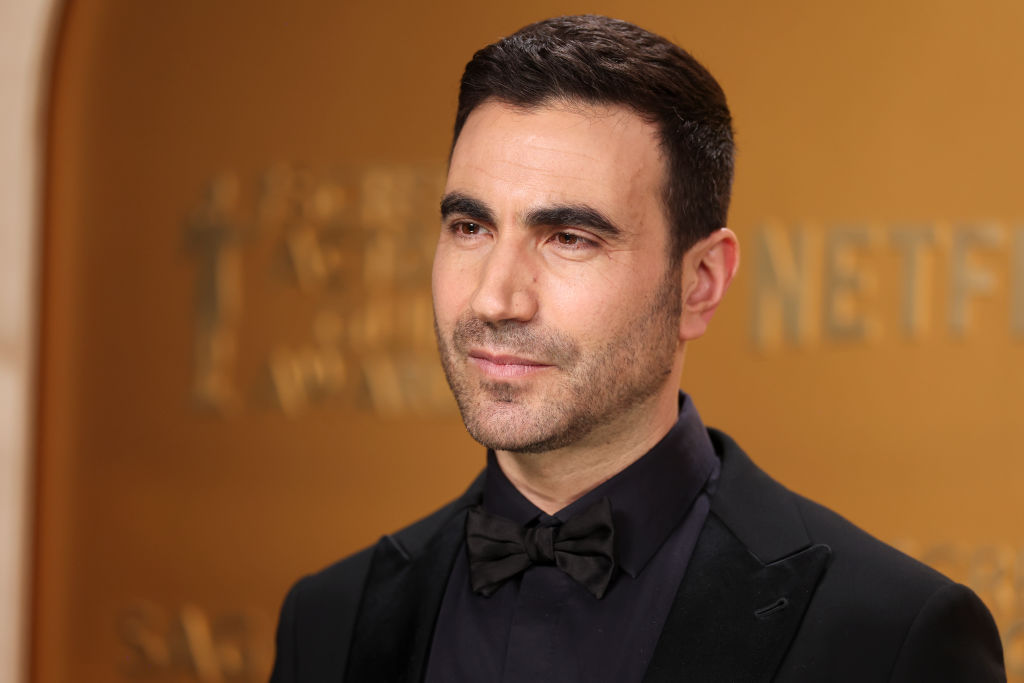
Emmy Award-winning actor and comedian, Brett Goldstein turns 45…
Chef and two-time James Beard Foundation Award winner, Joyce Goldstein turns 90… Professor emeritus at Tel Aviv University and former Israeli foreign minister, Shlomo Ben-Ami turns 82… Emmy Award-winning play-by-play announcer on radio and TV, currently with the Los Angeles Dodgers, Charley Steiner turns 76… Co-editor of The Big Book of Jewish Humor, Moshe Waldoks turns 76… Civil rights and criminal defense attorney, co-founder of the Innocence Project, Peter J. Neufeld turns 75… Rabbi emeritus at Reform Congregation Keneseth Israel in Elkins Park, Pa., Lance J. Sussman turns 71… Managing GP and co-founder of Pitango Venture Capital, Nechemia (Chemi) Peres turns 67… Television and film director, Joshua Seftel turns 57… Actress best known for playing Sharona on “Monk,” Bitty Schram turns 57… Rabbi of the Young Israel of Woodmere, N.Y., Shalom Axelrod turns 56… Founder and CEO of Zeta Global, David A. Steinberg turns 55… Stand-up comedian, Gary Gulman turns 55… Treasurer of Australia until 2022, now chairman of the Future Fund, Josh Frydenberg turns 54… Blogger, journalist, and science fiction author, Cory Doctorow turns 54… Member of the Knesset for the Yesh Atid party, Boaz Toporovsky turns 45… Para table tennis player and Paralympic gold medalist, Ian Seidenfeld turns 24… Arabella Rose Kushner turns 14…
The former Biden administration official said that the Israel-Hamas war 'could have stopped multiple times if Hamas stopped the war and released hostages — multiple, multiple times'
Aspen Security Forum
Former national security official Brett McGurk speaks at the Aspen Security Forum on July 16, 2025.
ASPEN, Colo. – Former U.S. and Israeli officials speaking at the Aspen Security Forum on Wednesday emphasized that Hamas bears responsibility for the failure of hostage release and ceasefire talks, and discussed the possible paths to ending the war in Gaza.
Brett McGurk, the top National Security Council official responsible for the Middle East under the Biden administration, argued on Wednesday that the history of ceasefire talks between Israel and Hamas “is being rewritten by people that weren’t involved in this.”
He emphasized that Hamas repeatedly ignored and rejected proposals that fulfilled many of its demands over the course of the last year, arguing that Israel’s attacks on Hezbollah had helped force Hamas’ hand to a temporary ceasefire deal that went into effect in early 2025.
“The moral toll of this awful situation tears at the soul of anyone who’s worked on this, anyone,” McGurk said. “But this war could have stopped multiple times if Hamas stopped the war and released hostages — multiple, multiple times.”
He said that, to this day, the “fundamental issue” is that the pressure for the deal has been on Israel, with “no pressure on Hamas.” He said the group has “not budged” on its demand to be allowed to remain in power in exchange for the release of hostages.
“Hamas started the war on Oct. 7, this panel is about Israel, but the enemies of Israel have agency,” McGurk said, emphasizing that Hamas made a choice to start the war, joined by Hezbollah and various Iranian proxies, in addition to Iran itself.
McGurk said he believes that if both sides accept the current U.S.-sponsored proposal to pause the war for 60 days while negotiating a permanent ceasefire, the war would end.
Former Israeli Ambassador to the U.S. Michael Herzog said that Israel “never developed a coherent plan [of] alternatives to Hamas.”
Herzog argued that Israel needs to propose an end to the war in exchange for the release of hostages, and that Hamas can be dealt with again at a later point while Israel focuses in the short term on Iran, normalization with Arab countries in the region and beginning to heal its own people and society.
Herzog framed the ceasefire deal with Hezbollah as a potentially successful model.
Former IDF Intelligence Directorate head Amos Yadlin said that the Gaza war is the “most justified war ever; however, at this moment, continuing the war is not serving Israeli interests.”
He said Israel should agree to end the war in exchange for a one-time release of all remaining hostages and the exile of some Hamas leaders, and work to bring in Arab partners to demilitarize the territory, with the understanding that Israel will continue to attack Hamas forces that reemerge as it has done with Hezbollah in Lebanon. Even if some Hamas forces remain, he said, they will not have the strength or capabilities they did before the war.
Yadlin also emphasized that Hamas leaders are to blame for the civilian casualties in Gaza, since they could have ended the war by releasing the hostages at any time.
Author and “Call Me Back” podcast host Dan Senor noted that Israel’s military was ill-prepared for the kind of extended, grinding, close-to-home war it is fighting in Gaza, and described the challenges of Hamas’ diversion of humanitarian aid and hostage-taking as unprecedented. And, he said, fear of Hamas has hampered efforts to cultivate alternative civilian leadership in Gaza.
“I think the idea that we could have a permanent ceasefire would only work if Israel would agree for Hamas to stay in Gaza and … in terms of the objectives of war, there is no world in which Israel can agree to Hamas staying in power in Gaza,” Senor said.
Pushing back on the comparisons between a potential Hamas deal and the Hezbollah ceasefire, Senor noted that in Lebanon, the Lebanese government and Lebanese Armed Forces provide a domestic counterweight to Hezbollah able to enforce demilitarization. In Gaza, no Arab states have stepped forward to carry out governance and demilitarization.
At the same time, Senor said that President Donald Trump’s proposal of mass relocation of the Palestinian population is not a realistic solution. He added that Israel will need a substantial buffer zone between its population in the south and the population in Gaza to feel safe in returning people to communities close to the Gaza border.
Yadlin pushed back, arguing that the relocation threat would provide Arab states the necessary motivation to become directly involved.
Yadlin added that Trump’s work to cultivate investments from the Gulf in combination with the strikes on Iran have shown the American people that the Middle East does not have to only be a region of loss and suffering, but one that has real promise.
Asked if Israel and the United States’ quick and devastating military campaign against Iran was a signal that the world had overestimated the threat from Iran, the panelists argued that was not the case. Instead, they said, many had underestimated Israel’s own capabilities and preparations, and the destruction of Iran’s proxies significantly undermined Iran’s ability to threaten Israel.
“You have to remember that Israel has prepared this war for decades, for many, many years, especially the last few months, but for decades,” he said.
McGurk added that the U.S. and Israeli interceptions of missiles fired during Iran’s October 2024 attack on Israel and Israel’s subsequent destruction of Iran’s air defense systems under the Biden administration set the stage for last month’s strikes, which he characterized as the result of close coordination across multiple administrations for years.
Looking ahead, Herzog said that there are not yet clear answers on the extent to which Iran maintains nuclear capabilities, but said that the strikes’ impact on Iran’s decision-making is also critical: whether it will race to a nuclear device to protect itself or — as Herzog said he believes — it is deterred and will move slowly and carefully if it attempts to resume its nuclear program.
He said there are two paths ahead: a new nuclear deal, including no enrichment and with intrusive inspections, which is nevertheless controversial in Israel because it would provide Iran with sanctions relief to rebuild its capabilities, or Israel’s continued use of force, which brings its own set of questions and challenges.
Herzog also said he’s hopeful that the strikes have deepened the divide between the Iranian regime and the Iranian people.
Yadlin similarly argued that the timetable for Iran’s nuclear program is less important than what kind of agreement can now be reached.
He said that the attacks had disproven Iran’s key calculus about its nuclear program: that Israel had the will but not the capabilities to do significant damage to the program, and that the U.S. had the capabilities but not the will.
McGurk and Herzog both spoke about the initial hours of the Oct. 7, 2023, attacks on Israel and their perspectives as the situation developed. Herzog, who was serving as the Israeli envoy in Washington at the time, said he received a call shortly after the onset of the attacks on Israel from a senior general shouting, “Mike, this is war, it’s not another round. It’s a war.”
McGurk said that Herzog had informed him about the attack, relaying along that same message: “It’s a massive attack, this is war.”
Herzog described McGurk, who has remained one of the most vocally pro-Israel members of President Joe Biden’s team since leaving office, as “the best partner that I could wish for,” adding that the then-White House official immediately offered full U.S. support for Israel.
McGurk emphasized that, early in the war, there were significant fears that Hezbollah and other Iranian proxies, or even Iran itself, would also mobilize against Israel, which would constitute an “existential threat.”
He recounted a call between Biden and Israeli Prime Minister Benjamin Netanyahu in the first days of the war. “Netanyahu said, ‘Joe, we’re in the Middle East, and in the Middle East, if you’re weak, you’re roadkill.’ Everybody sharpened their knives, and that’s what was happening,” McGurk said.
He said that intelligence showed early signs Hezbollah was preparing a ground invasion, and that Israeli and American officials had intensively discussed the possibility of a preemptive, Israeli attack in Lebanon, ultimately deciding against it due to Hezbollah’s strength at the time and Israel’s need to focus on Gaza. McGurk said he still believes that was the right decision.
McGurk, seen as one of the strongest champions in the Biden administration for the expansion of the Abraham Accords to include Saudi Arabia, said he’d been in discussion on Oct. 6 with visiting Saudi and other Middle Eastern leaders about “some things that were potentially going to be quite positive over the coming six months a year.”
He also pushed back on narratives from critics that the normalization efforts were a “white whale” that the U.S. chased in spite of reality. Instead, he said, the talks began because the Israelis and Saudis both approached the U.S. and asked them to mediate. He said the constant media leaks about the talks had hampered the process, and that they should have been conducted more privately.
“I think ultimately it will happen,” McGurk said. “What knocked it off was Hamas.”
Addressing the global spread of antisemitism and anti-Israel sentiment, Herzog said that “we [Israel] should do a better job” of pushing back on anti-Israel narratives, describing the public and diplomatic debate as an additional front in the war Israel is fighting.
Senor added that the Oct. 7 attack “brought something to the surface that was not about the way Israel should operate in Gaza,” appearing to be a “trigger moment for trying to drive Jews underground” in a way he had not expected.
Looking particularly at college campuses, Senor urged Jews to turn to alternative schools than the higher education institutions where they have faced harassment and discrimination, and to invest in those institutions rather than the ones that have not served them well in recent years.
Please log in if you already have a subscription, or subscribe to access the latest updates.
 Continue with Google

 Continue with Apple