





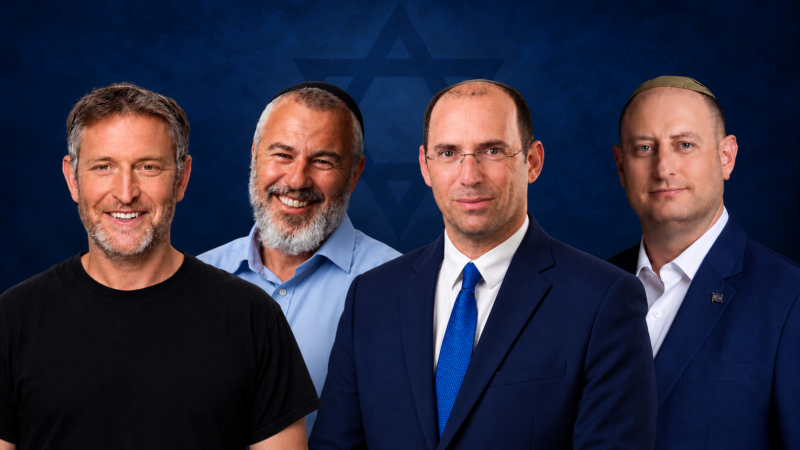







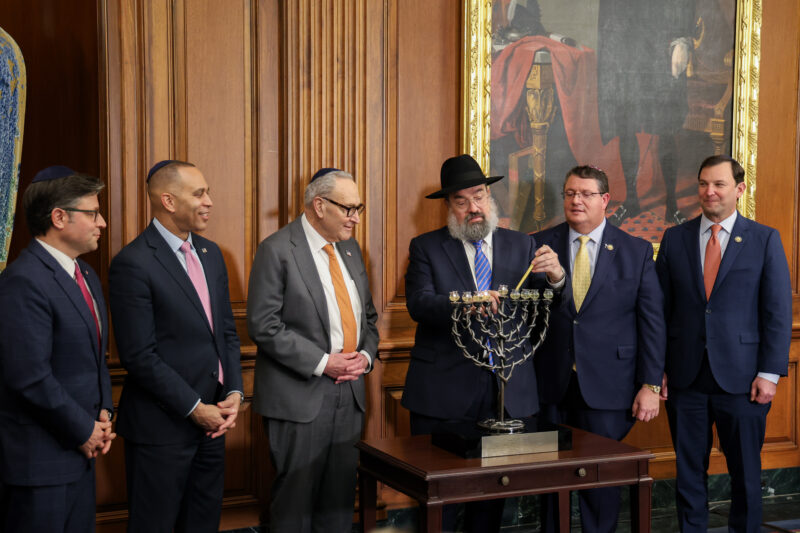




























Saved by the Bell, again
Plus, Dara Horn's provocative new title


 Add JewishInsider on Google
Good Wednesday morning.
In today’s Daily Kickoff, we cover the results so far of yesterday’s key primary races in Michigan and Missouri and speak to experts about concerns over the U.S.’ dwindling stockpiles of long‑range missiles and air-defense interceptors. We talk to lawmakers about their views on the U.S.-led Board of Peace’s Hamas disarmament framework and report on plans by Democrats on the Senate Judiciary Committee’s Federal Courts subcommittee to boycott a hearing today set to examine Muslim Brotherhood networks in the U.S. Also in today’s Daily Kickoff: Omer Shem Tov, Dara Horn and Rabbi Yehuda Kaploun.
We also have a new on-demand Live Briefing that you can access throughout the day via our new app (on Apple and Android) and on our website.
Today’s Daily Kickoff was curated by JI Executive Editor Melissa Weiss and Israel Editor Tamara Zieve, with an assist from Danielle Cohen-Kanik. Have a tip? Email us here.
What We’re Watching
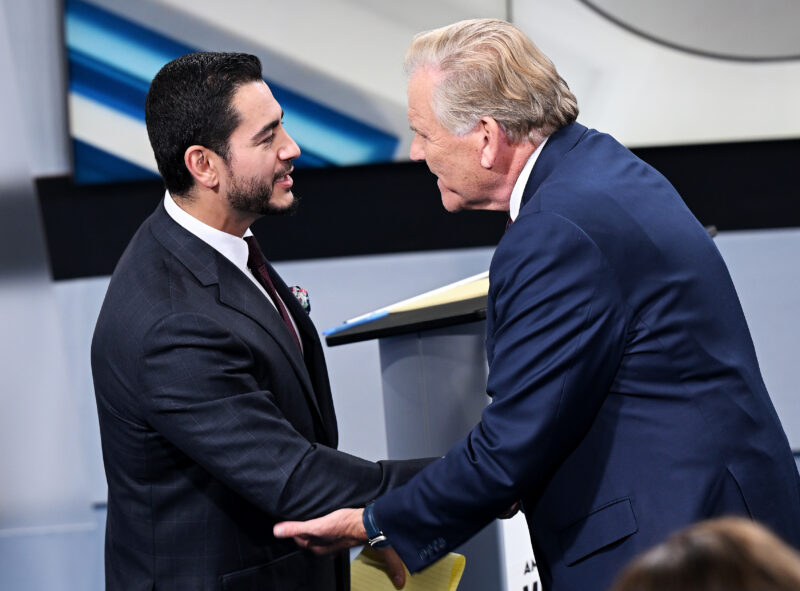
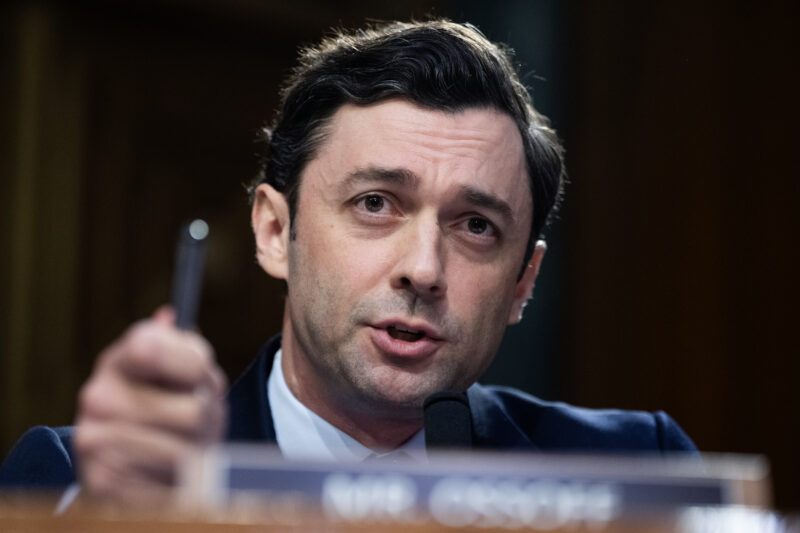
- In one of the first primary races to be called last night, Rep. Wesley Bell (D-MO) soundly defeated Cori Bush as the far-left former congresswoman attempted to reclaim her St. Louis-area seat two years after she was ousted.
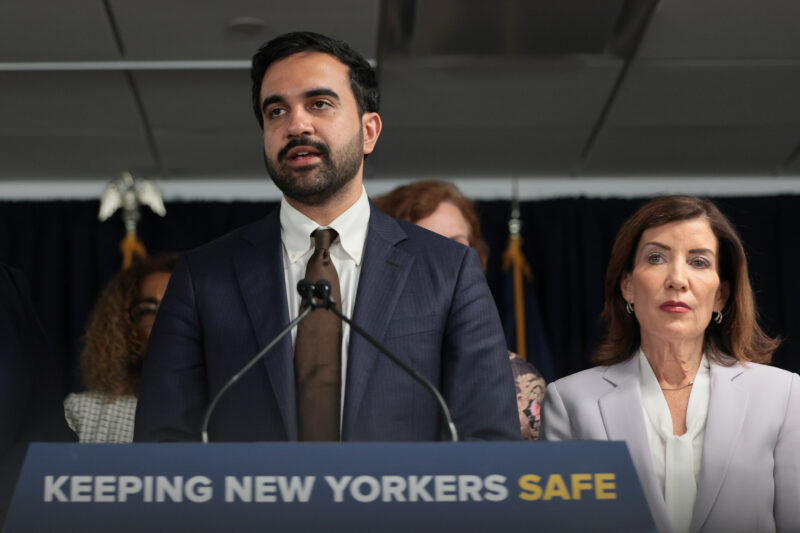
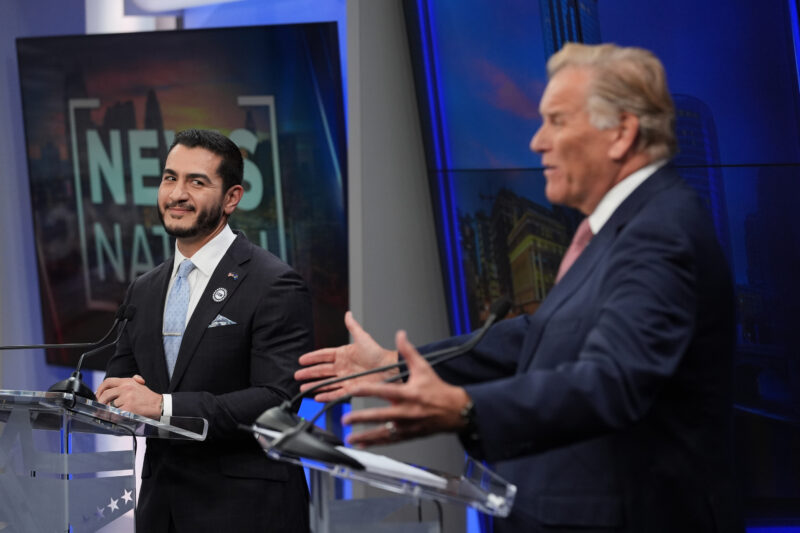
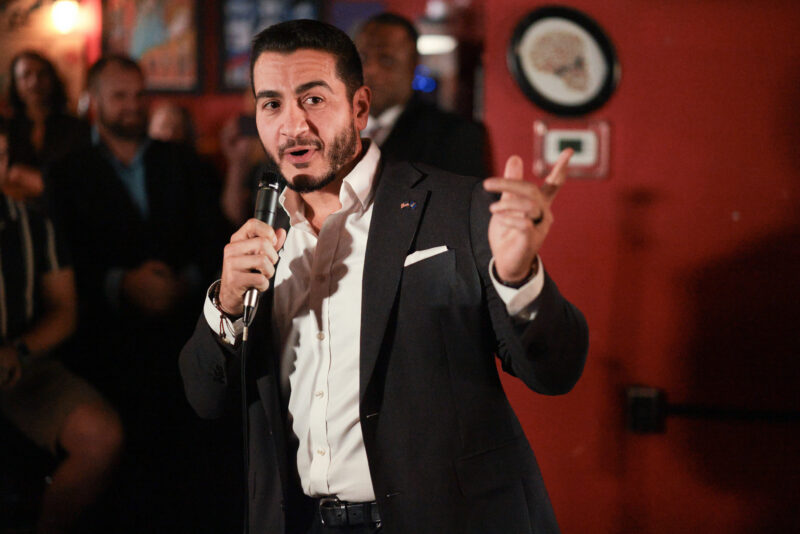
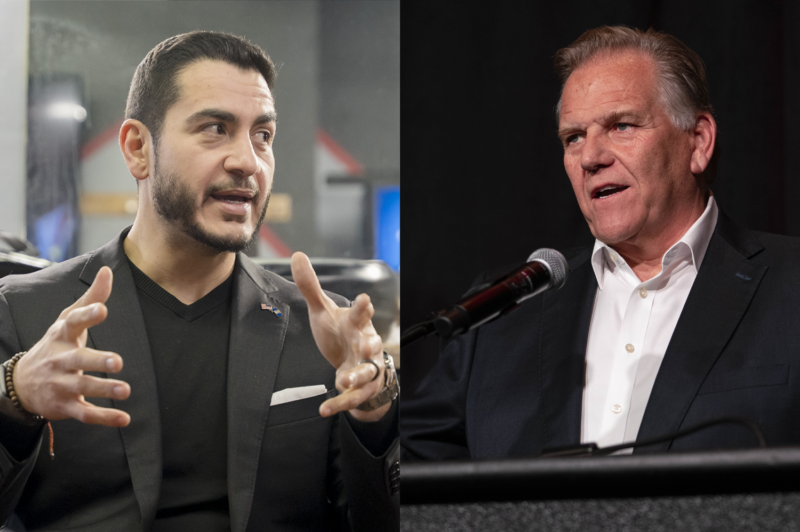
- Abdul El-Sayed holds a narrow lead in the Michigan Senate primary against Rep. Haley Stevens (D-MI), with results expected to be called later today.
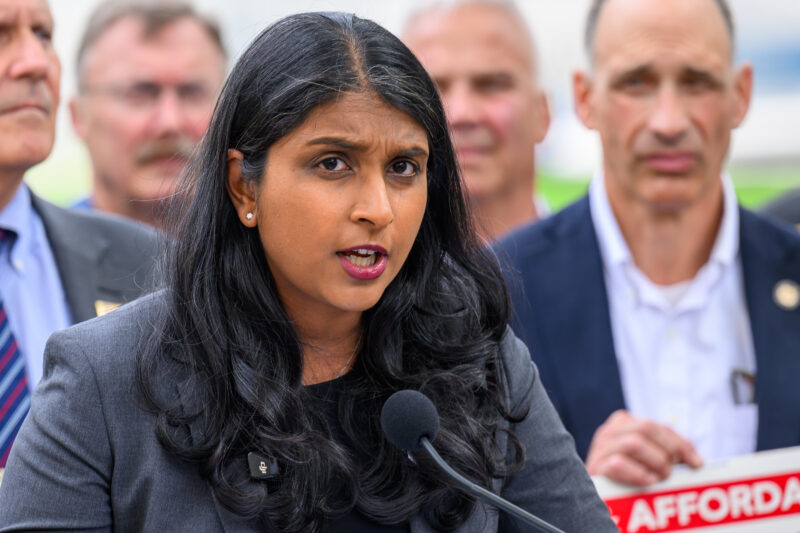
- Meanwhile, Rep. Shri Thanedar (D-MI), seen as a reliable pro-Israel ally, is trailing against DSA-aligned challenger state Rep. Donavan McKinney, who ran on an anti-Israel platform.
- And in the battleground Michigan 7th District, left-wing activist William Lawrence prevailed with a plurality of the vote, largely because of a split between his two moderate challengers. More below.
- The U.S. is hoping to announce a deal with Iran and Oman over the Strait of Hormuz on Wednesday, Axios reports, which would see Tehran gain greater control over the key waterway than it had before the war. No fees or tolls could be charged under the 60-day temporary agreement, but inbound traffic would be required to transit through Iranian territorial waters.
- On the Hill this afternoon, the Senate Foreign Relations Committee is holding a classified briefing on the situation in Sudan.
- Jordan is convening foreign ministers from Muslim countries today to formulate a plan to combat what Amman said were “escalatory and illegitimate Israeli measures that target the identity of Jerusalem and its Islamic and Christian sanctuaries.”
What You Should Know
A QUICK WORD WITH JI’S JOSH KRAUSHAAR
Rumors of the demise of the mainstream, pro-Israel wing of the Democratic Party turned out to be somewhat exaggerated: The Michigan Senate race between Rep. Haley Stevens (D-MI) and Abdul El-Sayed is a lot closer than polls suggested, while Rep. Wesley Bell (D-MO) romped to victory over his anti-Israel opponent, with the help of pro-Israel, Jewish supporters.
Bell’s sweeping 22-point victory in a rematch over former Rep. Cori Bush (D-MO) was an early election night highlight for Jewish and pro-Israel groups, which poured money and organizing efforts into ensuring the virulently anti-Israel Bush didn’t get a chance to return to Congress. AIPAC’s super PAC spent over $3 million on ads attacking Bush as corrupt and extreme, resources which likely played a key role in Bell’s landslide margin.
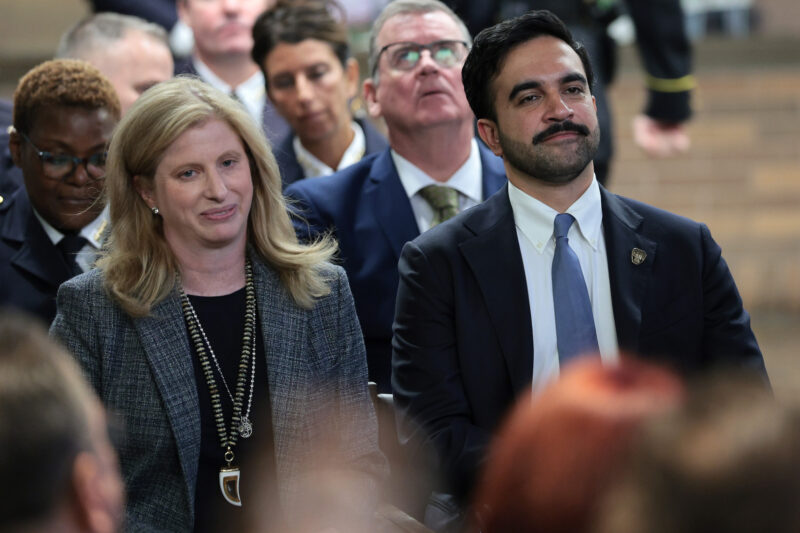
There were some other silver linings for the moderate side of the Democratic Party on Tuesday night: Michigan state Sen. Jeremy Moss won comfortably to succeed Stevens despite facing attacks over his pro-Israel record from his opponents. And Rep. Adam Smith (D-WA), the moderate ranking member of the House Armed Services Committee who faced harassment and threats over his longstanding pro-Israel record, won a clear majority of the vote against far-left challengers in Washington state’s all-party primary.
But there were plenty of warning signs about the changing ideological direction of the Democratic Party, as we’ve previously seen in deep-blue congressional districts across the country. Despite Stevens’ closer-than-expected showing, she still trails El-Sayed even after winning endorsements from top Democratic officials (including Gov. Gretchen Whitmer) and being the beneficiary of tens of millions in outside spending led by AIPAC’s ad blitz.
The results paint a picture of a Democratic Party deeply divided, with older voters, Black voters and Jewish voters forming the centrist coalition, which is facing an insurgency from the left made up of younger voters, white progressives and Arab Americans.
MISSILE MATH

Experts are warning that the United States’ dwindling stockpiles of long‑range missiles and air-defense interceptors following the war with Iran could complicate Washington’s ability to deter adversarial aggression and maintain military readiness in other theaters, Jewish Insider’s Matthew Shea reports. Reuters first reported that the U.S. has expended much of its inventory of highly accurate long‑range missiles during the conflict, while significantly drawing down stocks of Patriot and Terminal High Altitude Area Defense (THAAD) interceptors used to defend against ballistic missile attacks.
State of stockpiles: “The United States has a longstanding defense industrial crisis, whether it’s in munitions, missiles, shipbuilding or other areas,” Alexander Gray, who served as chief of staff on the National Security Council during President Donald Trump’s first administration, told JI. “It has constrained the ability to replenish our war fighters but also to make sure our partners and allies get what they need. Sustained operations against Iran are showing just how challenging this industrial base capacity problem is.”
DEAL IN DOUBT
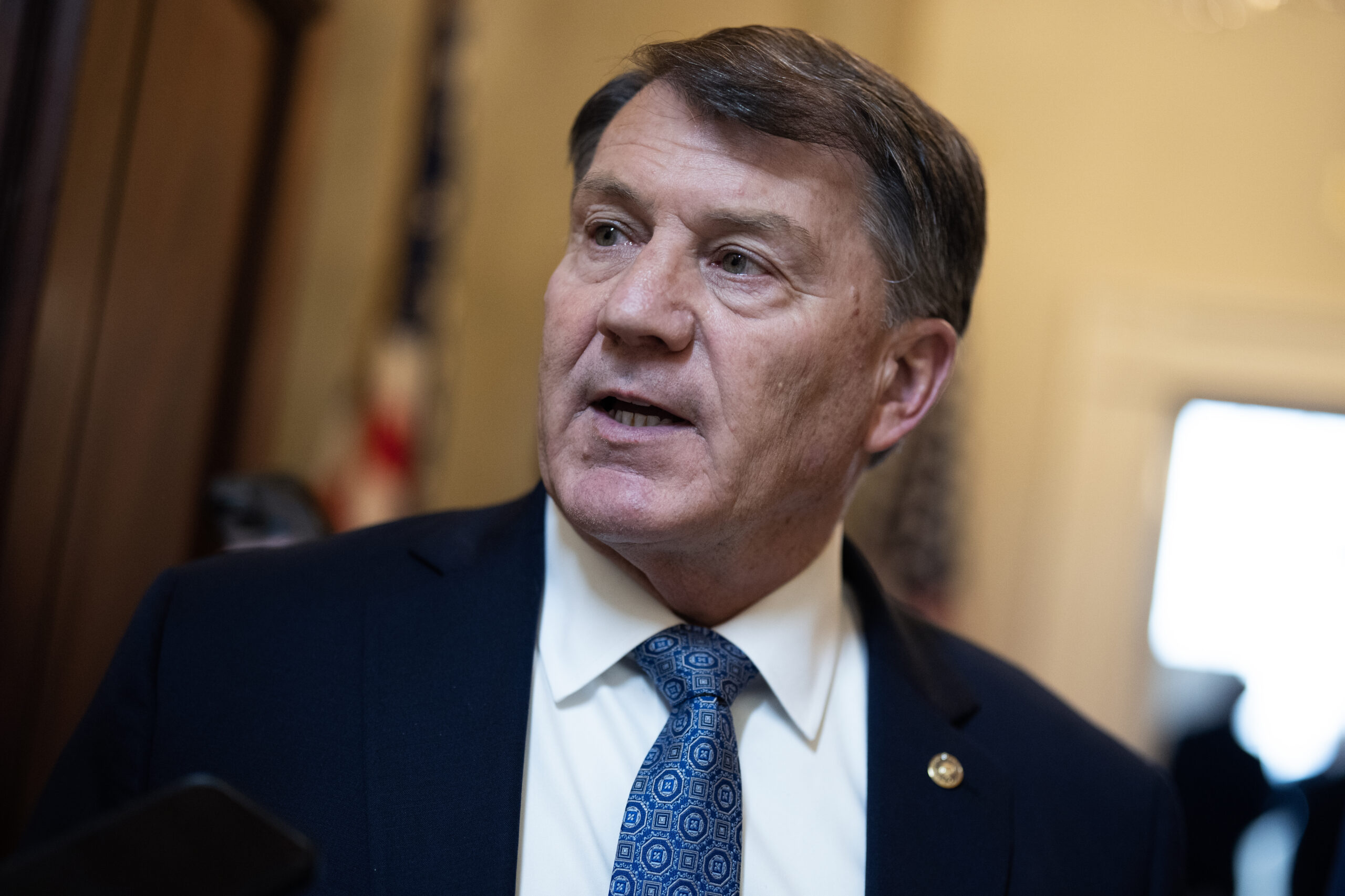
U.S. lawmakers expressed deep skepticism on Tuesday over the Board of Peace’s newly announced Hamas disarmament framework, pointing to violations already taking place in Gaza and a lack of indications that Hamas is serious about honoring a deal as evidence that the ambitious peace proposal faces near-insurmountable hurdles, Jewish Insider’s Matthew Shea and Marc Rod report.
“There will be no real peace for Gaza or Israel as long as Hamas has weapons and is allowed to ruthlessly rule over innocent Palestinians,” Rep. Josh Gottheimer (D-NJ) told JI. “I’m cautiously encouraged by this plan, but let’s not kid ourselves — Hamas has a long record of lying, and they’ve broken their word before, over and over. I’ll be watching every step of this until Hamas is fully disarmed.” Sen. Mike Rounds (R-SD) told JI, “I suspect that while this may have good intentions to it, I’ll believe it when I actually see it happening.”
Read the full story here with additional comments from Sen. Richard Blumenthal (D-CT) and John Kennedy (R-LA).
Israeli response: Israeli Prime Minister Benjamin Netanyahu affirmed on Tuesday that the IDF will “not withdraw from the current lines in Gaza until Hamas is completely disarmed.” President Donald Trump “thinks, and his team thinks, that Hamas can be totally disarmed and Gaza demilitarized. We’re looking into it,” Netanyahu continued in a video posted to Facebook in Hebrew. “They sent us a draft, we didn’t agree. It wasn’t our draft. We sent our responses.”
HEARING HAVOC
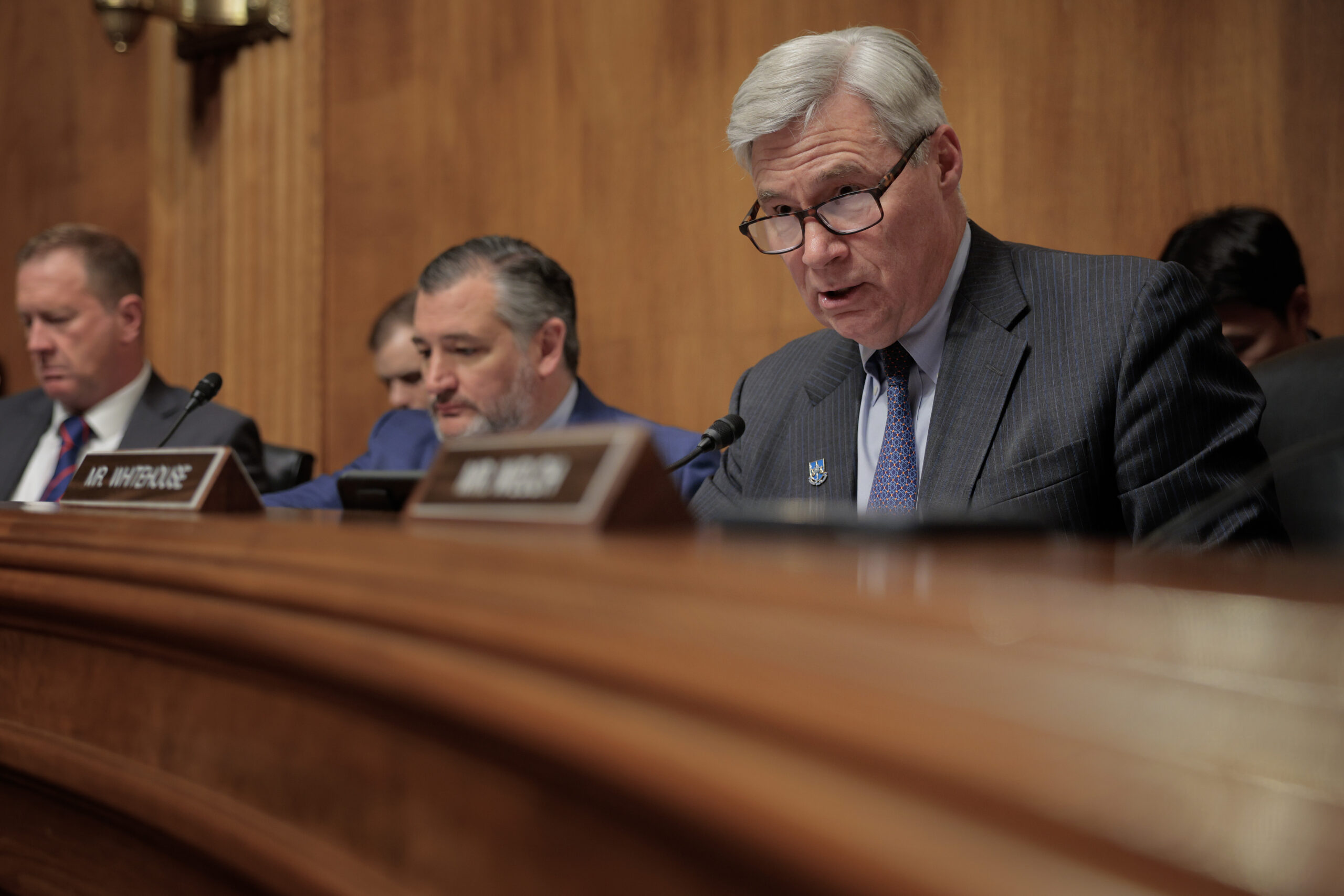
Democrats on the Senate Judiciary Committee’s Federal Courts subcommittee said on Tuesday that they plan to boycott a subcommittee hearing on Wednesday set to examine Muslim Brotherhood networks in the United States. The Democrats — Sens. Sheldon Whitehouse (D-RI), Richard Blumenthal (D-CT), Mazie Hirono (D-HI), Alex Padilla (D-CA) and Peter Welch (D-VT) — dismissed the hearing as an effort to attack Muslims broadly, Jewish Insider’s Marc Rod reports.
What they said: “Scapegoating Muslims may be a Texas Republican strategist’s idea of ‘solid gold’ to whip up their voters, but Democrats have no intention of indulging this political creepshow, particularly after the recent violence targeting places of faith,” the lawmakers said in a statement. “Our focus is the costs families face thanks to rampant, non-stop Trump corruption.”
DIGITAL FOOTPRINT
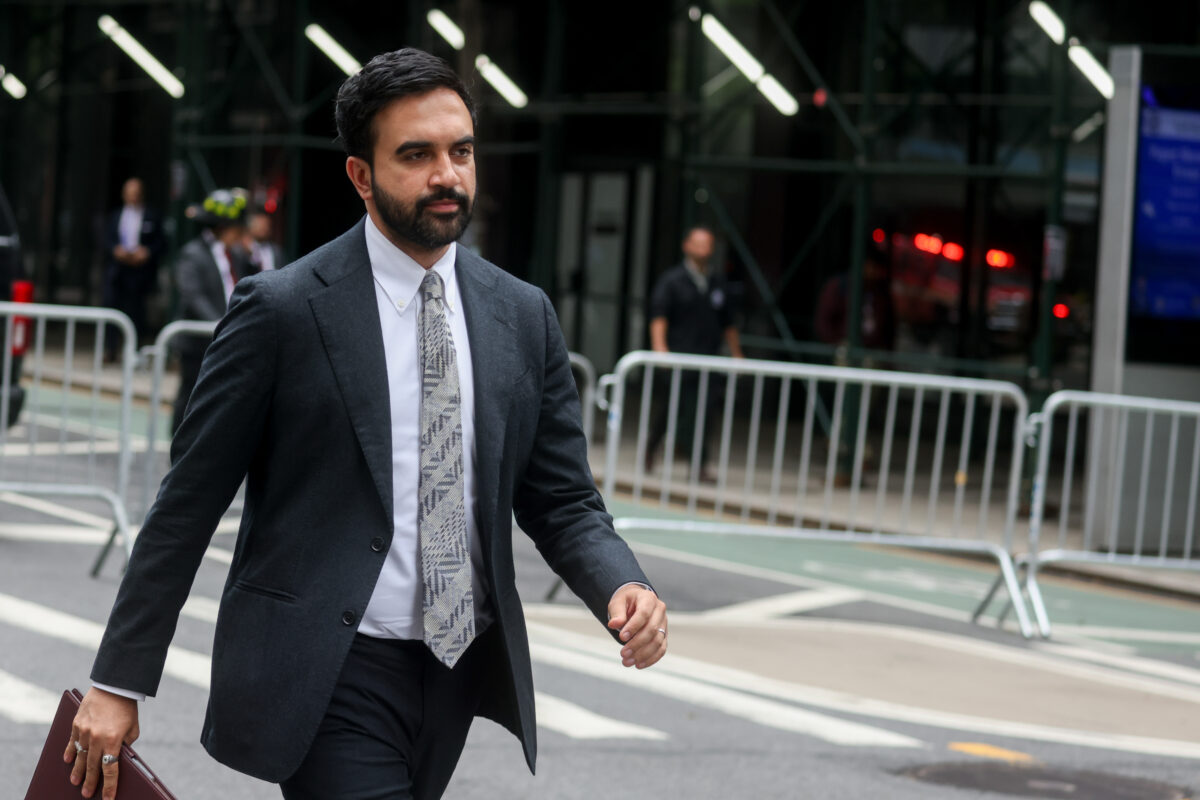
A Florida man accused of hurling a brick through the front window of a Sarasota Chabad House shared New York City Mayor Zohran Mamdani’s video labeling Israeli Prime Minister Benjamin Netanyahu a “war criminal” just days before the crime, Jewish Insider’s Will Bredderman reports.
Details: Local police arrested 30-year-old Brayton Laschinger on July 31 and charged him with felony criminal mischief for the attack two days prior on the Lubavitch Chabad of Downtown SRQ. The Sarasota Police Department stated that Laschinger had admitted to targeting the synagogue “because it was a Jewish place of worship” — and had blamed “propaganda on social media” for enraging him in the hours before the vandalism.
HORNS AND HATE

A campaign poster circulating among Colorado Republicans depicts Colorado Attorney General Phil Weiser, who is Jewish and whose family members are Holocaust survivors, with devil horns, which critics say invokes a classic antisemitic trope, Jewish Insider’s Marc Rod reports. Weiser is the Democratic nominee for governor of Colorado.
Background: The poster promotes, but was not created by, Victor Marx, the GOP gubernatorial nominee, who has a bizarre and extremist history, including claiming to have killed and exorcised several people. It describes Weiser, depicted in front of a menacing background, as “the next threat to Colorado” and “radical,” “extreme” and “dangerous.” Marx responded supportively to an X post by the image’s creator calling for unity among Colorado Republicans, which included a version of the devil horns image.
BOOKSHELF
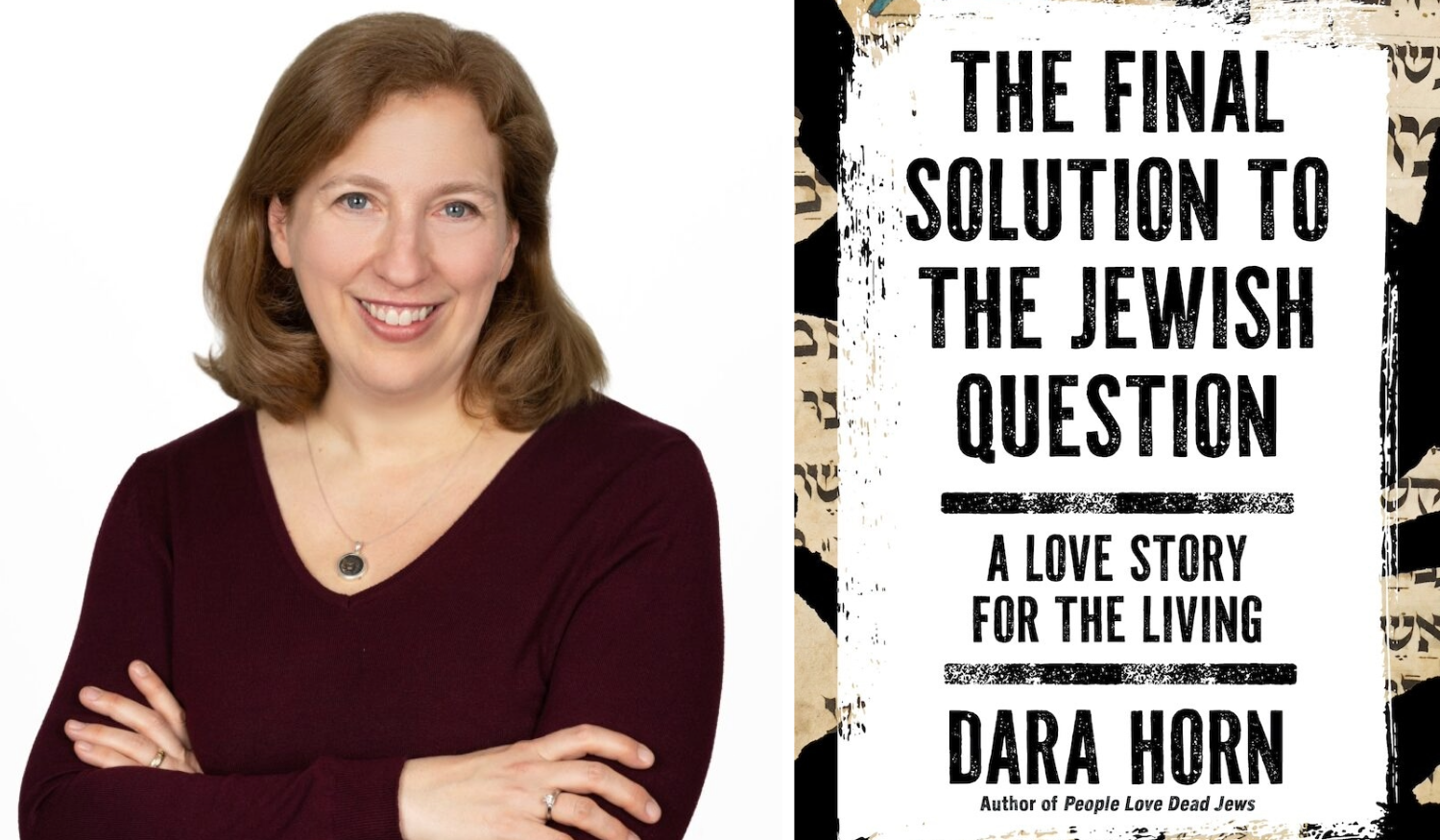
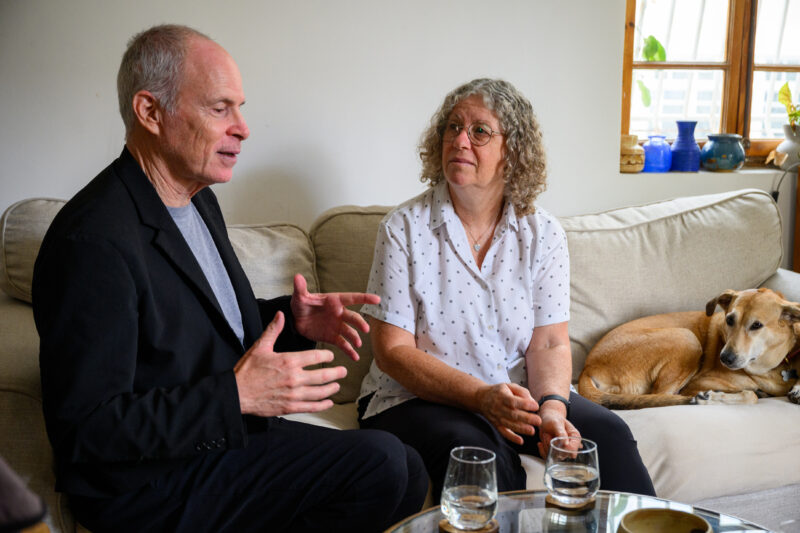
If you thought People Love Dead Jews — Dara Horn’s 2021 essay collection examining society’s reverence for remembering deceased Jews while failing to support the living ones — was an awkward book to read in public, just wait until you get your hands on Horn’s newest title: The Final Solution to the Jewish Question. Horn is in on the joke; she likes to say that both titles make great beach reads because no one will dare sit within several feet of you, Jewish Insider’s Gabby Deutch reports.
Author’s intention: But despite borrowing its title from the name of the Nazis’ infamous plan to rid Europe of its 11 million Jews during World War II, Horn’s latest book, which will be published on Sept. 1, is not a Nazi manifesto. Instead, the title of Horn’s new book serves as an eye-catching, subversive dog whistle that is meant to pique the interest of antisemites — while also serving as a cheeky summary of Horn’s goal of actually trying to come up with a solution to the wave of antisemitism that has swept the world in recent years. “I am providing a solution. Not a solution in terms of, like, ‘Here’s 10 policy points we should implement,’” Horn told JI. “It’s, ‘Here’s the story we need to be telling about who we are, to ourselves and to everyone else,’ and this is the story that is going to inspire people to imagine a better future.”
Worthy Reads
The Subaru Socialists: In The New Yorker, Jay Caspian Kang writes that a rising bloc of young, college-educated and downwardly mobile Democrats — for whom the war in Gaza has become a defining political litmus test — is remaking the party in the image of far-left Democrats such as Zohran Mamdani, Abdul El-Sayed and Melat Kiros. “The future of the Democratic Party involves a synthesis of Subaru Socialism’s disillusionment with the American promise and the polarized, hard-line moralizing of Gen Z. Young voters aren’t the only angry ones, of course; older Democrats are still understandably furious at a party that lost to Donald Trump twice and seems to have done precious little to stand in his way during the past year and a half. But it’s younger voters who have begun to give a political form and shape to that reactionary anger.” [NewYorker]
The Trouble with the Tent: In The Spectator, Alex Castellanos warns of the dangers of the Democratic Party’s “Big Tent” policy. “The Big Tent is the party’s latest dance craze. They thought they’d found a clever dodge: a Democrat in a swing district could say he did not personally favor abolishing prisons or nationalizing large industries. His party simply contained many different opinions. But voters see something more frightening: the Big Tent is the Democratic party’s public invitation to socialism. It lays out a welcome mat for communism to enter the Democratic party’s home. Establishment Democrats know that such views have moved aggressively into their coalition, but they refuse to say they are disqualifying.” [Spectator]
Memorandum of Misunderstanding: Former Israeli Ambassador to the U.S. Michael Oren contends in his Substack, “Clarity,” that the Hamas disarmament deal is likely to go the way of the U.S.-Iran memorandum of understanding and become muddled in the parties’ different interpretations of their obligations. “The question is: Will Hamas really give up its guns? A closer reading of the agreement reveals that Hamas will not initially turn over its weapons but only put them in NCAG storage. Further ambiguity surrounds the definition of the word ‘weapons’ — whether it refers only to rockets and rocket-propelled grenades, as Hamas prefers, or to all small arms as well. Added to those uncertainties is the matter of reciprocity. … As in the case of Iran, an MOU can be open to widely divergent interpretations and radically altered circumstances. In the Gaza Strip, no less than in the Strait of Hormuz, an MOU may lead not to peace but to further upheaval.” [Substack]
Find more Worthy Reads in our Live Briefing via our new app (on Apple and Android) and website.
Word on the Street
State Department antisemitism envoy Rabbi Yehuda Kaploun criticized Canadian officials’ “muted” response to a series of recent antisemitic attacks around the country, suggesting that Ottawa put in place visa restrictions and terrorism listings to restrict entry to those who seek “to sow discord”…
Rep. Virginia Foxx (R-NC) blasted Stony Brook University over its failure to take action against a professor who has been involved in anti-Israel activism, including reportedly harassing and accosting patrons at a Long Island restaurant, Jewish Insider’s Marc Rod reports…
Harmeet Dhillon, the assistant attorney general for civil rights, urged pro-Israel college students to distinguish between protected speech and actionable discriminatory conduct — “people literally interfering with your ability to get an education” — when facing antisemitism on campus. Dhillon made the comments on Tuesday at the conclusion of the Israel on Campus Coalition’s National Leadership Summit in Washington, JI’s Haley Cohen reports…
Days before he was confirmed as director of national intelligence, Jay Clayton, who was still serving as U.S. attorney for the Southern District of New York, wrote a letter to the mother of slain Jewish teenager Ari Halberstam, who was killed in a 1994 terror attack targeting a bus of yeshiva students on the Brooklyn Bridge, saying that the office he was exiting was “prepared to pursue” any additional evidence in the case “to the fullest extent of the law”…
Pennsylvania Gov. Josh Shapiro makes an appearance alongside rapper Meek Mill in the Philadelphia native’s latest music video, “Nightmares to Dreams”…
A Michigan cider brewery where Rep. Haley Stevens (D-MI) hosted a campaign event the night before the state’s Senate primary election issued a statement saying it regretted hosting the event, citing Stevens’ support for Israel, JI’s Gabby Deutch reports…
In a debate between CNN commentators David Axelrod and Van Jones about Michigan’s Senate primary, Axelrod described AIPAC asa foreign agent, saying, “Should essentially an agent of any foreign government, whether it’s Israel or any other, be able to spend … $30 million in a race like this to influence the outcome of that race?” Van Jones responded, “I don’t think that they’re an agent of a foreign power. I think they’re American Jews”…
New York City Mayor Zohran Mamdani disbanded the entire business-led advisory board of the Mayor’s Fund to Advance New York City as he reshapes the nonprofit’s donor network amid deepening friction with the city’s corporate establishment…
U.K. Conservative Party head Kemi Badenoch defended her backing of a local election candidate who had previously been imprisoned for racially aggravated harassment against a Jewish member of Parliament…
Antisemitic assaults across the United Kingdom jumped 82% in the first half of 2026, according to data from the Community Security Trust…
The Financial Times spotlights an “Election War Room” led by Israeli activists who fear that Prime Minister Benjamin Netanyahu’s government will try to manipulate or delegitimize October’s election…
Former Mossad head David Barnea was named global president and chairman of Florida-based defense technology firm Ondas…
X, the social media platform, announced on Tuesday that it is complying with a Turkish court order restricting access within the country to the presidential candidacy account of imprisoned Istanbul Mayor Ekrem Imamoglu, though the company is legally challenging the order…
The Wall Street Journal examines Iran’s hardline approach to maintaining control over the Strait of Hormuz in its negotiations with the U.S…
Longtime U.S. diplomat Ludovic Hood, who previously served as a senior advisor in the State Department’s Office to Monitor and Combat Antisemitism under Amb. Deborah Lipstadt, is joining the Hudson Institute as a senior fellow at the think tank’s Center for Peace and Security in the Middle East…
In The New York Times on Tuesday, Paramount Skydance CEO David Ellison defended his bid to acquire Warner Bros. Discovery, casting the merged company as a modest player against tech giants and vowing to keep CNN and CBS News ideologically independent…
Appearing on CNBC’s “Squawk Box” the same morning, TKO Group CEO and WME executive chairman Ari Emanuel proposed putting an editorial board in place to run CNN, to ease fears that Ellison could end up controlling the network and CBS…
Shoham Nicolet was announced as the next president of the Adelson Family Foundation, eJewishPhilanthropy’s Judah Ari Gross reports…
Find on-demand Live Briefing updates throughout the day via our new app (on Apple and Android) and website.
Pic of the Day

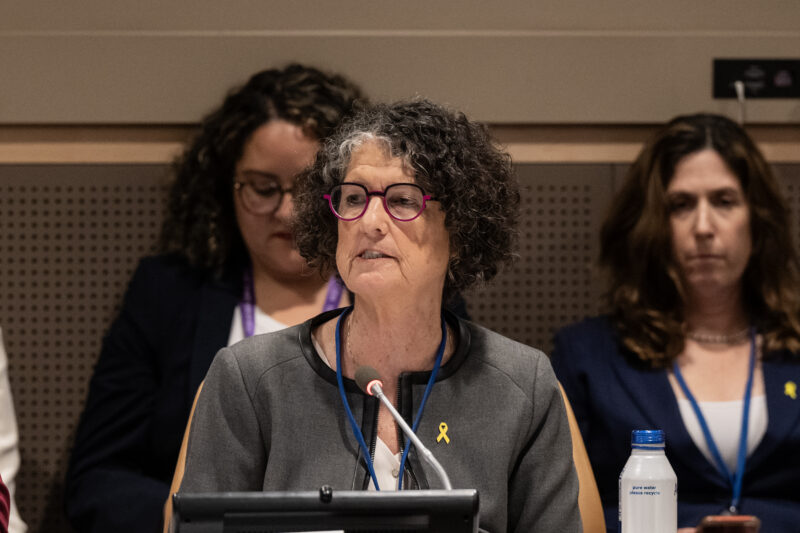
Omer Shem Tov, who was held hostage by Hamas in Gaza for 505 days, addressed the Israel on Campus Coalition’s National Leadership Summit in Washington on Tuesday.
Birthdays

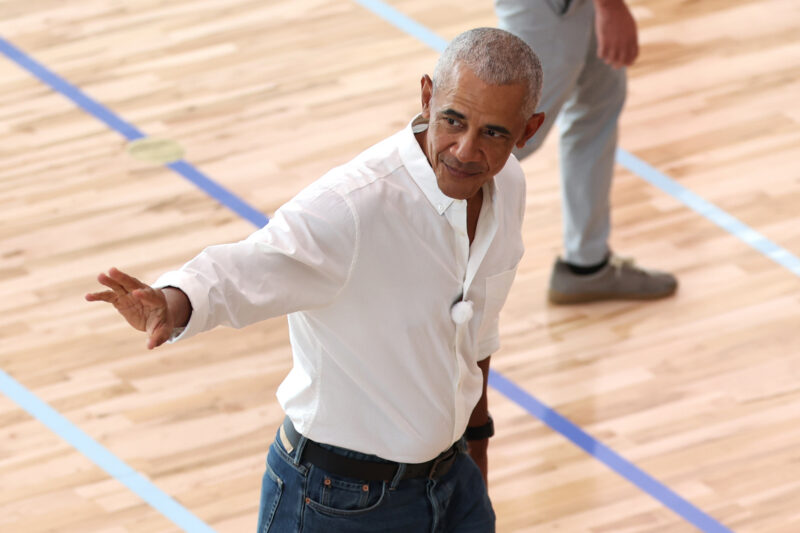
Actor who starred in “Weekend at Bernie’s,” his father and grandfather were both rabbis, Jonathan Elihu Silverman turns 60…
Chairman of Delphi Capital Management, he is the founder and chairman of Open to Debate, a public policy debate series, Robert Rosenkranz turns 84… Former chairman of the World Zionist Organization who later served as chairman of the Jewish National Fund, Avraham Duvdevani turns 81… Former Israeli ambassador to France following seven years as a member of the Knesset, Yael German turns 79… Author of 25 nonfiction books, including The Portable Curmudgeon, Zen to Go and Advice to Writers, Jon Winokur turns 79… Historian, Nazi hunter and director of the Simon Wiesenthal Center in Jerusalem until 2024, Efraim Zuroff turns 78… Banker, once known as “Austria’s woman on Wall Street” and founder of Bank Medici in 1994, Sonja Kohn turns 78… Former Soviet refusenik, he served as speaker of the Knesset for seven years, Yuli-Yoel Edelstein turns 68… Intellectual property and entertainment attorney based in Ithaca, New York, he is an adjunct professor of law at both Cornell, Syracuse and Touro, Howard Leib… Member of the British House of Lords, he was chief executive of the Office of the Chief Rabbi Lord Sacks and then chief executive of the United Jewish Israel Appeal, Baron Jonathan Andrew Kestenbaum turns 67… Former hedge fund executive, Murray Huberfeld… Songwriter, author, political columnist and noted baseball memorabilia collector, Seth Swirsky turns 66… Chair of the Department of Jewish History at Baltimore’s Beth Tfiloh Dahan High School, Neil Rubin Ph.D…. President at ConservAmerica, he is an adjunct professor at Carnegie Mellon University, Jeffrey Kupfer… President of the Center for Jewish History in NYC and professor at Fairfield University, Gavriel David Rosenfeld turns 59… Former member of the Knesset for the Kulanu party, Roy Folkman turns 51… Former director of the Center for Middle East Policy at The Brookings Institution, now a senior fellow at the Middle East Institute, Natan Sachs… Investment and foundation manager at Denver-based Race Street Management and a board member of JFNA, Cintra Pollack… VP of federal affairs at the Computer & Communications Industry Association, Matt Mandel… Chairman of The New York Times Company and publisher of The New York Times, Arthur Gregg “A.G.” Sulzberger turns 46… Professional boxer who held the WBA super welterweight title from 2009 to 2010, in 2014 he was ordained as a rabbi and then known as the “Boxing Rabbi,” Yuri Foreman turns 46… Former director of responsible innovation at Meta/Facebook, now a consultant, he is also the spiritual leader of Chochmat HaLev, a progressive spiritual community in Berkeley, Calif., Zvika Krieger… Member of the comedy duo Jake and Amir, Jacob Penn Cooper Hurwitz turns 41… Longtime member of the Israeli national soccer team who also played in Europe’s UEFA Champions League, Gil Vermouth turns 41… Co-founder of Cadence, an AI-driven performance nutrition platform designed specifically for active women, Lila Cohn… Website manager at Upsun, Abby Milberg… 2023 graduate of Harvard Law School, now an assistant corporation counsel for New York City, Michael E. Snow… Senior practice associate at Johns Hopkins Bloomberg School of Public Health, Lisa Geller… Leslie Saunders… Senior director of bridge building at Repair the World, Anyu Silverman…
Recent Daily Kickoff Newsletters




Please log in if you already have a subscription, or subscribe to access the latest updates.
 Continue with Google
 Continue with Apple