












































Ruling for Harvard clouds picture for future campus antisemitism cases
A federal judge ruled the incidents cited by the government were ‘too isolated and episodic’ to prove Harvard is violating civil rights law — a decision the Brandeis Center warns will make future Title VI cases harder to win
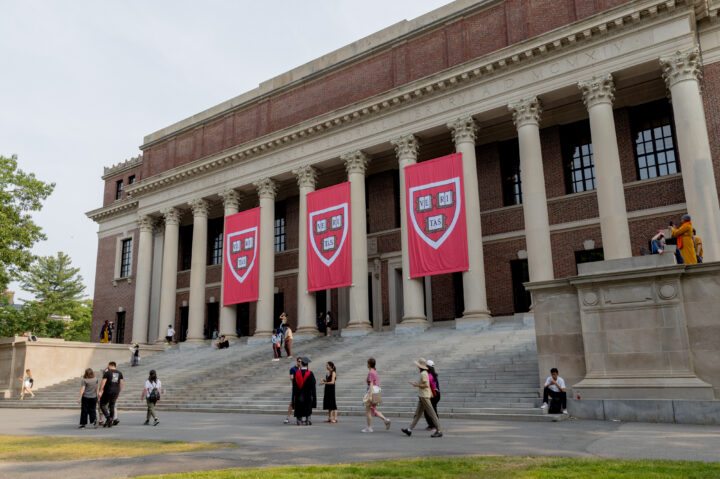
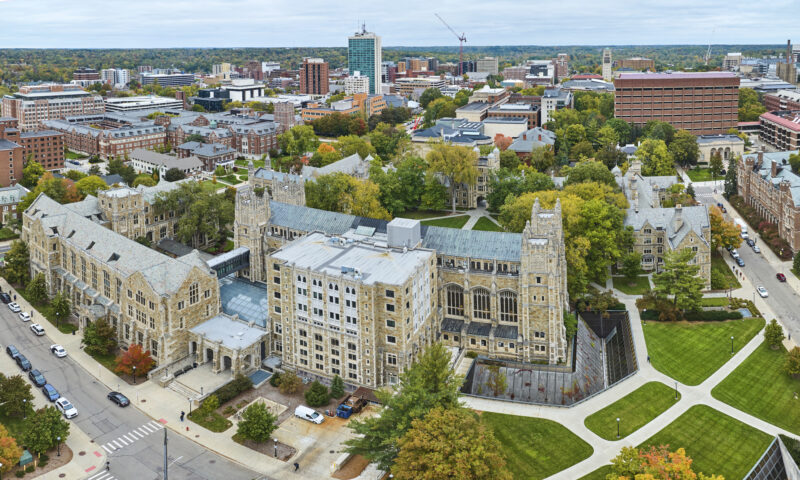
Cassandra Klos/Bloomberg via Getty Images
The Widener Library on the Harvard Campus in Cambridge, Massachusetts, US, on Wednesday, June 4, 2025.


 Add JewishInsider on Google
A federal judge in Boston dismissed the Trump administration’s antisemitism lawsuit against Harvard University on Thursday, ruling that the incidents were “too isolated and episodic” to show an ongoing violation of civil rights law.
Judge Richard Stearns pointed out that while the government’s amended complaint cited three March 2025 incidents, it still focused almost entirely on the 2023–2024 school year.
“Without diminishing any concern arising from these occurrences, the court finds them, singly and collectively, to be too isolated and episodic to support a plausible inference that any institutionalized noncompliance with Title VI persists at Harvard to this day,” Stearns wrote.
The Trump administration filed the lawsuit against Harvard in March, claiming that its leadership violated the civil rights of Jewish students by failing to address antisemitism that has roiled the Ivy League campus since the Hamas-led Oct. 7, 2023, terrorist attacks in Israel.
In the 44-page lawsuit, filed in federal court in Boston, the Department of Justice said that Harvard unlawfully discriminated against Jewish students by its “intentional conduct and its deliberate indifference to discriminatory harassment of Jewish and Israeli students and creation of a hostile educational environment” since Oct. 7 and “up to the present day.”
The Brandeis Center for Human Rights Under Law, which filed its own lawsuit against Harvard in 2024 alleging failure to address antisemitism, said that Thursday’s ruling will make other Title VI cases harder.
“The rule applied in this decision would make it significantly more challenging for the Justice Department to win future civil rights cases, not just those involving antisemitism, by effectively raising the legal standard for enforcement. Normally, when an administrative agency finds an institution out of compliance under Title VI, it is required to give that recipient a chance to fix the problem. This ruling, if broadly adopted by the courts, would add an unprecedented higher bar: the government now has to prove not only that the institution refused to resolve the issue at hand in an agreement with the government but also that additional subsequent violations occurred,” the Brandeis Center said in a statement.
“This is a significant and troubling departure from how civil rights enforcement has long worked and it should concern anyone who cares about accountability on antisemitism or any other form of discrimination.”
More Stories
COMINGS AND GOINGS
Heritage Foundation taps critic of U.S. involvement in Middle East as distinguished fellow
SACRAMENTO SHOWDOWN
Rep. Doris Matsui continues to highlight Hasan Piker links to far-left opponent Mai Vang
ALBANY ALLIANCE
Jewish New York Dems launch PAC to counter antisemitism and anti-Zionism
PANEL PUSHBACK
Jewish groups raise alarm over anti-Israel sessions at American Studies Association conference

Daily Overtime
Barrack says Iran-backed threats are ‘not America’s job’

VATICAN VISIT
Pope Leo affirms commitment to fighting antisemitism in meeting with AJC leaders
Please log in if you already have a subscription, or subscribe to access the latest updates.
 Continue with Google
 Continue with Apple