
























































Former Columbia law dean says Jewish students treated differently on campus
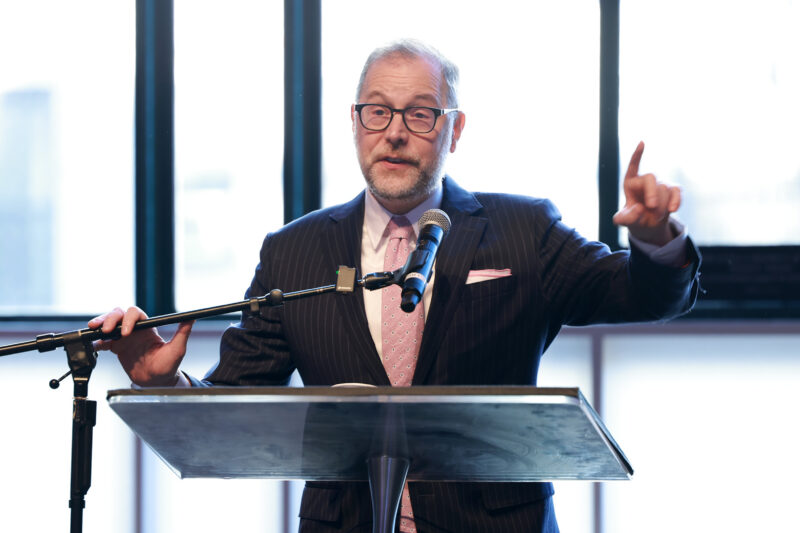
David Schizer was the keynote speaker at the fifth annual ‘Law and Antisemitism’ conference at Yeshiva University Cardozo School of Law
Rona Kaufman
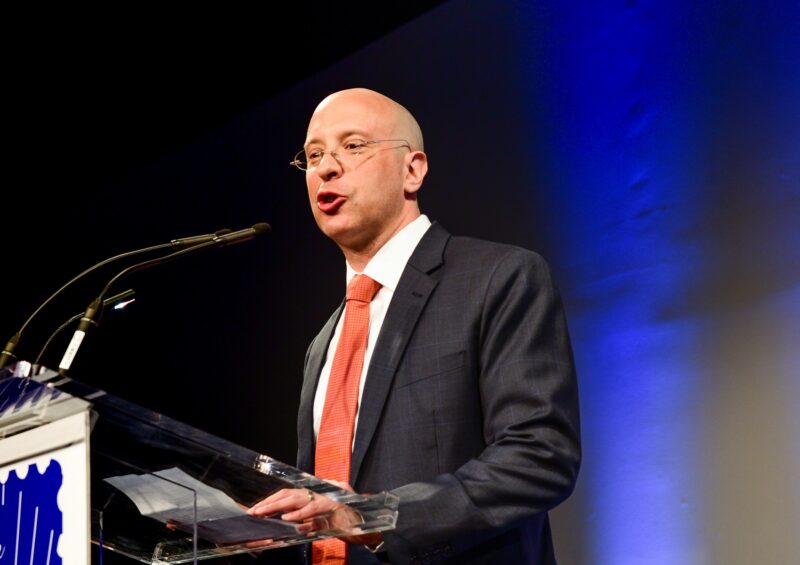
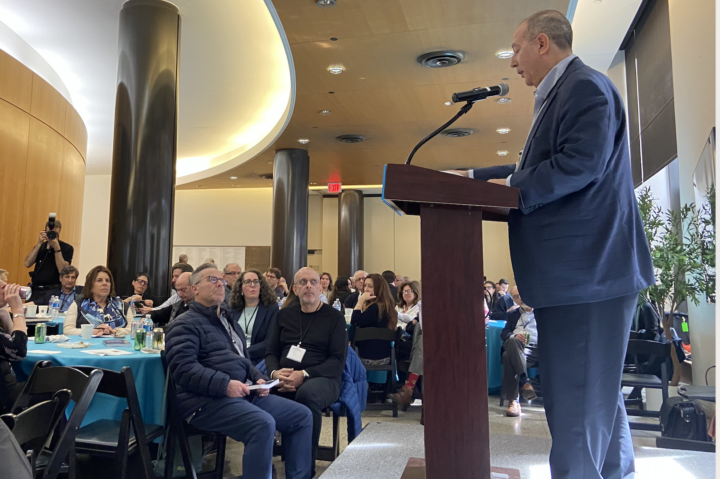
David Schizer delivers keynote address at Law and Antisemitism conference at Cardozo School of Law.


 Add JewishInsider on Google
In trying to strike a balance between free expression and anti-discrimination, universities must do a better job at providing a consistent standard, David Schizer, the former dean of Columbia Law School, said during his keynote address at the fifth annual “Law and Antisemitism” conference at Yeshiva University’s Cardozo School of Law.
Many universities have not established any consistent procedures to address Jewish and Israeli students’ complaints about harassment following the Oct. 7, 2023, terrorist attacks, argued Schizer. The law professor served as co-chair of the university’s task force on antisemitism, which was established in response to increased antisemitism on the New York City campus after Oct. 7.
Schizer recommended that universities adopt a universal rule. “The best way to make a decision about one group is with a principle that works for all groups,” he said.
“The rules need to be the same for everyone,” he continued. “This means that if a university takes a step to shield Black or female students from harassment, the university needs to take a comparable step to protect Jewish and Israeli students, and vice versa. Unfortunately, universities have not always been consistent … but after Oct. 7, when Jewish and Israeli students complained, the response was different. Instead of deferring, universities invoked free speech principles. Likewise, instead of condemning this offensive speech, many universities adopted institutional neutrality.”
Schizer told attendees — about 200 practicing attorneys and legal scholars — that inconsistent treatment is not only “wrong,” but “also illegal.”
“Indeed, the most basic way to violate civil rights laws is to single out a protected class for different treatment,” he said.
The two-day conference, which concluded on Monday evening, was renamed this year from “Law vs. Antisemitism” to “Law and Antisemitism.” The change, which was one of several according to organizers, came following heavy criticism of last year’s event. The 2025 conference was held at UCLA and featured several speakers tied to anti-Zionist groups, Jewish Insider was first to report.
Rona Kaufman, the chair of this year’s conference and a participant for the past two years, told JI that this year was “from my perspective, a brand-new conference.”
The co-founders of the original conference — Robert Katz, a professor at Indiana University’s McKinney School of Law, and Diane Klein, an adjunct professor of law at Pepperdine Caruso School of Law and Loyola Law School (Los Angeles) — did not chair this year’s event. Katz remained involved as a speaker, while Klein did not participate.
“Before I agreed to chair this conference, I had parameters. I had no interest in chairing a conference that was going to platform people who make claims that antisemitism is being weaponized or who refuse to center Jewish identity in conversations about antisemitism,” said Kaufman, a law professor at Duquesne University and co-founder of the Center for Jewish Legal Studies.
The conference comes as legal action against universities over antisemitism is intensifying — even as anti-Israel disruptions appear to be quieter on most campuses — with several Jewish groups, such as the Louis D. Brandeis Center for Human Rights Under Law, representing Jewish students in lawsuits against their universities.
Panel topics ranged from various litigation strategies — with speakers including Mark Goldfeder, director of the National Jewish Advocacy Center, and Ken Marcus, chairman of the Brandeis Center — to the legal consequences of sexual violence perpetrated by Hamas on Oct. 7. The latter session was led by Cardozo law professor Michelle Greenberg-Kobrin and virtually from Israel by Cochav Elkayam-Levy, founder and chair of the Civil Commission on Oct. 7 Crimes by Hamas against Women and Children.
The conference was co-sponsored by Academic Engagement Network, Cardozo School of Law, the Center for the Study of Law and Antisemitism and the Center for Jewish Legal Studies. The Anti-Defamation League, which co-sponsored last year’s conference, was a sponsor this year.
Anat Alon-Beck, a Case Western Reserve University associate law professor, was a speaker this year after walking out of a session at last year’s conference because she was “appalled” by “bias and invalidating of all of the antisemitism I’ve been experiencing on campus,” she told JI at the time.
Alon-Beck echoed that there was “no comparison” between this year’s conference and the last.
“It was an empowering experience and an important reminder of the legal community’s responsibility and capacity to stand up against antisemitism in meaningful ways,” she told JI.
“What stood out was the commitment to confronting antisemitism honestly and directly, rather than minimizing or overlooking it.”
More Stories
ON DEFENSE
El-Sayed dismisses half-sister’s comments about family’s Muslim Brotherhood ties as ‘hearsay’

EDIT WARS
Wikipedia failed to address coordinated anti-Israel campaign, new ADL study finds

EMPIRE STATE EXCHANGE
Debating Hochul, Blakeman reiterates graphic warnings about anti-Israel protesters
SHARING A STAGE
Top N.J. Dem recruit campaigned alongside New Jersey mayor accused of antisemitism

PLATFORM CHECK
Where Israel’s parties stand on the Diaspora — in their own words

EVENT RESCHEDULED
State Department to hold Oct. 7 commemoration event on Wednesday
Please log in if you already have a subscription, or subscribe to access the latest updates.
 Continue with Google
 Continue with Apple