











































The normalization of hate in American politics
From a Trump nominee with a ‘Nazi streak’ to a Sanders-endorsed candidate with a Totenkopf tattoo, the normalization of political hate speech is bipartisan — and increasingly tolerated
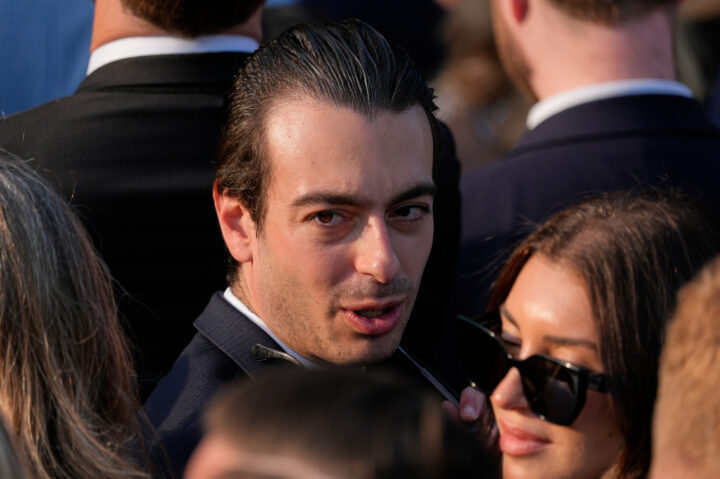
AP Photo/Alex Brandon
Paul Ingrassia arrives before Trump speaks during a summer soiree on the South Lawn of the White House, June 4, 2025, in Washington.


 Add JewishInsider on Google
One of the defining characteristics of our age is the utter lack of institutional gatekeepers and red lines against hate in our politics and culture. Extremist rhetoric, antisemitism, racism and approval of political violence are all becoming commonplace in our discourse, to the point where Americans have become numb to the crazy.
Just take a look at the headlines over the last month of scandals that have captured national attention — and would have been unthinkable not long ago.
1. Paul Ingrassia, President Donald Trump’s nominee to lead the Office of Special Counsel, withdrew himself from consideration yesterday after belated backlash over his history of racist and antisemitic comments — including a recently revealed text message chain where he said he has a “Nazi streak.” We reported on Ingrassia’s extremist record in May, revealing a string of antisemitic and racist public social media posts, including this shocking comment on X days after Hamas’ Oct. 7, 2023, terror attack: “I think we could all admit at this stage that Israel/Palestine, much like Ukraine before it, and BLM before that, and covid/vaccine before that, was yet another psyop.”
Ingrassia also has been an ally of Nick Fuentes, a virulently antisemitic podcast host and far-right influencer who has long trafficked in Holocaust denial. He attended a rally in 2024 for Fuentes, and in 2023 defended Fuentes after he was banned from Twitter.
Ample documentation of Ingrassia’s bigotry didn’t stunt his nomination, though the new shocking revelations from the private text chain caused key Republicans — most notably, Senate Majority Leader John Thune (R-SD) and Sens. Ron Johnson (R-WI), Rick Scott (R-FL) and James Lankford (R-OK) — to withdraw their support and end his chances of getting confirmed.
But the fact that he got as close as he did to receiving a hearing for the plum role shows just how much antisemitism is becoming normalized.
2. Graham Platner, the embattled far-left candidate in Maine’s Senate race, already under scrutiny over social media posts declaring himself a communist and calling the police “bastards,” acknowledged he has a skull-and-crossbones tattoo on his chest that his just-departed political director characterized as “anti-Semitic.” A former acquaintance of Platner’s said he called the tattoo “my Totenkopf,” referring to a symbol adopted by a Nazi SS unit.
Platner is facing Maine Gov. Janet Mills, the favorite of the party establishment (for good reason) in the Democratic Senate primary. Platner has been endorsed by Sen. Bernie Sanders (I-VT), praised by several progressive senators and backed by a number of leading labor unions, including the UAW.
Despite Platner’s remarkable baggage and Nazi-themed tattoo, Sanders still is standing behind him. ”I personally think he is an excellent candidate. We don’t have enough candidates in this country who are prepared to take on the powers that be and fight for the working class,” Sanders said Tuesday, when pressed by reporters about the tattoo allegations.
3. A Young Republicans group chat from this year, with 2,900 pages of comments leaked to Politico, was filled with racist and antisemitic texts, with participants including elected lawmakers and up-and-coming professionals in GOP politics. Peter Giunta, a Young Republicans official, joked “I love Hitler” in the chat and said everyone who voted against him for a leadership position “is going to the gas chamber.” Joe Maligno, the general counsel for the New York Young Republicans, later responded: “Can we fix the showers? Gas chambers don’t fit the Hitler aesthetic.”
Politico characterized the group conversations as featuring a “dynamic of easy racism and casual cruelty” that played out in “often dark, vivid fashion” — and noted “the love of Nazis within their party’s right wing” as a common theme of the discourse. The chat included the N-word a dozen times.
But while many Republicans quickly spoke out against the unadulterated hate in the conversation, Vice President JD Vance downplayed the episode as young people “telling stupid jokes.” “I refuse to join the pearl clutching,” Vance said on X, arguing the private conversation was less significant than the scandal involving Jay Jones, the Virginia Democratic attorney general nominee who sent texts wishing political violence against a GOP colleague and his family.
4. Jay Jones’ text messages in 2021 saying his GOP colleague, former House Speaker Todd Gilbert deserved to be killed and calling Gilbert’s children “little fascists” shocked the political world — and upended a race in which Democrats were initially favored. The comments were especially shocking amid a rise in political violence, coming after the assassination of conservative pundit Charlie Kirk and the attempted killing of Trump in the last two years.
But while many Democrats condemned the comments, no prominent members of the party withdrew their endorsement of the nominee. Even as polls show a small but critical mass of persuadable voters have switched their support to GOP Attorney General Jason Miyares, Jones has maintained near-universal partisan support.
Sen. Tim Kaine (D-VA), reflecting the general Democratic sentiment in the state, said on NBC’s “Meet the Press”: “Those texts, private texts with a colleague, cannot be defended. They cannot be defended. But Jay Jones has apologized earnestly,” Kaine said.
***
All of these recent episodes are bad enough on their own. But taken together, they are indicative of a deeper problem in our culture. It’s a telling sign of the times that so many political leaders have instinctively rallied around the partisan flag instead of speaking out with the moral clarity that, not long ago, came naturally for them.
To be sure, there have been some pockets of political principle, mixed in with a smattering of self-interest. The opposition of several key Senate Republicans to Ingrassia’s nomination cut short his political aspirations, at least for now. Former Rep. Abigail Spanberger, the Democratic nominee for Virginia governor, hasn’t affirmed her endorsement for Jay Jones even as she won’t distance herself from him, either. Senate Minority Leader Chuck Schumer (D-NY) endorsed Mills’ candidacy, shortly after news of Platner’s tattoos was revealed.
But these are the exceptions to the rule, and the half-hearted nature of the distancing underscores how difficult taking on a radicalized base is in our polarized political world.
This is the type of environment in which antisemitism is thriving — a nihilistic body politic with no rules, standards or expectations for respectable behavior. And it’s as much a demand-side problem, with voters growing numb and desensitized towards growing extremism, as it is about the supply of politicians catering to their constituents. Until Americans put their principles ahead of partisanship, we’re likely to see this dynamic continue to worsen.
More Stories

Cross-Party Call
JCPA urges candidates in both parties to reject antisemitism ahead of midterms

speaking out
In open letter, dozens of retired U.S. military leaders reject genocide allegations against Israel
NOT ON BOARD
Lansing Mayor Andy Schor, a Jewish Democrat, says he’s not supporting El-Sayed
POLICY PIVOT
On Oct. 7 anniversary, senior Democrats call for changes in U.S.-Israel policy
CITY HALL CRITICISM
Mamdani’s Oct. 7 statement assailing ‘genocide in Gaza’ provokes outrage from Jewish groups
PHOTO OP
Letitia James opponent met with Black Hebrew Israelite group
Please log in if you already have a subscription, or subscribe to access the latest updates.
 Continue with Google
 Continue with Apple