






























Former House Majority Leader Steny Hoyer said antisemitism has worsened to the point that Jews aren’t guaranteed safety in the U.S.
Marc Rod
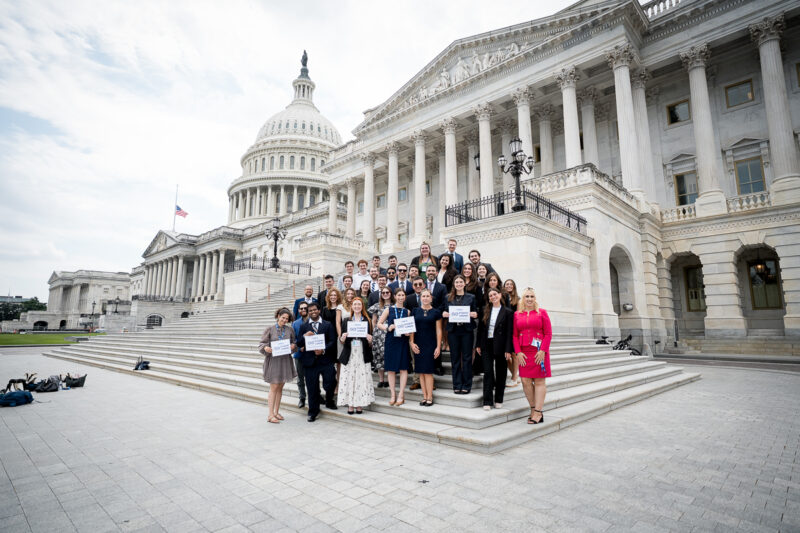
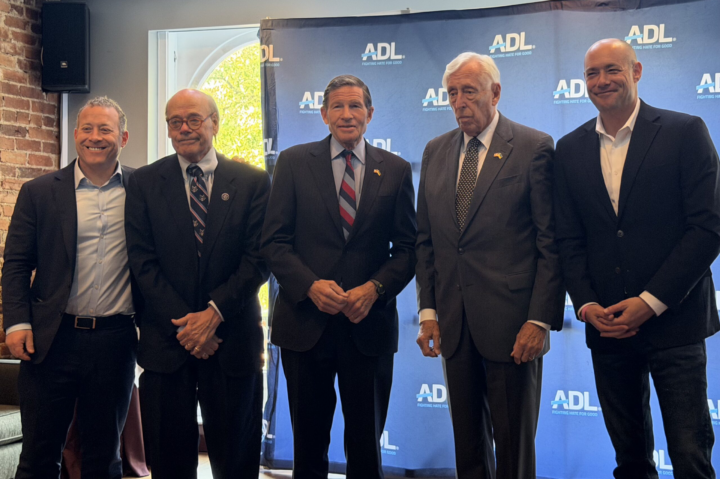
Lawmakers attend Anti-Defamation League reception honoring Jewish American Heritage Month on Capitol Hill on Tuesday, May 12, 2026


 Add JewishInsider on Google
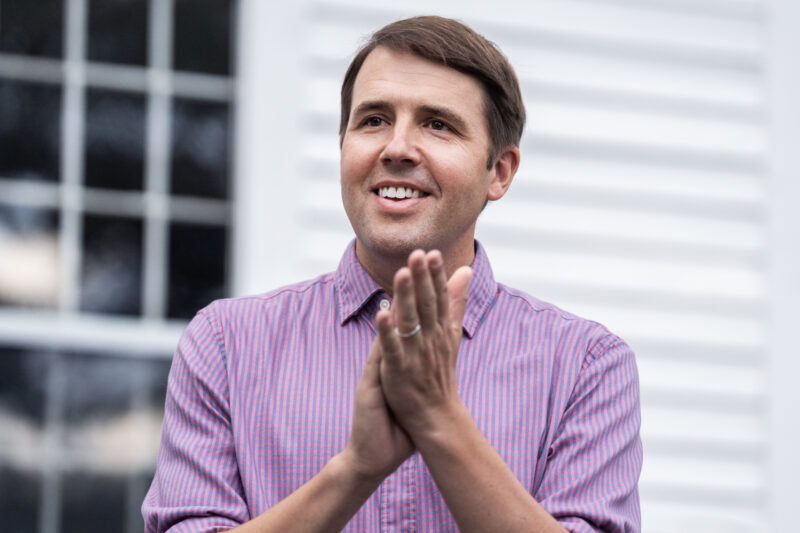
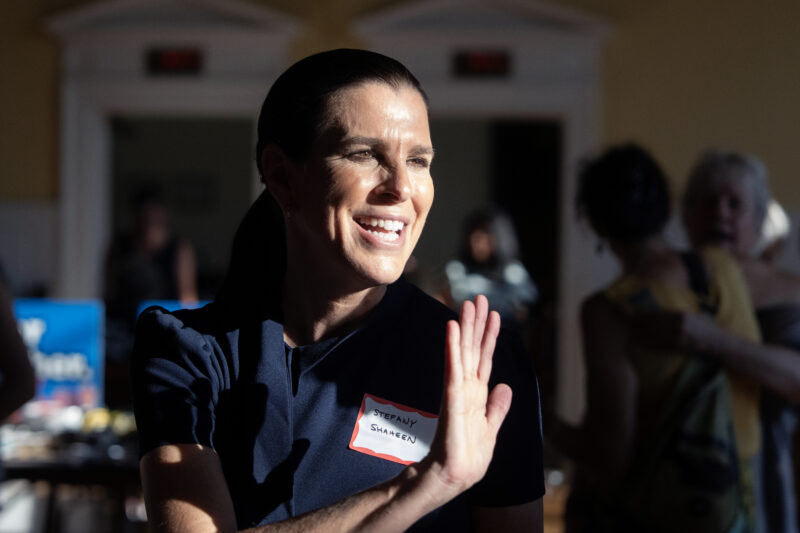
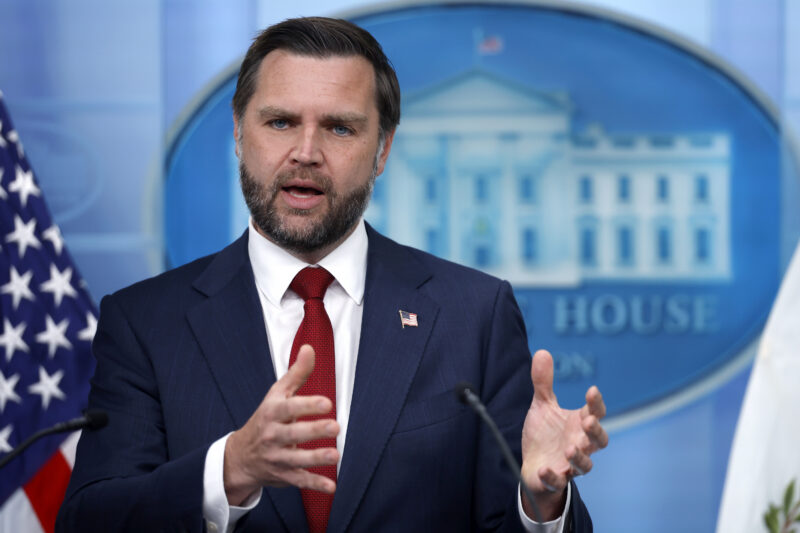
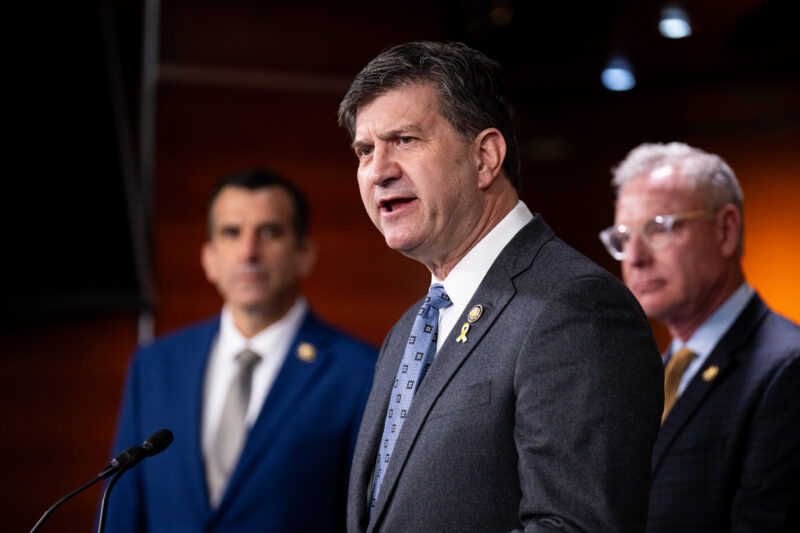
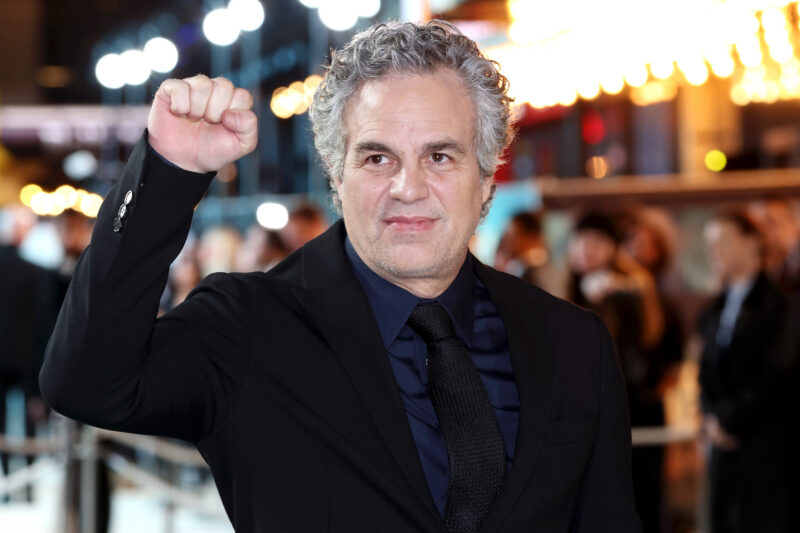
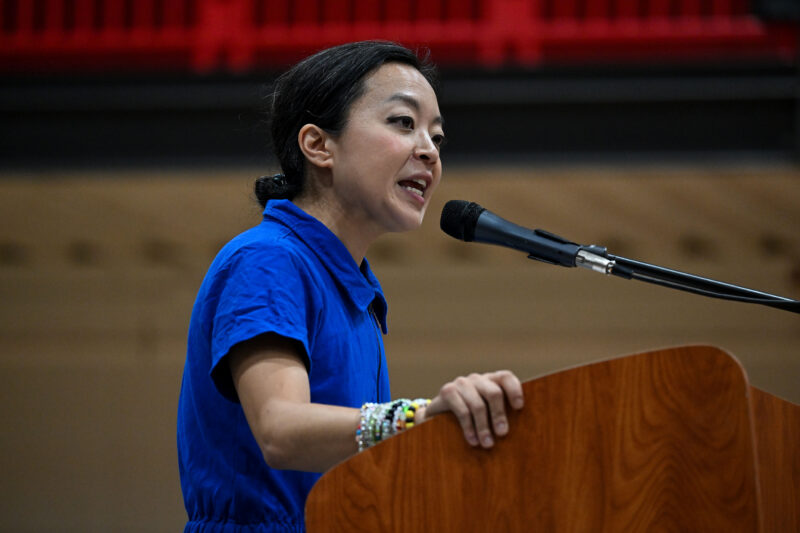
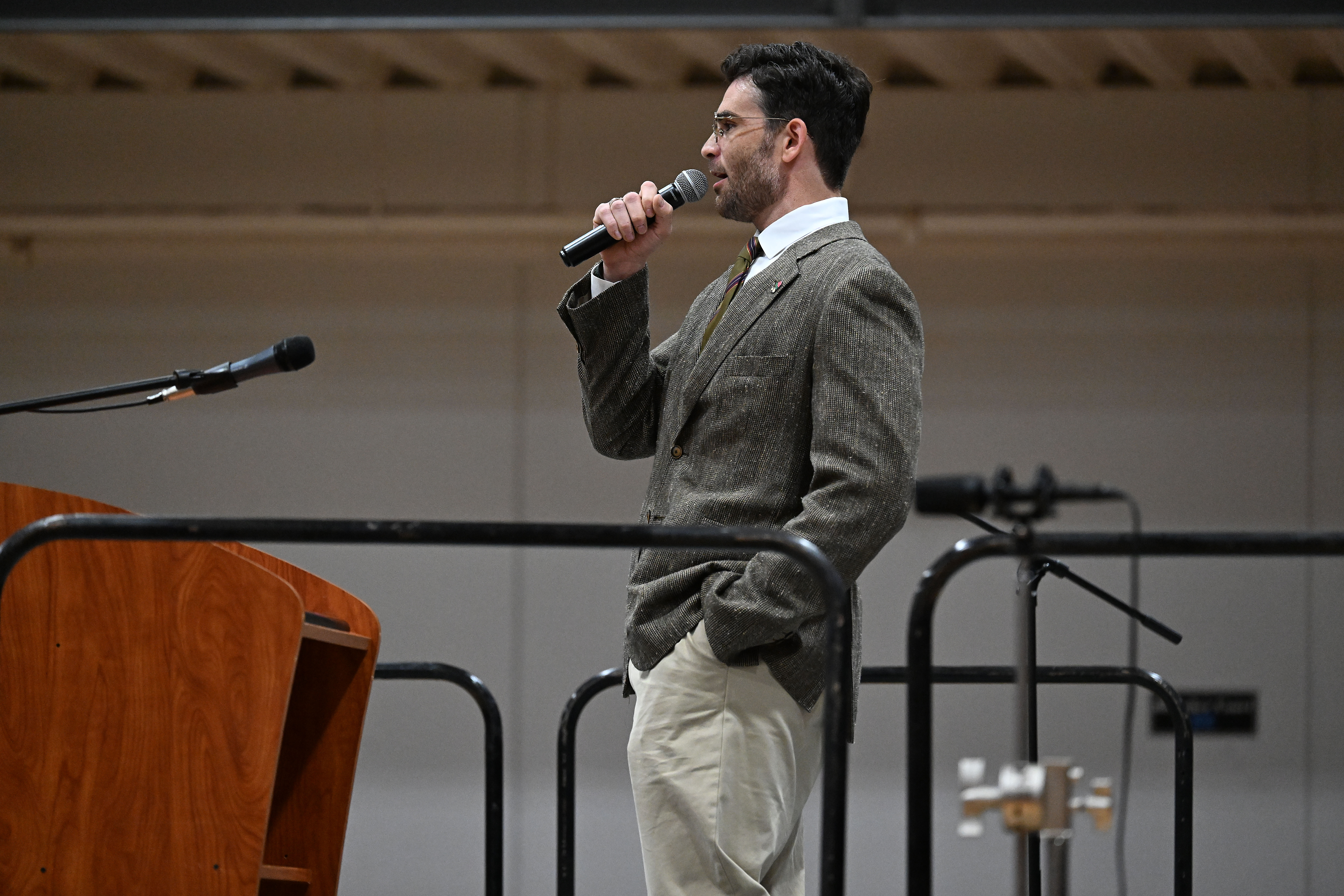
A series of largely Democratic lawmakers painted an unusually dire portrait of the state of rising antisemitism and threats to the Jewish community in remarks at an Anti-Defamation League reception honoring Jewish American Heritage Month on Capitol Hill on Tuesday evening.
Several emphasized the need for those in the audience, many of them young Jewish congressional staffers and Washington professionals, to continue speaking out and fighting for the Jewish community in a time of crisis.
Rep. Steny Hoyer (D-MD), the retiring former No. 2 House Democrat, said that antisemitism has escalated to the point that Jews are no longer guaranteed safety in the United States.
“There were two places in the world where Jews felt really safe. One, of course, was Israel, and the second was the United States of America,” Hoyer said. “That’s not true today, and that is a sad statement of what’s going on in the country today. So you all need to be involved. You all need to when you see something that’s not right, not fair, not just stand up, speak up and make a difference.”
Rep. Laura Friedman (D-CA) emphasized that efforts to fight antisemitism have often been met with additional hostility.
“It is a very scary time for the Jewish community,” Friedman said. “And to make matters worse, when we express that we’re scared and that there’s this rising level of hatred directed towards the Jewish community, we’re often met with people telling us that we’re not allowed to feel that way. And how dare we even say that there’s anything wrong with treatment towards Jews in this country?”
She offered as an example of “how bad it’s gotten” that her synagogue was graffitied this year with a swastika, and that she ended up in an argument online with local activists “who were trying to tell me why it was appropriate for people to put swastikas on the sides of buildings in the Jewish part of Los Angeles, where there are Holocaust survivors still living, why they thought that was OK and not antisemitic.”
Friedman used as another example a recent ad created by a super PAC backing Rep. Thomas Massie (R-KY) in his reelection race attacking a Jewish conservative donor, Paul Singer, who is supporting Massie’s opponent, which prominently featured a graphic of a Jewish star alongside the Singer’s face.
“A super PAC thought it was totally fine to do a hit on a candidate by showing one of their donors and by flashing a Jewish star behind that donor to let everyone know that, ‘Hey, if everything else we’ve said about this candidate isn’t convincing enough, they have a donor who’s Jewish,’” Friedman said.
“I don’t think anyone can sit this one out and you all being here is part of that effort, so thank you … for showing up, thanks for the work you do,” she concluded.
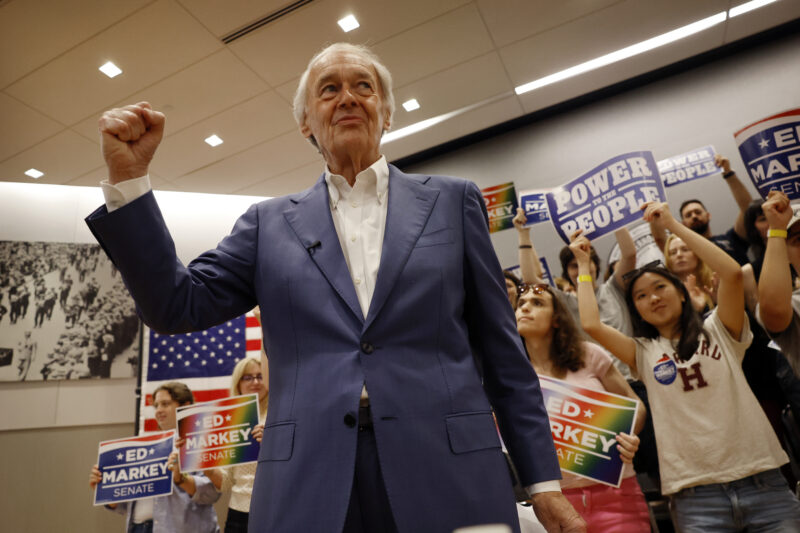
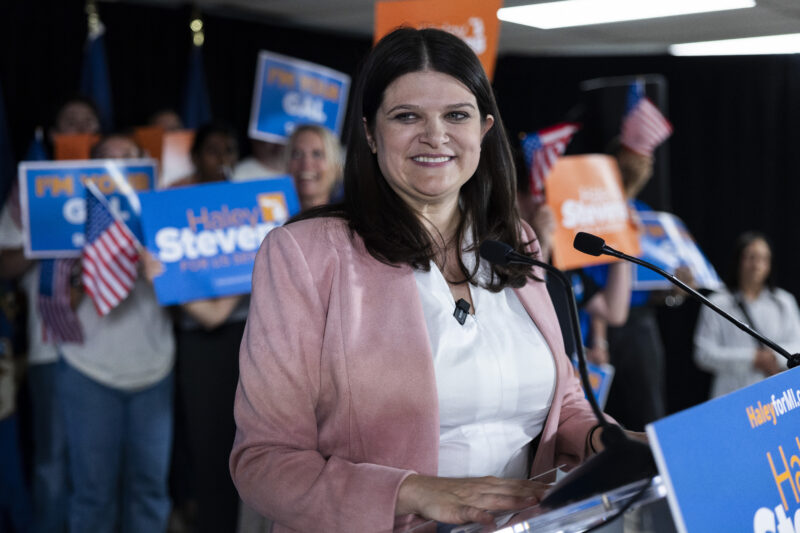
Rep. Haley Stevens (D-MI), who is running for Senate in Michigan and has faced attacks over her support for Israel and ties to the Jewish community, said that she would not “sugarcoat” the situation, explaining that “the faces of hate in this country have morphed into violent extremism,” with an increasing pace of violent attacks targeting the Jewish community, including in her own district.
“Extremist words matter. They absolutely matter,” Stevens said.
She also maintained that she is “unequivocal in declaring that I am very much a proud Zionist” in spite of facing attacks for that stance. “When I show my face in my community, every so often [I] get chased out because of violent extremism, because people feel so emboldened to shout at me that I am a ‘Zionist pig.’ That cannot be acceptable.”
Rep. Steve Cohen (D-TN), whose congressional district was recently carved up by Tennessee Republicans, likely ending his career, warned that prejudice is still a real and very active problem.
He recounted a story of when he ran for governor in 1994: “I went to a little radio station in Dixon, Tenn. — one person radio station, gravel road. [I] came in, talked to the man for a while and he said, ‘Son, you Jewish?’ I said, ‘Yes sir.’ He said, ‘Good luck,’” Cohen recounted. “It ain’t changed a lot since then. Be careful. There’s a lot of mamzers out there. They don’t know us, but they don’t like us,” he said, using the Hebrew word for bastard.
Rep. Greg Landsman (D-OH) said that it is “obviously a very bad time” for the American Jewish community and “in my opinion, it’s going to get a lot worse.” He urged the crowd “to lead through such difficult, chaotic, awful times.”
Rep. Mike Lawler (R-NY) lambasted New York City Mayor Zohran Mamdani as emboldening and encouraging antisemitism.
“We see a mayor in New York City who has, in many respects, OKed his supporters engaging in antisemitic hate, engaging in conduct that threatens Jewish students and Jewish lives,” Lawler added. “We see these protests happening outside places of worship — these are real issues that we have to combat.”
He also emphasized that antisemitic influencers like Hasan Piker, Candace Owens and Tucker Carlson have been using antisemitism as a “grift” and playing on hatred to “make a buck” and create further division.
Rep. Jake Auchincloss (D-MA) said that it is “unacceptably scary to be a Jew in the United States” and that the country is “violating the core promise that George Washington made” to the Jewish community in Rhode Island in 1790 that the country would be one of religious freedom and pluralism.
Auchincloss highlighted his efforts in Congress to combat antisemitism on social media, describing platforms as having become “failed societies online. It’s become so toxic, it’s become so rotten on these platforms that antisemitism is mushrooming as a symptom of something that is deeply rotten underneath.”
Rep. Kim Schrier (D-WA) said that Jews are “all feeling so threatened right now” and emphasized the need for broader understanding of antisemitism.
“They need to understand that anti-Zionism is kind of a new iteration [of antisemitism], if you don’t want another country wiped off the map,” Schrier said. “And I just think we all need to recognize that we all need to call it out, whether it’s in our party or another party.”
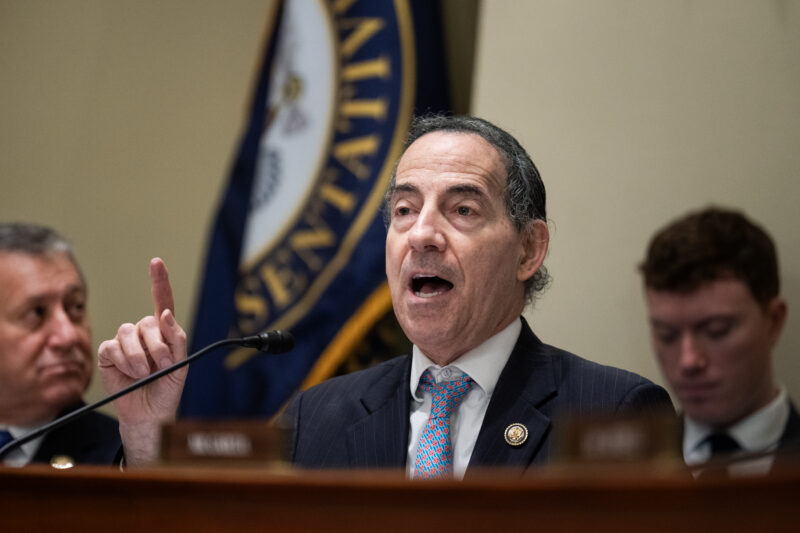
Rep. Jamie Raskin (D-MD), the ranking member of the House Judiciary Committee, said that “antisemitism and racism are the gateway to the destruction of liberal democracy” and that “the extremism, the fascism, the racism and the antisemitism” are infecting politics in the U.S. and around the world.
He praised Hungary as an example of a country that had been able to buck such trends, ousting its longtime right-wing government.
Several of the lawmakers who addressed the group also offered remembrances about Abe Foxman, the former longtime ADL leader who died last weekend.
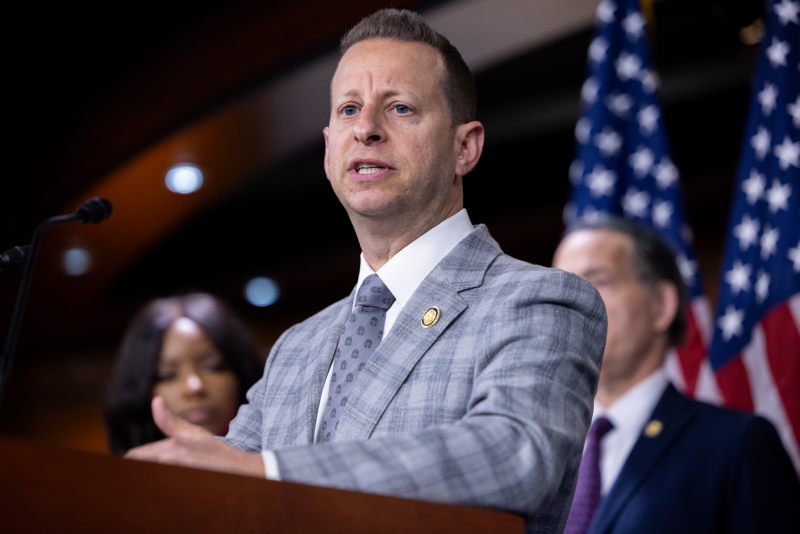
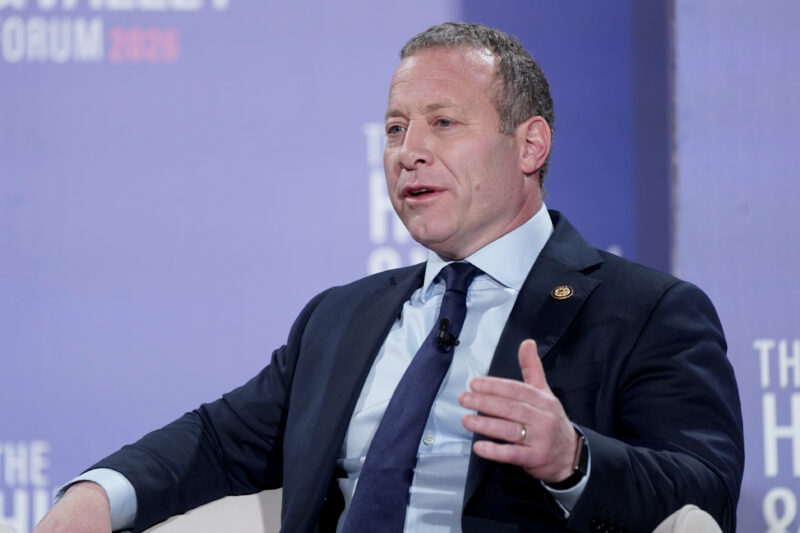
“We’re all thinking about Abe Foxman right now, who looms over this room in a powerful way and taught us so much,” Rep. Josh Gottheimer (D-NJ) said. “I think what he taught us most was to be courageous, to fight, to never back down. That’s my ask of you. It’s tough out there, by the way. The harder they hit us, the more fight I feel.”
Rep. Debbie Wasserman Schultz (D-FL) said that Foxman was “a giant, a hero of mine, hero of so many, and really built this organization practically from the ground up.” She said she’d been stunned by his death, having spoken to him at a Holocaust remembrance event at the Capitol just weeks ago.
Sen. Richard Blumenthal (D-CT) also urged those in attendance to follow Foxman’s model, and emphasized the need for additional funding for the Nonprofit Security Grant Program.
In a statement, Lauren Wolman, ADL’s senior director of government relations and strategy, said the group was “honored to host our annual Jewish American Heritage Month (JAHM) reception celebrating Jewish Members of Congress and congressional staff.”
“At a time when many of these dedicated public servants are navigating rising antisemitism and growing challenges on Capitol Hill, the reception served as an important opportunity to celebrate their work and create a space for Jewish professionals to come together in community, connect with one another, and feel supported,” Wolman continued.
The president said at a lengthy press conference: ‘I can tell you they're negotiating, we think, in good faith. We're going to find out’
Tom Williams/CQ-Roll Call, Inc via Getty Images
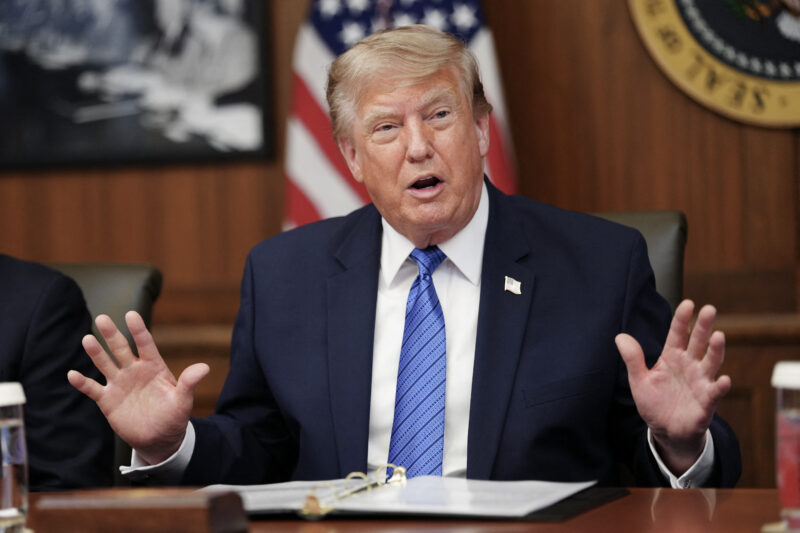
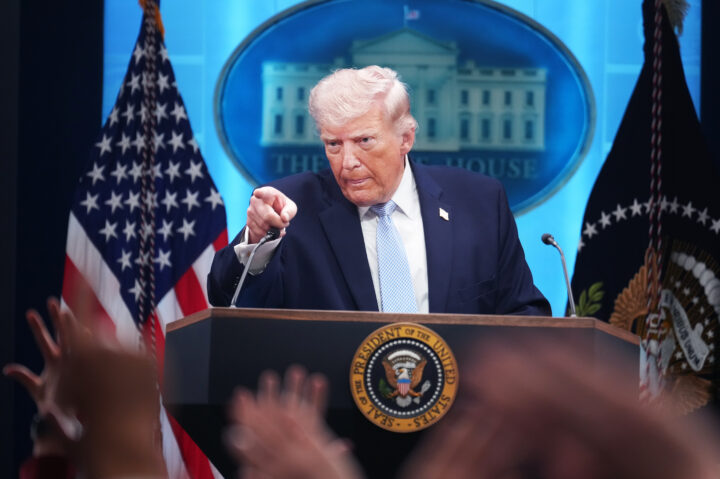
President Donald Trump conducts a news conference in the White House briefing room about the war in Iran on Monday, April 6, 2026.
President Donald Trump doubled down on his threats to escalate the war in Iran on Monday if Iranian leaders do not agree to a broad ceasefire deal that includes reopening the Strait of Hormuz by his Tuesday evening deadline, threatening that the U.S. would target every bridge and power plant still standing in the country.
Trump took a hawkish posture while speaking to reporters at the White House alongside senior U.S. defense officials about the ongoing war and diplomatic efforts to bring it to a close, warning that the U.S. has a plan to take out Iran’s entire transportation and energy infrastructure within “four hours” if Iran did not make a deal.
“I can tell you they’re negotiating, we think, in good faith. We’re going to find out. … After [8 p.m. ET on Tuesday], they’re going to have no bridges. They’re going to have no power plants. Stone ages,” Trump said, referring to the deadline he set for Iran to agree to his terms, which has now been postponed three times.
The president said he extended the deadline from Monday to Tuesday at 8 p.m. ET because he “thought it was inappropriate” to demand a response “the day after Easter.” The comment came hours after telling reporters at the annual White House Easter Egg Roll that the Tuesday deadline was final and unlikely to have any additional extensions.
“The entire country can be taken out in one night and that night might be tomorrow night,” Trump said from the briefing room. “We have a plan, because of the power of our military, [where] every bridge in Iran will be decimated by 12 o’clock tomorrow night, where every power plant in Iran will be out of business, burning, exploding and never to be used again. I mean complete demolition by 12 o’clock, and it’ll happen over a period of four hours if we want it to.”
“We don’t want that to happen. We may even get involved with helping them rebuild their nation. If that’s the case, the last thing we want to do is start with power plants, which are among the most expensive things, and bridges,” he continued. “So do I want to do that? No. Do I want to destroy their infrastructure? No. It will take them 100 years to rebuild. Right now, if we left today, it would take them 20 years to rebuild their country and it would never be as good as it was. The only way they’re going to be able to rebuild their country is to utilize the genius of the United States of America.”
Defense Secretary Pete Hegseth, who took part in the press conference alongside Trump, told reporters on Monday that, “per the president’s direction, today will be the largest volume which strikes since day one of this operation. Tomorrow, even more than today, and then Iran has a choice. Choose wisely, because this president does not play around.”
Trump repeatedly reiterated his commitment to ensuring that Iran can never obtain a nuclear weapon — after saying the country’s nuclear program was “obliterated” last June — and said that any agreement between Iran and the U.S. would need to adhere to his terms, including the reopening of the Strait of Hormuz. “We have to have a deal that’s acceptable to me, and part of that deal is going to be [that] we want free traffic of oil and everything,” the president said.
“They’re not going to have a nuclear weapon,” Trump said of Iran, arguing that his actions were an insurance policy for the U.S. “if somebody that takes my place someday is weak and ineffective, which possibly that will happen, because we had numerous presidents that were weak, ineffective and afraid of Iran.”
The president described the Iranians as “very good bulls*** artists, that’s why for 47 years they’ve been bulls***ing other presidents,” while defending his decision to take military action against the regime.
“I think that 47 years of this stuff is long enough. They’re at the weakest point they’ve ever been,” Trump said, despite Iran’s continued missile strikes across the Gulf and in Israel. “In fact, the biggest problem we have in our negotiations is that they can’t communicate. … They have no method of communication. So we’re communicating like they used to communicate 2,000 years ago with children bringing a note back and forth.”
Iranian ayatollahs have issued a fatwa calling on Muslims worldwide to take revenge for the killing of Supreme Leader Khamenei

Tom Brenner For The Washington Post via Getty Images
Metropolitan Police Department and Federal Bureau of Investigation officers stand guard at a perimeter near the Capital Jewish Museum on May 22, 2025 in Washington.
Since the joint U.S.-Israeli operation against Iran began last Saturday, Jewish communities worldwide have seen an increase in threats and harassment — including a 95% rise in violent online posts targeting Jews, according to a new report from a leading American Jewish safety and security organization.
A bulletin distributed by the Secure Community Network to law enforcement on Thursday reports that the ongoing strikes on Iran, which included the killing of former Supreme Leader Ayatollah Ali Khamenei on Saturday, have widespread foreign and domestic security implications.
Iranian ayatollahs Hossein Nouri Hamedani and Naser Makarem Shirazi on Sunday issued a fatwa calling on Muslims worldwide to take revenge for the killing of Khamenei. They told Muslim adherents to “aveng[e] the blood of the martyred leader of the revolution” and added that it “is obligatory for all Muslims.” Additionally, the Islamic Revolutionary Guard Corps issued a public proclamation in Farsi that “the enemy … will no longer have security anywhere in the world, even in their own homes.”
The U.S. Department of Homeland Security responded in a confidential law enforcement report obtained by Jewish Insider that the fatwas, Iranian government rhetoric and online messaging heighten the threat of violent extremism in the U.S.
SCN warned that the heightened risk of lone wolf attacks inspired by the strikes may have already begun to play out. Less than 24 hours after the killing of Khamenei, a gunman killed three people in a mass shooting at an outdoor beer hall in Austin, Texas. While authorities are still investigating a motive for the shooting, they noted that there were indicators on the suspect and in his vehicle that suggest a potential terrorist connection: During the attack, the suspect wore a hoodie with the words “Property of Allah” and a shirt with an Iranian flag design underneath.
Since the airstrikes began in Iran, antisemitic online posts impacting the Jewish community — some of which use explicitly violent rhetoric — have nearly doubled, according to SCN, with 4,322 violent posts tracked in the past six days, compared to 2,211 in the week prior to the strikes. These posts include long-standing “Zionist Occupied Government” conspiracies about Israeli control over governments and influence in the U.S., as well as suggestions that the strikes were intended as blood sacrifices for the Jewish holiday of Purim.
The Secure Community Network said it has not yet identified any specific threats to the Jewish community or U.S. homeland. In a list of precautionary recommendations, it urged law enforcement, security partners and Jewish institutions to remain vigilant, refrain from broadly advertising events and consider adding increased armed security.
Retaliatory calls to harm American Jewish communities and facilities, in addition to general calls for “death to America,” have also proliferated online, including in tweets from Columbia University Apartheid Divest, a coalition of over 80 university student groups.
Trump, true to form, has been unpredictable and inconsistent in his approach to Tehran — alternating between threatening force and teasing diplomacy
Chip Somodevilla/Getty Images
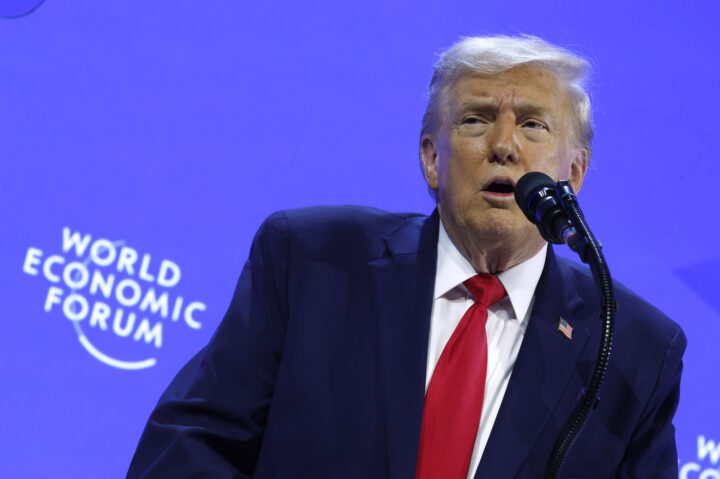
U.S. President Donald Trump gives a speech at the World Economic Forum (WEF) on January 21, 2026 in Davos, Switzerland.
Tensions are running high across the Middle East after a week in which the U.S. and Iran lobbed threats at each other, dominating headlines, destabilizing markets and leaving many in the region unnerved at the prospect of renewed military action seven months after the 12-day war between Israel and Iran that included U.S. strikes on Iranian nuclear facilities.
On the sidelines of the World Economic Forum in Davos, Switzerland, yesterday, Trump warned that an “armada” was on its way to the Gulf — a reference to the aircraft carrier and fleet of fighter jets being redeployed from the South China Sea.
In response, Gen. Mohammad Pakpour, the head of Iran’s Islamic Revolutionary Guard Corps, warned that Iran had its “finger on the trigger, more prepared than ever, ready to carry out the orders and measures of the supreme commander-in-chief.”
Trump, true to form, has been unpredictable and inconsistent in his approach to Tehran — alternating between threatening force and teasing diplomacy. “Iran does want to talk, and we’ll talk,” Trump said at a signing ceremony in Davos on Thursday, just hours before he told reporters on Air Force One about the naval deployment to the Gulf. “We have a massive fleet heading in that direction, and maybe we won’t have to use it,” he said on AF1, managing in one whiplash-inducing sentence to lob a threat at Iran while also offering it a theoretical off-ramp.
The president has proven that he is willing to engage in bold action — especially when it comes to Iran. One has only to look to the 2020 killing of Quds Force head Gen. Qassem Soleimani or the U.S. strikes on Iranian nuclear facilities last June to see that the Trump administration is willing to engage militarily with Iran in ways prior administrations may have not. (Case in point: former President Joe Biden’s issuance in April 2024 of a one-word warning to Iran — “Don’t” — a day before Tehran launched hundreds of missiles and drones at Israel.)
More recently, the capture of Venezuela’s Nicolás Maduro demonstrates that the Trump administration isn’t opposed to regime change. And indeed, that was a possibility the president has mulled vis-a-vis Tehran, telling Politico last weekend that it was “time to look for new leadership in Iran.”
Meanwhile, Trump’s inner circle and key allies are split over how to approach Iran. White House Special Envoy Steve Witkoff has been a vocal backer of using diplomacy to quell tensions with Tehran.
“Iran needs to change its ways,” Witkoff told Bloomberg on Wednesday in Davos. “They need to do that. And if they do, if they indicate that they’re willing to do that, I think we can diplomatically settle this.”
Witkoff additionally expressed disappointment that Iranian Foreign Minister Abbas Araghchi had been removed from the agenda at Davos after quietly being added last week, saying he had been “looking forward to meeting [Araghchi], because we have to build that communication channel, because the alternative to that is not a good alternative.”
Hours after Witkoff’s comments, Sen. Lindsey Graham (R-SC) posted a thinly veiled reference to the White House envoy, saying he was “unnerved by statements being made by people involved in the Iran file suggesting that if the ayatollah could change his ways, we might be able to reach an agreement with the regime.”
“Anyone who believes that the ayatollah is remotely interested in changing his ways does not understand the history of the ayatollah and the murderous regime,” Graham continued. “That’s the same as believing someone could have done a deal with Hitler.”
Within Iran, there are still hopes that U.S. action will topple Supreme Leader Ayatollah Ali Khamenei. The Economist notes a joke making the rounds among Iranian civil servants: “We used to worry we’d become Venezuela. Now we worry we won’t.”
Heading into the weekend with tensions still high, those who have to live with the consequences of the continuation of the Iranian regime — from the Iranians who have faced years of repression to the Israelis preparing their bomb shelters for the next war to people across the region whose lives have been upended by Iran’s proxies in Lebanon, Syria, Iraq and Gaza — will be watching closely for any signal from Trump and his top advisors about Washington’s next moves, and their reverberations around the world.
The president said he was told ‘on good authority’ that the regime has stopped killing protesters and will not carry out executions
Francis Chung/Politico/Bloomberg via Getty Images
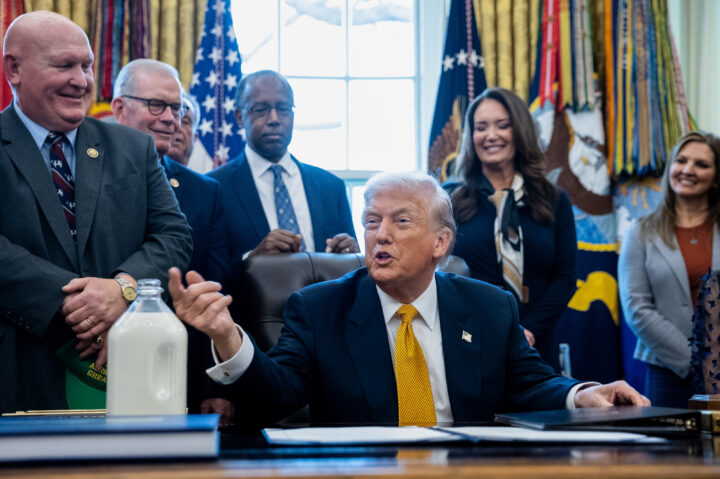
President Donald Trump speaks during a signing ceremony in the Oval Office of the White House in Washington, DC, US, on Wednesday, Jan. 14, 2026.
President Donald Trump indicated that his threats to Iran over its use of violence on protesters have had their desired effect, saying on Wednesday afternoon that “the killing in Iran is stopping.”
Speaking to reporters at a bill signing in the Oval Office, Trump said, “We have been notified and pretty strongly — but we’ll find out what that all means — but we were told that the killing in Iran is stopping, it’s stopped, and that there’s no plan for executions. … So I’ve been told that on good authority. We’ll find out about it, I’m sure, if it happens, we’ll all be very upset.”
“They’re not going to have an execution, which a lot of people were talking about for the last couple days. Today was going to be the day of execution,” the president said, referring to at least one protester who was due to be executed by the regime today, his family and human rights groups said.
Trump later claimed that information was provided to him “by very important sources on the other side, that the killing has stopped and the executions won’t take place. There was supposed to be a lot of executions today and that the executions won’t take place.”
“And we’re going to find out. I mean, I’ll find out after this, you’ll find out, but we’ve been told on good authority. And I hope it’s true. Who knows, right? Who knows,” he said.
Pressed about videos of body bags emerging out of Iran that indicate large-scale killings, Trump downplayed the issue, saying, “People were shooting at them with guns, and they were shooting back. It’s one of those things.”
Asked if this means military action against Iran is now “off the table,” Trump replied, “Well, we’re going to watch and see what the process is. But we were given a very good statement by people who are aware of what’s going on.”
The rhetoric marked a shift for the president, who a day prior had posted on social media a message to “Iranian patriots” who he told to “save the names of the killers and abusers” and that “help is on its way.” Reports indicate Iranian officials had made contact with the Trump administration seeking a diplomatic off-ramp to the escalating tension.
The Boulder chapter of ‘Run for Their Lives’ will no longer publicly disclose the location of its activities after participants have faced escalating harassment

ELI IMADALI/AFP via Getty Images
An Israeli flag is fixed to a street sign as police stand by off Pearl Street on the scene of an attack on demonstrators calling for the release of Israeli hostages held in Gaza, in Boulder, Colorado, on June 1, 2025.
The Boulder chapter of “Run for Their Lives,” an organization that arranges weekly marches to advocate for the hostages held in Gaza, will no longer publicly advertise its walking route, the group announced on Wednesday.
The decision comes “following weeks of escalating harassment and threats,” including from a candidate for city council, the group said, less than three months after a Molotov cocktail attack on the group left a participant dead and injured 15 others.
The weekly walks will take place “under heavy security at undisclosed locations,” going forward, the organization said.
In recent weeks, community members have stalked and shouted slurs at participants, such as “genocidal c**t,” “racist” and “Nazi,” and have threatened organizers’ children, according to the Colorado Jewish Community Relations Council.
Among the demonstrators is a candidate for Boulder City Council, Aaron Stone, who called Rachel Amaru, founder of the Boulder chapter of Run for Their Lives, a “Nazi” during one of the walks.
Boulder City Council member Tara Winer, who is Jewish and sometimes joins the walks, told Denver’s 9News that she has been targeted by the anti-Israel demonstrators while on the walks. “I have to deal with the agitators every two weeks [at open comment City Council meetings], if not more, and my weekend is my weekend, so I did not want to have to stand there and listen to that again,” she said. “I think that I have been targeted. Yes, absolutely.”
“This walk has already been the target of deadly violence. Now participants are facing a level of harassment that makes it impossible to continue safely in public view,” Brandon Rattiner, senior director of the Colorado JCRC, said in a statement.
The torment comes as anti-Israel rhetoric has increased at Boulder City Council meetings and among council members since the Oct. 7, 2023 terrorist attacks. Last month, Councilmember Taishya Adams accused the City Council of “continuing to fund this genocide,” in reference to the Israel’s war with Hamas. She also wrote on social media that the killing of Native Americans was the “biggest genocide,” bigger than the Holocaust, and said their communities haven’t received reparations, “unlike Jewish people.”
Adams also refused to condemn the June 1 firebombing, in which Mohamed Sabry Soliman, an Egyptian national, threw a Molotov cocktail at participants of the solidarity walk for hostages being held by Hamas. Karen Diamond, 81, died weeks later after succumbing to her wounds.
The former CIA director warned that the Islamic Revolutionary Guard Corps may attempt to consolidate power in Iran

Maxym Marusenko/NurPhoto via Getty Images
Former CIA Director and retired US General David H. Petraeus speaks at a special event of the Kyiv Security Forum, Kyiv, Ukraine, September 05, 2023.
ASPEN, Colo. — Retired Gen. David Petraeus, the former director of the CIA and head of U.S. Central Command, said Friday at the Aspen Security Forum that, in the post Oct. 7, 2023 environment, Israel will no longer tolerate threats to its security throughout the region, including a resumption of Iran’s nuclear program.
Petraeus said, “We have to step back a little bit and recognize that Israel’s strategic calculation is very, very different from before Oct. 7, and that’s a big deal for the region,” explaining that Israel will no longer allow threats to metastasize anywhere in the Middle East.
He added that Iran must understand that it is vulnerable and that no Israeli leader will allow it to resume its push for a nuclear weapon.
“[The Iranians] have to recognize that if they make another move, they’re going to get hammered once again,” Petraeus said. “And I don’t think that an Israeli prime minister, even if it’s not Bibi Netanyahu, will allow the Iranians to proceed down the path to a nuclear device.”
He predicted that Russia would not be helpful to Iran in replacing its Russian-manufactured air-defense systems that Israel destroyed, since it doesn’t have sufficient systems to protect itself from Ukraine’s counter-strikes at this point.
Petraeus argued that Iran’s future direction and leadership will depend on what sort of leader or leadership structure succeeds Ayatollah Ali Khamenei — whether the country remains ruled by a hardline religious cleric or whether a new body, potentially one dominated by the Islamic Revolutionary Guard Corps, emerges.
“You can actually entertain at least a notion that, since they control 30 to 40% of the economy, that the Revolutionary Guard Corps says, ‘Hey, why are we doing all this stuff? We could be living high on the hog and stop getting bombed and our headquarters getting taken out, us individually targeted, if we just cut loose Hezbollah, and all these others. Who cares about this nuclear stuff? What has this brought us now?’” Petraeus said.
Journalist Kim Ghattas, speaking alongside Petraeus, said that “this 40 year arc of the Islamic Revolution is coming to an end,” citing knowledge from an unnamed Western diplomat previously based in Iran, “but exactly how it ends we just don’t know yet.”
She argued that the “inconclusive” nature of the Israel-Iran war “has actually complicated matters internally and in the region” and may allow the Iranian regime to recalibrate and consolidate power. She suggested that the IRGC could take charge and transform the country into more of a military dictatorship, sidelining the mullahs.
“I think that in the medium term, we’re looking at a more oppressive, more militaristic Iranian regime,” Ghattas said.
And she predicted that Iran would push ahead with its nuclear program as its only option for deterrence.
Ghattas also said that the fact that Iran had managed to survive the Israeli attacks had complicated efforts to sideline Hezbollah in Lebanon, sending a message to the group that it should hold out; she said that Hezbollah is unlikely to disarm without instruction from Iran, and that it would require political concessions in order to do so.
“We had a really golden opportunity at the beginning of the year, when everything was in flux, Hezbollah was very much on the back foot. [Syrian dictator Bashar al-]Assad was gone. Gaza had a ceasefire in January,” Ghattas said. “This was the moment to strike with a grand political vision, diplomatic vision, for the region. Now, everybody’s recalibrating. Iran is trying to see how it can get a foothold stronger again, into Lebanon, even into Syria.”
Petraeus said that he supports Israel’s objectives it has laid out in Gaza — destroying Hamas, removing it from governance and freeing the hostages — “but I’ve said publicly from the very beginning and written about it as well, that I just don’t think they’re going about it the right way.”
He said Israel should be pursuing a “comprehensive civil-military counterinsurgency campaign — clear, hold, build and transition,” including establishing security and governance measures in Gaza as the campaign proceeds and allowing Gazan Palestinians return to their homes.
“And that requires a fourth objective, which has never been stated, and that is to provide a better future for the Palestinian people in Gaza without Hamas in their lives,” he continued.
He said that, though Hamas has been degraded, it still has the largest armed force in Gaza and would reemerge as the dominant force in a vacuum, despite Israel’s arming of some Palestinian clans in Gaza.
“I’m really worried about what is the future of Gaza, for which there’s been no real vision provided for what life of the Palestinian people will look like,” Petraues said.
The retired general indicated that he’s optimistic about Syrian President Ahmad al-Sharaa, explaining, “We believe that he understands the need for a government that has representation from all of these different elements and not only assures majority rule, but also ensures minority rights.”
Ghattas warned that the ongoing Israeli military campaign in Syria risks spawning a revitalized terrorist threat in Lebanon and a renewed threat from Syria.
She said she supports the Trump administration’s policy in opening a door to the new Syrian government, but said that the U.S. has “gone a little bit too far in embracing al-Sharaa.”
“Great about lifting the sanctions, but you still need to breathe down his neck, because international support does not translate into national legitimacy, yet, and he’s not done enough in terms of national legitimacy,” Ghattas said.
The panelists also discussed Saudi Crown Prince Mohamed Bin Salman’s rise to power and vision for the region.
Petraeus said that bin Salman had overhauled a slow and indecisive government to consolidate power.
“There’s never been a consolidation of power like we see there, and there’s never been someone with the kind of vision that he has put forward as well,” Petraeus said. “You can ask if some of that is beyond realistic. … But he knows that.”
He said that bin Salman’s initiative has established Saudi Arabia as one of the key centers of power in the region, alongside the United Arab Emirates and Qatar, supplanting traditional power-players like Egypt.
Ghattas said that bin Salman had evolved over time and “transformed, for the better, the lives of millions of young Saudis.”
“I think the opportunities are great, but I think Saudi Arabia, which wanted to establish relations with Israel before Oct. 7, is finding itself with a conundrum that it cannot solve on its own without pressure from the United States on Israel,” Ghattas said, “which is [that] it is not going to reach out to Israel anymore unless they get a promise of a Palestinian state. The bar for that has risen tremendously.”
Students from nine top schools from around the country offered strikingly similar accounts of the explosion of antisemitism on their campuses and their administrations’ failure to respond

Frank Schulenburg
Stanford University
For two hours on Wednesday, lawmakers heard from a parade of Jewish students, each delivering the same message: They do not feel safe on their college campuses.
Speaking to a roundtable organized by the House Committee on Education & the Workforce, Jewish students from Harvard, the University of Pennsylvania, Massachusetts Institute of Technology, Columbia, Rutgers, Stanford, Tulane, Cooper Union and University of California, Berkeley spoke about about the harassment, threats and violence they’ve faced on their campuses since the Oct. 7 attack on Israel.
The students’ accounts were all remarkably similar, despite coming from a range of locations and school types, including openly antisemitic taunts and harassment, angry mobs rampaging through campus and overtaking campus buildings, vandalism and in some cases threats of or actual incidents of violence, all going largely or completely unaddressed by university administrators and campus police, despite repeated and sustained pleas from the students for help and support.
In some cases, the students said professors and administrators were complicit or actively involved in the antisemitic activity. Students said that they feared for their safety and even their lives.
The students, saying they felt abandoned by their universities and had no faith in them to act to protect them, pleaded for action from Congress. They said that they hoped their testimony could serve as a wakeup call to both Congress and the American public.
“As my friends from Harvard and UPenn can tell you, it doesn’t end simply because presidents are replaced. Systemic change is needed,” Kevin Feigelis, a Stanford student, said. “Universities have proven they have no intention of fixing themselves. It must be you, and it must be now.”
Shabbos Kestenbaum — a Harvard student who said he’d contacted the school’s antisemitism task force more than 40 times without a response and had been threatened in a video with a machete by a still-employed Harvard staff member — called Congress and the courts the students’ “last hope.”
Multiple students and lawmakers said that the current events on campus carry echoes of 1930s Germany or the pogroms in Russia.
Some suggested potential courses of action that Congress and other federal branches could take, including leveraging U.S. taxpayer funding or the schools’ tax-exempt statuses, placing third-party monitors on campus and enforcing diversity requirements in Middle East studies departments requiring them to include pro-Israel views.
Students from Harvard, Penn and MIT all said that little has changed on their campuses since last year’s blockbuster congressional hearing on campus antisemitism, which prompted the ouster of Harvard and Penn’s presidents.
Rep. Virginia Foxx (R-NC), the committee’s chair, vowed that she and her colleagues would not stop their efforts to tackle antisemitism on campus.
“I was very emotional,” Foxx told Jewish Insider, “I’m a mother and a grandmother. I have one grandchild who went to college and I’m not sure what I would have done if he had come home to say he felt threatened on his campus like these students feel threatened. No student on a college campus, in this country, in the year 2024, should feel threatened.”
Foxx said that the committee’s antisemitism investigation is proceeding deliberately, but that the schools will be held to account. The committee has already requested documents from Harvard, Penn and Columbia and has now subpoenaed Harvard. Foxx suggested that other schools whose students had appeared Thursday could be next.
Please log in if you already have a subscription, or subscribe to access the latest updates.
 Continue with Google
 Continue with Apple