





































Plus, Platner's promoters face pushback

Brendan SMIALOWSKI / AFP via Getty Images
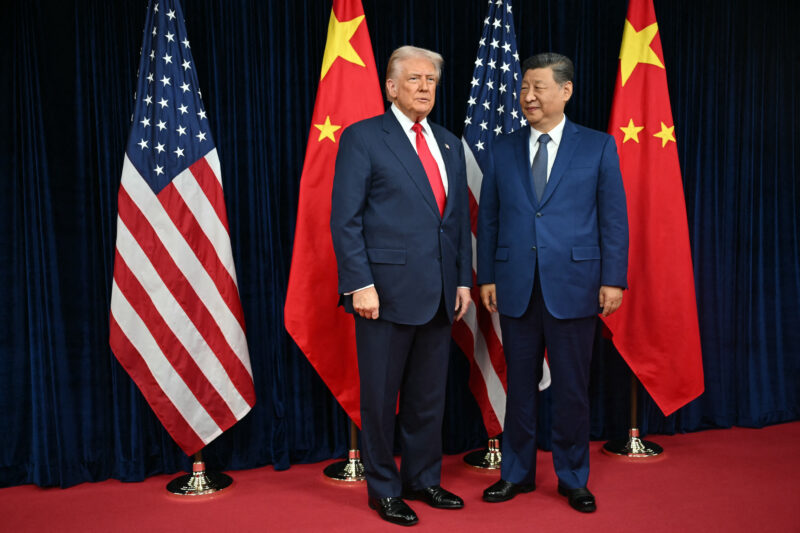
US President Donald Trump speaks about the conflict in Iran in the James S. Brady Press Briefing Room of the White House on April 6, 2026, in Washington, DC.


 Add JewishInsider on Google
In today’s Daily Kickoff, we report on questions that Democratic officials supporting Maine Senate candidate Graham Platner are facing following new allegations surrounding his past romantic relationships, and spotlight Cliff Sims, who last month was tapped to serve as Vice President JD Vance’s national security advisor. We report on the launch of talks between Israel and the U.S. to discuss a new partnership framework that will succeed the expiring 10-year memorandum of understanding between the countries, and talk to the Israeli startup founders who attended last week’s New York Tech Week. Also in today’s Daily Kickoff: Steven Spielberg, Sen. Rick Scott and Ron Klain.
Today’s Daily Kickoff was curated by JI Executive Editor Melissa Weiss and Israel Editor Tamara Zieve, with assists from Danielle Cohen-Kanik and Marc Rod. Have a tip? Email us here.
What We’re Watching
- We’re closely monitoring the situation in the Middle East following last night’s escalation between Israel and Iran. Earlier this morning, Iran and its Houthi proxy fired several barrages at Israel, and Israel struck an Iranian petrochemical plant in southwestern Iran as well as additional targets that the IDF described as “strategic defense systems” belonging to the Iranian regime. Early this afternoon local time, Iran reportedly said it was halting its fire against Israel. More below.
- President Donald Trump said that “Israel and Iran must immediately stop ‘shooting,’” in a post on Truth Social early Monday morning. For the latest developments delivered throughout the day, premium subscribers can stay updated with JI’s What We’re Watching live briefing.
- The Senate Armed Services Committee is holding its markup of the 2027 NDAA.
- Rachel Goldberg-Polin and Jon Polin will be the keynote speakers at tonight’s annual Rabin lecture hosted by Washington Hebrew Congregation and the Milton Gottesman Jewish Day School.
- Elsewhere in Washington, the American Council on Education is convening faith-based higher education leaders today for a daylong summit.
- Trump and New York City Mayor Zohran Mamdani are both expected to attend Game 3 of the NBA Finals tonight in New York, where the Knicks will take on the San Antonio Spurs. The Knicks lead 2-0 in the best-of-seven championship series.
- The Seminar Annual Forum in Scottsdale, Ariz., kicked off yesterday and runs through tomorrow. Among those slated to speak is Saudi Ambassador to the U.S. Princess Reema bint Bandar Al Saud.
What You Should Know
A QUICK WORD WITH JI’S MELISSA WEISS
Millions of people across northern Israel heard a familiar sound from their phones late Sunday night: an alert from Israel’s Homefront Command, notifying them for the first time in two months, of an incoming ballistic missile attack from Iran.
Just after sunrise, residents of Israel’s center — from Tel Aviv to Jerusalem — received the same notification, and groggily huddled in shelters as Iran, joined by its Houthi proxy in Yemen, launched fresh salvos at Israel. Shortly after, Israel struck a petrochemical plant in southwest Iran.
Last night’s initial Iranian attack came in response to Israeli strikes in the Beirut suburb of Dahiyeh, a Hezbollah stronghold that had in recent weeks been off-limits to the IDF in accordance with a U.S.-brokered ceasefire with Lebanon that limited Israeli action to southern Lebanon, another Hezbollah stronghold.
What matters more than how the latest round of fighting started is what will happen next. Israeli media reported that its overnight strikes on Iran had been coordinated with the U.S., even as President Donald Trump spent Sunday afternoon on the phone with reporters trying to publicly de-escalate the situation. But early this afternoon local time, Iran reportedly said it was halting its fire against Israel.
Shortly after Iran’s initial missile attack on Sunday, Trump told Fox News that the incident was “certainly not going to help” the ongoing negotiations between the U.S. and Iran. He continued, “What I would suggest to Iran: You’ve shot your missiles, that’s enough, get back to the table and make a deal.”
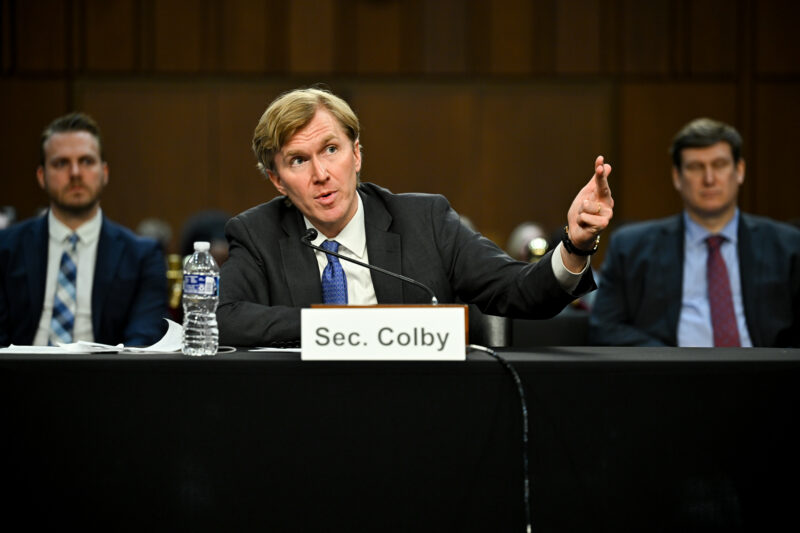
Trump’s comments could be taken at face value — or viewed with some skepticism in light of the Israeli media reports that the strikes were coordinated with Washington. It would not, after all, be the first time in which the U.S. and Israel publicly emphasized their differences while privately remaining aligned — even amid alleged fissures in the relationship. That includes leaks to NBC News and The New York Times over the weekend that the Defense Department’s Defense Intelligence Agency had raised its counterintelligence threat level for Israel to the highest level. The Times named three U.S. officials that were allegedly being tracked for information on the Iran negotiations: White House Special Envoy Steve Witkoff, the Pentagon’s Elbridge Colby and Colby’s deputy, Michael DiMino.
But things move fast in the Middle East. Recall that last June, after 12 days of intensive strikes between Israel and Iran, joined by the U.S., a ceasefire was announced mere hours after Iran launched missiles at a U.S. airbase in Qatar. Addressing the overnight escalation between Israel and Iran — and Iran’s continued intransigence in the region — is likely to be the White House’s top order of business today. Indeed, Trump issued his first comments of the day shortly before 6 a.m. ET, posting on his Truth Social site that “Israel and Iran must immediately stop ‘shooting.’”
DAMAGE CONTROL
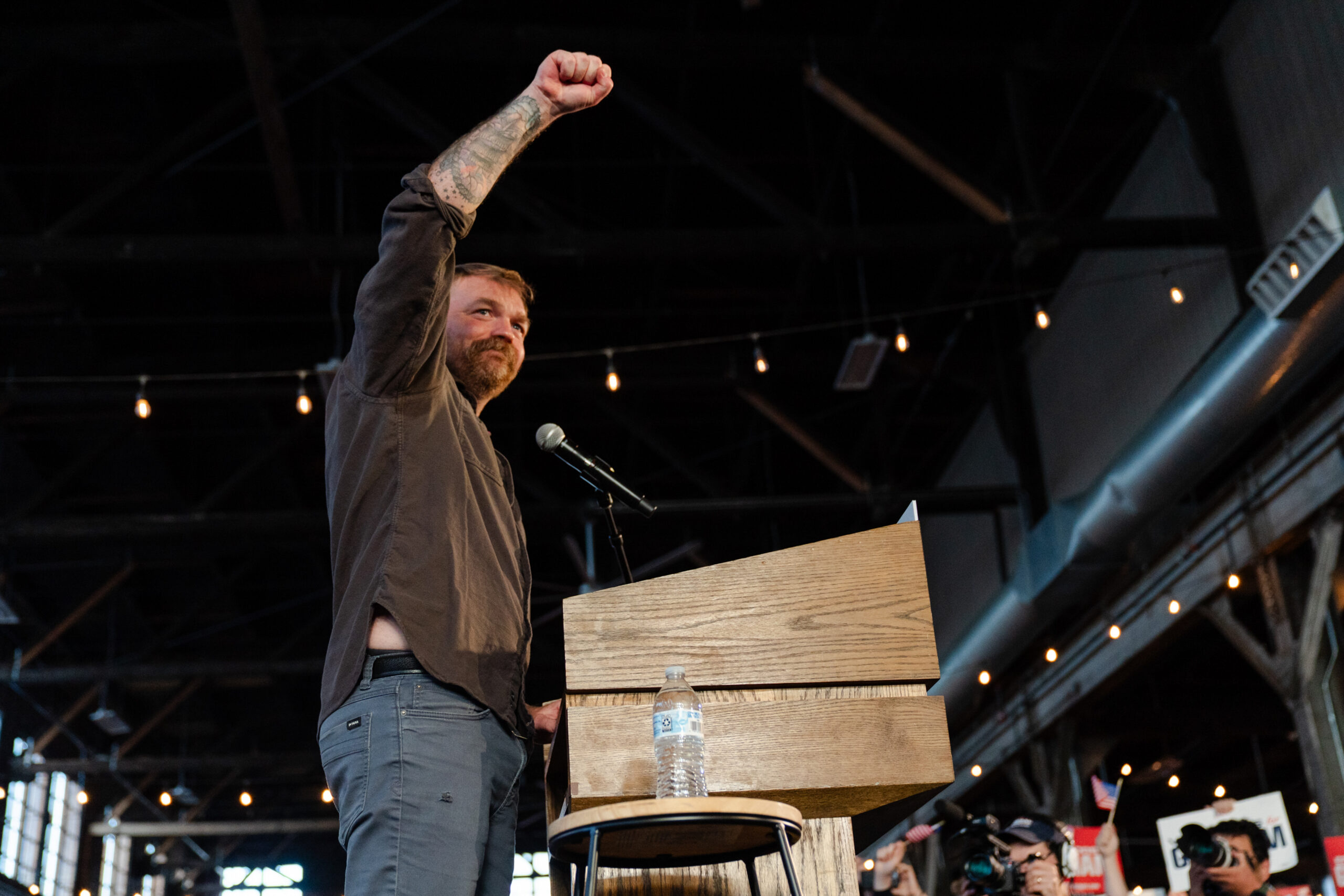
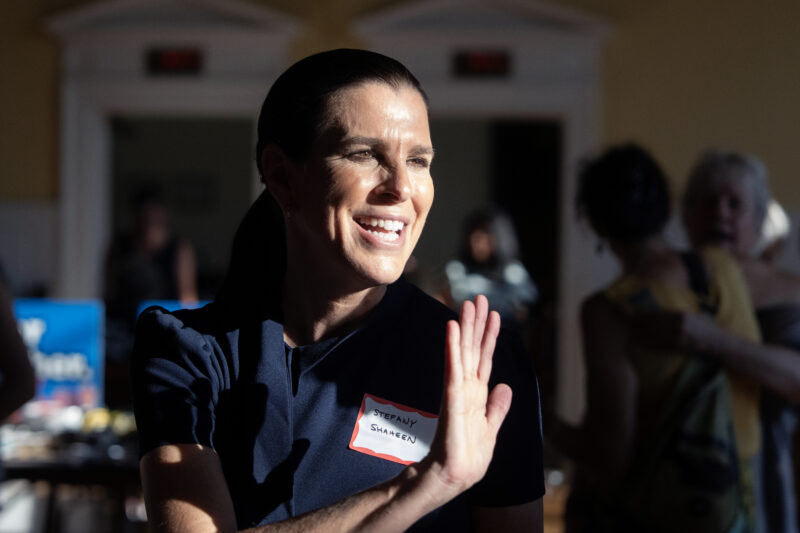
Top Democrats faced questions on Sunday over Maine Senate candidate Graham Platner’s scandals, days after The New York Times shared details of abusive behavior alleged by past romantic partners, Jewish Insider’s Marc Rod reports.
Reactions: Rep. Ro Khanna (D-CA), who has endorsed Platner, said he continues to support him even as he criticized Platner’s past behavior and said his campaign should not attack his accusers, while Sen. Mark Warner (D-VA) and House Minority Leader Hakeem Jeffries (D-NY) declined to offer any support for Platner and said that Platner and Maine voters will need to address the scandal.
Progressive-pilled: Ron Klain, who served as chief of staff in the Biden administration, is reportedly advising Khanna as the California Democrat and Israel critic weighs a 2028 presidential bid. Klain, Politico reports, had also signed on to prepare Platner for a Democratic primary debate with Gov. Janet Mills, which did not materialize after the governor dropped her Senate bid.
SIMS SELECTION

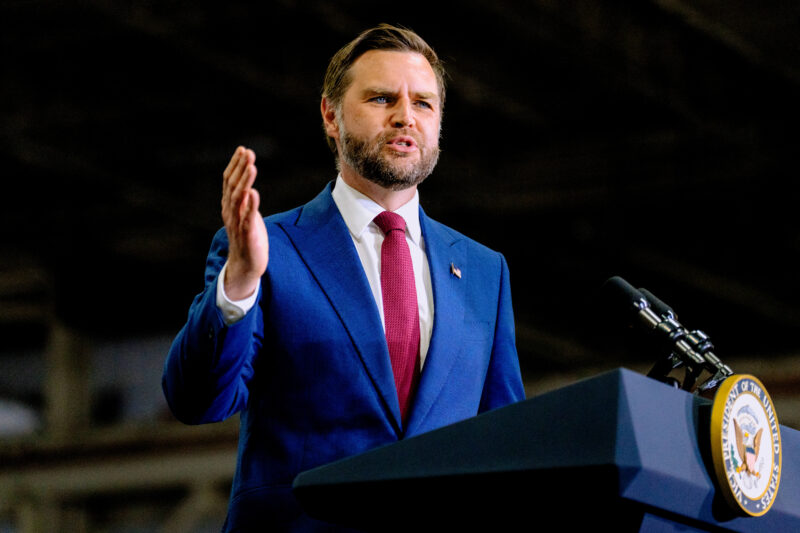
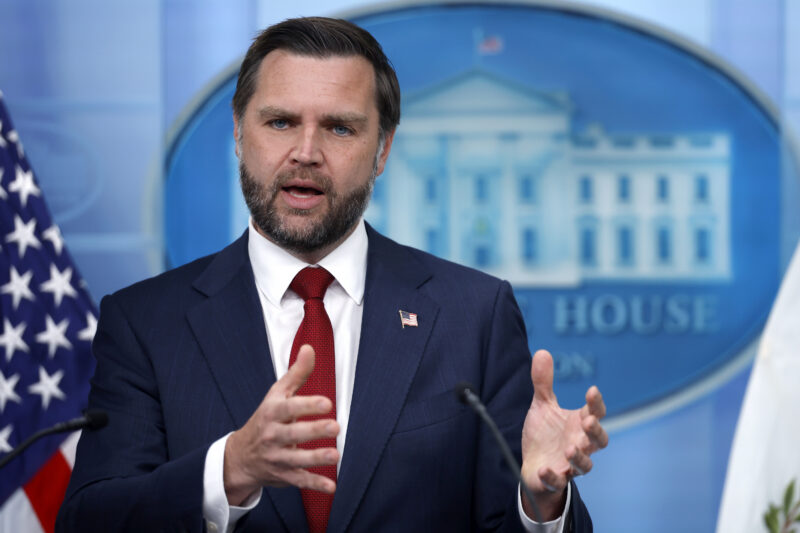
Vice President JD Vance tapped Cliff Sims last month as his national security advisor, picking a longtime GOP operative with close relationships across the party’s ideological spectrum on foreign policy. The hire bolsters Vance’s foreign policy operation at a time when intraparty fissures are widening over the lack of diplomatic or military progress in the war with Iran and the broader question of American engagement abroad, Jewish Insider’s Emily Jacobs reports.
Ratcliffe’s reference: In addition to being a Vance confidante, Sims, 42, has advised or worked with President Donald Trump, former House Speaker Kevin McCarthy (R-CA), and CIA Director John Ratcliffe, most recently serving as chairman of the CIA’s external advisory board. “Cliff served as one of my deputies when I was DNI and I saw firsthand his exceptional judgment and command of the most sensitive national security matters,” Ratcliffe told JI. Vance’s appointment of Sims also received praise from Jeff Miller, a leading Republican lobbyist and the board chair of the U.S. Holocaust Memorial Museum, and Dan Conston, former president of the Congressional Leadership Fund. Both worked alongside him at Watchtower Strategy, the consulting firm they cofounded last year.
REIMAGINING THE RELATIONSHIP
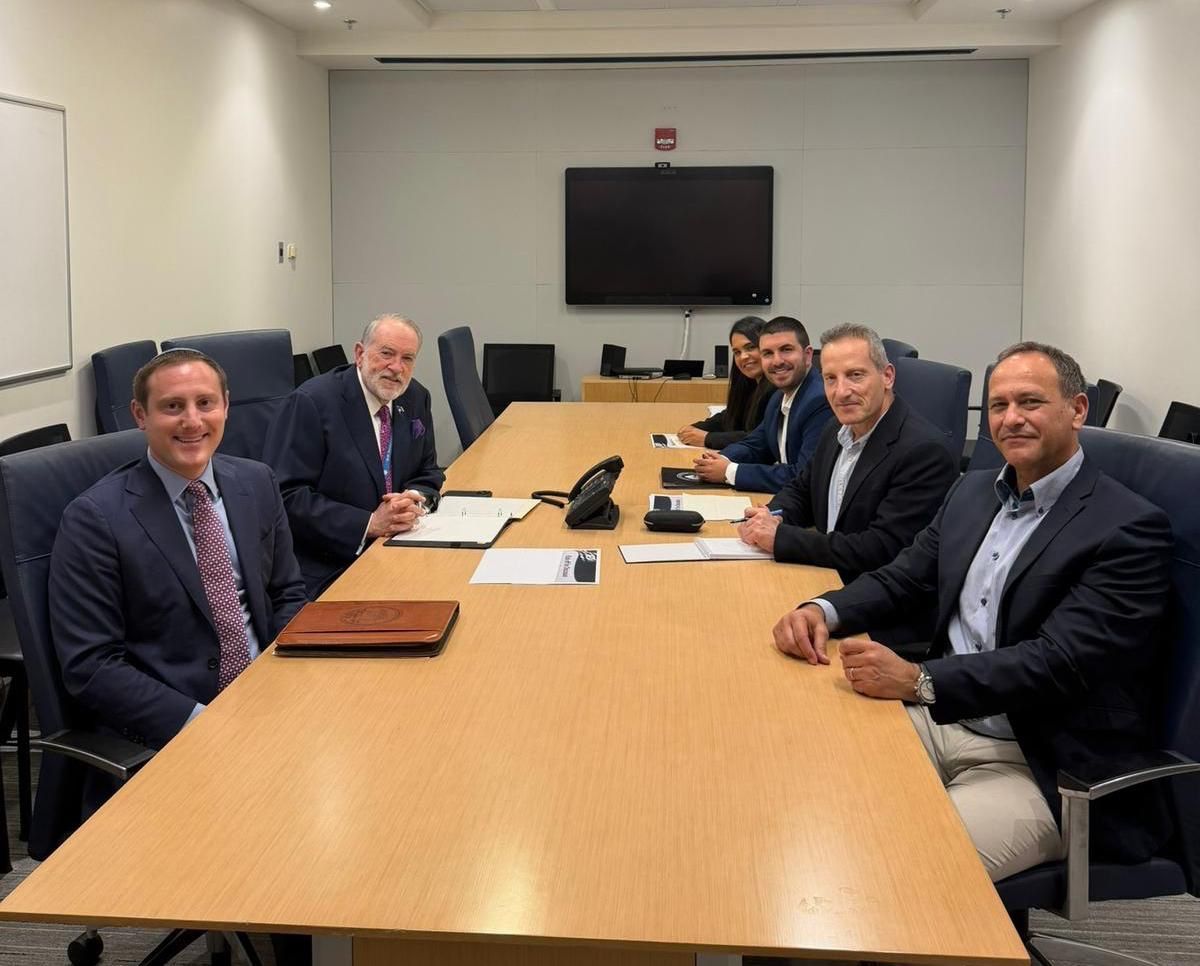
The Israeli Ministry of Defense and the Trump administration have launched formal talks on a “new security cooperation framework” to replace the current U.S.-Israel memorandum of understanding on military aid upon its expiration in 2028, the ministry said in a statement on Friday, Jewish Insider’s Danielle Cohen-Kanik reports.
Details: The Israeli team will be led by Defense Ministry Director-General Amir Baram and Israeli Ambassador to the U.S. Yechiel Leiter, while the U.S. team will be led by State Department counselor Daniel Holler and U.S. Ambassador to Israel Mike Huckabee. The two sides held a formal inaugural meeting this week and have further discussions planned in both countries in the coming weeks, the ministry said, without specifying a timeline for when the talks might conclude.
Regional rebuilding: Treasury Secretary Scott Bessent is examining pathways to repurpose Iranian assets to compensate the U.S.’ Gulf allies for damage inflicted by Iranian attacks during the war, and potential future damages, a source familiar with Bessent’s thinking told JI’s Marc Rod.
EXTREMISM WATCH

Darializa Avila Chevalier, New York City Mayor Zohran Mamdani’s endorsed candidate to unseat Rep. Adriano Espaillat (D-NY), on Friday defended her attendance at an anti-Israel rally one day after Hamas’ Oct. 7, 2023, attacks on Israel, denied knowledge regarding her own history of posting anti-U.S. and pro-Russian sentiments online and maintained she owed nothing to the Texas tycoon underwriting a PAC backing her campaign, Jewish Insider’s Will Bredderman reports.
What she said: The Democratic Socialists of America-endorsed congressional contender faced questions from reporters following a press conference, including over her decision to participate in an anti-Israel protest organized by pro-China, pro-Iran groups on Oct. 8, 2023. “I was at this rally because I have always, as someone who has followed the issues that happened in the region, I have seen a pattern in which whenever there is an incident, the State of Israel engages in a response that is often disproportionate and creates a greater loss of life,” she said. “And that is what I was there to stand against.”
DEMS DEBATE

The four leading Democrats running in a closely contested Manhattan primary to succeed retiring Rep. Jerry Nadler (D-NY) all declined to describe Israel’s military conduct in Gaza as genocide during their first televised debate on Thursday evening, Jewish Insider’s Matthew Kassel reports. Micah Lasher, an assemblyman who is backed by Nadler and other Democratic leaders in New York, called the number of Palestinian casualties “horrific” but characterized the question as “one of a set of definitional debates that does more to divide people of good faith than it does to find common ground.”
Choice of words: Alex Bores, a fellow assemblyman who has gained left-wing endorsements even as a defender of Israel, said he was “not comfortable” using the word, while Jack Schlossberg, a Kennedy scion and social media influencer, told the PIX11 debate moderator that he was “less interested in what we call it than what we do about it.” George Conway, a former Republican who is now an outspoken critic of President Donald Trump, said he did not think Israel’s war “meets the threshold” for genocide.
FOUNDER NATION

There’s a mantra in the Israeli startup world that its founders are months behind their American counterparts. New York Tech Week gave them a chance to close that gap, according to investors who descended on Manhattan last week. Michael Morgenstern, head of startups at financial technology platform Airwallex, which teamed up with Andreessen Horowitz — one of the world’s leading venture capital firms — to bring a delegation of Israeli founders to tech week for the first time, told Jewish Insider’s Haley Cohen that VCs are looking to see more AI products come out of Israel, which historically has been security focused.
AI aspirations: “It would be interesting to see an AI lab out of Israel,” Morgenstern said. “Why haven’t we seen an OpenAI or Claude, something of that status, coming out of the Israeli ecosystem? It makes me wonder if we are stagnating as an ecosystem. So exposing the Israeli market to what’s going on on the ground gives Israeli entrepreneurs the chance to get months ahead.”
Worthy Reads
No Room for Debate: In his Substack, commentator and “Making Sense” podcast host Sam Harris explains why he refuses to debate critics of Israel. “What do the Jews and Muslims in the region really yearn to accomplish? What are they willing to sacrifice for? What are they willing to die for? And what are they willing to let their children die for? When we focus on the present this way, if we’re being honest, we must concede that there are two very different realities on either side of this conflict: culturally, psychologically, ethically, spiritually — in every way that matters. Yes, Israel has its religious fanatics too. But they aren’t the same sort of fanatics we find in Hamas or Hezbollah, and they’re far less representative of the surrounding culture.” [Substack]
The Platner Paradox: The Washington Post’s Ramesh Ponnuru reacts to efforts by some supporters of embattled Maine Senate candidate Graham Platner, who last week was the subject of a lengthy New York Times piece in which former girlfriends raised concerns about his behavior, to defend Platner in spite of the latest reporting. “Progressives, who went all in on ‘believe women’ just a few years ago, have in many cases decided that certain exceptions apply. Conservative women whose testimony is inconvenient for Democratic hopes of running the Senate apparently are on that list. … Maine voters are free to support Platner, of course, as are progressive political commentators — notwithstanding the tattoo, the lying about it, the lying about his home loan, the extramarital sexting and everything else. But it’s a strange race to jettison moral standards for.” [WashPost]
Word on the Street
Axios spotlights growing concerns among Jewish Democratic officials and political staffers over growing antisemitism — and its acceptance — within the party…
Sen. Rick Scott (R-FL) is calling on the Tampa Sports Authority to reconsider the city’s plans to host two upcoming Kanye West concerts, citing concerns that taxpayer funds will go to support performances by West, who has made numerous antisemitic remarks in recent years…
The Boulder, Colo., Jewish community unveiled a plaque during the Boulder Jewish Film Festival paying tribute to the victims of last year’s antisemitic firebombing targeting a hostage-awareness rally, in which one woman was killed…
The New York Times Magazine profiles director Steven Spielberg ahead of the release of his 35th film, “Disclosure Day,” this weekend…
Actor John Lithgow won the Tony Award for Best Lead Actor in a Play for his portrayal of antisemitic author Roald Dahl in “Giant”…
Carlyle Group co-founder David Rubenstein married Caryn Zucker on Friday; the couple first exchanged vows in a ceremony officiated by Supreme Court Chief Justice John Roberts, followed by a religious ceremony at Washington’s Sixth and I synagogue officiated by Rabbi Stuart Weinblatt…
Police in Canada arrested a man in connection with last week’s arson attack at Montreal’s Temple Emanu-El-Beth Sholom, one of the city’s oldest synagogues…
The Bank of Israel purchased approximately $800 million in May in an effort to stem the growing strength of the shekel; the move came as some Israel-based companies and NGOs were forced to downsize as a result of the currency’s appreciating value against a weakening dollar…
Ireland will issue travel bans prohibiting far-right Israeli Finance Minister Bezalel Smotrich and National Security Minister Itamar Ben-Gvir from entering the country…
One person was killed and five injured in what is believed to be a terror attack in central Israel; the alleged assailant, an Arab Israeli man from the town of Tayibe, was killed by police soon after the spree…
Heedo Abu Laban is joining The New York Times as a reporter and researcher in the outlet’s Jerusalem bureau; Abu Laban previously worked at Israel’s Kan broadcaster and i24News…
Israeli singer Yishai Levi, known for his contributions over the decades to Mizrahi music, died at 63…
Pic of the Day

William Daroff and Betsy Berns Korn, respectively the CEO and chair of the Conference of Presidents of Major American Jewish Organizations, met with Israeli President Isaac Herzog in Jerusalem on Sunday. Daroff told JI it was a “warm meeting that discussed a wide range of issues of concern to American Jewry and to the diaspora, generally.”
Birthdays
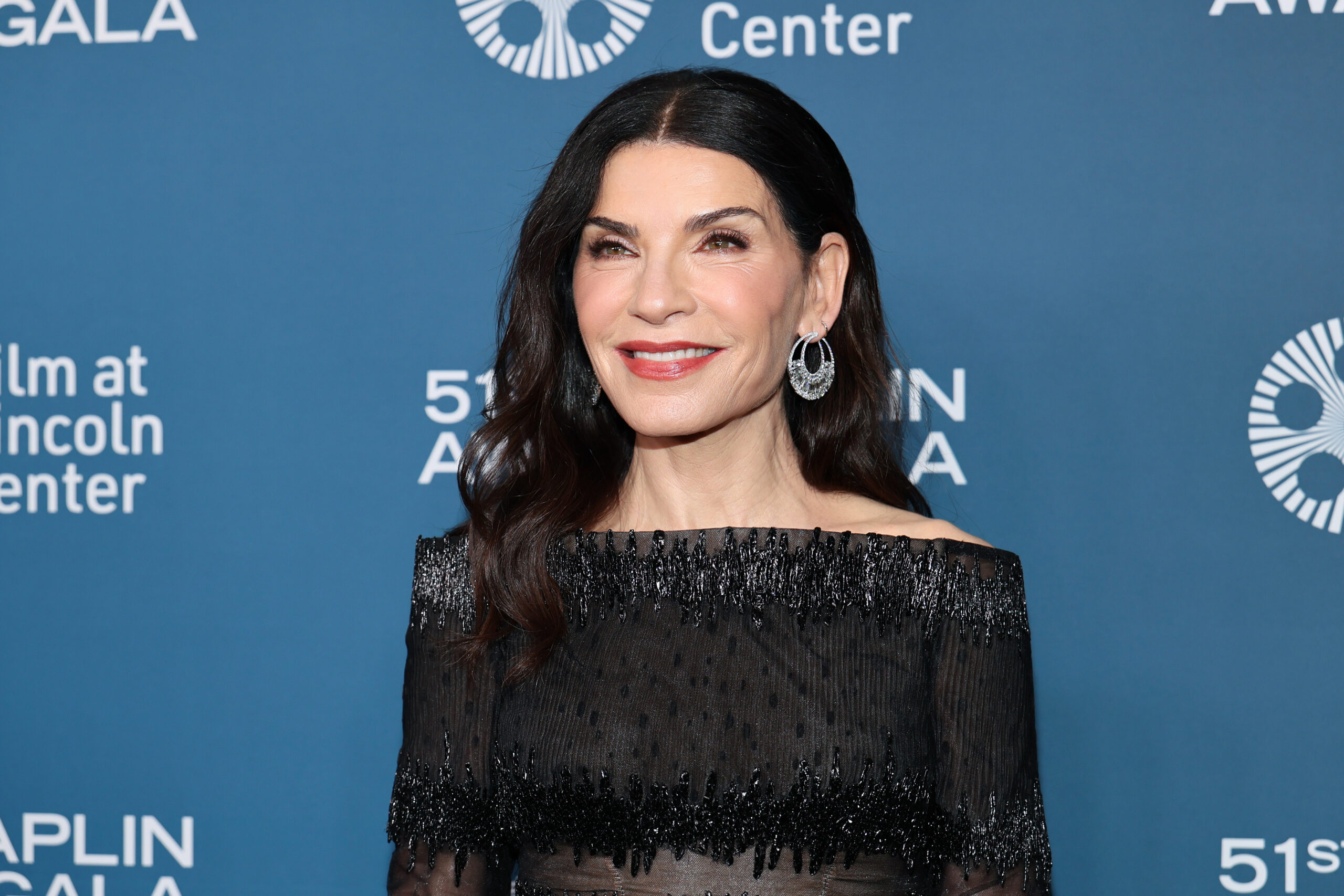
Winner of many Emmy and SAG awards, star of the long-running TV series “The Good Wife,” Julianna Margulies turns 60…
Hebrew University mathematics professor emeritus and 2005 Nobel Prize laureate in economics, Robert Aumann turns 96… Guru of alternative, holistic and integrative medicine, Dr. Andrew Weil turns 84… Hedge fund founder and manager, founder of the Paloma Funds, Selwyn Donald Sussman turns 80… Detective novelist, best known for creating the character of V.I. Warshawski, Sara Paretsky turns 79… Founder and CEO of Sitrick and Company, one of the most prominent crisis management firms in the U.S., Michael Sitrick… Classical pianist, teacher and performer at the Juilliard School and winner of several Grammy Awards, he is the child of Holocaust survivors, Emanuel Ax turns 77… Former member of Knesset from the Zionist Union and Labor parties, now a professor emeritus at Ben-Gurion University, Yosef “Yossi” Yona turns 73… Barbara Jaffe Panken… Senior advisor at Bloomfield Hills, Mich.-based O2 Investment Partners, Robert Harris “Rob” Orley… Journalist, stand-up comedian, author, cartoonist and blogger, Aaron Freeman turns 70… CEO of the Greater Fort Lauderdale Convention & Visitors Bureau, Stacy Ritter turns 66… AVP for campaign at the Jewish United Fund of Metropolitan Chicago, Patti Frazin… Moscow-born, living in the U.S. since 1976, he is a major figure in the Russian energy sector and co-founder and chairman of the Genesis Prize Foundation, Stan Polovets turns 63… Israel’s state comptroller and ombudsman, Matanyahu Englman turns 60… Actor, screenwriter and producer, Dan Futterman turns 59… Former congresswoman (D-AZ), she is a survivor of an assassination attempt near Tucson in 2011, Gabrielle Giffords turns 56… Actor who starred in USA Network’s “Royal Pains,” he also co-wrote and created the CBS series “9JKL,” Mark Feuerstein turns 55… Former executive director at Consulate Health Care in New Port Richey, Fla., Daniel Frenden… Inaugural executive director of American Friends of IDF Widows and Orphans, Daniel Elbaum… Former deputy chief of staff for Charlie Baker when he was governor of Massachusetts, Michael Emanuel Vallarelli… Lead organizer at LA Voice, a multiracial multifaith community organization, Suzy Stone… Businesswoman, art collector and editor, founder of the Garage Museum of Contemporary Art, Dasha Zhukova turns 45… Fourth-generation supermarket executive at Klein’s ShopRite of Maryland, Marshall Klein… Corporate litigation partner in the Wilmington office of Young Conaway Stargatt & Taylor, Daniel Kirshenbaum… Three-time Tony Award-winning theatrical producer, he is the co-founder at Folk Media Group, Eric J. Kuhn turns 39… CEO of BZ Media and the Bnai Zion Foundation, Rabbi Ari Lamm… Offensive tackle in the NFL for nine seasons until he retired in 2022, his Hebrew name is “Mendel,” Mitchell Schwartz turns 37…
Plus, Suozzi re-ups Cuomo endorsement

Win McNamee/Getty Images
Hamtramck, Mich. Mayor Amer Ghalib introduces President Donald Trump, as Trump visits a campaign office on Oct. 18, 2024, in Hamtramck, Michigan.
Good Wednesday afternoon!
This P.M. briefing is reserved for our premium subscribers like you — offering a forward-focused read on what we’re tracking now and what’s coming next.
I’m Danielle Cohen-Kanik, U.S. editor at Jewish Insider and curator, along with assists from my colleagues, of the Daily Overtime briefing. Please don’t hesitate to share your thoughts and feedback by replying to this email.
📡On Our Radar
Notable developments and interesting tidbits we’re tracking
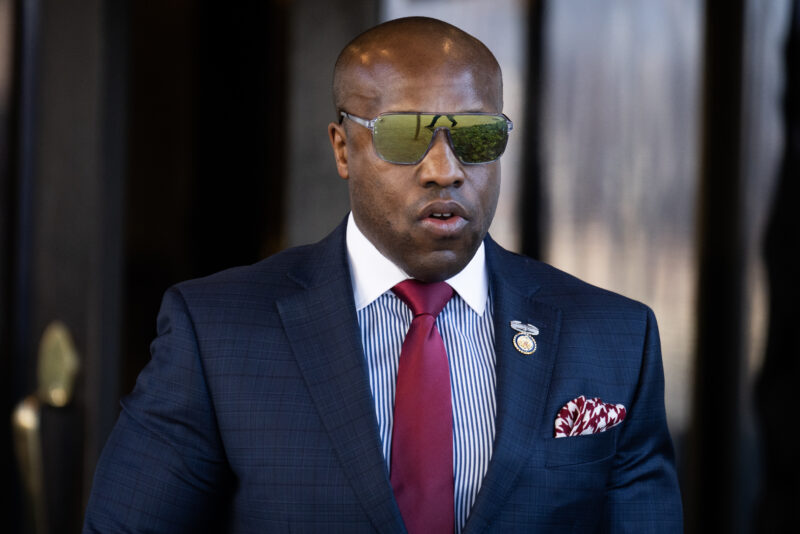
The White House has told Republicans that President Donald Trump will not pull the nomination of Amer Ghalib, the mayor of Hamtramck, Mich., to be U.S. ambassador to Kuwait and wants the Senate Foreign Relations Committee to hold a vote on his candidacy, despite the growing bipartisan opposition to his nomination, Jewish Insider’s Emily Jacobs reports.
White House officials have communicated to committee Republicans in recent days that Trump would not withdraw Ghalib’s nomination because the president credits the Democratic Hamtramck mayor with helping him win the state of Michigan in the 2024 presidential election by turning out the state’s Arab American vote, two sources familiar with the ongoing discussions told JI.
“If Trump wants his friend to go down that way, that’s OK. He can go down that way,” one Republican on the committee said, expressing confidence that Ghalib had no path to advance out of committee…
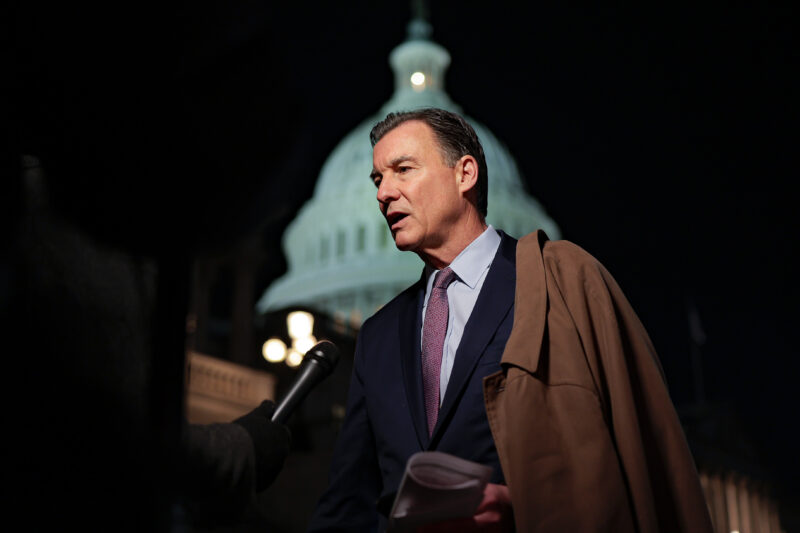
Rep. Tom Suozzi (D-NY), who represents a Long Island-based swing district on the outskirts of New York City, today endorsed former New York Gov. Andrew Cuomo in the general election for New York City mayor. Suozzi had endorsed Cuomo in the Democratic primary and announced last month that he would not be endorsing Zohran Mamdani after he secured the party’s nomination.
In Suozzi’s decision to re-up his support for Cuomo, now running as an independent, less than a week out from the election, he distanced himself from Mamdani’s political leanings: “I’m a Democratic Capitalist, not a Democratic Socialist. I endorse Andrew Cuomo. I can not back a declared socialist with a thin resume to run the most complex city in America”…
Time magazine profiles New York City Mayor Eric Adams, where he recalls hosting Mamdani and his father, Mahmood Mamdani — a professor at Columbia University with a long record of anti-Israel commentary — for dinner in 2023. “The frightening thing is, he really believes this stuff! Globalize the intifada, there’s nothing wrong with that! He believes, you know, I don’t have anything against Jews, I just don’t like Israel. Well, who’s in Israel, bro?” Adams said…
Elsewhere in New York, the Democratic race to clinch the nomination for retiring Rep. Jerry Nadler (D-NY)’s seat gained another candidate today: Cameron Kasky, a Jewish gun control activist who survived the Marjory Stoneman Douglas High School shooting in 2018. Kasky, who recently started co-hosting the “For You Pod” with The Bulwark, frequently criticizes Israel and AIPAC in public statements, including accusing Israel of carrying out a genocide in Gaza and not being committed to the ongoing ceasefire with Hamas.
The field to succeed Nadler, a progressive Jewish lawmaker whose district has one of the largest Jewish constituencies in the country, has already drawn several candidates, including his former longtime aide, Micah Lasher…
Another candidate with harsh words for AIPAC is Rep. Seth Moulton (D-MA), challenging Sen. Ed Markey (D-MA) for his seat. Moulton, considered more moderate than Markey, continued to appeal to his left flank this week, appearing on a podcast hosted by Jack Cocchiarella, a self-described “progressive Gen Z political commentator” who frequently engages in harsh criticism of Israel on social media.
Moulton — who recently decided to return AIPAC’s donations and pledged not to take its support going forward — said his split with the group could continue to feature in the race depending “a lot on what happens in Gaza and Israel. … I certainly hope … we don’t resort to more violence, and if that’s the case, I think we’ll be able to talk about other issues in this campaign. Sadly, if it’s not, then I’m sure this will keep coming up.”
Moulton did not push back on Cocchiarella’s assertion that AIPAC, which he said has ties to the “Netanyahu regime,” should “be registered as a foreign lobby.” (Accusations from both political fringes that AIPAC — whose members are American citizens — constitutes a foreign influence operation have often invoked antisemitic dual loyalty tropes)…
The Anti-Defamation League today removed a section called “Protect Civil Rights” from its “What We Do” webpage, the Jewish Telegraphic Agency reports, shortly after it pulled down its “Glossary of Extremism and Hate” amid conservative attacks on the organization. The group appears to be pivoting after FBI Director Kash Patel recently cut the bureau’s ties with the ADL, calling it “an extreme group functioning like a terrorist organization”…
Spotted in Riyadh, Syrian President Ahmad al-Sharaa spoke today at the Future Investment Initiative summit, with front-row spectators Donald Trump Jr. and Saudi Crown Prince Mohammed bin Salman…
Also in the region, U.S. envoy Morgan Ortagus visited Lebanon today to push the Lebanese government to speed up efforts to disarm Hezbollah, with a goal of total disarmament by the end of the year, The New York Times reports.
The Lebanese Armed Forces have seized 10,000 rockets and 400 missiles from the terror group as part of disarmament efforts already, though Israeli and American officials told the Times it’s not sufficient, with Hezbollah moving to rebuild its stockpile…
⏩ Tomorrow’s Agenda, Today
An early look at tomorrow’s storylines and schedule to keep you a step ahead
Keep an eye on Jewish Insider tomorrow morning for an interview with California Democratic state Sen. Scott Weiner, running to replace former House Speaker Nancy Pelosi (D-CA), who is rumored to be announcing her retirement plans shortly.
Tomorrow, the N7 Foundation and Polaris National Security Foundation are hosting the invite-only Washington Prosperity Summit, with attendees including Trump administration officials, bipartisan lawmakers, foreign dignitaries from the Middle East and business executives, “to explore policies to advance prosperity in the region.”
The Simon Wiesenthal Center is hosting its 2025 Humanitarian Award Dinner in Los Angeles tomorrow, honoring Warner Bros. Discovery CEO David Zaslav, CNN anchor Dana Bash, Oct. 7 survivor Aya Meydan and former Israeli hostage Omer Shem Tov. Director Steven Spielberg will present Zaslav with this year’s Humanitarian Award, the center’s highest honor.
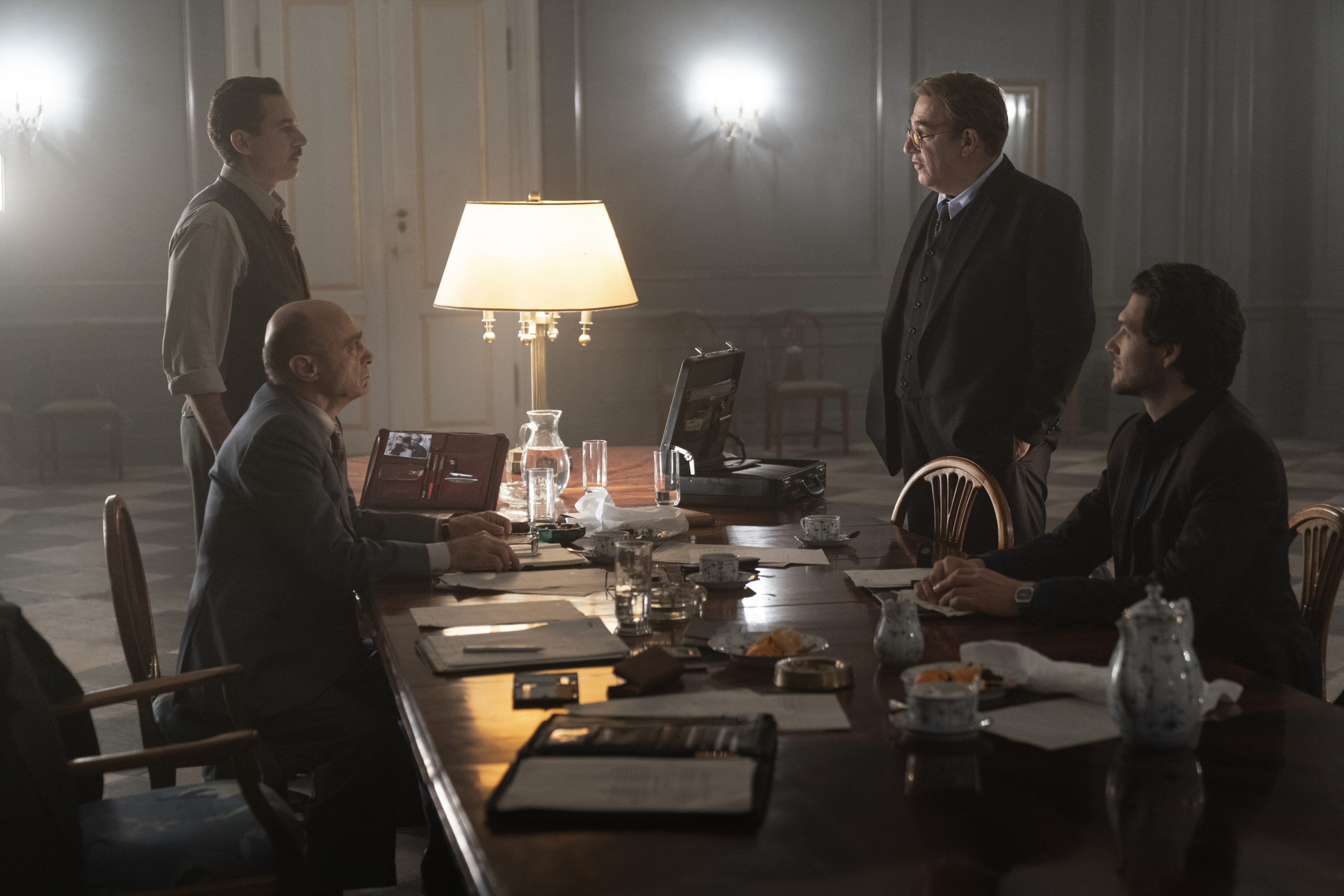
In Washington, Sony Pictures Entertainment, the Motion Picture Association and the German Embassy will host a special screening of “Nuremberg,” a new feature film on the Nuremberg Trials.
Also tomorrow, the World Zionist Congress wraps up in Jerusalem and the Future Investment Initiative summit comes to a close in Riyadh.
Stories You May Have Missed
JUSTICE, JUSTICE HE PURSUES
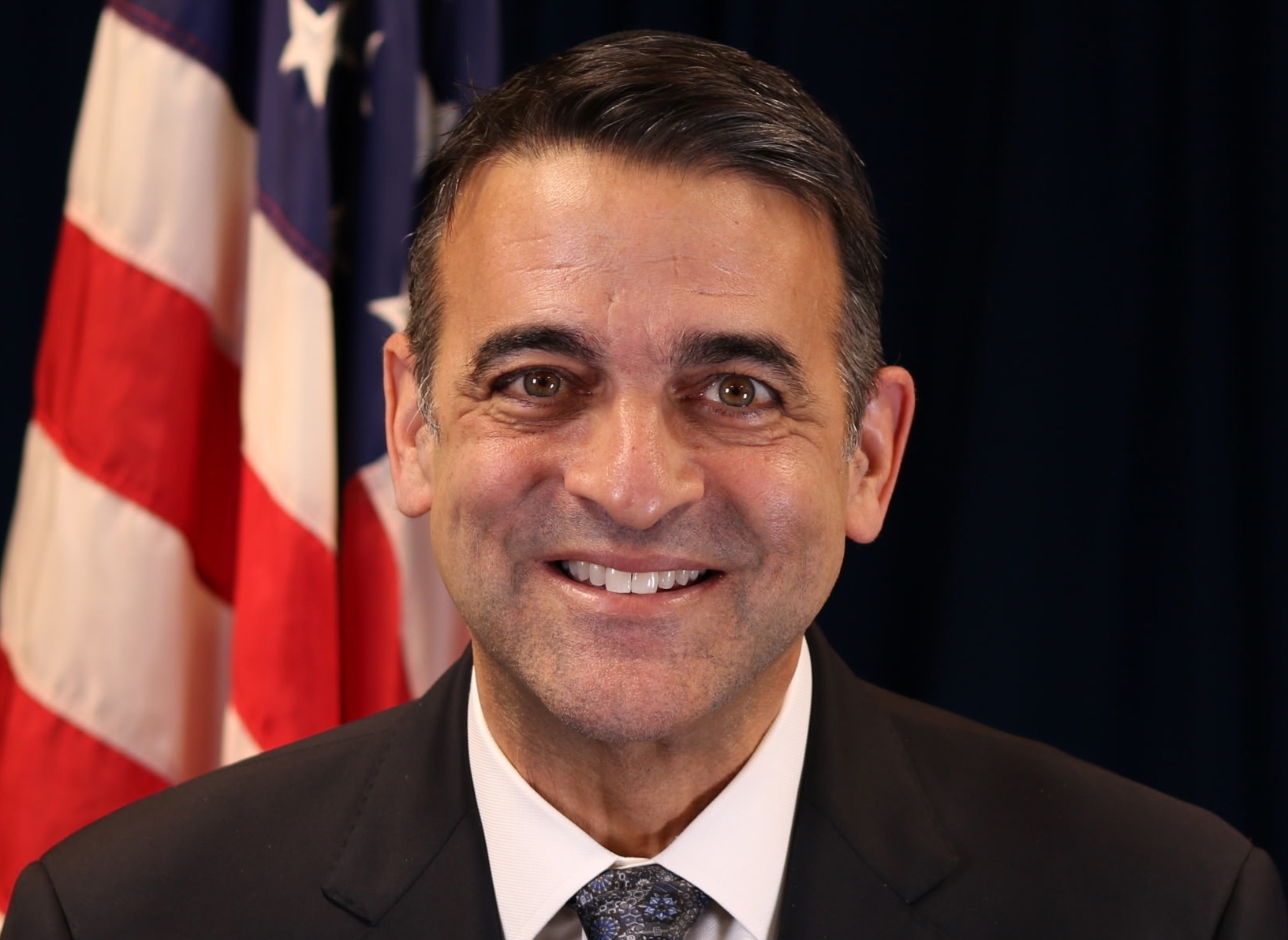
In an interview with JI, the Minnesota prosecutor and Jewish community leader said he was motivated to seek the role because of the ‘rapid escalation of violent antisemitism’
TIKTOK TALK

JFNA CEO Eric Fingerhut cited TikTok’s new owners’ ties to the Jewish community as an an encouraging sign
Director Bartlett Sher reflects on the lessons of history, why the Middle East matters to so many people and what the Oslo peace process could teach Washington

Larry D. Horricks
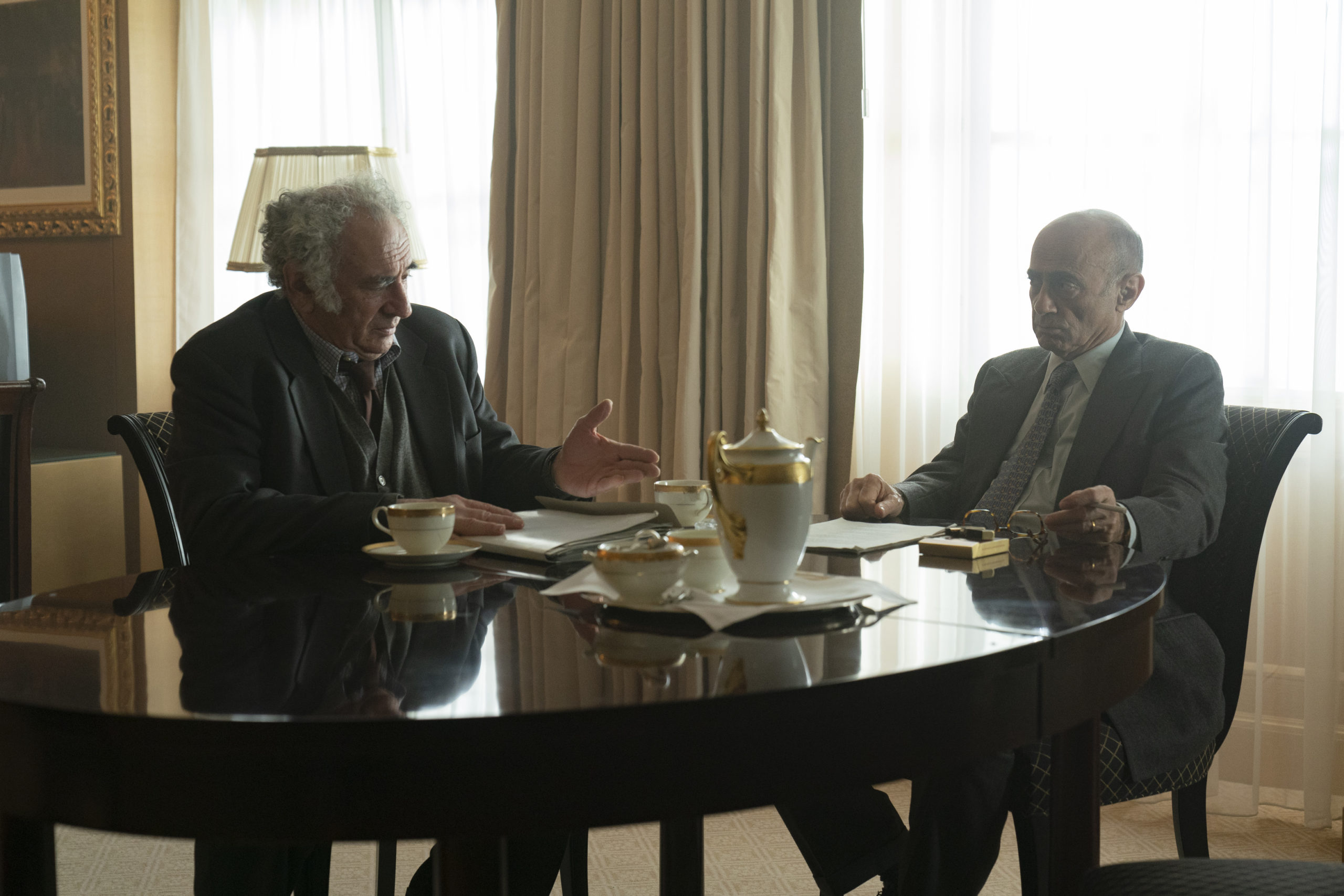
Salim Daw, Andrew-Scott, Ruth-Wilson, Jeff Wilbusch and Rotem Keinan in a scene from the upcoming HBO Max film "Oslo."
The opening scene of the film “Oslo” begins not in Norway but in an unusually snow-covered Middle East. A dream sequence intersperses videos of violence in Israel, Gaza and the West Bank with footage of a European woman, headscarf pulled down around her neck, wandering through Gaza. An ominous soundtrack crescendos as the violence grows more intense, until viewers see the woman in a United Nations car that takes a direct hit from a projectile — a bullet or a rock, it isn’t clear which.
The woman is Mona Juul, an official in the Norwegian Foreign Ministry who is haunted by her time in Gaza, including a memory of seeing a Palestinian boy with a stone in his hand get shot by an Israeli soldier. After returning from the region, she and her husband Terje Rød-Larsen, a social scientist, undertake the defining mission of their career: orchestrating the 1993 back-channel negotiations that kicked off what ultimately became the Oslo Accords.
The story of Mona and Terje — and the Israelis and Palestinians they brought together — was first told in the 2016 Broadway play “Oslo.” That show has now been adapted into a movie, which premieres Saturday on HBO and was produced by Marc Platt and Steven Spielberg. Playwright J.T. Rogers adapted the script, and his collaborator, Tony Award-winning director Bartlett Sher, directed the film.
The movie depicts how this unlikely Norwegian couple convinced Israelis and Palestinians to come together at a historic mansion in a Scandinavian forest to hash out their differences while enjoying traditional fish dishes and drinking copious amounts of liquor.
The characters at the heart of the story are not the expected leaders — no one plays Palestine Liberation Organization Chairman Yasser Arafat, Israeli Prime Minister Yitzhak Rabin or U.S. President Bill Clinton, although Shimon Peres, then Israel’s foreign minister, makes a brief appearance. Instead, it features the lower-level politicians and intellectuals who participated in the early rounds of talks, before they became official. The Israeli side includes, first, a professor from Haifa, and later Deputy Foreign Minister Yossi Beilin and Uri Savir, director-general of the Israeli Foreign Ministry. The Palestinian side features Ahmed Qurei, the PLO’s finance minister who is living in exile in Tunisia, and Hassan Asfour, his associate.
“The premise was getting enemies into a room to actually see each other as human beings,” Sher told Jewish Insider in a recent interview in Washington, D.C. “Oslo” tells the story of a nearly three-decade-old event, but it does not attempt to offer a comprehensive history of the Israeli-Palestinian conflict; instead, it seeks to offer lessons on courage, leadership and humanity from an era that now feels quite distant.
The recent 11-day war between Israel and Hamas might be compelling marketing for a movie about Israelis and Palestinians who were committed to coming together to end decades of fighting. “I would give anything for it not to be like this at this moment. Let’s just make that clear,” Sher said. But, he added, he recognized that it could “stir up a huge amount of interest in the subject, and therefore someone [who] goes to see ‘Oslo’ will learn something good, about the positive, about the history of where we are.”
While the movie is coming out at a time in which increased attention has been given to the conflict, it is also being released into a cultural moment where one-sidedness is very much in fashion, at least on social media. Many people who have recently begun to speak out about the conflict seemingly shun the complexity that is an inherent feature of the film.
“Great theater is always not between a wrong and right, but between two rights. If both sides are right, in a way it makes for a better story,” said Sher. “For people now who’ve gotten so entrenched in certain positions, to see that there was a time when people were willing to be helping, doesn’t hurt.”
While the disputes between the Israelis and the Palestinians remain unresolved, Sher views “Oslo” as a historical film. “It’s not a story which has a conclusion, and I don’t make the conclusion that, ‘Oh, if only we could go back to Oslo,’” Sher explained. “Learning about your own history, especially in the crazy social media world, is good.”
The story of these early negotiations is told through the eyes of Mona and Terje, who are meant to be neutral facilitators. Throughout the movie, Mona remains calm, interjecting only to stop an outburst from one of the Israeli or Palestinian negotiators. Keeping thoughts internal is more difficult for Terje, but he, too, succeeds — the conversations are left to the Israelis and Palestinians, who often pull the doors to the negotiating room closed as Mona and Terje watch from outside.
“They delivered us into a world we didn’t know, but they didn’t take credit for or try to do it from a motivation, or like they’re there to save all these people,” Sher noted. Still, he recognizes that telling the story of one of the most complicated regional, religious conflicts in the world through the eyes of white Christian characters could be a minefield. “We assiduously avoided that. It would be a trap. It’s not up to us,” he said. “The agency and importance of the story has to live with the Israelis and the Palestinians, and the Norwegians are simply the facilitators.”
This neutrality is what makes the roles of Mona and Terje so difficult for the actors to play, said Sher. “It’s hard on the actors playing those roles, because they don’t get to have their own emotional response. They have to withhold, and they have to stay back,” he said. The couple is played by the British actors Ruth Wilson, a Golden Globe- and Tony-nominated actress who recently appeared in “His Dark Materials,” and Andrew Scott, who gained international acclaim two years ago when he starred in the hit show “Fleabag.”
The play came about from a personal connection: Sher and Terje’s daughters were best friends who attended the same elementary school in Manhattan. They would see each other at the girls’ soccer games, where Terje recounted tales of his largely secret role in getting the Oslo peace process off the ground. “He would tell me the most outrageous stories about Middle East peace. It occurred to me that that was theatrical, the theatricality of hearing about going up there and doing a back channel and getting them to all sit and talk.”
Sher and Rogers, the playwright, have collaborated on other historical plays. The pair previously produced a play called “Blood and Gifts,” about the Stinger missile program in Afghanistan in the 1980s. “It was the most successful counterintelligence operation in U.S. history. It helped the Russians be driven out of Afghanistan, and it produced one thing that wasn’t so good. That was Osama bin Laden,” said Sher. The pair also worked on a project on the 50th anniversary of the moon landing. They are now working on a production based on The Power Broker, Robert Caro’s bestselling book about Robert Moses, the influential and controversial New York City urban planner.
Sher’s CV is long, with a mix of originals plays and adaptations, including the 2019 Broadway production of Harper Lee’s “To Kill a Mockingbird.” But Sher has also directed a number of award-winning musicals, including a 2008 revival of South Pacific that won him a Tony and a 2015 production of “Fiddler on the Roof.”
“Like most people [in the industry], I was in shows in school, in high school, playing small parts in musicals,” Sher said. After writing plays in college, he went back to his high school in California to run the drama department. He went to graduate school in England, where he studied sub-Saharan African theater and then experimental Polish theater. “I had a weird range of influences,” Sher noted, “and then I got better teachers and mentors and went into theater, and have been doing it for a long time since.”
In bringing “Oslo” to the big screen, Sher had to learn an entirely new way of directing. For one, the length had to change; the movie is just under two hours, while the play clocks in at two hours and 45 minutes. One challenge that he faced as a director was the fact that film is less interactive and less intimate than theater. At a play, with a live audience, “you get to select what you’re focusing on, and the whole thing’s going to unfold in front of you,” Sher explained. “In film, I’m going to select every single thing you see, and I’m going to really control all of that.”
With a play, the director can make changes before each showing. To now release “Oslo” to the entire world as a static, unchanging creation is something new for Sher. “The basic experience of releasing a film is so weird compared to theater, because you’re going every day, and you’re having audiences respond every night,” said Sher. “We’ve been working on it in this vacuum, and we’re gonna go from 250 to 300 people seeing it to millions.”
The now-global reach of “Oslo” helps introduce the story to people around the world who are unfamiliar with it. But it also means astute and potentially critical Israeli and Palestinian viewers. (The play was staged in Israel, but “I think they cut a lot of it,” he noted.) Ultimately, Sher isn’t concerned. “All the actors were from Israel and Palestine, and they were so extraordinary and so invested in it,” said Sher. “I didn’t feel like I was suddenly just making up my version of the world there, but I was actually participating with people who lived through a lot of this.”
Sher has no obvious connection to the subject matter, but he argues that “I don’t have to live through something to work on it.” Still, he does have Jewish roots: His father was born in a shtetl in Lithuania and fled pogroms in Europe, a fact Sher only learned as a teenager, after his parents had divorced. Sher’s father rejected his faith as a way to assimilate and stave off antisemitism he thought he might face in the business world. He never spoke about it. “My mother was about to marry him and went home to meet his parents, and I think after a few days, she said something like, ‘Is there something you want to tell me?’ Because, of course, they’re speaking Yiddish in the house.”
Sher’s father died relatively young, and he never got to ask about his Jewish background. But it remained a fascination of Sher’s, eventually contributing to his decision to direct the “Fiddler on the Roof” revival. “Often the first generation holds onto their beliefs. The second generation will reject everything. Then the third generation will become obsessed with the first generation,” said Sher. “I always was kind of obsessed and fascinated myself… It didn’t become a religious obsession. I was most attracted to the culture, the ideas.”
While the topic of the film could, at least in theory, be rather niche, Sher understands that the conflict attracts outsized global attention. “I’ve always had this thing about the Middle East. It’s at the center of a lot of our consciousness in general, and it’s an unresolved thing,” he explained. “It does matter to everyone, so if something happens, like that has happened in the last couple of weeks, it affects the whole world, because that region is at the heart of so many things. We all have a responsibility for it.”
And while it might not be part of the official marketing campaign, Sher insists that the movie has broader resonance beyond one small corner of the Middle East. “Leaders and people who work in these positions make these efforts and have to do these courageous things. That’s just how it is. I don’t mean just about Palestine, Israel. I mean about everything,” said Sher. “When we first did it, we said it was basically about Republicans and Democrats.”
The play has been staged in numerous cities around the world. Sher said people who saw it in London left talking about Brexit while viewers in South Korea walked away discussing the country’s enmity with its northern neighbor. Sher met with House Speaker Nancy Pelosi (D-CA) earlier this week, and he said they discussed this “sublayer” of the movie. “What is it going to take — can you get Ilhan Omar and AOC and Josh Hawley and Ted Cruz in the room together? And what would happen?”
It’s an almost laughably optimistic message to bring to Washington. Then again, no one thought anything would come of Mona and Terje’s plucky peacemaking efforts.
“I think that’s the kind of secret message,” said Sher. “If it’s between two opposing forces, can they come to agreement? How do you get that agreement to work? That’s really what we were always trying to do.”
By Jacob Kornbluh & JI Staff
DAY 5: Netanyahu: It’s Going To Take Time: “We are here in the midst of a complex operation. We need to be prepared for the possibility that it may take time. This is a serious event and there will be serious consequences. We are working together in a considered, responsible and very determined manner.” Netanyahu urged the international community to decry the kidnapping: “I expect all responsible elements in the international community – some of whom rush to condemn us for any construction in this place or for enclosing a balcony in Gilo – to strongly condemn this reprehensible and deplorable act of abducting three youths.” After 5 days and without mentioning Hamas, the EU finally released a statement: “We condemn in the strongest terms the abduction of 3 Israeli students in the West Bank and call for their immediate release.” [Statement] (more…)
Please log in if you already have a subscription, or subscribe to access the latest updates.
 Continue with Google
 Continue with Apple