




















































Republicans, experts warn Ankara’s involvement in Gaza peace plan could endanger Israel ties and embolden Hamas

Burak Kara/Getty Images
Turkey's President Recep Tayyip Erdogan speaks to supporters at his party’s Istanbul mayoral candidate Murat Kurum's campaign rally on March 29, 2024 in Istanbul, Turkey.


 Add JewishInsider on Google
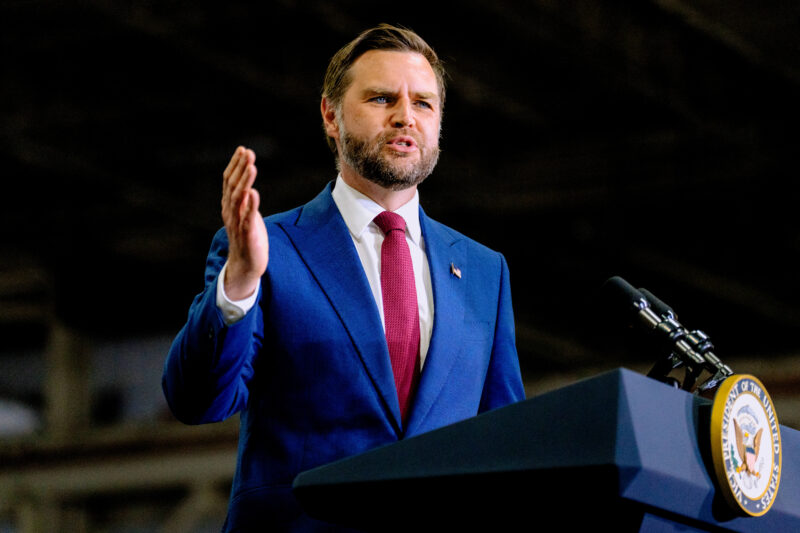
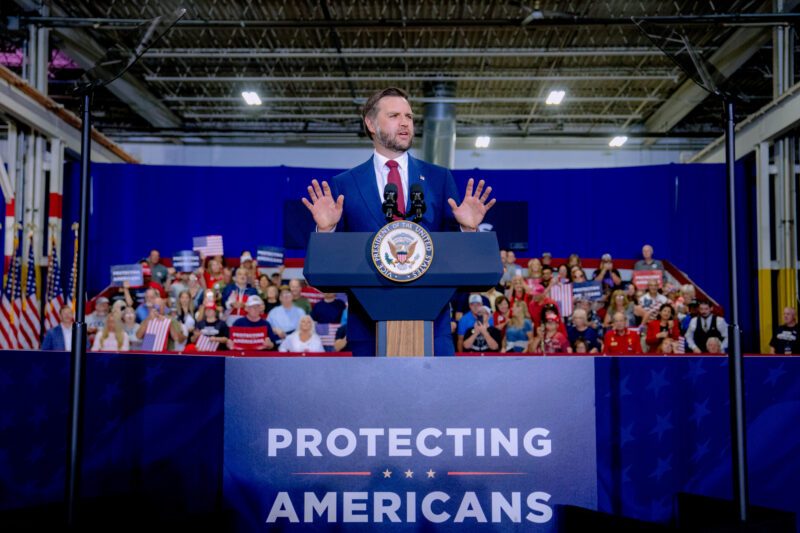
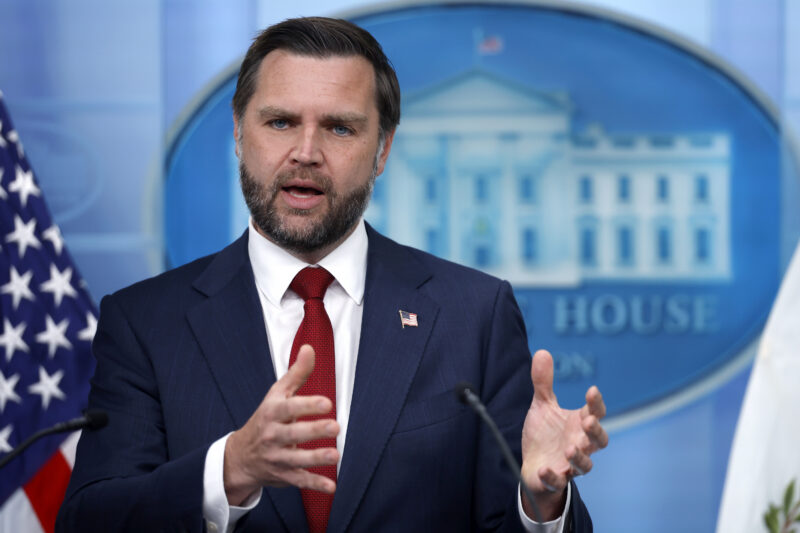
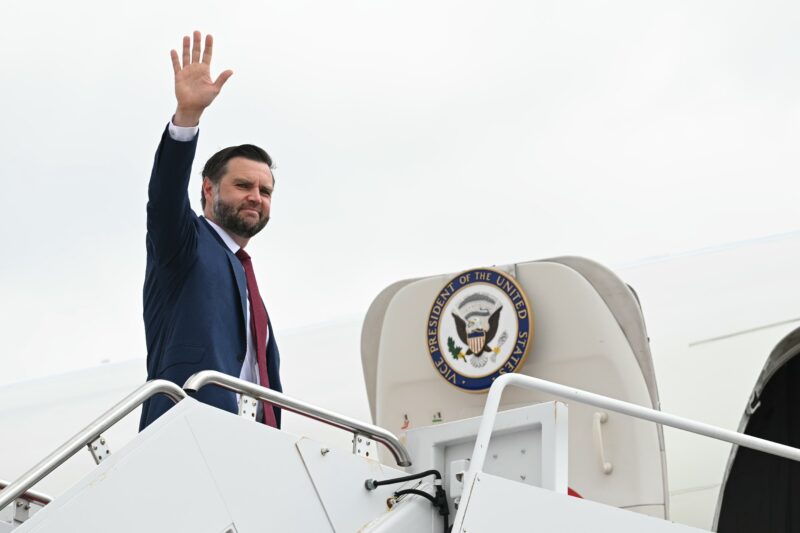
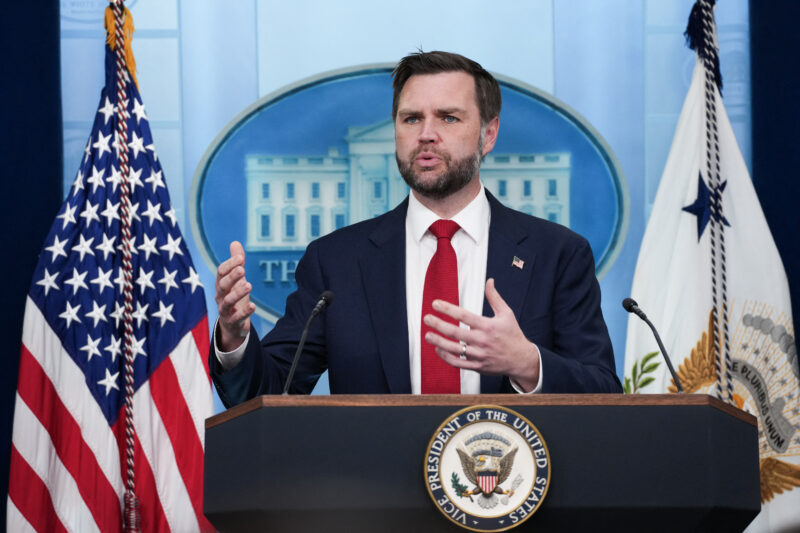
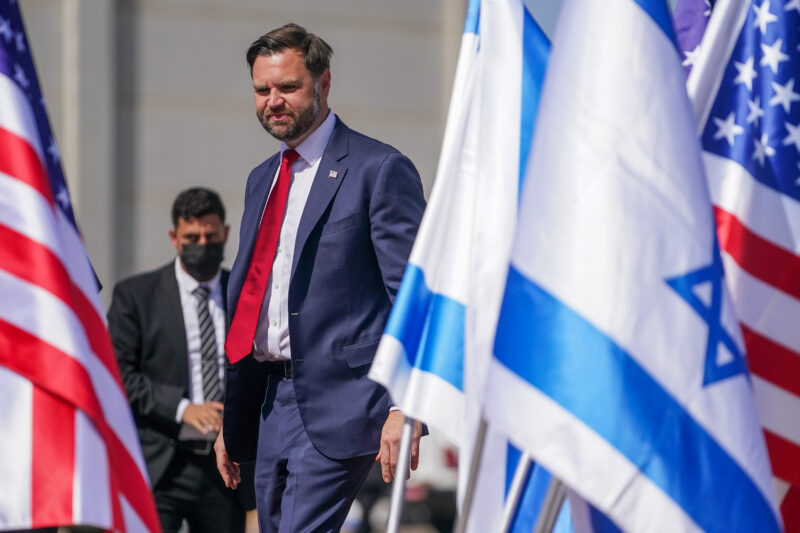
Vice President JD Vance’s suggestion on Tuesday that the U.S. would welcome Turkish troops playing a role in the proposed stabilization force in Gaza was met with skepticism from leading Republican lawmakers and experts in Washington.
Vance told reporters in Israel that while the U.S. would not “force” Israel to accept Turkish troops “on their soil,” the Trump administration believed “that there’s a constructive role for the Turks to play.”
Asked about the prospect of Ankara’s involvement in President Donald Trump’s peace plan for the region while appearing alongside Israeli Prime Minister Benjamin Netanyahu the next day, the vice president replied that the U.S. does not view Israel as a “vassal state” or a “client state” but as a “partner.”
“The president believes very strongly that … Israel, honestly with our Gulf Arab allies, can play a very positive leadership role in this region to where, frankly, the United States can care less about the Middle East because our allies in the region are stepping up and taking control and taking ownership of their area of the world,” Vance said.
The vice president made the comments in response to Netanyahu suggesting that he took issue with the notion of Turkey playing a role in the future of Gaza. “We will decide together about that. So I have very strong opinions on that. Want to guess what they are?” the prime minister quipped.
Vance’s embrace of the Turkish troop proposal prompted leading Republicans in Washington to voice their concerns about allowing the country to install forces inside Gaza as part of the proposed International Stabilization Force, citing Israel’s opposition to the idea, Turkey’s openly hostile posture toward the Jewish state and Ankara’s ties to Hamas.
“I found it interesting that the opposition leader, Mr. [Yair] Lapid, who I know and like, was adamant that Turkey and Qatar have very limited roles in Gaza because of the relationship with Hamas and the Muslim Brotherhood,” Sen. Lindsey Graham (R-SC) told Jewish Insider.
“I appreciate Turkey and Qatar as allies, but when it comes to Israel, [Turkish President Recep Tayyip] Erdogan’s been terrible in terms of rhetoric. I appreciate the role they played in trying to get the ceasefire, but the appetite in Israel for Turkey and Qatar to have a major role is pretty limited, given the history,” he continued.
Graham said that he was “hoping we can find a stabilizing force. People keep mentioning Egypt. Maybe that works, but I don’t buy into the idea Hamas will ever change their stripes. They have to be dealt out of Palestinian society.”
“It’s very important for Israel to have a stabilizing force that they trust that understands the danger Hamas presents,” the South Carolina senator argued.
Jonathan Ruhe, a fellow for American strategy at the Jewish Institute for National Security of America, expressed similar doubts.
“There’s a million reasons why it won’t be viable to have a long term Israeli military presence on the ground in Gaza. But the same goes for Arab partners,” Ruhe told JI. “Having Turkish forces in there particularly strikes me as a bad idea. Turkey is not an impartial force. They are a capable and experienced military, but mostly doing things the United States and Israel don’t want them to be doing.”
“Turkey does not deserve anything like the benefit of the doubt. Their intentions are certainly suspect given their close ties to Hamas. Having a Turkish military presence literally on [Israel’s] front doorstep in Gaza could actually be worse,” Ruhe continued. “I wouldn’t see them doing anything concrete and substantive to prevent Hamas from basically reestablishing itself as the main actor on the ground in Gaza.”
Beyond a potential incapability to root out Hamas, Ruhe suggested that enabling Turkish troop presence in Gaza could be counterintuitive to U.S. interests in other ways.
“Hamas might actually find it in their interest to try and stoke tensions between Turkey and Israel. That would be a massive headache for the U.S., having, technically, a NATO ally at daggers drawn with our closest partner in the Middle East,” Ruhe said.
One senior GOP senator offered a blunt assessment while speaking on condition of anonymity about Vance’s comments. “They’re pushing Israel into a terrible situation. Turkey and Qatar are the benefactors of Hamas. It’s like putting a fox in the henhouse,” the senator said.
Sen. Mike Rounds (R-SD) did not disagree with Vance’s suggestion that Turkey had a role to play in the broader peace plan, but questioned the likelihood that Israel would accept such a proposal.
“Would Israel accept Turkish forces? That, I think, is the key. I think that’s the most important part of this,” Rounds told JI. “I do think our ally, our NATO ally, Turkey, could play a very constructive role in the Middle East in terms of keeping the peace, but that’s not an easy thing to do because Turkey and Israel have had strained relations.”
Please log in if you already have a subscription, or subscribe to access the latest updates.
 Continue with Google
 Continue with Apple